
Crypto World
Kalshi co-founder fights back against Arizona’s ‘overstep’ in what a lawyer calls a federal-state turf war



Kalshi co-founder Tarek Mansour has called Arizona’s criminal case against the company a “total overstep,” casting the move as an attack on a federally regulated exchange rather than a standard gambling enforcement action.
Mansour said the charges “have nothing to do with gambling or the merits” and argued that Arizona is trying to short-circuit a broader court fight over who controls prediction markets. Speaking to Bloomberg, he said Kalshi will continue to defend the business even as the legal battle expands.
Kalshi didn’t reply to CoinDesk’s request for comments.
Arizona Attorney General Kris Mayes filed 20 criminal counts against Kalshi this week, accusing the company of operating an illegal gambling business and offering election wagering in the state.
Her office said Arizona law bars both unlicensed wagering operations and election betting.
Kalshi lets users trade contracts tied to real-world outcomes such as elections, sports and economic data. The company says those products are event contracts overseen by the Commodity Futures Trading Commission (CFTC), which recently signaled a more supportive federal stance toward these platforms. Kalshi, along with Polymarket, accounts for the lion’s share of prediction market activity, commanding more than 90% of notional volume, according to Dune data.
In a post on social media, CFTC Chairman Mike Selig called the matter a jurisdictional dispute and said criminal prosecution was “entirely inappropriate.” He said the agency is watching closely and evaluating its options.
The Arizona Attorney General today filed criminal charges against one of our registered exchanges related to prediction markets. This is a jurisdictional dispute and entirely inappropriate as a criminal prosecution. The @CFTC is watching this closely and evaluating its options.
— Mike Selig (@ChairmanSelig) March 17, 2026
State officials in Arizona and elsewhere have argued that some of them look more like wagers and should fall under state gambling rules.
That split now sits at the center of a larger national fight involving various states, including New York, Tennessee, and Massachusetts. Most state actions against Kalshi so far have relied on cease-and-desist orders, injunction requests or civil claims. Arizona’s case goes further by bringing criminal charges.
“It’s not surprising at all that states would bring new tools to bear in attempting to chill the federally regulated markets,” Aaron Brogan, founder and managing attorney of Brogan Law PLLC, told CoinDesk. “Because there is a fundamental conflict between states, which regulate and draw tax revenue from state-regulated gambling markets, and these federally regulated markets that are outside of state control.”
To Brogan, the question is ultimately whether or not federal law applies, meaning at the end of the day, “ this is a dispute between the federal government and state government and that’s where it should be determined.”



Blockstream CEO Adam Back, downplayed the immediacy of quantum computing as a threat to the Bitcoin network, but emphasized the need for the industry to prepare.
A foundational figure in Bitcoin history for his cryptography work, dating back to the 1990s, Back laid out his central argument, saying that while quantum risk is real in theory, it is not yet practical, in an interview with Bloomberg on Tuesday.
Back noted that “the current hardware…generally doesn’t have any error correction.” That aligns with two recent papers highlighted in a thread on X, one a sober engineering analysis, the other a deadpan satire, which make that case from opposite directions. Together, they frame quantum computing as a long-term rather than near-term risk to cryptographic systems.
However, Back said the “lede” is not about dismissing the threat but about timing the response correctly. “We don’t have to agree about the timeline for quantum computers to become powerful enough to be a threat, because the prudent thing to do is to prepare Bitcoin and give people the option to migrate their keys to a quantum ready format, and to have, let’s say, a decade in which to do that.”
That timeline echoes reporting that post-quantum cryptography (PQC) is already moving from theory to implementation, particularly after NIST finalized standards in late 2024.
Back also stressed that preparation work is already active across the ecosystem, pointing to ongoing research and deployment. “There’s a 20-person research team that’s been working on this. Publishing papers and implementing things, putting them live.” He cited Blockstream’s Liquid network as an early proving ground.
The industry’s challenge is less about reacting to a breakthrough and more about coordinating a slow, orderly migration, before the risk becomes urgent.
UPDATE (April 8, 113:25 UTC): Adds link to Bloomberg interview.


Morgan Stanley’s spot bitcoin exchange-traded fund (ETF) began trading Wednesday with solid early activity, logging more than 1.6 million shares traded and roughly $34 million in inflows, the bank said.
The fund, listed under the ticker MSBT, tracks the CoinDesk Bitcoin Benchmark 4 PM New York Settlement Rate and charges a 0.14% expense ratio. It is the cheapest fund in the category, offering a clear, if narrow, pricing advantage to competitors.
MSBT entered the market with a different strength than others: distribution. Morgan Stanley’s wealth management arm oversees trillions of dollars in client assets and operates one of the largest financial advisor networks in the industry. That reach could help the fund gain traction as more investors access bitcoin through advisors rather than direct trading platforms.
Some experts anticipate the fund to draw capital from existing products, especially BlackRock’s iShares Bitcoin Trust (IBIT), the largest spot bitcoin ETF currently on the market. MSBT has a lot of catching up to do. IBIT, which launched among nine other ETFs in January 2024, has amassed over $53 billion in assets, quickly becoming the asset manager’s most successful ETF.
Wednesday’s trading offers an early signal of demand, though it remains to be seen whether MSBT can sustain momentum in a market dominated by a handful of large players.
UPDATE (April 8, 2026, 20:00 UTC): Adds additional detail.
Crypto World
Panda Bonds Surge as Global Borrowers Ditch Dollar Debt for Cheaper Yuan Financing in 2026

TLDR:
-
- Foreign panda bond issuance tripled year on year in March 2026, reaching 27.8 billion yuan in one month alone.
- China’s 10-year bond yield of 1.82% makes yuan borrowing roughly 60% cheaper than equivalent U.S. dollar debt.
- The U.S. dollar’s share of global reserves dropped to 56.32% in 2025, its lowest recorded level since 1995.
- Iran now requires oil tanker transit fees through the Strait of Hormuz to be paid in yuan or Bitcoin only.
- Foreign panda bond issuance tripled year on year in March 2026, reaching 27.8 billion yuan in one month alone.
Panda bonds recorded a dramatic rise in foreign issuance in March 2026, tripling year on year to 27.8 billion yuan. That equals roughly $4 billion in a single month.
Total yuan-denominated financing by foreign borrowers reached a record 218 billion yuan in the opening weeks of 2026.
The full year of 2025 produced only $167 billion through yuan notes and loans combined. The shift spans sovereign governments, global banks, and multilateral development institutions.
Record Deals Signal a Structural Turn in Yuan Borrowing
Deutsche Bank issued the largest single panda bond ever placed by a foreign bank, totaling 5.5 billion yuan. The three-year tranche was oversubscribed 1.55 times and the five-year 1.63 times.
Indonesia sold 9.25 billion yuan at roughly one percentage point below its euro-denominated debt issued the same week.
The Asian Infrastructure Investment Bank placed 3 billion yuan, with 58% allocated to overseas investors. Morgan Stanley, Barclays, and Hungary also joined as new or repeat yuan issuers in 2026. The Asian Development Bank had already raised a record 8.3 billion yuan in March 2025.
The cost advantage is a key factor. China’s 10-year bond yield sits at 1.82%, against 4.46% for the U.S. Treasury equivalent. That spread of 260 basis points is the widest recorded since August 2025.
As @BullTheoryio noted on X, “Borrowing in yuan is approximately 60% cheaper than borrowing in dollars right now.” For governments with heavy trade exposure to China, that arithmetic is difficult to overlook. The yuan now accounts for 34.5% of China’s cross-border goods trade settlements, up from 10% in 2017.
China is the dominant trading partner for more than 120 countries. When trade with the largest partner settles in yuan, holding that currency as a working reserve follows naturally. The offshore dim sum bond market hit a record 870 billion yuan in 2025, its eighth straight year of growth.
Dollar Weakness and Treasury Market Signals Add Further Pressure
The U.S. dollar index fell 9.6% in full year 2025, its worst annual result since 2017. In the first half of 2025 alone, it dropped 10.7%, the worst first-half performance in over 50 years. The dollar’s share of global reserves fell to 56.32%, the lowest since 1995.
China’s U.S. Treasury holdings fell to $682.6 billion in November 2025, down from $1.32 trillion in 2013. China has been selling U.S. Treasuries for nine consecutive months as of late 2025. That steady reduction reflects a deliberate portfolio rebalancing by the world’s second-largest economy.
Research from the National Bureau of Economic Research shows that Treasuries’ convenience yield turned negative, sitting at -0.25% for 10-year maturities.
That premium once saved the U.S. government hundreds of billions in annual borrowing costs. State Street confirmed that since April 2025, rising Treasury yields now reflect fiscal risk rather than economic strength.
During a global bond sell-off in March 2026, U.S. Treasury yields spiked to 4.4055%, a near eight-month high. China’s 10-year yield moved only from 1.80% to 1.84% across the same period. The contrast in stability was widely noted across international fixed income markets.
Iran now charges oil tankers transiting the Strait of Hormuz $1 per barrel of cargo. Payments are accepted only in Bitcoin or Chinese yuan.
A very large crude carrier with 2 million barrels owes up to $2 million per transit. Iran’s National Security Committee passed legislation codifying this fee structure, and at least two vessels paid in yuan before the ceasefire was announced.

TLDR
- Ripple has launched a Treasury Management System with native digital asset capabilities, allowing businesses to manage both fiat and digital assets.
- The new system integrates Digital Asset Accounts and Unified Treasury, making it the first TMS to directly support on-chain digital asset management.
- CFOs and treasury teams can now manage traditional cash balances alongside digital assets like XRP and RLUSD in a single system.
- Ripple’s Treasury platform addresses the growing demand for seamless digital asset solutions among fintech platforms and financial leaders.
- The new solution provides regulated Ripple-native accounts, simplifying asset management and ensuring compliance with industry standards.
Ripple, the San Francisco-based blockchain firm, has announced the launch of its Treasury Management System (TMS) with native digital asset capabilities. This new development is designed to support businesses in managing both fiat and digital assets efficiently. Ripple’s new offering aims to enhance enterprise blockchain solutions, simplifying the process of integrating digital assets into corporate treasuries.
Ripple’s Treasury Management System to Revolutionize Corporate Finance
Ripple’s new Treasury Management System is set to change how CFOs and treasury teams manage digital assets. The platform integrates on-chain digital asset capabilities, allowing businesses to handle both traditional fiat currencies and digital assets in a single system. Ripple’s solution eliminates the need for separate custody platforms and reconciliation processes, streamlining treasury operations.
The addition of Digital Asset Accounts and Unified Treasury within Ripple Treasury makes it the first TMS to directly integrate digital asset management. CFOs can now manage their assets more seamlessly, avoiding the complexities of using separate systems for digital currencies like XRP and RLUSD. This innovative move allows companies to focus on financial strategy rather than on the technicalities of asset management.
According to Ripple, this system addresses the growing demand from fintech platforms and financial leaders who are seeking smoother gateways for digital asset integration. Reece Merrick, Ripple’s top executive, highlighted that 72% of finance leaders believe offering a digital asset solution is critical to staying competitive in the market. As companies face uncertainty about implementing these solutions, Ripple aims to fill this gap with its new product.
Digital Asset Accounts Offer New Opportunities for Businesses
Ripple’s new Treasury platform provides businesses with the ability to create Ripple-native Digital Asset Accounts. These accounts allow companies to hold and manage digital assets like XRP and RLUSD in a regulated environment. By integrating digital assets into the corporate treasury, Ripple simplifies how businesses manage their cash and crypto balances in one unified system.
The introduction of these accounts comes at a time when companies are seeking to diversify their asset portfolios. The platform’s seamless integration of digital assets alongside traditional fiat currencies offers a more straightforward way for businesses to engage with the growing digital economy. Ripple’s new system ensures that businesses are equipped to stay ahead in a rapidly changing financial landscape.

Bitcoin extended its recovery after a 7% surge above $72,000 this week, reclaiming key technical levels and setting up a potential move toward the $90,000 zone as macro sentiment improves. Traders pointed to a constructive setup, with the cryptocurrency nudging past a symmetrical triangle pattern and stabilizing above critical supports, including the $68,000 area where major moving averages converge. Analysts highlighted that maintaining momentum above $70,000 would be essential to unlock the next leg higher, targeting roughly 25% gains to the $90,000 mark if the breakout holds.
Meanwhile, on-chain and derivatives activity signaled shifting market dynamics as traders expressed renewed buying conviction. A notable spike in taker buy volume on Binance, the largest crypto exchange by volume, followed a favorable macro development, further reinforcing a bullish tilt among market participants.
Key takeaways
-
Bitcoin forms a bullish setup after reclaiming the $72,000 region, with a symmetrical-triangle breakout implying a target near $90,000.
-
Binance taker buy volume surged by about $2.7 billion within two hours after the US-Iran ceasefire announcement, illustrating aggressive buying by futures traders.
-
Binance net taker volume rose to about $1.02 billion—the highest since March 17—suggesting a broad return of aggressive buying activity on the platform.
-
The Coinbase premium index turned positive, signaling renewed demand from U.S. participants after a prolonged period of negative readings.
-
RSI has climbed to roughly 56, moving away from oversold conditions and adding to the case for continued upside pressure, provided Bitcoin can hold above key supports.
Technical setup reinforces bullish outlook
Bitcoin’s latest move sits atop a chart pattern that traders watch for directional cues. After breaking above the upper boundary of a symmetric triangle last week, the price began to stabilize above the $70,000 level, a threshold that previously served as a ceiling during the recent pullback. A daily close above this pivot would formally confirm the breakout, analysts say, with the next major resistance around the $76,000 area before buyers contend with the $80,000 zone. From there, a measured move could place Bitcoin on a path toward the $90,000 target, representing roughly a 25% advance from current levels.
A broader look at momentum shows the daily RSI firming to the mid-50s, up from oversold conditions in February. That shift in momentum, combined with the price trading above significant averages, lends a degree of confidence to bulls that the recovery could extend beyond the short term, provided demand remains steady and macro risk appetite improves.
“Bitcoin breaks through the crucial $71K level and builds a bullish structure,” noted Michael van de Poppe, founder of MN Capital, in a recent post. He emphasized that sustaining a hold above the breakout level would be critical for extending the rally toward higher highs and higher lows, a pattern that could reinforce upward momentum.
Analysts caution that the road to $90,000 includes intermediate hurdles, with the 76,000 and 80,000 ranges acting as tests before buyers are able to press toward the higher target. Still, the immediate setup—reclaiming key support, improving RSI, and a confirmed breakout—adds a pragmatic layer of confidence for buyers who have been cautious since the last correction.
Liquidity signals point to renewed buying appetite
Beyond the technicals, a surge in derivatives activity on Binance captured attention as a gauge of sentiment shifts. CryptoQuant researchers reported that taker buy volume—representing aggressive market-buy orders on Binance futures—jumped by about $2.7 billion within two hours following the US-Iran ceasefire announcement. The breakdown showed roughly $1.2 billion and $1.5 billion appearing in sequence, underscoring how macro headlines can quickly reallocate risk appetite toward Bitcoin.
“This sudden improvement in visibility allows investors to reposition in the short term, and sends a constructive signal for Bitcoin,” CryptoQuant analyst DarkFost commented on the rapid liquidity inflows.
The same data set indicated that Binance’s cumulative net taker volume climbed to about $1.02 billion—the strongest reading since March 17—highlighting a broader return of aggressive buying pressure from traders on the platform. Amr Taha of CryptoQuant noted that the flow suggested traders were buying with a view to improving macro sentiment, not merely reacting to a crypto-specific headline.
On-chain demand returns to the fore
In addition to derivatives activity, on-chain indicators echoed a renewed interest from U.S. participants. The Coinbase premium index, a barometer of demand relative to spot prices on Coinbase, flipped back into positive territory after a stretch of negative readings. The shift implies stronger willingness among U.S.-based buyers to acquire BTC at prevailing prices, aligning with the broader bid tone seen on exchanges and in market commentary.
Observers frame this combination of technical breakout, liquidity influx, and positive premium signals as a sign that Bitcoin may be reestablishing a foothold above key levels after weeks of consolidation. If macro catalysts continue to tilt favorably and risk appetite remains buoyant, the path toward higher targets could become more plausible for the remainder of the quarter.
What to watch next
Looking ahead, traders will be watching whether Bitcoin can defend the $70,000 to $72,000 zone on any pullbacks, paving the way for the next test of $76,000 and the critical hurdle at $80,000. A sustained close above $80,000 would add conviction to a longer-term upside narrative toward $90,000 and beyond, while a failure to hold could invite a retracement to lower support levels.
Beyond price action, the story remains sensitive to macro developments, including geopolitical headlines and broader risk sentiment. As traders recalibrate positions in response to evolving news, the question remains whether the recent surge in taker buying on Binance is a durable indicator of institutional-style participation or a temporary reaction to headlines.
Readers should monitor how the market responds to incoming data and policy signals in the days ahead, particularly any developments that influence U.S. risk appetite and the pace of global liquidity movement. The next few sessions could reveal whether Bitcoin sustains its momentum or enters a new phase of consolidation as traders reassess risk exposure.


The stablecoin news out of Washington this week goes beyond reserves and redemptions — FinCEN, the Treasury’s financial crimes unit, has proposed rules that would fundamentally reform how stablecoin issuers and all US financial institutions handle anti-money laundering compliance, shifting from box-checking paperwork toward risk-based self-policing of illicit transactions.
Summary
- FinCEN published a proposed rule on April 7 that would “fundamentally reform” BSA compliance programs for all financial institutions — including stablecoin issuers, who are classified as financial institutions under the GENIUS Act — requiring them to build risk-based AML frameworks focused on actual illicit finance threats rather than prescriptive documentation
- Treasury Secretary Scott Bessent framed the proposal explicitly as a reduction in compliance burden: the goal is to redirect resources away from lower-risk activities toward higher-risk ones, with enforcement actions reserved only for “significant or systemic failures”
- Under the new framework, stablecoin issuers must build programs around four core pillars: internal policies and controls including risk assessments, a designated BSA compliance officer located in the US, employee training tailored to the firm’s risk profile, and independent testing of the program’s effectiveness
The stablecoin news most relevant to compliance teams this week is not from the FDIC or OCC. It comes from FinCEN. The Financial Crimes Enforcement Network proposed rules on April 7 that would reshape how all US financial institutions — including stablecoin issuers — manage their anti-money laundering programs. The core shift: from measuring compliance by the volume of filings and paperwork to measuring it by demonstrated effectiveness at identifying and stopping illicit finance.
Treasury Secretary Scott Bessent described the intent directly: “Our proposal restores common sense with a focus on keeping bad actors out of the financial system, not burying America’s banks in more red tape.” FDIC Chair Travis Hill, whose agency is a co-proposing regulator, called it “perhaps the most important of the reforms Congress envisioned in the AML Act.”
The GENIUS Act, signed into law in July 2025, classified all permitted payment stablecoin issuers as “financial institutions” under the Bank Secrecy Act. That classification means the FinCEN proposal applies to them with the same force it applies to banks. Stablecoin firms that previously operated under lighter compliance regimes — relying on state money transmitter licenses and minimal internal monitoring — must now build programs that meet bank-level AML standards.
This is not a future requirement. The GENIUS Act’s implementing regulations must be finalized by July 18, 2026. Any stablecoin issuer operating after that date without a compliant program faces potential enforcement actions covering civil penalties, criminal prosecution, and license revocation.
The Four Pillars FinCEN Now Requires
Under the proposed framework, every covered financial institution — including stablecoin issuers — must build their AML program around four core components. First: internal policies, procedures, and controls, including a documented risk assessment process that identifies the specific illicit finance threats the issuer faces based on its customers, products, and geography. Second: a BSA compliance officer physically located in the United States with supervisory authority over the program. Third: ongoing employee training tailored to the institution’s actual risk profile. Fourth: independent testing by an outside party that evaluates whether the program has been effectively implemented — with explicit language prohibiting auditors from substituting their own judgment for the institution’s risk-based determinations.
The proposal also limits when enforcement is appropriate. FinCEN stated it would generally not initiate significant supervisory action unless an institution had “a significant or systemic failure” to maintain its program — a standard intended to protect well-run programs from technical violations that pose no real illicit finance risk.
As crypto.news reported, the FDIC simultaneously proposed its own 191-page stablecoin rule covering reserves and redemption standards. As crypto.news noted, the GENIUS Act’s enforcement framework spans the Treasury, Federal Reserve, OCC, and FDIC — with FinCEN and OFAC playing central roles in sanctions and AML oversight. The FinCEN proposal fills the compliance design gap the statute left open.
Comments on the proposed rule are due 60 days after Federal Register publication, before the July 18 regulatory deadline.

The U.S. Securities and Exchange Commission (SEC) named Gibson Dunn partner David Woodcock as its new enforcement director on Wednesday, filling a vacancy left by Margaret Ryan’s abrupt resignation last month.
Woodcock will begin leading the agency’s 1,000-person enforcement division on May 4. Acting Director Sam Waldon will continue in the role until then.
Why Ryan’s Exit Still Shadows the Appointment
Ryan resigned on March 16 after just six months. She reportedly pushed to pursue fraud charges against figures in President Donald Trump’s orbit, including crypto entrepreneur Justin Sun.
SEC Chair Paul Atkins and other Republican appointees resisted those efforts, according to multiple reports.
The SEC settled its case against Sun and three affiliated companies for $10 million in March. Sun neither admitted nor denied the allegations.
He has been a major investor in the Trump family’s World Liberty Financial project.
Senator Richard Blumenthal has since demanded agency records, calling the enforcement posture under Atkins a “pay-to-play” regime.
Woodcock’s Profile and the Enforcement Slowdown
Woodcock led the SEC’s Fort Worth regional office from 2011 to 2015. He lacks clear ties to digital asset policy.
His most recent roles include partner at Gibson, Dunn & Crutcher and assistant general counsel at ExxonMobil.
His appointment comes the same week the SEC released its fiscal 2025 enforcement report. The agency filed 456 actions, down 22% from the prior year’s 583.
The division also lost 18% of its staff during that period.
I am incredibly pleased to have David rejoin the SEC at this critical time, as we continue to focus on the types of misconduct that inflict the greatest harm to investors,” read an excerpt in the announcement, citing Atkins.
Could Woodcock continue the agency’s retreat from crypto enforcement or will he chart a different course?
Subscribe to our YouTube channel to watch leaders and journalists provide expert insights
The post SEC’s New Enforcement Chief David Woodcock Has No Crypto Background appeared first on BeInCrypto.
TLDR
- Ripple recently minted 9.9 million RLUSD tokens on the Ethereum blockchain.
- The minting follows a series of large RLUSD token burns conducted by Ripple.
- The newly minted RLUSD tokens are backed 1:1 by USD cash and equivalents.
- Ripple’s strategy of minting and burning tokens helps balance RLUSD supply and demand.
- The recent minting expands RLUSD’s availability for trading and use on the Ethereum network.
Ripple has recently minted 9.9 million RLUSD tokens on the Ethereum blockchain. This follows weeks of RLUSD burns and comes as part of Ripple’s ongoing supply management. The minting process is initiated when there is demand for more RLUSD from exchanges, institutions, or retail users.
New RLUSD Minting Follows Burn Process
The official Ripple USD (RLUSD) Treasury account added 9.9 million RLUSD tokens to the Ethereum blockchain. This action comes after a series of significant burns in March and April, where Ripple removed over $230 million in RLUSD tokens from circulation. These token burns were part of Ripple’s strategy to balance the supply of RLUSD between the XRP Ledger and Ethereum.
“Minting occurs when there is demand for RLUSD, and the issuer, the Ripple Treasury smart contract, creates new tokens,” Ripple explained. These new tokens are backed 1:1 by USD cash and equivalents, held in regulated custody accounts. As such, the minted tokens are fully supported by traditional assets, ensuring their value.
With this minting, the total RLUSD supply increases, and the tokens are now available for use and trading. Ripple’s approach of minting and burning tokens is designed to keep the supply of RLUSD in line with market demand. The goal is to maintain the stablecoin’s value and ensure liquidity within Ripple’s ecosystem.
Ripple Strengthens RLUSD Presence in the Crypto Market
Ripple’s RLUSD continues to strengthen its position in the crypto market with increased demand. The recent minting adds to the ongoing expansion of RLUSD, a stablecoin designed to facilitate cross-border payments. According to a recent report, Bitrue exchange now supports trading RLUSD against tokenized gold options like PAXG and XAUT.
The stablecoin’s reserves are valued at $1.56 billion, surpassing the market supply of $1.49 billion tokens. This highlights Ripple’s ongoing growth in the stablecoin sector. Binance has also integrated RLUSD on the XRP Ledger, allowing users to transact RLUSD directly on the network.
Ripple launched RLUSD on December 17, 2024, with the aim of providing liquidity and improving cross-border payments. With multiple exchange integrations and strong backing, RLUSD is becoming more embedded in the broader crypto ecosystem.
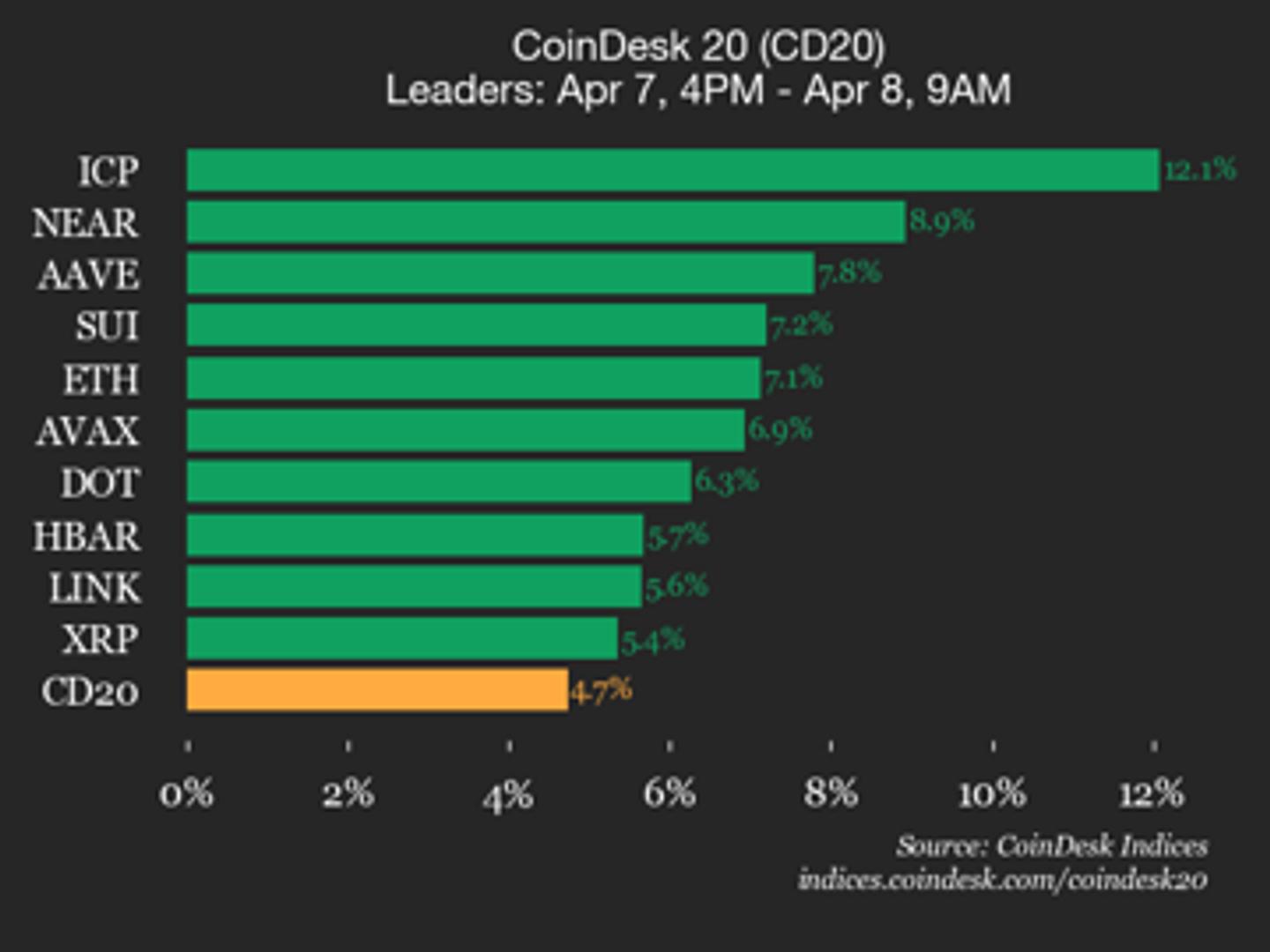
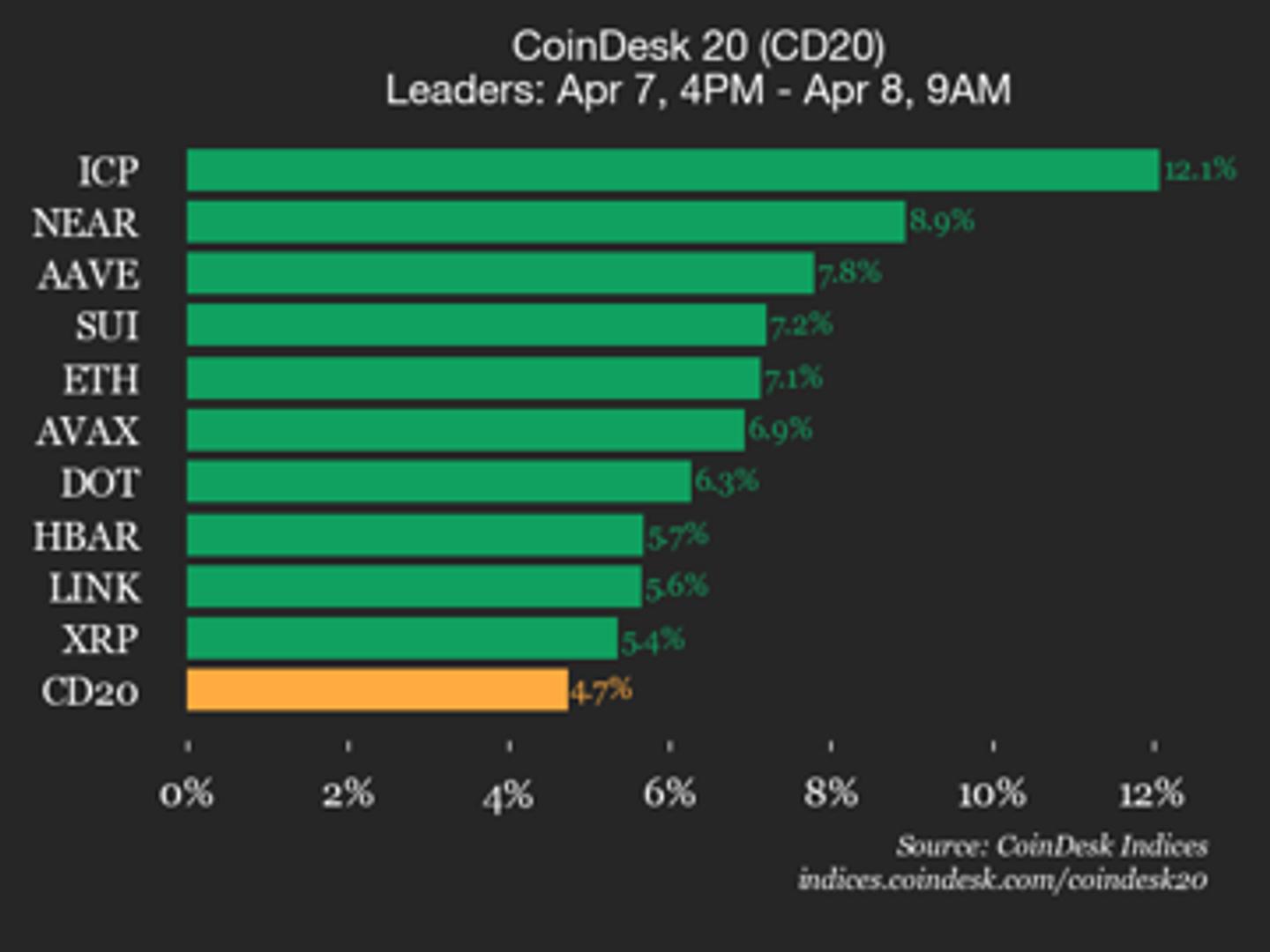
NEAR Protocol (NEAR) joined Internet Computer (ICP) as a top performer, climbing 8.9% from Tuesday.
Strategy Executive Chairman Michael Saylor rejected the New York Times investigation identifying Adam Back as Bitcoin’s (BTC) pseudonymous creator, Satoshi Nakamoto.
Saylor said stylometry is “interesting, but not proof.”
Why Saylor Demands Cryptographic Evidence
Saylor pointed to contemporaneous 2008 emails between Satoshi and Back as evidence that the two were separate people.
Back first received a message from Satoshi in August 2008 confirming the Hashcash citation in the upcoming white paper.
“Stylometry is interesting, but not proof. The contemporaneous emails between Satoshi and Adam Back suggest they were distinct individuals. Until someone signs with Satoshi’s keys, every theory is just narrative,” said Saylor.
That position aligns with his broader philosophy. Saylor has repeatedly described Satoshi’s disappearance as a deliberate act that strengthened BTC by removing any central authority figure.
He once wrote that Satoshi “created a way, gave it away, and walked away.”
What MicroStrategy Has at Stake
Strategy holds 766,970 BTC acquired for roughly $54.57 billion, making it the largest corporate holder globally.
That position depends on BTC functioning as a decentralized, leaderless monetary network, not on who designed it.
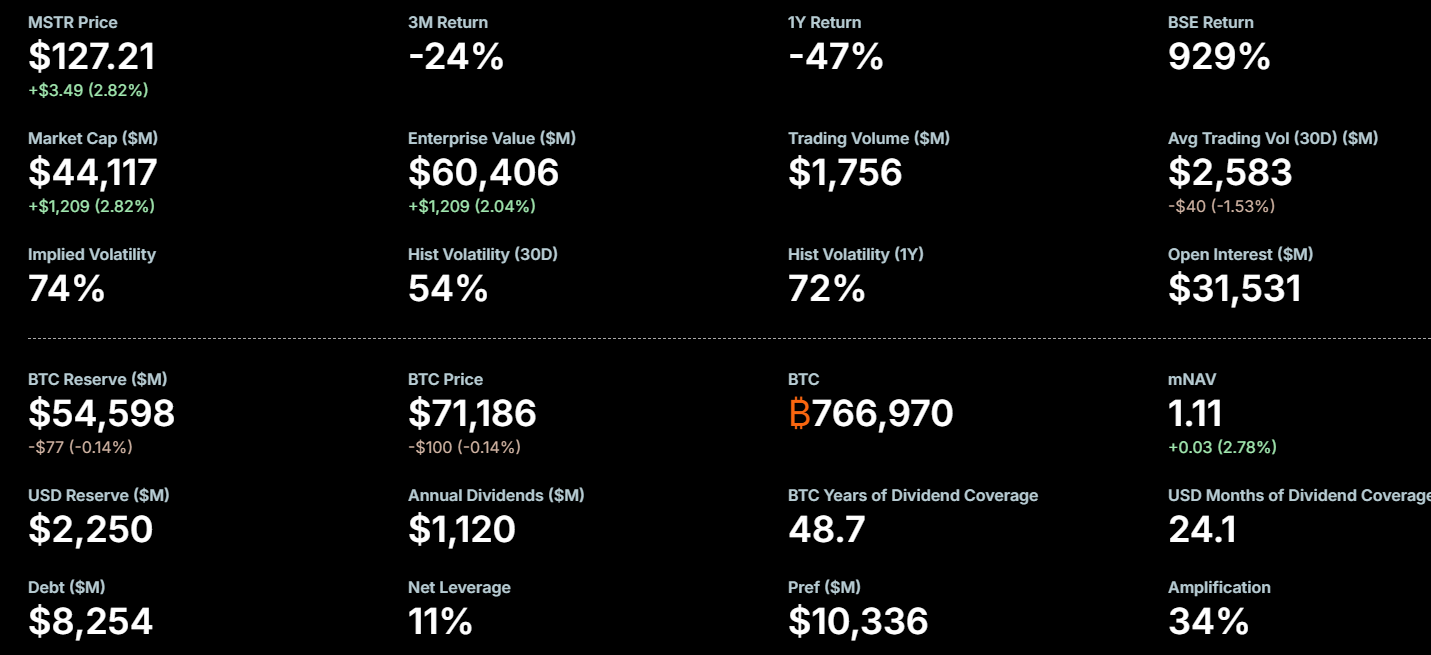
BTC dipped roughly 2.4% after the NYT article dropped, falling from $68,269 to $66,634. Saylor has previously dismissed such moves as temporary noise, calling volatility “Satoshi’s gift to the faithful.”
Back himself firmly denied being Satoshi, attributing writing overlaps to shared cypherpunk interests and confirmation bias.
The stylometric analysis, led by computational linguist Florian Cafiero, found Back as the closest match among 12 suspects but described the results as inconclusive.
For Saylor, the answer remains simple. Without a signature from Satoshi’s private keys, no investigation settles the question.
The post MicroStrategy’s Michael Saylor Doesn’t Buy The Adam Back Is Satoshi Story appeared first on BeInCrypto.

Days of our Lives Early Spoilers April 13-17: Brady’s Shocking Betrayal Pivot – Paulina in Serious Trouble!

Fire damages roof of Rio’s Olympic velodrome
Fed minutes show growing openness to rate hikes at March meeting


-

 NewsBeat6 days ago
Steven Gerrard disagrees with Gary Neville over ‘shock’ Chelsea and Arsenal claim | Football
-

 Business6 days ago
No Jackpot Winner and $194 Million Prize Rolls Over
-

 Fashion5 days ago
Weekend Open Thread: Spanx – Corporette.com
-

 Business5 days ago
Expert Picks for Every Need
-

 Business3 days ago
Three Gulf funds agree to back Paramount’s $81 billion takeover of Warner, WSJ reports
-

 Sports4 days ago
India men’s 4x400m and mixed 4x100m relay teams register big progress | Other Sports News
-

 Business7 days ago
Login and Checkout Issues Spark Merchant Frustration
-

 Tech24 hours ago
How Long Can You Drive With Expired Registration? What Florida Law Says
-
Business3 days ago
No Jackpot Winner, Prize to Climb to $231 Million
-

 Tech6 days ago
Commonwealth Fusion Systems leans on magnets for near-term revenue
-

 Fashion2 days ago
Massimo Dutti Offers Inspiration for Your Summer Mood Board
-

 Fashion1 day ago
Let’s Discuss: DEI in 2026
-
Politics5 days ago
Wings Over Scotland | The quality of mercy
-

 Business4 days ago
Akebia Therapeutics, Inc. (AKBA) Discusses Pipeline Progress and Strategic Focus on Kidney Disease Treatments at R&D Day – Slideshow
-

 Tech7 days ago
Following Artemis II’s Journey Around The Moon
-

 Fashion6 days ago
Statement Sunglasses: The Accessory Shaping Modern Fashion
-

 Business7 days ago
Investor reactions to Trump’s speech on Iran war
-

 Tech7 days ago
Daily Deal: The Modern No-Code Development Bundle
-

 Politics7 days ago
Trans kids protest the Department of Education
-
Sports6 days ago
Justin Jefferson’s Situation Remains Unchanged after JSN’s Deal
You must be logged in to post a comment Login