
Crypto World
Kraken Opens US Stock Trading for EEA Clients via European Entity

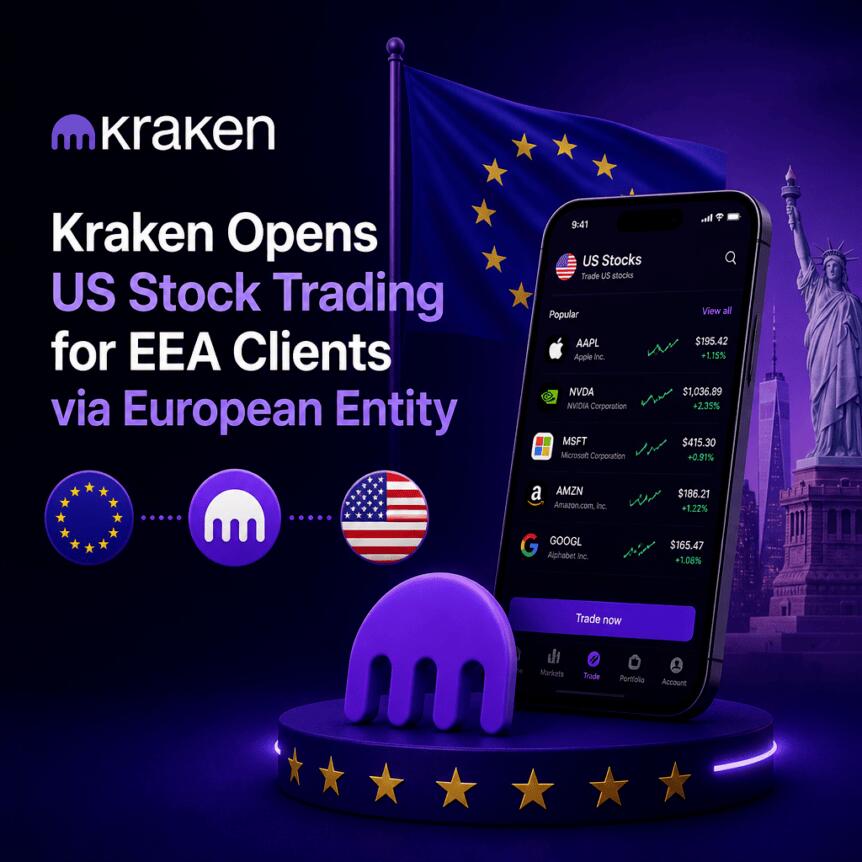
Kraken has expanded its regulated brokerage offering by launching trading in more than 7,000 US-listed stocks for eligible customers in the European Economic Area (EEA). The move adds traditional equity exposure to the exchange’s existing focus on cryptocurrencies and its growing tokenized-assets lineup.
According to Kraken, the service is available to EEA users through Kraken Pro and its mobile app under the firm’s Markets in Financial Instruments Directive II (MiFID II) authorization. The company says customers can trade US-listed shares alongside crypto markets and tokenized equity products from a single platform.
Key takeaways
- Kraken now supports trading of 7,000+ US-listed stocks for eligible EEA customers under its MiFID II authorization.
- The offering is accessible via Kraken Pro and Kraken’s mobile app.
- US shares can be held alongside tokenized equity exposure (“xStocks”) within the same ecosystem.
- Kraken says eligible customers can trade commission-free, subject to applicable conditions.
- Kraken plans to expand its integrated equities offering to additional markets in the coming months.
How Kraken’s integrated equities push works
Kraken’s announcement positions the new US-stock access as part of a broader strategy to combine conventional market instruments with tokenized representations. The company says customers can trade directly through Kraken’s brokerage framework while also retaining the option to use its tokenized equity products.
Kraken also highlighted that its equities offering aligns with its existing product slate: more than 600 crypto assets plus over 700 xStocks. xStocks are tokenized versions of publicly listed equities and are designed to allow users to gain exposure to those underlying assets through tokens.
By pairing traditional share trading with tokenized equity offerings, Kraken is effectively reducing the need for users to switch between different platforms or infrastructures to pursue both “native” crypto exposure and conventional equity exposure. For traders and portfolio builders, that matters because it can simplify custody, account access, and execution pathways—at least within Kraken’s ecosystem—while offering a single interface for multiple asset types.
Regulation and operating structure
Kraken said the service is delivered by Payward Europe Digital Solutions, the company’s Cyprus-based investment firm. The regulatory framing is an important part of the story: Kraken’s ability to offer traditional stock trading in Europe hinges on its MiFID II authorization.
Kraken stated that eligible customers can trade US-listed stocks commission-free, while also noting that the offer remains subject to applicable conditions. The practical detail for users is that commission-free pricing may not be identical to “no costs”—spreads, fees tied to execution, and other terms can still apply depending on the product and account type. Kraken’s statement indicates the company is leaning into cost competitiveness as a way to attract liquidity and retail usage alongside its crypto business.
xStocks growth underscores Kraken’s tokenized-equity ambitions
While the headline is about US-listed stocks, Kraken’s tokenized-equities business provides context for why the exchange is making the integration step now. Kraken launched xStocks in 2025, offering tokenized exposure to US equities and exchange-traded funds, and it says xStocks has since generated more than $38 billion in total transaction volume.
Kraken further claims xStocks has become one of the largest tokenized stock issuers. Based on Token Terminal data shared in the announcement, xStocks is the second-largest tokenized stock issuer by market capitalization as of Monday, at roughly $609 million. Token Terminal places Ondo Finance ahead, at about $974 million, and notes that Binance’s bStocks is currently third-largest with around $544 million.
For investors watching the tokenized-assets sector, the ranking matters because tokenized equities are still in an evolving phase—liquidity, issuance, and market structure differ across products. Issuer scale can affect how easily users enter and exit positions and how closely token prices track their underlying reference assets. Kraken’s inclusion among the top issuers suggests its xStocks product has traction, but it also sets expectations: as Kraken expands into conventional equities, market participants will likely compare which portion of trading volumes remains token-focused and which portion shifts toward standard share execution.
What to watch next as Kraken expands beyond the EEA
Kraken said it plans to extend its integrated equities offering to additional markets in the coming months. That matters because access decisions often depend on regulatory clearances and operational readiness. It also raises a key question for users: whether Kraken will replicate the same stock universe size and commission structure as it expands, or tailor offerings by region.
Another practical item to monitor is how Kraken will position tokenized equities relative to conventional trading as product adoption grows. If Kraken’s platform increasingly captures both share trading and xStocks activity, investors may see tighter cross-asset workflows—while regulators and market observers will continue to scrutinize how tokenized products are marketed, priced, and risk-managed compared with their underlying markets.
For now, EEA customers get a broader “all-in-one” access point for US equities, crypto, and tokenized stocks via Kraken’s Pro platform and mobile app—setting the stage for what could be a more competitive next phase in regulated digital asset brokerage. The next developments to watch are Kraken’s rollout timeline to other regions and the ongoing balance between traditional share volumes and tokenized equity demand.

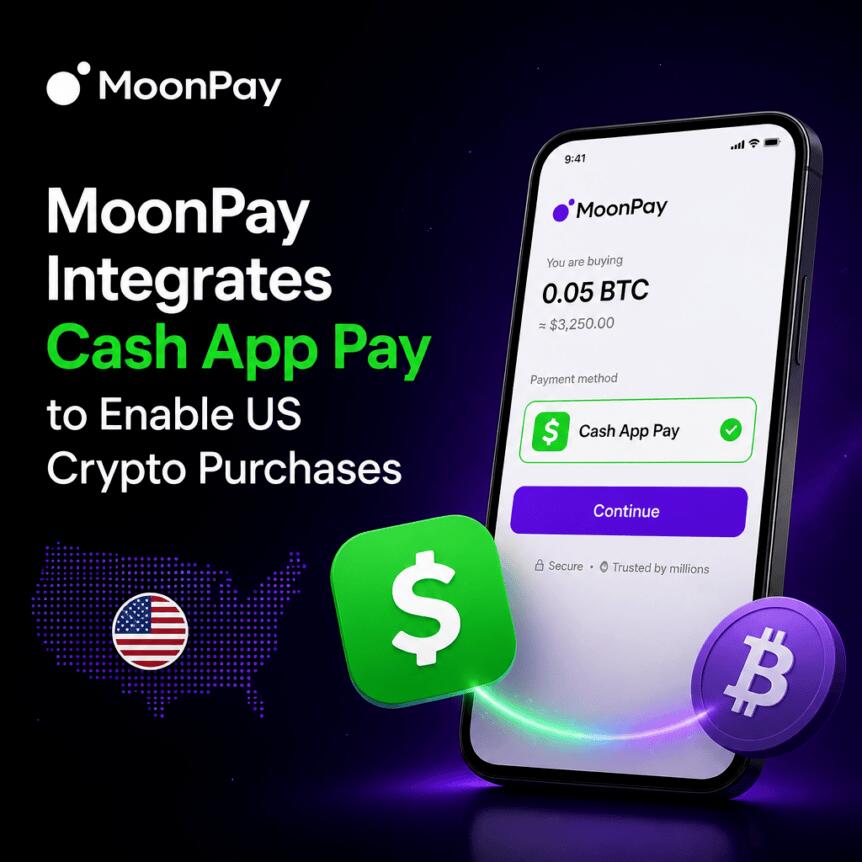
MoonPay has added Cash App Pay as a funding option for cryptocurrency purchases, enabling eligible customers in the United States to use their Cash App balances to buy crypto directly through MoonPay’s checkout. The move is intended to reduce friction by letting users complete transactions without switching between apps or performing an additional login.
In an announcement shared with Cointelegraph, MoonPay said Cash App Pay is available both on MoonPay’s own checkout and through select partner integrations. Those partners include Trust Wallet, Bitcoin.com, MetaMask, Moonshot, Ledger, BitPay, Uniswap, Tangem, LOBSTR and Edge.
Key takeaways
- MoonPay’s integration allows eligible US users to fund crypto buys using Cash App balances via Cash App Pay.
- Users can complete purchases through MoonPay checkout and partner wallets without switching apps or creating an extra login.
- Cash App is already a direct on-platform Bitcoin buyer/seller; MoonPay’s integration expands the range of assets accessible through the Cash App-funded flow.
- MoonPay is positioning itself as more than a fiat-to-crypto onramp, adding broader payment and infrastructure capabilities in 2026.
A tighter path from mainstream payments to crypto
Cash App, operated by Block, already lets users buy and sell Bitcoin inside the app. MoonPay’s new Cash App Pay option expands the practical reach of that user base by routing funding through Cash App balances into MoonPay’s crypto purchase experience, including access through multiple third-party platforms.
According to Block’s second-quarter shareholder report, Cash App reported 59 million active users in June. While that figure does not measure how many of those users will adopt Cash App Pay for non-Bitcoin crypto purchases, it highlights the scale of the audience MoonPay is trying to reach through a familiar consumer payments interface.
MoonPay co-founder and CEO Ivan Soto-Wright framed the integration around usability and trust, saying that Cash App is where “tens of millions of Americans” already manage their money and that the partnership allows those users to access a wider digital asset ecosystem funded “instantly” from an app they already know.
Available through MoonPay and multiple wallets
MoonPay said Cash App Pay can be used through its own checkout experience and with select partners, including widely used consumer wallets and on-platform payment interfaces such as MetaMask, Trust Wallet, Uniswap and BitPay. The company also named hardware and app-based ecosystems like Ledger and Tangem, as well as platforms including Edge and Bitcoin.com.
For users, the practical difference is the ability to fund a crypto purchase using Cash App’s balance while staying within the same general transaction flow—rather than jumping to a separate app to complete funding, then returning to finish a purchase elsewhere.
MoonPay also noted that Cash App Pay joins its existing payment integrations, which already include PayPal and Venmo. PayPal was added in 2024, and MoonPay later expanded support to Venmo.
Regulatory footing and MoonPay’s broader build-out
MoonPay’s announcement also comes as the company continues shifting from a straightforward onramp model toward a wider set of crypto services and infrastructure. From a compliance standpoint, MoonPay said it is licensed by the New York State Department of Financial Services via a BitLicense and Limited Purpose Trust Charter, and is authorized under the European Union’s Markets in Crypto-Assets Regulation in the Netherlands.
That regulatory posture matters because payment integrations typically require clear jurisdictional control—especially when partnering with mainstream consumer finance apps and embedding checkout or funding options across different platforms.
MoonPay has also been active on the acquisition and product-expansion front in 2026. It acquired Solana trading infrastructure provider DFlow in May, after an April deal for crypto security firm Sodot as part of a broader push into institutional services. In July, MoonPay acquired cross-chain infrastructure startup Glide and launched PayBox, a vault intended to let ChatGPT and Claude users authorize crypto transactions while keeping custody of their assets.
Taken together, the Cash App Pay integration fits into a wider theme: MoonPay is working to make crypto buying more accessible through familiar consumer payments while simultaneously building capabilities that extend beyond simple fiat-to-crypto transfers.
What to watch next
For users, the key question is rollout: which US customers are eligible for Cash App Pay inside MoonPay’s checkout and partner integrations, and whether the offering expands to more partners over time. For the market, investors and builders will likely watch whether “mainstream payments as crypto rails” continues to spread beyond Bitcoin-focused in-app buying, turning payments apps into broader gateways for multiple crypto assets.
In news that will shock anyone who’s been involved in the crypto industry for any significant amount of time, Tether announced last week that it had finally received the audit it had been promising for almost a decade.
While traders celebrated and critics scoffed, the audit, which was certainly a step in the right direction, doesn’t put all the questions involving Tether to bed.
The good, the bad, and the unanswered
First of all, it’s important to recognize that an audit of any kind involving Tether is a notch above the quarterly reserve reports they’ve been provided through BDO Italia.
Think of reserve reports as little more than single snapshots into a company’s financials, while an audit would be more akin to a video, recording everything for more than a moment.
It’s also worth pointing out that the audit was carried out by KPMG, which along with Deloitte, PricewaterhouseCoopers, and Ernst & Young, is one of the so-called “Big Four” accounting firms.
Tether received its audit from KPMG’s US arm, the firm’s most esteemed wing.
Of course, the Big Four was once the “Big Eight,” proving that, despite these entities having stronger reputations than their lesser known competitors, they’re still prone to making mistakes and occasionally going bankrupt as a result.
Many commentators have been quick to point out that the KPMG audit was for Tether International not Tether’s parent company, Tether Holdings or Digfinex.
Digfinex is an umbrella corporation that has owned equity for Tether and the crypto exchange Bitfinex, so while it would be nice to see Digfinex get an audit as well, it doesn’t affect the results in relation to Tether.
Tether’s reserves have previously been used to cover Bitfinex customer fund shortfalls, so it’s entirely possible that these reserves could be used similarly in the future or even right now.
While it would be nice to be able to say that Tether and Bitfinex funds are absolutely not comingled, Tyler Menzer, a CPA assistant professor at Texas Christian University, told Protos, “The audit is uninformative without the financial statements that were provided to KPMG.”
He added, “Since the year 2000, 99.93% of reported audits have received unqualified opinions.”
Read more: A decade without an audit, Tether says it’s a new business
The bad
Just because Tether was able to acquire an audit from KPMG doesn’t mean that it’s any more transparent than it was pre-audit.
The opaque nature of Tether is seen as a feature, not a bug, to Tether executives and crypto insiders.
It remains unclear what its secured loans look like, exactly what “other investments” are on its balance sheet, or why 13% of its reserves are made up of volatile assets such as precious metals and BTC.
Due to the fact that so much of Tether’s balance sheet (~25%) remains in assets that aren’t cash or cash equivalents it’s not difficult to foresee a future in which the stablecoin issuer could become insolvent and unable to satisfy customer withdrawals.
Worryingly, Tether’s cash and cash equivalents have decreased by over 10% since it was under the scrutiny of the New York Attorney General.
These ratios would be considered blasphemous for money market funds or other assets attempting to peg themselves to the value of the dollar, so it’s reasonable to feel unease about Tether’s reserves.
Next, the fact that Tether is utilizing its audit as a marketing strategy, while not unheard of, is concerning and generally seen via the likes of penny stocks and other extremely high-risk asset classes.
Before the foundation of the FDIC, it was more common to see banks and other financial entities utilize audits as a marketing gimmick to gain customer trust — meaning the last time any bank or shadow bank was advertising a cleared audit as a reason to trust them was in the 1930s.
Read more: Elliptic chief: Tether and Telegram prop up $442B scam economy
The unanswered
What the 2025 audit from KPMG doesn’t accomplish is clarity on Tether’s past indiscretions.
CEO Paolo Ardoino and former General Counsel for Tether, Stuart Hoegner, promised that Tether would acquire audits for 2018 and every year going forward.
Unfortunately, as Menzer told Protos, Tether getting audits for those years is “practically unfeasible,” due to the fact that auditors would have needed to already have been engaged for 2018 on and have clear records provided to them.
This was never the case.
Needless to say, Tether has no reason to bring clarity to the years it was unbacked and suffering through numerous crises, as shedding light on those events wouldn’t help it prove its reliability, upstanding corporate behavior, or how being functionally insolvent was actually fine.
There is no reason to expect an audit for any previous years Tether has existed.
In years past, Tether leadership has stated that audits were impossible due to “excruciatingly detailed procedures.”
While it’s unknown what’s changed since then, we do know a few specifics about the process, from both Tether and auditors. For instance, Tether CEO Paolo Ardoino has been making the rounds, bragging about how every gold bar it owns has been seen and verified by auditors.
This is nothing new and if auditors hadn’t done so, they wouldn’t have been able to give Tether an unqualified opinion.
What’s more questionable is how auditors accounted for Tether’s BTC and crypto holdings and how expensive the audit was for the company.
Another question that remains wholly unanswered is why this audit took over half a year to be produced.
Usually, auditors are required to make the rounds at the end of a fiscal year so they can provide an audit early in the next year.
The fact that Tether’s audit took eight months to conduct, while not a definitive strike against it, leads one to wonder exactly what the hold up could have been.
Meanwhile, a question that’s lingering in the crypto industry is why bother with the audit at all?
While many years of audits would be necessary for Tether to go public, there are no signs that it’s pushing for an IPO or reverse merger in the near-future. It’s also consequential that the type of audit that Tether engaged in — utilizing American Institute of Certified Public Accountants standards (AICPA) — cannot be used when attempting to take a company public.
To IPO or clear the hurdles for a reverse merger a company must instead engage in a Public Company Accounting Oversight Board, or PCAOB, standard audit.
Outside of proving critics and skeptics wrong, it’s unclear why Tether pushed forward with the audit from KPMG.
Read more: Tether challenges USDC Solana hegemony with $127.5M Drift bailout
What to expect going forward
So, what should the public expect from Tether and its financial disclosures going forward?
Probably not much.
The company is no longer required to provide quarterly reserve reports, though it continues to do so.
These reserve reports are by no means providing transparency and while the audit from a Big Four auditor is good, without the documentation provided to KPMG, it doesn’t mean anything.
What’s likely is that Tether could pivot to PCAOB standards in the coming years and utilize the AICPA audit as a financial statement for years past when or if the executive leadership decides to take the entity public.
To be clear, until Tether and iFinex provide disclosure that mimics what other major financial institutions provide, the audits mean little to the public and should not be relied on as an assurance of trustworthiness.
Got a tip? Send us an email securely via Protos Leaks. For more informed news and investigations, follow us on X, Bluesky, and Google News, or subscribe to our YouTube channel.

Kalshi logo is seen in this illustration taken, August 3, 2026.
Dado Ruvic | Reuters
Prediction market platform Kalshi in a regulatory filing on Tuesday revealed it is seeking to launch perpetual futures tied to equity indexes.
The filing with the Commodity Futures Trading Commission is the latest move by the company to expand beyond just its prediction markets offerings, which started in late May when Kalshi first received approval for perpetual futures tied to cryptocurrencies.
Perpetual futures, colloquially known as “perps,” are futures-style contracts where there is no expiration and traders do not need to own the underlying asset. Contracts instead track the price of an asset continuously, with funding payments to keep the contract price aligned with that of the market.
Kalshi’s “US500” perp, according to the filing, would be tied to the MerQube U.S. Large Cap Index, which tracks the largest 500 companies listed and based in the U.S.
Tarek Mansour, co-founder and CEO of Kalshi speaks during CNBC’s Squawk Box on June 24, 2026.
CNBC
Last month, Kalshi filed with the CFTC a proposal to launch perps tied to precious metals, like gold and silver. In its filings on Tuesday, the company also sought regulatory approval for perps tied to industrial metal copper.
Before Kalshi received regulatory approval a few months ago, perpetual futures were an asset class that was entirely offshore from the U.S. Kalshi said perps had over $90 trillion in global volume in 2025, and within a week of launch the company’s own perpetual futures crossed $1 billion in notional volume, CNBC previously reported.
Stocks of exchanges like CME Group and CBOE Global Markets fell in early June on the heels of the approval of domestic perps, on worries that the asset could create increased competition for existing players with traditional futures contracts. CME sued the CFTC in federal court over its approval of the asset.

CBOE Global Markets and CME Group 3 month.
Kalshi said it wanted to be seen as a full-fledged, multi-asset financial exchange at a June event launching its perps product.
“This is the next step towards building the largest exchange on the planet,” Kalshi engineer Lior Hirschfeld said during a presentation.
But shares of traditional exchanges were higher on Tuesday in early trading. CME was up by 2%, while CBOE was rising by 0.8%.
Disclosure: CNBC and Kalshi have a commercial relationship that includes customer acquisition and a minority investment.
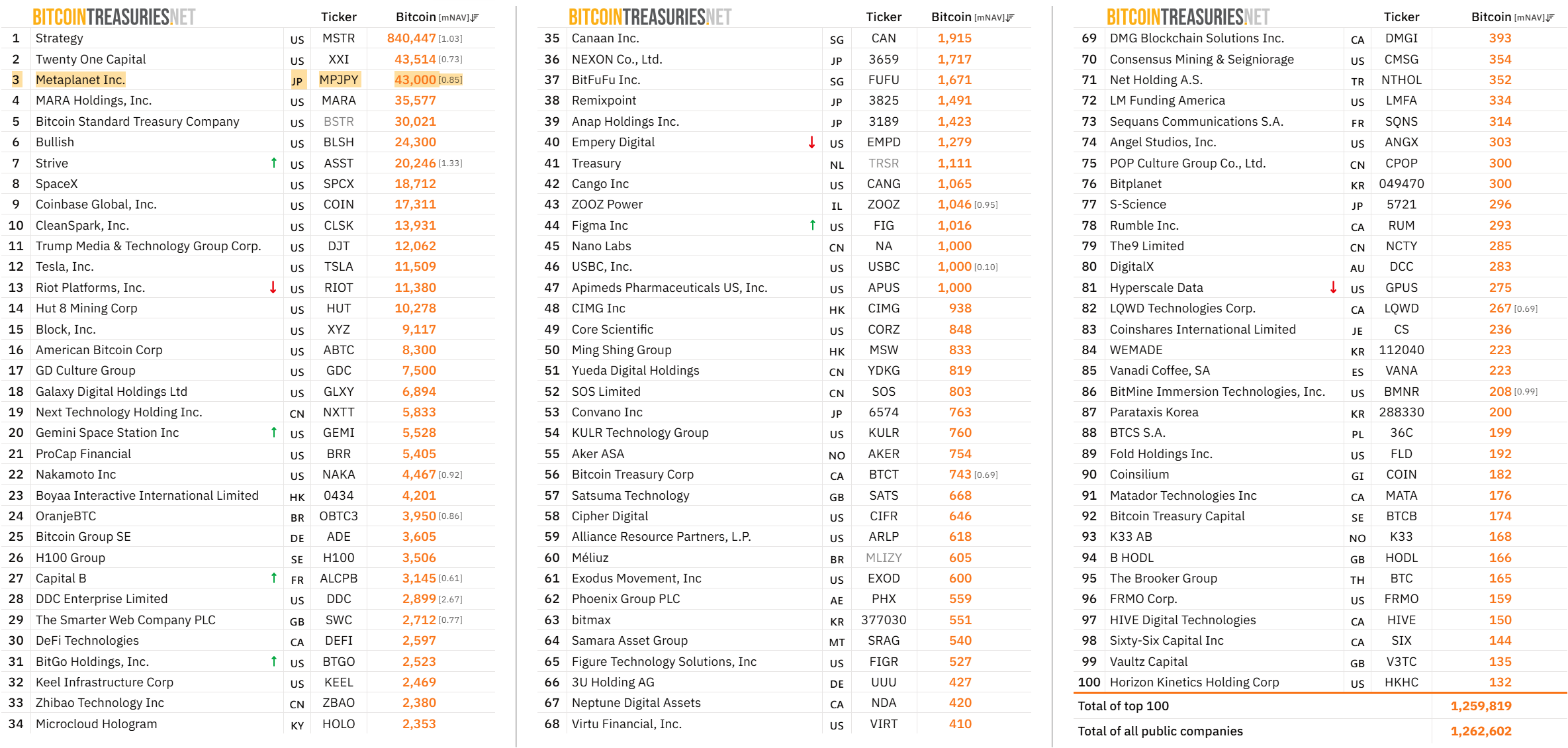
Metaplanet will move 2,100 Bitcoin (BTC) and $2.5 million in cash into Super League, a small Nasdaq-listed gaming media firm. The $134.6 million deal, announced Tuesday, creates a US treasury vehicle named Superplanet.
The move drops Metaplanet into the market Michael Saylor’s Strategy (formerly MicroStrategy) built. It also raises a sharp question. Why does Japan’s biggest corporate Bitcoin holder suddenly need American money?
Inside Metaplanet’s Bitcoin Beachhead on Nasdaq
Metaplanet pays $3.00 per share for a 95.7% stake in Super League. The firm will be renamed Superplanet and trade under the ticker SUPA. Metaplanet gets board control, and every share it receives is locked up for five years.
The groundwork was laid a year ago. Evo Fund, a sponsor of Metaplanet, invested $10 million in Super League in September 2025. That deal wiped out Super League’s debt and fixed its Nasdaq compliance problems.
The structure also leaves room to grow. Metaplanet can add up to $210 million through preferred stock within 24 months of closing. The deal should close in the fourth quarter of 2026, pending a shareholder vote and regulators in both countries.
Metaplanet CEO Simon Gerovich framed the move as expansion rather than necessity.
“We’ve built one of the world’s largest Bitcoin treasuries from Japan. Superplanet is how we build in America, the deepest capital market in the world… It is one consolidated Bitcoin position, compounding through two listed platforms in Japan and in the U.S,” read an excerpt in the announcement, which cited Gerovich.
Follow us on X to get the latest news as it happens
Could Japan Not Fund Metaplanet’s Bitcoin Ambitions?
The honest answer is less dramatic. Metaplanet raised money in Tokyo for years through warrants, bonds, and stock sales. That money bought 43,000 BTC, the world’s third-largest corporate stack.

However, Japan lacks one thing. It has no market for perpetual preferred stock, permanent capital backed by Bitcoin that never needs repaying.
The US market is proven and deep. MicroStrategy’s STRC preferred stock raised $2.5 billion at its debut in July 2025. It pulled in another $7.5 billion this year alone, per Strategy’s second-quarter results. Its preferred shares beat Bitcoin over the past year even as MSTR stock collapsed.
That is the turf Metaplanet is walking onto. Strategy holds 840,447 BTC, nearly 20 times Metaplanet’s stack.
The timing is uncomfortable, though. MicroStrategy sold 1,690 Bitcoin this month to prop up STRC, which trades below its $100 face value. Preferred dividends have already cost Strategy over $1 billion. Both firms also face an MSCI index removal threat.
The first test comes when Superplanet sells its first preferred shares. If American investors buy, other treasury firms will likely copy the playbook. If they pass, Metaplanet will have paid $134.6 million to learn why Saylor’s turf stayed his.
The post Metaplanet Invades Saylor’s Home Turf. Couldn’t Japan Fund Its Bitcoin Ambitions? appeared first on BeInCrypto.
MoonPay has added Cash App Pay to its checkout, giving eligible US customers a way to purchase cryptocurrency using funds from their Cash App balance. The payments provider says the option is available both on MoonPay’s own platform and through select partner integrations, removing the need to move between apps or complete additional logins.
In an announcement shared with Cointelegraph on Tuesday, MoonPay said Cash App Pay is now live for users across its network of wallet and payments partners, including Trust Wallet, Bitcoin.com, MetaMask, Moonshot, Ledger, BitPay, Uniswap, Tangem, LOBSTR, and Edge.
Key takeaways
- MoonPay’s checkout now supports Cash App Pay, allowing US users to fund crypto purchases directly from their Cash App balance.
- The integration is also available through select MoonPay partners, including major wallet and onchain platforms such as MetaMask and Uniswap.
- MoonPay’s payments stack already includes integrations with PayPal and Venmo, after adding PayPal in 2024 and expanding to Venmo later.
- Cash App, operated by Block, supports buying and selling Bitcoin in-app—MoonPay’s integration broadens the range of crypto options available to users who prefer Cash App funding.
- The company is licensed in New York and authorized in the Netherlands under EU crypto rules, reflecting its ongoing push to expand beyond traditional onramps.
A simpler path from Cash App funds to crypto
For users, the practical change is convenience. MoonPay says customers can buy cryptocurrency by using their Cash App balance through MoonPay’s checkout flow, without switching apps or completing a separate login. The goal is to reduce friction at the moment money changes hands—an area where crypto purchases have often struggled against the “just don’t make me do it twice” expectations of mainstream payment users.
Cash App already offers in-app Bitcoin buying and selling, which helped make it a familiar onramp for millions of people. MoonPay’s integration extends that funding method beyond Bitcoin, potentially making it easier for Cash App users to access a wider selection of assets via partner wallets and platforms.
Block’s shareholder reporting indicates Cash App had 59 million active users in June, according to its second-quarter shareholder letter linked by Cointelegraph. As MoonPay plugs into that user base through Cash App Pay, the integration could improve discovery and conversion for assets accessible through its supported partners.
Available across MoonPay’s checkout and partner ecosystem
MoonPay positioned the rollout as part of its broader distribution strategy—pushing payment options not only through its own interface, but also through third-party applications. In Tuesday’s announcement, the company named a range of partners where Cash App Pay is supported, spanning self-custody wallets, crypto services, and payment/commerce tools.
These include wallets and ecosystems such as Trust Wallet, MetaMask, Ledger, Tangem, and Bitcoin.com, as well as platforms like Uniswap and BitPay. For users, that matters because it means they may not need to choose between a wallet they already use and a payment provider they trust; instead, the funding method can travel with the interface.
MoonPay’s payments expansion: PayPal, Venmo, and now Cash App Pay
The Cash App Pay addition continues MoonPay’s ongoing effort to broaden the range of mainstream payment routes it can offer. Cointelegraph notes that MoonPay supports payment integrations with PayPal and Venmo as well—PayPal was added in 2024, and MoonPay later expanded to Venmo.
By stacking familiar consumer payment brands on top of its crypto checkout infrastructure, MoonPay is effectively targeting a recurring user need: the ability to fund crypto purchases through everyday financial accounts. Cash App Pay is a particularly notable fit because Cash App is already designed around balance management inside a single app, which may reduce friction for users who don’t want to learn a new payment flow.
Regulatory footing and a shift beyond simple onramps
MoonPay said its operations are backed by licensing and authorization frameworks. The company is licensed by the New York State Department of Financial Services through a BitLicense and Limited Purpose Trust Charter, and it is authorized under the European Union’s Markets in Crypto-Assets Regulation (MiCA) in the Netherlands.
The integration also arrives during a period when MoonPay has been broadening its focus beyond a pure “fiat-to-crypto onramp.” Cointelegraph reported that the company has pursued multiple acquisitions and product moves during 2026.
Earlier in the year, MoonPay acquired Solana trading infrastructure provider DFlow in May, following an April deal for crypto security firm Sodot. In July, MoonPay acquired cross-chain infrastructure startup Glide and launched PayBox, described in prior Cointelegraph coverage as a vault designed to let ChatGPT and Claude users authorize crypto transactions while keeping custody of their assets.
While Cash App Pay is still fundamentally about payments, MoonPay’s larger pattern suggests it is building a wider platform that can support not just entry into crypto markets, but also execution and infrastructure for services that operate across chains and applications.
What to watch next
As Cash App Pay rolls out through MoonPay and partner apps, users and builders should watch for which cryptocurrencies become available through each partner interface and whether MoonPay continues expanding to additional mainstream payment rails. The broader question is whether these integrations translate into sustained conversion—turning “one more checkout option” into a reliable default for new crypto buyers.
The 10-year Treasury yield rose near a 19-month high on Tuesday, adding to Monday’s jump as the U.S. remained locked in a test of wills over the Strait of Hormuz with Iran, which has threatened to go on the offensive. Higher oil prices risk stoking inflation pressures at a bad time for the S&P 500 bull market, which has been…
Copyright ©2026 Investor’s Business Daily, LLC. All rights reserved. 87990cbe856818d5eddac44c7b1cdeb8
Bank of America on Tuesday hiked its price targets on cybersecurity stocks on views that a worsening artificial intelligence-based threat landscape supports higher valuations. Cybersecurity stocks have rebounded from worries that AI model builders will emerge as competitors. Bank of America raised its price targets for SentinelOne (S), SailPoint (SAIL) and Zscaler (ZS). Other cybersecurity stocks may be extended amid…
Copyright ©2026 Investor’s Business Daily, LLC. All rights reserved. 87990cbe856818d5eddac44c7b1cdeb8


Retail investors can apply to buy the 1 billion yen bond without a securities account and receive perks through Toyota’s payment app.
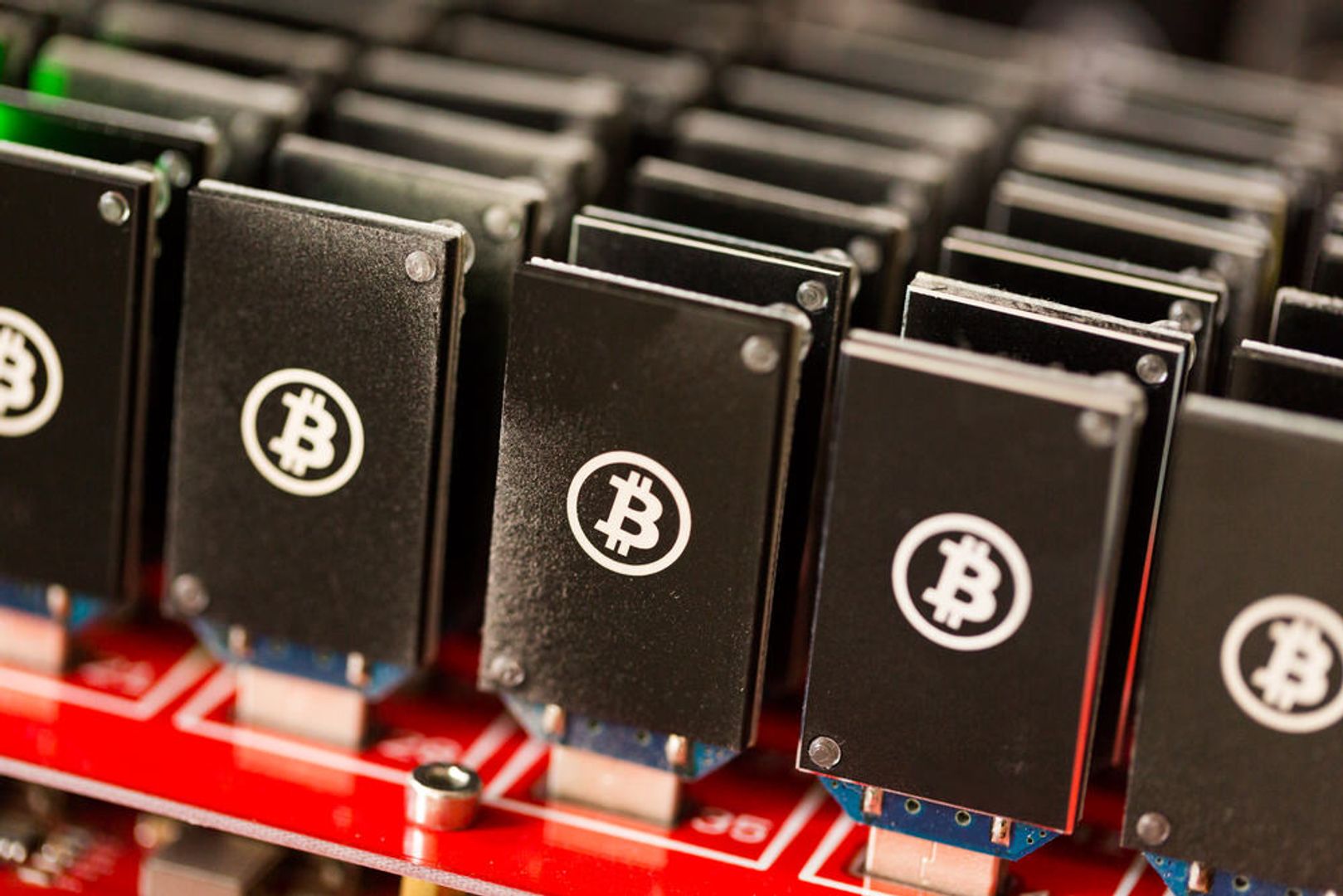
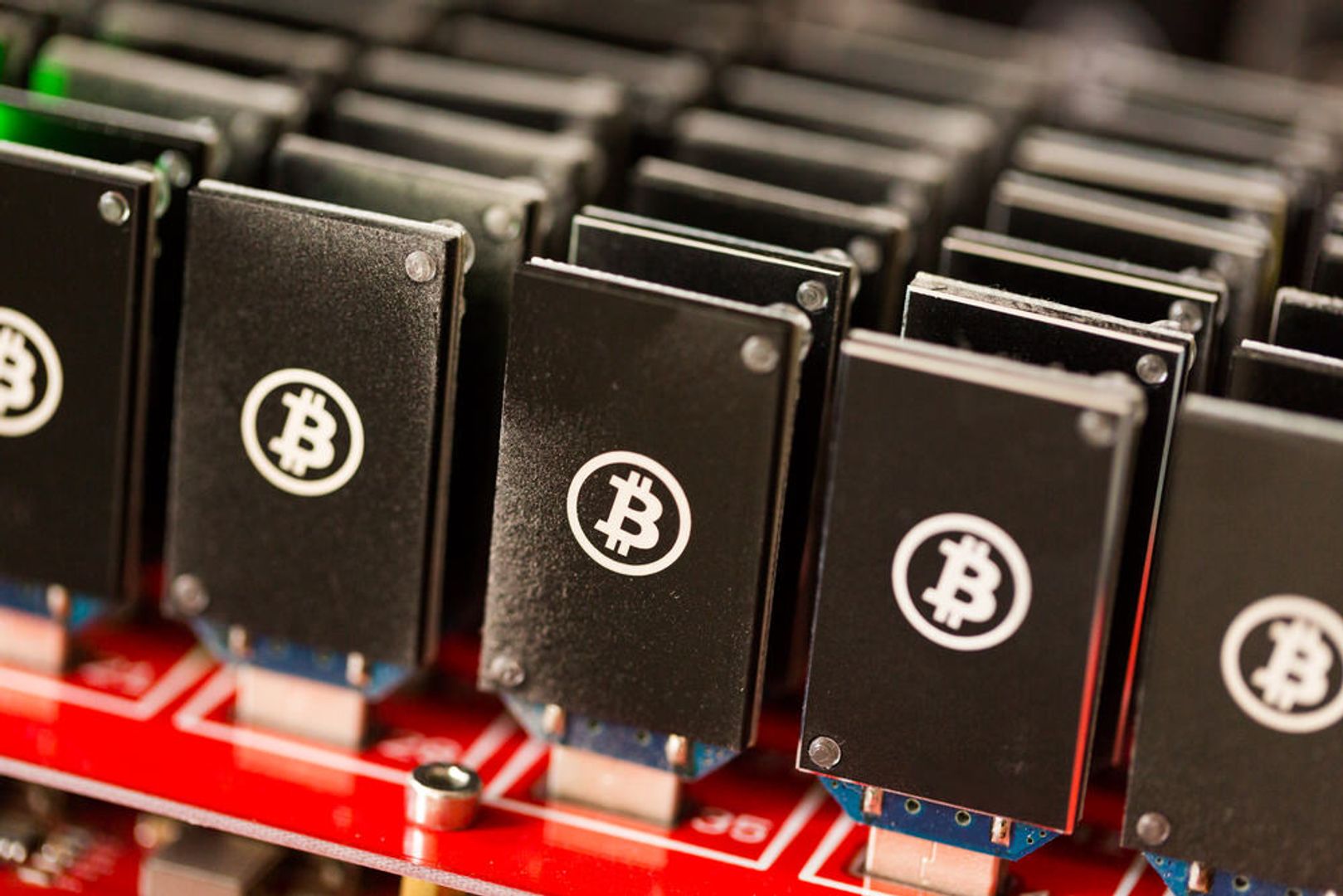
MARA’s performance reflects the slide in hashprice, the expected daily revenue generated by a unit of bitcoin mining power. In July last year, the hashprice was $63 for each petahash per second (PH/s) of power. It’s now around $31.80 per PH/s.
Not surprisingly, an increasing number of miners are finding it unprofitable to continue production and are turning off their machines, a process known as capitulation. As a result, the Bitcoin network’s hashrate — a measure of mining power — has dropped to 900 exahash per second (EH/s) from 1.14 zettahash per second (ZH/s), or about 21%.
This is already one of the longest capitulation cycles on record, and it may not be over.
In the meantime, the market has repriced companies that have secured AI and HPC contracts.
According to CoinShares’ first-quarter mining report, miners with HPC contracts trade at 12.3 times their enterprise value. That compares with the 5.9 times commanded by pure-play bitcoin miners.
The report also estimated that the industry had secured a cumulative $70 billion in AI and HPC contracts by the end of that quarter.
As the year progressed, miners have announced a growing number of contracts at increasingly large valuations. Just a week ago, for example, Riot Platforms (RIOT) signed a 20-year lease with Anthropic valued at $9.1 billion. Riot’s shares have climbed from around $3 to $20 over the past four years, highlighting how dramatically the market has repriced miners with exposure to AI infrastructure.


MoonPay has added Cash App Pay as a payment method for cryptocurrency purchases, giving eligible U.S. customers a way to fund MoonPay transactions directly from their Cash App balances.
Summary
- Cash App Pay is now available for crypto purchases through MoonPay in the U.S.
- The integration lets eligible users fund purchases directly from their Cash App balances.
- Cash App reported 59 million active users in June.
- MoonPay has expanded into institutional crypto services through several acquisitions in 2026.
MoonPay said Tuesday that Cash App Pay is now available through its own checkout and across selected partner platforms, including Trust Wallet, Bitcoin.com, MetaMask, Moonshot, Ledger, BitPay, Uniswap, Tangem, LOBSTR and Edge.
Customers using the option can pay for crypto with funds held in Cash App without moving money between separate services or completing another login during the purchase process. The integration adds another payment route for MoonPay users in the U.S., where Cash App already serves tens of millions of customers.
Operated by Jack Dorsey’s Block, Cash App reported 59 million active users in June, according to Block’s second-quarter shareholder report. Cash App already allows customers to buy and sell Bitcoin inside its own app, while the MoonPay connection gives eligible users access to additional cryptocurrencies available through MoonPay.
“Cash App is where tens of millions of Americans already manage their money,” MoonPay co-founder and CEO Ivan Soto-Wright said. “This integration means that those users can access the digital asset ecosystem, funded instantly from an app they already know and trust.”
MoonPay Cash App Pay joins its existing payment options
Cash App Pay joins PayPal and Venmo among the payment services that MoonPay has connected to its crypto purchasing infrastructure.
MoonPay added PayPal support in 2024 and later expanded its payment options through Venmo. An earlier crypto.news report covered the October 2024 Venmo integration, which allowed roughly 60 million U.S. users at the time to buy cryptocurrencies through MoonPay using their Venmo balances.
The setup followed a similar model to the new Cash App Pay service, allowing customers to use balances held in a familiar payments app while MoonPay handles the crypto transaction. Venmo support was subsequently made available across parts of MoonPay’s partner network.
Payment integrations form one part of MoonPay’s original fiat-to-crypto business, under which the company connects traditional payment methods with cryptocurrency purchases. Its platform currently supports methods including cards, bank transfers and several digital payment services, with availability depending on the customer’s location.
MoonPay said the Cash App option will work both through its direct checkout and supported third-party services. The partner list puts Cash App Pay inside several established self-custody wallets and crypto applications, including MetaMask, Ledger and Trust Wallet, without requiring each service to build a separate Cash App purchasing flow.
Under MoonPay’s regulatory setup, the company operates in New York under a BitLicense and Limited Purpose Trust Charter issued by the New York State Department of Financial Services. MoonPay is also authorized under the European Union’s Markets in Crypto-Assets framework through the Netherlands.
MoonPay has been building beyond its crypto onramp business
While the Cash App deal adds another consumer payment option, MoonPay has spent much of 2026 adding infrastructure for institutional trading, custody and tokenized assets.
In April, MoonPay acquired security firm Sodot to supply key-management technology for a newly created institutional business. The transaction was completed as an all-stock deal valued at roughly $100 million, according to Bloomberg at the time.
MoonPay said Sodot’s technology would support services for financial institutions, asset managers, trading firms and exchanges. The unit covers areas including trading, payments, tokenized securities, wallet infrastructure and stablecoin issuance, with former acting Commodity Futures Trading Commission Chair Caroline Pham leading the business.
Sodot specializes in self-hosted multiparty computation technology, which splits control of cryptocurrency private keys across separate components. MoonPay incorporated the technology into its institutional infrastructure as it added services beyond retail crypto purchases.
The company also acquired Solana trading infrastructure provider DFlow in May, adding technology that later became part of MoonPay Trade. The institutional execution platform gives clients access to trading and routing infrastructure across more than 200 blockchains through a single API, according to details released by the company in June.
Another institutional integration followed in June when Franklin Templeton added its BENJI fund to MoonPay Trade. The arrangement lets institutional users exchange stablecoins including USDC and USDT for Franklin Templeton’s tokenized U.S. government money market fund.
Franklin Templeton said the connection could be used for treasury management, portfolio rebalancing, collateral and liquidity operations. MoonPay said the deal extended its institutional services into tokenized financial products alongside crypto, fiat and stablecoin infrastructure.
MoonPay also bought cross-chain infrastructure startup Glide in July, continuing the acquisition program that has supplied technology for trading, security and blockchain connectivity.
AI payments have become another part of MoonPay’s expansion
MoonPay moved into AI-assisted crypto transactions during the same period, introducing products designed to let users authorize financial actions through conversational assistants.
Earlier this month, the company launched its PayBox vault, a noncustodial payment product that connects with ChatGPT and Anthropic’s Claude. Users can instruct an assistant to prepare crypto purchases, swaps, cross-chain transfers, decentralized finance deposits and certain online purchases while retaining control over transaction permissions.
PayBox offers an “Always Ask” mode that requires passkey approval for each transaction and an “Autonomous” setting that lets an assistant act within spending limits and rules configured by the user. Altering the permission model also requires passkey authorization.
The product uses technology obtained through the Sodot acquisition, with wallet keys divided using multiparty computation and stored across secure hardware environments. MoonPay said neither the company nor a connected AI assistant can independently obtain the complete private key or authorize a transaction.
PayBox currently supports Solana and several Ethereum Virtual Machine-compatible networks, including Ethereum, Base, Arbitrum, Polygon, Hyperliquid, Tempo and Robinhood Chain. Its first integrations also cover selected travel bookings, restaurant reservations, and purchases from online retailers.

Zenith wins Northern Endeavour decomissioning contract

MoonPay Integrates Cash App Pay to Enable US Crypto Purchases

Tom Holland Could Earn Over $100 Million From Spider-Man: Brand New Day





-

 Fashion4 days ago
Weekend Open Thread: Ann Taylor
-
 NewsBeat7 days ago
Communication cards help banking customers access services or report scams
-
 Sports5 days ago
This U.S. Amateur is a glimpse into golf’s future in more ways than you think
-
 NewsBeat3 days ago
Myanmar says over 300,000 Rohingya refugees verified for repatriation as exodus enters ninth year
-

 Sports4 days ago
Birmingham 2026: Day 6 Timetable for Irish Athletes
-

 Politics3 days ago
SEQ Code: The Three Letter Boarding Pass Code That Could Give You The Worst Seat
-
 Tech4 days ago
11 Ways to Rank Your Videos
-
 Entertainment6 days ago
Keke Palmer Subtly Hints At Sean Evans Drama With Cryptic Post
-

 Fashion7 days ago
Coffee Break: The Fonteyn Jane Flat
-

 Tech7 days ago
Zoom Screen-Sharing Bug Let People Fully Take Over Other Devices On A Call
-

 Fashion7 days ago
Should you refinance your debt? Pros, cons, and real numbers
-
 Crypto World6 days ago
XRP bridge drained after software mistook fake deposits for real ones
-

 Tech5 days ago
DeepSeek Harness launches as open source rival to Claude Code, alongside V4-Pro on API with higher prices
-

 Sports6 days ago
DeQuan Jones in ‘high spirits’ after successful leg surgery
-

 Tech6 days ago
SpaceXAI’s Grok Bot turns agents into persistent digital coworkers that can operate your apps for $120-per-month
-
 Crypto World6 days ago
Perplexity AI Predicts an XRP Scenario Few Analysts Are Discussing
-
 Entertainment6 days ago
2026’s Most Ambitious Fantasy Movie Officially Scores Sequel Update
-

 Politics6 days ago
How Average Are You In The UK?
-

 Politics7 days ago
In the Chris Kaba case, the police watchdog capitulated to the mob
-

 Fashion7 days ago
How Do You Get Your Work Noticed?
You must be logged in to post a comment Login