
Crypto World
Major Bank Expects Solana to Outperform Bitcoin: When and How?

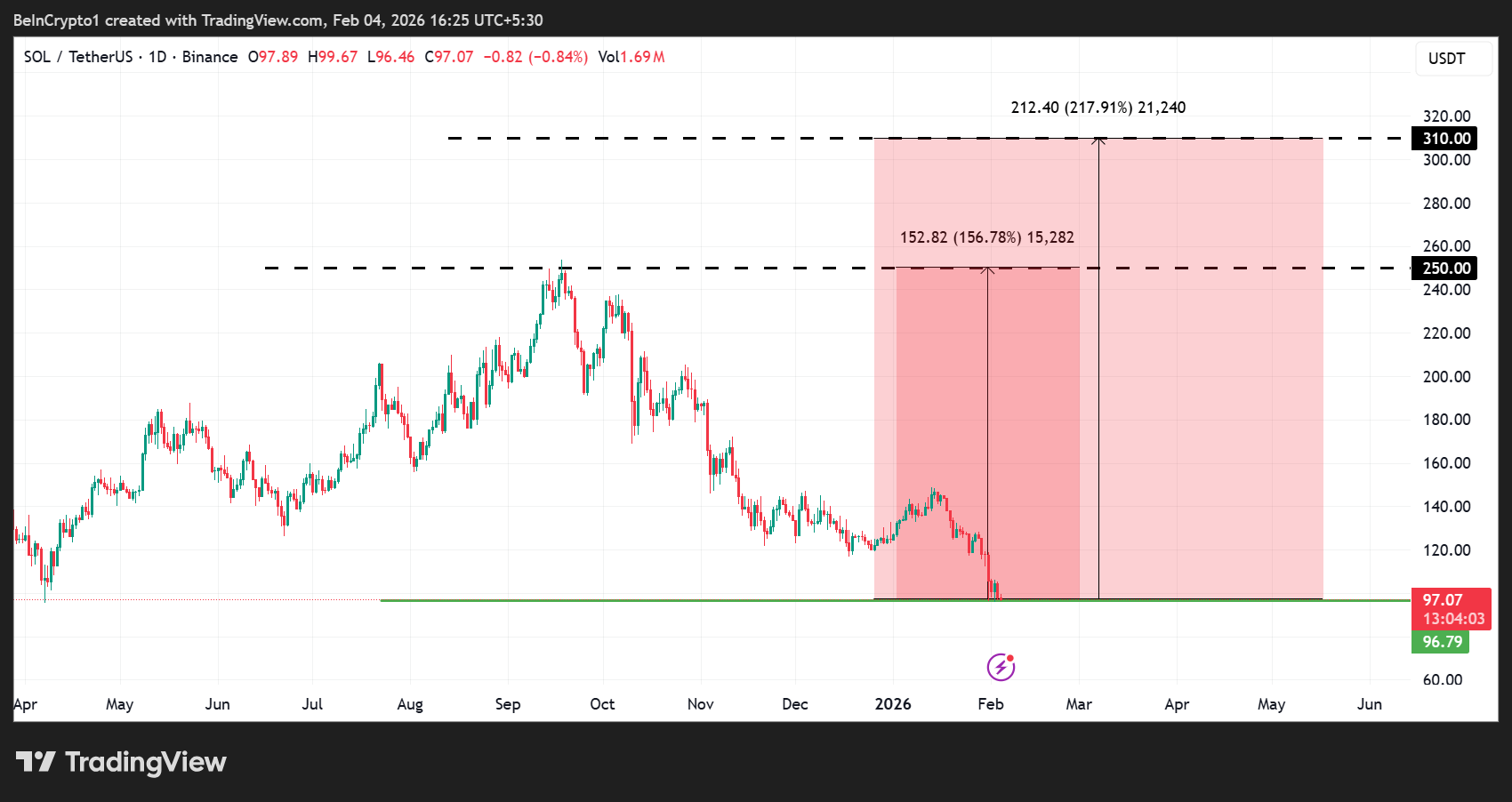
Standard Chartered is urging investors to look through near-term volatility in digital assets and focus on what it calls “quality” blockchain projects.
The remark comes as the recent selloff reshapes relative value across the crypto market.
Sponsored
Sponsored
Standard Chartered Backs Ethereum and Solana for Long-Term Outperformance Despite Near-Term Volatility
Geoff Kendrick, the bank’s Head of FX and Digital Assets Research, said he is actively accumulating during the downturn. According to the analyst, the pullback is a defining moment for long-term positioning.
“I am a buyer of this dip in digital assets,” Kendrick told BeInCrypto in an email. “What’s more, I think this is the start of greater differentiation in digital asset performance, whereby quality projects win.”
Within that framework, Standard Chartered continues to favor Ethereum and Solana as its top layer-1 exposures. Kendrick reiterated that view explicitly, adding:
“I have previously highlighted my view that Ethereum is one such quality project. And here I do the same for Solana. Buy quality.”
Recently, Standard Chartered said it saw Ethereum outperforming Bitcoin, citing DeFi dominance, scalability upgrades, and regulatory clarity.
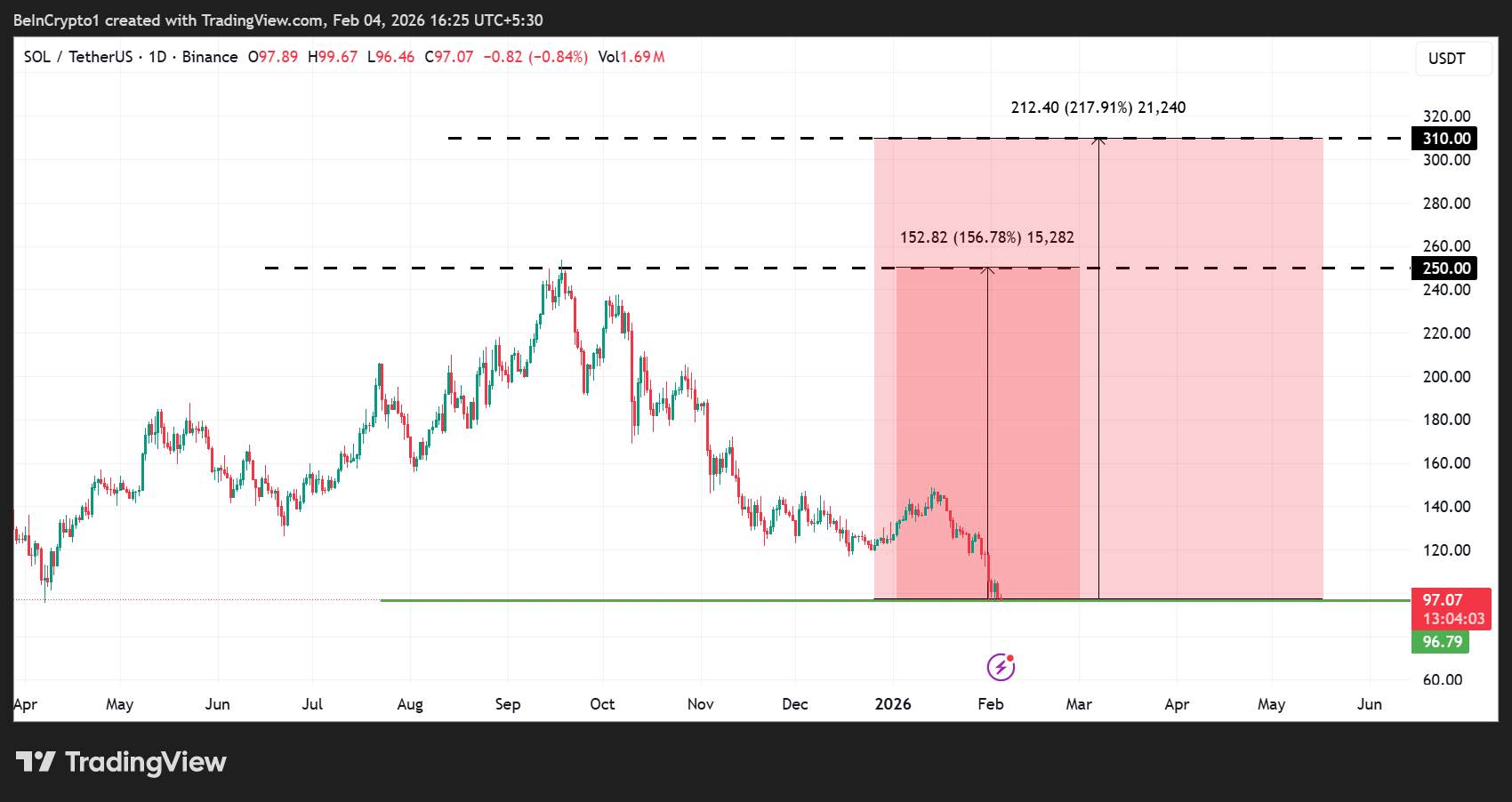
The bank, however, has tempered its near-term expectations for Solana. Standard Chartered lowered its end-2026 price forecast for SOL to $250 from $310. On this, they cite the time required for the network’s next major use case to mature.
“We lower our end-2026 price forecast to USD 250, as Solana’s next dominant use case may take time,” Kendrick said.
Sponsored
Sponsored
Despite that cut, the bank raised its longer-dated projections, arguing that Solana’s structural advantages remain intact.
Solana’s Shift from Meme Coins to Micropayments Could Drive Long-Term Outperformance
According to Standard Chartered, Solana’s ultra-low-cost, high-throughput architecture positions it to eventually dominate micropayments. This, Kendrick says, is particularly true as AI-driven applications and stablecoin-based transactions gain traction.
“We raise our forecasts thereafter, as we see Solana eventually dominating the micropayments space,” Kendrick noted.
Sponsored
Sponsored
If that thesis plays out, the bank expects SOL to outperform Bitcoin between 2027 and 2030, while only gradually catching up to Ethereum as the ecosystem scales.
The report highlights a subtle but important shift underway on Solana’s decentralized exchanges. While the network has long been associated with meme coin activity, flows are increasingly rotating toward SOL-stablecoin trading pairs.
These stablecoins, Standard Chartered notes, are turning over two to three times faster than their Ethereum counterparts.
That evolution could help Solana shed its “meme coin discount,” which previously weighed on valuation and deterred TradFi participants.
Sponsored
Sponsored
Analysts Back Standard Chartered’s Quality Wins Narrative
Market commentators broadly echoed the bank’s “quality wins” narrative. Investor Mike Alfred described the drawdown as a textbook risk-off move.
“…this is a run-of-the-mill risk-off move where the lowest quality goes down the hardest, and then everything bounces… This is when real money is made,” wrote Alfred, referencing the recent market drop.
Developer and investor Mike Ippolito struck a similar tone, arguing that sentiment has swung too far in the negative direction.
“I think people are far too bearish ETH and SOL today,” he said, calling layer-1 blockchains “the Amazon or Google of our time” due to their global markets, high barriers to entry, and fee-generating potential.
Standard Chartered expects Solana to underperform Ethereum through 2026 and into 2027. But beyond that window, the bank sees a catch-up phase driven by scale, utility, and cost advantages.
In Kendrick’s view, the current volatility is less a warning sign than a sorting mechanism, one that may ultimately reward investors willing to buy quality while the market is still unsettled.

Crypto World
Spartans Betting Platform Generates $40 Million GGR While Rollbit and BC.Game Cannot Keep Up

The digital wagering sector in April 2026 is witnessing a technical revolution where speed is the ultimate currency. While Rollbit and BC.Game have defined the previous era of crypto-native gambling, Spartans.com is rewriting the rules through sheer technical performance. During its record-breaking beta phase, Spartans processed $100,000,000 in total deposits, generating an impressive $40,000,000 in Gross Gaming Revenue (GGR).
Currently ranked 14th and climbing globally, the platform has established itself as the fastest withdrawal online casino by integrating proprietary “Degen Zone” technology, allowing for high-velocity wagering and instant payouts that legacy platforms simply cannot match.
Rollbit: The Crypto-Native Ecosystem
Rollbit has long been considered a pioneer in the crypto gambling space, successfully building a multifaceted ecosystem that blends traditional casino games with innovative features like NFT loans and a native token economy. In 2026, it remains a major destination for players who appreciate a broad range of crypto-integrated services.
However, the complexity of the Rollbit platform—designed to manage everything from a sportsbook to a token-burn mechanism—can sometimes lead to a slightly higher latency during peak wagering periods. While Rollbit offers a diverse experience, its core engine is not exclusively optimized for the ultra-high-frequency betting that modern “power users” demand.
Consequently, while it provides a reliable service, it faces stiff competition from specialized, high-velocity engines. For players prioritizing the absolute fastest execution and the most streamlined withdrawal process, the multifaceted nature of Rollbit can occasionally represent an operational trade-off in raw technical speed.
BC.Game: The Gamification Giant
BC.Game is the industry leader in social gamification, keeping its massive user base engaged through a continuous cycle of quests, daily spins, and community-focused incentives. Its platform is a masterclass in retention, offering a deep VIP hierarchy and a wide array of proprietary games. As of mid-April 2026, it continues to thrive by appealing to a broad demographic of social bettors.
However, this focus on gamification results in a “heavy” user interface that can struggle to provide the zero-latency experience required for high-frequency automated betting. BC.Game’s withdrawal infrastructure is robust, but it often involves multiple verification steps and native token conversions that can add time to the payout cycle.

For the elite tier of bettors who treat gambling as a high-performance activity, the social layers of BC.Game can feel like friction. While it remains a top-tier choice for entertainment, it lacks the specialized “Degen” focus found in newer, leaner platforms.
Spartans: High-Velocity GGR and the Degen Zone
Spartans.com has redefined what it means to be a high-performance gambling platform by focusing on the core essentials: speed, liquidity, and technical efficiency. Generating $40,000,000 in Gross Gaming Revenue (GGR) from $100,000,000 in total deposits during its beta phase is a testament to the platform’s unparalleled engagement. This massive revenue result is driven by the proprietary “Degen Zone”, a high-velocity wagering engine designed specifically for automated betting on original titles like Crash, Plinko, and Dice. The Degen Zone allows players to process thousands of wagers per hour with zero latency, making Spartans the definitive choice for the modern power user.
To complement this wagering speed, Spartans has established itself as the fastest withdrawal online casino by utilizing high-speed ADA (Cardano) and AVAX (Avalanche) multi-chain payment rails. These rails ensure that payouts are as instantaneous as the games themselves, bypassing the administrative delays common on other sites. Currently sitting at a 14th global ranking and climbing, Spartans has used its beta performance to prove that technical superiority leads to higher volume and better results.

While the platform offers over 5,900 games from 43+ providers, the “Degen Zone” remains its crown jewel, catering to a segment of the market that demands precision and pace. By stripping away the clutter of social gamification and focusing on raw performance, Spartans is successfully migrating high-stakes volume away from Rollbit and BC.Game, positioning itself as the elite standard for the August 1st global launch.
Conclusion
The technical gap between Rollbit, BC.Game, and Spartans.com is becoming the primary differentiator for the world’s most active bettors in 2026. While Rollbit offers a complex ecosystem and BC.Game excels in social engagement, Spartans.com has captured the high-performance market with its $40M GGR and specialized “Degen Zone.”
As the platform continues its ascent past the 14th global rank, it has firmly cemented its reputation as the fastest withdrawal online casino in the industry. For players who demand instant execution and liquid payouts, Spartans.com provides the ultimate technical edge in the modern crypto-gambling era.

Find Out More About Spartans:
Website: https://spartans.com/
Instagram: https://www.instagram.com/spartans/
Twitter/X: https://x.com/SpartansBet
YouTube: https://www.youtube.com/@SpartansBet
Disclaimer: This is a Press Release provided by a third party who is responsible for the content. Please conduct your own research before taking any action based on the content.

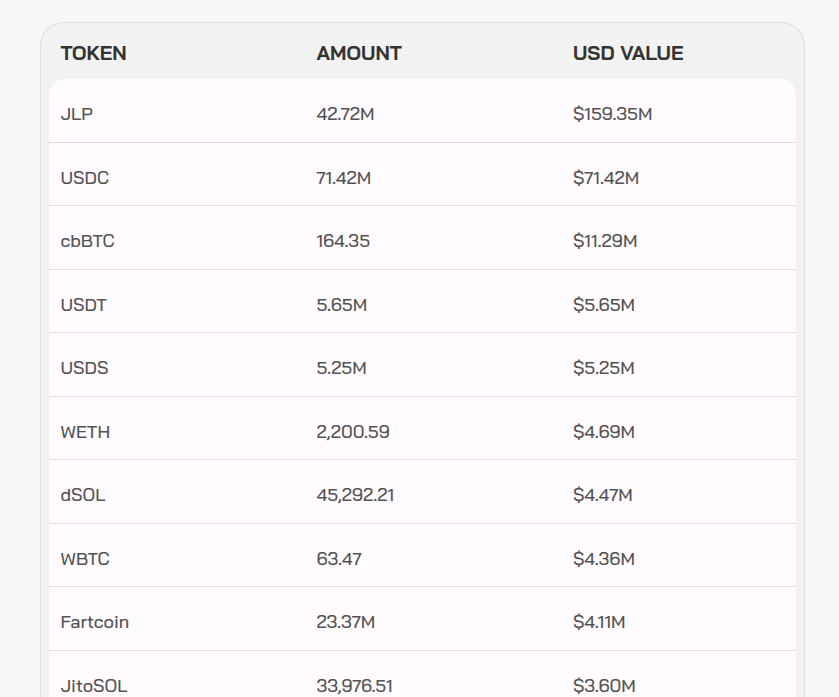
Stablecoin issuer Tether, the company behind USDt (USDT), said Thursday it will back a $150 million recovery program for the Drift Protocol decentralized exchange (DEX) following an exploit of the platform in April.
The recovery plan for the $280 million Drift Protocol exploit includes $127.5 million from Tether, with the rest coming from undisclosed partners, according to Tether’s announcement. Tether said:
“Rather than relying on upfront capital alone, the structure links funding and recovery to ongoing trading activity on the Drift platform, allowing user balances to be restored as the exchange returns to normal operations.”
The Drift Protocol platform will “contribute directly” to the ongoing recovery of user funds as the platform resumes normal trading activity.

Drift will also transition its settlement asset from Circle’s USDC (USDC) dollar-pegged stablecoin to Tether’s USDt as part of the platform’s relaunch.
Cointelegraph reached out to Tether but did not receive a response by the time of publication.
The recovery program highlights a growing trend of crypto industry companies collaborating to restore user funds and help platforms resume normal operations after major hacks or cybersecurity attacks that cause hundreds of millions of dollars in losses.
Related: Drift sends onchain message to wallets tied to $280M exploit
Circle comes under fire for not freezing funds after Drift Protocol attack
Crypto industry executives, cybersecurity researchers and blockchain security firms criticized Circle for not freezing the USDC wallets linked to the Drift Protocol exploiter, despite having a window of several hours to intervene.
The exploiter used Circle’s Cross-Chain Transfer Protocol (CCTP), a native bridge that allows tokens to be transferred to other blockchain networks, to transfer over $232 million USDC from the Solana network to the Ethereum network, according to onchain sleuth ZachXBT.

The funds were transferred in more than 100 transactions, he said, adding, “Despite the attacker laundering funds over six consecutive hours across Circle’s own native bridge, no USDC was frozen. The attacker has been linked to North Korea by Elliptic.”
Circle’s stock sank by about 10% on April 9, following criticism over the company’s failure to freeze the funds from the hack and downgraded forecasts from market analysts. The NYSE-traded shares have since clawed back that decline, increasing about 20% as of yesterday’s close, according to Yahoo Finance data.
Magazine: Are DeFi devs liable for the illegal activity of others on their platforms?
Crypto World
Wall Street tech is coming to crypto as DoubleZero rolls out high-speed data for blockchain


DoubleZero Foundation, a project building high-speed data infrastructure for blockchains like Solana, has rolled out a new platform to speed up how trading firms access crypto market data — a sign of growing demand for Wall Street-style systems in digital asset markets.
The project, called DoubleZero Edge, went live on Thursday. Its first offering is a real-time feed of raw data from the Solana blockchain, giving traders faster access to information that can influence prices.
Solana, a high-speed blockchain popular with traders, produces large amounts of real-time data as transactions are processed. DoubleZero plugs into that system by working with validators to distribute it more quickly to market players.
Unlike traditional finance, where exchanges rely on specialized networks to deliver data at high speed, crypto markets still largely depend on the public internet: a setup that can introduce delays and inconsistencies. DoubleZero is trying to change that by building a dedicated system designed specifically for onchain data.
According to the company, the new network can shave tens of milliseconds off data delivery times, with bigger gains during periods of heavy network activity. For high-frequency trading firms, even small speed improvements can translate into a competitive edge.
The platform works by sending data over a private fiber network using multicast, a method commonly used in traditional financial markets to simultaneously distribute data to multiple participants.
Beyond speed, DoubleZero is also pitching a new economic model. Validators on the Solana network can earn additional revenue by supplying data to the platform, while traders pay to subscribe to the feeds using USDC.
The launch comes as crypto trading firms increasingly seek more reliable, predictable infrastructure, particularly as competition intensifies and margins tighten. DoubleZero says its system could help level the playing field by reducing uncertainty in how quickly market data reaches participants.
“Traditional finance has spent decades building infrastructure where speed and deterministic performance are a real competitive advantage,” said Andrew McConnell, a co-founder of DoubleZero, in a press release shared with CoinDesk. “On-chain markets didn’t get that foundation, which left even sophisticated trading firms working on uneven ground. Deterministic infrastructure removes a risk market makers have to price in, which leads to tighter spreads and better execution.”


Bitcoin’s core developers earlier this week proposed freezing 8 million coins to defend against quantum attackers.
But Cardano founder Charles Hoskinson believes it still can’t save coins belonging to the network’s pseudonymous creator Satoshi Nakamoto, per a video posted to his YouTube channel late Wednesday.
Hoskinson said Bitcoin’s proposed defense against quantum computers is both technically mislabeled and structurally incapable of protecting the network’s oldest coins, including the roughly 1 million bitcoin attributed to Satoshi Nakamoto.
He argued that BIP-361, the proposal from developer Jameson Lopp and others to phase out quantum-vulnerable bitcoin addresses, is being presented as a soft fork but would functionally require a hard fork because it invalidates existing signature schemes that users are actively relying on.
“To actually do this, you need a hard fork,” Hoskinson said. The distinction matters because Bitcoin’s development culture has historically opposed hard forks, viewing them as violations of the network’s immutability. BIP-361 authors have described the proposal as a soft fork, a characterization Hoskinson called a lie.
A soft fork tightens the rules so old software still works but can’t use the new features. A hard fork changes the rules so fundamentally that old software stops working entirely and the network splits unless everyone upgrades.
BIP-361 suggests that users with frozen quantum-vulnerable funds could reclaim them by constructing a zero-knowledge proof tied to their BIP-39 seed phrase, a standard for generating wallet keys from a recoverable phrase.
Hoskinson argued this approach cannot rescue approximately 1.7 million bitcoin that predate BIP-39’s introduction in 2013, including the roughly 1 million coins associated with Satoshi’s early mining activity.
Those early coins were generated using a different key derivation method from the original Bitcoin wallet software, which relied on a local key pool rather than a deterministic seed.
There is no seed phrase to prove knowledge of, which means no zero-knowledge recovery scheme built on that assumption can return access to the holders.
“1.7 million coins can’t do that. It’s not possible. 1.1 million of which belong to Satoshi,” Hoskinson said.
If the proposal passes in its current form, those coins would remain permanently frozen regardless of whether their original owners ever attempt to migrate, because migration would require cryptographic proof they are unable to provide.
Jameson Lopp, the core developer who co-authored BIP-361, acknowledged in a post on X this week that he does not like the proposal and hopes it never needs to be adopted, describing it as “a rough idea for a contingency plan” rather than a finalized specification.
Lopp has argued that freezing dormant coins, which he estimates at 5.6 million bitcoin, would be preferable to allowing a future quantum attacker to recover and dump them on the market.
Hoskinson’s broader critique extends beyond the technical details. He argues that Bitcoin’s lack of formal on-chain governance leaves the network unable to resolve these tradeoffs through a structured process, forcing contentious upgrades to be negotiated through developer mailing lists and social pressure.
Crypto World
FCA releases finalized cryptoasset rules that include several technical traps to watch out for


The U.K.’s Financial Conduct Authority (FCA) is proposing crypto rules that could quietly expand the definition of custody, potentially sweeping in platforms and software providers that don’t consider themselves custodians.
The FCA published its Cryptoasset Perimeter Guidance on Wednesday, which includes a few technical traps for firms handling clients’ crypto assets.
The rules draw a red line at the 24-hour mark for custody. Any firm or crypto platform or app holding client assets for longer than a day during trade settlement will likely fall under the regulated custodian classification, which triggers a requirement for a full safeguarding-license.
Validators and node operators also need to proceed with caution. The regulator warned those involved in those activities will lose their pure tech exemption the moment they provide “added value” features. That includes things like user dashboards, yields or reward-compounding tools. In those cases, they must seek full approval for arranging staking.
“Our new perimeter gives us the tools to strengthen protections for consumers and support fair, transparent and orderly markets as the sector matures,” the FCA stated in the paper.
Also noteworthy is that for the first time, the FC has addressed the “shadow custody” issue. The financial watchdog made it clear that if a crypto service provider allows it to theoretically override a client’s authority, it is officially a custodian even if it guarantees it will never exert that power.
“The fact that an arrangement involves smart contracts, public blockchains or some elements of decentralisation does not determine the perimeter position or place the arrangement outside of regulation,” the document noted.
For stablecoin issuers, the mandate is equally blunt as it considers issuance legal only if the issuer is established in the United Kingdom and manages the entire lifecycle. That includes everything from the initial offering to redemption and reserve maintenance.
The FCA requested views on these proposals until the consultation closes on June 3, 2026, it said in a separate statement Wednesday. The regulator intends to publish finalized rules in policy statements this summer, followed by the final perimeter guidance in September.
The roadmap forces all entities providing crypto services to transition from the current money-laundering registrations systems to a more strict approval regime under the U.K.’s Financial Services and Markets Act (FSMA).
Firms intending to continue in business under the new regulations face a five-month application window from Sept. 30 of this year to Feb. 28, 2027. Missing this deadline exposes them to potential fines and suspensions as well as permanent closures.
Only those who apply during the application period will benefit from the so-called “savings provisions” that allow them to keep operating while the regulator deliberates.
Bitcoin quickly pulled back in U.S. morning trade on Thursday, slipping 2% in a matter of minutes after once again failing to push through what’s becoming stiff resistance.
The largest cryptocurrency fell to around $73,500 during the U.S. morning session, now lower by more than 1% over the past 24 hours. The move came after the crypto was turned back yet again after rising past $75,000.
Alongside, the breathtaking stock market rally — which yesterday sent the Nasdaq and S&P 500 to record highs — took a pause. A bit more than an hour into the session, both of those indices were lower by about 0.1%.
Crypto-linked stocks also pulled back across the board. Coinbase (COIN), Strategy (MSTR), Robinhood (HOOD) and Circle (CRCL) were all down roughly 2%-3% in morning trading.
Meanwhile, crude oil prices rose about 2%, reclaiming the $90 level, as ongoing geopolitical tensions continued to underpin supply concerns.
The $75,000-$76,000 range is key for bitcoin, as that was the level it traded at prior to the Feb. 5 market crash that took BTC down to $60,000. A rise past that level might suggest a larger move that could bring prices back to around the $90,000 mark at which bitcoin started the year.
Software catching up to bitcoin
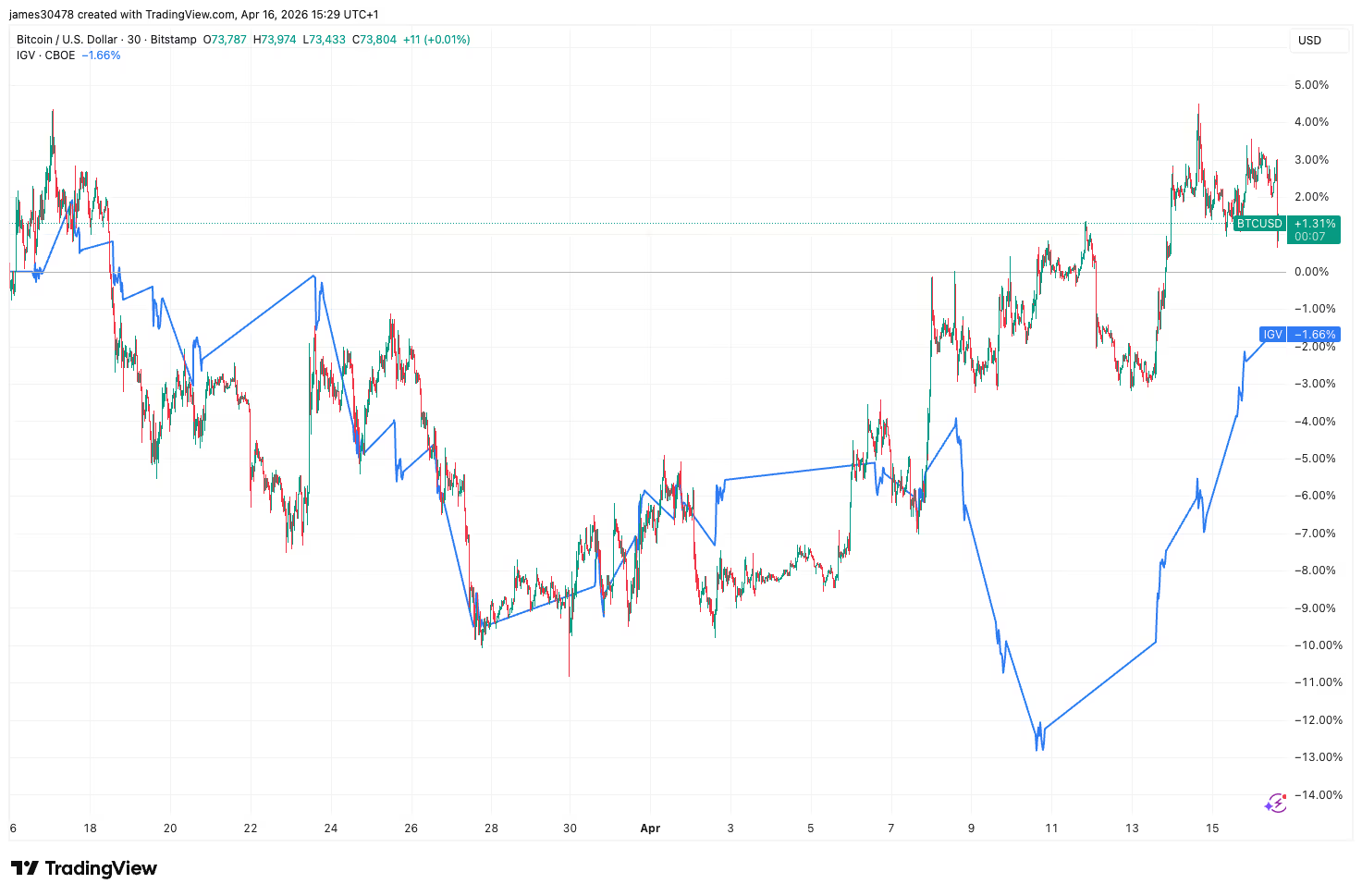
Bitcoin and software stocks were moving almost in lockstep prior to the Middle East conflict at the end of February, with a near 1:1 correlation. During this period, bitcoin has been outperforming IGV, the software ETF.
Since the conflict began at the end of February, bitcoin has gained more than 11%, while IGV has risen by roughly 2%, prompting a narrative that bitcoin was beginning to decouple from software equities.
However, over the past five days, IGV is catching up and is up by as much as 11%, while bitcoin has been flat. This suggests that rather than a clean decoupling, software may have simply been lagging bitcoin and is now catching up.
IGV is up 1% on Thursday, while bitcoin is down 1.5%.


The Russian crypto industry has suffered a serious incident. Grinex, a crypto exchange that facilitates payments for businesses and individuals, announced a major hack.
According to the company’s official data , the amount of stolen funds exceeded 1 billion rubles, translating to over $13 million.
Details of the incident
In an official statement, the platform’s representatives described the incident as a targeted attack by foreign agencies.
The company emphasizes that the nature of the hack and the resources involved indicate the involvement of foreign government entities seeking to attack the Russian financial system.
According to monitoring data, the stolen assets were converted into TRX cryptocurrency through exchange services and transferred to a single address.
This wallet currently holds approximately 45.9 million TRX, equivalent to approximately $15 million.
Due to a cyberattack, Grinex’s operations have been completely suspended. A notice about maintenance has been posted on the website, and account transactions and withdrawals are unavailable.
Restrictions have also been placed on physical presence: the company’s Moscow City office has suspended permit issuance.

Grinex representatives confirmed that they had previously encountered pressure, including inclusion on sanctions lists, special wallet labeling, and blocking of transactions outside the CIS. However, the company believes the current incident has escalated into outright asset theft.
Next steps
The exchange’s management has already contacted law enforcement agencies to initiate criminal proceedings. All available information regarding the technical details of the attack has been transferred to the investigation.
Currently, the primary focus remains the legal assessment of the situation and monitoring the movement of the stolen assets.
“We’re fighting back, an active investigation is underway, and we have no plans to shut down,” Grinex representatives said in response to BeInCrypto’s request for comment.
Echoes of Garantex
It’s worth noting that Grinex is under close scrutiny from international financial regulators and analytical agencies.
According to TRM Labs , this platform is essentially a rebranding of the Garantex exchange, which was previously subject to harsh sanctions.
Researchers point out that Grinex emerged less than two weeks after Garantex’s official closure in March 2025. Analysts have documented direct transfers of liquidity in the ruble stablecoin A7A5 from the old exchange’s wallets to the new exchange’s addresses.
Furthermore, experts note the almost complete identity of the interfaces and infrastructure: according to the investigators, the wallet clusters, team, and transfer routes remained the same; only the branding has changed.
The post Grinex Exchange Loses Over $13 Million in Alleged Foreign Spy Attack appeared first on BeInCrypto.
Binance Alpha is launching a two-round Genius Foundation trading competition that will hand out roughly $200,000 in GENIUS tokens to 2,520 of the platform’s most aggressive buyers over the last two weeks of April.
Summary
- Binance Alpha is running a two-round Genius Foundation trading competition with rewards worth about $200,000.
- The top 2,520 participants by GENIUS token buying volume will share 176,400 GENIUS, with each eligible user receiving 70 GENIUS.
- The event runs in two one-week windows between April 16 and April 30, 2026, via Binance’s Web3 wallet.
Binance is rolling out a Genius Foundation trading competition on its Binance Alpha platform, dangling rewards equivalent to roughly $200,000 to drum up activity around GENIUS tokens. The exchange said its Web3 wallet will host the campaign in two rounds, ranked purely by participants’ total buying volume of GENIUS during the event windows.
The first round runs from April 16, 2026, at 21:00 to April 23, 2026, at 21:00, followed by a second round from April 23, 2026, at 21:00 until April 30, 2026, at 21:00, giving users two discrete weeks to accumulate eligible trading volume. According to Binance’s announcement, the top 2,520 users across the campaign will share a pool of 176,400 GENIUS tokens, with each qualifying trader receiving 70 GENIUS.
Binance framed the Genius Foundation competition as an Alpha‑branded promotion aimed at active Web3 wallet users, with the ranking metric focused on “total buying trading volume” of GENIUS rather than overall PnL or number of trades. That structure effectively rewards aggressive spot accumulation over the two rounds, favoring users willing to ramp up notional volumes in the token.
The exchange said the reward pool, sized at 176,400 GENIUS, is equivalent to about $200,000 at current reference prices, implying a per‑token valuation slightly above $1, though the exact dollar payout per user will fluctuate with the token’s market price. Each of the 2,520 eligible participants receives an equal 70 GENIUS allocation, avoiding a tiered or winner‑takes‑most structure and instead spreading the incentive across a broader group of traders.
Binance did not disclose detailed tokenomics for GENIUS in the brief announcement, but positioned the Genius Foundation campaign as part of its broader effort to route users into its Alpha and Web3 wallet ecosystem, where it has been layering on trading quests and airdrop‑style promotions for emerging tokens. Similar exchange‑run competitions in recent months have been used to bootstrap liquidity and price discovery for new assets, while giving existing users reasons to increase volumes on specific pairs.
In previous crypto.news coverage of exchange incentives and trading contests, reporters have highlighted how reward campaigns can temporarily inflate volume and open interest, sometimes concentrating risk among highly leveraged or promotional‑driven traders. For GENIUS, the coming two weeks on Binance Alpha will show whether a $200,000‑equivalent carrot is enough to convert short‑term farming into lasting liquidity around the token.

Key Highlights
- RKLB shares climbed almost 10%, regaining both the 50-day and 20-day moving averages following a ~27% decline from the 52-week peak
- The aerospace firm finalized its $155.3M Mynaric purchase, gaining laser optical communications technology and establishing its first European operations
- Rocket Lab introduced “Gauss,” an innovative electric satellite propulsion system with manufacturing capacity exceeding 200 units annually
- On April 14, Citigroup raised RKLB from Market Perform to Outperform; Cantor Fitzgerald maintains an $85 target price
- The space industry ETF (UFO) has gained over 30% year-to-date, partially driven by SpaceX IPO rumors
Rocket Lab has experienced a whirlwind week. The California-based aerospace company finalized a strategic acquisition, introduced an innovative propulsion system, and secured an analyst rating boost — all while shares surged nearly 10%.
RKLB has soared more than 200% over the trailing twelve months and commands a market capitalization of approximately $40.7 billion. The shares had retreated about 27% from their 52-week peak but have recently recovered, reclaiming both the 50-day and 20-day simple moving averages. The stock continues to trade above its 200-day SMA.
Market observers are focused on the $78 threshold. A confirmed breakout above this level could indicate the beginning of another upward trend.
Mynaric Deal Finalized
On April 14, Rocket Lab finalized its Mynaric acquisition for a total price of $155.3 million — consisting of a modest cash payment plus approximately 2.28 million RKLB shares.
Mynaric specializes in laser optical communications terminals, a specialized yet increasingly vital component of satellite technology. This transaction provides Rocket Lab with its inaugural European footprint and enhances its capacity to support commercial constellation developers and defense agencies.
The purchase represents another milestone in Rocket Lab’s strategic evolution from a pure launch provider to a comprehensive space systems integrator. The organization has consistently targeted supply chain components that are difficult to procure at scale, then developing or acquiring the necessary capabilities internally.
Gauss Propulsion System Addresses Critical Supply Gap
The company’s second major reveal was Gauss, an innovative electric satellite propulsion system engineered for mass production. Electric propulsion has historically represented a supply chain constraint — dependable systems haven’t been accessible at volumes required by contemporary constellation operators.
Gauss aims to resolve this challenge. Rocket Lab has established a manufacturing facility with capacity to produce over 200 propulsion units annually. CEO Sir Peter Beck stated directly: “Proliferated constellations are now the norm, but the propulsion systems needed to maneuver these spacecraft in orbit have simply not been reliably available at any kind of scale.”
The propulsion unit incorporates a Hall Thruster, Power Processing Unit, and Propellant Management Assembly. It operates on xenon fuel, with krypton available as an option. The architecture delivers superior specific impulse compared to chemical propulsion, enabling spacecraft to carry reduced fuel loads while maintaining operational effectiveness during extended missions and station-keeping operations.
Engineering highlights include heaterless cathode technology enabling immediate activation, magnetic shielding to minimize degradation, and GaNFet-based power electronics. The platform is ITAR/EAR-free for low Earth orbit constellation deployments.
Regarding analyst coverage, Citigroup elevated RKLB to Outperform on April 14. Cantor Fitzgerald confirmed its Overweight stance with an $85 price objective following the iQPS multi-launch contract reveal. The consensus among 17 analysts stands at Moderate Buy, with an average price target of $79.85.
Rocket Lab recently concluded its at-the-market equity program, disposing of 6.73 million shares for gross revenue of roughly $474 million. Additionally, the company executed collared forward agreements involving 7.45 million shares, with anticipated proceeds between $474 million and $642 million.
In today’s newsletter, Marcin Kazmierczak from Redstone takes us through the evolution of tokenization as it moves from “concept to allocation.”
Then, in “Ask an Expert,” Kieran Mitha answers investor questions about tokenized investments.
Where Tokenized Assets Are Today
Tokenization is moving from concept to allocation. What matters now is how these assets fit into portfolios and what they actually enable.
Your clients are already hearing and asking about tokenized assets, and that trend will only accelerate.
In the last 18 months, companies like BlackRock, Franklin Templeton, and Fidelity Investments have launched real products on the blockchain, including Treasury funds and private credit strategies. Investors are taking notice. The numbers are rising, the news is easy to track, and the basic idea is simple: bonds, private credit, and money market funds are now available on-chain, without traditional intermediaries, and settlement becomes orders of magnitude faster.
That summary is mostly accurate, but it does not tell the whole story.
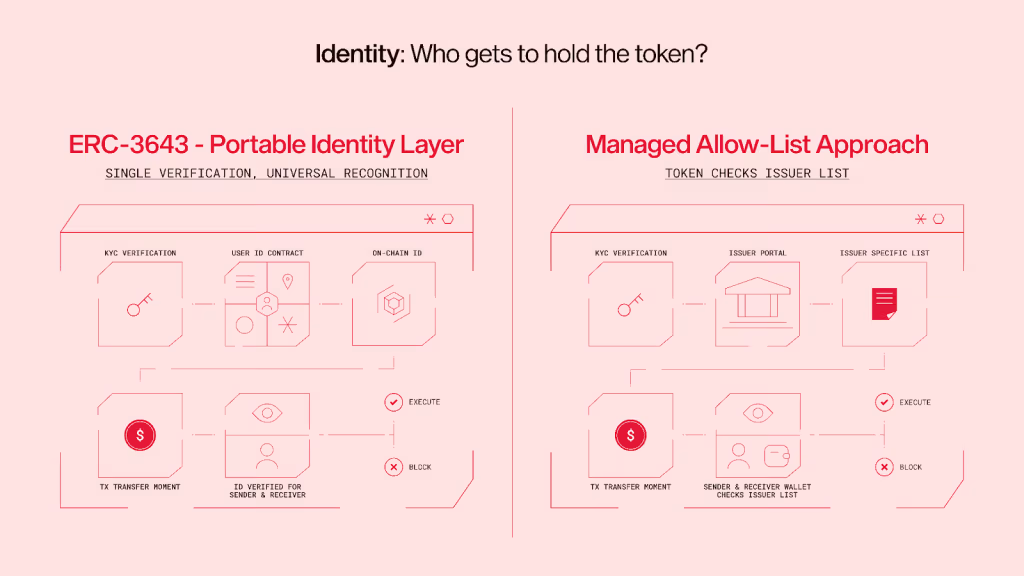
The technology to create tokens has never been the main challenge. The real test comes later, with decisions on compliance, identity, transfer rules, sanctions, and lifecycle management. These are the areas where most projects slow down, and where the market is evolving now.
Last month, RedStone’s research team released the Tokenization & RWA Standards Report 2026, which examines how these systems are actually being built.
The compliance question is an architecture question
For issuers, the most important choice is not which blockchain to use, but where to place the compliance rules.
Compliance can be built right into the token and enforced by smart contracts with every transfer. It can also be managed outside the token using tools such as whitelisting. Another option is to enforce compliance at the network level, where the blockchain itself decides which transactions are allowed.
Each method fixes one issue but creates another.

Identity verification structures for tokenized assets, source: Tokenization Standards Report
Putting compliance rules inside the token gives you exact control, but it makes the system less flexible. For example, updating a sanctions list or rule might require upgrading the contract, turning a simple policy change into a technical task. Managing compliance outside the token makes things more flexible, but it means relying on middlemen and can expose assets if they leave their original environment. Enforcing rules at the network level makes token design easier, but it limits how easily the asset can move to other chains and systems.
For advisors, this is not an abstract design choice. It directly affects how an asset behaves. It determines whether it can move across chains, integrate with blue-chip decentralized finance (DeFi) protocols, like Morpho or Aave, and serve as collateral in a lending strategy. Two tokenized funds with identical underlying assets can behave very differently depending on this single architectural decision.
Institutional capital is already moving on-chain
The transition from theory to practice is most evident in how tokenized assets are used in lending markets.
Deposits of tokenized real-world assets in DeFi lending protocols have surpassed $840 million. A large share of this activity follows a familiar structure: an investor posts a tokenized asset as collateral, borrows against it, and redeploys the borrowed capital, often back into the same asset. The mechanics are new, but the logic is not. It is a programmatic version of the same capital efficiency strategies long used in traditional finance, now executed without a prime broker — faster, cheaper, and with less friction.
How investors allocate these assets is increasingly reflecting broader market trends.
On one major protocol, tokenized Treasury exposure declined sharply, while tokenized gold allocations expanded severalfold over the same period, tracking changes in rate expectations with notable precision. It is the best showcase of how professional capital responds to macro signals through on-chain infrastructure.
For advisors, this reframes the role of tokenized assets. They are not simply wrappers around existing products. In the right structure, they become productive collateral, capable of generating additional yield and participating in broader strategies while remaining in the portfolio.
Credit risk is becoming explicit
As these assets move into lending and structured strategies, credit risk is evolving alongside specific DeFi strategies, such as looping. Emerging DeFi risk ratings frameworks like Credora introduce continuous, on-chain risk assessment, bringing a level of transparency that traditional markets rarely offer.
For advisors, that shifts the question from what the asset represents to how it behaves under stress, and what risks it entails. Simple-to-understand ratings on a familiar A+ to D scale facilitate the creation of a risk-adjusted portfolio, attracting more and more interested parties.
What remains unresolved
Some structural gaps remain. Corporate actions still rely heavily on off-chain processes, and illiquid assets such as private credit and real estate are not yet fully compatible with DeFi standards.
Until those pieces are solved, tokenization will continue to scale unevenly, with the most complex assets lagging behind the simplest ones. The bright side? Creators of tokenization frameworks are well aware of that limitation, and soon enough, we should see solutions addressing that gap.

Sanctions screening approaches in tokenized assets, source: Tokenization Standards Report
– Marcin Kazmierczak, co-founder, Redstone
Ask an Expert
Q:As tokenization moves from pilot programs into live financial infrastructure, what needs to happen for it to become a standard layer in global capital markets?
Tokenization becomes standard when it integrates into existing financial systems rather than competing with them. The priority is interoperability between blockchains, custodians, and traditional market infrastructure so assets can move seamlessly across platforms.
Regulatory clarity is equally critical. Institutions need confidence in ownership rights, settlement finality, and compliance frameworks before allocating significant capital. We are already seeing early traction, but scale will come when tokenized assets match or exceed the efficiency, liquidity, and reliability of traditional securities. At that point, tokenization will not be viewed as innovation. It will simply be the infrastructure underpinning modern markets.
Q:What are the most overlooked risks or misconceptions surrounding tokenized assets today?
One of the biggest misconceptions is that tokenization automatically creates liquidity. It does not. It simply makes assets easier to access. Take real estate as an example. You can tokenize a property and divide it into thousands of shares, but if there are no active buyers and sellers, those shares will still be difficult to trade.
Another challenge is how early the market still is. Different platforms are building their own ecosystems, which can lead to fragmented liquidity rather than one unified market.
The technology is moving quickly, but infrastructure, regulation, and investor participation are still catching up. That gap between what is possible and what is practical is where most of the risk exists today.
Q: For retail investors, does tokenization open the door to new types of investments, and could that be a catalyst for bringing younger generations into the market?
Tokenization is emerging as younger generations move into higher earning careers and take a more active role in managing their wealth. Having grown up through rapid technological change myself, this group naturally expects financial systems to evolve in the same way as everything else in their lives.
That mindset is driving a greater willingness to explore asset classes beyond traditional stocks and bonds. Tokenization can open access to areas like private markets and real estate, while offering a more digital and flexible investment experience.
It is not just about new opportunities, it is about alignment. As the financial industry modernizes, it begins to reflect the speed, transparency, and accessibility younger investors are used to. That shift is likely to play a meaningful role in attracting a new generation into investing.
– Kieran Mitha, marketing coordinator
Keep Reading

Street Fighter movie trailer highlights the problem with being too authentic
Prologis stock rises as Truist reiterates Buy on strong results

Spartans Betting Platform Generates $40 Million GGR While Rollbit and BC.Game Cannot Keep Up

Why Israel is blocking foreign journalists from entering

Bitcoin: We’re Entering The Most Dangerous Phase

Alan Cumming Brands Baftas Ceremony A ‘Triggering S**tshow’

16 Financial Laws Every Indian Must Know Before 30 | Wealth Building Secrets | Telugu Assets

+998912019332 #burchatka #kafel #granit #soglik #baki #pul #home #money #automobile #wood

Raglizz Drops Financial Freedom Bars #shorts
-

 Politics6 days ago
US brings back mandatory military draft registration
-
 Sports6 days ago
Man United discover Nico Schlotterbeck transfer fee as defender reaches Dortmund agreement
-

 Fashion6 days ago
Weekend Open Thread: Veronica Beard
-

 Politics6 days ago
Malcolm In The Middle OG Turned Down ‘Buckets Of Money’ To Appear In Reboot
-

 Politics4 days ago
World Cup exit makes Italy enter crisis mode
-

 Business6 days ago
Tesla Model Y Tops China Auto Sales in March 2026 With 39,827 Registrations, Beating Cheaper EVs and Gas Cars
-

 Crypto World3 days ago
The SEC Conditionalises DeFi Platforms to Be Avoided for Broker Registration
-

 Crypto World3 days ago
SEC Signals Exemption for Crypto Interfaces From Broker Registration
-

 News Videos1 day ago
Secure crypto trading starts with an FIU-registered
-
 NewsBeat4 days ago
Pep Guardiola and Gary Neville agree over Arsenal title problem that benefits Man City
-

 Business5 days ago
Ireland Fuel Protests Enter Day 5 as Blockades Spark Shortages and Government Prepares Support Package
-

 Business6 days ago
OpenAI Halts Stargate UK Data Centre Project Over Energy Costs and Copyright Row
-

 Politics6 days ago
LBC Presenter Mocks Trump Over Iran War Failures
-

 Crypto World6 days ago
Federal judge blocks Arizona from bringing criminal charges against Kalshi
-

 NewsBeat2 days ago
Trump and Pope Leo: Behind their disagreement over Iran war
-

 Crypto World2 days ago
SEC Proposes Certain Crypto Interfaces Don’t Need to Register as Brokers
-
 NewsBeat4 days ago
JD Vance announces ‘no agreement’ with Iran over nuclear weapons fear
-

 Tech7 days ago
A version of Windows 10 released a decade ago is now eligible for additional security patches
-

 Business6 days ago
IMF retains floor for precautionary balances at SDR 20 billion
-

 Business6 days ago
Former Liverpool CEO eviscerates FIFA for World Cup ticket pricing
You must be logged in to post a comment Login