
Crypto World
Microsoft-backed Space and Time targets no-code Web3 apps



Space and Time has launched Dreamspace, an AI-powered app builder designed to let users create on-chain applications without writing code. The platform is built for users who want to build apps through simple text prompts.
Summary
- Dreamspace lets users create on-chain apps from text prompts without writing any code.
- The platform uses Microsoft Azure AI tools and runs on Base for low-cost transactions.
- Dreamspace recorded over 34,000 beta-created apps and plans education programs in Indonesia.
Dreamspace uses Microsoft Azure AI Foundry and Azure OpenAI. It also runs on Base, giving users access to low-cost and fast on-chain transactions.
The launch marks a new product push from Space and Time into AI-based development tools. The company said Dreamspace can generate working applications, including smart contract logic, from user instructions.
Microsoft-backed platform targets creators
Dreamspace is backed through Space and Time’s wider relationship with Microsoft. M12, Microsoft’s venture fund, led a $20 million investment in Space and Time in 2022.
The platform aims to make app creation easier for creators, students, and businesses. Users can describe what they want to build, and Dreamspace creates the application structure.
Each smart contract generated through the platform is fully auditable. This allows users to review how the contract works before deploying it on-chain.
Verifiable data supports on-chain apps
Space and Time secures the data layer behind Dreamspace. The company focuses on verifiable data infrastructure, which supports blockchain applications that need trusted data records.
Nate Holiday, co-founder of Space and Time and creator of Dreamspace, said, “Space and Time was built to make verifiable data accessible to any application, at any scale.”
He added, “Dreamspace is where that infrastructure meets the people building the next wave of the internet. When the data layer handles itself, the only thing left to focus on is what you want to create.”
Beta users created over 34,000 apps
During its beta phase, Dreamspace recorded more than 34,000 apps created by early users. The figure shows early demand for tools that reduce the technical barriers to app development.
The platform has also entered education programs, including AI labs and curriculum projects in Indonesia. These programs plan to reach more than 140,000 students.
Dreamspace uses Base to support fees under one cent and near-instant settlement. Space and Time said this setup can help users build and deploy real-world applications with less friction.
The launch adds to the growing overlap between artificial intelligence and blockchain infrastructure. It also shows how Microsoft-linked AI tools are being used in Web3 app development.


TLDR:
- Ethereum trades near $2.3K, staying below the weekly 200 MA and EMA, with $2.4K acting as key resistance.
- CryptosRus reports the Ethereum Foundation sold 10,000 ETH OTC at $2,387, totaling about $23.9M to BitMine.
- OTC transaction signals institutional absorption of ETH liquidity, reducing immediate exchange-side selling pressure.
- Price remains in a broader downtrend, with support near $2.1K and resistance extending toward $2.8K–$3.5K zones.
Ethereum is trading near a critical technical zone after recovering from early 2026 lows, with price action pressing into major long-term resistance.
The asset remains below key weekly indicators, leaving traders focused on whether current momentum can sustain a broader trend shift.
Ethereum faces resistance at key weekly averages
Ethereum’s weekly structure shows price approaching a decisive resistance cluster after rebounding from recent lows. The current move places the asset just below long-term indicators that often define broader market direction.
A recent tweet from Daan Crypto Trades outlines this setup, noting that Ethereum is rejecting the bull market support band and weekly 200 averages. The post states that a close above the $2,400 to $2,500 range is required to regain bullish control.
At present, Ethereum trades near $2,309, still below the weekly 200 EMA around $2,459 and the 200 MA near $2,430. This area continues to act as a resistance cluster that limits upward movement.
The price structure reflects a strong rally into late 2024, followed by a rejection near the $4,600 level. Since then, Ethereum has remained within a broader downward structure, despite the recent recovery attempt.
The same zone previously acted as support during the earlier uptrend. Once the price broke below it, the level flipped into resistance, reinforcing the current barrier on higher timeframes.
Support Zones Hold as a Recovery Attempt Develops
Ethereum rebounded from a capitulation low near $1,790, where elevated selling volume marked a possible exhaustion phase. Following that move, price reclaimed the $2,100 to $2,165 support region.
A separate update from CryptosRus reported that the Ethereum Foundation completed a 10,000 ETH over-the-counter sale. The transaction was executed at an average price of $2,387, with BitMine listed as the buyer.
The deal represents roughly $23.9 million in Ethereum transferred through an institutional OTC channel. Such transactions often occur outside public exchanges, allowing large orders without immediate market disruption.
Following this, the price continues to trade within a recovery structure, gradually pushing toward the $2,300 range. Even so, the asset remains inside a broader downtrend on the weekly timeframe.
Support levels remain clearly defined. The $2,165 to $2,106 zone serves as the nearest support range, while the $2,030 to $1,790 region holds as macro support below.
On the upside, resistance levels continue to cap the price. The $2,815 to $2,851 zone has seen repeated rejections. Beyond that, the $3,300 to $3,500 range represents a prior support area that now acts as resistance.
Volume data shows a shift after the sharp decline. Selling pressure has eased, while gradual buying activity has emerged. This pattern aligns with early accumulation behavior, though confirmation remains limited.
Traders continue to monitor the $2,400 region closely. A move above this level could lead to a test of $2,850, while rejection may result in a return to lower support levels.
For now, Ethereum remains in a transition phase, with price reacting to long-term indicators ahead of the next directional move.


Succinct has introduced Zcam, an iPhone camera app designed to cryptographically sign photos and videos at the moment of capture, creating a verifiable link between the media and the device that produced it. The aim is to let viewers confirm that content has not been digitally altered or AI-generated, even as synthetic media becomes more prevalent.
According to Succinct, Zcam hashes the raw image data and signs the result with keys generated inside Apple’s Secure Enclave, a hardware-based security module. The resulting signature, along with capture metadata and attestation, is embedded into the file using the Coalition for Content Provenance and Authenticity (C2PA) standard, a framework for attaching tamper-evident provenance data to digital media.
How Zcam signs media at capture. Source: Succinct
Succinct notes that the process relies on a tamper-evident record that ties the media to the capture device, enabling readers to verify authenticity directly. The company’s blog explains that Zcam’s signing workflow is designed to deter manipulation and to establish a provable origin for each image or video file, leveraging existing hardware and open provenance standards.
The underlying concept is anchored in the Coalition for Content Provenance and Authenticity (C2PA) framework, which is described as an open technical standard that enables publishers, creators and consumers to establish the “origin and edits” of digital content. The standard allows metadata about how content was created, which tools were used, and how it changed over time to be attached to the media itself.
The move signals a broader push beyond traditional blockchain-based verifications, bringing cryptographic provenance tools closer to the point of creation. In an era where questions about AI-generated imagery and video content proliferate, having a cryptographic trail attached to media at capture could offer a complementary line of defense to post hoc AI-detection techniques.
Key takeaways
- Zcam signs media at capture by hashing raw data and using keys generated inside Apple’s Secure Enclave, then embeds the signature with metadata and attestation into the file.
- The signing and provenance data are embedded using the C2PA standard, which aims to provide a tamper-evident record of origin and edits directly within media files.
- Succinct positions Zcam as an early, practical step toward widespread cryptographic provenance, with potential use cases in journalism, insurance claims and identity verification.
- The project faces important caveats: the Zcam SDK is unaudited and not production-ready, and secure enclaves have faced past compromises, highlighting that a fully tamper-proof capture-to-signing chain remains an active area of research.
- Security researchers warn that AI-driven fraud and deepfakes could intensify crypto security threats in 2026, underscoring the value—and the limits—of provenance data as part of a layered defense.
Provenance at the source: how Zcam and C2PA fit into the crypto security landscape
At the heart of Zcam’s approach is a simple but increasingly consequential idea: trust in digital media should begin at creation. By hashing image data and sealing that hash with a device-bound key, Zcam intends to provide verifiable evidence that the media originated from the claimed device and was not altered after capture. The Secure Enclave, Apple’s isolated processing environment, is used to protect the signing keys and operations from tampering or extraction, while the C2PA metadata travels along with the media file, offering verifiers a practical provenance trail.
The C2PA standard itself is designed to be open and collaborative, with the goal of clarifying the origin and the evolution of content. It does not prescribe a single implementation but provides a framework for recording provenance data—such as capture tools, software versions, and subsequent edits—so that consumers and downstream systems can assess authenticity. For those assessing the technology, the formal description of C2PA clarifies that provenance data covers both the creation process and the edits it undergoes over time.
Succinct’s announcement positions Zcam as a reference point for a broader adoption of cryptographic provenance tools beyond the blockchain sphere. As media consumers increasingly encounter AI-generated content, having an auditable, tamper-evident record attached to files could help publishers and platforms respond to authenticity concerns in real time. That said, analysts caution that provenance data alone does not solve all risk vectors; it is one layer in an ecosystem that includes detection technologies, secure capture hardware, and robust verification workflows.
In assessing the security landscape, it’s worth noting that a recent briefing from CertiK—cited in coverage by Cointelegraph—suggests that deepfakes, phishing, and AI-assisted social engineering could fuel some of the largest crypto hacks in 2026. The report underscores the broader security stakes as attackers increasingly rely on convincing synthetic media to bypass human and automated defenses. Provenance tools like Zcam could help close gaps in trust, but their effectiveness will depend on end-to-end integration, independent audits, and continued advancements in tamper-resistant capture chains.
Limitations, next steps and what to watch
While Zcam represents a meaningful step toward “proveable” media, Succinct acknowledges it is still early in its evolution. The company notes that its software development kit (SDK) has not been audited and is not yet ready for production use. Moreover, even secure enclaves have vulnerabilities, and ensuring a fully tamper-proof capture-to-signing chain remains an active area of research and refinement. Real-world deployment will depend on broader ecosystem validation, independent security testing, and the development of reliable verification workflows for end users and platforms.
Nonetheless, the trajectory is clear: cryptographic provenance is moving from a theoretical construct into practical tools that can accompany content creation. If adopted widely, Zcam and similar approaches could reshape how publishers, advertisers, insurers and identity providers handle digital media—shifting the emphasis from post hoc detection to provenance-backed assurance at the moment of capture.
As the conversation around media trust evolves, watchers should monitor whether major manufacturers, media platforms and standards bodies embrace similar capture-time signing workflows, and whether independent audits verify the security and reliability of early implementations like Zcam. The next milestones will likely include formal audits of sign-then-verify workflows, expanded support within the C2PA ecosystem, and pilots across journalism and claim-verification use cases.
For readers and builders, the development signals a broader trend: trust in digital content may increasingly hinge on cryptographic proofs anchored at the moment of creation, not only on detection methods applied after publication. The coming months will reveal how quickly such provenance tools scale and how they coexist with other AI-authentication and anti-fraud measures.
Succinct’s Zcam approach is explained in more detail on the company’s blog: Introducing Zcam. For broader context on the provenance framework, see the Coalition for Content Provenance and Authenticity (C2PA) documentation, which describes how provenance data can be attached to media: C2PA content credentials. On the security frontier, CertiK’s analysis about AI-enabled threats is summarized in coverage linked to a Cointelegraph report: CertiK warning.
TLDR:
- Bitcoin sentiment flipped from fear to strong optimism within days as the price rebounded above $78.7K quickly.
- Santiment data shows rising FOMO levels, which often act as caution signals during key resistance tests.
- The $80K level remains a major barrier, with a breakout likely attracting new and returning traders.
- Elevated Bitcoin sentiment suggests crowded positioning, which can slow momentum or trigger short-term pullbacks.
Bitcoin sentiment shifted sharply this week as traders moved from fear to renewed optimism within days. Price action followed closely, with Bitcoin rebounding after a brief rejection and returning near a key resistance zone that continues to attract strong market attention.
Crowd behavior flips as Bitcoin sentiment rebounds
Bitcoin sentiment turned negative early in the week as prices faced rejection near $80,000. Traders reacted to downside pressure with caution, expecting further losses as fear spread across social platforms.
Santiment reported this shift, noting that market participants moved from pessimism on Monday to strong optimism by Thursday.
The firm shared that what looked like a breakdown instead became a recovery, with Bitcoin climbing above $78,700.
This rapid reversal reflects how Bitcoin sentiment often tracks price movements closely. When fear increases, selling pressure tends to peak. In contrast, renewed optimism tends to follow price recovery, drawing more traders back into the market.
The tweet also pointed out that rising optimism can act as a warning sign. As more traders enter with fear of missing out, markets may face short-term resistance or slower momentum. This pattern has appeared frequently during previous Bitcoin rallies.
At the same time, Bitcoin sentiment remains a useful indicator for tracking crowd behavior. Data from platforms like X, Reddit, and Telegram shows how quickly traders adjust expectations based on price action.
Resistance near $80K keeps traders focused
Bitcoin is once again testing the $80,000 level, a zone that has acted as resistance in recent sessions. The current price structure shows steady recovery, yet traders remain cautious as optimism builds.
Santiment noted that a breakout above this level could attract new and returning traders. However, such a move may require a calmer Bitcoin sentiment environment rather than peak excitement.
Markets often move against the majority expectation, especially during crowded trades. When Bitcoin sentiment becomes overly bullish, price action may slow or pullback before continuing higher.
Despite this, the broader trend still allows room for further upside. Price strength remains intact, and continued demand could support another attempt to break resistance. Traders are watching closely for confirmation through volume and sustained buying pressure.
Bitcoin sentiment plays a central role in this process. It helps identify whether current moves are driven by strong conviction or emotional reactions. As sentiment rises too quickly, markets tend to reset before continuing.
For now, Bitcoin remains near a decisive level. The coming sessions will determine whether the current optimism supports a breakout or leads to short-term consolidation. Bitcoin sentiment will likely remain a key factor shaping the next move.
TLDR:
- Bittensor investors want subnet performance, not just decentralized AI architecture strength
- TAO focus is shifting toward subnets targeting state-of-the-art AI model competition
- Investors want models that outperform GPT and Gemini in specific commercial sectors
- Stronger reasoning, coding, and creativity remain key tests for Bittensor subnet growth
Bittensor has investors pushing its subnet ecosystem toward direct competition with leading AI firms. The debate centers on whether decentralized AI can move beyond theory and challenge closed-source giants like OpenAI and Google DeepMind.
Market participants now want proof that Bittensor subnets can deliver top-tier models, not just promising architecture. The discussion gained momentum after crypto investor Lucky outlined what he sees as the next critical stage for TAO.
Bittensor Subnets Need More Than Strong Architecture
Lucky said Bittensor’s decentralized design remains one of the strongest structures in the sector. However, he argued that strong architecture alone does not create industry disruption.
He described the current phase as an era of potential rather than proven dominance. According to his post on X, subnets must now move beyond internal validation and focus on measurable performance.
That means building systems that outperform existing open-source limits. He pointed to the need for models that can set benchmarks instead of simply following them.
The challenge also extends to reasoning, coding, and creativity. He said decentralized compute must produce results that compete directly with the strongest closed-source systems.
OpenAI and Google DeepMind continue to dominate the broader AI market. For Bittensor, competing with those firms requires stronger execution from subnet builders.
The TAO ecosystem depends on subnets that can prove clear advantages in high-value domains. Without that shift, the network risks staying an experimental project rather than a mainstream AI force.
TAO Investors Search for State-of-the-Art AI Models
Lucky said his focus has now shifted toward identifying subnets targeting state-of-the-art performance. He said he is looking for teams building to surpass existing AI leaders.
His search centers on subnets aiming for SOTA results instead of simple replication. He noted that the goal is to support projects obsessed with outperforming the world’s most advanced models.
That includes teams using decentralized incentives to create stronger machine intelligence. He framed this as the key path for long-term capital allocation inside the TAO ecosystem.
The biggest turning point would come when a subnet beats GPT or Gemini in a specific commercial area. According to his post, that would permanently change how the market views decentralized AI.
Such a result would move Bittensor from an interesting concept to an unavoidable competitor. It would also strengthen the case for TAO as more than a crypto-native experiment.
Capital, he said, will likely follow the subnets that prove real-world superiority. For investors, performance now matters more than architectural ambition alone.
TLDR:
- XRP outflows reached 34.94 million tokens, marking one of the largest daily exchange withdrawals this year.
- Historical data shows XRP outflows often appear before upward price movement during accumulation phases.
- XRP is forming a multi-year base pattern, with Base 3 developing near key resistance levels.
- Price remains near an ascending trendline, with consolidation continuing as traders watch for breakout confirmation.
XRP is drawing renewed market attention as on-chain activity and long-term technical structure align. Recent exchange outflows and a repeating base formation pattern suggest that the asset may be approaching a key phase within its broader cycle.
XRP Outflows Show Accumulation Behavior
Recent data indicates that XRP recorded 34.94 million tokens in exchange outflows within a single day. This ranks as the sixth-largest outflow event recorded this year. Such movements often reflect investors shifting assets into private storage.
Santiment shared this update on X, stating that XRP Ledger saw 34.94 million XRP in exchange outflows. The firm noted this marked one of the largest daily outflows this year. It also stated that such XRP outflows have often appeared before upward price movement.
Exchange outflows usually reduce the available supply on trading platforms. When tokens move off exchanges, they are less likely to be sold quickly. This shift can support price stability during consolidation periods.
At present, XRP outflows are occurring while the price trades near a key resistance level. This overlap suggests that accumulation may still be active. Meanwhile, traders continue to monitor whether this trend will lead to stronger price action.
Multi-Year Base Pattern Points to Breakout Structure
A technical analysis shared by ChartNerd presents a multi-year base pattern forming on XRP’s long-term chart. The structure shows that XRP has completed two base phases and may now be entering a third.
This pattern follows a cycle of accumulation, breakout, and re-accumulation at higher levels. Similar formations were observed before earlier rallies, including the move seen in 2017. The structure reflects a gradual build-up in market strength.
Currently, XRP is trading near a long-standing resistance zone. This level has limited price movement in both past and recent cycles. At the same time, price is pulling back toward an ascending trendline that supports higher lows.
The current phase, referred to as Base 3, often forms before expansion. During this stage, price tends to consolidate within a tighter range. Short-term declines may occur as the market absorbs remaining supply.
Previous cycles show that breakouts followed periods of compression near resistance. If XRP maintains its trendline support, the structure may remain intact. However, a drop below this level could shift focus back to earlier accumulation zones.
For now, XRP outflows and the base pattern continue to guide market attention. Observers are tracking both signals closely as price action develops near critical levels.
TLDR:
- Brazil banned derivatives tied to sports, politics, gaming, and entertainment events from May 4
- Foreign prediction market contracts offered in Brazil also fall under the new derivatives restriction
- Only contracts linked to financial benchmarks like rates, prices, and indices remain allowed
- Securities regulators now hold broad authority over future event-based derivatives listings
Brazil moved to block prediction market contracts tied to sports, politics, and entertainment under a new derivatives market rule approved this week.
Moreover, the measure targets contracts linked to real-world and virtual events that regulators say do not reflect economic or financial benchmarks. It also applies to foreign derivatives offered inside Brazil, widening the reach of the restriction.
The new framework takes effect on May 4 and places enforcement duties on the Securities and Exchange Commission.
Brazil Prediction Market Ban Reshapes Derivatives Trading
The National Monetary Council approved Resolution No. 5,298 during its April 23 session. The Central Bank of Brazil published the measure on April 24.
Additionally, the resolution sets new rules for how derivatives markets must operate across the country. It places investor protection and market integrity at the center of the framework.
Under Article 3, firms cannot offer or trade derivative contracts linked to sporting events. This includes contracts tied to real sports competitions covered under Law No. 14,790 of 2023.
The ban also covers virtual online gaming events. That extends the rule to contracts tied to esports and similar digital competitions.
Political, electoral, social, cultural, and entertainment events also fall under the restriction. Regulators said these events do not qualify as proper economic or financial benchmarks.
The Securities and Exchange Commission can also classify other event-based contracts as prohibited. That gives regulators broad control over future listings.
Crypto Derivatives Rules Extend Beyond Domestic Markets
Article 4 expands the ban beyond Brazil-based platforms. It applies to foreign derivatives if they are offered within national territory.
That means offshore prediction market products could also face restrictions when targeting Brazilian users. Crypto-linked event contracts may fall under this scope depending on structure.
The resolution allows only contracts tied to recognized financial benchmarks. These include exchange rates, interest rates, bond indices, securities indices, and commodity prices.
Financial assets and securities traded on organized markets remain allowed. Other benchmarks must rely on consistent and verifiable pricing methods.
The council said the rules aim to prevent regulatory arbitrage and harmful speculation. It also cited product suitability and transparency as minimum standards.
At the same time, the framework includes innovation as one of its guiding principles. Regulators appear focused on limiting speculative event contracts without disrupting broader derivatives markets.
Central Bank President Gabriel Muricca Galípolo signed the resolution. The Securities and Exchange Commission will now issue supplementary rules for implementation.
The new policy arrives as prediction market platforms gain traction globally, including in crypto trading circles. Brazil’s move draws a clearer line between financial derivatives and speculative event betting.
TLDR:
- ALGO joins Japan’s JVCEA Green List, enabling faster exchange listings under strict regulatory oversight standards.
- Price breaks out of a long-term descending channel, marking a shift from bearish structure to early bullish setup.
- Strong demand zone between $0.0794 and $0.10 continues to hold, supporting accumulation and price stability.
- A projected move toward $0.33 reflects over 300% upside if ALGO maintains support and breaks resistance levels.
Algorand has secured a regulatory milestone in Japan, as ALGO joins the JVCEA Green List. At the same time, market data shows ALGO moving out of a prolonged downtrend, with price structure hinting at a potential bullish reversal.
Japan Approval Strengthens ALGO Market Position
The approval places ALGO among digital assets cleared for streamlined exchange listings in Japan. The list is maintained by the Japan Virtual and Crypto Assets Exchange Association and overseen by the Financial Services Agency. This process aligns crypto oversight with traditional financial standards.
The Algorand Foundation shared the update, noting that ALGO now meets compliance thresholds required by Japanese exchanges. This allows faster integration into licensed trading platforms across the country.
The development comes as Japan maintains strict crypto regulations. Therefore, inclusion on the Green List often signals institutional readiness. Unlike informal approvals, this framework involves regulatory scrutiny similar to banking and securities markets.
Meanwhile, a market analyst known as Lucky Luciano BTC shared a chart suggesting ALGO may be entering a bullish phase.
The narrative around quantum-resistant blockchain positioning, which continues to gain attention among traders.
Technical Structure Shows ALGO Trend Reversal Setup
According to analyst Lucky, price action shows ALGO trading inside a descending channel between July and December 2025.
During that period, lower highs and lower lows defined a sustained bearish structure. A sharp rejection in October accelerated selling pressure and pushed the price toward a base.
That base formed between $0.0794 and the $0.09–$0.10 range. From January to March 2026, ALGO repeatedly tested this zone and held firm. This behavior indicated steady buyer interest and accumulation within a defined demand area.
In early April 2026, ALGO broke above the descending channel near the $0.10–$0.11 region. The breakout aligned with previous resistance and trendline confluence. Current price levels show a close at $0.1065, with a high of $0.1079 and a low of $0.1044.
After the breakout, ALGO moved toward the $0.12–$0.13 range before pulling back. It then consolidated between $0.105 and $0.11. This phase suggests that prior resistance is now acting as support, while buyers maintain higher lows.
The chart outlines a projected move toward $0.3360, representing a potential increase of over 300% from the breakout zone. This target aligns with historical resistance and a psychological range between $0.30 and $0.34.
Key levels remain clear. Immediate support sits between $0.10 and $0.105, while the broader demand floor remains at $0.0794. Resistance levels appear at $0.12–$0.14, followed by $0.18–$0.22, and then the projected upper range.
For the bullish structure to remain intact, ALGO needs to hold above $0.10 and break above $0.12. If that occurs, the price may move toward higher resistance zones. However, a drop below $0.10 could weaken the setup and return ALGO toward the lower demand area.
The current structure shows ALGO transitioning from a bearish phase into a potential recovery stage, supported by both technical patterns and regulatory developments in Japan.


One of the biggest stock-market debuts in history is six weeks away, and crypto sits in the same liquidity pool it will draw interest from.
SpaceX filed a confidential S-1 with the SEC earlier this month, targeting a $75 billion capital raise at a $1.75 trillion valuation.
If it prices anywhere near that level in its expected June listing, the offering will be more than 2.5 times larger than Saudi Aramco’s $29 billion 2019 record, making it the biggest stock-market debut in history. Polymarket traders assign a 65% probability of a June listing and a 53% probability that the first-day closing market cap exceeds $2 trillion.
SpaceX isn’t alone. ChatGPT maker OpenAI is targeting a Q4 listing at a valuation near $1 trillion. Anthropic is reportedly planning an October debut that could raise more than $60 billion.
If all three reach the public market on schedule, they would pull in more than $240 billion from June through year-end, a figure PitchBook estimates exceeds every venture-backed US IPO combined since 2000.
“After the SpaceX IPO, I think you start to get very bearish equities. That’s the Solana $300 moment,” Alex Good, founder of crypto AI project Post Fiat, said on a recent CounterParty TV interview.
“Right now we’re in this max bid moment, every investment bank is going to upgrade every AI stock because they’re going to get so much fees off of these IPOs.”
Good’s framing captures the mechanical setup, where the three largest listings could be concentrated in a six-month window, preceded by coordinated sell-side optimism from the banks running the deals and followed by the rotation out.
MSCI, the firm that builds many of the benchmark stock indexes institutional portfolios track, modeled a scenario in February that flagged megacap IPOs in 2026 could trigger index-driven flows measured in billions of dollars, sector-rotation effects across global benchmarks, and a compression of liquidity in everything outside the new names.
Crypto sits inside the same risk-on liquidity pool that funds tech and AI equities.
Bitcoin, ether, and the rest of the majors have traded with tightening correlation to Nasdaq and the S&P 500 over the past two cycles. When speculative capital leaves equities for an IPO allocation, some of what leaves is the same capital that would otherwise bid up higher-beta assets, including crypto.
The historical parallel is a point of concern, however. Coinbase listed on April 14, 2021 at the peak of the last bitcoin cycle. Bitcoin hit its all-time high of roughly $64,800 the same day and began a 50% drawdown within six weeks.
Traders who read Coinbase’s IPO as a signal that crypto was going mainstream spent the next six months watching mainstream capital rotate out. The lesson is that institutional milestones frequently mark tops rather than starting lines, because the capital that chases the milestone is the same capital that was previously holding up the asset.
SpaceX is not a crypto company, but two features of the listing connect directly to crypto flows. First, the 30% retail allocation, roughly $22 billion of the $75 billion offering, is three times the typical retail share on a deal this size.
Such a retail allocation nto SpaceX is money that’s not bidding on memecoins, altcoins, or bitcoin itself.
Second, SpaceX itself holds 8,285 BTC worth roughly $600 million in Coinbase Prime custody, making its IPO the first public-market debut of a company with a material bitcoin position disclosed under the new fair-value accounting rules that took effect in late 2024.
The testable signal going forward is whether crypto holds up through the roadshow window in May and June or begins to drift lower as allocators free up room for the SpaceX subscription.
However, a bitcoin rally that extends through the roadshow suggests the spot-ETF bid has decoupled crypto from broader risk-on flows.
Coinbase’s April 2021 peak was one company and $86 billion of market cap absorbed in a single day. SpaceX at $75 billion is not a scaled-up Coinbase. It is a different kind of event, priced into a market that has had five years to learn from the last one.
Whether crypto treats the lesson as learned or learns it again will be visible in the tape starting roughly six weeks from now.
Crypto World
Project Eleven Awards 1 BTC After Record Quantum ECC Break Raises Crypto Security Alarm
TLDR:
- Project Eleven paid 1 BTC after a researcher broke a 15-bit ECC key using public quantum hardware
- Giancarlo Lelli expanded the previous public quantum ECC record by 512x from the 2025 result
- Around 6.9 million Bitcoin sit in wallets with public keys visible on-chain and exposed
- New research cut estimates for full Bitcoin quantum attacks to as low as 10,000 qubits
Project Eleven has awarded a one Bitcoin bounty after a researcher completed the largest public quantum attack on elliptic curve cryptography to date. The breakthrough involved breaking a 15-bit elliptic curve key using publicly accessible quantum hardware.
The result renewed attention around long-term security risks for Bitcoin, Ethereum, and other blockchain networks using ECC. It also pushed post-quantum security discussions back into focus across the crypto market.
Quantum ECC Break Expands Bitcoin Security Debate
Project Eleven said researcher Giancarlo Lelli won its Q-Day Prize after deriving a private key from a public key across a 32,767 search space. He used a variant of Shor’s algorithm on cloud-accessible quantum hardware.
The method targeted the Elliptic Curve Discrete Logarithm Problem, which supports digital signature systems used by Bitcoin and Ethereum. These systems protect wallets, transactions, and ownership verification across major blockchains.
Project Eleven stated that this was the largest public demonstration of this attack class so far. The previous public record came in September 2025, when Steve Tippeconnic completed a 6-bit demonstration.
Lelli’s result increased that benchmark by a factor of 512. The company noted that no private chip or national laboratory was involved in the test.
Project Eleven CEO Alex Pruden said the falling hardware barrier makes the issue more urgent. He pointed to Google’s public target of becoming quantum-secure by 2029 as a sign that migration timelines are tightening.
The company said roughly 6.9 million Bitcoin remain in wallets with visible public keys on-chain. Those wallets could face exposure if large-scale quantum attacks become practical.
Bitcoin and Ethereum Face Long-Term Post-Quantum Pressure
The gap between a 15-bit test and Bitcoin’s full 256-bit encryption remains large, but recent research has changed the discussion. New estimates suggest the resource demands are falling faster than expected.
Google’s April 2026 whitepaper placed the requirement for a full 256-bit attack at fewer than 500,000 physical qubits. That estimate marked a major reduction from older assumptions.
A later paper from Caltech and Oratomic lowered that figure further to around 10,000 qubits using a neutral-atom architecture. Project Eleven described Lelli’s test as the practical side of those theoretical improvements.
The company said the challenge now looks more like an engineering problem than a physics limitation. That shift matters for Bitcoin, Ethereum, and other ECC-based systems securing more than $2.5 trillion in digital assets.
Project Eleven is now preparing its next challenge around AI models and quantum cryptanalysis. The firm said the next phase will examine how frontier AI tools may accelerate future cryptographic attacks.
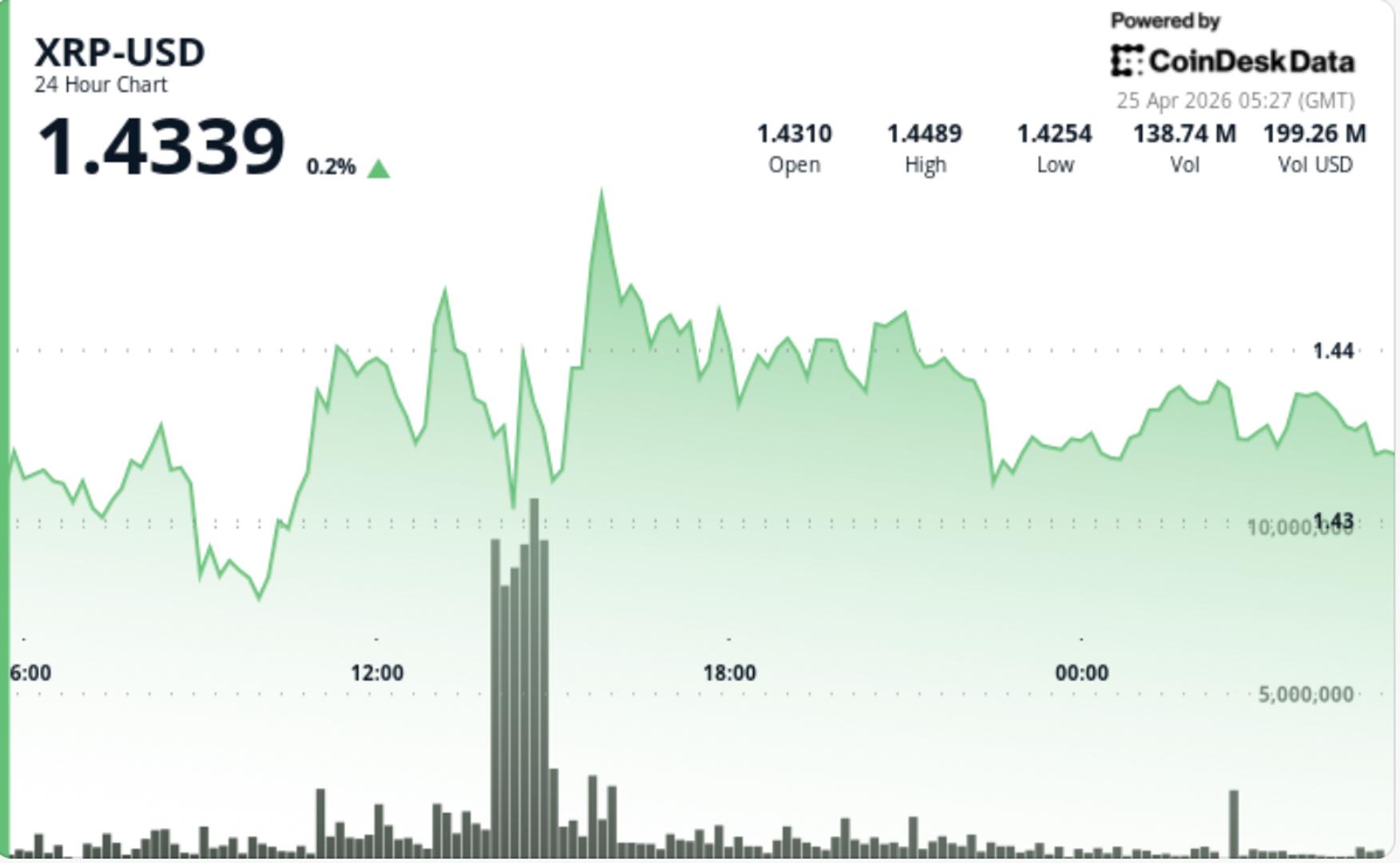
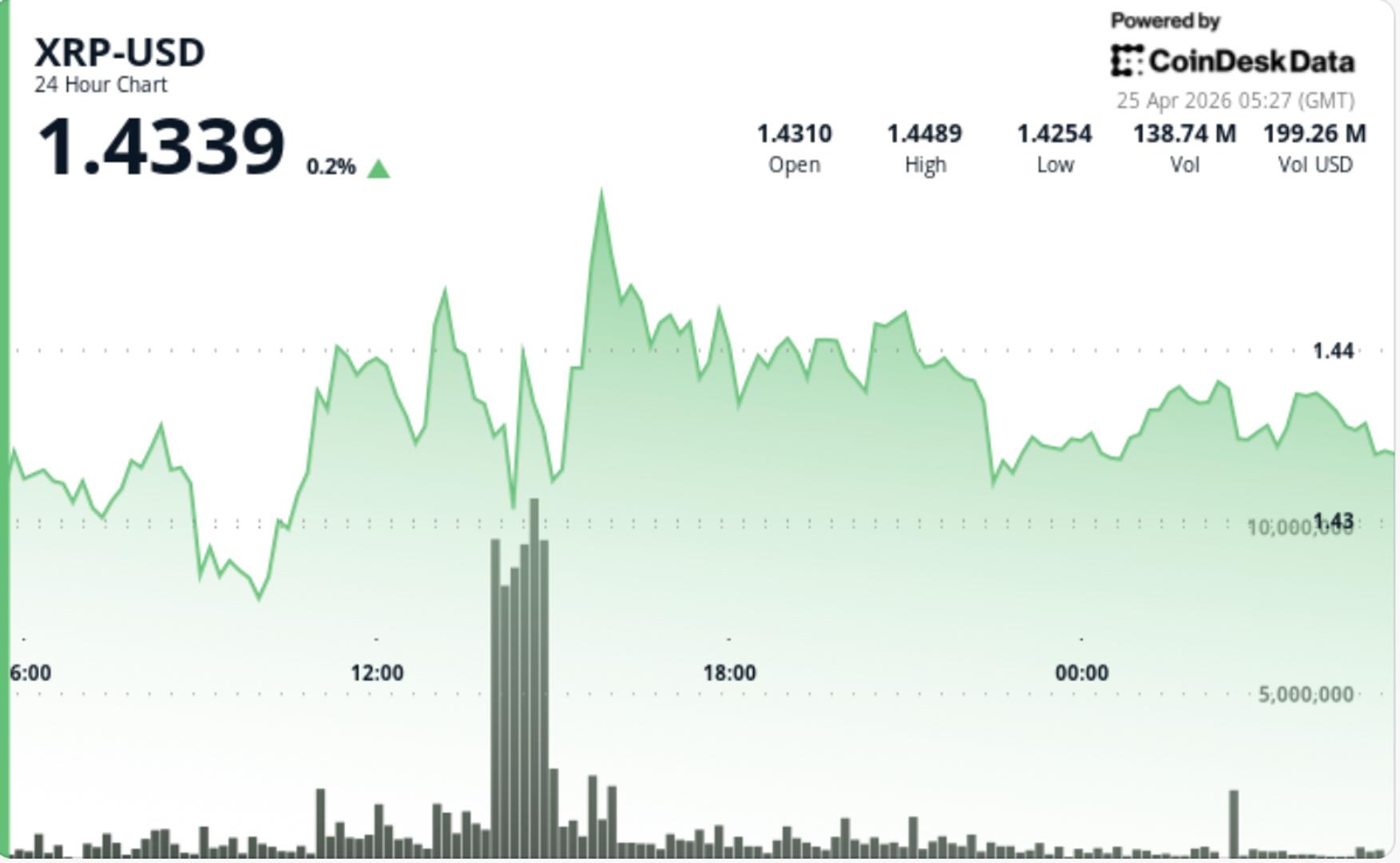
XRP is stuck just below resistance, but the price action is starting to lean one way. Every push higher gets sold, but each pullback is getting shallower. That tells you sellers are still active, but they’re losing control bit by bit. When that balance shifts, the move that follows is usually quick and decisive.
Price is grinding sideways at the top of the range, which is where markets typically resolve after absorbing supply. Add rising participation and steady positioning underneath, and this starts to look less like indecision and more like a setup waiting for a trigger.
News Background
• Spot XRP ETFs saw fresh inflows, extending last week’s strong demand and pushing total institutional positioning above $2.6 billion. This keeps a steady bid under the market even as price stalls.
• Exchange outflows hit one of the largest daily readings this year, with nearly 35 million XRP leaving trading platforms. That typically reduces immediate sell pressure and supports tighter supply conditions.
Price Action Summary
• XRP moved around $1.43-$1.45 after a high-volume push earlier in the session.
• The breakout attempt above $1.44 held briefly but failed to extend, leading to sideways consolidation.
• Price is now compressing into a narrower range, holding support without reclaiming higher levels.
Technical Analysis
• The dominant structure is a multi-week symmetrical triangle, with lower highs and higher lows squeezing price toward a decision point.
• Volume spiked during the initial breakout attempt, but faded into consolidation, suggesting absorption rather than conviction.
• Buyers continue defending higher lows, which keeps downside limited for now.
• The market is effectively coiling, with neither bulls nor bears in full control.
What traders should watch
• $1.50 is the key breakout level. Clearing it would shift momentum more decisively higher.
• $1.39 remains the critical support. Losing it would break the structure and open downside.
• The tighter the range gets, the more likely a sharp move follows. Direction will depend on which side breaks first.

Beef Season 2 Review: Netflix Show Didn’t Need A Second Run

Alan Cumming Gushes Over Friendship With Lisa Kudrow

Munster vs Ulster: Time and TV channel info, live stream, betting odds and team news

Manchester United reach agreement with Casemiro over contract clause amid transfer speculation

US brings back mandatory military draft registration

Steven Gerrard disagrees with Gary Neville over ‘shock’ Chelsea and Arsenal claim | Football


![MORAD - NO MONEY [VIDEO OFICIAL]](https://wordupnews.com/wp-content/uploads/2026/02/1771006117_maxresdefault-80x80.jpg)
-

 Business6 days ago
Powerball Result April 18, 2026: No Jackpot Winner in Powerball Draw: $75 Million Rolls Over
-

 Politics6 days ago
Zack Polanski demands ‘council homes not luxury flats for foreign investors’
-
Entertainment5 days ago
NBA Analyst Charles Barkley Chimes in on Ice Spice McDonald’s Fiasco
-

 Tech6 days ago
Auto Enthusiast Scores Running Tesla Model 3 for Two Grand and Turns It Into Bare-Bones Go-Kart
-

 Fashion13 hours ago
Weekend Open Thread – Corporette.com
-

 Politics4 days ago
Gary Stevenson delivers timely reminder to register to vote as deadline TODAY
-

 Politics2 days ago
Making troops accountable for war crimes threatens US alliance, ex-SAS colonel warns
-

 Business3 days ago
Rolls-Royce Voted UK’s Most Iconic Trade Mark as IPO Register Hits 150
-

 Politics3 days ago
Disabled people challenge government SEND proposals over segregation concerns
-

 Politics3 days ago
Zack Polanski responds to home secretary’s taser threat
-
Politics3 days ago
Wings Over Scotland | How To Get Away With Crimes
-

 Politics3 days ago
Starmer handler McSweeney to be dragged from shadows by Foreign Affairs Committee
-
Crypto World6 days ago
Kelp DAO rsETH Bridge Hack Drains $292M as DeFi Losses Top $600M in Two Weeks
-

 Politics2 days ago
‘Iran is still a nuclear threat’
-

 Crypto World3 days ago
New York sues Coinbase, Gemini over prediction market offerings
-

 Business3 days ago
The Job Benefits Most Men Don’t Know to Negotiate
-

 Politics6 days ago
Reform investigating candidate who ‘hates’ the NHS
-

 Crypto World20 hours ago
Michael Saylor says BTC winter is over. Market analyst disagrees, says bitcoin was in a pullback
-
Crypto World6 days ago
Nasdaq Rally Extends to 13 Days as Call Options Volume Nears Record High Levels
-

 Crypto World5 days ago
Bitcoin, ether, solana slide, oil jumps on renewed U.S.-Iran war risks
You must be logged in to post a comment Login