
Politics
Beef Season 2 Review: Netflix Show Didn’t Need A Second Run


Netflix finally released the long-awaited second instalment of its hit rage drama Beef last week, with the series quickly rising to the top spot of the streamer’s most-watched TV shows, according to its public ranking system.
Season one of the Emmy-winning series starred Steven Yeun and Ali Wong as two strangers who turn a road-rage incident into a long, fury-filled feud. The 2023 series racked up awards for its writing and performances.
The second iteration features a new cast and a whole new beef, in which a struggling Gen Z couple goes head-to-head against a well-to-do millennial married couple in a blackmail saga.
Oscar Isaac stars as Josh, the general manager of a country club, who’s at odds with his wife, Lindsay (played Carey Mulligan), in season two’s opening scene. Two of the country club’s employees — Cailee Spaeny’s Ashley and Charles Melton’s Austin — catch Josh and Lindsay’s big fight on camera, and so ensues the beef that drives the season.
On top of that, the billionaire owner of that same club, Chairwoman Park (the latest screen outing for Oscar winner Youn Yuh-jung), is trying to cover up a big mess dealing with her husband, Dr. Kim (played by Song Kang-ho), and gets everyone entangled in that mess.
We’ve watched all of season two – and these are our thoughts about the show…
Let’s talk about the cast and performances in Beef season 2

I thought the ensemble cast for season two was quite a mixed bag when Netflix first announced it, but given the millennial-versus-Gen Z plot, it makes sense now.
Oscar Isaac, Carey Mulligan, Charles Melton and Cailee Spaeny all give great performances. Cailee’s Ashley is an absolute menace by the end of the season, which I’m sure was the whole point of her character’s arc, but the actor played a clingy, controlling girlfriend well. I’m still thinking about those scenes on the planes where she loses it. Oscar was great, too, at flipping the switch between calm and unhinged with his character, especially in his scenes with Carey’s Lindsay.
The real standout for me was Youn Yuh-jung as Chairwoman Park. She was the perfect unexpected villain in this scenario. I have my qualms about season two’s story, but this cast wasn’t half-bad. — Njera
Out of the main cast, I was really only familiar with Charles Melton’s work, specifically his incredible turn opposite Julianne Moore in May December. So he was an exciting lead for me.
I’m still sitting with how I felt about Cailee Spaeny, Carey Mulligan and Oscar Isaac — mostly because their characters were so terrible that I can’t imagine saying anything “good” about them. But yes, I guess that is the whole point. We’re seeing the worst of people in this show — but I just can’t help but keep comparing their character arcs and personalities to the first season’s leads. They just didn’t grab me as much as I thought they should.
That said, I can’t praise Song Kang-ho and Youn Yuh-jung’s performances enough. Make them the leads in another, better Netflix series! — Erin
The best of Beef season 2…

Charles Melton. Listen, I hated that his character was ridiculous and annoying. But he is so hot that I overlooked it during every moment that he did something questionable. I also loved Youn Yuh-jung and Song Kang-ho’s performances as Chairwoman Park and Dr. Kim. If the series had been focused more on them, I probably would have enjoyed it more. — Erin
Charles Melton’s Austin was probably my least favourite at the start of the season, simply because I couldn’t take him being the idiot boyfriend to Cailee Spaeny’s Ashley. However, I feel like he did his job because he played the role convincingly, and he may not have been as dumb as he seemed by the end!
Honestly, everyone’s characters pissed me off the whole show for different reasons, but I still think the actors delivered great performances.
The comedic moments are what really kept me tapped into season two, like when Lindsay went after that coyote trying to save poor Burberry (Lindsay and Josh’s dog) in the woods. Or when Austin thought “misc” on an invoice was a typo for “mist”. Austin’s ditzy moments actually had me screaming. He was the highlight of the show for me. — Njera
…and the worst
My biggest complaint about this second season is how incredibly overstuffed the story feels, from the plot itself to the many characters the show forces us to follow.
We start off with the basic inciting event: Ashley and Austin witness a horrific fight between Josh and Lindsay and capture it on video. They then use that footage to blackmail their boss and his wife to get Ashley health insurance and a promotion with a pay bump – nothing yet for Austin, as he points out.
But then the story unravels into all kinds of mayhem that goes far beyond each couple’s relationship turmoil and their “beefs” with each other. What starts off as a character study of these four peculiar individuals becomes some kind of suspenseful corporate thriller when the show turns its focus toward a third couple: the country club’s billionaire owner, Chairwoman Park, and her much younger husband, plastic surgeon Dr. Kim. We get into the flaws of their relationship as well, but the main focus is on the death that Chairwoman Park is trying to cover up after her husband accidentally kills a patient during surgery at their clinic in Korea. She has to pay off all the clinic employees to keep them quiet and used the country club to clean said hush money.
Somehow, this turns into a money laundering scheme/conspiracy, and while entertaining, this is where the show started to lose me. It felt so far removed from what the original premise was that it no longer felt like a follow-up to Season 1. Granted, it is an anthology series, so I knew season two wasn’t going to replicate everything from the first season, but it felt like the show tried so hard to top its breakout success that it got away from itself.
Beef season one wasn’t perfect, but there’s a reason why it resonated with so many viewers. It tapped into themes and ideas that the average disgruntled person could relate to. Season two has its moments as well, though more often than not, it trades them for wildly ridiculous plots that don’t amount to any great revelations. The finale is proof of that. — Njera

How does Beef season 2 compare to season 1?
Season one of Beef was one of the top shows of 2023. It won eight Emmy Awards, including Outstanding Limited Series, and both its stars won the Outstanding Actor Awards in the limited series categories. Steven Yeun and Ali Wong were incredible leads who you were rooting for even while they were raging against each other. You could feeeeel their energy through the screen.
Unfortunately, that same energy just did not translate for me in season two. Maybe if I’d gone into the show knowing that it’d had a very different feel from season one, I could have adjusted my expectations. But from the first moments of season two, I knew that it was unlikely the show would reach the bar season one set. I imagine it’s pretty hard to replicate that success for any TV show, but season two of Beef felt totally undercooked. — Erin
The first season of Beef immediately grabbed me within the first five minutes of the show. The road-rage incident was the perfect setup — it had action, rage, suspense and you immediately wanted to know where the story was going next. Steven Yeun and Ali Wong were excellent in their roles and proved why that debut season was such a runaway hit.
Season two gets off to a much slower start, and even Josh and Lindsay’s fight didn’t feel as dramatic as it could’ve been. The stakes didn’t feel big enough, not even when they got caught red-handed by Austin and Ashley. The plot sounded boring on paper and played out exactly like I thought it would on screen (before things went haywire).
The season didn’t feel like a drag to me because the action of the Chairwoman Park storyline made up for the parts that were lacking, but if we’re comparing one and two, there’s no competition to me. — Njera
What other critics are saying about Beef season 2

Alison Herman at Variety called it “overcrowded and unfocused” in her review. “But over eight episodes, Beef loses focus and overcrowds this already expanded premise,” Herman writes. “By the closing credits, season two is no longer mainly about the acrimony between its antiheroes and what it brings out from within them.”
Aisha Harris at NPR said ultimately the show is “well done”. “Season two is compelling enough largely because its stars gamely tap into the spirit of the show’s M.O.; at any given moment, each character may reveal the worst of themselves, which looks different for everyone,” Harris writes.
While I agree that each character has some truly terrible personality traits, I’m not convinced it taps into the same modus operandi as the first season and definitely not nearly as well.
Christopher Campbell at Rotten Tomatoes rounded up the early reviews of the season, with most critics saying season two was worth the wait. I totally disagree with that! Maybe if the show didn’t seem so sprawling — six episodes instead of eight, 30 minutes each instead of 45- to 55-minute episodes — it would have felt like less of a time investment for something not nearly as focused as season one.
It’s very interesting to see how mixed the reviews are. But I’m more curious to see what folks have to say about it on social media as more people dig in over the weekend. — Erin
So, should you watch Beef season 2?
If you’re looking for the same fervour as Season 1, skip it. But if you’re a huge Charles Melton fan, enjoy. — Erin
If espionage thrillers are your jam, you might enjoy the latter half of the season. Might not be the Beef you’re expecting, but it’s quite a series of events. Also, if you tend to get FOMO, you might just want to get this binge-watch out of the way to avoid spoilers on socials. — Njera


For some fans, it already feels like a lifetime ago since Netflix closed the book on Stranger Things with a fifth and final season so divisive fans even concocted a theory about a secret final, final episode.
One antidote to the turmoil of the cult show wrapping up after almost 10 years, was the promise of spin-offs, the first being an animated series shaped by original creators the Duffer brothers.
Tales From ’85 arrived on Netflix this week, and although it may have received mixed reviews from the critics, plenty of fans have been won over by the fresh invention, while others are left wondering about future instalments in the sc-fi saga outside the animated series.
Here’s everything we know about the future of Stranger Things…
Will there be a Stranger Things: Tales From ’85 season 2?

Netflix is yet to make an official announcement on that front. However, based on what the cast and creators are saying, it hasn’t been ruled out.
What we do know is that showrunner Eric Robles is interested in exploring those characters further in the future, and making sure it ties in cleanly with the rest of the Stranger Things universe.
“The hopes are, if we continue with the series, we’ll make sure that we kind of tie it right back to the beginning of season three,” he told the Radio Times, referring to Tales From ’85 and its taking place between the events of season two and three of the original Netflix series.
Meanwhile Brooklyn Davey Norstedt – who voices Eleven in the series, taking over from Millie Bobby Brown – is also keen for a fresh run of episodes.
“That would be amazing,” she enthused when asked about a second season. “I know they definitely have ideas,.
“I think, right now, they’re really focused on the launch of season one,” Brooklyn added. “I think it’s going to be a great one for families to see together. We’re just all very pumped for the first season, and if anything else comes from it, that would be great.”

What could Stranger Things: Tales From ’85 season 2 be about?
Whether or not it comes to fruition, it looks like Tales From ’85 has been left in such a way that a second season would be an easy pick-up.
As well as finishing on a cliffhanger, there are some characters still knocking around at the end of the series that we know don’t exist in the original Stranger Things universe, such as Marty Supreme star Odessa A’zion’s character, Nikki.
With showrunner Robles already saying he hopes to bring Tales From ’85 right back round to where season three of the original Netflix show begins, that means there’s some loose ends (and characters) to tie up.
Could a new season of regular Stranger Things be in the works?
Sadly, there’s no way back for the Stranger Things we know and love.
Making the wise decision to quit while they’re ahead and dodge any “gross cash grabs”, the Duffer brothers have remained firm in their stance that season five was the final chapter for the existing cast and the world they inhabited.
In an interview with the Hollywood Reporter shortly after season five finished, Matt Duffer explained: “Mike’s closing the basement door. We’re closing the door on the story.”
“That’s one reason we had the closing credits the way we did, because it was a way of saying: ‘This is finite. This is the end of their story. It’s the end of the story of Mike and Eleven and Joyce and Hopper’.” he added.
“So, no, there’s no plan or intention to tell the story because it’s a coming-of age story. Ultimately, that’s what it’s supposed to be. That’s what the show always was. When he closes the door to the basement, he’s closing the door on his childhood and he’s moving onto adulthood.”
We won’t hold our breath, then.

What about other Stranger Things spin-offs?
While it’s the end of live-action Stranger Things in its original format, the Duffer brothers have teased an intriguing addition to the universe.
“It’s early days but we’re excited about it,” Matt Duffer told the BBC back in November. “It’s new characters and a new mystery, so it’s different, but it will be in the same world as Stranger Things.”
One person who’s clued up on the spin-off is Finn Wolfhard aka Mike, who accidentally guessed the plot of the series and confirmed that, unlike Stranger Things, the new project wouldn’t be set in the 1980s.
Finn previously spoke to Variety about that prediction, saying it would be “like David Lynch’s Twin Peaks” and “sort of an anthology” with “different tones” but a “similar” or “same universe”.
Of course, there’s also still the chance to see the Stranger Things play on both the West End and Broadway

Stage show Stranger Things: The First Shadow is booking in London until 6 September 2026, or if you fancy a trip across the pond you can also see it on Broadway.
The First Shadow show is set in Hawkins, 1959 “before the world turned upside down” and is based on an original story by the Duffer Brothers.
It also features well-known characters like Joyce, Jim Hopper and Dr Brenner played by stage actors and has picked up five-star reviews for its “truly dark” take on the franchise.
Earlier this year, it was also reported that the Broadway play had been recorded for a rumoured Netflix special.
Stranger Things and season one of Tales From ’85 are both streaming now on Netflix.
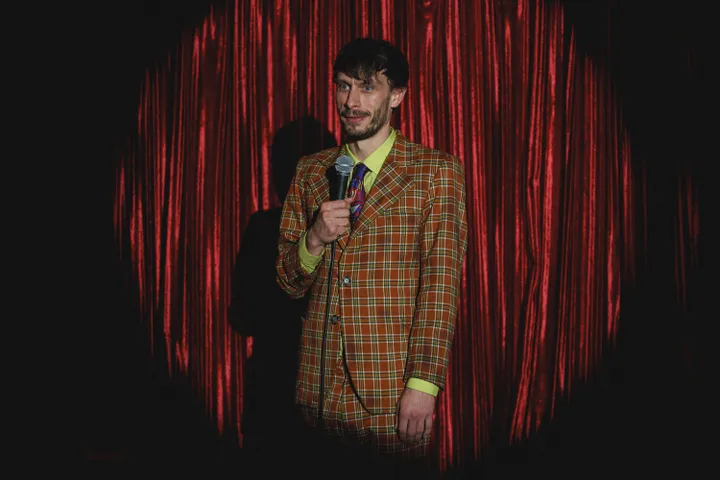
The more emotionally robust among us might have already plunged straight into Baby Reindeer creator Richard Gadd’s new series Half Man. To those people we say congratulations – and can we maybe have the number for your therapist?
Already hoovering up praise and criticism alike for its “emotionally shattering” depiction of two brothers and the fragility of male relationships, the BBC is perhaps wisely drip-feeding one new episode of Half Man every Friday, rather than releasing the whole series at once.
Meanwhile, if you’re a regular TV viewer, you’ll likely have seen more than a few members of the cast – led by Richard and co-star Jamie Bell – before.
Here’s why the stars of Half Man might look familiar…
Richard Gadd

Comedian, actor and writer Richard made his major breakthrough with the six-time Emmy-winning Netflix series Baby Reindeer, an adaptation of his one-man comedy show about his own experiences of sexual violence and being stalked.
If you don’t recognise him from that, or his irreverent stand-up comedy career, you might have seen him in the 2022 Disney+ action comedy series Wedding Season, where he had a recurring role as Conrad.
Richard has also appeared opposite Stephen Graham and Daniel Mays in cop comedy Code 404 as well as appearing in the likes of Clique, Urban Myths, Humans and Outlander.
Jamie Bell

Tiger Aspect Pics/Kobal/Shutterstock
Jamie Bell burst onto the scene as a child actor, playing unlikely ballet dancer Billy Elliot in the 2000 film of the same name, which made him the youngest person to win a Bafta for Best Actor, aged just 14.
Since then, he’s appeared as The Thing in Marvel’s Fantastic Four, as well as films as varied as The Adventures of Tintin, All Of Us Strangers (as Andrew Scott’s dad, no less), Rocketman, Nymphomaniac, Film Stars Don’t Die In Liverpool and Jane Eyre.
On the small screen, Jamie most recently starred as serial killer Harper Curtis in Apple TV+ sci-fi series Shining Girls, alongside Elisabeth Moss.
He also portrayed real-life spy Abraham Woodhull in the historical drama series Turn: Washington’s Spies, and was recently announced to be taking over from Cillian Murphy as the lead in the new Peaky Blinders spin-off.
Neve McIntosh

Neve McIntosh most recently appeared as Miss Harbottle in the Channel 5 series All Creatures Great & Small, but she had a string of TV and film appearances under her belt long before that.
You might have also seen Neve in Doctor Who, where she’s appeared as three different characters – silurian sisters Alaya and Restac as well as Madame Vastra.
Her other TV credits include Gormenghast, Doc Martin, The Hound Of The Baskervilles, Bodies, Single Father, Stan Lee’s Lucky Man, Shetland and Tin Star.
Theatre-goers, meanwhile, might have seen her in the Royal Shakespeare Company’s production of Charles Dickens’ Great Expectations in 2006.
Charlie De Melo

Soap devotees will know Charlie De Melo for his role as Coronation Street’s Imran Habeeb, which he played between 2017 and 2022.
As well as doing the soap rounds (he’s also appeared in Eastenders, Doctors and Casualty) Charlie has also appeared in The Interceptor, Still Up, Doctor Who and Ellis.
He also played Malhar Verma in three episodes of Disney+’s wildly-popular Jilly Cooper adaptation Rivals.
Bilal Hasna

Bilal Hasna made his Bafta-nominated breakthrough in the superhero comedy series Extraordinary, where he played time manipulator Kash.
He also had a lead role in Prime Video comedy thriller Dead Hot, while Black Mirror aficionados might also have clocked Bilal in season seven finale USS Callister: Into Infinity.
Over on the big screen, Bilal played the titular British-Palestinian drag queen in Layla, and more recently appeared in the Bollywood-meets-Dickens festive film Christmas Karma.
Amy Manson

As well as playing Alice Guppy in Torchwood, Amy Manson has had TV roles in everything from Casualty to Desperate Romantics, Being Human, Outcasts, The Nevers and Once Upon A Time.
Most recently, she’s appeared as Giselle in Netflix’s The Diplomat as well as Paramount+ series The Chemistry Of Death, Bodies (along with Half Man co-star Neve) and the BBC’s Scottish crime drama Rebus.
Our favourite role of hers, though, has to be when she appeared as the hallucinated Anne Boleyn in the Princess Diana drama Spencer, appearing opposite Kristen Stewart.
Stuart McQuarrie

Stuart McQuarrie has had some punchy film roles to date, appearing in 28 Days Later, Trainspotting, Blood, Mr Turner and The Nest to name a few.
On TV, you might have seen him in Taggart, Silent Witness, Foundation, The Tower, Shetland, Life Begins or The Crown, where he played British politician George Thomson.
More recently, he’s appeared in The Rig as Colin Murchison opposite Iain Glen, Emily Hampshire, Martin Compston and Mark Bonnar.
Tim Downie

Comedy fans will likely recognise Tim Downie from his appearances in classic series like Peep Show (where he played Mark Corrigan’s dodgy literary agent), as well as Toast Of London, Miranda, Heading Out, Upstart Crow, Chewing Gum and Hapless.
Tim’s also cropped up in drama series like Nicola Coughlan’s Big Mood, Jekyll & Hyde and Skins.
Film buffs might recognise him from his roles in The King’s Speech, Les Misérables, Paddington, War Machine and The Mercy.
Episode one of Half Man is streaming on BBC iPlayer now, with new instalments every Friday.

We’ve written before at HuffPost UK about how olive oil might not be the best choice for roasting spuds.
It turns out the kind of oil you use for nonstick pans matters no matter what you’re cooking in them, too.
According to cookware brand Circulon, “there are several reasons to avoid using cooking sprays on your nonstick cookware”.
Why are cooking sprays so bad for nonstick pans?
Speaking to the New York Times’ Wirecutter, Fran Groesbeck, a managing director of the Cookware and Bakeware Alliance trade association, said that – ironically – some non-stick sprays can ruin the coating on your pans.
They can leave a thin film behind after use, she said, and it’s especially hard to spot on nonstick pans.
“You can’t necessarily see that residue, because nonstick coatings are all black, but if you don’t properly clean it off after you’re done cooking, then your food will start to stick.”
This film is made up of ingredients not usually seen in non-spray oils, like soy lecithin. As they linger on an often-reheated pan, they polymerise, becoming next-to-impossible to remove.
But that’s not the only unwanted side effect. Because these sprays typically have a lower smoke point than many other oils, they begin to burn on your pan – corroding the nonstick surface further.
Speaking to EatingWell, cookware company Our Place’s associate director of product development, Stephanie Hong, said: “Many spray oils also contain chemical propellants, which are prone to breaking down under high heat. This instability can lead to scorching, residue buildup and long-term damage to the nonstick surface, ultimately causing the very sticking you were trying to avoid.”
What should I use instead?
If you want to use less oil, try wiping your nonstick pan with a paper towel dipped in your usual oil, Circulon shared.
Alternatively, you could place regular oils in a mister bottle, though Hong warns this could carry its own risks.
“The ultra-fine oil particles (even from pure oil options or refillable oil-misters) can burn and carbonise during cooking, leaving behind a stubborn residue that bonds to the pan’s surface and gradually impacts the pan’s nonstick performance,” she told EatingWell.
She added, “To preserve the quality and lifespan of your nonstick pans, skip aerosol sprays” altogether.

4 min read
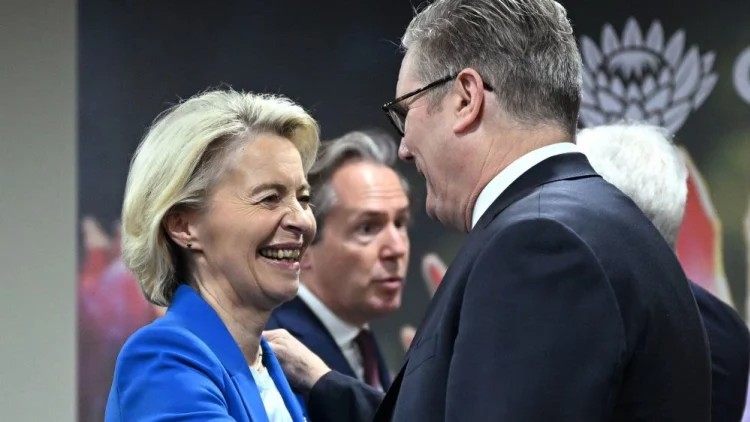
The current government’s approach to rebuilding ties with Europe is welcome and beneficial. But this alone won’t come close to reversing the damage of Brexit.
The defeat of Viktor Orbán’s odious regime in Hungary represents a potential turning point in the future of Europe and the Western alliance. For over a decade, it has felt as if Western democratic nations have been stuck on an inevitable path towards fracture and decline. Populist forces on the right have been pulling our countries apart, dismantling the rules-based global order, destabilising international alliances, and poisoning the well of our democracies. Orbán’s Hungary was an extreme example, but for the pound shop demagogues promoting his brand of politics in the UK and beyond, it was held up as an ideal.
This defeat should give us all hope that this populist wave can be defeated, and we can rebuild what has been damaged.
Péter Magyar spoke openly in the wake of his victory about rejoining global institutions and deepening international co-operation. It was what he said next that grabbed headlines here, suggesting that just as Hungary seeks to rejoin the European club, so too should the UK.
This was quickly backed up by Ukrainian Prime Minister Volodymyr Zelensky, who argued that Donald Trump’s threat to pull the USA out of NATO should prompt the UK to rejoin the EU. This kind of talk is unthinkable from politicians in London – with even the Lib Dems talking about rejoining only the customs union – but should it be? And is it time to begin a serious debate about EU membership?
Of course, the government would say they are already rebuilding relations with Europe, and they are right. There has been a significant change of tone and approach under Labour, which has been noticed and welcomed on the continent. The deals the government is negotiating, including on energy markets and agricultural and food standards, are important in their own right. I hope they go further with deeper dynamic alignment on issues such as workers’ rights and UK access to the SAFE defence funding mechanism. These would be important evidence of building on this approach.
However, this approach on its own will never come close to reversing even a fraction of the deep economic damage done by Brexit, with per capita GDP 6-8 per cent lower, and employment 3-4 per cent lower, than if we had not left the EU. More fundamentally, when European leaders gather to discuss Trump’s tariffs or AI regulation, the UK is not at the table. And if NATO starts to wither due to American indifference, then we may see important defence and security decisions being made at the EU level too.
Speaking to EU colleagues, it is increasingly obvious that the idea that the UK could enjoy a ‘best of both worlds’ situation is a fantasy. The EU is very clear: the benefits of membership come with obligations. As the leader of one of the UK’s most pro-European trade unions, it has been frustrating to watch others fail to grasp this fundamental point. Too often, the UK has been stuck talking to ourselves about which bits of Europe we would like to rejoin, without stopping to consider what will fly in Brussels. The only viable routes for European reintegration are some version of the government’s current deal or a serious conversation about membership of the EU.
Helpfully, the public seems to grasp this, according to new polling from Best for Britain. When asked about variations of the UK-EU relationship, the only two options with majority support are the government’s current position (closer alignment within their red lines) or full membership. Halfway house approaches, such as rejoining the single market or customs union, have lower support, and the latter barely makes a difference economically beyond the current approach.
The government has done the right thing by resetting our relationship with Europe. But the strategic case for the UK to consider EU membership is getting stronger by the day, and should become a serious debate as we reflect on the referendum’s tenth anniversary and look towards the next election. We should not pretend that politics will be easy; the trade-offs are real, and memories of the Brexit debates are still raw.
But the idea that this is politically unthinkable simply does not hold water.
Not only does exploring it command majority support, but it could form an obvious rallying point for progressives to unite against the threat of Reform UK. Events in Hungary should give us hope that we are not doomed to live in the world of the populists and accept the UK becoming poorer, more divided, and more irrelevant each passing year.
We can set our own destiny if we are brave and bold enough to argue for it.
Mike Clancy is General Secretary of the Prospect trade union and Chair of the UK Domestic Advisory Group on the EU-UK Trade and Cooperation Agreement
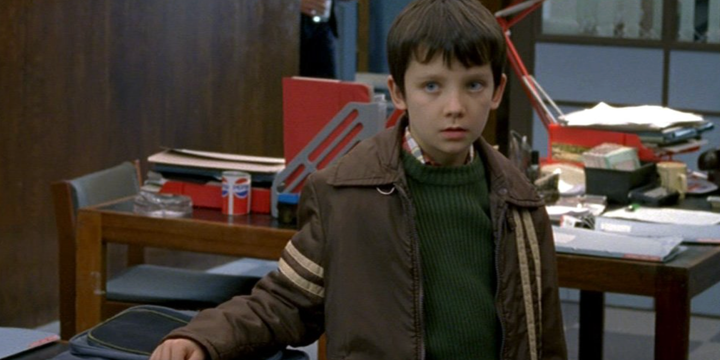
From his early beginnings as a child actor to his stand-out performance in Netflix’s Sex Education, Asa Butterfield has become one of the most recognisable British actors of his generation.
Asa recently reunited with the streaming service for the British drama Unchosen, in which he plays a lead role opposite Molly Windsor and Fra Fee.
In the dark psychological thriller, he plays one half of a young couple living in a religious sect, whose lives are turned upside down thanks to the arrival of a new face in their community, who poses questions for both of them.
But aside from the roles you might associate with Asa, there are plenty more you’ve likely forgotten all about.
Here are nine more of Asa’s past shows and films from long before Unchosen that might have totally slipped your mind…
Son Of Rambow (2007)
While people generally think of The Boy In The Striped Pyjamas, Hugo or the Nanny McPhee sequel when it comes to Asa Butterfield’s early work as a child performer, he actually started acting before any of that.
In 2007, he had a minor role in the British comedy Son Of Rambow, appearing alongside a number of other future stars of his generation, most notably Will Poulter.
Asa had a small role in the film, playing a young member of the Plymouth Brethren.
Ashes To Ashes (2008)

A year after his big-screen debut, Asa appeared in the first season of the period drama Ashes To Ashes, itself a spin-off of Life On Mars.
Then just 11 years old, Asa played a small role in the show’s sixth episode, appearing as schoolboy Donny, in an episode which also guest starred Phil Davis.
Merlin (2008)

That same year, Asa landed the role of Mordred in Merlin, a young Druid who quickly forms a bond with Morgana in season one.
Asa went on to appear in three episodes of the BBC fantasy series, which featured Colin Morgan as the titular wizard in his younger years.
Mordred was reintroduced later in the series, but had been recast, with Alexander Vlahos taking over the role from season five.
Ender’s Game (2013)

Based on the novel series of the same name by Orson Scott Card, Ender’s Game was one of Asa’s first leading roles.
In the sci-fi adventure, he played Ender Wiggin, a young man in a dystopian future who is sent to an advanced military academy where he is trained to prepare for an alien invasion.
Abigail Breslin starred as Asa’s sister Valentine, with the all-star cast also including Harrison Ford, Viola Davis, Sir Ben Kingsley and Hailee Steinfeld.
Miss Peregrine’s Home For Peculiar Children (2016)

One of celebrated director Tim Burton’s most overlooked offerings came in 2016, when Miss Peregrine’s Home For Peculiar Children arrived in cinemas.
Asa played teenager Jake Portman, one of the central “peculiar children”, in the family movie, which also featured Eva Green, Dame Judi Dench and Samuel L Jackson.
While the film itself was met with a somewhat lukewarm reception, Asa’s performance was well-received, even sparking comparisons with another former Tim Burton collaborator, Johnny Depp and earning him a Teen Choice Award nomination.
Then Came You (2018)

Asa played a romantic hypochondriac working as an airport baggage handler, who strikes up an unlikely friendship with a terminally-ill teenager, played by Game Of Thrones star Maisie Williams, in Then Came You.
When the two friends become close, Maisie’s character enlists her new pal to help her carry out her eccentric bucket list in the time she has list, helping him learn life lessons, come out of his shell and face life-long fears along the way.
Then Came You was met with a muted response upon its release in 2018, with the cast also including Nina Dobrev as Asa’s love interest, Peyton List and Tituss Burgess.
Time Freak (2018)

The same year he was sharing the screen with Maisie Williams in Then Came You, he was cast as fellow Game Of Thrones star Sophie Turner’s love interest in another film.
In Time Freak, Asa played a Physics prodigy going through a break-up, who decides to go back to the beginning of his relationship in an attempt to try and work out where things went wrong.
However, through this process, he – naturally – stumbles upon the art of time travel, which he uses to try and fix the situation. You won’t believe this… but it has complicated results.
Greed (2019)

A Troubridge/Sony/Kobal/Shutterstock
The black comedy Greed featured Steve Coogan in the lead role of a billionaire high-street fashion tycoon, loosely inspired by Philip Green, who employs a meek and mild-mannered journalist (played by comedian David Mitchell) to help him pen his memoirs.
Greed, a satire on the fashion industry and super-wealthy elite, featured a sprawling cast that included everyone from Isla Fisher and Shirley Henderson to reality star Ollie Locke and Doctor Who’s Pearl Mackie (with cameo appearances from Stephen Fry, Colin Firth, Keira Knightley, James Blunt, Keith Richards, the late Caroline Flack and, for some reason, Louis Walsh).
Asa played Steve’s character’s son, who had an unhealthy obsession with usurping his father’s position and status.
Choose Or Die (2022)

The Netflix original horror Choose Or Die centred around a fictitious video game platform that forces its users to make split decisions (putting is in mind slightly of the now-removed Black Mirror special Bandersnatch) with potentially fatal results.
Asa played one half of a pair of friends who become obsessed with the game, alongside an eclectic cast that included everyone from former Coronation Street star Angela Griffin and Eddie Marson to Nightmare On Elm Street’s own Robert Englund, playing a demented version of himself.
Unchosen is now streaming on Netflix.
This week 921,151 visitors visited 839,335 times viewing 873,526 pages. The most read and shared stories in order of popularity were: EXC: Cabinet Office Permanent Secretary In Discussions to Leave Government Role WATCH: Lee Anderson Kicked Out of Commons After Accusing Starmer of Lying Government in Turmoil Over Second Mandelson Files Release Foreign Office Permanent…

We all know kids and teens are reading less – and an increasing number are enjoying it less, too.
The stats speak for themselves. When The National Literacy Trust polled almost 115,000 kids in early 2025, it found just one in three (32.7%) kids aged eight to 18 years old said they enjoyed reading in their free time.
This marked a 36% decrease in reading enjoyment levels since 2005.
Among teens, particularly boys, reading enjoyment drops even more. One in five (18.8% of) boys aged 14 to 16 report enjoying reading, compared to 37.7% of girls.
It’s not just a UK issue, either. In a US-based survey of Gen Z students by Walton Family Foundation and Gallup, 35% admitted they disliked reading, with 43% saying they rarely or never did it for fun.
What’s impacting their love of reading?
In a TikTok video, a teacher known as Ms C, admitted one of her students had revealed they’d never finished a book before.
Discussing why older kids are reading less, she said there are “many reasons” like “increased pressure inside and outside of school, a desire to spend more time socialising, and, of course, the phones”.
But an even more “obvious” reason, she said, is that “adults have lowered the bar for how much you should read as a teenager” to the point where “the bar cannot be found”.
She explained: “There are many educators who have the mindset that you shouldn’t teach whole books because kids just won’t read them.”
“In the past I’ve taught at schools where teaching novels is actually discouraged,” she claimed.
I asked teachers and school librarians in the UK for their two cents on why kids are falling way out of love with reading by the time they reach their teens.
Sol Elliott, librarian at Overton Grange School, suggested more time spent online, especially on social media, plays a key part: “The technology that brings a lot of young people towards reading also keeps far more people away from it.
“The dopamine hit of social media use is hard to compete with, especially when we are working with people whose brains are developing quickly.”
Sarah Parsons, director of education at the Ted Wragg Multi Academy Trust, said: “Sadly, we see in our schools that teens find it hard to maintain the reading habits that they may have developed during primary school.
“Increasing demands on their time both within and beyond the classroom, combined with the growing influence of technology, have all contributed to a decline in regular reading among our teenagers.”
Research suggests there was a 52% increase in children’s screen time between 2020 and 2022. Kids aged eight to 14 years old who use the internet spend an average of 2 hours 59 minutes a day online across smartphones, tablets and computers, typically on YouTube, Snapchat, Google (search), Facebook and WhatsApp.
Nat Parnell, CEO of the Westcountry Schools Trust, also suggested social media plays a major role in teens reading less: “The risk is that the short bursts of gratification teenagers get from social media and texting are far more immediately satisfying than reading, which requires much greater effort before enjoyment is reached. It is not really a fair competition.”
The benefits of reading for pleasure
Besides being a nice way to switch off and unwind, there are several benefits to kids reading for pleasure. It helps introduce children to a range of experiences and viewpoints, which can help build empathy. It can also boost confidence and spark creativity.
Reading enjoyment has also been reported as more important for children’s educational success than their family’s socio-economic status, and it’s linked to higher scores in reading assessments.
Schools are trying to address the reading crisis – but it’s not easy. Parnell said their schools ensure all students have structured reading opportunities. “We also banned mobile phones in school some time ago,” she noted.
Parsons said their are a few strategies they’re deploying to try and boost reading: providing dedicated time each week for independent reading, for example, as well as exposing kids to texts that stimulate meaningful discussion and debate.
For Elliott, it’s been a case of tailoring the school library collection to the pupils’ tastes “in the hope that they will pick up a healthy reading habit as they grow up”.
“A lot of these choices are informed by internet trends and TikTok friendly genres (Fantasy, Romance, Manga etc.),” said the librarian.
“I genuinely fear for the health of our society if a meaningful cohort of young people are not reading regularly and interacting with serious literature,” Elliott added.
“I am optimistic, though, that when a school is sensitive to its young readers and pays attention to their interests that we can help them turn into regular readers.
“All reading is good reading, and I can only hope that stocking my library with magazines, comics and manga, will lead a good amount of them to a Zadie Smith novel, or a play by Arthur Miller.”
Ways to get kids reading at home
If you’re hoping to spark a love of reading in your teen, here’s what might help:
- Buy books related to a favourite film, TV series, or which matches their interests or hobbies.
- Let them choose what they read.
- Be a reading role model – make sure they see you reading for enjoyment, too.
- Set screen-free time before bed and encourage activities such as reading, colouring or journalling to wind down.
- Help them find their own spaces to talk about books, suggests Scottish Book Trust – try Goodreads or #BookTok on TikTok.
- Encourage different reading formats – e-books, comics and e-magazines still count!
- Take them to library,school and book shop-hosted events focused on reading.
- Check out our picks of the books to gently steer teens towards reading once more.

Strength training is one of the best activities we can engage in as we age. It can help us live longer, may reduce our risk of dementia, and helps to decrease our risk of falls.
Meanwhile aerobic training, like jogging, walking, and swimming, is also linked to better heart health in older age and might benefit our brains too.
Some research has found that a combination of exercise, rather than sticking to one type of training, is linked to better longevity outcomes.
And according to the National Institute on Ageing, we need to add an underrated exercise to our routines, too. “Research has shown that it’s important to get all three types: aerobic, muscle-strengthening, and balance,” researchers write.
What is balance training?
Balance training, which the NHS says can improve your “health and mobility”, should be done at least twice a week. It involves movements which improve your stabilising muscles.
- Calf raises,
- Knee raises,
- Standing with your eyes closed,
- Tai chi,
- Yoga,
- Walking backwards or sideways,
- Using a wobble board,
- Dancing,
- Single-leg training,
- Standing from a seated position.
Why is balance training so good for us as we age?
There are benefits no matter what stage of life you’re in: yoga, for instance, seems to be unusually good at helping us sleep; while, in general, balance training leads to better joint stability and coordination.
But calling the training type “neglected”, the University of Strathclyde said it can benefit older adults in particular, whose balance “can deteriorate” over time.
Balance training can help to reduce the risk of falls and related fractures, which are most common among those over 65.
That’s partly because balance training helps to improve something called proprioception, which is one of our senses and helps us to know where our bodies are in space and how they’re moving.
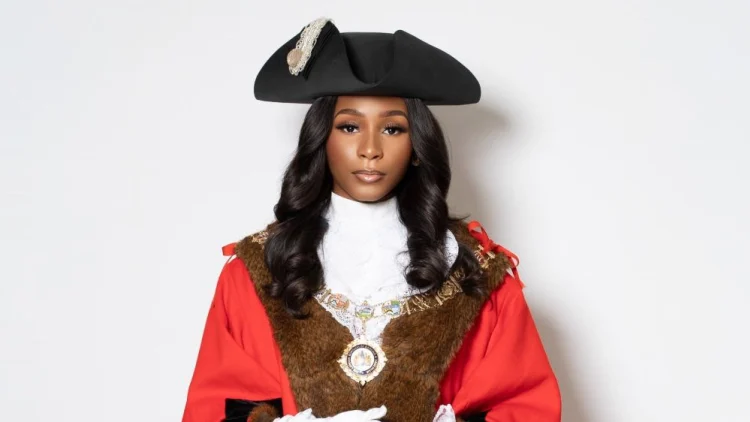
Credit: Princess Bright

11 min read
Young people in Britain are often described as disengaged and distrustful of politics. Zoe Crowther speaks to a new generation of civic leaders who believe they can help close that gap
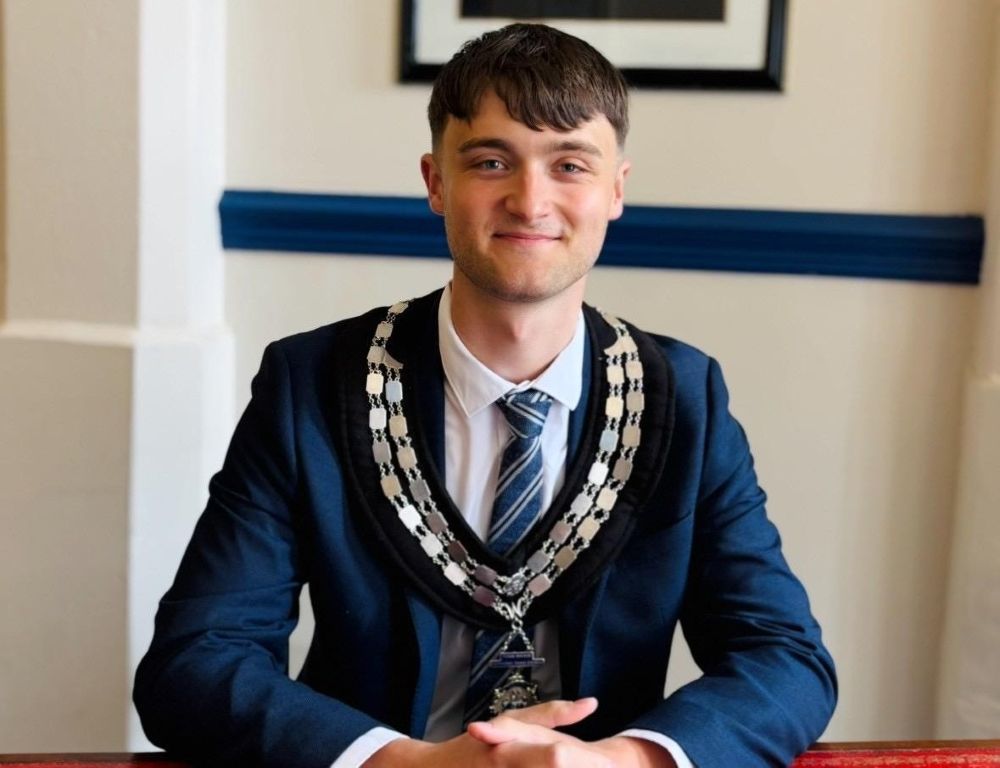
Connor Mulhall and Princess Bright are from opposite corners of the country and come from contrasting backgrounds, but they do have one thing in common: both are the youngest-ever ceremonial mayors chosen to represent their town or borough.
They hope that if young people in their areas can see someone like them in positions of civic leadership, they are more likely to believe the system works for them.
There are around 300 civic mayors across England, alongside more than a dozen directly elected metro mayors. Mulhall and Bright are both far from the traditional image of a ceremonial mayor: usually an older white man in robes, wearing a heavy chain.
The House travelled to Wetherby, West Yorkshire, to meet its 27-year-old mayor, Connor Mulhall, who was named Young Councillor of the Year by the National Association of Local Councils earlier this year.
Many people are likely to know Wetherby for its large service station stop on the A1, the long dual carriageway that connects London all the way up to Edinburgh.
For Mulhall, it is much more. Walking through the town, he points out the details of every little feature of the town. The best fish and chip shops. An information board about the historic brass band marching contest. A school building in need of repair. Air pollution monitors he helped to install. Flowerbeds that have been upgraded. Some fallen branches in the river that he had requested be cleared. “And look, there’s a woodpecker!” he exclaims.
Inside the town hall, the generational contrast between Mulhall and his council colleagues is obvious. Mulhall is the only person in his 20s we come across in the building, and there is a lunch being hosted for elderly residents. An older woman approaches him to say thank you for his “lovely” get-well card. She turns out to be his ex-girlfriend’s grandmother.
Mulhall did not follow a typical route into politics. He left sixth-form to start an apprenticeship with O2, where he still works, alongside serving as mayor and councillor. At 19, he was encouraged by the local Conservative association to stand for the council, and broke the record to become the town’s youngest-ever councillor before doing the same as mayor when he was selected last year.
Wetherby is a traditionally Conservative area, and Mulhall is a Tory councillor. But he sees the mayoralty as something separate from party politics. For him, it is about being an ambassador for the town, supporting charities, organising events and encouraging people to take part in local life. This includes advocating for causes very personal to him. The following weekend, he is due to speak at a service raising money for the mental health charity Mind. Mulhall grew up with both parents experiencing mental health problems and relying on benefits, and had to live with his grandparents from a young age.
“My mum and dad have been helped by that charity, and I know that a lot of people in Wetherby have as well,” he says.
“We have had a lot of young suicides in Wetherby in the last few years. It’s a lovely place to be, but we’re not immune to that, and it does happen. It is worth talking about, because it can go on quietly; a lot of people don’t know.”
A new study by a research team from Royal Holloway, University of London, has found that nearly three-quarters (72 per cent) of UK adolescents aged between 12 and 17 would vote if given the opportunity – far above the most recent voter turnout in the 2024 general election (60 per cent).
A majority – 57 per cent – also said they were interested in politics, and 58 per cent said they were willing to participate politically across five different forms of participation, with a higher preference for online than in-person participation.
The report argues that while lowering the voting age to 16 could help to include young people in democracy, this engagement is tempered by anxiety about the future and low trust in institutions, leaving young people “willing but wary”.
Mulhall says that reflects what he sees on the ground, and he does not accept the idea that young people are apathetic. Instead, he points to growing involvement in local projects and events.
“We’ve got a lot of younger people wanting to be involved in the council’s work, getting involved in things like the town bonfire,” he says. “That’s how the interest in getting involved in local stuff starts, and that has improved over recent years.”

Princess Bright, 30, became the youngest-ever Mayor of Barking and Dagenham in London last year, at the age of 29. Her route into politics was very different, with her mother having served as a Labour mayor before her, and her father as a pastor.
Like Mulhall, Bright believes that mayors can help to turn young people’s interest in politics into active engagement.
Bright believes visibility matters, explaining that young people have told her that before seeing someone like her as mayor, they “didn’t really care” about politics or local events.
“One thing I would say to young people is for them to remember that their voices matter,” she says. “And why I say that is the fact that even at a local level, they can be part of a change.”
Her presence online has helped reinforce that message. With more than 20,000 followers across Instagram and Facebook, she believes her social media profile has led to her being invited into more schools and community spaces than her mayoral predecessors, giving her opportunities to engage directly with younger audiences.
Bright believes social media is crucial for making local politics more visible and understandable.
“There is a lack of education about local politics in general,” she says.
Mulhall agrees, but stresses the need to balance the traditions of the ceremonial mayor’s role with more modern digital communication.
“Having the traditional stuff that happens every year – I think it’s really important, and I will continue to do that, because that’s the historic part of it all,” he says.
But he puts his own energetic twist on his role as mayor. In the run-up to Christmas, he filmed himself recreating the Hugh Grant dance scene from Love Actually in Wetherby town hall to raise money for Martin House children’s hospice.
Particularly for young people, if there is any time to get involved in politics, it’s now, because it’s not normal times in terms of the state of the world
Mulhall traces his own political interest back to primary school in York, where he lived as a child before moving to Wetherby.
“The park on my street was really derelict, and it had been neglected,” he says. “I worked with the local council and councillors to help redesign that park.
“I brought it to the school for consultation, and I worked really closely with a lot of the teachers. We converted this playground into a brand new one, and it’s still being used today. It still looks really nice. I do occasionally go down there, and that’s something I think is really nice in local politics… You can look at something and go: ‘I actually helped to do that’.”
He briefly considered standing for Youth Parliament as a teenager, but decided local government was where he could have the most impact.
“For me, it’s about getting things done,” he says, hinting at a sense of urgency.
“Particularly for young people, if there is any time to get involved in politics, it’s now, because it’s not normal times in terms of the state of the world.
“Regardless of your viewpoints, you need to be involved in that conversation, because it could go down paths that you may not agree with or dark paths.”
When pressed on what he means, he points to a broader breakdown in political dialogue rather than any single party. But he and Bright are clearly both painfully aware that their mainstream parties are getting squeezed by Reform UK on the right and the Green Party on the left, with young people even more likely to be tempted by the insurgent challenger parties.
“There is a lot of work that goes on behind the scenes to kind of bridge those gaps, but that can easily slip away,” Mulhall says. “I think it’s now more than ever for young people to get involved and have their voice heard.”
Mulhall is not up for election as a councillor this year, but Bright is fighting for her council seat. She also avoids directly criticising Reform and the Greens, which are both predicted to win multiple seats from Labour in the upcoming May elections. Barking and Dagenham looks to be a tight race between Reform and Labour, while there are multiple contests across the capital where the Greens could win councils from Labour. However, Bright encourages young people “not to vote blindly just because of what the hype is online”.
“We had Nigel Farage come down to Dagenham last week, because there is a huge influx of Reform, especially on social media, doing a lot to try and build a narrative and gain a lot of the Labour and Tory votes.
“I always say to young people when I’m out on the doorstep that they should make sure that they are reading literature properly and really understanding what the parties are offering, what their ethos is, what their manifesto is, what their policies are. I can never really personally try and convince them to vote a specific way this year because of my apolitical status.”
Being a young mayor is not always straightforward, with both saying their age can prompt scepticism from older councillors and residents.
“It can be quite challenging sometimes when they think I’m quite naive,” Mulhall admits. “But I’ve actually got over 10 years of experience in working and relationship building.
“I’ve been working since I was 14, and the things I’ve seen in my life, the people I’ve met and the jobs that I’ve done, it’s all part of the experience that I bring to the table. I don’t have a traditional background in terms of how I’ve got to be here.”
Last year, the Labour government announced that 16- and 17-year-olds will be able to vote in the next general election. While Bright supports the change, Mulhall is unconvinced.
“I appreciate there are lots of other things you can do when you’re 16, but actually it should be up to 18 for everything,” he says, arguing that many 16-year-olds do not yet “have a real grip and understanding of the world”.
When it comes to their own futures, both mayors are cautious, but do not rule out considering a move into higher political office, including running for Parliament.

“Do I want my political career to stop at just being the mayor?” Bright says. “No. But do I know my next steps, and have I mapped it out yet? No.”
Mulhall admits he has thought about what he might be giving up by pursuing a political career. Before becoming mayor, he had been considering leaving Wetherby and travelling, like many of his friends.
“I love what I do,” he says, but acknowledges that the role comes with trade-offs. For now, he has chosen to stay, and says “never say never” when it comes to running for a seat on Leeds City Council in the future.
“But one thing that I’ve learnt is that it’s all well and good having a plan, but there’s something that can come and hit you from the side and completely change what you do and where you are.
“So, I’ll just see where I am. My focus is working with the town council and the other councils to get through the strategy for the next year. But never say never… That’s a very politician’s answer.”
Back in Wetherby town hall, his name now sits at the bottom of a plaque listing every previous mayor dating back to the 1970s. But it is another plaque that holds his attention longer: the one celebrating outstanding young people in the town, part of an annual award he says he is most proud of hosting.
The post Can slippery Starmer cling on? appeared first on spiked.

Coloplast A/S (CLPBY) 2026 Guidance/Update Call – Slideshow
Did Happy’s Place’s Reba, Rex Linn Get Back Together in Finale?

Hawas | Lust & Money – Shortfilm

Manchester United reach agreement with Casemiro over contract clause amid transfer speculation

US brings back mandatory military draft registration

Steven Gerrard disagrees with Gary Neville over ‘shock’ Chelsea and Arsenal claim | Football


-

 Business6 days ago
Powerball Result April 18, 2026: No Jackpot Winner in Powerball Draw: $75 Million Rolls Over
-

 Politics6 days ago
Zack Polanski demands ‘council homes not luxury flats for foreign investors’
-

 Fashion14 hours ago
Weekend Open Thread – Corporette.com
-
Entertainment5 days ago
NBA Analyst Charles Barkley Chimes in on Ice Spice McDonald’s Fiasco
-

 Tech6 days ago
Auto Enthusiast Scores Running Tesla Model 3 for Two Grand and Turns It Into Bare-Bones Go-Kart
-

 Politics4 days ago
Gary Stevenson delivers timely reminder to register to vote as deadline TODAY
-

 Politics3 days ago
Making troops accountable for war crimes threatens US alliance, ex-SAS colonel warns
-

 Business3 days ago
Rolls-Royce Voted UK’s Most Iconic Trade Mark as IPO Register Hits 150
-

 Politics3 days ago
Disabled people challenge government SEND proposals over segregation concerns
-

 Politics3 days ago
Zack Polanski responds to home secretary’s taser threat
-
Politics3 days ago
Wings Over Scotland | How To Get Away With Crimes
-

 Politics3 days ago
Starmer handler McSweeney to be dragged from shadows by Foreign Affairs Committee
-
 Crypto World6 days ago
Kelp DAO rsETH Bridge Hack Drains $292M as DeFi Losses Top $600M in Two Weeks
-

 Politics2 days ago
‘Iran is still a nuclear threat’
-
Crypto World5 days ago
Bank of Hawai’i (BOH) Q1 2026: Net Income Drops to $57.4M as Net Interest Margin Expands
-
 Crypto World4 days ago
Five Value Stocks with Recovery Potential in 2026: PayPal (PYPL), Nike (NKE), and More
-

 Crypto World3 days ago
New York sues Coinbase, Gemini over prediction market offerings
-

 Crypto World22 hours ago
Michael Saylor says BTC winter is over. Market analyst disagrees, says bitcoin was in a pullback
-

 Business3 days ago
The Job Benefits Most Men Don’t Know to Negotiate
-

 Politics6 days ago
Reform investigating candidate who ‘hates’ the NHS
You must be logged in to post a comment Login