
Crypto World
Mounjaro Is Now Approved to Lower the Risk of Heart Events

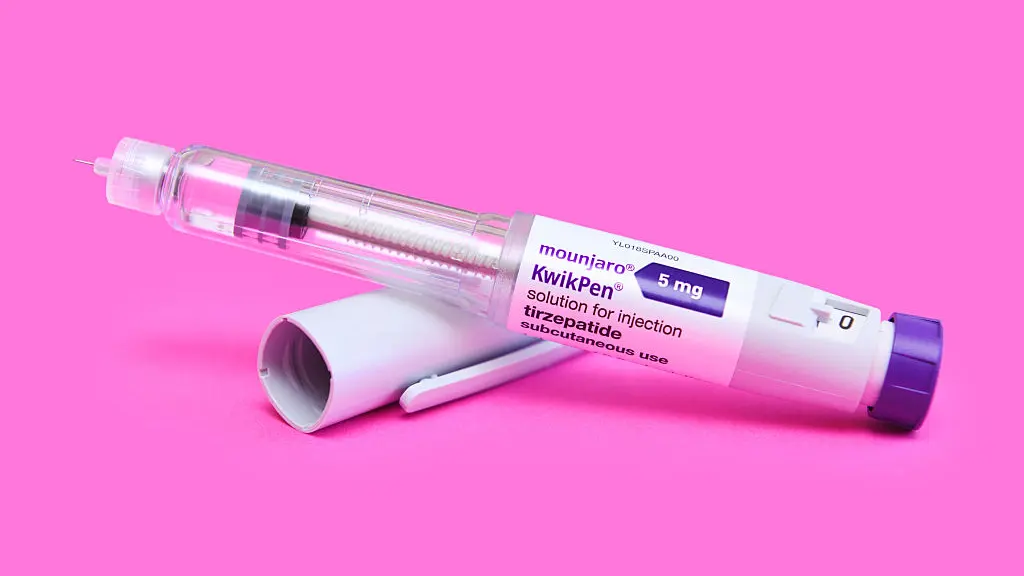
“This study was in patients with Type 2 diabetes, in whom the No. 1 cause of death is cardiovascular disease,” says Dr. Rachel Batterham, senior vice president of medical innovation and external engagement for cardiometabolic health at Lilly. “So reducing that risk is critically important.”
Batterham says Lilly decided to compare Mounjaro’s potential in reducing heart risk to an existing drug, Trulicity, that already reduced heart risk to see if Mounjaro would have any additional benefit. “We set ourselves a very high bar,” she says.
But the study design means that the heart benefit results cannot be directly compared to Mounjaro’s competitor drug, Ozempic, from Novo Nordisk. Ozempic, which is approved to treat diabetes, and Novo Nordisk’s Wegovy, approved to treat overweight and obesity, are both approved to lower the risk of heart disease risk by 20%. Lilly is, however, currently conducting a study tracking people who don’t have Type 2 diabetes who take the weight-loss version of their drug, Zepbound, for heart events. In that study, says Batterham, the researchers will be looking at whether Zepbound can prevent second heart events from occurring in people who have already had one, as well as whether the drug can prevent first heart events from occurring.


While the standard place naming process is not perfect, it at least establishes an institutional procedure for review, consultation, evidence gathering, and consideration of competing claims before a geographic name is changed. By contrast, what we are witnessing under Trump 2.0 is a unilateral naming by decree or whim with seemingly no public discussion or real government consideration of impacts and consequences.
It is clear to us that Trump’s renaming of Lake Ontario is symbolic political theater aimed at diverting our attention away from the fallout of his trade war with Canada. Yet symbols matter. Place naming is a world-making practice that shapes the very foundations of our geographical imaginations and how we come to know and engage with the world.
There is a risk in dismissing Trump’s cartography of mass distraction as a frivolous symbolic tactic, since it can have real consequences for what is taught in classrooms, reconciliation efforts with Indigenous peoples, and the badly needed repair of relations between the United States and Canada.

Bitcoin (BTC) is hovering near $80,000 with a $6.36 billion Deribit options expiry due today.
With roughly 81,000 contracts set to expire and max pain at $69,000, the setup could leave the OG cryptocurrency vulnerable to large moves as traders close, roll or hedge positions.
Bitcoin Options Expiration Puts $6.36B at the Center of Friday’s Trading
That expiry carries a 0.85 put/call ratio, meaning there are slightly more call contracts than puts. Calls become more prominent from about $66,000, with sizeable positions around $70,000, $72,000, $74,000 to $75,500, and $78,500 to $80,500.
Max-pain at the $69,000 level is the price at which the combined payout to option holders would theoretically be lowest. It does not mean Bitcoin will fall there, and dealer hedging can sometimes create a temporary pull toward that level as expiry approaches, although it is more a reference point than a firm magnet.
This settlement arrives after Bitcoin added more than $16,000 in less than a week, moving from a break above $65,000 to more than $81,000 before pulling back. CoinGecko data at the time of writing put Bitcoin about $300 below the $80,000 level, with the asset having gained slightly more than 1% in 24 hours, 6% over seven days, and 25% across the last month.
The options event is seen as capable of producing “sharp price swings” in either direction. If BTC holds near $80,000 or climbs, call holders stand to benefit, and dealer hedging could add buy pressure. If the selling takes hold, hedges could move the other way and deepen a decline toward $70,000 or below. But a quieter outcome is also possible if Bitcoin stays between roughly $75,000 and $80,000 while positions are closed or rolled.
Short Covering Leaves Bitcoin Rally Facing Test
Bitcoin’s latest move is also being questioned on the demand side. As CryptoPotato reported earlier, QCP Research said part of BTC’s recent rise came from short covering, with open interest falling as prices climbed. ETF inflows were nearing the 95th percentile of the past year, providing spot demand, but QCP warned that the rally could become fragile if short covering fades without enough new buying.
That leaves Friday’s expiry as a near-term test of an already extended move, although the options data does not predict where Bitcoin will settle.
Meanwhile, if you want to know more about BTC’s latest move alongside what the current RSI reading suggests, take a look at this video.
The post Bitcoin Rally Faces a Massive $6.36B Options Expiry Test Today appeared first on CryptoPotato.

Circle, the issuer of the USDC stablecoin, is stepping into English football sponsorship on a high-profile stage. The company announced that its name and the USDC brand will appear on Chelsea Football Club jerseys for the 2026/2027 season.
The move lands only months after the UK Financial Conduct Authority (FCA) warned Premier League clubs about sponsorship arrangements involving “unauthorized” financial firms—including crypto-related businesses—raising questions about how stablecoin brands fit into the regulator’s broader expectations for marketing and authorization.
Key takeaways
- Circle will sponsor Chelsea FC and place the USDC brand on team jerseys starting with the 2026/2027 season.
- The announcement follows FCA warnings to Premier League clubs about sponsorship deals with unauthorized firms that could breach UK financial services rules.
- Circle UK Trading Limited is listed by the FCA as authorized to provide certain financial services to UK residents.
- USDC is stated to be issued by regulated affiliates, but Circle says it is not issued or regulated under UK law.
Chelsea jerseys to carry USDC branding
In a Friday press release, Circle said its name and USDC would be featured on Chelsea FC players’ jerseys during the 2026/2027 season. The sponsorship effectively brings a stablecoin brand into a mainstream consumer spotlight where millions of fans watch matches and associated media coverage.
For Circle, the rationale is straightforward: football sponsorship offers global reach and brand visibility for a payments-focused token built to maintain a stable value relative to a reference currency. For Chelsea supporters, the change will be more immediate—USDC will become a visible part of the club’s on-field identity.
Why the FCA warning matters
The sponsorship arrives about three months after the FCA said it had sent warning letters to football clubs in the Premier League, potentially including Chelsea. According to the FCA, the letters were tied to “unauthorized” companies using sponsorship deals to target football fans, which the regulator said could violate UK financial services rules.
The FCA framed the issue as a consumer protection concern. In comments accompanying its warning, Lucy Castledine, the FCA’s director of consumer investments, said that clubs’ loyalty-based relationships should not be used to expose fans to “potentially dodgy products.”
While Circle’s sponsorship is not being presented as a direct response to the FCA’s earlier action, the timing makes the regulator’s stance impossible to ignore for market participants. The core question for investors and users is whether stablecoin marketing—especially when tied to major sports audiences—falls cleanly within the FCA’s interpretation of authorized activity, or whether additional scrutiny will follow.
Authorization vs. where the token is “issued”
Circle’s relationship with UK regulatory oversight appears to be split between its corporate authorization and the legal status of the stablecoin itself. Circle UK Trading Limited—the firm described as Circle’s UK arm—has been listed by the FCA as an authorized company able to provide certain financial services to residents since 2018.
At the same time, Circle said USDC is “issued by certain regulated affiliates,” but it is “not issued or regulated under the laws of the United Kingdom.” That distinction matters because FCA warnings were aimed at unauthorized financial firms and marketing practices that could be inconsistent with UK financial services requirements.
The company’s messaging suggests it views its UK operations as compliant in terms of the entities that interact with UK residents, even if the stablecoin’s issuance and regulation occur under other jurisdictions. For readers, the practical implication is that sponsorship does not necessarily settle regulatory questions on its own; what matters is the scope of authorization and the jurisdictional framework covering the token.
Broader policy pressure around stablecoins
The Chelsea deal also sits within a wider UK policy environment still working out how stablecoins should be governed. The UK has said lawmakers are working toward a more comprehensive regulatory framework for digital assets. In parallel, stablecoin usage in the country is described as legal, but regulatory clarity remains a moving target.
That context raises the stakes of visible consumer-facing campaigns. When a stablecoin brand becomes associated with a mainstream sports club, it can accelerate awareness well beyond crypto-native audiences—exactly the kind of attention the FCA typically tries to manage when it fears consumer harm from products presented through trusted institutions.
Regulatory questions are likely to remain open
Circle’s sponsorship may be entirely lawful under its stated authorization structure, but the FCA’s earlier warnings indicate the regulator is focused on how financial firms reach fans through club branding and what authorization claims are presented to the public. Investors, builders, and users should watch for any follow-up guidance, further enforcement signals, or public clarification on how stablecoin marketing is expected to align with UK rules.


OneKey said it reproduced an exploit against an older version of the Ledger app in its lab environment, which Ledger fixed in its Ethereum app 1.22.2, with no user funds lost.
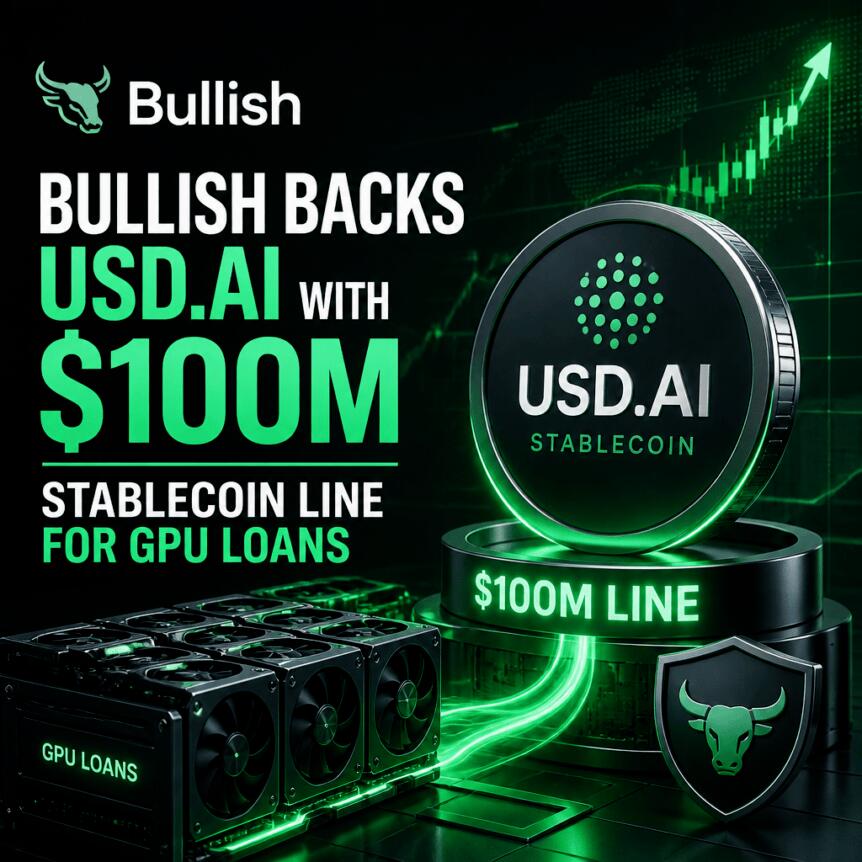
Institutional crypto exchange operator Bullish has signed a $100 million stablecoin-based debt facility with USD.AI to fund AI-focused loans secured by GPU infrastructure, the companies announced on Friday. The arrangement is designed to channel stablecoin liquidity into demand for compute hardware while tightening collateral coverage by tying repayment to specific GPU assets.
USD.AI, built by Permian Labs, provides onchain financing backed by AI computing hardware—using the GPU as the primary collateral rather than relying on a borrower’s broader corporate balance sheet. Bullish says it will also list USD.AI’s sUSDai token across multiple trading pairs and run a dedicated market-making program to support secondary liquidity and price discovery.
Key takeaways
- Bullish is providing a $100 million stablecoin-backed debt facility to USD.AI for GPU-secured loans.
- Loans are collateralized by underlying NVIDIA GPU hardware rather than general corporate assets.
- USD.AI uses onchain financing to match stablecoin liquidity with demand for AI compute infrastructure.
- Bullish plans to list sUSDai on multiple trading pairs and enhance liquidity through a market-making program.
- The new facility builds on USD.AI’s earlier GPU-backed financing rounds, including deals backed by NVIDIA B300 and B200 GPUs.
A stablecoin facility aimed at GPU-backed lending
Under the agreement, USD.AI will use Bullish’s $100 million debt facility to originate loans for AI infrastructure operators. The central distinction is collateral structure: Bullish and USD.AI stated that the loans will be secured by the GPU hardware being financed, not by borrowers’ wider corporate assets. For lenders, this can reduce reliance on overall balance-sheet credit risk; for borrowers, it points to a financing model where access to capital is linked to the specific compute equipment they acquire or operate.
USD.AI positions the platform as a bridge between stablecoin liquidity and the capital needs of companies buying or deploying AI infrastructure. In practice, the facility effectively scales a financing pipeline where compute hardware becomes a financial primitive—something that can be underwritten, financed, and supported through token-linked liquidity.
What Bullish says it will do with sUSDai
Bullish also outlined plans to support the USD.AI ecosystem beyond the initial facility. The exchange operator said it expects to list sUSDai across multiple trading pairs and to back the token with a dedicated market-making program. Bullish’s stated goal is to improve secondary liquidity and price discovery for debt products tied to GPU-backed financing.
From an investor and market-structure standpoint, liquidity and trading depth are often the practical bottlenecks for newer tokenized instruments. By committing to market-making and broader exchange availability, Bullish is attempting to ensure that token demand and pricing can develop alongside the underlying financing activity rather than lag behind it.
USD.AI’s expanding GPU financing pipeline
The $100 million facility adds to USD.AI’s recent track record in GPU-secured lending. In June, USD.AI announced a $98.1 million loan backed by 2,304 NVIDIA B300 GPUs. In the same update, it referenced another $34 million loan backed by 768 NVIDIA B200 GPUs, which it said was fully funded.
Those earlier disclosures help clarify that Bullish is not entering USD.AI’s model for the first time; rather, the new debt facility appears to scale an existing financing track centered on specific GPU batches and associated underwriting.
Longer-term link between Bullish Capital and USD.AI
The deal also follows Bullish Capital’s earlier involvement with USD.AI. According to the announcement, Bullish Capital made a $4 million investment into USD.AI in September 2025.
That investment provides context for why the company is now expanding into a much larger, operational financing role. It also signals a continuing strategy of pairing exchange and institutional capital capabilities with token-linked infrastructure financing—particularly in areas where the demand drivers (AI compute expansion) can be observed in real asset procurement.
Crypto-market backdrop and equities rally
While the USD.AI facility is fundamentally about financing mechanics, it arrives as Bullish’s equity has rebounded. Bullish became a publicly traded company on the New York Stock Exchange in August 2025, raising about $1.03 billion after pricing its initial public offering at $37 per share. Yahoo Finance data shows the stock remains down more than 60% versus its IPO level, but it has recently regained ground, up roughly 45% over the past month to trade around $33 as of Friday.
Bullish’s share performance has also tracked a broader upswing in certain crypto-linked stocks. Over the past month, according to the same context cited alongside Bullish’s move, Strive gained about 88%, Bitcoin miner Canaan rose around 55%, and stablecoin issuer Circle was nearly 40% higher—an indication that market appetite for crypto-related equities has improved along with parts of the digital asset complex.
Investors watching USD.AI and Bullish’s sUSDai push should focus next on whether the liquidity and market-making efforts translate into consistent secondary trading depth, and whether GPU-backed lending keeps scaling at the pace implied by earlier B300 and B200-backed announcements. The sustainability of token demand will likely depend on how smoothly the financing pipeline turns collateral-backed debt into repeatable issuance and recoverable value under different compute-cycle conditions.


A highly contentious proposal to alter the inflation rate of SOL, a vote called SGP-0002, has passed with precisely 67% ayes. Official rules require two-thirds of participating stake to pass, so the proposal cleared the bar by barely 0.33 percentage points.
As a result of the vote, SOL’s so-called “disinflation rate” will double from 15% to 30%.
SGP-0002 instructs the network to continue creating new SOL but shrink the inflation rate twice as fast.
After switching its vote at the eleventh hour, holders of staked SOL at crypto exchange Kraken tipped the voting outcome. Its 8.9 million SOL validator, labeled “Kraken 2,” cast 90.34% of its stake in favor of the measure.
Had Kraken’s votes cast No instead of Yes, SGP-0002 would have failed at approximately 63.9%, i.e. below the 66.66% threshold.
Helius CEO Mert Mumtaz celebrated Kraken changing its earlier No indication to a Yes during the final whipsaw.
Contributors from Mumtaz’s firm wrote many of the technical proposals for SGP-0002.
Kraken was mathematically decisive but not uniquely responsible. Galaxy and other late voters also moved the tally.
Still, the exchange supplied enough Yes votes to secure a winning margin and was widely credited on social media with flipping the vote.
Read more: First US-listed Solana treasury firm moves and protects executives
Doubling Solana’s disinflation rate doesn’t end inflation
Solana is still inflationary. The change doesn’t flip the rate of new SOL entering the market negative.
To be clear, SOL will always remain inflationary at a positive rate, the only matter of debate was how positive the rate would be.
Solana validators voted to cut future SOL issuance by roughly 18.9 million tokens over six years, but over the long haul, those tokens will still enter the market eventually.
Technical specifications for the change keep terminal (a.k.a. “long tail”) inflation at 1.5%, but estimates reaching that terminal rate 2.8 years after activation instead of 5.7 years.
It’s the first Solana governance proposal to pass under the network’s new binding, on-chain voting system. A prior attempt at similar territory, SIMD-0228, failed in March 2025 with about 61% support.
Developers now project approximately 18.9 million fewer SOL created over the next six years.
Under the old 15% annual reduction, SOL wasn’t due to hit the 1.5% floor until around 2032. Doubling that rate to 30% moves the date to roughly 2029.
Developers must still re-anchor the supply curve, test the change, and activate its feature gate. In other words, the vote creates no instantaneous supply shock.
The vote temporarily improves SOL’s scarcity pitch over the next few years. If demand for SOL persists, fewer coins entering the market should provide less supply overhang.
Solana splits votes on two other proposals
The disinflation vote was the most consequential, but the combined vote also included two other proposals, SGP-0001 and SGP-0003.
Stakeholders approved SGP-0001, the “Solana Constitution,” with 85.97% support. It formalized governance processes that accompanied today’s cliffhanger.
Over the past few years, governance of the Solana network has mostly occurred off-blockchain, and this new constitution aims to bring more democratic processes on-chain.
Voters rejected SGP-0003 with 53.90% support, below the two-thirds threshold.
This Solana inflation-related proposal sought to burn a usage-based resource charge while paying block leaders a fixed inclusion fee.
Got a tip? Send us an email securely via Protos Leaks. For more informed news and investigations, follow us on X, Bluesky, and Google News, or subscribe to our YouTube channel.


BitGo has acquired the institutional trading business of Bitcoin infrastructure company NYDIG, adding derivatives and financing capabilities as it expands services for institutional crypto clients.
BitGo said it completed the acquisition of NYDIG’s institutional trading business under a definitive agreement, the company announced Thursday. The transaction includes NYDIG’s institutional client trading relationships and about 30 employees who joined BitGo. The companies did not disclose financial terms.
The acquired business provides derivatives, structured products, financing and capital markets services to clients including asset managers, hedge funds and companies. BitGo CEO Mike Belshe said the acquisition will “meaningfully scale” the company’s trading and infrastructure capabilities and allow it to serve a broader range of institutional clients.
“This transaction allows our team to continue delivering the same innovative solutions, execution quality, and dedication clients have come to expect, now backed by an even deeper set of resources,” said Pete Janney, head of financial infrastructure at BitGo.
The companies said the sale will allow the company to focus its resources on power generation, Bitcoin mining and high-performance computing data centers. According to the announcement, NYDIG’s development pipeline exceeds 3 gigawatts, including more than 1 GW of capacity it expects to deliver in 2027 and 2028.
Cointelegraph reached out to BitGo for additional details about the transaction but had not received a response by publication.
Related: BitGo posts $19M Q2 loss despite 80% revenue surge to $4.3B
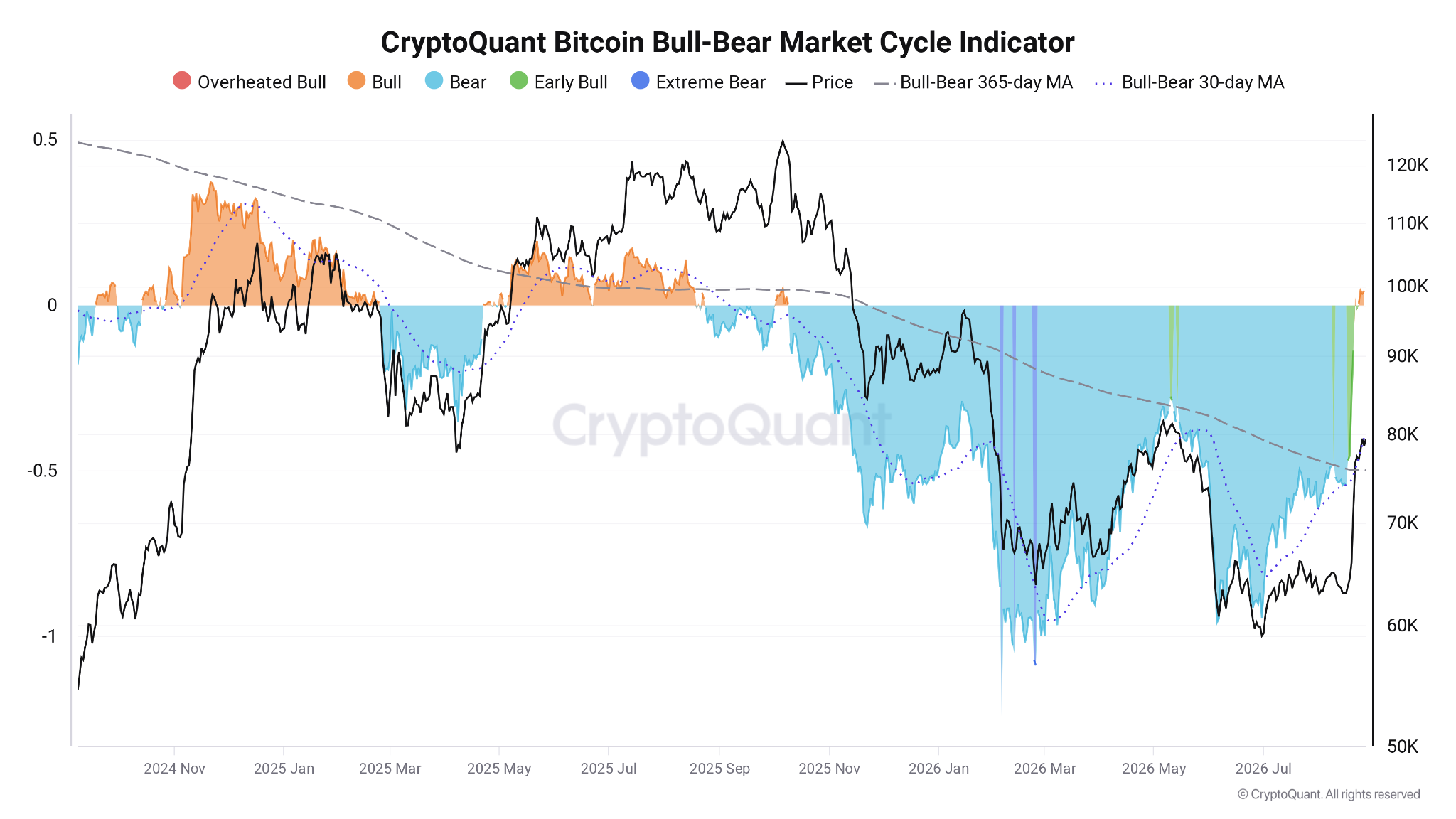
According to some metrics, Bitcoin (BTC) has ended its bear market as a composite BTC price indicator flips bullish for the first time since October 2025.
Key points:
- Bitcoin has exited its 2026 bear market, Ki Young Ju says as a profitability metric prints a positive reading of 0.042.
- The breakout from negative to positive numbers repeats a bull-market recovery signal also visible in early 2023.
- Concerns remain over insufficient market liquidity to support a macro BTC price trend change.
Bitcoin profit metric offers first bull signal in ten months
The latest data from onchain analytics platform CryptoQuant has led its CEO, Ki Young Ju, to call time on Bitcoin’s 2026 bear market.
In an X post on Wednesday, Ki flagged the first positive reading on CryptoQuant’s Bull/Bear Market Cycle Indicator since early October.
“The Bitcoin bear cycle is over,” he wrote in accompanying commentary.
The indicator is derived from the P&L Index — initially devised by CryptoQuant’s head of research — and measures the P&L Index’s distance from its 365-day moving average. The P&L Index itself is composed of several onchain profitability metrics: the market value to realized value (MVRV) ratio, net unrealized profit/loss (NUPL) and the spent output profit ratio (SOPR). Together they provide an overall picture of Bitcoin investors’ realized and unrealized profits and losses. Values above zero for the Bull/Bear indicator point to bullish phases in the BTC price cycle as profitability improves.
Current cycle lows came on Feb. 5 as BTC/USD fell to $60,000, with a reading of -1.244 corresponding to “extreme bear” conditions. As of Aug. 26, the most recent date for which full data is available, Bull/Bear displayed a positive reading of 0.042, placing it in its “bull” bracket.
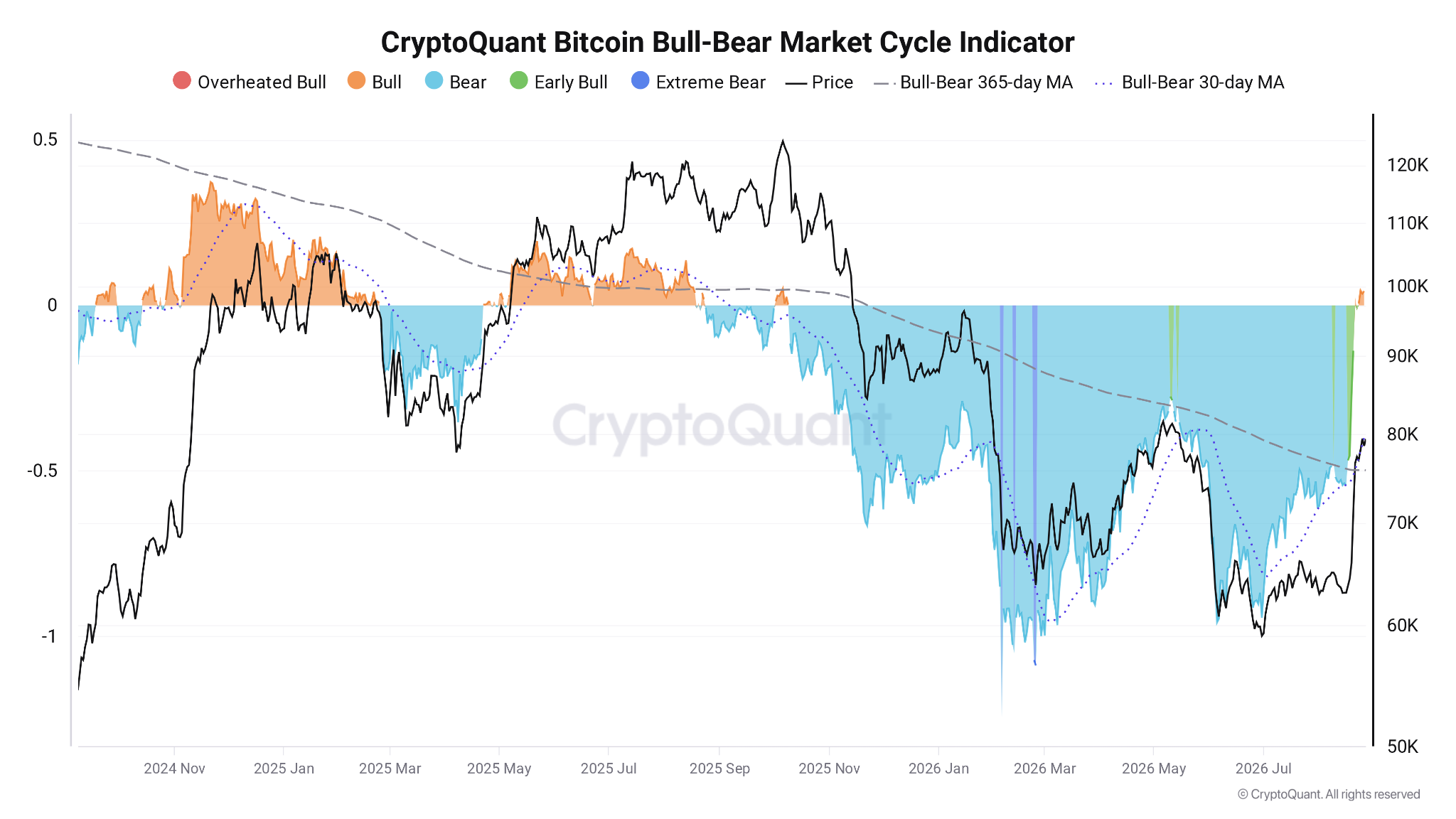
Bitcoin Bull/Bear Market Cycle Indicator. Source: CryptoQuant
The combination of P&L metrics and their 365-day moving averages has proven accurate at confirming macro BTC price trend changes. Ki notes that Bull/Bear likewise called the end of the previous bear market as upside returned in early 2023.
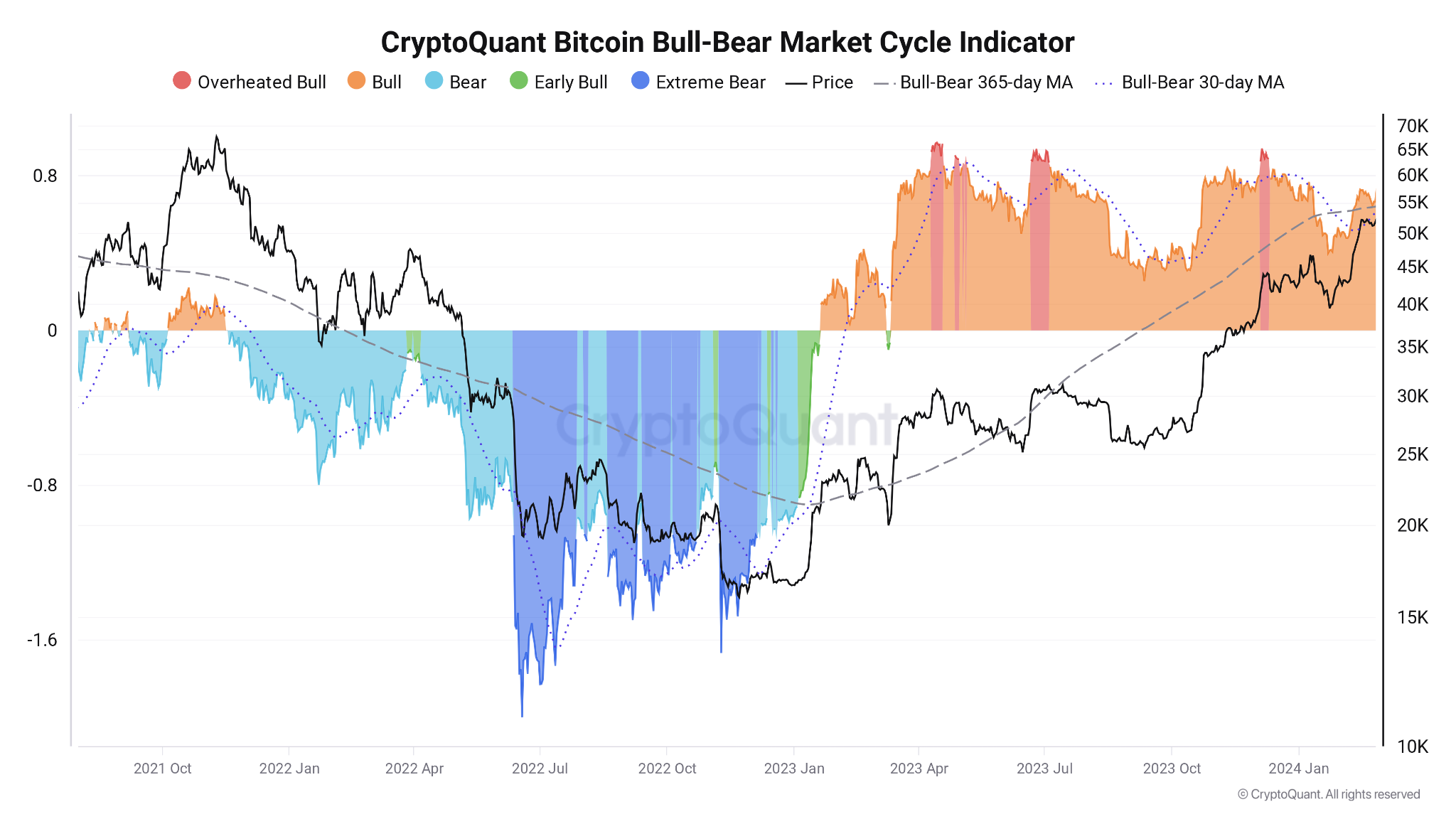
Bitcoin Bull/Bear Market Cycle Indicator historical data. Source: CryptoQuant
Misgivings over BTC price strength continue to mount
Bitcoin has seen the slow return of bull signals from various indicators in recent weeks, including the relative strength index (RSI), a recovery for which was also present at the end of 2022.
Related: Supply absorption ‘key question’ as Bitcoin fails to reclaim $80K: Analysis
Consensus among market participants over Bitcoin’s recent upside marking the end of its macro downtrend is by no means unanimous. Previously, Cointelegraph reported on concerns that a lack of demand could see BTC/USD revert to downside, with multiple liquidity hurdles lined up immediately above spot price.
In ongoing market commentary, trader and analyst Rekt Capital argued that the August monthly close would be “pivotal” for the fate of the recovery, referring to a potential breakout from a downward-sloping resistance trend line in place since October last year.
Just a few days ago, Ripple’s cross-border token jumped to a multi-month high of around $1.70 but later retreated to the current 1.42.
The move south hasn’t changed the predominant bullish tone across analysts on X, as some expect a price explosion in the near future. Here are some of the most optimistic (and even ridiculous) targets.
Giant Surge on the Way?
X user JAVON MARKS, who bragged about successfully calling XRP’s bull run in the past, returned with another big prediction. The analyst claimed that the asset’s current structure is showing signs of a breakout from a smaller bullish wedge/flag formation, which could initiate a major continuation above the all-time high and open the door to a rally towards $15. The market observer said this is “a measured-move target” and reminded of what happened nine years ago.
“After breaking out of a much larger structure in 2017, XRP reached a similar measured-move objective before going on to greatly exceed it. Today, XRP is holding a breakout of an extremely similar larger structure,” they stated.
The analyst believes that if the ongoing structure holds and the smaller formation confirms its breakout, the asset’s valuation could indeed rocket to the aforementioned peak, representing a nearly 1,000% increase from current levels.
Amonyx is also highly optimistic, envisioning a pump to $20 and “there’s nothing anyone can do about it.” It is important to note that such an astronomical surge would require XRP’s market cap to jump beyond $1 trillion. As of press time, only the market’s undisputed leader, Bitcoin (BTC), has a higher market capitalization, making the forecast a bit far-fetched (to say the least).
$15 and $20 may sound like implausible targets (for the moment), but Ripple’s token may indeed head north in the short term, considering the solid institutional interest. Last week, spot XRP ETFs saw their best week since May, while the positive performance continued. Data show that these products have posted eight consecutive green days; the last time this was observed was at the very start of the year.

Major Walls Ahead
According to X user CW, the bulls might struggle to initiate a new leg up since the sell wall near $1.49 “remains solid.” Shortly after, the analyst claimed that XRP failed to break through the “point of control” once again, arguing that the biggest resistance blocked the rise.
“$1.4692 and $1.53 are currently the biggest resistance levels. To rise, these two lines must be broken,” they added.
The post Crazy Ripple Prediction: Is XRP Preparing for a 1,000% Explosion? appeared first on CryptoPotato.
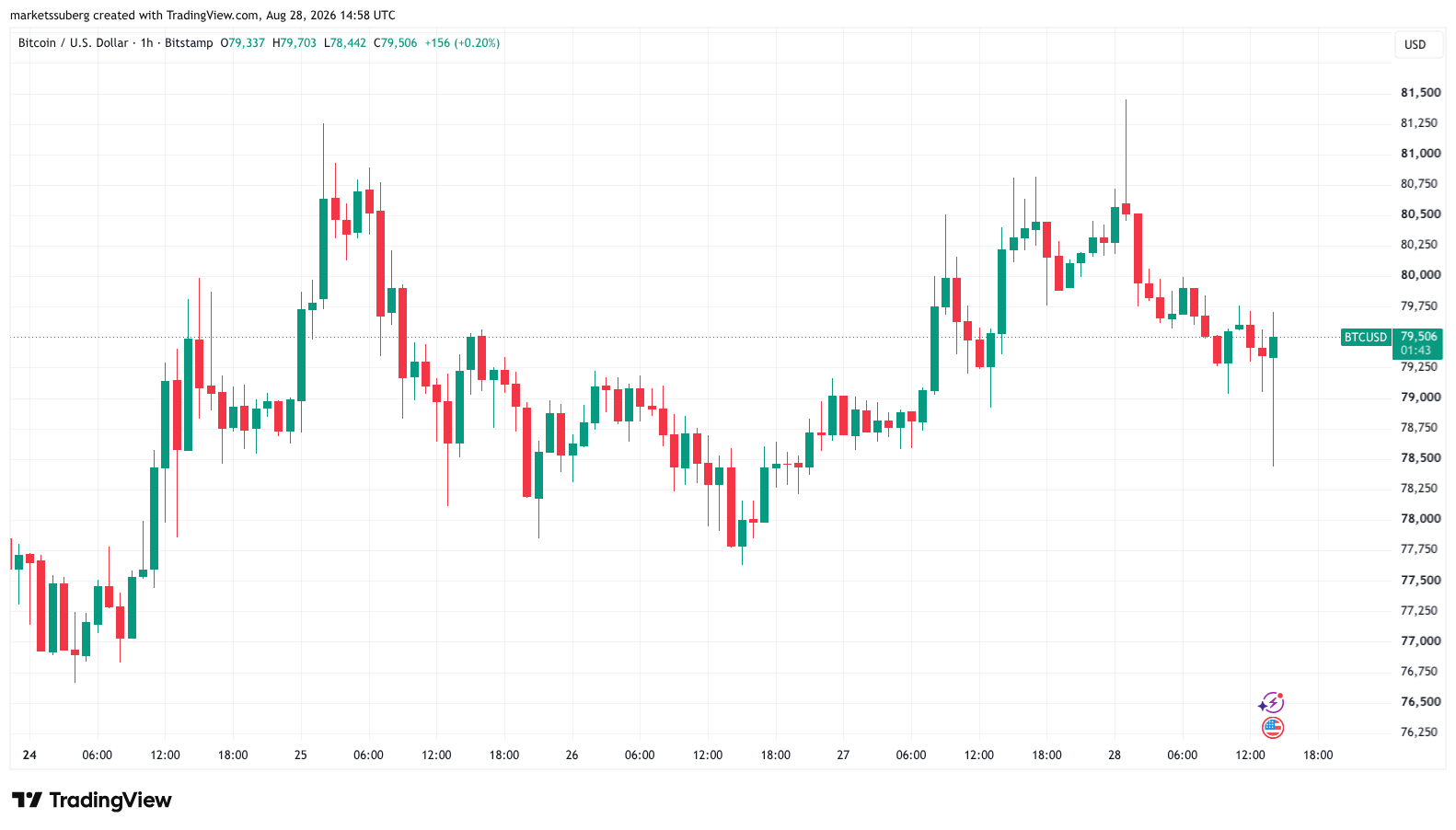
Bitcoin (BTC) saw volatility after Friday’s Wall Street open as markets reacted to US Federal Reserve chair Kevin Warsh’s comments on future monetary policy.
Key points:
- Bitcoin initially fell during Fed chair Kevin Warsh’s Jackson Hole keynote speech before circling $79,500.
- Warsh said he sees no trend change in inflation despite recent lower PCE and CPI prints.
- BTC price action sustaining above $83,000 hinges on Bitcoin derivatives traders, analysis says.
Warsh: Inflation trends have not “meaningfully improved”
Data from TradingView showed BTC/USD dipping to $78,442 on Bitstamp in volatile trading conditions, down around 1% at the time of writing.
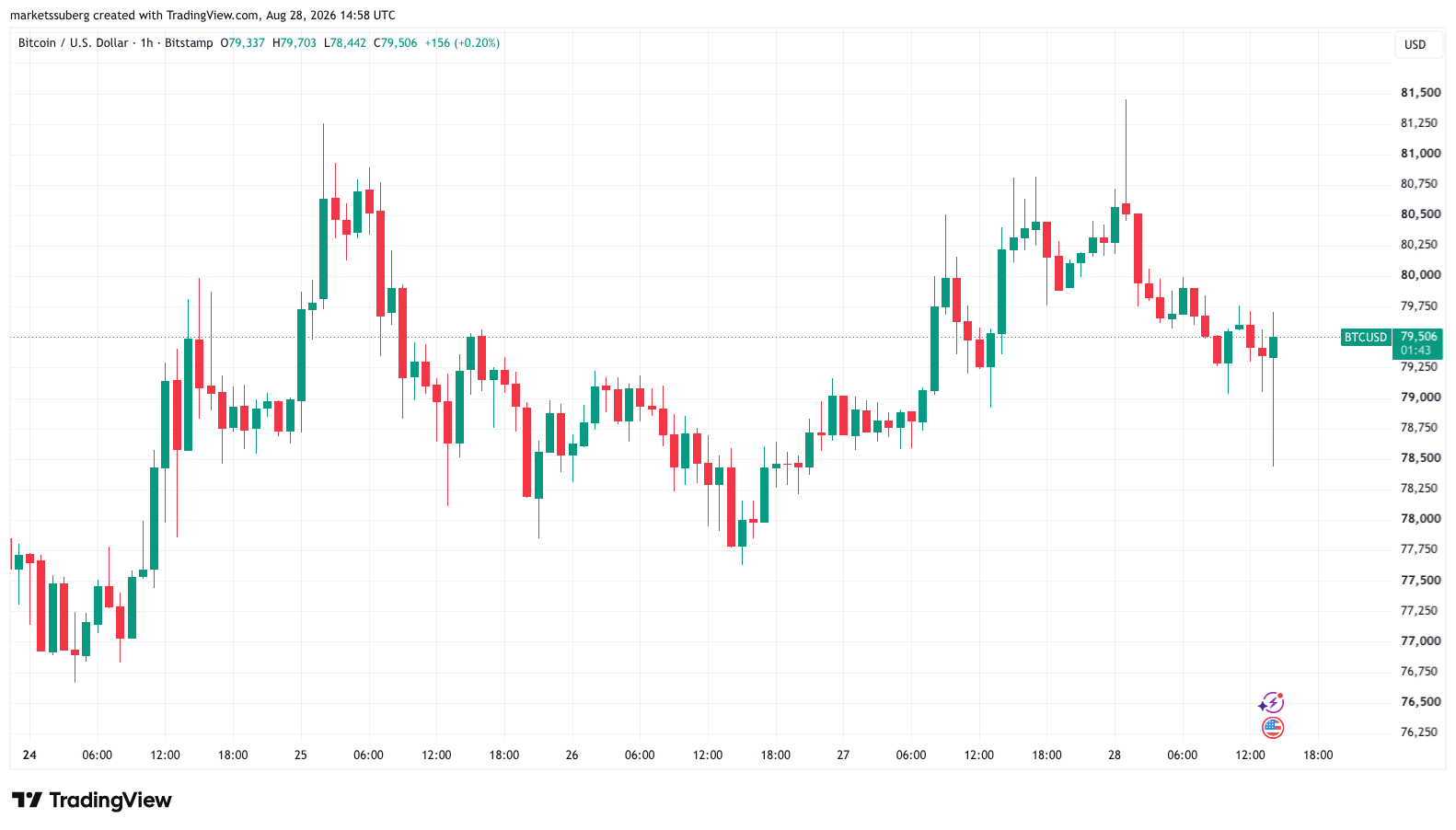
BTC/USD one-hour chart. Source: Cointelegraph/TradingView
In his first keynote speech at the annual Jackson Hole Symposium, Warsh delivered a cautionary tone on inflation, committing to the Fed’s 2% target. The Fed chair doubled down on an earlier pledge to reduce the scope of hints over future policy that the Fed offers to markets, avoiding forward guidance altogether and stating that it would not make a reappearance in the future.
“Forward guidance as a regular practice was adopted by my colleagues and me during the Global Financial Crisis. It was essential at the time, and we introduced it with much fanfare. But, as with other legacies of crises past, I believe that the practice has overstayed its welcome,” he stated.
Warsh further dismissed recent lower-than-expected inflation prints in the Consumer Price Index (CPI) and Personal Consumption Expenditures (PCE) index as a sign of a downtrend being in progress.
“Each of these broad inflation measures have fallen significantly from their highs of a few years ago, but progress through the past couple of years has been more modest, and while this summer’s PCE and CPI readings were better than expected, they do not tell me that underlying trends have meaningfully improved,” he continued.
US stocks avoided losses on the back of Warsh’s words, which also included a complimentary view of business performance and AI sector growth. Both the S&P 500 and the tech-heavy Nasdaq Composite Index were up around 0.5% at the time of writing.
Analysis stresses derivatives’ role in further BTC price gains
BTC price action thus continued to gyrate around the $80,000 mark, acting in a narrow intraday range ahead of the August monthly close.
Previously, Cointelegraph reported on expectations for the monthly close, with analysis demanding that BTC/USD break above a downward-sloping trend line and defend the 50-week exponential moving average near $77,250 to sustain the uptrend.
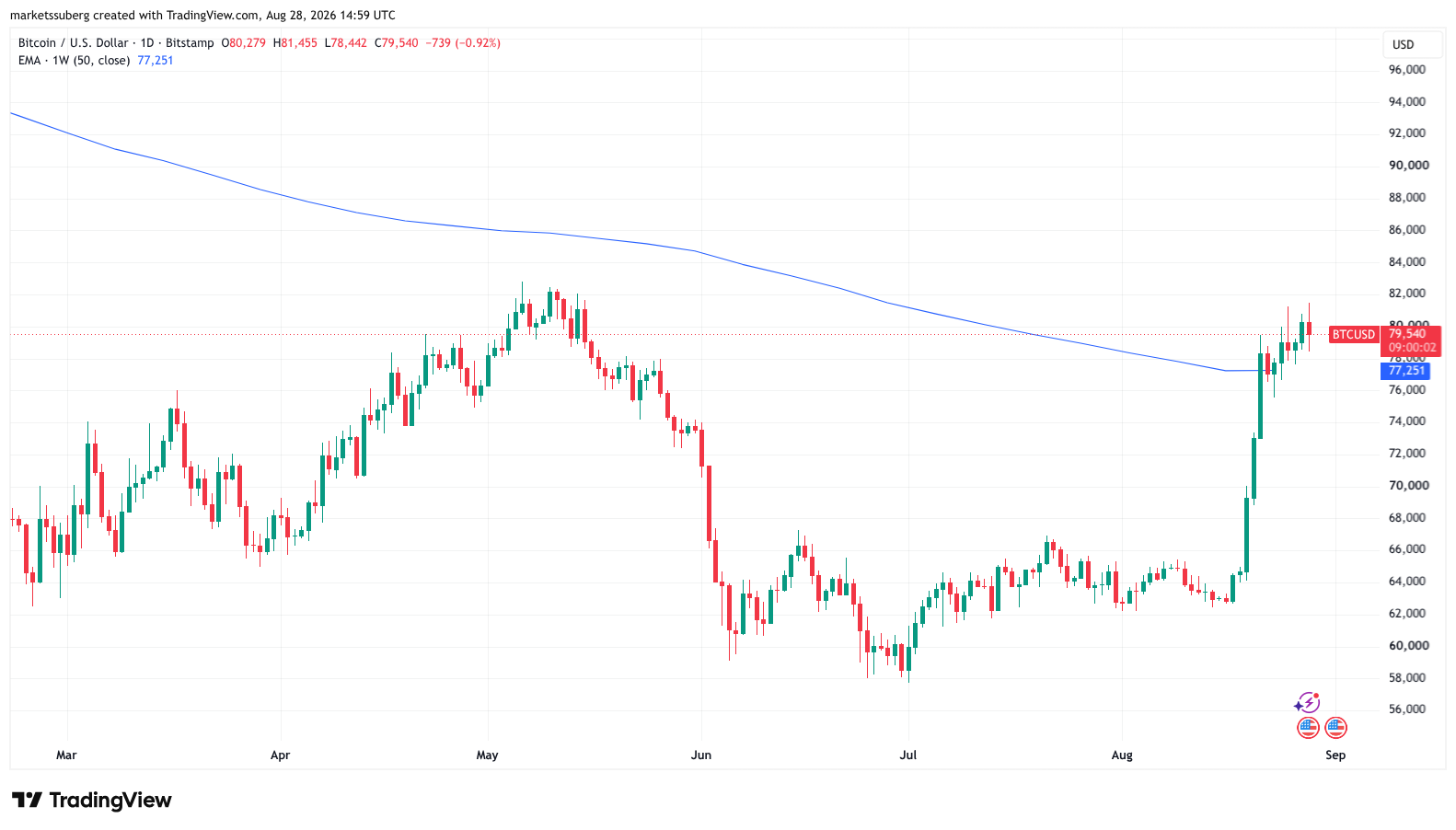
BTC/USD one-day chart with 50-month EMA. Source: Cointelegraph/TradingView
Related: Bitcoin bear market ‘over’ as price metric copies 2023 recovery: CryptoQuant CEO
Onchain data additionally revealed a thick patch of resistance between the current spot price and $86,000, slowing upside momentum.
Commenting in its latest analysis, trading company QCP Capital argued that even if price were to break higher, derivatives markets would need to provide the necessary support by keeping both funding rates and open interest growth in check.
“If price continues higher while funding remains contained and open interest rebuilds gradually, that would indicate a different market structure from one where leverage accelerates rapidly alongside price,” QCP Capital wrote, adding:
“The key distinction is therefore not simply whether BTC trades above or below $83.3k, but whether subsequent price action continues to be supported by spot participation or becomes increasingly driven by leveraged positioning.”
At the time of writing, BTC/USD was up 26.35% month-to-date, per data from CoinGlass, marking its best August performance since 2017.
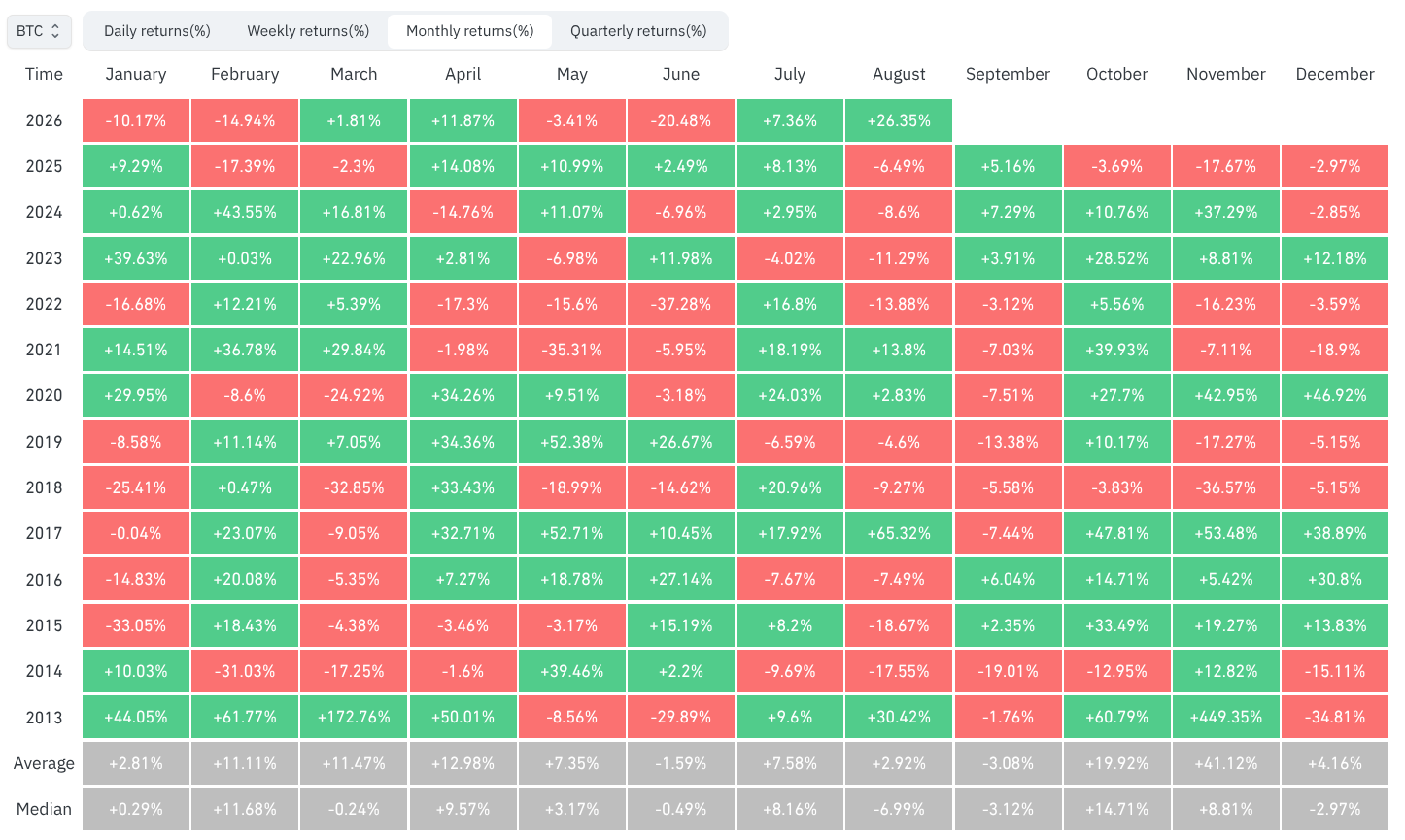
BTC/USD monthly returns (screenshot). Source: CoinGlass

The rollercoaster that can give you brain damage: Six Flags is forced to close its X2 ride following a string of injuries – including life-altering disabilities, comas and deaths

PEY: Attractive Value And Growth Setup For Invesco’s High-Yield Dividend Achievers ETF

The Trouble With Trump’s Attempt to Rename Lake Ontario





-

 Crypto World3 days ago
SpaceX stock could rise 75% to $240, JPMorgan says
-

 Crypto World21 hours ago
Bitcoin’s 22% rally now needs real demand to outlast Treasury liquidity boost
-

 Business6 days ago
Musk’s Tesla, SpaceX Confirm $16.8 Billion ‘Terafab’ Chip Plant as World’s Largest Building in Texas
-

 Crypto World7 days ago
anatomy of crypto’s biggest liquidation event since 2021
-

 Crypto World4 days ago
A $30 Billion AI Fund Implodes, Now the SEC Is Investigating Wall Street’s Role
-

 Crypto World2 days ago
Warsh Jackson Hole keynote puts financial innovation first
-

 Politics6 days ago
6 months on, Irish renters crushed by effects of government housing bill
-

 Crypto World3 days ago
Did Trump Just Move SpaceX Stock With One Truth Social Post?
-

 Business19 hours ago
Salesforce Stock Soars 19% as Blowout Earnings and Agentforce AI Growth Silence Software Skeptics
-

 Business5 days ago
Mystery AI Model ‘Ox Alpha’ Draws Developers With Free Access as Chinese Lab Origins Remain Debated
-
 NewsBeat6 days ago
The ‘Lucky Dip Gang’ causing carnage for clicks: After five thugs were killed speeding in the wrong direction on a motorway, GUY ADAMS investigates a sick new trend… and why police aren’t even allowed to pursue them
-
 Crypto World7 days ago
Nvidia Stock Suffers Longest Losing Streak Since 2022: Will Q2 Earnings End It?
-

 Business2 days ago
Walmart takes aim at younger shoppers with new fashion brand
-

 Business4 days ago
Moderna CEO warns China is pouring state money into mRNA technology
-

 Business7 days ago
Will Tesla Stock Be Higher or Lower a Year From Now? Here’s What Wall Street Analysts Are Saying
-

 Business4 days ago
NVIDIA Stock Drops Nearly 2 Percent to $210 on Seventh Losing Day Ahead of Critical AI Earnings
-
 Crypto World5 days ago
$92 Billion Nvidia Earnings Could Make or Break the AI Trade
-
 NewsBeat2 days ago
Lindsay Clancy jury braces for closing arguments as judge tells court: ‘You’ve heard all the evidence’ – Live updates
-

 Tech7 days ago
Unitree’s New Superman Robot Claims to Outjump and Outrun Every Human, Usain Bolt Included
-

 Business3 days ago
Thailand’s Eastern Economic Corridor Capital City (EECiti): Key Developments and Investment Opportunities
You must be logged in to post a comment Login