
Crypto World
NASA Taps Blue Origin, Firefly For Services. SpaceX Stock Hits Resistance.


NASA on Monday awarded payload services contracts to Blue Origin, Firefly Aerospace, L3Harris and All Points Logistics for future missions. SpaceX prepares for another Starlink launch tonight. SPCX shares slid on a test of resistance early Tuesday. Space stocks trended lower early Tuesday. NASA on Monday selected All Points Logistics, Firefly Aerospace (FLY), L3Harris (LHX) and Blue Origin, the space…
Copyright ©2026 Investor’s Business Daily, LLC. All rights reserved. 87990cbe856818d5eddac44c7b1cdeb8


The 10-year Treasury yield rose near a 19-month high on Tuesday, adding to Monday’s jump as the U.S. remained locked in a test of wills over the Strait of Hormuz with Iran, which has threatened to go on the offensive. Higher oil prices risk stoking inflation pressures at a bad time for the S&P 500 bull market, which has been…
Copyright ©2026 Investor’s Business Daily, LLC. All rights reserved. 87990cbe856818d5eddac44c7b1cdeb8

Bank of America on Tuesday hiked its price targets on cybersecurity stocks on views that a worsening artificial intelligence-based threat landscape supports higher valuations. Cybersecurity stocks have rebounded from worries that AI model builders will emerge as competitors. Bank of America raised its price targets for SentinelOne (S), SailPoint (SAIL) and Zscaler (ZS). Other cybersecurity stocks may be extended amid…
Copyright ©2026 Investor’s Business Daily, LLC. All rights reserved. 87990cbe856818d5eddac44c7b1cdeb8


Retail investors can apply to buy the 1 billion yen bond without a securities account and receive perks through Toyota’s payment app.
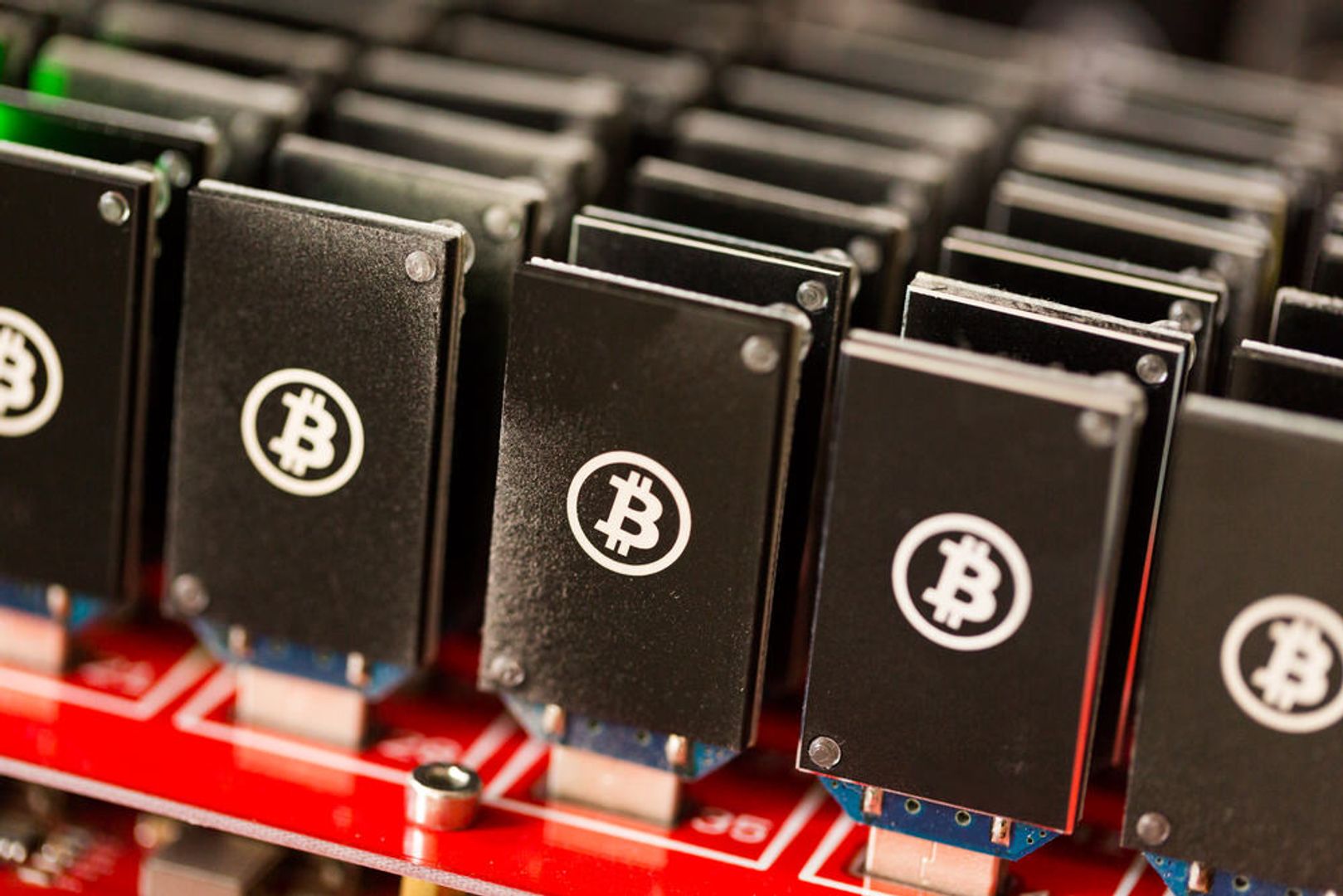
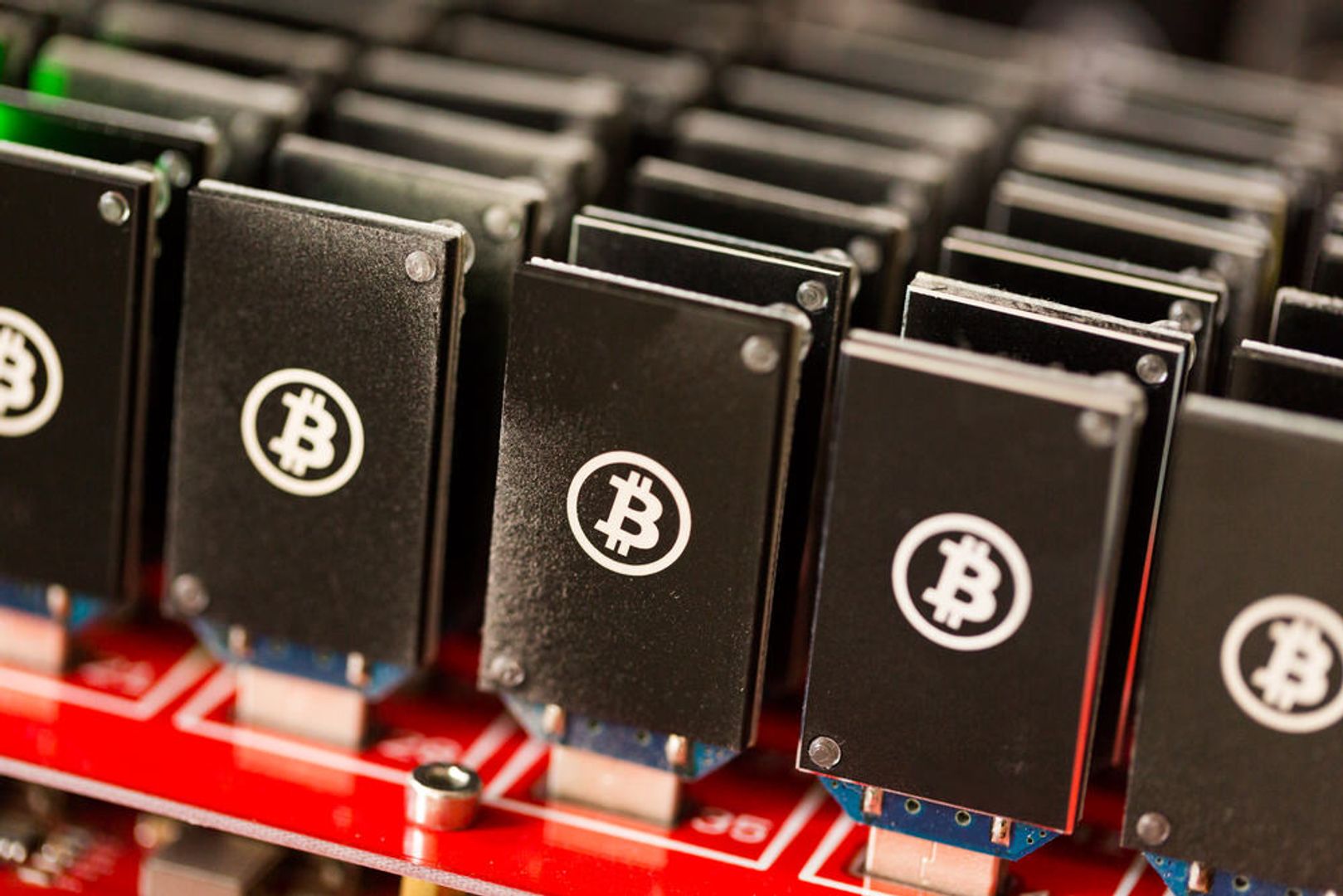
MARA’s performance reflects the slide in hashprice, the expected daily revenue generated by a unit of bitcoin mining power. In July last year, the hashprice was $63 for each petahash per second (PH/s) of power. It’s now around $31.80 per PH/s.
Not surprisingly, an increasing number of miners are finding it unprofitable to continue production and are turning off their machines, a process known as capitulation. As a result, the Bitcoin network’s hashrate — a measure of mining power — has dropped to 900 exahash per second (EH/s) from 1.14 zettahash per second (ZH/s), or about 21%.
This is already one of the longest capitulation cycles on record, and it may not be over.
In the meantime, the market has repriced companies that have secured AI and HPC contracts.
According to CoinShares’ first-quarter mining report, miners with HPC contracts trade at 12.3 times their enterprise value. That compares with the 5.9 times commanded by pure-play bitcoin miners.
The report also estimated that the industry had secured a cumulative $70 billion in AI and HPC contracts by the end of that quarter.
As the year progressed, miners have announced a growing number of contracts at increasingly large valuations. Just a week ago, for example, Riot Platforms (RIOT) signed a 20-year lease with Anthropic valued at $9.1 billion. Riot’s shares have climbed from around $3 to $20 over the past four years, highlighting how dramatically the market has repriced miners with exposure to AI infrastructure.


MoonPay has added Cash App Pay as a payment method for cryptocurrency purchases, giving eligible U.S. customers a way to fund MoonPay transactions directly from their Cash App balances.
Summary
- Cash App Pay is now available for crypto purchases through MoonPay in the U.S.
- The integration lets eligible users fund purchases directly from their Cash App balances.
- Cash App reported 59 million active users in June.
- MoonPay has expanded into institutional crypto services through several acquisitions in 2026.
MoonPay said Tuesday that Cash App Pay is now available through its own checkout and across selected partner platforms, including Trust Wallet, Bitcoin.com, MetaMask, Moonshot, Ledger, BitPay, Uniswap, Tangem, LOBSTR and Edge.
Customers using the option can pay for crypto with funds held in Cash App without moving money between separate services or completing another login during the purchase process. The integration adds another payment route for MoonPay users in the U.S., where Cash App already serves tens of millions of customers.
Operated by Jack Dorsey’s Block, Cash App reported 59 million active users in June, according to Block’s second-quarter shareholder report. Cash App already allows customers to buy and sell Bitcoin inside its own app, while the MoonPay connection gives eligible users access to additional cryptocurrencies available through MoonPay.
“Cash App is where tens of millions of Americans already manage their money,” MoonPay co-founder and CEO Ivan Soto-Wright said. “This integration means that those users can access the digital asset ecosystem, funded instantly from an app they already know and trust.”
MoonPay Cash App Pay joins its existing payment options
Cash App Pay joins PayPal and Venmo among the payment services that MoonPay has connected to its crypto purchasing infrastructure.
MoonPay added PayPal support in 2024 and later expanded its payment options through Venmo. An earlier crypto.news report covered the October 2024 Venmo integration, which allowed roughly 60 million U.S. users at the time to buy cryptocurrencies through MoonPay using their Venmo balances.
The setup followed a similar model to the new Cash App Pay service, allowing customers to use balances held in a familiar payments app while MoonPay handles the crypto transaction. Venmo support was subsequently made available across parts of MoonPay’s partner network.
Payment integrations form one part of MoonPay’s original fiat-to-crypto business, under which the company connects traditional payment methods with cryptocurrency purchases. Its platform currently supports methods including cards, bank transfers and several digital payment services, with availability depending on the customer’s location.
MoonPay said the Cash App option will work both through its direct checkout and supported third-party services. The partner list puts Cash App Pay inside several established self-custody wallets and crypto applications, including MetaMask, Ledger and Trust Wallet, without requiring each service to build a separate Cash App purchasing flow.
Under MoonPay’s regulatory setup, the company operates in New York under a BitLicense and Limited Purpose Trust Charter issued by the New York State Department of Financial Services. MoonPay is also authorized under the European Union’s Markets in Crypto-Assets framework through the Netherlands.
MoonPay has been building beyond its crypto onramp business
While the Cash App deal adds another consumer payment option, MoonPay has spent much of 2026 adding infrastructure for institutional trading, custody and tokenized assets.
In April, MoonPay acquired security firm Sodot to supply key-management technology for a newly created institutional business. The transaction was completed as an all-stock deal valued at roughly $100 million, according to Bloomberg at the time.
MoonPay said Sodot’s technology would support services for financial institutions, asset managers, trading firms and exchanges. The unit covers areas including trading, payments, tokenized securities, wallet infrastructure and stablecoin issuance, with former acting Commodity Futures Trading Commission Chair Caroline Pham leading the business.
Sodot specializes in self-hosted multiparty computation technology, which splits control of cryptocurrency private keys across separate components. MoonPay incorporated the technology into its institutional infrastructure as it added services beyond retail crypto purchases.
The company also acquired Solana trading infrastructure provider DFlow in May, adding technology that later became part of MoonPay Trade. The institutional execution platform gives clients access to trading and routing infrastructure across more than 200 blockchains through a single API, according to details released by the company in June.
Another institutional integration followed in June when Franklin Templeton added its BENJI fund to MoonPay Trade. The arrangement lets institutional users exchange stablecoins including USDC and USDT for Franklin Templeton’s tokenized U.S. government money market fund.
Franklin Templeton said the connection could be used for treasury management, portfolio rebalancing, collateral and liquidity operations. MoonPay said the deal extended its institutional services into tokenized financial products alongside crypto, fiat and stablecoin infrastructure.
MoonPay also bought cross-chain infrastructure startup Glide in July, continuing the acquisition program that has supplied technology for trading, security and blockchain connectivity.
AI payments have become another part of MoonPay’s expansion
MoonPay moved into AI-assisted crypto transactions during the same period, introducing products designed to let users authorize financial actions through conversational assistants.
Earlier this month, the company launched its PayBox vault, a noncustodial payment product that connects with ChatGPT and Anthropic’s Claude. Users can instruct an assistant to prepare crypto purchases, swaps, cross-chain transfers, decentralized finance deposits and certain online purchases while retaining control over transaction permissions.
PayBox offers an “Always Ask” mode that requires passkey approval for each transaction and an “Autonomous” setting that lets an assistant act within spending limits and rules configured by the user. Altering the permission model also requires passkey authorization.
The product uses technology obtained through the Sodot acquisition, with wallet keys divided using multiparty computation and stored across secure hardware environments. MoonPay said neither the company nor a connected AI assistant can independently obtain the complete private key or authorize a transaction.
PayBox currently supports Solana and several Ethereum Virtual Machine-compatible networks, including Ethereum, Base, Arbitrum, Polygon, Hyperliquid, Tempo and Robinhood Chain. Its first integrations also cover selected travel bookings, restaurant reservations, and purchases from online retailers.

Sherlock has publicly launched Sherlock Audit Engine, revealing a security auditing platform the company had largely kept under wraps while testing the model with protocol teams.
Audit Engine operates one layer above individual AI auditors, coordinating several approaches to vulnerability discovery inside the same review.
Frontier LLMs, purpose-built AI auditors and AI-enabled security researchers work against the same codebase and context. Sherlock handles orchestration across the engagement, with findings judged, validated and deduplicated before being consolidated into one final audit result.
That model also sheds new light on one of Sherlock’s more unusual engagements this year.
Was Polygon an Early Look at Audit Engine?
In June, Sherlock put Polygon’s Heimdall V2 through a review involving a broad field of AI auditing systems and security researchers.
Heimdall V2 is the consensus client at the core of Polygon PoS, making it a consequential codebase for an early deployment of the model.
With Audit Engine now public, the engagement appears to have served as a proving ground for the platform Sherlock is bringing to market.
Automated AI auditing systems emerged among the strongest performers for overall coverage, while different systems and researchers surfaced different portions of the overall issue set. The result reinforced a central idea behind Audit Engine: no single approach captured the full security picture.
The platform measures those differences directly. Teams can see which systems delivered broad coverage, which maintained high precision and where different approaches contributed complementary security signal.
That becomes increasingly relevant as the underlying technology changes.
In July, Google DeepMind introduced Gemini 3.5 Flash Cyber, a cybersecurity-specific model designed to find, validate and patch vulnerabilities quickly, another indication of how fast specialized AI security capabilities are developing.
For security teams, the best available mix is therefore a moving target.
Audit Engine is designed to incorporate new models, auditors and researcher methodologies as they emerge, while giving protocols a consistent environment for measuring what actually performs well against their code.
The post Sherlock Takes Audit Engine Public After Months of Quiet Testing appeared first on BeInCrypto.


Sending ether will no longer always carry the same network fee, breaking one of Ethereum’s oldest rules of thumb.
Developers from the Ethereum Foundation, the nonprofit that supports and maintains Ethereum, told wallet makers, blockchain trackers, and fee calculators in a blog post to update any software built on the assumption that a basic ETH transfer costs 21,000 gas units. Gas is how Ethereum measures the work a transaction asks the network to do, and users pay for that work in ETH.
Today, that 21,000 applies whether the receiving account has been used before or not. Under Ethereum’s next major upgrade, Glamsterdam, sending to an existing account still costs 21,000, while sending to an address that has never appeared in Ethereum’s records costs more because the network has to create and permanently store a new account.
The proposal puts that extra charge at 183,600 units of a new category called state gas.
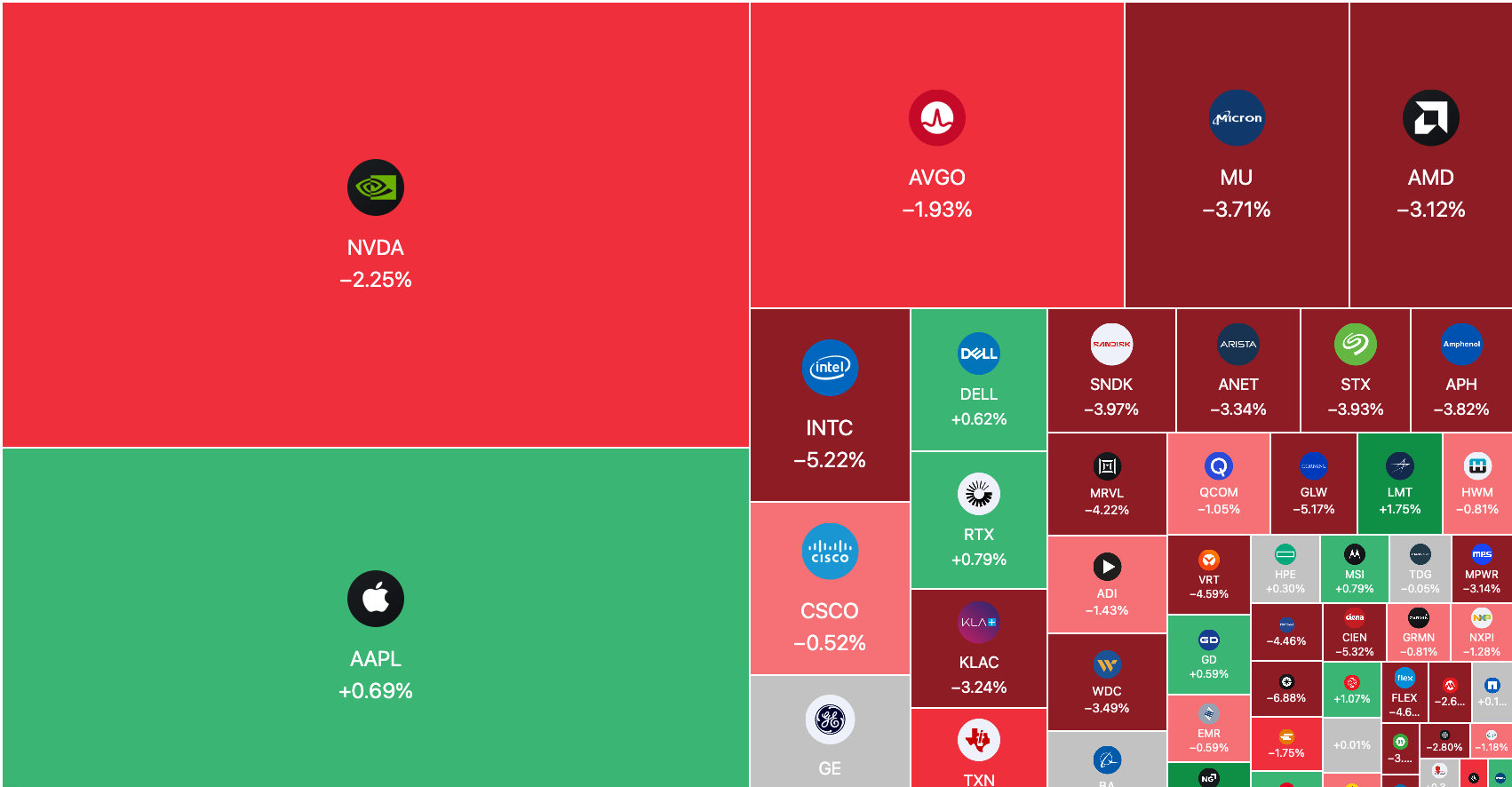
US stock futures moved lower ahead of today’s open, with the Nasdaq 100 dropping by 1.2%, the S&P 500 by 0.5%, and the Dow by 0.1%.
This selloff came as the 10-year Treasury yield climbed to 4.74% and the 30-year yield reached 5.2% – its highest level since June 2007.
Higher Yields Hit Tech Stocks
The sharp move in bonds had the greatest impact on growth and tech stocks. Nvidia dropped by about 2% in premarket trading, while Micron Technology fell by about 4%.
This weakness followed a softer session yesterday, when the Dow declined by 272 points, and both the S&P 500 and Nasdaq also closed lower. Rising oil prices also added to the pressure, with WTI crude oil currently trading at around $84.5 per barrel.
Home Depot stock was a notable exception, gaining roughly 1.5%, but that’s because it reported better-than-expected fiscal second-quarter results while maintaining its full-year outlook.
Crypto Markets Remain Relatively Resilient
In an interesting change of pace, crypto has been steadier throughout the past 24 hours. The total market cap is at around $2.28 trillion, up about 0.5% over the day.
Bitcoin remains above $64K at the time of writing, up roughly 1% during the period, despite the pressured equities and the rise in Treasury yields.
This suggests that the crypto market has managed to absorb the latest macro pressure better, which hasn’t been the case for a while – when risk-on assets decline, the drop in cryptocurrencies is usually more pronounced.
The post Tech Futures Drop on Rising Treasury Yields While Bitcoin Holds Near $64K appeared first on CryptoPotato.

South Korean crypto exchanges Upbit and Bithumb have seen revenues plummet in the first half of the year amid a wider downturn for crypto companies in the country. Meanwhile, South Korea has also banned prediction market Polymarket after concluding that its operations constitute illegal gambling.
The Block reports that Bithumb recorded an operating profit of 14.9 billion won ($11 million), down 83% from last year’s profit of 90.1 billion won ($64 million).
Its operating revenue this year is 168.8 billion won ($120 million), down almost 49% from last year’s 329.2 billion won ($233 million).
It also suffered a net loss this year of 108.7 billion won ($77 million).
Crypto firms hit by poor global market
Upbit parent company Dunamu reported a similar drop in operating revenue. It made 408.1 billion won ($289 million) in the first half of this year, a drop of 49% from last year’s 801.9 billion won ($568 million).
Its operating profits were 111.5 billion won ($79 million), an almost 80% drop from 549.1 billion won ($389 million) last year.
Dunamu said, “The recent decline in performance is attributed to a contraction in liquidity across the global digital asset market, which has led to a weakening of investor sentiment.”
South Korea finds Polymarket is a gambling firm
Meanwhile, crypto-based Polymarket has been banned after South Korea’s Media and Communications Commission concluded the platform’s operations constitute illegal gambling.
The regulator claimed Polymarket crossed an information threshold that is classed as gambling under the Criminal Act and National Sports Promotion Act.
It found that Polymarket’s use of yes-or-no contracts encourages speculative behavior where winnings are reliant on events out of users’ control.
Read more: American Indian tribes want Kalshi and Polymarket off their land
Polymarket argued that it doesn’t manage user funds, that it removed Korean-language services, and that it doesn’t support South Korea’s won fiat currency.
However, the commission said, “Technical features or service methods cannot exempt a platform from domestic legal compliance. Since Polymarket provides a real illegal gambling environment to domestic users, access blocking is unavoidable to protect them.”
Got a tip? Send us an email securely via Protos Leaks. For more informed news and investigations, follow us on X, Bluesky, and Google News, or subscribe to our YouTube channel.


Many projects, he said, raised enormous rounds despite having little revenue and no realistic path to profitability, leaving them dependent on becoming multibillion-dollar businesses simply to justify another financing.
Crypto’s fundraising culture made matters worse.
Unlike most industries, announcing a large raise could boost a project’s token and generate retail attention, creating incentives to present financing in the most flattering possible light.
The headline number could also obscure how firm the financing actually was. Kirkley said Global Settlement Network experienced investors failing to ultimately fund signed commitments, illustrating how announced rounds can differ from cash actually received.
Token governance meets reality
Another experiment now being tested is decentralized governance.
Token ownership did not necessarily translate into active participation, Kirkley said, while governance votes could make it harder for struggling protocols to pivot quickly. “Token holders do not mean active participants in your ecosystem,” he said.
The result is a market increasingly deciding what crypto actually needs.
Kirkley points to stablecoins, neobanks and institutional-grade wallet and settlement infrastructure as emerging winners, while areas including social tokens, memecoins and parts of Web3 gaming face a harsher reckoning.
Bitcoin faces a key support test
The shakeout could intensify if bitcoin breaks its next major support zone.
Kirkley described the market as a “soft bear market,” but sees support at $61,200 as critical.

17 Tailored-Looking, Flattering Cardigans

10-Year Treasury Yield Near Breakout; Why It Matters For The S&P 500

Man United transfer news LIVE: Gavi stance, Manu Kone latest, £60m double deal eyed

Weekend Open Thread – Corporette.com

Weekend Open Thread: Brooks Brothers

London Mayor Sadiq Khan handed a peerage by Keir Starmer alongside 15 other Labour figures… just days before the PM leaves No10

Trump Suffers MAJOR Humiliation As Truth Social Plummets After Financial Plan Backfires

How to Achieve Financial Freedom in 2025 | Simple Steps That Work

Pablo Escobar was earning 300 crores daily #facts #money #pabloescobar #druglord #mafia
-

 Fashion4 days ago
Weekend Open Thread: Ann Taylor
-
 NewsBeat7 days ago
Communication cards help banking customers access services or report scams
-
 Sports5 days ago
This U.S. Amateur is a glimpse into golf’s future in more ways than you think
-
 NewsBeat3 days ago
Myanmar says over 300,000 Rohingya refugees verified for repatriation as exodus enters ninth year
-

 Sports4 days ago
Birmingham 2026: Day 6 Timetable for Irish Athletes
-

 Politics3 days ago
SEQ Code: The Three Letter Boarding Pass Code That Could Give You The Worst Seat
-
 Tech4 days ago
11 Ways to Rank Your Videos
-
 Entertainment6 days ago
Keke Palmer Subtly Hints At Sean Evans Drama With Cryptic Post
-

 Fashion7 days ago
Coffee Break: The Fonteyn Jane Flat
-

 Tech7 days ago
Zoom Screen-Sharing Bug Let People Fully Take Over Other Devices On A Call
-

 Fashion7 days ago
Should you refinance your debt? Pros, cons, and real numbers
-

 Fashion7 days ago
Claire Life: Kicking Off MVAAFF With the C Suite Luncheon Featuring Phylicia Rashad, Letoya Luckett, and More!
-
 Crypto World6 days ago
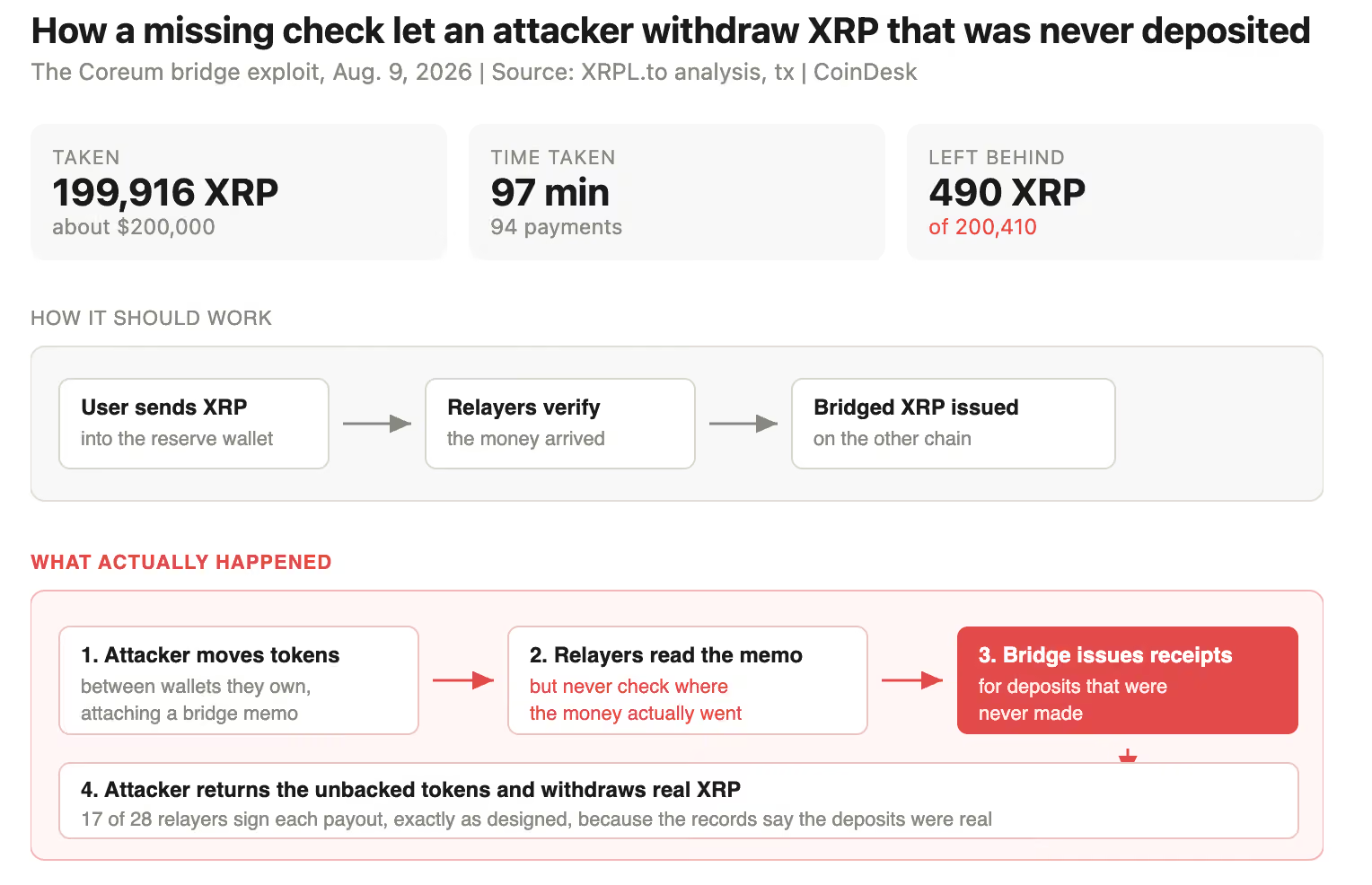
XRP bridge drained after software mistook fake deposits for real ones
-

 Tech5 days ago
DeepSeek Harness launches as open source rival to Claude Code, alongside V4-Pro on API with higher prices
-

 Sports6 days ago
DeQuan Jones in ‘high spirits’ after successful leg surgery
-
 Crypto World6 days ago
Perplexity AI Predicts an XRP Scenario Few Analysts Are Discussing
-

 Tech6 days ago
SpaceXAI’s Grok Bot turns agents into persistent digital coworkers that can operate your apps for $120-per-month
-
 Entertainment6 days ago
2026’s Most Ambitious Fantasy Movie Officially Scores Sequel Update
-

 Politics6 days ago
How Average Are You In The UK?
-

 Politics7 days ago
In the Chris Kaba case, the police watchdog capitulated to the mob
You must be logged in to post a comment Login