
Crypto World
Nasdaq 100 Opens Lower Following Big Tech Earnings

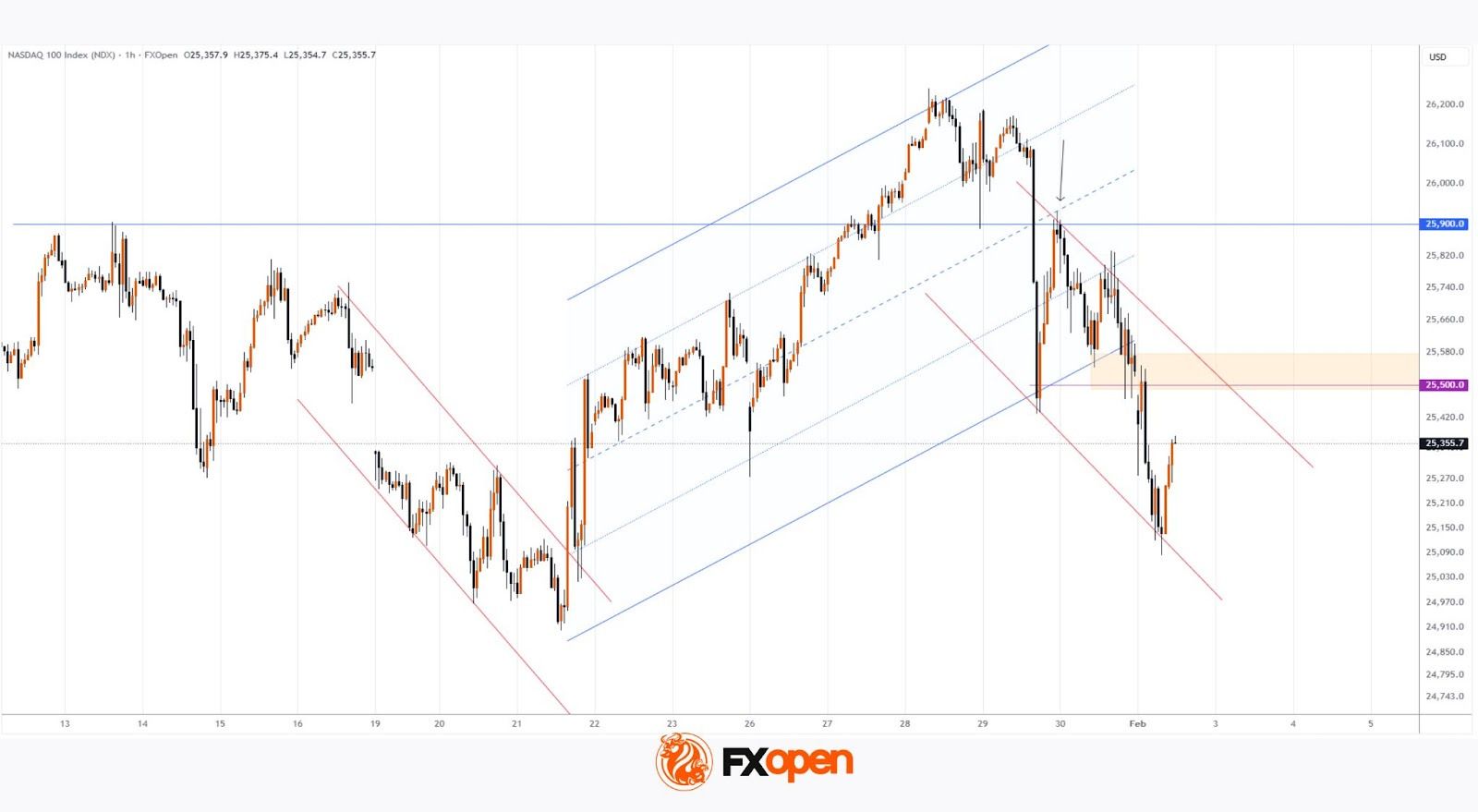
Last week saw the release of quarterly earnings from Microsoft (MSFT), Meta Platforms (META), Tesla (TSLA) and Apple (AAPL). At the opening of Monday’s session — today, 2 February — the Nasdaq 100 index (US Tech 100 mini on FXOpen) opened with a bearish gap, sliding towards the 25,100 level.
Why Is the Nasdaq 100 Falling?
While many of the Big Tech earnings reports were strong, the broader market reaction suggests that:
→ investors have become increasingly sceptical about massive capital expenditure (capex) on artificial intelligence, as seen in Microsoft’s case;
→ even solid results, such as those delivered by Apple, are no longer triggering rallies.
It appears that market participants are placing greater emphasis on uncertainties related to:
→ the new Fed Chair;
→ the risk of another US government shutdown;
→ rising geopolitical tensions (with Greenland, Iran and Ukraine potentially joined by Cuba).
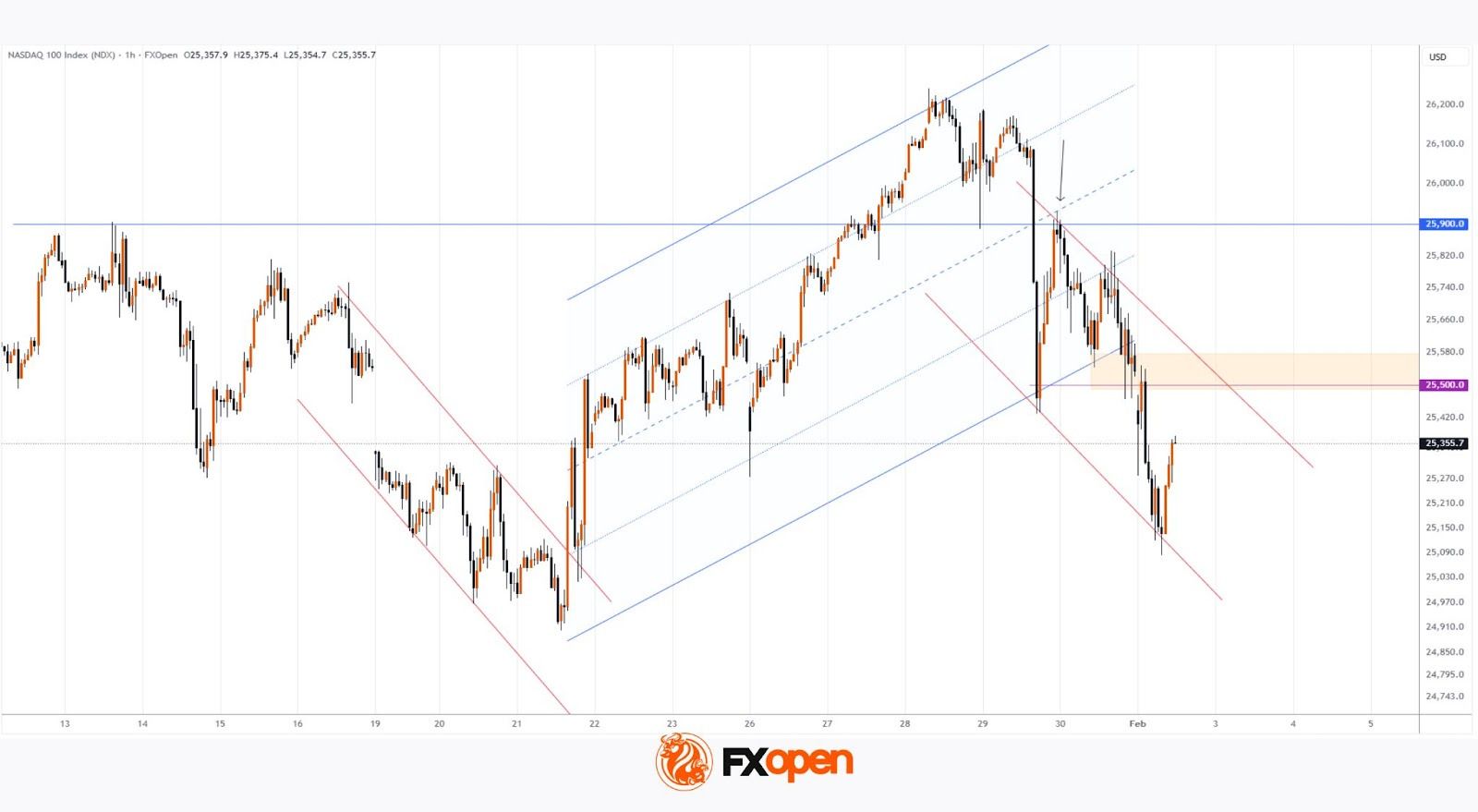
Technical Analysis of the Nasdaq 100 Chart
When analysing Nasdaq 100 price action (US Tech 100 mini on FXOpen) six days ago, we:
→ identified an ascending channel (shown in blue);
→ considered a scenario involving another false bullish breakout following the move above the 13 January high;
→ anticipated a modest technical correction.
Since then:
→ the price has marginally extended the channel, while its slope has remained unchanged;
→ the index declined from the upper boundary to the lower boundary of the channel, with the median acting as resistance (as indicated by the arrow);
→ this was followed by a bearish break below the lower boundary.
As a result, Nasdaq 100 price action can now reasonably be viewed as a corrective phase, with the potential to evolve into a downward trajectory (shown by the red lines).
If bears are to maintain control, it would be logical for them to assert dominance over the area around 25,500 — the zone where the ascending channel was broken.
Trade global index CFDs with zero commission and tight spreads (additional fees may apply). Open your FXOpen account now or learn more about trading index CFDs with FXOpen.
This article represents the opinion of the Companies operating under the FXOpen brand only. It is not to be construed as an offer, solicitation, or recommendation with respect to products and services provided by the Companies operating under the FXOpen brand, nor is it to be considered financial advice.


TLDR
- Charles Hoskinson denied claims that Midnight’s bridge would permanently operate as a one-way channel.
- He said the tokenomics paper outlines phased development that includes a future two-way bridge.
- Bliss Pool stated that the document initially describes the bridge as one-way.
- Community members raised concerns about liquidity moving from Cardano into Midnight.
- Cardano DRep dori defended Midnight and described it as a partner chain focused on privacy.
Charles Hoskinson responded to renewed criticism over the Midnight bridge design and rejected claims that it harms Cardano. He addressed concerns raised by Stake Pool operator Bliss Pool on X and denied any plan to trap liquidity. Meanwhile, the debate resurfaced as Midnight secured a listing on the Australian exchange CoinSpot.
Midnight Bridge Design Sparks Debate
Hoskinson pushed back against claims that Midnight would permanently operate a one-way bridge. He said critics misread the tokenomics paper and misrepresented its phased bridge plan.
He stated that Midnight does not permanently block assets from returning to Cardano. He explained that the document outlines different stages, including a future two-way bridge.
Bliss Pool pointed to language in the tokenomics paper referencing a one-way bridge. The operator said it remains technically correct that the bridge begins as one-way.
Community members argued that a one-way structure could lock assets inside Midnight. They warned that such a setup could shift liquidity away from Cardano.
Hoskinson rejected claims that he and the IOG team chose to harm Cardano. He said critics framed a temporary design feature as a permanent policy.
He said, “There is no intention to harm Cardano.” He also said critics twist facts to support their narrative.
Cardano Community Responds to Midnight Rollout
The debate intensified after Cardano DRep dori defended Midnight over the weekend. Dori said Midnight does not compete with Cardano but supports it.
Dori described Midnight as a partner chain focused on privacy features. Dori said it fills a privacy gap in the blockchain sector.
He added that Hoskinson showed foresight by investing in privacy infrastructure early. He stated that other networks are only now moving toward similar solutions.
Community critics continued to question the bridge structure and liquidity flow. They stressed the need for transparency in project communication.
Hoskinson maintained that the tokenomics paper clearly explains the phased bridge model. He said the paper includes references to a later two-way bridge.
He criticized efforts to portray the early one-way phase as a fixed outcome. He insisted that the design evolves.
Midnight gained further traction after CoinSpot listed the token for Australian users. The exchange confirmed that traders can access Midnight and use its privacy features.
The listing expands Midnight’s availability in the Australian market. CoinSpot users can now trade the token directly on the platform.

Bitcoin briefly breached the $70,000 level on Monday, but the move lacked follow-through and quickly faded, keeping the market in a careful watch-and-weigh posture. Bulls had nudged the price above moving averages, signaling an attempted comeback, yet the recovery faces a stubborn wall of selling pressure as traders assess whether a deeper pullback is more likely than a sustained breakout.
Analysts remain wary of fresh downside pressure. Some strategists expect BTC to test lower supports, with a number projecting a retest below the $60,000 zone before a potential bottom forms. The immediate setup underscores a market trying to decide between a renewed up-leg and a renewed down-leg, rather than a clear continuation of momentum.
On-chain and sentiment signals add nuance to the picture. Glassnode’s latest observations highlight ongoing selling pressure despite several days of price action favoring bulls. The Long-Term Holder Realized Loss metric — which tracks losses locked in by investors who held coins for more than six months before selling — suggests pain may not have fully abated. The metric’s 30-day simple moving average sits around $200 million per day, with the researcher noting that a sustained drop below roughly $25 million per day would be needed for a base-building phase to take hold.
Amid the dour chatter, there are glimmers of demand at support levels. Santiment, a crypto sentiment analytics firm, reported a shift in social dynamics: five bearish BTC comments for every four bullish ones — the most bearish tilt since February 28. While this may reflect a crowded-out mood, such contrarian readings historically precede moments when markets reverse course, according to the same data framework. In practice, that means traders should watch for any early signs of stabilization or renewed upside momentum, even if the broader tone remains cautious.
Key takeaways
- Bitcoin briefly crossed $70,000 but failed to sustain the breakout, raising the possibility of a retest below $60,000.
- Glassnode’s Long-Term Holder Realized Loss metric signals lingering selling pressure; a sub-$25 million daily loss level could precede a base formation.
- Santiment’s sentiment snapshot shows a bearish tilt on BTC demand, the strongest since late February, which may precede a sentiment-driven reversal if buyers re-enter.
- Several major altcoins are rebounding from key supports, suggesting demand is reappearing at lower price levels even as BTC remains rangebound.
- Macro anchors remain in view: the S&P 500 and the U.S. dollar are tracing a pattern that could influence crypto direction in the near term.
Macro context: macro assets in a holding pattern
The broader market backdrop continues to shape crypto price action. The S&P 500 has retraced toward a pair of moving averages that traders monitor closely for signs of strength or weakness. At present, the index sits near the 20-day exponential moving average, with a potential move toward the 50-day simple moving average serving as a key barometer for risk-on appetite. On the downside, the index would need to break through defined supports to reassert a corrective phase, while a sustained hold above key levels could spur a broader recovery.
Against this, the U.S. dollar index (DXY) remains channeled between a recent ceiling near 100.54 and a floor around the 20-day moving average near 99.59. A decisive break above resistance could open room for mild upside moves, whereas a break below the 20-day line would amplify downside risk for the dollar and, by extension, for non-yielding assets such as Bitcoin.
In practice, the market appears to be trading within a broad range, with crypto assets often acting in sympathy with risk sentiment and macro flows. For investors, that means significant directional bets may hinge on a catalyst capable of shifting the current balance of supply and demand rather than on a single strong fundamental driver.
Bitcoin and peers: price action and near-term targets
Bitcoin’s recent price action reflects a cautious battle between bulls and bears. After closing above major moving averages on Sunday, BTC has not yet established a clear, sustained up-move. The next meaningful test for bulls would be a firm daily close above the $72,000 mark, which could open a path toward a resistance band between roughly $74,508 and $76,000. However, any sustained move higher requires overcoming a resurgent selling pressure at nearby supports; a break below the $60,000-to-$62,500 area would renew concerns about a deeper retracement.
Altcoin snapshots: signals from Ethereum, Binance Coin, XRP, Solana, DOGE, HYPE, and ADA
Ether (ETH)
ETH has cleared the short-term hurdle by closing above its moving averages, paving the way for a potential rally toward the $2,200 resistance. If buyers can push through that level, the next target sits around $2,400, with the path finally aiming for $2,800 and then $3,050 on a sustained breakout. Conversely, a retreat below the moving averages could spark a consolidation, with the chart showing a support zone near $1,916 should prices slip again.
Binance Coin (BNB)
BNB has bounced off support near $570 and met the moving averages, where sellers are expected to reassert pressure. A sharp rejection at the moving averages could open the door to a deeper drop toward $500. On the upside, a clean close above the moving averages could keep the price range-bound between roughly $570 and $687 for a few more days, with a decisive move above $687 inviting a fresh leg higher.
Ripple (XRP)
XRP staged a bounce from the critical $1.27 support, signaling strong defense by bulls. A close above the 50-day simple moving average at around $1.39 would improve the odds of a rally toward $1.61 and the downward-sloping channel’s upper boundary. If bears regain control and price turns down from the moving averages, a breakdown below $1.27 could open the way to $1.11 and eventually the $1.00 level.
Solana (SOL)
SOL has oscillated within a relatively wide range, between roughly $76 and $98, reflecting a tug-of-war between buyers and sellers. A breakout above $98 could push SOL toward $117, while a break below $76 risks sliding toward $67. The next directional move appears likely to come from a close above the resistance or below the support.
Dogecoin (DOGE)
Dogecoin remains confined to a tight corridor around $0.09, with daily dynamics anchored by a nearby moving average. A confirmed close above the moving averages could target the $0.11–$0.12 zone, while a slide below $0.09 could drive a move toward $0.08 and potentially down to $0.06 as selling accelerates.
Hyperliquid (HYPE)
The HYPE chart shows buyers attempting to maintain price above the 20-day EMA near $37.03, facing resistance from sellers. A daily close above the EMA would bolster the case for a rally to $41.59 and then toward $44. A breach below the 50-day SMA at around $34.48 could open a deeper correction toward $30 in the near term.
Cardano (ADA)
ADA closed above the $0.25 level, indicating a waning of selling pressure. The immediate hurdle sits near the 50-day SMA at about $0.26. A move beyond this resistance could bring prices to the downtrend line of the prevailing descending channel, signaling a possible near-term reversal. On the downside, the crucial support level around $0.22 remains in focus; breaking below could push ADA toward the nearby $0.16 range.
Across the landscape, the market continues to show a mix of vulnerability and resilience. The persistence of selling pressure on Bitcoin contrasts with selective rebounds in major altcoins, underscoring the varied dynamics at play as traders weigh macro cues against on-chain signals.
What to watch next: a sustained move above or below key thresholds for BTC and each altcoin, combined with shifts in on-chain metrics and sentiment, will likely dictate the near-term rhythm. Investors should monitor whether the on-chain distribution cools, if social sentiment stabilizes or improves, and how macro assets respond to evolving risk appetite in the weeks ahead.


The perpetuals exchange will use World Liberty Financial’s stablecoin as the sole settlement asset for its commodity markets, starting with gold, silver, and crude oil.
Every perpetual contract tracking real-world assets (RWA) on Aster will settle exclusively in USD1, World Liberty Financial’s dollar-pegged stablecoin, according to posts from both projects on X.
The first markets rolling out include gold, silver, crude oil, and Brent crude, with additional markets to follow, Aster said. The fee structure for USD1 commodity pairs is set at 1 basis point for takers and a negative 0.5 basis points for makers — meaning the exchange will pay a rebate to liquidity providers.
The two sides also said they are “exploring integration across their respective tokens,” though neither project elaborated.
The arrangement positions USD1 as the base asset for Aster’s RWA vertical, giving WLFI’s stablecoin exclusive infrastructure-level access to a fast-growing segment of on-chain trading.
The announcement extends a partnership that has escalated quickly. USD1, which launched in April 2025, is now the sixth-largest stablecoin with approximately $4.4 billion in circulation, according to Coingecko.
WLFI has been pushing distribution aggressively — most recently through a toolkit that lets AI agents transact autonomously using USD1, alongside a Binance campaign offering a 135 million WLFI reward pool to USD1 holders and listings on Coinbase and MEXC.
For Aster, the commodity expansion tracks with its own transformation from a crypto-only perp DEX into a multi-asset trading platform. The exchange already offers perpetuals on U.S. equities alongside its core crypto derivatives and recently launched the genesis phase of Aster Chain, a privacy-focused Layer 1 using zero-knowledge proofs.
Both projects’ native tokens are relatively muted today, with ASTER flat while WLFI is up 2%.
This article was written with the assistance of AI workflows. All our stories are curated, edited and fact-checked by a human.
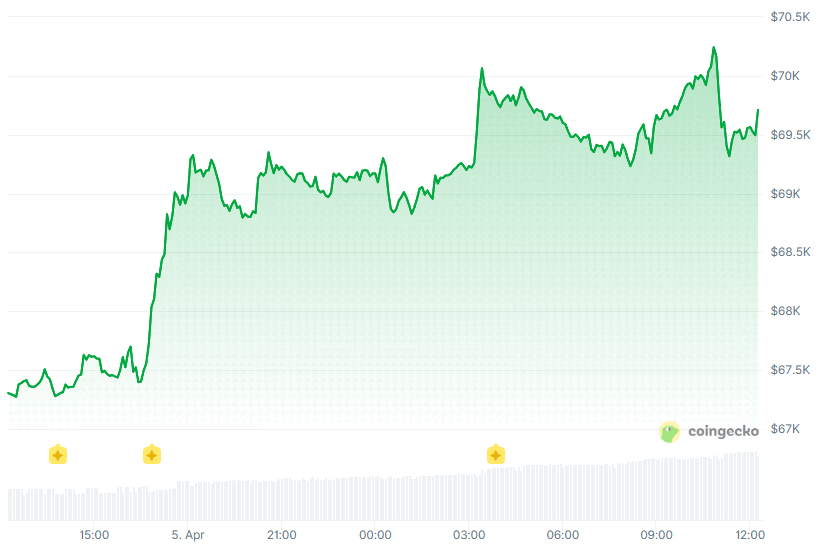
A 45-day ceasefire plan and Strategy’s $330M Bitcoin purchase buoyed crypto markets.
Crypto markets rallied on Monday as mediators submitted a 45-day ceasefire plan to the U.S. and Iran, while Michael Saylor’s Strategy resumed buying BTC after a weeklong pause.
Bitcoin is trading at around $69,700, up 3.7% over the past 24 hours. ETH surged 4% to $2,150, while SOL climbed 2.5% to $82. Meanwhile, XRP added 3%.

Total crypto market capitalization rose 2.6% to $2.45 trillion, according to CoinGecko.
The broad-based rally came after Reuters reported that Egyptian, Pakistani, and Turkish mediators submitted a proposal to the U.S. and Iran calling for a 45-day ceasefire and the reopening of the Strait of Hormuz, the vital shipping lane that carries about a fifth of the world’s oil and has been effectively closed since the war began on Feb. 28.
President Donald Trump called the proposal “significant” but “not good enough” at a White House Easter event on Monday. He has set a Tuesday 8 p.m. ET deadline for Iran to reopen the Strait or face strikes on its power plants and bridges.
Iran rejected the temporary ceasefire, with state news agency IRNA reporting that Tehran sent a 10-point response through Pakistan demanding a permanent end to the war, a safe-passage protocol for the Strait, and the lifting of sanctions.
Despite the uncertain diplomatic backdrop, crypto markets responded to the mere existence of a framework for de-escalation, a dynamic that has repeatedly played out since the conflict began.
The rally triggered $331 million in leveraged liquidations over 24 hours, affecting more than 83,000 traders, according to CoinGlass. Short positions accounted for roughly $268 million of the losses in the past 12 hours, adding fuel to the move higher.
Strategy Buys $330 Million of Bitcoin
Michael Saylor’s Strategy disclosed in a securities filing Monday that it purchased roughly $330 million worth of Bitcoin between April 1 and April 5. The buy lifted the firm’s total holdings to 766,970 BTC at an aggregate cost of about $58 billion and an average price of roughly $75,644.
The purchase followed a one-week pause during which Strategy made no purchases or share sales. Strategy also disclosed a $14.5 billion unrealized loss for the first quarter as Bitcoin’s decline from its October all-time high pushed its holdings below the firm’s average cost basis. MSTR shares rose roughly 5% in early Monday trading.
Meanwhile, BitMine Immersion bought another 71,252 ETH in the past week, its largest single-week purchase since December.
Looking Ahead
The immediate catalyst is Trump’s Tuesday evening deadline. A deal or even a credible extension would likely boost risk assets further, while an escalation could reverse today’s gains.
Meanwhile, the Fed is widely expected to hold rates steady at its April 29 meeting, with CME FedWatch showing a 99.5% probability of no change.


NBC host Savannah Guthrie walked back onto her TV set this morning in her signature yellow dress, 65 days after someone abducted her 84-year-old mother from her Arizona home and demanded $6 million in bitcoin.
The Today Show co-anchor, age 54 and still concerned about her 84-year-old mother, closed her greeting simply, “It is good to be home.” The Today crew decorated Studio 1A with yellow flowers and ribbon pins. Fans held signs outside Rockefeller Center. Her co-anchor Craig Melvin wore yellow in solidarity.
Her mother, Nancy Guthrie, is still missing. Law enforcement officers have still not arrested anyone in connection with the abduction despite persistent attempts and nationwide media attention. Investigators have not named a suspect.
Behind the warm homecoming sits an investigation that has produced, by any measure, infuriatingly little.
65 days, zero suspects
Nancy Guthrie disappeared from her home near Tucson, Arizona on the night of January 31. Her son-in-law, Tommaso Cioni, drove her home around 9:48pm. By 1:47am, a masked, armed individual had disconnected her doorbell camera. By 2:28am, her pacemaker had disconnected from the monitoring app on her cellphone.
Investigators found blood matching Nancy’s DNA at the house’s entrance.
The US Federal Bureau of Investigation (FBI) and Pima County Sheriff’s Department have received nearly 40,000 tips to little avail.
The only arrest was a California man named Derrick Callella, who sent the family fake ransom messages. After investigation, law enforcement determined that his financial opportunism had nothing to do with the actual abduction.
Ransom notes sent to TMZ and local media outlets demanded up to $6 million worth of BTC, escalating from an initial $4 million demand. Kidnappers attached a BTC wallet address and unreleased case details. Two deadlines passed without consequence. Investigators have neither confirmed nor denied their authenticity.
The key visual evidence released in the case is doorbell camera footage published on February 10, along with FBI-released still images. The footage shows a suspect described as 5’9” to 5’10” tall with an average build and a black 25-liter Ozark Trail backpack.
The FBI recovered the doorbell footage from residual Nest backend data with private-sector assistance. On February 18, the sheriff announced efforts to extract additional video from other cameras at the home.
Savannah Guthrie struggles with self-blame
On March 26-27, in a multi-part interview outside of regular TODAY Show programming, Guthrie sat with former co-host Hoda Kotb and recounted the moment her brother Camron suggested that ransom motivated the kidnapping, specifically because of Savannah’s fame.
“I said, ‘Do you think because of me?’ And he said, ‘I’m sorry, sweetie, but yeah, maybe.’”
She described her guilt in terms that left little room for interpretation: “To think that I brought this to her bedside, that it’s because of me.”
Tragically, the family offered a $1 million reward for Nancy’s return on February 24. The FBI is also offering $100,000. Neither offer has produced a publicly named suspect.
Read more: Binance’s France chief targeted by armed men looking for crypto
A record year for crypto kidnappings
The Guthrie case is the highest-profile entry in what has become a record-setting epidemic of crypto-based kidnappings. Blockchain security firm CertiK documented over 70 confirmed crypto-related physical attacks globally in 2025, a 75% increase from 2024 by its estimate. Financial losses exceeded $40 million from this category of so-called wrench attacks.
Worse, the trend has accelerated into 2026.
France became an unfortunate epicenter in 2025 with 19 incidents, including the kidnapping of Ledger co-founder David Balland, whose captors mutilated his finger over a €10 million ransom.
In February 2026, armed men targeted Binance France president David Prinçay hours before a linked group attacked another crypto entrepreneur. In March, a UK game developer lost $24 million in a violent home invasion involving kidnapping threats.
The Guthrie kidnappers chose BTC over privacy coins like Monero or Zcash, a decision that should, in theory, make the coins easier to trace if paid. At today’s BTC price of roughly $69,000, the $6 million demand would require approximately 87 BTC.
Unfortunately, traceability has not translated into arrests.
Guthrie told Kotb that returning to the TODAY Show was “part of my purpose right now.” She would not let sadness win, she said, for her mother’s sake.
Nancy, who requires daily medication and could not generally walk 50 yards unassisted, has now been missing for 65 days. No ransom has officially been paid. Prosecutors have not charged anyone publicly in connection with the abduction.
Got a tip? Send us an email securely via Protos Leaks. For more informed news, follow us on X, Bluesky, and Google News, or subscribe to our YouTube channel.
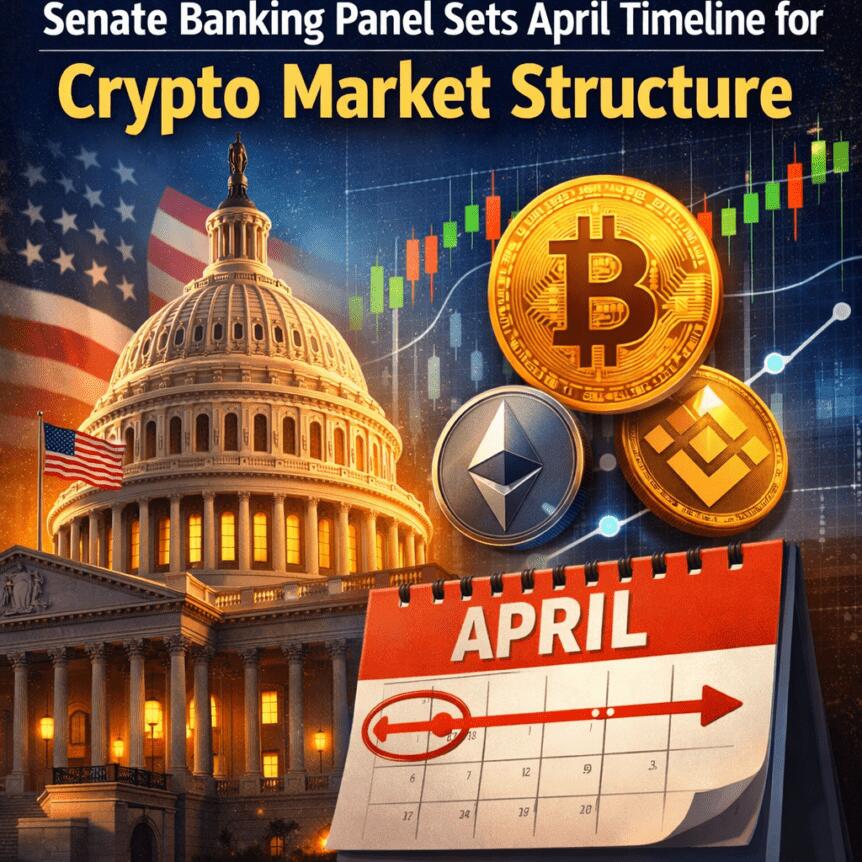
Senator Bill Hagerty, a Republican member of the Senate Banking Committee, signaled on Monday that a viable path for a US digital asset market structure bill could crystallize in the coming weeks after months of congressional stalling. Speaking at the Digital Assets and Emerging Tech Policy Summit at Vanderbilt University, Hagerty indicated that fellow Republicans intend to move the CLARITY Act through the banking panel starting next week, with the goal of pushing it through committee in the April work period.
“We will be in a position, I hope, to bring all of this together very soon,” Hagerty said, noting that the banking committee is “very close” and that he expects the bill to be in committee in the next work period beginning Monday. “Over the next several weeks we should have this into the banking committee.”
“There’re several issues still outstanding, I think none of them are insurmountable and we will get to a point I believe in April that we’ll have it out of the banking committee. There’s still a lot more work to do.”
The event underscored the sense among lawmakers that a comprehensive framework for digital assets—long discussed but repeatedly delayed—could finally move forward in the first half of the year. Hagerty’s comments come as the bill’s path remains tethered to negotiations across committees and the broader political calendar as the midterm cycle looms.
Key takeaways
- April markup target for market-structure legislation: Hagerty said the banking committee is close to moving the CLARITY Act into a markup during the next work period, signaling a potentially decisive push in the coming weeks.
- Rebalancing crypto oversight to the CFTC: The draft framework envisions shifting primary regulatory oversight of crypto markets from the Securities and Exchange Commission to the Commodity Futures Trading Commission, reflecting a broader rethinking of how digital assets are regulated in the United States.
- Inter-committee dynamics complicate the timeline: The Agriculture Committee has already advanced its version of the bill in January, and the banking panel must hold its own markup before a potential floor vote, highlighting a multi-committee negotiation process.
- Industry players flag progress and risks: Coinbase chief legal officer Paul Grewal said lawmakers were “close to a deal” on stablecoin yield and related issues, underscoring that the negotiations are moving but still hinge on several contentious points.
- Crypto lobbying accelerates ahead of elections: With the 2026 midterms on the horizon, crypto-focused political action committees are mobilizing—Fairshake has reported a large war chest and influence ambitions, while the Fellowship PAC has appointed crypto-aligned leaders to key fundraising roles.
Regulatory architecture and interagency dynamics
The core idea behind the CLARITY Act—often referred to as a landmark crypto bill—would reframe how the United States oversees digital assets. By potentially elevating the CFTC as the lead supervisor for most crypto markets, while preserving certain securities/commodities distinctions, the bill aims to provide a clearer regulatory pathway for exchanges, issuers, and other market participants.
The legislation would not simply replace one regulator with another; it would require a coordinated push across major congressional committees. The agriculture panel has already signaled its support by advancing its version in a January markup, but the banking committee’s involvement remains pivotal because the bill’s broad scope touches both commodities and securities issues. The banking committee would need to complete its markup for the bill to reach the Senate floor, subject to further refinement and negotiations with the Agriculture Committee.
Earlier coverage noted that the agriculture committee’s version confronts topics such as tokenized equities, ethics concerns, and stablecoin yield—areas that have contributed to delays in the banking committee’s schedule. The interplay between SEC oversight, CFTC leadership, and the evolving treatment of tokenized assets adds a layer of complexity to any final package. Readers should note that related commentary from industry observers frames this as a critical juncture for how the United States could regulate the crypto market for years to come. Related reporting has highlighted optimism that the CFTC could oversee a broader swath of the market, should a comprehensive framework pass into law.
For market participants, the exact division of regulatory responsibilities matters because it shapes how exchanges operate, how asset classifications are determined, and how enforcement actions will be structured in the coming years. It also helps define whether new requirements—such as registration standards, reporting duties, or capital and conduct rules—apply uniformly across related crypto markets or are tailored to specific asset classes.
Political appetite and the broader electoral backdrop
The crosswinds of policy and politics are particularly salient this year as lawmakers weigh the potential impact of crypto regulation on electoral outcomes. Hagerty’s framing that there is still work to do and a sense of urgency ahead of the midterm cycle mirrors public remarks from other policymakers who have stressed the need for timely, predictable rules to reduce regulatory uncertainty for builders and investors alike.
Coinbase’s legal chief has echoed similar sentiment. Paul Grewal recently said lawmakers were “close to a deal” on stablecoin yield and other elements of the market-structure bill, signaling growing consensus on several core issues even as stalemates persist. This alignment between industry and lawmakers could help narrow the gaps, though significant policy hurdles remain to be resolved in the coming weeks.
Beyond Congress, political action committees with crypto ties have started to mobilize at scale. The Fairshake PAC, a crypto-backed group, reported spending substantial sums on media buys during the 2024 elections and has projected a sizable war chest for the 2026 midterms. Stand With Crypto, another advocacy coalition, has pointed to how the vote on the market-structure bill could influence crypto policy and, by extension, the 2026 electoral landscape. Stand With Crypto cites the broader strategic calculus around crypto policy and its potential impact on voters’ perceptions of lawmakers’ willingness to support the industry.
In another notable development, the Fellowship PAC—speaking on behalf of industry-aligned donors—announced the appointment of Jesse Spiro, a senior executive from the tether-backed ecosystem, as chair. The move underscores the intensifying choreography between policy debates and political fundraising as the 2026 cycle approaches.
Analysts and lobbyists say the outcome of these efforts could shape market sentiment and liquidity decisions for many market participants over the next 18 to 24 months. A clear, stable framework would reduce policy risk for exchanges and asset issuers, while overly fragmented or uncertain rules could slow innovation and push activity toward jurisdictions with clearer guidance.
What to watch next for traders and builders
For users, developers, and investors, the primary takeaway is that a more predictable regulatory regime could emerge if the banking committee marks up the CLARITY Act in April and advances it toward a floor vote. The next several weeks are crucial, as lawmakers negotiate terms on tokenized assets, stablecoins, ethics considerations, and how to coordinate oversight across multiple agencies.
Market participants should monitor committee activity, statements from House and Senate leadership, and comments from vocal industry groups and lobbying coalitions. The degree to which consensus can be reached on sensitive points—such as stablecoin yield, tokenized securities, and the proper distribution of regulatory authority between the SEC and the CFTC—will likely determine the policy’s momentum into the summer and beyond.
Another point of ambiguity remains the broader political calendar. With midterms approaching and crypto policy a potential differentiator for voters, the incentives for rapid progress could either accelerate or stall legislative activity depending on how negotiations unfold and how much leverage lawmakers perceive they have with stakeholders on both sides of the aisle.
In the near term, the market structure bill’s fate seems tethered to a blend of substantive policy compromises and political timing. If April proves decisive, a committee vote could pave the way for broader debate on the Senate floor. If negotiations stall, the path to a comprehensive framework could slip into the 2026 cycle, risking renewed policy drift and continued regulatory uncertainty for the industry.
As the process unfolds, investors and builders should stay alert to progress on the core sticking points—especially stablecoin yield and tokenized assets—as well as any shifting leadership roles within the relevant committees. The coming weeks will reveal not just whether a market structure bill can pass but how the United States intends to calibrate regulation in a rapidly evolving digital asset landscape.
Stay tuned for updates on committee markup schedules, voting timelines, and any new comments from lawmakers or industry groups as the debate over the digital asset market structure heats up in the spring.

A satellite view of the Strait of Hormuz, a strategic waterway between Iran and Oman that links the Persian Gulf to the Arabian Sea.
Gallo Images | Getty Images
As the world’s oil traders parsed satellite images and official statements for clues on the fate of the Strait of Hormuz, one research firm seems to have taken a different approach: It claims that it sent an analyst directly into the conflict zone.
Citrini Research, which issued a market-shaking bearish call on artificial intelligence earlier this year, said it dispatched an analyst to Oman’s Musandam Peninsula, where the person traveled by boat to observe shipping activity firsthand amid escalating tensions between Iran and the U.S. What the analyst claims to have found challenges the dominant narrative gripping global markets that the critical oil artery is effectively shut.
Instead, the analyst, who remains anonymous due to the sensitivity of the activity, found that vessels are still moving through the strait, with traffic picking up in recent days to roughly 15 ships per day, according to the firm’s report posted on Substack. While far below normal levels, the flow suggests the disruption is partial and evolving rather than absolute.
“Tankers passing through four or five a day, completely dark on AIS. The volume, they said, is higher than what the data suggests, and it’s been accelerating in the past couple days through the Qeshm channel,” Citrini’s post said.
AIS is a ship-tracking system that broadcasts a vessel’s location, speed, identity and route. Citrini asserts that the actual shipping volume is higher than reported data as many ships turn off their transponders and are not visible on official tracking systems.
Citrini didn’t immediately respond to CNBC’s request for comments.
Based on the Substack post, the analyst’s interviews with fishermen, smugglers and regional officials point to a system in which Iran is selectively allowing ships to pass. Tankers are required to secure approval before transiting waters near Iranian territory, creating what the firm described as a “functional checkpoint” rather than a blockade, Citrini said in its post.
“This should drive home that what we’ve described as our view of the conflict is nuanced – it doesn’t fit neatly into ‘strait open crude down’ or ‘strait closed crude parabolic,’” the firm said.
To be sure, the findings are based on a single field trip and anecdotal accounts that are difficult to independently verify, particularly given limited transparency in the region.
The firm expects a more prolonged disruption that embeds a lasting risk premium into oil markets. That view underpins a preference for longer-dated crude exposure, with the firm favoring December 2026 WTI contracts over the front month.
“We think the disruption is longer and the new normal involves a permanent risk premium, but that we’ll likely see as high as 50% of pre-conflict traffic within the next 4-6 weeks,” Citrini said.


Circle Arc blockchain launches into a threat environment, its competitors are only beginning to map: on Thursday, the stablecoin issuer published a full-stack, phased post-quantum security roadmap for Arc, targeting wallets, signatures, validators, and off-chain infrastructure through a four-phase implementation running to 2030.
The announcement is not theoretical. Phase 1 deploys at mainnet launch, expected in 2026, making Arc one of the first major layer-1 networks to treat quantum resistance as a design requirement rather than a retrofit problem.
The timing is deliberate. Google’s research warning that quantum computers could break Bitcoin’s cryptography in as little as nine minutes, combined with Caltech researchers theorizing operational quantum systems before 2030, has compressed the industry’s planning horizon.
Key Takeaways:
- What It Is: Circle’s post-quantum security roadmap for Arc covers wallets, signatures, validators, and offchain infrastructure across four phases through 2030.
- The Roadmap: Phase 1 launches opt-in quantum-resistant wallets and NIST-standard post-quantum signatures at mainnet; Phases 2–4 add private state encryption, validator security, and infrastructure hardening.
- The Algorithms: Arc targets NIST-finalized lattice-based schemes – CRYSTALS-Dilithium (ML-DSA) and Falcon – with transaction size increases of 2–10x initially, offset by hardware acceleration and algorithm optimization.
- The Threat Context: Current quantum hardware sits at 1,000–1,500 qubits; breaking ECDSA requires millions of error-corrected qubits – but active addresses that have already exposed public keys must migrate before Q-Day regardless of timing.
- What to Watch: Arc mainnet launch date confirmation and Phase 1 opt-in adoption rates among enterprise users – the first concrete test of whether quantum-resistance is a selling point or a friction point for USDC-native workflows.
Discover: The Best Crypto to Get Right Now
What Circle Quantum-Resistance Roadmap Actually Means for Arc
The core technical commitment: Arc will implement CRYSTALS-Dilithium (ML-DSA) and Falcon – both finalized by NIST in August 2024 as part of its post-quantum cryptography standardization process – as its primary post-quantum signature schemes.
These lattice-based algorithms replace the elliptic curve cryptography (ECDSA) that underpins most existing blockchain infrastructure, including Bitcoin and Ethereum, both of which remain unprotected against a sufficiently powerful quantum adversary.
Phase 1 arrives at mainnet as opt-in quantum-resistant wallets and signatures – a deliberate choice that prioritizes compatibility over mandated migration.
Phase 2 introduces private state encryption, wrapping public keys in symmetric encryption to protect balances and transaction data against quantum-era surveillance.
Phase 3 secures Arc validators. Phase 4 extends coverage to offchain infrastructure: communication protocols, cloud environments, hardware security modules, and access controls.
The tradeoff is measurable: NIST’s lattice-based schemes carry signature sizes 2–10x larger than ECDSA equivalents, which puts throughput pressure on Arc’s consensus layer in the near term. Circle’s roadmap acknowledges this directly, citing algorithm optimization and hardware acceleration as the mitigation path – a technically credible answer, though one that requires execution to verify.
The competitive context sharpens the significance. Bitcoin has no PQC migration path under active deployment.
Ethereum’s PQC roadmap remains at the research and discussion stage. Algorand has cited quantum resistance as a design consideration, but has not published a phased implementation timeline at Arc’s level of specificity. QANplatform launched a quantum-resistant L1 using lattice-based cryptography in 2022, but without Circle’s institutional infrastructure and USDC integration as the embedded use case.
Circle put the urgency plainly in Thursday’s announcement: “Active addresses that have already signed transactions must migrate before Q-Day because their public keys have been exposed.”
That is not a hypothetical risk, it is the harvest-now-decrypt-later vulnerability that security researchers have flagged in blockchain audits since 2021. What this means: Arc is building for a threat window that may close faster than most L1 competitors have planned for.
Explore: The best pre-launch token sales with asymmetric upside potential
The post Circle Unveils Quantum-Resistant Roadmap for Its Layer-1 Arc Blockchain appeared first on Cryptonews.


Coinglass data shows Ethereum trapped in a tight “liquidation corridor,” with $1.414b in longs at risk below $2,040 and $889m in shorts exposed above $2,253.
Summary
- Coinglass data show $1.414 billion in ETH longs at risk below $2,040 on major centralized exchanges.
- A move above $2,253 would flip the tape, exposing $889 million in short liquidations on the same venues.
- Recent heatmap studies suggest roughly $1.8 billion of ETH leverage is clustered in a tight band around current prices.
If Ethereum (ETH) slides below $2,040, around $1.414 billion worth of long positions on major centralized exchanges could be forcibly liquidated, according to derivatives analytics platform Coinglass. The same data set indicates that a break above $2,253 would reverse the pressure, putting approximately $889 million in short exposure at risk of liquidation on mainstream CEXs. That leaves spot ETH trading in a narrow but dangerous corridor where a relatively modest price move can trigger outsized forced flows across futures venues.
In a recent Ethereum liquidation heatmap update, Coinglass described these bands as “price ranges where large‑scale liquidation events may occur,” highlighting how dense leverage clusters can create mechanical selling or buying once price crosses key thresholds. Earlier this month, a crypto.news story on ETH’s “trapdoor” setup noted that nearly $1.8 billion of combined long and short leverage sat between roughly $1,952 and $2,154, meaning that a 5–7% move could turn into a cascading wipeout for over‑levered traders. Another crypto.news story on liquidation “walls” between $2,057 and $1,863 cited Coinglass and ChainCatcher data showing shorts facing up to $928 million in liquidations above $2,057, with $454 million in longs vulnerable below $1,863.
At current levels, Coinglass estimates Ethereum’s open interest at more than $27.3 billion, underscoring how tightly coiled derivatives positioning has become relative to spot liquidity. In a separate Ethereum price story, crypto.news pointed out that ETH’s market capitalization was hovering near $247 billion with 24‑hour trading volumes above $13 billion, yet leverage pockets of $700–$800 million in either direction were enough to skew short‑term price action. Coinglass has warned that “liquidations play a crucial role in the cryptocurrency market, often causing sharp price movements and significantly impacting traders’ positions,” particularly when large clusters sit just a few percentage points away from spot.
The current configuration means that if ETH breaks below $2,040, long traders could face a $1.414 billion liquidation cascade that accelerates downside far beyond the initial move. Conversely, a breakout above $2,253 risks inflicting about $889 million in pain on shorts, potentially turning forced buying into a sharp short squeeze. For traders using high leverage on Ethereum, Coinglass’ maps, highlighted in multiple crypto.news stories on liquidation traps and walls, offer a stark risk warning: once price enters these bands, risk management becomes less about discretionary exits and more about surviving the next wave of forced unwinds.


More than $273 million in bearish crypto positions were unwound in under 24 hours on April 6, as reports of US-Iran ceasefire talks triggered a sudden and sharp shift in market sentiment.
Summary
- Bloomberg reported that roughly $273 million in bearish crypto bets were unwound within 24 hours as ceasefire headlines hit, with short sellers accounting for the overwhelming majority of losses
- Ethereum led altcoin gains with a 5.1% move, while Bitcoin climbed more than 3% and the total crypto market cap crossed back above $2.5 trillion
- Rising open interest in both Bitcoin and Ethereum outpaced spot price gains, pointing to fresh capital entering the market rather than a purely mechanical short squeeze
Bears paid a heavy price on Monday. Bloomberg reported that roughly $273 million in bearish crypto bets were unwound within 24 hours, with short positions absorbing the vast majority of losses in a near 3-to-1 ratio over longs. The trigger was an Axios report that the US, Iran, and a group of regional mediators are discussing a potential 45-day ceasefire. Within hours of the report surfacing, risk assets snapped higher and over-leveraged bearish positions were forced to cover.
Bitcoin’s 24-hour range ran from $66,634 to $69,350, a $2,700 swing that caught the worst of the short positioning built up over the Easter weekend.
Ethereum led the major assets with a gain of 5.1%, the largest percentage move among top tokens and a direct reflection of how concentrated bearish exposure had become on the second-largest network. SOL added 2%, XRP climbed 2.2%, and ADA, AVAX, and LINK all posted double-digit increases in open interest alongside positive funding rates, extending the risk-on move well beyond Bitcoin.
The total crypto market cap crossed back above $2.5 trillion, recovering roughly $70 billion on the day.
Why the Short-Side Was So Crowded
Heading into the Easter break, sentiment had collapsed after weeks of escalating US-Iran war headlines and a string of ceasefire hopes that failed to convert into anything concrete. As crypto.news reported, the Bitcoin derivatives market had been sitting between a $1.143 billion long liquidation wall below $65,000 and a $754 million short pocket above $68,000. That structure left the market tightly wound and vulnerable to a sharp move in either direction.
Traders who had positioned for continued downside were essentially betting the $65,000 to $73,000 war range would hold or break lower. Monday’s ceasefire headlines upended that positioning in a matter of hours.
Open Interest Data Points to More Than a Squeeze
What separates Monday’s move from prior headline-driven spikes is how open interest behaved. In both Bitcoin and Ethereum, open interest climbed at a faster pace than spot prices, suggesting fresh capital flowing into the market rather than mechanical short covering alone. That distinction matters: a pure short squeeze exhausts itself quickly, while new capital entering can sustain a move.
As crypto.news noted in its analysis of Monday’s ceasefire developments, a confirmed deal could reduce oil prices and ease inflation pressures, improving the case for a more accommodative Federal Reserve stance. Caution remains warranted. Polymarket currently puts the odds of a ceasefire by April 30 at roughly 30%, and several major tokens including BCH and HYPE are still showing negative funding rates, signalling pockets of bearish positioning that have not yet been cleared.

Coronation Street favourite says ‘I can’t do this anymore’ after exit news

The New Divide In ASEAN Debt
Charles Hoskinson Defends Cardano Midnight Bridge Plan


-

 NewsBeat4 days ago
Steven Gerrard disagrees with Gary Neville over ‘shock’ Chelsea and Arsenal claim | Football
-

 Business4 days ago
No Jackpot Winner and $194 Million Prize Rolls Over
-

 Fashion3 days ago
Weekend Open Thread: Spanx – Corporette.com
-

 Crypto World5 days ago
Gold Price Prediction: Worst Month in 17 Years fo Save Haven Rock
-

 Business20 hours ago
Three Gulf funds agree to back Paramount’s $81 billion takeover of Warner, WSJ reports
-
Crypto World6 days ago
Dems press CFTC, ethics board on prediction-market insider trades
-

 Sports2 days ago
India men’s 4x400m and mixed 4x100m relay teams register big progress | Other Sports News
-

 Business5 days ago
Login and Checkout Issues Spark Merchant Frustration
-

 Tech6 days ago
EE TV is using AI to help you find something to watch
-

 Sports6 days ago
Tallest college basketball player ever, standing at 7-foot-9, entering transfer portal
-

 Politics7 days ago
Should Trump Be Scared Strait?
-
Tech7 days ago
Daily Deal: StackSkills Premium Annual Pass
-

 Tech7 days ago
Flipsnack and the shift toward motion-first business content with living visuals
-

 Sports7 days ago
Women’s hockey camp eyes fitness boost, tactics ahead of WC 2026 campaign | Other Sports News
-

 Crypto World7 days ago
U.S. rule change may open trillions in 401(k) funds to crypto
-

 Tech6 days ago
How to back up your iPhone & iPad to your Mac before something goes wrong
-

 Politics7 days ago
Usha Vance: Disney Hats Over MAGA Caps?
-
Crypto World7 days ago
Valinor raises $25m to put private credit on-chain
-

 Business7 days ago
Functional benefits brewing in coffee innovation
-

 Tech6 days ago
What Are The Biggest Limitations Of Supercomputers?
You must be logged in to post a comment Login