
Crypto World
New data suggests military insider trading crisis on Polymarket



A Green Beret’s alleged $400,000 insider bet on a raid in Venezuela seemed like an isolated breach. A new report suggests it may be the visible edge of something broader.
The Anti-Corruption Data Collective (ACDC), a nonprofit research group, analyzed every settled Polymarket contract from January 2021 through mid-March 2026 — more than 435,000 markets and $54.4 billion in cumulative volume — and found that low-probability bets on military and defense outcomes win at rates that are difficult to explain through skill or luck.
Across political markets, such “longshot” bets typically succeed about 14% of the time. In military-linked contracts, success rates have topped 50% in some cases.
“Markets tied to specific government policies, such as military and defense and foreign affairs, are harder to forecast using public information alone,” the authors wrote, making them “more susceptible to information asymmetries,” including insider trading or specialized knowledge.
In those markets, the gap between informed and uninformed traders may be widest, creating conditions in which a small group can consistently outperform not just by reacting faster, but by knowing more.
For its part, Polymarket touts its market surveillance teams and cooperation with the Department of Justice on the Venezuela case. Trading on confidential knowledge is prohibited on the platform, as it is on Kalshi.
Concentrated profits
The ACDC report’s findings add to a growing body of research pointing in the same direction. A working paper from London Business School and Yale found that roughly 3% of traders account for most price discovery on Polymarket.
Separate analysis from blockchain analytics firm Solidus Labs showed that profits are even more concentrated, with fewer than 1% of wallets capturing about half of all gains. ACDC’s contribution is to suggest where some of that edge may come from.
The report examines the June 2025 U.S. strikes on Iran as a case study. Polymarket listed several date-specific contracts on whether a strike would occur. Markets tied to June 19 and June 20 expired without incident, and no longshot bets won.
The strike came at 18:40 ET on June 21. In the hours leading up to it, 19 longshot bets totaling $164,292 were placed across the contracts that ultimately resolved YES. Eight wallets shared about $1.8 million in profits, with one taking nearly $500,000.
The Pentagon had designed the operation to be unreadable from the outside, using decoy bombers and long-range stealth aircraft to avoid detection. Despite that, a small number of traders placed large, well-timed bets on the outcome.
The pattern extends beyond a single event. Across Polymarket’s military and defense category, the report found that in five of the six two-hour windows before market resolution, winning longshot bets outnumbered losing ones, contrary to what market prices imply.
Longshot bets can outperform for other reasons, including mispricing or shifts in public expectations. But the consistency of the patterns, especially in markets tied to military decisions, suggests that some participants may be operating with information advantages that others do not have.
ACDC, being a nonprofit research group funded through the Fund for Constitutional Government, has no surveillance product to sell, compared to Solidus Labs, whose own recent Polymarket analysis doubles as a marketing case for the platform it licenses to Kalshi.
ACDC’s recommendations include identity verification for bettors, conditional payouts on suspicious wagers, restrictions on markets whose outcomes are decided by small groups, and limits on how granular contracts can become.
The report’s conclusion goes further, calling for “an evidence-informed debate about whether the public should be betting on these outcomes at all.”

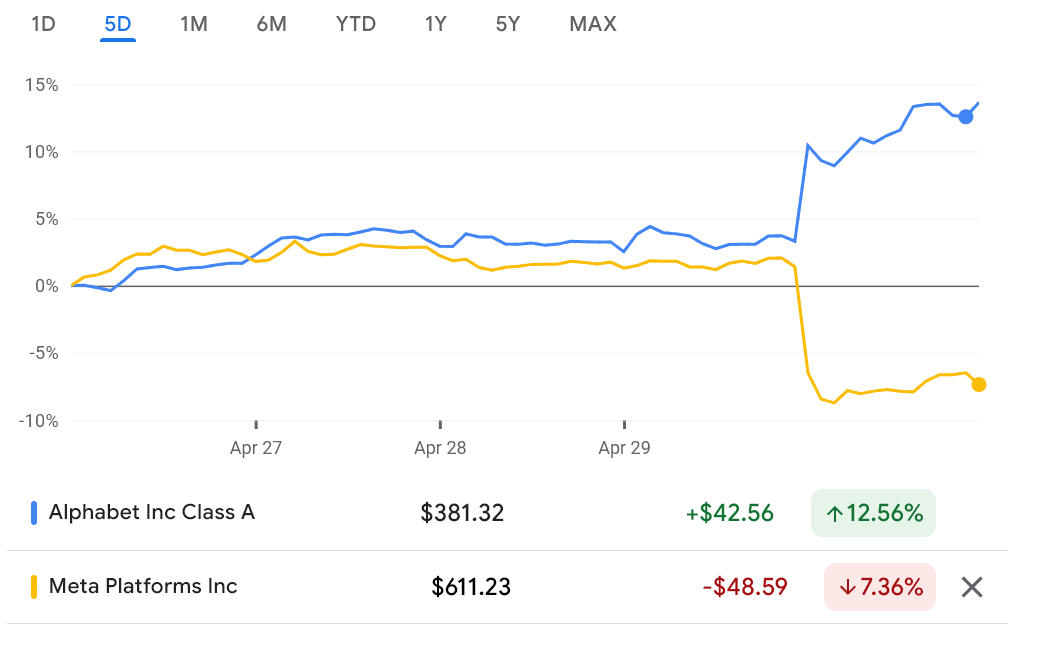
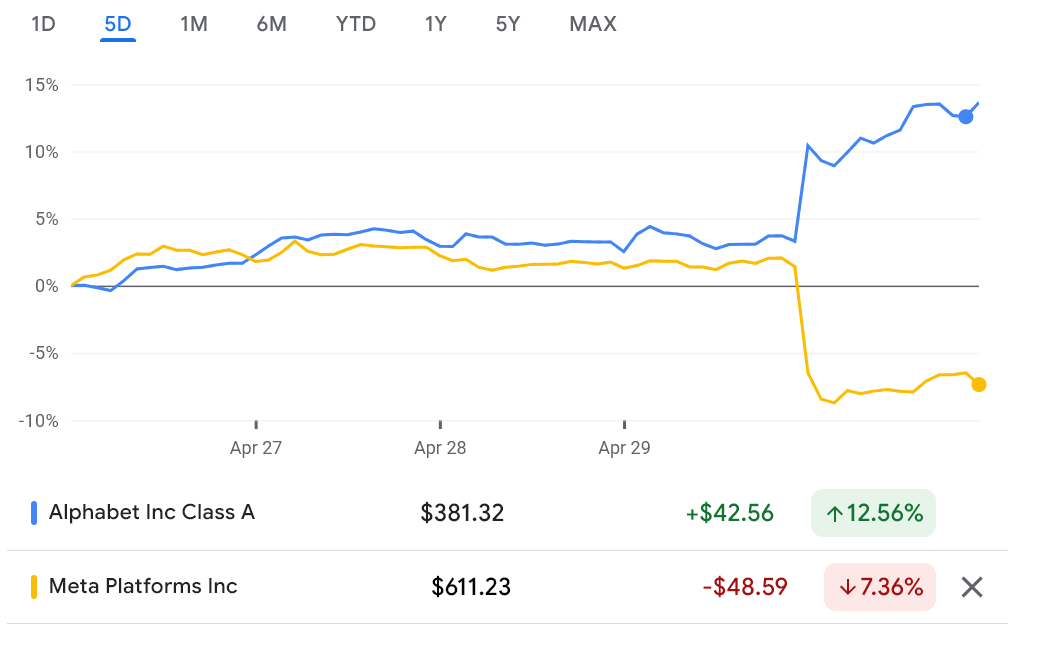
Alphabet (GOOGL) added more than $300 billion in market value on April 30, 2026, lifting its capitalization above $4.5 trillion. Meta Platforms (META) shed roughly $175 billion in the same session despite a stronger top-line beat.
Both companies reported Q1 2026 results after the close on April 29. Investors rewarded Google for visible AI revenue while punishing Meta for its heavier capital-spending guidance.
Cloud Revenue Carried the Beat
Google Cloud reported $20 billion in revenue for Q1, up 63% year over year. Backlog climbed to more than $460 billion, nearly doubling sequentially. Enterprise AI demand is running well ahead of supply.
“Google Cloud saw a meaningful acceleration in growth as revenues increased 63% to $20.0 billion, led by an increase in Google Cloud Platform (GCP) across enterprise AI Solutions and enterprise AI Infrastructure, as well as core GCP services,” read an excerpt in the announcement.
Search queries reached an all-time high during the quarter on the back of Gemini integration. Consumer AI subscriptions topped 350 million. Alphabet also raised its dividend by 5%.
Q1 capital expenditure landed at $35.7 billion. The company lifted full-year 2026 capex guidance to $180 billion – $190 billion, with 2027 spending flagged as “significantly higher.”
Markets absorbed the increase because cloud revenue is already converting that spend into bookings. In this regard, positive sentiment translated into buyer interest, pushing Google’s market cap above $4.5 trillion, adding over $300 billion in one day.
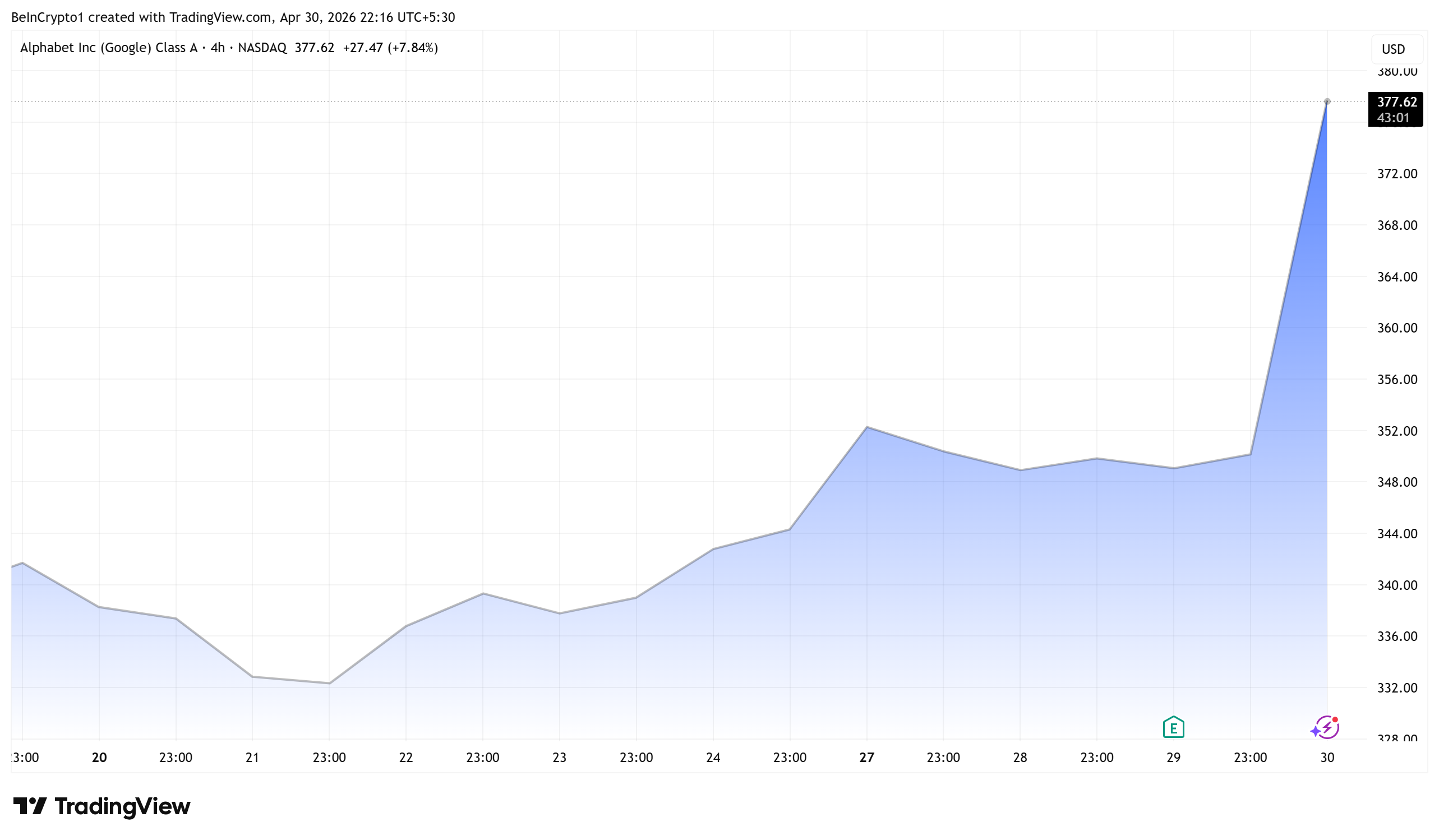
As of this writing, Google’s Alphabet stock was trading for $377.62, marking a new all-time high.
In contrast, markets punished Meta for its more aggressive capital-spending guidance.
Bigger Than Two of the World’s Top Economies
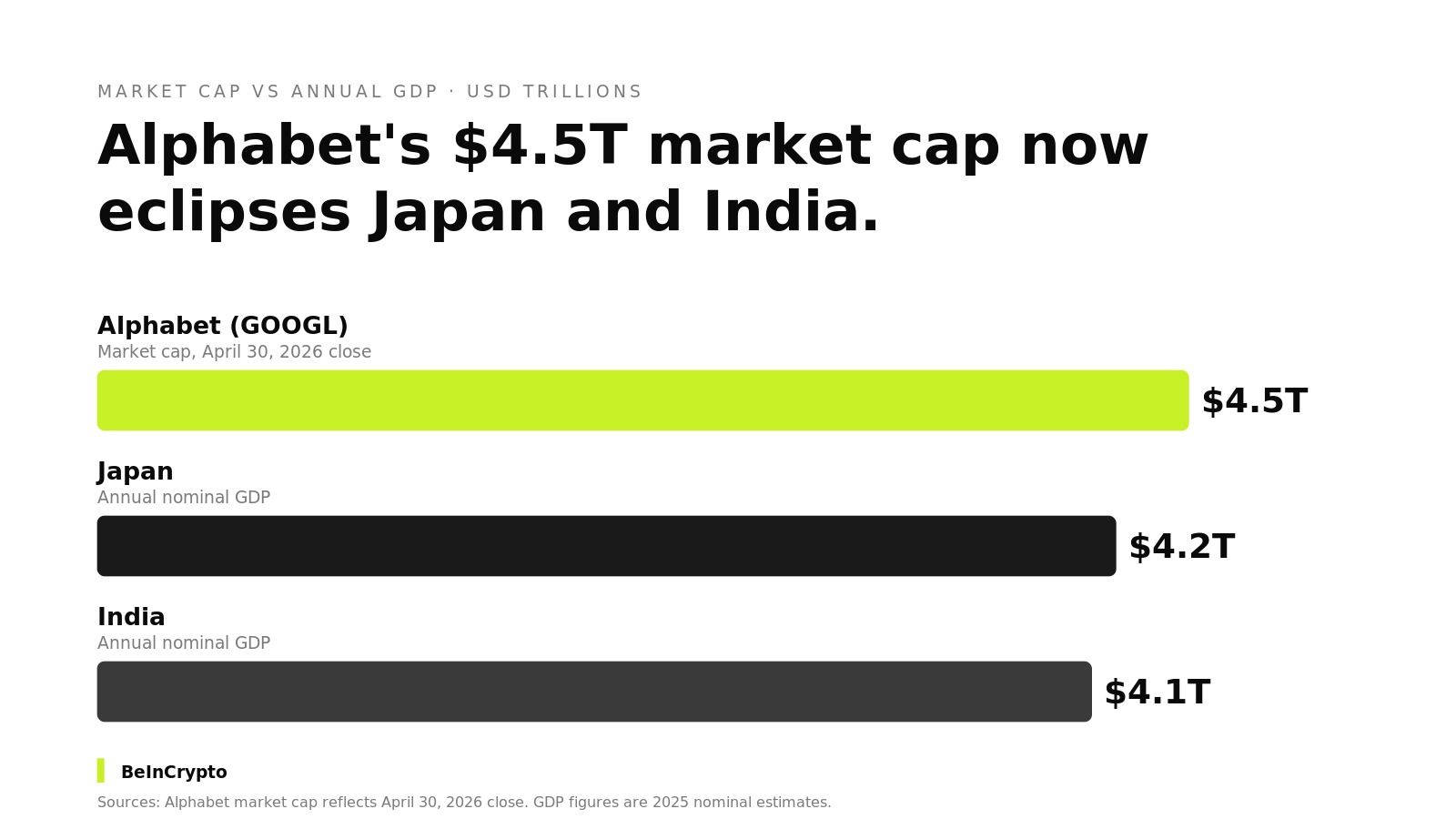
Alphabet’s $4.5 trillion valuation now eclipses the annual GDP of Japan and India. Japan’s economy runs near $4.2 trillion, and India’s at $4.1 trillion. A single US-listed company now sits above two of the world’s largest national economies.
Alphabet’s 2026 spend will pour into the same data-center economy where Bitcoin (BTC) miners compete. Power, GPUs, and grid capacity are now contested directly by hyperscalers.
Several listed miners have already pivoted toward AI hosting contracts. The shift blurs the line between proof-of-work mining and AI cloud hosting.
Google’s $300 billion single-session gain alone exceeded the combined market value of most major altcoins outside Bitcoin and Ethereum (ETH). The print shows how aggressively capital is rotating into AI infrastructure stories this cycle.
The question is whether AI capex spills into compute tokens, public miners, and decentralized GPU networks. Meta’s drop shows markets still want returns, not just spend.
The post How US Stock Markets Rewarded Google But Punished Meta After Q1 Earnings appeared first on BeInCrypto.

Key Insights
- Dogecoin has solid support at $0.095 amid increased whale accumulation.
- Open interest in futures contracts surges to $1.37 billion.
- A breakout above $0.1018 may lead to gains up to $0.1172.
Dogecoin Firm Above Crucial Support Zone
Dogecoin keeps pushing above the important resistance level at $0.095 after experiencing significant corrective moves to the downside over the past weeks. The meme coin, which has corrected about 60% off its October price high, is demonstrating some signs of stabilization.
In terms of price movement, the digital asset has been quite flat over the last few days, implying that traders might be waiting for a breakout on either side. In particular, the coin is above its crucial 50-day exponential moving average near $0.0958.
$0.10 Resistance Becomes Dominant Obstacle
The immediate obstacle for Dogecoin is found at the psychologically important $0.10 area. The area is buttressed by a downtrend line traced from earlier highs in January and April, rendering it as an essential resistance level.
The momentum oscillators are starting to favor the bulls. The RSI oscillator is now at 56, pointing to increased buying interest without being overbought. On the other hand, the MACD oscillator is slightly in positive territory, showing that the buyers continue to dominate.
A breakout above the resistance level, accompanied by high trading volume, would signal the start of the breakout process.
Increase in Whale Holdings Indicates Increasing Confidence
Data on-chain shows an increasing trend in whale activity. The number of whales with holdings ranging from 1 million to 100 million DOGE has grown to 4,920 from 4,872 recorded earlier this year.
The fact that there is an increasing number of whale holders while the price range of the token remains unchanged indicates that there is a lot of accumulation going on.
It is important to note that accumulation always precedes price movements in any asset, and this further strengthens the bull case for Dogecoin.
Bull Case Supported by Futures Trading Volume
More evidence from derivatives is found which strengthens the bullish case for Dogecoin. As reported by CoinGlass, the total open interest volume in Dogecoin futures now stands at $1.37 billion, having increased by 3% in just one day.
The funding rate is also currently 0.0051%, implying that traders who hold long positions are paying a premium to hold their positions.
Breakout Levels and Price Objectives
Market expert Ali Martinez sees the significant level at which a breakout should occur at $0.1018. A bullish confirmation can be achieved by closing above this level for 4 hours with more volume participation.
In case of a breakout above the level mentioned, $0.1172 will be a target price, coinciding with the channel resistance. After that, attention should shift to psychologically important levels of $0.15, $0.20, and possibly even $0.25.
But the Risks Are There to Consider
While the upside appears promising, downside risks still have to be considered. A breach of the $0.095 mark that acts as the 50-day moving average will dampen bullish sentiment.
In this case, traders will aim to test lower support marks at $0.087 and even the February low of $0.080. This will serve as a fallback position, but it will indicate a reversion to bearish trends.
Dogecoin: At an Important Turning Point
At present, Dogecoin finds itself at a crucial point where technical support, whale hoarding, and futures activity come together. With the $0.10 level still acting as the key resistance.
Any breakout to the upside will open doors to substantial gains.
Until then, all eyes will be on DOGE as it consolidates within a narrowing trading range.
The partnership aims to make it easier for companies, including fintechs and paying firms, to issue compliant stablecoins in the United States.
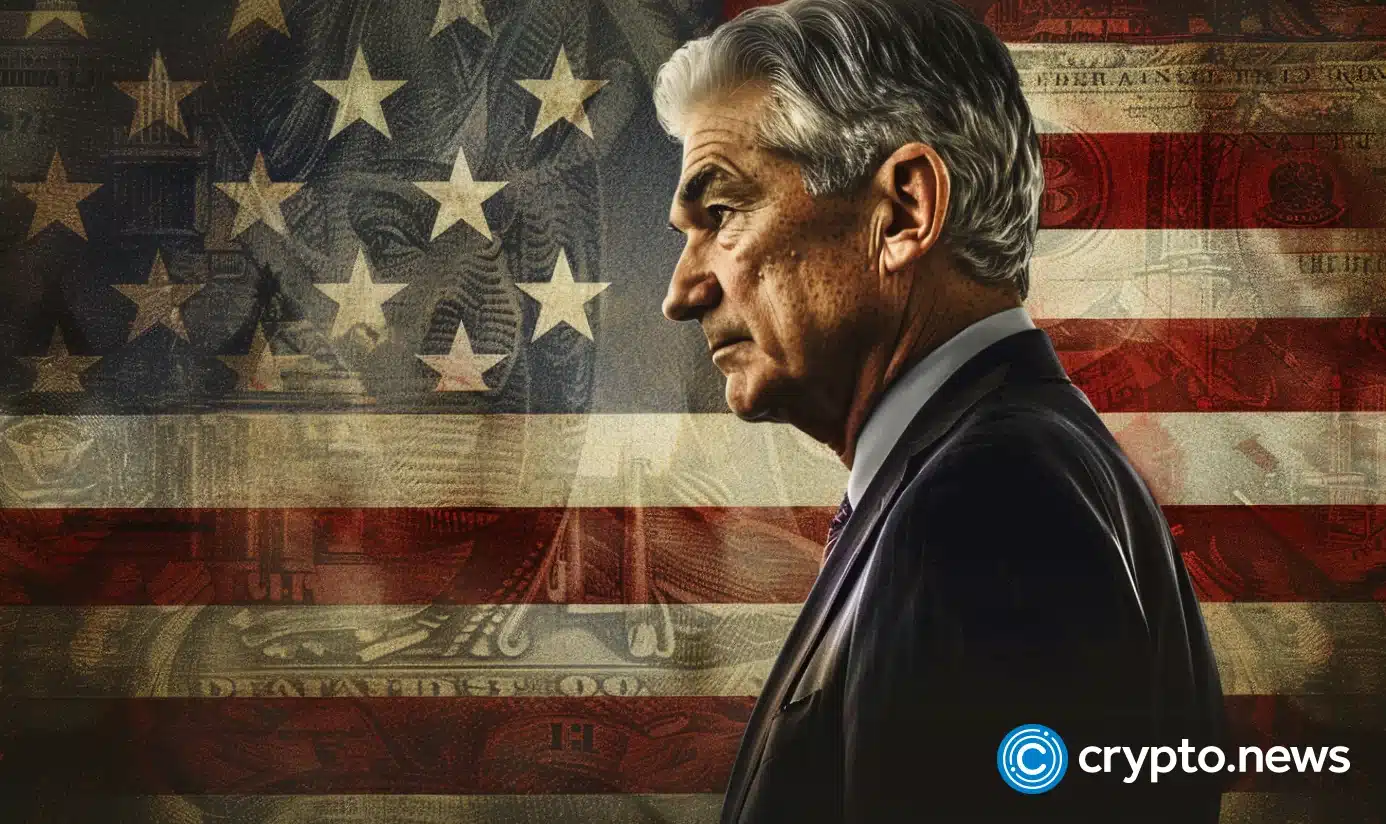

Jerome Powell announced at his final FOMC press conference on April 29 that he will remain on the Federal Reserve Board of Governors past May 15, saying Trump’s legal attacks on the institution had “left me no choice” but to stay until the investigation is resolved.
Summary
- Powell cited the DOJ’s criminal investigation into the Fed’s headquarters renovation and DC Attorney Jeanine Pirro’s public warning that she would “not hesitate to restart” the probe as his reasons for staying on the board.
- The FOMC meeting produced four dissents, the most divided Fed vote since October 1992, with three members wanting the easing bias removed from the statement and one wanting an immediate rate cut.
- Bitcoin dropped from $77,000 to $74,914 following Powell’s announcement, Bitcoin ETFs logged $137.77 million in outflows snapping a nine-day inflow streak, and rate cut odds for 2026 collapsed sharply.
Jerome Powell will stay on the Federal Reserve Board of Governors after his chairmanship ends on May 15, in a decision that would make him the first outgoing Fed chair to remain on the board since Marriner Eccles in 1948. CoinGape reported that Powell made the announcement at his final FOMC press conference, saying: “The things that have happened really in the last three months have, I think, left me no choice but to stay until I see them through at least that long.” Powell said he planned to “keep a low profile” and would not act as a shadow chair once Kevin Warsh is confirmed and sworn in.
Jerome Powell says legal attacks on the Fed are “unprecedented in our 113-year history”
Powell’s stated reason for staying is the DOJ investigation into the Federal Reserve’s headquarters renovation, which produced a criminal probe into Powell’s congressional testimony. DC Attorney Jeanine Pirro closed her office’s probe last week but posted publicly that she would “not hesitate to restart a criminal investigation should the facts warrant doing so.” Powell said he would leave “when the investigation is well and truly over with finality and transparency.” Trump responded by posting that Powell “wants to stay at the Fed because he can’t find a job elsewhere.” Treasury Secretary Bessent said it would be “extraordinary” for an outgoing chair to remain as governor, calling it a breach of tradition. As crypto.news reported, the FOMC voted to hold rates at 3.50 to 3.75% for a third straight meeting, but the four dissents were the real story: three members wanted the easing bias removed from the statement, signaling a hike is as likely as a cut, while Stephen Miran voted for an immediate cut.
Bitcoin falls to $74,900 as the Warsh “Pivot Party” gets cold water
As crypto.news documented, the market entered April 29 pricing in a Warsh-driven pivot narrative, with the assumption that Powell’s departure would clear the path for faster rate cuts. Powell staying on the board, retaining a vote on the 12-person FOMC, and three hawkish dissenters demanding removal of the easing bias collectively broke that thesis in one press conference. Bitcoin fell from $77,000 to $74,914, with $137.77 million in ETF outflows snapping a nine-day inflow streak. Matt Mena of 21Shares said the dissenters “threw a bucket of ice on the market’s pivot party.” As crypto.news tracked, Bitcoin has now fallen after eight of the last nine FOMC meetings, a pattern that continued precisely as analysts predicted entering the day.
Powell’s governor term runs through January 2028, meaning he retains a full vote on rate decisions through Warsh’s first two years as chair. The full Senate confirmation vote for Warsh is expected the week of May 11.
Elon Musk told an Oakland jury that most cryptocurrencies are scams during testimony in his civil trial against OpenAI, marking a notable break from his years as one of the sector’s loudest public boosters.
The Tesla and SpaceX chief made the remark when asked about a 2018 OpenAI plan to raise funds through an initial coin offering (ICO), according to New York Times reporter Mike Isaac.
A Sharp Turn for Crypto’s Most Vocal Backer
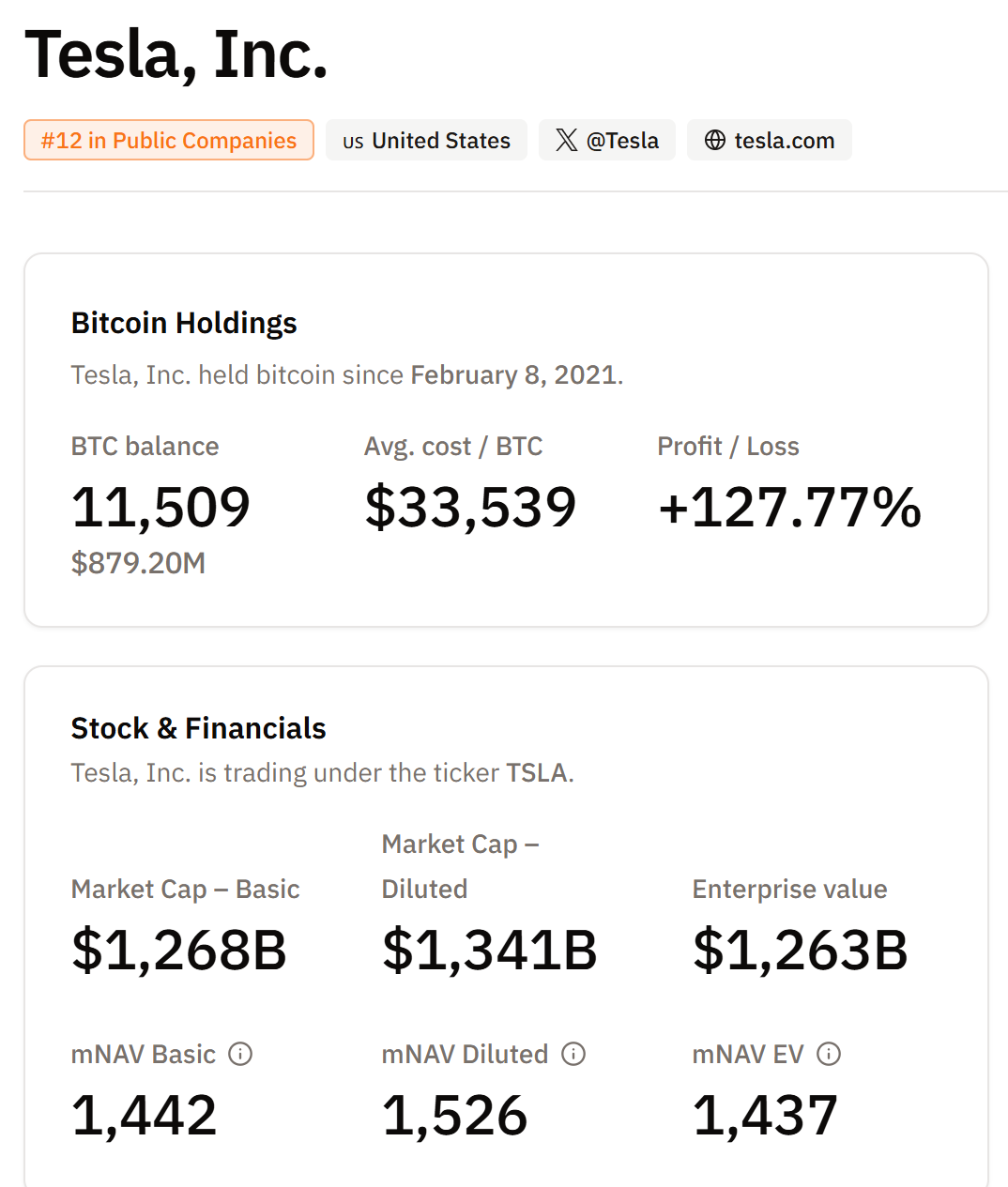
Musk spent the 2020 to 2021 cycle moving markets with both tweets and corporate buys. Tesla acquired $1.5 billion of Bitcoin (BTC) in 2021, one of the earliest balance sheet allocations by a major public company.
His posts on Dogecoin (DOGE) repeatedly pushed the meme token to new highs that same year. The billionaire has also confirmed personal holdings in Bitcoin, Ethereum (ETH), and Dogecoin across past interviews.
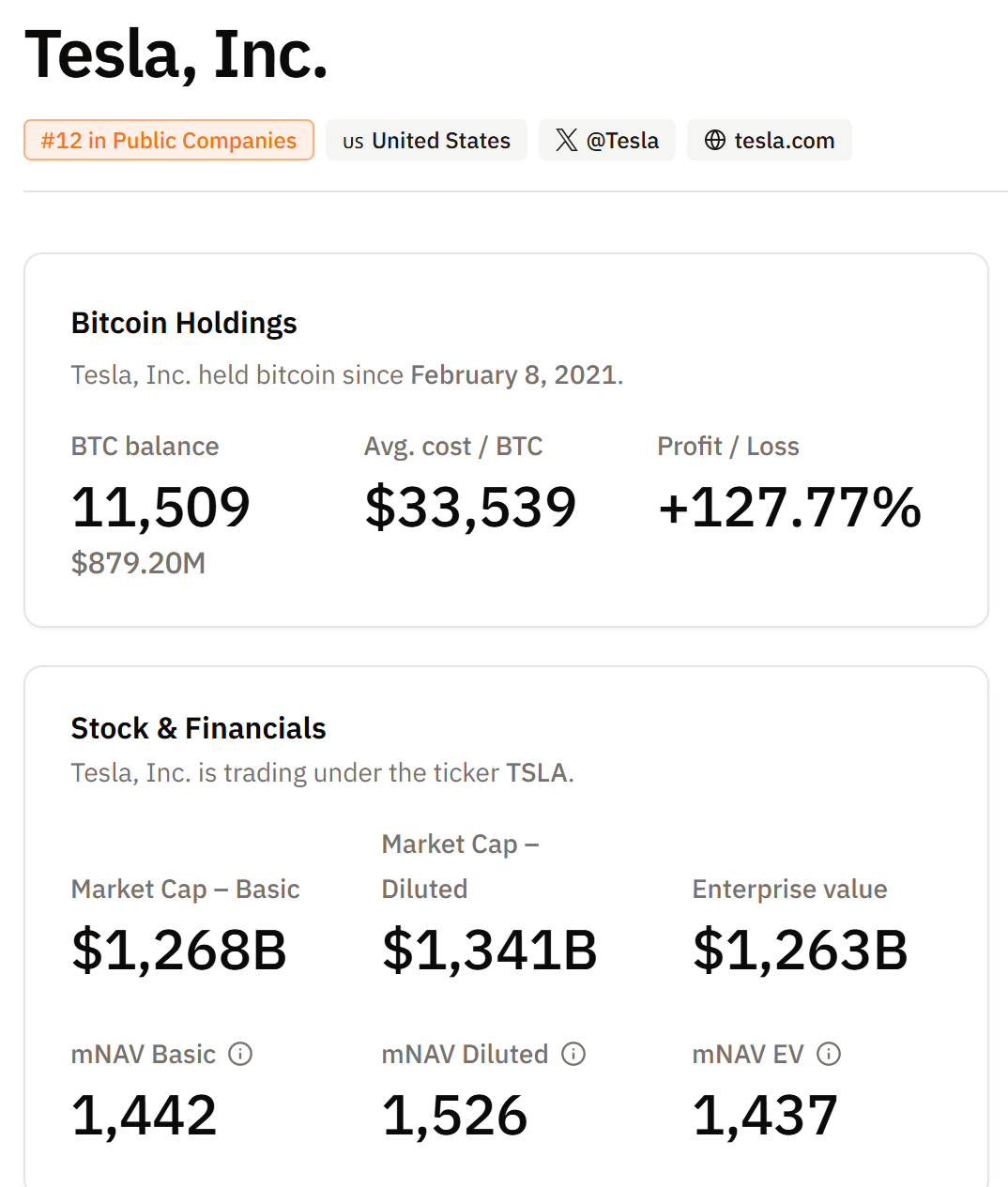
That stance began to cool in 2022, when Tesla sold roughly 75% of its Bitcoin reserve. The company has held the position steady since, retaining 11,509 BTC worth $879 million in Q1 2026 after a $222 million markdown.
Elon Musk Tells Jury Most Crypto Is a Scam as X Rolls Out Cashtags
The courtroom remark coincided with a parallel push at Musk’s social platform. X head of product Nikita Bier said the company was rolling out a web version of Cashtags, a feature that converts $tickers for stocks and crypto into clickable real-time charts and asset-specific post feeds.
Bier framed the tool as a way to position X as a core trading terminal. Bundled controls, including contract address matching and account locks on first-time crypto posters, are intended to filter out fraudulent tokens before they reach users.
The rollout fits a broader X finance push that also includes payments and pilot trading features. Musk’s distinction between merit assets and scams maps directly onto Cashtags’ pitch, separating what the feature wants to surface from what its anti-scam controls are designed to suppress.
ICO Plan Resurfaces in Court
The scam comment surfaced as OpenAI’s scrapped 2018 token proposal entered the trial record.
“In January 2018, mere months after their September 2017 ‘enthusiasm,’ Altman proposed a scamworthy ‘ICO,’ or initial coin offering, that would have seen OpenAI, Inc. sell its own cryptocurrency. Musk shot down this idea too, stating ‘it would simply result in a massive loss of credibility for OpenAI and everyone associated with the ICO,’” Musk’s team claimed.
Musk, an OpenAI co-founder from 2015, alleges the company breached its founding contract by partnering with Microsoft and selling commercial products.
“Some of them have merit, but most of them are scams.”
That language came in response to questions about the early ICO discussion, attributed by Isaac.
OpenAI counters that Musk backed the ICO plan, which would have required spinning out a for-profit subsidiary. Jury proceedings are expected to last about three weeks.
The post Elon Musk Says Most Crypto Are Scams, But X Launches New Crypto Trading Terminal appeared first on BeInCrypto.
Disclosure: This article does not represent investment advice. The content and materials featured on this page are for educational purposes only.
CS2 skin trading trends rise as gamers convert in-game items into crypto assets for liquidity and control.
Summary
- CS2 skins can now be converted into crypto, giving players faster, global, and more flexible access to their value.
- Selling CS2 skins for crypto lets gamers cash out quickly, avoid delays, and take full control of their digital assets.
- Turning CS2 skins into crypto aligns gaming with digital finance, offering speed, ownership, and borderless transactions.
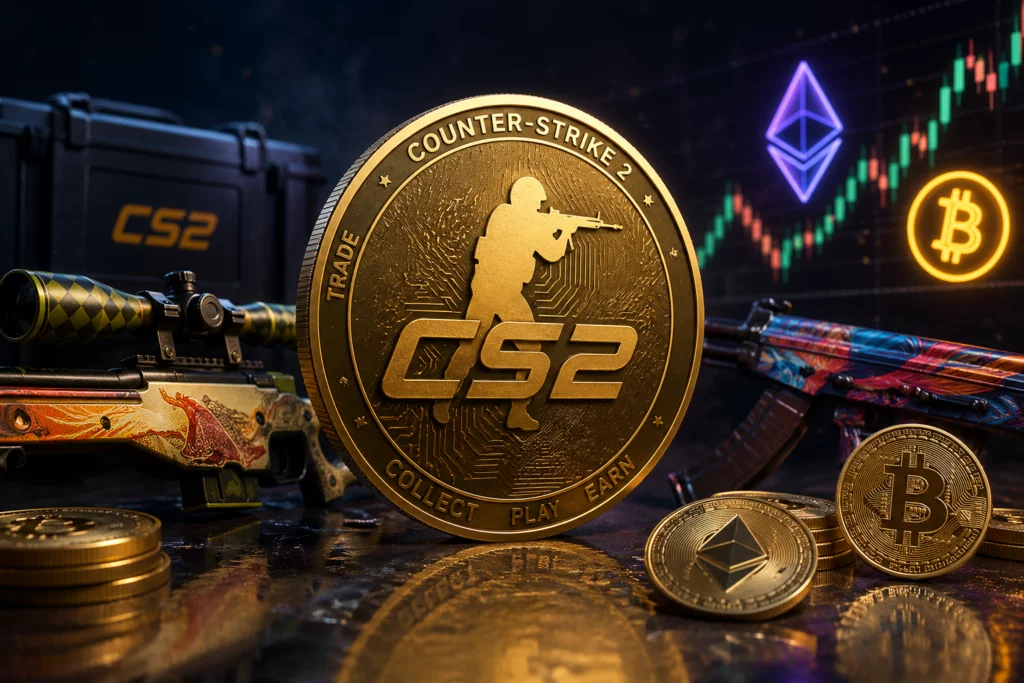
Counter-Strike 2 is the reality for many players, beyond an ordinary shooting game, a skillful merging of tactics and personality. Skins contribute significantly to this character’s total, as they give a chance not only to stand out but also to make a statement in every round. However, skins represent more than just a pretty sight; they carry tangible value that can be converted into a far more versatile form: crypto.
Converting CS2 skins into crypto by selling is rapidly becoming a favorite among gamers seeking full control over their assets. Be it replenishing a collection, withdrawing money, or delving into the world of digital finance, this manual aims to simplify the entire process.
Reasons for selling CS2 Skins to obtain crypto
It’s quite normal for a person to react to the idea of converting in game items to cryptocurrency with bewilderment, as it is a rather intricate matter on the surface. However, it already aligns quite well with the perspective many gamers have on value.
Currently, many gamers resort to methods that let them sell CS2 skins instantly, without lengthy wait times or complicated steps. For that reason, skin trading venues like Tradeit have already begun implementing faster marketplace transactions and smoother player interactions, aligning their operations perfectly with player expectations.
Below are some reasons why crypto is still a fashionable alternative:
- Speed and flexibility: First, don’t wait for a withdrawal to be approved. Most crypto transactions take just a few minutes, so money will be at hand almost at all times.
- Global accessibility: Because crypto is built on a decentralized system, it can be used across borders without many issues. There is just a need for a device capable of operating on the Internet.
- Control over funds: Holding funds at a single exchange platform is a real risk, and users are also vulnerable to the platform’s policies. Whereas, if assets are kept in the user’s own wallet, they have complete control over their financial matters.
- Future potential: From a macroeconomic perspective, players recognize that cryptocurrency is on its way to becoming an integral component of the digital economy; hence, they consider it more than merely a method of receiving payments.
This is an additional means by which players who want to get the most out of all their CS2 facets can stay one step ahead of the competition.
Understanding the value of the skins
It goes without saying that the first step in selling skins is to know their value. Because of the different features, skin prices vary a lot.
Some of the main factors determining price are:
- Rarity: Usually, skins from special collections or rare drops are the ones that carry a higher price tag
- Condition: Typically, factory-new skins fetch a higher price than the worn ones
- Demand: Skins for popular weapons often see more sales
- Visual appeal: Unique patterns or clean finishes greatly add to the attractiveness
Use this as a starting point and compare skins with those on sale across various marketplaces. This way, the seller will gain a good grasp of pricing and steer clear of underselling their products.
A wise gamer always treats their inventory as an investment and is constantly mindful of its value.
Choosing the right marketplace
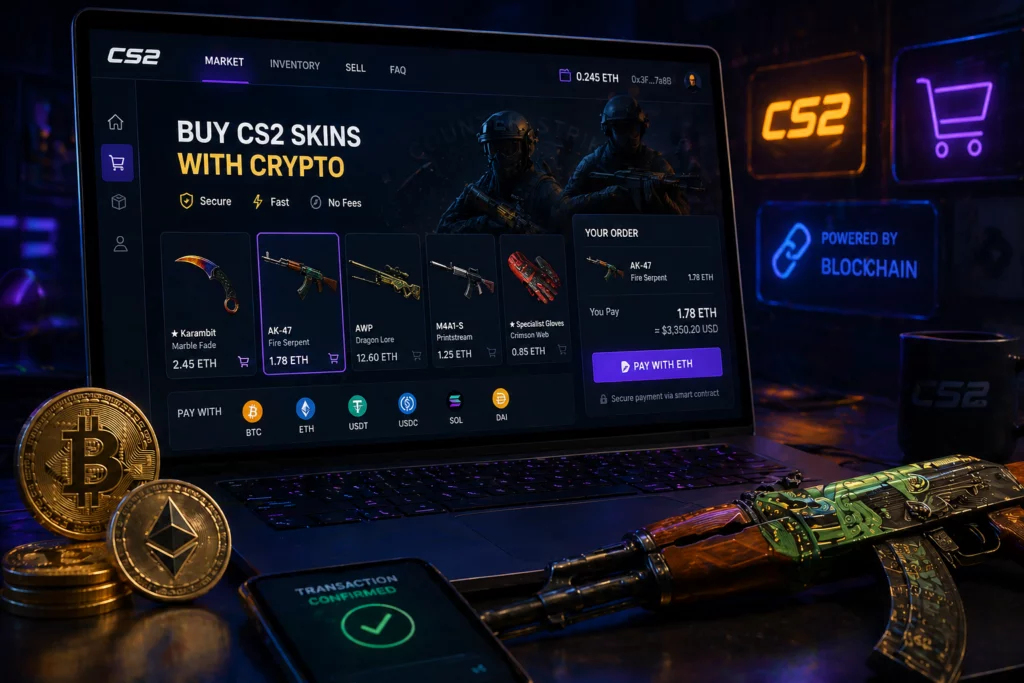
A platform can significantly impact the selling process. Not all marketplaces have the same crypto payout features, for example.
To decide on where to sell, first check out:
- Nice and simple UI: It should be easy and even fun to make a trade
- Quick login: Also, waiting times for the heartbeat of the market closing should be minimized
- Fanatical multiple crypto support: This is a sweet feature to have
- Almost rock-solid reputation: Nobody would want to risk a lot in a shady hypothetical location
In principle, a quality marketplace should be quite similar to an amusement park in that it is fun, fun, and more fun!
Step by step guide to selling skins
After deciding on the platform, implementation will be pretty simple. Here’s how anyone can start:
1. Connect an Account
In general, marketplaces ask to link a Steam account. Through this account, they can see a user’s inventory.
2. Select the Skins to Sell
Look through the stash and pick out skins to sell. In line with the selling goals, choose, for example, skins for liquidation or highly valuable skins.
3. Set or Accept a Price
Listing a price or accepting an instant offer will vary by platform.
- Instant offers are faster
- Custom listings may yield higher returns
4. Confirm the Trade
A trade offer will be obtained via Steam. Make sure everything matches up before hitting the confirm button.
5. Receive Crypto
After the trade is finalized, the crypto will be sent to the wallet right away. Then it’s up to the user wants to do: hold, trade, or convert it.
How to get as much as possible out of one’s sale
Flipping skins could be a lot more profitable than just hitting a “sell” button. Users can significantly improve their outcomes with the right strategy.
Think of these pieces of advice:
- See what’s happening on the market: Prices may go up or down depending on changes, tournaments, and the players interested.
- Make a sale at the right moment: People’s desire for a product tends to increase during major events or when new items are released.
- Don’t do it in a hurry: While quick selling is a comfortable approach, waiting and being patient can eventually yield better results.
- Be orderly: Keep a record of what to purchase and sell to measure progress.
- Go for well known things: Most of the time, commonly used skins are seen as “hot items” and therefore change hands more quickly.
This can be seen as a training aim in CS2. The more someone focuses on small details, the more their output will improve.
Upgrading the experience of CS2
The main purpose of selling skins for crypto should not be solely for earnings. It may also be the way to get to know the game part that is most even a part of a personality.
By having a clever management of items, users will be able to:
- Stay topical with the weapons by rotating skins
- Buy things that are in line with a style of playing
- Remain updated on the ever changing CS2 business
That way, they get more than a game; they’re making a connection to what they are doing. Users don’t only get the satisfaction of winning a match, but also feel like they are going in a direction and achieving the goals set for themselves.
In Conclusion
Counter-Strike 2 is an ever changing world where opportunities keep shifting. One way to update gaming is by mixing it with crypto, and in particular, by selling skins for crypto.
By having the correct attitude and hardly ever putting in the amount of effort, the exchange of the virtual items, in this case, skins, can be converted into more than a casual hobby. Whether the seller intends to get better equipment, step into the crypto world, or just get their hands on a new experience, it is really quite easy and worthwhile.
Keep eyes peeled, get the most recent information, but above all, have fun the rest of the way.
Disclosure: This content is provided by a third party. Neither crypto.news nor the author of this article endorses any product mentioned on this page. Users should conduct their own research before taking any action related to the company.
Crypto World
BNB Stands Strong at $600 with Osaka Mendel Hard Fork on Horizon, Bulls Eyeing a Breakout

Key Insights
- BNB remains resilient around $600 as investors’ attention turns to the Osaka Mendel update and its immediate implications.
- Updates to the network will improve transaction finality and fees, increasing adoption and demand in the long run.
- A double bottom chart formation suggests a positive move once the price crosses above the resistance level at $687.
BNB Maintains Stability Before Network Upgrade
BNB maintains stability above the $600 mark, following a sharp increase that drove prices close to the $640 mark. After this positive price performance, it seems like the market is taking profits, leading to a slight retreat back to the $620-$630 mark. The current price performance can be attributed to the market’s cautious approach before a critical network event that will shape future price trends.
Investors’ focus is currently shifting to the Osaka Mendel hard fork, an upcoming upgrade where node operators will be required to upgrade their systems to stay compatible with the network. Despite the price stability, the current anticipation regarding the network upgrade will drive trading activities in the market.
Network Improvements to Increase Efficiency
The next update will feature a number of updates aimed at increasing the efficiency of the network. One of the updates involves fast finality where transactions will now process close to instantly. The introduction of fast finality is anticipated to have a positive impact on the network in terms of enhancing the user experience and attracting more advanced applications.
Gas limit modifications are set to ensure less congested transactions on the network and stable fees for the users. This update will go a long way in ensuring that the network maintains efficiency despite the increase in traffic. The increased compatibility with mobile devices will also boost security on the network.
Technical Setup Points to Likely Upside
From a technical standpoint, the current technical structure of BNB hints at an impending breakout. Technical chart setups suggest that the currency may be forming a double bottom. For such a pattern to form, the price must break out of the resistance level of $687, the neckline of the setup. Once it happens, BNB will have turned around.
Additionally, some technical signals support the bullish stance, particularly on momentum indicators like MACD and Aroon. The upward trend on these indicators shows rising momentum, suggesting a bullish reversal.
Sentiment Stays Calm
However, despite all these positive signs, sentiment remains measured. Market participants are trying to find a proper balance between their optimism over the upgrade and the potential dangers of market volatility in the coming period. Also, the launch of leveraged trade instruments based on BNB added additional uncertainty.
The key factor supporting the current framework is the $600 support level. The ability to defend this area indicates strong buying interest, but its breakdown will undermine the bull forces and prevent a breakout.
Future Depends on Upgrade Success
As far as future prospects go, BNB will mostly rely on how effectively the upgrade to Osaka Mendel is implemented. In case of successful implementation and high volumes, it might give a trigger for BNB price action to breach important resistance barriers.
If momentum will continue growing as anticipated, then BNB might be ready for an upcoming breakout session. Nonetheless, investors will probably watch developments in order to be able to make their decision.
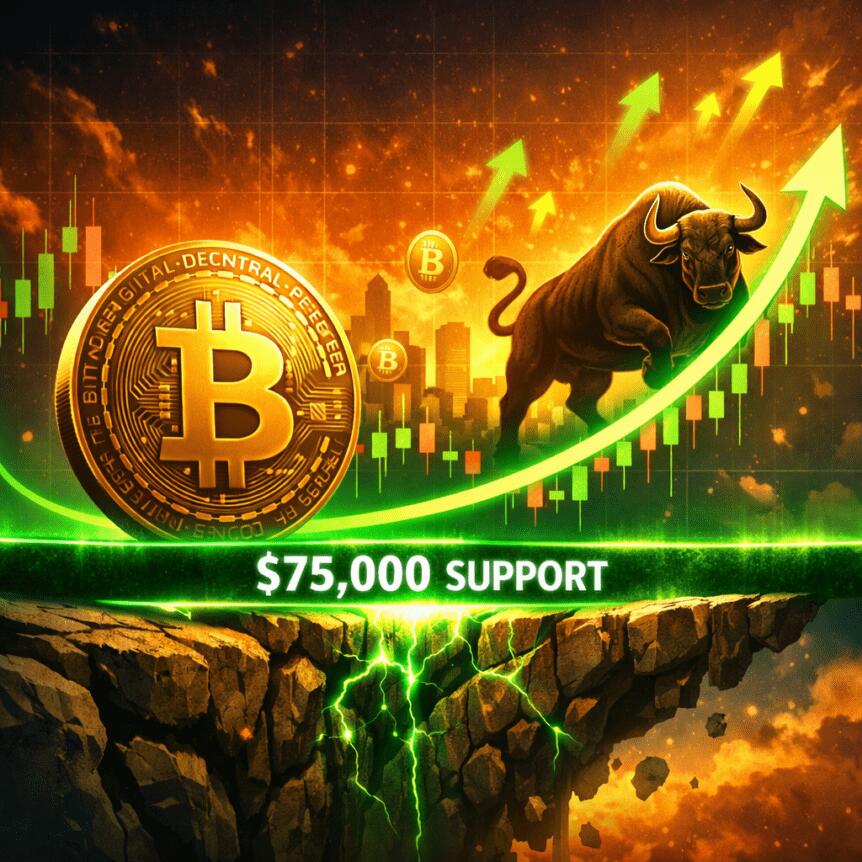
Bitcoin is hovering around $76,350, keeping near a cluster of cost-basis levels that bind different investor cohorts and institutional benchmarks. The convergence of recent buyers’ breakevens with the cost foundation implied by U.S. spot ETFs hints at a delicate near-term support zone around $75,000, even as the market weighs whether the latest price action signals stronger conviction among long-term holders.
Key takeaways
- A tight cost-basis cluster around $75,000 is forming, potentially anchoring near-term price floors as BTC trades near $76k.
- The one-to-three-month holder average cost basis sits at about $75,620, marking a critical pivot point that previously acted as resistance in March and now could support the bounce.
- Bitcoin’s adjusted realized price sits at $72,300, with the market briefly closing above this mark, suggesting a broader base of accretive buying for circulating supply outside seven-year holders.
- US spot Bitcoin ETFs carry an institutional cost basis near $76,700, reinforcing the $75k–$77k band; short-term holders’ cost basis sits higher, near $81,800, which could influence conviction if price holds above it.
- Liquidity dynamics define the risk landscape: roughly $2.69 billion of long liquidations await near $74,000, while about $4.48 billion in short liquidations loom near $80,000. Recent activity cleared nearly $494 million in positions, underscoring how crowded bets sit around the $74k–$80k range.
Cost-basis convergence shapes the near-term floor
Data show a pronounced clustering of cost bases across investor cohorts. The one-to-three-month holder cohort averages about $75,620, a level that previously capped BTC when it dipped to $62,000 from $75,600 in a two-week span in March. Today, that same price region could act as a foothold for new demand, as a large fraction of recent entrants find themselves near break-even as price hovers around the mid-$70k zone.
Beyond the holding period cohorts, Bitcoin’s realized-price metric—which excludes coins held for more than seven years—has moved to $72,300. A close above this adjusted realized price indicates that a meaningful share of circulating supply has been acquired at costs below the current price, a traditional sign of growing conviction among investors who are less likely to sell quickly.
“A truly bullish signal would be for Bitcoin to start building a standard deviation above this average cost basis, pushing more investors into profit and encouraging them to hold due to increased conviction.”
Analysts note that the recent weekly close above the adjusted realized price points to stronger long-term conviction, though the picture remains nuanced. The cost-basis story is being reinforced, in part, by the price environments surrounding U.S. spot-Bitcoin ETFs, which tilt the landscape toward a steady institutional anchor in the $76,000s region.
Institutional baselines and what they imply for sentiment
Positioning around the U.S. spot ETF cost basis sits near $76,700, aligning price action with a wave of institutional accumulation that has characterized parts of the current cycle. Meanwhile, the short-term holder cost base sits higher, near $81,800, a level traders could use as a check against complacency if price maintains its hold above that threshold.
Together, these overlapping cost bases compress around $75,000, creating a framework where both realized and unrealized positions concentrate within a narrow corridor. For traders and fund managers, that means flows around this price can produce outsized moves, given the density of positions in the same neighborhood.
The broader pattern invites readers to watch whether the market can sustain a move above the $75,000 floor long enough to lift more short- and medium-term holders into the green, thereby widening the base of support for a potential new leg higher.
Where liquidity and risk sit in the near term
The derivatives landscape paints a precise picture of risk around the $75,000–$80,000 band. On one side, cumulative long liquidations near $74,000 carry about $2.69 billion at risk, while on the other, short liquidations near $80,000 total roughly $4.48 billion. This dynamic underscores how close price movements around this zone can trigger rapid resets in positions and potentially amplify volatility.
A recent swing between $77,873 and $74,868 cleared about $494 million in positions, highlighting the ongoing churn within high-leverage bets. Market observers note that the pool of high-leverage longs has diminished, while a larger cohort of short liquidations remains above the $80,000 threshold. In short, the $74,000–$80,000 corridor continues to anchor positioning, with cost-basis clustering intensifying sensitivity to incoming flows.
These liquidity contours echo broader market research that suggests investors are debating whether Bitcoin deserves the current price range and whether a breakout could be sustainable. For now, the crowd remains tethered to the mid-$70k zone as a fulcrum for near-term direction.
Related coverage: Most crypto investors believe Bitcoin is undervalued, according to a Coinbase survey. As readers consider the implications for risk appetite and allocation, the ongoing interaction between spot ETF demand, holder cost bases, and the evolving derivatives dynamics will be key to watch in the coming weeks.
This article reflects data and analysis from CryptoQuant and market commentary surrounding the latest price action and on-chain indicators. For readers seeking deeper context, ongoing coverage will monitor how cost-basis clusters evolve as new ETF flows and macro developments unfold.
Investors are advised to monitor whether BTC can sustain price action above $75,000, as this would not only validate the current cost-basis framework but also set the stage for exploring fresh demand from both retail and institutional participants in the months ahead.

Tim Cook and John Ternus at Apple Park.
Courtesy: Apple
On Apple’s first earnings call since the company announced its planned C-suite changes, traders on Kalshi think the company may discuss its creator studio, streaming platform and a fellow megacap tech company’s artificial intelligence model.
Apple is set to report earnings after the bell on Thursday, just over a week since the company announced that longtime CEO Tim Cook will be leaving in September and replaced by senior vice president of hardware engineering John Ternus.
Traders think it’s almost certain that the company will mention on its earnings call China and tariffs, placing odds at 98% and 96%, respectively. But there are other topics that traders are more divided on.
But traders are more uncertain on other topics.
Google’s artificial intelligence model Gemini has a 27% chance to get mentioned. Apple has a deal with Google to implement the model into its Apple Intelligence features, but Apple is also widely viewed by Wall Street as the biggest tech laggard on AI development.
Meanwhile, traders mostly think the company won’t chat about glasses, assigning only a 24% chance. Apple has reportedly been working on designing an AI-supported smart glasses product as a new wearable technology for quite some time, but has yet to make a formal announcement of the development.
Traders also give just a 9% chance the company says fold, folding or foldable. That’s after a report this month that the timeline for the development Apple’s proposed foldable iPhone is delayed. However, a Bloomberg report indicates a planned fall 2026 launch is still on schedule.
Disclosure: CNBC and Kalshi have a commercial relationship that includes a CNBC minority investment.
Crypto World
WLFI Price Prediction at $0.063 After Justin Sun Lawsuit as Pepeto Presale Offers 100x Early Entry
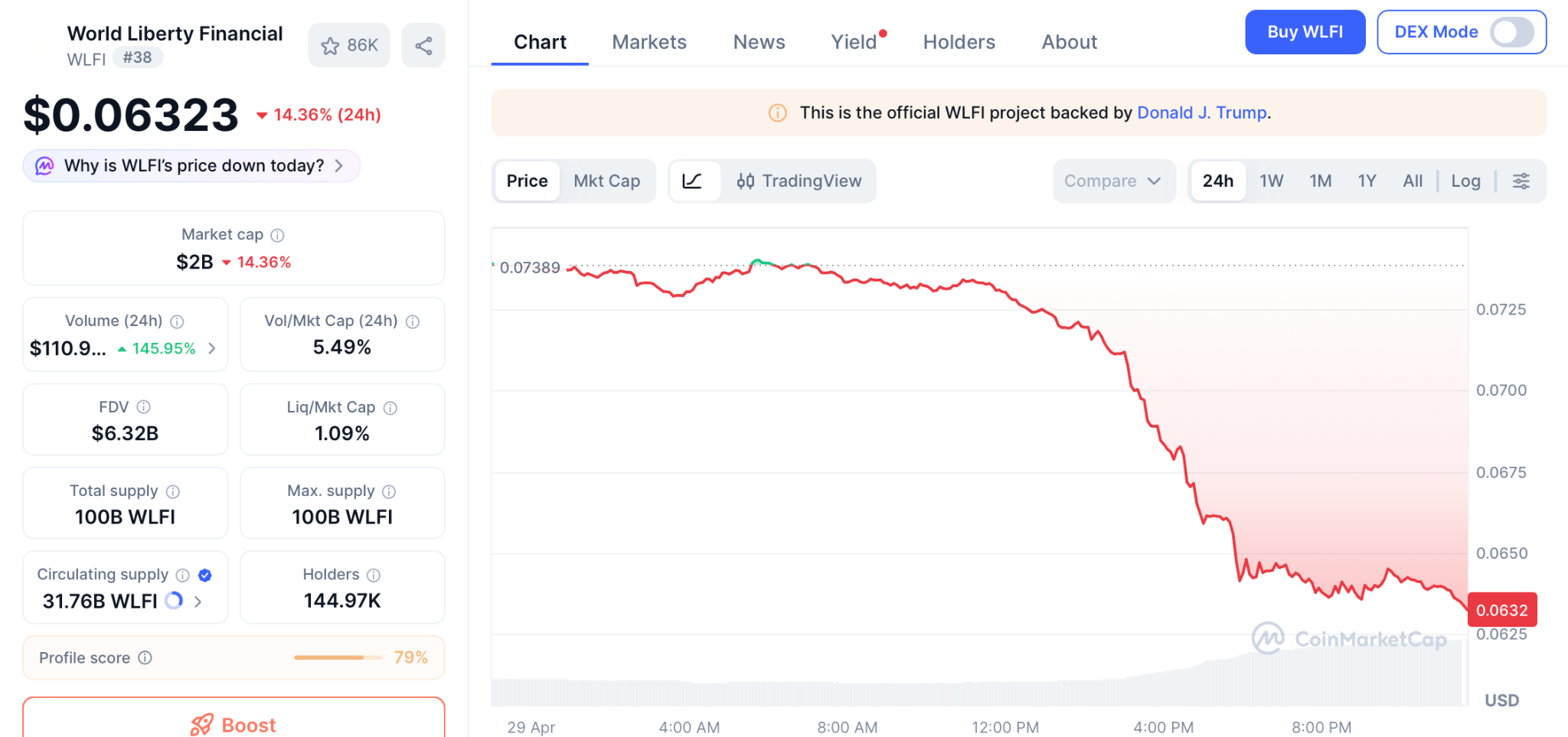
The WLFI price prediction shifted again after Tron founder Justin Sun filed a federal lawsuit against World Liberty Financial on April 22 per CoinDesk, claiming the Trump-backed protocol illegally locked $45 million in WLFI tokens. WLFI holds at $0.063 per CoinMarketCap while the courtroom pressure adds fresh risk to the chart.
Meanwhile, a presale is gaining speed where the return math looks very different. Pepeto has pulled more than $9.66 million, and the 100x gap between presale pricing and an approaching Binance listing is the type of early position worth studying before the bell rings.
WLFI Under Courtroom Pressure After Justin Sun Files Federal Suit on April 22
The complaint filed in federal court on April 22 claims the protocol illegally froze his WLFI position and misrepresented token rights per CoinDesk. The $45 million was committed in 2024 partly on the Trump family connection, and the relationship broke down once Sun turned down additional capital requests. A Senate crypto bill that stalled on April 28 over ethics provisions added regulatory pressure.
WLFI sits at $0.063 with over $39 million in daily turnover per CoinMarketCap. The 4.5 billion token burn proposal removed 4.5% of the 100 billion cap. The lawsuit and regulatory delay land on a float where over 31.7 billion WLFI circulates, leaving the unlock calendar as the biggest variable in any positive WLFI price prediction this year.
How WLFI Recovery Compares to Pepeto’s Presale Math
Pepeto: A 100x Entry Sitting in Plain View Before Binance
When a $45 million backer files a federal lawsuit over frozen tokens, the lesson is clear: infrastructure matters more than political backing. No WLFI price prediction pushing toward $0.20 delivers the math a clean, audited presale offers. Pepeto gives direct access to a working exchange with a cross-chain router and a token risk checker, the exact tools that WLFI was supposed to build but never shipped.
Due to rapid growth, Pepeto has faced attacks on its original domain name. The team launched a temporary domain. Buyers should visit Pepetoswap.com as the current active link.
PEPETO is priced at $0.0000001867 with 420 trillion tokens in the float, and the 100x figure analysts reference goes live the moment Binance order books open. SolidProof cleared the full audit before any sale began, the person who created the original Pepe token leads direction, and a former Binance operations lead runs the exchange.
Staking at 177% APY compounds daily, giving early holders a growing position while everyone else waits. Listing day is close, and once trading starts, this presale price becomes a number on a history chart that nobody can access again.
WLFI Price Prediction: WLFI Targets $0.20 While Pepeto Rewrites the Math on $2,000
World Liberty Financial (WLFI) sits at $0.063, down 78% from the $0.33 all-time high per CoinMarketCap. Community models set the WLFI price prediction near $0.20 by year end, roughly 174% above current price.
A $2,000 position in WLFI at $0.063 returns roughly $5,480 on the $0.20 target. The same $2,000 in Pepeto at $0.0000001867 buys 10.7 billion tokens. A 100x move converts that into $200,000. Even a $0.40 WLFI target caps at roughly $10,960, still 18 times behind what Pepeto lines up.
Conclusion:
The first WLFI buyers who got in during the opening rounds at fractions of today’s price still hold meaningful gains despite a 78% drawdown. That lesson plays out every cycle. Getting in early is where the returns are made, and anyone who paid the $0.33 peak is underwater while anyone waiting for the lawsuit to clear will carry the same late-entry cost cautious buyers always carry.
Pepeto is sitting at that exact early stage right now. The presale is live, the price has not moved, and every tool on the platform already works. The 100x distance between presale and listing mirrors what rewarded WLFI’s first participants, except this project has a cleared audit, shipped products, and a Binance listing approaching. Once listing day turns this round into a closed chapter, the wallets that acted hold returns that late buyers will chase for the rest of the year.
The entry showing on Pepeto right now is the number that stretches a small position into the kind of outcome this entire market was built to deliver, and that number holds only until listing day lands. Visit Pepetoswap.com to enter the presale before the listing opens.
Click To Visit Pepeto Website To Enter The Presale

Warning:
The Pepeto project is growing fast, and due to its rising reach, bad actors have launched attacks on the official website. The temporary domain is now « PepetoSwap DOT com » in place of « Pepeto DOT io » until further notice.
Users should always check they are on the correct URL before connecting wallets or sharing personal information.
FAQs
What does the WLFI price prediction say about reaching $0.20 after the Justin Sun lawsuit?
The WLFI price prediction points to $0.20 by year end, a 174% move above the current $0.063 level, with Justin Sun’s April 22 federal suit over locked tokens adding legal pressure per CoinDesk. The 4.5 billion token burn remains active while WLFI trades 78% below its $0.33 all-time high.
Why is Pepeto a stronger early entry than WLFI at $0.063 right now?
Pepeto is stronger because the presale at $0.0000001867 offers 100x distance to listing while WLFI’s best case of $0.40 caps at roughly 5x from $0.063. The project raised $9.66 million with 177% APY staking, a SolidProof-audited platform, and a Binance listing on the near-term calendar.
Disclaimer: This is a Press Release provided by a third party who is responsible for the content. Please conduct your own research before taking any action based on the content.


Man held after pedestrian dies in horror crash

A Future Leader in Education and Service

How US Stock Markets Rewarded Google But Punished Meta After Q1 Earnings

Manchester United reach agreement with Casemiro over contract clause amid transfer speculation

US brings back mandatory military draft registration

Steven Gerrard disagrees with Gary Neville over ‘shock’ Chelsea and Arsenal claim | Football


-

 Tech3 days ago
Register Renaming | Hackaday
-

 Fashion6 days ago
Weekend Open Thread – Corporette.com
-
 Crypto World5 days ago
Hyperliquid $HYPE Rally Builds Momentum as AI Sector Enters Prove-It Phase
-

 Politics3 days ago
Drax board avoid their own AGM, accused of greenwashing & environmental racism
-

 Business7 days ago
Patterson-UTI Energy, Inc. (PTEN) Q1 2026 Earnings Call Transcript
-
 Sports4 days ago
IPL 2026: Ruturaj Gaikwad registers slowest fifty of the season, enters all-time unwanted list | Cricket News
-

 NewsBeat5 days ago
LK Bennett closes all stores after entering administration
-

 Crypto World7 days ago
Michael Saylor says BTC winter is over. Market analyst disagrees, says bitcoin was in a pullback
-

 Fashion2 days ago
Kylie Jenner’s KHY Enters a New Era with ‘Born in LA’
-

 Tech4 days ago
Why Blue Badges Disappeared From Toyota Hybrids
-

 Tech3 days ago
Images of Samsung’s rumored smart glasses have leaked
-
 Entertainment5 days ago
Mariah Carey Slams Deposition Claims In Brother’s Lawsuit
-

 Business2 days ago
Most Commercial Energy Audits Miss the Real Losses
-
 NewsBeat7 days ago
Trump threatens to review UK’s claim to Falkland Islands and punish Nato allies over Iran war disagreement
-
 Business6 days ago
Jeanine Pirro announces closure of Federal Reserve building cost probe
-

 Business3 days ago
(VIDEO) Charlize Theron Climbs Times Square Billboard to Promote New Netflix Thriller ‘Apex’
-

 Tech5 days ago
Microsoft to roll out Entra passkeys on Windows in late April
-

 Crypto World2 days ago
CFTC’s AI will review U.S. crypto registration applications, chairman tells CoinDesk
-
 Crypto World6 days ago
Nvidia (NVDA) Stock Jumps 5% as Intel Earnings Ignite Semiconductor Rally
-

 Tech5 days ago
OpenAI’s Sam Altman apologizes for not reporting ChatGPT account of Tumbler Ridge suspect to police
You must be logged in to post a comment Login