

Crypto World
OCC Chief Faces Democratic Pressure Over Crypto Trust Charter


Regulatory scrutiny of crypto licensing intensified as lawmakers scrutinized the handling of a national bank trust charter application tied to World Liberty Financial, a Trump-family affiliated crypto venture. During a House Financial Services Committee hearing on the oversight of prudential regulators, OCC Comptroller Jonathan Gould—nominated by Donald Trump—faced questions about potential conflicts of interest and the potential influence of political considerations on licensing decisions. The hearing underscored ongoing debates over how closely regulatory actions should align with political and familial ties in the context of the evolving U.S. crypto framework.
Representative Gregory Meeks of New York pressed Gould on World Liberty’s connections to foreign governments and to the Binance exchange, arguing that the company’s co-founders include members of the president’s family. World Liberty Financial had submitted an OCC charter application in January, prompting significant Democratic pushback over perceived conflicts of interest. At issue was whether the OCC would apply the same standards to World Liberty as it does to other applicants seeking a national trust charter, which affects the regulatory treatment of certain crypto-services providers.
Meeks asserted that World Liberty’s actions “actively line the pockets of the president’s family,” urging the OCC to demonstrate that its decision would be in the public interest and not influenced by political considerations. Gould and Meeks spoke past one another at times, with the lawmaker urging that the OCC head be held to prove he was acting on behalf of the American people rather than serving as a political intermediary for the Trump family. Gould responded that political pressure had been the only pressure he perceived from lawmakers outside the Senate.
Even before this hearing, the OCC had already approved or conditionally approved several national trust charter applications from crypto companies, signaling a growing regulatory pathway for the sector. Names cited included Coinbase, Ripple, BitGo, Circle, Fidelity Digital Assets and Paxos. The OCC’s openness to national trust charters has been framed as a way to provide regulated access to stable operations and banking-like services for crypto firms, albeit amid intense regulatory and policy scrutiny. Gould began his tenure in July 2025, having been confirmed by the Republican-dominated Senate along party lines. In January, shortly after World Liberty’s application was submitted, Gould stated the agency would be “apolitical and nonpartisan” in its review process. Massachusetts Senator Elizabeth Warren, who had also urged pausing the review, argued that the approvals appeared to be directed at “seemingly ineligible companies,” potentially contravening federal banking laws.
World Liberty’s case sits within a broader trend of tightly watched efforts to integrate crypto firms into traditional banking-style oversight through national trust charters. In parallel, crypto exchange Kraken’s parent company, Payward, filed a similar application with the OCC in May, highlighting the ongoing push among several market participants to obtain the same regulatory treatment as established banks for certain crypto activities.
Key takeaways
- OCC Comptroller Jonathan Gould asserted that there was no presidential instruction directing or pressuring him to approve or favor World Liberty Financial’s national trust charter application.
- The House Financial Services Committee hearing spotlighted perceived conflicts of interest linked to World Liberty’s Trump-family ties, with lawmakers urging equal regulatory scrutiny for the charter application.
- The OCC has previously approved or conditionally approved a slate of national trust charter applications from major crypto firms, including Coinbase, Ripple, BitGo, Circle, Fidelity Digital Assets, and Paxos; Kraken’s Payward also pursued similar oversight.
- Regulatory debate centers on whether national trust charters create a lighter or different set of banking requirements for crypto firms, and how those standards align with federal banking laws and AML/KYC expectations.
- The broader policy environment remains contested, with calls for enhanced anti-corruption provisions and tighter enforcement, as conservative and progressive lawmakers weigh the costs and benefits of expanded crypto bank-charter access.
- Two key committees advanced the CLARITY Act in the Senate, signaling movement toward a comprehensive digital-asset market-structure framework, with timelines discussed for passage in the coming months; observers note the importance of aligning U.S. policy with global standards.
Regulatory neutrality, charters, and the path forward
The hearing showcased how the OCC’s decisions on chartering crypto firms sit at the intersection of regulatory design, political accountability, and market integrity. The concept of a national trust charter—allowing crypto firms to offer certain services with banking-like protections—continues to be debated for its practical implications, including licensing standards, consumer protection, and systemic risk considerations. Critics warn of potential conflicts of interest when a governing official has personal or familial ties to an applicant, while proponents emphasize the need for clear, consistent regulatory frameworks that enable compliance-oriented firms to operate with adequate oversight.
From a compliance and enforcement perspective, the case underscores several critical issues for crypto firms and financial institutions alike. First, licensing pathways such as national trust charters shape the regulatory runway for crypto-service providers, with implications for AML/KYC requirements, consumer disclosures, and supervisory regimes. Second, the treatment of politically connected entities raises governance questions about independence, transparency, and the risk of regulatory capture. Finally, the ongoing movement toward a formalized digital asset market structure—exemplified by the CLARITY Act process—could redefine the boundary between crypto activities and traditional banking, influencing licensing, custody, settlement, and cross-border operations.
According to Cointelegraph, the CLARITY Act’s consolidation in the Senate represents a deliberate step toward a unified framework for digital assets, which could affect how banks, exchanges, and crypto firms navigate licensing, custody, and interoperability requirements. The administration’s stated aim for summer passage, as cited in reporting, signals a potential shift in legislative momentum and regulatory tempo, with significant implications for compliance programs and cross-border activities. As the regulatory landscape evolves, institutions must monitor not only domestic policy developments but also how international standards—such as MiCA and U.S. enforcement actions—intersect to shape risk, governance, and operational resilience.
Looking ahead, the central issue remains how regulators will balance innovation with risk management and consumer protection, while ensuring transparent governance and consistent application of standards across entrants to the charter framework. The coming months will be pivotal for determining whether the United States can sustain a robust, enforceable regulatory regime that accommodates crypto-native business models without compromising integrity or market stability.
Closing perspective: ongoing congressional scrutiny, evolving licensing standards, and the CLARITY Act’s trajectory will define the U.S. regulatory posture for crypto firms and their access to traditional banking rails. Stakeholders should watch how enforcement priorities and governance practices adapt to these developments, as policy choices will reverberate through licensing decisions, cross-border operations, and institutional compliance programs.

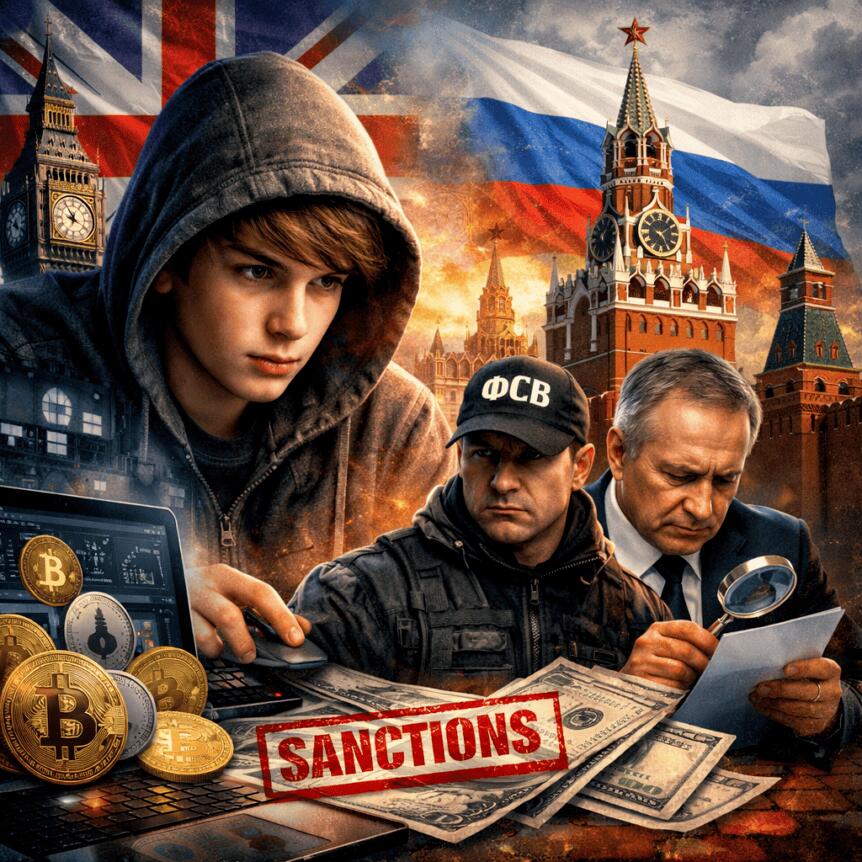
Alexander Browder, the son of high-profile anti-corruption advocate Bill Browder, says he is being targeted by Russia after publishing findings that link the ruble-pegged stablecoin A7A5 to sanctions circumvention tied to Moscow’s war in Ukraine. Browder, who runs the Global Cryptocurrency Laundering Database, disclosed on X that his work has led to what he describes as sanctions by an authoritarian regime.
According to Browder, his March report alleged that A7A5 was backed by deposits from Promsvyazbank and used to bypass Western sanctions. He has framed his investigation as part of a broader effort to expose how digital assets can facilitate illicit finance, a theme echoed by policymakers and researchers tracking sanctioned flows in crypto markets. Browder’s work has drawn attention from outlets such as The Times, which cited him as potentially the youngest person sanctioned by Russia for exposing crypto-laundering activity.
Separately, CertiK’s analysis of A7A5 highlighted its on-chain footprint, noting that the ruble-stablecoin processed more than $110 billion in transactions. EU officials had sanctioned A7A5 in October 2025, accusing the token of enabling sanctions evasion. The story underscores how a single stablecoin can become a focal point for sanctions policy and enforcement, even as it remains usable on several exchange platforms in practice.
The broader regulatory backdrop in Russia is shifting as lawmakers push for tighter control over digital assets. In April, the State Duma advanced a bill that would criminalize unlicensed crypto services and require registration with the central bank. If enacted, the proposal, titled “On Digital Currency and Digital Rights,” could ban unlicensed crypto platforms starting in July 2027, marking a significant tightening of the country’s crypto regime.
Key takeaways
- Alexander Browder reports that Russia sanctioned him after exposing alleged links between the ruble-backed A7A5 stablecoin and sanctions evasion.
- Browder’s March findings claim A7A5 was backed by deposits from Promsvyazbank and used to circumvent Western restrictions.
- CertiK reports A7A5 processed over $110 billion in on-chain transactions, highlighting the scale of activity around the stablecoin.
- EU sanctions targeting A7A5 were issued in October 2025, with the UK and the US also taking measures against the token ecosystem.
- Russia’s crypto-regulation push could criminalize unlicensed digital-asset activities and require central-bank registration, potentially banning unlicensed platforms from July 2027.
Russia’s evolving stance on crypto and enforcement leakage
The intersection of sanctions enforcement and crypto innovation is increasingly fraught for policymakers. The Browder case—whether it reflects a broader pattern of sanction enforcement or a targeted action against an individual—highlights how digital assets can complicate diplomacy and policy. While A7A5 has been described as “one of the most prevalent issues facing the West” by Browder, the stability coin remains operational across multiple venues even as it faces legal restrictions and sanctions pressure. This tension underscores a central question for investors and builders: how will sanctions regimes translate into concrete compliance requirements across exchanges, issuers, and wallets that touch cross-border flows?
On the regulatory front, Russia’s forthcoming framework could reshape the risk landscape for foreign and domestic exchanges seeking to operate in or with Russia. The proposed legislation would not only raise compliance costs but also formalize a gatekeeping role for the central bank in crypto activities. If the July 2027 ban timeline holds, platforms would need to adjust product offerings, KYC processes, and geographic reach to align with a more centralized regulatory schema. For traders and institutions, the potential for criminal penalties adds another layer of deterrence around unregistered services and cross-border trades.
The broader global context remains unsettled. While the EU has already sanctioned A7A5, global enforcement remains uneven and depends on bilateral cooperation and information sharing. The pending Russian bill, if enacted, could create a more uniform environment for domestic actors but might also drive some activity underground or toward offshore venues with looser oversight. In the near term, observers will be watching not just sanctions announcements but practical enforcement actions, licensing outcomes, and the evolution of centralized registries for digital assets in Russia and allied jurisdictions.
For readers, the next chapters will likely hinge on: whether Russia’s central bank can articulate a workable licensing regime for digital assets, how exchanges respond to tightened registration requirements, and whether global partners coordinate to curb sanctioned crypto flows without stifling legitimate innovation. The Browder case serves as a reminder that crypto-enabled financial activity remains at the center of policy debates, even as the technology itself matures and markets adapt.
Ethereum has been under intense selling pressure due to losing the 100-day moving average, which was only reclaimed in April after months. The recent breakdown below a key demand zone has pushed ETH to fresh local lows near $1.75K, while both technical and on-chain indicators continue to favor the bears. Unless buyers reclaim the lost levels quickly, the current structure suggests that further downside cannot be ruled out.
Ethereum Price Analysis: The Daily Chart
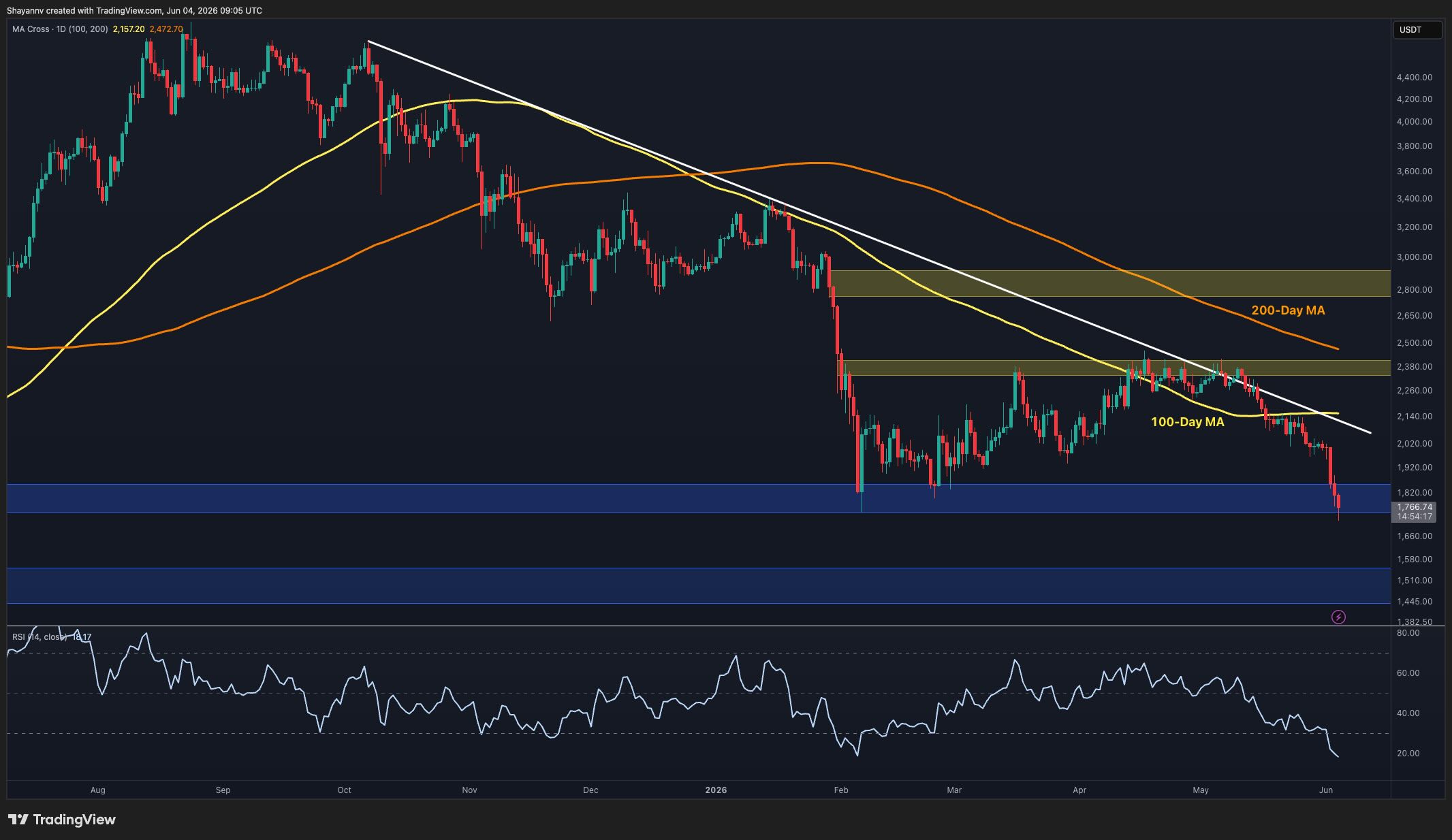
On the daily timeframe, ETH continues to trade below a well-defined long-term bearish trendline that has been in place since the reversal from the $4.8K cycle highs. The trendline remains intact and has repeatedly capped recovery attempts throughout the decline. It has also rejected the price in May, which has initiated the current aggressive drop.
More importantly, Ethereum is now trading below both the 100-day and 200-day moving averages, currently located around $2.15K and $2.40K, respectively. The inability to reclaim either moving average confirms that the broader market structure remains bearish.
The price is now breaking below the $1.8K support zone, which represents a significant technical development. This area had acted as a market floor since February. With the price now trading beneath that level near $1.76K, the former support is turning into immediate resistance.
If sellers maintain control, the next major demand zone is located around $1.5K, which represents the next visible daily support area. A deeper correction could expose that region in the coming weeks. On the upside, bulls would first need to reclaim the $1.8K zone before targeting the resistance cluster just above $2k. Until then, everything on the daily chart is extremely bearish.
ETH/USDT 4-Hour Chart
The 4-hour chart paints an equally weak picture. ETH broke below a descending channel that had contained price action throughout May, signaling an acceleration of the bearish trend rather than a bullish breakout. Alongside the channel breakdown, Ethereum sliced through the $2K support area and is losing the critical $1.8K zone.
The price is currently testing the lower boundary of the $1.75k-$1.8k demand area. While this region could trigger a short-term bounce due to its historical significance, the overall structure remains bearish unless ETH can recover above the $1.8k mark and consolidate.
The 4-hour RSI is also deeply oversold near 20. This reflects aggressive downside momentum. Although bearish exhaustion may be developing, there is currently no confirmed bullish divergence visible on the chart, and therefore, there is no sign pointing to even a small bounce that could stabilize the market for a while.

Sentiment Analysis
The Ethereum Taker Buy/Sell Ratio provides additional evidence that market participants remain heavily skewed toward selling activity. This metric compares aggressive buy orders against aggressive sell orders across exchanges, with readings above 1 indicating stronger buying pressure and readings below 1 signaling seller dominance.
The ratio has fallen sharply to roughly 0.96, marking one of the lowest readings on the chart and extending a persistent decline that began after the April-May recovery attempt. The sustained positioning of the metric below the neutral 1.0 level suggests that market takers continue to favor sell orders, reinforcing the bearish trend visible on both the daily and 4-hour charts.
For the outlook to improve, the ratio would ideally need to reclaim and sustain levels above 1.0, indicating that aggressive buyers are returning to the market. Until that occurs, the futures positioning data continues to support the broader bearish narrative and suggests that downside risks remain elevated despite increasingly oversold technical conditions.

The post Ethereum Price Analysis: Is $1.5K ETH Inevitable After Latest Breakdown? appeared first on CryptoPotato.
Crypto World
ChangeNOW Wins Best Digital Assets Fintech at the BeInCrypto Institutional 100 Awards 2026
[PRESS RELEASE – KINGSTOWN, St. Vincent and the Grenadines, June 4th, 2026]
ChangeNOW, a non-custodial crypto management platform extending beyond exchange services with a full suite of B2B solutions for businesses in the digital asset space, is pleased to announce that it has been named “Best Digital Assets Fintech” at the BeInCrypto x Proof of Talk Institutional 100 Awards 2026. The award, which honors the businesses influencing institutional cryptocurrency adoption worldwide, was given out at the actual ceremony, which took place live at Proof of Talk, the Louvre Palace in Paris.
About the BeInCrypto Institutional 100 Awards
The BeInCrypto x Proof of Talk Institutional 100 is one of the most credible and rigorous independent media award programmes in the digital assets space. The awards, which cover 24 competitive categories across six pillars: Regulation & Governance, Capital Markets & Infrastructure, Retail to Crypto Bridge, Digital Assets, Tokenization & On-Chain Finance, and Enterprise Blockchain, are assessed using a two-stage process that includes blind scoring by an independent Expert Council of leaders in traditional finance and digital assets after proprietary quantitative screening using on-chain data and company disclosures.
With a global audience of 7–11 million monthly readers across 26 languages and a B2B community of over 20,000 verified professionals (70% of whom operate at C-level) a win at the BeInCrypto Institutional 100 carries significant weight across the digital finance industry.
ChangeNOW received the Best Digital Assets Fintech nomination in the Retail to Crypto Bridge category alongside Revolut, a European neobank. This award recognizes platforms that provide exceptional service at the intersection of traditional finance and the crypto economy.
ChangeNOW the Best Digital Assets Fintech Winner

ChangeNOW initially is a non-custodial cryptocurrency exchange that was established in 2017 with the goal of making it easy and accessible for everyone to trade digital assets. It serves eight million people globally and supports over 1500 digital assets.
Today its robust infrastructure spans both retail and business use cases. Alongside its web platform, iOS and Android apps, and NOW Wallet for self-custody, ChangeNOW offers a range of B2B products including NOWPayments for crypto payment processing, NOWNodes for blockchain infrastructure access, NOW Custody for digital asset storage, and a business API that enables wallets, fintech platforms, and financial services to integrate exchange functionality directly into their products.
Over the years, ChangeNOW has processed millions of transactions and built a client base that includes both individual clients and commercial partners across the digital asset space.
Industry Recognition and Company Response
Winning the Best Digital Assets Fintech Award goes way beyond just picking up a new industry title. Getting this nod from BeInCrypto matters immensely to the team. The BeInCrypto team’s endorsement indicates that the ChangeNOW platform’s speed and institutional standing truly stand out in a competitive market because of their robust reputation for editorial independence and strict grading.
These kinds of milestones don’t happen by coincidence. This win is the direct result of serious work from the whole ChangeNOW crew, alongside the trust of millions of clients who choose the platform over the alternatives. It keeps them right where they want to be: acting as a reliable fintech bridge connecting regular folks to the wider digital asset economy.
“This recognition means a lot to our team because it reflects the trust our clients place in us every day. From the beginning, our goal has been to make crypto simple, accessible, and reliable for everyone, regardless of their experience level. We’re honoured to be recognised by BeInCrypto and see this award as both a celebration of what we’ve achieved and a motivation to keep raising the standard for the industry,” says Elena Dali Bey, Senior Business Development Manager at ChangeNOW.
Planned Platform Developments
Rather than pause to applaud, ChangeNOW is taking advantage of this momentum to accelerate the extension and improvement of its service offerings. The organization intends to outperform the changing needs of both regular traders and institutional clients. In the following months, work will focus on several key initiatives:
- Leading the way with RWA Integration and Asset Expansion: The platform is rapidly expanding its listings of supported assets and market pairs, with a strong strategic focus on the growing Real-World Assets (RWAs) sector, as well as new networks and tokens. This expansion is intended to provide maximum trading flexibility and deep liquidity for highly sought-after, tokenized physical assets that are difficult to access through traditional centralized channels.
- Strategic Ecosystem Activation via the Fast-Track Program: Moving far beyond standard API infrastructure, the Fast-Track program is designed to enhance marketing strategy and visibility. It helps wallets start monetizing from day one. This proven framework includes pre-built infrastructure and comprehensive marketing support, such as targeted placement in crypto media outlets, partner posts on ChangeNOW’s social media channels, and participation in Tier-1 conferences with more than fifteen thousand attendees.
- Elevating the Client Experience: A number of product improvements, including more advanced trading tools, personalization features, and interface redesigns, are in the works. Reducing the gap between what a client wants to achieve and what the platform makes simple is the same objective shared by all of them. Depending on who is using it, that matters in different ways. It implies less guessing in the beginning for someone who is new to cryptocurrency. It implies fewer stages between concept and execution for seasoned traders.
ChangeNOW views this award not as a destination, but as a benchmark. The team remains committed to the values that earned this recognition: transparency, accessibility, and relentless improvement.
About ChangeNOW
Founded in 2017, ChangeNOW is a non-custodial crypto management platform that makes it easy to swap more than 1500 digital assets quickly and without unnecessary complexity. The platform is used by over eight million people globally. ChangeNOW has a robust B2B infrastructure that includes NOWPayments for crypto payment processing, NOWNodes for access to blockchain infrastructure, NOW Custody for institutional-grade digital asset storage, and a business API that lets wallets, fintech platforms, and exchanges plug swap functionality directly into their own products. The intent behind the suite is practical: most companies building in crypto share a common problem, they need core infrastructure that would take years to develop independently. ChangeNOW’s B2B offering is designed to remove that constraint.
The post ChangeNOW Wins Best Digital Assets Fintech at the BeInCrypto Institutional 100 Awards 2026 appeared first on CryptoPotato.

US Securities and Exchange Commission (SEC) Commissioner Hester Peirce argued that publishing open-source blockchain and DeFi code should not automatically subject software developers to federal securities regulations, addressing a long-standing question about liability in decentralized finance. Speaking at the IC3 Blockchain Camp at Princeton University, Peirce emphasized that open-source software publication is often a First Amendment-protected activity and should not automatically render developers as securities intermediaries simply because others use their code.
“Many blockchain projects involve publishing open-source software, which is generally a protected activity under the First Amendment,” Peirce said, underscoring a view that decentralized protocols can operate without traditional intermediaries. She added that responsibility for securities law violations should generally rest with the individuals who engage in unlawful conduct, not the developers who publish code that others may utilize.
Peirce’s remarks reflect a broader stance within the SEC that questions the applicability of centralized regulatory constructs to decentralized networks. She warned against extending rules designed for traditional intermediaries—such as brokers, dealers, exchanges, clearinghouses, transfer agents, investment advisers, and investment companies—to blockchain infrastructure that can function independently of those entities.
“The SEC’s rulebook is full of intermediaries: brokers, dealers, exchanges, clearinghouses, transfer agents, investment advisers and investment companies,” she said. “As a result, we see the crypto world teaming with brokers, dealers, exchanges, clearinghouses, transfer agents, investment advisers, and investment companies.”
However, Peirce cautioned that these questions are not a blanket rejection of regulation but a call to calibrate the scope of securities laws to the realities of decentralized systems that serve purposes beyond securities transactions. She emphasized the need to distinguish between publication of open-source code and active participation in unlawful conduct within securities markets.
Source: Cointelegraph
Key takeaways
- The publication of open-source blockchain and DeFi code should not automatically trigger securities intermediary status for developers, according to Commissioner Hester Peirce.
- Open-source software publication is argued to be a First Amendment-protected activity in the context of decentralized networks.
- Regulatory considerations should avoid blanket application of centralized intermediary rules to distributed protocols with non-traditional models of operation.
- The SEC is moving away from “regulation by enforcement,” signaling a more nuanced approach to how existing securities laws apply to digital assets and decentralized systems.
- Recent SEC signals—broker-dealer interface guidance and strategic planning through 2030—underline continued regulatory focus on digital assets, while recognizing the unique structure of decentralized networks.
Open-source governance, liability, and the regulatory lens
Peirce’s remarks center on a practical tension: developers who publish open-source code can enable widely used protocols without participating in traditional market intermediation. In her view, liability for securities-law violations should trace to unlawful acts by individuals or entities rather than to the mere distribution of software. This stance aims to reduce unnecessary regulatory friction for developers who contribute to open ecosystems, while preserving accountability for bad actors who misuse technology.
The discussion highlights a broader policy question: how to balance innovation and investor protection in an environment where code and networks operate without conventional gatekeepers. For institutional researchers and compliance teams, the core implication is a potential narrowing of the risk surface for open-source contributors, coupled with a continued emphasis on identifying and addressing actual illicit activity within the system.
Regulatory alignment and the broader shift in oversight
Peirce’s comments align with a broader SEC recalibration away from what some officials have described as “regulation by enforcement.” Since its inception, the Crypto Task Force has explored how existing securities laws should apply to digital assets and decentralized infrastructure, seeking clearer boundaries between what constitutes a security and what falls outside traditional regulatory purview.
In parallel, SEC staff recently issued guidance addressing broker-dealer registration questions for certain user interfaces. The guidance suggested that some front-end websites and software interfaces that merely provide access to decentralized protocols may not fall within the traditional definition of a broker. That development signals a more nuanced approach to how compliance obligations are mapped onto user experiences that connect investors with crypto networks.
At the same time, the SEC has signaled that digital assets and blockchain technology will remain a central focus in the coming years. In its draft Strategic Plan through fiscal 2030, the agency highlighted blockchain and crypto assets as technologies with the potential to reshape financial markets—an articulation that reinforces ongoing regulatory attention and investment in regulatory clarity for firms operating in the space. As noted by Cointelegraph coverage of related developments, the plan framed these technologies as capable of transforming America’s financial infrastructure.
Related: Paxos becomes first crypto firm to win SEC clearing agency registration — highlighted in coverage that underscores how the SEC is leaning into specialized, regulated infrastructure providers within the crypto ecosystem.
According to Cointelegraph, these signals reflect a pattern: regulators are seeking to craft precise guardrails that protect investors without stifling innovation, particularly in areas where decentralized protocols operate without traditional intermediaries. The evolving regulatory toolkit includes clearer criteria for what constitutes a broker or intermediary, while recognizing that front-end interfaces may not always bear the same regulatory heft as the underlying protocol.
Implications for firms, banks, and compliance programs
The evolving stance has practical implications for crypto firms, exchanges, banks, and institutional investors. Compliance teams must monitor the regulatory boundary lines between open-source development and active market intermediation, ensuring procedures focus on identifying unlawful activity rather than penalizing legitimate software publication. This stance could affect licensing approaches, oversight frameworks, and cross-border regulatory strategies as firms navigate divergent national standards in a multi-jurisdictional environment.
In practice, this means: developers may benefit from clearer protections when contributing to open-source code, while businesses must remain vigilant against actual securities violations and ensure robust KYC/AML controls, appropriate disclosures, and risk monitoring for user interactions with decentralized protocols. The SEC’s ongoing dialogue with industry participants is likely to yield additional clarifications on where to draw the line between software publication and regulated activity.
What to watch next
Observers should monitor how the SEC translates these high-level considerations into concrete policy guidance for developers, platforms, and infrastructure providers. Key questions include how future enforcement actions would delineate permissible open-source contributions from activities that cross into regulated territory, what constitutes sufficient governance for decentralized networks, and how cross-border differences will be harmonized with U.S. policy aims. As the SEC advances its strategic priorities through 2030, the balance between safeguarding investors and fostering innovation remains a central point of focus for regulators, market participants, and compliance professionals alike.
Closing perspective: the evolving dialogue around open-source development and regulatory coverage will shape how crypto ecosystems grow, how firms structure their governance and licensing, and how supervisors enforce rules in a technology-neutral, risk-based manner.


Anthropic says its own AI is now accelerating AI development, an early signal of recursive self-improvement. Internal data shows Claude authored more than 80% of the code merged into the company’s production systems as of May 2026.
The disclosure came from the Anthropic Institute, which paired previously unreported internal data with public benchmarks. The findings point toward a future where AI systems could design and build their own successors.
Anthropic Data Points to Recursive Self-Improvement as Claude Writes 80% of Its Code
Before its in-house coding agent rolled out in February 2025, Claude wrote only low single-digit percentages of merged code, the report states. That share now exceeds 80%.
The output gain is steep. Anthropic’s typical engineer merged eight times as much code per day in the second quarter of 2026 as in 2024. The human now directs and reviews while Claude does the writing.
Follow us on X to get the latest news as it happens
The Judgment Gap is Closing
Anthropic runs the same test on every model. It hands the AI code that trains a small model and asks it to run faster. Claude Opus 4 averaged a 3x speedup in May 2025.
By April 2026, its Mythos Preview model reached 52x. A skilled human needs four to eight hours to hit 4x.
Research judgment is harder to automate. Shown a session before a researcher took a wrong turn, Mythos Preview picked a better next step 64% of the time, up from 51% for Opus 4.5 in November 2025.
“Claude-written code was somewhat worse than human-written code at Anthropic in late 2025, is roughly at parity today, and we expect it to be strictly better within the year,” read an excerpt in the report.
Why it Matters Beyond Anthropic
The company frames the trend as a possible path to recursive self-improvement, where AI builds its own successor.
It cautions that Claude has not yet shown the research taste to choose which problems matter most.
The stakes are commercial too. Anthropic recently submitted a confidential IPO registration and has built its brand around safety.
Faster development also feeds the broader crypto industry AI pivot, where autonomous AI agents in crypto execute trades and on-chain tasks.
The curve continuing to bend or flattening into an S-curve will decide how soon, if ever, AI starts building its own successor.
Elsewhere, reports also indicate that Anthropic’s sector rival, OpenAI, is seeing remarkable progress with its own AI, ChatGPT, said to be registering growth of its own.
Subscribe to our YouTube channel to watch leaders and journalists provide expert insights
The post Anthropic Admits AI Is Learning to Build Better AI Faster Than Expected appeared first on BeInCrypto.
More than two-thirds of accounts banned by Anthropic for policy violations over the last year used AI to help them prepare for cyberattacks, such as writing malware, according to the AI firm.
Anthropic said on Wednesday that between March 2025 and March 2026, out of 832 accounts that it examined for violating its policies, 560 accounts were used in this way.
The data reflects an alarming global trend — that AI is increasingly being used to carry out mass cyberattacks. In April, the value of crypto stolen in hacks surged to $629.7 million, the highest since February 2025, which some analysts linked to the widespread use of AI.
Source: Anthropic
Manuel Aráoz, the founder of the crypto security platform OpenZeppelin, said on May 27 that he considered “all of DeFi unsafe” due to AI models’ ability to identify smart contract vulnerabilities.
While the data shows that most of the AI use is in the preparation phase of an attack, Anthropic said it has also started to be deployed “deeper in the attack life cycle,” with 6.5% of the banned accounts using AI to assist with “lateral movement” — referring to techniques a cyberattacker uses after gaining initial access.
“These sorts of ‘post-compromise’ techniques used to be restricted to actors with the technical knowledge to carry them out,” Anthropic said. “Our investigation shows that AI can now be made to perform these activities on behalf of less sophisticated actors.”
AI also increased the threat level of attackers. Anthropic classified a third of accounts, or 33%, as “medium risk or higher” in the first six months of its analysis, but that figure nearly doubled to 56% in the second six-month period of its study.
The type of threat posed by AI-powered hackers was detailed by Google researchers last month. The researchers found what they believed was the first-ever case of AI being used to develop a zero-day exploit, which allowed hackers to bypass the two-factor authentication of an unnamed “popular open-source, web-based system administration tool.”
Related: AI guardrail removals raise questions over limits of open-source model regulation
It added that AI can now undertake highly technical tasks for attackers, and there is “little correlation between the skill of a threat actor and how many techniques they use,” a metric that traditionally measured an attacker’s risk level.
Anthropic said in some cases, such as one in November, a Chinese state-sponsored group carried out an attack where an AI model worked autonomously, where it conducted an exploit, stole credentials and made decisions with a human making an input at “key moments.”
“These are precisely the behaviors we expect to see much more of as AI agents become more capable,” it said.
Anthropic is set to roll out its AI model Mythos in the coming weeks, the company’s large language model that has concerned analysts due to its powerful cybersecurity capabilities that found over 10,000 major vulnerabilities in widely-used software.
Magazine: AI-driven hacks could kill DeFi — unless projects act now

Strategy, the largest corporate holder of Bitcoin, recorded the largest unrealized loss on its BTC holdings of over $10 billion in paper value. This reflects a 17% decline in the value of its position after years of steady accumulation.
The loss comes amid a broader market downturn as Bitcoin crashed to around $61,000 today. The apex coin is now down about 28% year-to-date, marking its weakest level since February.
Strategy Logs $10.47B Paper Loss
The company’s latest portfolio snapshot shows total invested capital at about $63.87 billion against a current valuation of $53.4 billion. This leaves a gap of about $10.47 billion in unrealized losses, alongside a smaller realized loss linked to recent portfolio activity. The figures highlight the continued pressure on its Bitcoin-heavy balance sheet after years of accumulation.
That pressure has also coincided with a notable change in its long-standing approach to Bitcoin holdings. The firm sold 32 BTC at an average price of $77,135 per coin, marking its first departure from a previously consistent no-sell stance.
According to a filing with the Securities and Exchange Commission, the sale took place between May 26 and May 31 and generated about $2.5 million. The proceeds are expected to support preferred stock distributions, including cash dividend obligations.
Broader market impact is also visible in the company’s equity performance. Strategy stock (MSTR) has declined about 77% from its peak, reflecting sensitivity to Bitcoin’s price movements and balance sheet exposure.
Over the same six-year period of sustained Bitcoin accumulation, the S&P 500 gained roughly 116%. This contrast underscores a widening performance gap between traditional equity benchmarks and firms with concentrated Bitcoin exposure.
Holding Through the Downturn
Executive Chairman Michael Saylor built the company’s Bitcoin strategy in 2020 by converting corporate reserves into digital assets as an inflation hedge. The firm maintains that it will continue holding BTC despite losses, with its strategy focused on long-term exposure rather than short-term stability.
Market observers say the unrealized loss highlights how Bitcoin price swings directly affect corporate balance sheets tied to digital asset exposure. They remain divided on whether the strategy amplifies volatility compared with diversified portfolios during extended downturns.
The post Strategy Sees Its Largest Ever Unrealized Loss at Over $10 Billion appeared first on CryptoPotato.
Crypto World
Michael Saylor Calls Bitcoin Selloff an AI Rotation as MicroStrategy Sits $10 Billion Underwater
Michael Saylor conceded that the recent Bitcoin selloff reflects a rotation of capital toward AI rather than weakness in the pioneer crypto itself.
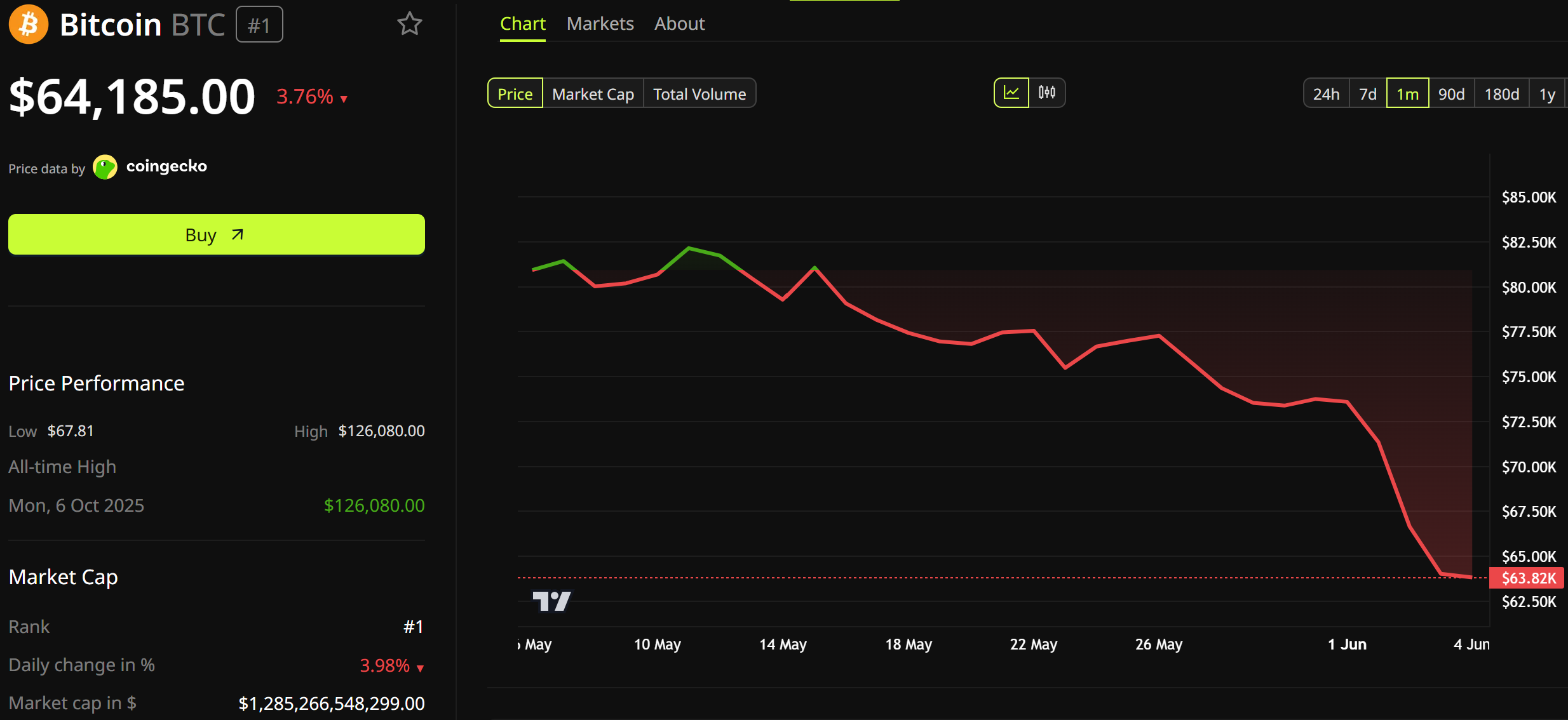
He pointed to roughly $4 billion in Bitcoin ETF outflows since May 14, with the king of crypto trading near $64,000 at the time, down about 4% on the day and nearly 49% below its October 2025 record.

Michael Saylor Reframes the Bitcoin Selloff
Saylor argued that capital markets are absorbing enormous sums to fund AI infrastructure. He put the figure at about $400 billion over six months across data centers and chips.
Analysts peg 2026 capital budgets at the largest US tech firms above $600 billion. That scale gives his rotation argument some footing.
He cast the ETF redemptions as temporary repositioning, not a structural problem. MicroStrategy holds 843,706 Bitcoin at an average cost near $75,702, per Strategy’s record Bitcoin holdings.
That average now sits well above the market price. With Bitcoin near $64,000, the 843,706 coins are worth about $54 billion against a cost basis near $63.9 billion.
That leaves MicroStrategy about $10 billion underwater on the largest corporate Bitcoin treasury. The loss is unrealized, yet it pressures a stock that trades as a leveraged proxy for the token.
The strain is already visible. A June 1 filing shows Strategy sold 32 BTC to fund preferred-stock dividends, its first sale since 2022. The move was small, yet it showed those obligations now drawing on the same balance sheet.
“Capital markets are funding the AI buildout at historic scale: ~$400B over 6 months. Bitcoin ETFs have seen ~$4B of outflows since May 14, pressuring $BTC. This is a capital rotation, not a Bitcoin impairment. Volatility creates opportunity,” Michael Saylor indicated.
Follow us on X to get the latest news as it happens
The Dot-Com Echo
The framing carries an irony, give Michael Saylor rode the same dot-com wave that once broke his company.
MicroStrategy peaked at $333 on March 10, 2000, the day the Nasdaq Composite also topped out. The stock then fell from $260 to $86 on March 20, a one-day drop above 60%.

That restatement erased about $66 million in revenue and turned reported profits into losses. Saylor and two executives later paid roughly $11 million to settle fraud charges, without admitting wrongdoing.
Analysts at PFR Capital now explore a possibility where Saylor could rattle markets again.
“In March 2000, MicroStrategy…changed its revenue recognition method…investors started doubting the revenue, profits, accounting quality, and so on of other companies. What happened after that, everyone knows. So you could say MicroStrategy single-handedly crashed the entire market. 26 years have passed. Will MicroStrategy be able to replay its market-crashing magic? Let’s wait and see,” PFR Capital’s Jayson Hu posed.
The parallel is imperfect, however, since the 2000 collapse stemmed from accounting. The current bet rests on transparent, on-chain purchases.
Still, leverage and concentration leave MSTR shareholders exposed to sharp swings.
Competing Reads on the Outflows
However, not everyone shares Saylor’s calm. CNBC’s Mad Money host Jim Cramer weighed in as the selling spread. He had touted doomed “new economy” stocks days before the 2000 top.
“Saylor suboptimal move roiling Crypto. Some wags pondering it was only up in the 90s because of Saylor… Seems extreme but it is all i hear,” he noted.
Bloomberg analyst Eric Balchunas described the stretch bluntly, while noting lifetime ETF inflows still top $55 billion. May marked the heaviest Bitcoin ETF outflows of 2026.
The split reflects a broader trend, with hedge funds rotating away from Bitcoin as AI narratives draw liquidity.
The post Michael Saylor Calls Bitcoin Selloff an AI Rotation as MicroStrategy Sits $10 Billion Underwater appeared first on BeInCrypto.


Visa and stablecoin infrastructure company Brale are piloting settlement using SBC, a U.S. dollar-backed stablecoin issued by Brale, on the Canton Network — the permissioned-but-privacy-preserving blockchain built by Digital Asset for regulated financial institutions. The two companies announced… Read the full story at The Defiant
The first week of June has split DeFi in two. Whale flows, total value locked, and sharp price moves point to three DeFi tokens and their respective projects to watch, where one is running hot, and two are bleeding.
This time, the smart-money signal and the price action mostly agree.
Hyperliquid (HYPE)
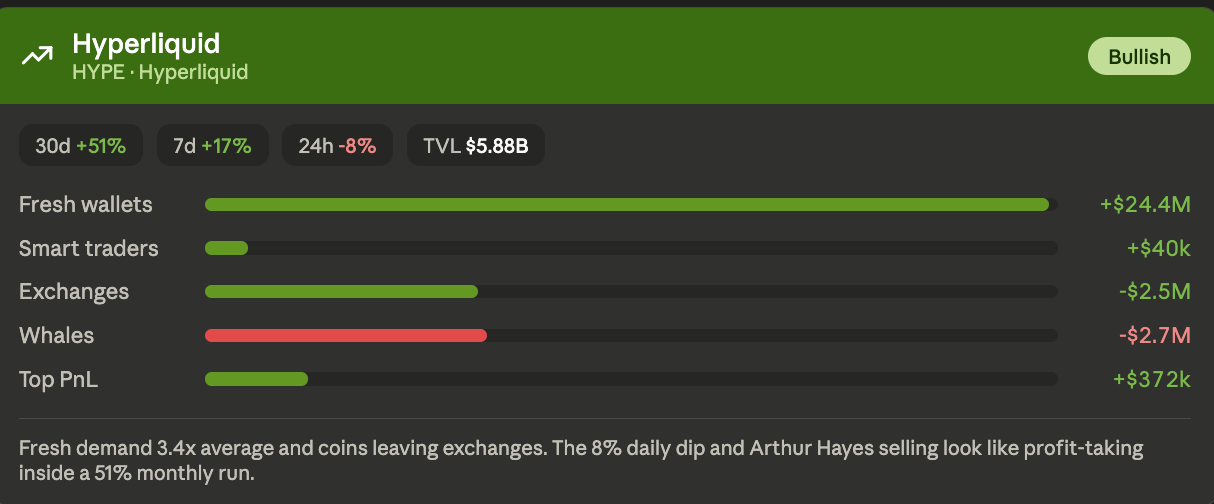
Hyperliquid is the week’s clear winner. HYPE is up about 17% over seven days and roughly 51% over the past month, even after an 8% pullback in the last 24 hours.
Want more token insights like this? Sign up for Editor Harsh Notariya’s Daily Crypto Newsletter here.
The whale flows explain the strength. Fresh wallets added $24.4 million, running 3.4 times their normal pace, and about $2.5 million in HYPE left exchanges. Coins leaving exchanges usually point to holders settling in rather than preparing to sell.

The fundamentals match. Hyperliquid total value locked (TVL), the dollar value of assets deposited in a protocol, climbed from about $5.52 billion in late May to about $5.88 billion now.

Whales did trim about $2.7 million, and Arthur Hayes was among the sellers. With TVL still rising, that reads as profit-taking inside a strong run rather than a top.
Aerodrome (AERO)
Aerodrome, the largest decentralized exchange on Base, is the mirror image. AERO, its DeFi token, fell 6.85% on the day and about 22% over the past month.
The whale flows are mixed rather than clean. Fresh wallets added about $17.3 million, but that ran below their usual pace, while top profit-takers trimmed roughly $222,000. The bigger tell is exchange deposits stacking up, which often points to sell pressure ahead.

The trend shows up in the fundamentals too. Aerodrome TVL has drained from about $501 million in January to about $312 million now.

Annualized incentives near $165 million also outrun revenue around $52 million, so the protocol pays out more than it earns.
Jupiter (JUP)
Jupiter is the most interesting case, because the project and one of its core tokens are pulling in different directions. JUP, the governance token, dropped about 15% in 24 hours. Yet the protocol itself is growing. TVL is up from about $2.34 billion in April to $2.51 billion, with zero incentive spending.

The selling concentrates in JLP, a separate DeFi token that represents a share of the Jupiter Perps liquidity pool. JLP holders deposit a basket of assets and act as the house against perpetual traders.
They earn most of the perp fees but absorb the pool’s market risk. Whales exited JLP at 14.7 times their normal pace, sending a part of $24.9 million to exchanges.

Here is the link between the two. JLP and JUP are both Jupiter tokens, but they do different jobs. JLP funds the perps exchange, and JUP lives off the fees the exchange generates. So, money fleeing JLP and the JUP price are connected at the source.
When whales pull $24.9 million out of JLP, they are backing away from Jupiter’s biggest fee engine.
Fewer backers means a weaker engine, and a weaker engine means thinner fees for JUP. So the JLP exit and the 15% JUP drop point the same way. They are one story about Jupiter, not two.
The fee and TVL numbers still look healthy for now. But if the JLP exit keeps running this hot, the fees behind JUP will be next to weaken.
The post 3 DeFi Tokens to Watch as One Jumps 50% and Two Bleed in June appeared first on BeInCrypto.

Teen Canadian amateur Aphrodite Deng in contention after Round 1 at U.S. Women’s Open

Huge DEATH WICK Is Coiling Up For XRP…We Wont Get a Chance Like This AGAIN! Clarity Act Is HERE!

(VIDOE) Taylor Swift and Travis Kelce Hire Renowned Indian Designer Rishi Patel for Wedding



-

 Tech7 days ago
Waymo dominates autonomous vehicle registrations as Tesla trails behind
-

 News Videos7 days ago
This is BROKEN! INSANE 5x MONEY CAR WASH WEEK! The NEW GTA Online UPDATE Today! (GTA5 New Update)
-
 Tech6 days ago
SpaceX just won a second Golden Dome contract. This one is $4.16 billion.
-

 Business3 days ago
Jade Biosciences, Inc. (JBIO) Discusses Positive Interim Results From JADE101 Phase I Healthy Volunteer Study and Development Plans Transcript
-

 News Videos6 days ago
SHE IS KILLING XRP!!! WATCH URGENT AND ACT FAST
-
 NewsBeat6 days ago
FIRST NIGHT REVIEW: Take That bring the Circus back to life in spectacular sun-soaked style
-

 Business6 days ago
Is the Spurs Phenom Already Better Than Prime Diesel?
-
 Crypto World6 days ago
CFTC Has Approved the First Regulated Bitcoin Perpetual Contract in the U.S.
-

 Sports2 days ago
French Open 2026 results: Alexander Zverev beats Rafael Jodar and will play Jakub Mensik in semi-finals
-

 Politics6 days ago
The House | Inside Andy Burnham’s Makerfield Campaign: “Nobody Thinks This Is In The Bag”
-
 NewsBeat6 days ago
Novak Djokovic v Joao Fonseca LIVE: French Open latest scores and results after Jannik Sinner’s shocking collapse
-
 Entertainment6 days ago
Weak ‘Supergirl’ Box Office Tracking Amid Milly Alcock Backlash
-

 Tech3 days ago
CryZENx Releases Fresh Playable Content Deep Inside Jabu-Jabu for His Ocarina of Time Remake
-

 Entertainment7 days ago
Maddox Jolie-Pitt Legally Requests to Drop Brad’s Surname
-
 Crypto World6 days ago
Snowflake (SNOW) Stock Rallies on Strong Q1 Results and AI Product Growth
-

 Business6 days ago
Demand Conditions Improve In Chemicals Sector In April 2026
-
 Entertainment6 days ago
One of the Greatest Sitcoms of All Time Shoots Up Apple TV’s Charts 11 Years Later
-
 Crypto World6 days ago
MicroStrategy Moves $30 Million in BTC to Coinbase Prime: Is the Bitcoin Sell-Off Already Here?
-

 Tech6 days ago
This Week In Security: Ubiquiti Fixes, And FreeBSD Joins The Club You Don’t Want To Join
-
 Entertainment6 days ago
Bruce Willis’ Generosity Resurfaces Amid His Dementia
You must be logged in to post a comment Login