

Crypto World
OpenAI Adds Kalshi World Cup Odds to ChatGPT Search

Sam Altman’s OpenAI is bringing prediction market data to ChatGPT, giving World Cup fans a new way to track match predictions.
OpenAI has started displaying Kalshi’s prediction market odds for FIFA World Cup matches in ChatGPT search results, according to a report by The New York Times.
The integration had not been publicly announced at the time of publication. Kalshi declined to comment to Cointelegraph, while OpenAI did not immediately respond to a request for comment.
The move reportedly marks OpenAI’s first known partnership with a prediction market platform, highlighting the growing interest among technology companies in incorporating market-based forecasts into consumer products.
Market odds enter AI search experience
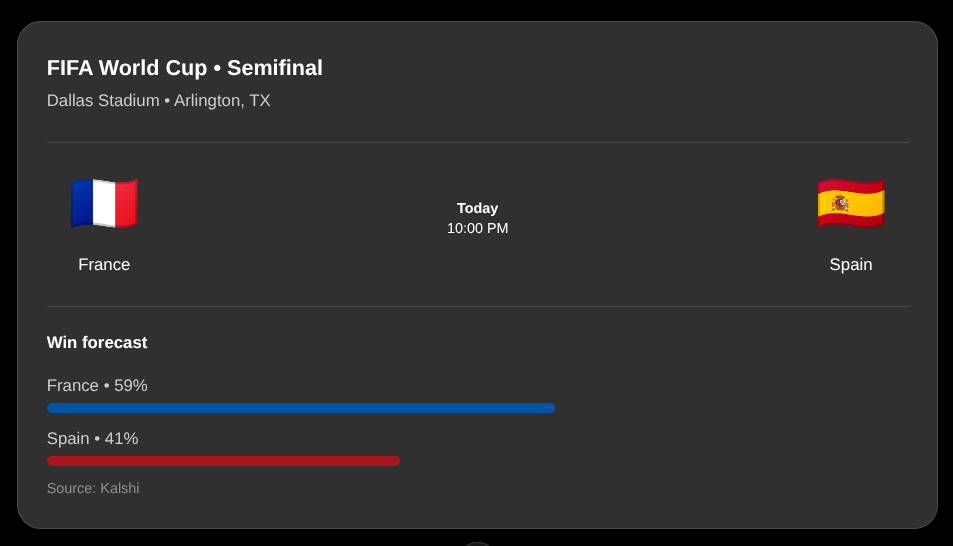
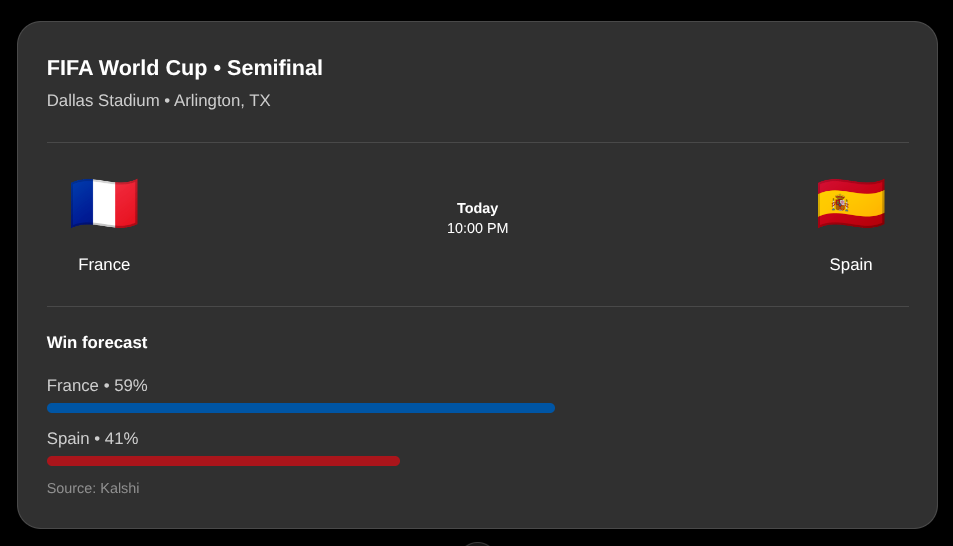
According to the report, ChatGPT displays Kalshi-based market odds when users search for World Cup matchups. The results appear as graphics showing each team’s implied chance of winning based on Kalshi’s prediction markets.
One example cited by the report involved a ChatGPT search for France versus Spain showing France with a 59% chance of victory, while a query about England versus Argentina displayed a 55% chance for England, with the Kalshi as the source for the forecast (see below).
Source: Cointelegraph via ChatGPT
The integration does not allow users to place bets through ChatGPT, according to OpenAI’s guidance cited by the report, with Kalshi data intended for informational purposes only.
Prediction markets move into mainstream platforms
Founded as a regulated prediction market platform, Kalshi allows users to trade contracts tied to real-world events, including economic indicators, politics and sports.
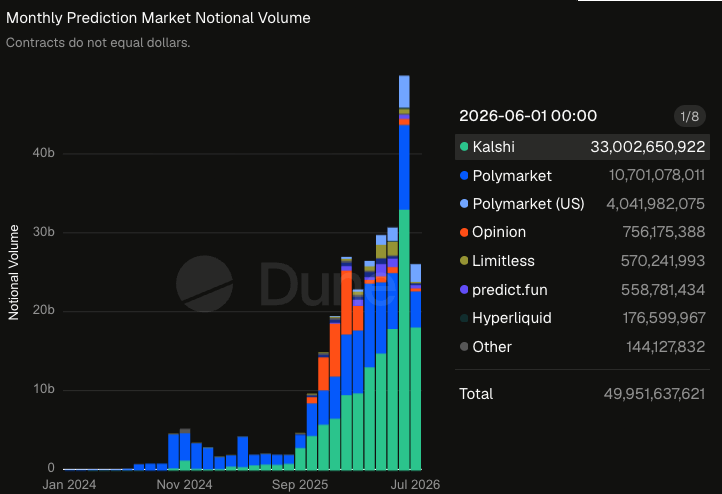
The platform has grown into one of the largest prediction market venues, with Dune Analytics data showing Kalshi recorded more than $33 billion in monthly notional volume in June 2026, about $22 billion ahead of Polymarket.
Related: Kalshi June trading volume tops $9B as World Cup fuels prediction markets
Source: Dune
Use of prediction market data has gained traction across major media and technology platforms, with Kalshi entering partnerships with CNN and CNBC in December 2025 to integrate its market data into their coverage. Rival Polymarket partnered with Dow Jones in January 2026 to bring its prediction market data to products including The Wall Street Journal.
Google also integrated prediction market data from Kalshi and Polymarket into Google Finance and Search products in November 2025.
Magazine: AI’s power crunch turns Bitcoin miners’ grid access into an asset

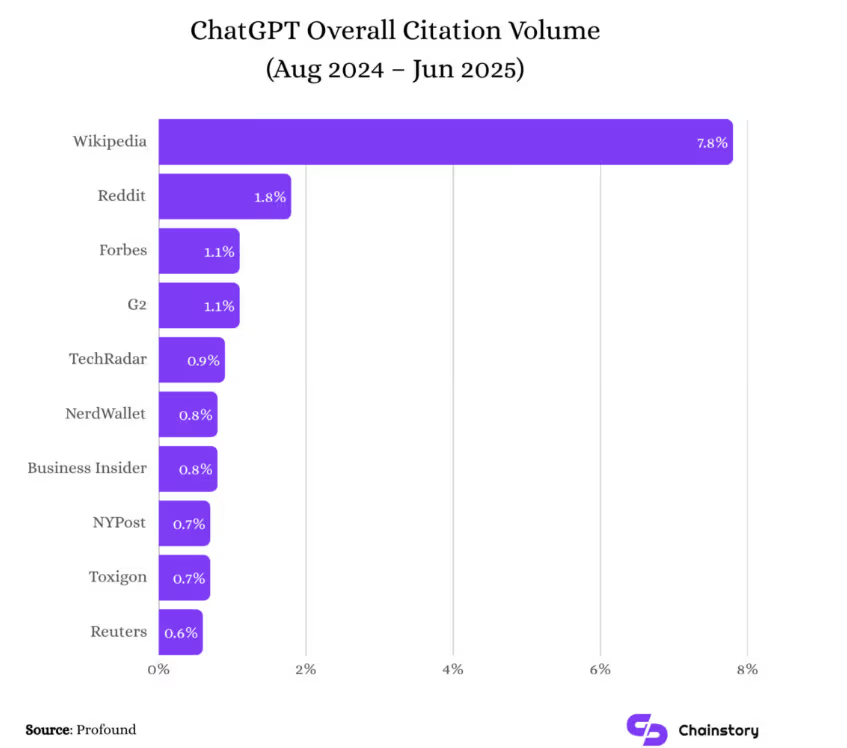
The lack of Wikipedia coverage is a more acute concern in an era where more users get their information from AI tools like ChatGPT. The report cites data from the AI tracking site Profound, which shows that 7.8% of links to sources on ChatGPT go to Wikipedia, compared to 1.8% and 1.1% to Reddit and Forbes, respectively, in second and third place.

The report also cites data from Trakkr, which shows that Wikipedia accounted for 36% of the top-10 citation links on ChatGPT and 25% of the top 100.

Contrary to popular belief, not everyone can create a Wikipedia page. The domain for doing so involves passing through tiers of protection and moderation views, according to Chainstory’s report. Volunteer reviewer’s must check prospective new articles against a number of factors, such as notability, verifiability and reliable sources.
Even when an article clears the process, it can still be deleted by administrators or via a 7-day community vote, which cannot be appealed.
Not helping matters for crypto projects is Wikipedia’s guidelines for crypto-centric news organizations (including CoinDesk), which describe them as “overwhelmingly enthusiastic about cryptocurrencies” and “generally unreliable.”
Mainstream news outlets that cover crypto, such as Reuters and Bloomberg, are regarded as reliable, the report said, but they are less likely to explore niche areas of the industry, such as liquid staking and perpetual exchanges.
Crypto World
Ethereum Price Prediction: Robinhood Chain Leads Ethereum’s Biggest User Onboarding Wave

Price prediction debates are heating up as Ethereum trades at $1,790 and is slipping in trading volume. Still, Robinhood Chain keeps stealing the spotlight, and it could reshape Ethereum’s user base over the next year.
Robinhood Chain is an Ethereum Layer 2 built for tokenized real-world assets, starting with tokenized US stocks. The network has already generated about $843,000 in user fees, showing people are actually using it instead of simply testing wallets. Robinhood’s millions of brokerage users also give it an onboarding advantage few crypto projects can match.
it's interesting seeing people continue to fade Robinhood Chain — Unipcs (aka 'Bonk Guy')
or think it's just some short-term hype or fad that will fizzle out soon
barely a week after its official launch, Robinhood Chain:
• flipped Base in daily DEX volume
• flipped BNB Chain in daily DEX volume
• is… https://t.co/2YNBT6r3FR pic.twitter.com/7iicnACRBK
 (@theunipcs) July 14, 2026
Other retail-focused Layer 2 networks have already shown how quickly transactions can climb when the product clicks. Robinhood now has the same opportunity, except it starts with an audience many rivals would be happy to borrow. Every transaction also uses ETH for gas, so stronger adoption could quietly feed demand for Ethereum even if users never touch the mainnet directly.
Meanwhile, the macro picture refuses to stay quiet. US Iran tensions intensified this week as reports of fresh military exchanges rattled markets. Oil prices jumped while semiconductor stocks fell, reviving the usual flight from risk. Crypto often joins that party a little late, so Ethereum traders should keep one eye on geopolitics and the other on the chart.
Discover: The Best Token Presales
Ethereum Price Prediction: Hit $2,000 Before the Robinhood Chain Effect Fully Prices In?
Ethereum trades around $1,790, with little to no movement in the past 24 hours. This suggests buyers are still showing up on dips instead of heading for the exits. Market capitalization stands at $216 billion. Volume has cooled, though, which usually points to consolidation rather than a fresh breakout.
The technical picture remains fairly simple. The $1,750 to $1,770 zone is still the line in the sand. Hold that area, and the first target remains the $1,845 to $1,865 resistance cluster. Clear it, and $1,975 to $2,000 comes into view. That’s where sellers could start lining up again, because nobody likes sharing profits.

Three paths still make the most sense. In the bull case, $1,750 to $1,770 holds, volume improves, and ETH gradually pushes toward $1,865, with $2,000 as the extended target. The base case keeps Ethereum stuck between $1,770 and $1,845 while macro headlines, including inflation and tariffs, continue calling the shots.
Meanwhile, the bear case has not changed. A confirmed close below $1,750 shifts focus toward $1,620, with $1,530 becoming the next major support if selling accelerates. It would be uncomfortable, not unprecedented. Crypto has a habit of testing traders’ patience before rewarding it.
Longer term, analysts, including Tom Lee, still argue that Ethereum can outperform Bitcoin on a relative basis. Even so, that view depends on key support staying intact. The Robinhood Chain onboarding story remains a legitimate long-term catalyst, yet near-term price action will be decided by buyers defending support, not by headlines alone.
Don’t Miss Out on Our $1,000 USDT Airdrop on ByBit
LiquidChain Targets Early Mover Upside as Ethereum Tests Key Levels
ETH’s range-bound grind highlights a recurring problem for active traders: the asymmetry isn’t there at $1,790 with $2,000 resistance looming. The upside is real but capped near-term. That’s precisely when early-stage infrastructure plays attract rotation capital.
LiquidChain is positioning as a cross-chain infrastructure at the L3 layer. Its core proposition is a Unified Liquidity Layer that fuses Bitcoin, Ethereum, and Solana liquidity into a single execution environment. With Liquid, developers deploy once and access all three ecosystems; users get single-step execution without bridging friction.
The path doesn't end at L1. — LiquidChain (@getliquidchain) July 13, 2026
It doesn't stop at L2 either.  ⟁https://t.co/vqvBcdSQYC pic.twitter.com/UsmCfGdk3x
The presale is currently priced at $0.01479, with $900K raised to date. Key architecture features include Verifiable Settlement and a Deploy-Once model that addresses one of the more persistent developer pain points in multi-chain environments.
The infrastructure thesis directly addresses a structural gap that Robinhood Chain-type deployments will eventually need to solve as they scale across ecosystems.
Research LiquidChain before the presale price moves.
Discover: The Best Crypto to Diversify Your Portfolio
The post Ethereum Price Prediction: Robinhood Chain Leads Ethereum’s Biggest User Onboarding Wave appeared first on Cryptonews.

Warren Buffett speaks with CNBC during the Berkshire Hathaway Annual Shareholders Meeting in Omaha, NE on May 2, 2026.
David A. Grogan | CNBC
Warren Buffett omitted the Gates Foundation from his annual charitable stock gifts, directing all of this year’s donations to four family-linked foundations.
Berkshire Hathaway said the 95-year-old chairman will donate 9 million Class B shares of Berkshire to the Susan Thompson Buffett Foundation and 1 million shares each to the Sherwood Foundation, the Howard G. Buffett Foundation and the NoVo Foundation.
“My goal is to dispose of all of my Berkshire shares within about eight years,” Buffett said in a statement announcing the gifts. “As I explained last year, my children are unfortunately growing older. I have every hope that the three of them are able to carry out the disposal of my shares by December 31, 2034.”
Buffett did not include the Gates Foundation, which for years was the largest recipient of his annual Berkshire donations. Since 2006, the Berkshire chairman has donated more than $47 billion worth of Berkshire stock to the philanthropic organization founded by Bill Gates and his former wife, Melinda French Gates.
The omission comes after The Wall Street Journal reported that Buffett has held off on his customary donation to the Gates Foundation while awaiting the outcome of a review into the foundation’s ties to the late sex offender Jeffrey Epstein.
In a March interview with CNBC’s Becky Quick, Buffett said he had not spoken with Gates “at all since the whole thing was unveiled.”
Asked whether the two remained close friends, Buffett said they had shared “great times together,” but added, “Until it gets cleared up … I just don’t think it makes sense to do a lot of talking.”
The decision marks a break from the pledge Buffett made two decades ago. In a 2006 letter to Bill and Melinda Gates, Buffett wrote that he was “irrevocably committing” to make annual gifts of Berkshire shares to their foundation “throughout my lifetime,” provided that at least one of them remained actively involved in the organization.
Buffett will discuss his annual donations in an exclusive appearance on CNBC’s “Squawk Box” Wednesday.


They highlighted that stablecoins bring a wide range of benefits, including “reducing the burden of currency exchange for inbound tourists, further improving the efficiency of fund settlement, and improving cash flow for merchants.”
Tourists in Japan primarily use bank cards for payments, but there are spending limits, which can be bypassed with stablecoins, according to a report by Nikkei.
The collaboration is part of a growing wave of stablecoin initiatives in Japan following regulatory changes that have opened the market to broader adoption. Circle has said it would partner with Nomura to develop a USDC-based foreign exchange settlement service for Japanese businesses as early as 2027.
Lawson, one of Japan’s largest convenience store chains, will accept stablecoins at its stores as part of a pilot that starts in August, according to a separate Nikkei report. The retailer plans to begin trials at its Lawson Takanawa Gateway City store in Tokyo with telecom operator KDDI and digital asset wallet provider Hashport, using KDDI’s yen-denominated stablecoin, JPYC, the report said.
Crypto World
Riyadh Emerges as a Global Powerhouse as Blockchain Infrastructure & AI Take Center Stage at Global Blockchain Show 2026

Riyadh, Kingdom of Saudi Arabia — The Global Blockchain Show Riyadh held from 29-30th June,2026 successfully wrapped up its exclusive two-day B2B run, charting an evolutionary path where decentralized networks, AI, and immersive digital platforms converge. The summit heavily prioritized structural tech innovations altering the back end of Web3, including chain abstraction and the massive data infrastructure needed to support future-ready enterprise tech.
Defying the challenges of the prevailing geopolitical landscape, organized by VAP Group and powered by Times Of Blockchain, the event emerged as a resounding success. Co-located with Global AI Show Riyadh and Global Games Show Riyadh, the two-day summit attracted 15,000+ registrations, welcomed 6,723 attendees, featured 100+ global speakers and 100 exhibitors, and convened a 70% CXO-level delegation from 80+ countries. The event leveraged Riyadh’s fast-growing position as a technological sandbox to accelerate deals between early-stage Web3 creators, enterprise infrastructure providers, and global financial backers. The event also witnessed the announcement of VAP Group’s most ambitious initiative yet- The launch of VAP Ventures, a strategic initiative to back 100 startups by 2030 and accelerate the next chapter of the global innovation ecosystem.
Rewriting Global Investment with Enterprise Protocols
Main-stage sessions in Riyadh delivered an overwhelming consensus: the blockchain ecosystem has definitively decoupled from pure speculation, maturing into a friction-free, parallel economic layer. Discussions highlighted how scalable architecture and interoperable networks are modernizing global commerce, allowing enterprises to bypass cumbersome legacy systems. The panel discussions reinforced blockchain’s transition from emerging technology to critical infrastructure, enabling secure digital finance, tokenized assets, and faster cross-border commerce.
A central theme of the summit was the push toward “invisible blockchain.” Experts detailed how gasless transactions and streamlined onboarding abstract away complex technical barriers, enabling corporations to secure digital identities and automate monetization on a multi-billion-dollar scale.
The Global Blockchain Show opened with a spotlight session by Meow, Co-Founder of Jupiter where he mentioned, “Decentralized finance has demonstrated that financial systems can be transparent, programmable and globally accessible. The next phase isn’t about replacing traditional finance, it’s about combining the strengths of both to create a more inclusive and resilient financial ecosystem.”
The summit also featured a keynote by Shabir Momin, President & Founder of TorusChain, who shared his vision for the future of blockchain, emphasizing innovation, enterprise adoption, and the technologies shaping the next generation of decentralized ecosystems.
Shaping the Decentralized Horizon
The summit explored the future of decentralized technologies through discussions on digital banking, decentralized finance (DeFi), AI and blockchain convergence, Web3 infrastructure, cybersecurity, tokenized ecosystems, digital identity, blockchain-powered enterprise transformation, and the evolution of decentralized infrastructure. Sessions also examined blockchain’s role in enabling secure digital economies, intelligent automation, cross-industry innovation, and advancing Kingdom of Saudi Arabia’s vision as a global hub for emerging technologies.
The event featured 100+ distinguished global speakers from government, enterprise, academia, Web3, fintech, and global blockchain organizations.
Few Notable Speakers Included:
- Meow – Co-Founder, Jupiter
- Morrad Irsane – CEO & Co-Founder, Takadao
- Dr. Mohammed Abdur Rahman – Full Professor & Chairman, Department of Cyber Security & Forensic Computing, University of Prince Mugrin
- Ryan Turner – Founder & CEO, Arkonix
- Alona Shevtsova – Chief Executive Officer, Sends
- Mr. Ulysses Demos – Chief Global Data Officer, Red Sea Global
- Nishanth Kumar Pathi – Director, Cybersecurity & Governance, Gulf Air Group
- Billal Yamak – Chairman & Co-Founder, Web3 Alliance of Saudi Arabia (WASA)
- Mostafa Abusamra – CEO & Co-Founder, HealthyGaming of Saudi Arabia
- Talal Al Hammad – Editor-in-Chief, entArabi
- Shabir Momin – President & Founder, TorusChain
Alongside leading blockchain founders, Web3 innovators, cybersecurity experts, fintech executives, enterprise leaders, and policymakers from across the global digital asset ecosystem, discussions centered on the future of decentralized infrastructure, intelligent finance, and the convergence of AI and blockchain technologies.
The Intersect of Tokenization, Entertainment, and Intelligent Networks
A primary pillar of the 2026 agenda was the powerful convergence of Artificial Intelligence, advanced gaming models, and secure blockchain networks. Industry leaders outlined how tokenization and decentralized finance (DeFi) are transforming global investment models through enhanced accessibility and digital ownership. Deep dives highlighted how these decentralized architectures create secure data provenance for both regional corporate ecosystems and global entertainment networks.
The exhibition floor brought together a dynamic mix of global blockchain innovators, Web3 pioneers, infrastructure providers, and enterprise technology leaders, creating a vibrant marketplace for collaboration, investment, and next-generation digital innovation.
Leading sponsors and exhibitors and other prominent Web3 ecosystem partners showcased cutting-edge solutions spanning decentralized finance, digital identity, enterprise blockchain, cybersecurity, tokenization, and intelligent infrastructure, reinforcing the event’s role as a catalyst for blockchain adoption in the Kingdom of Saudi Arabia and beyond.
Few Notable Exhibitors:
- ClubMOS Technologies LLC
- Cropr Digital Limited
- Plotdex
- JPYR
- Arkonix
- TorusChain Association
- Smartflow
- The Loopcraft
- EGS
- Setup Master the Art of Gaming
- Venn Studio
Destination Abu Dhabi: Continuing the Web3 Momentum
“The conversations in Riyadh reaffirmed that the future of blockchain will be built through collaboration, not competition. Our commitment is to keep creating platforms where visionary founders, enterprises, and investors come together to build what’s next.” — Vishal Parmar, Founder & CEO, VAP Group.
The close of the Riyadh edition signals a massive leap forward for the regional digital ecosystem. The strategic discussions and corporate partnerships established here will directly inform the agenda for the upcoming Global Blockchain Show Abu Dhabi.
About Global Blockchain Show
The Global Blockchain Show is the premier global conference for the decentralized ecosystem. Structured as a high-stakes business platform, it bridges the gap between the trailblazing builders architecture-ing the decentralized economy and institutional investors looking for the next breakout project.
About VAP Group
With 13+ years of expertise, VAP Group is a premier global consulting and media powerhouse driving the next wave of technology-led growth.
Through its media ecosystem and flagship events, including the Global AI Show, Global Games Show, and Global Blockchain Show, VAP Group connects policymakers, enterprises, and innovators worldwide, enabling strategic communications, ecosystem-building, and talent solutions.
Media Enquiries: media@globalblockchainshow.com
Ripple’s XRP remains trapped within a broader bearish market structure despite several recovery attempts over the past few weeks. While the recent price action suggests sellers remain active at higher levels, the market is once again testing a critical demand zone that could determine whether the token stabilizes or extends its decline.
XRP Price Analysis: The Daily Chart
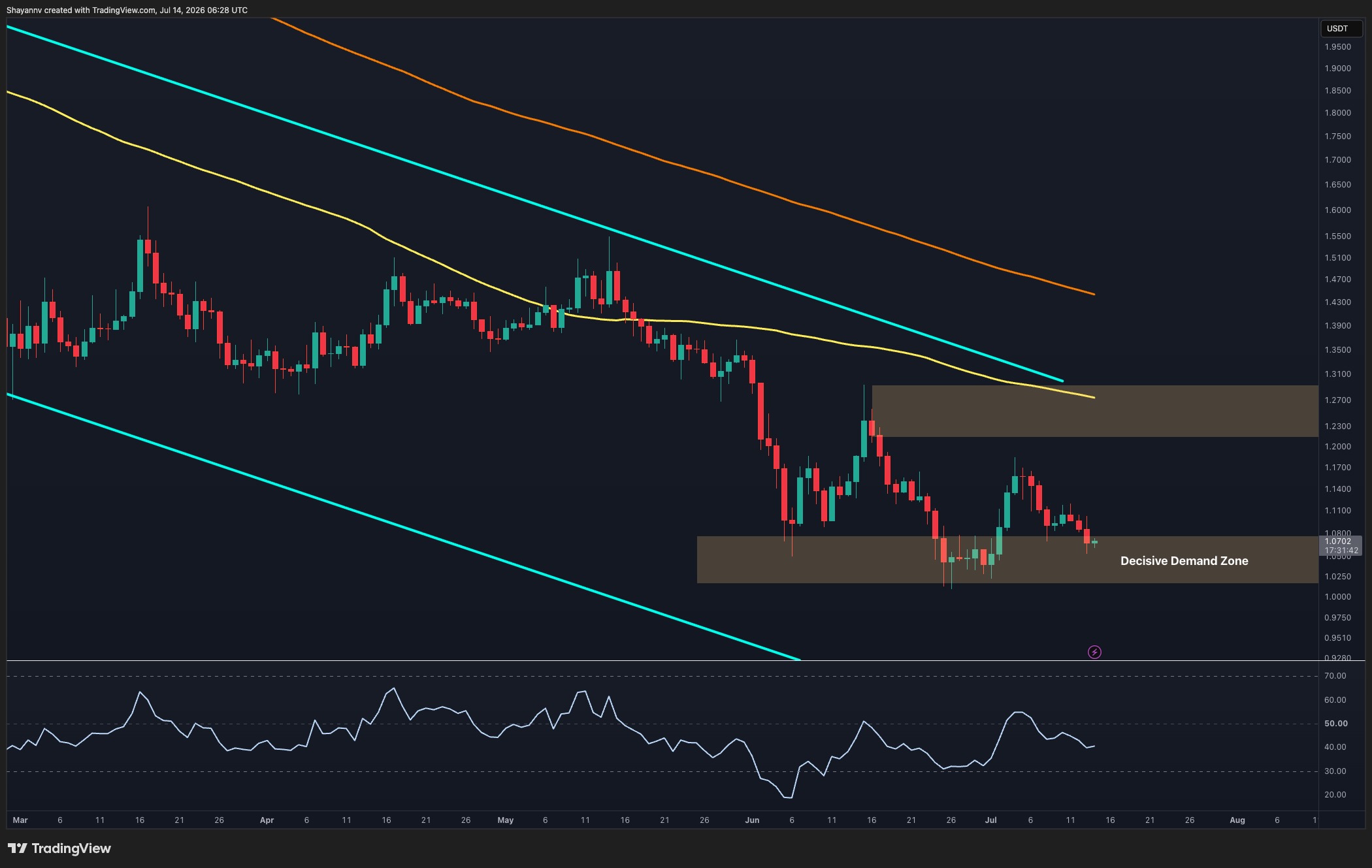
On the daily timeframe, XRP continues to trade inside a large descending channel that has contained the price action since the beginning of the year. The asset was recently rejected from the upper resistance region around $1.22-$1.29, a supply zone that has repeatedly capped bullish advances throughout the downtrend.
The rejection occurred near the confluence of the descending channel’s upper boundary and the 100-day moving average, reinforcing the significance of this area.
Following the rejection, XRP has retraced toward the key demand zone around $1.02-$1.08. This region has repeatedly attracted buyers and currently represents the most important support level on the daily chart. As long as the price remains above this area, the market could continue consolidating within the lower portion of the channel.
A breakdown below the $1.02-$1.08 support zone would likely invalidate the current stabilization attempt and expose the lower boundary of the channel, potentially opening the door for a deeper decline.
XRP/USDT 4-Hour Chart
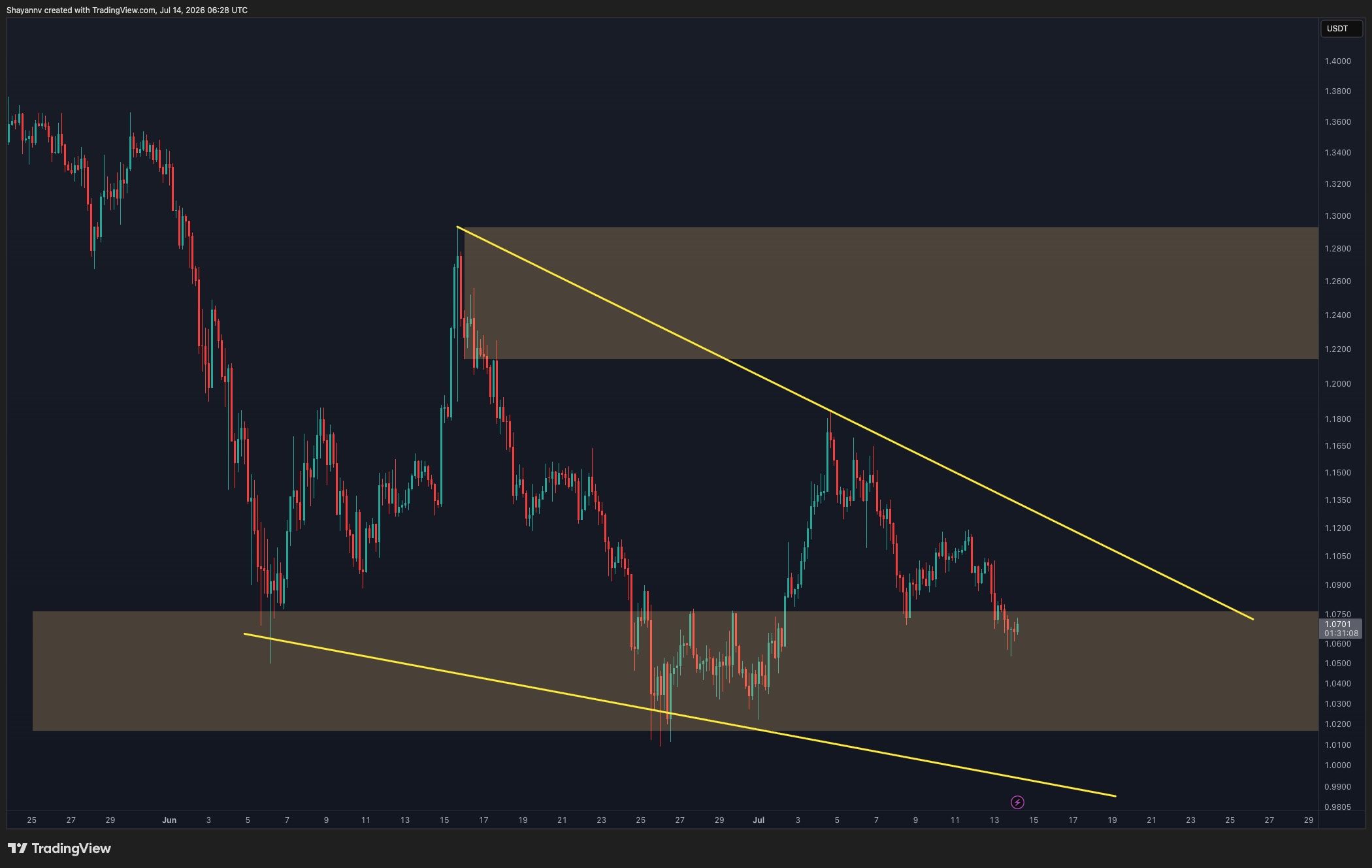
The 4-hour chart provides a clearer view of the recent weakness. XRP rallied aggressively from the lower demand zone but failed to sustain momentum after reaching resistance at the descending trendline and the overhead supply region around $1.22-$1.29.
Since then, the asset has produced a series of lower highs and lower lows, reflecting growing short-term bearish pressure. The market has now returned to the decisive demand zone around $1.03-$1.08, which has acted as the foundation for every meaningful rebound since late June.
This area remains the primary level to monitor. A successful defense could trigger another relief rally toward the descending trendline and the $1.22-$1.29 resistance zone. Such a move would keep XRP trapped within its broader consolidation structure while preserving the possibility of a larger breakout later.
On the other hand, a decisive loss of the demand zone would represent a significant structural deterioration and likely shift momentum firmly back in favor of sellers.
For now, the token remains positioned at a critical support area. While the broader trend continues to favor caution below the major moving averages and descending channel resistance, the $1.02-$1.08 demand zone remains the key level bulls must defend to prevent another leg lower.
The post Ripple Price Analysis: This One Level Could Decide XRP’s Next Major Move appeared first on CryptoPotato.
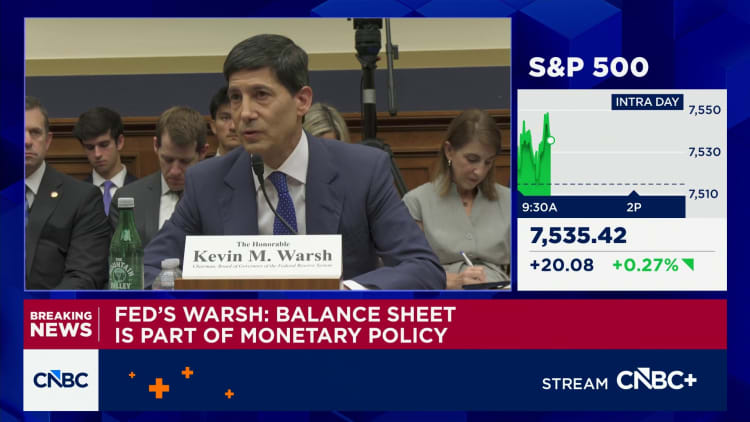

Calling inflation an “unfair burden,” Federal Reserve Chairman Kevin Warsh on Tuesday reiterated his call for “regime change” at the central bank.
“It has been a tax on the American people and businesses. We plan on getting rid of that tax,” he said. “That means we need a regime change in policy, and we need new consideration of practices, some of which have been working, some of which haven’t.”
In remarks for delivery to separate congressional panels this week, Warsh ramped up his recent tough talk on inflation, while also touting the strength of the U.S. economy and benefits coming from business investment, particularly involving artificial intelligence.
He highlighted the five task forces he has created to look at all aspects of how the Fed conducts business. The panels will examine the communications, technology, the balance sheet, economic data the Fed employs and the way it looks at inflation.
Taken together, Warsh said they will further his goals to remake the central bank.
“In six weeks, we have caused, I think, a sea change in new thinking-the beginning of a set of reforms that are going to be put in place across at least five dimensions in monetary policy,” he said. “We made a lot of progress in six weeks, but I think it’s important to use this opportunity wisely.”
The remarks come just two months into Warsh’s term. Fed chairs are mandated to appear twice a year before Congress to deliver a monetary policy report then take legislators’ questions.
“Today we are at a hinge point in history. It’s up to all of us to meet this moment,” said Warsh, who spoke Tuesday to the House Financial Services Committee then heads to the Senate Banking Committee on Wednesday.
“The Fed’s number one objective is to get monetary policy right — or as near to it as we possibly can. That is our clear and constant aim, the star we steer by,” he added. “And if we get policy right — and we will — the inflation surge of the last five years will be a thing of the past.”
Kevin Warsh, chairman of the US Federal Reserve, during a House Financial Services Committee hearing in Washington, DC, US, on Tuesday, July 14, 2026.
Daniel Heuer | Bloomberg | Getty Images
Warsh takes over a Fed that has seen inflation exceed its 2% mandate since 2021. During his confirmation hearing earlier this year, the chairman called inflation “a choice,” and emphasized repeatedly the importance of bringing down the cost of living during his first news conference. He first made the pledge about “regime change” during an interview last summer with CNBC.
Warsh further criticized past practices of the Fed, specifically a policy adopted in 2020 that allowed for above-target inflation after periods of lower prices. The policy, known as flexible average inflation targeting, specifically sought to address imbalances in employment, the type of thing that Warsh has argued is outside the Fed’s scope.
“That central bank wasn’t the first central bank to ask for a little more inflation and end up with a lot more. It was a mistake,” he said. “The framework did not succeed in its objectives, and I am pleased that before my arrival, that my predecessors took that and cast it aside.”
Similar to his predecessor, Jerome Powell, Warsh noted that the persistently high inflation levels have “been an undue burden on American households and businesses” who have faced higher costs across the board, with the latest surge coming in good part from soaring energy prices.
“While monthly price fluctuations are inevitable — especially in an unsettled world — underlying inflation over longer time horizons is determined largely by monetary policy,” he said. “The members of our Committee have no tolerance for persistently elevated inflation. And we share a resolute commitment to restoring price stability.”
On broader conditions, Warsh said the economy “is expanding at a solid pace, showing resilience in the face of recent developments.”
He pointed to business investment that he called “the most striking feature” of the current climate.
“The rapid pace — which appears to be accelerating — reflects, in large part, the construction of data centers and the immense demand for the AI-related equipment and software that fill them,” he said.
“We don’t know the extent to which the economy will benefit from the AI buildout,” he added. “Yet it seems inevitable that what is now called ‘AI investment’ will soon be called just ‘investment.’”
Warsh previously has said he expects an AI productivity boom will prove disinflationary — a premise challenged by some economists as well as his fellow Fed policymakers.
Elsewhere, Warsh further fleshed out the five task forces he has created to conduct a comprehensive review of the Fed’s operations.
Together, he said the groups are part of “a new chapter at the Federal Reserve.” However, whereas Warsh previously faulted “incumbents” at the Fed for institutional problems, he has taken a more conciliatory tone since he’s been in office.
“It’s been a privilege to return to the Fed and to work again with so many talented and dedicated people I’m fortunate to call my colleague,” he said.


The European Central Bank (ECB) selected 36 banks and payment firms to join a pilot of the digital euro starting in the second half of next year as it prepares the central bank digital currency (CBDC) for potential issuance in 2029.
The group, selected from among 50 applicants, includes Adyen, Deutsche Bank, Revolut, SumUp, UniCredit and Worldline, the ECB said on its website.
While legislation enabling the currency has yet to be finalized, the central bank is pushing forward with the project because it sees adoption of private dollar-backed stablecoins such as Tether’s USDT and Circle Internet’s USDC as a threat to Europe’s monetary autonomy.
The 12-month pilot will test a beta version of the digital euro across the ECB and 19 euro-area national central banks. It will cover online and offline transfers between individuals, in-store payments and e-commerce purchases.
Although it won’t have legal status, the currency will be close to the design set out in draft European Union legislation. The ECB’s staff, along with employees of national central banks, will act as consumers. Selected restaurants, cafeterias and online merchants will accept payments during the pilot.
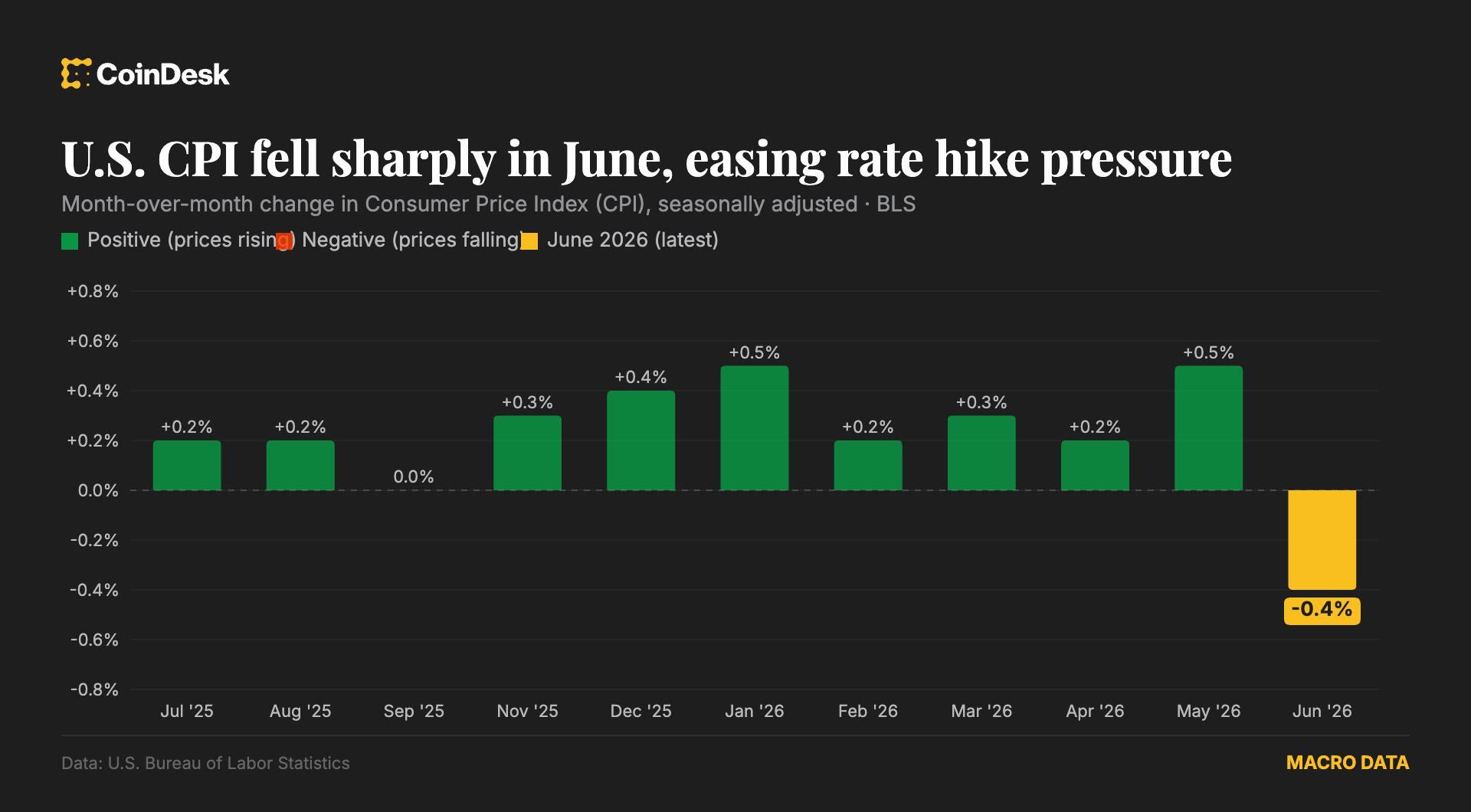
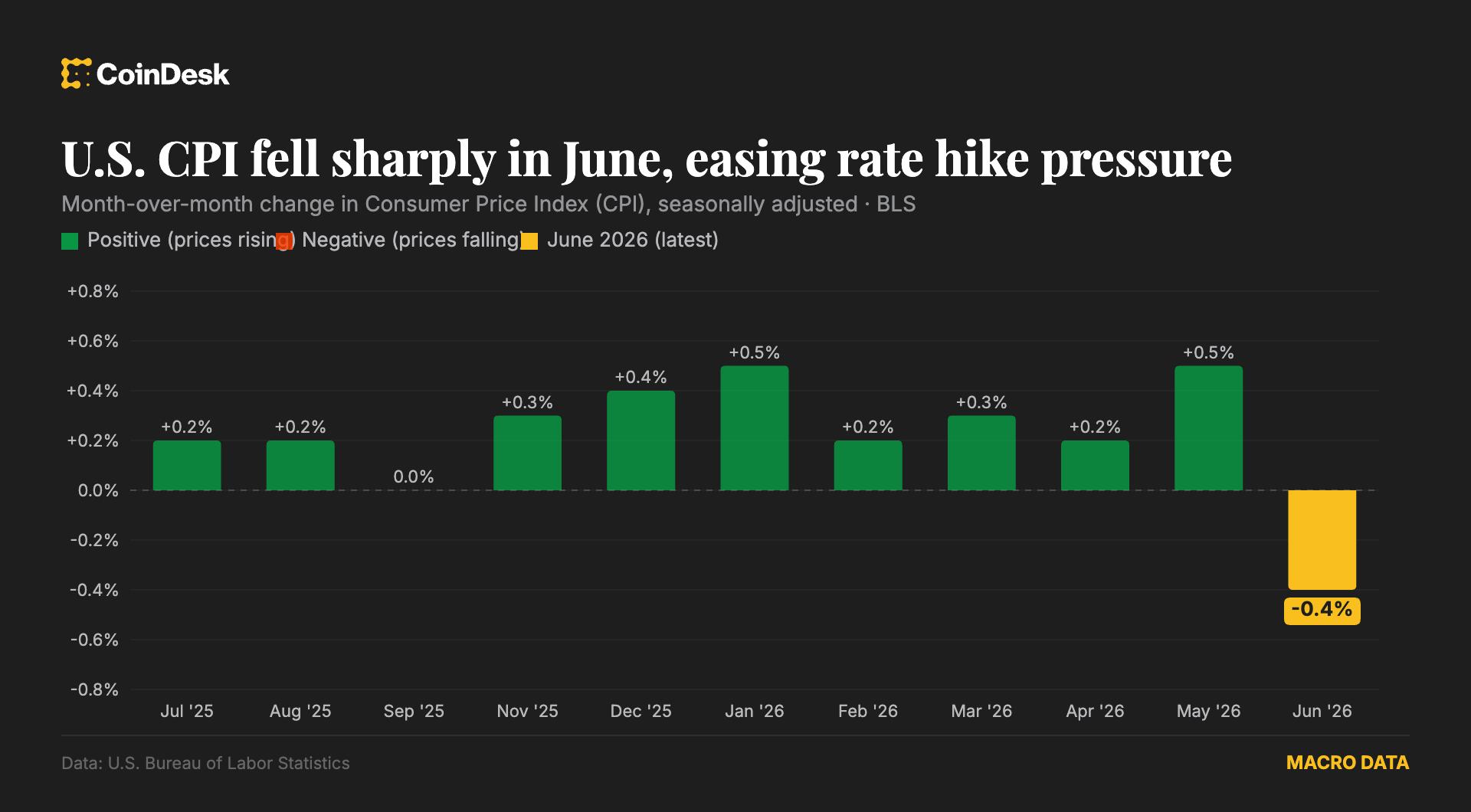
U.S. inflation in June came in far softer than forecast, likely putting on hold what were fast-rising expectations for imminent Federal Reserve rate hikes.
The Consumer Price Index (CPI) declined 0.4% in June versus economist forecasts for a fall of 0.1% and May’s sharp rise of 0.5%.
On a year-over-year basis, CPI was up 3.5% versus forecasts for 3.8% and 4.2% in May.
Core CPI, which excludes food and energy, was flat in June, versus forecasts of 0.2% and May’s 0.2% increase. On a year-over-year basis, core CPI rose 2.6% against expectations for 2.8% and 2.9% in May.
Bitcoin added to earlier gains following the soft numbers, rising to $63,400, up about 2% over the past 24 hours. U.S. stock index futures also rose, the Nasdaq 100 up 1.25%.
Bond yields fell sharply, the U.S. 2-year Treasury down seven basis points to 4.19% and the 10-year down five basis points to 4.56%.
Hyperliquid is one of crypto’s fastest-growing trading venues and the leading decentralized perpetual futures exchange. The platform processed more than $150 billion in trading volume in July alone, while its volume relative to Binance climbed to 11.5%, underscoring its growing share of the derivatives market. USDC balances on Hyperliquid have swelled to roughly $6 billion, making it an increasingly important distribution channel for the stablecoin.
Under the new arrangement, Coinbase will classify USDC on Hyperliquid as “on-platform,” collecting the income generated by reserves and paying 90% of it to Hyperliquid. JPMorgan estimated Coinbase previously split nearly all of the revenue evenly with Circle.
The bank cut earnings estimates for both companies, citing the Hyperliquid agreement and weaker crypto markets, though it expects higher interest rates to provide some support for USDC-related revenue over the longer term.
USDC has also lost momentum in recent months. Its circulating supply has fallen to about $73 billion from nearly $80 billion in March, part of a broader $10 billion contraction in the stablecoin market since May as crypto trading activity cooled and new regulated rivals chipped away at the dominance of USDC and Tether’s USDT.
Japanese investment bank Mizuho said in a report last week that Circle’s final approval from the U.S. Office of the Comptroller of the Currency to establish First National Digital Currency Bank is a positive milestone, but investors may be overestimating its significance.
Why multi-billion dollar crypto networks are missing from Wikipedia

Which Little House on the Prairie Season 2 Stars Aren’t Returning?

What to Get First in the 2026 Nordstrom Anniversary Sale


-

 Fashion5 days ago
Loro Piana Fall 2026 Enters Houston’s Art Scene
-

 Fashion4 days ago
Weekend Open Thread: Nutriplenish Leave-In Conditioner
-
 Sports5 days ago
2026 Genesis Scottish Open Thursday TV coverage: Round 1
-

 Sports7 days ago
Joshua Pacio ‘more complete’ ahead of ONE rematch vs Malachiev
-

 Tech7 days ago
Anthropic brings Claude Cowork to mobile and web as usage data shows most users aren’t coding
-

 Sports4 days ago
Super Eagles star Moses Simon opens up on Liverpool transfer regret
-

 Tech5 days ago
Character.AI enters the microdrama arena with its own productions, but there’s a twist
-

 Crypto World7 days ago
Nasdaq arthritis company holding Moshe Hogeg crypto hits all-time low
-

 Tech11 hours ago
Get Your ESP32 Sunny Side Up With This Solar Dev Board
-

 News Videos6 days ago
Crypto Just Entered Its Most Important 6-Month Candle (Could Decide Everything!)
-

 Tech7 days ago
Keychron is stepping outside keyboards with a $349 Thunderbolt 5 dock aimed at power users
-
 Business7 days ago
ASX 200 Slides Over 0.6% as Rare Earths and Lithium Stocks Tumble Amid Global Semiconductor Sell-Off Today
-
 NewsBeat5 days ago
Major update after Huntingdon train attack as man enters plea
-
 Business7 days ago
Will Trent shares rebound after Q1 update triggers 13% crash? Here’s what technical charts indicate
-
 Tech7 days ago
OpenAI teams with Work Louder to launch Codex-native keyboard, weeks after CEO of Apps told staff ‘not to be distracted by side quests’
-

 Business7 days ago
SpaceX Shares Slide Nearly 6% Amid Post-IPO Volatility and Starship Test Focus
-
 Sports6 days ago
39-year-old Djokovic wins five-hour thriller to enter Wimbledon semis | Other Sports News
-
 Crypto World7 days ago
TeraWulf’s $19B Anthropic Lease Turns Bitcoin Miner Into AI Landlord
-

 News Videos1 day ago
how to make coin bank box with cardboard #scienceproject #money #diy #shorts
-
 Tech22 hours ago
Cloudflare Precursor Watches Your Mouse and Keyboard To Decide If You Are Human
You must be logged in to post a comment Login