Crypto World
Opening Range Breakout (ORB) Strategy Explained

The Opening Range Breakout strategy is an intraday trading approach that marks the high and low of a market’s first 5, 15, or 30 minutes of activity, then treats a candle closing above the range high or below the range low as a signal of potential directional momentum.
The first minutes after a market opens are often marked by heightened volatility, rapid price movements, and a surge in trading activity. This period reflects the reaction to overnight news, global events, and the positioning of market participants at the start of the session. These opening moves may provide a breakout trading framework that can shape trading for the rest of the day.
In this article, we examine the Opening Range Breakout strategy, a widely used approach that focuses on this critical window of market activity and its potential implications for intraday trading.
Overview of the Opening Range Breakout Trading Strategy

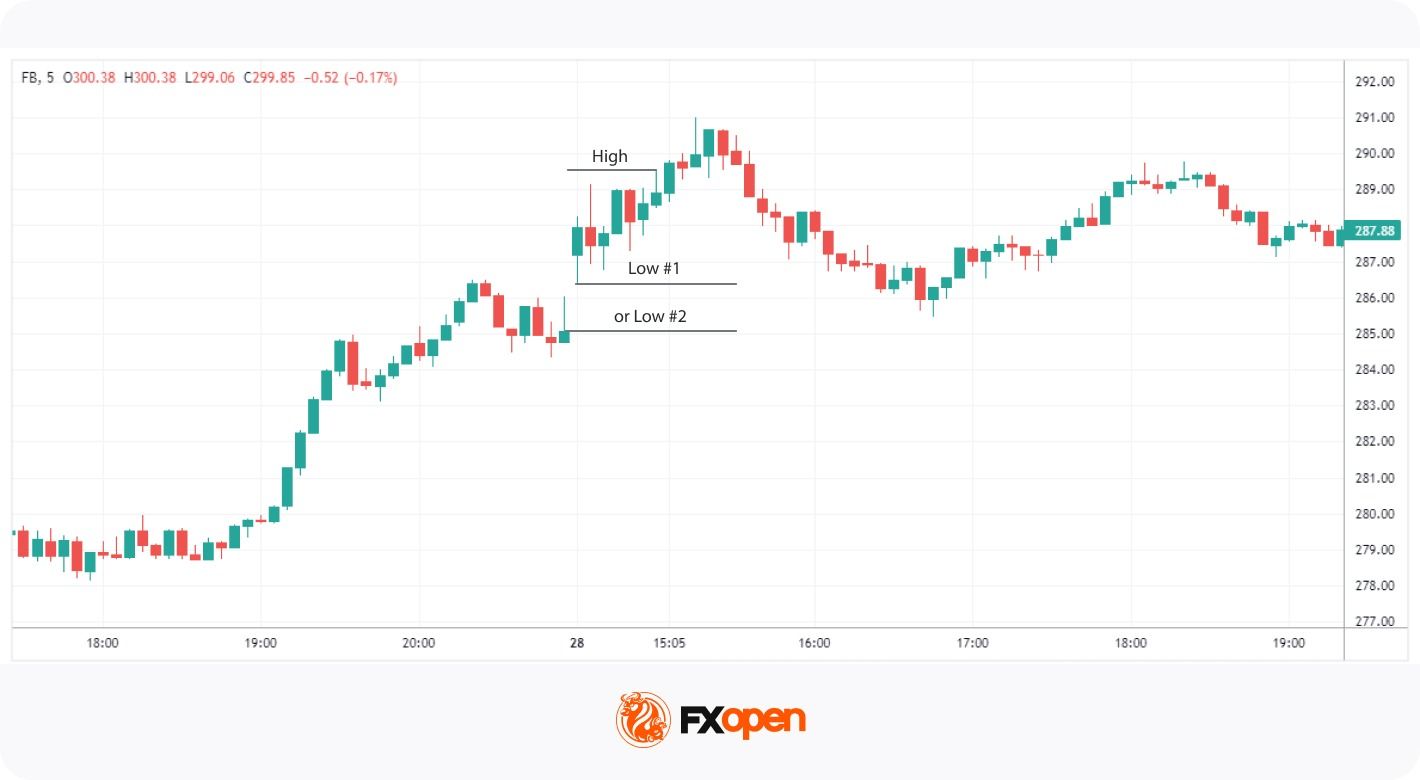
The ORB, or the Opening Range Breakout, is a time-tested breakout trading strategy that centres around identifying the price range established in the initial minutes of a market session. The strategy typically focuses on the price range formed within the first 5, 15, or 30 minutes after the market opens. This range forms because the market absorbs overnight news, early positioning by institutional participants, and concentrated order flow as liquidity returns at the bell.
Traders mark the highest and lowest points reached during this period as key levels. While some rely solely on this range, others also incorporate the prior day’s closing price for additional context. Traders keen on trading the open range breakout pay close attention to these high and low levels, as a breakout or breakdown from these levels can indicate a strong trend.
Variations of Opening Range Breakout
The ORB framework adapts to different timeframes, and traders often select one based on how quickly they want a signal.
- 5-minute ORB: Produces the fastest setups and is popular among scalpers, though the narrow range may increase the rate of false breakouts.
- 15-minute ORB: Balances speed and structure. The range typically captures the initial reaction to the open while filtering out the first burst of noise.
- 30-minute ORB: Produces a larger range and fewer signals per session, which some traders find cleaner for position sizing and stop placement.
Using the ORB for Stocks
Trading the Opening Range Breakout in the stock market offers distinct advantages, primarily due to the well-defined opening and closing times of the stock exchanges. These regulated timeframes provide a clear structure for implementing the ORB trading strategy. Typically, stock traders focus on the initial 5 to 30 minutes post-opening bell to define the range, as this period often captures the essence of market sentiment.
Liquidity is usually high during this time and volumes are significant. According to theory, the strategy may help traders identify trends early in the trading session. However, traders also consider the current trend. Looking for entries in the broader trend direction can reduce the odds of being misled by a false breakout.
Using the ORB for Forex
In forex, the Opening Range strategy can also be applied, albeit with some unique considerations. Unlike the stock market, forex operates 24 hours a day, five days a week, with no clearly defined opening or closing times. The ORB strategy applies the same logic to specific forex sessions. The London open breakout strategy and the New York session breakout are the two common session anchors, as both tend to produce directional moves tied to institutional order flow.
Liquidity and trading volume can vary substantially between these sessions, affecting the results of the Opening Range Breakout method. The overlap between London and New York often produces the largest ranges on major pairs, while the Asian session is believed to be quieter, which can flatten the opening range.
Additionally, it may be helpful to be aware of currency pairs; each pair may have increased activity and, therefore, potentially more reliable breakouts during the session of its originating country. Lastly, given the almost continuous trading, overnight gaps are rare, making a careful session-based approach critical for forex ORB.
Breakout Logic and Trade Structure
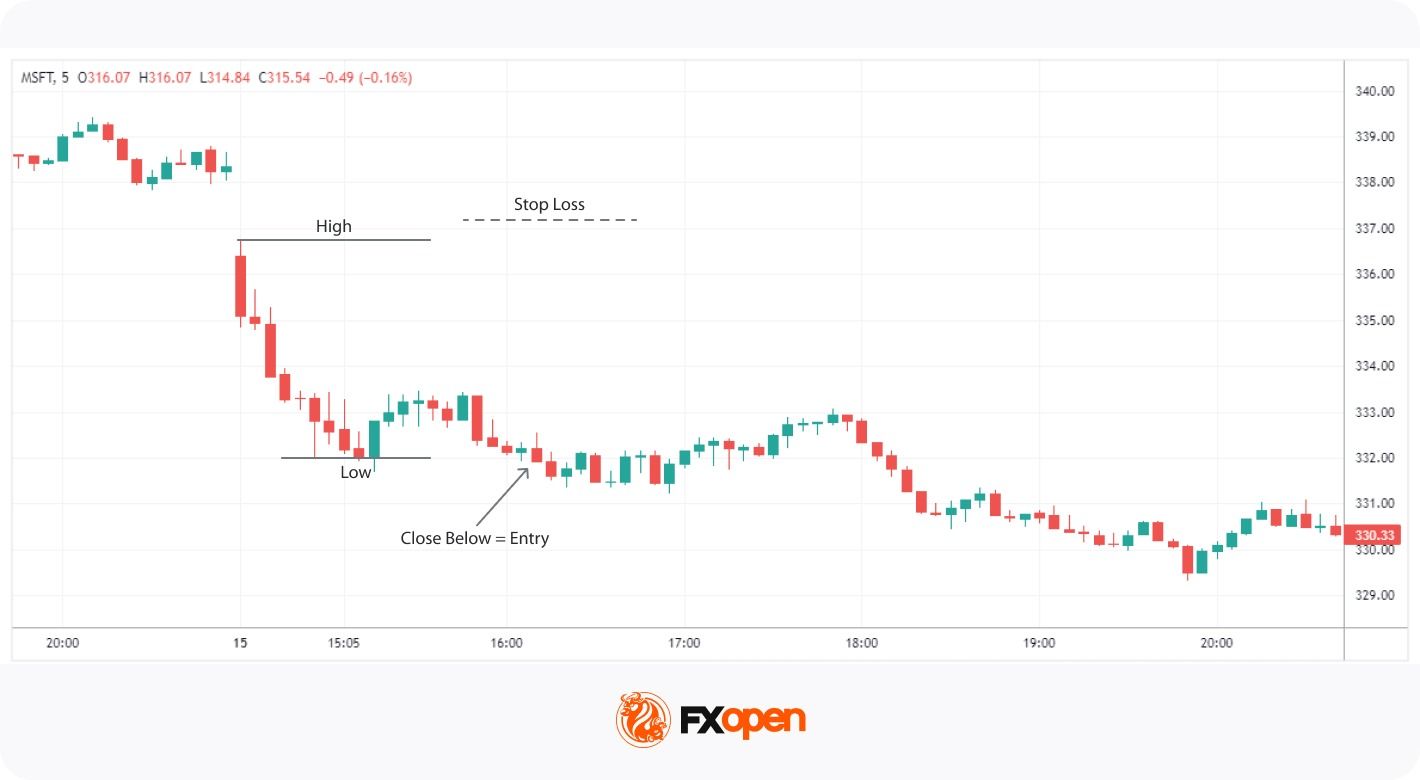
The opening breakout strategy is a widely used approach to take advantage of strong upward or downward movements that break the defined opening range.
Opening range breakout process traders use:
- Define the opening range (first 5–30 minutes of the session)
- Identify the range high and low
- Monitor price approaching the range boundaries
- Wait for a breakout with a candle close outside the range
- Manage the trade using predefined risk parameters
Let’s consider the Opening Range Breakout example above.
Entry
- Traders often monitor the price as it approaches the high or low of the opening range, typically using the 5, 15, and 30-minute charts. The opening range is generally defined as the first 30 minutes of the session.
- Entry confirmation typically comes from a candle closing above the high for a bullish breakout or below the low for a bearish one.
Stop Loss
- A stop loss might be set just below the opening range high for bullish trades or above the low for bearish trades. Factors like market volatility and liquidity are often taken into consideration when placing the stop loss.
Take Profit
- The profit target could be set at a distance based on risk/reward ratio, like 2:1 or 3:1.
- Traders also consider major support and resistance levels as potential take-profit levels.
To see how it works for yourself, consider heading over to FXOpen’s TickTrader trading platform. There, you’ll be able to explore a wide range of forex and stock CFDs.
Popular Practice for Trading the ORB Strategy
To improve the accuracy of the Open Range Breakout strategy, traders approach it with a disciplined and informed methodology.
Some of the Popular Practices
- Defining a Clear Opening Range: Traders often focus on the first 5, 15, or 30 minutes after the market opens to establish a trading range. Consistency in the chosen timeframe may be helpful for thoughtful analysis.
- Focusing on Liquid Markets: The ORB is usually applied to markets with high trading volumes during the opening session since these typically see more breakouts than thinly traded assets.
- Aligning with Market Trends: Breakouts that align with the broader market or news events could reduce the probability of false signals.
- Accounting for Volatility Regimes: High-volatility sessions often produce wider opening ranges and stronger follow-through once price closes outside the boundary. Low-volatility conditions tend to produce narrower ranges and a higher proportion of false breakouts, so some traders step aside or tighten filters during quieter periods.
- Incorporating Session-Specific Analysis: For forex markets, using the opening range of specific sessions (e.g., London or New York) often yields more relevant breakouts for currency pairs linked to those regions.
- Back-Testing and Optimisation: Traders typically refine their approach by back-testing the ORB trading strategy on their chosen market and timeframe.
- Using Breakout Indicators: Some traders may use Opening Range breakout indicators, such as volume or volatility measures (including VWAP and ATR), to support breakout confirmation.
Pullback Strategy
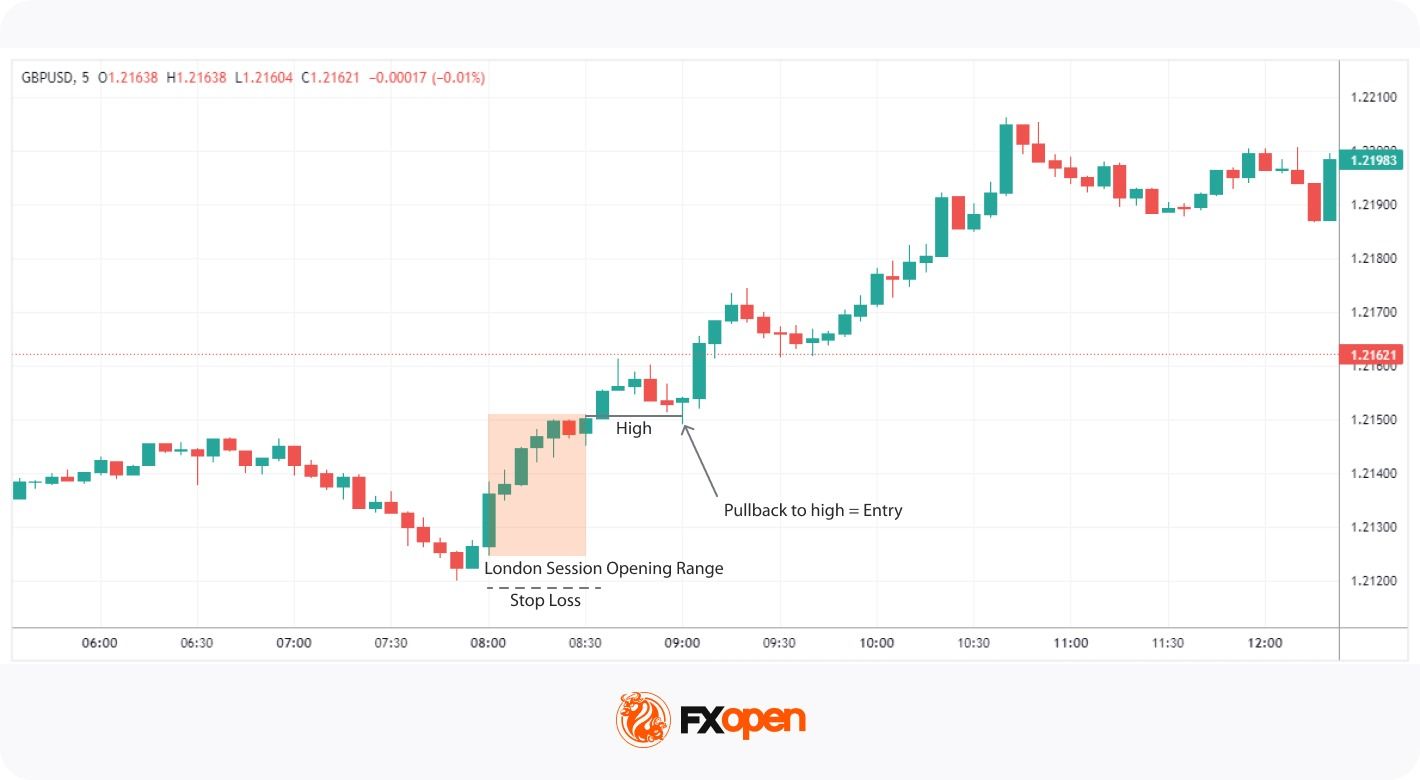
The pullback strategy within the ORB framework offers traders an alternative approach that seeks additional confirmation before initiating a trade. This strategy can be particularly useful in markets where false breakouts are common.
Entry
- Rather than entering immediately on a breakout, traders often wait for the price to break beyond the opening range and then retrace back to the high or low of that range or to a relevant support or resistance level within the range.
Stop Loss
- Stop losses could be placed a few pips below the low of the range for bullish trades or a few pips above the high for bearish trades to accommodate market noise and volatility.
Take Profit
- Profit targets could be based on a risk/reward ratio that aligns with the trader’s overall strategy.
- These targets could also be adjusted depending on subsequent support or resistance levels.
False Breakouts and Filters
The opening range in trading can see false breakouts, which happen when price pushes beyond the opening range, fails to hold, and returns inside within one or two candles. These failures often leave a long wick or a strong reversal candle on the breakout bar, signalling rejection by participants on the other side.
To maintain a level of Opening Range Breakout risk management, traders often apply simple filters:
- No close outside the range: A wick beyond the high or low without a closing print above or below counts as a test, not a breakout.
- Quick reversal back through the level: Price returning through the range within a candle or two invalidates the setup.
- Low volatility sessions: Narrow opening ranges during quiet conditions produce a higher share of fakeouts, so some traders step aside until volume returns.
Key Characteristics and Limitations of the ORB Strategy
The Opening Range Breakout strategy offers traders a systematic approach to take advantage of early market movements. While it may be a powerful tool for capturing significant price shifts, it may be important to understand its strengths and weaknesses.
Characteristics
- Early Trend Identification: The ORB may help traders spot potential trends right after the market opens, allowing for timely entry into positions.
- High Liquidity Periods: Trading during the opening range often means higher liquidity, which could lead to smoother order execution and tighter spreads.
- Risk Management Rules: The strategy provides defined entry and exit points.
- Defined Stop Placement: Stops typically sit just beyond the opposite side of the opening range. This anchors risk to session structure rather than an arbitrary pip distance.
- Versatility: Applicable to various markets like stocks and forex, the ORB can be adapted to different trading instruments and timeframes.
Limitations
- False Breakouts: The strategy is susceptible to fakeouts, where the price breaks the range but quickly reverses. The potential for losses means risk management is an important consideration for traders using the ORB strategy.
- Market Noise: High volatility during opening sessions can cause erratic price movements, making it challenging to distinguish genuine breakouts.
- Requires Quick Decision-Making: Traders need to act swiftly, which may lead to wrong decisions and additional psychological pressure.
- Not Always Reliable in All Markets: The ORB may be less reliable in markets that don’t exhibit strong opening movements or during periods of low volatility.
- Range Width and Volatility Affect Risk: Wider opening ranges translate into larger stop distances. Volatile sessions can inflate the range to a point where the resulting setup no longer fits a trader’s risk parameters, even when the breakout itself looks structurally valid.
The Bottom Line
The ORB trading strategy gives traders a structured way to trade the early part of a session across stocks and forex. Range width, session timing, and volatility conditions all shape how the setup performs on a given day.
If you want to apply the strategy across a selection of forex and stock CFD markets, you can consider opening an FXOpen account and access tight spreads and low commissions (additional fees may apply).
FAQ
What Is the Opening Range Breakout Strategy in Trading?
The Opening Range Breakout (ORB) strategy is based on the price range formed during the first minutes of a trading session, typically 5 to 30 minutes. Traders monitor the high and low of this range, as price movements beyond these levels may indicate increased volatility and potential directional momentum.
How May the ORB Strategy Be Used By Traders?
Traders typically define the opening range using short-term timeframes, such as 5-, 15-, or 30-minute charts, and monitor price action near its boundaries. Breakouts above or below the range may be considered alongside confirmation signals such as candlestick structure or volatility conditions.
What Confirms an Opening Range Breakout?
Confirmation usually comes from a candle closing outside the opening range high or low on the chosen timeframe. A wick beyond the level without a closing print is generally treated as a test rather than a breakout. Some traders add volume expansion, a move away from VWAP, or a rising ATR reading as secondary filters before acting on the signal.
What Is the 15-Minute Opening Range Breakout Strategy?
This variation uses the first 15 minutes of trading to establish the opening range. It appeals to those looking for quicker setups compared to the more traditional 30-minute range.
How May Traders Select Stocks for an ORB Strategy?
Stocks with high liquidity and strong pre-market activity are often chosen by traders for the ORB strategy. Traders may also consider stocks influenced by significant news or earnings reports, as these are likely to show volatility at the open.
What Is the Opening Range Breakout Strategy’s Success Rate?
The results of a strategy usually vary based on general factors like market conditions, timeframe, and trade execution and private factors, like trading approach, skills, and risk management. According to theory, traders often find the ORB strategy useful in volatile markets with clear trends and robust volume.
This article represents the opinion of the Companies operating under the FXOpen brand only. It is not to be construed as an offer, solicitation, or recommendation with respect to products and services provided by the Companies operating under the FXOpen brand, nor is it to be considered financial advice.
You must be logged in to post a comment Login