

Crypto World
Paradigm Targets Pro Traders and Market Makers in Latest Prediction Markets Push


Venture capital firm Paradigm is reportedly developing a prediction markets trading terminal aimed at professional traders and market makers, according to Fortune.
Paradigm partner Arjun Balaji is spearheading the effort, which sources say has been underway since the late 2025.
The venture capital firm has been one of the most active backers of Kalshi, a leading prediction market platform. The firm participated in three successive funding rounds for Kalshi in 2025.
The prediction market platform recently raised more than $1 billion in a new round, pushing its valuation to $22 billion.
“Matt Huang, the venture firm’s cofounder and managing partner, is on the startup’s board of directors. Paradigm’s development of a prediction markets trading terminal isn’t competitive with Kalshi’s platform, said a source,” the report read.
Follow us on X to get the latest news as it happens
Beyond the terminal, sources suggest that Paradigm has considered establishing an internal market-making desk. A separate source said the firm has also engaged researchers to explore the feasibility of creating prediction market indexes.
Meanwhile, Paradigm has started to collect prediction market data into a public dashboard.
A Sector Gaining Institutional and Retail Momentum
Paradigm’s infrastructure push arrives at a time of rapid growth. Prediction market transactions surpassed a record high of 207 million in March, according to Dune data.
Monthly notional volume reached roughly $25.7 billion, up from $1.2 billion in early 2025. Meanwhile, major exchanges are also moving into the space. Binance is beta-testing an in-app prediction market feature inside its Wallet app.
Coinbase unveiled its prediction market offering through a partnership with Kalshi in January. Moreover, Crypto.com launched a standalone platform called OG.
Subscribe to our YouTube channel to watch leaders and journalists provide expert insights
The post Paradigm Targets Pro Traders and Market Makers in Latest Prediction Markets Push appeared first on BeInCrypto.


Bitcoin (BTC) could move above $90,000 and revisit its all-time high of around $126,000, BitMEX co-founder Arthur Hayes said.
He says the aggressive spending by governments and banks to fund AI infrastructure, as well as military spending and energy security projects, has helped fuel the crypto bull market.
Hayes Ties Bitcoin Outlook to AI Spending and Wartime Liquidity
The core of Hayes’s argument is that the Chinese and American governments have handed themselves political cover to print money aggressively and that this flood of liquidity will lift Bitcoin more than almost any other asset.
The first driver is the AI arms race, with the former BitMEX CEO saying that both Trump and Xi view machine intelligence as a matter of national survival, not just commercial opportunity.
“The presidents of America and China both believe that AI and tech supremacy are integral to the survival of their fiefdoms,” he stated, adding that the tech industry in each country has been “more than happy to sell them a horror story of what happens to the glorious nation should the other side gain supremacy over machine intelligence.”
That framing, according to Hayes, makes any central bank pushback on inflationary lending politically impossible, meaning both dollars and yuan will flow into AI regardless of what it does to consumer prices.
The second driver is the US attack on Iran, with the crypto investor claiming that the date it started, February 28, is the moment the current bull market began in earnest.
He argued that the conflict has exposed something the rest of the world can no longer ignore: that the US will start wars affecting global commodity flows without consulting the countries most harmed by the disruption.
The consequence, in his opinion, is that sovereign nations will stop recycling surpluses into US Treasuries and S&P 500 ETFs and instead spend that capital on pipelines, defense, and commodity stockpiles.
That will in turn create a structural problem for US markets, which Hayes believes the Fed and Treasury will patch with looser financial conditions, including expanded dollar swap lines and relaxed banking regulations.
Each of these tools will expand the supply of dollars, and more dollars in Hayes’s framework means higher BTC prices.
Where Bitcoin Stands
According to Hayes, Bitcoin’s recovery to its all-time high is a matter of when, not if.
“Retaking the $126,000 is a foregone conclusion,” he wrote.
He believes the surge will get even faster once BTC passes the $90,000 mark because he thinks many covered call sellers will be forced to buy back their positions as the price pushes through their strike levels, creating a self-reinforcing squeeze.
As of this writing, the OG crypto is trading under $81,000, up nearly 13% in the last month but still about 36% below that ATH.
Still, investment flows have shown that there is improving sentiment around Bitcoin. According to CoinShares, digital asset investment products recorded $857.9 million in inflows last week, the sixth consecutive week of positive flows, with BTC alone pulling in $706 million, to bring its year-to-date inflow total to $4.9 billion.
The post Arthur Hayes Predicts AI Race Will Push Bitcoin Back to $126K appeared first on CryptoPotato.

Federal prosecutors charged three Tennessee men for a violent cryptocurrency robbery operation across several California cities. Authorities linked the suspects to kidnappings, armed home invasions, and millions in stolen digital assets. Investigators also continue searching for possible organizers connected to the crimes.
The indictment followed months of investigations involving federal and local law enforcement agencies. Prosecutors said the suspects targeted victims holding large cryptocurrency balances across California. Authorities confirmed the alleged crimes occurred between November and December 2025.
The Department of Justice stated that the suspects used fake delivery worker disguises to approach targeted homes. Prosecutors alleged the group restrained victims with duct tape and zip ties during robberies. Authorities also connected the suspects to multiple incidents across San Francisco, Sunnyvale, San Jose, and Los Angeles.
Suspects Face Federal Kidnapping and Robbery Charges
Federal prosecutors identified the suspects as Elijah Armstrong, Nino Chindavanh, and Jayden Rucker from Tennessee. Authorities arrested Chindavanh in Sunnyvale during December 2025 after another attempted robbery. Meanwhile, investigators arrested Armstrong and Rucker in Los Angeles later that month.
Prosecutors accused the suspects of conspiracy to commit Hobbs Act robbery and kidnapping. Authorities also charged the group with attempted kidnapping and attempted Hobbs Act robbery. Federal prosecutors stated the defendants traveled from Tennessee to carry out the crimes.
Court filings showed the suspects allegedly forced one victim to access cryptocurrency accounts at gunpoint. Prosecutors stated co-conspirators transferred nearly $6.5 million into controlled crypto wallets afterward. Authorities also claimed the suspects assaulted victims while demanding account credentials.
San Francisco Robbery Raised National Attention
Investigators connected the suspects to a high-profile San Francisco home invasion near Dolores Park during November 2025. Authorities stated the attackers posed as delivery workers before entering the victim’s residence. Prosecutors alleged the victim surrendered cryptocurrency passwords after physical assaults and threats.
Law enforcement officials reportedly linked the incident to the theft of approximately $13 million in cryptocurrency. However, the federal indictment referenced only a confirmed $6.5 million cryptocurrency transfer. Authorities have not confirmed whether victims recovered any stolen digital assets.
Investigators also examined evidence involving an unidentified accomplice communicating through a cellphone during the attacks. Authorities reportedly traced one cellphone to a Washington state resident with a criminal history. However, prosecutors have not announced additional charges related to that individual.
Federal Authorities Expand Crackdown on Crypto Crime
Federal officials described the alleged operation as highly organized and extremely dangerous. Prosecutors stated the suspects specifically targeted individuals connected to large cryptocurrency holdings. Authorities also warned that violent crypto-related crimes continue increasing across the United States.
The FBI confirmed that cryptocurrency fraud and theft generated record financial losses during the previous year. Federal data showed crypto-related scams accounted for more than half of total internet crime losses. Authorities also linked recent cases to organized social engineering and home invasion operations.
Armstrong and Rucker appeared in federal court in San Francisco on May 12, 2026. Chindavanh previously appeared in federal court during April and returned for another hearing in June. If convicted, the defendants could face life sentences under federal kidnapping conspiracy charges.

The US Senate advanced Kevin Warsh toward the upper echelons of monetary policy, approving him as a Federal Reserve governor in a narrow 51-45 vote that crossed party lines with a single Democratic deviation. The confirmation sets the stage for a separate vote on Warsh’s potential appointment as chair, a decision that could reshape the central bank’s policy trajectory at a time of heightened scrutiny over rate moves and institutional independence.
Following the confirmation, the chamber moved to invoke cloture on Warsh’s nomination as Fed chair, signaling an expedited path to a final vote. If confirmed as chair, Warsh would inherit leadership duties as Jerome Powell’s term as chair nears its end. Powell’s chairmanship would persist in a governor capacity until 2028, while Warsh’s selection for the chair role would mark a substantial shift in the central bank’s operating tone and policy signaling.
Warsh was confirmed as a Fed governor for a 14-year term and has previously served in the post from 2006 to 2011 under Presidents George W. Bush and Barack Obama. The leadership reshuffle comes amid expectations and concerns about how the chair’s independence from the White House policy agenda would be preserved as monetary policy evolves in response to inflation, growth, and financial stability considerations.
As coverage of the nomination circulated, analysts noted that the leadership transition could influence market perceptions of future interest-rate trajectories and the Fed’s autonomy. “The shakeup in the leadership of the US central bank has the potential to move markets” as observers weigh policy signals and the balance of power within the institution.
Related coverage: the Federal Reserve chair nominee’s disclosure includes crypto and AI holdings.
Warsh has publicly commented on digital assets. In a 2025 interview, he described Bitcoin as a “transformative” technology and an important asset that can inform policymakers. During the Senate Banking Committee confirmation hearing, however, several Democratic members pressed questions about whether he could maintain independence from the president’s policy agenda if he ascended to the chair role.
Key takeaways
- Senate confirmation of Kevin Warsh as a Federal Reserve governor, by a 51-45 vote with a notable deviation, clears the path toward a potential chair nomination.
- A separate vote on Warsh’s appointment as Fed chair is expected to follow, shaping the Fed’s policy leadership for the next several years.
- The leadership transition arises amid ongoing discussions about the Fed’s independence and how policy will respond to evolving macro conditions.
- Regulatory momentum in the crypto space continues with a markup on a digital-asset market-structure bill (CLARITY), signaling a potential overhaul of oversight for digital assets and stablecoins.
Federal Reserve leadership and the policy independence question
Warsh’s prior tenure as a Fed governor (2006–2011) and his public statements on monetary policy provide a basis for expectations about his approach to chair duties. The confirmation process featured scrutiny from lawmakers concerned about ensuring the Fed’s independence from political influence, particularly in a period of heightened political rhetoric around inflation control and macroeconomic management. The question of independence remains central to debates over how the Fed will navigate interest-rate policy, financial stability, and the integration of evolving technology into central-bank decision-making.
Powell’s term as chair is reportedly concluding in the near term, with the possibility of a transition that could influence committee dynamics, policy signaling, and the tempo at which rate adjustments are communicated to markets. The broader market environment—characterized by inflation dynamics, labor market resilience, and financial-market stability—will interact with any changes in the leadership cadre at the Fed. Analysts note that leadership style and policy signaling can have tangible implications for banks, asset managers, and crypto firms as they navigate regulatory expectations and liquidity considerations.
Regulatory momentum in the crypto space: CLARITY and market-structure considerations
Concurrently with the confirmation process, the U.S. Senate Banking Committee advanced its approach to digital-asset regulation through the markup of a market-structure bill branded as CLARITY (Digital Asset Market Clarity Act). The committee released the text of its version of the bill, which includes a compromise on stablecoin yield—one of the long-standing points of contention among participants across the crypto industry and traditional banking circles.
On Thursday, the committee planned to markup CLARITY, potentially setting the stage for a floor vote in the full Senate. The evolving framework seeks to clarify oversight and regulatory responsibilities for digital assets, with implications for exchanges, wallet providers, and financial institutions that interact with crypto products. While the precise contours of the act are subject to amendment, the markup signals ongoing congressional engagement with digital-asset regulation beyond existing guidance from the Securities and Exchange Commission (SEC), the Commodity Futures Trading Commission (CFTC), and other agencies.
From a compliance perspective, the reform landscape continues to emphasize robust AML/KYC standards, licensing requirements for crypto entities, and cross-border regulatory alignment. For institutions with banking relationships or custody operations, the CLARITY process underscores the need for attestation of policy compliance, risk controls, and governance processes that can support safe handling of crypto exposures amid evolving market structures and settlement frameworks.
Analysts and industry participants may view CLARITY as a barometer of U.S. regulatory clarity in the digital-asset domain, set against a broader global context that includes parallel regulatory initiatives in other jurisdictions. The outcome of the CLARITY markup could influence the pace at which crypto firms pursue licensing, product development, and institutional partnerships with banks and payment networks.
Institutional and compliance implications
For banks, brokers-dealers, and custody providers, the leadership transition at the Fed combined with a potential shift in digital-asset regulation creates a period of regulatory alignment and risk adjustment. Financial institutions may monitor how a changed Fed stance on inflation and growth interacts with the evolving regulatory framework for crypto assets, including capital and liquidity considerations, risk-weighting approaches, and disclosure expectations. Compliance teams should anticipate periodic updates to supervisory expectations, with particular attention to liquidity management, custody controls, and verification of crypto-related disclosures in financial reporting and governance materials.
Market participants should also assess the cross-border implications—especially in a regulatory ecosystem where MiCA and other global regimes shape the operating environment for stablecoins, tokenized assets, and cross-border settlements. While the CLARITY markup represents a U.S.-centric effort to codify market-structure and supervisory oversight, global firms operating in multiple jurisdictions will need to reconcile U.S. policy changes with international standards and enforcement expectations across borders.
Closing perspective
As the political and regulatory landscape unfolds, the convergence of a Fed leadership transition and crypto-regulatory reform highlights the increasing centrality of policy design to market structure and compliance risk. The coming weeks will reveal whether Warsh’s chair nomination gains bipartisan alignment and how the CLARITY process shapes the regulatory runway for digital assets. Stakeholders—from exchanges to banks and institutional investors—should monitor not only rate-path guidance but also the evolution of oversight, licensing, and risk-management requirements that will define the next phase of the crypto economy’s integration into mainstream financial markets.
Crypto World
Aptos Pushes Encrypted Mempool Upgrade to Protect Users From Frontrunning and Censorship
Aptos has introduced a proposal for a native Encrypted Mempool system that would allow users to submit transactions privately while still maintaining the speed and transparency of the network.
If approved through governance, Aptos said the feature would make it the first Layer 1 blockchain to offer built-in encrypted transaction submission directly at the protocol level.
Aptos Targets MEV Exploitation
The system is designed to protect users from frontrunning, censorship, and orderflow manipulation. Users would be able to send encrypted transactions with a single click, while all transaction data would still become visible on-chain after block confirmation.
Aptos said the proposal comes as decentralized exchange activity continues to grow rapidly. It added that DEX spot trading volumes regularly surpassed $200 billion per month in 2025 and averaged roughly $476 billion monthly during the third quarter. While decentralized exchanges removed reliance on centralized custody and settlement systems, Aptos noted that most blockchains still expose pending transactions before they are finalized, which allows validators and other network participants to observe and potentially exploit trading activity before execution.
According to Aptos, this visibility has contributed to the rise of the MEV market, where validators and traders profit by reordering or exploiting pending transactions. The proposed Encrypted Mempool aims to eliminate that exposure by ensuring transaction intent remains confidential until execution while preserving the network’s same security assumptions.
Aptos Labs explained that the system relies on threshold cryptography and a distributed key generation process that occurs before each validator epoch. Transactions are submitted as encrypted payloads, and validators collectively decrypt them only after a block has been ordered. The company added that traditional encrypted transaction systems face major scalability issues because validators must individually communicate and process partial decryptions for every encrypted transaction. This ends up creating heavy communication, computation, and latency costs across the network.
To solve this problem, its research team developed a batched threshold decryption scheme that allows validators to generate a single partial decryption for an entire batch of encrypted transactions instead of handling them individually. Aptos said this significantly reduces communication and computation overhead while allowing most processing work to happen in advance.
The company further revealed that the system prevents replay attacks, removes the need for users to compete for encryption slots, and avoids transaction resubmissions. Aptos said the encrypted mempool integrates directly into the network’s consensus protocol and introduces minimal additional latency.
APT Price Action
Its native token, APT, has climbed steadily over the past 30 days, rising from around $0.82 in mid-April to nearly $1.10 by mid-May. APT saw several sharp upward moves during the month, briefly crossing $1.20 before pulling back slightly.
Over the past 24 hours, however, it declined by almost 2% to trade near $1.10.
The post Aptos Pushes Encrypted Mempool Upgrade to Protect Users From Frontrunning and Censorship appeared first on CryptoPotato.

The U.S. Senate has advanced Kevin Warsh as a Federal Reserve governor, setting the stage for a broader leadership reshuffle at the central bank. In a 51-45 vote largely along party lines, with Democratic Senator John Fetterman as the notable exception, lawmakers approved Warsh’s nomination to the Fed’s board. The chamber then moved to invoke cloture on his bid for the chairmanship, signaling that the pivotal confirmation process could reach a vote on the top job in the coming days.
Warsh’s confirmation as a Fed governor secures a 14-year term on the central bank’s board, and it paves the way for a separate vote on his nomination as chair. He previously served as a Fed governor from 2006 to 2011 under Presidents George W. Bush and Barack Obama. If confirmed as chair, he would succeed Jerome Powell, whose term as chair ends this week. Powell’s broader tenure as a Fed governor continues through 2028, but the leadership shake-up at the Federal Reserve has already drawn attention from markets and policymakers alike, given the potential implications for interest-rate trajectories and central-bank independence from White House policy preferences. A Reuters- and Cointelegraph-linked review of the development noted the move could have meaningful market repercussions as traders digest possible shifts in policy stance and communication.
In public remarks and during his confirmation process, Warsh has been described as taking a different approach to regulation and policy than Powell. The transition arrives as the Fed weighs its next steps on interest rates amid ongoing debates about inflation, growth, and financial stability. Warsh’s stance on Bitcoin has previously drawn attention; in a 2025 interview, he described Bitcoin as a “transformative” technology and an important asset that can inform policymakers. That perspective is likely to be weighed against concerns from some lawmakers about preserving the Fed’s independence from political agendas, particularly if the chair’s policy direction aligns closely with the president’s priorities. During his Senate Banking Committee hearing, several Democratic members questioned whether Warsh could maintain a sufficient distance from administration policy while steering the central bank.
Key takeaways
- Kevin Warsh is confirmed as a Federal Reserve governor for a 14-year term, clearing the path for a separate vote on his chairmanship.
- Powell’s chair term is ending, but his governor role extends through 2028, setting up a potential leadership shift at the Fed amid ongoing rate considerations.
- The confirmation vote split largely along party lines, with Senator John Fetterman voting in favor—a notable deviation in an otherwise tight partisan balance.
- Simultaneously, lawmakers on the Senate Banking Committee are moving to markup a digital-asset market-regulation package, CLARITY, signaling heightened focus on crypto oversight and stability mechanisms.
- Warsh’s past remarks about Bitcoin and questions about central-bank independence will shape how investors read the Fed’s next policy stance and its interaction with the evolving crypto regime.
Fed leadership, policy direction and market expectations
The Senate vote to confirm Warsh as a Fed governor—coupled with the ongoing effort to finalize a chair appointment—signals a potential repositioning of the central bank’s leadership. While Powell’s term as chair ends imminently, Warsh’s prior service on the Fed Board gives him a long-standing familiarity with the institution’s inner workings. Market participants will be watching not just for the outcome of the vote but for clues about how Warsh views the Fed’s balance between controlling inflation, supporting employment, and safeguarding financial stability. The broader question for markets is how a new chair might steer rate expectations and communications, particularly if the incoming leadership emphasizes a different framework for policy guidance or a revised approach to independence from political pressure.
Observers have noted that leadership changes at the Fed can influence the market’s read on future rate moves, the pace of asset purchases, and the central bank’s risk appetite during times of financial stress or regime shifts. A shift away from the current policy posture could alter currency and risk-asset dynamics, including those in crypto markets, which often respond to expectations about liquidity conditions and risk tolerance. The situation is being watched in tandem with developments in crypto regulation and market structure in Washington, where further clarity on oversight could shape how institutions and retail participants interact with digital assets.
In parallel with Warsh’s confirmation, attention is turning to the broader regulatory framework for crypto. On the same week, the Senate Banking Committee prepared to markup a digital asset market structure bill, known as the CLARITY Act. The panel released the text of its version, which includes a compromise provision on stablecoin yield that has long been a point of contention between the crypto industry and traditional banking circles. On Thursday, the committee is slated to complete the markup, potentially teeing up a full Senate vote on the package. This intensifies the debate over how to supervise crypto markets while ensuring consumer protections and financial stability.
The evolving regulatory posture is especially relevant for participants in decentralized finance, custody services, and crypto trading platforms who crave clearer rules to facilitate compliance and risk management. The CLARITY framework aims to reconcile some of the long-standing tensions between innovating in digital assets and preserving traditional financial-system safeguards. While the text of the bill is still subject to negotiation, the markup represents a meaningful step toward a more defined regulatory pathway for the crypto sector in the United States.
Warsh’s crypto stance and what it could mean for policy
Warsh’s past remarks about Bitcoin as a transformative technology suggest a recognition of crypto’s potential to inform policy discussions. However, his admission that independence from the president’s agenda could be a constraint for a Fed chair underscores a core tension in the confirmation process: the governor’s ability to remain objective while navigating political expectations. The confirmation hearings did not settle the question, leaving lawmakers to weigh whether Warsh can balance a technocratic, data-driven approach with the political realities of a changing administration.
For crypto stakeholders, the credibility and tone of the Fed under a Warsh-led leadership would matter. A chair who views digital assets as policy-relevant information could contribute to a more nuanced, data-driven approach to financial stability concerns, macroeconomic forecasting, and regulatory clarity. Yet the concern remains that a strong presidential alignment could pressure the Fed’s independence, a dynamic market participants have long monitored during every transition of central-bank leadership.
In addition to the Fed’s leadership questions, the CLARITY markup underscores a broader pivot toward formalizing how the United States supervises digital assets. The compromise around stablecoin yields—an area where the industry has sought clarity—could shape the incentives for stablecoin issuers, liquidity providers, and users. If the bill advances to a full Senate vote, crypto firms may need to adapt to a more explicit, regulated environment that still seeks to foster innovation while tightening risk controls.
For investors and builders, the confluence of a potential Fed leadership change and a concrete regulatory framework for crypto creates a cross-cutting set of considerations. On the one hand, a policy environment that emphasizes prudent risk management and transparent market structure could bolster confidence in legitimate crypto activities. On the other hand, any signs of renewed policy ambiguity or tighter financial conditions could weigh on risk assets, including tokens with sensitive exposure to liquidity and funding dynamics.
As with any major policy transition, much remains uncertain. The final outcome of Warsh’s chair nomination, the exact stance he would take as chair, and the precise contours of the CLARITY Act remain to be seen. Market participants would be wise to monitor how the Fed communicates its inflation outlook and rate path in the weeks ahead, as well as how congressional leaders resolve the bill’s most contentious provisions. The balance of independence, oversight, and innovation will likely define the near-term trajectory for both traditional financial markets and the crypto space.
Further context on the broader coverage around these developments can be found in related reporting on the Fed chair nomination and crypto regulation, including notes on a separate disclosure related to a chair nominee’s holdings and public commentary on policy independence. For readers tracking the regulatory landscape, the evolving CLARITY framework and the Fed’s leadership transition are two threads that could shape market behavior, institutional participation, and user adoption in the months ahead.
Readers should stay tuned to the outcomes of Warsh’s nomination vote, the chair appointment decision, and the final markup and passage (or revision) of CLARITY. Each of these developments carries implications for monetary policy credibility, regulatory clarity, and the broader environment in which crypto markets operate.
Exodus Movement reported a net loss of $32.1 million for the first quarter of 2026, more than double the $12.9 million loss recorded in the same period last year, as the crypto wallet company liquidated the bulk of its Bitcoin treasury to fund acquisitions.
Total revenue came in at $22.7 million for the three months ended March 31, down 36.8% from $36 million a year earlier, the company announced Monday. Exchange aggregation, the company’s main business line, drove most of the decline, sliding $13.8 million, or 40.8%, as user trading volumes dried up.
Monthly active users dipped to 1.5 million from 1.6 million a year ago, while quarterly funded users fell more sharply, dropping 22.2% to 1.4 million from 1.8 million.
The company cited macroeconomic pressures, including the Federal Reserve’s revised growth outlook and uncertainty around the administration’s tariff policy, as primary drivers of the market-side damage. “The Company expects that volatility in digital asset prices will continue and may result in significant fluctuations in the Company’s results of operations in future periods,” it added.
Related: How AI became crypto’s favorite reason to cut staff
Exodus sells 63% of its Bitcoin stash
Exodus held 1,704 BTC at the end of December 2025. By March 31, that position had been cut to 628 BTC, a reduction of roughly 63% in unit terms. The company raised $73.2 million through the sales during the quarter, nearly all of which was earmarked to fund its push to acquire W3C Corp., the holding company behind fintech firms Monavate and Baanx.
The company’s broader digital asset portfolio swung to a net loss of $36.4 million, reflecting $76.8 million in unrealized losses partly offset by $40.4 million in realized gains on asset exchanges.
At the end of the quarter, the company held $72.9 million in cash and cash equivalents, up from $4.9 million at year-end 2025.

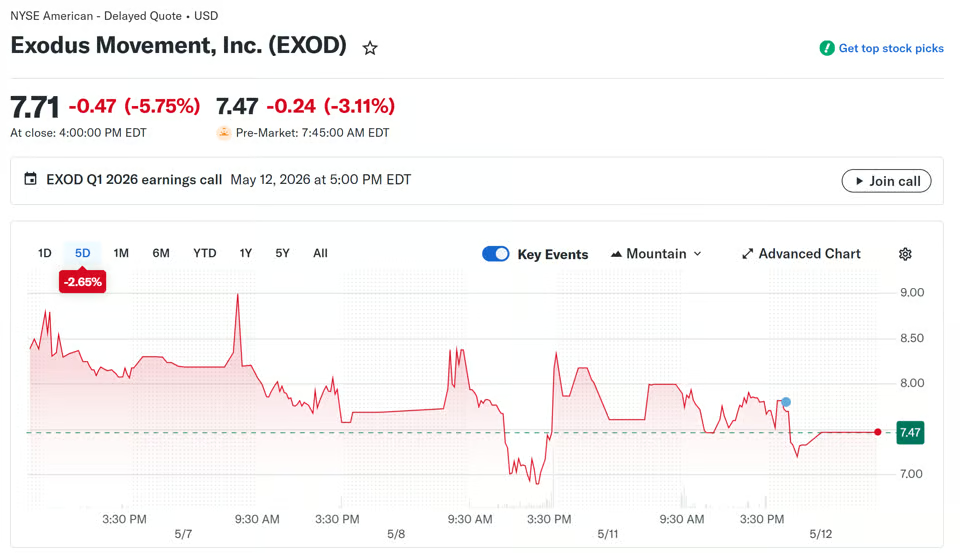
Exodus shares drop. Source: Yahoo! Finance
Exodus shares fell 5.75% to $7.71 on May 12 and slipped a further 3.11% to $7.47 in pre-market trade.
Related: Bitcoin exchange reserves fall to two-year low after $8B exodus
Exodus launches XO Cash in push into AI agents
As Cointelegraph reported, Exodus has rolled out XO Cash, a Solana-based stablecoin toolkit built with MoonPay that lets AI agents spend money through Visa’s payment rails without exposing a user’s private keys.
Developers can spin up agent-linked wallets, cap daily spending, restrict merchants and issue virtual debit cards through Exodus Pay balances. Payments settle automatically in USDC (USDC) or USDt (USDT) via infrastructure from Monavate, and transactions carry no fees.
Magazine: AI-driven hacks could kill DeFi — unless projects act now


Exodus wallet sold 1,076 bitcoin in Q1 2026 to fund its $175 million acquisition of W3C’s payments business.
Summary
- Exodus Movement cut its BTC treasury from 1,704 to 628 coins during Q1 2026, raising $73.2 million in total crypto sales to fund W3C closing payments.
- The company closed its acquisition of Monavate and Baanx on May 1, adding card-issuing and payments infrastructure to its self-custody wallet business.
- Q1 revenue fell 36.8% to $22.7 million as exchange aggregation volume dried up, widening the net loss to $32.1 million from $12.9 million a year earlier.
Exodus Movement (NYSE: EXOD), developer of the self-custody Exodus wallet, sold 1,076 bitcoin during Q1 2026, reducing its BTC holdings from 1,704 to 628 coins and cutting the treasury’s value from $149.2 million to $42.8 million. The company also added 5,068 Solana tokens over the same period.
In total, Exodus sold $73.2 million in cryptocurrency during the quarter while buying just $962,000. “During Q1 2026, the Company has continued to sell digital assets to prepare for the next disbursement related to the W3C closing, and has set aside over $70 million in US dollar reserves for these obligations,” the quarterly filing states. Cash, equivalents, and stablecoins rose to $74.4 million from $5.2 million at year-end.
What the W3C deal delivers for Exodus
Exodus closed its acquisition of Monavate and Baanx on May 1, the two payments subsidiaries of W3C Corp, for a total of $175 million. The deal adds card-issuing and payments infrastructure directly into Exodus’s self-custody wallet stack. Baanx provides crypto debit card infrastructure and Monavate handles card programme management.
The strategy follows Exodus’s earlier announcement of a fully reserved dollar-backed stablecoin built with MoonPay and M0, which will underpin the Exodus Pay feature inside the app.
XO Cash, a Solana-based stablecoin toolkit built with MoonPay, is already live and lets AI agents spend money through Visa rails without exposing users’ private keys.
Q1 revenue fell 36.8% to $22.7 million from $36 million a year earlier. Exchange aggregation, the company’s main revenue line, dropped $13.8 million as user trading volumes dried up.
The net loss widened to $32.1 million from $12.9 million, partly driven by a $36.4 million loss on crypto holdings as bitcoin fell 23% and Solana dropped more than 34% over the quarter.
What the pivot means for Exodus’s positioning
Exodus is the only publicly traded self-custody wallet provider actively building a full payments stack. Monthly active users dipped to 1.5 million from 1.6 million a year earlier, while quarterly funded users fell 22.2% to 1.4 million. EXOD stock has fallen 86% over the past 12 months and was trading near $7.71 at the time of the Q1 filing.
The company is repositioning itself as a crypto-native payments platform rather than a pure wallet provider. The XO Cash and Exodus Pay suite, combined with the Monavate and Baanx infrastructure, could give Exodus a direct competitor path against traditional fintech stablecoin offerings from firms like MoonPay and PayPal’s PYUSD in the consumer payments market.
UBS started direct Bitcoin (BTC) and Ethereum (ETH) trading for select private banking clients in January 2026. The move places Swiss banks’ crypto adoption firmly in the mass market.
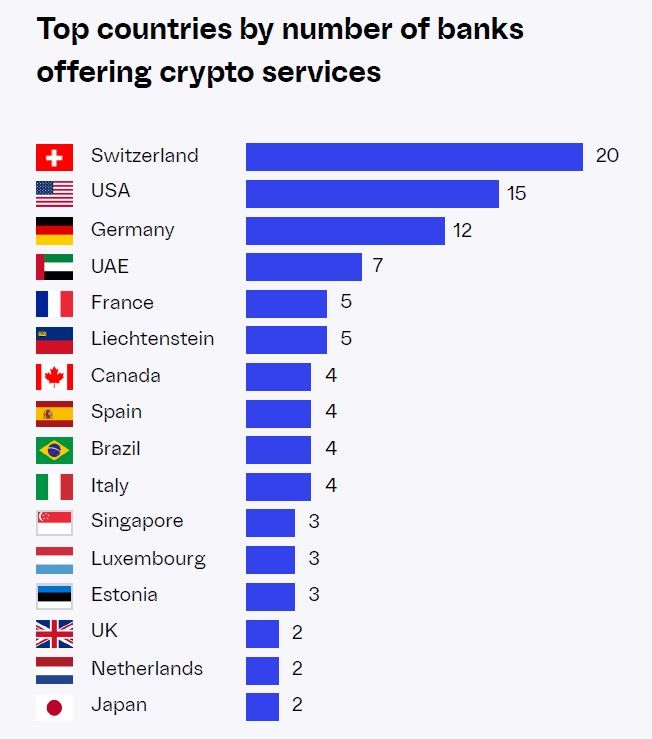
The bank joins Zürcher Kantonalbank and PostFinance, whose 2024 launches gave crypto access to over 2.5 million Swiss accounts. Switzerland now hosts about 20 banks offering crypto services, more than any other country.

The Investor Profile No One Expected
Zürcher Kantonalbank began offering crypto custody and trading in early 2024. Head of Digital Assets, Peter Hubli, told The Big Whale that the bank had modeled a younger client base. The actual numbers told a different story.
“This is probably the biggest surprise of this launch. We expected, like many others, to attract a very young clientele. That’s not the case at all.”
Peter Hubli, Lead Digital Assets, Zürcher Kantonalbank, in The Big Whale’s report.
Average crypto buyers at ZKB sit between 30 and 50 years old, mostly male, and concentrated in private banking rather than retail. More than 40% had no investment portfolio at the bank before opening crypto custody. Their cash had sat idle.
The financial impact is no longer marginal. Maerki Baumann reports that over 20% of bank profit now ties to digital asset activity. Swissquote says that crypto accounts for roughly 10% of total revenue.
Arab Bank Switzerland reports 5% of assets under management but 7% of net income from crypto.
PostFinance, the systemically important state-controlled lender, opened 36,000 crypto custody accounts and processed over 565,000 transactions in its first year live. Both numbers point past the pilot phase.
Switzerland Fits a Global Pattern
The pattern extends beyond Switzerland. The EY-Parthenon and Coinbase 2026 Institutional Digital Assets survey polled more than 350 institutional investors in January 2026. Respondents included asset managers, family offices, and private banks.
The survey found that 73% plan to increase digital asset allocations this year. Stablecoin use or interest reached 84% among the same group. That signal frames the Swiss case as part of a wider institutional shift rather than a national anomaly.
Custody security and regulatory clarity remained the top concerns across respondents. Swiss banks address both through the 2021 Distributed Ledger Technology Act and bank-grade custody providers like Taurus and Sygnum.
The Competitive Clock Is Now Running
The Big Whale report shows Switzerland still leads globally with about 20 banks offering crypto services. The United States follows at 15, Germany at 12. The numerical gap remains, but the pace of US bank entry has narrowed it.
Switzerland’s lead faces two near-term tests. The OECD’s Crypto-Asset Reporting Framework takes effect on January 1, 2027, ending an era of tax opacity.
FINMA’s license overhaul, following a public consultation that closed in February 2026, will reshape custody and stablecoin rules. Several provisions echo the European MiCA framework.
Crypto Valley Association board member Ilya Volkov has warned against “regulatory micromanagement” that could erode the country’s pragmatic edge. Whether Switzerland keeps its lead through 2027 will depend on how that consultation is resolved.
The post Switzerland’s Largest Bank Joins the Mass-Market Pivot to Crypto in 2026 appeared first on BeInCrypto.
The hantavirus outbreak on the MV Hondius lifted one mRNA leader 36% off May lows before profit-taking trimmed the rally. The brief move reactivated the pandemic-prep trade across medical stocks, putting three Covid-era stocks back on the 2026 comeback watchlist.
Each setup carries a different signal. One name has already moved on to the mRNA platform strength. Another builds an inverse base as the biodefense contractor. The third offers a contrarian play loaded with bears. May 2026 is when each chart picks a side.
Note: mRNA, short for messenger RNA, is the vaccine platform behind the COVID-19 shots, delivering genetic instructions to cells instead of using a live virus.
Moderna (NASDAQ: MRNA)
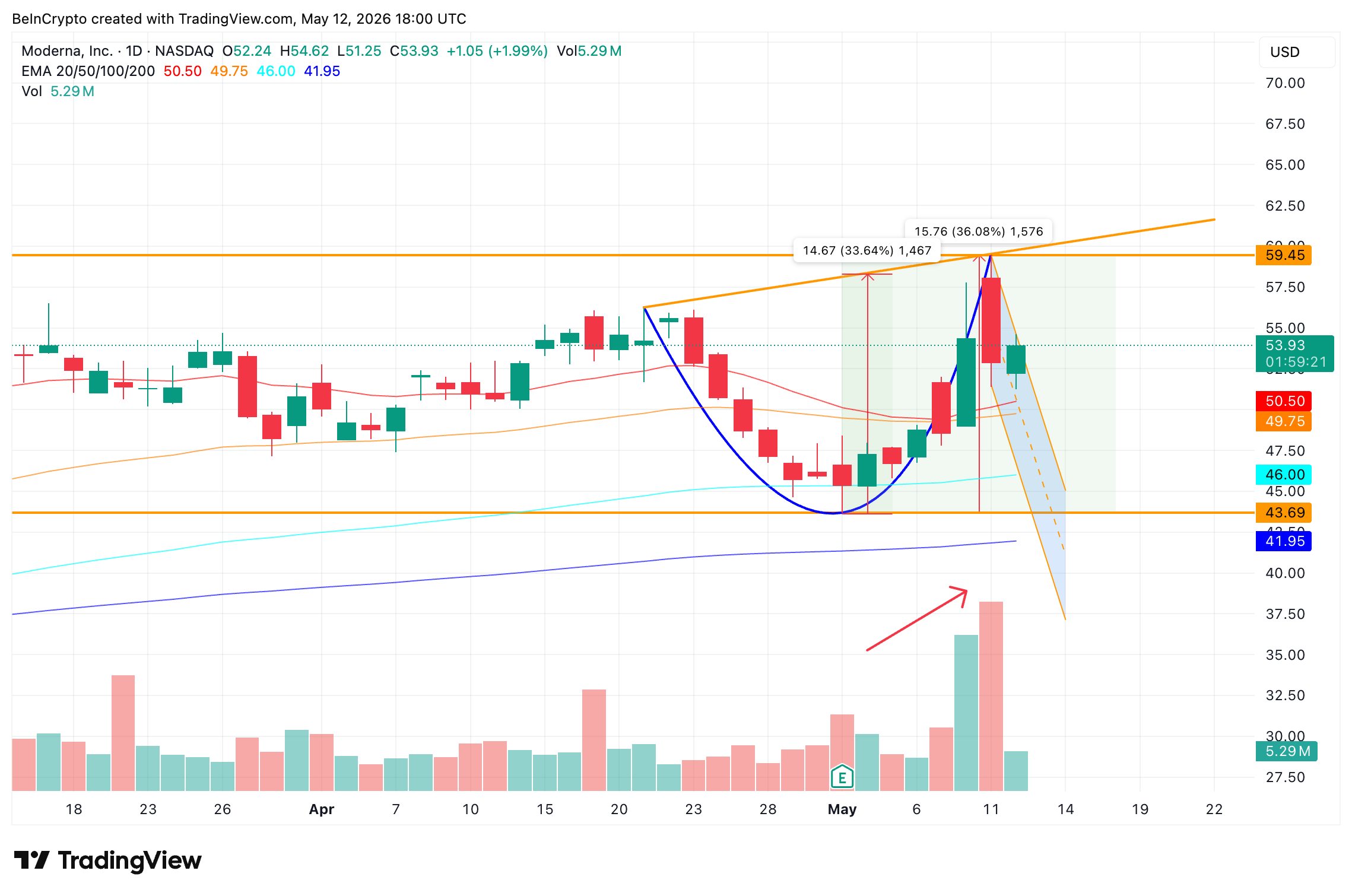
Among the Covid-era stocks rotating back into focus, Moderna stock rallied 36.08% from $43.69 on May 1 to $59.45 on May 11. Volume rose alongside price throughout the climb, confirming buying pressure rather than short covering.
Want more insights like this? Sign up for Editor Harsh Notariya’s Daily Newsletter here.
Three catalysts drove the move. Q1 2026 revenue grew 260% year-over-year to $389 million; the company disclosed a hantavirus vaccine collaboration with the US Army Medical Research Institute of Infectious Diseases; and Phase 3 mRNA-1010 flu data were published in the New England Journal of Medicine.
Moderna’s price now sits near $54.05, consolidating in what resembles the handle of a cup-and-handle continuation pattern. The cup bottom anchors at $43.69, and the rim sits near $59.45.
The handle is forming above the 20-day Exponential Moving Average (EMA), a trend indicator that weights recent price action more heavily, currently at $50.50.

Cup-and-handle patterns can fail if the handle retraces deeper than half the cup, which would put the bullish thesis in question.
The pattern stays valid as long as $51.17 holds. A daily close below opens the way to the 20-day EMA at $50.50 and the 50-day EMA at $49.75. A break under $43.69 invalidates the pattern entirely.
A daily close above $54.91 starts the handle breakout. A move above $60.96, which aligns with the upward-sloping neckline and the 0.618 Fibonacci level, confirms the breakout and projects a measured move to $81.46, roughly 33.59% above current levels.

Moderna already took its leg up. A smaller name (EBS) behind the US pandemic stockpile has not.
Emergent BioSolutions (NYSE: EBS)
Among the Covid-era stocks with the steepest drawdowns, Emergent stock manufactured Johnson & Johnson’s COVID-19 vaccine at its Baltimore Bayview facility under a $480 million contract. A 2021 contamination scandal that ruined 15 million doses then triggered a multi-year de-rating.
The stock corrected 44.36% from $14.07 to $7.53 earlier this year. The trigger was Emergent guiding FY26 revenue to $720-760 million on March 1, below consensus.
A second leg followed on April 30, when Q1 2026 revenue fell 30% year-over-year to $156.1 million, driven by weaker sales of anthrax and smallpox medical countermeasures.
That second dip created the head of an inverse head-and-shoulders pattern. The left shoulder formed near $7.82 in late March. The head dipped to $7.53 in early May. The right shoulder is now forming at $8.33 with visibly weaker selling pressure. That weakening pressure suggests the de-rating may have exhausted.
Inverse head-and-shoulders patterns fail when the right shoulder dips below the head, which would put the floor in question.
A daily close below $8.33 weakens the structure. A break under $7.53 invalidates the pattern entirely.

A daily close above $10.02, which aligns with the neckline and the 0.786 Fibonacci level, confirms the breakout. The measured move projects 25.76% upside toward $12.65, with the prior high at $14.07 capping the extended target.
Emergent’s pattern is set. The final chart shows the contrarian mRNA name loaded with bear positioning.
BioNTech (NASDAQ: BNTX)
Among the Covid-era stocks with the most direct mRNA platform pedigree, BioNTech co-developed COMIRNATY with Pfizer. The partners delivered 2.6 billion doses across 165 countries in 2021. Peak revenue hit €18.98 billion that year.
Since March 10, BNTX has carved a standard head-and-shoulders pattern. The left shoulder formed in mid-March near $100. The head peaked at $113.55 in early April. The right shoulder is now forming at $93.63, just above a neckline at $92.39.
The contrarian read sits in the Chaikin Money Flow (CMF), a proxy for institutional flows. Since February 20, the price has trended lower, while the CMF has trended higher off its low. That bullish divergence often precedes false breakdowns.
Positioning data backs the contrarian setup. BioNTech reported a Q1 2026 net loss of $2.28 per share on May 5.
The put-call ratio, which compares bearish put options to bullish call options, now sits at 2.23 by volume and 1.15 by open interest. That extreme bear skew creates short-squeeze fuel if $92.39 holds.

A daily close below $92.39 confirms a breakdown toward $86.64. The next supports sit at $79.31 and $72.36, the full measured move target. A daily close above $100.47 starts the contrarian play by invalidating the right shoulder. A move above $113.55 negates the entire bearish pattern.

Head-and-shoulders patterns fail when the right shoulder breaks the head, invalidating the bearish setup completely. For now, $92.39 separates this contrarian Covid-era stock’s rebound from a $72.36 measured move downside.
The post The Hantavirus Scare Brought 3 Covid-Era Stocks Back in the Spotlight appeared first on BeInCrypto.
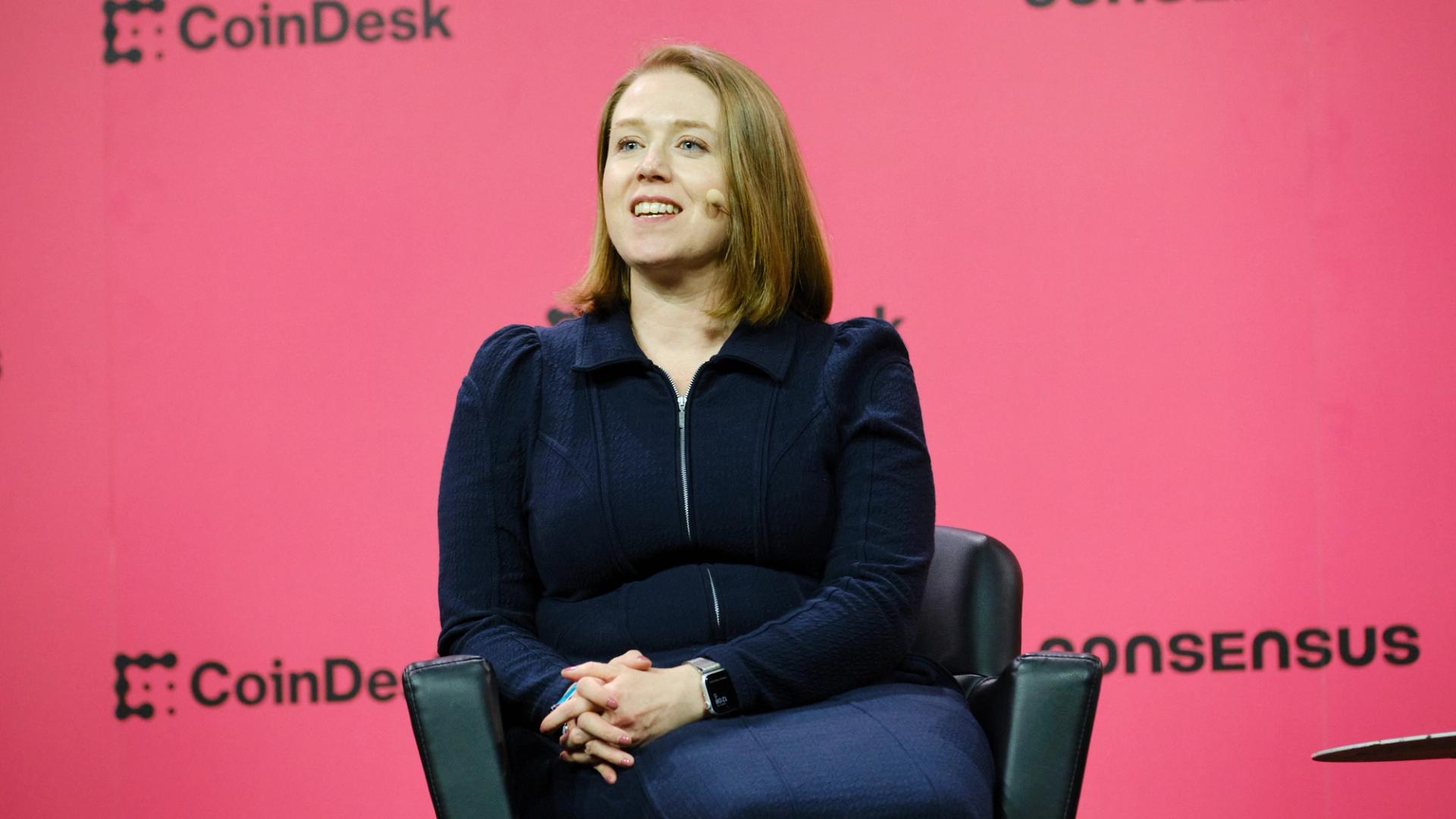
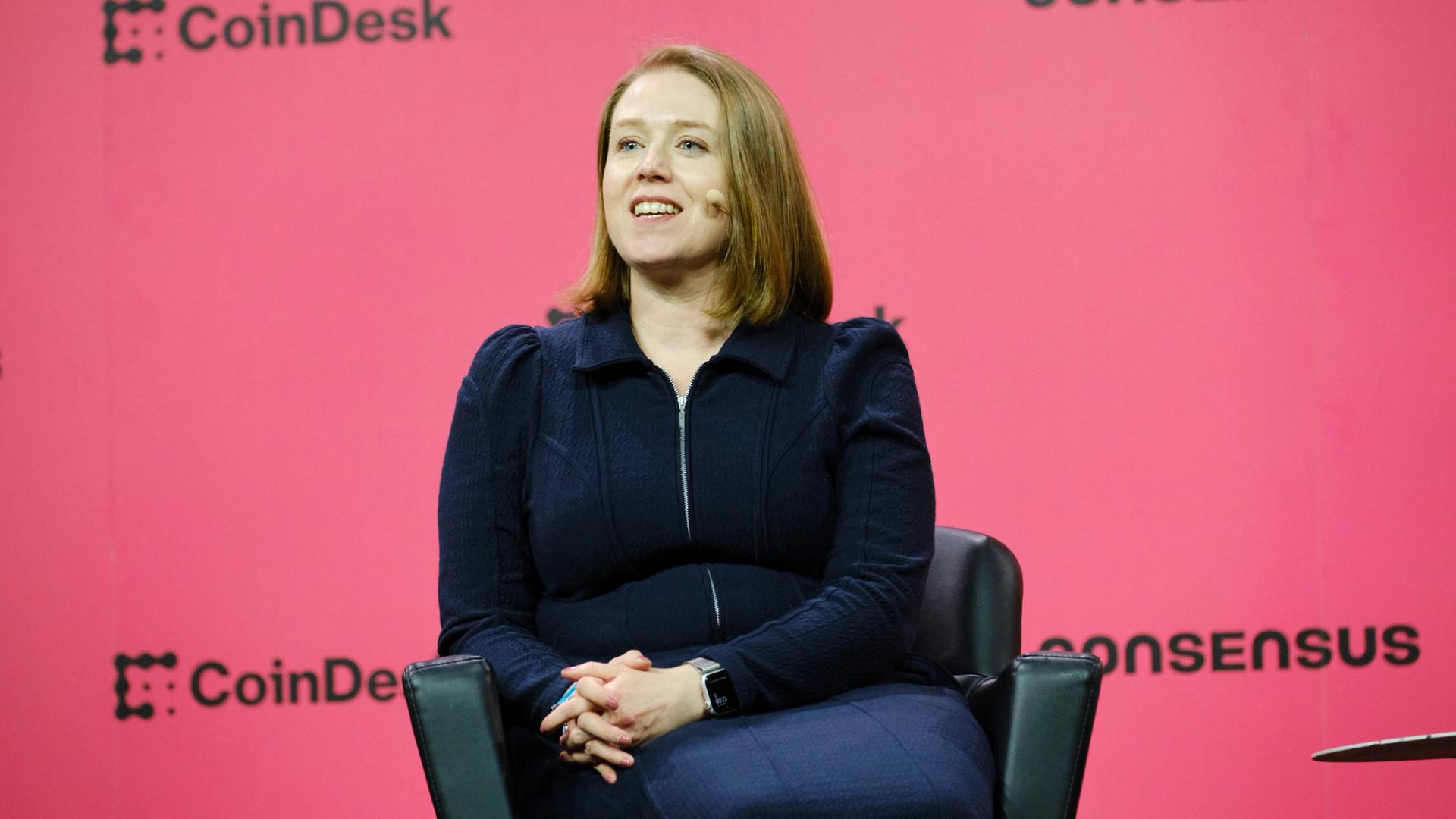
JPMorgan (JPM) is preparing to launch a tokenized money market fund, the latest sign that major financial institutions and Wall Street asset managers are speeding up efforts to move traditional assets onto blockchain rails.
A Tuesday filing with the U.S. Securities and Exchange Commission SEC) outlined plans for a blockchain-based money-market fund investing exclusively in short-term U.S. Treasuries, cash and overnight repo agreements backed by government securities.
The fund, dubbed JPMorgan OnChain Liquidity-Token Money Market Fund (JLTXX), will maintain blockchain-based token balances tied to investors’ ownership records, allowing approved users to submit purchase, redemption and transfer requests through Ethereum, the filing said. The underlying blockchain infrastructure will be operated by Kinexys Digital Assets, JPMorgan’s blockchain unit formerly known as Onyx.
The fund is structured to satisfy reserve asset requirements under the GENIUS Act, legislation aimed at regulating stablecoin issuers in the U.S. That could position the product as a yield-bearing reserve vehicle for stablecoin firms seeking compliant Treasury exposure.
The move comes only days after BlackRock (BLK), the world’s largest asset manager, filed paperwork for a new tokenized Treasury reserve vehicle and blockchain-based shares of an existing $7 billion money-market fund.
Tokenization — the process of creating blockchain-based representations of traditional financial assets — has become one of the hottest trends across finance and crypto markets. Supporters argue the technology can reduce settlement times, improve transparency and enable around-the-clock trading and collateral use.
The tokenized real-world asset market has grown more than 200% over the past year and now exceeds $32 billion, according to rwa.xyz data. Treasury products have emerged as one of the fastest-growing segments as institutions seek ways to earn yield on onchain cash.
JPMorgan has been among the most active traditional banks embedding blockchain infrastructure in traditional finances. In December, the bank launched a tokenized money-market fund called MONY on Ethereum, giving institutional investors blockchain-based access to short-term cash products. Through Kinexys, the bank has also processed tokenized collateral and settlement transactions for institutional clients.
Arthur Hayes Predicts AI Race Will Push Bitcoin Back to $126K

Demi Moore Slammed After AI Comment At Cannes

The 81 MPs (so far) who have demanded tick-like Starmer out

Manchester United reach agreement with Casemiro over contract clause amid transfer speculation

US brings back mandatory military draft registration

Steven Gerrard disagrees with Gary Neville over ‘shock’ Chelsea and Arsenal claim | Football


-
 Crypto World5 days ago
HarrisX Poll Found 52% of Registered Voters Support the CLARITY Act
-

 Fashion4 days ago
Weekend Open Thread: Marianne Dress
-

 Crypto World6 days ago
Upbit adds B3 Korean won pair as Base token gains Korea access
-
 NewsBeat6 days ago
NCP car park operator enters administration putting 340 UK sites at risk of closure
-

 Fashion1 day ago
Coffee Break: Travel Steam Iron
-

 Fashion2 days ago
What to Know Before Buying a Curling Wand or Curling Iron
-

 Tech3 days ago
Auto Enthusiast Carves Functional Two-Stroke Engine from Solid Metal
-

 Politics1 day ago
What to expect when you’re expecting a budget
-

 Politics4 days ago
Politics Home Article | Starmer Enters The Danger Zone
-
 Business3 days ago
Ignore market noise, India’s long-term story intact, say D-Street bulls Ramesh Damani and Sunil Singhania
-

 Tech2 days ago
GM Agrees To Pay $12.75 Million To Settle California Lawsuit Over Misuse Of Customers’ Driving Data
-

 Crypto World6 days ago
BlackRock CEO Larry Fink Discusses a New Asset Class
-
 Sports7 days ago
NBA playoff winners and losers: Austin Reaves is not loving Lakers vs. Thunder matchup, but Chet Holmgren is
-

 Entertainment6 days ago
Sarah Paulson Called Out For Met Gala ‘Hypocrisy’
-

 Entertainment5 days ago
General Hospital: Ric & Ava Bombshell – Ric’s Massive Secret Exposed!
-

 Politics5 days ago
Simon Cowell Says He Was ‘Horrible’ To Susan Boyle During BGT Audition
-

 Entertainment6 days ago
Bold and Beautiful Early Spoilers May 11-15: Steffy Revolted & Liam Overjoyed!
-

 Sports6 days ago
UEFA Champions League final schedule, teams, venue, live time and streaming | Football News
-

 Crypto World6 days ago
Robinhood says Wall Street is building onchain
-

 Tech7 days ago
Apple and Samsung are dominating smartphone sales so thoroughly that only one other company makes the top 10
You must be logged in to post a comment Login