
Crypto World
Payward Q2 revenue hits $508M as EBITDA falls



Payward, the parent company of Kraken, reported $508 million in adjusted revenue for the second quarter of 2026, up 17% year over year, while adjusted EBITDA dropped sharply to $23 million.
Summary
- Payward reported $508 million in Q2 adjusted revenue, rising 17% from the prior year period.
- Adjusted EBITDA fell to $23 million from $80 million reported for the second quarter previously.
- Total platform transaction volume declined 18% year over year to $310 billion during the quarter.
- Asset-based and other revenue represented 60% of total revenue, up from 55% one year earlier.
- Payward reported 6.6 million funded accounts, although its published metric definition changed from last year.
The company disclosed the results on Aug. 14 as weaker spot trading weighed on activity despite growth across other financial products.
The profitability decline was substantial. Kraken reported $80 million of adjusted EBITDA on $432 million of adjusted revenue in Q2 2025. Payward did not disclose net income in its latest release. Its earlier financial disclosures describe adjusted revenue and adjusted EBITDA as management measures that exclude certain expenses.
Payward revenue grew while transaction volume fell
Total platform transaction volume reached $310 billion, down 18% from the previous year. Payward attributed the decline partly to weaker crypto spot volumes, while saying traditional futures, equities and tokenized equities grew during the quarter. Futures daily average revenue trades increased 8%.
Revenue also became less dependent on transaction fees. Asset-based and other revenue accounted for 60% of total revenue, compared with 55% a year earlier. Payward said that shift reflects income generated from assets and services surrounding its trading operations rather than a retreat from trading itself.
Assets on the platform stood at $40 billion at quarter-end. Payward also reported $65 billion of what it calls “Real Assets on Platform,” calculated by holding prices at Q2 2025 levels to remove market-price effects. That adjusted measure increased 48% year over year, according to the company.
Funded accounts reach a record 6.6 million
Payward reported 6.6 million funded accounts, up 42% year over year and the highest level in its history. However, comparisons with Kraken’s previously published 4.4 million funded accounts for Q2 2025 require caution.
The newer Payward definition counts distinct funded accounts across its platforms and products and counts sub-accounts separately. Kraken’s 2025 disclosure instead described funded accounts as funded customers with balances above zero. The reporting perimeter has also expanded as Payward integrated businesses such as NinjaTrader and Bitnomial.
Bitnomial expands Payward’s regulated U.S. derivatives stack
Payward closed its acquisition of Bitnomial on May 1, adding a CFTC-regulated designated contract market, clearing organization and futures commission merchant. As crypto.news previously reported, the $550 million Bitnomial acquisition gave Payward a vertically integrated U.S. derivatives stack.
Payward said the infrastructure supported regulated U.S. perpetual futures and spot margin products during Q2. Separately, a July CFTC letter shows Kraken is reconsidering the future of Kraken Derivatives Exchange, the former Small Exchange it acquired in 2025, including potential partnerships or a sale following the Bitnomial transaction.
Its federal banking push is also unresolved. The OCC still lists Payward National Trust Company’s May 8 charter application among pending digital-asset licensing applications. As crypto.news reported, the proposed national trust company would give Payward a federally supervised custody entity if regulators approve it.
What happens next for Payward
Payward expects its second-half strategy to focus on broader trading products, banking, tokenization, payments and services sold to third-party platforms. It completed its Reap acquisition on July 1 and has agreed to acquire Magic Labs’ wallet infrastructure business, although that transaction has not yet closed.
Tokenized equities remain a major part of that strategy. In related coverage, Payward expanded xStocks beyond U.S. equities through its GTN partnership, while Kraken has also begun allowing eligible users to use selected tokenized stocks as collateral.
The next financial report will show whether Payward can maintain revenue growth while restoring profitability. For now, Q2 presents a mixed picture: revenue and funded accounts increased, but transaction volume fell and adjusted EBITDA declined from $80 million to $23 million.


Popular cryptocurrency analysts continue to debate whether BTC has already bottomed in this cycle, and, interestingly, several agree that the actual capitulation event is not here yet, but it’s close.
Beyond predicting when it’s supposed to occur, Ali Martinez went further by outlining potential bearish price targets.
When and How Low
CryptoPotato reported yesterday the combined conclusion from Martinez, Rekt Fencer, Peter Brandt, and other analysts claiming that the long-anticipated and debated BTC bottom will take place in early October. The idea is simple, but it’s surprisingly accurate – history.
Although historical performances do not guarantee a repeat, the fact that the primary cryptocurrency has bottomed out at approximately 364 after the bull market top on more than one occasion has the community waiting for October to see if it plays out again. As such, analysts speculate that the period between October 4 and 16 represents a potential macro bottom.
Since that sounds historically accurate and promising, given the fact that there are perhaps less than two months left, let’s join the fun. Let’s accept that bitcoin indeed bottoms at the start of Q4. The question that comes next is: at what price?
Martinez advised investors to prepare and initiate a long-term dollar-cost-averaging strategy and accumulate more BTC within a wide range between $62,000 and $48,000. He described the latter as the “final capitulation candle,” and concluded that after that it would be “time to get BULLISH.”
Fellow analyst Merlijn The Trader also weighed in on bitcoin’s structure, indicating that the RSI divergence that marked the previous market tops has built the same shape, but inverted, at the bottom now. In contrast to Martinez, he noted that the bottom might actually be closer, and he won’t be waiting for a dip below $50,000, even though a monthly close beneath $58,000 would invalidate the pattern.
OI Suggests Big Move Ahead
The evident dullness of the market hasn’t deterred leveraged investors from opening big futures positions. Data shared by Ted Pillows shows that the BTC open interest has skyrocketed to a three-year high after a sharp uptick in the past week or so.
This means that every larger volatility spike will be exacerbated by the fact that there’s so much leverage in the market now. Recall the events of the October 2025 massacre when such investors lost over $19 billion as prices unraveled. And the BTC OI then was slightly lower than it is now. As such, Pillows concluded that so much leverage typically ends with lots of wrecked positions.
Bitcoin Open Interest is now at its highest level in 3 years.
Too much leverage is back, and this only ends with people getting rekt. pic.twitter.com/N2WbQATT0x
— Ted (@TedPillows) August 15, 2026
The post How Low Will Bitcoin Go? Analysts Pinpoint a Bottom Date and Price Range appeared first on CryptoPotato.
Crypto World
The stablecoin yield clash that won’t go away has banks, crypto battling over tradition
The battle is likely to be finished one way or another next month, when the Clarity Act gets its final three weeks of Senate action before the midterm elections, and the stakes will test the old-guard strength of bank lobbyists against the high-spending political powers of crypto advocates.
The banks have made an appeal that what they’re doing represents the public good: Their business model requires that people keep their money in deposits, which don’t pay enough interest to compete with what crypto firms would pay in stablecoin yield, if given the chance. People can’t be allowed to make money off their holdings of stablecoins, the banks contend, because if customers abandon low-interest bank deposits, the institutions won’t be able to reuse their money to support bank lending.
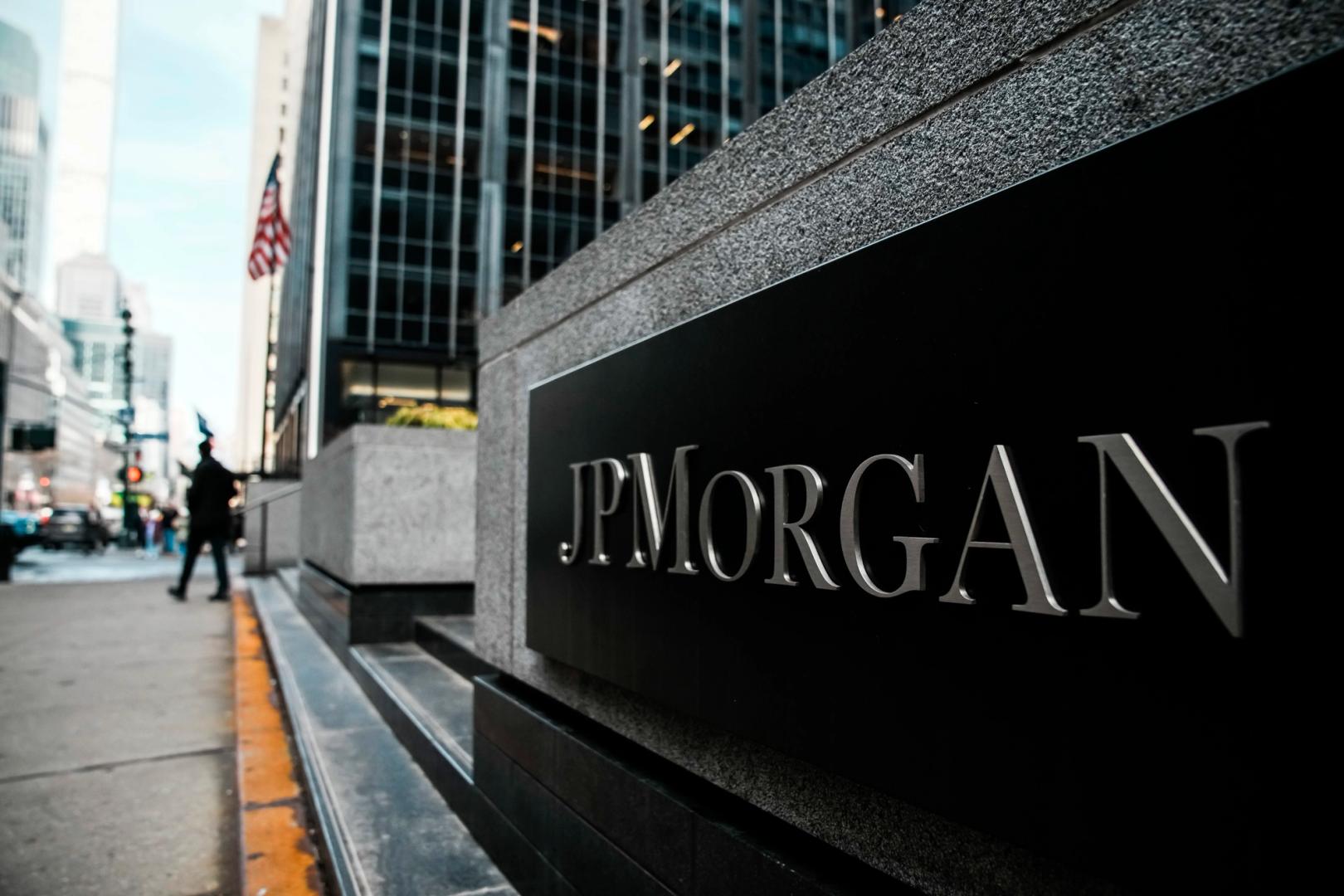
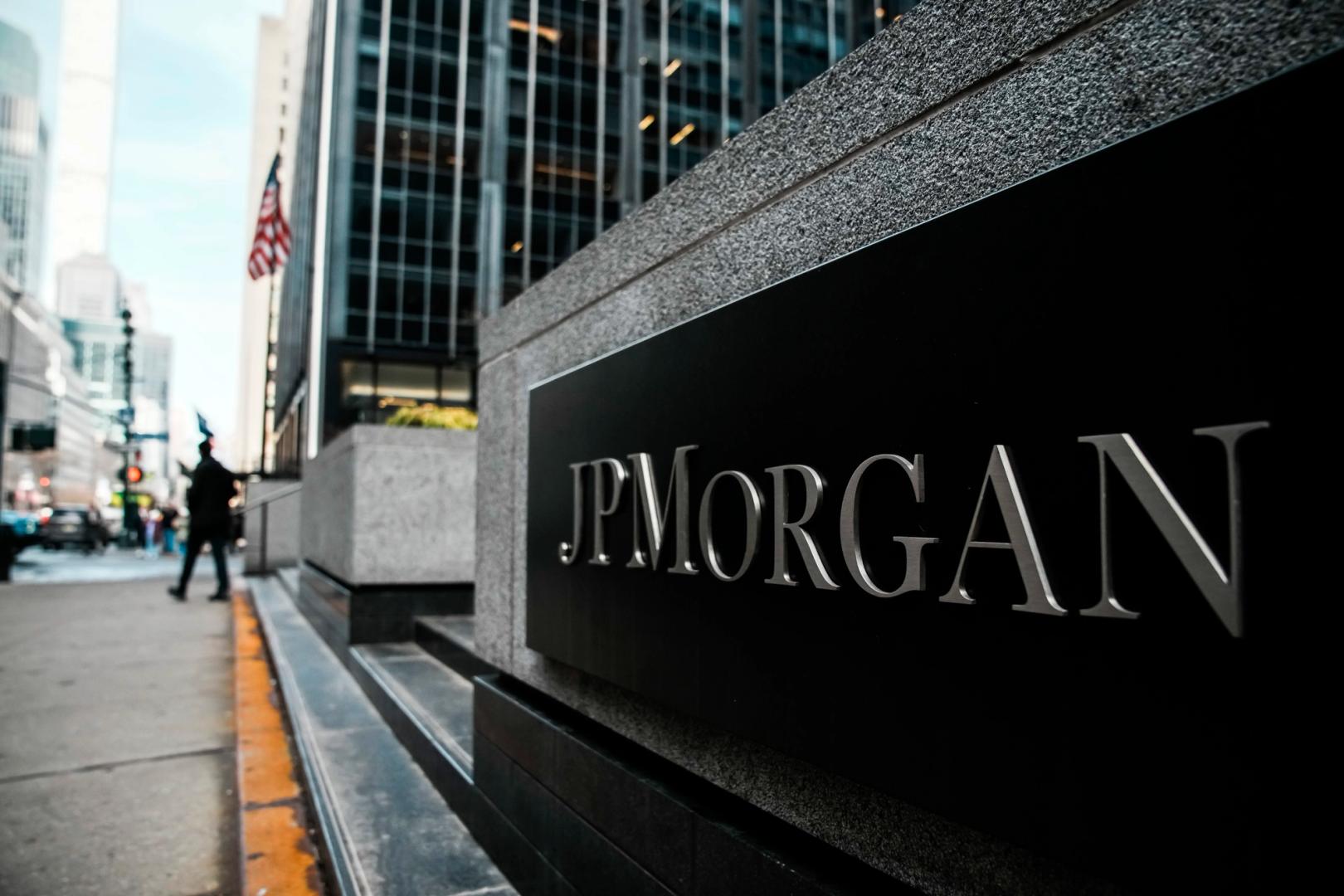
One of their standard bearers, JPMorgan Chase & Co. CEO Jamie Dimon, says banks aren’t being treated fairly, contending that stablecoins don’t carry the same government scrutiny, regulations and requirements to track the identity of users.
“It should be fair and equal, period,” Dimon, whose bank is the largest in the U.S., said in a June Fox Business interview, saying the Clarity Act had “almost no legal protections” to prevent money laundering and other illicit finance.


DefiLlama’s founder said Apple removed one fake app within days after the company documented it draining funds from a small crypto wallet.


Binance has extended its rewards push around Ripple USD with another four-week campaign offering one million XRP to eligible RLUSD holders.
Summary
- Binance extended its RLUSD rewards campaign through September 11 with one million XRP available overall.
- Eligible users need at least 0.01 RLUSD and $500 in average daily derivatives trading volume.
- One million XRP will be distributed across four weekly installments beginning August 21 to participants.
- Borrowed stablecoin-funded RLUSD receives a 60% haircut when Binance calculates qualifying margin balances for rewards.
- Ripple officially reported $1.59 billion of RLUSD circulating against $1.70 billion in reserve funds recently.
The new campaign began at 00:00 UTC on Aug. 14 and runs through Sept. 11, according to the exchange’s updated announcement. Rewards will be distributed every Friday across four installments.
The follow-on program started immediately after Binance’s first RLUSD campaign ended on Aug. 14. That earlier promotion offered $800,000 worth of XRP across four weekly distributions beginning July 17. As crypto.news previously reported, the first campaign tied XRP rewards to eligible RLUSD balances held through Binance Earn and Margin products.
Binance keeps RLUSD eligibility rules largely unchanged
To qualify, users must maintain at least 0.01 RLUSD in an eligible Earn or Margin account and record at least $500 in average daily Margin or Futures trading volume. The trading volume can come from any supported pair as long as RLUSD is being used as collateral.
Binance calculates rewards using each user’s qualifying RLUSD balance and an effective annualized percentage rate determined for each weekly period. The lowest RLUSD balance observed during hourly snapshots becomes the qualifying balance for that day. There is no stated individual reward cap.
RLUSD created by borrowing other stablecoins receives different treatment. Binance applies a 60% haircut to the leveraged portion after accounting for liabilities involving USDT, USDC, U, USD1 and FDUSD. RLUSD that is itself recorded as a borrowing liability is excluded from the qualifying balance.
One million XRP will be distributed through Sept. 11
The first distribution under the new campaign is scheduled for Aug. 21, followed by payments on Aug. 28, Sept. 4 and Sept. 11. Binance will determine the effective APR and XRP valuation for each period at the time of distribution.
The prior campaign shows how those rates can move. Its effective APR started at 22.25% for the first week, then fell to 8.22%, 8.08% and 7.69% in subsequent distributions. Binance warns that the APR is “not indicative of future results” and may fluctuate from week to week.
The new reward pool is denominated directly in one million XRP rather than a fixed dollar value. Its final dollar value will therefore depend on the XRP price Binance uses for each weekly distribution.
U.S. and European users face participation restrictions
The campaign is not available globally. Binance’s current exclusion list includes the U.S., UK, Canada, Japan and numerous European Economic Area jurisdictions. Users must also complete KYC and remain in an eligible jurisdiction. Binance notes that the exclusion list can change as regulatory requirements develop.
The geographic limits are particularly relevant for RLUSD because Binance warns that unauthorized stablecoins face restrictions for EEA users under MiCA. Holding RLUSD alone does not make a user eligible for the promotion.
RLUSD supply remains near $1.6 billion
The campaign comes after Binance listed RLUSD and XRP-linked trading pairs in January, expanding the stablecoin’s availability on one of the largest crypto trading platforms.
Ripple’s latest official transparency data shows $1.5896 billion of RLUSD in circulation against $1.7026 billion of reserve funds as of Aug. 6. Standard Custody & Trust Company issues RLUSD under supervision from the New York Department of Financial Services, while independent CPA attestations are published monthly.
What happens next
The next confirmed milestone is the first new XRP distribution on Aug. 21. Binance will then publish the effective APR and XRP token value used for that reward period. Three additional weekly distributions are scheduled before the campaign closes on Sept. 11.
For users, the amount received will depend on qualifying RLUSD balances, total eligible balances across the campaign and the effective APR. The one million XRP figure is the total pool rather than a guaranteed amount or fixed return for any individual participant.
Crypto World
BiggerZ: Building a Fairness-First Crypto Casino, Sportsbook, and Prediction Markets Platform
[PRESS RELEASE – Miami, Florida, USA, August 16th, 2026]
BiggerZ is strengthening its position as a fairness-first betting platform, bringing casino gaming, sports betting and prediction markets together under one account while making transparency, verifiability and clearly defined rules central to the player experience.
As online betting platforms expand across crypto, casino gaming, sports and prediction markets, BiggerZ is taking a different approach to how these products are presented to players: fairness should be explained rather than simply claimed.
The platform’s approach is built around four principles – transparency, clarity, verifiability and defined rules – applied at the moments where players would otherwise be asked to simply trust an operator.
BiggerZ combines a crypto casino, sportsbook, and prediction markets product through one account and one balance, supporting cryptocurrency alongside selected fiat payment methods.
Fairness That Players Can Verify
One of the clearest examples of this approach is BiggerZ Touch, the platform’s exclusive collection of short-format fair games, including Mines, Dice, Plinko, Hi-Lo, Keno, Baccarat, Limbo and Soccer.
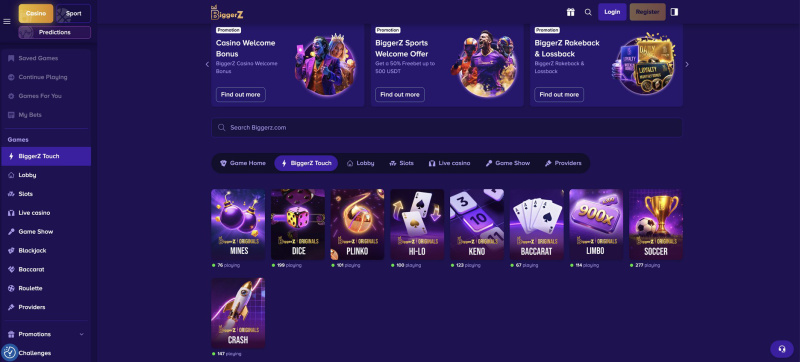
Eligible BiggerZ Touch outcomes include a provably fair transparency layer, allowing players to independently verify results rather than relying solely on what appears on the platform interface.
This distinction is important. Third-party slots and live dealer games remain governed by their respective providers’ certified systems, RNG controls and audit standards. BiggerZ Touch adds a separate verification mechanism for eligible in-house game outcomes.
For BiggerZ, the principle extends beyond casino results: players should be able to understand the mechanism governing an outcome before committing funds.
Transparency Beyond Casino Games
The same fairness-first philosophy extends across BiggerZ’s sportsbook and prediction markets.
In the BiggerZ sportsbook, fairness is primarily a question of settlement clarity. Market rules, live betting conditions, void bets, cancelled or postponed events and settlement conditions are defined through the applicable rules so players can understand how their bets will be resolved.
With BiggerZ Prediction Markets, transparency centres on defined resolution.
Markets can cover real-world outcomes across crypto, sport, finance, politics, culture, entertainment and major world events. Each market is connected to specific resolution criteria, with its wording, timing, settlement conditions and specified data source determining the final outcome.
The objective is straightforward: users should be able to understand what must happen, when it must happen and what determines the result before taking a position.
Clearer Rules Around Payments and Verification
BiggerZ also applies the same principle to payments and account verification.
The platform supports cryptocurrencies including Bitcoin, Ethereum, USDT and USDC alongside other digital assets and selected fiat payment methods, depending on location and account status.
Crypto deposits are credited following the required network confirmations, while BiggerZ supports instant crypto withdrawals for eligible approved transactions, subject to network conditions and any required account verification.
Verification requirements are governed by the platform’s Terms and Conditions, KYC Policy and AML Policy.
The philosophy is that requirements affecting access to funds or account activity should be available to players before they deposit or place a bet, rather than becoming visible only after a win.
Global Partnerships and Social Proof
BiggerZ has also built brand visibility through partnerships and documented betting activity involving globally recognised figures across music, sport and entertainment. High-profile activity has included names such as Cardi B, Rick Ross, French Montana, Rich The Kid, Nicky Jam and Nate Diaz.
These partnerships provide social proof and brand visibility alongside the platform’s broader focus on transparent game mechanics, settlement rules and verifiable outcomes.
One Fairness Standard Across Three Products
Casino games, sports betting and prediction markets operate differently, meaning fairness cannot rely on one mechanism alone.
For BiggerZ Touch, it can mean independently verifiable outcomes. For third-party casino games, it means provider-level certification and auditing. For sportsbook bets, it means clearly defined settlement rules. For prediction markets, it means transparent resolution criteria. And for payments and verification, it means communicating applicable conditions before they become relevant.
By connecting these products through one account and balance, BiggerZ is working to make that same expectation of transparency consistent across the wider platform.
Rather than treating fairness as a marketing claim, BiggerZ’s approach is to make the mechanisms behind outcomes, settlement and verification easier for players to understand.
About BiggerZ
BiggerZ is a crypto-friendly online betting platform combining casino gaming, sports betting and prediction markets through one account and balance. The platform supports cryptocurrency and selected fiat payment methods and includes BiggerZ Touch provably fair games, pre-match and live sports betting, esports and outcome-based prediction markets.
BiggerZ is operated by CDK PLAY INC SRL and licensed by the Government of the Autonomous Island of Anjouan, Union of Comoros.
The post BiggerZ: Building a Fairness-First Crypto Casino, Sportsbook, and Prediction Markets Platform appeared first on CryptoPotato.
Crypto World
The ‘long bitcoin, short the bankers’ era is officially over as TradFi giants embrace digital assets
“The old ‘long bitcoin, short the bankers’ trade is over: banks have moved from resisting digital assets to building and enabling or distributing them through custody, tokenization and regulated trading,” Dori said.
He attributed the shift to client demand and clearer rules, calling it structural rather than cyclical.
Early bank entrants included Swissquote, which added bitcoin trading in 2017, DBS in 2020 and BBVA in 2021. BNY Mellon started institutional crypto custody in 2022, the same year Nubank launched bitcoin and ether trading and LGT added crypto services.
St.Galler Kantonalbank and Santander followed in 2023, while Zürcher Kantonalbank added retail trading in 2024, before other major financial industry players including Standard Chartered, Charles Schwab, SoFi and Morgan Stanley entered the space.
Anchorage Digital CEO Nathan McCauley, meanwhile, said its client roster has increasingly reflected the convergence of traditional and decentralized finance over the past two years.
Large financial firms are partnering with specialist providers rather than building their own infrastructure, he said. Still, real-world assets coming onchain and crypto wrappers being created by large asset managers is showing two worlds are increasingly becoming one.
“We’re quickly headed towards a world where there isn’t ‘traditional finance’ and ‘decentralized finance.’ There’s just ‘finance,” McCauley told CoinDesk. “


An unnamed XRP Ledger startup being developed by former Ripple staffer Bias Goose will use RLUSD as a primary financial rail, according to a series of public posts published since Aug. 8.
Summary
- RLUSD will underpin the unnamed XRP Ledger startup, according to former Ripple staffer Bias Goose.
- Bias Goose says the project will avoid issuing its own token or using artificial incentives.
- Bias Goose first teased the unnamed XRP Ledger startup on August 8, targeting roughly September.
- Ripple reported nearly $1.6 billion of RLUSD circulating on August 6 against larger reserve assets.
- Project claims of yields above Treasury rates remain unverified until economic details and partners emerge.
His latest Aug. 16 post said, “We will make RLUSD great again,” but disclosed no project name, partners or detailed product structure. Bias Goose previously worked in developer growth at Ripple and now works in marketing at Walrus Protocol.
The public disclosures remain narrower than some descriptions of the project suggest. Bias Goose has said the startup involves companies from a sector that has traditionally been resistant to blockchain and intends to generate “real yield” without its own token or artificial incentives. Those economic claims cannot yet be independently tested because the underlying businesses and revenue model remain undisclosed.
RLUSD is confirmed, but the startup remains unnamed
Bias Goose first said on Aug. 8 that the XRP Ledger would get a new startup “in just about a month.” That points broadly to September rather than establishing a firm launch date. No exact date was included in that announcement.
Two days later, he said the team had formed partnerships with a “rather closed off sector” and planned to bring participants from that industry onchain. He also said the model would use RLUSD rails, involve XRP later and feature “no incentives, no tokens.” These remain statements from the project’s creator rather than independently confirmed partner announcements.
Yield claims remain the biggest unanswered question
The commercial pitch centers on returns generated by real-world activity rather than token emissions. Reports have attributed expectations of returns above U.S. Treasury yields to the project, but no underlying assets, borrowers, contractual cash flows or audited performance figures have been released. Those return claims should therefore be treated as forward-looking and unverified.
RLUSD itself does not automatically produce those returns. Ripple describes the stablecoin as a dollar-backed asset designed for payments, settlements, treasury management and onchain finance. Any yield offered through the startup would need to originate from another asset, strategy or commercial activity layered around RLUSD.
RLUSD already has a growing institutional footprint
Ripple’s latest transparency report showed $1.5896 billion of RLUSD circulating against $1.7026 billion in reserve funds as of Aug. 6. Standard Custody & Trust Company, the issuer, is supervised by the New York Department of Financial Services, while Ripple publishes monthly third-party attestations covering supply and reserves.
RLUSD has also expanded internationally. Ripple and SBI launched the stablecoin in Japan in June following regulatory approval there. As crypto.news previously reported, RLUSD trading had driven more than $2.5 billion through XRP Ledger pairs by late June, giving new XRPL applications a deeper dollar-liquidity base than existed when RLUSD launched.
What happens next
The next verifiable milestone is a fuller project reveal. Bias Goose’s Aug. 8 timeline points to roughly early September, but no firm launch date has been announced. Claims about counterparties, expected returns, legal structure or a possible Walrus integration remain unconfirmed until the project or its partners publish supporting details.
There is also no announced project token. Bias Goose has explicitly said the model will use “no incentives, no tokens” while operating on RLUSD rails. If that remains the structure, the main questions will be how RLUSD enters the system, what activity produces the proposed returns, how risks are managed and whether XRP gains a role beyond serving as the XRP Ledger’s native asset.
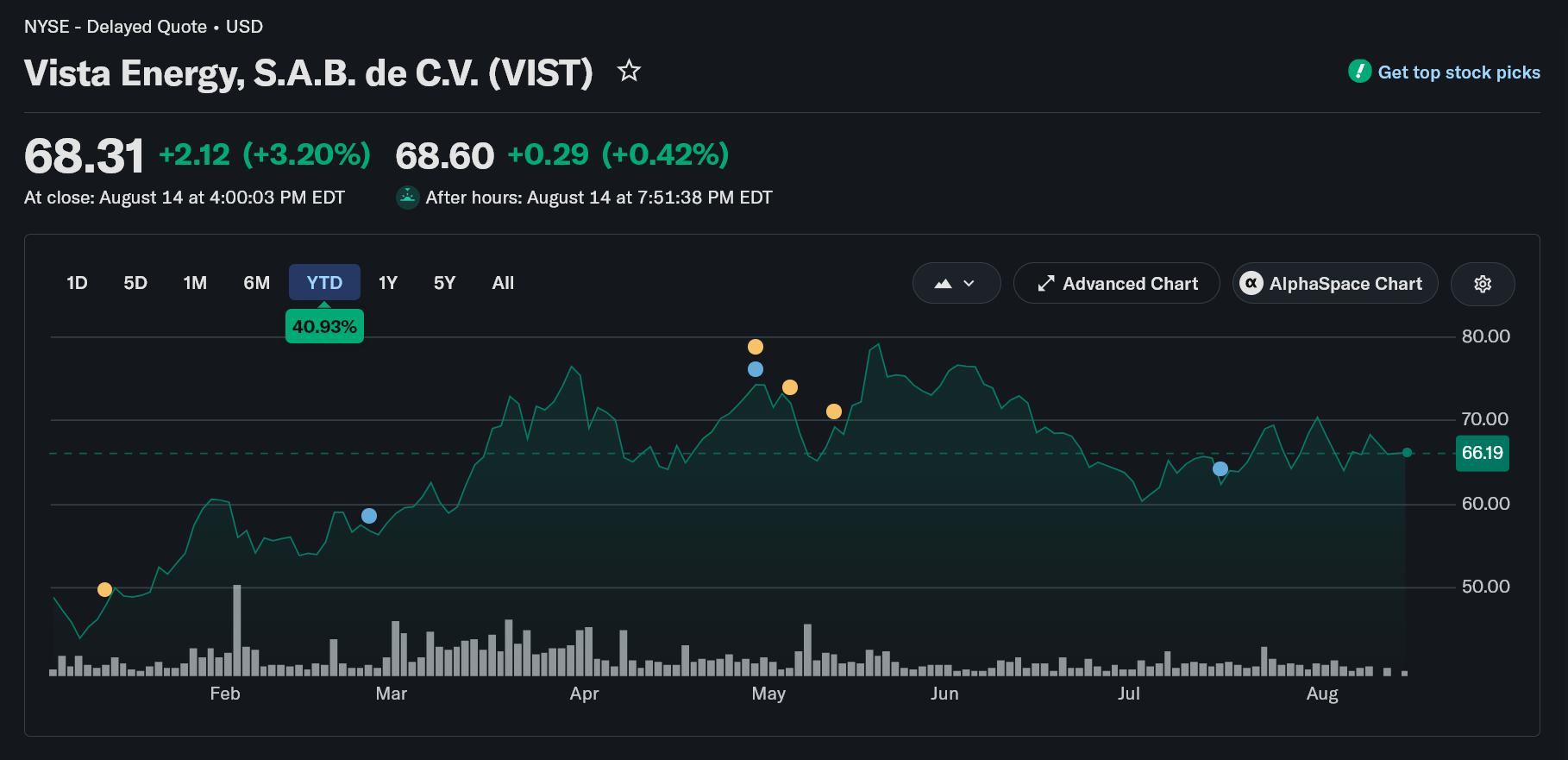
Peter Thiel has bought close to 1% of Vista Energy, an Argentine oil producer. His fund paid roughly $76 million for about 1.2 million American depositary shares.
The purchase was disclosed in a quarterly filing with the U.S. Securities and Exchange Commission (SEC). Vista now ranks second among Thiel’s disclosed holdings.
Inside Thiel’s $76 Million Vista Energy Stake
Thiel Macro reported eight positions worth $418.7 million for the second quarter of 2026. Vista accounts for $75.9 million of that total, or 18.1%.
Thiel Macro also expanded fast. It listed a single holding a quarter earlier, then disclosed eight.
Only Amazon (AMZN) ranks higher at 28.2%. Meanwhile, three power companies absorb much of the rest. Vistra, American Electric Power, and DTE Energy together make up roughly 34% of the book.

The shape of that portfolio reads as an energy bet, not a technology one. Thiel has pulled back elsewhere this year. In February, his Founders Fund exited an Ethereum treasury firm as digital asset treasury companies came under pressure.
His stock picks have also stumbled. In May, another Thiel-backed stock lost half its value after a Las Vegas debut fell flat.
The filing is dated Aug. 14 and covers positions held through June 30. Quarterly disclosures lag the market, so the fund may have changed its position since then.
Vista therefore stands out in Thiel’s book. It is the largest single wager outside Big Tech.

Why The Billionaire Is Betting on Vaca Muerta Oil
Vista drills in Vaca Muerta, a shale formation roughly the size of Belgium. The field holds the world’s second-largest shale gas reserves and its fourth-largest shale oil reserves.
Output reached 156,061 barrels of oil equivalent per day in the second quarter, a 16% rise from the first. Vista has committed more than $6.5 billion to Argentina, and it raised its production outlook in May.
Politics helps explain the timing. Thiel met President Javier Milei at the presidential palace in Buenos Aires four months ago. Milei later told local media that they discussed economic policy and a shared dislike of wealth taxes.
Since then, Argentina’s inflation under Milei has kept falling, though economists still doubt how durable the peso fix will prove. Thiel also bought a mansion in an upscale Buenos Aires neighborhood.
Tax policy runs through the story as well. Wealthy investors spent 2026 hunting lower-tax jurisdictions, and Milei courts that money openly.
For crypto readers, the rotation matters more than the ticker. Capital that once chased digital assets has drifted toward commodities and equities through this downturn. Thiel’s filing lands squarely in that trend.
Whether Thiel’s wager pays now depends on two things: Vaca Muerta output and Milei’s ability to keep his reform program intact.
The post Peter Thiel’s Second-Biggest Bet is Not a Tech Stock Anymore appeared first on BeInCrypto.


Cardano’s Dijkstra upgrade remains on its agreed technical scope and schedule, with developers targeting Linear Leios and Nested Transactions in the first phase before a separate Peras activation in 2027.
Summary
- Cardano’s Dijkstra Phase 1 targets mainnet by year-end with Linear Leios and Nested Transactions included.
- Peras activation is planned for Q2 2027 through a separate intra-era hard fork on mainnet.
- Amaru currently validates and syncs to tip, with mainnet block production targeted for November 2026.
- Cardano plans one constitutional amendment adding Dijkstra parameters, targeted for submission by September 11, 2026.
- Dijkstra’s first phase also prepares Peras codecs and parameters before the protocol activates next year.
Intersect said in its Aug. 14 update that planning is now shifting toward ecosystem readiness, testnet reporting and support for alternative node implementations.
The latest official roadmap divides Dijkstra into two phases. Phase 1 introduces the new Dijkstra ledger era and Linear Leios, with a Q4 2026 code-completion target. Phase 2 activates Ouroboros Peras through an intra-era hard fork targeted for Q2 2027. The published schedule explicitly says those dates are estimates and “not guarantees,” as testing and on-chain governance can extend the final mainnet timeline.
Cardano Dijkstra puts Linear Leios in Phase 1
Linear Leios is the main scaling component of the first Dijkstra hard fork. Rather than replacing Cardano’s Praos security model, it introduces Endorser Blocks that can reference additional transactions and have them certified by stake-based committees. The design aims to increase throughput while retaining the existing base consensus guarantees.
Phase 1 also includes Nested Transactions, new transaction and block serialization structures, PlutusV4 changes and several protocol parameter additions. Importantly, it will install the codec extensions and parameters required for Peras without activating Peras itself.
As crypto.news previously reported, Cardano’s van Rossem hard fork moved mainnet to Protocol Version 11 in July and laid technical groundwork for Dijkstra and Leios.
Ouroboros Peras is scheduled for Phase 2. The protocol adds a voting layer that allows committees of stake pool operators to vote on recent chain tips, giving Cardano a way to reach settlement faster than under standard Praos chain-depth rules.
Intersect currently targets Q2 2027 for the Peras phase. That will require its own Preview and Pre-production deployments followed by another mainnet governance action. Phase 1 must already be active because it supplies the ledger structures and protocol parameters Peras requires.
Amaru moves toward Cardano block production
Dijkstra is also pushing Cardano toward greater node-client diversity. Intersect said Amaru, an open-source Rust implementation, is already relay capable and can validate and synchronize with the chain tip. Mainnet block production is targeted for November 2026.
Amaru’s own development tracker provides more detail. Its general block-producer release is targeted for Sept. 30, followed by a Dijkstra-compatible block producer milestone on Oct. 29 and a Leios-compatible release on Nov. 26. These are development milestones rather than guaranteed Cardano mainnet activation dates.
Node diversity would reduce Cardano’s reliance on its Haskell implementation. Intersect is also developing a Dijkstra readiness tracker covering testnet performance and ecosystem preparation while inviting alternative node teams into its weekly Hard Fork Working Group.
Governance changes must arrive before Dijkstra
Dijkstra introduces protocol parameters that Cardano governance cannot change unless they appear explicitly within the Constitution’s guardrails. Input Output therefore plans a narrow constitutional amendment adding the relevant parameters and permitted ranges. It does not propose changes to governance roles, voting thresholds or constitutional principles.
The current target is to submit that governance action no later than Epoch 655, beginning Sept. 11. Community discussion is already being organized through Intersect’s Constitutional Amendment Portal, which had received four initial submissions by Aug. 14.
Ultimately, the near-term work centers on completing Dijkstra code, establishing readiness criteria and moving the first phase through Preview and Pre-production before any mainnet governance vote. Intersect’s latest update says the agreed scope and target dates remain unchanged.
The main caveat is timing. Although the Haskell node team is working toward Phase 1 mainnet delivery by the end of 2026, the formal roadmap describes Q4 as a code-completion target and says governance and community testing can push activation later. Peras remains targeted for Q2 2027 after Phase 1 is deployed.


Harvard Management Company kept its position in BlackRock’s iShares Bitcoin Trust unchanged during the second quarter, ending two consecutive quarters of reductions in its publicly disclosed Bitcoin exposure.
Summary
- Harvard held 3,044,612 IBIT shares worth $101.4 million at June 30, unchanged from March quarter-end.
- Harvard previously cut its IBIT share count 43% during first quarter after trimming fourth-quarter exposure.
- Mubadala and Abu Dhabi Investment Council retained 22.9 million combined IBIT shares throughout second quarter.
- JPMorgan increased reported IBIT holdings while Morgan Stanley reduced its reported share count during Q2.
- Harvard held $171.2 million in gold ETFs, exceeding its $101.4 million Bitcoin ETF position substantially.
Its Aug. 14 SEC filing showed 3,044,612 IBIT shares worth $101.36 million as of June 30.
The share count was identical to March 31, when the position was worth about $116.97 million. The roughly $15.6 million decline in reported value therefore came from IBIT’s lower quarter end price rather than additional selling by Harvard.
Harvard stops selling after two quarters of IBIT cuts
Harvard had been reducing its Bitcoin ETF exposure since late 2025. It held 6,813,612 IBIT shares at the end of September before cutting the position about 21% to 5,353,612 shares in the fourth quarter. It then sold another 2.31 million shares during Q1, reducing the position 43% to its current 3,044,612 shares.
As crypto.news previously reported, Harvard cut its Bitcoin ETF position 43% and exited its Ether ETF entirely during Q1. The latest filing contains no BlackRock Ethereum ETF position, confirming Harvard did not rebuild that exposure during Q2.
Harvard’s IBIT position accounted for about 2.4% of the $4.26 billion in securities reported on its latest 13F. The filing listed 19 positions in total. Space Exploration Technologies was the largest at $2.21 billion.
Gold exposure remains larger than Harvard’s Bitcoin ETF stake
Harvard reported $149.5 million in the iShares Gold Trust and another $21.7 million in SPDR Gold Trust shares. Together, those positions were worth about $171.2 million, compared with $101.4 million in IBIT at June 30.
The comparison applies only to securities disclosed on Form 13F. It does not mean gold represents a larger allocation than Bitcoin across Harvard’s entire investment portfolio. SEC guidance says Form 13F covers qualifying securities over which an institutional manager exercises investment discretion, including U.S. listed ETFs. It does not provide a complete picture of private funds or other assets outside the reporting regime.
Dartmouth College also kept its crypto ETF share counts unchanged during Q2. As crypto.news reported, Dartmouth retained its Bitcoin, Ethereum and Solana ETF positions, although their combined quarter end value fell. Its SEC filing shows 201,531 IBIT shares, 178,148 Grayscale Ethereum Staking ETF shares and 304,803 Bitwise Solana Staking ETF shares.
Abu Dhabi funds keep nearly $764M in IBIT
Two Abu Dhabi investment entities also made no changes to their reported IBIT share counts. Mubadala Investment Company held 14,721,917 shares worth $490.1 million at June 30.
Abu Dhabi Investment Council reported another 8,218,712 shares worth $273.6 million. Together, the two filings show about 22.94 million IBIT shares valued at roughly $763.7 million at quarter end. Both share counts were unchanged from Q1.
That contrasts with Q1, when Mubadala added to its position while Harvard was reducing exposure. In related coverage, Mubadala increased its Bitcoin ETF holdings as Harvard sold shares.
JPMorgan adds IBIT while Morgan Stanley trims
Other institutional filings showed a mixed picture. JPMorgan reported about 10.4 million IBIT shares at June 30, up from approximately 8.3 million three months earlier. Morgan Stanley moved in the opposite direction, reducing its reported IBIT position about 4.5% to roughly 16.5 million shares worth $548.6 million.
Those filings should not automatically be interpreted as proprietary Bitcoin bets by the banks. The SEC says Form 13F can aggregate securities over which banks, broker dealers, investment advisers and related entities exercise investment discretion, including client accounts and trading activities.
Tudor Investment Corporation reported 688,529 IBIT shares worth $22.9 million, 109,446 more shares than in Q1. Its filing also included IBIT put and call options, showing that the reported equity position alone does not capture the manager’s complete exposure.
What happens next
The filings provide a snapshot only as of June 30. They do not reveal transactions made during the third quarter or show whether Harvard, the Abu Dhabi funds or other managers have changed their positions since then.
The next Form 13F cycle will disclose qualifying holdings as of Sept. 30. Until then, the latest verified data shows Harvard ended two quarters of IBIT selling without adding shares, while Mubadala and ADIC also maintained their positions. The wider institutional picture remained mixed, with JPMorgan and Tudor reporting higher IBIT exposure while Morgan Stanley trimmed its reported stake.

Nicole Kidman Reveals Her Pre-Scene Line-Running Ritual With Morgan Freeman On Lioness Season Three Set

Thiago Tirante stuns Djokovic for biggest Win of His Career

The Pixel 11 looks great, but you definitely shouldn’t buy it yet


-

 Fashion2 days ago
Weekend Open Thread: Ann Taylor
-
 NewsBeat5 days ago
Communication cards help banking customers access services or report scams
-
 Business5 days ago
Oil Price Today (August 11): Crude oil rises to $88 after Trump’s compensation demand dents Hormuz opening. Here’s why
-

 Crypto World5 days ago
Revolut wins French banking licence, creates second EU banking hub
-

 Fashion7 days ago
Amazon Sundays: Closet Care Before Fall
-
 Crypto World6 days ago
Why Did Nvidia Stock Fall on Monday Despite a $500 Billion Wall Street AI Deal?
-
 Sports3 days ago
This U.S. Amateur is a glimpse into golf’s future in more ways than you think
-

 Politics7 days ago
Ben-Gvir’s crocodile project halted but abuses at Ketziot Prison continue
-

 Sports1 day ago
Birmingham 2026: Day 6 Timetable for Irish Athletes
-

 Politics7 days ago
The Church of England’s ruinous reparations racket
-

 Politics7 days ago
Saudi Arabia used 86% of missile stockpile defending Iran attacks
-
 NewsBeat1 day ago
Myanmar says over 300,000 Rohingya refugees verified for repatriation as exodus enters ninth year
-

 Politics1 day ago
SEQ Code: The Three Letter Boarding Pass Code That Could Give You The Worst Seat
-

 Crypto World7 days ago
Crypto Made a $9.6 Billion Record, But It’s Hiding a Crucial Truth
-

 Fashion6 days ago
Can You Wear Double Cloth Gauze Clothing To Your Office?
-
 Crypto World7 days ago
USDC and USDT Now Own 84% of Crypto Card Spend as the Euro Retreats
-
 Crypto World7 days ago
Is Clarity's delay a blessing in disguise?: State of Crypto
-
 Crypto World6 days ago
Grayscale quietly drops Cardano, Polkadot and Hedera ETF plans
-
 Entertainment4 days ago
Keke Palmer Subtly Hints At Sean Evans Drama With Cryptic Post
-

 Crypto World7 days ago
Kraken Delisting Deadline Nears: Holders of 21 Tokens Risk Near-Zero Payouts
You must be logged in to post a comment Login