
Crypto World
Pi Network ships Protocol 27 on September 15. Seven years of building are about to get tested.



Protocol 27 delivers smart contract authentication, an automated market maker DEX, and RPC server infrastructure to a blockchain with 14 million migrated users. The September 15 mainnet activation is the moment Pi Network proves it can build real products or admits that seven years of mobile mining was the product all along.
Summary
- Pi Network will activate Protocol 27 on mainnet September 15, 2026, completing testnet deployment that began August 21 and bringing automated market maker liquidity pools, smart contract authentication, and RPC infrastructure to production.
- The upgrade follows Protocol 26, which forced all 421,000 node operators to update by August 11 or lose connectivity, clearing the path for the final planned protocol upgrade.
- Pi Launchpad already stress tested the DEX on testnet through the SLICE token launch, drawing 242,000 Pioneers who committed 15.92 million Test-Pi across 17 days.
- PI trades near $0.095 with a $1.06 billion market cap as of early September 2026, down more than 97% from its February 2025 all-time high of $2.99, weighed by monthly token unlocks releasing roughly 6.5 million coins per day.
- The Pi Core Team released PiVerify, Pi Sign-In, and SoloHost at Pi2Day 2026, giving external developers identity tools and a computing framework that did not exist a year ago.
Protocol 27 delivers smart contract authentication, an automated market maker DEX, and RPC server infrastructure to a blockchain with 14 million migrated users. The September 15 mainnet activation is the moment Pi Network proves it can build real products or admits that seven years of mobile mining was the product all along.
Pi Network has spent seven years telling the world that it is building something different. On September 15, the world gets to check the receipts.
Protocol 27 is the upgrade the Pi Core Team has called the “final planned” protocol change in the current development sequence. That phrase carries weight. It means the team believes the base layer is finished, or close enough to finished that everything coming next sits on top of it rather than inside it. Smart contract authentication, automated market maker liquidity pools, RPC server infrastructure, and a decentralized exchange that already drew 242,000 testers on testnet are all part of the package. When Protocol 27 goes live, the excuses run out.
The timing is deliberate. Pi closed August at $0.0909, sitting more than 97% below the $2.99 all-time high it touched when the open mainnet launched external trading in February 2025. Monthly token unlocks dump roughly 6.5 million PI per day into circulation. Exchange listings on OKX, Bitget, Gate.io, and MEXC have not stopped the bleeding. Binance still has not listed the token despite an 86.8% community vote in favor. The market has been patient with Pi Network for a long time. Protocol 27 is where patience converts into a verdict.
From Stanford dorm room to 60 million Pioneers
Pi Network launched on March 14, 2019, Pi Day, built by three Stanford graduates who believed cryptocurrency was too hard for normal people to access. Nicolas Kokkalis, a computer science Ph.D. whose doctoral work at Stanford involved building smart contract frameworks on fault-tolerant distributed systems before Ethereum existed, led the technical side. Chengdiao Fan, also a Stanford Ph.D., handled product. Vincent McPhillip, an MBA graduate, ran growth. Visiting researcher Aurelien Schiltz rounded out the founding team.
The pitch was simple: mine crypto on your phone without draining the battery. Tap a button once a day. Invite friends. Build a security circle. The mining was not proof of work in any traditional sense. It was closer to a faucet with social verification layered on top. Critics called it a glorified sign-up counter. Supporters called it the most accessible onboarding mechanism crypto had ever seen.
Both sides had a point. By 2026, Pi Network claims more than 60 million registered users across 200 countries. That number makes it one of the largest user bases in all of cryptocurrency. But registered users and active participants are not the same thing. Roughly 19 million have completed KYC verification. About 14 million have migrated their tokens to mainnet. The gap between 60 million and 14 million tells you something about friction, about how many people tapped that button and then never came back when the network asked them to prove they were real.
The KYC system itself is worth examining. Pi uses a combination of AI-powered document verification and human validators who review applications and flag inconsistencies. The process includes liveness detection, sanctions screening, AML checks, and duplicate account detection. The Core Team has said openly that their KYC is designed to reject accounts, not rubber-stamp them. That philosophy has slowed migration but produced a verified user base that few crypto projects can match in scale.
Pi Network has positioned its 18 million verified users as a competitive advantage rather than a vanity metric. Whether that advantage translates into economic activity is exactly what Protocol 27 needs to prove.
What Protocol 27 actually changes
Strip away the marketing language and Protocol 27 does three things that matter.
Smart contract authentication. This is the headline feature. Protocol 27 expands how applications verify user identity within on-chain logic, building on the Pi Sign-In and PiVerify infrastructure the Core Team released at Pi2Day 2026 in June. In practical terms, smart contracts on Pi can now support more advanced permission rules. Accounts and applications get more flexible, more secure ways to authorize transactions. If you are building an app on Pi and you need to confirm that the user interacting with your contract is a real, KYC-verified person, Protocol 27 gives you the on-chain tools to do that without relying on off-chain workarounds.
This is not a small thing. Identity-gated smart contracts are something the broader crypto industry has talked about for years without shipping at scale. Pi is not claiming to have solved decentralized identity, but it is claiming to have built authentication primitives that work within its own ecosystem. The difference between those two claims matters, and Protocol 27 is where the distinction gets tested.
RPC server infrastructure. Protocol 27 adds the plumbing that external developers need to connect to the Pi blockchain without running a full node. RPC servers are not glamorous. They do not make headlines. But they are the reason developers can build on Ethereum, Solana, or any other chain without downloading the entire blockchain first. Pi has been criticized for years for making it difficult for outside developers to build on the network. RPC infrastructure is the fix.
Automated market maker and DEX. The integrated order book and AMM decentralized exchange moves from testnet to mainnet. This is where Pi token holders will be able to swap tokens, provide liquidity, and participate in new token launches through the Pi Launchpad without leaving the Pi ecosystem. The AMM model means liquidity pools set prices algorithmically rather than relying on traditional order matching.
Protocol 27 targets September 15 as the mainnet deployment date, with three weeks of testing across Testnet 1 and Testnet 2 before activation. The timeline is aggressive. It is also the kind of timeline that a project in Pi’s position needs to hit.
The SLICE test that nobody outside Pi noticed
Before Protocol 27 goes live, the Pi Launchpad already ran what amounts to a full dress rehearsal. From June 11 to 28, the Core Team launched SLICE, a test token with no monetary value, on the testnet DEX. The results deserve attention even though they happened in a sandbox.
242,000 Pioneers participated. They committed 15.92 million Test-Pi toward token acquisition. The launch tested the full Launchpad lifecycle: token issuance, AMM pool creation, liquidity bootstrapping, and real-time price discovery through swaps. The Core Team revised the participation model after the first test round to simplify the user experience and improve fairness, adding a fair access mechanism designed to prevent large participants from dominating token allocations.
Those numbers matter for a specific reason. A DEX is only as useful as the people who show up to use it. Getting 242,000 participants in a testnet exercise where the tokens have zero real value suggests genuine curiosity, or at least muscle memory from years of tapping buttons. The question Protocol 27 answers is whether those same users show up when real money is on the line.
The SLICE test also revealed something about Pi’s approach to DEX design. Rather than copying Uniswap’s pure AMM model or building a traditional central limit order book, Pi Launchpad combines both. The hybrid model lets price discovery happen through automated curves while still allowing limit orders. It is a design choice that suggests the Core Team is thinking about users who have never used a DEX before, which tracks with Pi’s entire history of prioritizing accessibility over sophistication.
Pi2Day and the developer toolkit that changed the pitch
On June 28, Pi2Day 2026, the Core Team dropped three products that quietly shifted what Pi Network is. Before Pi2Day, Pi was a blockchain with a big user base and limited developer tools. After Pi2Day, it became a blockchain with a big user base, identity infrastructure, and a computing framework.
SoloHost is an open, permissionless framework on Pi Desktop where developers can build and list apps that run local AI and distributed computing workloads. Users discover and run these apps on their own machines, interacting through mobile devices on Pi Browser. The pitch is that Pi’s 60 million users are not just token holders. They are potential compute nodes.
Pi Sign-In lets users log into third-party websites and applications using their Pi accounts. No separate usernames. No separate passwords. For developers, it means access to Pi’s 18 million KYC-verified users without building an identity system from scratch.
PiVerify is the business-facing identity layer. It offers document verification, liveness detection, sanctions screening, AML checks, and duplicate account detection through a combination of AI and human review. This is Pi selling its KYC infrastructure as a service to companies that need compliant identity verification but do not want to build it themselves.
Pi shipped its DEX while the broader market looked away, and the developer tools that launched alongside it may matter more than the exchange itself. Identity is the one thing Pi has that most chains do not. PiVerify and Pi Sign-In turn that advantage into products other businesses can actually use.
The Core Team followed up on September 5 with three more developer features: local storage for apps, access to app-specific staking data, and a file and video sharing function. These are not headline-grabbing releases. They are the kind of incremental tooling updates that signal a team actually building for developers rather than announcing vaporware at conferences.
The numbers that keep Pi honest
Optimism about Protocol 27 needs to exist alongside the numbers that explain why PI trades at $0.095 instead of $2.99.
Pi Network has a circulating supply of 11.14 billion PI out of a total supply of 100 billion. The fully diluted valuation sits at roughly $9.46 billion. About 1.21 billion tokens are scheduled to unlock in 2026, which works out to approximately 6.5 million new PI entering circulation every single day. In September alone, over 149 million tokens worth roughly $50.71 million are set to unlock.
This is the structural headwind that no protocol upgrade can fix overnight. Every month, hundreds of millions of new PI tokens enter exchange circulation from unlocking schedules, and organic demand has not grown fast enough to absorb the supply. Not all unlocked tokens sell, obviously. Unlocked supply represents potential selling pressure, not guaranteed selling. But the persistent downward price action since February 2025 suggests that enough holders are selling to overwhelm whatever buying demand exists.
The exchange situation adds another layer. PI trades on OKX, Bitget, Gate.io, MEXC, and Kraken. It does not trade on Binance. The world’s largest exchange held a community vote in February 2025 where 86.8% of roughly 226,000 participants supported listing PI. Binance never acted on the result. The stated concerns, code transparency, insufficient independent security audits, questions about decentralization, and token concentration risk, remain unresolved as of September 2026.
Whether demand can absorb Pi’s 2026 token unlocks is the question that every protocol upgrade, DEX launch, and developer tool release ultimately needs to answer.
421,000 nodes and a hard deadline
Protocol 27 does not arrive in isolation. It follows Protocol 26, which upgraded four areas: contract safety, state management, interoperability, and cryptographic capabilities. Protocol 26 carried a hard deadline of August 11, 2026, requiring all 421,000 mainnet node operators to update or lose network connectivity.
That number, 421,000 active nodes, is significant. It represents one of the larger node networks in cryptocurrency. Whether those nodes are meaningfully decentralized is a separate debate. Many of them run on personal computers and consumer hardware, which is by design. Pi has always positioned itself as a network that ordinary people can run on ordinary machines. The tradeoff is that the network’s throughput and finality characteristics differ from chains optimized for institutional-grade infrastructure.
The August 11 deadline for Protocol 26 was a forcing function. Nodes that did not update got disconnected. The Core Team chose disruption over accommodation, a decision that signals confidence in the remaining operator base. Protocol 27 applies the same logic. The mandatory upgrade deadline for all nodes to version 27.1 is September 15.
Running two mandatory protocol upgrades within 35 days is an aggressive cadence. It is also a cadence that only works when you have a community that actually pays attention to deadlines. The fact that Pi pulled off Protocol 26 without catastrophic node dropout gives Protocol 27 a better chance of landing cleanly.
Consensus 2026 and the credibility play
Pi Network sponsored Consensus 2026 in Miami, and both co-founders, Nicolas Kokkalis and Chengdiao Fan, spoke at the event. This is not a small detail. Consensus is the crypto industry’s flagship conference. Sponsoring it and putting founders on stage is an expensive credibility play that signals Pi is done operating in the shadows.
For years, Pi’s biggest weakness in the eyes of the broader crypto community was not technical. It was reputational. The project looked like a phone-tapping game to people who had never examined the code or the roadmap. Mainstream crypto media largely ignored it. Crypto Twitter treated it as a punchline. The user base grew anyway, entirely through grassroots word of mouth in markets where traditional crypto infrastructure does not reach, particularly in Southeast Asia, Africa, and South America.
Pi’s credibility gap between real infrastructure and market perception has been one of the defining tensions of the project. Protocol 27 does not close that gap on its own. But it gives observers something concrete to evaluate. A live DEX with real volume numbers. Smart contracts with authentication primitives. RPC endpoints that external developers can actually query. These are measurable things.
The Vibe Coder campaign, which incentivizes developers to build AI-powered applications on Pi through the Pi App Studio, and the SoloHost distributed computing framework represent long-term bets on ecosystem growth. Neither will produce results by September 15. But they plant seeds that could matter if Protocol 27 gives developers a reason to take Pi seriously as a platform rather than a social experiment.
What to watch
September 15 delivery. Protocol 27 either ships on time or it does not. On-time delivery would confirm the Core Team can execute on aggressive timelines. A delay would feed the narrative that Pi moves too slowly.
DEX volume in the first 30 days. The SLICE testnet drew 242,000 participants. Real money will draw fewer. The question is how many fewer. Sustained daily volume above $1 million on the Pi Launchpad DEX would signal genuine utility. Anything under $100,000 after the launch week spike fades would suggest the DEX is a feature that users tried once and abandoned.
Node operator compliance rate. All 421,000 nodes need to upgrade to version 27.1 by September 15. The compliance rate after Protocol 26 set the baseline. A significant drop in active nodes after Protocol 27 would indicate operator fatigue.
External developer activity. RPC infrastructure is only valuable if developers use it. Watch for new apps connecting to Pi’s mainnet through RPC endpoints in Q4 2026. The Vibe Coder campaign and Pi App Studio submissions will be the early indicators.
Token unlock absorption. September brings over 149 million PI in unlocks. If the price holds steady or rises through September and October despite the new supply, it means Protocol 27 generated enough demand to offset the dilution. If PI drops below $0.05, the market is saying that utility improvements do not matter when supply growth outpaces demand.
Binance listing movement. Any signal from Binance before or after Protocol 27, whether a listing announcement, a renewed vote, or continued silence, will disproportionately affect PI’s price trajectory. The 86.8% community vote from 2025 still hangs in the air.
Disclaimer:** This article is for educational and informational purposes only. It does not constitute financial, investment, or trading advice. Cryptocurrency markets are volatile and carry significant risk. Always conduct your own research and consult with a qualified financial advisor before making investment decisions. Published September 7, 2026.
When does Protocol 27 go live on mainnet?
The Pi Core Team has set September 15, 2026, as the target date for Protocol 27 mainnet activation. All node operators must upgrade to version 27.1 by that date. The timeline follows three weeks of testing across Testnet 1 and Testnet 2.
What is the Pi Launchpad DEX?
The Pi Launchpad is a combined order book and automated market maker decentralized exchange built into the Pi ecosystem. It was tested on testnet through the SLICE token launch from June 11 to 28, 2026, which drew 242,000 Pioneers who committed 15.92 million Test-Pi. Protocol 27 brings this DEX to mainnet.
How many Pi Network users have completed KYC?
As of mid-2026, Pi Network reports more than 18.1 million KYC-verified users across over 200 countries, with approximately 16.72 million having completed mainnet migration. The total registered user base exceeds 60 million, though only those who complete KYC and migration can access transferable PI on chain.
What were the Pi2Day 2026 releases?
Pi2Day 2026, held on June 28, introduced three products: SoloHost, a permissionless framework for building local AI and distributed computing apps; Pi Sign-In, an authentication solution letting users access third-party sites with Pi accounts; and PiVerify, an identity verification platform for businesses offering document verification, liveness detection, and AML compliance.
What exchanges list PI?
PI trades on OKX, Bitget, Gate.io, MEXC, and Kraken as of September 2026. Binance has not listed PI despite an 86.8% favorable community vote in February 2025. The token’s 24-hour trading volume across exchanges typically ranges from $3 million to $5 million.
How many PI tokens unlock in 2026?
Approximately 1.21 billion PI tokens are scheduled to unlock throughout 2026, releasing into circulation at a pace of roughly 6.5 million tokens per day. In September 2026 alone, over 149 million PI tokens are set to unlock. The circulating supply stands at 11.14 billion out of a total supply of 100 billion.
Is PI a good investment?
PI has declined more than 97% from its February 2025 all-time high of $2.99 and trades near $0.095 as of early September 2026. The token faces persistent sell pressure from monthly unlocks and has not secured a Binance listing. Protocol 27 and the DEX launch represent potential catalysts, but the project’s ability to generate sustained utility and demand remains unproven. This is educational analysis, not investment advice.
Is PI a good investment?
PI has declined more than 97% from its February 2025 all-time high of $2.99 and trades near $0.095 as of early September 2026. The token faces persistent sell pressure from monthly unlocks and has not secured a Binance listing. Protocol 27 and the DEX launch represent potential catalysts, but the project’s ability to generate sustained utility and demand remains unproven. This is educational analysis, not investment advice.

The key catalyst for the Australian dollar remains the July inflation data released on 26 August. The figure came in at 3.5% year-on-year, versus expectations of 3.2%, while the Trimmed Mean increased by 0.5% month-on-month, compared with a forecast of 0.3%. The following day, 27 August, NAB revised its forecast for the RBA’s next policy decision. The bank now expects a 25-basis-point rate hike at the September meeting, taking the rate to 4.6%, with the risk of another increase in November.
For the Canadian dollar, the key factor was the Bank of Canada’s decision. On 2 September, the central bank left its policy rate unchanged at 2.25% for the seventh consecutive meeting, highlighting economic uncertainty stemming from US tariffs and Canada’s retaliatory trade measures.
Technical Analysis of AUD/CAD
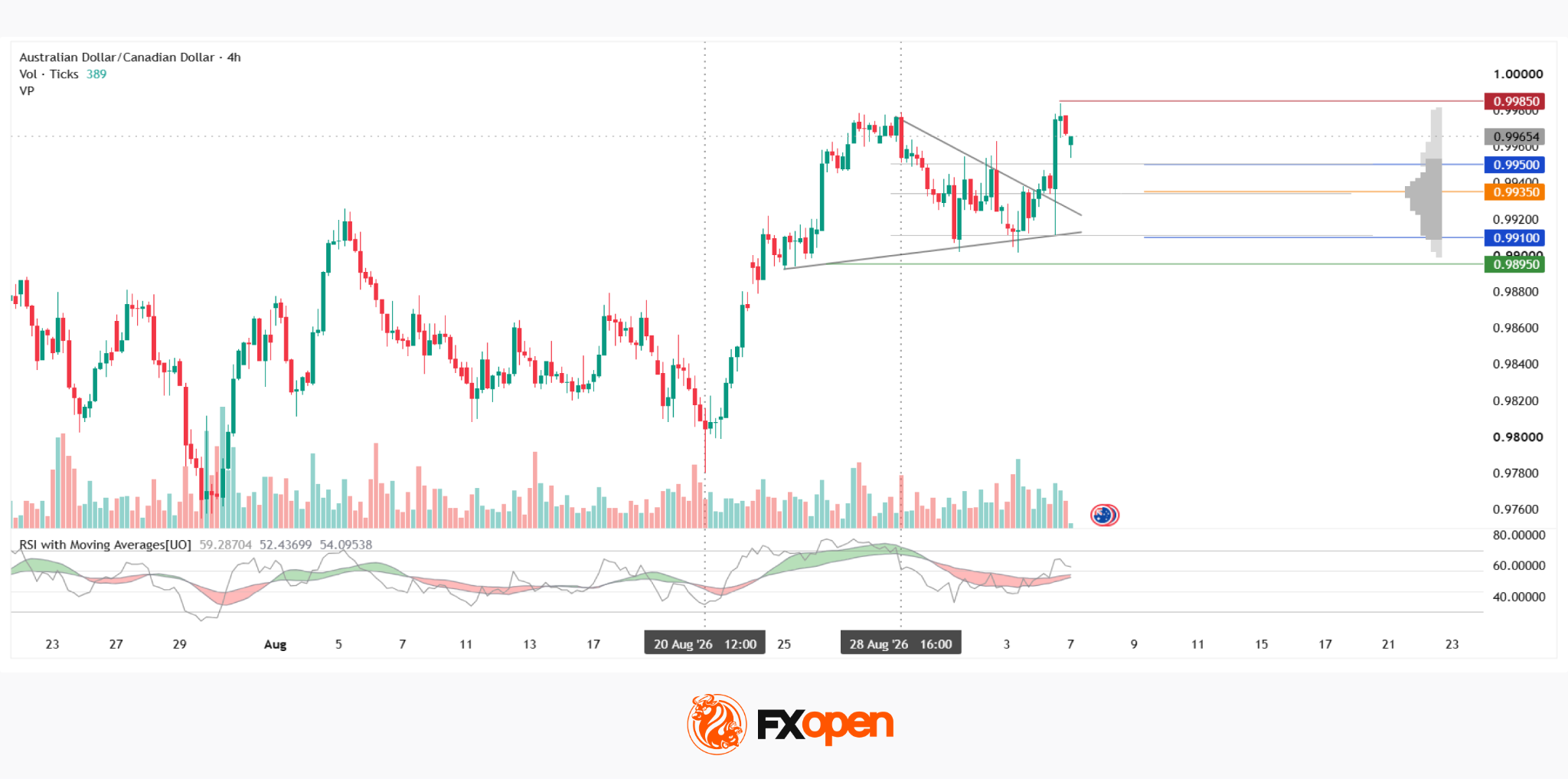
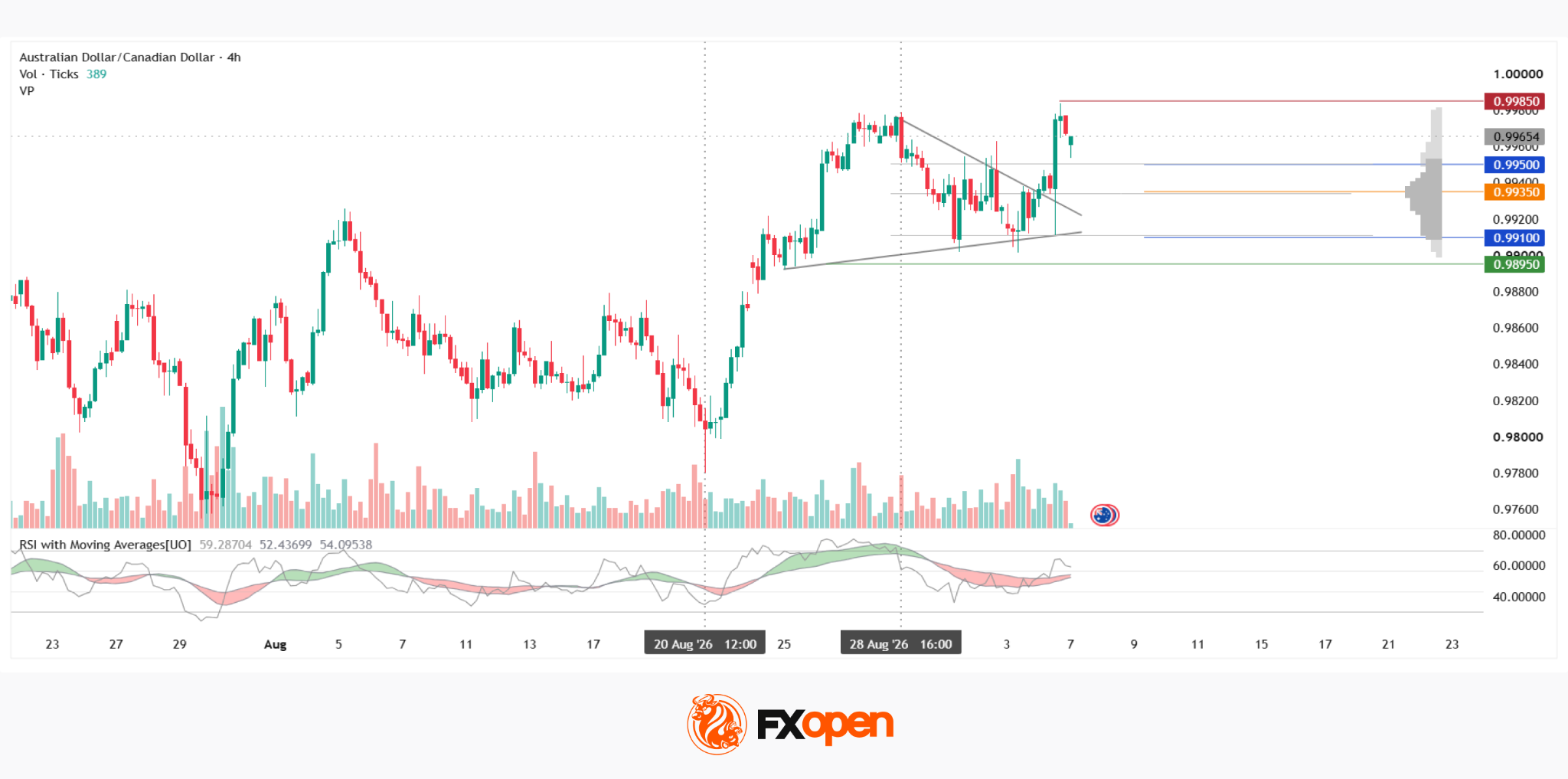
The four-hour AUD/CAD chart shows a pronounced uptrend that has lifted the pair towards the current resistance level at 0.9985. A pattern resembling a converging triangle formed near the top of this advance, with price fluctuations gradually narrowing within the formation. However, volume dynamics during the second half of the pattern’s formation have been atypical, casting doubt on its reliability.
Nevertheless, the price has broken out of the pattern while also moving above the upper boundary of the current market profile at 0.9950, and is attempting to establish itself above this level. If the advance continues, the red resistance level around 0.9985 is the next key obstacle on the upside.
In the event of a false breakout, the price could return to the profile. If the scenario turns bearish, the pair would need to break not only the upper boundary of the profile but also the Point of Control (POC) at 0.9935 and the lower boundary at 0.9910. Below the market density, a green support level is located around 0.9895.
The RSI + MAs indicator is showing readings of 59, 52 and 54. The RSI has moved above the neutral zone, while both the fast and slow moving averages remain below its upper boundary.
Key Takeaways
The atypical volume dynamics during the formation of the triangle leave the reliability of the breakout uncertain, while the price’s attempt to establish itself above the market profile has yet to receive confirmation from the RSI + MAs indicator. The pair’s further direction could depend largely on whether the expected tightening of RBA policy materialises against the backdrop of the Bank of Canada’s wait-and-see stance.
Trade over 50 forex markets 24 hours a day with FXOpen. Take advantage of low commissions, deep liquidity, and spreads from 0.0 pips (additional fees may apply). Open your FXOpen account now or learn more about trading forex with FXOpen.
This article represents the opinion of the Companies operating under the FXOpen brand only. It is not to be construed as an offer, solicitation, or recommendation with respect to products and services provided by the Companies operating under the FXOpen brand, nor is it to be considered financial advice.
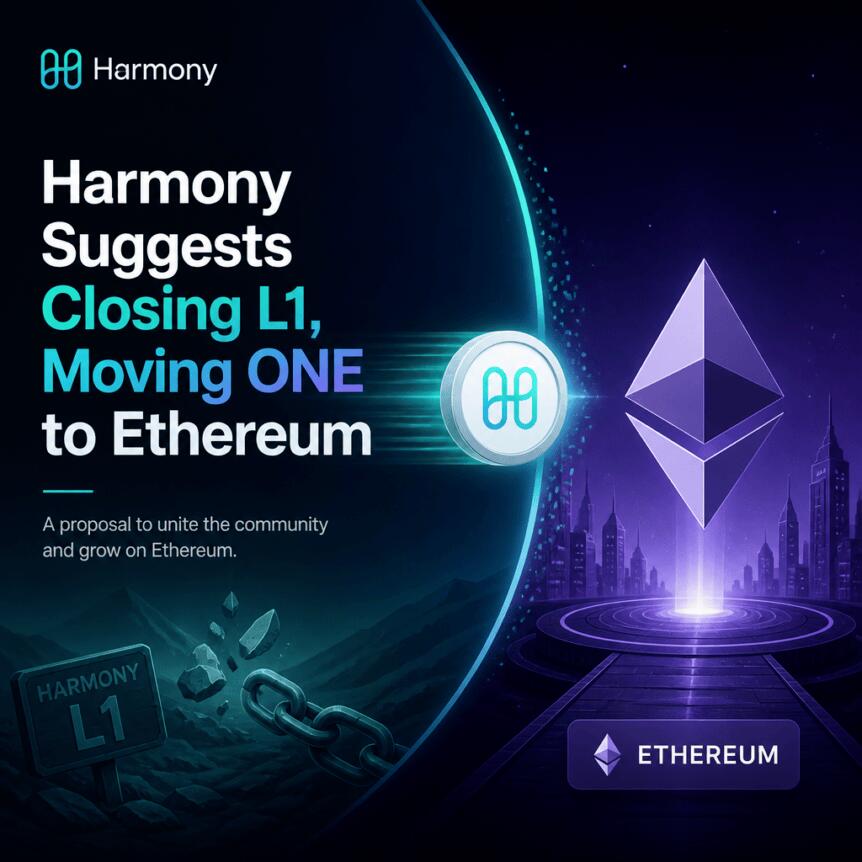
Harmony is moving toward a full shutdown of its blockchain and a migration of its ONE token to Ethereum, according to a proposal shared by the network. The plan would culminate in a final network snapshot, followed by an airdrop of ERC-20 ONE tokens to the same addresses on Ethereum and steps to transition validator operations.
The announcement arrives after a recent Harmony exploit that involved the minting of unauthorized ONE tokens and raised the prospect of a rollback. With the latest proposal, Harmony’s approach appears to shift from repairing a compromised chain to ending the network as a standalone platform.
Key takeaways
- Harmony’s proposal targets a final block snapshot and issuance of ERC-20 ONE tokens on Ethereum, with holders receiving the new tokens to the same addresses.
- Harmony says the snapshot would include wallets, staking delegations, validator rewards, smart contracts, and centralized exchanges, with “no claims required.”
- The migration is not presented as binding, and the proposal does not specify when the final block would be produced or whether shutdown timing depends on a full on-chain governance vote.
- Users are told to exit smart contracts before Sept. 10 because “multisig safes, liquidity pools and onchain applications cannot be migrated.”
- Validators may choose to stop nodes, remain as governors, or join Harmony’s “AI-video initiative,” with a $1.372 million pool set aside for compensation for validators who exit on time and agree to serve as governors.
A planned end to Harmony’s mainnet—followed by an ERC-20 migration
In its Sunday proposal, Harmony outlined a transition designed to preserve token balances while discontinuing the underlying chain. The network stated it would take a final network snapshot and then issue ERC-20 ONE tokens on Ethereum, allocating the new tokens to the same addresses that held ONE at the time of the final block.
Harmony further described the snapshot scope as broad. It would record ONE balances across wallets, staking delegations, validator rewards, smart contracts, and centralized exchanges. The network also emphasized that holders would not need to take action to receive the new ERC-20 tokens—an important detail for retail participants and custodians alike.
Still, the proposal draws a clear boundary around what can and cannot be migrated. Harmony said multisig safes, liquidity pools, and onchain applications cannot be transferred, warning participants to unwind any smart-contract positions before Sept. 10. That requirement effectively shifts risk management onto users and protocol operators, particularly where liquidity or contract-based funds are involved.
Validator options, governance mechanics, and the open question of timing
Harmony’s transition plan is centered on validator decisions. The network said validators would receive options: stop their nodes, continue operating as governors, or participate in Harmony’s new AI-video initiative.
Harmony also referenced a governance framework consistent with its published network governance rules. According to Harmony’s governance documentation, elected validators can create proposals, while unelected validators may vote with voting power proportional to total stake. Under those rules, a proposal must reach participation threshold first: 51% of total stake weight must participate. Then it requires 66.7% support after a seven-day introduction period and a 14-day voting period.
However, Harmony described the Sunday proposal itself as “non-binding,” and it did not clarify whether the shutdown is guaranteed to follow the full validator-governance voting cycle or how precisely the final block timing would be determined. For investors and market participants, that uncertainty matters: the practical mechanics of when balances become fixed for snapshot purposes—and how orderly exchanges and custodians can coordinate—depend on the final execution plan.
Harmony also mentioned a compensation pool of $1.372 million for validators who shut down on time, keep their stakes, and agree to serve as governors. That figure indicates Harmony expects to retain some validator participation even after the main chain ceases producing blocks, but it does not specify how long governors would remain active in that role.
Recent exploit pressures: from rollback plans to a system-wide exit
The migration proposal comes less than four weeks after an exploit that created forged ONE tokens. Harmony said earlier it was considering a rollback after reports that an attacker had minted nearly 4 billion unauthorized ONE, an amount characterized at the time as roughly 26% of the token supply. Harmony later said it planned to revert the blockchain to an Aug. 11 checkpoint, discarding 109,126 regular transactions and 315 staking transactions.
According to Harmony’s earlier statements, investigators traced nearly all forged tokens to specific wallets or service boundaries and said they were working with exchanges, bridges, and law enforcement. While the rollback narrative focused on restoring the chain by undoing affected transactions, the new proposal effectively reframes the endgame: rather than continuing to operate Harmony’s blockchain and maintain state updates, Harmony is proposing a migration that relocates token ownership onto Ethereum.
For holders, this is a meaningful shift. A rollback aims to correct the ledger while preserving the chain’s continuity; a shutdown-and-migrate approach focuses on stabilizing token ownership by anchoring balances to an Ethereum-issued standard. The trade-off is that the ecosystem built atop Harmony—especially DeFi liquidity and onchain application state—may not survive in the same form because Harmony has said those components cannot be migrated.
What users should do before the September deadline
Harmony’s most urgent operational message is directed at smart-contract participants. By Sept. 10, Harmony urged users to exit all smart contracts, citing the inability to migrate multisig safes, liquidity pools, and onchain applications. That means users relying on staking-related smart-contract interactions, liquidity positions, or complex contract mechanisms may need to ensure they are fully withdrawn before migration-related execution begins.
While Harmony indicated that smart-contract-related ONE balances would be recorded at the final snapshot and ERC-20 tokens would be issued accordingly, the network’s warning suggests token balances alone may not capture the full value of positions that depend on liquidity pools or application-specific states. In other words, the migration can preserve ONE ownership, but it may not preserve the surrounding infrastructure in which ONE is locked or used.
Traders and long-term holders should also watch for how exchanges and custodians handle the ERC-20 distribution process. Harmony said the snapshot would include centralized exchange holdings, but the operational steps—such as whether exchanges require internal mapping from Harmony addresses to Ethereum accounts—are not detailed in the proposal text provided.
With Harmony moving toward an end-of-chain event and a token migration, market participants should track: whether validators ultimately ratify the shutdown through the governance thresholds described by Harmony’s framework, how Harmony confirms the snapshot and final block timing, and how DeFi and other onchain users unwind positions ahead of Sept. 10. The answers will determine how smoothly ONE holders can transition—and how much of the broader Harmony ecosystem can be meaningfully preserved.
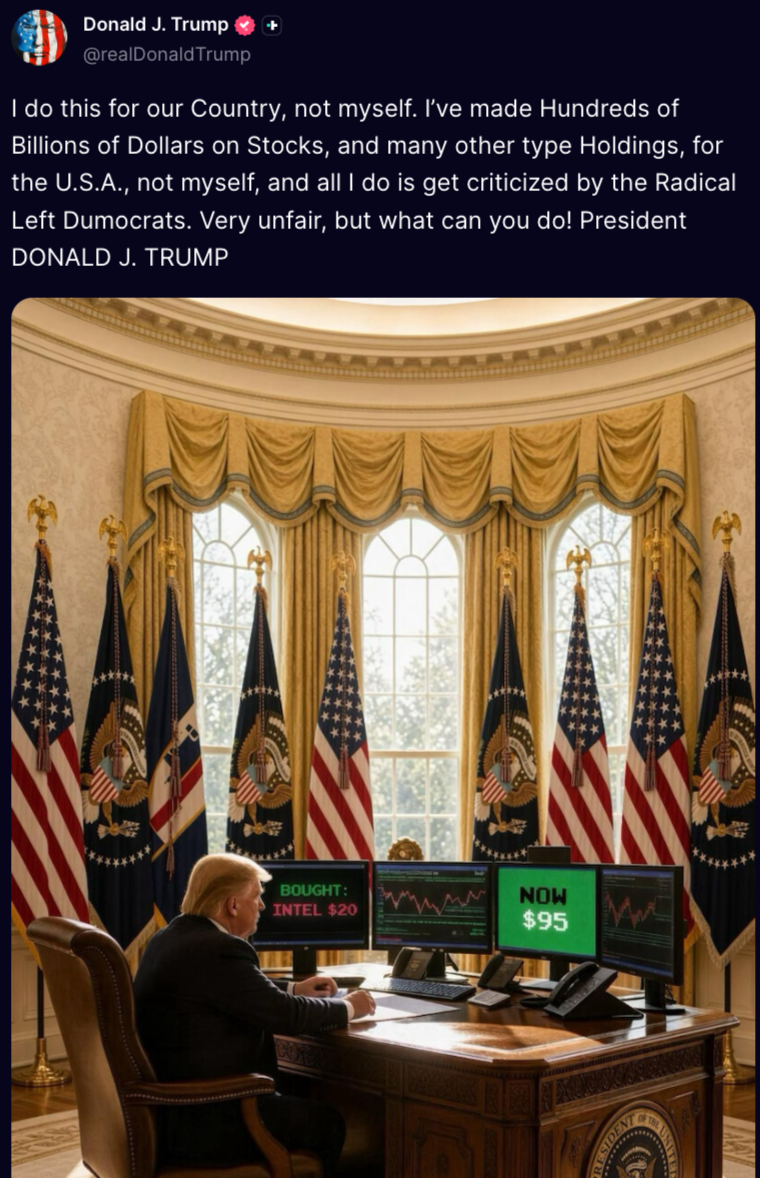
President Donald Trump posted an AI-generated image of himself day trading Intel (INTC) stock from $20 to $95, paired with a Truth Social boast about making “Hundreds of Billions of Dollars” on stocks.
It is the second time Trump has shared this exact image style. A nearly identical post last September showed Intel rising from $20 to $30, after the government took a 9.9% stake in the chipmaker.
Trump’s Intel Stock Pattern
This time, the numbers track reality closely. Intel Corporation (INTC) shares closed at $95.80 on September 4, then touched $95.89 two days later, nearly quadrupling off their 52-week low of $24.05.

The repeat post also fits a wider habit. A CNN investigation found Trump bought stock in 21 companies shortly before posting favorable messages about them on Truth Social.
Ethics filings with the U.S. Office of Government Ethics (OGE) show accounts tied to Trump built Intel and Dell Technologies (DELL) positions before he publicly praised both. Dell stock has since climbed more than 300% this year.
A similar post about SpaceX (SPCX) in August drew comparable scrutiny, though later data showed that stock’s gain had begun in premarket trading before Trump posted, undercutting a direct link.
Presidential Stock Social Posting
Presidents are not barred from trading stocks while in office, unlike most other federal officials. Trump also has not placed his assets in a blind trust, so he can see what his managers buy or sell. Ethics experts say that setup leaves room for conflicts other officials do not face.
Republican Senator Josh Hawley joined Democrats last year on a bill to ban both congressional and presidential stock trading. Trump pushed back hard, framing it as an attack from a junior senator rather than a genuine ethics fix.
A CNN review found the reverse pattern is rare, however. Most of Trump’s thousands of disclosed trades were never followed by a related Truth Social post. There were also no direct evidence ties the posts to his trading decisions.
The government’s 9.9% Intel stake, bought at $20.47 per share in August 2025, is now worth several times its original value on paper. Meanwhile, the pattern of presidential posts near stock gains keeps drawing scrutiny from ethics watchdogs.
The post Trump Again Touts Intel Stock Gains in AI Image, Claims He Made ‘Hundreds of Billions' appeared first on BeInCrypto.

What the results mean for the AfD
While the election delivered the AfD a commanding victory, the party still lacks enough votes to govern alone. With 39 seats in the 83-member legislature, the party remains three short of an outright majority, and faces no obvious path to obtaining it.
Germany’s established parties have refused to work with the AfD, continuing their “firewall” against cooperating with the far-right. State premier Sven Schulze acknowledged defeat but his party, the CDU, said it would explore talks with other parties about forming a multiparty coalition.
The AfD could find unlikely support in the populist Sahra Wagenknecht Alliance, or BSW, which scraped into parliament with 5.3% of the vote. BSW has rejected the firewall and expressed a willingness to speak with the AfD, although it said it would not elect either Siegmund or Schulze as premier.
Siegmund has thus far ruled out leading a minority government or adopting an informal arrangement that would leave his government depending on unsteady support. “If necessary there’ll just be new elections, then we’d just get 50 or 55%,” he told ZDF on election night. He said, however, that he would be willing to work with individual lawmakers or parliamentary groups.


Hanwha Investment & Securities has reportedly completed a tokenized securities platform supporting Avalanche as South Korea prepares to bring blockchain-based securities into its regulated capital markets system in February 2027.
Summary
- Hanwha has reportedly built a tokenized securities platform supporting Avalanche and Hyperledger Besu.
- South Korea’s tokenized securities amendments are scheduled to take effect on Feb. 4, 2027.
- The FSC plans to initially allow tokenization of certain funds, bonds, unlisted stocks and fractional securities.
- Hanwha has expanded its tokenization investments through stakes in Securitize and Digital Asset.
Seoul Economic Daily reported Sunday that the South Korean brokerage began developing the platform with blockchain technology firm FairSquare Lab in 2025. The system was built to operate across multiple networks, including Avalanche and enterprise Ethereum client Hyperledger Besu.
Development has come ahead of amendments to South Korea’s Electronic Securities Act and Capital Markets Act taking effect on Feb. 4, 2027. The changes will legally recognize distributed ledgers as securities registers and allow tokenized securities to operate within the country’s existing capital markets framework.
The Korea Securities Depository is preparing infrastructure capable of connecting with Avalanche, Hyperledger Besu and Hyperledger Fabric, giving securities companies several blockchain options as they build systems for the incoming framework.
Hanwha tokenized securities platform supports Avalanche
Hanwha started work on the platform last year and has since completed development, Seoul Economic Daily reported, citing blockchain industry sources.
FairSquare Lab developed the system with support for more than one distributed ledger. Alongside Avalanche, Hanwha can use Hyperledger Besu, an Ethereum-compatible blockchain designed for enterprise deployments.
Several South Korean financial firms have already used enterprise networks such as Hyperledger Besu for token securities infrastructure. Hanwha’s system extends that approach to Avalanche, where institutions can establish dedicated networks with controls over participation and validators.
The Korea Securities Depository is preparing its own token securities infrastructure to communicate with different blockchain technologies. Its published distributed-ledger requirements cover Avalanche, Hyperledger Besu and Hyperledger Fabric.
Participation in connected distributed ledgers will remain limited to approved institutions, including securities companies and the depository. The KSD would participate directly in the networks to oversee total issuance and electronic registration information.
Demand from financial companies influenced the inclusion of Avalanche, according to Seoul Economic Daily. A KSD official told the publication that several companies had requested support through industry consultations and existing projects.
Avalanche has already been used for regulated tokenized securities infrastructure in Japan. In July, Progmat moved its tokenized securities platform from Corda 5 to a dedicated Avalanche Layer 1, transferring every active security token project managed through its system.
Those projects represented more than 452 billion yen in underlying assets and issued securities at the time of the migration. Progmat said the change made the securities compatible with the Ethereum Virtual Machine while retaining existing institutional controls.
The Japanese platform redesigned its architecture so business functions were no longer tied to a single blockchain, using a separate layer between its applications and underlying ledger. Progmat said the structure would allow other networks to be connected later.
South Korea tokenized securities rules start in February
Hanwha’s platform arrives as South Korea finalizes the operating structure for tokenized securities before the February rollout.
The Financial Services Commission unveiled a three-stage implementation roadmap on Sept. 4, covering the types of securities that can initially be tokenized and how the market could expand after the amended laws take effect.
Crypto.news previously reported that South Korea’s tokenized securities roadmap will initially cover privately pooled money market funds and bonds reserved for institutional investors.
Unlisted shares issued through a trust structure and publicly offered fractional investment securities will qualify during the first stage as well.
The second phase would extend tokenization to all publicly offered securities. Regulators have not set a fixed date for that stage, with implementation depending on the results of the initial rollout and adoption of the required technology among market participants.
Under the final phase, the FSC plans to build onchain payment infrastructure linked to stablecoins, allowing the payment side of tokenized securities transactions to move onto blockchain rails.
Timing for the settlement system will depend partly on pending South Korean stablecoin legislation.
The roadmap follows amendments approved by the National Assembly in January that established a legal basis for distributed ledgers to serve as securities registers. Tokenized instruments will remain securities under existing financial laws instead of being treated as a separate asset class.
Regulators had been preparing the implementation details for months. In May, the FSC outlined its rulemaking schedule while studying how stocks, bonds and money market funds could be incorporated into the system.
The FSC said at the time that South Korea would not move its entire electronic securities market onto blockchain infrastructure at once. Authorities instead planned staged tests covering securities rights, trading, settlement and onchain payments.
Securities firms face infrastructure requirements
Financial companies connecting their distributed ledgers to the Korea Securities Depository will have to pass screening and operating tests under the KSD’s technical guidelines.
Reviews will cover issuance and circulation functions alongside contingency measures for system errors and other disruptions. The FSC has said securities firms must maintain operational stability comparable to the existing electronic securities system while using distributed ledgers.
Existing financial investment companies will not need a separate license solely for handling tokenized securities. Firms can conduct tokenized securities activities falling within their current licensed business areas.
Companies seeking to intermediate tokenized securities transactions on over-the-counter markets will need prior consultation with the Financial Supervisory Service.
Retail investors will face separate limits. The FSC has proposed capping individual subscriptions to non-monetary trust beneficiary certificates at the lower of 30 million won or 5% of the total issuance.
Annual net purchases by retail investors on each OTC exchange will be capped at 100 million won.
South Korea is preparing central market infrastructure at the same time. Samsung SDS has been developing a token securities platform for the Korea Securities Depository designed to connect blockchain records with the country’s existing electronic securities account infrastructure.
The platform is expected to support issuance, circulation checks, rights management and monitoring when the new system begins operating.
Hanwha expands its tokenization investments
Hanwha has spent several years building positions across companies involved in tokenization and blockchain infrastructure.
The conglomerate became Securitize’s largest shareholder after holdings spread across three affiliated entities reached a combined 9.6%, according to U.S. regulatory filings.
As reported in July, entities linked to Hanwha collectively held 15.69 million Securitize shares, putting the group ahead of Blockchain Capital and Securitize co-founder and CEO Carlos Domingo.
A private equity fund managed by Hanwha Asset Management accounted for a 5.9% stake. H Foundation, a Hanwha Systems subsidiary, held 3.1%, while Hanwha Investment & Securities controlled roughly 0.6%.
Hanwha Investment & Securities described its own purchase as a financial investment through a pre-IPO financing round. The brokerage left open the possibility of using the investment in its digital asset and real-world asset tokenization businesses.
Securitize provides tokenized asset infrastructure for financial institutions including BlackRock, Apollo, BNY, Hamilton Lane, KKR and VanEck. Its platform managed more than $4 billion in onchain assets and supported more than 650 tokenized funds earlier this year.
The company went public on the New York Stock Exchange under the ticker SECZ in July and issued blockchain-based versions of its common shares on Solana and Avalanche on the same day. The tokens represent the same NYSE-listed shares instead of a separate security class.
Hanwha Investment & Securities has put money into several other blockchain companies this year, including blockchain research and data company Xangle and Web3 infrastructure provider Kresus.
In July, the brokerage disclosed a 30 billion won, or roughly $22.3 million, investment in Digital Asset, the operator of the institutional-focused Canton Network.
Hanwha Investment & Securities has increased its position in South Korea’s crypto sector as well, investing another 597.8 billion won in Dunamu, the operator of Upbit, and raising its ownership stake to 9.84%.
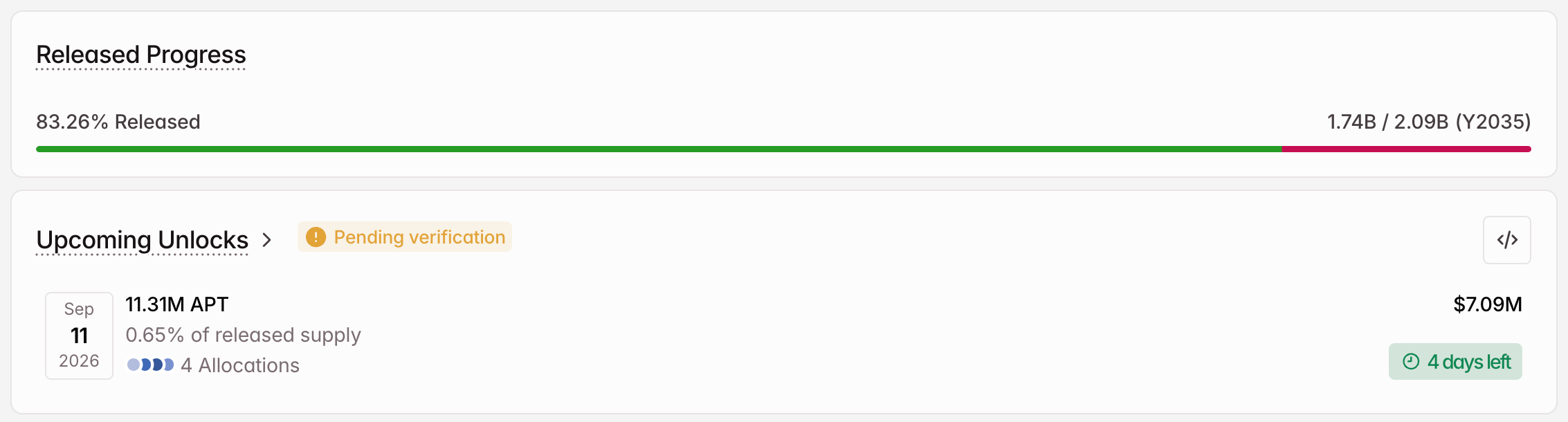
The crypto market will welcome tokens worth roughly $325.6 million in the second week of September 2026. Major projects, including Aptos (APT), Linea (LINEA), and Cheelee (CHEEL), will release new token supplies.
These unlocks could introduce market volatility and influence short-term price movements. So, here’s a breakdown of what to watch.
1. Aptos (APT)
- Unlock Date: September 11
- Number of Tokens to be Unlocked: 11.31 million APT
- Released Supply: 1.74 billion APT
- Total supply: 2.09 billion APT (Y2035)
Aptos is a Layer-1 blockchain platform designed for scalability, security, and efficiency in decentralized applications (dApps) and Web3 ecosystems. It utilizes the Move programming language to enable high-throughput transactions and smart contract execution.
Aptos will release 11.31 million tokens on September 11. The tokens are worth $7.09 million. It represents 0.65% of the released supply.

The team will award 3.96 million APT to core contributors. The community and investors will get 3.21 million and 2.81 million tokens, respectively. Additionally, Aptos will allocate 1.33 million tokens to the foundation.
2. Linea (LINEA)
- Unlock Date: September 10
- Number of Tokens to be Unlocked: 960.13 million LINEA
- Released Supply: 31.92 billion LINEA
- Total supply: 72.01 billion LINEA
Linea is a zkEVM Layer-2 scaling solution for Ethereum (ETH). The network provides fast, low-cost transactions while maintaining compatibility with Ethereum tools and security.
The network will unlock 960.13 million tokens, valued at approximately $2.75 million, on September 10. The upcoming unlock represents 3% of the released supply

Linea will keep 480.07 million tokens for Linea Consortium (long-term alignment), and 480.07 million LINEA for Linea Consortium (Ignition).
3. Cheelee (CHEEL)
- Unlock Date: September 13
- Number of Tokens to be Unlocked: 6.42 million CHEEL
- Released Supply: 813.4 million CHEEL
- Total supply: 1 billion CHEEL
Cheelee is a SocialFi hybrid platform that rewards users with LEE tokens for watching short videos. It blends familiar social media mechanics with blockchain-based incentives. The platform utilizes its token, CHEEL, for governance, content promotion, and advertising.
The team will release 6.42 million tokens on September 13. The tokens are worth around $2.24 million and represent 0.79% of the current released supply.

Cheelee will keep 3.4 million tokens for the reserve fund. Furthermore, it will assign 2.78 million tokens to the team. Advisors will get around 208,330 altcoins. Lastly, the team will direct 27,780 tokens to a private round.
In addition to these, other prominent unlocks that investors can look out for in the second week of September include peaq (PEAQ), Babylon (BABY), Movement (MOVE), and more.
The post 3 Token Unlocks to Watch in the Second Week of September 2026 appeared first on BeInCrypto.


Harmony has proposed retiring its seven-year-old layer-1 blockchain and moving ONE to Ethereum, with validators able to begin shutting down nodes from Sept. 10 as the project prepares a new AI video business.
Summary
- Harmony has proposed retiring its layer 1 and issuing ONE as an ERC 20 token on Ethereum after taking a final network snapshot.
- Users have been asked to exit smart contracts before Sept. 10, while eligible validators can begin shutting down nodes and receive compensation from a $1.372 million pool.
- The proposal comes weeks after an exploit created forged ONE tokens and prompted Harmony to plan a rollback removing more than 109,000 transactions.
- Harmony plans to give validators the option to remain as governors or participate in its new AI video initiative after the blockchain is retired.
Harmony said Sunday that it wants to take a final snapshot of the network, issue ONE as an ERC-20 token on Ethereum and move exchange listings to the new token. The proposal remains non-binding, and the project has not given a date for the final block.
The plan would end Harmony’s run as an independent blockchain after launching its mainnet in 2019. The project cited security threats from state actors and AI agents when announcing the proposed shutdown.
Harmony has not said whether the plan will be put through its existing validator-led governance process. Under the network’s published governance rules, elected validators can submit proposals and unelected validators can vote, with voting power determined by stake. A proposal requires participation representing 51% of total stake weight and 66.7% support after a seven-day introduction period and 14-day voting period.
Harmony proposes moving ONE balances to Ethereum
At the final Harmony block, the project plans to record ONE held in wallets, staking delegations, validator rewards, smart contracts and centralized exchanges before distributing replacement tokens on Ethereum.
Users would not have to file claims for the new tokens. Harmony said ERC-20 ONE would be sent to the same addresses recorded in the final snapshot, while delegated stakes and unclaimed validator rewards would be distributed to individual governor vaults.
The token’s total supply and emission rate would remain unchanged under the proposal. Harmony plans to make the Ethereum token contract, snapshot calculations and airdrop scripts public so they can be audited.
Not every asset or application can make the move. Multisig safes, liquidity pools and onchain applications cannot be transferred through the proposed migration, according to the project, which has asked users to exit smart contracts before Sept. 10.
Exchange-held ONE is included in the planned snapshot, with Harmony proposing to coordinate the migration of centralized exchange listings to the Ethereum version of the token.
Validators face a separate transition process. Node operators can begin shutting down from Sept. 10, while Harmony has set aside $1.372 million for validators and delegators who stop their nodes on time, sign an agreement, retain their stakes and continue as governors.
The compensation would be distributed over four quarters. Harmony said it would cover the difference in emission rewards between a validator’s last block and the network’s final block for eligible operators.
Validators could move into Harmony’s AI video project
Harmony has proposed moving its work toward an AI video “remix economy” once the blockchain is retired, offering existing validators the option of remaining as governors or becoming operators or affiliates in the new project.
Under the model described by the team, a small group of video creators would publish prompts and other assets that fans could fork or remix. AI agents would then be used to turn the resulting branches into more video clips.
Operators would handle video generation, distribution and content moderation, with staking and service uptime tied to rewards. Harmony plans to subsidize GPU hardware during the first year and said operators could generate up to $1 million in combined revenue during that period, subject to the proposed staking and uptime requirements.
The project has floated a $10 monthly subscription for the service, with promoters receiving a continuing 30% commission from subscriptions they refer. Harmony said advertising could generate tens of millions of dollars if the platform reached 1 million users.
Future ONE emissions would be directed toward the new initiative, although the team said the arrangements would remain subject to feedback from governors.
Harmony shutdown proposal follows August ONE exploit
The proposed shutdown follows an August security incident that forced Harmony to consider reversing days of blockchain activity after unauthorized ONE entered circulation.
On Aug. 12, crypto.news previously reported that Harmony was investigating an unauthorized mint after an outside researcher claimed nearly 4 billion ONE had been created and approximately 2.8 billion had reached centralized exchanges. Harmony had not confirmed either figure at that stage and said it was working with exchanges while examining recovery options.
A later reconstruction by the project identified more than 3 trillion ONE created across six transactions. Harmony traced the incident to a flaw in cross-shard receipt verification that allowed valid receipts to be processed more than once, creating ONE without a corresponding debit elsewhere.
By Aug. 17, the project had settled on a much more disruptive response. Harmony proposed rolling back its two shards to checkpoints recorded at 11:25:37 p.m. UTC on Aug. 11, before the forged mint activity.
For shard 0, validators were instructed to retain block 92,730,034 and restart from 92,730,035. Shard 1 would return to block 94,978,278 and resume from the following block, even though the forged mint did not originate on that shard.
The recovery would remove 141,628 consecutive shard 0 blocks containing 109,126 regular transactions and 315 staking transactions. Harmony’s analysis classified 104,545 of the regular transactions, or 95.8%, as automated activity, including nearly 100,000 transactions linked to decentralized exchange automation.
One wallet connected to the forged mint attempted 534 transfers of 5 billion ONE each within 106 seconds. Of those, 477 succeeded, moving 2.385 trillion ONE, according to Harmony’s investigation.
Investigators traced the tokens into standalone wallets, exchange accounts, decentralized exchange routers and pools, liquidity provider positions, bridge contracts, wrapped ONE and staking wallets. Harmony said it was working with exchanges, bridges and law enforcement as it tried to identify where the forged assets had moved.
Token migration was among the recovery options examined during that process, but Harmony said at the time that moving ONE would cause substantially more disruption than the rollback. Less than a month later, migration to Ethereum has become part of the project’s proposed plan to retire the network entirely.
Harmony has faced repeated token and bridge security incidents
The August exploit was not Harmony’s first incident involving unauthorized ONE creation. In December 2023, the project disclosed that a staking logic flaw had resulted in 146.28 million ONE being minted across 74 delegator addresses before an emergency hard fork was deployed.
Harmony’s most prominent security breach came in June 2022, when attackers stole close to $100 million from its Horizon cross-chain bridge after compromising keys used to control the bridge.
The project worked with exchanges, blockchain analytics companies and law enforcement following the attack and raised its hacker bounty to $10 million in an attempt to recover the assets.
Harmony initially considered creating billions of ONE to reimburse users affected by the Horizon attack. A proposal published the following month included an option to mint 4.97 billion ONE for compensation, drawing opposition from community members concerned about dilution.
By September 2022, Harmony had changed course and said its revised recovery plan would not mint additional ONE or alter the token’s economics through a hard fork. The project instead proposed using treasury funds for recovery and ecosystem development.
Raydium has expanded LaunchLab to support trading between any token pair, with LaunchOnSF’s StonkFun becoming the first integration to use the new system on Solana.
Summary
- Raydium LaunchLab now allows newly launched tokens to be paired with any supported quote token on the platform.
- StonkFun has become the first integration to use the new model after changes to Raydium programs, aggregators and trading terminals.
- StonkFun said deployment costs have fallen to 0.03 SOL from 0.29 SOL, while liquidity fees can be directed back into liquidity.
- The upgrade expands LaunchLab more than a year after Raydium introduced the platform following Pump.fun’s move to its own PumpSwap exchange.
According to Raydium’s Sept. 7 announcement on X, LaunchLab can now pair a newly launched token with any quote token supported through Raydium, removing the fixed pairing structure used by many token launch platforms. Raydium said the upgrade brings more flexible token pairing, deeper liquidity and lower fees for memecoin trading.
LaunchOnSF confirmed that its StonkFun platform is the first integration partner to bring the feature live. Its team spent the previous week preparing the integration, which required changes across Raydium’s programs, trading terminals and aggregators before custom quote tokens could be supported.
Raydium LaunchLab now supports custom token pairs
Under the new system, creators can select the quote token used for a LaunchLab deployment, allowing communities to build markets around assets other than the standard quote tokens commonly used for new Solana launches.
Raydium described the feature as the ability to launch “any token, paired with any quote token.” LaunchOnSF said Raydium updated its programs to accommodate custom quote and reward tokens, while aggregators and trading terminals needed to support routing for the resulting pairs.
The integration covers permissionless deployments, bonding curves and constant product market maker pools. LaunchOnSF said deployment costs through StonkFun have been reduced to 0.03 SOL from 0.29 SOL, while liquidity provider fees can be directed back into liquidity.
Developers do not have to use the StonkFun API to deploy tokens and can construct transactions themselves. LaunchOnSF said the system was built to reduce problems it had encountered with snipers and launches concentrated in a single wallet.
Ahead of the integration, StonkFun reported more than $392 million in total trading volume, including roughly $219 million routed through Raydium. The platform had generated $1.21 million in revenue and distributed more than $5.35 million in rewards to ecosystem holders.
More than $705,000 had been spent on buybacks and burns of its ecosystem token, while another $68,000 went toward buying and burning tokens from its 10 largest ecosystem projects, according to figures published by LaunchOnSF.
LaunchLab followed Pump.fun’s move away from Raydium
Raydium first disclosed LaunchLab in March 2025 after Pump.fun began working on its own automated market maker. The platform offered creators different pricing curves and allowed third party interfaces to build on the underlying infrastructure and set their own transaction fees.
Crypto.news previously reported on Raydium’s LaunchLab plans in March 2025. An anonymous Raydium developer said at the time that the product had been under development for several months but had initially been kept on the sidelines while Pump.fun continued using Raydium for liquidity.
LaunchLab officially went live in April 2025, allowing users to create, customize and trade tokens through Raydium. Projects crossing the original 85 SOL threshold were automatically moved into Raydium’s automated market maker.
Raydium introduced customizable bonding curves, no migration cost and a 1% trading fee under the initial model. The protocol said 25% of trading fees collected through LaunchLab would be used to buy back RAY.
More than 10 projects had passed the 85 SOL threshold shortly after LaunchLab opened, while RAY rose roughly 13% following the launch before giving back part of the move.
LaunchLab arrived after Pump.fun changed a relationship that had directed a steady flow of newly created memecoins toward Raydium.
Tokens launched through Pump.fun had historically moved into Raydium liquidity pools after completing their bonding curves. Pump.fun began testing its own automated market maker in February 2025, opening a path for graduated tokens to remain inside its own trading infrastructure.
PumpSwap ended Pump.fun’s reliance on Raydium
Pump.fun formally moved away from the previous setup when it launched the PumpSwap DEX in March 2025.
Built around a constant product automated market maker similar to Raydium v4 and Uniswap v2, PumpSwap allowed tokens completing Pump.fun bonding curves to migrate directly to its own liquidity pools. Users could create pools, provide liquidity and trade tokens without sending graduated launches to Raydium.
PumpSwap introduced instant migrations and removed the six SOL migration fee previously associated with the process. The platform initially charged 0.25% on trades, allocating 0.20% to liquidity providers and 0.05% to the protocol.
Trading activity climbed quickly. PumpSwap captured 21% of Solana DEX trading about a week after launch, with cumulative volume exceeding $1.2 billion. Raydium remained ahead with a 57.4% share at the time.
By March 30, PumpSwap had recorded $2.43 billion in volume, alongside $5.4 million in protocol fees, around 700,000 active wallets and 30.59 million swaps. Raydium accounted for 74% of Solana DEX volume on that date, compared with PumpSwap’s 8%.
Raydium had entered the contest from a strong position in memecoin trading. A CEX.io report showed its memecoin volume share rising from 77% to 83% during the first quarter of 2025.
Pump.fun was responsible for more than half of daily SPL token creation at the time, with tokens previously flowing into Raydium after meeting Pump.fun’s graduation requirements. That pipeline changed once PumpSwap began taking the migrations directly.
Raydium remains a major Solana trading venue
Despite heavier competition among Solana exchanges and launchpads, Raydium has remained one of the network’s largest execution venues.
Across 2025, the protocol processed $352.8 billion in execution layer DEX volume. Meteora followed with $113.7 billion, while Orca and SolFi recorded $103.9 billion and $97.9 billion, respectively.
More recent activity has remained spread across several Solana venues. On Aug. 21, 2026, Solana generated approximately $2.8 billion in daily decentralized exchange spot volume. PumpSwap processed roughly $485 million, followed by BisonFi at $466 million, Orca at $307 million, Raydium at $260 million and Manifest at $218 million.
The five platforms together accounted for approximately $1.74 billion of the network’s daily total.
LaunchLab’s latest update changes the type of markets that can be created through Raydium’s launch infrastructure. Instead of requiring creators to launch against a predetermined quote asset, StonkFun deployments can select another supported token and carry that pairing through the bonding curve and subsequent liquidity setup.
Raydium ecosystem contributor Infra said the structure lets a community pair a meme token with another asset its users already follow and use the same asset for rewards. LaunchOnSF became the first partner to put that model into production through StonkFun following the Sept. 7 rollout.

South Korea’s National Tax Service ruled on Aug. 28 that residents must continue reporting qualifying cryptocurrency accounts held with bankrupt overseas exchanges, even when trading and withdrawals are unavailable.
Summary
- Korean residents must report qualifying overseas crypto accounts even when bankrupt exchanges block withdrawals entirely.
- Reporting applies when combined foreign account balances exceed 500 million won at any month-end annually.
- Affected taxpayers must submit declarations during June of the following calendar year to Korean authorities.
- Digital assets have been included in South Korea’s foreign account reporting regime since 2023 filings.
- Reported overseas digital asset holdings fell 5.4% to 10.5 trillion won in the 2026 disclosure cycle.
The National Tax Service issued its interpretation after a Korean resident asked whether an inaccessible exchange balance still qualified as an overseas financial account.
The taxpayer was a creditor of an overseas cryptocurrency exchange that entered bankruptcy in November 2022. The account holder could no longer trade or withdraw the assets and had entered the exchange’s distribution process.
The taxpayer was receiving partial bankruptcy distributions through a domestic foreign-currency account. However, the NTS concluded that the original overseas account remained subject to reporting because it had been opened with a foreign virtual asset service provider to trade digital assets.
The decision concerns disclosure obligations rather than whether the inaccessible assets generate taxable income. Reporting an account does not by itself establish that tax is owed on its entire balance.
The 500 million won threshold applies across accounts
Korean residents and domestic corporations generally must report when their combined overseas financial account balances exceed 500 million won, approximately $350,000, at the end of any month during the relevant calendar year.
Balances across qualifying foreign accounts are aggregated when applying the threshold. The rule can therefore apply even when no single account independently exceeds 500 million won.
Taxpayers must submit the report during June of the following year. The filing identifies the foreign financial institution, account information and reportable balance.
Digital assets were added to the foreign financial account regime beginning with the 2023 reporting cycle. Accounts held through overseas cryptocurrency exchanges can therefore qualify alongside foreign deposits, securities, funds and other covered financial assets.
Self-custody wallets are treated differently because they are not accounts opened with overseas virtual asset service providers. Crypto.news previously reported that decentralized wallets were excluded from overseas account declarations under the NTS interpretation.
The latest ruling clarifies that an exchange’s insolvency does not produce the same result. A customer can retain a reportable account or claim against the exchange even after losing normal control over the assets.
Bankruptcy creates a difficult valuation question
The NTS interpretation confirms that the account must be reported, but the publicly available summary does not fully explain how taxpayers should value a disputed or partially recoverable bankruptcy claim.
An exchange interface might display the customer’s original token balance even when the bankruptcy estate cannot return all assets. The value eventually distributed may differ substantially from that displayed balance.
The legal interpretation arose from a taxpayer already receiving partial distributions. It does not establish that every reported account balance will equal the amount recovered through bankruptcy.
Affected account holders may need records showing monthly balances, exchange statements, bankruptcy claims and distributions. Those documents can help establish what existed in the account and what was later recovered.
Exchange bankruptcy can leave customers waiting years for repayment. The FTX estate, for example, began a multibillion-dollar creditor repayment process after customers lost access to funds held on the platform.
The NTS ruling means Korean creditors cannot assume that frozen balances disappear from their disclosure obligations while those proceedings continue.
Overseas crypto disclosures fell to 10.5 trillion won
Korean taxpayers reported 10.5 trillion won in overseas digital assets during the 2026 disclosure cycle, according to figures attributed to the National Tax Service. The total declined 5.4% from the previous year.
Individual holdings increased 5.4% to 9.8 trillion won. Corporate holdings dropped 61.1% to approximately 700 billion won, producing the decline in the combined total.
The NTS attributed the overall reduction to a broad fall in asset prices. The figures represent balances disclosed through overseas financial account reports, not the full cryptocurrency holdings of every Korean resident.
South Korea’s total reported overseas financial accounts reached 107.1 trillion won in the latest cycle. The number of reporting individuals and companies rose 9.1% to 7,484, according to the published results.
The disclosure requirement is separate from South Korea’s planned tax on cryptocurrency gains. The country currently plans to apply a combined 22% tax to qualifying digital asset income from Jan. 1, 2027.
That future tax will also cover activity on overseas exchanges and private wallets. As crypto.news reported, annual gains above the 2.5 million won deduction would face a 20% national tax and 2% local income tax.
What affected account holders must do next
Residents whose combined overseas account balances exceeded the threshold during 2026 will generally need to file their disclosures in June 2027.
Customers of bankrupt exchanges should retain account records even if the platform no longer provides normal access. Bankruptcy notices, claim approvals and payment records may also be required to explain differences between reported balances and recovered funds.
The NTS is preparing broader enforcement tools ahead of the 2027 crypto income tax. In related coverage, the agency was reported to be developing wallet-tracing capabilities for overseas transactions.
South Korea also plans to exchange crypto transaction information with participating jurisdictions through the OECD’s Crypto-Asset Reporting Framework. The new data channels could make previously undisclosed overseas exchange accounts easier to identify.
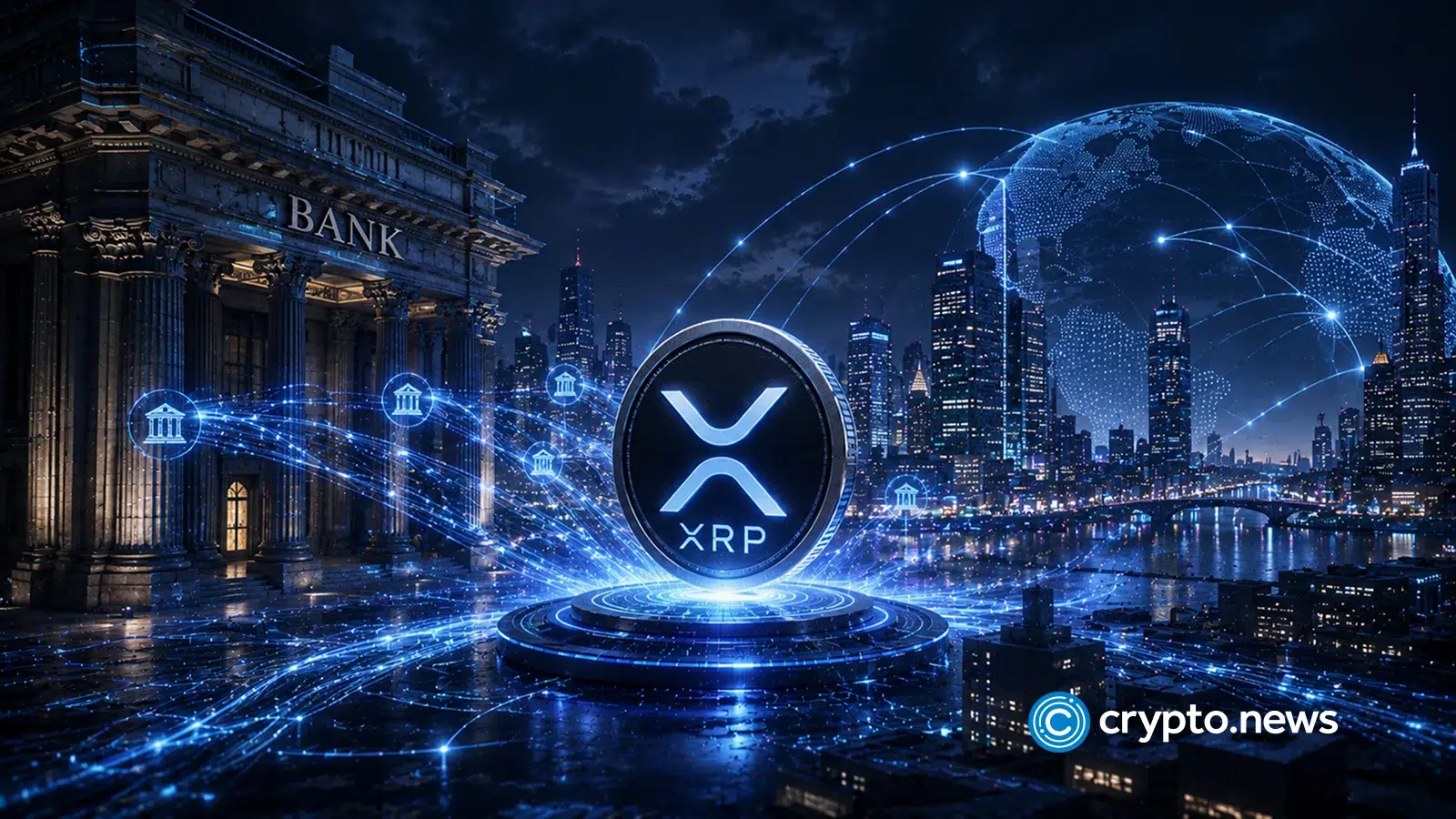
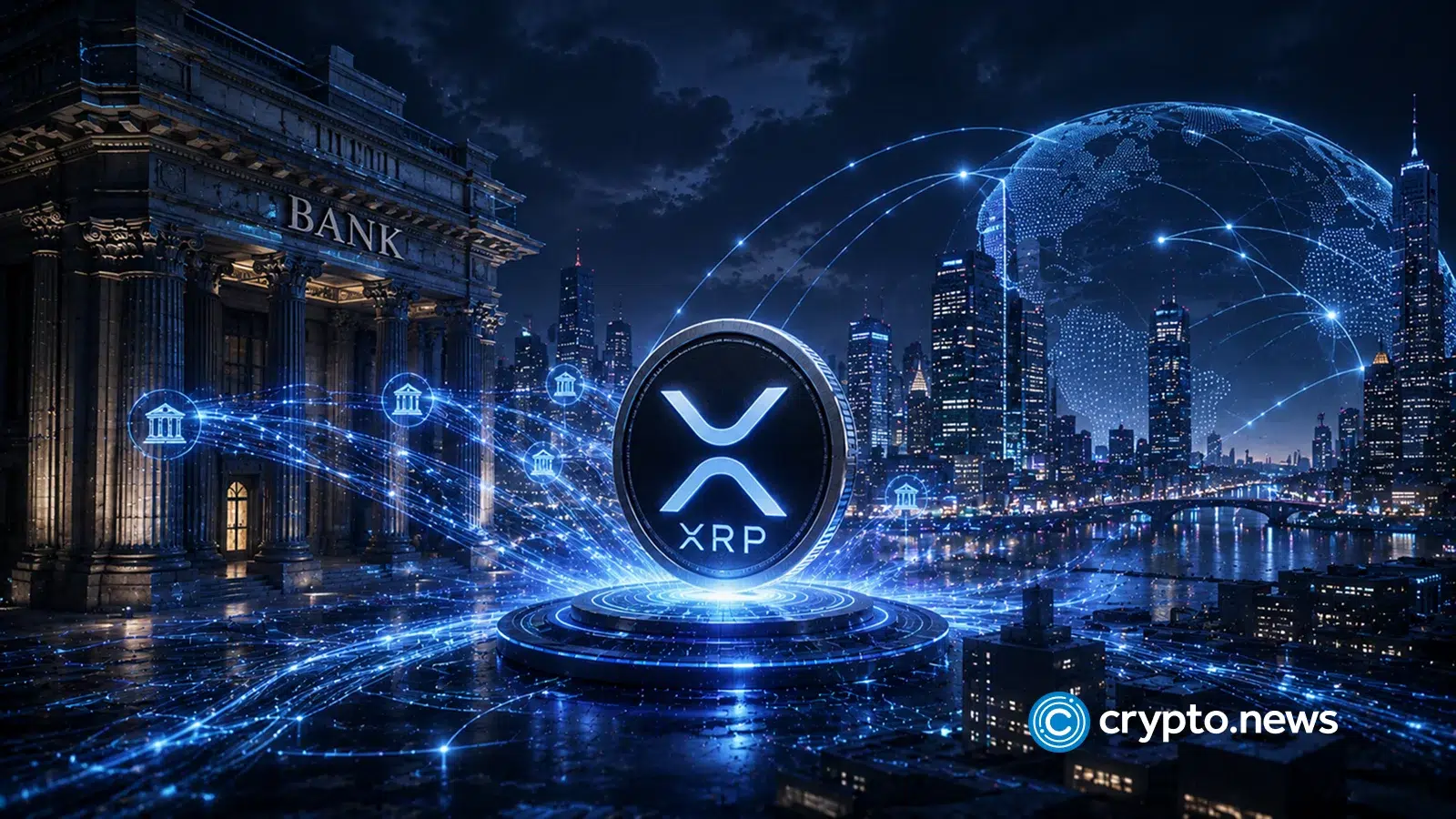
Ripple has expanded XRP’s presence in major U.S. college sports through a multi-year sponsorship with the University of Florida that will put the token’s logo on the field at Ben Hill Griffin Stadium.
Summary
- Ripple has signed a multi year partnership with the University of Florida that will put XRP branding on the football field at Ben Hill Griffin Stadium.
- The deal covers digital properties and event signage, while Ripple will support financial and technology education for student athletes and the campus community.
- Florida becomes Ripple’s latest major college sports partner after the company put XRP branding on University of Kansas athletics uniforms earlier this year.
- XRP traded near $1.41 on Friday as spot XRP ETF demand cooled, with cumulative net inflows remaining around $1.6 billion.
Florida Athletics said Friday that XRP branding will appear on the football field at the 88,548-seat stadium beginning this season, while the partnership will extend to digital properties and event signage across Gainesville.
Financial terms were not disclosed. Ripple has committed to supporting financial and technology education for student-athletes and the university community, covering subjects across traditional finance and digital assets.
The agreement gives Ripple another major college athletics sponsorship only two months after it signed a similar deal with the University of Kansas.
XRP branding is coming to the Swamp
At Florida, Ripple is pairing XRP marketing with educational programs designed for students and athletes. The arrangement places the cryptocurrency inside one of the largest college sports programs in the Southeastern Conference.
University of Florida Director of Athletics Scott Stricklin said the school has a history of adopting technology to improve its programs and fan experience.
“Ripple has established itself as an innovative leader in financial technology, and we’re excited to welcome XRP to Gator Nation,” Stricklin said.
The field placement will give XRP exposure during Florida Gators home football games at Ben Hill Griffin Stadium, commonly known as the Swamp. Digital placements and event signage will keep the branding visible outside football games during the multi-year agreement.
Ripple has already tested the college sports strategy at another major NCAA program. As crypto.news previously reported, the company signed a five-year sponsorship with the University of Kansas in July that put XRP branding on Jayhawks athletics uniforms.
The Kansas agreement covered football, basketball and other university teams, making XRP the first cryptocurrency to appear on the jerseys of a major NCAA Division I athletics program. Ripple CEO Brad Garlinghouse, a University of Kansas alumnus, publicly promoted the partnership after it was announced.
Education was part of that agreement as well, with Ripple extending its existing relationship with the university into athletics, financial education and blockchain research.
Ripple expands its XRP college sports strategy
Ripple’s move into college athletics has drawn attention beyond the two university partnerships.
After the Kansas deal, Ripple CTO Emeritus David Schwartz defended XRP advertising in college sports after critics questioned whether cryptocurrency promotion should face tighter restrictions.
Schwartz argued in July that truthful advertising for XRP receives commercial speech protections under the First Amendment, citing previous U.S. Supreme Court rulings involving advertising for lawful products. Commercial speech can still be regulated under U.S. law, meaning those protections do not prevent every potential restriction on advertising.
The Florida agreement takes the strategy from uniforms to the playing field itself. Ripple has not disclosed whether more college programs are being considered for similar partnerships.
The sponsorship campaign is running alongside a much larger expansion of Ripple’s financial infrastructure businesses, including payments, custody, corporate treasury services and its Ripple USD stablecoin.
RLUSD crossed $2 billion in market capitalization in August, less than two years after its December 2024 launch, according to Ripple. Nearly $1 billion of the stablecoin had been issued on the XRP Ledger when the company announced the milestone.
Standard Custody issues RLUSD under New York regulatory oversight, while Ripple has been building stablecoin settlement and treasury products around the asset.
XRP price holds near $1.41
XRP’s market reaction has been limited despite the new Florida sponsorship.
The token traded near $1.41 on Friday, gaining 0.6% over the previous 24 hours, according to CoinGecko data cited in the original report. XRP was up roughly 34.9% over the past 30 days but remained approximately 49.8% lower over the past year.
Institutional demand through U.S. spot XRP exchange-traded funds has cooled after becoming a major source of inflows earlier in 2026.
ETF flows were essentially flat on Sept. 4 after the funds recently ended an inflow streak. Cumulative net inflows remained close to $1.6 billion, while Decrypt’s XRP ETF tracker classified market sentiment as neutral.
The slowdown had already become visible in August. Weekly U.S. spot XRP ETF net inflows fell 93% from $14.86 million to $1.01 million during the week ending Aug. 8.
Regulated XRP products have continued appearing in U.S. fund filings despite the weaker pace of fresh capital. SEC filings dated Aug. 27 and Aug. 28 listed three XRP-linked ETFs, including ProShares products and a Cyber Hornet strategy fund combining S&P 500 equities with XRP exposure.
Seven U.S. spot XRP ETFs had accumulated $1.57 billion in net inflows by Aug. 24.
Ripple builds visibility outside crypto markets
The Florida and Kansas agreements put XRP branding in front of college sports audiences while Ripple continues developing businesses that do not depend exclusively on the token.
Over the past several years, the company has moved into custody, stablecoin payments, prime brokerage and corporate treasury management through product launches and acquisitions. RLUSD has become part of that strategy as Ripple develops payment and settlement services for institutions.
Ripple launched enterprise tools earlier this year that allow corporate finance teams to manage fiat currencies, RLUSD, XRP and other digital assets within existing treasury workflows. The platform builds on the company’s acquisition of treasury management software provider GTreasury.
XRP remains closely associated with Ripple’s public identity despite the company’s expansion into other financial products. The Florida partnership continues that association by promoting XRP itself, not Ripple’s stablecoin or one of its institutional services.
The University of Kansas agreement followed the same approach, placing XRP branding directly on athletic uniforms while combining the sponsorship with blockchain and financial education programs.
At Florida, the logo will move onto the football field this season, accompanied by digital branding and event signage throughout the multi-year partnership.

‘Not enough guts’: AB de Villiers questions Pakistan players’ hunger after England rout | Cricket News

EU official calls for consolidation among Europe’s quantum startups

Greenbox Darlington joins environmental partnership DEEP





-

 Fashion3 days ago
Weekend Open Thread: Beyond Yoga
-
 Crypto World3 days ago
Bitcoin price stalls near $82K as key resistance holds
-
 Politics3 days ago
Best Gaming Laptops, CPUs, TVs, And Keyboards To Upgrade Your Set Up For GTA VI
-

 Tech3 days ago
The Birds Outside, Drawn For You Automatically
-

 Crypto World3 days ago
IMF Says El Salvador’s Post-Review Bitcoin Purchases Used No Public Funds
-
 Crypto World3 days ago
U.S. added stronger than expected 162,000 jobs in August as labor market bounced back
-

 Sports3 days ago
Alexandre Pato consortium’s Northampton Town investment approved
-

 Sports3 days ago
Commanders’ Chig Okonkwo is a top breakout fantasy football candidate
-

 Sports3 days ago
Golden Eaglets Drawn in Group B for 2026 WAFU B U17 Championship
-
 Crypto World3 days ago
XRP price breaks falling channel as bulls target $1.53
-

 Politics3 days ago
A new European chapter for Gibraltar
-

 Politics3 days ago
How To Avoid Winter Colds: 4 Everyday Habits That Spread Germs, Says Pharmacist
-

 Politics3 days ago
The House | Bin the lectures, bring gossip and be ready to banter: how the new PM should prepare for his Trump encounter
-

 Crypto World3 days ago
From warning to listing: UK’s largest retail investment platform opens access to crypto ETNs
-
 Crypto World3 days ago
FinCEN flags $12.7B tied to Southeast Asia crypto investment scams
-

 Tech3 days ago
A Worthy Android Ereader, With Some Tradeoffs
-

 Politics3 days ago
33 Cosy Autumn Home Decor Ideas: Blankets, Pumpkin Decorations, And Candles
-

 Tech3 days ago
How To Edit Claude’s Memory
-
 Crypto World3 days ago
Trezor Data Breach Impacts 67,000 More US Customers
-

 Tech3 days ago
beyerdynamic AVENTHO Y Debuts at IFA 2026 and Makes Wireless Headphones Less Disposable
You must be logged in to post a comment Login