
Crypto World
Prospect Markets, Crypto.com seal deal for U.S. prediction markets platform



Prospect Markets has signed a definitive agreement with Crypto.com’s U.S. derivatives business and OG Prediction Markets to launch a regulated sports-focused prediction market platform in the United States, with the company targeting a third-quarter rollout ahead of the NFL and NBA seasons.
Summary
- Prospect Markets signed a definitive agreement with Crypto.com and OG Prediction Markets to offer regulated event contracts to U.S. customers.
- Prospect Brokerage will distribute contracts offered by Crypto.com’s CFTC registered derivatives exchange through OG Broker.
- The company is targeting a third quarter launch ahead of the upcoming NFL and NBA seasons.
- Prospect cited Bernstein estimates that prediction market volumes could reach $240 billion in 2026 and around $1 trillion annually by 2030.
Prospect Markets said on Sept. 1 that its indirect wholly owned subsidiary, Prospect Brokerage USA LLC, executed the agreement with OG Prediction Markets and Crypto.com | Derivatives North America, or CDNA, moving the partnership beyond a previously announced nonbinding letter of intent.
The arrangement will allow Prospect Brokerage to distribute event contracts offered by OG.com and CDNA to U.S. customers, giving the Canadian-listed company its first route into the fast-growing U.S. prediction market business.
Prospect said the agreement clears the way for the company to onboard customers and begin generating revenue from the product, with further details on branding, marketing and the exact launch date expected before the platform goes live.
Prospect Markets secures regulated U.S. prediction market access
Through the agreement, Prospect Brokerage will operate as a Commodity Futures Trading Commission-registered introducing broker and connect customers with event contracts listed by CDNA.
CDNA operates as a CFTC-registered designated contract market and derivatives clearing organization. Prospect customers will be introduced to the contracts through Crypto.com affiliate Foris DAX FCM LLC, which operates as OG Broker and is registered as a futures commission merchant.
The structure gives Prospect access to existing federally regulated trading and clearing infrastructure instead of requiring the company to build its own exchange and clearing operation.
Crypto.com launched the OG platform in February, offering CFTC-regulated contracts tied to sports, financial markets and other real-world events. The product combines prediction trading with social features and leaderboards, while contracts are provided through Crypto.com’s U.S. derivatives infrastructure.
Prospect plans to build its offering around sports, where event contracts have generated a large share of prediction market activity.
“We intend to be live for sports fans ahead of the upcoming NFL and NBA seasons,” Prospect Markets founder and CEO Johnny Chen said.
Chen called the definitive agreement a “company-defining milestone” and said the companies had worked toward completing the deal during the year.
Crypto.com Chief Legal Officer Steve Humenik said the partnership would use the company’s CFTC-registered clearing and exchange infrastructure to provide regulated event contracts to U.S. customers.
“Formalizing this definitive agreement with Prospect is a major step in expanding access to fully regulated, event-based prediction markets across the U.S.,” Humenik said.
Sports contracts have driven prediction market volumes
Prospect is entering the sector after sports trading helped push prediction market volumes to record levels during the 2026 FIFA World Cup.
Combined monthly trading volume across major prediction platforms increased from less than $5 billion in September 2025 to approximately $25.7 billion in May 2026, according to figures cited by Prospect. The company said monthly notional volume surpassed $50 billion in June as the World Cup and NBA Finals drove activity.
Sports represented roughly 85% of trading volume on the sector’s largest platform during June, Prospect said. Prediction markets captured an estimated 27% of legal U.S. sports-betting volume during the World Cup, compared with around 9% at the beginning of 2026.
Crypto.news previously reported that World Cup prediction markets pushed sector-wide activity to roughly $45 billion in June, while Polymarket alone handled close to $5 billion in tournament-related trading.
Chainalysis later estimated that the World Cup generated $20 billion in blockchain prediction-market volume from the beginning of the year through the end of the tournament. More than 400,000 wallets participated, with $5.7 billion traded during the competition’s five-week run.
Prospect cited Bernstein estimates that prediction market trading could reach approximately $240 billion in 2026, up 370% from 2025, before climbing to around $1 trillion annually by 2030. The research firm expects distribution partnerships, institutional participation and clearer federal rules to contribute to that expansion.
Bernstein has made similar projections while examining individual platforms. In June, the firm estimated that Robinhood could generate $586 million from prediction markets in 2026, compared with $150 million in 2025, after World Cup activity pushed daily market volumes as high as $4.8 billion.
Crypto.com expands distribution for its event contracts
The Prospect agreement adds another distribution channel for Crypto.com as the company pushes its regulated prediction products beyond its own platforms.
In May, Crypto.com and OG entered a multiyear partnership with the U.S. SailGP Team that made them its official crypto exchange and prediction market partners. The deal allowed fans to access CFTC-regulated SailGP contracts through OG.
Robinhood was separately reported in July to be discussing a deal that could bring Crypto.com event contracts to its prediction markets hub. No final agreement had been announced at the time.
Distribution agreements have become a common route for financial platforms seeking prediction-market exposure without operating their own designated contract markets. Gemini Space Station and Apex Fintech Solutions signed a letter of intent in August under which Gemini Titan would provide regulated crypto prediction contracts to brokerages using Apex’s infrastructure.
The Prospect arrangement follows a similar model, with CDNA providing the exchange and clearing infrastructure while Prospect controls the customer-facing distribution channel.
U.S. sports event contracts remain under regulatory scrutiny
Prospect’s planned launch comes while federal and state authorities remain divided over the regulatory treatment of sports event contracts.
CFTC-regulated exchanges have maintained that event contracts offered through designated contract markets fall under federal derivatives law. Several state gaming regulators and industry groups have challenged that position, arguing that sports contracts function as wagering products and should comply with state gambling laws.
The U.S. gaming industry urged Congress in June to restrict sports prediction markets from operating under federal derivatives rules, arguing that the products allow platforms to bypass state and tribal gaming requirements.
Legal disputes have since continued in several states. A federal judge in Wisconsin rejected a CFTC request in July to stop the state from applying its gambling laws to federally regulated prediction market operators, including Crypto.com, Kalshi, Polymarket, Robinhood and Coinbase.
Prospect said its planned product will use CDNA’s CFTC-registered exchange and clearing infrastructure, with OG Broker handling the futures commission merchant relationship and Prospect Brokerage operating as the registered introducing broker.
The company is targeting a launch during the third quarter and said it will release further information on the platform’s product, branding, launch timing and marketing plans.

Crypto World
Selling at the Wrong Time: Here’s How an Unlucky Crypto Trader Missed a $3 Million Profit

The cryptocurrency market is a weird one and frequently offers investors the opportunity to make enormous gains in just days, sometimes even hours. Of course, securing such profits requires more than skill; one also needs a bit of luck, perfect timing, and the courage to sell when the moment is right.
Here’s the story of a certain trader who missed their chance to become a millionaire.
Selling Too Early
The analytics platform Lookonchain revealed the case of a crypto trader who bought 7.99 million PONS tokens a month ago for roughly $443,000. Shortly after, the price of the coin headed south, and the investor cashed out their entire position, taking a $308,000 loss.
What happened next must have been hard for the mysterious trader to watch. PONS experienced a major pump, with its price skyrocketing by approximately 1,100% over a two-week period. Lookonchain estimated that those 7.99 million coins would now be worth nearly $3.46 million, meaning the investor would have made a $3 million profit (at least on paper).
PONS is a relatively new token that currently boasts a market capitalization of around $275 million. It is closely connected to Robinhood Chain; if you are interested in learning more, take a look at our detailed article here.
Previous Unlucky Traders
Selling too early can be just as painful as buying at the top, only to watch a major price decline drag your portfolio down with it.
This is what happened to one unlucky trader in the summer of 2024. Back then, they spent more than $900,000 to buy 7.2 million Restore the Republic (RTR) tokens. The anonymous person hopped on the bandwagon when the valuation of the Trump-related meme coin exploded upon launch.
Instead of a further rally, the token’s price crashed hard, and the trader eventually sold the stash for only $18,000.
The post Selling at the Wrong Time: Here’s How an Unlucky Crypto Trader Missed a $3 Million Profit appeared first on CryptoPotato.
A “generational showdown”
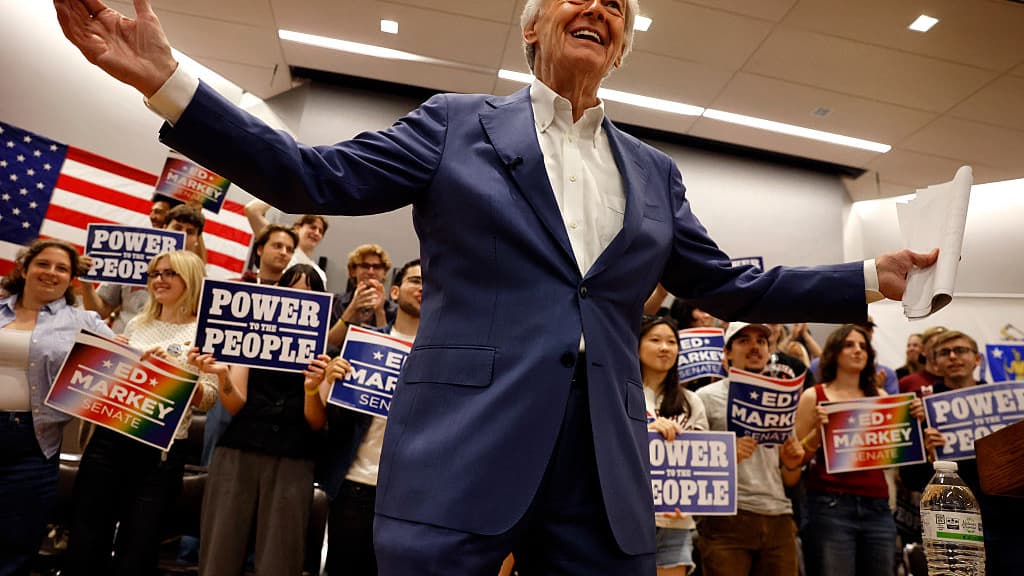
Tuesday’s primary was considered by many to be a “generational showdown” between Markey, 80, and Moulton, 47.
During the campaign, Moulton contended that it was time for change in the state’s political representation.
“Massachusetts has a choice: settle for the status quo, or demand better,” he said in a social media post Tuesday morning.
The young moderate rose in the polls earlier this year, narrowing the gap between himself and the two-term incumbent. But in the month or so leading up to Tuesday’s primary, polls showed that Markey had regained ground, and was holding a comfortable double-digit lead.
This isn’t the first time Markey, who served in the House for nearly 37 years before winning a seat in the Senate in 2013, has held off a younger primary challenger. In his last reelection bid, the then-74-year-old Senator defeated then-Rep. Joseph Kennedy III, who is 34 years his junior, to advance to the November ballot.


The former prime minister said U.K. is among the worst examples of rising debt and warns the situation may have gone too far.
Crypto World
Charlie Kirk’s Murder Case Heads to Trial As Judge Rules Defendant Could Face Death Penalty
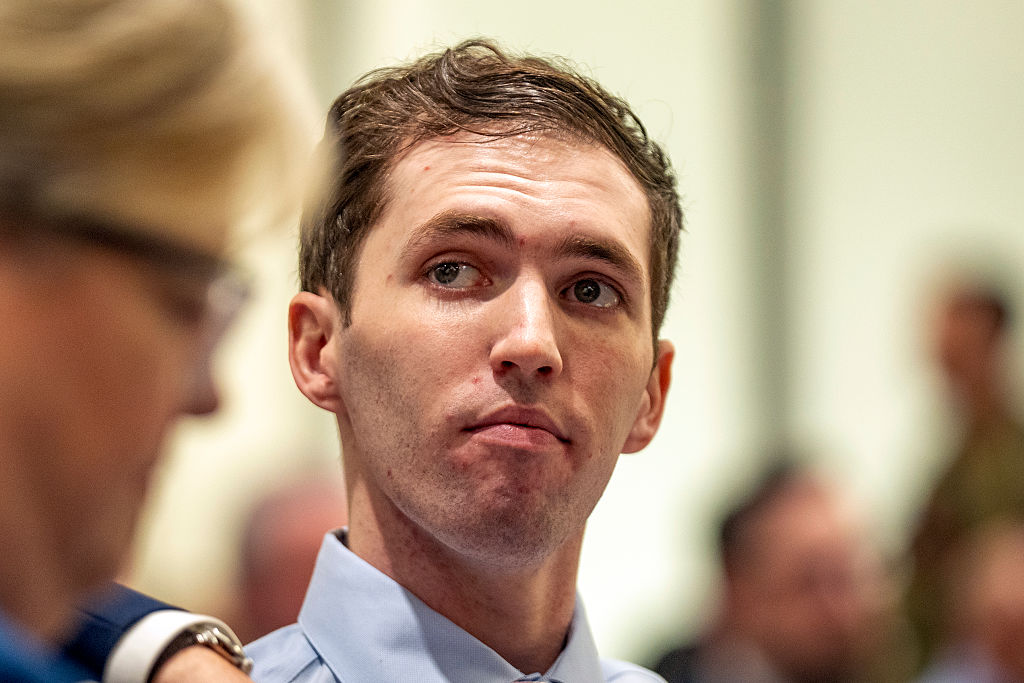
Almost a year after the killing of right-wing activist Charlie Kirk at a Utah college campus, the case against the suspect accused of fatally shooting him is headed for trial.
On Tuesday, Tyler Robinson, 23, pleaded not guilty to aggravated murder and six other charges related to the shooting of Kirk at Utah Valley University on Sept. 10, 2025.
But Utah District Judge Tony Graf ruled that Robinson should stand trial, siding with prosecutors who argued there was “a mountain of evidence” against the defendant.
Graf also ruled that prosecutors can continue seeking the death penalty against Robinson, which the defense team has tried to remove as an option. Graf said the court found probable cause for an aggravating circumstance involving the alleged risk to other people at the crowded campus event, making Robinson eligible for capital punishment.
The hearing on Tuesday followed prosecutors’ presentation of evidence during a five-day hearing in July. No trial date has been set, but a pretrial conference is scheduled for Oct. 23.
Kirk’s death worsened fears of political violence spreading across the U.S., and prompted condemnation from allies, including President Donald Trump.
In a statement, Kirk’s widow Erika called the ruling “an important step in our family’s pursuit of justice”.
“Every step in this process carries the weight of all that Charlie’s murder has taken from his family, especially his children who will grow up without their father,” the statement added.
Erika Kirk and the defendant were both in court on Tuesday for the hearing in the city of Provo.
Why capital punishment is an option
According to Utah law, aggravated murder can become a capital felony if prosecutors file notice that they intend to seek the death penalty, which prosecutors have earlier done in Robinson’s case.
Graf bound over Robinson on one count of aggravated murder, one count of felony discharge of a firearm causing serious injury, two counts of obstruction of justice, two counts of witness tampering, and one count of committing a violent offense in front of a child.
The judge could have sent the case to trial on a lesser charge of murder, which has a sentence of at least 15 years and a maximum of life imprisonment. But Graf said in his ruling that it was reasonable to infer that shooting Kirk from a distance, while surrounded by a crowd of thousands of people, exposed at least one other individual at great risk, meriting the aggravated murder charge.
Kirk, 31, was sitting under a tent when he was shot in the neck while speaking at an event at the university in Orem.
Ryan McBride, a prosecutor with the Utah County Attorney’s Office, said in closing arguments to the court that the four rounds found in the alleged murder weapon—a bolt-action rifle—explain that Robinson knew there was an increased risk to others since it showed the suspect was prepared to fire more bullets if he had missed.
Robinson was lying on a rooftop around 400 ft away when he fired at Kirk, and the prosecutors argued that a shot merely a degree off could have a considerable difference in distance and endangered others’ lives.
“There is a mountain of evidence that proves he is the shooter,” McBride told the court.
But Staci Visser, representing Robinson, argued the state failed to prove the shooter “knowingly” risked people’s lives and said the prosecutors were trying to force the aggravated murder charge.
“There is one shot. There is one bullet. There is one victim,” Visser said. “There was no evidence that would suggest that anyone else was threatened.”
Other factors could affect sentencing
Besides the risk to others, prosecutors also alleged that Robinson targeted Kirk for his political expression and that he fired in the presence of children. If prosecutors prove this at trial, it could affect his sentencing.
Kirk and the organization he co-founded, Turning Point USA, were central to the growing young conservative movement that helped elect Trump.
Kirk was also critical of same-sex marriage and transgender rights. Earlier this year, prosecutors alleged that the political commentator’s stances on these issues drove Robinson to target him. “It’s not difficult to understand the motive here,” McBride said.


Grayscale, a16z, and the CCI asked the SEC to preserve existing classification rules and avoid treating novel exchange-traded products as a single category, while proposing different routes to clearer and faster reviews.
Crypto industry participants urged the US Securities and Exchange Commission (SEC) to avoid a blanket restriction on “novel” exchange-traded funds (ETFs) and instead evaluate products based on their individual risk parameters.
Venture capital firm a16z asked the SEC to evaluate novel products according to their underlying characteristics, coordinate fund-registration and exchange-listing reviews and adopt more predictable timelines. Digital asset investment manager Grayscale and the Crypto Council for Innovation (CCI) supported optional confidential pre-filing processes.
All three opposed changing existing investment-company classifications in ways that could automatically sweep products holding non-securities into the Investment Company Act framework.
The letters were dated Aug. 31 and posted by the SEC around the close of a 60-day public-comment period on its request for feedback concerning novel ETFs.
The SEC opened the consultation window on the next generation of ETFs on June 30, seeking feedback on whether existing regulations are adequate, how such funds should be regulated and whether changes to the registration process are needed.
Related: California Senate passes bill to ban memecoin issuance by public officials
Crypto industry stakeholders urge SEC for more regulatory clarity on novel ETFs
A16z argued that crypto-based ETPs now benefit from more developed market infrastructure, including exchange-approved listing standards and established disclosure requirements, and therefore should not be grouped with products holding private assets or using other novel strategies.
Grayscale similarly argued that digital asset products with established compliance and disclosure records should not face new portfolio conditions or disclosure regimes merely because they are characterized as novel. CCI called for comparable regulatory efficiencies across ETFs and non-ETF ETPs while preserving existing investor protections.
The commenters broadly opposed categorical regulatory changes that could impose additional requirements or delay product launches. However, their recommendations differed on classification, approval procedures and terminology.
One clear disagreement concerned the ETF label. a16z proposed that the term ETF should be reserved for funds under the Investment Company Act of 1940, while Grayscale said that the term ETF should describe economic characteristics regardless of the legal wrapper.
Meanwhile, CCI urged the financial regulator to create clearer registration-status disclosures rather than radically changing the current approval framework.
Magazine: What NYSE’s exploration of onchain systems means for financial markets

It’s easy to dismiss our collective consumer ritual as another marketing season. Yes, it was invented by department stores selling school uniforms in the 1800s, and then turbocharged with seasonal catalogs and sales by retailers like Montgomery Ward and Sears in the century that followed. And it is a sort of pre-Halloween ritual in which we all foist new costumes on our children.
But all those new backpacks, sneakers, pencil cases, and lunch boxes do something else. They help turn our children back into students.
For two glorious summer months, we released our children from the routines and identities of school. They’ve spent a culturally sanctioned rumspringa at pools, beaches, and camps, in the woods, or on a Nintendo. Then, almost overnight, we thrust them back into desks, routines, homework, and a social world that is often new and uncertain.
A handful of new pencils can help.
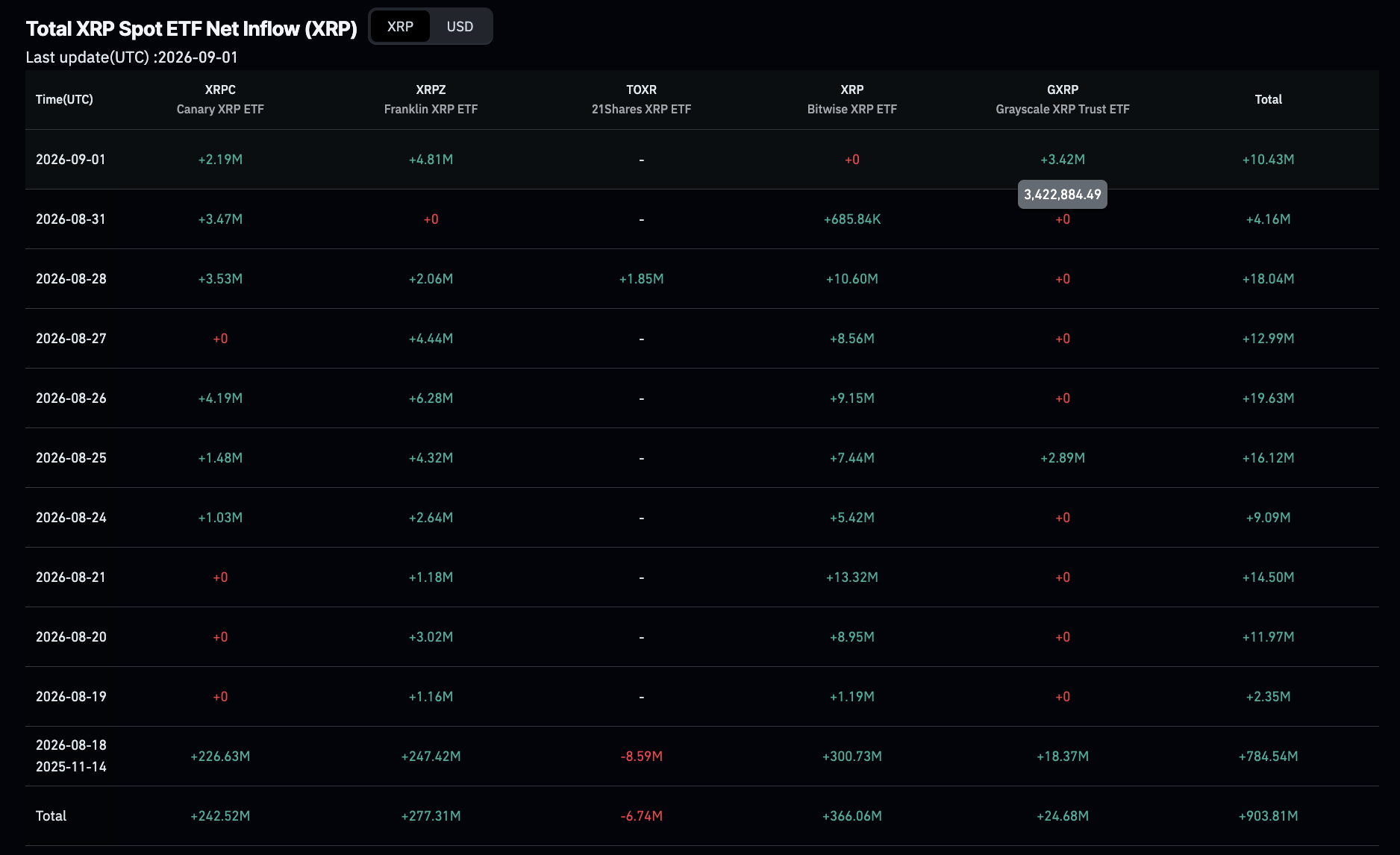
XRP is experiencing turbulence along with the whole market, but the price action is masking one of the more telling institutional news stories of the quarter. Who’s actually buying these ETFs matters more than the headline number? The 13F breakdown answers that question directly.
Spot XRP ETFs have now pulled in more than $1.6 billion in cumulative net inflows, with the funds stretching their streak to nine straight days of positive flows through September 1. That eleven-day run alone accounted for over $740 million, including a $26.2 million single-day haul on August 28.

Analyst James Seyffart flagged that flows have remained positive even as XRP’s price action has been comparatively muted, calling the resilience “particularly impressive.” Second-quarter 13F filings show investment advisers, not hedge funds or brokerages, are driving the bulk of that demand, with Goldman Sachs holding the largest single position at $87.4 million.
That composition points to buy-and-hold portfolio allocation rather than short-term trading flow. The question now is whether that steady institutional bid is enough to push XRP through overhead resistance, or simply to cushion a token stuck in a range.
Discover: The Best Token Presales
Can XRP Price Hit $1.70 This Week and Benefit from the Institutional News?
XRP is sitting at $1.34, right in the middle of the $1.35–$1.38 support band that analysts have flagged as the key near-term floor. Volume has been steady rather than spiking, consistent with the grind-it-out price action of the past week despite the ETF inflow strength.
A confirmed break above $1.55 would trigger the next leg of resistance testing, with $1.68 and $1.86 marking larger supply zones further out. If institutional flows stay elevated into September, XRP might hold the $1.35 floor, and a breakout above descending resistance on the short-term chart carries price toward $1.68–$1.70. More ambitious targets are citing $2.19 on a stronger move.

The base case has XRP chopping in the $1.35–$1.55 range while ETF demand slowly absorbs supply, including the 1 billion XRP escrow release that hit the market September 1. But a break below $1.35 opens the door to retesting lower demand zones, invalidating the current setup. For now, keep an eye on XRP news and ETF flows.
Trade XRP on Bybit and Get a Chance to Win Our $1,000 USDT Airdrop
LiquidChain Targets Early Mover Upside as XRP Tests Key Levels
XRP holders sitting on ETF-driven conviction have a fair case: institutional money is clearly rotating in, and the paper-loss dynamics some funds are absorbing haven’t shaken the buying. But XRP’s market cap means even a strong breakout to $2 is a double, not a multiple.
XRP movement rewards patience more than urgency. That’s the gap early-stage infrastructure plays are built to fill.
The ceremony starts with a single word.
pic.twitter.com/vudkt5bEzI
— LiquidChain (@getliquidchain) August 31, 2026

LiquidChain ($LIQUID) is a Layer 3 infrastructure project. It is fusing Bitcoin, Ethereum, and Solana liquidity into a single execution environment with a deploy-once architecture meant to let developers build once and reach all three ecosystems without fragmenting liquidity.
The presale is priced at $0.014951 per token, with a total raised now at $960K. Its unified liquidity layer and verifiable settlement model target a real infrastructure gap rather than a speculative narrative. t
Research LiquidChain before the presale window closes.
Discover: The Best Crypto to Diversify Your Portfolio
The post XRP News: Smart Money Is Behind Billions in ETF Inflows appeared first on Cryptonews.

Bitcoin fell to $77,500 today, unwinding part of the nearly 25% August’s gain. It happens as renewed U.S.-Iran strikes and a fresh leg higher in Treasury yields rekindled bets on a Federal Reserve rate hike this month.
The reversal poses a direct test of whether August’s rally was a durable shift in Bitcoin’s macro positioning or simply a byproduct of falling yields that has now gone into reverse.
JUST IN: — Watcher.Guru (@WatcherGuru) September 1, 2026

 Brent Crue Oil surges over $95 as US launches strikes on Iran. pic.twitter.com/eJrvisWnSb
The U.S. and Iran traded a fresh round of strikes overnight Tuesday, with both sides digging in over control of the Strait of Hormuz. President Donald Trump threatened to hit Iran’s oil infrastructure directly, while Tehran warned of further retaliation against U.S. bases in the surrounding Gulf countries.
Oil prices jumped sharply on the escalation, marking the worst U.S.-Iran hostilities in over a month and reviving worries about energy-driven inflation spreading through the global economy. Government bond yields surged in response across Japan, Australia, the U.S., and Europe, and markets moved quickly to price in a higher probability that the Federal Reserve would raise rates at its September meeting. Right now, inflation is still running above the central bank’s 2% annual target.
Discover: The Best Crypto to Diversify Your Portfolio
Why Falling Yields Helped Bitcoin
August’s near-25% rally was fueled chiefly by a drop in yields. Higher rates bode poorly for purely speculative assets such as Bitcoin, and the same yield channel that lifted the asset last month is the one dragging it lower this week.
Renewed buying from Strategy, the largest corporate Bitcoin holder, offered only limited support even as the company made its first purchase in two months. That the market’s most consistent structural bid could not offset macro pressure underscores how much of Bitcoin’s near-term price action is currently dictated by rates and oil rather than treasury-driven demand.

The selloff was not confined to Bitcoin. Crypto prices retreated on Wednesday after also posting strong August gains, with every major token trading lower against the dollar.
Solana and the TRUMP memecoin posted the sharpest declines among majors, while BNB held up best, slipping just 0.3%. The uniformity of the drawdown across large caps and memecoins alike points to a risk-off move. They are all driven by macro conditions rather than any single protocol.

Start Trading Crypto, Visit MEXC
Friday’s Payrolls Data Could Set the Next Rate Signal
The focus this week is squarely on U.S. nonfarm payrolls data, due Friday, for further cues on the Fed’s next move. Any sign of labor-market resilience gives the central bank more headroom to hike, which would reinforce the same yield pressure now weighing on Bitcoin and other risk-sensitive assets.
KEVIN WARSH'S RATE HIKE CASE DEPENDS ON THIS WEEK'S JOBS DATA.
At Jackson Hole, he leaned hard on 4.1% unemployment and near record low jobless claims to argue the Fed has room to keep rates high, or go higher, without hurting workers.
That argument only holds up if the… pic.twitter.com/vElFjJkaIi— Bull Theory (@BullTheoryio) August 31, 2026
A softer print would cut the other way, easing the immediate case for a September hike and potentially relieving some of the yield pressure that unwound August’s gains, though that remains a conditional scenario rather than a confirmed outcome.
Until that data lands, Bitcoin’s price action is likely to keep tracking oil prices and Treasury yields more closely than any crypto-specific catalyst as the U.S.-Iran conflict and bond-market rout intensified earlier this week.
Discover: The Best Token Presales
The post Bitcoin August Rally Is Being Put to the Test With Higher Treasury Yields appeared first on Cryptonews.


Key takeaways
- Shiba Inu trades near $0.00000516 after rebounding almost 4% earlier this week.
- Whale wallets holding between 1 million and 100 million SHIB have sold a combined 40 billion tokens since August 22.
- Smaller whales accumulated 990 million SHIB over the same period.
- SHIB’s long-to-short ratio of 0.93 signals bearish positioning in the derivatives market.
Shiba Inu traded around $0.00000516 on Wednesday after recovering nearly 4% earlier in the week.
Despite the rebound, whale selling and weakening derivatives data suggest that traders remain cautious about the dog-themed memecoin’s short-term outlook.
SHIB continues to hold above its 50-day exponential moving average, but growing selling pressure could increase the risk of another decline.
Large SHIB whales reduce their holdings
Santiment’s Supply Distribution data signals a bearish shift among some of Shiba Inu’s largest holders.
Wallets containing between 1 million and 10 million SHIB and those holding between 10 million and 100 million tokens have collectively sold 40 billion SHIB since August 22.
The selling followed SHIB’s recent price recovery and may indicate that larger holders are taking profits rather than positioning for an immediate extension of the rally.
Sustained whale distribution could place additional supply on the market and make it more difficult for SHIB to maintain its upward momentum.
While larger wallets reduced their positions, smaller whales moved in the opposite direction.
Addresses holding between 100,000 and 1 million SHIB accumulated approximately 990 million tokens during the same period.
The contrasting behavior indicates a transfer of supply from larger holders to smaller participants. However, the amount accumulated by smaller whales remains substantially below the 40 billion SHIB sold by the larger groups.
This imbalance suggests that new demand may not be strong enough to fully absorb the tokens being distributed by bigger holders.
Shiba Inu’s derivatives market also points to cautious sentiment. CoinGlass data showed that SHIB’s long-to-short ratio stood at 0.93 on Wednesday.
A reading below 1 means short positions outnumber long positions, indicating that more traders expect the token’s price to fall.
CryptoQuant’s data presents a similarly cautious picture. SHIB’s spot and futures markets are showing signs of heightened activity, while the futures market has recorded large whale orders following the recent price increase.
Other indicators remain neutral, leaving the broader outlook mixed rather than decisively bearish.
SHIB rebounds from the 50-day EMA
SHIB’s nearly 4% recovery followed a retest of its 50-day EMA near $0.00000489. This moving average is currently the token’s most important near-term support. Its ability to attract buyers during the recent decline suggests that demand remains present at lower levels.
If SHIB holds above this support and buying pressure increases, the recovery could extend toward the 200-day EMA at $0.00000569.
A breakout above the 200-day EMA would strengthen the bullish case and could encourage traders to target higher resistance levels.
Shiba Inu’s momentum indicators reflect uncertainty among traders. The Relative Strength Index stands at 54 on the daily chart and continues to rise.
Its position above the neutral level of 50 indicates that bullish momentum is gradually improving.
However, the Moving Average Convergence Divergence indicator produced a bearish crossover on Sunday. Expanding red histogram bars also suggest that downward momentum remains active.
The disagreement between the RSI and MACD supports a cautious outlook as SHIB consolidates between its key moving averages.

If selling pressure increases, SHIB could fall back toward the 50-day EMA at $0.00000489.
A decisive daily close below this level would weaken the recovery and could expose the token to a deeper correction.
Conversely, continued support above the 50-day EMA could allow buyers to challenge the 200-day EMA at $0.00000569.
SHIB’s next significant move will likely depend on whether retail demand can absorb continued whale selling and reverse the bearish positioning visible in the derivatives market.

US-listed spot Bitcoin exchange-traded funds (ETFs) ended August on a strong note, recording $3.52 billion in net inflows—the highest monthly figure for 2026 and a major rebound from July. The surge closely tracked Bitcoin’s rally, which delivered its best month in more than a year.
According to SoSoValue data, August inflows cut year-to-date net outflows by about two-thirds, bringing the aggregate picture closer to balance. CoinGlass data also shows Bitcoin rose roughly 25% in August, its strongest month since a 37.29% jump in November 2024. Momentum, however, did not carry cleanly into September.
Key takeaways
- US spot Bitcoin ETFs pulled in $3.52 billion in August, the largest monthly inflow total of 2026, versus $172 million in July (SoSoValue).
- August’s ETF performance reduced year-to-date net outflows from $5.29 billion to $1.77 billion—an approximate 66% improvement.
- Flows were net positive on 16 of 21 trading days in August, including nine consecutive sessions from Aug. 17 to Aug. 27 (SoSoValue).
- September started with $236.46 million in net outflows, reversing a $216.70 million inflow day on Monday; ETF outflow was the largest since July 31 (SoSoValue).
- While Bitcoin ETF flows weakened at the start of September, spot Ether and XRP ETFs remained in positive territory on Tuesday (SoSoValue).
August inflows reshape the 2026 outflow picture
August’s $3.52 billion net inflow marked a decisive shift for US spot Bitcoin ETFs. Per SoSoValue, the funds’ year-to-date net outflows fell by roughly 66%, from $5.29 billion down to $1.77 billion. For investors watching ETF demand as a proxy for institutional appetite, the key change is not only that inflows increased in August, but that the improvement meaningfully reduced the drag from earlier months.
SoSoValue data highlights that the biggest outflow month earlier in the year was June, when ETFs saw $4.51 billion leave. That was followed by $2.43 billion in May and $1.61 billion in January. Against that backdrop, August’s rebound matters because it signals that the market’s willingness to add exposure via ETFs is not a one-day anomaly, but part of a broader month-long demand pattern.
SoSoValue further shows that August inflows were sustained rather than sporadic: the funds recorded net inflows on 16 of 21 trading days. The streak was particularly notable—nine straight sessions of net inflows from Aug. 17 through Aug. 27—suggesting consistent participation during the latter part of the month.
Rally and ETF demand move in tandem—at least for now
Bitcoin’s August performance appears to have reinforced ETF demand. CoinGlass data indicates BTC gained about 25% in August, its strongest monthly result since the 37.29% rally in November 2024. While ETF flows are influenced by more than price—such as broader risk appetite and positioning—strong price action often attracts incremental buyers, especially where ETFs provide straightforward exposure.
The scale of the August move also showed up in the funds’ broader base. Total net assets rose to $99.61 billion by the end of August, up from $76.29 billion at the end of July—an increase of about 31%. At the same time, monthly trading volume climbed nearly 49% to $58.63 billion from $39.37 billion. Together, higher net assets and higher turnover point to more active investor participation rather than a narrow inflow event.
September begins with a sharp flow reversal
Despite the strong close to August, US spot Bitcoin ETFs hit a rough start to September. On Tuesday, they recorded $236.46 million in net outflows. That reversed the $216.70 million in net inflows logged on Monday. According to SoSoValue, the Tuesday outflow was the largest daily withdrawal since July 31, when ETFs shed $265.37 million.
The shift coincided with weaker market pricing. CoinGecko data cited in the article indicates Bitcoin briefly fell below $77,000 on Tuesday after trading above $80,000 in late August. While the timing does not prove causality, it underlines a familiar pattern in ETF-driven flows: enthusiasm can accelerate during rallies, but outflows can return quickly when price momentum stalls or reverses.
For traders and portfolio managers, the practical takeaway is that August’s inflow momentum may have been sensitive to BTC’s direction. After a prolonged period of net buying in late August, readers may want to monitor whether September outflows extend beyond early volatility or whether they stabilize as price levels firm up.
Ether and XRP ETFs hold ground as Bitcoin cools
Not all crypto ETF demand weakened in the same way. On Tuesday, Ether and XRP ETFs remained positive on net flows. SoSoValue data shows spot Ether (ETH) ETFs attracted around $11 million, while spot XRP (XRP) ETFs drew $14.4 million.
The divergence also appears in year-to-date positioning. Per the same SoSoValue figures referenced in the article, August pushed Ether ETFs into positive territory for 2026, with $732 million in year-to-date net inflows. That compares with Ether ETFs being about $1.12 billion in the red at the end of July. XRP ETFs, meanwhile, reached $502 million in year-to-date net inflows—up roughly 46% from $343 million at the end of July.
These cross-asset differences matter because they can hint that ETF demand is not purely a “Bitcoin only” story. If Ether and XRP flows stay firm while Bitcoin ETFs fluctuate, investors may infer a more selective allocation across crypto exposures rather than a single broad risk-on bet across the entire sector.
Going forward, the immediate watch point is whether Bitcoin ETF outflows in early September are a temporary response to a softer BTC tape or the start of a wider reversal. With August demonstrating how quickly demand can rebuild—cutting year-to-date outflows by about two-thirds—next week’s flow data may be an important signal for whether the institutional bid is re-emerging or pausing again.

Top 10 Altcoins To Buy On This Crypto Pullback (Big Potential)

Armagh crash LIVE updates as six people taken to hospital after serious collision

Dow Jones Futures Fall After Oil Prices Slam Market; Dell, Credo, Palo Alto Are Earnings Movers





-

 Fashion5 days ago
Weekend Open Thread: Maeve – Corporette.com
-

 Crypto World5 days ago
Bitcoin’s 22% rally now needs real demand to outlast Treasury liquidity boost
-

 Crypto World7 days ago
Warsh Jackson Hole keynote puts financial innovation first
-

 Business5 days ago
Apple Confirms September 9 Keynote and Reveals Its Full Pre-Order Schedule
-

 Crypto World6 days ago
Elon Musk Grok Bot Promise: We Will Make You Whole if AI Loses Your Money
-

 Business5 days ago
Salesforce Stock Soars 19% as Blowout Earnings and Agentforce AI Growth Silence Software Skeptics
-

 Business4 days ago
Onto Innovation Stock: AI’s Next Bottleneck Is Yield (NYSE:ONTO)
-

 Business7 days ago
Walmart takes aim at younger shoppers with new fashion brand
-
 NewsBeat7 days ago
Lindsay Clancy jury braces for closing arguments as judge tells court: ‘You’ve heard all the evidence’ – Live updates
-

 Crypto World6 days ago
NVIDIA revenue hits $96.2B as AI demand doubles
-

 Crypto World4 days ago
Bitcoin price tests $82K resistance as Brandt stays long
-

 Crypto World7 days ago
Nvidia Q2 Earnings Reveal $96.2 Billion Beat, So Why Is NVDA Falling?
-

 Business5 days ago
iPhone 18 Pro Pre-Orders Could Shift to Saturday as Apple Reportedly Avoids September 11 Anniversary
-
 Tech4 days ago
Hugging Face built a $4.5 billion empire on free AI models. Now Nvidia is buying it for $12.9 billion
-

 Tech6 days ago
Claude Cowork gets its own browser that doesn’t touch your tabs, bookmarks, or saved passwords
-

 Crypto World5 days ago
Truflation calls for Fed rate cut after PCE forecast
-

 Tech4 days ago
PaperCut releases second emergency patch for exploited flaws
-

 Tech7 days ago
Apple’s iPhone 18 Pro event is on September 9
-

 Crypto World6 days ago
GENIUS Act missed its deadline as OCC writes rules anyway
-

 News Videos3 days ago
Charlie Munger on Robinhood: No one should believe that Robinhood’s trades are free
You must be logged in to post a comment Login