
Crypto World
Ripple Prime Launches Delta One for US Equity Derivatives



Ripple Prime, Ripple’s multi-asset prime brokerage business, launched a Delta One service for institutional investors, expanding into US equity derivatives.
The offering allows clients to execute total return swaps linked to US-listed equities, indexes and digital assets, Ripple said in a Thursday announcement.
Total return swaps provide exposure to an asset’s returns without requiring ownership of the underlying asset.
The service targets hedge funds, asset managers and other financial institutions. Ripple said clients can use a single counterparty and cross-margin exposures across the supported asset classes around the clock.
“The launch of our Delta One business is an important development for Ripple Prime and a natural extension of the platform we’ve built,” Ripple Prime President Noel Kimmel said.
Ripple Prime’s existing prime brokerage, clearing and financing services cover foreign exchange, derivatives, fixed income and digital assets. Ripple said the business has more than $1 billion in regulatory net capital.
Ripple Prime was created after Ripple completed its $1.25 billion acquisition of Hidden Road in October 2025 and rebranded the business.
Earlier in August, Ripple Prime closed a $275 million private placement of senior unsecured notes to support its growth. In May, Ripple Prime secured a $200 million debt facility from funds managed by Neuberger Specialty Finance to expand its lending capacity for institutional clients.
Related: South Korea’s Jeonbuk Bank taps Ripple for cross-border payments

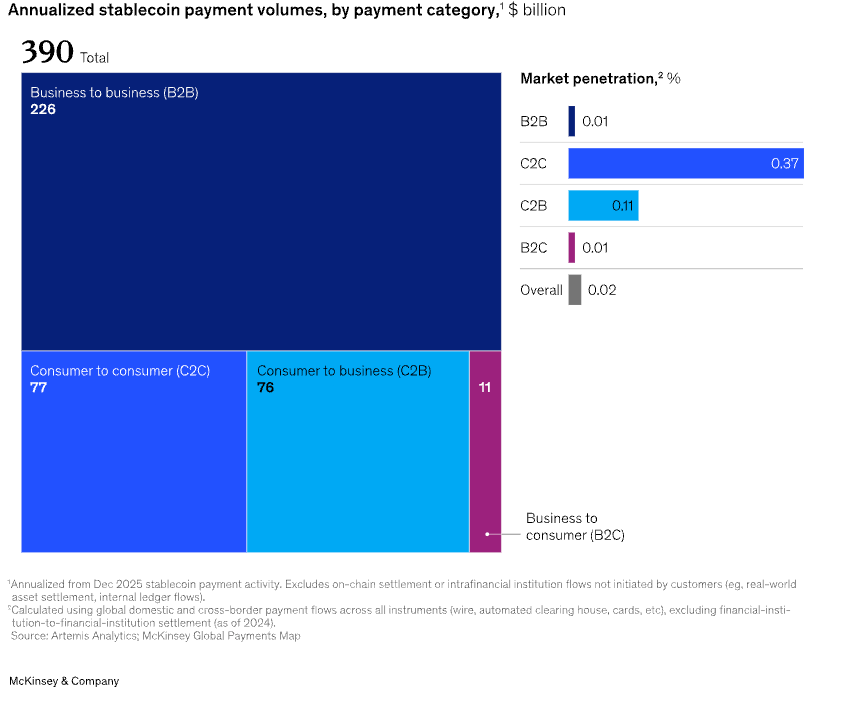
An estimated $390 billion in stablecoin payments took place in 2025, according to McKinsey and Artemis. But inside this market, AI agents are creating an interesting kind of payment activity.
Research shows that agents completed more than 176 million on-chain transactions worth over $73 million between May 2025 and April 2026. But most of them were very small transactions.
The median x402 payment was between $0.01 and $0.10, while 76% of transactions fell below the $0.30 fixed-fee threshold for card payments. USDC accounted for 98.6% of settlements.

Although the transaction amounts are small, the frequency of AI agentic payments is staggering — 173 million.
Software can buy data, compute and other services hundreds or thousands of times without the human behaviors that define conventional commerce. For example, opening an account, entering card details, approving an invoice or waiting until the next banking day.
XDC Network believes this offers an early glimpse of how more payments could work in future.
“Money has always moved as fast as the slowest part of the process, like a bank, a clearinghouse, or normal business hours,” Atul Khekade, Co-Founder of XDC Network, told BeInCrypto. “Agents just show what happens when you get rid of those delays. Payments stop being something you wait around for and turn into a continuous process happening in the background at the speed of the underlying network.”
Machine Payments
Software can transact continuously. An AI service may need a weather feed for one calculation, a market-price API several seconds later, and compute resources immediately afterward.
Each interaction can carry its own price, turning what might once have been a monthly subscription or invoice into thousands of individual transactions.
That helps explain why Keyrock found activity spread across such a large population of AI agents and service directories. The report found more than 104,000 agents registered across at least 15 directories by the end of the first quarter of 2026.
The economics favor systems that can handle payments measured in cents or fractions of a cent. The payments industry is already preparing:
- Stripe launched the Machine Payments Protocol, or MPP, in March. The open standard allows agents and services to coordinate micropayments and recurring payments programmatically, with Stripe supporting stablecoins as well as traditional payment methods;
- Google’s Agent Payments Protocol, or AP2, concentrates on proving user authorization and establishing an auditable record of what an agent was permitted to buy. Google transferred the protocol to the FIDO Alliance in April and added support for autonomous “Human Not Present” transactions;
- Cloudflare entered the market in August with Cloudflare Wallets and cloudflare.pay, giving agents identities and programmable spending controls. Its payment tools support both x402 and MPP;
- Mastercard’s Agent Pay for Machines service, announced in June, is designed for continuous, high-frequency and low-value payments, with settlement across cards, accounts and stablecoins. More than 30 companies, including Stripe, Coinbase, Cloudflare and Tempo, were named among its initial supporters.
Invisible Settlement
XDC’s contribution to this market is XDCAI.tech, which uses the open x402 protocol originally introduced by Coinbase.
x402 turns the HTTP ‘402 Payment Required’ response into a payment mechanism. An agent requests a resource, receives its price, authorizes the payment, and repeats the request with proof of payment. The process allows software to purchase an API call or another digital service within the same interaction.
Coinbase introduced the protocol in May 2025, and its use has since expanded through integrations with companies including AWS.
XDC AI applies x402 to USDC settlement on XDC Network. Users fund a smart wallet with USDC and establish an on-chain spending limit. An agent can then pay an x402-enabled service per request. EIP-3009 allows the payment to be signed off-chain while a relayer covers the network fee, leaving the agent itself to hold and spend USDC.
The system can also connect to AI applications through MCP or a command-line interface, allowing agents running through products including ChatGPT, Claude, Cursor, and Codex to discover and pay for services.
XDC already had much of the underlying settlement infrastructure in place. Native USDC and Circle’s CCTP went live on XDC in September 2025.
XDC lists two-second block times, six-second finality, and transaction costs around $0.00001, characteristics aimed at high-volume financial applications.
Invoices Could Disappear
Invoices package several functions together. They communicate what is owed, set payment terms, and provide records for reconciliation and accounting. Many businesses then wait days or weeks for the actual transfer to arrive.
Software dealing with software can compress part of that cycle. A service can state its price in a machine-readable format, an authorized agent can evaluate the request, and payment can be settled immediately. Transaction records can then feed directly into treasury and accounting systems.
This comes as agents are taking on increasing responsibility for procurement, cloud spending, portfolio management, and recurring commercial obligations. A company could eventually give an agent a budget and a set of rules, then allow it to buy compute when demand rises, renew services, pay suppliers or rebalance liquidity within those boundaries.
XDC therefore sees today’s one-cent API payment as the smallest version of something much larger.
The card networks see it too. Visa’s stablecoin settlement program reached a $7 billion annualized run rate in April after growing 50% quarter-over-quarter and expanding to nine blockchains. Mastercard announced stablecoin settlement across networks including Ethereum, Solana, Base, Polygon, Tempo and XRPL in June.
The competition is consequently broader than blockchain networks attempting to replace card companies. Visa, Mastercard, Stripe, Google, Coinbase, Cloudflare and blockchain developers are increasingly building interoperable pieces of the same machine-commerce market.
The Other Half of the Problem
Greater autonomy raises questions about permission and accountability.
An agent paying 3 cents per API request incurs limited financial exposure. However, an agent managing a corporate treasury or procurement budget needs controls around authorization, counterparties, limits, and auditability, which is why the major platforms are converging on different pieces of the same problem. This explains why:
- Google has concentrated on cryptographic mandates that record what a user authorized;
- Cloudflare lets owners impose spending caps and approved merchant lists;
- Mastercard’s system combines agent credentials with permissioning rules;
- XDC AI places spending limits at the wallet level
Those controls determine how quickly agentic payments graduate from micropayments into larger financial relationships.
They also temper the idea that cards and invoices disappear on a fixed timetable. Card networks are already adapting their products for autonomous software, while invoices serve legal, tax, credit and accounting functions that extend beyond transferring funds.
XDC believes that payment and service delivery can happen almost simultaneously: APIs, data, compute, digital services and other machine-to-machine transactions. Success there could establish the habits and technical standards that would later be used for larger transactions.
Khekade expects the terminology itself to disappear as the technology becomes commonplace.
“In 5 years nobody will describe this as agentic payments, the same way nobody today calls a wire transfer an internet payment,” he said. “It will just be how value moves. The interesting question is not whether that happens, it is which networks were actually built for it versus which ones bolted it on afterward.”
The post XDC Says AI Agents Could Upend Invoices and Card Payments appeared first on BeInCrypto.
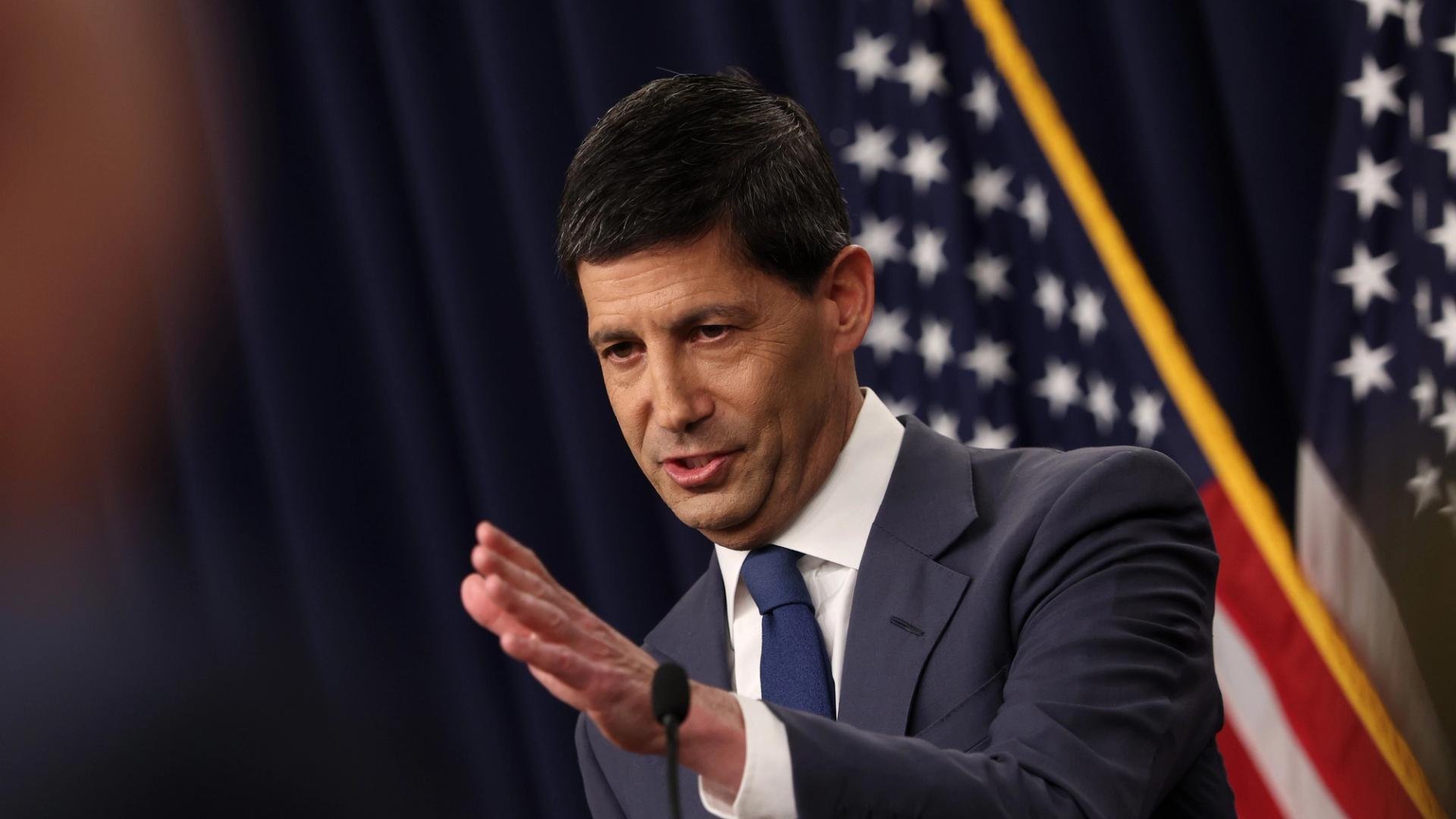
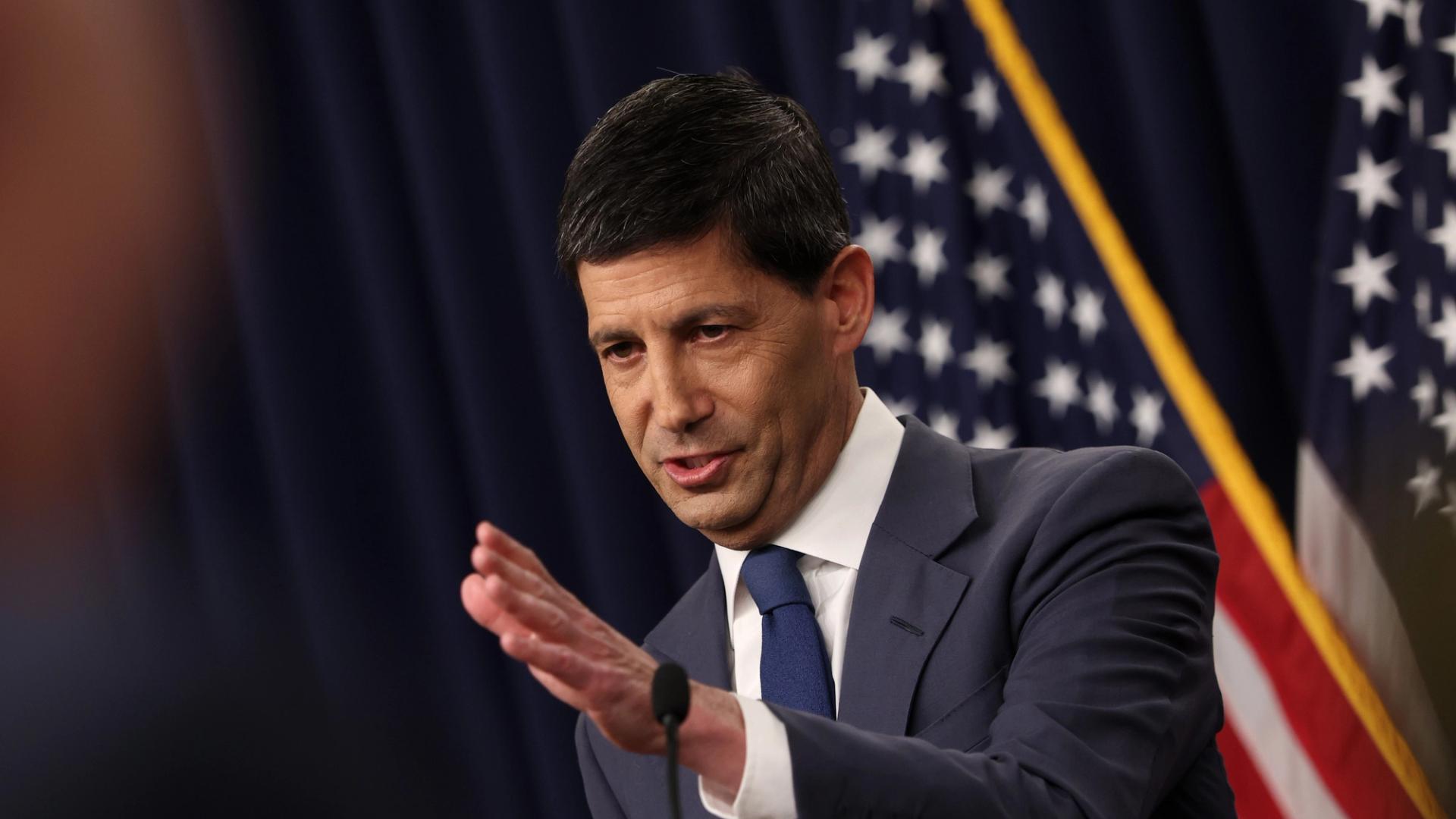
One analyst expects Warsh to take a tough line on inflation, but still sees the Fed holding off on rate hikes until at least after the November mid-term elections.
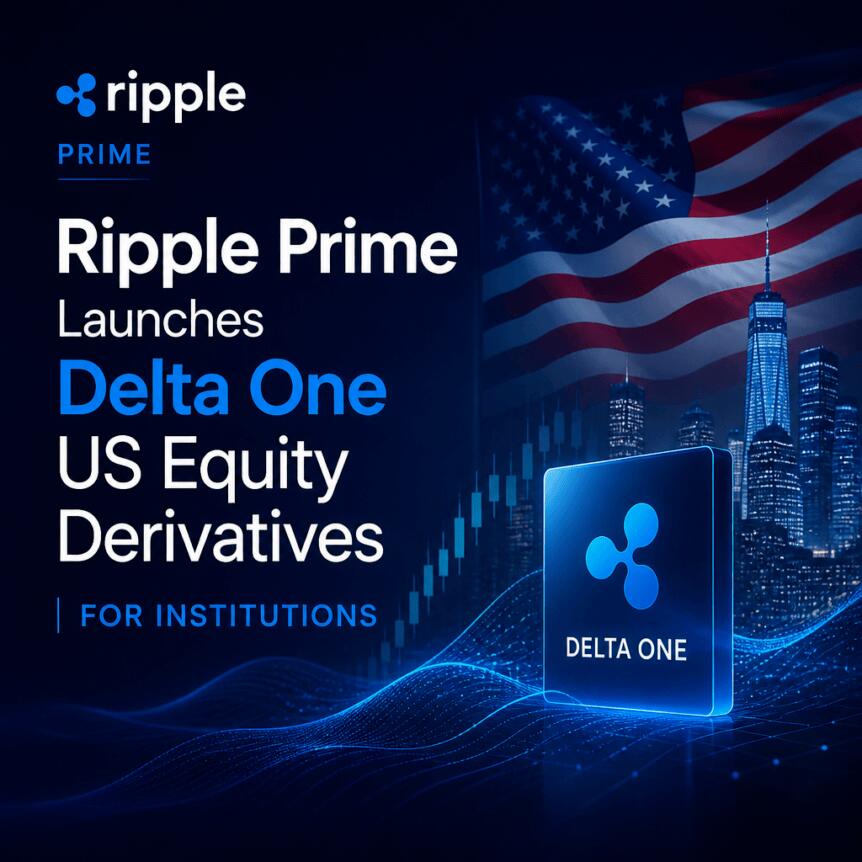
Ripple Prime, the multi-asset prime brokerage unit of Ripple, has rolled out a “Delta One” service aimed at institutional investors—bringing US equity derivatives into its existing platform alongside foreign exchange, fixed income and digital assets. The launch is positioned as an expansion of how clients can gain exposure to underlying assets through derivatives rather than direct ownership.
In a Thursday announcement, Ripple Prime said the new offering enables clients to execute total return swaps tied to US-listed equities and indexes, as well as digital assets. Total return swaps are designed to deliver the economic returns of an asset over a specified period without requiring the investor to hold the underlying instrument.
Key takeaways
- Ripple Prime’s new Delta One service uses total return swaps to provide exposure to US-listed equities and indexes, plus digital assets.
- The product targets hedge funds, asset managers, and other financial institutions that need derivative-based exposure rather than direct ownership.
- Ripple Prime says clients can use a single counterparty and cross-margin positions across the supported asset classes.
- Ripple Prime said it operates with more than $1 billion in regulatory net capital, supporting its balance-sheet role as a prime brokerage.
- The initiative follows recent capital-raising steps, including senior unsecured notes and a credit facility described in earlier coverage.
A prime brokerage step into equity-linked derivatives
Delta One products are often used by institutions to simplify portfolio implementation and risk management. Instead of buying or shorting the underlying assets, investors can gain exposure through swap structures that track the total return performance of a reference asset. Ripple Prime’s announcement extends that model to US equity derivatives, adding equities and indexes to the asset classes it already supports.
The company emphasized operational and risk-management benefits for clients. According to the announcement, clients can execute these trades with a single counterparty and cross-margin exposures across the supported asset categories. The “around the clock” framing suggests Ripple Prime is tailoring the service for continuous trading environments, which matters for institutions managing global schedules and hedging workflows.
What Ripple says the service is designed to solve
Ripple Prime said the Delta One business is aimed at hedge funds, asset managers and other financial institutions. That target customer base typically values derivatives for their flexibility—especially when institutions want to express views quickly, rebalance frequently, or hedge exposures across different markets.
Ripple Prime President Noel Kimmel called the launch “an important development” and described it as a natural extension of the platform the company has built. While the announcement does not elaborate on specific contract terms or asset universe breadth, the core idea—total return swaps linked to US equities and indexes and digital assets—signals a broader attempt to unify trading and settlement workflows under one prime brokerage relationship.
Capital and balance sheet expansion behind the rollout
Prime brokerage and clearing activities rely heavily on capital, risk controls and regulatory capacity. Ripple Prime said it has more than $1 billion in regulatory net capital. It also described the platform’s existing coverage as spanning foreign exchange, derivatives, fixed income and digital assets—suggesting the Delta One product is being positioned inside a multi-asset ecosystem rather than as a standalone equity-only business.
The Delta One launch follows earlier financing steps intended to support growth. Earlier in August, Ripple Prime closed a $275 million private placement of senior unsecured notes, according to prior coverage from Cointelegraph (see Ripple raises $275m for US prime brokerage). In May, it secured a $200 million credit facility from funds managed by Neuberger Specialty Finance, as noted in earlier Cointelegraph reporting (see Ripple Prime secures $200m credit facility).
For investors and trading desks, these kinds of funding moves can be relevant because they affect the prime broker’s ability to take on counterparty exposure, expand lending or financing capacity, and support additional derivative activity. The Delta One service itself is not described as a replacement for other prime brokerage lines; rather, it appears to extend the same institutional infrastructure into equity-linked swap execution.
From Hidden Road to Ripple Prime: building toward a unified platform
Ripple Prime, as a brand and business unit, was created after Ripple completed its $1.25 billion acquisition of Hidden Road in October 2025 and rebranded the operation. That background matters because it explains how Ripple’s prime brokerage push moved from an acquired platform into a broader multi-asset offering.
The Delta One launch also reflects a broader trend in institutional crypto infrastructure: major players are trying to expand beyond spot and custody into regulated market-making and derivatives access. By linking US equity references and digital assets through total return swaps, Ripple Prime is attempting to make it easier for traditional investors to integrate crypto exposures into derivative-led strategies—potentially lowering friction for portfolios that already rely on cross-asset hedging.
Still, the announcement leaves open questions that institutions may want to clarify before onboarding—such as the scope of eligible underlying equities, index references, settlement mechanics, and how the cross-margin model behaves across more complex portfolios. Those details typically determine how smoothly a new Delta One offering fits into an institution’s existing risk and collateral processes.
What to watch next
Institutional demand for Delta One depends on product breadth, execution quality and risk/collateral mechanics. After Ripple Prime’s US equity derivatives expansion, market participants are likely to watch how quickly the service scales across clients and asset classes—and whether Ripple Prime continues adding reference assets or related hedging tools as it builds out the platform.

An Garda Síochána told TIME the force does not comment or speculate on operational matters.
Amid much discussion over the trip and the expected protests, here’s what we know so far.
Security concerns mount as protests loom
Planning is already underway for various protests, with one of the most significant demonstrations set to take place in Ireland’s capital, Dublin.
The protest is scheduled to start on Sept. 12 at the Garden of Remembrance, a public memorial to those who “gave their lives in the cause of Irish freedom.”
Sara O’Rourke of the Irish Neutrality League told the Irish Times that the “protest will be under the banner of no welcome for Trump.”
Protest organizers said they expect a “big” but “safe event,” which they described as a “family-friendly, peaceful protest.”
Paul Murphy of the People Before Profit-Solidarity party said he is expecting a “massive protest” which will have “a broad coalition with a basic theme of no welcome for Trump.”
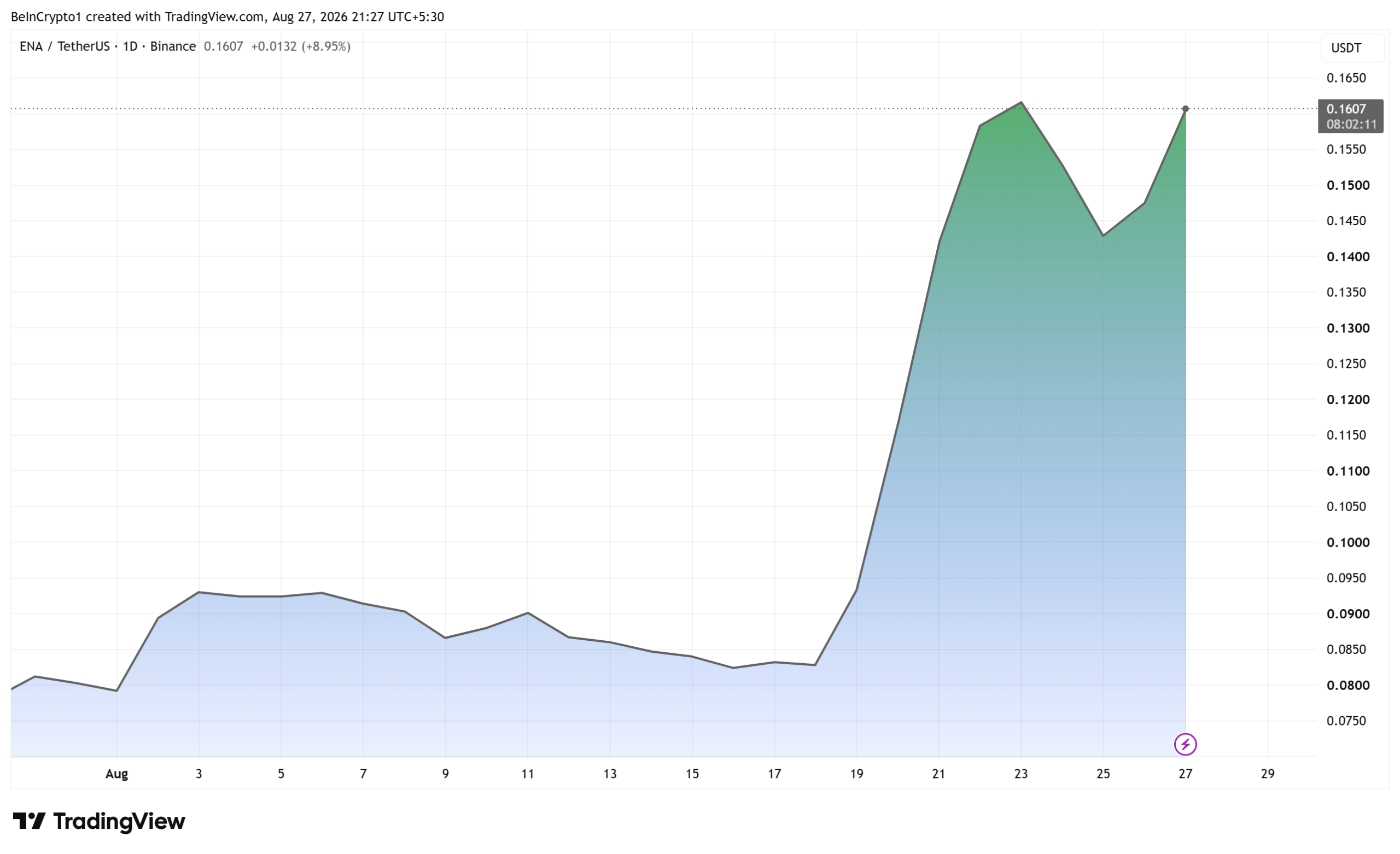
Ethena (ENA) jumped 11% after its Foundation bought out seed investors who sold after the October 2025 peak. The move capped a near-100% monthly rally as an ENA buyback vote went live.
The token has carried the same weight since launch, with early investor tokens unlocking every month. That supply drip just ended.

Ethena Buys Out Investors Who Sold After the Peak
The Ethena Foundation announced the deal Thursday, indicating that they spent the past two weeks buying locked tokens directly from early backers. Each was originally allocated more than 0.25% of ENA supply.
The Foundation split those backers into two groups:
- Investors who sold any ENA after the October 10, 2025, peak had their locked tokens bought out.
Only one wallet said no.
- Investors who never sold got a full-price offer.
None accepted.
“As a result, the investors who have been selling into the market during the relevant time frame now hold no unvested ENA which could be sold into the market in the future,” the Foundation wrote in its blog.
Follow us on X to get the latest news as it happens
The rest of the investor calendar now ends early. All remaining investor tokens unlock on October 5, 2026, and the monthly calendar disappears. Team tokens stay locked on their original schedules. Roughly 12% of supply stays locked, all of it team, ecosystem, and Foundation holdings.
The pressure this fixes was real. Ethena released 171.88 million tokens in early August alone. BitMEX co-founder Arthur Hayes bought 9.05 million ENA days before that release.
One large holder sits outside the deal. StablecoinX, an ENA treasury company, still holds about 20% of supply under a separate lockup disclosed in SEC filings.
ENA Buyback Vote Ties the Fee Switch to USDe Growth
The fee switch is the second piece. A Snapshot governance vote, open through September 2, would send protocol revenue into ENA purchases. Ethena’s Risk Committee has already approved the design.
There is a catch. Buybacks only start once USDe circulating supply reaches $7.5 billion. At that level, 5% of protocol revenue buys ENA. The share scales up to 20% if supply reaches $20 billion.
USDe sits near $4.6 billion today, down from a 2025 peak of about $15 billion. So the switch stays off until supply climbs roughly $3 billion. The Foundation says it wants USDe above $100 billion within five years.
Once that first threshold hits, 95% of net revenue paid to the Foundation funds the purchases. Each buy will be tracked on Ethena’s public dashboard.
The playbook has precedent. Uniswap’s fee switch proposal sent UNI to a two-month high last November.
Ethena also addressed a second old doubt. A Master Framework Agreement, due in October, hands protocol intellectual property and residual value to tokenholders. Ethena Labs equity investors get neither. The Foundation says Labs equity has never taken a dollar of protocol revenue.
Will the ENA Rally Hold?
ENA trades near $0.155 after gaining 11% in 24 hours. The token is up 56.5% in a week and 84.6% over the past 30 days. Its market cap stands near $1.52 billion.

The bull case is simple. The sellers are gone, the unlock calendar dies in October, and a buyback pipeline is on the ballot. The bear case is just as clean. Buybacks stay off until USDe nearly doubles, and StablecoinX’s 20% stake sits outside the deal.
The Snapshot vote still needs quorum. From there, the signal to watch is USDe supply. Every dollar it climbs brings the ENA buyback switch closer.
The post Ethena Just Paid Its Early Investors to Exit as ENA Nears 100% Rally appeared first on BeInCrypto.


Prosecutors are probing allegations that Zondacrypto’s CEO gave Radosław Piesiewicz a 40,000 euro watch for help with regulatory hurdles.


The token hit a $25 million market cap on the back of nine days of unreleased Grand Theft Auto VI footage. Its creator has now sold his stack — hours before Rockstar’s first official gameplay reveal.


Stable Sea has added two WisdomTree digital funds to its treasury platform, giving eligible businesses access to three SEC-registered products with minimum investments starting at $1.
Summary
- Stable Sea has added WTSIX and FLTTX alongside the previously available WTGXX.
- The three funds carry minimum investments ranging from $1 to $25.
- Eligible users place fund orders through WisdomTree Securities from Stable Sea’s dashboard.
- Tokenized real-world assets in the United States have exceeded $31 billion.
Stable Sea adds two WisdomTree funds
Stable Sea said the WisdomTree Short-Duration Income Digital Fund and WisdomTree Floating Rate Treasury Digital Fund are now available through Stable Sea Terminal, its cash-management platform for finance teams.
The additions expand a relationship that began in April, when the platform started offering the WisdomTree Treasury Money Market Digital Fund. In April, crypto.news reported the first integration, which allowed corporate clients to place idle cash in a tokenized fund holding short-term U.S. government securities.
Eligible Stable Sea users now have three funds with different investment objectives, costs, yields, and minimums. Finance teams can place buy and sell orders from the same dashboard they use to oversee company cash, according to the firms.
Access is provided through WisdomTree Securities Inc., an SEC-registered broker-dealer and member of the Financial Industry Regulatory Authority. Before placing an order, each eligible Stable Sea Terminal user must establish a relationship with WisdomTree Securities and complete the required account-opening process.
Stable Sea CEO and co-founder Tanner Taddeo told crypto.news that the expanded selection lets a business match its cash holdings with the time at which it expects to need the money.
“By expanding our partnership with WisdomTree, we now offer three distinct funds that cover different business needs: a straight money market option, a floating-rate option, and an actively managed income option, so a business can match its cash to how soon it actually needs it.”
According to Taddeo, such choices have long been available to large corporate treasury departments but have remained difficult for many smaller companies to obtain.
Three tokenized funds serve different cash needs
At the lowest entry point, the WisdomTree Treasury Money Market Digital Fund, or WTGXX, requires a minimum investment of $1. The SEC-registered money market fund invests in short-term U.S. Treasury securities and accrues dividends daily.
WTGXX carries an expense ratio of 0.25% and had a seven-day SEC yield of 3.46% based on the figures provided with the announcement. Its investment objective combines current income with capital preservation, liquidity and maintenance of a stable net asset value of $1 per share.
A second choice, FLTTX, seeks to track an index of floating-rate U.S. Treasury obligations before fees and expenses. Unlike conventional fixed-rate Treasury securities, the interest rates on the fund’s underlying obligations adjust using scheduled Treasury auctions.
FLTTX has a $25 minimum investment and a 0.05% expense ratio. The fund’s 30-day SEC yield was listed at 3.81% in the information supplied for the expansion.
WTSIX also requires at least $25, although its strategy differs from that of the two Treasury-focused products. WisdomTree actively manages the fund to seek income while maintaining an objective of preserving capital.
The short-duration income fund charges an expense ratio of 0.40% and had a reported 30-day SEC yield of 4.42%. Its holdings may expose investors to credit, interest-rate, and income risks that differ from those attached to a money market fund or a portfolio limited to floating-rate Treasury obligations.
SEC yields provide standardized measures based on a fund’s recent income, but they change with market conditions and do not guarantee future returns. The products are investments rather than bank deposits, meaning they are not insured by the Federal Deposit Insurance Corporation and can lose value.
WisdomTree targets barriers facing finance teams
WisdomTree Head of Digital Assets Will Peck told crypto.news that the response to the original single-fund arrangement showed demand from businesses seeking access to regulated cash-management products.
“Different businesses have a variety of liquidity and cash-management needs, while high minimums and manual account processes have historically created barriers to accessing institutional-grade cash-management products.”
Adding the funds gives eligible finance departments more choices without requiring them to leave Stable Sea’s existing interface, according to Peck. The arrangement does not make the funds available to every company automatically, since eligibility checks and the WisdomTree Securities account process still apply.
Stable Sea said U.S. businesses collectively hold more than $5 trillion in cash and cash-equivalent accounts that earn little or no interest. The company presented the three-fund selection as a way for qualifying finance teams to divide operating cash according to expected liquidity needs instead of applying one product to every balance.
The low minimums contrast with some investment products designed for large issuers or institutional clients. An April report on Morgan Stanley described a stablecoin reserve portfolio carrying a $10 million minimum investment and a 0.15% management fee.
Morgan Stanley’s product invests in cash, U.S. Treasury securities with maturities of 93 days or less, and overnight repurchase agreements backed by Treasuries. Although the portfolio was designed for stablecoin issuers, the bank said other investors could also participate.
Tokenized funds remain regulated securities
Placing fund ownership records on a blockchain does not remove the securities rules, identity checks, or transfer controls attached to the underlying investment. A July tokenized fund explainer noted that access to many such products remains permissioned, with investors required to complete identity checks and use approved wallets.
Stable Sea and WisdomTree’s arrangement follows the same regulated model. Each of the three products is registered with the SEC, while transactions are handled through WisdomTree Securities rather than through an open, permissionless crypto market.
SEC registration also does not amount to a government guarantee or approval of an investment’s returns. Fund buyers remain exposed to the terms, fees and risks listed in each product’s prospectus, including possible loss of principal.
Industry tracker RWA.xyz put the value of tokenized real-world assets in the United States above $31 billion by mid-2026, compared with roughly $6 billion at the start of 2025. Tokenized Treasury and money market products accounted for more than $15 billion of the total, according to figures cited by Stable Sea.
Growth in the segment has brought asset managers and payment networks into products tied to government debt. In February 2025, Mastercard added Ondo Finance to its Multi-Token Network, allowing participating businesses to access tokenized Treasuries while using traditional banking infrastructure for settlement.
WisdomTree managed more than $150 billion in assets when Stable Sea announced the expanded relationship. WTGXX, FLTTX, and WTSIX remain subject to their respective prospectuses, eligibility requirements, expense ratios, and changing SEC yields.
Ethereum’s sharp breakout has significantly improved its market structure, with strong momentum carrying the price toward the $2.5K region. While bullish continuation remains possible, the increasingly extended move leaves ETH vulnerable to a temporary pullback or sideways consolidation if supply begins to increase.
Ethereum Price Analysis: The Daily Chart
On the daily timeframe, Ethereum has decisively broken out of its prolonged bearish structure. The impulsive rally from the $1.85K-$1.92K demand zone pushed the price through the descending trendline, the major moving averages, and the $2.07K-$2.15K resistance zone with considerable strength.
ETH is now trading around $2.5K and testing the major $2.4K-$2.5K resistance zone. Momentum remains firmly bullish, supporting the possibility of continuation if buyers can absorb the available supply around this area.
However, the RSI has recently entered overbought territory following the vertical advance. This does not necessarily signal an immediate reversal, but it does indicate that the market is becoming increasingly extended. If supply increases around $2.5K, ETH could enter a period of sideways consolidation or begin a corrective pullback before attempting another leg higher.
The $2.07K-$2.15K zone represents an important support area in the event of a deeper correction, while the former $1.85K-$1.92K consolidation range remains the broader structural support.
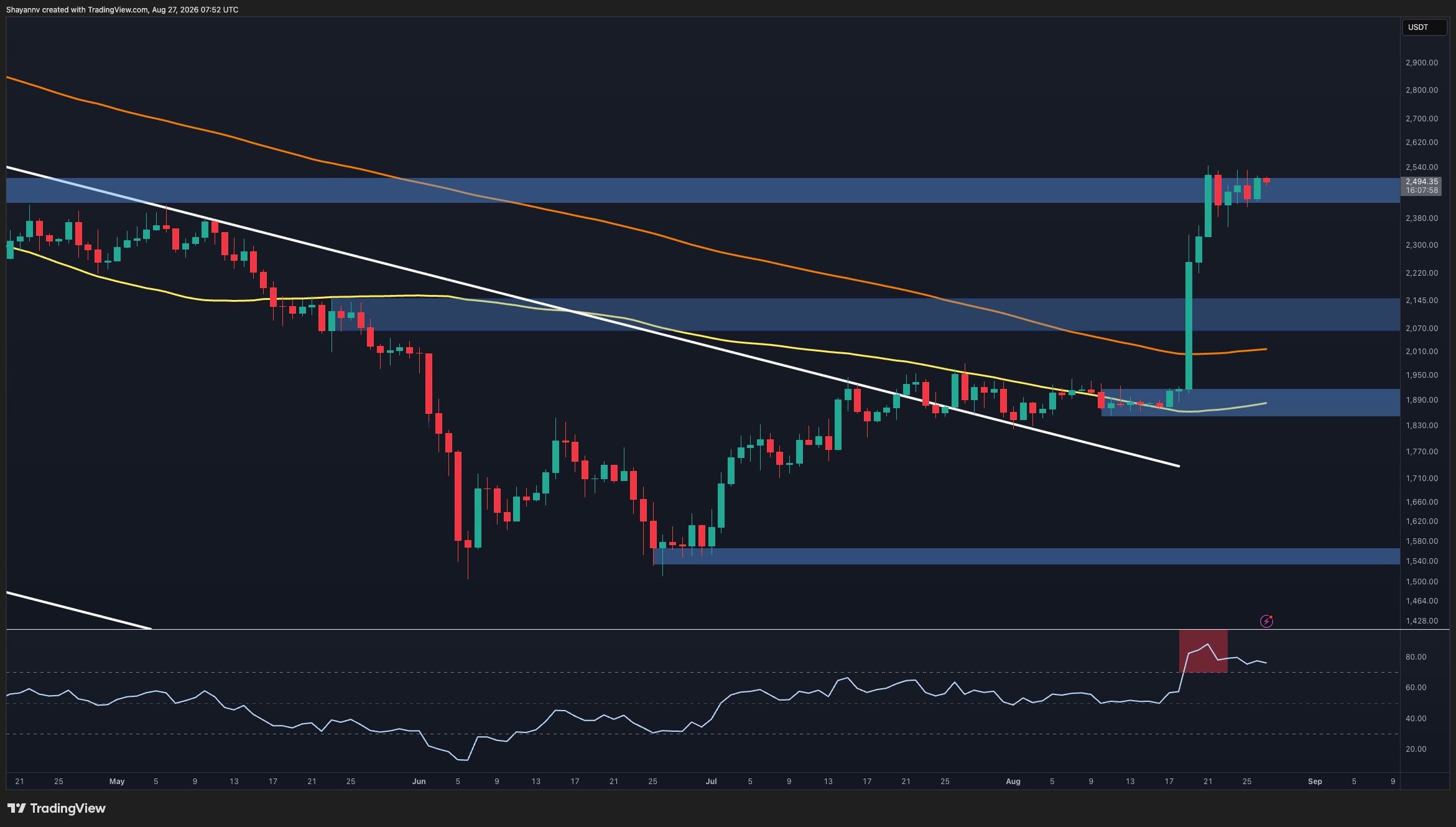
ETH/USDT 4-Hour Chart
The 4-hour chart highlights the strength of the recent expansion more clearly. Ethereum surged almost vertically from around $1.9K and has since begun consolidating inside the $2.43K-$2.51K resistance zone.
Despite the lack of immediate follow-through above $2.5K, the short-term structure remains bullish. A decisive breakout and acceptance above the $2.51K region could indicate that buyers remain in control and open the door to further upside.
Nevertheless, after such an aggressive rally, a retracement would be technically reasonable. The first notable pullback target is the $2.22K-$2.31K zone. If selling pressure becomes more substantial, the second support region around $2.07K-$2.12K could become relevant.
Therefore, the primary scenario remains a bullish continuation based on the strength of momentum. Yet, increasing supply around the current resistance could first produce either a temporary correction toward these pullback zones or a sideways consolidation phase that allows the market to cool down.

Sentiment Analysis
The liquidation data adds another reason to expect potentially choppy price action in the short term. Liquidity is present on both sides of Ethereum’s current price, indicating that neither buyers nor sellers have established complete control.
This balanced positioning increases the possibility of sideways consolidation accompanied by liquidity sweeps in both directions. Price could temporarily move above or below the developing range to clear leveraged positions before establishing its next sustained trend.
Combined with the technical picture, this suggests that ETH’s broader momentum remains favorable for bullish continuation, but the path higher may not be straightforward. A period of consolidation or a temporary pullback could occur first as the market absorbs supply following the recent impulsive rally.

The post Ethereum Price Analysis: After a 35% Rally, Is ETH Ready for Another Leg Higher? appeared first on CryptoPotato.
The self-proclaimed Dogecoin killer has posted a solid 20% increase over the past two weeks, briefly hitting a three-month high.
As expected, the comeback fired up the SHIB Army, and now some might expect another wave of gains in the near term. We decided to ask three of the most popular AI-powered chatbots whether a more substantial rally is coming and what the chances are that the price will erase a zero during this quarter.
It is Possible
As of press time, SHIB trades near $0.0000053 (per CoinGecko), and ChatGPT estimated that it will require an approximately 90% pump to remove a zero and reach $0.00001. OpenAI’s platform claimed this remains plausible in Q3 but will depend on numerous vital factors.
The first is breaking the key $0.000006 level, which could lead to substantially higher trading volume and FOMO among market participants.
Next on the list is a potentially broader meme coin rotation, with capital moving from Bitcoin and major altcoins toward the depicted niche. Last but not least, ChatGPT paid attention to whale activity, noting that the return of big investors could positively impact the price.
In fact, the exact same thing happened a month ago when SHIB experienced a double-digit jump on a daily scale after a certain whale resumed purchasing after months of inactivity.
Another element often cited as bullish for the price is a potential resurgence of Shiba Inu’s burning mechanism. However, ChatGPT suggested that token burns are unlikely to make any difference, noting that the rate has declined by almost 60% over the past month.
Google’s Gemini said erasing a zero without massive capital inflows or a supply shock would require strong, sustained momentum. It predicted that further advancement of Shiba Inu’s layer-2 scaling solution, Shibarium, could be among the catalysts pushing SHIB’s price north this quarter.
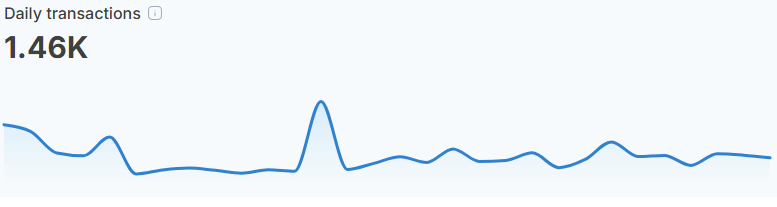
Nonetheless, the protocol is far from its glory days, processing mere hundreds or thousands of transactions on a daily scale. Years ago, the figure was in the millions.
Extraordinary Unlikely
Peerplexity was the most pessimistic among those we consulted. It said such a rally is mathematically possible but extremely implausible given the low interest in SHIB.
It claimed that the ceiling for Q3 lies in the $0.0000067-$0.0000078 range, adding that failing to hold the $0.000005 line could actually result in a major collapse.
The post Can Shiba Inu (SHIB) Erase a Zero in Q3: 3 AIs Give Their Take appeared first on CryptoPotato.

Arrest made and four injured after Staxton Hill incident

Hostess remains a work in progress for J.M. Smucker

XDC Says AI Agents Could Upend Invoices and Card Payments





-

 Fashion6 days ago
Weekend Open Thread: Madewell – Corporette.com
-

 Crypto World2 days ago
SpaceX stock could rise 75% to $240, JPMorgan says
-

 Business5 days ago
Musk’s Tesla, SpaceX Confirm $16.8 Billion ‘Terafab’ Chip Plant as World’s Largest Building in Texas
-

 Crypto World6 days ago
anatomy of crypto’s biggest liquidation event since 2021
-

 Crypto World3 days ago
A $30 Billion AI Fund Implodes, Now the SEC Is Investigating Wall Street’s Role
-

 Politics5 days ago
6 months on, Irish renters crushed by effects of government housing bill
-

 Crypto World2 days ago
Did Trump Just Move SpaceX Stock With One Truth Social Post?
-

 Business4 days ago
Mystery AI Model ‘Ox Alpha’ Draws Developers With Free Access as Chinese Lab Origins Remain Debated
-
 NewsBeat5 days ago
The ‘Lucky Dip Gang’ causing carnage for clicks: After five thugs were killed speeding in the wrong direction on a motorway, GUY ADAMS investigates a sick new trend… and why police aren’t even allowed to pursue them
-

 Business3 days ago
Moderna CEO warns China is pouring state money into mRNA technology
-

 Business7 days ago
Five Below: Kids Discount Retailer Reaps Rich Rewards
-

 Business3 days ago
NVIDIA Stock Drops Nearly 2 Percent to $210 on Seventh Losing Day Ahead of Critical AI Earnings
-
 Crypto World6 days ago
Nvidia Stock Suffers Longest Losing Streak Since 2022: Will Q2 Earnings End It?
-

 Business6 days ago
UK firms in critical financial distress rise 9% to 53,756
-

 Sports5 days ago
Deshaun Watson fires back at Browns fans after being booed: ‘It’s a disrespectful thing’
-

 Tech6 days ago
Unitree’s New Superman Robot Claims to Outjump and Outrun Every Human, Usain Bolt Included
-
 Crypto World4 days ago
Google Gemini AI Predicts Ethereum Could Become the Trade Retail Misses in 2026
-

 Tech6 days ago
Faster chip in a familiar form factor
-

 Business5 days ago
Will Tesla Stock Be Higher or Lower a Year From Now? Here’s What Wall Street Analysts Are Saying
-

 Crypto World7 days ago
SEC Regulation Crypto vs CLARITY Act: which framework wins
You must be logged in to post a comment Login