
Crypto World
Russia opens regulated crypto trading as new law takes effect



Russia’s first comprehensive legal framework for cryptocurrency trading, custody and cross-border settlements has taken effect on Sept. 1, opening regulated market access to retail and qualified investors under Bank of Russia supervision.
Summary
- Russia’s crypto law took effect Sept. 1, bringing trading, custody and cross border settlements under a regulated framework.
- Non qualified investors can buy up to 300,000 rubles of eligible cryptocurrencies annually through each intermediary after passing a suitability test.
- Qualified investors can trade cryptocurrencies without the same purchase limit, although testing requirements still apply.
- Bitcoin, Ether and USDT were among the cryptocurrencies proposed by the Bank of Russia for regulated trading.
- Crypto can be used for cross border settlements, while payments for ordinary goods and services inside Russia remain prohibited.
The Bank of Russia said the rules allow both investor groups to conduct cryptocurrency transactions through regulated intermediaries, while access levels depend on investor status and mandatory testing.
Non-qualified investors can buy up to 300,000 rubles worth of eligible cryptocurrencies each year through each intermediary, while qualified investors can trade without an amount limit.
Russia crypto law opens regulated trading from Sept. 1
President Vladimir Putin signed the legislation on Aug. 4 after the State Duma passed the framework in its second and third readings in July. The law covers cryptocurrency exchanges, digital depositories, brokers, management companies, organized trading platforms and other financial institutions involved in digital asset transactions.
As crypto.news previously reported, the framework keeps separate conditions for non-qualified and qualified investors. Retail investors without qualified status must complete a suitability test before purchasing cryptocurrencies and can access only assets that meet liquidity requirements set by the regulator.
Qualified investors must complete testing as well but can buy and sell any cryptocurrency without the same annual purchase ceiling.
The Bank of Russia has been developing the secondary rules needed to operate the market. Its criteria for cryptocurrencies available to non-qualified investors consider market capitalization, average daily trading volume and pricing history on foreign platforms, with an asset required to have at least five years of price history.
Bitcoin, Ether and Tether’s USDT were among the assets the regulator proposed for regulated trading in August. The final range available to retail investors will depend on the Bank of Russia’s eligibility requirements and the products offered by regulated intermediaries.
Russia changed its qualified investor rules shortly before the framework took effect. From Aug. 31, investors can gain qualified status by passing an approved domestic financial knowledge test and presenting an accepted Russian certificate.
The new qualification route includes certificates issued by the National Finance Association, Moscow Exchange and the National Association of Securities Market Participants. Existing qualification routes based on income, assets, relevant work experience, investing experience or education remain available.
Crypto exchanges and custodians enter a regulated system
The law creates dedicated roles for cryptocurrency exchanges and digital depositories, bringing trading and custody services under a formal regulatory structure.
Crypto exchanges will handle purchases and sales, while digital depositories will record rights to cryptocurrencies and other digital assets. Brokers and management companies can facilitate transactions, including through organized trading platforms.
Under rules outlined during the legislative process, cryptocurrency exchange providers must enter a special register, hold at least 15 million rubles in equity and become members of an approved financial-market self-regulatory organization.
The Bank of Russia will maintain registers of regulated market participants and has prepared operating requirements for exchanges, depositories and digital currency accounts. Exchanges can set trading procedures through their own rules and will be responsible for calculating market and weighted average prices for listed instruments.
Digital depositories face separate capital standards. Draft regulations published in July set minimum equity between 50 million and 250 million rubles depending on the services offered, including whether a depository works with open distributed ledgers or provides post-trade settlement services.
The draft operating standards cover record keeping, information about clients with access to the system, recorded assets and the opening and maintenance of digital accounts.
Market participants do not have to complete the entire licensing transition immediately. The Bank of Russia has provided a transition period until July 1, 2027, for affected businesses to obtain licenses and bring their operations into line with the new requirements.
Financial institutions have already started preparing services around the regulated structure. Sberbank plans to have cryptocurrency trading infrastructure and a digital depository ready by Dec. 1, with services expected to cover trading, custody, settlement and depository functions for eligible customers.
Its planned crypto trading infrastructure forms part of preparations by major Russian financial companies for the regulated market. Alfa-Bank has tested cryptocurrency trading through its Alfa-Investments brokerage application with a limited group of qualified investors, while other institutions have worked on custody infrastructure.
Cross-border crypto settlements receive a legal route
The framework keeps Russia’s prohibition on cryptocurrency payments for ordinary goods and services inside the country, meaning digital currencies do not become legal payment instruments for domestic commerce.
Foreign trade receives different treatment. Exporters and importers can use cryptocurrency for cross-border settlements without an amount limit under the new framework, according to the Bank of Russia.
Companies can conduct eligible transactions through intermediaries or directly using different cryptocurrency wallets and digital currencies. The rules formalize a route for cross-border crypto settlements after Russia had previously tested such transactions under an experimental legal regime.
The State Duma’s final approval of the framework in July covered trading, custody and foreign trade while maintaining restrictions on domestic cryptocurrency payments.
Russian residents can conduct cryptocurrency transactions abroad using foreign bank accounts. Crypto purchased domestically can be transferred overseas through regulated intermediaries, while cryptocurrency holdings recorded abroad must be reported to Russian tax authorities.
The law extends beyond purchases and foreign trade. Investors can exchange cryptocurrencies for securities and digital instruments issued under Russian law, while requirements applying to cryptocurrencies will cover foreign stablecoins as well.
During the bill’s passage, lawmakers removed a proposed requirement for cryptocurrency holders to disclose their wallet addresses. The revised version instead retained reporting requirements involving information such as balances and transaction volumes while introducing rules for certain transfers.
Some crypto rules will take effect later
Sept. 1 brings the core provisions into force, but several parts of the framework follow separate implementation schedules.
Rules involving certain transfer restrictions and the operation of nonresident digital depositories are scheduled to take effect on July 1, 2027. Technical provisions governing the issuance and circulation of digital financial assets, nominal holders and depositories are set to follow on Sept. 1, 2027.
The Bank of Russia has continued drafting secondary regulations while the main law moves into force. In August, the regulator proposed including cryptocurrencies in calculations used to measure the financial resilience of professional market participants.
Under the proposal, brokers, trustees, forex dealers and cryptocurrency exchange providers would be able to include only exchange-listed cryptocurrencies when calculating equity. Eligible crypto could account for no more than 25% of assets included in the calculation and would have to be registered with a crypto depository.
Russia is beginning another digital asset rollout on the same date. Major banks are required from Sept. 1 to give clients access to digital ruble transactions, while large retailers that meet the applicable revenue threshold must support payments using the central bank digital currency.
The digital ruble rollout will proceed in stages through 2028, when the remaining covered banks are scheduled to join the system.


Donald Trump Jr.’s venture capital firm, 1789 Capital, is leading a $1 billion funding round that values Polymarket at $21 billion, contributing roughly $300 million in fresh capital on top of the $200 million it had already put into the prediction market platform.
The new round lifts Polymarket’s valuation 40% above the roughly $15 billion mark it carried earlier this year, and it comes as the Trump family’s footprint in prediction markets keeps growing even as regulators in multiple countries and at least one US city move to shut the platforms out.
1789 Capital’s Stake Keeps Growing
1789 Capital spokesperson Alexa Henning said the firm’s total investment in Polymarket now sits at around $500 million combined between the new money and what it put in previously. The $21 billion figure is a jump from the roughly $15 billion valuation Polymarket was working with back in April, when the platform first opened talks on a new funding round.
Polymarket, alongside similar platforms like Kalshi, lets users bet on outcomes ranging from what a president says in a speech to who gets married on a reality show, and both have grown quickly over the past year.
Trump Jr.’s ties to the prediction market industry go beyond Polymarket. He became an adviser to Kalshi in 2025 and received shares in the company worth more than $300,000, and he separately advises Polymarket too.
His father’s administration has also moved in the industry’s favor, with Michael Selig, who heads the Commodity Futures Trading Commission (CFTC), responsible for regulating prediction markets, speaking favorably of both companies.
However, Polymarket has run into trouble, with Baltimore Mayor Brandon M. Scott and the City Council suing both it and Kalshi last month, accusing them of offering unlicensed sports betting dressed up as event contracts and marketing their products in ways that could make people think they’re legal, regulated sportsbooks.
The city is seeking penalties and restitution for residents it says were exposed to unregulated gambling.
Trouble Overseas Too
Things are also heating up abroad. As CryptoPotato reported, South Korea ordered domestic access to Polymarket blocked, with regulators there saying the platform’s structure “encourages gambling behavior.”
France, Germany, and Australia have also imposed similar restrictions, and more than 30 countries in total have blocked or limited the platform.
Despite the legal troubles, money has kept flowing into Polymarket, as months before Trump Jr. upped his stake, the firm took on a $600 million investment from Intercontinental Exchange, the parent company of the New York Exchange, as part of a plan to put up to $2 billion toward expanding into event-based trading.
The post Donald Trump Jr.’s 1789 Capital to Put $300M Into Polymarket appeared first on CryptoPotato.


The euro is closing out August with genuine momentum, having climbed to $1.1697 against the dollar, its strongest level in three months, on the back of ECB hike bets that keep gaining traction. French and Spanish inflation both surprised to the upside, with Spain's harmonised reading hitting 4.5%, its highest since 2023, reinforcing market expectations that the ECB deposit rate could climb to 2.80% by next March, from 2.25% currently. A September hike is now seen as roughly 60% likely.
Sterling, meanwhile, is navigating a genuinely awkward domestic backdrop. The Bank of England's July decision, a 6–3 hold with three members pushing for a hike, initially read as hawkish, but Governor Bailey used his press conference to firmly close the door on near-term hike bets anyway. UK inflation eased to 2.9%, yet the labour market cooled more sharply than expected, with private-sector wage growth hitting its softest pace since 2020, leaving the BoE genuinely torn between growth resilience and a weakening jobs picture.
The result: an ECB gaining real conviction towards further tightening, versus a Bank of England sending increasingly mixed signals just as political uncertainty around Downing Street's succession continues to simmer in the background.
Technical Analysis of EUR/GBP
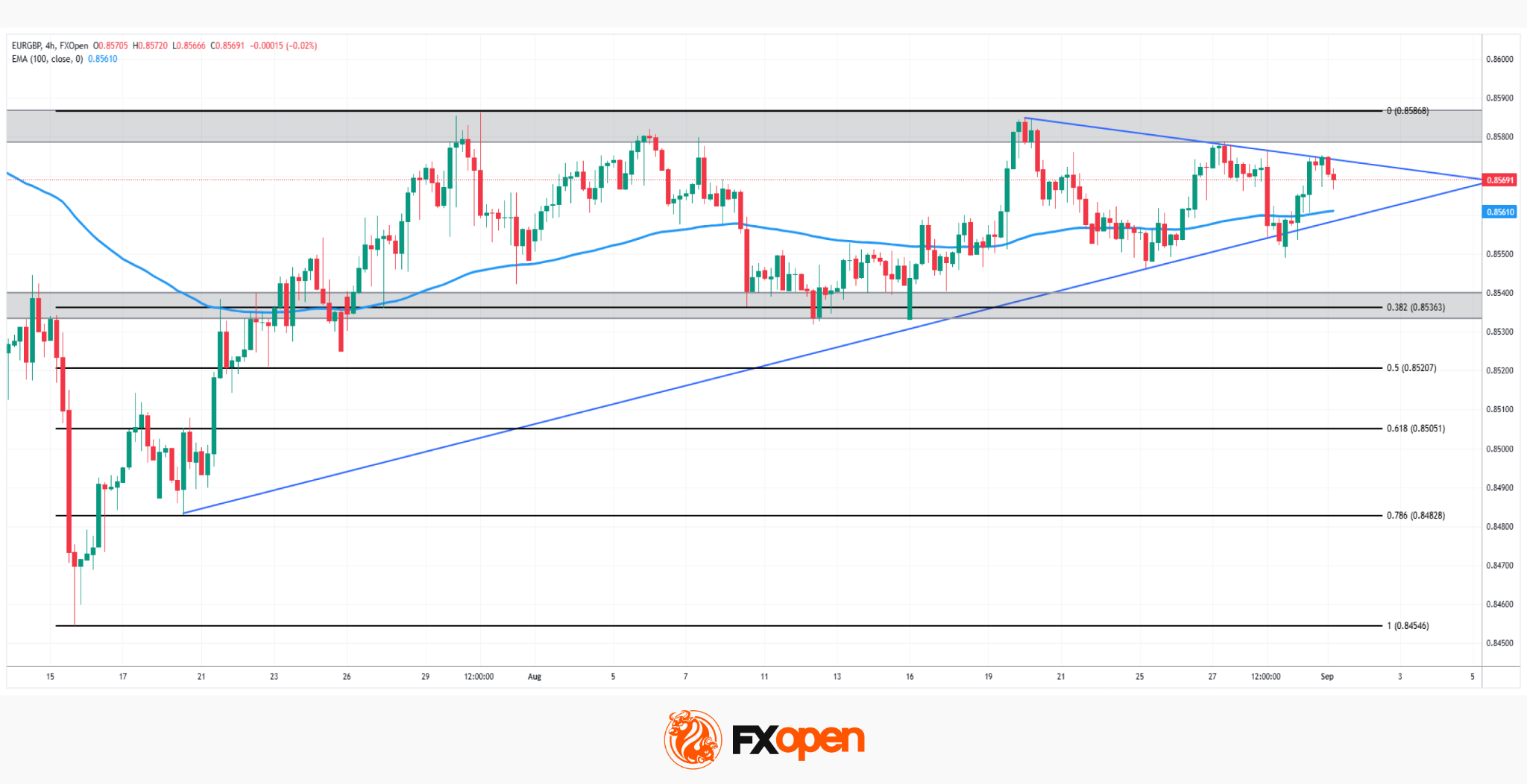
As the EUR/GBP chart shows, the pair has been compressing into a tightening symmetrical triangle since mid-August, with a descending trendline from the 0.8587 highs converging with an ascending trendline off the 0.8480 lows, both meeting right around the current price near 0.8569, exactly where the 100-period EMA also sits.
Bullish Scenario
Should buyers break above the descending trendline, the path would open towards a retest of the 0.8587 highs, the 0 Fibonacci level marking the origin of the recent pullback. A confirmed breakout above that level would signal genuine bullish continuation for the euro.
Bearish Scenario
Conversely, a break below the ascending trendline and the 100-period EMA would expose the 0.382 retracement near 0.8536, with a deeper slide risking a retest of the 0.5 level around 0.8521.
With price coiled right at the apex of this triangle, sitting exactly on the 100-period EMA, EUR/GBP looks primed for a decisive break. Will the ECB's hawkish momentum finally push the euro through resistance, or will sterling's political noise keep the pair capped?
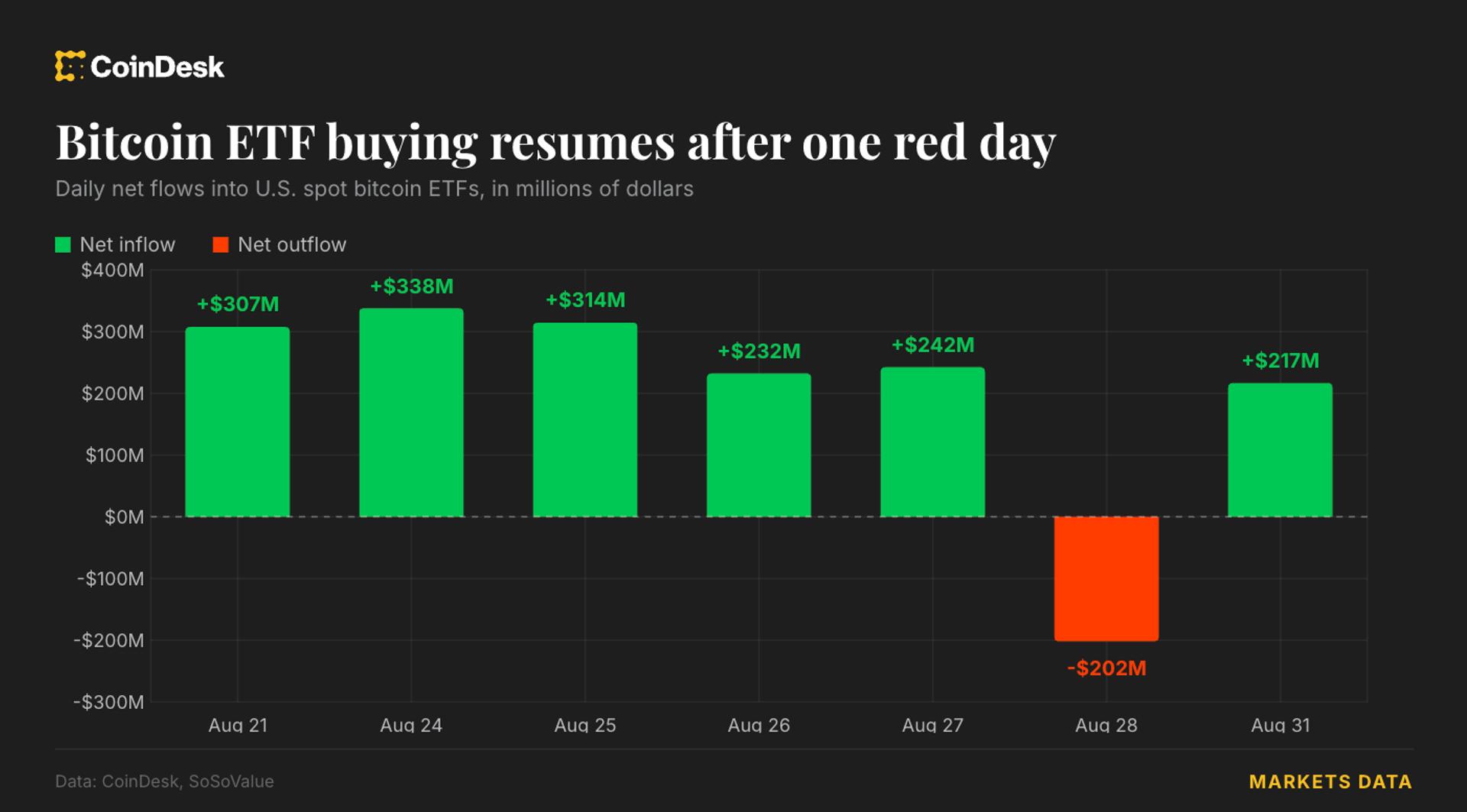
The bitcoin funds took $217 million Monday, one session after an outflow ended their nine-day run. Ether ETFs have not posted a red day since mid-August.

Trump celebrated the legal victory in a Monday post on Truth Social.
“I am pleased to report that the United States Supreme Court has just ruled in favor of the Ballroom/Military Complex being built without any further contingency, doubt, or threat,” Trump wrote. “We are living in the Golden Age of America, and this Building will be one of the Greatest ever constructed in Washington, D.C.”
The President said the ballroom will be completed in the summer of 2028.
Legal battles
The trust filed the lawsuit in December on behalf of one of its members, Alison Hoagland, an architectural historian and preservationist who lives in Washington. Hoagland said in a declaration that she would “suffer both professional and personal injuries, including to my aesthetic, cultural and historical interests, if a ballroom of the proposed form and scale were constructed.” She argued that “an adjacent structure overshadowing the White House, exceeding it in height and massing, would diminish the primacy of the White House.”
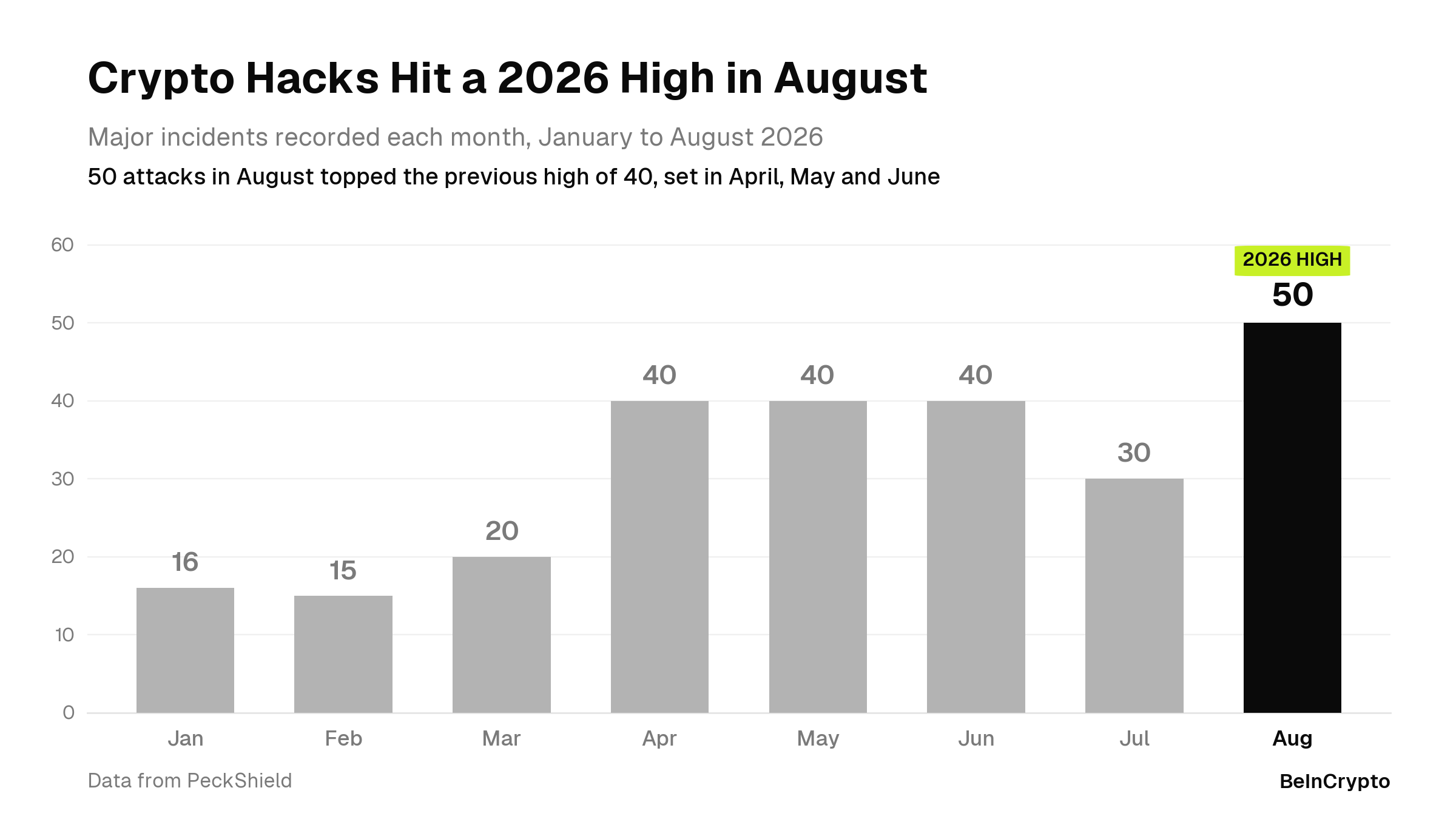
Crypto recorded 50 major hacks in August, the highest monthly count of 2026. Total losses fell to $136.3 million, down 49.5% from July.
Blockchain security firm PeckShield published the tally on Tuesday. The figures show attackers striking far more often while extracting less from each incident.
Cronos Halt Blunted the Month’s Largest Exploit
A single incident dominated the month. Tectonic is the largest lending protocol on Cronos (CRO). It reportedly lost roughly $74 million, the fourth-largest crypto theft of 2026 to date.
The attacker moved only about $6 million to Ethereum (ETH) before validators froze the network.
“The exploiter has since started laundering the stolen funds, bridging them to #BTC (~200K so far),” PeckShield said.
Cronos then restored the chain state to a point before the attack and resumed block production.
Follow us on X to get the latest news as it happens
Attack Volume Rose as Individual Hauls Shrank
August’s 50 incidents topped the 40 recorded in April, May, and June. PeckShield counted 16, 15, and 20 hacks in January, February, and March, respectively.

The average loss per hack fell to about $2.7 million, down from roughly $9 million in July. PeckShield’s top ten incidents accounted for $123.34 million of August’s total, leaving around $12.9 million across the other 40 hacks, per BeInCrypto calculations.
April remains the year’s costliest month at $646.89 million, driven by the Drift and KelpDAO exploits. Those two incidents alone accounted for $577 million.
Moonwell followed Tectonic in August with $8.7 million in losses. Term Labs lost $8.5 million, Coinsbuy $7.9 million, and TAC $7.5 million. Injective, MANTRA, BounceBit, Cosmos Labs, and aquifer rounded out the top ten.
Subscribe to our YouTube channel to watch leaders and journalists provide expert insights
The post August Broke 2026's Monthly Hack Record Even as Losses Fell 49% appeared first on BeInCrypto.


Donald Trump Jr.-linked investment firm 1789 Capital is reportedly investing about $300 million in Polymarket, a blockchain-based prediction market.
1789 Capital, where Donald Trump Jr. is a partner, will make the $300 million investment as part of a $1 billion round that would value Polymarket at $21 billion, people familiar with the matter told the Wall Street Journal on Monday.
The investment would bring 1789 Capital’s total investment in Polymarket to about $500 million and make it one of the platform’s largest backers.
Cointelegraph has approached 1789 Capital and Polymarket for comment.
ICE remains Polymarket’s largest disclosed investor. In a July 30 10-Q filing, ICE said it had invested a combined $1.6 billion in Polymarket preferred shares. The holdings had a carrying value of approximately $2 billion as of June 30 and represented about 22% of outstanding shares, or 14% on a fully diluted basis.
Polymarket reportedly started talks to raise $400 million in fresh capital in April, when it was seeking to raise the funds at a potential $15 billion valuation, below the $22 billion valuation of its main competitor, Kalshi.
Prediction markets are facing increasing regulatory scrutiny in the US and worldwide. On Aug. 14, JPMorgan Chase reportedly ended a banking relationship with Polymarket over regulatory concerns but said it remains keen on a potential underwriting role should Polymarket attempt to go public.
More than a dozen US states have taken legal action against Polymarket, Kalshi, or both over sports event contracts, while authorities in several countries have also blocked or restricted access to Polymarket.
Related: NY judge denies CFTC motion to halt enforcement action against Kalshi
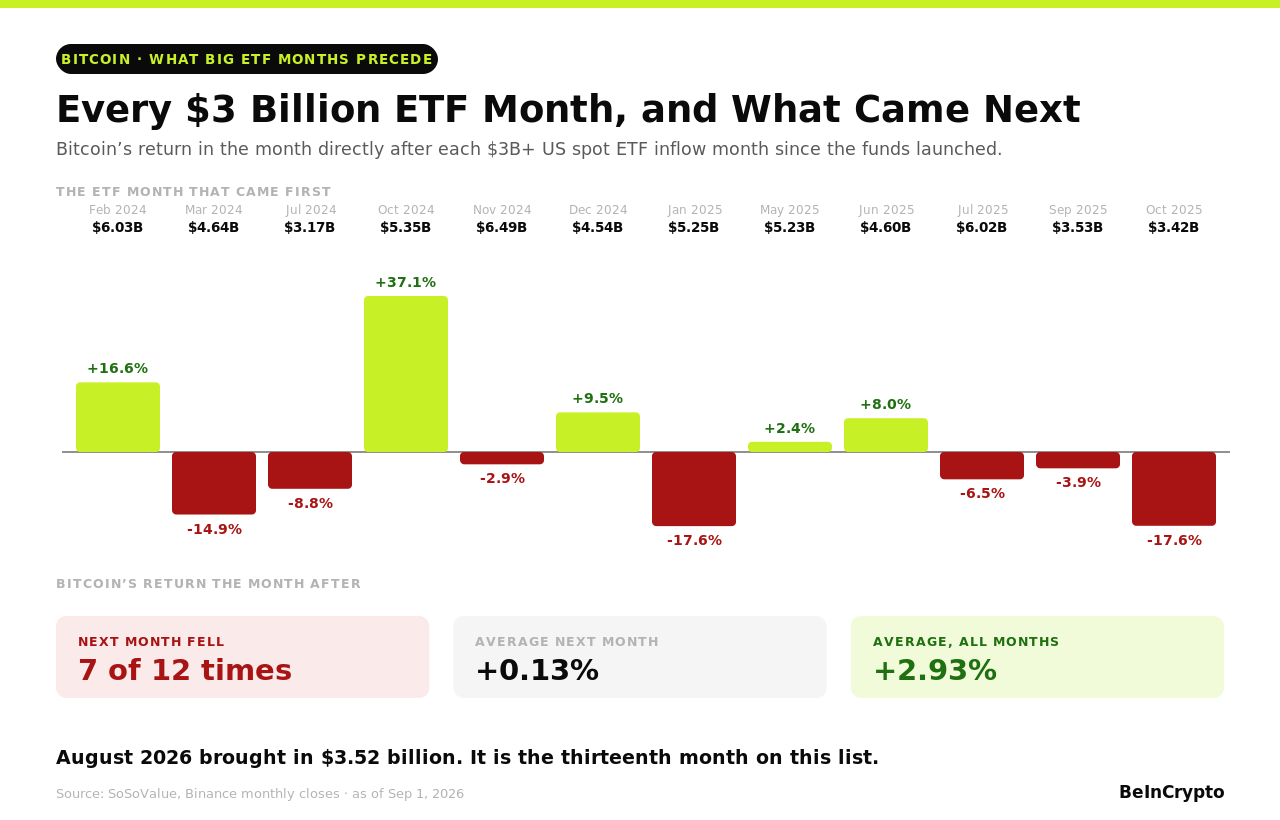
Bitcoin price rose 24.95% in August, and still trades 9.62% below where it started the year. The month was bought almost entirely by funds.
Everyone else was selling into it.
Why Did the Price Rise 25% in August?
US spot Bitcoin ETFs took in $3.52 billion during August, per SoSoValue data. Only five of 21 sessions saw money leave.
Want more token insights like this? Sign up for Editor Harsh Notariya’s Daily Crypto Newsletter here.
That single month outweighs everything before it. Across January to July, the same funds lost a net $5.30 billion. August did not just beat the year, it reversed it.

The problem is what months like this have preceded.
Will the Price Crash in September 2026?
Twelve months since these funds launched have drawn $3 billion or more. Bitcoin fell in the month straight after seven of them. The average return in those following months is 0.13%, against 2.93% for an average month.
Seasonality points the same way. Bitcoin has closed August green only two times since 2020 (before this year), and on both the occasions, September fell 7.30% and 7.96%.

One thing argues back. The last three Septembers all finished higher, so September’s reputation as Bitcoin’s worst month is out of date.
Who Was Selling While BTC Surged?
Hodler Net Position Change, which measures whether long-term holders are adding coins or releasing them, stayed negative for the whole rally. It turned red on August 2 and stayed there for four weeks.

Then it flipped. August 31 printed the first green bar since July, at 2,044 BTC.
Large wallets did the same thing and have not reversed it. Addresses holding more than BTC fell from 1,963 on July 31 to 1,908, a loss of 55 wallets during a 25% rally.

So the rally was funds buying what holders and whales were handing over. That matters, because it means the selling side was working through supply rather than reacting to bad news.
Are Big Traders Still Betting Big?
Their futures book says yes. Bitcoin’s positioning divergence score sits at 21.2, with top traders holding 111 points more long exposure than the average account.

The reading is specific to Bitcoin. XRP scores 2.7, meaning no meaningful gap between top-traders and everyone else.

That confidence is also the risk. Binance alone carries $3.00 billion in long liquidation leverage below the price against $1.80 billion in short leverage above it.

Therefore, a small BTC price drop could hurt the price prediction more going into September, as it might trigger a long flush.
Bitcoin Price Prediction: The Levels That Decide September
Bitcoin trades near $79,108. Everything rests on $77,057, the floor this range has held since the breakout, because losing it removes support all the way to $62,207.

Upside needs proof. A daily close above $82,656 opens $91,719, and only a move through that level would argue the bull phase is back, with $100,782 beyond it. Volume has to come with it, and buying volume only began recovering between August 29 and 31.
Analyst’s View: The pattern says funds buy late, and August’s money arrived after a 25% move in a year Bitcoin is still down. Against that, holders stopped selling on the final day of the month and the largest traders are positioned long. Which side wins in this Bitcoin price prediction war will be decided by the tussle between the historical bearishness and the current bullishness.
The post Bitcoin Price Prediction for September 2026: What Follows a $3.5 Billion ETF Month? appeared first on BeInCrypto.
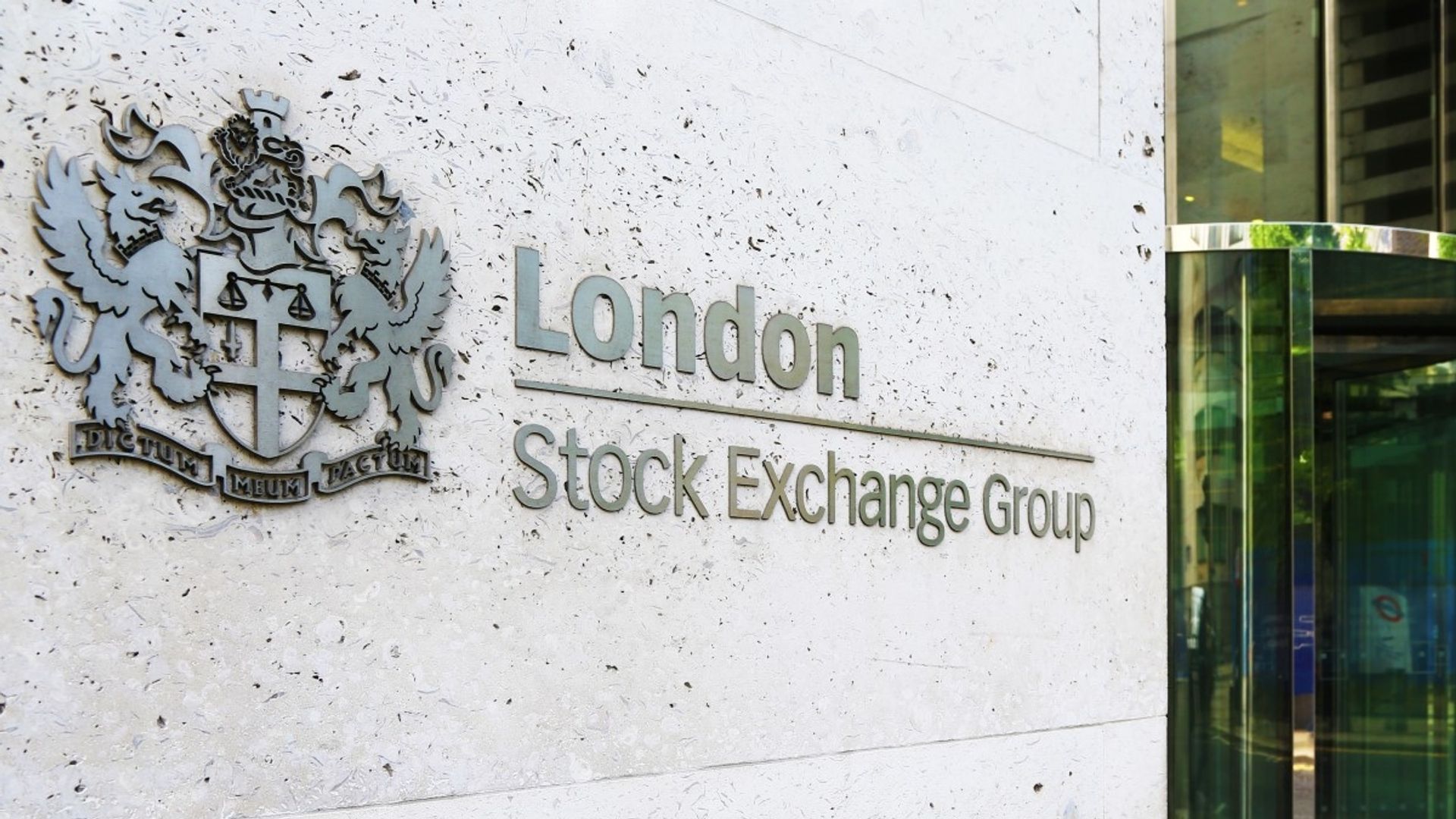
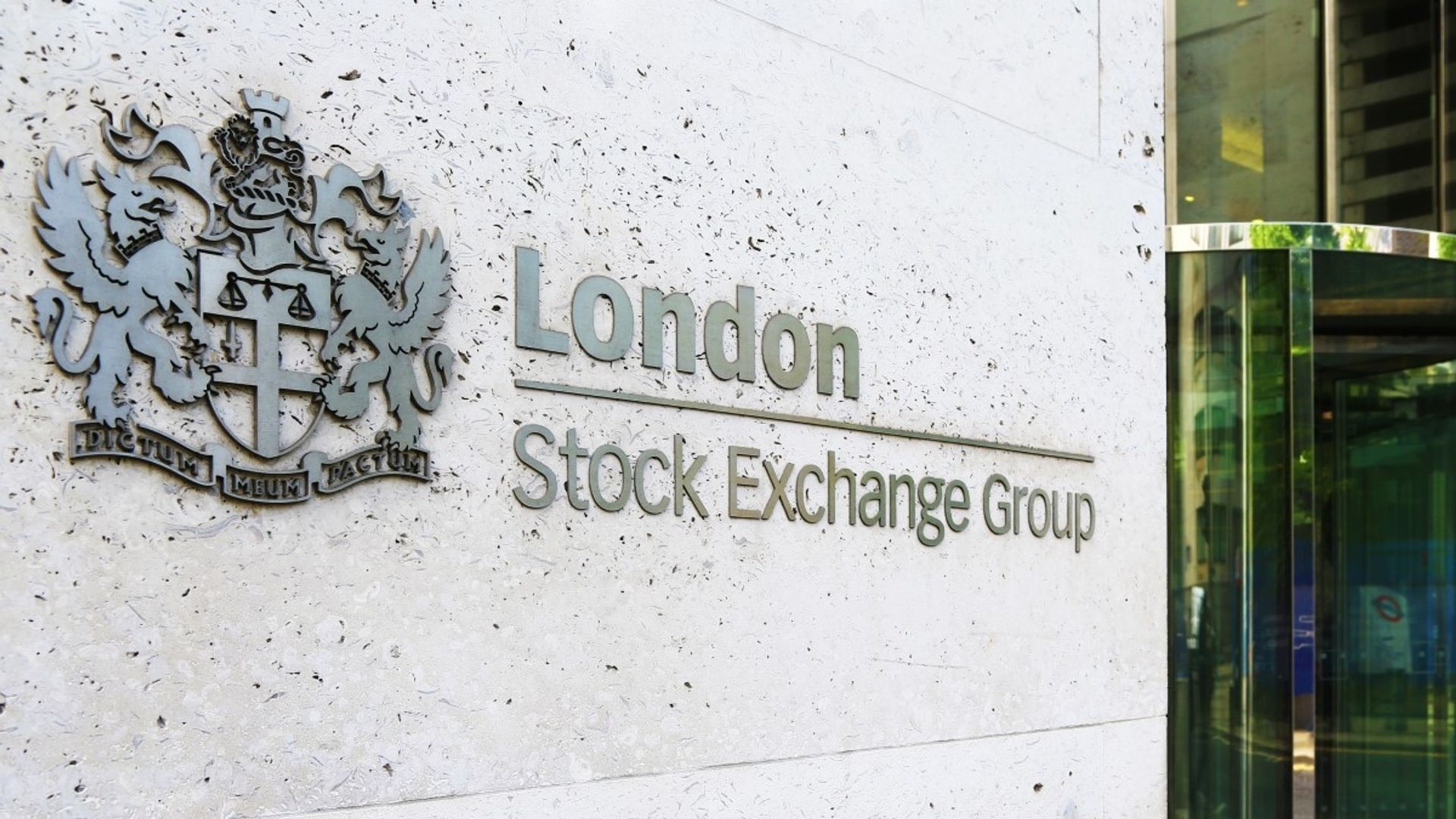
The LSE is working with Kraken owner Payward, the developer of the xStocks tokenized equities framework, to bring top U.K.-listed stocks onchain.
Crypto World
Frogbet Launches Crypto Casino With 70 In- House Original Games, Instant Withdrawals and a $10,000 Weekly Race

[PRESS RELEASE – Garabito, Costa Rica, September 1st, 2026]
Frogbet, a new cryptocurrency casino and sportsbook, has officially launched at frogbet.com, debuting a catalog of 70 original games developed entirely in-house alongside more than 7,000 titles from providers including Pragmatic Play, Hacksaw Gaming and BGaming.
Every Frogbet original is provably fair, allowing players to cryptographically verify the outcome of any bet at any time. The proprietary catalog spans in-house slots, eight blackjack variants, poker, and a full range of instant games including Mines, Dice, Plinko, Crash, Limbo and Keno — none of which areavailable on any other platform. According to the team, Frogbet’s proprietary slots are the first original games in the industry to ship with built-in bonus buys, letting players purchase direct entry into feature rounds.
The originals suite is built around a high-volume betting engine. Players can place up to 100,000 instant bets in a single click, with all rounds settled immediately, and a built-in strategy builder lets players define their own rules and automate their play hands-free.
“Original games are usually a side menu at crypto casinos — at Frogbet they are the product. We built all 70 games ourselves, made every one of them verifiable, and then built the tools serious players actually want: bonus buys on originals, six-figure batch betting, and a strategy builder. And when you win, the money is in your wallet in seconds, not days, ” said a Frogbet spokesperson.
Withdrawals are processed instantly, 24 hours a day, with payouts typically reaching players’ wallets within seconds of the request. The platform is fully crypto-native, supporting deposits and withdrawals in more than 50 cryptocurrencies including BTC, ETH, USDT and SOL, and pairs the casino with a complete sportsbook offering live in-play betting.
New players receive a 150% deposit match plus 100 free spins on their first deposit. Ongoing promotions at launch include a $10,000 Weekly Race, a $500 Daily Raffle and a Weekly Jackpot Lottery. Frogbet’s six-tier VIP program runs from Bronze to Elite with weekly cashback of up to 25%, and rakeback that accrues on every bet and can be claimed every 15 minutes.
Through the platform’sVIP Transfer program, players who hold VIP status at another casino can wager $500, share their current level with support via live chat, and be upgraded to the matching Frogbet tier instantly.
“The crypto gambling audience has become the most sophisticated betting audience in the world. They check the seeds, they hunt bonus buys, they automate strategies. Frogbet is built for exactly that player,” the spokesperson added.
Frogbet’s originals lobby, sportsbook and full game catalog are live now at frogbet.com.
About FrogbetZ
Frogbet is a crypto-native online casino and sportsbook offering 70 provably fair original games built in-house, more than 7,000 titles from leading providers, a full sports betting product, and instant cryptocurrency withdrawals, 24/7. Frogbet is intended for players aged 18 and over. Players are encouraged to gamble responsibly. Learn more at frogbet.com, or follow Frogbet on X at x.com/frogbetcom and on Telegram at t.me/frogbetcom.
The post Frogbet Launches Crypto Casino With 70 In- House Original Games, Instant Withdrawals and a $10,000 Weekly Race appeared first on CryptoPotato.

Can an iPhone comparison substitute for a business model? Coinbase CEO Brian Armstrong has argued that tokenized assets could reshape finance much as the iPhone enabled a new generation of technology companies. The comparison presents a platform thesis: blockchain-based assets could support businesses that are not yet apparent.
Armstrong made the case earlier in the week on X, comparing blockchain tokenization with the iPhone’s role in enabling companies such as Uber, TikTok, and Coinbase. He said tokenized assets could have a similar effect on financial markets and identified global access, better utility, and around-the-clock trading as immediate benefits.
Discover: The Best Token Presales
Why Tokenized Finance Is Part of the Growth Conversation
Tokenized assets are digital tokens created on a blockchain that represent ownership or rights to real-world physical or financial assets. Armstrong’s argument is that moving these assets onto blockchains could create a foundation for new finance companies, rather than simply reproducing existing markets in a different format.
— Coin Bureau (@coinbureau) August 25, 2026
 Japan officially moves to put its $8 TRILLION government bond market on blockchain.
The Financial Services Agency, Ministry of Finance, Bank of Japan, and the country's three megabanks are building a system for INSTANT 24/7 settlement of stocks and government bonds, per… pic.twitter.com/r3xZnqP4LR
Japan’s financial regulators and major financial institutions planned to study blockchain infrastructure for real-time settlement of stocks and bonds, with a strategy targeted by early 2027 and possible operations in the early 2030s. The proposal could tokenize bank deposits held at the Bank of Japan into digital currency for institutional blockchain settlement.
The Japanese effort is a multi-year regulatory and infrastructure process, not evidence of an imminent replacement for existing markets. Still, it shows that institutions and regulators are examining whether blockchain systems can support settlement for conventional financial assets.
Visit Coinbase Now For Stocks and Crypto Trading
Coinbase Strategy
Coinbase has been expanding beyond crypto into stocks, prediction markets, and other products as part of a broader effort to offer customers access to more than one type of tradable asset. That strategy is intended to diversify the company’s revenue streams and broaden its customer base, although its success remains uncertain.
For now, Coinbase’s stock offering is conventional rather than tokenized. The company has relied on Apex Fintech Solutions for backend operations, and the offering was initially available to a small group of users, with plans to expand it to all customers.
Armstrong has said Coinbase sees a longer-term role in connecting traditional finance and crypto, including helping tokenized equities gain traction. He has also said the more compelling form of tokenization would be an asset represented one-to-one on a blockchain, with the associated rights of that asset.

Discover: The Best Crypto to Diversify Your Portfolio
The Case Against Calling It a Growth Engine
The central limitation of the current thesis is straightforward: Armstrong’s public comments outline a direction for tokenized finance, but they do not provide Coinbase-specific measures of product adoption, transaction volume, or revenue from tokenized assets.
There is also a difference between a belief that assets will increasingly move onto blockchains and proof that a particular company will lead that transition.
Coinbase’s expansion into conventional stock trading may create a broader customer offering, but it does not establish demand for tokenized equities or show how quickly the necessary regulatory and market infrastructure will develop.

Regulatory timing remains especially important. Congress has been debating the Clarity Act, legislation aimed at creating a framework for integrating crypto into the broader financial system, but that process has faced disagreements involving the crypto industry and banking sector.
Armstrong has said that newer companies may be the first to issue stock natively on a blockchain, while predicting a broader transition over time. Those are expectations rather than completed market developments.
Trade Crypto on Bybit and Get a Chance to Win Our $1,000 USDT Airdrop
The post Coinbase Tokenization Bet Remains a Platform Hypothesis appeared first on Cryptonews.

UK’s oldest lido Cleveland Pools issues update on reopening plans
Donald Trump Jr.’s 1789 Capital to Put $300M Into Polymarket

Mormon Wives’ Jessi Draper Calls Herself Marciano’s GF





-

 Crypto World6 days ago
SpaceX stock could rise 75% to $240, JPMorgan says
-

 Fashion4 days ago
Weekend Open Thread: Maeve – Corporette.com
-

 Crypto World4 days ago
Bitcoin’s 22% rally now needs real demand to outlast Treasury liquidity boost
-

 Crypto World6 days ago
Warsh Jackson Hole keynote puts financial innovation first
-

 Business4 days ago
Salesforce Stock Soars 19% as Blowout Earnings and Agentforce AI Growth Silence Software Skeptics
-

 Crypto World5 days ago
Elon Musk Grok Bot Promise: We Will Make You Whole if AI Loses Your Money
-

 Business4 days ago
Apple Confirms September 9 Keynote and Reveals Its Full Pre-Order Schedule
-

 Crypto World6 days ago
Did Trump Just Move SpaceX Stock With One Truth Social Post?
-

 Business3 days ago
Onto Innovation Stock: AI’s Next Bottleneck Is Yield (NYSE:ONTO)
-
 NewsBeat6 days ago
Lindsay Clancy jury braces for closing arguments as judge tells court: ‘You’ve heard all the evidence’ – Live updates
-

 Business6 days ago
Walmart takes aim at younger shoppers with new fashion brand
-

 Crypto World3 days ago
Bitcoin price tests $82K resistance as Brandt stays long
-

 Business6 days ago
Thailand’s Eastern Economic Corridor Capital City (EECiti): Key Developments and Investment Opportunities
-

 Crypto World5 days ago
NVIDIA revenue hits $96.2B as AI demand doubles
-

 Business4 days ago
iPhone 18 Pro Pre-Orders Could Shift to Saturday as Apple Reportedly Avoids September 11 Anniversary
-

 NewsBeat6 days ago
Trump’s trade truce with China faces test with Iran effort
-
 Crypto World6 days ago
Nvidia Q2 Earnings Reveal $96.2 Billion Beat, So Why Is NVDA Falling?
-

 Tech5 days ago
Claude Cowork gets its own browser that doesn’t touch your tabs, bookmarks, or saved passwords
-
 Tech2 days ago
Hugging Face built a $4.5 billion empire on free AI models. Now Nvidia is buying it for $12.9 billion
-

 Crypto World4 days ago
Truflation calls for Fed rate cut after PCE forecast
You must be logged in to post a comment Login