

Crypto World
Some SpaceX bonds have already sunk to junk-like territory

The value of SpaceX’s longest-dated series of bonds shriveled to 90.7 cents on the dollar this week while their effective yield sank to a junk bond-like rate of 7.5%.
This is despite bond investors lending Elon Musk’s company billions of dollars and signaling their willingness to delay principal maturity until 2056.
The 9.3% collapse ranks SpaceX’s long bonds dead last among 1,450 benchmark corporate notes rated US investment-grade “BBB.”
The notes’ credit spread, i.e. the extra yield lenders demand for taking idiosyncratic SpaceX risk, has worsened from 175 basis points at issuance to 231.
At the same time, the stock price of Musk’s company has also been cratering from its high and even trading below its IPO price, so it is not surprising to see the value of its bonds follow suit.

A collapse from highs to lows at SpaceX
For obvious reasons, bond prices typically correlate to quick downturns in common stock prices of the corporate issuer.
Fear is often company-wide and not usually unique to its creditworthiness as distinct from its general business prospects.
A bond trader at Post Oak Group explained the irony of SpaceX needing to raise capital from bond markets so early into its life as a public company.
“Two weeks after the largest IPO in history, SpaceX is already tapping debt markets while carrying a $5 billion net loss and CapEx [capital expenditures] that more than doubled year over year,” he told CNBC.
Indeed, SpaceX’s own filings show company-wide CapEx jumping 86% to $20.7 billion — not quite double, but close enough.
Meanwhile, SpaceX also absorbed more money-losing operations from the Grok side of X, the xAI segment which has lost $6.4 billion from operations.
Worse, SpaceX started subsidizing xAI in the middle of an AI industry-wide borrowing binge. Nvidia, SpaceX, and Amazon unloaded $75 billion of bonds on investors in a matter of weeks, emptying bond traders’ pocketbooks right when SpaceX needed to borrow more.
With lots of supply, the answer is predictable: lower prices.
Read more: 28,000 crypto wallets pledged $560M for SpaceX shares they didn’t get
SpaceX priced its first-ever bond sale on June 23 in five slices maturing between 2031 and 2056. It had another $20 billion bridge loan earlier this year.
Initially, demand seemed bottomless. Buyers happily placed nearly $90 billion of orders at issuance. Then, the bonds started trading.
Buyers at issuance logged roughly $305 million of paper losses in the first two days of secondary trading.
The difference between a bond’s yield and its price
SpaceX’s bonds (aka “notes”) maturing in 2056 pay a fixed 6.65% coupon. That means the company must pay $66.50 per year, for 30 years, on every $1,000 of face value.
Those payments (aka “coupons”) are fixed. The price of those bonds, however, fluctuates in terms of their overall value to an investor.
In other words, what buyers will pay for that fixed stream of payments fluctuates on a daily basis. This is the variable “price” of the bond, which is distinct from its yield of coupon payments.
Anyone buying bonds at a discount locks in a fatter return, because the stream of payments is constant. Price and yield are two ends of a seesaw; one falls, the other rises.
In the case of SpaceX, its bonds sold in June at 99.45 cents on the dollar and slid to 94.52 cents by July 7. They now fetch an even worse 90 cents on the dollar, enough to push the effective yield (due to the bonds’ lower price) to a junk-like rate of 7.5%.
Next, the bond “spread” is the portion of that yield above the US Treasury bond rate, and it is risk premium mostly attributable to SpaceX.
When that spread widens, or gets larger, the market is repricing SpaceX as less creditworthy.
Man Group calculated that SpaceX’s 30-year bonds pay a bigger effective yield than the average junk-rated borrower, despite an investment-grade rating.
Bondholders and shareholders grieve together
Common shareholders of SPCX have similar grievances.
Their stock peaked at $225.64 on June 16, days after an IPO that ultimately raised $85.7 billion. Since then, they’ve surrendered more than $1 trillion in market capitalization.
When SpaceX revealed its bond sale on June 22, SPCX shares dropped 16% in a day. On Thursday, SPCX closed at $131.11, its first finish below the $135 IPO price, and roughly 42% off the peak.
Equity holders can at least tell themselves a story about traveling to Mars. Bondholders own no upside on the possibilities of space travel, only the hope for a full slate of coupon payments.
SpaceX still owes its lenders three decades of 6.65% coupons. Yet within three weeks, an increasingly uncertain market has already discounted many months of those payments by repricing those bonds lower.
Got a tip? Send us an email securely via Protos Leaks. For more informed news and investigations, follow us on X, Bluesky, and Google News, or subscribe to our YouTube channel.



Supporters of BIP-110 view Bitcoin as a public utility whose scarce block space should be reserved primarily for monetary settlement. Inscriptions and other data-heavy applications represent consumption of a limited resource that should be protected for financial transactions, even if doing so requires introducing new consensus rules.
DOG Mode starts from the opposite premise.
Leonidas argued Bitcoin should remain a neutral marketplace for block space, where any valid transaction is equally legitimate provided the sender pays the prevailing fee. From that perspective, there is no objective distinction between a bitcoin payment and an Ordinals inscription.
Rather than seeking permission through a protocol upgrade, the intention for DOG Mode is to remove policy restrictions that its supporters argue Bitcoin itself never required.
The proposal also raises a more subtle question about Bitcoin’s infrastructure.
If enough nodes begin running different policy software, the network’s mempool — the collection of unconfirmed transactions waiting to be mined — could become increasingly fragmented. Consensus would remain intact, but different parts of the network could relay different transactions, affecting fee estimation and how quickly some transactions reach miners.
That fragmentation already exists to a degree, but DOG Mode could widen those differences by encouraging broader acceptance of transactions that many default nodes currently refuse to relay.
Crypto World
Trump targets Brazil’s payments system while dollar stablecoins are quietly overtaking country’s payments
Dollar-linked stablecoins already account for roughly 90% of crypto transaction volume in Brazil, most of it used for payments and settlement, according to tax authority data.
Brazil processes between $6 billion and $8 billion in crypto each month, much of it using dollar-denominated stablecoins instead of the country’s own currency.
However, even as dollar stablecoins have proliferated, Brazil’s central bank has moved to limit their role in regulated cross-border payments. Resolution 561, effective October 1, is set to bar payment firms from settling cross-border payments in stablecoins or other crypto, closing a back-end channel that had routed reais through dollar tokens. The central bank has cast stablecoins as a threat to monetary sovereignty, tax enforcement and anti-money laundering controls.
Pix now faces pressure from both sides after Washington named it a trade barrier, while Brazilian regulators shield it from growing competition from dollar-backed stablecoins.
Pix, however, may not be competing with stablecoins.
“In practice, they are complementary,” Rodrigo Caggiano, founder of Brazilian real-world asset monitoring platform RWA Monitor, told CoinDesk. “Pix has addressed domestic instant payments well, while stablecoins expand what is possible by operating on blockchain networks.”
U.S. pressure is likely to accelerate Brazil’s regulatory debate on stablecoins and digital financial infrastructure, Caggiano said, as the central bank builds its own tokenized-settlement system, Drex, on similar programmable rails.
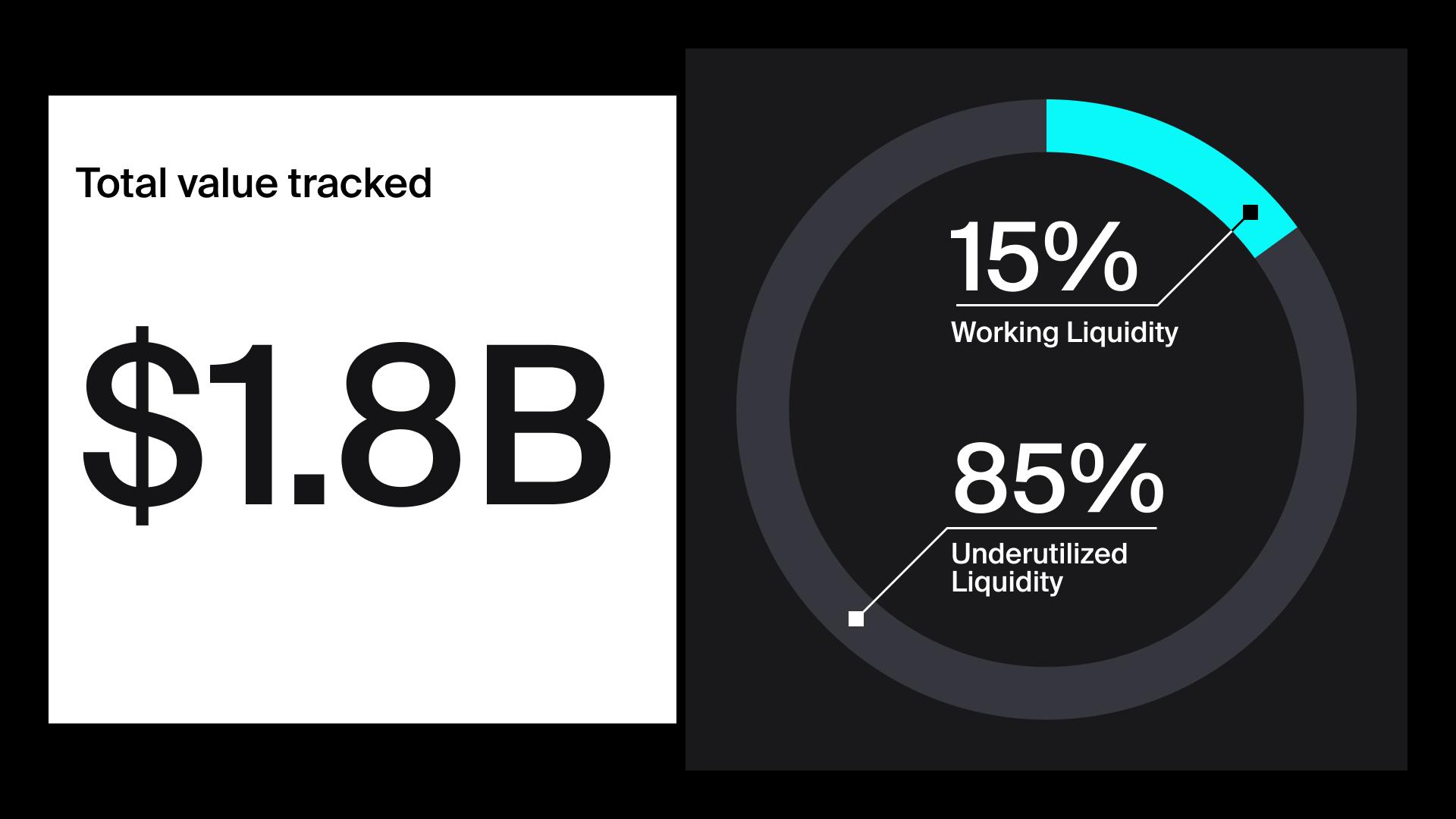
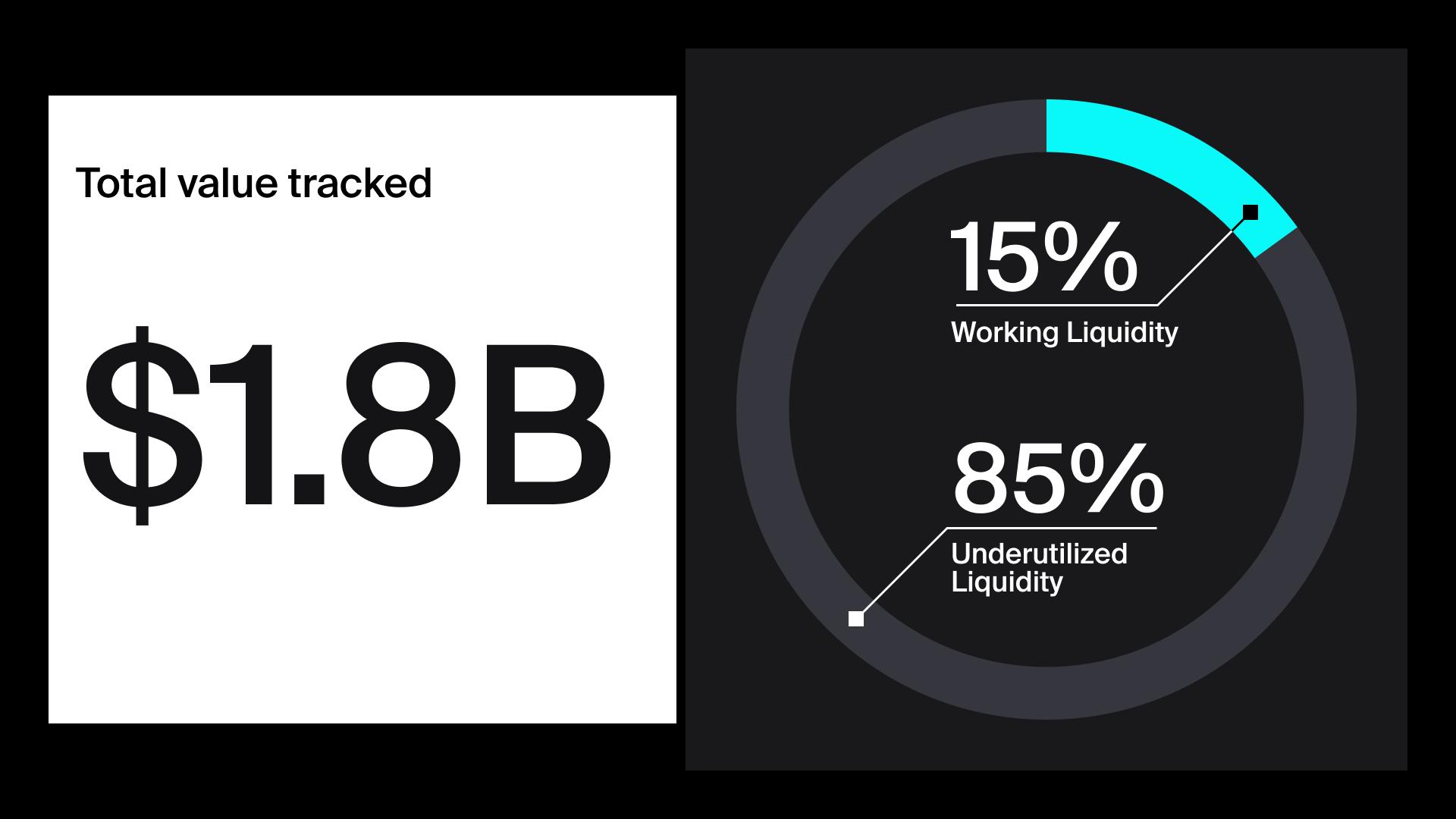
Around 54% of liquidity in positions below $1,000 was out of range, compared with 26% for positions above $1 million. Yet positions worth more than $1 million accounted for 47% of all idle capital, or roughly $260 million.
While contract-managed positions stayed within a more consistent range, individual wallets accounted for between 82% and 94% of the attributed idle capital on Uniswap v3, depending on the chain. That suggests liquidity deposited directly by users and requiring manual adjustments is more likely to go unattended and fall out of range.
Dune estimated that these out-of-range providers, that are sitting idle, could be missing roughly $150 million in fees each year, based on a blended in-range fee APR of about 35%.
Liquidity providers deposit token pairs that decentralized exchanges use to complete swaps. They earn a share of the fees paid for trades using that liquidity pool while their positions remain in the range they set.
However, the research said that the figure is not guaranteed recoverable income. Keeping positions active can add transaction costs, execution risk and exposure to unfavorable price movements.
1inch commissioned the research ahead of the planned launch of Aqua, a new liquidity protocol. Dune said it developed the methodology and reached its conclusions independently.


Meta is reportedly in talks to lease computing power to Anthropic in a deal worth as much as $10 billion over two years, according to the New York Times.
The arrangement would open a new business line for Meta while easing Anthropic’s desperate hunt for compute.
Inside the Reported Meta and Anthropic Compute Deal
Computing power, or compute, refers to the data center capacity used to train and run artificial intelligence models. The Anthropic proposal, first announced in June, would let the startup rent Meta’s excess infrastructure rather than build its own facilities.
According to the NTY, Anthropic would pay Meta in monthly installments over the two-year period, with an early-exit clause available to either party.
The scale still looks modest by industry standards. The proposal runs about a third of the deal Anthropic signed with Elon Musk’s SpaceX in May.
Follow us on X to get the latest news as it happens.
Under that agreement, the AI firm pays roughly $1.25 billion monthly, or $45 billion over three years, for computing power. Similar early-exit provisions reportedly applied to that larger contract as well.
The talks remain in early stages and may still collapse before closing. Both Anthropic and Meta declined to comment on the reported negotiations.
The context explains the urgency. Leading AI companies are racing to secure compute, while Meta, Google, and Microsoft pour hundreds of billions into new data centers worldwide.
That construction boom has unsettled Wall Street. Investors increasingly question whether such extraordinary levels of spending can ever be justified by real returns.
“Anthropic needs a lot of compute, and Meta has a lot of compute. Anthropic has really good models. Meta, until very recently, didn’t have very good models, and now they have, you know, I would say an A-minus to B-tier frontier model,” MTS’s Theo Jaffee said.
Why Would Meta Rent Compute to a Direct Rival
For Meta, a potential deal would carry unusual weight. It could create fresh revenue and ease pressure from shareholders skeptical of the company’s aggressive infrastructure budget.
Mark Zuckerberg has said Meta will spend as much as $145 billion this year, most of it on AI. That figure more than doubles the $72 billion spent the previous year.
Subscribe to our YouTube channel to watch leaders and journalists provide expert insights.
Doubts about Meta’s own models add another layer. The company has admitted it might build more data centers than its AI products currently require.
Selling that surplus offers an obvious fix. Zuckerberg hinted on a May investor call that outside firms regularly ask to buy compute at a premium.
He said Meta had resisted so far because it still expected to use the capacity internally. Overbuilding, however, would make leasing the surplus a far more logical option.
The growing scarcity of compute has pushed direct rivals toward cooperation. Anthropic, valued near $1.2 trillion and preparing to go public, has seen demand surge since launching Claude Code.
Meta itself already rents capacity elsewhere, including a $21 billion CoreWeave deal and a $27 billion agreement with Nebius. Rising compute prices now let the company consider renting its own centers out to others.
The post Meta Reportedly In Talks With Anthropic Over a $10 Billion AI Deal appeared first on BeInCrypto.
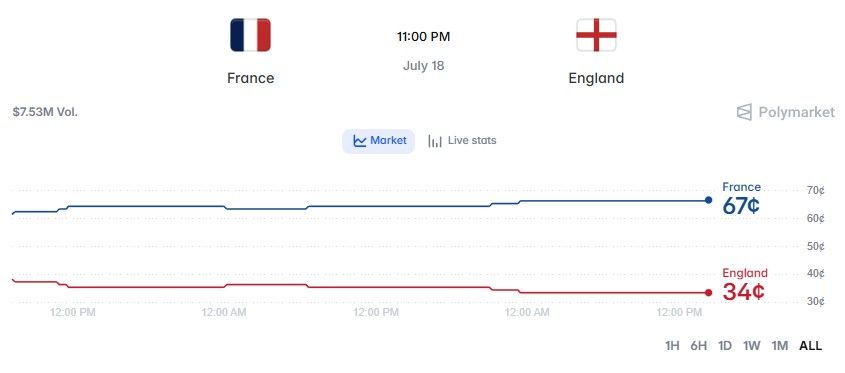
France’s gambling regulator has ordered internet providers to block access to Polymarket. The order comes days before Les Bleus face England in the FIFA World Cup 2026 bronze medal match.
The National Gambling Authority, known as the ANJ, has labeled the platform an illegal betting operation. It also flagged manipulation risks just as the prediction interest around the fixture builds.
France’s Regulator Moves to Cut Off Access
The ANJ’s president instructed French internet providers to block Polymarket entirely, calling the platform’s offering illegal. The regulator said Polymarket attracts a particularly large audience while promoting an illegal gambling and betting offering.
The agency also flagged manipulation risks tied to some Polymarket wagers. That adds pressure on a platform facing scrutiny across Europe’s Polymarket bans. The Netherlands already threatened steep fines earlier this year.
A Pattern Stretching Well Beyond France
France now joins a lengthening list of regulators pushing back. Kentucky’s attorney general filed a prediction market lawsuit against Polymarket and Kalshi this year. Australia tightened gambling ad restrictions around live sports broadcasts.
Polymarket, meanwhile, has kept courting friendlier jurisdictions. The company is reportedly pursuing a Japan approval push, targeting Tokyo by 2030.
The split shows a clash between wary regulators and Polymarket. Regulators worry about consumer harm. Polymarket insists its contracts serve legitimate price discovery, not gambling.

Bettors Still Favor Les Bleus
None of that scrutiny has cooled interest in today’s third-place playoff. That mirrors a broader surge in World Cup prediction markets throughout the tournament. Polymarket’s live market prices France at 67 cents to beat England. That implies roughly a 67% chance for Les Bleus.
The French ban does not reach bettors abroad. But it signals regulators are no longer willing to wait for prediction markets to police themselves. Whether Polymarket adapts its French offering or simply walks away remains an open question heading into kickoff.
The post France Blocks Polymarket Ahead of World Cup 3rd Place Match appeared first on BeInCrypto.

It’s easy to get lost in the sea of news coming daily in the cryptocurrency world, from bitcoin price volatility to regulatory battles in Washington and everything in between. Sometimes, interesting stories are just passed by.
Here are four of the most intriguing news developments that went live in the past week and you might have missed.
North Korea-Linked Dev at MetaMask
According to an internal script obtained by Drop Site News, Consensys, the entity behind the popular Ethereum wallet MetaMask, confirmed that a consultant introduced through a third-party provider was later found to have links to North Korea. The reason for concern is that the country’s authorities have long employed hackers to infiltrate popular cryptocurrency projects, find or insert vulnerabilities, and later exploit them for their own benefit.
The developer in question worked with MetaMask for about a month and contributed to code related to the wallet before their access was terminated. Consensys said it temporarily suspended product releases to investigate the incident but found no evidence that assets or data were stolen, malicious code was deployed, or users were affected.
Knaken Goes Bankrupt
A Rotterdam court declared the local crypto exchange Knaken bankrupt after prosecutors alleged that approximately €7 million ($7.6 million) in customer funds were missing and could not be accounted for. Users were unable to access the platform for approximately a month since it halted operations in June.
The court concluded that Knaken did not have enough assets to repay all customers. This collapse comes at an intriguing time as the European Union just implemented its MiCA requirements, and it raises questions about how effectively the new regulatory framework can protect customers from platforms operating without the required authorization.
Injective Submits TA-1
The team behind the popular blockchain project said they submitted Form TA-1 to the US SEC to register as a transfer agent. If approved, Injective could maintain official ownership records for tokenized securities directly on-chain.
Transfer agents traditionally record ownership changes, process transfers, and help issuers maintain shareholder records. However, Injective’s new approach aims to represent a practical attempt to connect public blockchains with regulated US capital markets rather than simply using unregulated stock representations.
Injective has filed its transfer agent registration with the SEC, marking a major step towards becoming a leading blockchain with a regulated pathway to issue securities onchain.
This advances RWA market infrastructure in the New Internet Economy, right here in the US. pic.twitter.com/u97CMk1rBT
— Injective
(@injective) July 16, 2026
Robinhood Chain Gains ETH Traction
Robinhood Chain’s first couple of weeks of existence have been quite overwhelming, especially for Ethereum. Reports emerged a few days ago that over $70 million worth of the altcoin was already bridged to the newly launched chain.
These significant early inflows suggest impressive interest in the new ecosystem, but the real test will be whether the liquidity remains after this initial hype period and develops into sustained trading and application usage. Is this indeed demand for tokenized assets rather than short-term speculative activity?
The post Here Are Four Important Crypto Stories You Might Have Missed This Week appeared first on CryptoPotato.
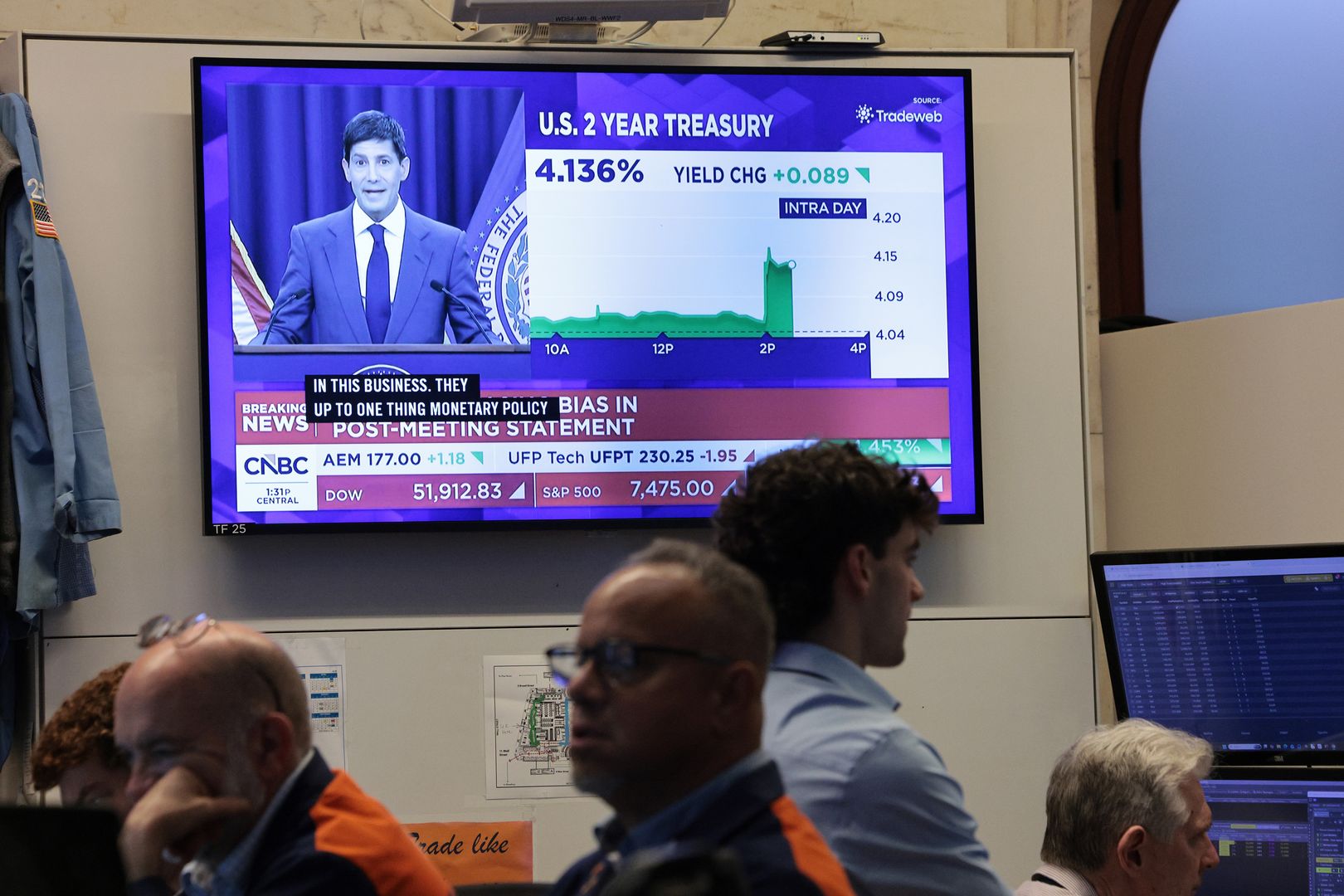
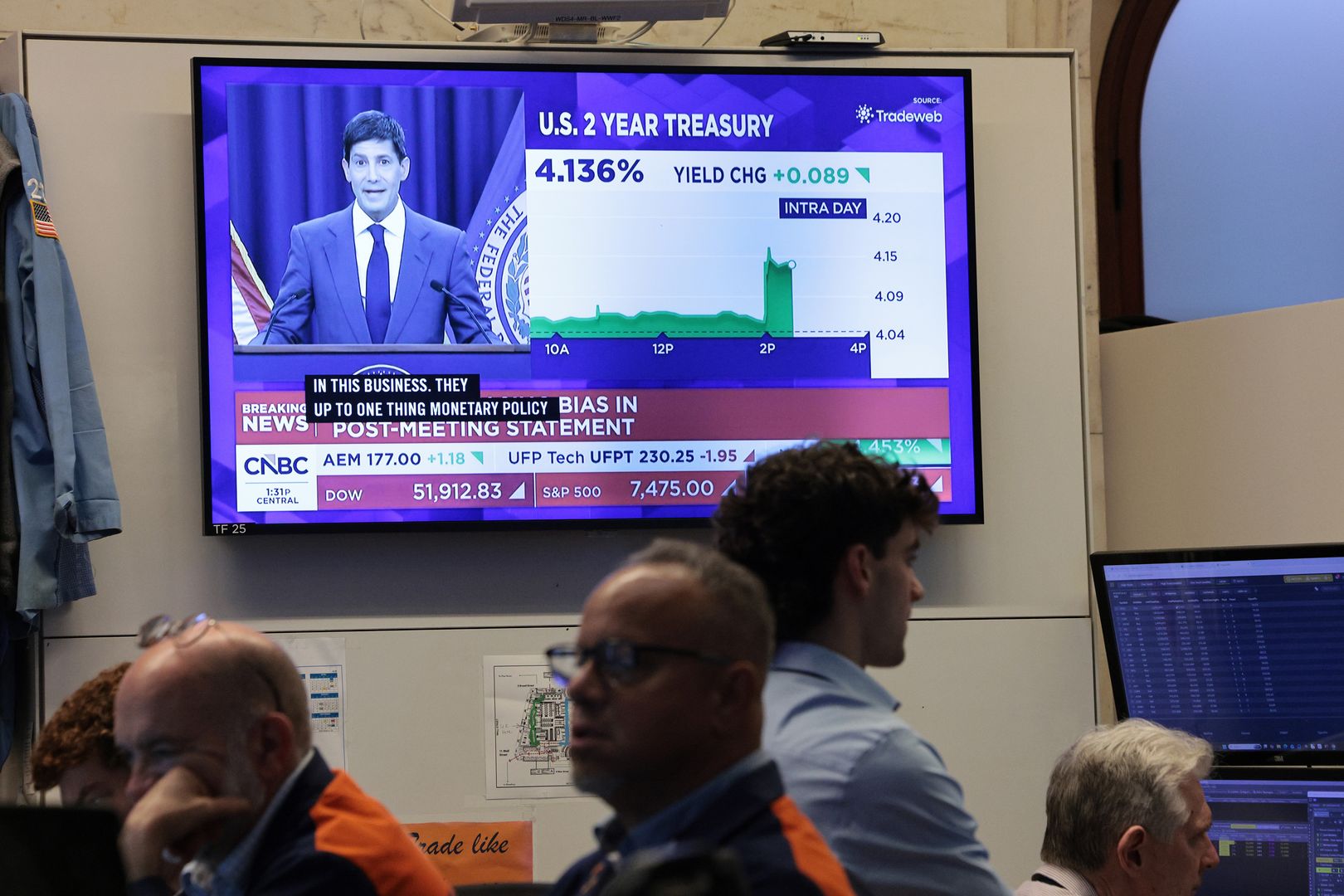
“This week we have seen some large blocks in BTC topside call spreads,” Jean-David Péquignot, chief commercial officer at Deribit, told CoinDesk.
Options flow of this size and repetition often reflects institutional positioning rather than retail activity, given the capital required and the precision of the strike selection.
The timing is notable for two reasons. First, it suggests confidence in bitcoin’s recent bounce to $64,000 from under $58,000 earlier this month. More importantly, the trade targets the July 31 settlement, two days after the Federal Reserve’s July 29 interest rate decision. The call spread flow suggests that at least some large traders expect the meeting to serve as a catalyst for a move toward $72,000.
Fed funds futures currently point to a hold at the July meeting, with most trackers putting the probability of the central bank keeping its benchmark rate unchanged at 3.5%-3.75% in the 75%-80% range. The remaining odds are split between a rate hike and, to a lesser extent, a cut.
Rate-hike fears have ebbed following June inflation data, which showed a sharp deceleration in price pressures at both the consumer and producer levels. Much of the relief traces to a sharp pullback in oil prices during the month, tied to a ceasefire between the U.S. and Iran; core inflation, which strips out food and energy, was flat.
Ethereum (ETH) could be entering the final stage of a long-term bullish pattern that eventually sees it go as high as $22,000, according to new analysis shared by pseudonymous crypto commentator NoName on July 17.
While the projection is highly speculative, it has added to a growing debate over whether ETH’s June lows marked the start of a broader recovery.
Analyst Points to Long-Term Chart Patterns After ETH Rebound
According to a chart the market watcher shared on X, since 2021, Ethereum has been building what technical analysts call an expanding diagonal, consisting of five waves, with each successive wave becoming larger than the last one. They pointed out that the first four waves were already done, with the fourth having found support between $1,072 and $1,385.
“That’s the floor this entire structure was building toward,” NoName explained, adding that expanding diagonals often end with a fifth wave that breaks above the previous cycle high. They also compared ETH’s structure to a historical Dow Jones Industrial Average (DJIA) fractal and said that both charts have a similar formation and could produce a similar breakout. Based on that interpretation, the projected target is anywhere from $12,000 to $22,000.
“Same structure, same resolution,” wrote the analyst. “Wave 5 target: 12k-22k.”
They also described ETH as “one of the most underpriced assets on the market” currently, suggesting that many people had given up on it, which could create an opportunity for long-term investors.
Another analyst, Crypto Patel, reached a similar conclusion using a different framework. In his version, he said that Ethereum has been following a Wyckoff accumulation pattern that could eventually lift the asset toward $10,000 by 2027 or 2028, provided the recent swing low around $1,500 remains intact. The trader also identified resistance between $2,400 and $2,600 and called it the first major hurdle the world’s second-largest cryptocurrency will have to overcome before any larger advance in its price could begin.
CryptoQuant contributor CW8900 also struck an optimistic note, sharing data showing that Ethereum wallets holding more than 100,000 ETH have gone back to green following the latest rebound. According to him, whales have only fallen into loss during major market bottoms, and their return to profit on many occasions has coincided with either a sustained rally or a meaningful short-term recovery.
The Other Side of the Coin
In June, ETH went very close to the $1,500 level, but softer-than-expected US inflation data released this week helped push it up to its highest level in a month and a half at $1,940 before sellers dragged it back below $1,900.
At the time of writing, CoinGecko data showed the asset trading close to $1,800, having dropped by about 5% in 24 hours but still up more than 3% during the past week.
But while those recent gains have improved sentiment, the market is not all rowing in the same direction. According to analyst Crypto Rover, a repeating 1,369-day cycle points to a scenario where ETH could move back below $1,500 before a lasting bottom forms.
The post Analyst Says Long-Term Bullish Setup Could Take Ethereum to $22K appeared first on CryptoPotato.

On December 1–2, 2026, in Dubai, alongside Blockchain Life 2026 — one of the world’s largest events for Web3, crypto, mining, and AI — the all-new AI Future Forum takes the stage.
Expect visionary founders, global investors, breakthrough AI projects, robotics, and the technologies that will shape the next decade of the digital economy.
With 15,000+ attendees from 130+ countries and 200+ industry-leading speakers, the AI Future Forum is set to become the world’s premier destination where AI, Web3, and crypto leaders come together to shape what’s next.
What awaits participants?
🔹 A full week of live networking with key players from around the world: 2 days of the forum, hundreds of side events, exclusive meetings, and the Formula 1 Grand Prix Final.
🔹 200+ top speakers: leading AI experts, founders of technology companies, investors, representatives of top AI startups, and leaders of the digital industry. The focus will be on the practical application of AI, its integration with crypto and business, and the technologies shaping the new digital economy.
🔹 A large-scale expo zone: 200+ leading companies in robotics, AI development, Web3 projects, and the most progressive startups.
🔹 The legendary AfterParty at one of Dubai’s top clubs with a globally known headline artist.
🔹 Startup Pitch – an opportunity to present your project to the international community and attract attention from investors and funds.
🎟️ One ticket. Two world-class events.
Exclusive limited offer! AI Future Forum ticket includes full access to Blockchain Life 2026.
🔥 Get 10% off with promo code WEB3DIGITAL before the prices go up:
On Wednesday, DTCC completed its first live production trades involving tokenized securities, marking a major step toward bringing blockchain technology into traditional financial markets.
Broadridge’s findings suggest those efforts are influencing the broader industry. Sixty-eight percent of respondents said tokenization will at least partially reshape financial markets within the next three to five years, while nearly one-third plan to increase investment in tokenization projects by 26% to 50% or more over the next two years.
The survey also found firms are not preparing for an all-onchain future. Instead, 92% expect digital and traditional assets to coexist for the foreseeable future, and 69% plan to integrate tokenization into existing infrastructure rather than build separate blockchain-native systems.
That mirrors the approach taken by many large financial institutions, which have generally focused on connecting blockchain networks to existing trading, custody and settlement systems instead of replacing them.
Adoption remains uneven across the industry. Forty-four percent of capital markets firms said they already have tokenization initiatives in production or operating at scale, compared with 20% of asset managers and 9% of wealth managers.
The survey also pointed to where firms expect tokenization to gain traction first. About 80% of respondents believe tokenized mutual funds and money market funds will play a meaningful role within five years, reflecting the rapid growth of tokenized Treasury products. By comparison, only about half expect tokenized equities to achieve similar adoption over that period.

Kirandeep Kaur’s family ‘devastated by her death’, sister says

(VIDEO) Josh Kerr Shatters 27-Year-Old Mile World Record With 3:42.66 Run at London Diamond League

5 Classic Crime Shows That Are Still Better Than Most New Series


-
 NewsBeat2 days ago
London Mayor Sadiq Khan handed a peerage by Keir Starmer alongside 15 other Labour figures… just days before the PM leaves No10
-

 Fashion23 hours ago
Weekend Open Thread – Corporette.com
-

 Politics7 hours ago
The House | The City of London can help the new chancellor deliver growth in every postcode
-

 Crypto World3 days ago
CFTC blocks Kalshi from unwinding Michigan trades after court order
-

 Politics3 days ago
Young campaigners urge incoming PM to act on outdoor junk food ads
-

 Business3 days ago
Nvidia Stock Slips After Big Tuesday Rally as Huang Confirms Vera Rubin Chip Is Now in Production Today
-

 Crypto World6 hours ago
Ripple Payments Joins MiCA With 14 Firms, Does It Mean Anything For XRP?
-
 Entertainment3 days ago
Disney’s Most Ambitious Failed Star Wars Attraction Is Coming to SDCC
-

 Crypto World19 hours ago
Ripple wins EU-wide access as ESMA adds it to MiCA register
-

 Business3 days ago
Palantir Shares Rise After Expanded Nvidia Partnership and Fresh Analyst Upgrades Ahead of Earnings Day
-

 Tech5 days ago
Get Your ESP32 Sunny Side Up With This Solar Dev Board
-

 News Videos4 days ago
XRP BOMBSHELL… XRP OMBOARDED FOR TRANSACTIONS!!!
-

 Crypto World2 days ago
Injective Submits SEC Transfer-Agent Registration to Onchain Ownership Records
-

 NewsBeat1 day ago
Registration is now open for March for Men with Kev 2026
-

 Tech4 days ago
Dark Secrets Emerge When Jailbreaking LLMs
-
 Sports3 days ago
New Cornerback Enters Vikings Trade Rumor Mill
-

 News Videos1 day ago
Money | Class 12 Economics | CBSE Board Exam 2026-27
-

 Business2 days ago
Banco Bilbao Vizcaya Argentaria, S.A. (BBVA) Discusses Global Macro Environment and Economic Outlook for Core Markets Transcript
-
 Tech5 days ago
Cloudflare Precursor Watches Your Mouse and Keyboard To Decide If You Are Human
-

 NewsBeat12 hours ago
Durham County Council to send out electoral registration emails
You must be logged in to post a comment Login