

Crypto World
South Korea Includes Token Securities in Capital Markets Overhaul

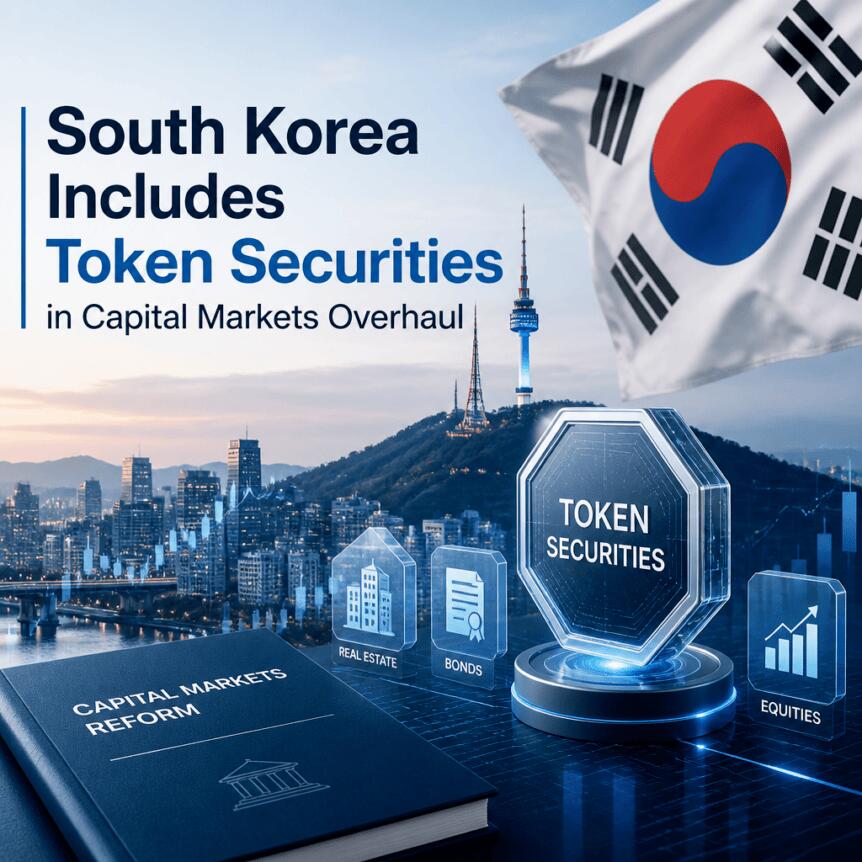
South Korea’s Financial Services Commission (FSC) has moved tokenized securities deeper into a broader national program to modernize capital-market infrastructure. The regulator said it is coordinating reforms across ministries and market operators, positioning token securities not as a standalone initiative, but as part of a wider effort to improve settlement efficiency and market connectivity.
On Tuesday, the FSC launched a capital market infrastructure review meeting to align policy work with operational plans. The regulator indicated that token securities will continue to be developed through a separate public-private council, with those outcomes subsequently integrated into the broader infrastructure roadmap.
Key takeaways
- The FSC is coordinating token securities work alongside a broader capital-market overhaul, including faster settlement and longer trading hours.
- Legislation already approved by South Korea’s National Assembly recognizes blockchain-based distributed ledgers as securities registries, enabling issuance and transfer of token securities.
- The FSC expects key token securities subordinate regulations and guidelines to be released around July, with the framework scheduled to take effect in February 2027.
- Operational infrastructure is planned for completion by end-2026, including a Korea Securities Depository (KSD) system for settling certain over-the-counter transactions in unlisted shares and fractional investment products.
- Firms should monitor how the token securities framework will be implemented alongside existing investor-protection and market-integrity obligations.
Capital-market infrastructure review folds in token securities
The FSC’s decision to incorporate token securities into a wider infrastructure reform effort reflects a policy approach aimed at aligning digital assets with established market plumbing. In practical terms, this matters for compliance and operational readiness because tokenized issuance and transfer typically require integration with securities registries, settlement processes, custody models, and audit trails.
According to the FSC, the initiative includes a roadmap to shorten the securities settlement cycle, targeted for completion by October. It also includes development of a KSD system intended to handle settlement of over-the-counter trades involving unlisted shares and fractional investment products. The FSC’s timetable places that system by end-2026, preceding the start date for the token securities regime.
FSC Vice Chairman Kwon Dae-young framed the effort as part of four policy priorities: trust, shareholder protection, innovation, and market access. That set of objectives suggests regulators will seek guardrails that preserve investor protections while enabling adoption of technology, rather than treating tokenization as purely a technology experiment.
Legislative groundwork and the planned 2027 rollout
South Korea’s token securities program predates the new capital-market infrastructure review. In January, the National Assembly approved amendments that recognize blockchain-based distributed ledgers as valid securities registries. The amendments also permit the issuance and circulation of token securities, establishing the legal basis required for regulators to build implementation rules and supporting infrastructure.
Per the FSC, the token securities framework is scheduled to take effect in February 2027, contingent on completion of subordinate rules and supporting infrastructure. The FSC said it is targeting July for the release of proposed subordinate regulations and guidelines following work at the public-private token securities council.
Cointelegraph previously reported on the broader legislative direction behind South Korea’s tokenized securities laws, including their expected regulatory treatment and timeline. The FSC’s latest updates emphasize that implementation details remain under active development and will be formalized through additional consultation and rulemaking rather than immediately after the statute’s passage.
For regulated firms, the gap between legislative authorization and effective implementation rules is significant. During this period, businesses typically need clarity on operational requirements such as how token securities will be registered, validated, and reconciled with traditional securities records; what disclosure or investor-protection measures will apply; and how compliance controls will be expected to function in a distributed-ledger environment.
KSD integration and platform development for blockchain-based custody
Infrastructure planning is a core component of the FSC’s approach. The regulator has identified settlement capability through the KSD as a milestone ahead of the February 2027 effective date. The KSD system described by the FSC is intended to support settlement for over-the-counter trades in unlisted shares and fractional investment products.
Separately, Samsung SDS said in May that it won a contract to build a token securities management platform. According to reporting cited by the FSC’s broader communications, the platform is designed to connect the KSD’s existing electronic securities account system with blockchain-based data. Samsung SDS said it aims to complete the platform by February 2027, aligning its delivery with the planned launch of the token securities framework.
The FSC also noted that detailed token securities plans will continue to be discussed within the public-private council before being linked to the broader infrastructure review. This sequencing suggests regulators are attempting to coordinate “digital asset” rulemaking with the more general modernization agenda, potentially reducing the risk of parallel standards that could complicate implementation.
From a governance perspective, integrating blockchain-based data with established depository and accounts infrastructure may also shape how auditability, data integrity controls, and reconciliation processes are implemented—elements that are central to compliance monitoring and investor assurance.
Regulatory implications: investor protection, compliance controls, and cross-border considerations
While the FSC is advancing token securities through a structured timetable, several implementation questions remain relevant for compliance and institutional readiness. The amendments enabling blockchain registries and token issuance establish the legal pathway, but firms will still need to understand how regulators intend to operationalize investor protections and “trust” requirements in distributed systems.
Institutional stakeholders should also consider how token securities will interact with existing market rules governing custody, settlement finality, transfer restrictions, disclosure, and governance. Tokenization can introduce new operational risks—such as data integrity and access control—that require controls comparable to those in traditional securities infrastructure.
Cross-border activity may further complicate matters. South Korea’s approach—embedding token securities within domestic market infrastructure—does not automatically resolve differences with other jurisdictions that have distinct regulatory frameworks for tokenized instruments. For firms operating internationally, that means compliance programs may need to map how token securities obligations align (or diverge) across regulatory regimes.
In the European context, for example, MiCA provides a framework for certain crypto-asset activities, but its scope and alignment with tokenized securities rules depends on how a given product is classified. Similarly, in the United States, the regulatory landscape for tokenized securities has historically depended on securities-law analysis and enforcement posture. Even though the FSC’s initiative is a Korean domestic reform, global institutions will likely evaluate it through the lens of their existing compliance and legal risk management practices.
Closing perspective
South Korea’s FSC appears to be moving toward an integrated model in which tokenized securities are introduced alongside settlement modernization and broader market-access reforms. The next critical milestones are the public-private council’s subordinate regulations and guidelines targeting July, followed by the February 2027 effective date. Observers will likely focus on how regulators translate the legal recognition of blockchain-based registries into enforceable operational standards for custody, settlement, investor protection, and auditability.

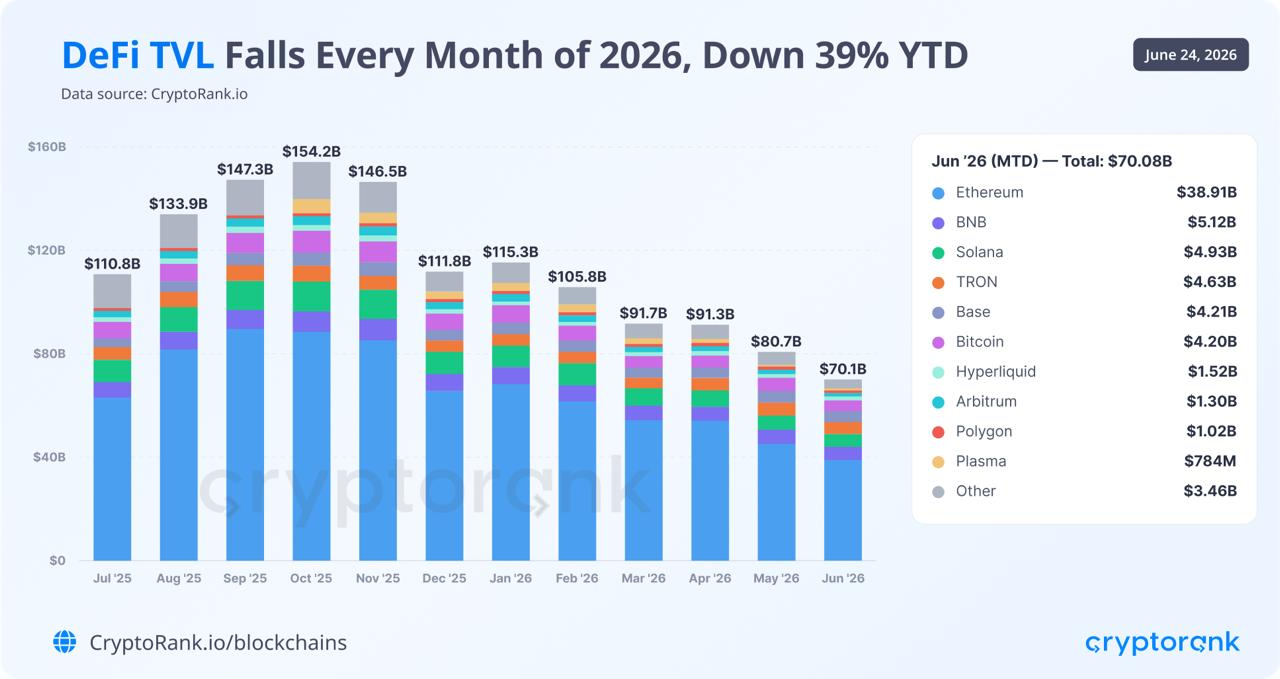
Total value locked (TVL) in decentralized finance (DeFi) has fallen by about 39% in 2026 so far, declining to just over $70 billion from roughly $115 billion in January.
A Wednesday report from crypto data aggregator CryptoRank attributed the decline to the broader market correction that followed the October 2025 crypto market peak.
After Bitcoin reached a record high above $122,000, a market-wide liquidation event on Oct. 10, 2025, erased more than $19 billion in leveraged positions and accelerated a deleveraging cycle across digital assets.
Despite the decline, CryptoRank noted that the current drawdown remains far smaller than during the 2021-2022 bear market, suggesting a more resilient DeFi market.
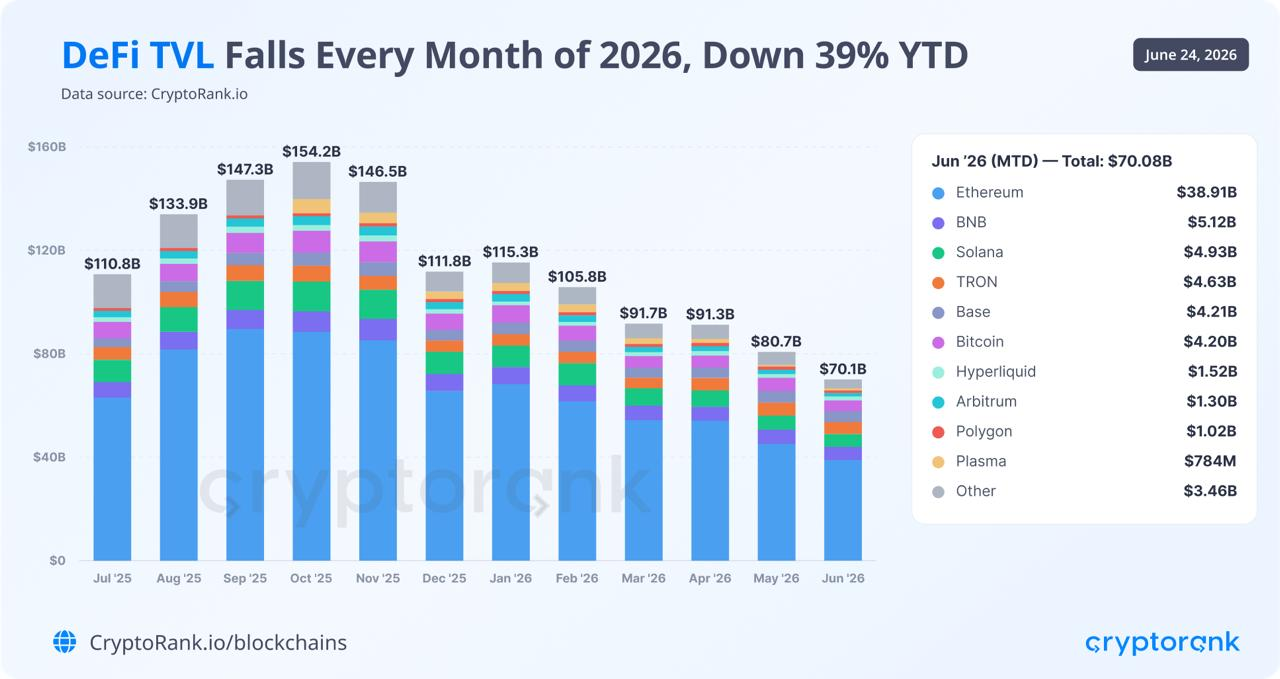
DeFi TVL, 1-year chart, monthly. Source: CryptoRank
Fallout from Kelp DAO exploit accelerated the DeFi TVL decline: analyst
CryptoRank said security incidents added another layer of pressure on DeFi in 2026, with 121 hacks and roughly $942 million in losses year-to-date. While exploits were not the primary driver of the decline, the data provider said their frequency likely weighed on user confidence and reinforced capital outflows from DeFi.
According to Nicolai Søndergaard, senior research analyst at crypto intelligence platform Nansen, the fallout from the $293 million Kelp DAO exploit on April 18 compressed into days what would otherwise have been weeks of DeFi outflows. Aave users withdrew about $15 billion in deposits in the four days following the exploit.
Related: CryptoQuant warns on Strategy’s dividend coverage as cash reserve falls 38%
The second quarter of 2026 became the most-hacked quarter on record by incident count, with 83 exploits targeting crypto protocols. However, the $755 million stolen during the quarter remained well below the $3.56 billion lost in the fourth quarter of 2020, the costliest quarter for crypto hacks on record.
The falling total value stolen is not due to more robust industry security but a sign that hackers are expanding their attack surface, according to Dmytro Matviiv, CEO of crowdsourced security and bug bounty platform HackenProof. He told Cointelegraph that the lower aggregate losses are “misread as progress,” but only the leading protocols have become harder to exploit, forcing attackers to expand their attack surface.
Alvin Kan, chief operating officer at Bitget Wallet, said that the cyber exploits are making users more cautious, but added that these may also result in capital leaving “weaker” DeFi protocols for those with “stronger venues and clearer yield models,” leading to more industry consolidation.
Magazine: Bitcoin, the ‘canary in the coal mine,’ XRP transaction demand falls 91.5%: Market Moves
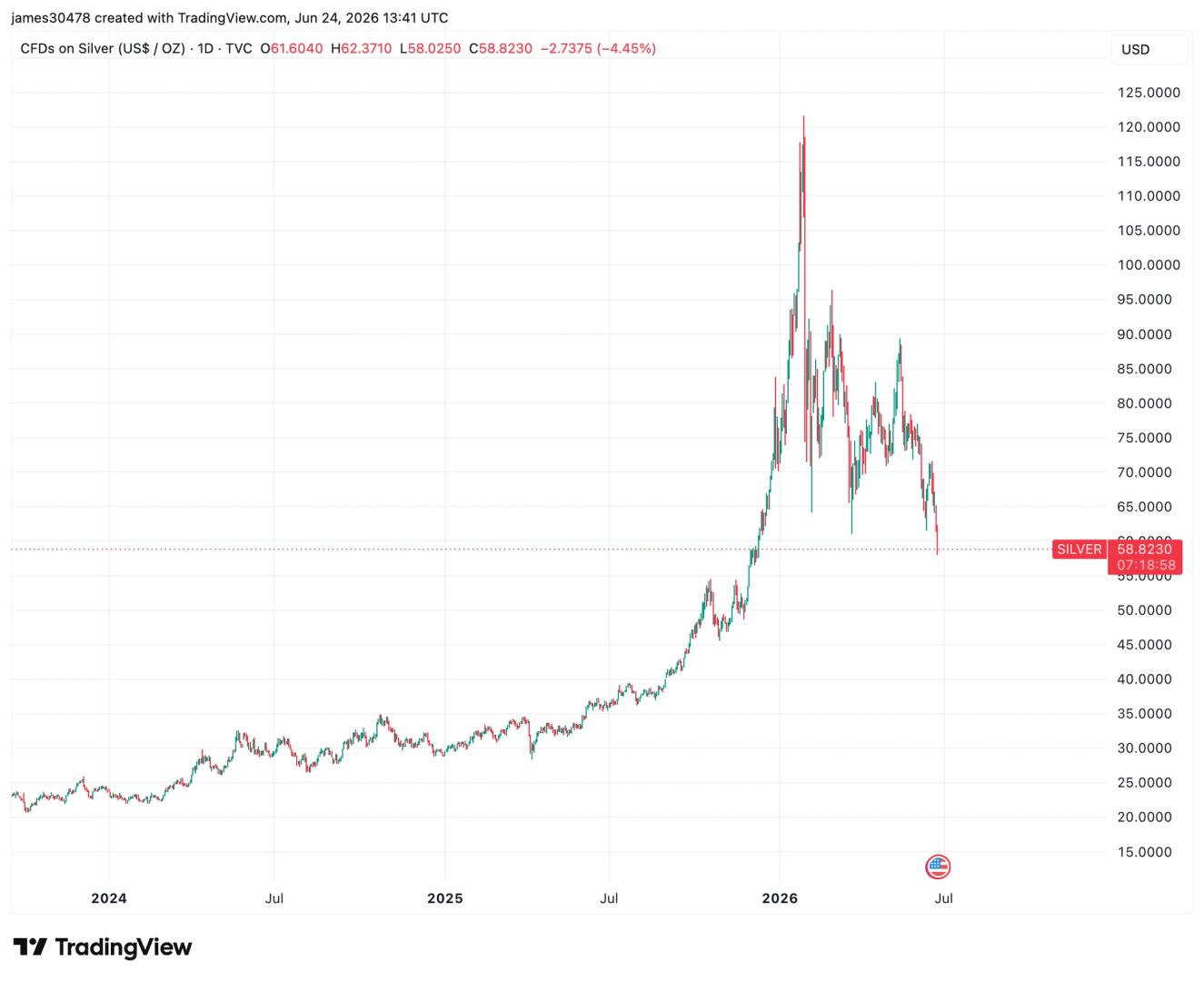
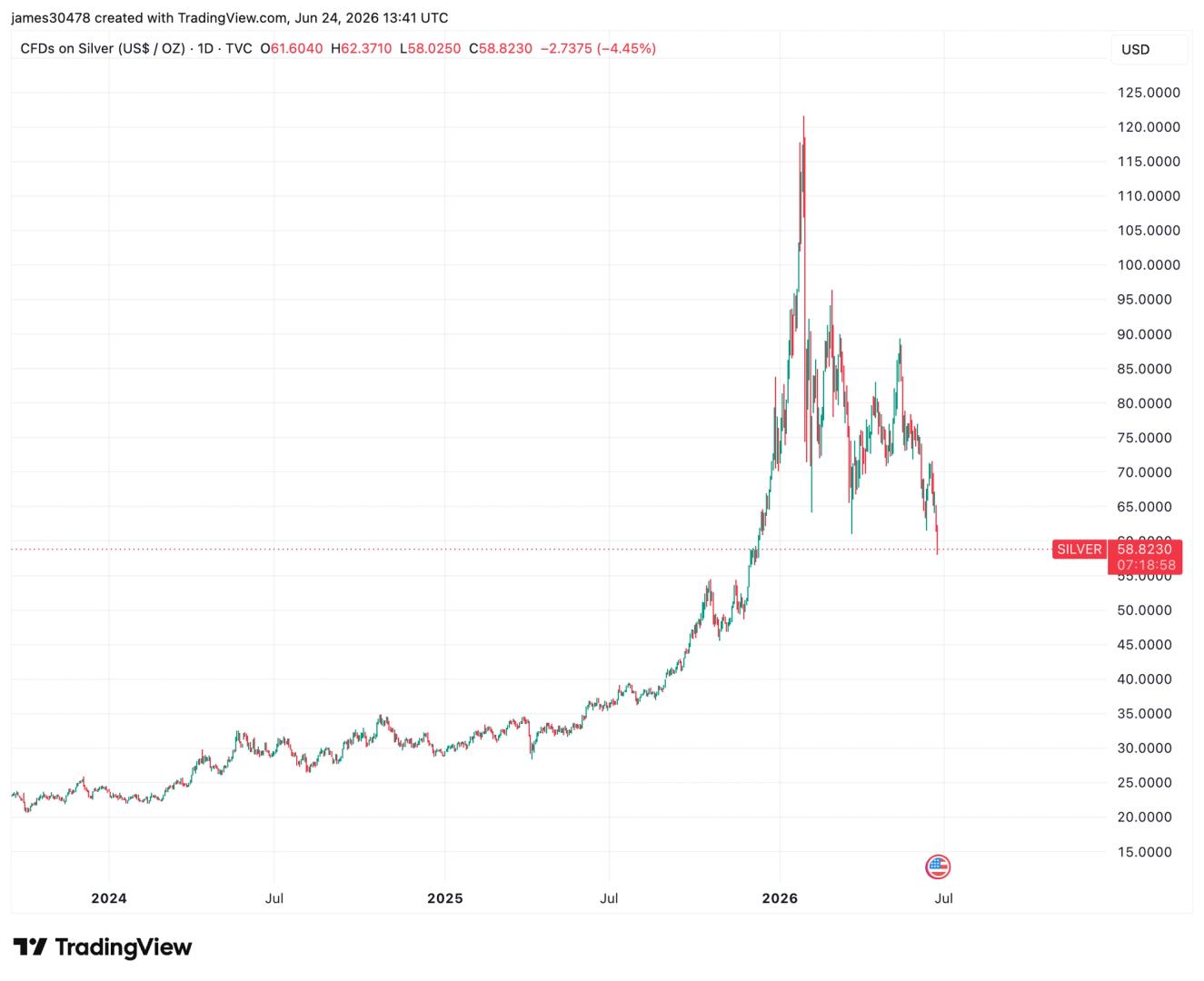
Gold and silver have both retreated sharply from their January 2025 highs, falling below key psychological milestones. Gold is down roughly 28% from its January peak of $5,600 and now trading below $4,000 per ounce, while silver has fallen more than 50%, slipping beneath $59 per ounce on Wednesday.
The sell-off has been driven largely by growing fears of tighter monetary policy under new Federal Reserve Chair Kevin Warsh. Markets are currently pricing in two 25 basis point rate hikes by March 2027, which would lift the federal funds rate to 4.00%-4.25% due to renewed inflation fears.
The reversal marks a dramatic shift from the dominant macro narrative of 2025, the “debasement trade“, the belief that persistent fiscal deficits and rising government debt would continue to erode the purchasing power of fiat currencies.
Bitcoin, however, largely stagnated throughout much of 2025, trading around the $100,000 level while gold and silver rallied aggressively. The divergence led many investors to question whether bitcoin still belonged in the debasement trade and whether its role as a hedge against fiat currency dilution had weakened.
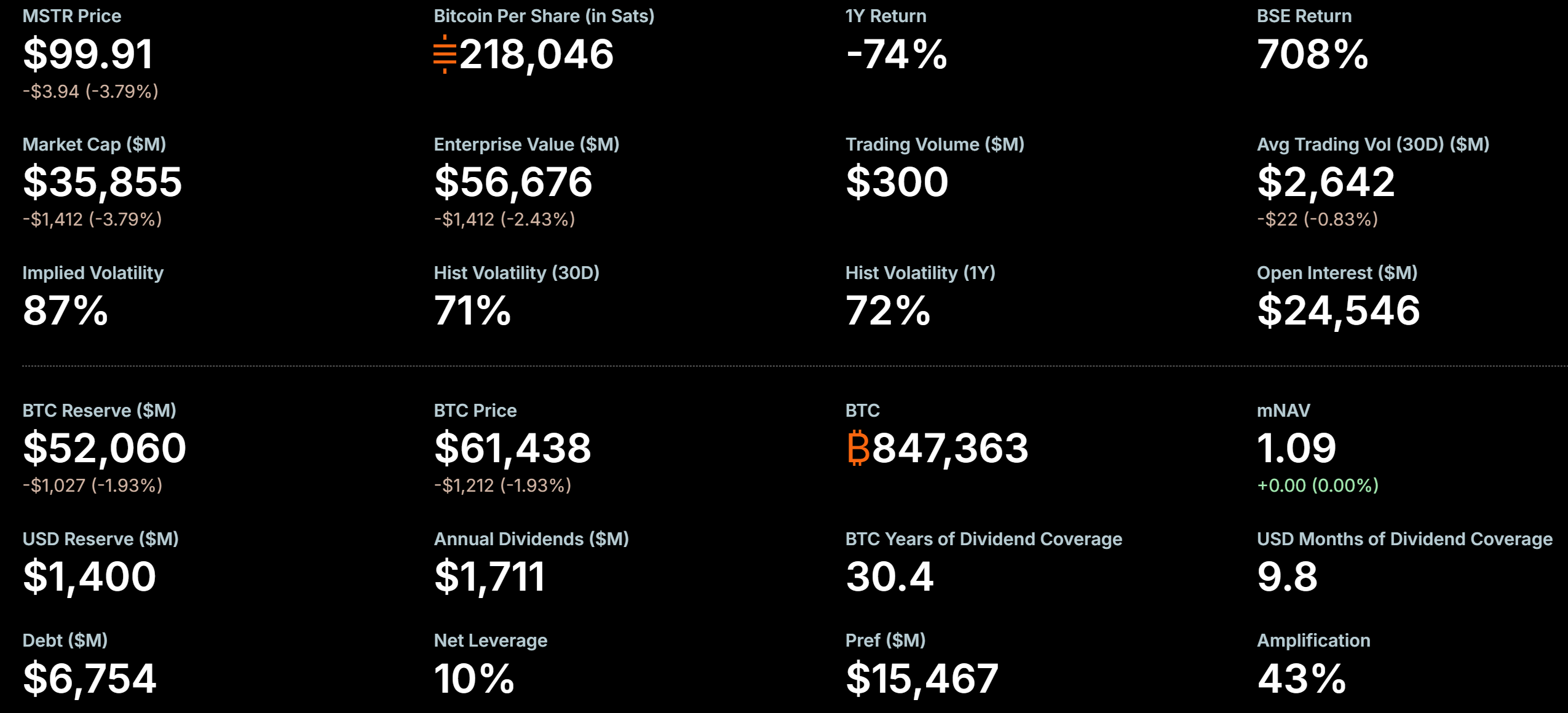
Strategy Inc. (MSTR) shares fell below $100 intraday on June 24, 2026, reaching levels not seen since March 2024, as Bitcoin traded near $61,300.
The breach highlights the amplified sensitivity of the company’s stock to cryptocurrency price action during periods of market pressure.

MSTR Tests Multi-Year Low
Shares declined from a June 23 close of $103.84, trading as low as the $99 range on elevated volume. The breach ends a long hold above $100 that persisted through the 2024–early 2025 rally.
From peaks above $450 in late 2024, the stock has dropped sharply, reflecting both broader market pressure and company-specific dynamics.
The post MicroStrategy Stock Drops Below $100 For the First Time Since March 2024 appeared first on BeInCrypto.
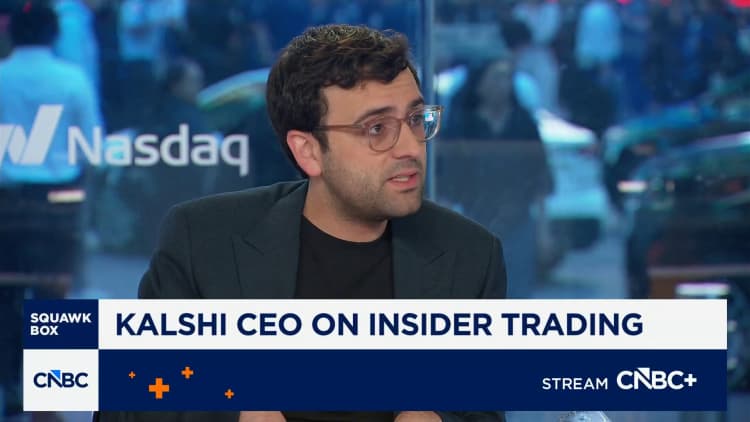

Prediction market platform Kalshi’s CEO Tarek Mansour confirmed the company is in the early stages of planning a potential IPO in an appearance on CNBC’s “Squawk Box.”
Mansour said a public markets debut of the company won’t come this year, but that it makes sense for Kalshi at this stage of its growth to begin thinking about an IPO.
“A company of our financial profile with the rate of growth that we’re seeing, that sort of conversation has to happen,” he said. “People start asking that question. And we’re basically thinking about it, but obviously, we don’t have an answer yet.”
The Information reported last week that Kalshi was in early talks for a potential IPO, though noted that a listing was unlikely to come until late 2027 or 2028. Mansour on Wednesday did not get specific with a timeline beyond stating that an IPO won’t happen in 2026.
Kalshi has experienced huge growth over the past year. At the end of June 2025, the company was valued at $2 billion. In May, the company announced a Series F funding round that put its valuation at $22 billion.
Driving that valuation, prediction market industry watchers say, is the opportunity these markets have with institutional traders. While retail users have driven Kalshi’s growth, the company has begun shifting its rhetoric and product development to increase its appeal to Wall Street.
To gain Wall Street adoption, though, Kalshi will need to quell concerns over potential insider trading on the platforms. Mansour highlighted on Wednesday initiatives the company has taken to do that, including enhanced measures to know who are traders’ employers and its “Know Your Customer” verification requirements.
He also pointed to cases that Kalshi has brought against individuals to show that its efforts to curb insider trading worries are working.
“It’s a hard problem,” Mansour said about creating market integrity on the prediction market platform, “but it’s not an impossible one.”
Disclosure: CNBC and Kalshi have a commercial relationship that includes customer acquisition and a minority investment.
Crypto World
Chainlink Lands Major Banking Deal Across Europe and South Korea: Why Isn’t LINK Crypto Price Moving?

Chainlink just secured one of the most structurally significant banking partnerships in its history, but LINK barely flinched. The token is trading slightly higher on the day, holding a tight, quiet range.
The Project Pangea brings together more than 50 financial institutions. The deal itself includes some of the biggest names, Qivalis, a euro stablecoin consortium backed by 37 European banks, and UniKA, a South Korean banking alliance anchored by Shinhan Bank and Kbank, collectively managing over $10 trillion in assets across a $150 billion annual EUR/KRW trade corridor.
The initiative targets T+0 atomic settlement of FX transactions, compressing the current T+2 cycle to near-real-time PvP swaps via regulated stablecoins on a dedicated Pangea Layer-1 chain. Industry coverage frames this as Chainlink embedding itself into international banking plumbing with structural demand. But why LINK stalls?
Discover: The Best Crypto to Diversify Your Portfolio
Why is Chainlink Price Stuck in Range?
Let’s start from the chart perspective. LINK is consolidating in a horizontal range following its most recent swing higher, a pattern that reflects broad market indecision rather than outright distribution.
Volume on the Project Pangea announcement was modest relative to prior catalyst-driven sessions. This is not surprising as it typically signals that large participants aren’t aggressively positioning ahead of confirmed revenue flows from the deal. The 12-month timeline to live transactions means no near-term fee generation is yet hitting Chainlink’s economic model.
On the technical structure, immediate support sits in the mid-range of the current consolidation band at $7.50, with a stronger demand zone below that has held across multiple retests. Resistance overhead is clustered at the prior swing high at $9 a level that has capped two recovery attempts. Momentum indicators remain neutral, neither overbought nor generating a fresh bearish signal, which keeps the range intact rather than flagging imminent breakdown.

Don’t Miss Out on Our $1,000 USDT Airdrop on ByBit
A confirmed pilot transaction announcement or disclosed fee model could trigger a breakout above $9 resistance, opening a measured move toward the upper $10 range. But a loss of near-term support below $7 on elevated sell volume would expose the lower demand zone and materially delay any breakout thesis.
Discover: The Best Token Presales
LiquidChain Targets Early Mover Upside as Link Tests Key Levels
LINK’s range-bound behavior after a genuinely significant fundamental event illustrates a recurring pattern: by the time institutional adoption is confirmed and priced in, the asymmetric upside has already compressed. That’s the structural argument for looking one layer earlier in the stack at infrastructure projects still in presale, before market cap expands.
LiquidChain ($LIQUID) is a Layer 3 infrastructure project positioning itself as the cross-chain liquidity layer, fusing Bitcoin, Ethereum, and Solana liquidity into a single execution environment through its Unified Liquidity Layer architecture.
POV: You read the about section on the LiquidChain site. — LiquidChain (@getliquidchain) June 22, 2026

 https://t.co/vqvBcdSQYC pic.twitter.com/UKD6iXNK8i
With Liquid, developers deploy once and access all three ecosystems; settlement is verifiable; execution is single-step. The presale is currently priced at $0.01473 with $860K raised to date. That fundraising number signals early traction without the liquidity overhang that comes after a public listing.
Research LiquidChain before the presale ends.
Don’t Miss Out on Our $1,000 USDT Airdrop on ByBit
The post Chainlink Lands Major Banking Deal Across Europe and South Korea: Why Isn’t LINK Crypto Price Moving? appeared first on Cryptonews.
The company recently secured a key regulatory approval, which is vital for its operations in the European Union, while institutional interest in XRP remains solid.
Despite these positive developments, Ripple’s cross-border token hasn’t managed to rebound and is down nearly 70% from its all-time high registered last summer.
The License in Europe
Earlier this week, Ripple obtained preliminary approval for a Crypto Asset Service Provider (CASP) license from Luxembourg’s Commission de Surveillance du Secteur Financier under the European Union’s Markets in Crypto-Assets (MiCA) regulation.
It was granted through a Green Light Letter and remains subject to final conditions. If fully confirmed, it would enable the company to offer regulated cryptocurrency services across the entire EEA, which consists of 30 countries. Commenting on the matter was Cassie Craddock, Managing Director, UK & Europe at Ripple, who said:
“Financial market infrastructure is moving on-chain – from cross-border payments and settlement to collateral management and tokenized assets – and banks and fintechs are actively building the digital asset capabilities they need to remain competitive. With our growing European presence, regulatory track record and institutional-grade infrastructure, we’re ready to meet the moment and support that transition at scale.”
The ETF Front
Over the past several weeks, institutional investors have drastically reduced their exposure to Bitcoin (BTC) and Ethereum (ETH). However, this is not the case for Ripple’s native token, which continues to attract substantial capital.
SoSoValue’s data shows that inflows into spot XRP ETFs have surpassed outflows, with the last red day being March 6. The financial giants offering such products include Canary Capital, Bitwise, Franklin Templeton, 21Shares, and Grayscale, while the cumulative net inflow generated to date exceeds $1.45 billion.

XRP Price Outlook
The inflows into spot ETFs require the issuers of these investment vehicles to purchase real XRP on the market, which could positively impact the price.
Nonetheless, the asset remains heavily suppressed during the prolonged bear market and currently trades at around $1.10, representing a 20% decline on a monthly scale and a whopping 70% crash from the historic peak reached in 2025.
It’s worth noting that the steep decline hasn’t dampened the strong optimism shared by some analysts. A few days ago, X user Tom claimed that the token has formed a pattern similar to its 2024 run, which took the price from $0.50 to $3.30. This time, though, it could result in a major upswing to $8.42.
JAVON MARKS was even more bullish, arguing that “XRP’s breakout stands, which means the measured move target near $17 does as well.”
The post Ripple (XRP) News Today: June 24 appeared first on CryptoPotato.

TLDR
- Qualcomm confirmed its acquisition of AI infrastructure software provider Modular, with the transaction reportedly valued at approximately $4 billion according to Bloomberg.
- The acquisition brings software capabilities that enable AI model deployment across various hardware platforms, supporting Qualcomm’s data center ambitions.
- Modular’s valuation has surged significantly from $1.6 billion following a $250 million funding round completed nine months prior.
- Shares of QCOM gained 1.1% in premarket hours following an 8% decline Tuesday, with the stock posting 57% gains over the last three-month period.
- The acquisition announcement coincided with Qualcomm’s investor day Wednesday, where the company planned to reveal a major data center chip partnership and unveil next-gen processor details.
Qualcomm (QCOM) announced its agreement to purchase Modular, a company specializing in AI infrastructure software, in a transaction that Bloomberg sources estimate at roughly $4 billion. The chipmaker has not publicly disclosed the official acquisition price.
Shares of QCOM advanced 1.1% during premarket Wednesday trading, rebounding from an 8% slide in the previous session. The semiconductor company’s stock has surged 57% during the past three-month timeframe.
Established in 2022, Modular has secured $380 million in total capital, with its most recent financing being a $250 million investment round completed in September 2025. The company carried a $1.6 billion valuation following that funding round — meaning the reported $4 billion purchase price represents more than a 2.5-fold increase in less than twelve months.
Qualcomm indicated the transaction should finalize during the latter half of 2026.
Modular’s technology provides software infrastructure that allows developers and enterprises to deploy AI models with optimized performance across diverse hardware architectures. This cross-platform compatibility represents a strategic asset for Qualcomm’s broader objectives.
“The acquisition is expected to strengthen Qualcomm Technologies’ ability to deliver a more optimized AI compute layer across a broad range of platforms and use cases,” Qualcomm said in a statement.
The company added that it “deepens the software foundation for Qualcomm Technologies’ data center strategy.”
The chipmaker has intensified its data center expansion efforts as part of a strategy to diversify beyond the smartphone chip sector, which experiences significant market fluctuations.
What Analysts Are Saying
Patrick Moorhead, an analyst at Moor Insights & Strategy, provided commentary on the transaction, highlighting the difference between Qualcomm‘s existing strengths and Modular’s complementary capabilities.
“Qualcomm is very good at edge enabling software, but that’s not the same as data center software capability,” Moorhead said. “Strategically, this could help to better answer the data center question.”
The observation holds merit. While Qualcomm has established strong AI chip positioning in edge computing applications — including smartphones, personal computers, and automotive systems — the data center segment presents distinct challenges, and Modular’s technology addresses that capability gap.
Investor Day in Focus
Qualcomm’s investor day also took place Wednesday, an event drawing significant market attention as analysts anticipated the company would identify a major data center chip client.
Information regarding Qualcomm’s upcoming processor architecture was also expected to be shared, further heightening investor attention surrounding the stock.
In separate reporting, The Information indicated that Qualcomm is pursuing discussions to acquire AI chip developer Tenstorrent in a transaction estimated between $8 billion and $10 billion. Neither company has confirmed those negotiations.
Qualcomm has not publicly revealed the financial terms of the Modular acquisition, and company representatives declined to provide pricing details when approached by Barron’s.

The world’s largest crypto exchange has recently faced significant regulatory challenges that could ultimately force it to stop serving clients in the European Union.
Earlier this month, Reuters reported that the company’s application through Greece’s Hellenic Capital Market Commission (HCMC) is expected to fall short: a development that may strip Binance of the license it needs to stay in the bloc after the June 30 deadline.
The firm assured that it remains fully committed to securing the necessary MiCA approval. Speaking on the matter was CEO Richard Teng, who said:
“Binance is dedicated to Europe. We are committed to our European users and to operating under a clear, fair, and harmonized MiCA framework. We are dedicated to securing our MiCA license and remain ready to operate under a fair, predictable, and genuinely harmonized European framework. We will continue to keep users updated as we make progress.”
Just recently, Reuters revealed that the exchange will make a fresh push for permission to operate in the EU. Gillian Lynch, Binance’s head of Europe and the United Kingdom, reportedly said that the firm “may just have a different pathway to being authorized,” adding that “if it is not Greece, I’m looking at other alternatives.”
According to the media, Binance has already held talks with regulators in Ireland, Latvia, and Greece but has been rejected in all three nations due to concerns such as the company’s past penalties for money laundering and its complex international structure.
Lynch said the exchange had contacted several regulators in the European Union but made only one application, to Greece. She is unaware why the Greek authorities refused approval, arguing that Binance has no outstanding issues related to the filing.
The post Binance Makes a New Push to Secure EU Approval appeared first on CryptoPotato.
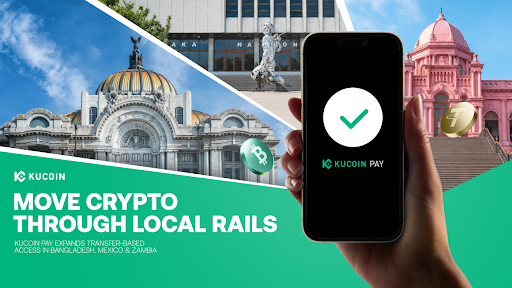

- KuCoin Pay expands crypto payments to Bangladesh, Mexico, and Zambia.
- Platform links stablecoins with local banks and mobile money rails.
- KuCoin targets real-world crypto use in high-growth emerging markets.
KuCoin Pay, the cryptocurrency payment platform developed by KuCoin, has expanded its transfer-based payment capabilities across Bangladesh, Mexico, and Zambia.
The move aims to connect digital assets with widely used local payment systems in high-growth markets.
The rollout integrates cryptocurrencies and stablecoins with established banking and payment networks across the three markets.
These include the bKash and Nagad mobile payment platforms in Bangladesh, SPEI-compatible bank transfer routes in Mexico, and mobile money services offered by MTN Group and Airtel Africa in Zambia.
The expansion reflects the growing role of local bank transfers and mobile money services in emerging economies, where consumers increasingly rely on these systems for salary payments, remittances, merchant transactions, and peer-to-peer transfers.
Integration with local financial infrastructure
KuCoin Pay said its platform is designed to integrate digital assets with familiar financial systems, reducing the complexity often associated with moving cryptocurrencies into everyday financial activity.
The company noted that its technology supports localized payment routing through deep integration with local banking and payment rails.
Rather than requiring users to navigate complex backend processes, the platform identifies appropriate payment routes through a unified technical interface.
According to the company, this approach allows digital asset transactions to function more like traditional e-wallets, mobile money services, or local bank transfer tools.
By connecting cryptocurrencies and stablecoins with existing financial infrastructure, KuCoin Pay aims to make digital assets more practical for real-world use cases while reducing friction and simplifying the transfer process.
Focus on practical crypto applications
KuCoin executives said payments represent one of the most important pathways for digital assets to gain broader utility within the real economy.
“Crypto is emerging as a new asset class with growing relevance in the real economy, and payments are one of the most important ways for this value to reach users,” said Alicia Kao, Managing Director of KuCoin.
“Through KuCoin Pay, we are building trusted and localized connections between digital assets and existing banking, mobile money and transfer rails. By integrating crypto with the financial systems people already use, we are helping digital assets move beyond holding and trading into practical financial activity, while supporting more inclusive and future-ready financial ecosystems in high-growth markets.”
The company said the expansion is intended to improve accessibility to digital assets by enabling users to interact with cryptocurrencies through payment systems they already use in their daily lives.
Further expansion planned
Looking ahead, KuCoin Pay said it plans to continue expanding compatibility with local banking and payment systems in additional markets.
The company also intends to improve technical response speeds and broaden practical cryptocurrency payment applications across supported regions worldwide.
The latest expansion underscores a broader industry trend toward integrating digital assets with existing financial infrastructure, particularly in emerging markets where mobile money and local transfer networks play an increasingly central role in everyday commerce and financial inclusion.
An Ethereum address linked to the HashFlare cloud-mining fraud transferred 10,600 ETH worth about $18.5 million on Monday morning after sitting idle for roughly three and a half years. Blockchain investigator ZachXBT flagged the movement, the first activity tied to the address since the… Read the full story at The Defiant

Becoming doctor for money or passion? #doctor #neet #aiims #mbbs #income #medico #passion #money

Sunderland’s coastal communities targeted in police asb crackdown
Energy stocks slide as oil prices drop on Hormuz tanker movement

No Jackpot Winner as $257 Million Prize Rolls Over to $269 Million Monday Draw

Blockchain.com files with SEC for U.S. IPO

Israel says it has killed new Hamas military leader in Gaza City airstrikes
Becoming doctor for money or passion? #doctor #neet #aiims #mbbs #income #medico #passion #money

BITCOIN: It’s Dumping AGAIN! (don’t ignore) – BTC Price Prediction Today

Money is Energy: Once You Shift Your Frequency, Making Money Becomes Effortless
-

 Fashion5 days ago
Weekend Open Thread: Miami – Corporette.com
-

 Entertainment4 days ago
Renter of Home in Anne Heche Crash Denies Settlement With Son
-

 Tech2 days ago
Microsoft accidentally kills epic Outlook email threads
-
 Sports19 hours ago
Two goals and an assist by sheer aura: Cristiano Ronaldo just entered the World Cup chat
-

 Business4 days ago
Soccer-U.S. defends Iran World Cup travel restrictions, says discussions ongoing
-

 Politics6 days ago
BBC Reporter Discusses Cross Party Criticism Of Trumps Iran Deal
-
Crypto World11 hours ago
Bitcoin (BTC) Dips Below $62K, Ethereum (ETH) Plunges 6% Daily: Market Watch
-

 Crypto World8 hours ago
Securitize Wraps Roubini's SEC-Registered ETF as Dubai VARA Digital Security
-
Business13 hours ago
Entergy settles forward sale agreements, raises $672 million in cash proceeds
-
 Business4 days ago
Wall Street Week Ahead: Investors see Micron earnings as pulse check of AI rally momentum
-

 Politics4 days ago
Andy Burnham and the meaning of Makerfield
-

 Tech6 days ago
AWS enters the context layer race with a graph that learns from agents, not manual curation
-
 Crypto World4 days ago
Can Charles Hoskinson Really Rescue Cardano?
-

 Crypto World4 days ago
HIVE shares jump as $220M AI deal speeds Bitcoin mining pivot
-

 NewsBeat5 days ago
Keir Starmer Allies Question His Chances For No 10
-

 Crypto World4 days ago
Jake Chervinsky accuses CME of protecting derivatives monopoly
-

 Tech2 days ago
Nearly 7,000 fake Amazon domains registered ahead of Prime Day 2026, researchers warn
-
 Tech3 days ago
Signal’s Meredith Whittaker says AI chatbots ‘are not your friends’ and calls Copilot agents a backdoor
-

 Business6 days ago
Brexit cost 6% of UK economy, Bank of England company data suggests
-

 Sports6 days ago
FIFA World Cup 2026: Canada beat 9-men Qatar 6-0 to register first ever win | FIFA World Cup 2026
You must be logged in to post a comment Login