
Crypto World
South Korea targets finfluencers with strict asset disclosure law



South Korea plans finfluencer disclosure law to curb manipulation and protect investors.
Summary
- Bill amends Capital Markets and Virtual Asset User Protection Acts to cover stocks and crypto promotions.
- Influencers must disclose asset types, quantities, and any paid compensation tied to recommendations.
- Violations face penalties similar to unfair trading, including fines and criminal liability, alongside new AI-based market surveillance.
South Korea’s Democratic Party has introduced legislation requiring financial influencers to disclose personal asset holdings and compensation when recommending cryptocurrencies or stocks, according to reports from the country’s legislative assembly.
The proposal, led by lawmaker Kim Seung-won, includes amendments to the Capital Markets Act and the Virtual Asset User Protection Act. The draft framework would mandate that influencers disclose the type and quantity of assets held when promoting specific tokens or stocks through social media, livestreams, or broadcast channels, according to the legislative text.
Influencers would also be required to reveal any compensation received in exchange for recommendations. Violations would carry penalties similar to those applied in unfair trading practice cases, including fines and potential criminal liability, the proposal states.
The legislation aims to prevent undisclosed promotional activity that can lead to pump-and-dump schemes, where influencers promote assets before selling into price increases, according to the Democratic Party’s statement. The measures seek to reduce market manipulation risks and improve investor protection through mandatory transparency around holdings and financial incentives.
The proposal follows broader regulatory expansion in South Korea throughout 2026. The Financial Supervisory Service has deployed AI-based monitoring tools designed to detect abnormal trading patterns and market manipulation in real time, according to the agency.
Additional measures introduced this year include new reporting requirements for foreign property investors, who must now disclose cryptocurrency transaction histories in certain cases, regulatory filings show.
South Korea maintains one of the world’s most active retail cryptocurrency markets. The legislation, if passed, would represent one of the most direct regulatory actions globally targeting social media-driven financial promotion in the digital asset sector, according to regulatory analysts.

The Ethereum Layer 2 network raised its L1 data cost scalars 1,280x over six days before rolling them back yesterday.
Users on Scroll, an Ethereum Layer 2 (L2) network, paid more than $50,000 in excess transaction fees over roughly four days after the team behind the project repeatedly raised the parameters that determine how much users pay for posting data to Ethereum, according to an analysis published by L2BEAT.
The overcharges stemmed from six manual increases to two fee multipliers on Scroll’s gas price oracle, the smart contract that calculates the Layer 1 data portion of every transaction’s cost. Each update raised the previous value by 2x to 10x, compounding to 1,280x the original baseline by April 5, L2BEAT said. On April 9, the team slashed both multipliers by 160x.
The baseline cost for all roughly 139,000 affected transactions would have been just $280. Instead, users collectively paid upward of $50,000, with automated bots accounting for the vast majority.
Scroll has not publicly addressed the findings at the time of writing.
Etherfi Cash bots, which are still running during the protocol’s ongoing migration to Optimism, accounted for roughly $35,000, or 66% of the excess, per L2BEAT. Scroll’s own oracle relayer paid approximately $5,200, with LayerZero, Succinct, and other bots making up the rest.
The issue was first flagged by a pseudonymous developer running a Succinct relayer, who posted on X that their transaction costs had jumped from $0.002 to over $20.
“Scroll was subsidizing L1 DA costs and is now correcting to sustainable pricing?” the developer asked. “And there’s no users on Scroll except us, so we’re paying full price for it?”
Crypto research firm Kairos Research noted that the fee spike appeared to coincide with etherfi’s migration to Optimism. When etherfi was Scroll’s dominant app, total daily transaction fees from its products averaged about $250. After the multiplier increases began on March 31, that figure jumped to roughly $16,000 per day.
L2BEAT clarified that the overcharges were not a sequencer issue, as the L1 gas prices reported by the oracle were accurate. The entire overcharge came from the multiplier increases, which went through a separate governance path involving the team’s multisig wallet.
The episode raises the question of whether Scroll had been running fees below cost to retain users, a common practice among L2s competing for activity, and abruptly repriced once its largest fee contributor departed.
Scroll’s total value locked (TVL) sits at just $24 million, according to DeFiLlama, down 96% from its peak of $585 millon in October 2024.
This article was written with the assistance of AI workflows. All our stories are curated, edited and fact-checked by a human.

Overview
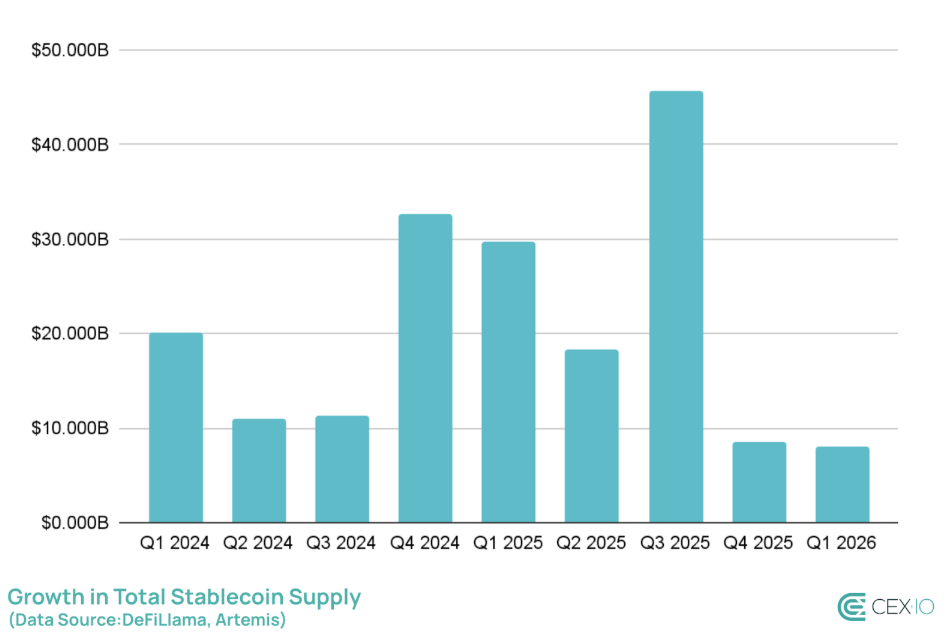
Hong Kong approved its first stablecoin licences, marking a key step in regulated digital finance development. Authorities selected bank-backed issuers to lead the rollout under strict oversight. The move strengthens the city’s position in global digital asset markets.
HSBC Leads Retail-Focused Stablecoin Rollout
HSBC plans to launch a Hong Kong dollar-pegged stablecoin in the second half of 2026. The token will support payments, transfers, and digital asset services through its mobile platforms. The bank aims to integrate stablecoins into existing retail and merchant ecosystems.
HSBC will enable peer-to-peer transfers and merchant payments using its PayMe and banking applications. The system will also support subscriptions to tokenized investment products within its digital infrastructure. This approach connects traditional banking services with blockchain-based financial tools.
HSBC is exploring stablecoins in other currencies to support cross-border transactions. However, the bank requires alignment with central banks before expanding beyond Hong Kong dollar issuance. This strategy reflects a measured approach to global digital currency integration.
Anchorpoint Targets Institutional and Phased Expansion
Standard Chartered supports Anchorpoint Financial, a joint venture focused on digital asset infrastructure. The entity includes Animoca Brands and Hong Kong Telecommunications as key partners.
Anchorpoint plans to launch its stablecoin earlier, targeting institutional clients in the initial phase. The firm will later expand access to retail users through selected distributors and partners. This phased rollout allows controlled adoption while building operational experience in regulated markets. The structure also aligns with Hong Kong’s broader financial stability goals.
Anchorpoint focuses on enabling real-world applications such as payments, custody, and trading services. The initiative supports infrastructure development for compliant digital finance operations. It also strengthens collaboration between traditional finance and blockchain firms.
Regulatory Framework Shapes Controlled Market Entry
Hong Kong Monetary Authority introduced the stablecoin regime in August 2025. The framework requires full reserve backing, clear redemption rights, and strict governance standards. Authorities also enforce anti-money laundering measures across all licensed issuers.
The regulator reviewed 36 applications before selecting the first two licence holders. Officials prioritized strong risk management, compliance capacity, and viable business models. This selective approach ensures stability while allowing innovation within defined limits.
Officials confirmed that only a small number of additional licences may follow. The authority maintains flexibility but intends to limit market entry in early stages. This policy balances innovation with financial system integrity.
Hong Kong aims to position itself as a global hub for regulated digital assets. Stablecoins play a central role in improving payment efficiency and supporting tokenized finance. The first approvals mark the beginning of a structured expansion in the sector.
Crypto World
XRP Price Prediction Today: Ripple Launches Treasury Tool as Token Breaks $1.35, Should You Enter Pepeto First?
XRP price holders who watched the token run from $0.30 to $3.65 without getting in now face a market offering a similar setup. Ripple launched its first native Digital Asset Treasury Management System on April 8, letting businesses manage XRP and fiat in one regulated platform, per CoinMarketCap. XRP ETFs pulled in $3.3 million the same day while Bitcoin and Ether ETFs bled over $220 million combined, according to 24/7 Wall St.
Pepeto is nearing its Binance listing with presale rounds selling out faster than ever, and $8.86 million committed during a Fear Index of 14 shows informed capital is locking positions before listing day.
Ripple’s Treasury System Goes Live as XRP ETFs Buck the Outflow Trend
Ripple’s Treasury Management System went live on April 8, giving companies a single platform to hold XRP and fiat without separate custody, per CoinMarketCap. The tool puts XRP directly into corporate finance workflows for the first time.
XRP ETFs took in $3.3 million on a day when every other major crypto ETF posted losses, according to 24/7 Wall St. The CLARITY Act markup is expected late April, and if it passes, XRP gets a permanent commodity tag that could open billions in fresh ETF demand.
The XRP Price Prediction Entry Worth Watching Right Now
Pepeto: The Trading Platform the Market Needs While XRP Grinds Sideways
The Binance listing keeps getting closer and presale stages fill faster each round. Pepeto is a contract scanning and zero-fee trading platform that grows more useful when the market turns risky and the XRP price stays range-bound.
While XRP holders wait for the CLARITY Act, Pepeto scans tokens across Ethereum, BNB Chain, and Solana, spotting risky contracts before they touch a wallet. PepetoSwap handles swaps at zero cost so entry size equals position size, and capital works right away instead of sitting inside a $83 billion market cap waiting for billions more.
The presale pulled $8.86 million at $0.0000001863 while the Fear Index reads 14. The FDV at $78 million is small enough that analysts call for 100x because the token powers every trade. SolidProof cleared the codebase, a senior developer from Binance shaped the exchange, and the founder who took Pepe to $11 billion built every tool from scratch. Staking at 186% APY keeps building holdings while listing draws closer.
Crypto history has one constant: early entries made during peak fear with real products running became the breakout stories of each cycle. Pepeto at $0.0000001863 with $8.86 million during a Fear Index of 14 fits that pattern. Once the Binance listing opens, presale pricing ends.
XRP Price Prediction: Can XRP Hold $1.35 and Rally Back to $2?
XRP trades at $1.35 on April 10, down 62% from its $3.65 July 2025 peak, per CoinMarketCap. The XRP price prediction depends on holding $1.35 and clearing $1.42 to open $1.50 then $2.00. Analysts say XRP needs the ceasefire to hold, the CLARITY Act to advance, and the Fed to signal cuts before $2 is in play.
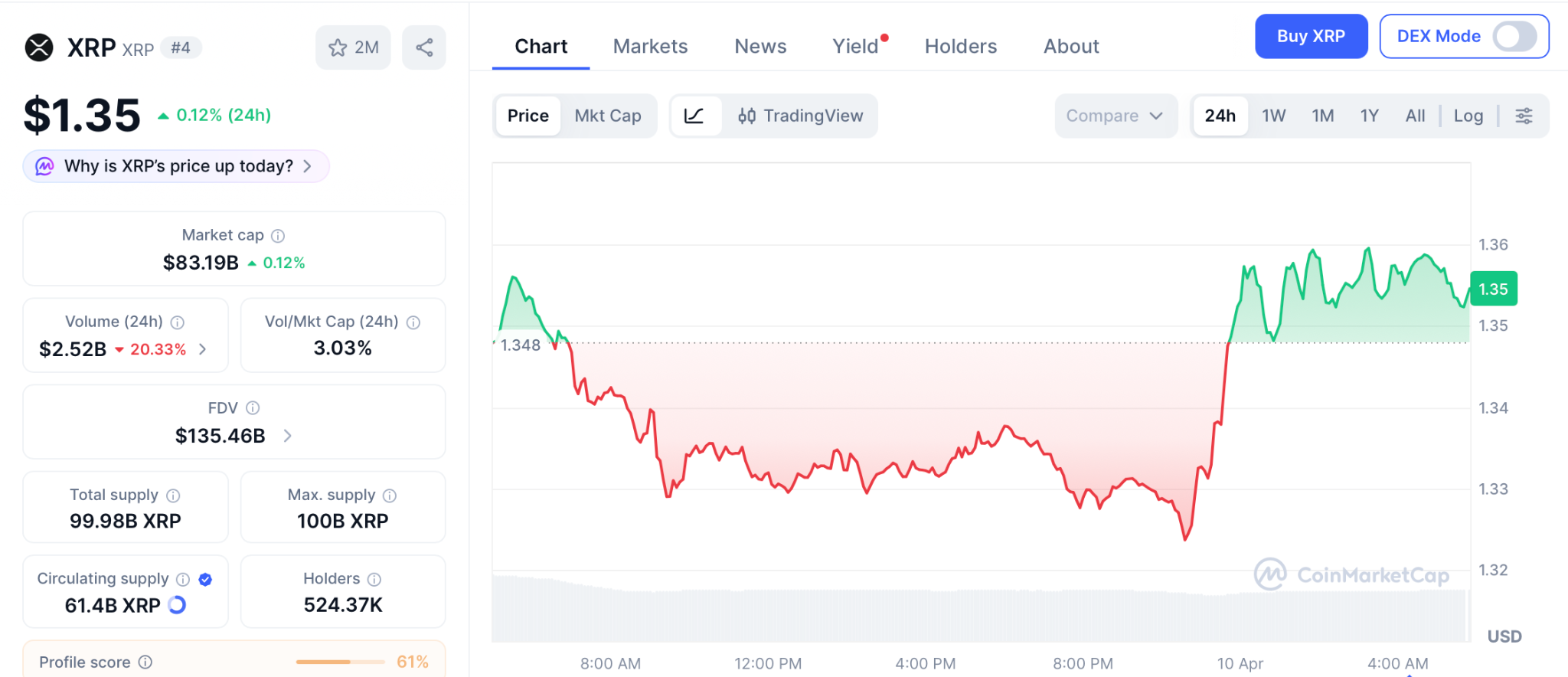
Support sits at $1.28 with resistance at $1.42 then $1.50. The XRP price math from a $83 billion cap means strong targets take months, not the fast timeline a presale-to-listing event offers.
Conclusion
The XRP price prediction confirms XRP needs quarters of macro help before it reaches numbers that matter. The wallets that bought XRP at $0.003 gained 1,000x over years. Those who got into SHIB with no product gained 1,000x in months.
Pepeto combines a live exchange, the same founder who took Pepe to $11 billion, and a confirmed Binance listing. The Pepeto official website still accepts presale entries, and the wallets that caught XRP at $0.003 did not wait for proof, they studied the setup and acted while the crowd held back.
Click To Visit Pepeto Website To Enter The Presale

FAQs
Can XRP price reach $2 in April 2026 based on current market conditions and the CLARITY Act?
XRP needs the Trump-Iran ceasefire to hold, the CLARITY Act to clear the Senate Banking Committee in late April, and the Fed to signal cuts at the April 28 FOMC before $2 comes into play. Without all three, analysts at 24/7 Wall St project XRP stays between $1.28 and $1.60. XRP ETFs took in $3.3 million on April 8 while Bitcoin and Ether ETFs posted losses, showing selective demand even during broad market fear.
What is the best crypto to buy now in 2026 for high returns before the next bull run based on real utility?
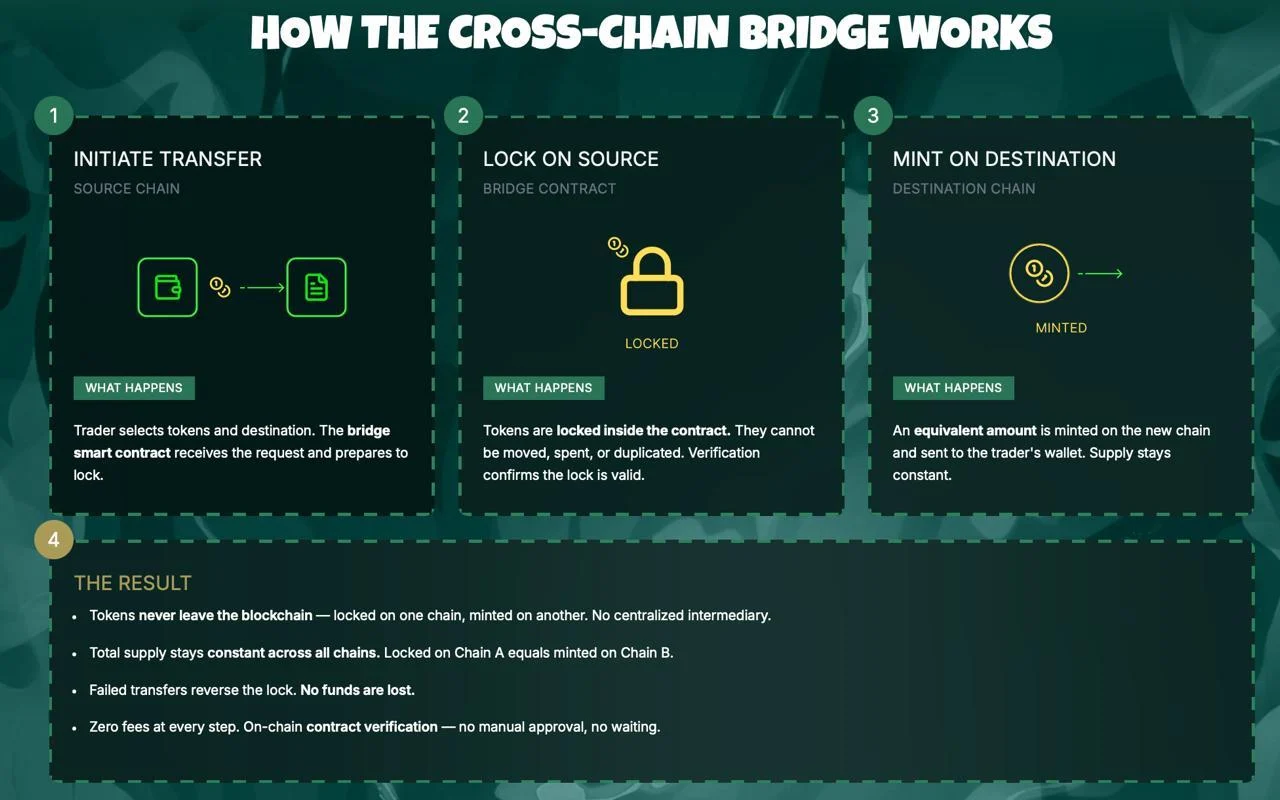
Pepeto is the best crypto to buy now because it has a SolidProof-audited contract, a live zero-fee exchange with a token scanner, and a cross-chain bridge across Ethereum, BNB Chain, and Solana. The team includes the original Pepe coin architect and a senior Binance developer. With $8.86 million raised at $0.0000001863, 186% APY staking, and a confirmed Binance listing, the entry combines working tools with presale pricing.
Disclaimer: This is a Press Release provided by a third party who is responsible for the content. Please conduct your own research before taking any action based on the content.

Bitcoin is emerging as a potential component in the fragile ceasefire that is taking shape between the United States and Iran after a 39-day conflict disrupted the region and forced the closure of the Strait of Hormuz.
Tehran is unlikely to relinquish its grip on the narrow trade artery that handles roughly 20% of global crude oil flows. Instead, it plans to manage transit alongside Oman, collecting tolls from vessels seeking safe passage.
And that’s where Bitcoin (BTC) comes into play. Those payments may not be limited to traditional currencies. Hamid Hosseini, a spokesperson for Iran’s Oil, Gas and Petrochemical Products Exporters’ Union, told the Financial Times that certain ships could be required to pay in BTC for safe passage of their oil cargo.
“Once the email arrives and Iran completes its assessment, vessels are given a few seconds to pay in Bitcoin, ensuring they can’t be traced or confiscated due to sanctions,” said Hosseini.
If implemented, the move would mark a notable shift for Iran, which has previously said it would only accept the Chinese yuan as toll payment for the strait.
This week’s Crypto Biz looks at Iran’s reported crypto gambit, Jamie Dimon’s latest comments on blockchain and competition and the White House’s stance on stablecoin yields.
Iran seeks crypto tolls from ships crossing Strait of Hormuz
Ships moving through the Strait of Hormuz are increasingly being asked to pay transit fees in cryptocurrency, as Iran tightens control over one of the world’s most important shipping lanes, according to the Financial Times.
Reports indicate that vessels, particularly oil tankers, are being charged fees that can reach into the millions per trip, with payments made in crypto or alternative currencies. The system is being enforced by Iran’s Revolutionary Guard Corps, which has restricted access to the waterway and allowed only approved ships to pass.
The development comes amid ongoing conflict and a fragile ceasefire, with Iran using its position over the strait as leverage. With roughly a fifth of global oil flows moving through the route, the use of crypto payments underscores both the geopolitical stakes and how digital assets are being used to bypass traditional financial channels.
Jamie Dimon warns blockchain and AI are coming for banking
JPMorgan CEO Jamie Dimon warned that a new wave of technology-driven competitors is putting pressure on traditional banking, highlighting both artificial intelligence and emerging financial infrastructure.
In his annual shareholder letter, Dimon pointed to fintech companies and nonbank players adopting blockchain and other technologies to build faster, lower-cost systems. He also hinted that stablecoins should be viewed as part of the broader shift underway in financial services.
America’s biggest bank, as measured by assets, is already investing heavily in its own blockchain infrastructure, including its Kinexys platform, as it looks to compete in areas such as payments and tokenization where new entrants are gaining ground on traditional players.

Bernstein says Figure stock could double on tokenization growth
Analysts at Bernstein say Figure Technologies’ rapid loan growth highlights the potential of blockchain-based lending, suggesting the company’s stock is significantly undervalued at current levels.
In a recent note, Bernstein said Figure surpassed $1 billion in monthly originations, signaling growing traction. It assigned the stock an “Outperform” rating and a $67 price target, roughly double current levels.
Figure’s lending platform runs on the Provenance blockchain, which is designed to reduce costs and speed up loan processing. Bernstein analysts said this structure could improve margins compared to traditional lenders, particularly as volumes increase.

Stablecoin yield ban would lift bank lending just 0.02%, White House says
Economists at the White House said restricting yield-bearing stablecoins would have a negligible impact on bank lending, challenging claims that such products pose a meaningful threat to deposits.
According to analysis by the Council of Economic Advisers, a ban on stablecoin yields is estimated to increase bank lending by just 0.02%, suggesting only limited spillover into the traditional financial system. The analysis comes as yield-bearing stablecoins remain a key sticking point in market structure legislation talks.
The report also pointed to potential downsides. Limiting yields could reduce consumer benefits by cutting off access to higher returns, highlighting a trade-off for policymakers weighing tighter regulation of the sector.
Crypto Biz is your weekly pulse on the business behind blockchain and crypto, delivered directly to your inbox every Thursday.
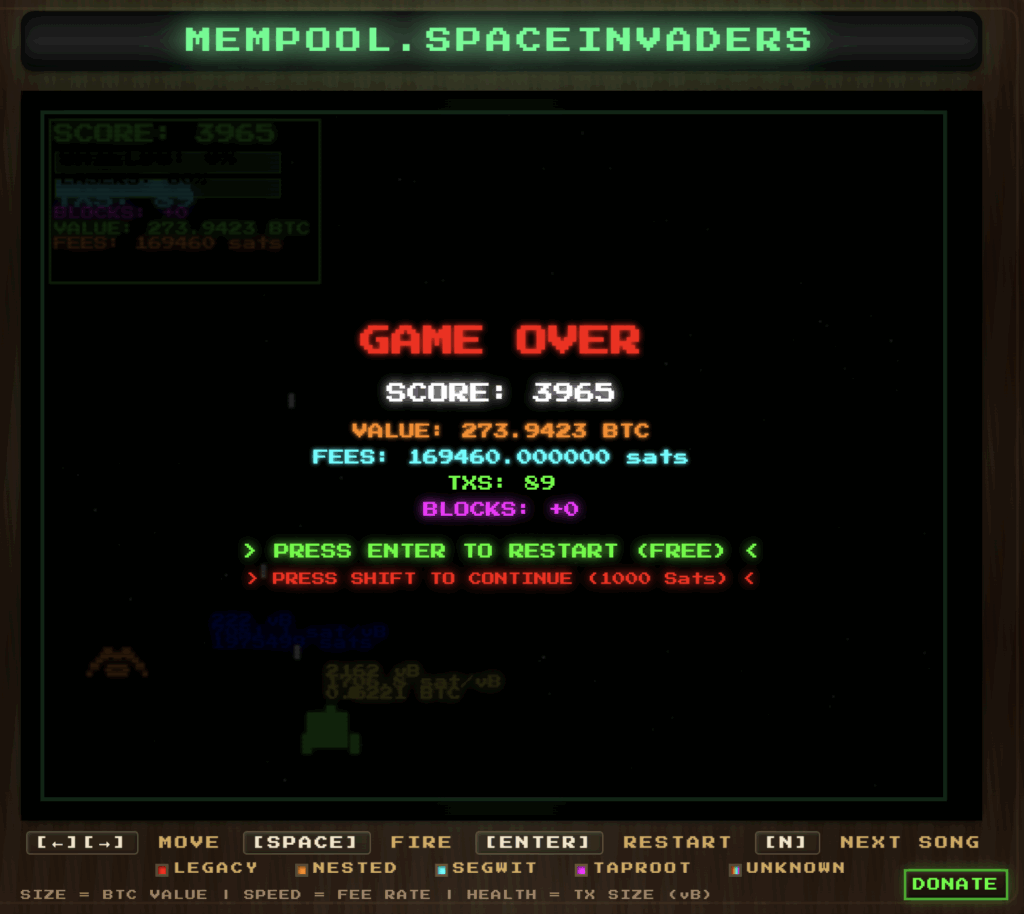
A quirky bitcoin (BTC)-themed Space Invaders clone is promising a bounty of 10,000 Satoshis (SATs), worth $7, to whoever can score 10,000 points. The only catch is that it might take you over an hour — unless you’re willing to move $726 million in BTC.
The game, called Mempool Space Invaders, was released by Stacker News user @jasonb this week. Like Space Invaders, you play as a ship moving left to right shooting “invaders” before they reach the bottom of the screen.
In this version, each surviving invader chips off a percentage of your shield until you’re dead. As for the crypto element, each invader represents a transaction on the blockchain’s mempoool that tallies towards your points.
The larger the invader, the more BTC you’ll score. To get the game’s bounty, you need to score 10,000 BTC. The game also tracks the number of SATs each transaction costs.
After recording one session where Protos scored 273 BTC in 94 seconds, we worked out that, at the same rate, it would take just under an hour of gameplay to reach 10,000 BTC.
Read more: NFT game studio boss says not paying staff ‘works for company cash flow’
That said, scores are based on the real-time BTC mempool, so if lots of wealthy transactions take place while you’re playing, it will likely decrease the time needed to rack up 10,000 BTC.
Lend me $726M so I can make $7 playing BTC Space Invaders
The game’s author recognized that this can be gamed to the player’s advantage, and notes that you can score 10,000 BTC easily if you just send 10,000 BTC, worth a whopping $726 million, to yourself and wait for it to appear in the mempool space.
“Then blast it out of the water — er — space. Just make sure not to spend too much in fees or you’ll eat up all your winnings,” its creator noted. A lot of work for $7.
Bitcoin’s mempool is the collection of pending and unconfirmed BTC transactions that are stored within nodes.
The game also gives players an option to pay 1,000 SATs per death to keep going. If Protos died every 94 seconds, we’d have to pay roughly $27 to reach the bounty score.
As the creator says, this is “not a wise strategy as the continue button is more expensive than a normal lightning game.”
He added that he would like verifiable screenshots of the score to award points, and that if anyone is willing to go through the effort to doctor their screenshot for $7 worth of SATs, “you definitely deserve them.”
Got a tip? Send us an email securely via Protos Leaks. For more informed news and investigations, follow us on X, Bluesky, and Google News, or subscribe to our YouTube channel.

Mythos Model Flags Risk of Security
The focus is on the Mythos model by the company Anthropic that allegedly detects and uses vulnerabilities in operating systems and web platforms. Moreover, the company recognised that the model is able to simulate attacks when provoked under controlled conditions. As such, authorities consider such capabilities as a possible threat when abused by ill-minded individuals. This has enhanced scrutiny in the financial and regulatory areas. Anthropic enjoys limited access to Mythos and is growing defensive applications with Project Glasswing. Large companies like Amazon, Apple, and JPMorgan Chase are part of the initiative. Additionally, such organisations as Google, NVIDIA and the Linux Foundation became involved. Offering to enhance software security through AI-based vulnerability detection, these groups are pursuing this goal.
The company invested a lot of resources in promoting the initiative and deepening the defensive scope. Anthropic provided up to 100 million usage credits and 4 million in direct funding. Moreover, over 40 organisations that control critical infrastructure were able to access the system. This joint effort aims at discovering and resolving the high-severity defects in popular software. Anthropic remains interesting with changes in legal and regulatory developments. The Trump administration tried to take measures against the company in its classification but was stopped by a federal court in San Francisco. Judge Rita Lin ordered that the designation was not substantially statutory-based. Therefore, this ruling was a short-lived reprieve since AI companies remain under the microscope.
The company has recorded robust financial growth, and its annual recurring revenues have increased sharply over the past few months. This has increased interest both in technology and finance. In addition, analysts are still evaluating the overall effect on rival companies, such as Palantir Technologies. The players within the market are keeping track of the way AI implementation influences the competition in the industry. The most recent innovations at Anthropic have brought about an increased interest in AI security, regulatory requirements and market consequences. These have remained influential in the policy debates and financial preparedness.

Coinbase CEO Brian Armstrong has shifted his stance on a key crypto regulatory bill, saying it’s now the moment for Congress to act. After months of negotiations and a previous pause, Armstrong endorsed the Digital Asset Market Clarity Act (CLARITY Act) and praised the current draft as a strong baseline for passable legislation. The move comes as lawmakers press ahead through committee processes, with both sides of the aisle weighing how a structured framework could shape the crypto market in the United States.
Armstrong disclosed his updated view in a Thursday post on X, aligning with remarks from US Treasury Secretary Scott Bessent in a Wall Street Journal op-ed urging Congress to act promptly. In his message, Armstrong described the legislation as a “strong bill” and argued that it’s now time for Congress to move forward. The endorsement marks a notable reversal from January, when Coinbase said it could not back the act as written, contributing to a temporary stall in the legislative process as committees prepared a markup for CLARITY.
Key takeaways
- Armstrong publicly backs CLARITY Act again, calling for a timely passage after months of negotiations shaped by safety, ethics, and market-structure concerns.
- The bill’s path remains tied to committee activity: a Senate Banking Committee markup is anticipated after the Senate Agriculture Committee’s January approval, with both committees needing to align securities and commodities provisions before a full chamber vote.
- Regulatory momentum is visible in parallel moves, including the Office of the Comptroller of the Currency’s approval of Coinbase’s national bank trust charter, which signals growing regulatory engagement with crypto players.
- The industry’s influence in Washington continues to be debated, though executives from Coinbase and Ripple Labs have participated in talks with administration officials about CLARITY and broader market structure questions.
Armstrong’s recalibration: from pause to endorsement
The timing of Armstrong’s endorsement reflects a broader recalibration within the crypto industry’s Washington engagement. In January, Coinbase publicly stated it could not support CLARITY as written, a stance that contributed to a pause in a Senate Banking Committee markup that would have advanced the bill toward floor consideration. Since then, talks among lawmakers and industry participants have continued, with Armstrong asserting that the latest iteration of CLARITY addresses core concerns raised during negotiations.
Armstrong captured the shift in a succinct update, stating on X that the current form of the CLARITY Act is a “strong bill” and that it’s “time to pass the Clarity Act.” The post echoed comments attributed to the same topic by Scott Bessent in the WSJ op-ed, who urged swift congressional action as a matter of clarity and regulatory coherence for the crypto markets. For readers tracking the arc of the bill, the developer-friendly alterations and the way ethics, tokenized equities, and stablecoin yield provisions were addressed are central to understanding why Coinbase and other industry players have shifting views on the legislation’s current contours. For reference, Coinbase previously noted that progress depended on a broader agreement in Congress and among supervisory agencies, with the initial markup delayed as those conversations continued.
Coinbase’s legal head, Paul Grewal, suggested last week that lawmakers were “very close to a deal,” underscoring a sense that convergence across committees—and with the crypto sector—was near. Still, the exact timing of a mark-up remains uncertain, as the banking committee would schedule consideration only after the Agriculture Committee’s earlier action, and after aligning on a regulatory framework that reconciles token classifications with securities and commodities oversight.
Legislative hurdles: where the bill stands and what comes next
The legislative path for CLARITY Act is intricate, reflecting the overlap between securities and commodities frameworks in U.S. regulation. The latest cadence places the banking committee mark-up after a January approval from the Senate Agriculture Committee, with both panels expected to harmonize the finer points of the bill before lawmakers return to the Senate floor. The process underscores a centralized aim: to provide a clear, predictable regulatory framework that can accommodate a spectrum of crypto activities—ranging from exchanges and token issuances to custody and compliance obligations for crypto-native institutions.
From Coinbase’s perspective, the process has required careful alignment with both the executive branch and Congress. Armstrong’s renewed stance appears to be grounded in the belief that the current version adequately balances innovation with investor protection and market integrity. The operational implications are notable: a clearer framework can reduce regulatory uncertainty for exchanges and developers, potentially accelerating product launches, partnerships, and new use cases for digital assets. Investors and builders alike will be watching whether the final iteration resolves long-standing concerns about ethics, tokenized equities, and the governance and disclosure expectations that typically accompany traded assets.
In parallel, industry voices have continued to press for clarity and predictability. Coinbase’s legal leadership has framed the ongoing talks as a sign that policymakers are close to a workable compromise, while industry participants have highlighted the importance of a comprehensive school of thought that integrates the realities of digital asset markets with established financial-market norms. The evolving dialogue in Washington illustrates a broader theme: as technology accelerates, lawmakers are increasingly pressed to deliver rules that foster both innovation and consumer protection without stifling competition.
Regulatory momentum and industry influence: a broader context
Beyond CLARITY Act’s fate, a broader regulatory arc has emerged that shapes industry strategy in the near term. Earlier this year, the Office of the Comptroller of the Currency granted Coinbase a national bank trust charter, following a series of similar approvals for other crypto and financial-services entities. The approvals signal that regulators are willing to grant more robust, federally recognized structures to crypto firms, potentially enabling more sophisticated product offerings under federal oversight. The approvals build a backdrop against which CLARITY Act could accelerate or adjust, depending on how a unified regulatory framework emerges across agencies.
The Washington conversation around crypto is not happening in a vacuum. Executives from Coinbase and Ripple Labs have participated in discussions with administration officials about the proposed framework, reflecting a broader trend of strategic engagement from the industry. The dynamics of these discussions are nuanced: while some policymakers emphasize the need for robust safeguards, others push for a framework that doesn’t hamper innovation or push firms toward burdensome, one-size-fits-all rules. The resulting tension—between comprehensive regulation and market growth—will shape the clarity and predictability investors rely on as crypto markets mature.
As the debate continues, observers are watching whether CLARITY’s final form will offer definitive classifications for tokens, more precise rules for exchanges, and a clear path for stablecoins and custody services. The current trajectory suggests a scenario in which Congress could deliver a coherent set of rules that reduces ambiguity for U.S. participants, while also inviting international competition to respond to a more predictable U.S. framework. For practitioners, that could translate into a more navigable landscape for product development, fundraising, and regulatory compliance—crucial considerations as institutions, startups, and developers build the next phase of the crypto economy.
What remains uncertain is the exact timetable and the precise language that will reach a floor vote. While Armstrong’s renewed endorsement adds momentum, the bill still faces a complex negotiation across committees, potential amendments, and the broader political calendar. Investors should monitor the timing of the banking committee markup and any additional clarifications on how CLARITY addresses the balance between market structure, consumer protections, and innovation incentives. The path forward will likely shape how quickly institutions can deploy regulated crypto products in the United States and how competitors abroad respond to a more defined U.S. framework.
Readers should stay attentive to updates on committee schedules and any new endorsements from other major industry players, as these signals often influence the market’s expectations about regulatory clarity and product timelines. The coming weeks will be telling for whether CLARITY Act can translate into a formal legislative milestone or whether unresolved questions will extend the negotiation phase into a longer horizon.
As the process unfolds, the industry’s practical takeaway is straightforward: clarity tends to reduce risk, but only when the rules are stable and comprehensive. The next few weeks will reveal how close CLARITY is to becoming law and how the balance between oversight and innovation will be achieved in the final text.
Autonomous AI agents have registered roughly 90,000 on-chain identities since January 2025, and the ETH they burn through every micro-transaction is not coming back.
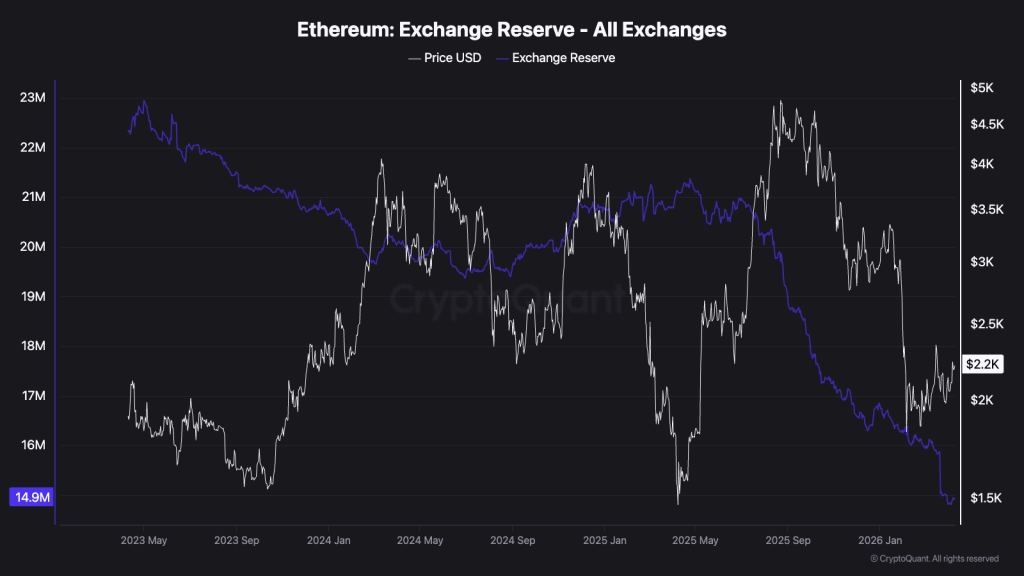
Exchange reserves have collapsed to 16.2 million ETH – the lowest level since 2016 – while over 37 million ETH sits locked in staking contracts.
The EIP-1559 burn mechanism was designed for humans transacting at human speed. AI agents don’t sleep, don’t hesitate, and don’t wait for gas to drop on a Sunday morning.
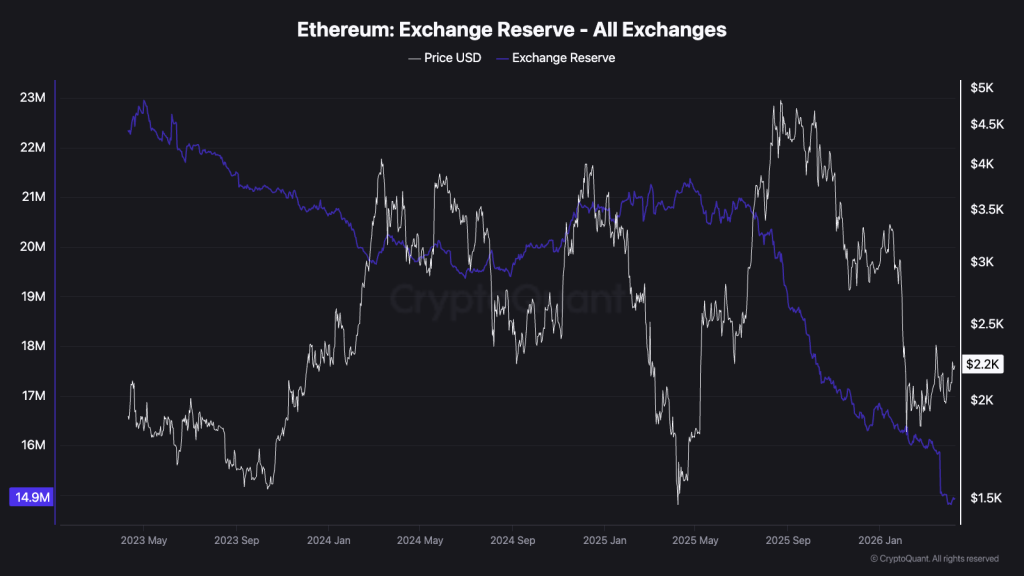
The question is no longer whether AI activity is compressing ETH supply. The question is whether the compression is structural enough to constitute a genuine ETH supply shock – one that reprices the asset rather than just tightens a few metrics.
Discover: AI price predictions for Ethereum, Bitcoin, and XRP through end of 2026
How AI Agents Are Burning ETH Faster Than the Market Expects
Under EIP-1559, base fees are destroyed rather than paid to validators. That mechanic was calibrated around human-driven transaction demand – periodic spikes during NFT mints, DeFi yield chases, and token launches.
AI agents introduce a fundamentally different demand profile: continuous, high-frequency, and immune to price fatigue.
Projects built on frameworks like Etherealize, alongside autonomous trading systems powered by ASI ($FET) and RENDER, now dominate DEX activity during low-liquidity windows – particularly weekends – where their algorithmic execution faces minimal human competition.
Each interaction triggers a base fee burn. At scale, the aggregate effect on net ETH issuance is material.
Glassnode on-chain data confirms ETH’s annualized net issuance is currently running at approximately -0.5%, meaning burns are outpacing new validator rewards.
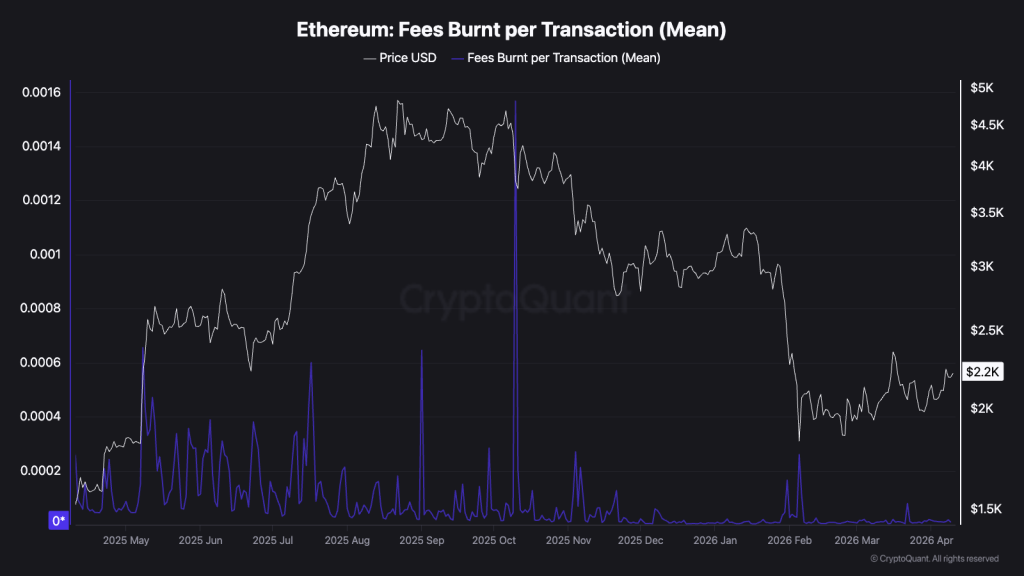
That deflationary state has now persisted across a 12-month high in burn rates, according to CryptoQuant metrics tracking exchange-level reserve depletion alongside network-wide fee destruction. The Etherealize-driven agent economy is not a speculative catalyst – it is already showing up in the supply figures.
What makes AI agent burn different from prior DeFi demand spikes is durability. A yield farming craze burns ETH for weeks; a machine economy running autonomous wallets on deflationary crypto rails burns ETH indefinitely.
The frequency is predictable, the volume scales with agent registrations, and there is no behavioral off-switch triggered by a price correction. That changes the supply calculus in ways that cycle-based models don’t fully capture.
Bitcoin Hyper Targets Early Mover Upside as Ethereum Tests Key Supply Levels
ETH at a $271 billion market cap limits the upside math even if the supply-shock thesis fully validates. A move from $2,400 to $3,000 represents roughly 25% – meaningful, but not the asymmetry that earlier-cycle positioning delivers. For traders who accept the AI-driven deflationary crypto thesis but want higher-beta exposure to the same infrastructure trend, the presale layer is worth examining.
Bitcoin Hyper is currently in presale at $0.0521787, with over $1.1 million raised and a staking APY currently sitting above 90%. The project is built around Bitcoin-native speed infrastructure – a direct architectural play on the machine-economy demand that is driving AI agent adoption across L1 networks. Its positioning assumes that the high-frequency, low-latency transaction environment that makes AI agents viable on Ethereum will expand to Bitcoin-adjacent rails as agent registrations scale.
The entry window at current presale pricing closes as each stage fills. For traders watching Ethereum consolidate below resistance while the supply metrics tighten, the asymmetry argument is straightforward. Research Bitcoin Hyper here before the presale window closes.
The post Etherealize Say AI Will Fuel Ethereum Supply Shock: Here’s Why and Next Coin to Pump appeared first on Cryptonews.
Senator Cynthia Lummis (R-WY) warns that the Digital Asset Market Clarity Act (CLARITY Act) faces a potential four-year legislative freeze if the Senate does not act before the 2026 midterm elections.
Her post arrives one day after Treasury Secretary Scott Bessent published an op-ed demanding the same urgency.
Why the Urgency Matters Now
Lummis has been the CLARITY Act’s most prominent Senate champion since its inception. She chairs the Senate Subcommittee on Digital Assets and has repeatedly framed the bill as essential to preventing regulatory uncertainty from pushing crypto firms overseas.
This is our last chance to pass the Clarity Act until at least 2030. We can’t afford to surrender America’s financial future,” Lummis said in a post.
The warning carries added weight given that Lummis announced in December 2025 that she will not seek a second term.
She cited the physical and mental demands of another six-year commitment.
Her current term ends in January 2027, making this legislative push a defining moment in her Senate career.
A Coordinated Washington Push and What Stands in the Way
Lummis is not alone. Her remarks came after US Treasury Secretary Scott Bessent and others from within President Donald Trump’s inner circle said action is needed now.
Bessent warned that regulatory ambiguity had already driven crypto development to jurisdictions with clearer rules, including Abu Dhabi and Singapore.
Despite broad executive branch support, several obstacles remain. The bill’s core stablecoin yield dispute has a framework in place following the Tillis-Alsobrooks compromise from March 20.
That deal bans passive yield on stablecoin balances but permits activity-based rewards.
However, the legislation still faces five sequential hurdles before reaching the president’s desk. Those include:
- A Banking Committee markup,
- A 60-vote Senate floor threshold, and
- Reconciliation with the House version passed in July 2025.
- Reconciliation with the Senate Agriculture Committee version (which advanced its own draft in January 2026)
- Presidential signature from Trump
Democratic senators continue to push for ethics language barring government officials from profiting off personal crypto ventures.
The White House has resisted those demands.
The Senate returns from Easter recess on April 13. Republican members of the Senate Banking Committee plan to initiate the markup process in late April.
If that window closes without action, analysts warn that the bill could effectively be dead until at least 2027, as midterm campaign pressures consume the remaining legislative calendar.
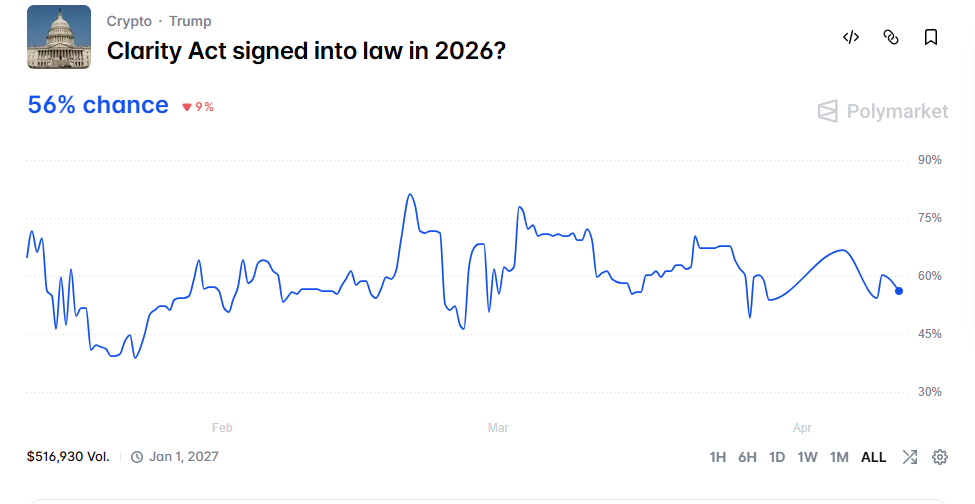
On prediction markets, traders currently assign a 56% probability that Trump will sign the CLARITY Act into law before the end of 2026.
The post Senator Cynthia Lummis Says the Clarity Act Risks a 4-Year Delay appeared first on BeInCrypto.
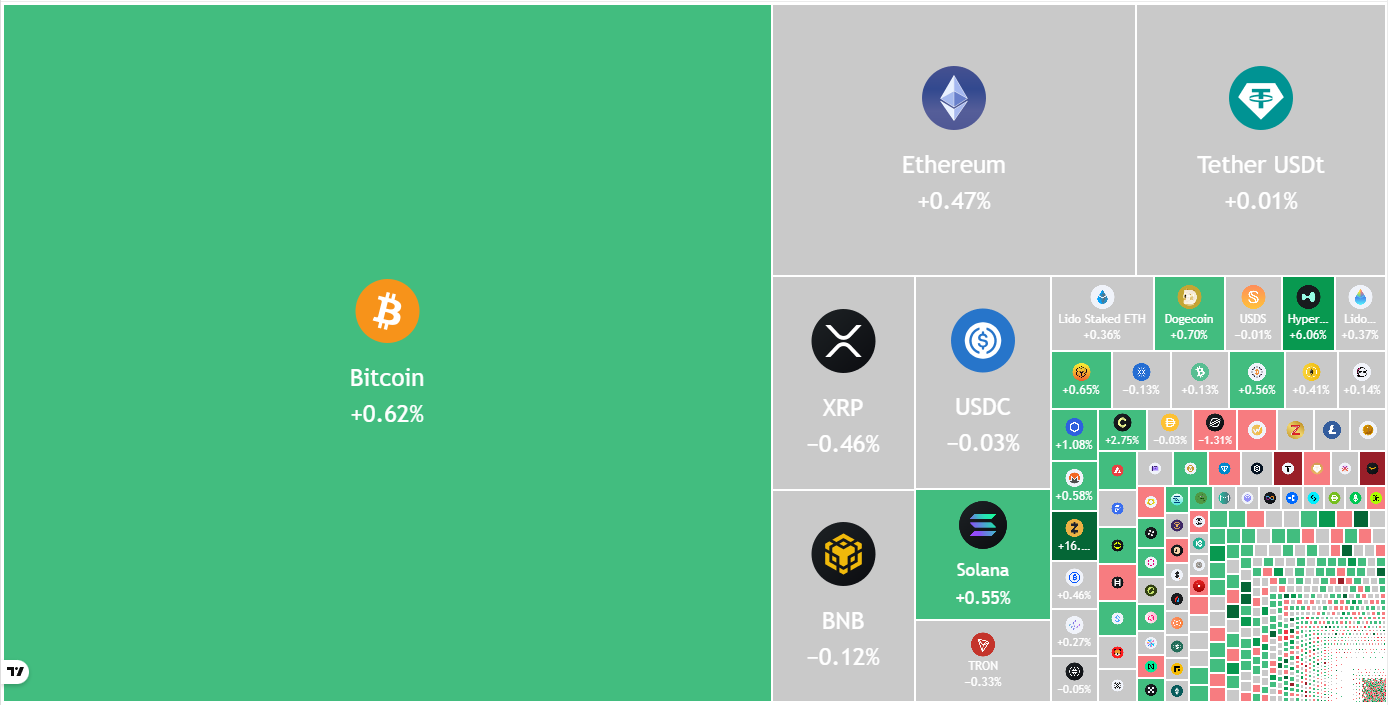
Key points:
-
Buyers are attempting to push Bitcoin toward the $76,000 level but are facing significant selling from the bears.
-
Several major altcoins are likely to pick up momentum if they break above their overhead resistance levels.
Buyers are attempting to sustain Bitcoin (BTC) above the $72,500 level but are expected to face significant resistance from the bears. US spot BTC exchange-traded funds have witnessed a mixed week, with two days of inflows and two days of outflows, according to Farside Investors data. However, a positive sign is that the inflows have been larger than the outflows, resulting in weekly net inflows of $576.5 million.
Although there are signs of recovery, Glassnode said in its latest Week Onchain newsletter that BTC will have to cross the True Market Mean at $78,000 and the Short-Term Holder Cost Basis at $81,600 to transition into a sustainable recovery regime. Until then, the “mid to long-term bias remains tilted to the downside” as any rally into the zone is expected to encounter selling pressure from recent buyers who may want to exit their positions at or near breakeven.

Along with BTC, Ether (ETH) may also be bottoming out. The Capriole Macro Index Oscillator recorded a reading of -2.42, signaling undervaluation. In 2022, ETH had bottomed out in the $1,000 to $1,200 range when the indicator fell to -2.2. That suggests limited downside risk and greater upside potential.
Could BTC and select major altcoins continue their relief rally? Let’s analyze the charts of the top 10 cryptocurrencies to find out.
Bitcoin price prediction
BTC rose above $73,000, but the bulls could not sustain the higher levels. That suggests the bears are attempting to retain the price below the $72,000 level.

A positive in favor of the bulls is that the 20-day exponential moving average ($69,587) has started to turn up, and the relative strength index (RSI) has risen into the positive territory. That increases the possibility of a rally to the $76,000 resistance.
Sellers are expected to defend the $76,000 level with all their might, as a close above it completes a bullish ascending triangle pattern. The BTC/USDT pair may then ascend to $84,000.
The bears will have to swiftly pull the BTC price below the support line to signal a comeback. If they do that, the pair risks dropping to the crucial $62,500 to $60,000 support zone.
Ether price prediction
ETH’s pullback is finding support at $2,200, signaling that the bulls are attempting to flip the level into support.

If the ETH price turns up from the current level and breaks above $2,274, it improves the prospects of a rally above the $2,400 resistance. If that happens, the ETH/USDT pair may surge to $2,800.
This bullish view will be invalidated in the near term if the price turns down and breaks below the moving averages. That suggests the higher levels are attracting sellers. The pair may then slump to the solid support at $1,916.
XRP price prediction
Buyers have failed to push XRP (XRP) above the 50-day simple moving average ($1.38), indicating that the bears are aggressively defending the level.

Both moving averages are flattening out, and the RSI is just below the midpoint, indicating a slight edge to the bears. A break and close below the $1.27 level signals the resumption of the downtrend to $1.11 and later to the support line of the descending channel pattern near $0.9.
On the other hand, a break above the 50-day SMA tilts the short-term advantage in favor of the buyers. The XRP/USDT pair may then rally to the downtrend line, where the bears are expected to pose a strong challenge.
BNB price prediction
BNB (BNB) has failed to rise above the 50-day SMA ($626), indicating that the bears are selling on minor rallies.

Sellers will attempt to strengthen their position by pulling the BNB price below the $570 level. If they succeed, the BNB/USDT pair may resume its downtrend to the next strong support at $500.
Conversely, a close above the moving averages signals that the pair may extend its stay within the range for some time. Buyers will be back in the driver’s seat on a close above the $687 level. That clears the path for a rally to $730 and subsequently to $790.
Solana price prediction
Solana (SOL) has been consolidating inside the $76 to $98 range, signaling buying on dips and selling on rallies.

If buyers drive the SOL price above the moving averages, the recovery may reach the $98 level. Sellers are expected to fiercely defend the $98 level, attempting to keep the SOL/USDT pair inside the range.
The next trending move is expected to begin above the $98 resistance or below the $76 support. If bulls propel the price above the $98 level, the pair may surge to $117. Alternatively, a break below the $76 level may sink the pair to $67.
Dogecoin price prediction
Dogecoin (DOGE) failed to rise above the downtrend line, indicating that the bears continue to exert pressure.

Sellers will have to quickly pull the DOGE price below the $0.09 support to complete the bearish descending triangle pattern. If they do that, the DOGE/USDT pair may plunge to $0.08 and later to the pattern target of $0.06.
Instead, if the price turns up and breaks above the downtrend line, it suggests that the bulls are aggressively defending the $0.09 level. The failure of a bearish setup is a positive sign as it is likely to attract buyers. The pair may then start its climb toward the $0.11 resistance.
Hyperliquid price prediction
Hyperliquid (HYPE) has been gradually moving higher toward the $41.59 to $43.76 resistance zone, signaling solid demand from the bulls.

The 20-day EMA ($37.91) has started to turn up, and the RSI is in the positive zone, indicating that the bulls are in command. A close above the overhead resistance zone opens the gates for a rally to $50.
Sellers will have to swiftly yank the HYPE price below the 50-day SMA ($35.27) to signal a comeback. If they do that, the HYPE/USDT pair may plummet to the $29.42 level.
Related: Bitcoin analysis sees $55K BTC price ‘iron bottom’ by December 2026
Cardano price prediction
Sellers are defending the 50-day SMA ($0.26) in Cardano (ADA), but the bulls have not allowed the price to dip back below the $0.25 support.

The first sign of strength will be a close above the 50-day SMA, as it opens the doors for a rally to the downtrend line. Sellers are expected to fiercely protect the downtrend line, as a close above it signals a potential short-term trend change.
On the contrary, a drop below the $0.23 level indicates that the bears have overpowered the bulls. That may sink the ADA/USDT pair to $0.22 and later to the support line near the $0.16 level.
Bitcoin Cash price prediction
Bitcoin Cash (BCH) is facing resistance at the 20-day EMA ($451), but the bulls have not given up much ground to the bears.

That increases the likelihood of a break above the 20-day EMA. If that happens, the BCH/USDT pair may climb to the 50-day SMA ($465) and subsequently to the $486 resistance. A close above the $486 level suggests that the market has rejected the break below the $443 support.
Sellers are likely to have other plans. They will attempt to defend the moving averages and pull the BCH price below the $420 level. If they do that, the pair may plummet to $375.
Chainlink price prediction
Chainlink (LINK) has been stuck between the $8 and $10 level for several days, indicating a balance between supply and demand.

The longer the price remains within a range, the stronger the eventual breakout. The flattish moving averages and the RSI near the midpoint do not give either bulls or bears a clear advantage.
If the LINK price turns up from its current level and breaks above the $10 resistance, it suggests the start of a new uptrend. The LINK/USDT pair may then reach $11.61. Conversely, a close below the $8 support may resume the downtrend toward the $6 level.
This article does not contain investment advice or recommendations. Every investment and trading move involves risk, and readers should conduct their own research when making a decision. While we strive to provide accurate and timely information, Cointelegraph does not guarantee the accuracy, completeness, or reliability of any information in this article. This article may contain forward-looking statements that are subject to risks and uncertainties. Cointelegraph will not be liable for any loss or damage arising from your reliance on this information.

Scroll Users Paid $50K in Excess Fees After Team Cranked L1 Fees by 1,280x

FIFA Drops AFCON Final Referee Jean-Jaques Ndala from 2026 World Cup Match Officials List

Encrypted Emails Are Now Available for Some Gmail Phone App Enterprise Customers


-

 Business5 days ago
Three Gulf funds agree to back Paramount’s $81 billion takeover of Warner, WSJ reports
-

 Sports6 days ago
India men’s 4x400m and mixed 4x100m relay teams register big progress | Other Sports News
-

 Business7 days ago
Expert Picks for Every Need
-

 Politics2 hours ago
US brings back mandatory military draft registration
-

 Tech3 days ago
How Long Can You Drive With Expired Registration? What Florida Law Says
-

 Business5 days ago
No Jackpot Winner, Prize to Climb to $231 Million
-

 Fashion4 days ago
Massimo Dutti Offers Inspiration for Your Summer Mood Board
-
 Sports3 hours ago
Man United discover Nico Schlotterbeck transfer fee as defender reaches Dortmund agreement
-

 Fashion3 days ago
Let’s Discuss: DEI in 2026
-

 Crypto World2 days ago
Bitcoin recovers as US and Iran Agree a Ceasefire Deal
-

 Business6 days ago
Akebia Therapeutics, Inc. (AKBA) Discusses Pipeline Progress and Strategic Focus on Kidney Disease Treatments at R&D Day – Slideshow
-

 Crypto World1 day ago
Canary Capital Files SEC Registration for PEPE ETF
-

 Fashion3 hours ago
Weekend Open Thread: Veronica Beard
-

 Politics7 days ago
The UK should not pay a penny in slavery reparations
-

 Business8 hours ago
OpenAI Halts Stargate UK Data Centre Project Over Energy Costs and Copyright Row
-

 NewsBeat7 days ago
Kemi Badenoch talks ‘spring cleaning’ Reform defections
-

 Tech5 days ago
Samsung just gave up on its own Messages app
-

 Tech4 days ago
Haier is betting big that your next TV purchase will be one of these
-
Sports7 days ago
A Kevin O’Connell Theory Can Now Be Retired
-

 Tech5 days ago
The Xiaomi 17 Ultra has some impressive add-ons that make snapping photos really fun
You must be logged in to post a comment Login