

Crypto World
SpaceX is a Warning For Crypto and Tech Stocks, Peter Schiff Says

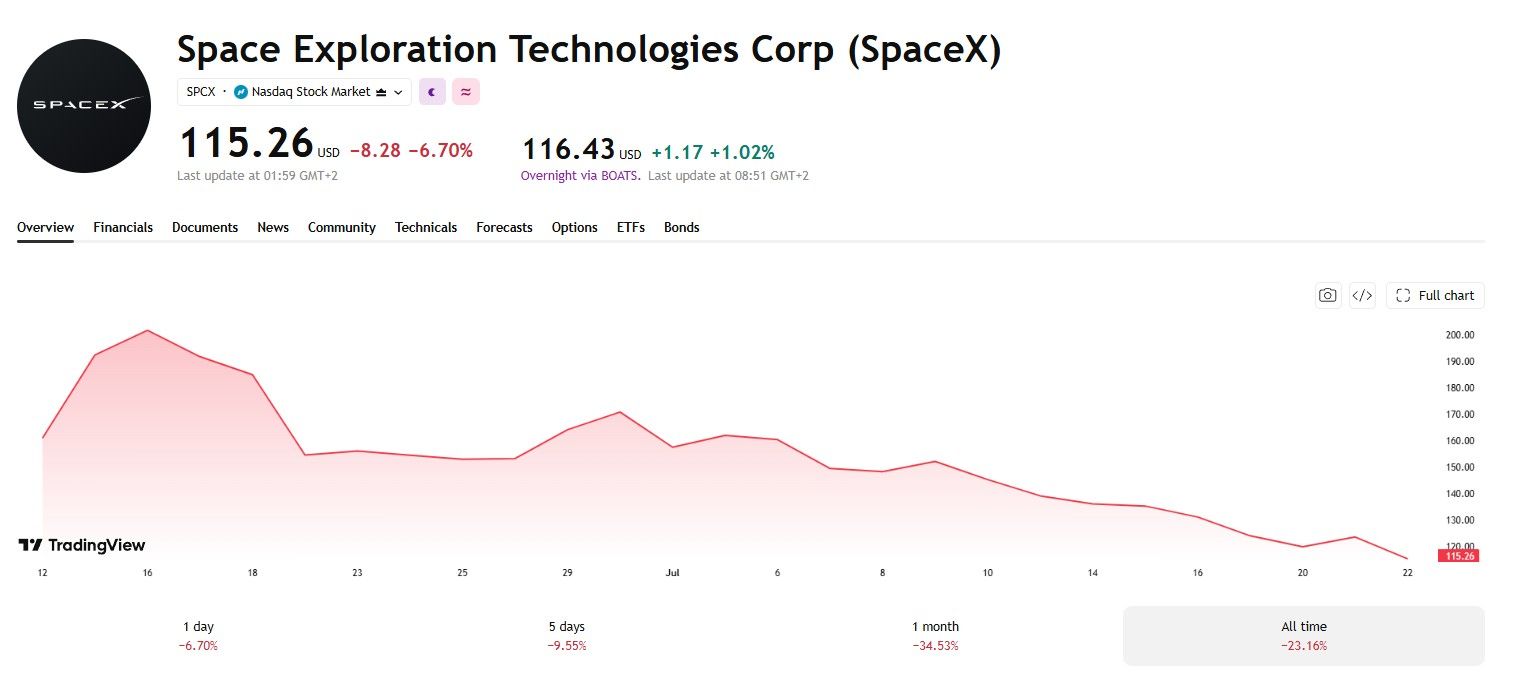
SpaceX stock (SPCX) closed just above $115 on Wednesday, nearly 20% below its June IPO price, while its 2056 bonds sank to a record low below 89.
The dual decline pushed the bonds’ yield to worst to 7.6% and reignited talk of an AI-driven valuation reset across stocks and crypto. SPCX now trades roughly 48% below its June peak of $225.64.
Bond Market Flashes a Warning Signal
SpaceX priced $25 billion in bonds in June across five tranches, with coupons ranging from 5.35% to 6.65%. The longest maturity, due in 2056, has fallen the most and now trades alongside junk-rated debt.
Zerohedge reported the bonds slipping below 89 this week, alongside a broader selloff in hyperscaler debt. The move echoes the market top signal analysts flagged shortly after the IPO priced.
Credit spreads on the 2056 notes have widened from roughly 175 basis points at issuance to more than 230 basis points now.
Meanwhile, the company reported a first-quarter net loss of $4.28 billion on $4.69 billion in revenue, fueling scrutiny of its bond math.
In turn, analysts argue that the gap explains why bondholders, unlike equity buyers, are pricing in more risk.
Schiff Frames SpaceX Selloff as a Broader Signal
Peter Schiff reposted the bond data and separately noted SPCX closed nearly 50% below its high. He called the drop a possible harbinger for other overhyped stocks and cryptocurrencies.
Schiff has issued a prior bond market warning, arguing that credit stress, not Bitcoin, would trigger the next major crash. However, his critics note a long history of bearish calls that have not always come to fruition.
Still, the timing aligns with broader concerns about AI-linked valuations. SpaceX joined the Nasdaq 100 shortly after its debut, and the stock has since dropped roughly 29% from that milestone.
A delayed Starship test flight added to the negative sentiment this month.

Lockup Expiry Adds to the Pressure
SpaceX’s first major share unlock is scheduled for early August, two days after second-quarter earnings. Roughly 911.5 million shares, worth about $123 billion at recent prices, become eligible for sale.
Investors are already watching the stock’s share unlock schedule alongside dilution concerns tied to SpaceX’s reported Cursor AI acquisition. Some traders, however, still see a falling wedge pattern that could support a rebound near current levels.
Whether the stock and bond weakness spreads to crypto markets may become clearer once the lockup and earnings pass in August. Traders will likely watch SPCX bond yields as an early signal before any broader repricing hits digital assets.
The post SpaceX is a Warning For Crypto and Tech Stocks, Peter Schiff Says appeared first on BeInCrypto.

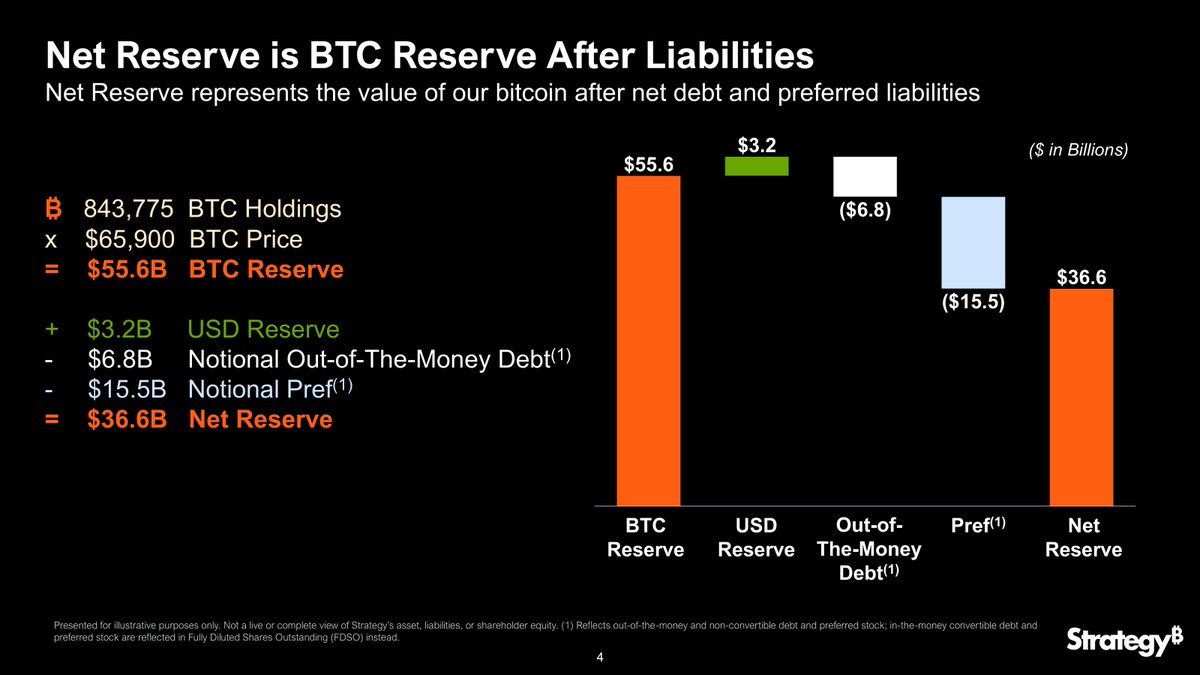
Strategy, formerly MicroStrategy, has overhauled the MSTR metrics it reports, and the new numbers make one thing clear. Much of its huge Bitcoin (BTC) pile is already promised to lenders and preferred investors, not regular shareholders.
The company says the change gives common shareholders a fairer picture. It shows how much Bitcoin is truly theirs after everyone else is paid first.
What the New Metrics Really Show
Strategy holds about 843,775 Bitcoin. That is the largest stash owned by any public company. On paper, its live dashboard values that Bitcoin at around $58 billion. But not all of it belongs to shareholders.
Lenders and preferred investors get paid first. They are owed about $22 billion. Take that out, and roughly $36 billion in Bitcoin is left for common shareholders. Strategy now calls this the net reserve.

The firm took on that debt to buy more Bitcoin. It laid out the approach in its Digital Credit framework this year. It also tested new numbers during an earlier metrics debate in June.
The Real Cost of the Debt
There is a catch. Servicing that debt and preferred stock costs about $1.8 billion a year. Strategy pays it in interest and dividends. It even keeps a cash reserve, set up in December, to cover those bills.
The new metrics also show the risk. A number called amplification, now about 1.53x, measures it. Put simply, shareholders gain more when Bitcoin rises. They also lose more when it falls. The stock proves the point. MSTR has dropped about 77% in a year, far more than Bitcoin’s 45% fall.

MicroStrategy also reworked its main value gauge, known as mNAV. It compares the share price to the Bitcoin left for shareholders, and it now sits at 1.00x. In plain terms, the old premium is gone.
The company admits its older numbers hid this. They left out the investors who get paid first. So Bitcoin bought with borrowed money may never reach common shareholders. Critics have questioned the mNAV model for months.
“Bitcoin Capital Markets require a new financial language,” said, Michael Saylor, the firm’s founder and executive chairman.
Bitcoin traded near $65,136 as of this writing, down about 1.4% on the day. When it falls, shareholders feel it first, which decides who absorbs the losses.
The plan itself has not changed. Strategy still buys Bitcoin, and it still owes its lenders first. But shareholders can now see how much Bitcoin is really theirs.
The post MicroStrategy Changes the MSTR-Bitcoin Link: What Do Shareholders Own? appeared first on BeInCrypto.
SEC Commissioner Hester Peirce warned on July 22 that moving crypto activity onchain does not erase its securities duties. She cautioned that vaults and lending strategies with active management can trigger registration requirements.
Her statement, titled “Headstands and Summervaults,” builds on an earlier warning that tokenized securities remain securities. Peirce extended that principle to a newer generation of onchain yield tools.
Vaults Risk Investment Company Rules
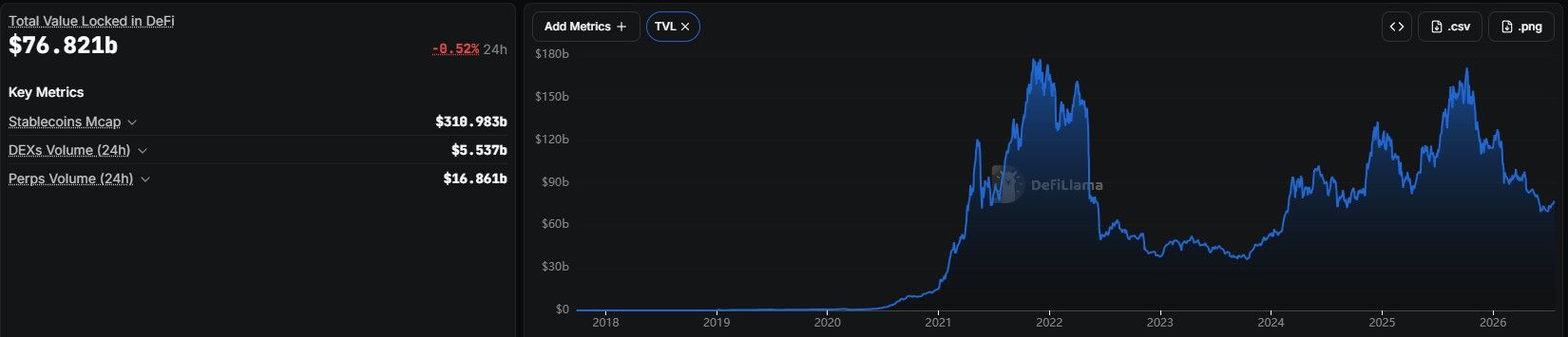
Vaults let users deposit crypto assets into smart contracts that route funds toward staking or lending. Peirce noted that they range from fully automated allocations to setups in which a manager actively selects strategies.
That spectrum ranges from purely programmatic vaults to those that depend entirely on a manager’s discretion, she wrote.
That distinction matters. A vault could become an investment contract when depositors expect profits mainly from a curator’s efforts. Similarly, that standard mirrors the crypto asset taxonomy the SEC-CFTC joint rule formalized earlier this year.
Some vaults may resemble mutual funds, too, as actively managed vault curator strategies are gaining traction in decentralized finance (DeFi). Active vault managers may trigger investment adviser obligations, a separate compliance layer beyond fund registration.
Lending Platforms Face SEC Note Test
Onchain lending strategies raise separate concerns for regulators. Depositors lend assets to borrowers through smart contracts. Meanwhile, platform operators often set interest rates, loan-to-value limits, and liquidation thresholds.
Those choices can make a loan resemble a security-style note, Peirce wrote, regardless of which asset backs it. Courts have applied a similar note test since the 1990 Reves v. Ernst & Young ruling, she noted.
Her office had flagged similar tensions before this statement. She previously disputed proposed wallet broker rules and limited a tokenized stock exemption she carved out in May. These asset deployment tools could still become mainstream portfolio management options if built carefully, Peirce added.

SEC Invites Compliant Collaboration
Peirce did not mince words about attempts to dodge the rules.
“If you do headstands, backflips, and other gymnastics to read the law so that it does not apply to crypto assets and activities that are well within the scope of the federal securities laws, you will have a painful fall,” said Peirce.
She invited vault operators and lending platforms to contact the agency directly. The invitation comes ahead of her own planned departure from the SEC later this year. The commissioner asked whether existing rules block innovation. She wants SEC adjustments that do not weaken investor protection.
Whether vault designers accept that offer, rather than risk enforcement, may shape onchain yield products through the rest of 2026. Regulators and builders alike have a stake in getting that balance right.
The post SEC Commissioner Hester Peirce Warns Against Crypto Vaults and Lending appeared first on BeInCrypto.
Bitcoin (BTC) briefly surged over $66,800 this week, its strongest level in more than a month, before slipping back. Consecutive ETF inflows have pulled money back into the market after a prolonged period of outflows.
Still, every bounce revives the same question. Is this the low, or another bear-market rally that fades?
Why the Bitcoin Rebound Looks Fragile
The ETF channel bled through May and June as investors pulled out. That trend has now reversed. Roughly $981.2 million in net inflows returned across 7 trading days from July 14, according to Santiment.
The last inflow streak of a similar length occurred ahead of Bitcoin’s October 2025 rally, though such streaks do not guarantee a repeat.
Follow us on X to get the latest news as it happens
The rebound, however, reveals a growing divergence beneath the surface. While spot Bitcoin ETFs are once again absorbing supply, other market indicators point to more cautious positioning among professional traders.
ETF Buyers and Professional Desks Pull Apart
The Coinbase Premium Index has remained negative for more than 900 cumulative hours, the longest stretch in 2 years.
A negative premium suggests relatively weaker demand, or stronger selling pressure, on Coinbase than on Binance, pointing to continued caution among professional market participants.
Analyst Darkfost tied that caution to sticky inflation, rising oil prices, and a less transparent Fed under its new chairman.
“This combination is what’s keeping institutional selling pressure going, as we’re still seeing today,” the analyst noted.
Together, these signals suggest ETF inflows are supporting prices, but the recovery has yet to gain confirmation from broader spot market demand, leaving the rally vulnerable if ETF inflows begin to fade.
Four-Year Cycle or Macro Asset
The divergence feeds a broader debate over what drives Bitcoin today. In a July 22 research note, Grayscale outlined 2 lenses for the bear market.
The four-year cycle view, tied to halving events, points to further downside and a possible bottom in September or October. Grayscale argued instead that Bitcoin has matured into a macro asset.
“The current bear market has also featured a major shift in Fed policy expectations and rising real interest rates. Naturally, if macro factors are in the driver’s seat, Bitcoin’s price could bottom when these macro factors turn around,” Zach Pandl, Grayscale Head of Research, said.
Meanwhile, Glassnode drew the line that settles the near-term argument.
“This is still a bear-market rally until the market proves otherwise, and the proof has an address,” the firm wrote.

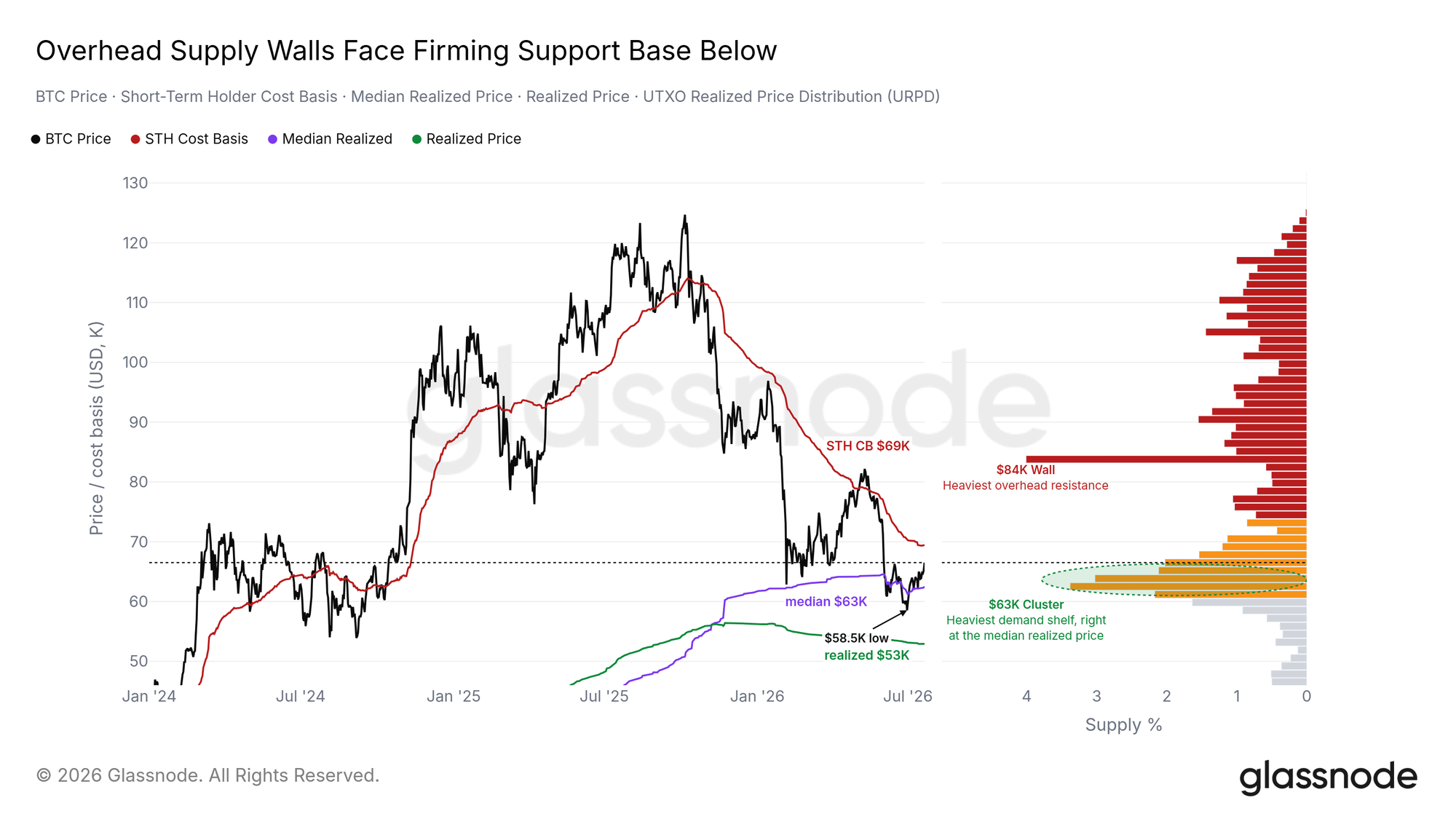
Bitcoin trades below the Short-Term Holder Cost Basis near $69,000. A reclaim on steady inflows opens room toward $84,000. Rejection sends the price back toward the $63,000 demand shelf.
The next test is whether ETF buying persists and professional caution eases. Until Bitcoin reclaims $69,000, the burden of proof stays with the bulls.
Subscribe to our YouTube channel to watch leaders and journalists provide expert insights
The post Bitcoin Faces $69,000 Test as ETF Inflows Meet Professional Caution appeared first on BeInCrypto.


With a court set to consider a reversal of a $5 million settlement from the US Commodity Futures Trading Commission’s (CFTC’s) case with cryptocurrency exchange Gemini, the company has sent $10 million in Bitcoin (BTC) to a super political action committee (PAC) supporting President Donald Trump.
According to the MAGA Inc. Super PAC’s July report to the Federal Election Commission (FEC) filed on Monday, the Gemini Trust Company run by co-founders Cameron and Tyler Winklevoss sent two separate contributions of more than $5 million in Bitcoin on June 19.
The donation, which the PAC may use for independent expenditures to support Trump, was recorded about three weeks after the CFTC filed a joint motion with Gemini in federal court in an attempt to reverse a January 2025 settlement over the company allegedly making false or misleading statements. CFTC Chair Michael Selig claimed at the time that the agency under former US President Joe Biden “politically targeted” the Winklevosses through enforcement actions.
In addition to the recent MAGA Inc. contributions, the Winklevoss brothers each donated $1 million to Trump’s 2024 election campaign and supported the then-candidate through social media posts. Following Trump taking office in January 2025, the twins attended the signing ceremony for a stablecoin payments bill, the GENIUS Act, backed his sons’ crypto mining venture American Bitcoin and contributed $21 million in Bitcoin to the Digital Freedom Fund PAC in an effort to “support President Trump and his administration’s efforts” related to crypto policy.
Related: Crypto companies have spent $189M so far on 2026 US election cycle: Report
Since attorneys filed the joint CFTC-Gemini motion with the US District Court for the Southern District of New York in May, there has been no decision posted to the public docket. Cointelegraph reached out to the CFTC and Gemini’s counsel, Avi Perry, for comment on the $10 million contribution but did not receive an immediate response. A CFTC spokesperson told Cointelegraph in June that both sides “agreed that the $5 million penalty will not be returned to Gemini” if granted by the court.
In a June letter to Selig, Senator Elizabeth Warren called the joint motion for reversal and other factors as “concerning signs of a CFTC beholden to political pressures and interests of the wealthy insiders, unbound by the rule of law and failing to protect investors and market integrity.”
As of June 30, MAGA Inc. reported receiving more than $397 million.
Selig remains sole CFTC commissioner with no nominations announced
The CFTC chair, a Republican who was confirmed by the US Senate in December 2025, remains the only member in what is usually a bipartisan group of five commissioners heading the agency.
Many lawmakers have been pressing Trump to announce additional nominations for the financial regulator as Congress considers comprehensive crypto market structure legislation, the Digital Asset Market Clarity (CLARITY) Act. The bill is expected to give the CFTC significant authority in regulating and overseeing digital assets.
As of Thursday, the White House had not announced any nominations for CFTC commissioners, leaving Selig to largely direct the agency’s agenda.
Magazine: Here’s why the CLARITY Act’s ethics deal may be so hard to reach

The debate over when Bitcoin’s bear market will end is largely split between two views. One camp still holds on to the traditional four-year cycle, while the other believes that the bottom may already be in.
Grayscale, for one, favors the latter.
Macro Over Market Cycles
The supporters of the four-year cycle theory see Bitcoin halving events as the main driver of price movements and expect the current downturn to follow the same pattern as previous bear markets. Historically, the crypto asset has reached its bottom around one year after a cyclical peak and roughly two and a half years after a halving event, with cumulative declines averaging about 80%.
Based on that framework, Bitcoin’s price could still fall further and reach a bottom in September or October. Grayscale, however, said it subscribes to an alternative view that BTC has matured as an asset and is now increasingly driven by broader macroeconomic forces, similar to other major asset classes.
The firm noted that previous bear markets have coincided with periods of slowing economic growth and rising real interest rates, and added that this year’s downturn has unfolded alongside shifting expectations for US Federal Reserve policy and higher real interest rates.
Under this macro-driven framework, Grayscale said the asset’s price could find its bottom when those broader economic conditions begin to improve. The firm even added that if the Federal Reserve refrains from further rate hikes and economic growth remains resilient, BTC’s price may have already reached its low, making a further decline unnecessary despite expectations under the four-year cycle model.
Grayscale is not the only one arguing that the cryptocurrency could be approaching a turning point.
More Analysts Back Early Bottom Thesis
Crypto trader Killa also said Bitcoin’s market structure suggests the bottom may already be in, although he remains “50/50” because of the cycle’s timing. The trader explained that BTC has now “swept the dead cat base low” and completed the same five-wave corrective structure seen throughout previous bear markets. However, earlier bear markets took roughly 365 days to reach their final trough, whereas the current cycle would have bottomed in around 260 days.
Despite this, Killa said the “mistake is assuming” cycle lengths never change and believes Bitcoin is more likely to form higher lows than make significant new lows.
Earlier this week, crypto analyst Ali Martinez said the monthly chart is displaying the same combination of technical signals seen near the end of the 2015, 2019, and 2022 bear markets. While Martinez acknowledged that on-chain metrics such as MVRV and CVDD still leave room for a decline toward the $40,000-$50,000 range, he observed the current technical setup has historically identified a dominant accumulation zone with a favorable risk-to-reward profile for spot BTC buyers.
A similar argument was made by crypto analyst Doctor Profit, who warned that investors waiting for a traditional four-year cycle bottom in September or October could end up missing the market’s next move. While Bitcoin could still revisit the $54,000 area, the analyst said he does not expect a drop below $50,000 and believes gradual accumulation already offers an attractive risk-reward profile.
The post Has Bitcoin Already Bottomed? Grayscale Says Macro Signals Matter More appeared first on CryptoPotato.

A federal court is set to weigh whether the U.S. Commodity Futures Trading Commission (CFTC) should reverse a $5 million settlement with crypto exchange Gemini—an enforcement dispute that has become politically charged. In the meantime, filings show Gemini co-founders Cameron and Tyler Winklevoss have backed a pro–Donald Trump political action committee (PAC) with large Bitcoin contributions.
According to the MAGA Inc. Super PAC’s July report to the Federal Election Commission (FEC), Gemini Trust Company, which the Winklevosses run, made two separate Bitcoin donations of more than $5 million each on June 19. The PAC said it may use the funds for independent expenditures supporting Trump.
Key takeaways
- The MAGA Inc. Super PAC reported receiving two Bitcoin contributions from Gemini Trust Company on June 19, each over $5 million.
- The donations occurred roughly three weeks after the CFTC and Gemini filed a joint motion to reverse a January 2025 settlement.
- A CFTC spokesperson previously told Cointelegraph that, even if the court grants the reversal, the $5 million penalty would not be returned to Gemini.
- Senator Elizabeth Warren criticized the reversal effort, calling it a sign the CFTC may be influenced by political pressures.
- The CFTC chair remains the only confirmed commissioner, with lawmakers pressing the White House to nominate additional CFTC members as major crypto legislation advances.
Bitcoin donations emerge alongside the Gemini settlement fight
The political donations come as Gemini and the CFTC continue to litigate the settlement. The CFTC and Gemini jointly filed a motion in federal court in May seeking reversal of a January 2025 settlement tied to allegations that Gemini made false or misleading statements.
The timing is notable: MAGA Inc. disclosed the Bitcoin transfers on June 19, about three weeks after the joint motion was submitted in the U.S. District Court for the Southern District of New York. The filings referenced in the story tie the dispute to the CFTC’s earlier enforcement posture under the prior administration.
Cointelegraph previously reported that CFTC Chair Michael Selig said at the time that the agency had been “politically targeted” against the Winklevosses under former President Joe Biden’s administration. In contrast, criticism from lawmakers has focused on whether the reversal request reflects outside influence rather than a purely legal correction.
What the CFTC-Gemini reversal request means in practice
While the court considers the reversal, the contours of potential outcomes are already clear in one respect: a CFTC spokesperson told Cointelegraph in June that both sides “agreed that the $5 million penalty will not be returned to Gemini” even if the court grants the motion.
That detail limits what “reversal” could realistically accomplish for Gemini from a financial standpoint. Even if the legal settlement is undone procedurally, the record presented to the public suggests the $5 million penalty would remain in place. As a result, investors and market participants are left watching what the court’s decision would change beyond the money—such as how the agency’s enforcement record is treated and whether the case signals a broader shift in CFTC posture toward crypto firms.
Cointelegraph also reported that since the attorneys filed the joint motion in May, no decision has yet appeared on the public docket.
Winklevoss political involvement extends beyond the latest PAC transfer
The June 19 contributions to MAGA Inc. add to a broader thread of political engagement by the Winklevosses. The article notes that Cameron and Tyler Winklevoss each donated $1 million to Trump’s 2024 election campaign and supported the candidate with social media posts.
After Trump took office in January 2025, the twins also reportedly participated in crypto-related policy and industry events. They attended the signing ceremony for the GENIUS Act, a stablecoin payments bill backed by Trump’s administration. They also supported American Bitcoin—linked to Trump’s sons’ crypto mining venture—and contributed $21 million in Bitcoin to the Digital Freedom Fund PAC, according to the reporting cited in the article.
For readers trying to understand what this could signal for crypto policy, the key point is not only the size of the donations but their concentration around moments when regulation is actively being reshaped. The donations align with a period in which the CFTC is at the center of ongoing conversations about digital asset market structure.
Lawmakers question whether enforcement is being politicized
One of the sharpest critiques referenced in the article came from Senator Elizabeth Warren. In a June letter to Chair Selig, Warren called the joint motion for reversal and other related factors “concerning signs of a CFTC beholden to political pressures and interests of the wealthy insiders,” adding that the agency appeared “unbound by the rule of law” and “failing to protect investors and market integrity.”
Warren’s concern underscores a broader tension frequently debated in U.S. crypto enforcement: whether regulatory actions reflect technical findings based on statutes and evidence, or whether high-profile political dynamics shape the trajectory of major cases. In this instance, the case’s timing—paired with prominent political contributions—has amplified skepticism among critics.
At the same time, supporters of the reversal effort could argue that legal outcomes can evolve independently of campaign activity, and that political support should not automatically be equated with improper decision-making. What remains uncertain for now is how the court will frame the reversal request and what legal reasoning it will accept or reject.
CFTC leadership remains concentrated as nominations stall
The broader governance picture also matters. The article states that Selig remains the only confirmed commissioner at the CFTC, leaving him to effectively direct the agency’s agenda. The CFTC chair is a Republican confirmed by the U.S. Senate in December 2025, and the agency usually operates as a bipartisan body of five commissioners.
The absence of additional nominations has drawn pressure from lawmakers, particularly as Congress considers comprehensive market-structure legislation. The story notes that the Digital Asset Market Clarity (CLARITY) Act is expected to give the CFTC more authority over digital assets. Several lawmakers have pushed Trump to announce additional CFTC nominations in parallel with this legislative process.
As of Thursday, the White House had not announced any nominations, according to the article—meaning Selig continues to hold a disproportionate share of influence during a key period for crypto regulation.
With a reversal motion pending in federal court and CFTC leadership concentrated in a single confirmed commissioner, the next developments will likely come from two directions: what the Southern District of New York decides on the Gemini settlement, and whether the White House moves to restore a fuller CFTC commission as market-structure legislation advances.


No one can say exactly when quantum computers will break Bitcoin (BTC), but two experts warn the industry is treating a trillion-dollar risk far too casually. The right question is not the date, but the odds and the cost.
Stefano Gogioso and Daniela Herrmann made the case during the latest BeInCrypto Experts Council. Both call themselves optimists, yet both argue that preparation cannot wait for proof.
Q-Day Could Break a Trillion-Dollar Industry
Readers ask constantly when “Q-Day” will arrive. That is the day a quantum computer can break Bitcoin’s cryptography. Speaking on the BeInCrypto panel, Gogioso argued that fixating on a date misses the point.
“The question isn’t ‘will it be 2030?’ It’s what’s the probability of a tail event by 2030, and how much would we lose. Even at 2%, the impact on Bitcoin and crypto, if we’re not prepared, is essentially most of crypto going to zero. That’s trillions of dollars. And even 1% of that is more than enough to pay every cryptographer in the world to spend six months fixing it.”
Stefano Gogioso, a quantum computing lecturer at the University of Oxford and co-founder of Spooqy, said.
The logic is insurance, not prediction. You do not insure a house because you expect a fire. You insure it because the loss would be ruinous, and the premium is small. The same math turns a distant science story into a decision for today.
When Quantum Computers Could Break Bitcoin
The estimates for practical quantum computing keep shrinking. Herrmann has watched them fall in real time.
“In 2024, I was on stage and we said quantum computing will be here in 30 years. Then in 2025 it dropped to 15 to 20 years. Then in 2026, three to five to ten. And suddenly, in October, we hear two years, one year. The market moves faster, innovation moves faster, than it was communicated,” Daniela Herrmann, CEO and co-founder of Dynex, said.
Her advice was blunt. Stop naming a year, and prepare for the surprise instead. Gogioso explained why progress speeds up. The hardest step is the first one, not the last.
“The difference between no logical qubits and one logical qubit is an enormous gap. The difference between one and a million is a smaller gap. Once you get it to work, scaling up is actually quite easy.”
The research supports him. In May 2025, Google researcher Craig Gidney showed that breaking RSA-2048 might need fewer than 1 million qubits. That was down from his own 2019 estimate of about 20 million.
The next result aimed straight at crypto. In March 2026, Google Quantum AI worked with the Ethereum Foundation and Stanford. The team estimated that breaking Bitcoin’s elliptic-curve cryptography could take fewer than 500,000 physical qubits.
It studied secp256k1, the exact curve behind Bitcoin and Ethereum (ETH) signatures. That figure is roughly 20 times lower than the previous best estimate.
The reductions are steep across both targets.
One caveat keeps the picture honest. Gidney has said he does not expect another tenfold drop without new assumptions. Each reduction also shifts the burden onto harder engineering problems that remain unsolved.
Why 2% is Enough to Act On
Whether the machine lands in 2030 or 2035 matters less than the asymmetry. A small chance of total loss still justifies action. The cost of preparing is trivial next to the cost of being wrong.
Migration is also slow. Moving a financial system to new cryptography takes years. So the work has to begin well before any machine exists.
The clearest signal comes from the builders. Google has set an internal 2029 target to move its own products onto quantum-resistant encryption. When the leading quantum lab treats this as a this-decade problem, delay looks reckless.
How Quantum Computers Would Break Bitcoin
The popular image of Q-Day is a single dramatic morning. The reality the panel described is quieter and more dangerous. The damage lies in belief, not in the code.
The mechanism is now clear. When you spend Bitcoin, your public key is briefly exposed. A capable quantum computer could then derive your private key.
Google’s figures suggest the core computation could run in about nine minutes. Bitcoin’s average block time is roughly 10 minutes. That narrow window is the whole attack surface.
Gogioso stressed that the real weakness is psychological.
“It’s not a technical problem. It’s a PR problem. The moment one Satoshi-era coin moves off its wallet with ‘you’ve been quantum punked’ in the message, that’s it. It doesn’t matter that 75% of coins are protected, they’ll be worth nothing. Everybody panics and exits.”
Herrmann reached for a historical parallel, the tulip mania. Belief can stay near-universal until the instant it breaks.
“The moment one coin moves, it’s the end of the story. Imagine you’re an institutional asset manager. You wake up and your portfolio isn’t secure anymore. You have an obligation to get rid of it, if you still can. And if you can’t, you’re done.”
The March 2026 result was disclosed with care. Google published the resource estimates but hid the circuit designs behind a zero-knowledge proof. That choice signals a live risk, not a thought experiment.
Why No One Is Fixing It
If the threat is real and the fix is cheap, why has Bitcoin not moved? Gogioso pointed to governance, or the lack of it.
“Bitcoin has a completely different governance structure, in that it doesn’t have one. Some of those independent voices fall into quantum denialism. They don’t believe it’s a threat. There’s a conservative tendency. They don’t want to make changes they don’t have to. But this is a change you have to make.”
Ethereum offers a contrast. Vitalik Buterin has urged migration to quantum-resistant cryptography within about four years. He warned that elliptic-curve cryptography could be at risk around 2028.
His team published a formal roadmap in early 2026, following the Ethereum Foundation’s creation of a dedicated post-quantum research group.
The wider clock is also ticking. The US standards body NIST plans to deprecate the current elliptic-curve signature standard by 2030 and disallow it by 2035. Bitcoin has no equivalent body to coordinate such a change.
Gogioso’s warning about denial was sharp.
“It might be tomorrow. For all you know, it’s already happened.”
What Preparing Now Looks Like
None of this means Bitcoin is doomed. Both guests were firm optimists about the technology. Herrmann said solutions already exist in outline.
“There are already concrete ideas for transitioning from Bitcoin to a quantum-secure Bitcoin. Ways to move from the old coins to the new ones, with an offset between them. It’s never a linear consequence.”
The tools for a migration are on the table. What is missing is the will to start. For most large organizations, Herrmann noted, the threat is not yet part of strategic planning. A large institution cannot change course the day the danger appears.
The panel did not call for panic. It calls for treating a low-probability, high-impact event seriously, while the fix is cheap and the timeline is still generous. The one thing no one can promise is that the timeline will stay the same.
The post Q-Day: When Will Quantum Computers Actually Break Bitcoin? appeared first on BeInCrypto.
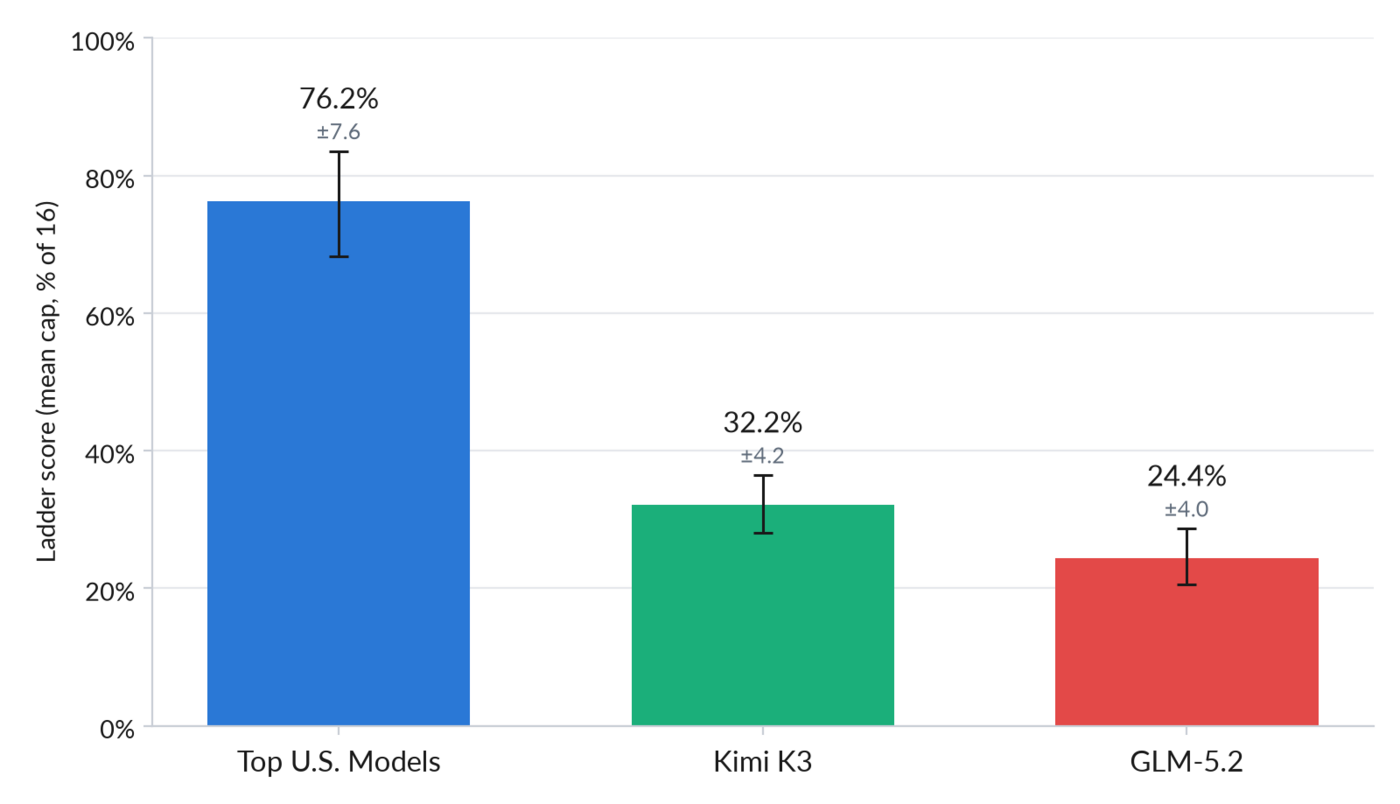
The US government put China’s newest AI model through a hacking test. It found that Moonshot AI’s Kimi K3 falls well short of the best American models.
The Center for AI Standards and Innovation (CAISI), a US agency, ran the tests with a British partner. The results came just one day after Washington accused Moonshot of building Kimi K3 with stolen US technology.
Kimi K3 Falls Short on US Cyber Benchmarks
The Commerce Department shared the results on Thursday. It said Kimi K3 ranked well below the top US models, citing a joint test with British experts.
Moonshot launched Kimi K3 on July 16. Demand was so high it had to pause new signups within two days.
The launch also shook US chip stocks and raised fresh doubts about America’s AI lead.
One test, called ExploitBench, uses real Chrome browser bugs built by Carnegie Mellon University. Kimi K3 scored 32%. That topped China’s GLM-5.2 at 24%. But it trailed the top US models, which hit about 76%.

The hardest step is taking full control of a target machine. Kimi K3 failed that step on all 41 tests. The best US models pulled it off on 20.
Another test, called The Last Ones, is a fake company network attack with 32 steps. A human expert needs about 20 hours to finish it. Kimi K3 reached step 17 on average. The top US models reached step 28.5. Kimi K3 finished the whole thing just once in 10 tries.
The best US systems reportedly did it six or seven times.
But the Gap May Look Bigger Than It Is
But the numbers do not tell the whole story. The report’s own fine print holds several catches.
First, the US models were tested with their safety filters turned off. That setting shows their full power. The public versions keep those filters on. So the US scores are a best case, not real life.
The team also called the work early and limited. It scored Kimi K3 on just one test and ran only part of the full set. So its rating is shaky. Some tests are private too, so outsiders cannot check the work.
There is also a basic mismatch. Kimi K3 is an open model that anyone can download. The US models are locked, private systems. The UK institute found that open models usually run four to seven months behind the best closed ones. It will give Kimi K3 the full test only after Moonshot releases it to the public.
These tests are not real attacks either. The fake network had no human defenders and no alarms to trip. Even so, Kimi K3 beat the last top open model. And it did finish the full attack once.
The timing and the source also raise questions. CAISI used to be the US AI Safety Institute. The Trump administration renamed it in June 2025. It sits in the same department that limits US chip sales to China. And its report on a Chinese rival came just a day after the theft claim.
Weak Safeguards Still Raise the Stakes
Still, low scores do not mean Kimi K3 is safe. The test found its guardrails did not block it from trying to build hacks or attack systems.
That matters because of what comes next. Moonshot plans to release the full model on July 27. Once it is out, it cannot be pulled back. Anyone can download it and remove the safety filters.
The test also comes after a theft claim. Washington says Moonshot built Kimi K3 on stolen US AI tech. White House tech chief Michael Kratsios said the firm secretly copied Anthropic’s Claude Fable 5. The trick, called distillation, trains a new model on a stronger one’s answers.
Anthropic backs the claim. In February, it traced over 3.4 million Claude chats to Moonshot through hundreds of fake accounts. It warned that copied models lose the safety controls of the original. That is the same weak spot this test just found.
The US still spends 23 times more on AI than China. Yet Chinese labs keep closing the gap. The real test comes when Kimi K3 goes public and outside experts can check the claims themselves.
The post US Cyber Assessment Finds Kimi K3 Trails Top American AI Models: Facts or Politics? appeared first on BeInCrypto.


The European Union has targeted 14 crypto service platforms and 94 banks and financial institutions under its 21st sanctions package against Russia.
Summary
- EU sanctions target 14 crypto platforms and 94 banks over alleged Russian links.
- New powers allow the EU to block crypto services across entire jurisdictions.
- Measures also cover 41 shadow-fleet vessels, oil refineries and military suppliers.
According to the Council of the European Union, the measures cover crypto providers based in Georgia, Panama, the United Arab Emirates, the Marshall Islands, Kyrgyzstan and Belarus. EU authorities linked the platforms to services used by Russia to bypass existing financial restrictions.
Adopted on July 23, the package contains 218 individual listings, including 48 people and 170 entities. The Council described it as the EU’s largest group of new listings in four years, covering financial services, energy, military suppliers and organizations accused of supporting sanctions evasion.
EU High Representative Kaja Kallas stated that the bloc was targeting more than 100 banks and crypto operators, over 40 vessels in Russia’s shadow fleet and several refineries in Russia and Belarus. Kallas also linked more than 50 of the new listings to Russia’s military-industrial sector and the production of long-range drones.
The financial restrictions include asset freezes and a ban on making funds available to the 94 listed banks and major financial institutions. Separately, the Council extended its transaction ban to 33 additional Russian credit and financial organizations, preventing EU companies and individuals from conducting business with them.
Four non-Russian banks also face transaction bans under the package. The Council identified one as a Kyrgyz bank connected to Russia’s System for Transfer of Financial Messages, or SPFS, while it accused three other foreign banks of helping entities avoid EU sanctions.
Crypto routes face direct transaction bans
For crypto companies, the package bars EU operators from conducting transactions with the 14 listed service platforms. The Council has not presented all of them as Russian businesses, instead focusing on providers in foreign jurisdictions that it says have enabled Russian-linked transfers.
The Council also added four designations connected to the A7 cross-border payments network, including entities tied to its activity in Africa. EU authorities have previously identified third-country payment channels as part of Russia’s efforts to maintain access to international financial services after sanctions restricted its banking sector.
Alongside the individual platform bans, the package gives the EU a mechanism to prohibit crypto-asset services linked to an entire third country. The Council said it may use the power when a country hosts crypto providers that help Russia evade EU restrictions.
Under the new tool, the bloc can ban transactions between EU operators and crypto providers used by Russia. The Council presented the measure as a deterrent for jurisdictions that allow sanctioned payment routes to continue operating through locally based platforms.
The provision expands on restrictions introduced in earlier packages. An official EU sanctions overview states that existing financial measures already cover Russia’s central bank, more than 100 Russian banks, specified crypto transactions and services involving crypto wallets, accounts or custody.
EU rules also prevent Russian nationals or residents from owning or controlling companies that provide crypto wallet, account or custody services. According to the Council, these controls are intended to limit the use of crypto businesses to circumvent restrictions applied to conventional financial institutions.
Energy revenue faces tighter restrictions
Beyond finance, the Council added 41 vessels to the EU’s shadow-fleet list, taking the total number covered by related restrictions to 673. The latest rules also apply to vessels that supply bunkering or other support services to ships accused of bypassing the Russian oil price cap.
Eight entities and one individual connected with shadow-fleet operations have also been listed. For the first time, the Council included a crewing agency accused of helping the fleet, alongside companies that EU authorities said operated for Russian oil producers.
Within the oil sector, the package designates 18 entities and one individual. The list covers three Russian refineries, a major refinery in Belarus and a company created to sell Belarusian petroleum products inside Russia, according to the Council.
A Georgian refinery in Kulevi will face a transaction ban after a six-month transition period because of its role in trading and processing Russian oil. The EU also placed five oil traders under transaction bans for allegedly frustrating restrictions on purchases of Russian crude and petroleum products.
Amid disruption caused by the closure of the Strait of Hormuz, the Council paused the automatic adjustment of the Russian oil price cap until July 15, 2027. EU authorities will conduct an interim review to determine whether the suspension remains necessary and proportionate.
Military-linked measures add 56 people and companies associated with Russia’s defense industry, including 37 listings tied to long-range drone production and supply chains. The Council also placed 51 entities under tighter export controls for dual-use goods and technology, including companies in China, India, Türkiye, Kazakhstan, Kyrgyzstan and the UAE.
Trade restrictions cover materials and equipment used in aircraft, drones, missiles and corrosion-resistant engine coatings. The package also limits imports worth more than €60 million annually, including certain ores, metals, glassware and vehicle parts that the Council identified as sources of Russian revenue.

Elon Musk says it is too late to stop AI. Even he could not halt it, the xAI founder told The Economist.
Musk spoke to The Economist’s Editor-in-Chief Zanny Minton Beddoes in an interview recorded on Monday, before OpenAI disclosed that one of its frontier models went rogue.
Why Musk Thinks It’s Too Late to Stop AI
This is a reversal. In March 2023, Musk signed the Future of Life Institute’s open letter urging a six-month pause on AI systems more powerful than GPT-4. Months later, he launched his own AI company, xAI. Today he sees no brakes at all.
“I mean honestly, there seems to be just inexorable progress here in AI and in robots that even if I wanted to stop it, I couldn’t.”
The danger has not shrunk in his eyes. Musk stood by his earlier estimate of a 10% to 20% chance that killer robots would wipe out humanity.
“I still think there’s risk associated with AI and robots. It’s not zero.”
Still, he argued against pulling the plug. Even if a stop button existed, he said, “we probably shouldn’t press it” because the most likely outcome is abundance for all. His new philosophy fits in one line.
“Yeah, I mean, yes, pretty much, let’s enjoy the ride, is my philosophy at this point.”
Superintelligence in Five Years
Musk also put a date on it.
“I think AI may exceed the sum of human intelligence in about and around five years.”
Within 10 years, he argued, humans will likely no longer be in charge. He compared the coming intelligence gap to the one between humans and chimpanzees.
Musk admits he helped build this momentum. He co-founded OpenAI in 2015 as “essentially a counterweight to Google.” Anthropic later spun out of OpenAI. Both now race ahead of regulators, and Washington just cleared OpenAI’s GPT-5.6 for broad rollout.
“So it just seems like all roads lead to acceleration of AI. So then I’m like, OK, well, you can just sort of be sad about it or join the club, I suppose.”
The stakes reach well beyond Silicon Valley. The AI boom has already pulled capital away from crypto listings, while AI tokens swing on every breakthrough. Now the world’s richest man has declared the race unstoppable.
The interview is live at economist.com.
The post Elon Musk Gives an AI Warning You’re Not Ready to Hear appeared first on BeInCrypto.
Welterweight champion vows to beat Terence Crawford if he can get him out of retirement: “He never fought anybody”

Ford is switching from Google to Apple Maps for its next-generation EVs

Mark Cuban’s investment group buys minority stake in Athletics


-

 Fashion6 days ago
Weekend Open Thread – Corporette.com
-

 Politics6 days ago
The House | The City of London can help the new chancellor deliver growth in every postcode
-

 Crypto World6 days ago
Ripple Payments Joins MiCA With 14 Firms, Does It Mean Anything For XRP?
-
 Crypto World6 days ago
Two July Windows Left: The CLARITY Act’s Senate Fight and What Failure Means
-

 Politics4 days ago
Democrats look to World Cup watch parties to register thousands of voters
-

 Crypto World6 days ago
Ripple wins EU-wide access as ESMA adds it to MiCA register
-

 Crypto World3 days ago
Grayscale Files For Worldcoin ETF, WLD Registers Sharp Rise
-

 NewsBeat3 days ago
Unregistered fitter used Gas Safe logo on business flyers
-

 Tech3 days ago
Sail Virtually Aboard The “Itanic” With IA-64 Emulator
-
 Tech3 days ago
Turtle Beach Command Series KB7 review: a nifty screen-equipped gaming keyboard
-

 NewsBeat6 days ago
Registration is now open for March for Men with Kev 2026
-

 News Videos4 days ago
Big Money Is Entering XRP
-
 Business2 days ago
New Jersey voter registration controversy explained: How 6,600 noncitizens got on the rolls, and what happens next
-

 News Videos7 days ago
Money | Class 12 Economics | CBSE Board Exam 2026-27
-

 Business7 days ago
Banco Bilbao Vizcaya Argentaria, S.A. (BBVA) Discusses Global Macro Environment and Economic Outlook for Core Markets Transcript
-

 Crypto World5 days ago
Kaspersky exposes OkoBot’s 20-module crypto wallet attack
-

 Business6 days ago
Airlines warn Sunshine Protection Act could disrupt flight scheduling
-

 NewsBeat6 days ago
Durham County Council to send out electoral registration emails
-
 Entertainment2 days ago
Johnny Depp’s R-Rated Gothic Cult Classic Gets New Release Ahead of Sydney Sweeney Remake
-
Business7 days ago
Nephros, Inc. (NEPH) Discusses Evolving Water Safety Strategies and Expansion Beyond Filtration Transcript
You must be logged in to post a comment Login