
Crypto World
Standard Chartered predicts Arbitrum’s ARB to rise 70-fold to $10, citing Robinhood Chain revenue

There is a catch. ARB holders currently have no direct claim on that revenue, something Kendrick himself listed among the risks to the call. CoinDesk reported earlier this month that Robinhood Chain pays 10% of its net protocol revenue into the Arbitrum ecosystem, with 8% going to the DAO treasury and 2% to a developer fund. None flows directly to token holders currently.
Read More: Robinhood’s new crypto network is printing cash, and it’s sending Arbitrum’s token soaring
Robinhood Chain’s early growth has also come from a somewhat different crowd than the traditional-financial users behind Kendrick’s longer-term thesis. Memecoin launchpads and trading apps have supplied much of its activity even though the network was built primarily around tokenized stocks and other traditional assets.
Robinhood Chain paid about $360,000 in licensing fees in July, accounting for 35% of Arbitrum DAO income that month. The chain was generating $3.75 million in user fees by Sept. 1 and sending roughly $370,000 to Arbitrum over 24 hours.
Kendrick expects $4 trillion of traditional assets to be tokenized by the end of 2028 and sees Arbitrum capturing a growing share of the infrastructure behind them. He forecasts ARB at 50 cents by year-end, $1.50 in 2027, $3.50 in 2028, $6.50 in 2029 and $10 in 2030.

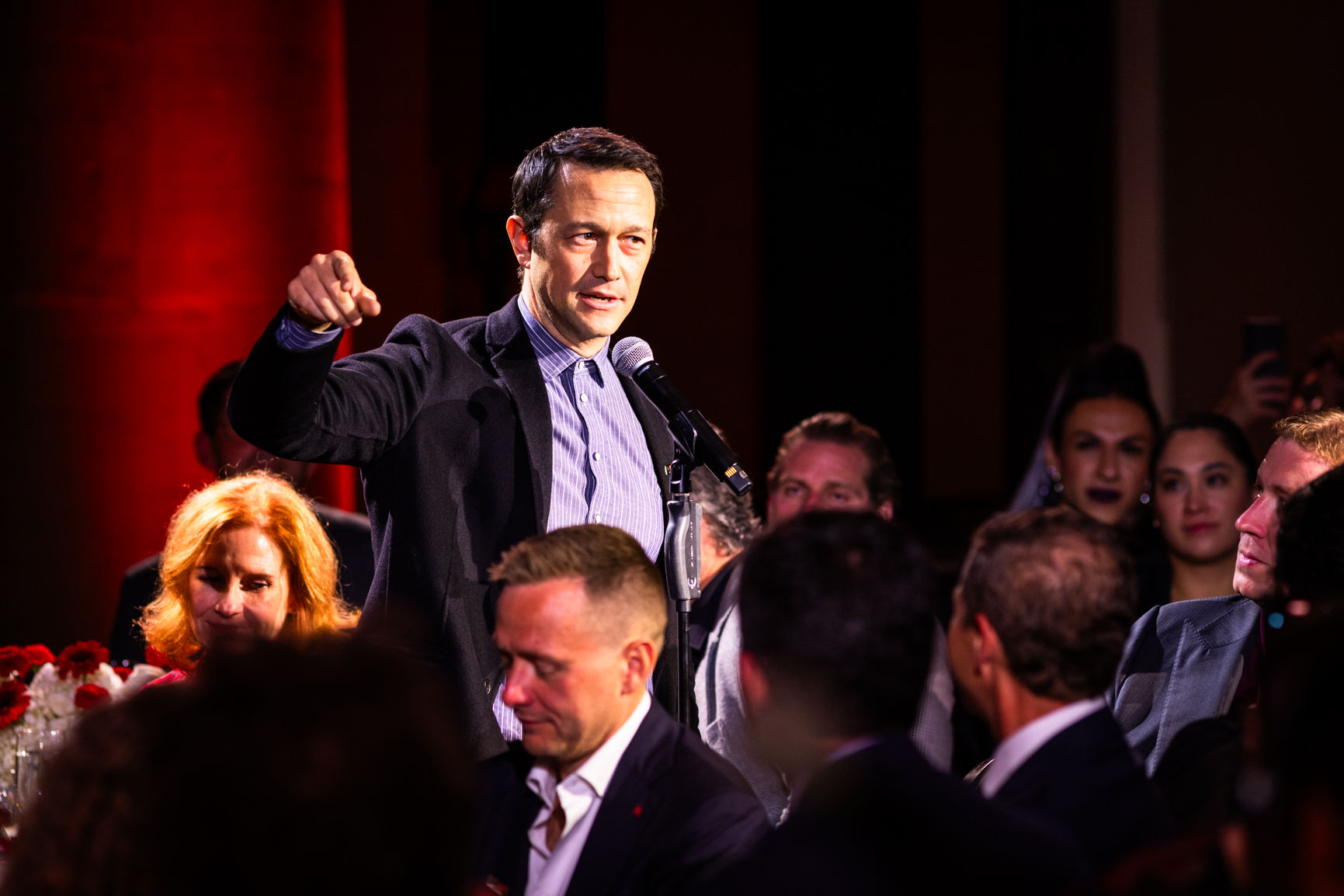
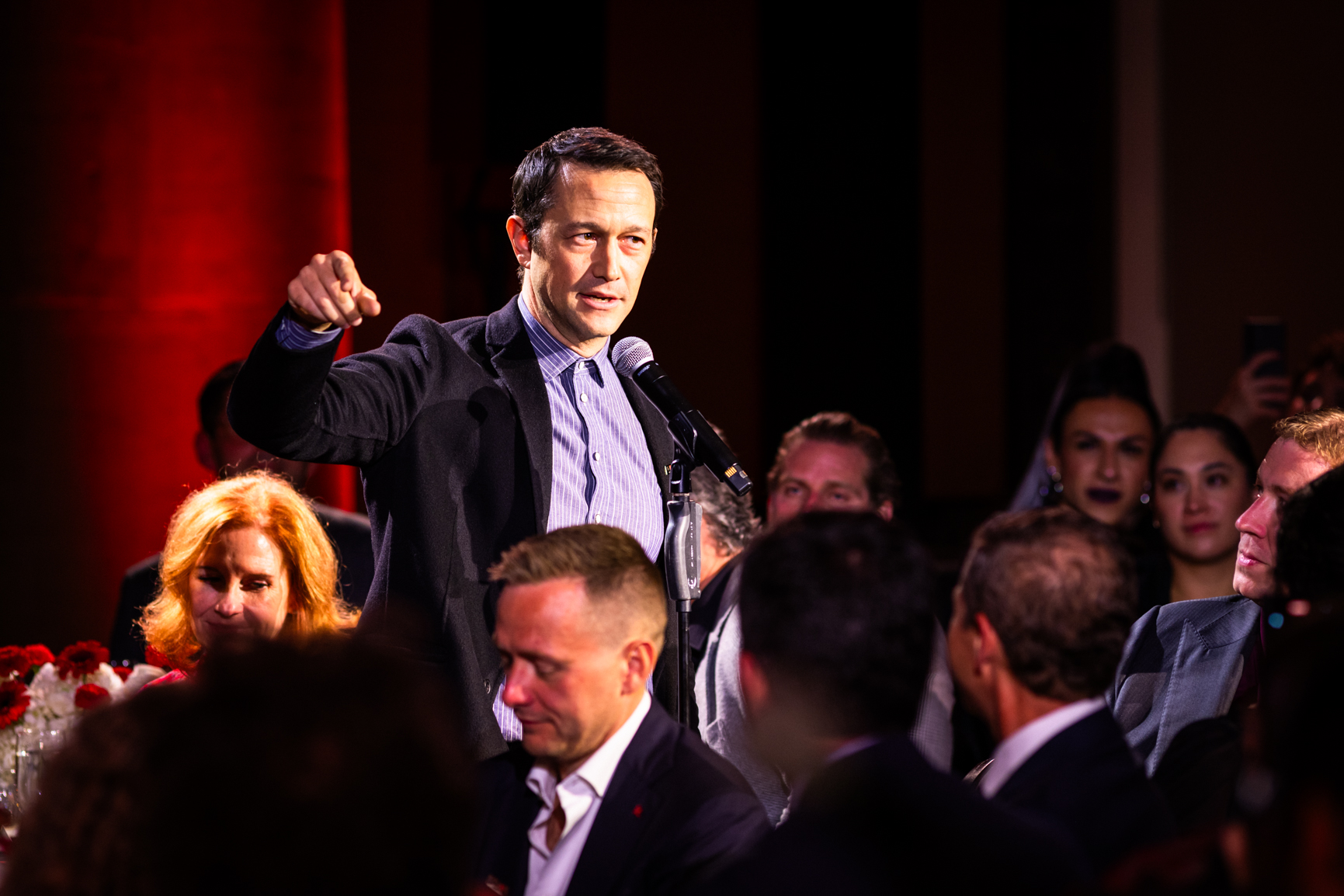
Big AI companies should be “shut down” by the U.S. government until they can prove that their products are safe, actor Joseph Gordon-Levitt said on Monday.
In a toast at the third annual TIME100 AI Impact Dinner in San Francisco, the Inception and 500 Days of Summer star told guests that today’s AI makers have lost control of their creations and must be regulated to prevent potential harm.
“Why are cars safe to drive? Why are houses safe to live in? It’s because car companies and construction companies … they have to follow laws. And if they don’t, then the law can come and shut those companies down,” Gordon-Levitt said.
“So let’s just be clear here: today’s AI companies are operating in such a way that the law should be shutting them down.”
Gordon-Levitt was one of 100 leaders, innovators, storytellers, and activists named in the 2026 TIME100 AI list, which highlights the year’s most influential people in AI.
His remarks drew loud clapping, whoops, and cheers from many people in the audience, who gathered at San Francisco’s Asian Art Museum on Monday night to celebrate the 2026 honorees.
But Gordon-Levitt’s message was not one of genial praise. He said AI companies’ leaders and employees had publicly admitted their products were dangerous and could not be controlled — a reference, perhaps, to July’s cyberattack by a “swarm” of rogue OpenAI agents as well as multiple recent statements from current and former Anthropic employees warning that AI could end all human life.
“To me, that’s pretty obvious that’s the time the law should step in,” Gordon-Levitt said. But, he went on, U.S. politicians had been “timid” and failed to act — perhaps, he alleged, because they were taking money from “some of the guys in this room.” (AI companies, allies, and executives spent at least $83 million on federal elections in 2025 and are set to spend even more this year, according to the New York Times.)
He called for Americans not to vote in November’s midterms for any politician who stands for “anything less than strong regulation, now.”
Other toasts highlighted the positive potential of AI, as well as its dangers. The first was by Danielle Boyer, a 25-year-old indigenous American inventor and activist who is using AI to help preserve her people’s endangered language.
“My grandmother once told me that no decision belongs only to the moment in which we make it,” Boyer said. “Long after we’re gone, someone we will never meet may still be living with what we chose to do today.”
She described her community’s “seven generations” principle: draw inspiration and support from the seven generations before you, and act for the benefit of the seven generations after you.
Those teachings inspired her to start building robots to teach Anishinaabemowin, the native language of the Great Lakes region’s Anishinaabe people that was almost wiped out by U.S. residential schools and is now estimated to have fewer than 1,000 fluent speakers.
“The decisions we make about artificial intelligence today will outlive every person in this room. That’s crazy, right?” Boyer said. “So let’s build things the right way. Let’s build so that seven generations from now, our descendants can look back at this moment and thank us, rather than have to recover from us.”
The final toast came from Suchi Saria, a Johns Hopkins computer scientist and the founder of Bayesian Health who has spent years studying how routinely-collected clinical data and vital signs could help spot an ailing patient before human clinicians notice the problem.
“Hospitalized patients can quietly become critically ill from respiratory failure, internal bleeding, kidney failure, dangerous heart rhythms, and many other causes,” she said.
Saria saw that firsthand in 2017, when her family in India called to tell her that her nephew was critically ill with sepsis.
“We knew the signals were there. We had published the science,” she told the guests on Monday. “And yet, when it mattered to my own family, there was nothing I could offer them. The science had not yet become a system. My nephew died within a few days.”
Saria’s voice audibly cracked, and there was a moment of silence. When she spoke again, she described Bayesian Health’s progress on using AI to catch sepsis early — resulting in a 20 percent drop in mortality, the company claims, when clinicians act promptly on the system’s warnings.
“The real breakthrough is not prediction. It is not even discovery,” she said. “It is turning insight into action early enough to change what happens to a patient.”
The TIME100 Impact Dinner: Leaders Shaping the Future of AI was presented by Deloitte, Booking.com, and Cognizant.
The White House countered the bankers’ concerns on Tuesday by posting economic data suggesting the worries are misguided.
Jaret Seiberg, a policy analyst at TD Cowen, set the odds for a failure in the opening vote at 60%. In that scenario, he said, “Democrats, including those who are crypto friendly, decide the GOP changes are insufficient. It also likely means several Republicans vote no over stablecoin yield or law enforcement concerns.”
Keeping the process going
Meanwhile, the crypto industry is asking that lawmakers at least keep the process alive with an opening yes vote that allows them to continue talking.
“A yes vote is critical and keeps the process moving,” the leading crypto lobbying groups said in a joint statement on Tuesday. “Doing so will ensure that senators have opportunities to debate and move this much-needed legislation to the Senate floor.”
If the vote goes forward as planned on Tuesday and fails, that’s likely the end of the Clarity Act saga in this congressional session. And the odds remain high that Democrats could retake the House of Representatives majority in the November elections, meaning any future crypto legislative efforts could be under the agenda-setting authorities of Democratic committee chairs.
In the absence of a viable crypto bill, Democrats are likely to double down on their crypto corruption accusations about President Donald Trump and his administration. And the industry’s political action committees will have to determine whether some of the industry’s Democratic friends should then become political opponents.
Binance has launched a wealth management service offering access to 11 US-listed exchange-traded funds focused on short-term US Treasurys and investment-grade bonds.
The new Binance Earn offering groups the ETFs into cash management, steady income and yield enhancement products based on investment horizons ranging from less than six months to more than a year.
Users can browse the available ETFs and place orders through Binance Earn, with purchases processed through the exchange’s stock trading service. Binance said investors receive the economic benefits of the shares, including price movements and cash distributions.
Unlike tokenized stocks, users purchase actual ETF shares through the service. Binance provides the interface, while Nest Trading routes the orders to Alpaca Securities, which executes the trades and holds the securities.
The arrangement allows Binance users to access traditional securities through the same platform they use for crypto, while the underlying assets remain within conventional brokerage infrastructure.
The wealth management service is the latest expansion of Binance’s TradFi business. Earlier this month, the exchange added physically settled options on more than 1,000 US stocks and ETFs, building on its existing equities offering of more than 7,000 stocks and ETFs.
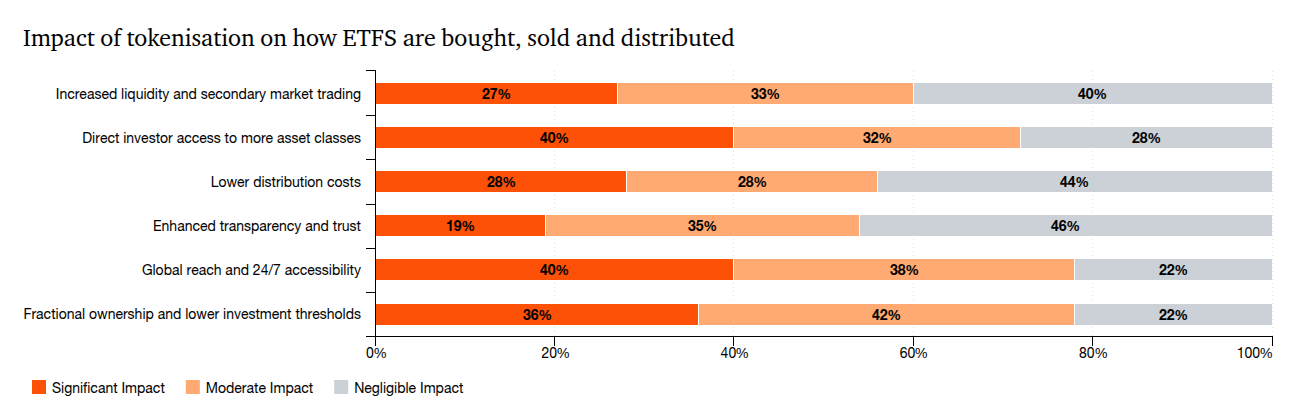
More than 80% of respondents in a PwC survey last year believe tokenization will boost global reach and 24/7 accessibility within the ETF market over the next three years.
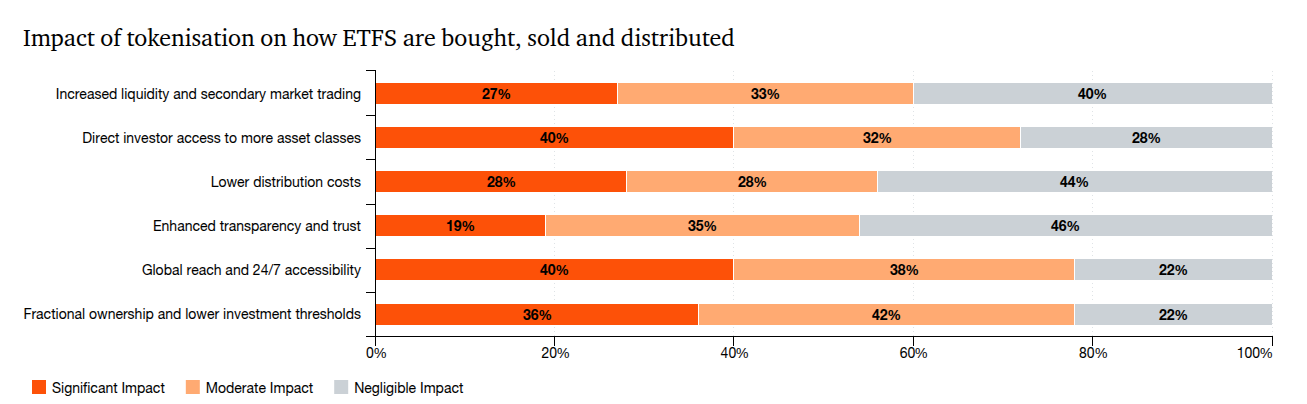
Source: PwC Global ETF Survey 2025
Magazine: HYPE price could suffer as Binance takes its revenue: Alice Liu

Korea’s won is gaining a digital payment route as KRW1 enters Rain’s global payments network through Avalanche infrastructure. The arrangement links Korean currency with established card rails for international spending. The integration connects tokenized won with card payments across more than 175 million Visa merchant outlets worldwide. As a result, Korean businesses and users can spend won abroad without converting funds beforehand.
KRW1 Extends Won Payments Beyond Korea
Rain will add KRW1 to its payment network, linking the stablecoin with card-based spending in international markets. The system keeps transactions denominated in Korean won while Rain provides the payment layer for card use across international payment and service channels. Moreover, businesses can use KRW1 for expenses, travel, student payments, and contractor transactions outside South Korea.
BDACS launched KRW1 with Woori Bank, while Avalanche provides the blockchain infrastructure supporting the token. The stablecoin maintains a one-to-one peg with the won, with reserves backing circulating tokens. Additionally, its design creates a digital channel for moving won-denominated value across borders.
The Korean won represents a broad money supply approaching $3 trillion, highlighting the scale of the domestic currency. However, won-based digital payments have remained largely focused on South Korea’s local economy. KRW1 now creates another route for extending that currency into international commercial activity.
Avalanche Supports Government Digital Infrastructure
Avalanche is also gaining attention through government digital infrastructure projects, including a planned UAE PASS integration. The UAE Telecommunications and Digital Government Regulatory Authority plans to use Avalanche technology within its national digital identity system. Consequently, the project expands Avalanche’s role beyond financial applications and into public digital services.
The planned UAE PASS Digital Vault will let citizens, residents, and visitors request, access, and share verified government documents. The system will operate on a dedicated Avalanche Layer 1 instead of Avalanche’s public network. Moreover, the dedicated network gives the regulator control over permissions, privacy settings, and network rules.
The UAE project adds another institutional use case for Avalanche as governments develop controlled digital infrastructure. It also places blockchain technology within regulated public services and document management systems. Meanwhile, KRW1 demonstrates how Avalanche can support stablecoin payment systems linked with global card networks.
AVAX Price Remains Under Pressure
These developments broaden the blockchain’s use across payments, identity, and regulated digital services. Despite the new infrastructure developments, AVAX has continued to trade under pressure in the broader cryptocurrency market. The token declined 7% over seven days, while its latest daily decline stood at 0.35%.
At press time, AVAX traded at $7.42, keeping price performance separate from network adoption. The KRW1 integration adds payment utility to Avalanche, but it does not directly determine AVAX’s short-term market direction. Similarly, the UAE project strengthens infrastructure adoption while the token remains exposed to broader cryptocurrency market movements.
Therefore, network developments and token performance can move independently over shorter periods. KRW1’s integration with Rain gives won-denominated digital value a broader payment path through existing card infrastructure. At the same time, Avalanche continues expanding its role across financial and government technology projects.
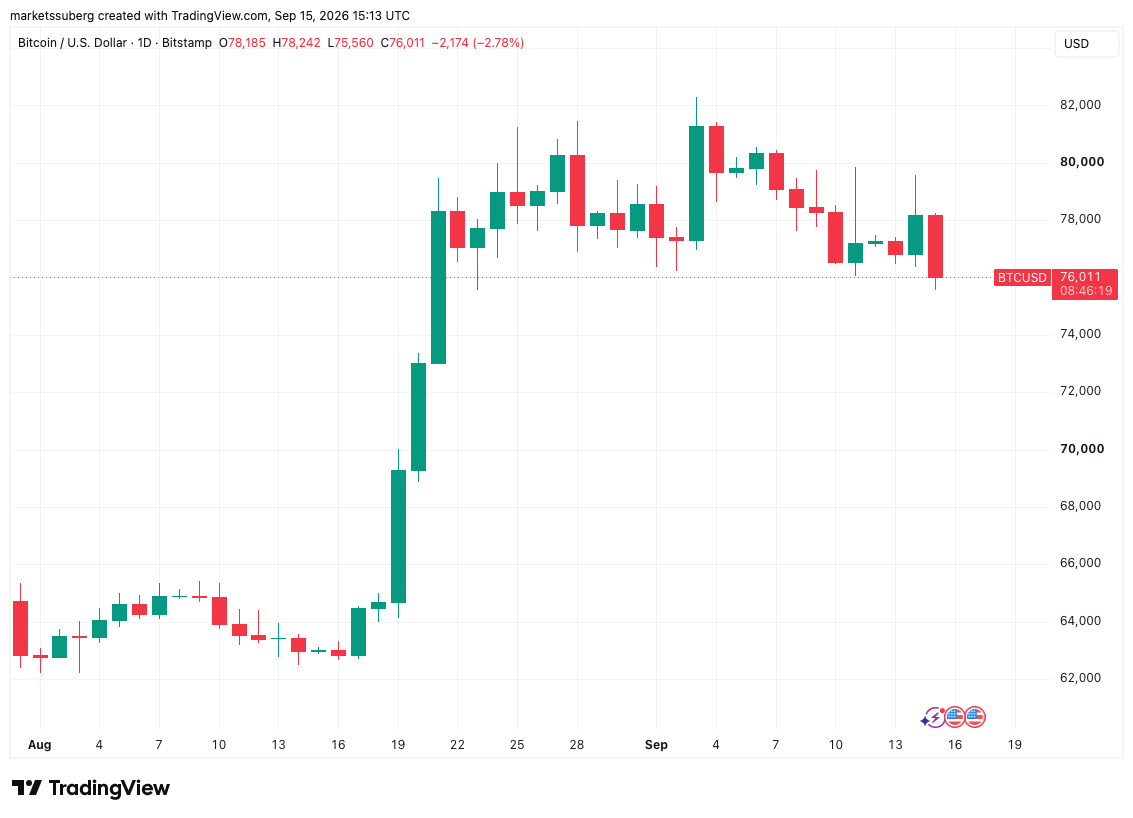
Bitcoin (BTC) saw month-to-date lows at Tuesday’s Wall Street open as global bond yields spiked and crypto markets awaited a key US Senate vote on the CLARITY Act.
Key points:
- Bitcoin dropped to $75,560, its lowest level so far in September ahead of the US Senate’s procedural vote on the CLARITY Act.
- Global bond yields in major economies set new macro highs as $100 oil prices remained a point of contention.
- Analysis expects that central banks around the world will raise interest rates going forward, traditionally a headwind for crypto markets.
CLARITY Act vote keeps crypto markets nervous
Data from TradingView showed BTC/USD dipping under $76,000, erasing a trip to $79,600 from the day prior.
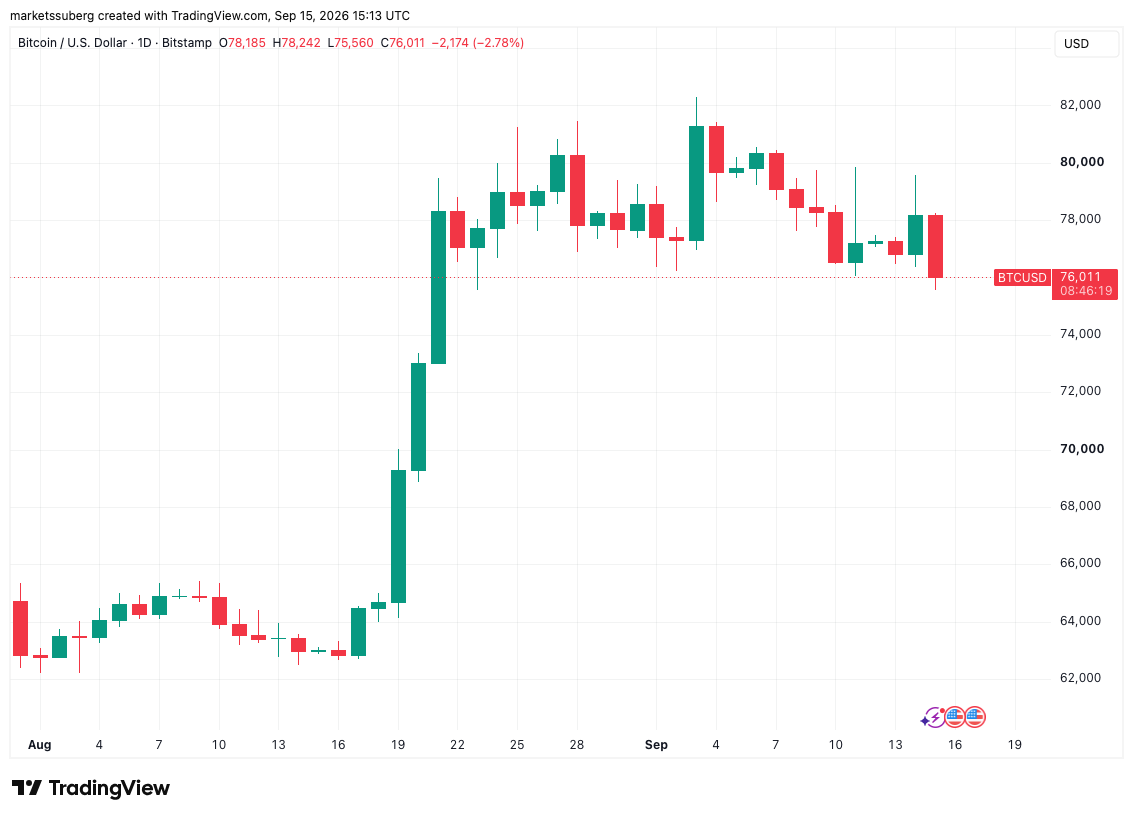
BTC/USD one-day chart. Source: Cointelegraph/TradingView
Crypto traders remained on edge ahead of the procedural vote on the CLARITY Act, due at 2:15pm Eastern time. The legislation will go forward to a Senate-floor debate should it gain the necessary 60 votes.
As Cointelegraph reported earlier, consensus sees barely any chance of success, despite optimism from some sources, with Polymarket users giving CLARITY mere 14% odds of becoming law in 2026 as of Tuesday.
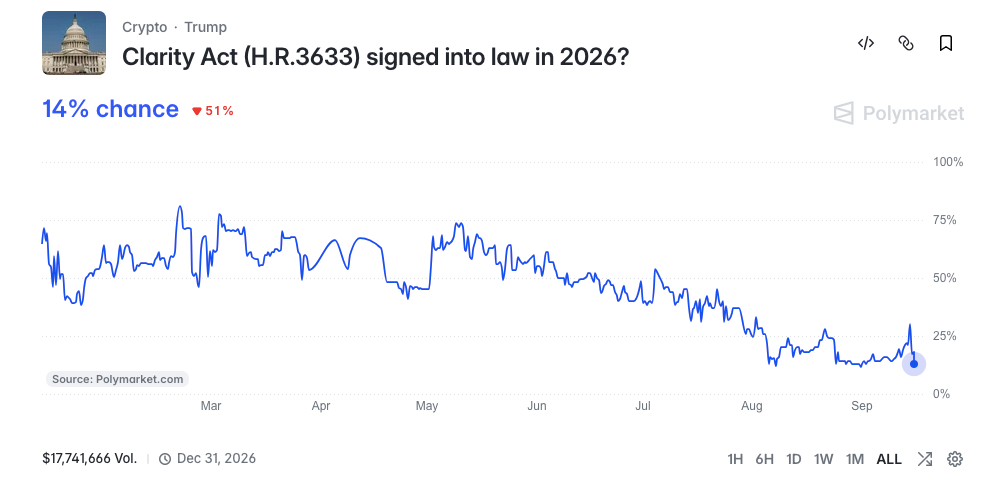
Implied odds for CLARITY act passing in 2026. Source: Polymarket
Commenting, trading company QCP Capital stressed that the act passing Tuesday’s procedural vote would have limited impact and form just one of several hurdles for proponents..
“The bill’s passage would clarify the respective regulatory roles of the SEC and CFTC, potentially strengthening the medium-term case for institutional adoption by reducing regulatory uncertainty,” it wrote in analysis on Monday.
“However, procedural progress does not guarantee final passage, and the timing of remaining legislative steps will determine the immediate market impact of any vote this week.”
Bond yields surge worldwide on oil-fueled inflation risk
US stocks, meanwhile, turned red on the day as bond yields around the world returned to their highest levels in decades. The US 10-year yield passed 5% for the first time since November 2023, going on to reach 5.041%, a level not seen since June 2007.
Related: Bitcoin short-term holders hit 30-day profit streak as bull-market odds improve: CryptoQuant
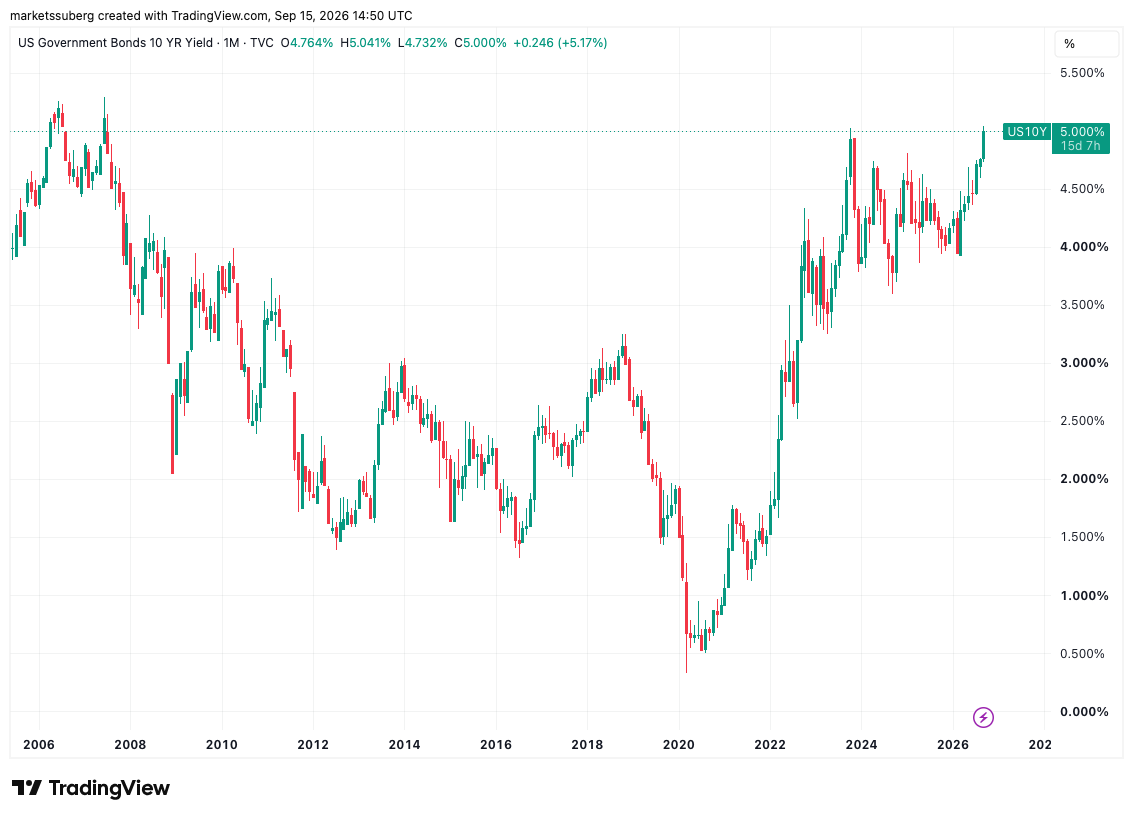
US 10-year bond yield one-month chart. Source: Cointelegraph/TradingView
Reuters further reported that the average 10-year yield for the world’s seven largest economies had reached 4.285%, its highest since mid-2008 around the height of the Global Financial Crisis.
UK and Japanese bonds also made headlines, as the UK 30-year yield reached 5.95% for the first time since March 1998, and the Japanese 10-year hit 3.04% — the highest in 30 years.
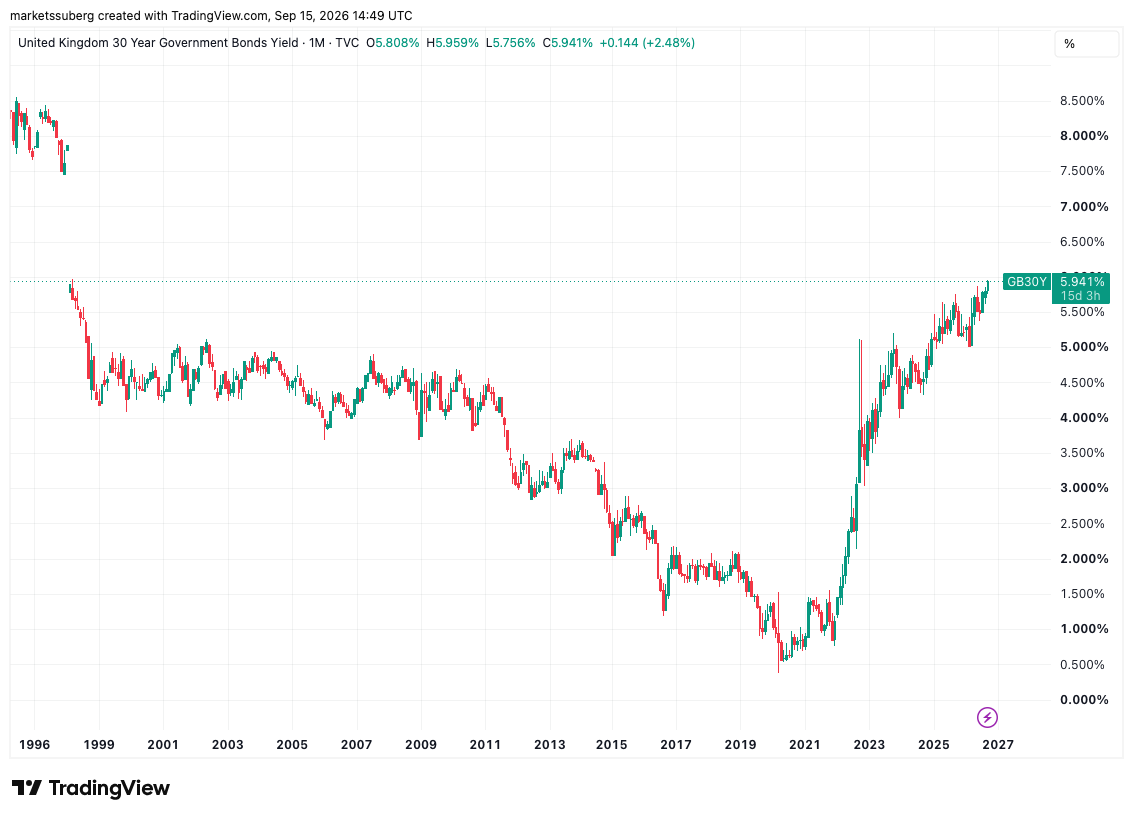
UK 30-year bond yield one-month chart. Source: Cointelegraph/TradingView
Responding, trading resource The Kobeissi Letter predicted that central banks would tighten policy as a result and enact interest-rate hikes. The US Federal Reserve is widely expected to hike its benchmark rate by 0.25% on Wednesday, while the Bank of Japan is expected to do the same at its Friday meeting.
“It’s clear what’s coming next. Monetary policy is shifting, rate hikes are returning, and the next battle against inflation has started. Just as we saw Treasury intervention in the US, the UK will likely soon intervene. Yields are simply unsustainable at current levels,” Kobeissi wrote in a post on X.
Bond yields continued to rise due to the threat of a fresh global inflation wave on the back of high oil prices, with several key transit routes at risk from a widening Middle East conflict. WTI crude oil neared $105 per barrel on Tuesday, headed for its highest levels since early May.
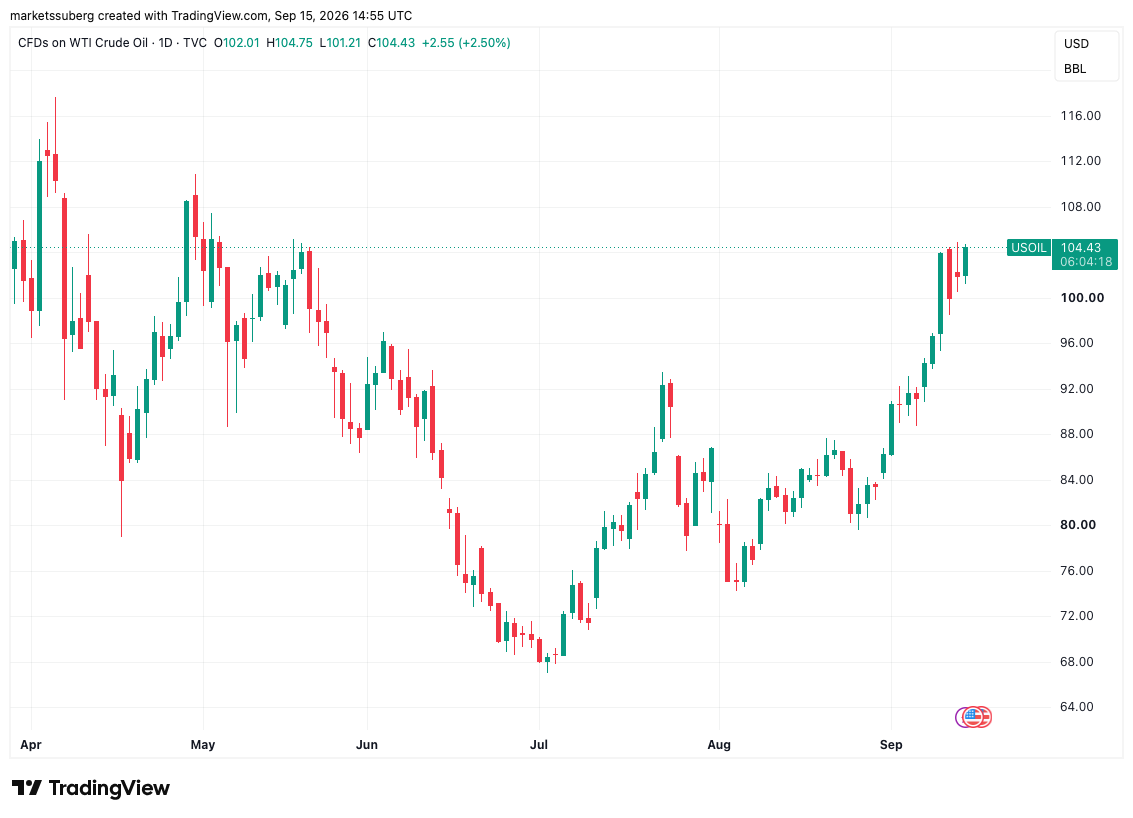
CFDs on WTI crude oil one-day chart. Source: Cointelegraph/TradingView


An Ethereum MEV bot known as Yoink has front-run an attempted Safe wallet exploit involving 2,900 rsETH, worth about $7.8 million, and paid nearly 19 ETH to secure the first position in the block.
Summary
- Yoink received 2,900 rsETH before the original exploit transaction reverted in the same Ethereum block.
- The bot transferred 2,882.37 rsETH to a separate address and routed 17.63 rsETH through Uniswap v4.
- BlockSec traced the exploit to weak authorization checks in an executor contract linked to a Safe module.
- Blockaid said a public keeper multicall let the attacker route funds through a malicious hook pool.
Yoink MEV bot takes the first position
PeckShield identified the incident as an approximately $7.81 million attack involving rsETH, a liquid restaking token associated with KelpDAO, after an MEV bot placed its transaction ahead of the suspected attacker.
On-chain records cited by security researchers show that Yoink received 2,900 rsETH in Ethereum block 25980525. From the total, the transaction sent 2,882.37 rsETH to the address 0xC70f00CD7E461686b04B0E912E309becA8b80ea0.
At the time the address was reviewed, its balance stood at 2,882.36740883 rsETH. No transfer from the address was described in the initial reports, and the available information did not identify its owner or establish whether the funds would be returned.
The remaining 17.63 rsETH moved to the Uniswap v4 Pool Manager. According to the transaction path, the Pool Manager then sent 18.95 ETH to the Yoink contract, which forwarded 18.93 ETH to the block builder.
Paying almost the full ETH amount to the builder left little direct ETH profit from that part of the transaction. The large payment instead appears to have served as the bot’s bid for priority placement, although the cited researchers did not publish a complete profit calculation covering the retained rsETH or other transaction costs.
Both Yoink’s transaction and the original exploit attempt landed in block 25980525. Yoink appeared at the top of the block, while the original transaction ran later and reverted. Security researchers viewed the ordering and failed follow-up transaction as evidence that the bot had detected the attack and moved first.
Such competition relies on maximal extractable value, or MEV, which comes from controlling the inclusion and ordering of transactions. A June 2026 crypto.news guide to MEV explained that searchers scan pending activity for profitable openings, assemble transaction bundles, and pay builders to place them in a chosen position.
Safe module checks allowed the exploit path
BlockSec attributed the underlying weakness to faulty authorization checks in an executor contract connected to an enabled Safe module. Under the firm’s account, attacker-controlled calls could pass through an executor that the wallet treated as trusted.
Safe is a smart contract wallet system that can require several signers to approve transactions. Its module framework also lets account owners add contracts that can perform specific actions under predefined rules, reducing the need for manual signatures on every operation.
An enabled module therefore becomes part of the wallet’s security boundary. BlockSec’s analysis indicates that the affected executor failed to confirm the authority behind a call correctly, allowing an outside party to reach functions through a trusted route.
The report describes a problem in the executor contract associated with the wallet configuration rather than a flaw in Ethereum’s consensus system. Available details also do not show that the core Safe contracts were compromised, so attributing the incident to the entire Safe platform would go beyond the security firms’ findings.
Blockaid provided a more detailed account of how the attacker tried to use the permission failure. According to the security company, the attacker accessed a public keeper multicall and directed a custom Uniswap v4 liquidity module toward a hook pool under the attacker’s control.
Uniswap v4 hooks are contracts that can run custom instructions at set points in a pool’s operations. Blockaid said the maliciously created hook pool was then used to unpack aEthrsETH into rsETH, producing the tokens targeted in the transaction.
Combining a public keeper function with a trusted execution route allowed the call to reach the custom liquidity setup, according to Blockaid’s analysis. Yoink’s bot saw the opportunity before the attacker completed it and submitted a competing transaction that captured the same output.
No statement included in the supplied reports identifies the suspected attacker, the Yoink operator or the block builder. The reports also did not say whether a recovery agreement, bounty negotiation or legal process had begun.
The rsETH transaction adds to 2026 DeFi losses
The attempted extraction occurred during a year of heavy losses across decentralized finance. A September report on DeFi security losses cited CertiK and Forbes estimates showing that protocols lost at least $1.3 billion to exploits during the first eight months of 2026.
The report found that compromised credentials and privileged access had overtaken traditional smart contract faults as the main source of losses by value. The Yoink incident differs in its reported mechanics because BlockSec traced the opening to authorization logic within an executor linked to a Safe module.
rsETH has also appeared in a separate major security event this year. In April, an attacker minted 116,500 unbacked rsETH after compromising infrastructure tied to a LayerZero verifier, according to the previous coverage. The attacker then used the tokens as collateral on Aave to borrow other assets.
Security researchers have not connected the April incident to the transaction in block 25980525. The two events involved different reported weaknesses, and the latest case concerned an attempted movement of 2,900 existing rsETH through a wallet execution path.
U.S. authorities have treated some MEV schemes as fraud
For U.S. users, the Yoink transaction also shows why the term “front-running” does not by itself settle the legal status of an on-chain trade. Federal authorities have pursued certain MEV operations when prosecutors alleged that their operators used deception or tampered with systems to obtain funds.
In May 2024, the U.S. Department of Justice charged two brothers over an alleged Ethereum scheme that obtained about $25 million in cryptocurrency within roughly 12 seconds. Prosecutors alleged that Anton and James Peraire-Bueno manipulated the process Ethereum traders used to order transactions and fraudulently gained access to pending private transactions.
The Justice Department charged the brothers with conspiracy to commit wire fraud, wire fraud, and conspiracy to commit money laundering. Its allegations concerned the methods allegedly used to obtain the trading information and manipulate the process, rather than treating every transaction-ordering strategy as automatically criminal.
No U.S. regulator or law-enforcement agency has announced an action involving Yoink or the attempted rsETH exploit based on the information supplied. The cited blockchain security firms have limited their findings to transaction ordering, the Safe-linked executor’s authorization checks, and the Uniswap v4 hook route used to unpack aEthrsETH.
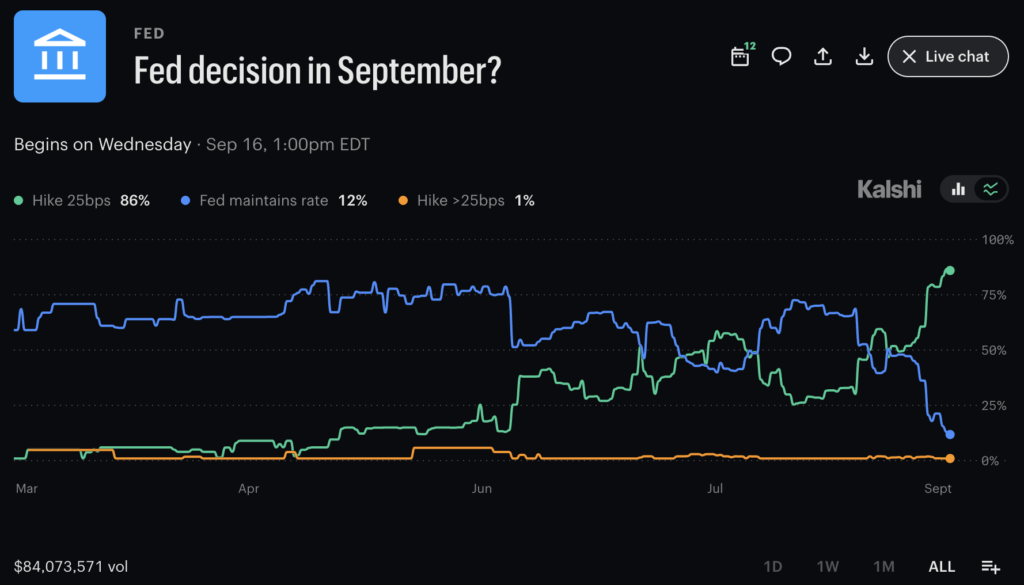
Prediction-market volume on the Federal Reserve’s September FOMC odds rate decision has topped $42M, with slightly more than half of participants backing a 25-basis-point hike and just over 45% expecting rates to remain unchanged, according to Federal News Network.
The close split puts the Sept. 15-16 Federal Open Market Committee meeting at the center of the macro calendar for markets, including Bitcoin.
The reported market showed little expectation of a rate cut despite President Donald Trump’s pressure for lower borrowing costs. The choices attracting meaningful interest were a hike or unchanged rates, leaving the September decision closely contested in the reported snapshot.
Kalshi on the other hand has over $85M wagered on the FOMC odds for today’s meeting, with only 12% believing that the rates stay the same, and 86% betting on a rate hike,

FOMC Odds: Why the Fed Decision Is Dividing Traders
Federal News Network reported that a strong August jobs report added another consideration to the Federal Reserve’s decision. The Consumer Price Index report is due Sept. 11, shortly before the FOMC meeting, and the report identified inflation, tariff disputes, and challenges in the Middle East as factors surrounding the rate debate.
According to the report, Federal Reserve Chair Kevin Warsh, who succeeded Jerome Powell earlier in 2026, has indicated that a rate increase could be preferable. Trump has advocated lower rates and has threatened to stop trading with countries with which the United States has a trade deficit if the Fed raises rates, the report said. These competing pressures form the backdrop to the narrow prediction-market split.
The same report characterized the decision as a close call. It said the Fed could keep rates unchanged for now and defer a hike to a later meeting, while acknowledging the economic case for addressing inflation through higher rates.
Make Your FOMC Prediction Count With $25 For Free on Kalshi
What the Split Signals for Bitcoin
For Bitcoin observers, the reported division reflects uncertainty around a closely watched policy decision rather than a settled market consensus. A rate hike and an unchanged-rate decision are the two outcomes that drew meaningful support in the Sept. 8 market snapshot, according to Federal News Network.
The reporting does not make a Bitcoin price forecast. Instead, it shows how prediction-market participants weighed the Federal Reserve’s next move as the meeting approached. That uncertainty is relevant context for traders following Bitcoin alongside broader interest-rate expectations.
A 25-basis-point increase would align with the marginal favorite in the snapshot. Keeping rates unchanged would align with the report’s view that the Fed might postpone a hike. The outcome remains a decision for the FOMC odds, and the prediction-market figures reflect participants’ views when they were reported, not the meeting’s outcome.
JUST IN:
87% chance the Federal Reserve raises interest rates by 25 bps at tomorrow's FOMC meeting. pic.twitter.com/M78S0g4JdZ
— Watcher.Guru (@WatcherGuru) September 15, 2026
What to Watch at the September FOMC Odds Decision
The Federal Reserve’s calendar lists the Sept. 15-16 meeting as one associated with a Summary of Economic Projections. The calendar also lists FOMC meetings for Oct. 27-28 and Dec. 8-9. The September meeting, the policy decision, and the associated projections will therefore be key items for market participants monitoring the rate outlook.
The table below reflects the Sept. 8 prediction-market snapshot reported by Federal News Network and is not a later or updated reading.
The source identified the August jobs report and the Sept. 11 CPI release as key inputs ahead of the decision. The report also noted the political pressure surrounding the meeting and the possibility that a hike could be pushed to a later meeting. For Bitcoin traders, the key takeaway is that the prediction-market reading showed a closely divided view of the September outcome.
Earn $50 and Enter $300K Prize Draw on EdgeX
The post FOMC Odds: A $42M Prediction Market Splits the September Fed Outlook appeared first on Cryptonews.

Start standing with your feet hip-width apart and a slight bend in your knees, holding a dumbbell in each hand or a loaded barbell in both hands in front of your thighs.
Keeping that slight bend in your knees, push your hips back and lower the weight in front of your legs until you feel a stretch in the backs of your thighs.
Pause briefly, then drive through your feet to return to the starting position.
Complete all repetitions, aiming for 8 to 15.

Chip and computer hardware stocks tied to the artificial intelligence buildout attempted a comeback Tuesday after Monday’s harsh sell-off. Nvidia (NVDA) stock tried to retake a key support level. Monday’s bloodbath was prompted by concerns that calls from AI leaders to slow development would hurt semiconductor and data-center hardware firms. On Monday, Nvidia stock tumbled 3.4% to 210.96 and closed…
Copyright ©2026 Investor’s Business Daily, LLC. All rights reserved. 87990cbe856818d5eddac44c7b1cdeb8
Ethereum’s exchange supply has fallen sharply over time. There are now 6.06 million ETH on such platforms compared with 22.9 million at the network’s June 2020 peak.
According to Santiment’s estimates, that represents a 73% decline in easily sellable supply.
Ethereum’s Supply Drain
Fewer ETH sitting near order books means less supply available for market sells and panic exits. The decline is supported by ETH moving into staking, ETF wrappers, treasury strategies, and long-term custody.
Validators are also locking the crypto asset to help secure the network. The analytics firm explained that demand does not need to surge for price moves to become stronger. As liquid supply shrinks, even smaller waves of buying can have a larger impact.
ETH remains at a structural inflection point, according to Crypto Patel, who identified the $2,567-$2,666 zone. A rejection could send the crypto asset toward $2,150, $2,000, or $1,800. A confirmed higher-timeframe close above $2,666 could instead open the path toward $3,100 and $4,000.
Meanwhile, Daan Crypto Trades stated that the asset has been on another “rollercoaster” ahead of the CLARITY Act vote and FOMC. Traders have been pre-positioning around the uncertainty. That has created high volatility and caused both sides to get taken out. The analyst sees little hope around the vote right now. If the vote fails or gets pulled, more downside is expected, followed by chop into the FOMC. After that, price action could become somewhat more normal again.
A Growing Treasury
One company in particular has been steadily adding to its Ethereum position. BitMine now holds 5,956,378 units after adding 27,180 tokens over the past week.
That gives the company 4.9% of Ethereum’s 122 million total supply. Its stated goal is to reach 5% under its Alchemy of 5% strategy. It has reached 98% of the way toward the target after buying the token every week since June 30, 2025. Most of its treasury is already staked. The company has 5,067,309 units locked through its MAVAN validator network. That is about 85% of its ETH holdings.
Tom Lee expects annualized staking revenue to reach $334 million. The estimate rises to $392 million once the entire ETH treasury is staked. Bitmine’s total crypto, cash, and moonshot holdings stood at $15.8 billion.
Separately, Ethereum ETFs recorded nearly $197 million in net inflows last week. The final trading session saw $216.4 million flow into the funds, which more than offset earlier outflows. The bullish momentum has carried into the new week. Monday brought another $121 million in net inflows, which pushed the monthly total closer to $450 million.
The post Ethereum Holders Are Pulling ETH Off Exchanges at a Historic Pace appeared first on CryptoPotato.

Manchester United Stunned as ‘Kid Messi’ JJ Gabriel, 15, Requests His Academy Contract Be Officially Cancelled

TIME100 AI Honorees Speak to Perils and Promise of the Technology

Jaguars showcase new offense in Week 1 of the 2026 season



-

 Fashion4 days ago
Weekend Open Thread – Corporette.com
-

 Business6 days ago
Micron Stock Climbs Above $1,031 as AI Memory Crunch and a $50 Billion Outlook Fuel the Rally
-

 Tech2 days ago
The Latest Weird Thing to Play Doom Is the Mapped-Out Brain of a Fruit Fly
-

 Business6 days ago
AMD Stock Climbs After Management Lifts 2027 Data Center Outlook Toward $70 Billion in AI Sales
-
 Crypto World7 days ago
Bitcoin price risks $76K drop as $78K support weakens
-

 Crypto World4 days ago
XAG/USD: Silver’s Short-Term Rally Meets Its Moment of Truth
-

 Crypto World5 days ago
2 Chip Stocks Broke Out This Week. Neither Was Nvidia
-

 Business4 days ago
10 Most-Streamed Songs On Spotify In 2026 So Far, Led By Ella Langley’s Dominant Run On The Charts This Year
-

 Crypto World7 days ago
Ethereum price stalls below $2,500 as ADX drops to 11
-

 Tech5 days ago
Battery life is the only iPhone 18 Pro and iPhone Duo upgrade I care about. Apple didn’t disappoint
-

 Crypto World5 days ago
OKX launches 10x OpenAI, Anthropic X-Perps in Europe
-

 Crypto World6 days ago
Pi Network ships Protocol 27 on a network with 14 million users and zero DeFi
-

 Crypto World4 days ago
Diesel Tops $6 a Gallon for the First Time as 28 States Set Records
-

 Tech6 days ago
Apple Watch Ultra 4 vs Watch Ultra 3: Should you really spend another $799?
-

 Crypto World7 days ago
CLARITY Act runs out of calendar as crypto regulation stalls
-

 News Videos4 days ago
Facing Financial Fears
-

 Crypto World6 days ago
Bitcoin price risks $70K if $78K neckline breaks
-
 Crypto World6 days ago
Bitcoin price holds near $79K as cycle drawdowns narrow
-

 NewsBeat7 days ago
What went right this week: an ‘historic’ fall in violent crime, plus more
-

 Business7 days ago
Meta debuts long-awaited personal AI agent, Muse
You must be logged in to post a comment Login