

Crypto World
Star Trek’s Captain Kirk Unveils X Money as Limited Beta Goes Live

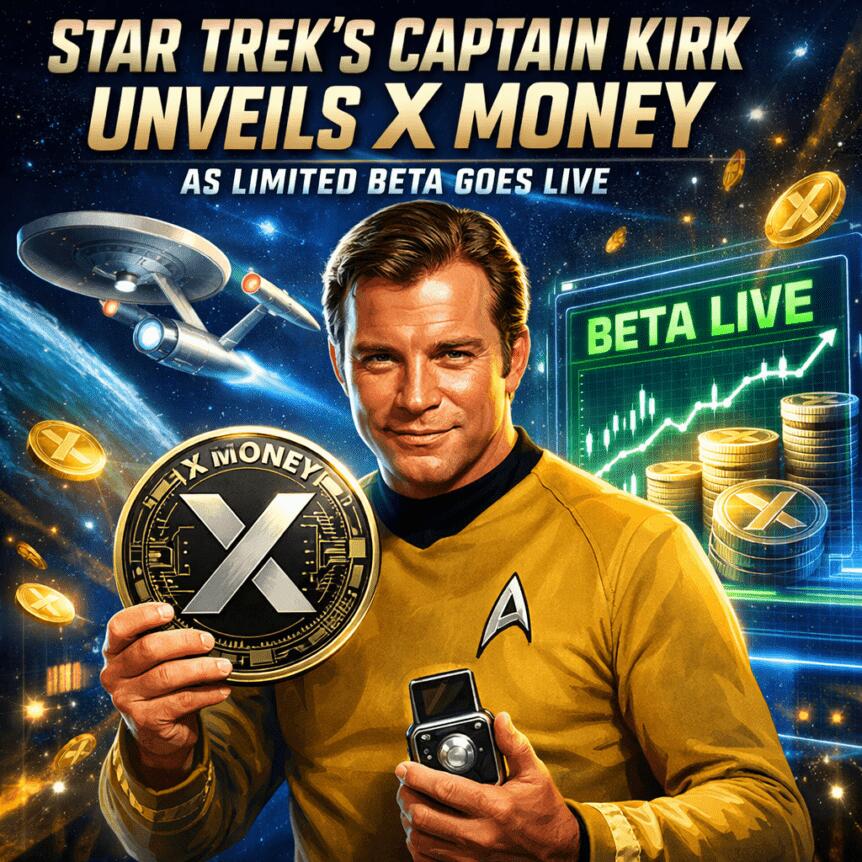
Dogecoin (CRYPTO: DOGE) sits at the edge of a broader push by Elon Musk to turn X into a pervasive payments platform, as the company tests external beta features for X Money. The early test phase highlights cashback on certain card purchases and a 6% annual percentage yield on deposits, according to screenshots and posts from beta testers that circulated this week. Hollywood actor William Shatner, famous for his Star Trek captain role, was among the first to publicly participate, signaling Musk’s intent to generate buzz through high-profile user involvement. Deposits in the beta are reportedly held by Cross River Bank and insured by the FDIC up to $250,000 per person, adding a familiar consumer-protection layer to the experiment. The effort underscores Musk’s broader plan to fuse payments, messaging, and AI-driven functionality into a single app ecosystem.
Key takeaways
- External beta testing for X Money is underway, with screenshots showing cashback on select card purchases and a 6% APY on deposits.
- Deposits are held by Cross River Bank and FDIC-insured up to $250,000 per person, aligning with standard U.S. consumer protections.
- William Shatner participated in the beta rollout, and engaged in an auction-based approach to invite a broader set of testers.
- Several links suggest X Money is still tightly aligned with Musk’s goal of an all-in-one platform, but the extent of any crypto integration remains unclear.
- X Money’s progress sits within a broader narrative of Musk’s push to expand payments functionality and digital services on X, including licensed money transmission and peer-to-peer payments initiatives.
Tickers mentioned: $DOGE
Sentiment: Neutral
Price impact: Neutral. The rollout appears to be a strategic product test rather than a market-moving initiative.
Market context: The beta reflects a growing trend of tech platforms expanding payment rails and financial services, even as the regulatory and compliance framework for such services continues to evolve. The move also aligns with broader industry activity around on-platform payments, wallet features, and bank-partnered deposit solutions as tech giants explore monolithic app ecosystems.
Why it matters
The X Money beta narrative is more than a product test; it signals Musk’s intent to transform X into a centralized hub for financial and digital services. By layering cashback rewards and a comparatively high yield on deposits, the program aims to demonstrate real-world value for users who might otherwise rely on standalone payment apps or traditional banks. The involvement of a high-profile tester like William Shatner — who has publicly advanced charity efforts tied to the beta — illustrates a strategy to accelerate user acquisition through media attention and social reach.
From a regulatory and risk perspective, the move to partner with Cross River Bank and FDIC insurance offers some reassurance to users wary of digital wallets. The “everything app” concept, which Musk has described as a place where all money flows through X, relies heavily on a broad regulatory permission set, including state money transmitter licenses and FinCEN-registration for peer-to-peer payments. As X expands its financial services ambitions, observers will be watching how the company navigates licensing, consumer protections, and interoperability with existing payment rails. The absence of a clear, public crypto integration within X Money—despite Musk’s long-running affinity for meme-based assets—also matters, as it signals a cautious, perhaps modular approach to crypto features rather than an immediate push.
On the crypto front, speculation remains active around whether DOGE could be woven into future X Money features, given Musk’s past affinity for the memecoin. A direct crypto integration has not been announced, and the beta materials focus on fiat-based rewards and insured deposits rather than on-chain assets. This restraint may reflect a prudent step as the platform tests core payments and deposit mechanics, while keeping potential future crypto capabilities as a future-leaning option rather than a current priority. The existing environment around payments on social platforms — including licenses, security standards, and consumer protections — will continue to shape whether and when deeper crypto integrations might appear.
X, Shatner to expand beta testing
The beta rollout has taken a noticeable step forward with a public auction approach to inviting testers. Shatner has used a $42 handout from Musk to raise funds for charity, and, with X’s permission, auctioned 42 beta invites for $1,000 each. The winners receive a $25 welcome gift card and a metal X Money debit card bearing their X username from Visa’s partnership. This approach, which blends charitable framing with premium access, aims to generate momentum and equity among early adopters. A second auction round subsequently opened, offering an additional 166 beta invites at the same price point. The model appears designed to monetize scarcity while building a small, engaged testing community that can provide real-world feedback before broader deployment.
Participation criteria are straightforward but precise: US residents over 18 who maintain an active X account in good standing qualify for eligibility. This gating ensures compliance with banking and payments regulations while allowing Musk’s team to observe how a controlled cohort interacts with cashback incentives, deposit yields, and ATM-like features that may be part of the X Money experience. Those involved in the beta can look forward to a metal debit card and other tangible perks as the program scales, though the exact timelines for a wide rollout remain fluid.
Meanwhile, the crypto question lingers. While Dogecoin speculation continues to hover around the project, there is no explicit confirmation of crypto payments or token integration within X Money in the current beta materials. Musk’s broader aim to transform X into an essential, all-purpose platform remains evident, with X Money acting as a critical piece of the puzzle rather than the entire blueprint. The strategic emphasis appears to be on securing a reliable, regulated base for payments and deposits, possibly paving the way for optional crypto features once the core system proves stable and scalable.
No sign of crypto
The public-facing beta materials emphasize consumer banking-like features rather than on-chain instruments. DOGE speculation is part of the broader discourse around X’s future, but no concrete integration has been announced in the current beta. The focus remains on tangible benefits for users through cashback and deposit yields, along with a secure, insured funding arrangement via a vetted banking partner. This careful stance suggests that any crypto functionalities would be evaluated separately, ensuring compliance and user protection before any broader integration is pursued.
What to watch next
- How many additional beta invites are issued and the pace of expansion beyond the initial rounds.
- Whether X reveals more details about crypto capabilities or any planned DOGE-related features inside X Money.
- Regulatory updates or additional licensing steps across states as X deepens its payments infrastructure.
- Updates on the user experience of cashback and deposit yields, including any changes to FDIC insurance coverage or partner banks.
- Public statements from Musk or X leadership outlining a concrete timeline for a wider launch and potential product integrations.
Sources & verification
- Elon Musk: X Money external beta live next 1-2 months (Cointelegraph article)
- Elon Musk confirms X Money beta-testing launch 2025 (Cointelegraph article)
- Elon Musk X Financial Services X Money App 2025 (Cointelegraph article)
- Dogecoin price index (DOGE) (Cointelegraph DOGE index)
- Kraken wins Kansas City Fed approval for limited master account access (Cointelegraph article)
What the rollout means for users and the market
The X Money beta illuminates a broader trend of technology platforms expanding financial services with a regulatory-compliant backbone. By partnering with established banks and offering FDIC-insured deposits, X attempts to balance user appeal with consumer protections. The charity-driven invitation strategy, highlighted by Shatner’s involvement, underscores a marketing approach aimed at accelerating adoption while maintaining a narrative around social impact. For builders and investors, the test signals how a technology-first platform may evolve to handle payments, wallets, and identity services in a tightly controlled environment before any broader crypto integration is contemplated.
From a market perspective, the experiment sits against a backdrop of liquidity and risk sentiment shaped by macro developments and regulatory scrutiny. The emphasis on real-world benefits—cashback and yields—coupled with a robust compliance footprint, could influence user expectations for digital wallets and platform-based payments. If X Money proves scalable and reliable, it may set a benchmark for other social platforms seeking to monetize user activity through financial services without compromising security and regulatory alignment.
What to watch next
- Upcoming beta expansion milestones and any official timeline updates from X.
- Clarity on crypto-related features or token support within X Money, if any.
- Regulatory developments affecting money transmission licenses and P2P payment capabilities on X.

Crypto World
Ethereum price prediction: $2,500 in focus as OI spike amid Vitalik’s calls for scaling


- Ethereum rally above $2,100 follows a sharp spike in open interest.
- A break above the resistance at $2,175 could open the path toward $2,500.
- Large ETH withdrawals from exchanges point to tightening supply.
Ethereum has climbed above the $2,100 after a strong daily rally that pushed the asset higher amid renewed interest in derivatives markets.
The move follows a period of consolidation that had kept the price trapped near the $2,000 level for several sessions.
The surge has now placed the $2,500 region firmly on the radar of short-term traders.
At the same time, comments from Vitalik Buterin about the future direction of the network have sparked fresh discussion across the ecosystem.
Open interest spike signals renewed trader activity
One of the strongest signals behind the recent price jump is the sharp rise in derivatives market activity.
Open interest (OI) in Ethereum futures has climbed significantly in recent weeks as traders increase their exposure to the asset.
The open interest reflects the total number of active futures contracts and often rises when new money enters the market.
The latest spike indicates that traders are positioning for larger price swings in the coming sessions.
Besides the increase in open interest, short liquidations also played a key role in the rally that pushed Ethereum above $2,100.
When bearish traders are forced to close positions, they must buy back the asset, which can quickly accelerate upward momentum.
This chain reaction tends to create sudden bursts of volatility that drive prices higher within a short time frame.
However, derivatives data still shows mixed sentiment among traders, with funding rates shifting between positive and negative levels, suggesting that the market remains divided on the next direction.
Ethereum supply tightens as investors withdraw coins
Another factor supporting the recent recovery is a notable decline in the amount of Ethereum held on centralised exchanges.
According to data obtained from CryptoQuant, Large amounts of ETH have been moved away from trading platforms over the past month.

These withdrawals from crypto exchanges often indicate that investors intend to hold their assets for a longer period rather than sell them immediately.
When coins leave exchanges, the amount available for instant trading becomes smaller.
This shift can create tighter supply conditions, especially if demand begins to increase at the same time.
On-chain data also shows that large investors have continued to accumulate Ethereum during recent market weakness.
This trend suggests that some market participants view current prices as attractive entry levels.
Such accumulation can help stabilise the market during periods of volatility.
Ethereum technical analysis place $2,500 in focus
From a technical perspective, Ethereum’s price is currently trading between key support and resistance zones.
The $2,023 region has emerged as an important short-term support level based on recent price movements.
A break below that zone could expose the market to further downside toward the $1,901 support area.
On the upside, the $2,175 level has repeatedly acted as immediate resistance.
A sustained move above this barrier could open the door for a rally toward the next resistance near $2,396.
If buying pressure remains strong, the market may then shift its focus toward the $2,525 region.
This level sits close to the psychological $2,500 mark that many traders are watching.
A decisive breakout above this area would signal a stronger bullish trend forming in the short term.
Vitalik Buterin says, “Ethereum needs to scale”
Beyond the price charts, discussion around Ethereum’s long-term direction has intensified following recent comments from Vitalik Buterin.
The Ethereum co-founder has emphasised the importance of developing what he described as “sanctuary” technology within the ecosystem.
This concept centres on strengthening decentralisation and ensuring that Ethereum remains a secure and neutral platform.
Buterin also highlighted concerns that some scaling solutions are drifting away from Ethereum’s core security model.
His remarks have sparked debate about how the network should evolve as demand continues to grow.
Some observers believe these discussions could influence how developers approach future upgrades and scaling strategies.
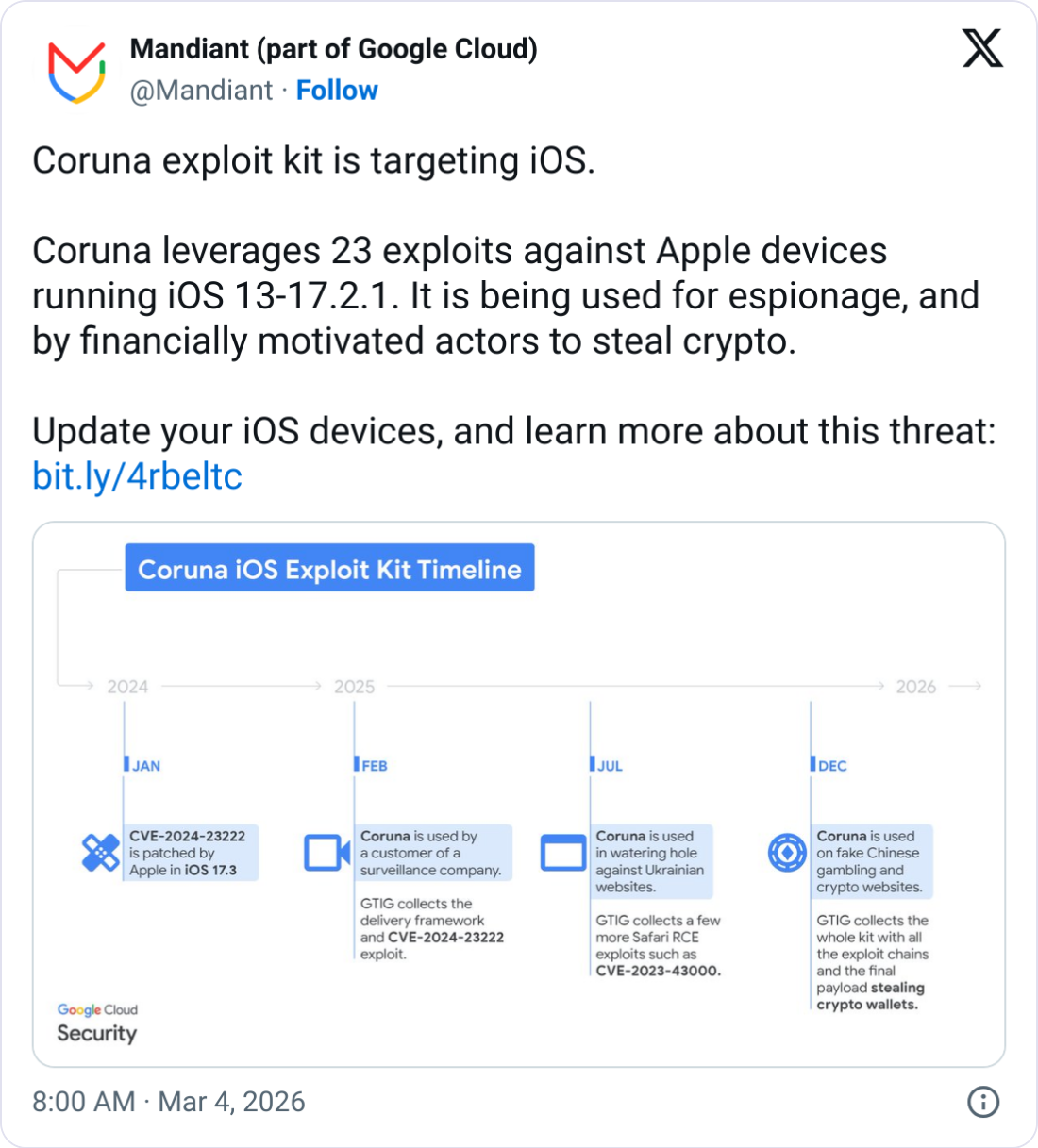
Threat researchers at Google say they have uncovered a new exploit kit targeting Apple iPhone users, aimed at stealing crypto wallet seed phrases.
The kit, named “Coruna” by its developers, targets iPhones running iOS versions 13.0 up to 17.2.1. It has “five full iOS exploit chains and a total of 23 exploits,” including ones that were previously unknown to the public, the Google Threat Intelligence Group (GTIG) said in a report on Wednesday.
The group said it first discovered the kit in February 2025 and has since tracked its use by a suspected Russian espionage group against Ukrainians, and later on fake Chinese crypto websites that aim to steal crypto.
GTIG said the kit doesn’t work with the latest version of iOS and urged iPhone users to update their devices to the latest software version. If that isn’t possible, users should put the phone in “Lockdown Mode,” which Apple says can counter sophisticated attacks.
Kit targets crypto via fake websites
GTIG said it came across parts of an iOS exploit in February 2025 in which a customer of a surveillance company used JavaScript to fingerprint the device to deliver the appropriate exploit.
Later that year, it found the same JavaScript framework hidden on multiple compromised Ukrainian websites that was “only delivered to selected iPhone users from a specific geolocation.”

GTIG said it then found the same framework in December “on a very large set of fake Chinese websites mostly related to finance,” including one that spoofed the crypto exchange WEEX.
When a user accesses the websites with an iOS device, the framework delivers the exploit kit and hunts for financial information, including analyzing texts containing seed phrases and keywords such as “backup phrase” or “bank account.”
Related: ‘ClickFix’ hackers pose as VCs, hijack QuickLens in latest crypto attacks
The kit also seeks out popular crypto apps, including Uniswap and MetaMask, to extract crypto or sensitive information.
Coruna’s US intelligence origins debated
GTIG did not name the customer of the surveillance company from which the exploit kit is said to have originated, but the mobile security company iVerify told WIRED it could have been built or bought by the US government.
“It’s highly sophisticated, took millions of dollars to develop, and it bears the hallmarks of other modules that have been publicly attributed to the US government,” iVerify co-founder Rocky Cole told WIRED.
“This is the first example we’ve seen of very likely US government tools — based on what the code is telling us — spinning out of control and being used by both our adversaries and cybercriminal groups.”
However, Kaspersky’s principal security researcher told The Register that the cybersecurity company saw “no evidence of actual code reuse in the published reports to support attributing Coruna to the same authors.”
Magazine: Meet the onchain crypto detectives fighting crime better than the cops
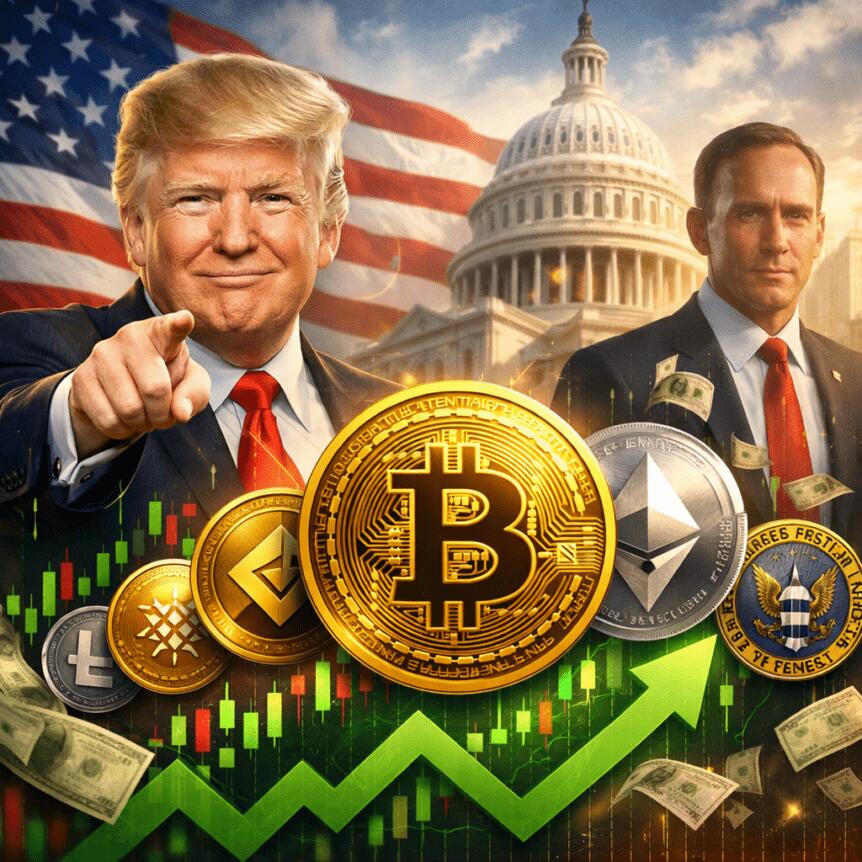
Crypto-related equities surged on Wednesday as pro-crypto commentary from Washington and expectations of a clearer regulatory path bolstered risk appetite. Bitcoin (CRYPTO: BTC) led the upward move, rising more than seven percent in the past 24 hours to the mid-72,000s, while Ether (CRYPTO: ETH) joined the rally with an about eight percent gain. Publicly traded names tied to crypto wealth and infrastructure posted standout moves: MicroStrategy (EXCHANGE: MSTR) shares jumped north of 10%, Coinbase (EXCHANGE: COIN) climbed over 14%, Hut 8 Mining (EXCHANGE: HUT) advanced about 13.89%, and American Bitcoin Corp (EXCHANGE: ABTC) rose roughly 11.65%.
Dominick John, an analyst at Zeus Research, told Cointelegraph that the rally appears linked to the prospect of clearer rules on the horizon. “Crypto equities are rallying as regulatory risk is being fundamentally redefined. With the executive branch championing a clear digital asset framework, coupled with robust spot ETF inflows and the potential passage of the Clarity Act,” he said. “The trend will persist as regulatory clarity strengthens and institutional flows accelerate. With policy risk receding and product demand expanding, crypto equities have room to reprice higher in the medium term.”
“Crypto equities are rallying as regulatory risk is being fundamentally redefined. With the executive branch championing a clear digital asset framework, coupled with robust spot ETF inflows and the potential passage of the Clarity Act,” he said.
Key takeaways
- Regulatory clarity expectations are lifting crypto equities as policymakers signal a more defined digital asset framework and as spot ETF activity strengthens.
- Major crypto-adjacent stocks posted material gains: MicroStrategy (EXCHANGE: MSTR) rose more than 10%, Coinbase (EXCHANGE: COIN) gained over 14%, Hut 8 Mining (EXCHANGE: HUT) advanced 13.89%, and American Bitcoin Corp (EXCHANGE: ABTC) climbed 11.65%.
- Regulatory moves advanced on multiple fronts: the CFTC filed for a regulatory review of prediction markets, while the SEC filed a pending application centered on Federal Securities Laws as they relate to crypto transactions.
- Political signals from the White House and supporters of crypto policy, including calls for market-structure legislation, contributed to the swing in sentiment.
- There is a caveat: the rally could cool if regulatory progress stalls or if Bitcoin retreats, underscoring the sensitivity of crypto equities to policy momentum and macro moves.
Tickers mentioned: $BTC, $ETH, $COIN, $MSTR, $HUT, $ABTC
Sentiment: Bullish
Price impact: Positive. A broad uptick in both the crypto market and related equities points to constructive liquidity and policy optimism gripping the sector.
Trading idea (Not Financial Advice): Hold. If regulatory momentum sustains and BTC maintains elevated levels, the bounce could extend; but a delay or reversal in policy progress would raise the risk of a pullback.
Market context: The move aligns with a broader risk-on tilt in crypto markets as investors price in regulatory clarity, potential ETF inflows, and evolving political support for crypto-friendly legislation, all of which can influence both spot prices and equity exposures tied to digital assets.
Why it matters
The current trajectory matters because it underscores how policy clarity can translate into tangible capital flows for both tokens and crypto-linked equities. As Washington signals a more explicit approach to digital assets, institutional interest tends to rise, creating demand not only for spot exposure but also for products and services that leverage the crypto ecosystem. The rally in MicroStrategy’s shares reflects the market’s perception that corporate treasury strategies that hoard Bitcoin may continue to benefit from price strength and demand for governance-friendly structures around holdings.
Similarly, Coinbase and other listed companies demonstrate how crypto maturity is intersecting with traditional markets. A sustained uptick in prices for BTC and ETH can lift trading activity, mining economics, and service demand for custody, lending, and staking products. The broader takeaway is that policy momentum—if it persists—could act as a catalyst for both price appreciation and the expansion of crypto-focused financial products. The prospect of a clear framework reduces policy risk, enabling more reliable forecasting for investors and incumbents alike.
Yet the landscape remains nuanced. The same catalysts driving optimism—clearer regulation, ETF flows, and favorable political rhetoric—can invert if regulatory conversations stall or if macro momentum shifts. Traders highlighted by Swyftx’s Pav Hundal warned that even a temporary setback in policy or a pullback in Bitcoin could reprice equities quickly, given the leverage that many crypto-related businesses carry and the sensitivity of their earnings to asset prices. The market’s reaction in the near term will likely hinge on the speed and specificity of policy milestones, not merely on aspirational statements from leadership.
What to watch next
- Regulatory milestones: Monitor any progress on the Clarity Act or related crypto policy bills, and timing around potential votes or committee actions.
- ETF inflows: Track fresh data on spot ETF demand and related products that could channel more fiat liquidity into the crypto ecosystem.
- Federal Securities Laws: Observe developments in the SEC’s pending application and the GRCs around crypto transactions, as described in the agency’s filings.
- Bitcoin price dynamics: Watch whether BTC can sustain levels in the low-to-mid 70,000s and how this influences risk appetite in related equities.
- Political signals: Keep an eye on White House communications and legislative activity around crypto-market structures, as these can amplify or dampen sentiment shifts.
Sources & verification
- U.S. Commodity Futures Trading Commission: regulatory review filing for prediction markets (https://www.reginfo.gov/public/do/eoDetails?rrid=1294517).
- U.S. Securities and Exchange Commission: pending filing on Federal Securities Laws and crypto governance (https://www.reginfo.gov/public/do/eoDetails?rrid=1217012).
- Bitcoin price data and market movement cited by CoinGecko (https://www.coingecko.com/en/coins/bitcoin) and Ethereum price data (https://www.coingecko.com/en/coins/ethereum).
- Company price references and tickers via Google Finance pages for MSTR, COIN, HUT, and ABTC.
- Related coverage and quotes, including comments from Dominick John of Zeus Research and Swyftx analyst Pav Hundal, as reported in Cointelegraph.
Market reaction and key details
What the announcement changes
Bitcoin (CRYPTO: BTC) breached notable intraday gains as traders chased the prospect of regulatory clarity and new product avenues. The day’s rotation into equities tied to crypto assets reflects a broader rehearsal for institutional participation, with investors looking for policy breadcrumbs and potential structural protections that could sustain longer-term demand. The initial impulse from Washington, coupled with ongoing regulatory reviews, appears to be shaping a cautious, but increasingly confident, risk environment for digital assets and the companies that hold or facilitate them. The tone of policy discourse matters as much as the price action, because credibility around a defined framework can unlock capital that has previously stayed on the sidelines for fear of regulatory ambiguity.
Why it matters (conclusion)
In sum, the current episode illustrates a market sensitive to the narrative of clarity. If regulators deliver a robust, well-communicated framework, crypto equities could reprice higher over the medium term as institutional players expand their exposure. Conversely, any disappointment or a stall in policy momentum could extinguish the current enthusiasm, given the leverage and sensitivity of crypto-related earnings to asset prices. For traders and investors, the immediate imperative is to watch policy milestones and price stability in the underlying assets, as those variables are the most direct catalysts for sustained momentum or a renewed pullback.
Sources & verification
- Official regulatory filings from the CFTC and SEC cited in the article (see links above).
- Crypto price data and market movements from CoinGecko (BTC and ETH) and Google Finance (MSTR, COIN, HUT, ABTC).
- Analysts and industry commentary referenced, including Dominick John of Zeus Research and Pav Hundal of Swyftx, as cited in the piece.
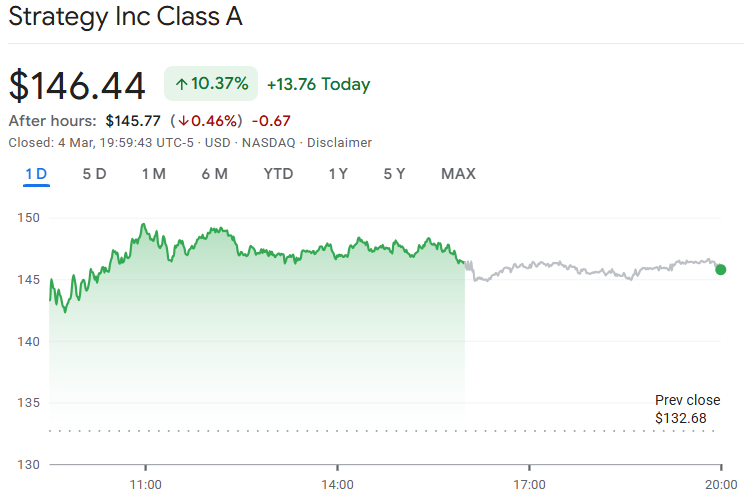
Crypto-related stocks surged on Wednesday as recent pro-crypto commentary from the US presidential campaign pushed Bitcoin and the broader crypto market higher.
Alongside a rise in the cryptocurrency market, the Bitcoin (BTC) treasury company Strategy spiked by more than 10%. Crypto exchange Coinbase registered a more than 14% gain, while miners Hut 8 clocked 13.89% and American Bitcoin Corp rose 11.65%.
Dominick John, an analyst at Zeus Research, told Cointelegraph the promise of clearer regulations on the near horizon could be one of the factors fueling the rally.

“Crypto equities are rallying as regulatory risk is being fundamentally redefined. With the executive branch championing a clear digital asset framework, coupled with robust spot ETF inflows and the potential passage of the Clarity Act,” he said.
“The trend will persist as regulatory clarity strengthens and institutional flows accelerate. With policy risk receding and product demand expanding, crypto equities have room to reprice higher in the medium term.”
Wall Street’s main regulators have advanced plans to oversee the industry, with the Commodity Futures Trading Commission filing a regulatory review for prediction markets and the US Securities and Exchange Commission filing a pending application on Tuesday on Federal Securities Laws and how they govern some crypto and transactions.
Trump’s statements helped buoy crypto
Pav Hundal, the lead analyst at Australian crypto platform Swyftx, told Cointelegraph that US President Donald Trump’s recent swipe at the banks and his push for the Senate’s crypto market structure bill to pass could also be playing a factor.
During a press conference at the White House, Trump also reiterated that in “crypto, we want to be dominant; we want to be dominant in everything we do,” Fox 2 Detroit reported on Wednesday.
“The market is putting a policy premium in the tape right now, and it is inflating crypto stocks,” Hundal said.
“We’ve got a double whammy of Trump pushing Congress on legislation and picking a fight with US banks for dragging their heels over the CLARITY Act. Coinbase is basically the cleanest large-cap expression of that in US equities,” he added.
Rally could still cool on bad news
The wider crypto market has also experienced a spike. Bitcoin has jumped over 7.6% in the last 24 hours to trade at $72,866, according to CoinGecko, while Ether (ETH) is up more than 8.3%, trading at $2,132.
However, Hundal cautioned that if the expected regulatory progress stalls or Bitcoin drops, the stock rally could halt and retreat as well.
Related: Trump sends pro-Bitcoin Fed chair nomination to the Senate
“Crypto stocks are obviously rallying on the expectation of political progress, and there is no reason that couldn’t continue. But things change quickly with this White House. If we see this regulatory debate go stale, or hit a wall, or Bitcoin is hit, it’s not hard to imagine a correction,” he said.
“Coinbase is pricing policy optionality, miners are pricing operating leverage on the leading asset by market capitalization in the sector. It works while BTC holds up, and can still unwind fast if this momentum hits a snag.”
Magazine: Would Bitcoin really be at $200K if not for Jane Street? Trade Secrets


Zerohash, a blockchain infrastructure provider, has applied for a National Trust Bank Charter with the Office of the Comptroller of the Currency (OCC), joining a growing list of crypto firms seeking federal licensing.
Stephen Gardner, the Chief Legal and Compliance Officer at Zerohash, noted that applying for a charter was a logical progression for the company.
Why it matters:
- A national bank trust charter allows an institution to operate as a trust bank nationwide.
- It enables fiduciary activities, asset custody, and settlement services. However, institutions with this charter cannot take deposits or issue loans, and are not covered by FDIC insurance.
- Growing OCC approvals for crypto firms signal a structural shift toward federally regulated digital asset infrastructure.
The details:
- If approved, the charter would allow Zerohash to further expand its range of services within a federal framework.
- Several digital asset firms have taken similar steps, with some already securing conditional approvals.
- Crypto.com received conditional OCC approval in late February. Ripple, Circle, Paxos, and Fidelity secured similar approvals in 2025.
- In addition, BitGo received full OCC approval in December 2025.
- World Liberty Financial‘s subsidiary filed its application in January 2026 to establish World Liberty Trust Company, National Association.
The big picture:
- Traditional banking groups have pushed back against the OCC’s issuance of trust charters to crypto firms.
- The American Bankers Association raises concerns that broadening the trust charter, especially for entities not involved in traditional fiduciary activities, could blur the lines of what it means to be a bank and open the door to potential regulatory arbitrage.

TLDR:
- Stablecoin volume hit $30T last year, forming the blueprint Armstrong cites for tokenized equity growth.
- Over $200B in tokenized assets now live on-chain, with Ethereum holding more than 60% of that total.
- Tokenized equities could unlock 24/7 trading, fractional shares, and smart contract-based governance rules.
- Goldman Sachs CEO David Solomon confirmed tokenized equities are a major area of active strategic focus.
Wall Street attention toward tokenized equities is gaining momentum as major financial and crypto leaders discuss the concept publicly.
Goldman Sachs CEO David Solomon recently raised the topic during a discussion with Coinbase CEO Brian Armstrong.
The conversation focused on how blockchain technology could reshape global access to stock markets. The exchange also highlighted how stablecoins previously followed a similar adoption path.
Tokenized Equities Gain Attention From Goldman Sachs and Coinbase
Solomon asked Armstrong how tokenized equities could evolve within crypto markets. The discussion appeared in a video shared by Etherealize on the social platform X.
Armstrong compared the idea to early skepticism surrounding stablecoins. Many questioned the need for digital dollars when traditional digital payments already existed.
He noted that stablecoins eventually filled a gap for people without access to dollar bank accounts. Residents in high inflation economies often seek dollar exposure.
Countries such as Turkey, Argentina, and Nigeria illustrate that demand. Dollar-pegged crypto assets allow users to transact globally without traditional banking barriers.
Armstrong also referenced data showing strong stablecoin activity. Roughly $30 trillion in stablecoin payment volume occurred during the past year.
He said the same demand drivers could appear in tokenized equities. Crypto infrastructure could reduce friction in global securities trading.
Crypto Markets Push Tokenized Stocks and Global Asset Access
Armstrong outlined a simple model for tokenized equities. A traditional custodian would hold company shares while issuing equivalent tokens on-chain.
That structure could allow global investors to trade stocks without brokerage restrictions. Many people worldwide cannot easily access U.S. equity markets.
The model also introduces continuous trading. Blockchain markets operate around the clock, unlike traditional stock exchanges.
Fractional ownership could expand access further. Investors could buy small portions of companies such as Tesla or Nvidia.
Crypto markets already use perpetual futures and other derivatives. Armstrong said similar instruments could eventually extend to tokenized securities.
Smart contracts also allow programmable governance. Companies could restrict voting rights for short term shareholders through on-chain rules.
The conversation also referenced a broader tokenization trend across financial markets. Institutions now tokenize assets including Treasuries, private credit, and real estate.
Ethereum currently dominates that infrastructure. More than 60 percent of tokenized assets reside on the Ethereum network, according to Etherealize.
Those holdings exceed $200 billion in value. Institutional participants often use Ethereum because of its established compliance infrastructure.
Quant-driven trading firm TDX Strategies is pitching clients a bullish bitcoin trade with an interesting financing twist that helps offset the cost of the bet while reshaping the position’s risk profile.
The Hong Kong–based firm suggested a “bullish risk reversal” strategy on Wednesday, which involves selling a put option (insurance against a downtrend) and using the premium earned to buy bullish call options – essentially funding bullish bets with income from put writing.
This way, the trader effectively pays little or nothing upfront while remaining exposed to a bitcoin rally.
It reflects a broader shift toward more sophisticated, options‑driven positioning, as traders look to stretch their capital further and fine‑tune their risk instead of just piling into spot or straightforward bullish leveraged bets.
A call option is a contract that lets the buyer bet the price of an asset will rise above a specific level, called the strike price, by a certain date. If the price climbs above that strike, the buyer can profit; if it doesn’t, they usually just lose the small fee they paid for the option. It’s analogous to buying a lottery ticket.
A put option does the opposite. It lets the buyer set up protection against a potential drop in the asset below a specific strike price by a certain date. If it does, the put buyer stands to gain; if it doesn’t, the entity stands to lose the initial premium paid. It’s akin to buying insurance.
TDX’s suggested play combines the two in such a way that the trader becomes the seller of out‑of‑the‑money (OTM) puts (insurance) and collects the premium on one leg, then redeploys it to buy an OTM call on the other leg.
The result is a low‑cost bullish structure compared with simply buying a call outright. An out‑of‑the‑money (OTM) call is an option whose strike price is above the current market price of Bitcoin, while an OTM put is one whose strike price is below the current market price.
“The anticipated confirmation of Mojtaba Khamenei as Supreme Leader introduces an added element of risk of immediate retaliatory escalation, however, we view any headline-driven market jitters as a tactical entry point,” TDX said in a market note.
“We are looking to capitalize on temporary weakness to build upside exposure in March and April [expiry], favoring bullish risk reversals (funding OTM calls by selling OTM puts),” TDX added.
The strategy is not without risk. By selling out‑of‑the‑money puts, the trader is obligated to buy Bitcoin at the strike price if the market crashes below that level, which means he ends up acquiring the asset at a price higher than its prevailing market value.
At the same time, while the calls offer upside participation, their high strike prices mean they may expire worthless if the rally falls short of expectations. In effect, the trader trades a lower upfront cost for a more asymmetric payoff: limited upside above the call strike and meaningful downside exposure below the put strike.
The position, therefore, requires close monitoring and may not be suitable for new investors or those with limited capital and a weak grasp of options dynamics.


Bitcoin finally got through the door.
The largest cryptocurrency broke above $72,000 on Thursday, its highest level since before the Feb. 5 crash and the first clean move above the $70,000 ceiling that had rejected it three times in the past month.
It was trading at $72,180 in Asian afternoon hours on Thursday, up 5.9% over the past 24 hours and 5.4% on the week, as a combination of easing war anxiety, strong ETF flows, and a broader equity rebound pulled risk appetite back into the market.
The rally was broad. Ether climbed 7.5% to $2,114, reclaiming $2,000 with conviction for the first time since late February. Dogecoin surged 7.5% to $0.095. Solana added 5.3% to $89.91. XRP rose 4.2% to $1.41 and BNB gained 3% to $650. WhiteBIT Coin jumped 5.6%. The only notable laggard was Tron, up just 1.4%.
The trigger was a shift in global risk sentiment. Asian equities rallied for the first time since the Iran war broke out, with South Korea’s benchmark surging 11% after its biggest drop on record in the previous session.
Wall Street had led the way after economic data eased inflation concerns, though the recovery looked tentative with U.S. and European futures edging lower Thursday morning.
The conflict itself remains unresolved, however. Tehran is still targeting Israel and Gulf states. U.S. and Israeli forces continued striking Iran, including sinking an Iranian warship in international waters. Defense Secretary Pete Hegseth said operations could last “six, could be eight, could be three” weeks. Trump said “we’re doing very well on the war front” and that the U.S. has “great support.”
But markets have moved past the initial shock and into pricing mode. The Strait of Hormuz situation appears to be stabilizing with U.S. tanker escorts underway. Oil pared its early-week spike.
And the worst-case scenario of an uncontrolled regional escalation looks less likely with each day that passes without a dramatic widening of the conflict.
TLDR:
- Venezuela’s Minerven will ship up to 1,000 kg of gold to US refineries under a new Trump-brokered deal.
- Trafigura is acting as intermediary, shepherding the gold under a separate US government arrangement.
- The contract requires 98% final gold purity, with the total deal value estimated above $150 million.
- The deal marks the third reported resource extraction agreement brokered by the Trump administration in 2025.
The United States has secured a multimillion-dollar gold agreement with Venezuela, marking a shift in Washington’s resource diplomacy.
Venezuela’s state-owned mining company, Minerven, will ship up to 1,000 kilograms of gold to US refineries.
Commodity trading giant Trafigura is serving as intermediary in the arrangement. The deal, reported by Axios, carries an estimated value exceeding $150 million.
Trump’s Venezuela Gold Deal: What the $150M Minerven Contract Covers
Interior Secretary Doug Burgum traveled to Venezuela personally to finalize the agreement.
His involvement signals how seriously Washington is treating resource access as a foreign policy tool. The contract specifies a 98% final gold content standard, according to sources cited by Axios.
Trafigura’s role is to shepherd the physical gold into US refining infrastructure under a separate arrangement with the government.
The trading firm has existing logistics networks across commodity supply chains. That infrastructure makes it a natural fit for a deal of this scale and sensitivity.
Kobeissi Letter, a renowned financial markets account, flagged the deal on X, noting the US is “eyeing Venezuela’s gold.” The post attracted attention from traders and macro analysts tracking dollar-adjacent commodity flows.
This marks the third resource extraction deal the Trump administration has reportedly structured since January, when Maduro’s grip on Venezuela reportedly weakened.
US Resource Strategy Extends Beyond Venezuela Into Asia and Latin America
The Venezuela gold agreement did not emerge in isolation.
According to posts by analyst Shanaka Perera on X, the same week saw Japan and India ink a rare earth agreement in Rajasthan. India also opened the Andaman Basin to oil exploration during that same period.
A joint US-Ecuador military operation also took place within the same seven-day window, according to Perera’s account. These moves, taken together, suggest a coordinated effort to lock in resource relationships across multiple regions simultaneously.
Venezuela holds some of the world’s largest oil reserves. For years, Caracas maintained deep financial and strategic ties with Beijing. A shift toward US-aligned commodity flows represents a meaningful change in that dynamic.
Gold markets have taken note. The deal adds to existing upward pressure on gold prices, which have held near record highs in recent sessions. A 1,000-kilogram shipment, while not enormous by global standards, carries symbolic weight given its origin and the political context surrounding it.
TLDR:
- Bitwise donated $233K from BITB profits to Bitcoin nonprofits in its second annual giving cycle.
- BITB now manages $2.7B in assets, directly increasing the size of this year’s developer donation.
- Brink, OpenSats, and HRF’s Bitcoin Fund split the contribution across open-source development grants.
- Bitwise CIO Matt Hougan says BITB is the only ETF with an ongoing profit-share pledge to developers.
Bitwise Asset Management has donated $233,000 to three Bitcoin-focused nonprofits. The funds come directly from profits generated by its Bitwise Bitcoin ETF, ticker BITB.
This marks the second consecutive year the firm has fulfilled a pledge made at the ETF’s January 2024 launch. The commitment ties 10% of gross annual profits to open-source Bitcoin development support.
Bitwise Bitcoin ETF Profits Fund Developer Grants for Second Straight Year
Bitwise directed the donation across three organizations. Brink, OpenSats, and the Human Rights Foundation’s Bitcoin Development Fund each received a portion.
All three groups focus on funding and training developers who maintain Bitcoin’s core infrastructure. None of them operate for profit.
The pledge originated when BITB first launched in January 2024. Bitwise committed to donating 10% of gross profits annually. The first donation followed that same year. This second contribution signals the firm intends to make the practice routine.
BITB has grown considerably since its debut. The fund now manages approximately $2.7 billion in assets under management. That growth directly increased the size of this year’s donation compared to the first.
Larger assets mean larger profits, and a larger share flows to developers.
Bitwise’s Chief Investment Officer Matt Hougan pointed out that BITB stands alone among ETFs in making this type of ongoing commitment.
No other Bitcoin ETF has structured a recurring donation tied to fund profits. The observation drew attention within the Bitcoin community.
Brink, OpenSats, and HRF Bitcoin Fund Split the $233,000 Contribution
Brink focuses on supporting full-time Bitcoin protocol developers through fellowships and grants. OpenSats funds open-source contributors working on Bitcoin and related projects.
The Human Rights Foundation’s Bitcoin Development Fund supports developers in regions where financial freedom is restricted.
Each organization allocates funds independently based on its own grant criteria. Bitwise does not direct how recipients distribute the money. The structure keeps the donation at arm’s length from any product or promotional interest.
Bitwise shared the announcement publicly via its official channels. The post credited investors who chose BITB for making the donation possible. It framed the contribution as a reinvestment into the ecosystem supporting the ETF itself.
The broader Bitcoin development community responded positively. The model connects institutional capital with open-source infrastructure in a direct, measurable way. Observers noted it creates a feedback loop: more BITB investment leads to more developer funding.
Bitwise has not disclosed projections for next year’s donation. The amount will depend on BITB’s profit performance through 2025.

Ethereum price prediction: $2,500 in focus as OI spike amid Vitalik’s calls for scaling

X-Files Producer Reveals Secret Sauce Behind Most Iconic Episodes

Shadow Cabinet League Table: Badenoch may not be popular with Starmer but she’s dominant with Conservatives


-

 Politics6 days ago
ITV enters Gaza with IDF amid ongoing genocide
-

 Politics2 days ago
Alan Cumming Brands Baftas Ceremony A ‘Triggering S**tshow’
-

 Fashion6 days ago
Weekend Open Thread: Iris Top
-

 Tech4 days ago
Unihertz’s Titan 2 Elite Arrives Just as Physical Keyboards Refuse to Fade Away
-
Sports5 days ago
The Vikings Need a Duck
-
 NewsBeat5 days ago
Dubai flights cancelled as Brit told airspace closed ’10 minutes after boarding’
-

 NewsBeat4 days ago
‘Significant’ damage to boarded-up Horden house after fire
-
 NewsBeat5 days ago
The empty pub on busy Cambridge road that has been boarded up for years
-

 NewsBeat4 days ago
Abusive parents will now be treated like sex offenders and placed on a ‘child cruelty register’ | News UK
-

 Entertainment3 days ago
Baby Gear Guide: Strollers, Car Seats
-
 Tech6 days ago
NASA Reveals Identity of Astronaut Who Suffered Medical Incident Aboard ISS
-

 Business6 days ago
Only 4% of women globally reside in countries that offer almost complete legal equality
-
 NewsBeat4 days ago
Emirates confirms when flights will resume amid Dubai airport chaos
-
Politics4 days ago
FIFA hypocrisy after Israel murder over 400 Palestinian footballers
-

 NewsBeat3 days ago
Is it acceptable to comment on the appearance of strangers in public? Readers discuss
-

 Crypto World6 days ago
From Crypto Treasury to RWA: ETHZilla Retreats and Relaunches as Forum Markets on Nasdaq
-

 Tech4 days ago
Viral ad shows aged Musk, Altman, and Bezos using jobless humans to power AI
-

 Business7 days ago
World Economic Forum boss Borge Brende quits after review of Jeffrey Epstein links
-

 Video7 days ago
Xii English top Selected mcq “Money Madness” Board Exam 2026, #chseodisha #hksir #mychseclass
-

 Video3 days ago
How to Build Finance Dashboards With AI in Minutes