
Crypto World
Stellar TVL Hits $200M All-Time High as RWA Demand and Native DeFi Protocols Drive Q2 Growth


TLDR:
- Stellar DeFi TVL hit a record $204.19M on April 24, surpassing its previous all-time high of $196.6M set in January 2026.
- RWA.xyz values Stellar’s broader distributed asset base at $1.64B, with Spiko alone accounting for $531.92M of that figure.
- Blend, Stellar’s top lending protocol, grew 25.9% quarter-over-quarter in Q1 2026, reaching $110.25M in total value locked.
- Stellar DEX volume surged 64.54% in one month, while seven-day network-wide DEX volume climbed 26.24% alongside rising TVL.
Stellar’s total value locked has crossed $200 million for the first time, reaching $204.19 million on April 24, per DefiLlama. This new all-time high surpasses the previous peak of $196.6 million set in January 2026.
The milestone arrives as many Layer 1 and Layer 2 networks have struggled to maintain TVL through 2026. Stellar has moved in the opposite direction, posting consistent growth into Q2.
Real-world assets and native DeFi protocols appear to be driving the move.
RWA Pipeline Powers Stellar’s Institutional Growth
Real-world assets are doing most of the heavy lifting behind Stellar’s TVL growth. The network has spent 18 months building its reputation as a settlement layer for tokenized treasuries, real estate, and other off-chain instruments. That positioning is now translating into measurable on-chain liquidity.
RWA.xyz puts Stellar’s broader distributed asset value at around $1.64 billion, well above DefiLlama’s native DeFi TVL reading.
Spiko leads the network with $531.92 million in distributed asset value. Ondo Finance adds $123.12 million, while WisdomTree contributes $24.01 million.
A Messari Q1 2026 report placed Stellar’s RWA market cap, excluding stablecoins, at $1.52 billion by the end of Q1. That figure crossed $2 billion on April 11.
The Stellar Development Foundation has been direct about where it wants the network to go in 2026, with @StellarOrg publicly targeting $1 billion in network asset value growth, 15 new enterprise partners, and at least 5 live deployments by year-end.
Several major deals have backed that institutional pipeline. Mercado Bitcoin announced a $200 million RWA issuance program on Stellar in September 2025, covering fixed income and equity products.
RedSwan brought $100 million in tokenized real estate the same month. PayPal USD also went live on the network shortly after, adding another major stablecoin to the stack.
Native DeFi Protocols Build Momentum Alongside Institutions
On the native DeFi side, Blend remains the network’s leading lending protocol with $110.25 million in TVL. The platform grew 25.9 percent quarter-over-quarter through Q1 2026. Elevated yields on Blend have kept deposits steady and activity consistent over that stretch.
Decentralized exchanges are also gaining ground. Aquarius holds $51.69 million in TVL, up 30 percent over the past month. Stellar DEX sits at $25.86 million, up 64.54 percent over the same period.
Seven-day DEX volume across the network is up 26.24 percent, showing the liquidity is actively being put to work.
Soroban, Stellar’s smart contract platform launched in 2024, connects the institutional and DeFi layers. On April 1, Templar launched lending and borrowing markets for six freely transferable RWAs, including Centrifuge and Etherfuse assets.
That launch allows institutional tokens to function as collateral inside Stellar DeFi. On April 2, Wirex and Ultra Stellar rolled out a Soroban-based payment layer aimed at millions of retail users.
Messari forecasts continued TVL growth into Q2 2026, citing sustained yields on Blend and the active RWA pipeline.
One detail worth noting: TVL has climbed even as XLM’s spot price has faced pressure. That pattern points to real settlement demand rather than token speculation driving the numbers.


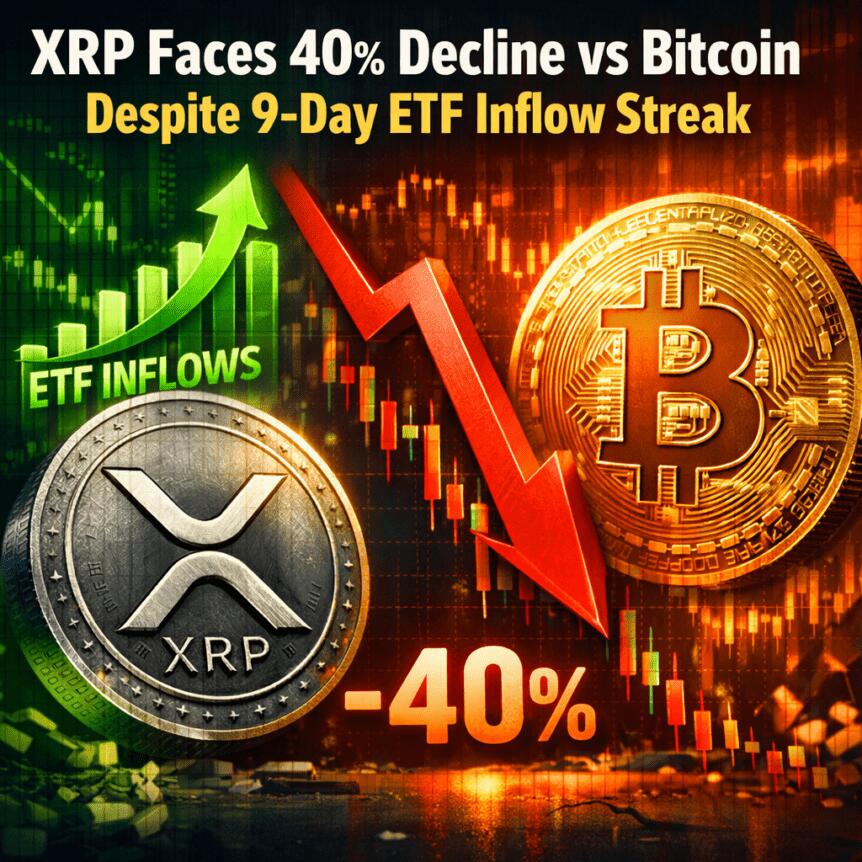
XRP has fallen about 5% against Bitcoin over the past week, reinforcing a technical setup that could tilt toward more downside unless buyers step in. The weekly chart shows XRP/BTC trading within a descending triangle that has now triggered a breakdown signal, underscoring a risk-weighted outlook for the pair.
The pattern’s implications point to a downside target near 0.000011 BTC, roughly 40% below current levels, calculated by measuring the triangle’s height and projecting it from the breakout point. Yet momentum metrics offer a possible counterpoint: the RSI sits at 33, a level associated with oversold conditions that have foreshadowed macro bottoms for the pair in the past. That dynamic leaves open the possibility of a near-term pause or reversal if buying interest returns.
Key takeaways
- XRP/BTC’s weekly descending-triangle breakdown targets about 0.000011 BTC, roughly 40% lower from current prices.
- RSI at 33 suggests oversold conditions that could precede a base formation or a pause in the slide.
- Institutional demand for XRP exposure is resurfacing, with US spot XRP ETFs seeing persistent inflows and rising assets under management.
- SoSoValue data show a nine-day streak of inflows totaling about $73.78 million, with cumulative inflows near $1.28 billion and AUM around $1.1 billion.
Technical picture: XRP/BTC pattern unfolds
The XRP/BTC pair has been consolidating within a descending triangle on the weekly timeframe since late 2024. A classic pattern in technical analysis, the descending triangle is typically considered bearish when the price breaks below the lower trend line. The break occurred as XRP/BTC closed beneath the 0.000096 BTC support, catalyzing the measured downside target around 0.000011 BTC. Traders watching these levels note that a failed defense of the near-term support—around 0.000091 BTC—could accelerate losses for both the XRP/BTC pair and XRP/USD.
Despite the bearish setup, the RSI’s current position in the low-30s has historically preceded macro bottoms for the XRP/BTC ratio, suggesting the possibility of a bottom before a meaningful recovery. If the pattern holds and selling pressure intensifies, the next leg could test additional support before any sustained rebound.
Institutional demand reemerges for XRP exposure
Separately, demand from institutional investors for XRP-linked products appears to be reviving. SoSoValue data show US-based spot XRP ETFs attracting $3.89 million in net inflows on Thursday, marking nine consecutive days of inflows and lifting the nine-day total to about $73.78 million. Cumulatively, inflows have neared $1.28 billion, with assets under management standing at roughly $1.1 billion.
Analysts have framed the ETF activity as a sign of growing institutional interest in XRP, even as the spot price remains soft. Don Digital Finance commented that the inflows indicate “steady institutional demand as accumulation continues despite sideways price action.” Fellow analyst Ledger Man suggested the development could signal a broader uptick in confidence around XRP, noting that rising exposure could eventually support a price recovery if demand persists.
Analyst ChartNerd cautioned that a break below the 0.000091 BTC level could accelerate declines in XRP/BTC and XRP/USD, highlighting the sensitivity of the situation to key support zones even as ETF flows suggest a longer-term structural interest from institutions.
Looking ahead, traders will be watching how the ETF inflow momentum interacts with the technical pattern on XRP/BTC. If inflows stay robust and risk appetite broadens, the potential for a counter-move higher could emerge, particularly if macro conditions remain supportive for crypto assets and if institutions continue to add XRP exposure during periods of price consolidation.
Readers should monitor the next few weekly closes for XRP/BTC and track whether ETF inflows maintain their pace, as those signals will help clarify whether the current setup is a setup for further downside or the seed of a broader rebound.


Metaplanet has announced a new bond issuance worth 8 billion yen, or about $50 million, to fund more Bitcoin purchases. The Japanese Bitcoin treasury firm said the bonds carry zero interest.
Summary
- Metaplanet issued 8 billion yen in zero-interest bonds to fund future Bitcoin purchases.
- EVO Fund fully subscribed to the bond sale, marking Metaplanet’s 20th bond issuance.
- Metaplanet held 40,177 BTC as of March 31 after buying 5,075 BTC in Q1.
The bond issuance was fully subscribed by EVO Fund, a Cayman Islands-based investment firm. EVO Fund has also supported earlier Metaplanet offerings, making this the company’s 20th bond issuance.
Metaplanet has continued to build its Bitcoin position since April 2024. The company is Japan’s largest corporate holder of digital assets and remains one of the most active Bitcoin treasury firms.
Bitcoin treasury grows to 40,177 BTC
Metaplanet bought 5,075 BTC in the first quarter of 2026. That brought its total Bitcoin holdings to 40,177 BTC as of March 31.
The figure placed Metaplanet as the third-largest Bitcoin treasury company globally. Its strategy follows a model used by other public firms that hold Bitcoin as a major treasury asset.
The latest bond issuance shows that Metaplanet plans to keep adding Bitcoin despite market volatility. The company did not state the exact timing of its next Bitcoin purchases.
Moreover, the new fundraising comes after Metaplanet reported a $619 million net loss for the 2025 fiscal year. The loss was mainly linked to unrealized valuation losses on its Bitcoin holdings.
Unrealized losses reflect changes in the value of assets that have not been sold. For Bitcoin treasury firms, such losses can appear during periods of market weakness, even when the company continues to hold the asset.
Metaplanet’s decision to raise more funds shows that it has not moved away from its Bitcoin-focused approach. The zero-interest structure also limits direct borrowing costs for the company.
Bitcoin trades near $77,800
Bitcoin recently traded around $77,800, up about 10% over the past month. The recovery followed earlier market pressure tied to geopolitical tensions in the Middle East.
The asset remains below its October 2025 all-time high of about $126,000. Even so, recent gains have supported renewed attention on corporate Bitcoin treasury strategies.
Metaplanet’s latest bond sale adds to its ongoing accumulation plan. The company’s future results will remain tied to Bitcoin price moves and its ability to manage treasury risk.


Space and Time has launched Dreamspace, an AI-powered app builder designed to let users create on-chain applications without writing code. The platform is built for users who want to build apps through simple text prompts.
Summary
- Dreamspace lets users create on-chain apps from text prompts without writing any code.
- The platform uses Microsoft Azure AI tools and runs on Base for low-cost transactions.
- Dreamspace recorded over 34,000 beta-created apps and plans education programs in Indonesia.
Dreamspace uses Microsoft Azure AI Foundry and Azure OpenAI. It also runs on Base, giving users access to low-cost and fast on-chain transactions.
The launch marks a new product push from Space and Time into AI-based development tools. The company said Dreamspace can generate working applications, including smart contract logic, from user instructions.
Microsoft-backed platform targets creators
Dreamspace is backed through Space and Time’s wider relationship with Microsoft. M12, Microsoft’s venture fund, led a $20 million investment in Space and Time in 2022.
The platform aims to make app creation easier for creators, students, and businesses. Users can describe what they want to build, and Dreamspace creates the application structure.
Each smart contract generated through the platform is fully auditable. This allows users to review how the contract works before deploying it on-chain.
Verifiable data supports on-chain apps
Space and Time secures the data layer behind Dreamspace. The company focuses on verifiable data infrastructure, which supports blockchain applications that need trusted data records.
Nate Holiday, co-founder of Space and Time and creator of Dreamspace, said, “Space and Time was built to make verifiable data accessible to any application, at any scale.”
He added, “Dreamspace is where that infrastructure meets the people building the next wave of the internet. When the data layer handles itself, the only thing left to focus on is what you want to create.”
Beta users created over 34,000 apps
During its beta phase, Dreamspace recorded more than 34,000 apps created by early users. The figure shows early demand for tools that reduce the technical barriers to app development.
The platform has also entered education programs, including AI labs and curriculum projects in Indonesia. These programs plan to reach more than 140,000 students.
Dreamspace uses Base to support fees under one cent and near-instant settlement. Space and Time said this setup can help users build and deploy real-world applications with less friction.
The launch adds to the growing overlap between artificial intelligence and blockchain infrastructure. It also shows how Microsoft-linked AI tools are being used in Web3 app development.
Ethereum price fell for the second straight day on Friday as institutional investors took a step back from the asset as they weighed rising geopolitical risks.
Summary
- Ethereum price fell for a second straight day, dropping 4% from recent highs as spot ETF flows turned negative after a 10-day inflow streak.
- Spot Ethereum ETFs recorded $75.94 million in net outflows, signaling cautious positioning by institutional investors amid rising geopolitical tensions.
- Technical indicators point to downside risk, with ETH testing key trendline support and potential targets at $2,200 and $2,000 if selling pressure intensifies.
According to data from crypto.news, Ethereum (ETH) price fell 4% from the Wednesday high of around $2,400 to $2,300 at press time where it had been consolidating.
Ethereum price fell as spot Ethereum ETFs recorded $75.94 million in net outflows over the past day. It marks their first outflow day since April 8, breaking a 10-day inflow streak that drew in over $630 million into the products.
The break off from the inflow trend suggests that institutional investors could likely be booking profits out of their positions. This shift occurs as they turn cautious over a political deadlock regarding a ceasefire between the U.S. and Iran, while the Strait of Hormuz continues to remain a primary point of friction.
While it might not be a major cause for concern yet, market analysts are closely monitoring whether the outflows from Ethereum ETFs signal a long-term trend.
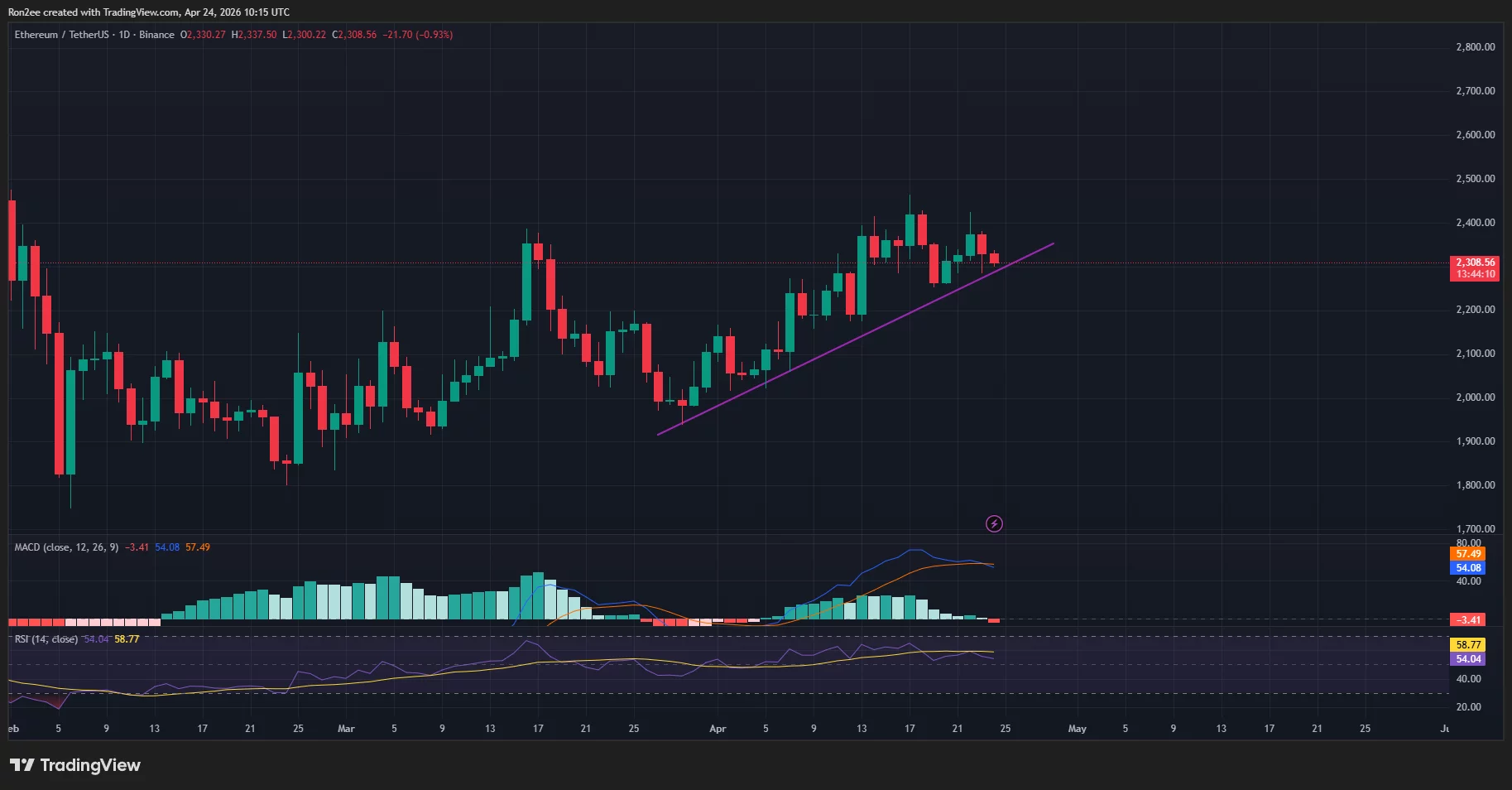
This comes as the daily Ethereum chart also presents a cautious outlook. Notably, Ethereum price is currently testing an ascending trendline support, a break below which could accelerate selling pressure.
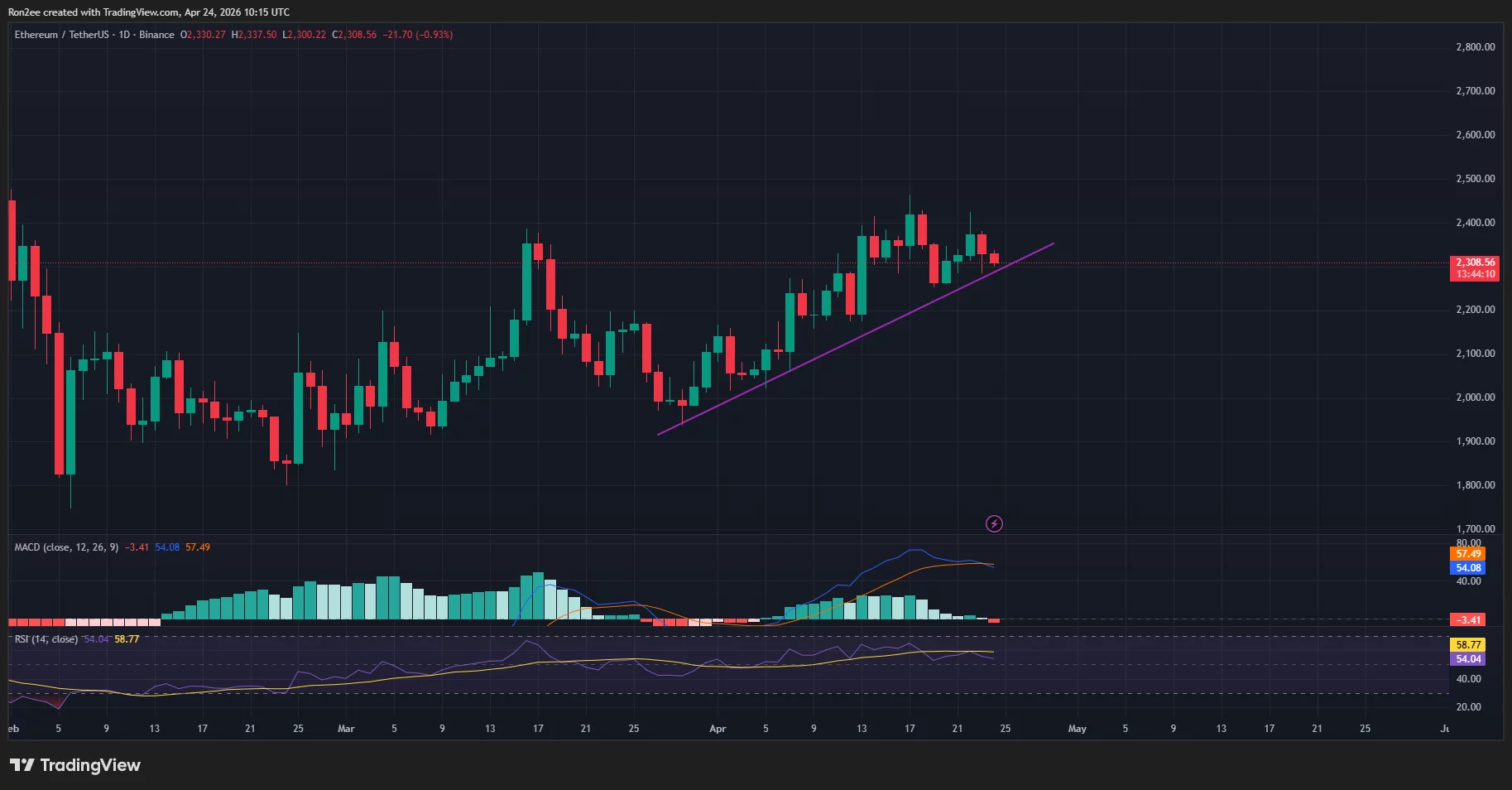
Technical indicators also seem to support a bearish narrative. The MACD lines have formed a bearish crossover while the daily RSI has tilted towards the neutral threshold, a sign that bullish momentum is fading.
Hence if Ethereum price breaks below the ascending trendline support, the next logical move would be towards $2,200 next. If the asset loses this support level as well, the net target for bears could be $2,000.
On the contrary, a successful rebound above $2,400 could invalidate the bearish setup and pave the way for a recovery toward previous monthly highs.
Disclosure: This article does not represent investment advice. The content and materials featured on this page are for educational purposes only.
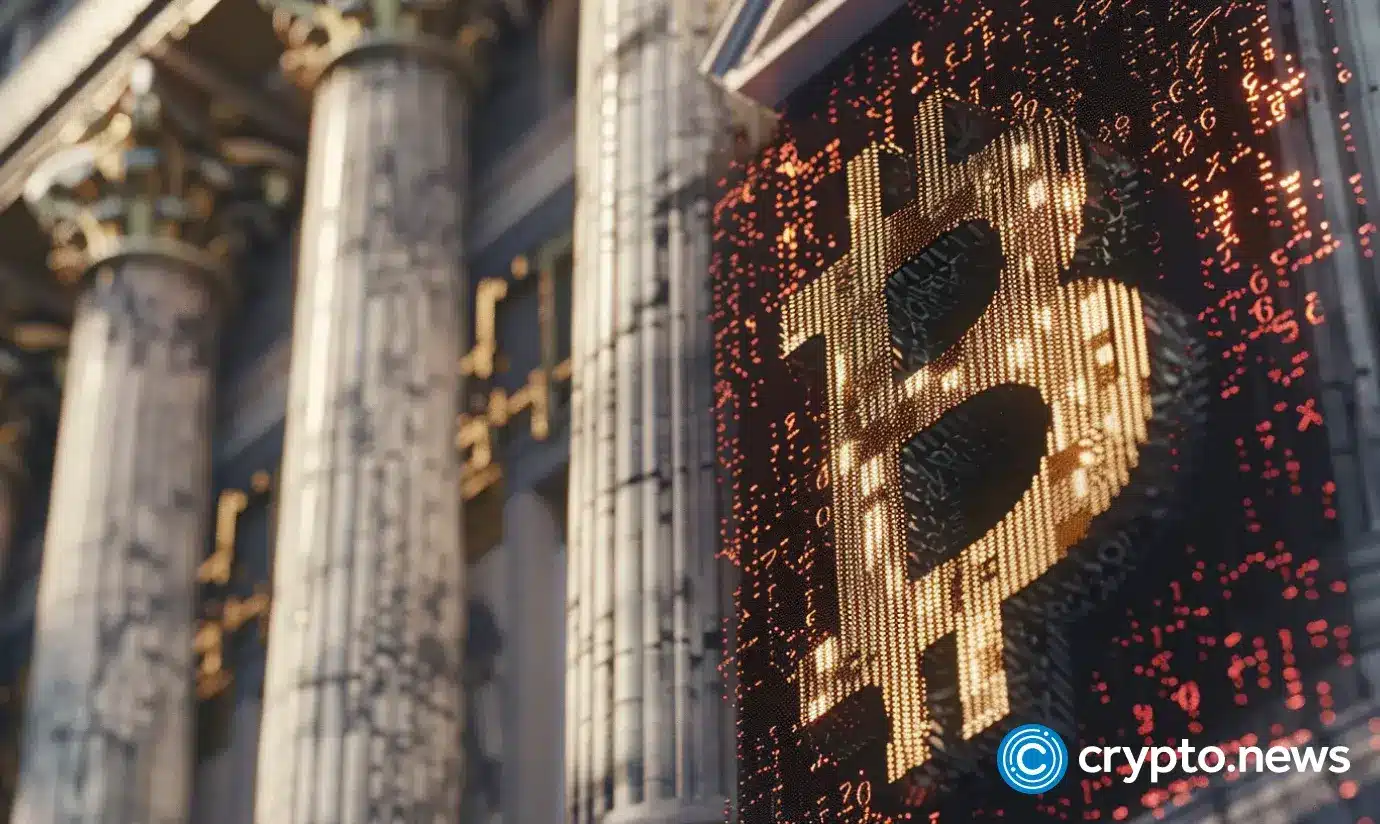
U.S. spot Bitcoin ETFs recorded an eighth straight day of net inflows after drawing $223.2 million on Thursday. The latest inflow pushed total net additions above $2 billion during the current run.
Summary
- Spot Bitcoin ETFs logged $223.2 million in net inflows, extending their streak to eight days.
- BlackRock’s IBIT led Thursday’s flows with $167.5 million as total inflows topped $2 billion.
- Bitcoin held near $78,000, while analysts linked ETF demand to stronger institutional accumulation.
BlackRock’s IBIT led the day with $167.5 million in net inflows, according to SoSoValue data. Funds from Ark Invest and 21Shares, Morgan Stanley, and Grayscale also recorded positive flows.
Not all funds saw new demand. Fidelity, Bitwise, and VanEck’s Bitcoin ETFs posted combined outflows of about $30 million during the same session.
BlackRock leads institutional demand
The inflow streak points to continued institutional demand for spot Bitcoin ETFs after earlier 2026 weakness. The products have regained attention as Bitcoin trades near $78,000.
Bitrue Research Lead Andri Fauzan Adziima said the latest run shows steady allocation activity. He stated, “This isn’t noise, it’s allocators treating the post-2025 pullback as a real accumulation zone, especially with resilient demand even after earlier 2026 outflows.”
Adziima added, “Institutions see BTC as core portfolio ballast now, not just a trade.” His comments suggest that some investors are treating Bitcoin exposure as part of wider portfolio planning.
Bitcoin price holds near $78,000
Bitcoin has gained about 10% over the past 30 days and has held near the $78,000 level. The asset remains below its October 2025 record high of about $126,000.
Adziima said continued inflows could create a steady demand base for Bitcoin. He said, “If these inflows keep rolling (or accelerate), I think it creates a structural bid that tightens supply even more.”
He added that Bitcoin could move toward the $85,000 to $90,000 range if ETF demand remains strong. However, he also noted that the market remains sensitive to macroeconomic and geopolitical news.
Ethereum ETFs see flow reversal
Ethereum ETFs also saw recent demand, posting 10 straight days of positive flows before recording $76 million in net outflows on Thursday. The shift came as Bitcoin products continued their inflow streak.
Bitcoin dominance has also moved above 60% for the first time this year, according to Adziima. That suggests the market has become more Bitcoin-heavy during the latest recovery.
He said, “The market isn’t euphoric yet; it’s mature and macro-sensitive.” He also warned that weaker ETF flows could test the $74,000 to $70,000 Bitcoin price zone again.


ECB teams with ECPC, nexo and Berlin Group to reuse open payment standards, cutting digital euro integration costs and clearing the path to a 2027 pilot, 2029 launch.
Summary
- The European Central Bank has signed agreements with ECPC, nexo standards, and Berlin Group to reuse open payment standards for digital euro payments.
- The move aims to reduce integration costs for merchants and banks and provide a free European alternative to proprietary card and wallet standards.
- The deal supports the ECB’s timeline to finalize digital euro standards by summer 2026 and prepare for a pilot from 2027.
The European Central Bank (ECB) has signed agreements with three European standards bodies to reuse existing open technical specifications for processing digital euro payments, in a bid to lower integration costs and accelerate adoption across the euro area. Under the deals, European Card Payment Cooperation (ECPC), nexo standards, and the Berlin Group will align their frameworks so that payment providers can support digital euro transactions without expensive, bespoke upgrades to point-of-sale terminals and online systems.
The standards in scope include ECPC’s CPACE protocol for tap‑to‑pay near-field communication, nexo’s ISO 20022‑based acceptance specifications, and Berlin Group’s open interfaces for account-to-account and card-based payments. By building the digital euro on top of these existing rails, the ECB wants to offer “a European free alternative to current proprietary standards” dominated by global card schemes and digital wallets, according to Executive Board member Piero Cipollone. “The open digital euro standards will provide a European free alternative to current proprietary standards, make it easier for new European providers to enter the market and give European payment service providers and merchants the certainty they need to invest, innovate and compete across the euro area,” Cipollone said.
ECB targets cheaper rollout for banks and merchants
The ECB argues that reusing open standards should minimize scheme and implementation costs at a time when banks face multibillion‑euro IT bills to adapt to a potential central bank digital currency. Earlier estimates cited by Reuters suggested a digital euro rollout could cost European banks between €4 billion and €6 billion over four years, or roughly 3% of their annual IT maintenance budgets, underscoring why avoiding custom builds matters for political buy‑in.
Ana Grade, CEO of ECPC, called the deal “a major step” for her consortium’s CPACE standard, saying it will “further enhance the standard’s visibility and market presence” as part of the digital euro project. Jean‑Philippe Joliveau, chairman of nexo standards, added that the cooperation “confirms the position of nexo standards as an international and collaborative standardisation body for payment acceptance, supporting interoperability across the payments ecosystem.”
Next steps toward a 2029 launch
The agreements land as EU lawmakers work to finalize the digital euro regulation, which is expected to be adopted in 2026 and unlock full-scale investments by payment firms. The ECB has said it plans to publish the complete technical standards by this summer, with a 12‑month pilot focused on person‑to‑person and point‑of‑sale payments scheduled from the second half of 2027 and potential issuance readiness around 2029 if the legal framework is approved.
Officials frame the digital euro as a way to strengthen Europe’s monetary sovereignty and reduce reliance on non‑European payment giants such as Visa, Mastercard, and PayPal, while giving merchants access to a low‑fee, publicly backed payment option alongside cash and bank deposits. “This partnership shows our strong commitment to making sure the digital euro works with existing European standards that the private sector can also use,” Cipollone said, arguing that early standardization is key to a smooth rollout.
Crypto World
Varntix expands reach with fixed and flexible accounts, while Dogecoin price predictions point to $0.50
Disclosure: This article does not represent investment advice. The content and materials featured on this page are for educational purposes only.
Dogecoin price prediction targets $0.50, but slow gains push investors toward Varntix for stable 20–24% returns and flexible income options.
Summary
- Dogecoin shows recovery signs, while investors seek steadier returns beyond hype-driven price swings.
- Varntix offers fixed crypto income plans with 20–24% annual returns and flexible entry options.
- Starting from $50, Varntix provides flexible plans with clear returns and better liquidity for investors.
Dogecoin is up on its daily and weekly scale, showing signs of recovery after early-year losses. Dogecoin price prediction models show a shift from a bearish to neutral sentiment. In fact, some forecasts point to DOGE even touching $0.50. However, the memecoin remains driven by hype and sentiment, making price moves unpredictable.
That uncertainty is pushing investors toward more reliable options. Varntix is gaining attention with fixed returns of up to 20–24% and flexible plans that still allow access to funds. With clear returns set from the start and growing demand from investors, it offers a more stable and practical way to earn in today’s market.
DOGE price prediction points to $0.50 as market sentiment turns neutral
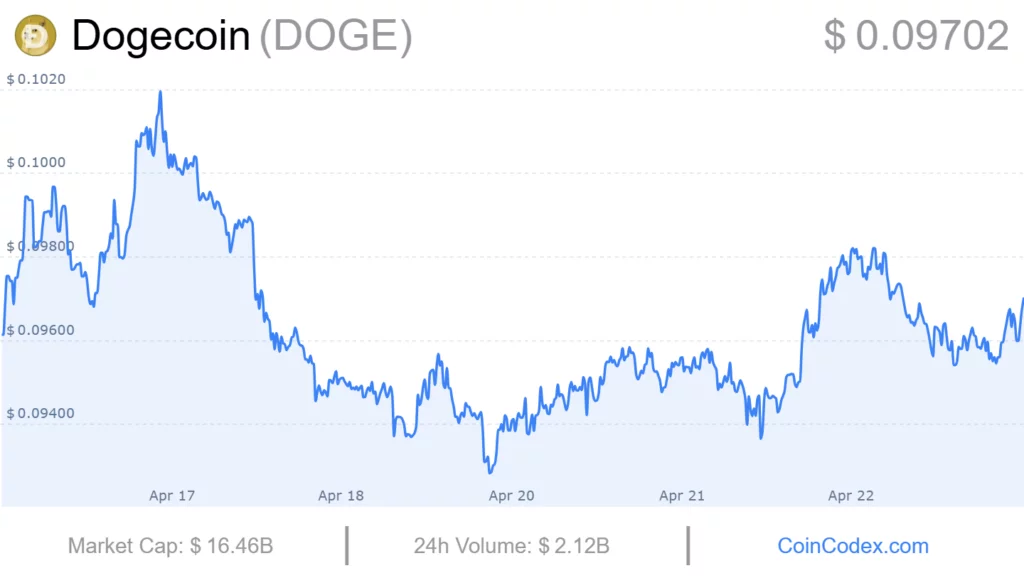
DOGE is trading around $0.09 after a tough start to the year, which saw it lose over 21% of its value. As per Dogecoin price prediction metrics, momentum has improved from bearish to neutral. In fact, the memecoin even built on this modest leap by recording 18 green days in the last 30 days.
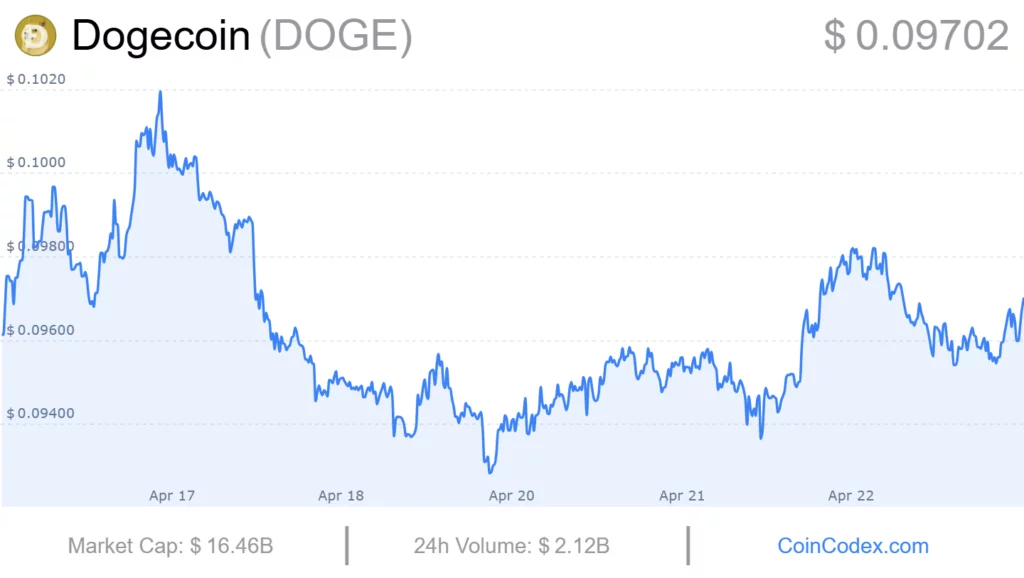
In line with the positive Dogecoin price predictions, some analysts see a strong upward movement for DOGE. Some projections even point to a possible move toward $0.50, but this depends heavily on market sentiment and demand.
Even at that, the memecoin price is not moving enough to make investors money. Many are stuck holding through long periods of sideways action with no real returns. Because of this, more investors are starting to look for ways to earn steady income instead of waiting for price gains.
Varntix shows why fixed income beats waiting in slow crypto markets
Dogecoin’s slow price action shows a bigger problem in crypto. Holding alone is no longer working for many investors. If they poured $500,000 into the market and prices stayed flat for even a year, they would earn nothing during that time. And on top of that, there remains a risk of losing investments to price crashes.
But when compared to Varntix’s structured income strategies, a key upside stands out. Investing that same $500,000 at a 20% APY could yield about $100,000 in a year or about $50,000 in 6 months. This shows how much investors stand to gain by adopting fixed and stable strategies.
Varntix drives demand with fixed and flexible crypto income plans
Varntix is also gaining traction by offering both fixed- and flexible-income plans in crypto. The platform gives users clear returns from the start, rather than leaving them to guess.
Fixed plans offer returns of 20–24% annually, with terms of 6-24 months. Investors lock in their funds and know exactly how much they will earn. Flexible plans offer returns of 4–6.5% while still allowing access to funds, making them more liquid.
Interestingly, entry to these structured income options is investor-friendly. Fixed plans start at $500, while flexible plans start at just $50, making it easier for more people to participate. It’s no surprise this investment barrier has attracted smart movers.
Varntix reportedly raised over $20 million within hours for the high-net-worth investor offering, which has fixed yields of 24%. Current allocations in their fixed and flexible plans are also limited, and the rates are not expected to last for long as more investors are moving toward steady income options.
Conclusion
The Dogecoin price prediction models show that DOGE is making a recovery and could potentially move toward $0.50. But for now, the memecoin’s slow price movement means many investors are not making real profits. Holding during long sideways periods is still a challenge, even with positive forecasts.
This is where Varntix stands out. It is a digital wealth platform that helps users earn a fixed income on their crypto through structured savings accounts. With clear returns and simple, flexible options, it gives investors a more stable way to grow their money without depending only on price movement.
Take a closer look at Varntix to put crypto to work.
FAQs
1. What is the latest Dogecoin price prediction?
Some forecasts suggest Dogecoin could reach $0.50, but it depends on market demand and sentiment.
2. What does Varntix offer investors?
Varntix provides fixed returns of 20–24% and flexible plans with 4–6.5% returns on crypto savings.
3. Why are investors choosing Varntix?
Because it offers steady, predictable income instead of relying only on uncertain price movements.
Disclosure: This content is provided by a third party. Neither crypto.news nor the author of this article endorses any product mentioned on this page. Users should conduct their own research before taking any action related to the company.
Zcash price rallied nearly 12% on Friday, continuing its recent uptrend as buying interest picked up again after a brief pullback earlier this week.
Summary
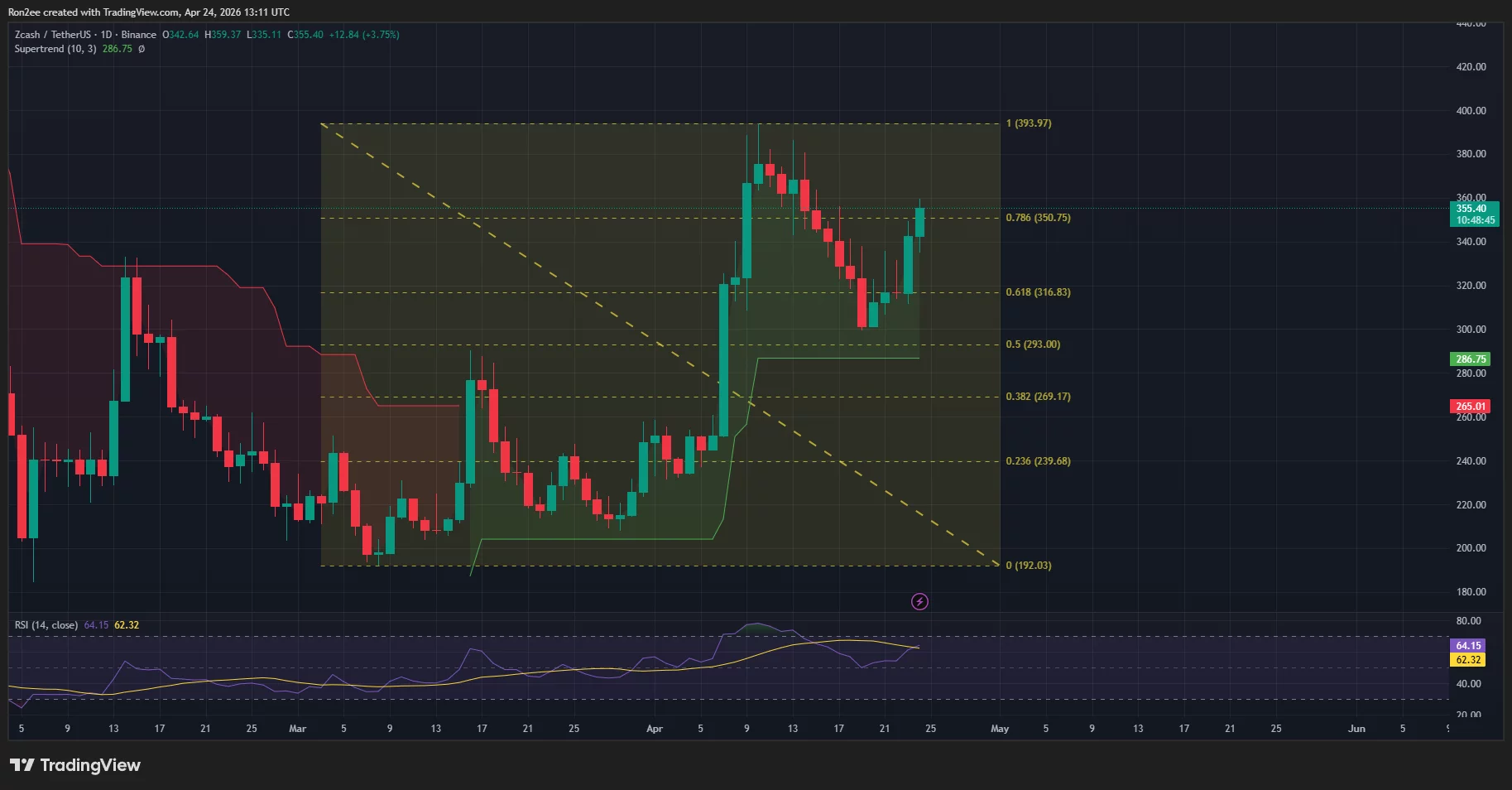
- Zcash price climbed nearly 12% to around $360, rebounding from $300 support as buying interest returned.
- Rising demand for privacy coins and increased shielded pool usage helped strengthen investor sentiment.
- Technicals show bullish momentum, with price testing $350 resistance and eyeing a move toward $400.
According to data from crypto.news, Zcash (ZEC) rose to an intraday high close to $360 before easing slightly to trade around $350 at the time of writing. The move comes after the token found support near the $300 level, where buyers stepped in to defend the downside.
The latest rally appears to be driven by a mix of fresh demand and improving technical structure. After holding key support zones during its recent dip, Zcash has started to attract traders looking to position for a continuation move higher.
A key factor behind the renewed interest is the steady demand for privacy-focused cryptocurrencies. With growing attention on blockchain transparency and regulation, some investors are rotating into assets that offer stronger transaction confidentiality, which has helped lift sentiment around Zcash.
At the same time, activity within Zcash’s shielded ecosystem continues to support its outlook. The increasing share of coins held in shielded pools has effectively reduced liquid supply, which can amplify price moves when demand rises.
The token is also tracking the broader market recovery, with improving sentiment across crypto helping altcoins regain momentum after recent volatility.
If the current trend holds, traders will be watching whether Zcash can push toward the $400 level, which remains a key psychological barrier.
Zcash price analysis
On the daily chart, Zcash price has bounced from the 50% Fibonacci retracement level near $293, confirming it as a strong support zone.
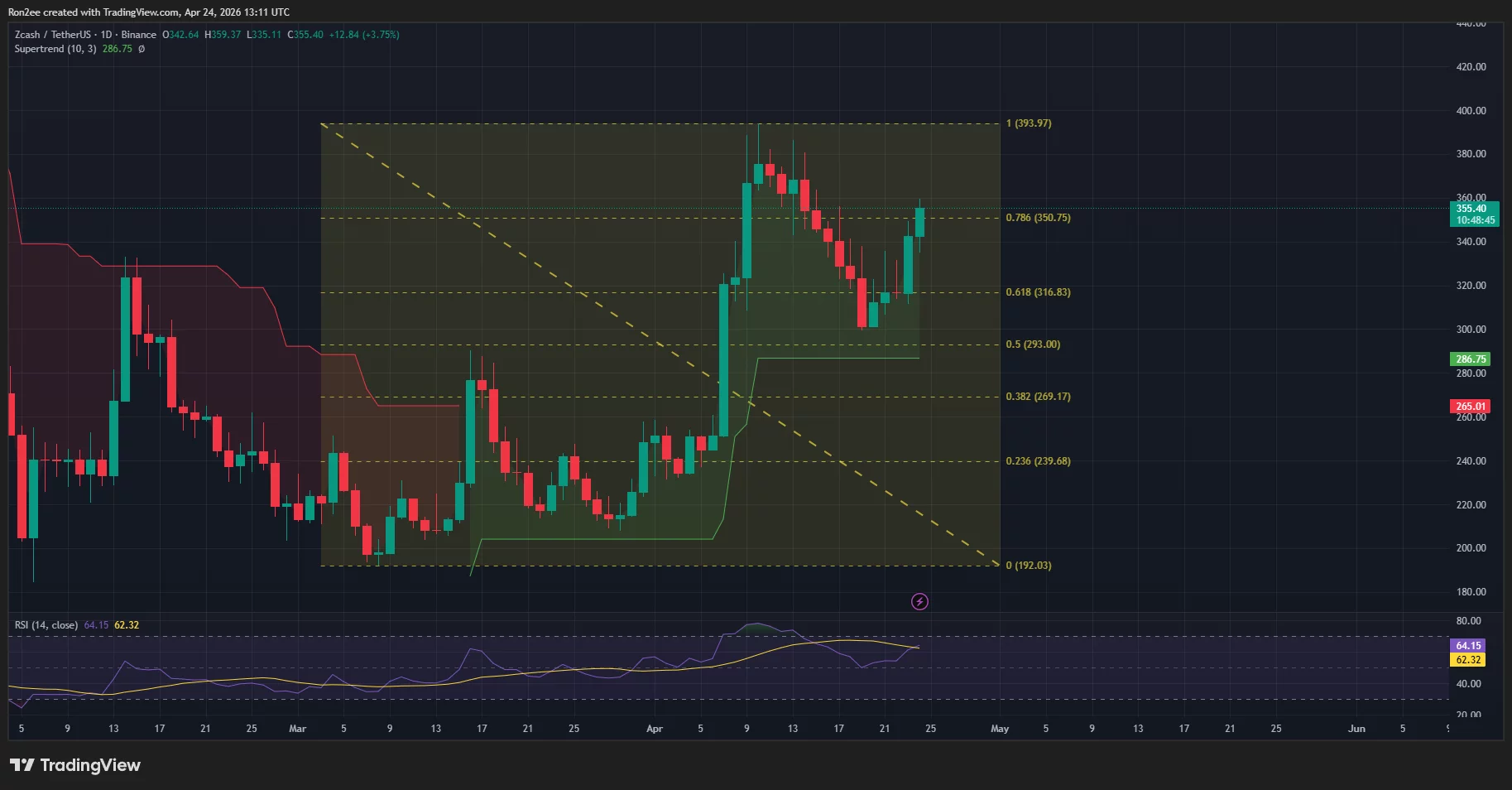
It is now testing resistance around the 78.6% Fibonacci level near $350. A clean break above this level could see the price move back toward the recent high near $390.
The Supertrend indicator has stayed in bullish territory, suggesting the uptrend remains intact. Meanwhile, the RSI is sitting around 64, showing steady buying pressure without signs of extreme overheating.
On the downside, a drop below the $316 level, which aligns with the 0.618 Fibonacci support, could lead to a pullback toward the $293 zone.
Coinbase is rolling out a BLEND–USD spot pair for Fluent’s newly launched token, joining KuCoin and MEXC in a coordinated listing that could turn the tiny‑cap altcoin into a high‑beta volatility play.
Summary
- Coinbase plans to launch spot trading for Fluent (BLEND), with the BLEND–USD pair expected to go live today once liquidity conditions are met.
- The listing follows Coinbase’s earlier move to enable BLEND deposit address generation and comes alongside listings on KuCoin and MEXC, boosting access to the new altcoin.
- Fluent’s mainnet launch and partnership with major exchanges position BLEND as a high‑beta token likely to see sharp price swings once trading opens.
Coinbase is preparing to launch spot trading for Fluent’s BLEND token, adding a BLEND–USD pair to its platform as early as today, subject to sufficient order-book liquidity. The decision places BLEND on the largest regulated crypto exchange in the United States by trading volume, signaling that demand for fresh altcoin listings remains strong despite a choppy market backdrop.
In an update on its listings page, Coinbase confirmed support for Fluent (BLEND) and said users in eligible regions can already generate deposit addresses, though deposits only become active once the asset issuer enables transfers. “Spot trading for BLEND will allow users to buy and sell the token directly on the platform, as opposed to derivative or futures-based exposure,” Coinbase’s listing note states, underscoring that the asset will be available in the cash market rather than via leveraged products.
New altcoin, thin float, high volatility risk
Fluent is a web3 platform whose native token, BLEND, is designed to sit at the center of its ecosystem for functions such as payments, governance, and incentives. According to CryptoRank, Coinbase is acting as a “primary launch platform” for BLEND as part of a wider collaboration focused on token distribution, developer onboarding, and educational content.
The timing aligns with BLEND’s initial exchange rollout, with MEXC and KuCoin both scheduling BLEND/USDT spot markets to open at 13:00 UTC on April 24, 2026, while Bybit has teased a forthcoming listing. Social posts from BSCNews noted that “leading exchanges @Coinbase and @krakenfx have scheduled $BLEND spot trading to begin today, April 24, 2026, once liquidity conditions are met,” highlighting a coordinated launch across multiple venues.
On-chain and order-book data suggest traders should brace for heavy volatility. A recent flow analysis from Streetbrief put BLEND’s market capitalization at roughly $1.85 million with only about $783 in 24‑hour volume ahead of the Coinbase listing, an “extremely illiquid” profile that can magnify both upside and downside moves when fresh demand hits.
Analysts expect that access via a BLEND–USD pair on Coinbase could pull in U.S.-based retail flow seeking high‑beta exposure, but warn that thin float and tight liquidity bands make the token particularly vulnerable to sharp intraday spikes and drawdowns in its early trading sessions.


South Africa’s 2026 capital flow draft recasts crypto as “capital,” tightening FX controls with declarations, approvals and sanctions as Africa’s biggest market matures.
Summary
- South Africa’s National Treasury has published draft 2026 capital flow regulations that formally bring crypto assets inside the country’s foreign exchange control regime.
- The rules would align South Africa with OECD and FATF standards, tighten oversight of cross‑border crypto transfers, and introduce new declaration, reporting, and sanction powers.
- The proposal lands as South Africa cements its role as Africa’s largest crypto market, with an estimated $35 billion in annual on‑chain volume and a sector value above $11 billion.
South Africa’s National Treasury has released its Draft Capital Flow Management Regulations for 2026, a sweeping overhaul that explicitly classifies crypto assets as “capital” and pulls them into the country’s foreign exchange control framework for the first time. The proposal, published on April 17 and now open for public comment, aims to replace the 1961 Exchange Control Regulations and align South Africa’s regime with recommendations from the OECD and the Financial Action Task Force (FATF) on combating money laundering, terrorist financing, and illicit financial flows.
According to the draft, crypto assets are now treated as a channel through which capital can be imported and exported, placing them alongside foreign currency, gold, and securities rather than outside the regulatory perimeter. National Treasury and the South African Reserve Bank said in a joint statement that the amendments are intended “to address gaps in the current regulations, including in relation to cross‑border crypto asset transactions,” and to remove “any ambiguity regarding the declaration of foreign assets.”
Prior approval, declarations, and tougher sanctions
The new framework introduces authorised crypto asset service providers, transaction thresholds, mandatory declarations, and stiffer administrative sanctions for non‑compliance. In practice, this could mean that certain cross‑border crypto transfers will require prior approval from authorities, while residents and visitors may have to declare digital asset holdings above thresholds set by the finance minister, with the risk of seizure or forced sale if they fail to do so.
Bitcoin.com reported that draft rules “require visitors to declare crypto or face up to 5 years in prison,” and grant border officials powers to search devices for coins such as Bitcoin and other tokens suspected of being moved in violation of capital controls. Business Insider Africa added that the same regulations could “require residents to declare and sell certain crypto, gold and foreign currency holdings to the National Treasury” if they exceed those thresholds.
National Treasury insists the overhaul does not amount to a ban on digital assets but a modernization of control tools. “The policy emphasis shifts away from transaction‑by‑transaction pre‑approval towards reporting, traceability and risk‑based oversight, particularly in relation to illicit financial flows and capital flight,” the South African Institute of Taxation wrote in a commentary, describing the approach as a “pragmatic acknowledgment that value now moves across borders digitally.”
Africa’s largest crypto market under tighter watch
The timing is significant for a country that has emerged as the continent’s biggest crypto hub by volume and venture funding. Chainalysis data cited by Mariblock show that Sub‑Saharan Africa received more than $205 billion in on‑chain value between July 2024 and June 2025, with South Africa accounting for about $35 billion of that total, second only to one other market in the region.
Market research from IMARC Group estimates that South Africa’s cryptocurrency market reached roughly $11.18 billion in 2024, driven by both speculative trading and real‑world use cases such as remittances and hedging against domestic currency volatility. A CV VC report highlighted that the country captured 18% of all African blockchain venture capital, with blockchain deals representing 7.4% of total VC funding on the continent — more than double its approximate 3.2% share globally.
Those figures, combined with South Africa’s exit from the FATF grey list in late 2025 and preparations for the next assessment cycle starting mid‑2026, help explain the urgency behind the draft. Treasury officials argue the rules are a “vital prerequisite” for modernizing the financial architecture and shutting down channels for illicit flows, even as critics warn they could chill innovation and push activity into less regulated jurisdictions if implemented heavy‑handedly.
Georgia wildfires have destroyed 120 homes, forcing evacuations

Sensient Technologies Stock Surges 16% on Q1 Earnings Beat and Strong Natural Colors Demand

XRP Faces 40% Decline vs Bitcoin Despite 9-Day ETF Inflow Streak

Manchester United reach agreement with Casemiro over contract clause amid transfer speculation

US brings back mandatory military draft registration

Steven Gerrard disagrees with Gary Neville over ‘shock’ Chelsea and Arsenal claim | Football


-

 Business5 days ago
Powerball Result April 18, 2026: No Jackpot Winner in Powerball Draw: $75 Million Rolls Over
-

 Politics6 days ago
Zack Polanski demands ‘council homes not luxury flats for foreign investors’
-
Entertainment5 days ago
NBA Analyst Charles Barkley Chimes in on Ice Spice McDonald’s Fiasco
-

 Tech6 days ago
Auto Enthusiast Scores Running Tesla Model 3 for Two Grand and Turns It Into Bare-Bones Go-Kart
-

 Politics4 days ago
Gary Stevenson delivers timely reminder to register to vote as deadline TODAY
-

 Politics2 days ago
Making troops accountable for war crimes threatens US alliance, ex-SAS colonel warns
-

 Fashion9 hours ago
Weekend Open Thread – Corporette.com
-

 Business3 days ago
Rolls-Royce Voted UK’s Most Iconic Trade Mark as IPO Register Hits 150
-

 Politics2 days ago
Disabled people challenge government SEND proposals over segregation concerns
-

 Politics2 days ago
Zack Polanski responds to home secretary’s taser threat
-
Politics2 days ago
Wings Over Scotland | How To Get Away With Crimes
-

 Politics2 days ago
Starmer handler McSweeney to be dragged from shadows by Foreign Affairs Committee
-
Crypto World6 days ago
Kelp DAO rsETH Bridge Hack Drains $292M as DeFi Losses Top $600M in Two Weeks
-

 Politics2 days ago
‘Iran is still a nuclear threat’
-

 Crypto World3 days ago
New York sues Coinbase, Gemini over prediction market offerings
-

 Business3 days ago
The Job Benefits Most Men Don’t Know to Negotiate
-

 Crypto World16 hours ago
Michael Saylor says BTC winter is over. Market analyst disagrees, says bitcoin was in a pullback
-

 Politics5 days ago
Reform investigating candidate who ‘hates’ the NHS
-
Crypto World6 days ago
Nasdaq Rally Extends to 13 Days as Call Options Volume Nears Record High Levels
-

 Crypto World5 days ago
Bitcoin, ether, solana slide, oil jumps on renewed U.S.-Iran war risks
You must be logged in to post a comment Login