
Connect with us
DAPA Banner

NewsBeat

Bury rapist who assaulted woman, 70s, finally jailed

Published

on

Bury rapist who assaulted woman, 70s, finally jailed

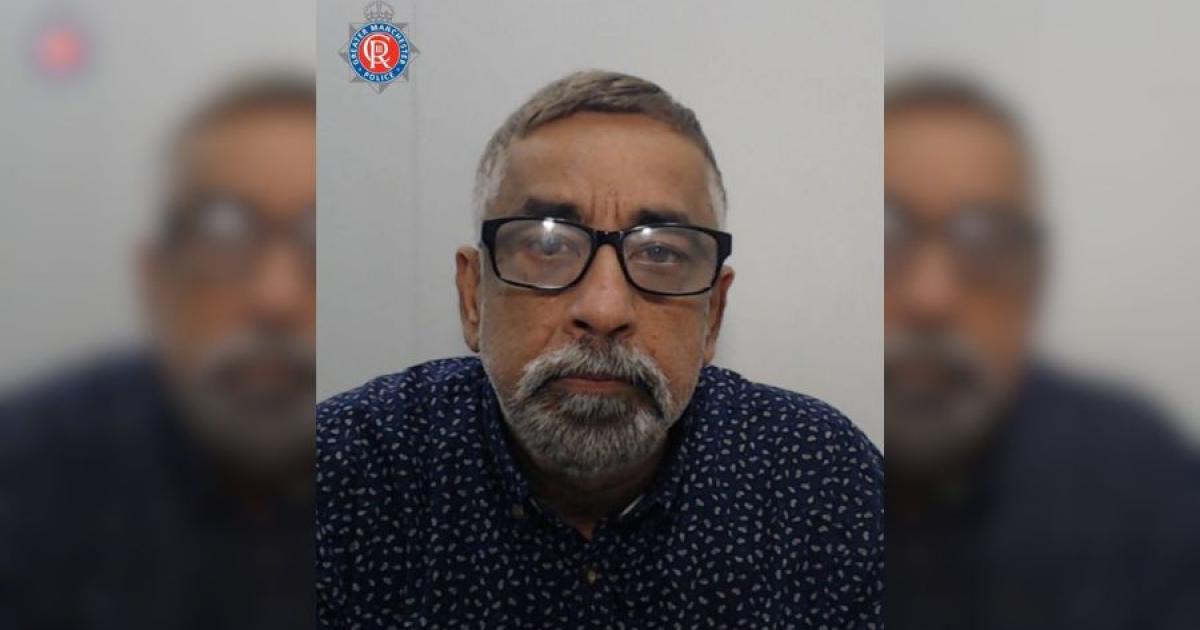
Vijay Chawla, 67, raped the 72-year-old woman in Manchester in March of 2023 after she repeatedly told him to stop.

He was arrested after the victim, who cannot be named for legal reasons, came forward to police and more than three years on has been sentenced for his crimes.

Detective Sergeant Sam Cullen, of Greater Manchester Police’s Criminal Investigations Department, said: “Firstly I would like to thank the victim in his horrifying incident to come forward and report their abuse to us, allowing us to conduct a thorough investigation.

“I commend the victim in this case for supporting our investigation, which has resulted in today’s sentence and sees justice served against Chawla.

Advertisement

The case was heard at Manchester Crown Court (Image: Phil Taylor)

“Our officers will provide support, conduct thorough investigations, and take firm action against offenders.

“Your allegations will be taken seriously, and you will be treated with dignity and respect.”

Chawla, of Rectory Lane, Bury was arrested after the woman told police about the rape the day after it happened.

Officers say that despite her repeatedly telling him to stop, Chawla forced himself on the woman and subjected her to a terrifying ordeal.

Advertisement

Police were called to the scene, and the woman was immediately supported by specialist officers and support services.

Chawla was arrested on the same day and later released pending further investigation.

He was found guilty of rape and sexual assault at a trial at Manchester Crown Court in January this year and this week was brought back to court to be sentenced.

Chawla was jailed for seven years.

Advertisement

Source link

Continue Reading
Click to comment

You must be logged in to post a comment Login

Leave a Reply

NewsBeat

All-nighters in Congress create dysfunction after dark

Published

on

All-nighters in Congress create dysfunction after dark

WASHINGTON (AP) — Just as the Senate prepared to launch into a late-night vote series, Republican Sen. John Kennedy of Louisiana went to the floor to vent.

Frustrated and seemingly exhausted Wednesday, Kennedy said he wanted more time to debate his amendments to a budget resolution to fund immigration enforcement agencies. But he had another complaint.

“Frankly I am worried about the health of some of our members,” Kennedy said as 9 p.m. approached. “Not that they’re in bad health, but it’s hard to stay up all night.”

More than 6 hours later, just past 3:30 a.m., senators wrapped up another marathon voting session on amendments and filed out of the chamber, dazed, tired and resigned to soon doing it all again.

Advertisement

It’s a complaint as old as the Congress, with leaders in both major political parties often turning to the torturous grind of an overnight session to exhaust members, overcome objections and push legislation to passage. But it’s a scenario that is playing out again and again, nearly business as usual, as the House and the Senate fracture and careen from one crisis to the next.

Lawmakers say it’s a symptom of a broken Congress that leaders are increasingly forced to govern in the dead of night.

“The dysfunction is getting worse,” said Republican Sen. Kevin Cramer of North Dakota, who has been in Congress for 14 years. Lawmakers have become “less mature,” he said, as a growing number act only in their own self-interest and hold up bills or delay proceedings.

“It’s not a healthy lifestyle,” Cramer said, for the country or the lawmakers. “There’s less concern for the team effort.”

Advertisement

Late-night fights have become the norm

In the last few weeks, Congress has repeatedly debated pressing national issues at night — leading to confusion and turmoil in both chambers.

Much of the drama has centered, as it increasingly does, on government funding.

In late March, Senate Republicans struck a deal with Democrats to reopen most of the Department of Homeland Security, including the Transportation Security Administration, while Democrats continued to block money for Immigration and Customs Enforcement and Border Patrol after the shootings of two protesters in Minneapolis. It was a breakthrough, and Majority Leader John Thune, R-S.D., passed the spending bill by voice vote — meaning there were no objections on either side — just past 2 a.m.

Senators then flew home for a two-week recess, leaving final passage to the House. But House lawmakers who were asleep when the final Senate agreement was announced woke up and angrily rejected it, saying they wouldn’t pass legislation that didn’t include funding for the immigration enforcement agencies. Senators were then forced to figure out a new plan for reopening the department, and it remains unresolved.

Advertisement

An equally contentious matter, the renewal of surveillance powers for federal spy agencies, also devolved into an after-hours affair.

House GOP leaders kept members in session well past midnight last week while trying and ultimately failing to pass different versions of a foreign surveillance bill. Scrambling to pass an extension of the law ahead of a Monday deadline, leaders eventually cobbled together a 10-day extension past 2 a.m.

Advertisement

Members of both parties were exasperated by the last-minute mayhem.

“Who the hell is running this place?” said Rep. Jim McGovern, D-Mass. He said Republicans threw the bill together “on the back of a napkin in the back room in the middle of the night.”

“Just about everyone agrees that this is serious stuff, the kind of debate that Congress ought to have in the open,” McGovern said.

Tennessee Rep. Andy Ogles, a Republican and member of the House Freedom Caucus who opposed the leadership bills, said the outcome was predictable.

Advertisement

“We warned them that this was gonna happen,” Ogles said. “Unfortunately, here we are at 2 in the morning.”

Time-consuming partisan bills push Senate into late nights

The late-night vote series in the Senate this week was part of an arcane, complicated process called budget reconciliation that GOP leaders are using to try to fund the two immigration enforcement agencies that Democrats continue to block. It’s become the default mode of governing for majorities in Congress as bipartisanship on major issues fades away.

Reconciliation allows the Senate majority to bypass the filibuster and pass budget-related bills along party lines. First, though, they have to get through two lengthy series of votes — and that’s where the dreaded “vote-a-rama” comes in.

The process is open-ended, which means lawmakers in both parties can offer as many amendments as they want to put the other side on record — or, as Republican Sen. Lisa Murkowski of Alaska describes it, “to make each other miserable.”

Advertisement

Leaders generally hold the votes in the middle of the night, as they did Wednesday into Thursday, in hopes of exhausting both sides and forcing senators to stay on the floor and vote quickly. But instead of waiting around between amendment votes, Murkowski walked back and forth between the chamber and her “hideaway,” a small office each senator has in the Capitol building.

“I’m at 14,291 steps,” she said just after 11 p.m., looking at her smartwatch, which was also telling her that her bedtime was approaching. She said if she couldn’t sleep, she might as well get more exercise.

Senators went through the same reconciliation process last year, in extremes, as they labored for weeks to pass President Donald Trump’s package of spending and tax cuts, which he dubbed One Big Beautiful Bill.

The bill had barely enough Republican support to pass, and the Senate and the House held nearly back-to-back all-night sessions to pass it by Trump’s July 4 deadline. In the Senate, GOP leaders kept the long vote series open for hours on end as they worked to win support from Murkowski and others.

Advertisement

“It’s insane,” Murkowski said of the late nights. “My mom always said, ‘Nothing good happens after midnight.’”

Overnights are not new but become more common

Overnight votes are certainly nothing new in Congress. The Affordable Care Act, President Barack Obama’s signature health care law, passed the Senate in the early hours of Christmas Eve in 2009 after weeks of negotiations, just in time for senators to get home for the holidays. Countless other big bills have been passed in the dead of night, as well.

But lawmakers say the after-dark routine has gotten worse and more frequent.

“Part of what’s changed here is there’s a lot of heavy lifting that you have to do to get a bill passed,” said Democratic Sen. Ron Wyden of Oregon, who has served in Congress since 1981, when he was elected to the House. “I think at some point you’ve got to have a forcing mechanism, and one of the easiest is to stay up until the wee hours so that everybody is basically trying not to fall asleep on national TV.”

Advertisement

Democratic Sen. Andy Kim of New Jersey, a relative newcomer to the Senate elected in 2024, said there’s an eventual question of whether anyone is watching.

In the middle of the night, he said: “Are the American people paying attention? How do we get the message out?”

Still, he said, it’s important that lawmakers get their work done at any hour, especially when there is a war going on with Iran and lawmakers take long stretches away from Washington.

“I don’t mind being here,” Kim said.

Advertisement

Source link

Advertisement
Continue Reading

NewsBeat

Everest flood warning neglected for years, Nepal officials tell BBC

Published

on

Everest flood warning neglected for years, Nepal officials tell BBC

Tshering Sherpa, chief executive officer of the Sagarmatha Pollution Control Committee, a local NGO in the Everest region, echoed the same message, adding that it was more than just the villagers at risk should Imja burst. Spring is peak visitor season here, with trekkers, tourists and climbers all arriving in the area.

Source link

Continue Reading

NewsBeat

What impact will soaring oil prices have on BP’s earnings?

Published

on

What impact will soaring oil prices have on BP’s earnings?

Michael Hewson at MCH Market Insights said: “It’s important not to have too high an expectation in what will be Meg O’Neill’s first earnings announcement as chief executive, but it should set the tone for what is to come next, and while BP has its fair share of problems, the fact that she’s joining the business after such a weak fourth quarter, when it posted a 3.4 billion US dollar loss, I would suspect the bar is quite low.”

Source link

Continue Reading

NewsBeat

The Russian resistance no one is talking about

Published

on

The Russian resistance no one is talking about

You could be forgiven for thinking everyone in Russia either supports the war in Ukraine or is too scared to do anything about it. A dominant narrative is that Russian civil society is passive, complicit or has been quashed to the point of being neutralised.

Some elements of this may be true. Following the full-scale invasion of Ukraine in 2022, Russian citizens criticising the war or expressing an anti-war position have faced severe prison sentences. These fall under expanded war censorship laws that target the spread of alleged “false information” or the “discrediting of the army”. But this is not the full picture.

For the past two years, I have been researching Russian anti-war resistance. This has involved conducting interviews with activists and other people who left Russia following the outbreak of war and are now scattered across the world. Instead of disappearing into exile, many of these people are mobilising to voice their opposition to the war and resist the regime in Moscow.

Some exiled Russians are sending money and letters of solidarity to political prisoners in Russia and their families. Others have coordinated legal aid to support anti-war defendants inside Russia and are lobbying western governments to distinguish between the Kremlin and Russian civil society.

Advertisement

At the same time, elite exiled Russian opposition figures including Garry Kasparov, Mikhail Khodorkovsky and Vladimir Kara-Murza, have worked to form the Platform for Dialogue with Russian Democratic Forces. This is a consultative body in the parliamentary arm of the Council of Europe that, established in 2026, aims to give Russia’s opposition an international voice.

Russian opposition political activist, Vladimir Kara-Murza, speaks at a press conference in London in 2024.
Tolga Akmen / EPA

During my research, I have also come across exiled Russians who have been running independent Russian-language media through Telegram channels and YouTube. Though in recent months, Russia’s telecommunications regulator, Roskomnadzor, has severely restricted access to these platforms. It has done so in an attempt to censor outside information and force Russians to adopt the state-controlled Max app.

I have encountered instances of anti-war Russians abroad helping people inside the country escape mobilisation by offering shelter and safe routes out of Russia. One of my interviewees, a 22-year-old Russian now living abroad, had even established transnational networks across Europe, the Caucasus and Russia to help criminally prosecuted anti-war Russians flee the country before standing trial.

Indigenous diaspora networks have also informed local communities in regions of Russia where there are large ethnic minority populations such as Tuva, Tatarstan, Buriyatia and Chelyabinsk about the realities of the war. These include the use of underage soldiers and heavy recruitment from ethnic minority regions.

Advertisement

But they also include the extent of Russian and Ukrainian casualties, which Russia’s government has provided almost no official data on. The Center for Strategic and International Studies, an American thinktank, said in early 2026 that Russian forces had suffered nearly 1.2 million casualties since the start of the war.

These Indigenous networks have posted videos on platforms such as Instagram, YouTube and Facebook, as well as messages on Telegram and Signal, to counter official state narratives about the war. Moscow has justified its war in Ukraine by saying it is protecting Russian-speaking citizens there, standing up to western expansionism and returning Russia to its former great power glory.

Three Russians handle their luggage at the Russia-Kazakhstan border.
Russians handle their luggage at the Russia-Kazakhstan border in the Chelyabinsk region as they prepare to leave the country in 2022.
Pavel Tabarchuk / EPA

Meanwhile, anti-LGBTQ+ laws introduced in December 2022 have prohibited any perceived propaganda about non-traditional relationships in Russia. This was followed by a Russian supreme court decision in 2023 to designate the “international LGBT movement” as an extremist organisation. This ruling has made any association or support for LGBTQ+ communities a criminal offence.

In response to this clampdown, exiled Russians have stood in solidarity with LGBTQ+ compatriots inside the country who have faced discrimination. My research has uncovered cases of people providing shelter and safe routes out of the country, creating digital safe spaces for Russian LGBTQ+ communities and lobbying for the protection of these communities in European countries.

Russian resistance

Russians do not fall into a single, neat, complicit mass. Since the start of the war, a diverse resistance movement has worked to counter the Kremlin’s authoritarian practices and propaganda. It reflects a broader variety of voices, values and stances than is currently possible in Russia, offering a crucial insight into the future political aspirations and hopes of ordinary Russians.

Advertisement

This movement will not overthrow the Russian government. But the ability to deliver regime change should not be the only measure of resistance. The movement is challenging the narrative that all Russians support the war, while also helping keep democratic political ideas alive for Russians inside the country for when change becomes possible.

As one of my respondents told me: “We have to stay in touch with supporters in Russia and plan for transition. There will be no time to strategise, so the plan has to happen now. We try to do as much as possible to be prepared.”

The resistance of exiled Russian dissidents matters not just for understanding Russia today. It also tells us how opposition survives in authoritarian regimes more broadly, highlighting the role that diasporas can play in sustaining democratic civil society transnationally.

Dissent does not disappear when it is crushed at home. It relocates, adapts and reconfigures across borders.

Advertisement

Source link

Continue Reading

NewsBeat

‘Falklands tell Trump to back off’ and ‘Harry does a Diana’

Published

on

'Falklands tell Trump to back off' and 'Harry does a Diana'
The headline on the front page of the Telegraph reads: “Falklands tell 'bully' Trump to back off”.

Many of the papers lead on a leaked Pentagon memo, originally reported by Reuters, which suggests the US has drawn up proposals to back Argentine sovereignty of the Falkland Islands. The Telegraph says the US review of their position is a means to “punish the UK for failing to support its war with Iran”, and notes it has been condemned by Prime Minister Sir Keir Starmer, war veterans and residents of the islands. The paper adds that the memo outlined several options for “punishing reluctant allies”, including suspending “difficult” ones such as Spain from “prestigious” jobs.

Source link

Continue Reading

NewsBeat

Peter Kay Bolton tickets sell out in record time today

Published

on

Peter Kay returns to Albert Halls in Bolton after 23 years

The comedian will perform four special hometown shows in July 2026, his first at the venue in more than 20 years, with proceeds supporting Bolton Hospice.

However, despite the rapid sell-out, some fans seemed to have problems with the ticketing system when sales opened at 10am via Quay Tickets.

Tickets were only available to those with a BL postcode.

One told The Bolton News: “My postcode is BL but it kept rejecting it, not sure why.

Advertisement

“I knew it would be hard to get tickets so it would have been good to get them but maybe next time.”

Some users reported that the issue appeared to be resolved shortly after tickets went live.

A fan said: “The system updated about 10 minutes after 10am and then accepted my postcode in upper case, I managed to secure a ticket.”

Quay Tickets said the event sold out quickly and that no formal complaints had been raised.

Advertisement

A spokesperson said: “No one has got in touch with any issues about this morning’s Peter Kay onsale, which sold out in around 30 minutes.

“But if any customer faced issues booking tickets, we would advise them to email the customer care team, who will look into it and respond directly.

“The email address is info@quaytickets.com.”

The shows will take place at the Albert Halls on Thursday, July 9; Friday, July 10; and Saturday, July 11, with both afternoon and evening performances on the Saturday.

Advertisement

Tickets started from £48, including booking fees, and were strictly limited to residents with a BL postcode, with billing addresses required to match.

Poster (Image: Agency)

Speaking ahead of the shows, Peter Kay said: “I can’t believe it’s 23 years since my Albert Halls shows, so I reckon it’s about time I came back. I’m really looking forward to it.”

He added that the performances are a thank you to Bolton and will support “an amazing charity” in Bolton Hospice.

Chair of Bolton Hospice, Judith Bromley, said the shows would make “a huge difference” to local people who rely on its services.

Advertisement

Source link

Continue Reading

NewsBeat

US military strike on alleged drug boat kills 2 in eastern Pacific

Published

on

US military strike on alleged drug boat kills 2 in eastern Pacific

The U.S. military said it launched another strike Friday on a boat accused of ferrying drugs in the eastern Pacific Ocean, killing two people.

The Trump administration’s campaign of blowing up alleged drug-trafficking vessels in Latin American waters has persisted since early September and killed at least 183 people in total. Other strikes have taken place in the Caribbean Sea.

The military has not provided evidence that any of the vessels were carrying drugs.

The attacks began as the U.S. built up its largest military presence in the region in generations and came months ahead of the raid in January that captured then-Venezuelan President Nicolás Maduro. He was brought to New York to face drug trafficking charges and has pleaded not guilty.

Advertisement

In the latest attack Friday, U.S. Southern Command repeated previous statements by saying it had targeted the alleged drug traffickers along known smuggling routes. It posted a video on X showing a boat floating in the water before a explosion left it in flames.

President Donald Trump has said the U.S. is in “armed conflict” with cartels in Latin America and has justified the attacks as a necessary escalation to stem the flow of drugs into the United States.

Critics, meanwhile, have questioned the overall legality of the boat strikes.

Source link

Advertisement
Continue Reading

NewsBeat

Chelsea FC vs Leeds: FA Cup prediction, kick-off time, TV, live stream, team news, h2h results, odds

Published

on

Chelsea FC vs Leeds: FA Cup prediction, kick-off time, TV, live stream, team news, h2h results, odds

Calum McFarlane will return to the dugout as crisis-stricken Chelsea face Leeds in the FA Cup semi-final this weekend.

Source link

Continue Reading

NewsBeat

Chef shares how to make the crispiest bacon in 6 minutes without frying pan or any mess

Published

on

Wales Online

A chef has shared his favourite method to cook bacon – and it’s not in a frying pan.

Bacon is cherished by many for its flavour, texture and adaptability. Not only is it amongst people’s favourite breakfast items, but it’s equally delicious in sandwiches, burgers, sprinkled over salads, or combined with vegetables for that wonderfully salty, crispy texture. That said, there’s debate over the optimal way to cook bacon.

Advertisement

As someone who dislikes frying bacon in a pan, Chef David Chang appeared on the Anyday YouTube channel to demonstrate how he prepares “the crispiest bacon” using a quicker technique.

He explained, “This fast and easy method will save you time and cleanup while still giving you perfectly crispy bacon every time.

“Say goodbye to greasy stovetop messes and hello to deliciously crispy bacon in no time. This is a game-changer for all bacon lovers.”

While it might seem unusual, David revealed he favours microwaving bacon as it’s speedier and safer than pan-frying, reports the Mirror.

Advertisement

Nevertheless, he pointed out several factors to consider when microwaving bacon: the thickness, the quantity being cooked and how the rashers are arranged.

The thicker and greater the amount of bacon you’re preparing, the longer the microwave time required, and ensure the bacon doesn’t overlap so it cooks uniformly.

David chooses streaky bacon and arranges the rashers in a microwaveable container with a lid that allows steam to escape.

While the majority of microwave bacon cooking guidance suggests using kitchen paper, the chef observed that he doesn’t usually employ it, as he maintains that having bacon fat, which he describes as “liquid gold”, available is a “very important tool in your kitchen”. He pointed out that it can be utilised in numerous other dishes.

Advertisement

For those opting for kitchen paper, place the bacon on it and add additional sheets to absorb the fat as it cooks and to avoid splatters inside the microwave.

He prepares the bacon in the microwave for approximately six minutes before removing the rashers and allowing them to rest.

David explained, “Whenever you cook bacon, and you want it to get crispy, you want to let it rest.”

Following the six-minute microwave cooking of the bacon, both with and without kitchen paper, the chef discovered it achieved the crispiest result with kitchen paper, as the fat is soaked up.

Advertisement

For the kitchen paper bacon, the chef suggests adding it to a BLT, while for the bacon prepared without kitchen paper that retains some flexibility, he advises it is best served with eggs or a cheeseburger.

Source link

Continue Reading

NewsBeat

London teacher to run marathon just 10 weeks after heart surgery

Published

on

London teacher to run marathon just 10 weeks after heart surgery

“For me, this marathon is a new chapter,” Mrs Martin said. “Running with a newly healed heart is my way of honouring Olive and showing my students, and myself, that even after immense grief, you can find strength and joy. It’s a reminder that life keeps going and I’m ready to see how much further I can go.”

Source link

Continue Reading

Trending

Copyright © 2025