
Crypto World
Stock Market Today: Nasdaq Rallies As Nvidia, Salesforce, CrowdStrike Surge

The tech-heavy Nasdaq composite jumped while the Dow Jones Industrial Average dipped Thursday as Wall Street reacted to big earnings reports, with Nvidia (NVDA), Salesforce (CRM) and CrowdStrike (CRWD) surging on the stock market today. Just after Thursday’s open, the Dow industrials were down 0.2%, while the S&P 500 moved up 0.3%. The Nasdaq advanced 0.8% in morning trading. West…
Copyright ©2026 Investor’s Business Daily, LLC. All rights reserved. 87990cbe856818d5eddac44c7b1cdeb8



The token hit a $25 million market cap on the back of nine days of unreleased Grand Theft Auto VI footage. Its creator has now sold his stack — hours before Rockstar’s first official gameplay reveal.


Stable Sea has added two WisdomTree digital funds to its treasury platform, giving eligible businesses access to three SEC-registered products with minimum investments starting at $1.
Summary
- Stable Sea has added WTSIX and FLTTX alongside the previously available WTGXX.
- The three funds carry minimum investments ranging from $1 to $25.
- Eligible users place fund orders through WisdomTree Securities from Stable Sea’s dashboard.
- Tokenized real-world assets in the United States have exceeded $31 billion.
Stable Sea adds two WisdomTree funds
Stable Sea said the WisdomTree Short-Duration Income Digital Fund and WisdomTree Floating Rate Treasury Digital Fund are now available through Stable Sea Terminal, its cash-management platform for finance teams.
The additions expand a relationship that began in April, when the platform started offering the WisdomTree Treasury Money Market Digital Fund. In April, crypto.news reported the first integration, which allowed corporate clients to place idle cash in a tokenized fund holding short-term U.S. government securities.
Eligible Stable Sea users now have three funds with different investment objectives, costs, yields, and minimums. Finance teams can place buy and sell orders from the same dashboard they use to oversee company cash, according to the firms.
Access is provided through WisdomTree Securities Inc., an SEC-registered broker-dealer and member of the Financial Industry Regulatory Authority. Before placing an order, each eligible Stable Sea Terminal user must establish a relationship with WisdomTree Securities and complete the required account-opening process.
Stable Sea CEO and co-founder Tanner Taddeo told crypto.news that the expanded selection lets a business match its cash holdings with the time at which it expects to need the money.
“By expanding our partnership with WisdomTree, we now offer three distinct funds that cover different business needs: a straight money market option, a floating-rate option, and an actively managed income option, so a business can match its cash to how soon it actually needs it.”
According to Taddeo, such choices have long been available to large corporate treasury departments but have remained difficult for many smaller companies to obtain.
Three tokenized funds serve different cash needs
At the lowest entry point, the WisdomTree Treasury Money Market Digital Fund, or WTGXX, requires a minimum investment of $1. The SEC-registered money market fund invests in short-term U.S. Treasury securities and accrues dividends daily.
WTGXX carries an expense ratio of 0.25% and had a seven-day SEC yield of 3.46% based on the figures provided with the announcement. Its investment objective combines current income with capital preservation, liquidity and maintenance of a stable net asset value of $1 per share.
A second choice, FLTTX, seeks to track an index of floating-rate U.S. Treasury obligations before fees and expenses. Unlike conventional fixed-rate Treasury securities, the interest rates on the fund’s underlying obligations adjust using scheduled Treasury auctions.
FLTTX has a $25 minimum investment and a 0.05% expense ratio. The fund’s 30-day SEC yield was listed at 3.81% in the information supplied for the expansion.
WTSIX also requires at least $25, although its strategy differs from that of the two Treasury-focused products. WisdomTree actively manages the fund to seek income while maintaining an objective of preserving capital.
The short-duration income fund charges an expense ratio of 0.40% and had a reported 30-day SEC yield of 4.42%. Its holdings may expose investors to credit, interest-rate, and income risks that differ from those attached to a money market fund or a portfolio limited to floating-rate Treasury obligations.
SEC yields provide standardized measures based on a fund’s recent income, but they change with market conditions and do not guarantee future returns. The products are investments rather than bank deposits, meaning they are not insured by the Federal Deposit Insurance Corporation and can lose value.
WisdomTree targets barriers facing finance teams
WisdomTree Head of Digital Assets Will Peck told crypto.news that the response to the original single-fund arrangement showed demand from businesses seeking access to regulated cash-management products.
“Different businesses have a variety of liquidity and cash-management needs, while high minimums and manual account processes have historically created barriers to accessing institutional-grade cash-management products.”
Adding the funds gives eligible finance departments more choices without requiring them to leave Stable Sea’s existing interface, according to Peck. The arrangement does not make the funds available to every company automatically, since eligibility checks and the WisdomTree Securities account process still apply.
Stable Sea said U.S. businesses collectively hold more than $5 trillion in cash and cash-equivalent accounts that earn little or no interest. The company presented the three-fund selection as a way for qualifying finance teams to divide operating cash according to expected liquidity needs instead of applying one product to every balance.
The low minimums contrast with some investment products designed for large issuers or institutional clients. An April report on Morgan Stanley described a stablecoin reserve portfolio carrying a $10 million minimum investment and a 0.15% management fee.
Morgan Stanley’s product invests in cash, U.S. Treasury securities with maturities of 93 days or less, and overnight repurchase agreements backed by Treasuries. Although the portfolio was designed for stablecoin issuers, the bank said other investors could also participate.
Tokenized funds remain regulated securities
Placing fund ownership records on a blockchain does not remove the securities rules, identity checks, or transfer controls attached to the underlying investment. A July tokenized fund explainer noted that access to many such products remains permissioned, with investors required to complete identity checks and use approved wallets.
Stable Sea and WisdomTree’s arrangement follows the same regulated model. Each of the three products is registered with the SEC, while transactions are handled through WisdomTree Securities rather than through an open, permissionless crypto market.
SEC registration also does not amount to a government guarantee or approval of an investment’s returns. Fund buyers remain exposed to the terms, fees and risks listed in each product’s prospectus, including possible loss of principal.
Industry tracker RWA.xyz put the value of tokenized real-world assets in the United States above $31 billion by mid-2026, compared with roughly $6 billion at the start of 2025. Tokenized Treasury and money market products accounted for more than $15 billion of the total, according to figures cited by Stable Sea.
Growth in the segment has brought asset managers and payment networks into products tied to government debt. In February 2025, Mastercard added Ondo Finance to its Multi-Token Network, allowing participating businesses to access tokenized Treasuries while using traditional banking infrastructure for settlement.
WisdomTree managed more than $150 billion in assets when Stable Sea announced the expanded relationship. WTGXX, FLTTX, and WTSIX remain subject to their respective prospectuses, eligibility requirements, expense ratios, and changing SEC yields.
Ethereum’s sharp breakout has significantly improved its market structure, with strong momentum carrying the price toward the $2.5K region. While bullish continuation remains possible, the increasingly extended move leaves ETH vulnerable to a temporary pullback or sideways consolidation if supply begins to increase.
Ethereum Price Analysis: The Daily Chart
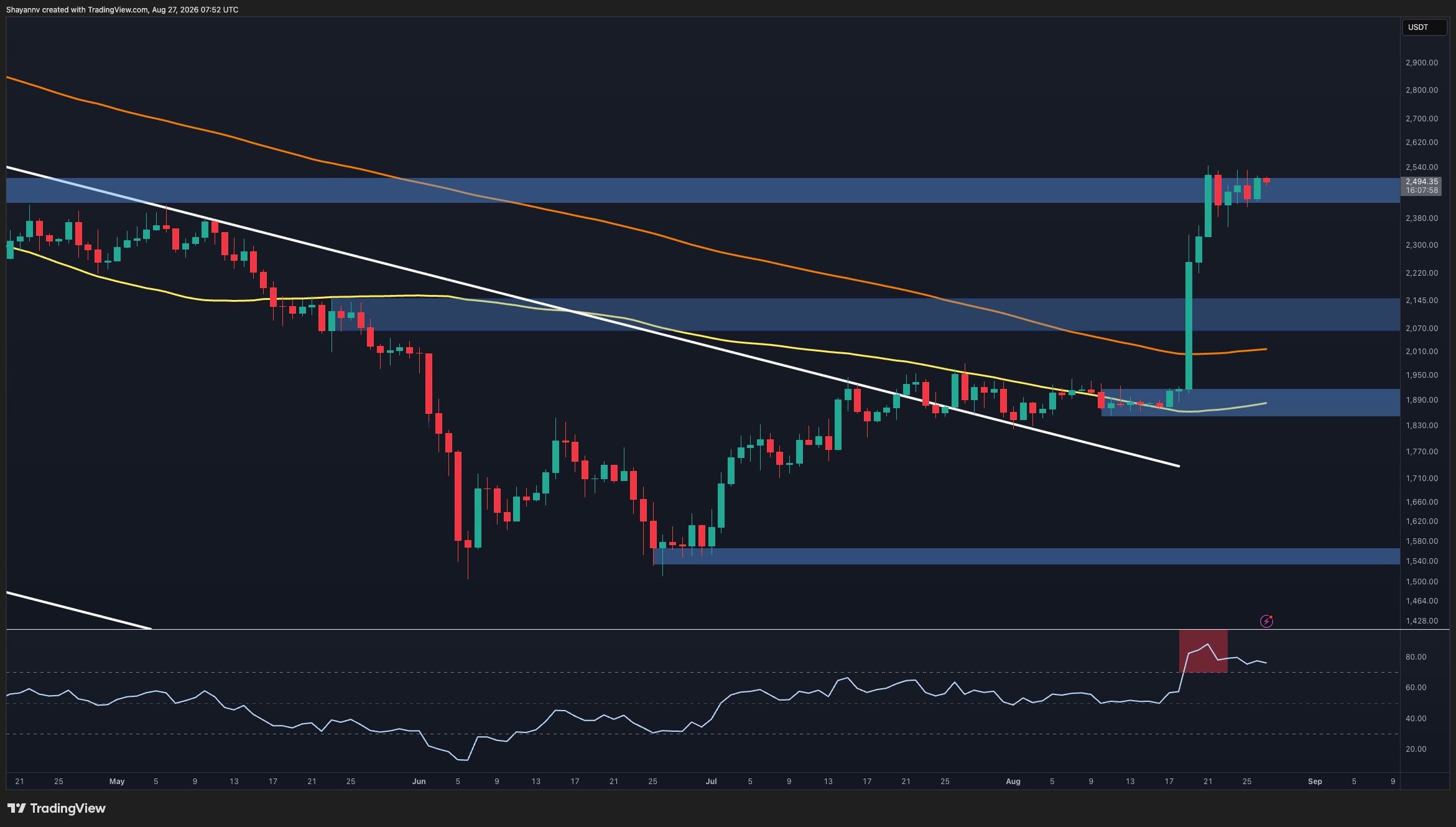
On the daily timeframe, Ethereum has decisively broken out of its prolonged bearish structure. The impulsive rally from the $1.85K-$1.92K demand zone pushed the price through the descending trendline, the major moving averages, and the $2.07K-$2.15K resistance zone with considerable strength.
ETH is now trading around $2.5K and testing the major $2.4K-$2.5K resistance zone. Momentum remains firmly bullish, supporting the possibility of continuation if buyers can absorb the available supply around this area.
However, the RSI has recently entered overbought territory following the vertical advance. This does not necessarily signal an immediate reversal, but it does indicate that the market is becoming increasingly extended. If supply increases around $2.5K, ETH could enter a period of sideways consolidation or begin a corrective pullback before attempting another leg higher.
The $2.07K-$2.15K zone represents an important support area in the event of a deeper correction, while the former $1.85K-$1.92K consolidation range remains the broader structural support.
ETH/USDT 4-Hour Chart
The 4-hour chart highlights the strength of the recent expansion more clearly. Ethereum surged almost vertically from around $1.9K and has since begun consolidating inside the $2.43K-$2.51K resistance zone.
Despite the lack of immediate follow-through above $2.5K, the short-term structure remains bullish. A decisive breakout and acceptance above the $2.51K region could indicate that buyers remain in control and open the door to further upside.
Nevertheless, after such an aggressive rally, a retracement would be technically reasonable. The first notable pullback target is the $2.22K-$2.31K zone. If selling pressure becomes more substantial, the second support region around $2.07K-$2.12K could become relevant.
Therefore, the primary scenario remains a bullish continuation based on the strength of momentum. Yet, increasing supply around the current resistance could first produce either a temporary correction toward these pullback zones or a sideways consolidation phase that allows the market to cool down.

Sentiment Analysis
The liquidation data adds another reason to expect potentially choppy price action in the short term. Liquidity is present on both sides of Ethereum’s current price, indicating that neither buyers nor sellers have established complete control.
This balanced positioning increases the possibility of sideways consolidation accompanied by liquidity sweeps in both directions. Price could temporarily move above or below the developing range to clear leveraged positions before establishing its next sustained trend.
Combined with the technical picture, this suggests that ETH’s broader momentum remains favorable for bullish continuation, but the path higher may not be straightforward. A period of consolidation or a temporary pullback could occur first as the market absorbs supply following the recent impulsive rally.

The post Ethereum Price Analysis: After a 35% Rally, Is ETH Ready for Another Leg Higher? appeared first on CryptoPotato.
The self-proclaimed Dogecoin killer has posted a solid 20% increase over the past two weeks, briefly hitting a three-month high.
As expected, the comeback fired up the SHIB Army, and now some might expect another wave of gains in the near term. We decided to ask three of the most popular AI-powered chatbots whether a more substantial rally is coming and what the chances are that the price will erase a zero during this quarter.
It is Possible
As of press time, SHIB trades near $0.0000053 (per CoinGecko), and ChatGPT estimated that it will require an approximately 90% pump to remove a zero and reach $0.00001. OpenAI’s platform claimed this remains plausible in Q3 but will depend on numerous vital factors.
The first is breaking the key $0.000006 level, which could lead to substantially higher trading volume and FOMO among market participants.
Next on the list is a potentially broader meme coin rotation, with capital moving from Bitcoin and major altcoins toward the depicted niche. Last but not least, ChatGPT paid attention to whale activity, noting that the return of big investors could positively impact the price.
In fact, the exact same thing happened a month ago when SHIB experienced a double-digit jump on a daily scale after a certain whale resumed purchasing after months of inactivity.
Another element often cited as bullish for the price is a potential resurgence of Shiba Inu’s burning mechanism. However, ChatGPT suggested that token burns are unlikely to make any difference, noting that the rate has declined by almost 60% over the past month.
Google’s Gemini said erasing a zero without massive capital inflows or a supply shock would require strong, sustained momentum. It predicted that further advancement of Shiba Inu’s layer-2 scaling solution, Shibarium, could be among the catalysts pushing SHIB’s price north this quarter.
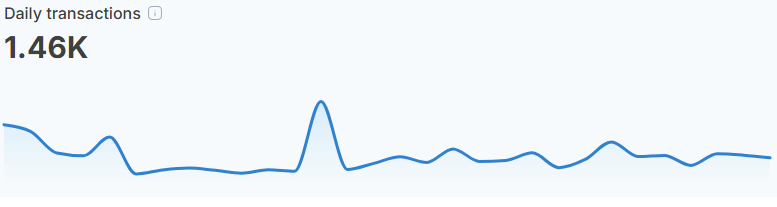
Nonetheless, the protocol is far from its glory days, processing mere hundreds or thousands of transactions on a daily scale. Years ago, the figure was in the millions.
Extraordinary Unlikely
Peerplexity was the most pessimistic among those we consulted. It said such a rally is mathematically possible but extremely implausible given the low interest in SHIB.
It claimed that the ceiling for Q3 lies in the $0.0000067-$0.0000078 range, adding that failing to hold the $0.000005 line could actually result in a major collapse.
The post Can Shiba Inu (SHIB) Erase a Zero in Q3: 3 AIs Give Their Take appeared first on CryptoPotato.
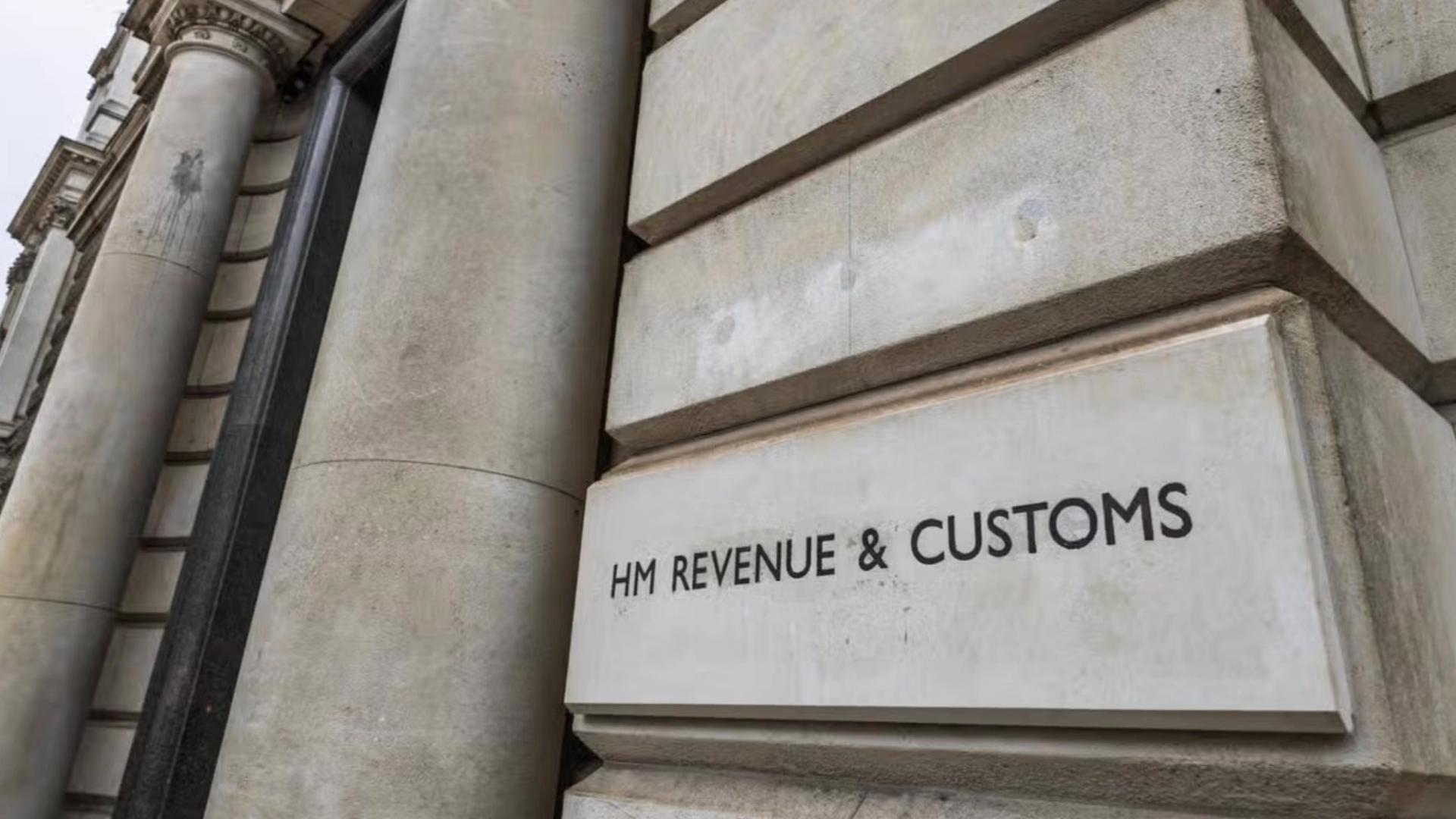
For the first time, the U.K.’s tax office broke out crypto capital gains figures, showing 17,600 people reported $1.87 billion in profits during the 2024-2025 tax year.
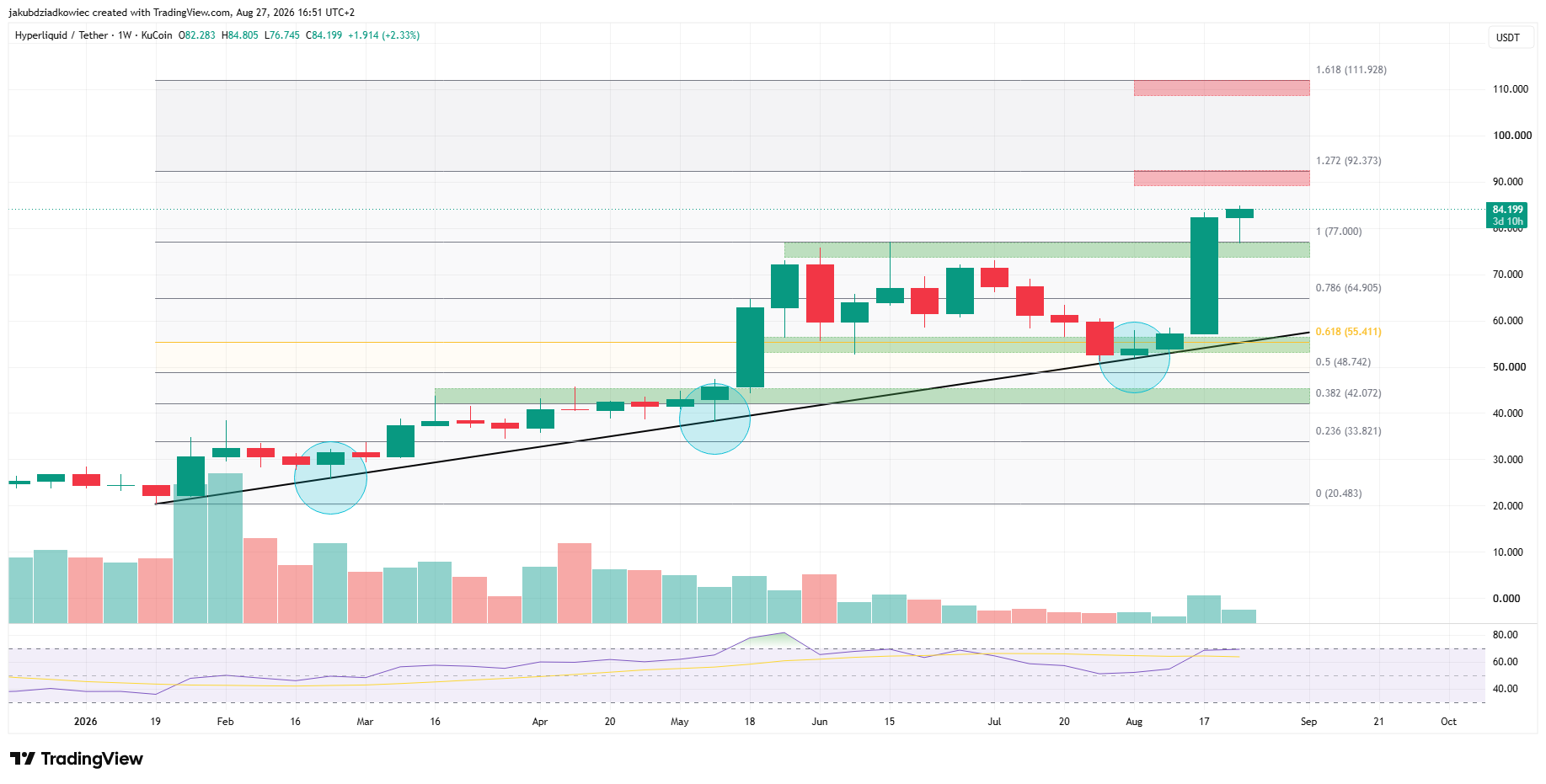
Hyperliquid (HYPE) climbed to an all-time high of $84.80 on Thursday, its second record in seven days. The altcoin trades near $84.07, up nearly 4% today, with its market cap nearing $19 billion.
The rally cleared the old $77 ceiling last week and has since held that level as support. Weekly and daily charts now point to $92 as the next resistance band.
Buybacks and a Regulatory Nod Fuel the Rally
Hyperliquid activated its AQAv2 reserve yield program on August 26. Roughly 90% of the cost-adjusted yield on $6.74 billion in USDC deposits now funds HYPE buybacks.
Under a 3% yield scenario, that adds about $182 million a year. The figure represents an 18% lift on current revenue of roughly $2.76 million per day. First distributions land Oct. 3.
Regulation supplied the second leg. President Donald Trump said on Aug. 20 that Hyperliquid could be available in the US soon, with the CFTC already working on a compliant pathway.
On Wall Street, spot HYPE exchange-traded funds have meanwhile logged renewed inflows, and the token leads its top 10 peers this month.
Weekly Chart Confirms the $77 Breakout
The weekly candle that broke $77 gained roughly 40%. This week HYPE dipped to $76.75, retested the old record, then reversed higher.
Before that move, the price bounced off an ascending trendline three times. The third touch in early August landed on the 0.618 Fibonacci level at $55.41.

Weekly RSI has reclaimed 70. A similar reading in mid-May preceded a rally of about 100% into the previous record. A repeat would target the 1.618 Fibonacci extension at $111.93. Volume, however, remains well below January levels.
HYPE Price Prediction After the All-Time High
The daily chart flipped to a bullish Supertrend on Aug. 19. That signal holds while HYPE stays above $68.
Volume expanded during the breakout between Aug. 21 and Aug. 25. Volatility reached 100% for several days after sitting at 0% on Aug. 12, and has since cooled to about 40%.

The 1.272 Fibonacci extension at $92.37 is the next target, roughly 10% above the spot price. The nearest risk is Hyperliquid’s $1.2 billion token unlock on August 29, with another due a month later.
Altcoin traders should watch $68 as the make-or-break price point for HYPE. A daily close below this level would end the bullish structure.
The post Hyperliquid Hits Another All-Time High. Is $100 Next for HYPE? appeared first on BeInCrypto.


MoonPay’s newest integration lets AI agents handle crypto lending on Solana


An attacker has drained almost $9 million worth of deposits from DeFi lending platform Moonwell, on the Base network.
Blockchain security firm Blockaid flagged the attack approximately an hour after it began.
Moonwell later acknowledged the incident, informing users that all borrow caps and MAMO and WELL supply caps had been cut to one wei, “preventing new borrowing and limiting the potential for further impact.”
Read more: DeFi, meet Claude: Moonwell’s ‘vibe-coded’ oracle in $1.8M blowup
The simple price manipulation attack hinged on inflating the price of MAMO, a relatively illiquid token used for collateral on Moonwell, and borrowing against it.
The attacker reportedly spent $7 million on pumping MAMO’s price, selling it after the attack for an estimated loss of $3.8 million.
The “borrowed” assets include cbBTC, USDC, WETH, and wstETH.
While Blockaid’s alert initially put the damage at $4+ million, the losses continued to stack up. The attacker swapped the proceeds for non-freezable stablecoin DAI, 8.7 million of which sits in their Tornado Cash-funded Ethereum address.
All is not well at Moonwell
Today’s loss marks Moonwell’s fourth incident in less than a year, all pricing-related.
A price discrepancy during the October 10 market crash led to $12 million in liquidations and $1.7 million of bad debt.
The following month, fallout from the Balancer hack led to issues with the wrsETH/ETH oracle, resulting in $3.7 million of bad debt.
Most recently, in February, a “vibe-coded” Moonwell contract valued cbETH at $1.12 (instead of 1.12 ETH) when its true value was around $2,200.
The error led to sudden liquidations of cbETH-collateralized positions and saddled the market with $1.8 million worth of bad debt.
Got a tip? Send us an email securely via Protos Leaks. For more informed news and investigations, follow us on X, Bluesky, and Google News, or subscribe to our YouTube channel.
Disclosure: This article does not represent investment advice. The content and materials featured on this page are for educational purposes only.
Postquant Labs announces the upcoming launch of QuipSwap, a bridgeless protocol designed for secure cross-chain asset swaps.
Summary
- Postquant Labs is launching QuipSwap, a bridgeless protocol designed to enable trustless cross-chain swaps without intermediaries.
- QuipSwap aims to improve cross-chain security by enabling P2P swaps without bridges, oracles, or wrapped assets.
- QuipSwap introduces a bridgeless approach to cross-chain trading through synchronized P2P transactions.
Postquant Labs, the developer behind quantum computing protocol quip.network, has announced the imminent public launch of QuipSwap, its Bridgeless Swap Protocol.
QuickSwap is aimed at addressing the dual challenges of cross-chain security vulnerabilities and the looming threat to current cryptographic standards posed by its own quantum computing network.
The protocol represents the first solution to enable trustless cross-chain transactions without bridges, oracles, or wrapped assets, components that have historically been the primary vectors for billions of dollars in losses from hacks and exploits.
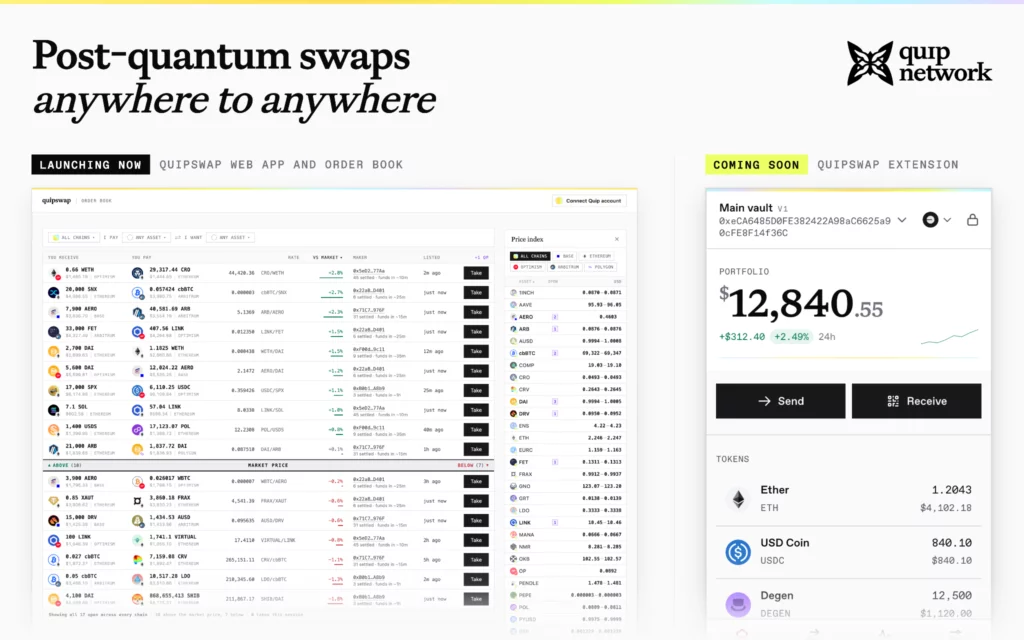
Where traditional cross-chain solutions rely on centralized intermediaries or smart contract bridges to move assets between blockchains, Quip’s new protocol utilizes a peer-to-peer (P2P) mechanism that completely upsets the previous paradigm. The protocol enables two parties to agree to a swap and effectively exchange wallet access across chains in a synchronized, trustless manner.
Colton Dillion, CEO and co-founder of Postquant Labs, said the company’s approach to cross-chain trading could help users participate in the Quip ecosystem without relying on intermediaries, bridges or oracles.
“If one party claims their side of the trade, the counterparty immediately receives their claim key too — no take-backs,” Dillion said. “You can be on any chain and treat it like a P2P swap.”
The timing of this launch addresses a key, often-overlooked vulnerability: quantum resistance. As quantum computing advances, the cryptographic foundations of current blockchains are becoming open to exploitation. The Quip team argues that simply upgrading a single chain is insufficient since, for a transaction to be truly quantum-resistant, every layer it traverses must also be immune to quantum attacks.
Commenting on the matter, Dr. Richard Carback, Chief Technology Officer and co-founder of Postquant Labs, said the company’s approach to quantum computing infrastructure is designed to address security challenges that arise when distributed networks rely on cryptographic systems vulnerable to quantum attacks.
“You can’t run a distributed computation network where your own miners can break your cryptography,” Carback said. “No chain supports quantum computation, so we had to build our own,” he added.
Following a successful demonstration of the live claim process at ETHDenver in February, the Quip team has completed the core codebase. The protocol has undergone rigorous testing and a formal security audit conducted by Oak Security, with results announced as part of today’s public launch.
Alongside QuipSwap, quip.network has successfully deployed quantum-resistant wallets across Bitcoin, Ethereum, and Solana, currently in beta testing, hardening blockchain infrastructure against the quantum threat before it arrives. All research underpinning quip.network is open-source, built with the goal of establishing a global quantum computing standard for the industry.
Disclosure: This content is provided by a third party. Neither crypto.news nor the author of this article endorses any product mentioned on this page. Users should conduct their own research before taking any action related to the company.

Hyperliquid Strategies has raised $647 million in equity capital and more than doubled its treasury to 29.3 million HYPE tokens, valued at $1.9 billion at the end of June.
Summary
- Hyperliquid Strategies held 29.3 million HYPE and $149.9 million in cash on June 30.
- The Nasdaq-listed company reported $305.5 million in annual net income and no debt.
- PURR shares gained nearly 18% after the fiscal-year results were released.
- Since December, the firm has spent $773.4 million buying about 16.5 million HYPE.
Hyperliquid Strategies builds a $1.9 billion HYPE treasury
Hyperliquid Strategies said in its fiscal-year results that its HYPE holdings increased from an initial 12.5 million tokens to approximately 29.28 million by June 30. At the token’s fiscal year-end price of $65.04, the position carried a value of $1.90 billion.
Alongside the token reserve, the company reported $149.9 million in cash and cash-like assets, including $12 million held in USDC. Total assets reached $2.06 billion, while stockholders’ equity stood at $1.87 billion.
No debt remained on the balance sheet at the end of the period, according to the results. The company also said substantially all its HYPE tokens were staked and generating income.
“This was the year we built the platform,” CEO David Schamis said. He added that the company had doubled its treasury, launched a validator with Unit, and completed its exit from legacy biotechnology operations.
Operating the Hyperliquid Strategies x Unit validator produced another source of income tied to the network. The company described it as Hyperliquid’s third-largest validator when excluding wallets connected to the Hyper Foundation.
During the 12 months ended June 30, the company recorded $9.5 million in staking revenue and validator commissions. Interest income added $2.7 million, while selling, general, administrative, and research and development expenses totaled $14 million.
Net income reached $305.5 million for the fiscal year. According to the company, $709.9 million in unrealized gains on its HYPE holdings accounted for a large part of the result.
Several charges reduced the benefit of the token appreciation. Hyperliquid Strategies recorded a one-time $169.2 million loss related to HYPE contributed when its business combination closed, a $35.6 million write-off tied to the former Sonnet operation and $183.5 million in deferred tax expenses.
$647 million equity facility funds token purchases
Since the business combination closed on Dec. 2, 2025, Hyperliquid Strategies has deployed $773.4 million to buy approximately 16.5 million HYPE at an average price of $46.77 per token. The purchases brought its total position to 29.3 million tokens as of Aug. 19.
Funding came mainly through a committed equity facility, which generated $646.6 million at an average issue price of $8.70 per PURR share. Issuing stock through the facility provided capital for token purchases but also increased the number of shares outstanding.
Part of the available capital went back into the company’s stock. Hyperliquid Strategies spent $27.8 million repurchasing approximately 5.8 million PURR shares at an average price of $4.80.
After the HYPE purchases and share repurchases, cash stood at $132.6 million on Aug. 19, including $12 million in USDC. The company continued to report no debt.
Earlier accumulation had already made the firm one of the largest identified corporate HYPE holders. In February, crypto.news reported that a five-million-token purchase cost about $129.5 million at an average of $25.90, raising the treasury to 17.6 million HYPE at the time.
The company’s exposure later attracted outside institutions seeking access through a U.S.-listed security. Duquesne Family Office disclosed a $23 million PURR position in its second-quarter Form 13F, giving Stanley Druckenmiller’s investment firm indirect exposure to the token.
Wyoming also reported an indirect HYPE investment through PURR shares in its second-quarter filing. Neither disclosure showed the institutions purchasing or holding HYPE directly.
For U.S. investors, PURR provides stock-market exposure to a company whose asset value and earnings are heavily tied to HYPE. The shares trade on Nasdaq, while options on PURR began trading through the Nasdaq Options Market in March.
Hyperliquid activity supports treasury income
Hyperliquid Strategies said that about $945 million in value accrued to the Hyperliquid ecosystem during the 12 months through June. The figure came from public ecosystem data that the company said it had not independently verified.
According to the results, Hyperliquid’s share of global perpetual futures volume, including centralized exchanges, reached about 9.4% on June 30. By Aug. 23, the protocol accounted for roughly 63% of open interest across decentralized perpetual markets, more than five times the share of its nearest competitor.
Activity expanded beyond crypto perpetual contracts during the summer. Real-world asset markets accounted for more than half of weekly platform volume for two consecutive weeks in July, while open interest across HIP-3 markets exceeded $4 billion for the first time in August.
A recent policy submission has placed that activity within the U.S. regulatory debate. The Hyperliquid Policy Center asked federal regulators to treat qualifying equity perpetual contracts as security futures jointly supervised by the SEC and CFTC. The group said HIP-3 markets had processed more than $480 billion in notional volume over their first 10 months.
President Donald Trump said on Aug. 19 that CFTC Chairman Michael Selig was working to bring Hyperliquid into the United States “in a fully compliant and legal fashion.” However, Hyperliquid Strategies stated in a footnote to its results that the CFTC had not granted an application, registration, exemption or rulemaking involving the protocol.
The company also said it was unaware of any pending CFTC process and warned that no U.S. regulatory route could be assured. Hyperliquid users in the United States currently remain unable to access the protocol, according to the Policy Center’s filing.
PURR gains as HYPE extends monthly rally
Following the earnings release, PURR shares rose nearly 18% to around $13.59 during Thursday’s trading session. The move placed the Nasdaq-listed company’s market capitalization near $1.8 billion.
PURR’s multiple to adjusted net asset value, or mNAV, reached about 1.35 times, its highest level since May. The company calculates adjusted net asset value using factors that include cash, its HYPE holdings, and the number of shares outstanding.
HYPE gained about 77% during the quarter ended June 30, while total crypto market capitalization fell approximately 13% over the same period, according to figures included in the company’s release. More recently, the token has risen over 50% during the past month.
By Aug. 23, total open interest on Hyperliquid had climbed to a record of approximately $13 billion. The company also reported that HYPE became one of the five largest constituents in the S&P Pantera Digital Asset Index when the benchmark launched on July 21.

UK business confidence rebounds, Barclays Q2 index shows

GTA 6 leaker cashes out of his own memecoin hours before Rockstar's gameplay reveal

Omar Marmoush transfer grades: Tottenham stay busy in market, land Man City forward





-

 Fashion6 days ago
Weekend Open Thread: Madewell – Corporette.com
-

 Crypto World2 days ago
SpaceX stock could rise 75% to $240, JPMorgan says
-

 Business5 days ago
Musk’s Tesla, SpaceX Confirm $16.8 Billion ‘Terafab’ Chip Plant as World’s Largest Building in Texas
-

 Crypto World6 days ago
anatomy of crypto’s biggest liquidation event since 2021
-

 Crypto World3 days ago
A $30 Billion AI Fund Implodes, Now the SEC Is Investigating Wall Street’s Role
-

 Politics5 days ago
6 months on, Irish renters crushed by effects of government housing bill
-

 Crypto World2 days ago
Did Trump Just Move SpaceX Stock With One Truth Social Post?
-

 Business4 days ago
Mystery AI Model ‘Ox Alpha’ Draws Developers With Free Access as Chinese Lab Origins Remain Debated
-
 NewsBeat5 days ago
The ‘Lucky Dip Gang’ causing carnage for clicks: After five thugs were killed speeding in the wrong direction on a motorway, GUY ADAMS investigates a sick new trend… and why police aren’t even allowed to pursue them
-

 Business3 days ago
Moderna CEO warns China is pouring state money into mRNA technology
-

 Business7 days ago
Five Below: Kids Discount Retailer Reaps Rich Rewards
-

 Business3 days ago
NVIDIA Stock Drops Nearly 2 Percent to $210 on Seventh Losing Day Ahead of Critical AI Earnings
-
 Crypto World6 days ago
Nvidia Stock Suffers Longest Losing Streak Since 2022: Will Q2 Earnings End It?
-

 Business6 days ago
UK firms in critical financial distress rise 9% to 53,756
-

 Sports5 days ago
Deshaun Watson fires back at Browns fans after being booed: ‘It’s a disrespectful thing’
-
 Crypto World4 days ago
Google Gemini AI Predicts Ethereum Could Become the Trade Retail Misses in 2026
-

 Tech6 days ago
Unitree’s New Superman Robot Claims to Outjump and Outrun Every Human, Usain Bolt Included
-

 Tech6 days ago
Faster chip in a familiar form factor
-

 Business5 days ago
Will Tesla Stock Be Higher or Lower a Year From Now? Here’s What Wall Street Analysts Are Saying
-

 Crypto World7 days ago
SEC Regulation Crypto vs CLARITY Act: which framework wins
You must be logged in to post a comment Login