

Crypto World
Strategy’s Bitcoin sales could support a durable BTC bottom


Strategy’s reported sale of 3,588 BTC on Monday—raising cash to support preferred stock dividend payments and replenish reserves—triggered an immediate dip in Bitcoin, but analysts say the move ultimately reduced near-term financing pressure for the company’s yield-linked product.
The transaction, described in earlier coverage from Cointelegraph, followed Strategy’s prior disclosure that it would maintain enough U.S. dollar liquidity to meet its dividend obligations. Grayscale Research said the stock’s rebound signals investors are taking the company’s funding plan as credible again, while other research voices framed the sale as a stabilizing step rather than a sign of distress.
Key takeaways
- Strategy sold 3,588 BTC to fund preferred dividend payments and rebuild cash reserves, strengthening its reported dollar liquidity runway.
- Analysts said the action should ease “forced-selling” concerns tied to the company’s financing structure.
- Grayscale Research pointed to a rebound in STRC as evidence of renewed investor confidence.
- Bitcoin briefly fell after the announcement but recovered quickly, suggesting the market reaction was short-lived.
- What matters next is whether Strategy continues to manage liquidity through planned mechanisms and whether investor confidence persists.
A liquidity cushion aimed at dividend coverage
According to Cointelegraph’s earlier reporting on the sale—“Strategy sells BTC” as part of its plan to fund preferred stock dividend payments—Strategy used the proceeds to bolster its U.S. dollar reserves. The company’s dollar liquidity now totals $2.55 billion, which Grayscale Research and other analysts characterized as roughly 17 months of dividend coverage.
That context is important because Strategy’s dividend obligations are central to how the market evaluates its capital framework. Earlier in June, Strategy clarified that it would issue shares and sell Bitcoin as needed to preserve sufficient U.S. dollar reserves tied to dividend requirements. Monday’s sale fits within that described approach.
Why the market reaction was brief
Strategy’s announcement caused Bitcoin to drop by about 2.4% within hours. However, both Bitcoin and Strategy’s yield-bearing STRC product rebounded soon afterward, implying that investors did not view the sale as a long-term escalation.
Zach Pandl, Grayscale’s head of research, said Strategy’s actions should “restore market confidence” in its financing structure. He added that this could help Bitcoin “find a more durable bottom,” framing the update as a reduction in pressure for additional BTC sales coming from the company that runs in parallel with the dividend plan.
Grayscale Research also linked STRC’s rebound to improved expectations for the instrument. In a post referenced by Cointelegraph, Grayscale Research noted that “The rebound in STRC suggests investors are responding positively to this decision.”
Analysts call it stabilizing rather than distressed selling
Andri Fauzan Adziima, research lead at the Bitrue Research Institute, told Cointelegraph the sale was a “smart, stabilizing move that actually strengthens the setup for Bitcoin.” In his framing, the company’s decision to convert BTC into cash to cover dividends for an extended period reduces uncertainty about how multiple obligations are balanced simultaneously.
Pandl emphasized that, while Strategy’s balance sheet was not inherently impaired, shifting market conditions had previously introduced uncertainty over how competing priorities would be handled. In a quote carried in the source reporting, he noted that “shifting market conditions created uncertainty about how Strategy would balance competing priorities.”
Once Strategy replenished its cash reserve enough to cover approximately 17 months of dividend payments, Pandl and Adziima argued the risk balance improved—both by lowering the likelihood of short-term, forced BTC selling and by giving investors more visibility into the company’s near-term liquidity plan.
Reducing forced-selling overhang for Bitcoin and STRC
Adziima specifically pointed to the mechanics of the move: using sale proceeds to pad cash reserves for around 17 months of STRC dividends “cut near-term financing pressure and overhang,” which he said helped spur Bitcoin’s quick recovery above $64k while lifting STRC toward the $90 area.
In the same assessment, he argued that the change “reduces forced-selling risks, rebuilds confidence in their structure and paves the way for a more durable bottom” as other buyers step in—framing the outcome as prudent balance-sheet management rather than capitulation.
Cointelegraph’s source material also noted Bitcoin’s trading levels around the time of publication, citing a rebound to roughly $64,400 in late trading Monday after dipping to about $63,120 earlier.
The broader implication for traders and investors is that the market may be recalibrating how it prices Strategy’s BTC holdings. When liquidity coverage looks more than sufficient for dividend obligations, investors often become less sensitive to headlines about BTC sales, because the sales appear less likely to represent a forced unwind. Conversely, if coverage shrinks quickly, the same type of announcement can carry more weight and volatility.
What to watch next
Going forward, investors will likely focus on whether Strategy’s reserve coverage remains stable under normal market conditions and whether STRC’s improved trading behavior persists alongside continued transparency about how dividends are funded. The key uncertainty remains how future liquidity requirements and capital-market conditions interact—particularly if Bitcoin volatility rises again and market confidence becomes harder to maintain.

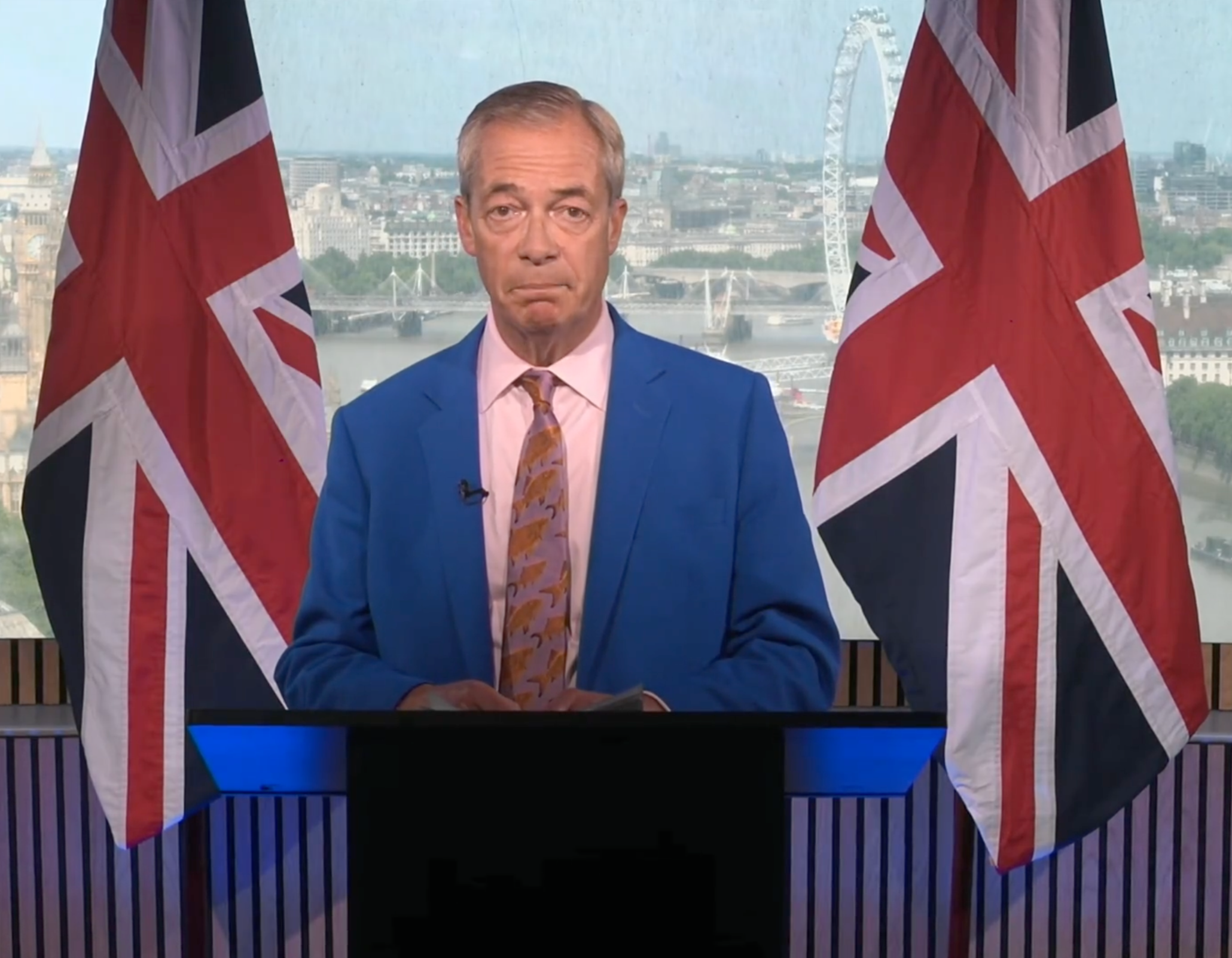
Nigel Farage, the leader of the UK’s Reform party, announced that he would resign as a member of Parliament and stand in the by-election that could replace him.
On Tuesday, Farage announced that he would resign as MP representing Clacton in response to what he called “foul means” by established politicians. The UK lawmaker’s resignation followed reports that he had personally received millions of dollars’ worth of donations and gifts from crypto billionaire Christopher Harborne and George Cottrell, a convicted fraudster linked to a crypto casino.
“Let me be absolutely clear: I have done nothing wrong,” said Farage in an X livestream. “I have not broken the law in any way at all. I have not misused public money.”
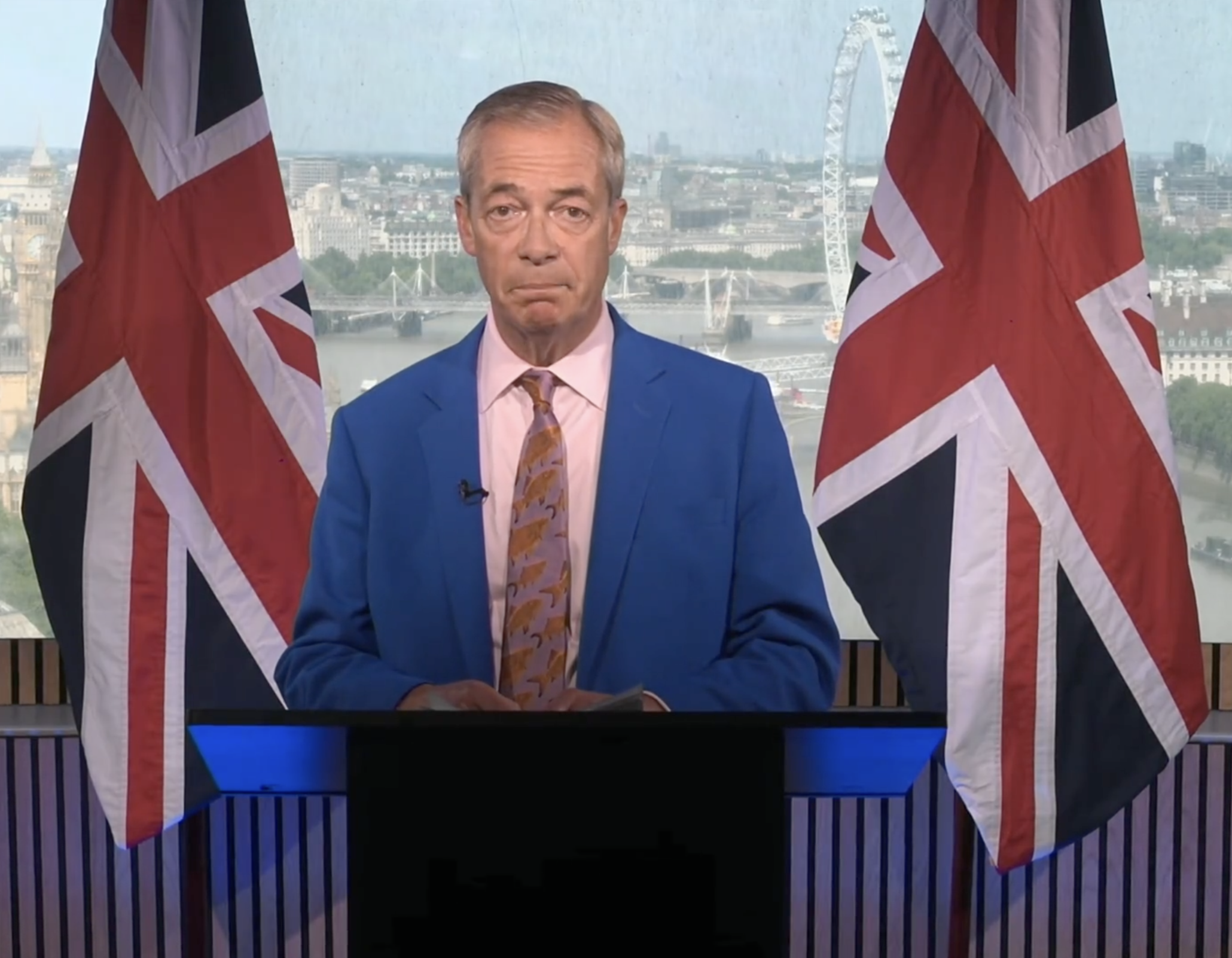
Source: Nigel Farage
Farage already had ties to the crypto industry before reports of the scandal. He spoke at the Bitcoin 2025 conference in Las Vegas and is an investor in London-listed Bitcoin (BTC) treasury company Stack. When reports began circulating in May that the Reform leader had received a $6.7 million gift from Harborne, he initially called it a “reward” for campaigning for Brexit, the 2016 referendum that led to the UK’s exit from the European Union.
Related: Crypto billionaires bankroll Nigel Farage’s pro-crypto party
The UK lawmaker confirmed that he was the subject of two probes by the UK’s parliamentary standards commissioner following reports of what he called “gifts” from Harborne and Cottrell, which he claimed were given “on an unconditional basis.”
He said that he would use Harborne’s gift for funding related to his security, describing threats and attacks, and that the by-election triggered by his resignation would give voters the opportunity to choose whether or not he will continue to represent them:
“I’ve decided that the people of Clacton should be the judges of my actions […] I will be putting my name forward to stand in this by-election.”
According to The London Standard, the election determining Farage’s fate as an MP could take weeks or months given the logistics of his stepping down and calling for a by-election. He won in Clacton with 46.2% of the vote in July 2024 against the Conservative and Labour candidates.
Countdown to US elections with crypto money hanging over candidates
While Farage faces probes in the UK, money from crypto companies and figures tied to the industry could continue to influence US races in November’s midterm elections.
According to a June report from US consumer advocacy group Public Citizen, the crypto industry had spent about $189 million to support candidates considered favorable to digital asset policies as part of the 2026 election cycle. Meanwhile, US President Donald Trump faces criticism from many lawmakers over his 2025 financial disclosures, which included reporting $1.4 billion in earnings related to crypto.
Magazine: Nobody knows if quantum secure cryptography will even work


- KuCoin partners with UAE Team Emirates–XRG ahead of Tour de France.
- KuCoin debuts Tour de France sponsorship with UAE Team Emirates–XRG.
- KuCoin expands global sports push with UAE Team Emirates–XRG deal.
KuCoin announced that it has become the official cryptocurrency partner of UAE Team Emirates – XRG, marking a new sports sponsorship agreement that will debut publicly during the 2026 Tour de France.
The partnership gives KuCoin exclusive rights in the Cryptocurrency Exchanges, Blockchain Trading Platforms and Crypto Wallet Services categories.
The company’s branding will appear across the team’s buses, support vehicles and fleet cars throughout the three-week Tour de France.
The agreement expands KuCoin’s sports sponsorship portfolio as the cryptocurrency exchange seeks to strengthen its global brand presence through partnerships with internationally recognized sporting organizations.
KuCoin secures exclusive sponsorship rights
Under the agreement, KuCoin will serve as UAE Team Emirates – XRG’s sole partner across cryptocurrency exchanges, blockchain trading platforms and crypto wallet services.
The partnership brings together two organizations that said they share a focus on innovation, precision and long-term performance.
The collaboration will make its public debut at the 2026 Tour de France, one of cycling’s most prominent events, where KuCoin branding will be prominently displayed on the team’s transportation fleet throughout the race.
Commenting on the partnership, BC Wong, Chief Executive Officer of KuCoin, said: “We are incredibly proud to partner with UAE Team Emirates – XRG and launch this collaboration on cycling’s grandest stage.”
He added that, “World-class achievements are never solitary; they require a dedicated team moving in unison toward a shared vision. These are the very values that have fueled KuCoin’s growth, and we look forward to empowering the team as they chase victory at the Tour de France.”
Tour de France provides global platform
The partnership will be introduced during the 2026 Tour de France, a three-week race regarded as one of the most prestigious events in professional cycling.
KuCoin said the competition reflects values that align with its business, including discipline, teamwork, trust and strategic coordination.
According to the company, success in the Tour de France depends on collaboration among riders, coaches, mechanics and support staff, principles that it said also underpin its approach to building a global digital asset infrastructure.
The sponsorship gives KuCoin visibility throughout the event by placing its branding on team buses, support vehicles and fleet cars used during the race.
Partnership expands KuCoin’s sports strategy
The agreement represents the latest addition to KuCoin’s global sports sponsorship initiatives as cryptocurrency companies continue using major sporting events to increase brand awareness.
UAE Team Emirates – XRG is one of the leading professional cycling teams and includes several high-profile riders, including multi-time Tour de France champion Tadej Pogačar.
KuCoin said the collaboration marks a significant expansion of its international sports sponsorship portfolio and is intended to reinforce the company’s global brand presence.
The company also said additional collaborative initiatives involving UAE Team Emirates – XRG and Tadej Pogačar will be announced later in the season, although no further details were disclosed.
The announcement comes as cryptocurrency firms continue pursuing partnerships in global sports as part of broader efforts to expand their visibility among mainstream audiences through internationally followed competitions and teams.
Tether has invested $20 million in Brazilian crypto platform Mercado Bitcoin to support the company’s expansion into tokenized assets, stablecoin payments, lending and other blockchain-based financial services across Latin America.
Since its 2013 launch, Mercado Bitcoin has expanded beyond crypto trading into regulated financial services, including tokenized assets, credit, stablecoin payments and cross-border services.
The company said it has more than 4.5 million users, has issued more than 2 billion Brazilian reais (about $370 million) worth of tokenized assets, and operates under nearly a dozen licenses across Brazil and Europe, including a payment institution license from Brazil’s central bank.
Tether CEO Paolo Ardoino said Mercado Bitcoin has built one of Latin America’s most comprehensive regulated onchain financial platforms, citing its licensing, tokenization infrastructure and integrated financial services.
In February, Mercado Bitcoin announced it had deployed more than $20 million in tokenized private credit, one segment of its broader tokenization business, on Bitcoin (BTC) sidechain Rootstock.
Related: Former Tether CIO seeks to sell stake in stablecoin issuer, Bloomberg reports
Tether using profits for strategic investments
The Mercado Bitcoin investment aligns with Tether Investments’ strategy of backing companies developing blockchain-based financial infrastructure.
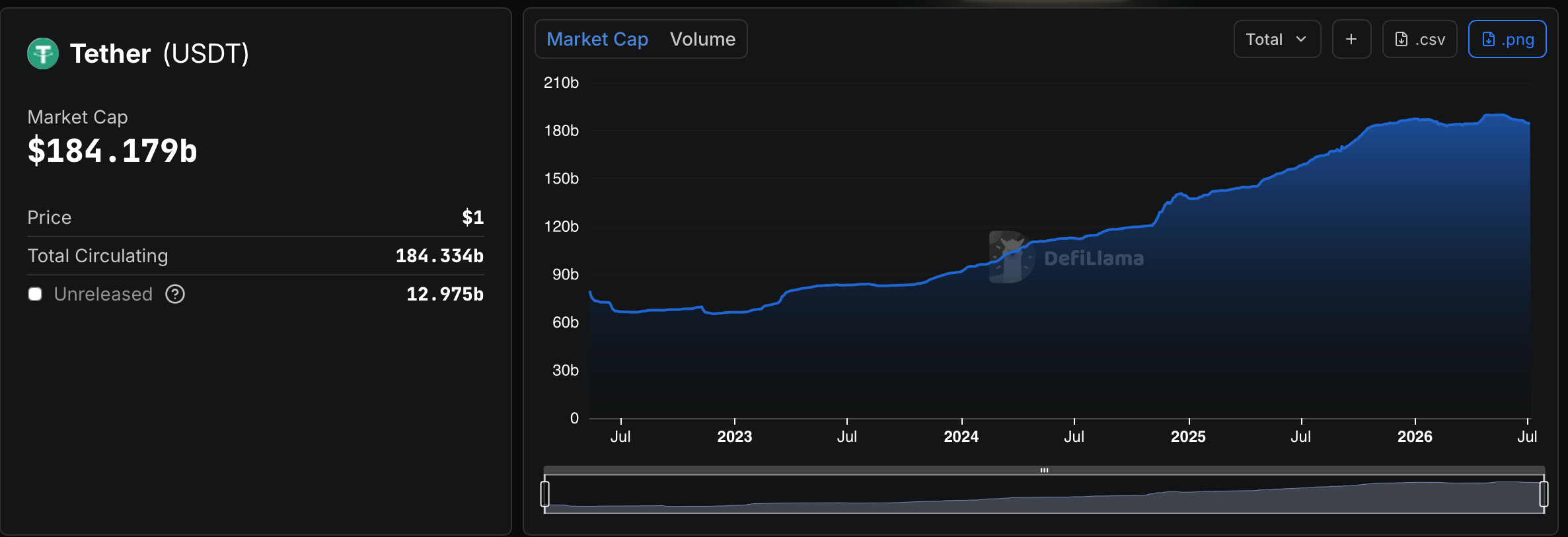
Tether issues USDT (USDT), the world’s largest stablecoin, with about $184 billion in circulation. In the first quarter of 2026, the company reported approximately $1.04 billion in net profit, which it is tapping for strategic investments.
In April, the firm participated in a $134 million funding round for Stablecoin Development Corporation, a NYSE American-traded company focused on expanding access to the stablecoin economy and digital asset infrastructure.
A month later, Tether invested in remittance platform LemFi to support the integration of USDT as a settlement layer for cross-border payments across Africa and Asia. The companies said the partnership would expand stablecoin-based payment infrastructure across key remittance corridors.
Later in May, Tether announced plans with the Government of Georgia to launch a stablecoin pegged to the Georgian lari under the country’s digital asset framework.
Beyond stablecoin-related initiatives, Tether has also invested in sectors including artificial intelligence, energy, biotechnology and digital media through its investment arm.
Despite speculation about a potential listing, CEO Paolo Ardoino has said the company has no plans to go public.
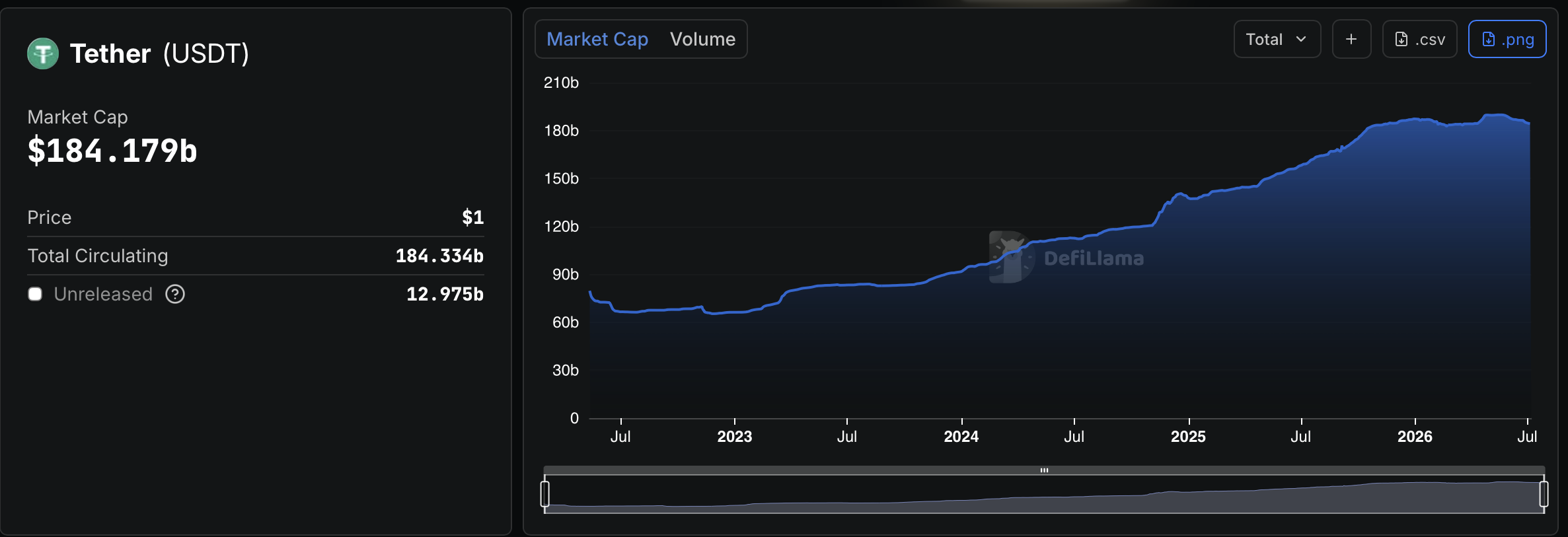
Source: DefiLlama
Magazine: AI is banking the unbanked in Africa… faster than crypto

Crypto analyst Matthew Hyland says the macro backdrop that punished digital currencies for four straight years is finally turning, pointing to patterns that came before crypto’s two biggest bull runs.
In a pair of posts on X, he argued that the market is entering a two- to three-year stretch of what he calls “max opportunity,” with risk appetite moving back toward crypto for the first time since 2016 and 2020.
A Repeating Four-Year Pattern
Hyland’s case rests on comparing three stretches he labels macro risk bear markets: 2014 to 2016, 2018 to 2020, and 2022 through 2026. In each of them, he says, crypto performed poorly while the wider risk backdrop stayed hostile, only for conditions to flip and set off the sector’s strongest runs. He’s now betting the current cycle is following the same script.
“Macro-Risk is now exiting the Bear Market for the first time since Mid-2016 & Mid-2020,” he wrote, adding that this kind of setup produced “max opportunity for the long term” both previous times it showed up.
He also pointed to two chart signals he sees as confirmation. Bitcoin dominance just posted a death cross for the first time since 2016 and 2020, which he treats as an early marker of the shift. He also expects altcoin dominance to follow with a golden cross this fall, something that he says would repeat what happened in those earlier cycles.
According to the market watcher, his own macro risk ratios turned at the same points in 2016 and 2020, and are turning again now, which is why he’s calling the next two to three years “the most optimal time” for crypto. However, his forecast should be taken as a market thesis and not a certainty, especially since crypto cycles have also historically been influenced by liquidity, investor sentiment, and broader economic conditions.
Wider Markets Still Sending Mixed Signals
Hyland’s call landed with Bitcoin (BTC) trading near $63,000 after earlier hitting a two-week high above $64,000, even after Strategy sold 3,588 BTC on Monday to fund dividends.
Analytics firm Swissblock described the price action as showing “signs of stabilization,” although it cautioned that a genuine recovery still needs buyers to keep showing up.
Elsewhere, analyst Credible Crypto has argued that altcoins trading 80% to 90% below their highs could outperform BTC if sentiment turns, pointing to long-term holders now controlling close to 80% of the flagship cryptocurrency’s supply. On Ethereum, trader Michaël van de Poppe said over the weekend that “the worst period for ETH is over” and cited a possible higher low against Bitcoin after three straight quarterly losses of more than 20% each.
Another market observer, Merlijn The Trader, separately flagged ETH’s dip to 0.026 against BTC, a level that foreshadowed a 230% run against Bitcoin last time it showed up. While none of these calls directly tie to Hyland’s thesis, the timing, with all landing within the same week, is hard to ignore.
The post Analyst Predicts 2-3 Years of Crypto Gains as Risk-On Environment Emerges appeared first on CryptoPotato.
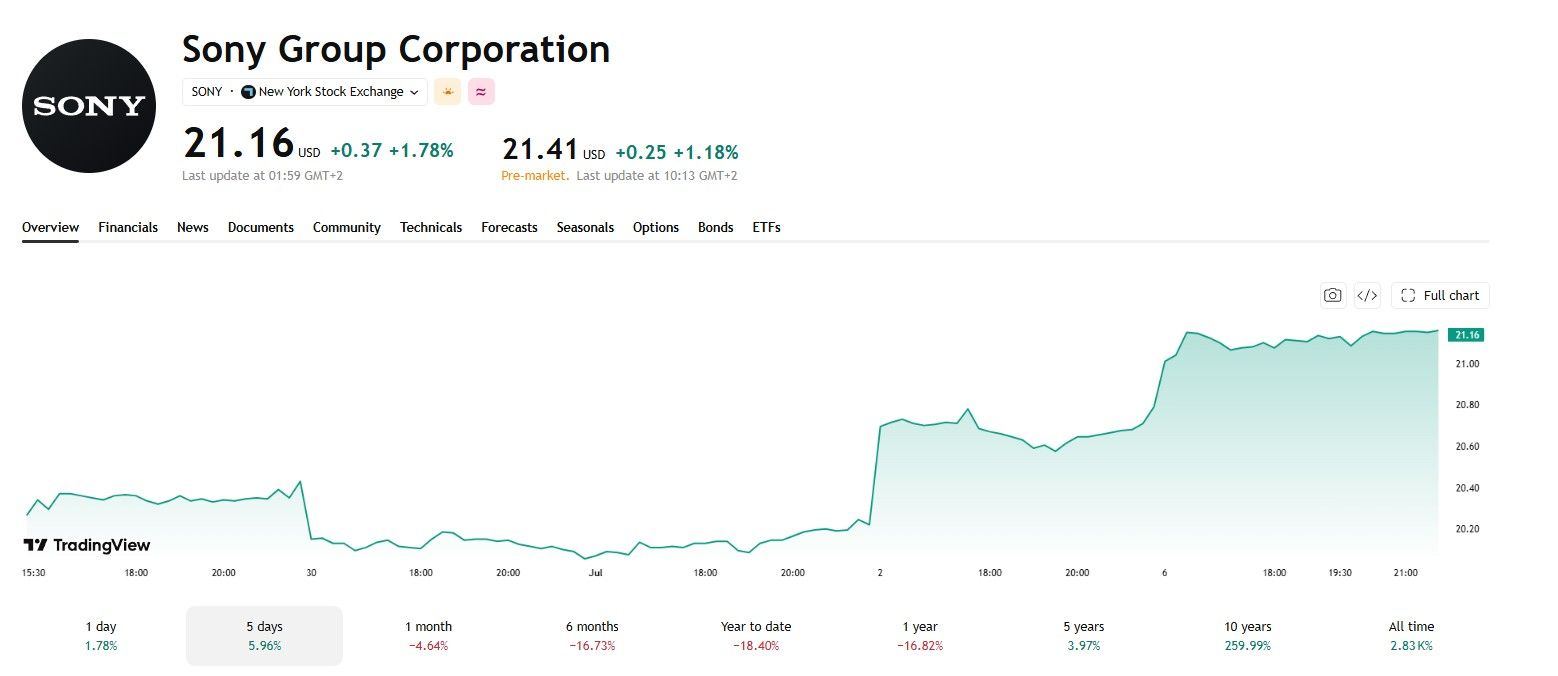
Sony shares have gained about 8.6% since July 1, even as the PlayStation disc backlash stretches into a sixth day without any response from the company.
The “Don’t Kill the Disc” movement now spans a six-figure petition, protest posts that rival GTA 6 trailer views, and eight Community Notes accusing Sony of misleading sales data.
Investors Reward the All-Digital Pivot
Sony confirmed on July 1 that it will stop making physical discs for new PlayStation games from January 2028. Investors welcomed the plan almost immediately. Sony’s Tokyo-listed shares have risen around 8.6% since the announcement. The US-listed stock added almost 6% across the same five sessions on the NYSE.

The market logic looks simple. Every digital sale runs through the PlayStation Store, where Sony sets prices and keeps higher margins. Sony says digital formats already made up close to 80% of its full-game sales last year.
In contrast, Take-Two stock fell in June after GTA 6 pre-orders arrived with a disc-free box. Meanwhile, Microsoft announced plans to cut 3,200 Xbox roles, a sign of cost pressure across the console business.
PlayStation Disc Backlash Tops 166,000 Signatures
Consumers read the same plan very differently. A Change.org petition urging Sony to keep disc-based games alive counts more than 166,000 verified signatures. The campaign launched on July 1, within hours of Sony’s announcement.
Retailers and distributors back it as well, since an all-digital future threatens trade-in and second-hand businesses. Signers also recall Sony’s E3 2013 marketing, which promoted disc sharing and permanent ownership.
Protest slogans such as “Stop the Digital Monopoly” keep spreading across X. Sony’s July 1 post alone has passed 162 million views, drawing even more views than the official post for the first GTA 6 trailer.
Timing feeds the anger. GTA 6 launches on November 19 without a disc, and the earlier GTA 6 pricing debate had already left players questioning value and ownership.
Eight Community Notes Challenge Sony’s Sales Data
PlayStation’s announcement post now carries eight Community Notes, and X users currently rate all of them as helpful. Several notes argue that Sony’s 78/22 digital-to-physical split overstates the shift away from discs. According to the notes, that figure counts DLC, live-service titles, and digital-only releases.
One note cites leaked Insomniac data suggesting far higher physical shares for Sony’s single-player titles.
Other notes cite EU competition law and warn that digital purchases remain revocable licenses rather than owned goods. Sony strengthened that fear in June when it announced plans to delete purchased StudioCanal movies from PlayStation accounts in September.
So far, Sony has answered the protest with silence while the pressure compounds daily. The coming weeks may reveal whether the company defends its data before GTA 6 arrives disc-free in November.
The post How to Anger 166,000 Fans and Please Wall Street in One Post: Ask Sony appeared first on BeInCrypto.
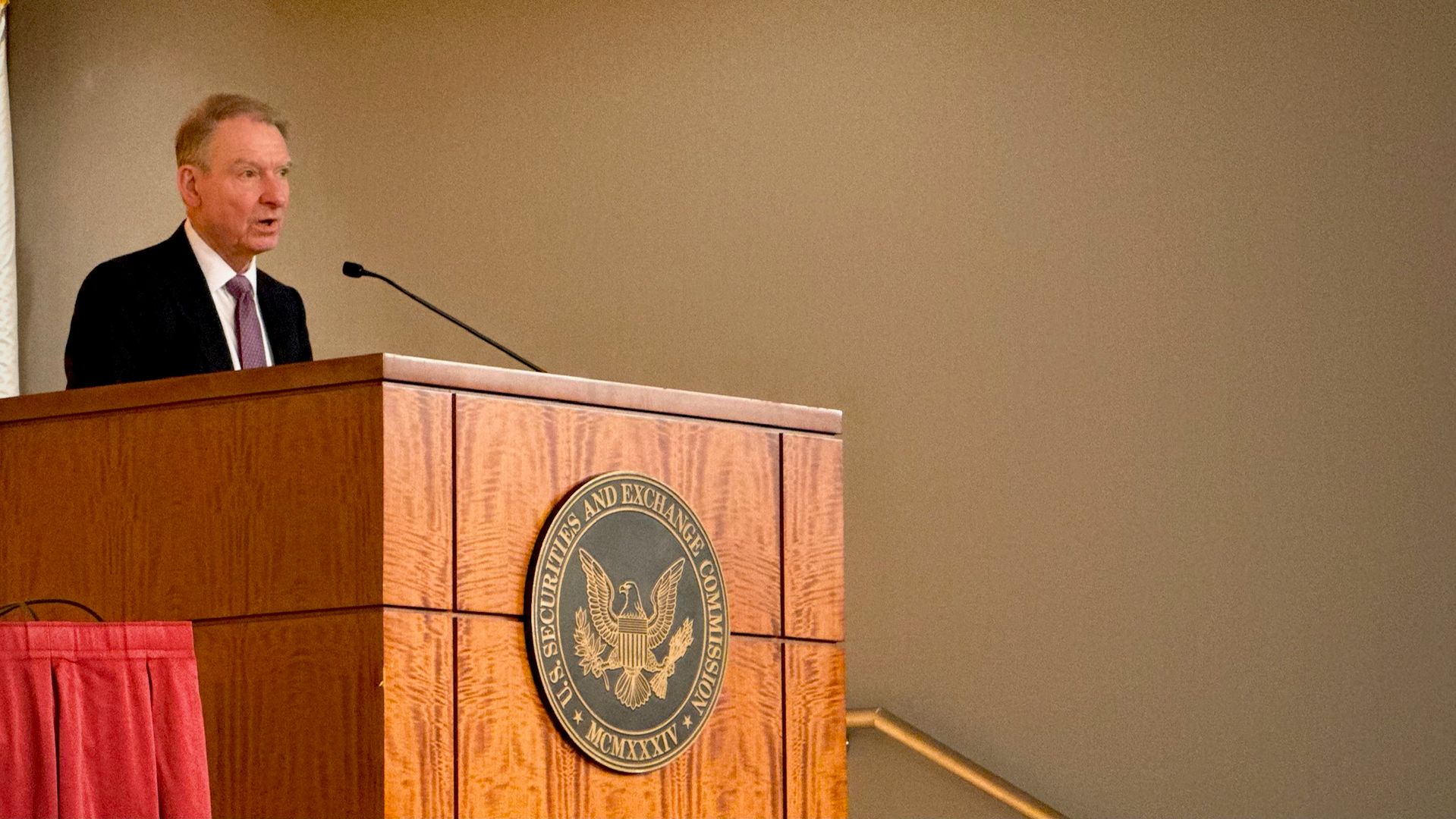
“To deliver on President Trump’s goal to ensure that the United States is the crypto capital of the world, we are embracing innovation to bring more products onshore, creating clear rules of the road for capital raising with crypto assets, and providing clarity as to how market participants can custody and facilitate trading of tokenized securities onchain,” Atkins said in a statement on Tuesday, mentioning his agency’s crypto agenda before any other specific rulemaking effort.
As the process to advance a crypto market structure bill has languished in Congress, the SEC has been a bright spot for the industry’s regulatory hopes, though the agency has sometimes moved more slowly to issue policies than expected. When Atkins addressed this coming regulation almost four months ago in mid-March, he said it would be proposed in the “coming weeks.”
The busy new SEC agenda has “Regulation Crypto” slated for July, though it’s still under review at the White House Office of Information and Regulatory Affairs. When proposed, it would mark the first major crypto-specific rulemaking pursued under Atkins’ leadership. Though the regulator has established a wide range of staff statements and guidance on crypto, those positions don’t carry the weight of a full rule, which can’t be changed as easily when future leaders arrive at the agency with different ideas.
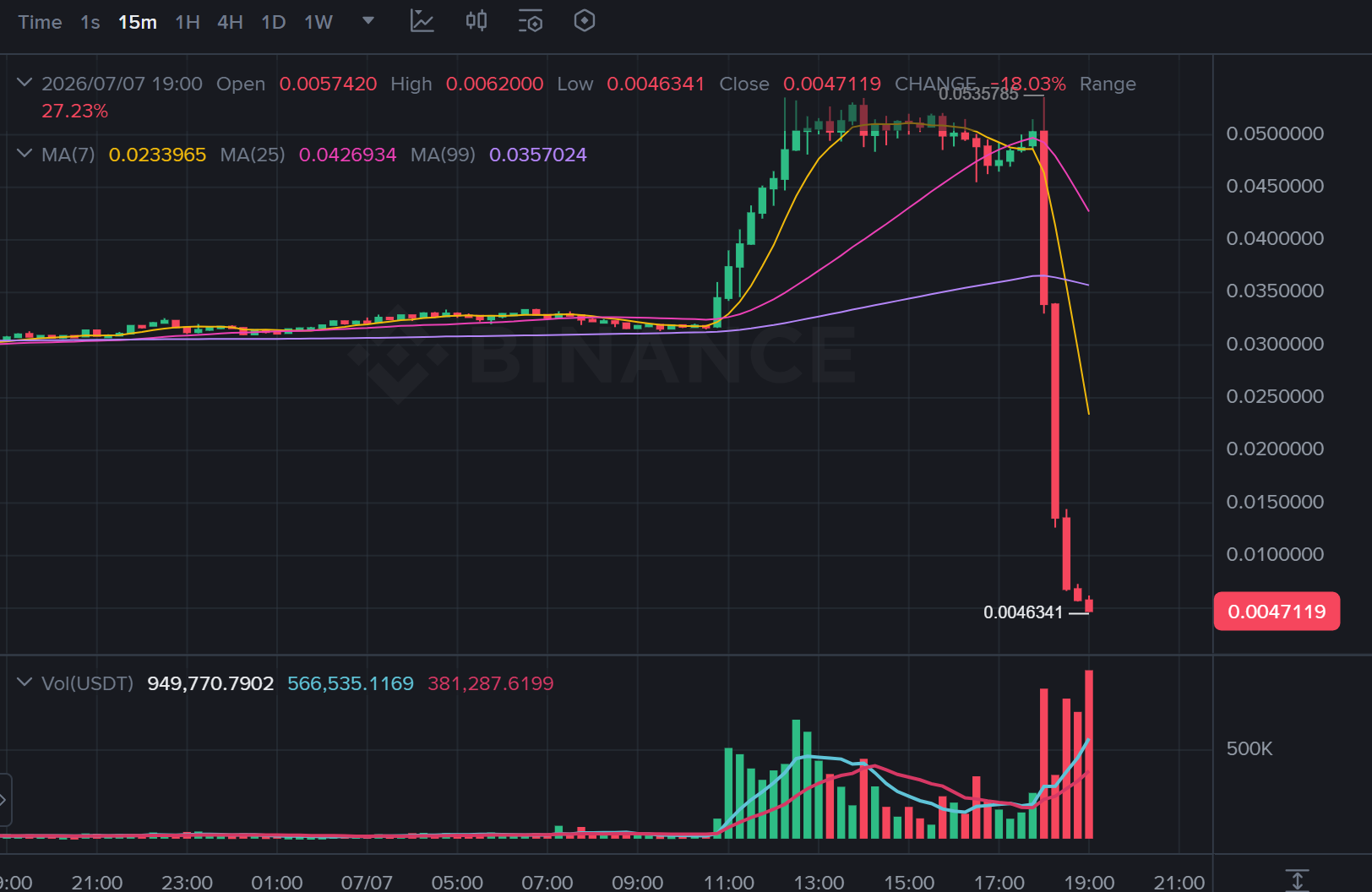
Binance Alpha-listed TAC suffered one of the sharpest crypto flash crashes of the year after its token plunged more than 90% in roughly 15 minutes on July 7.
While no security breach or protocol failure has been confirmed, the crash has renewed concerns about liquidity risks and token concentration among newly listed crypto assets.

TAC Suffers Violent Flash Crash
TAC dropped from around $0.06 to nearly $0.004 within minutes, with trading volume surging as panic selling accelerated. The token later stabilized near its lows, remaining down more than 90% from prices seen earlier in the day.
The move came just one week after TAC reached an all-time high of approximately $0.067, highlighting the extreme volatility that can accompany newly listed digital assets.
Strong Backers, But No Official Explanation
TAC is developing an Ethereum Virtual Machine (EVM)-compatible blockchain designed to bring Ethereum applications into the TON and Telegram ecosystem.
The project has raised roughly $11.5 million from prominent crypto investors, including TON Ventures, Hack VC, Animoca Ventures, Symbolic Capital, Primitive, and Spartan Group.
Despite the dramatic price collapse, neither the TAC team nor Binance had announced a confirmed cause at publication. There is also no evidence that today’s move resulted from a hack or network exploit.
Liquidity and Token Concentration Under Scrutiny
Market observers have pointed to several possible factors behind the collapse, including thin order-book liquidity, large holder selling, and cascading liquidations.
Unverified on-chain discussions have also questioned whether a small number of wallet clusters control a significant share of circulating supply. However, these claims remain unconfirmed and should not be treated as established fact.
The selloff follows TAC’s May 2026 cross-chain bridge exploit, which resulted in approximately $2.8 million in losses before affected users were later compensated. Although unrelated to today’s price action, the earlier incident may have contributed to fragile market sentiment.
What’s Next for TAC?
Investors are now watching for an official statement from the TAC team, exchange updates, and on-chain data that could explain the sudden collapse. Until more information emerges, TAC is likely to remain highly volatile, with liquidity conditions and large-wallet activity becoming key indicators for traders assessing the token’s recovery prospects.
The post Binance Alpha Token TAC Wipes Out 90% in Sudden Collapse appeared first on BeInCrypto.
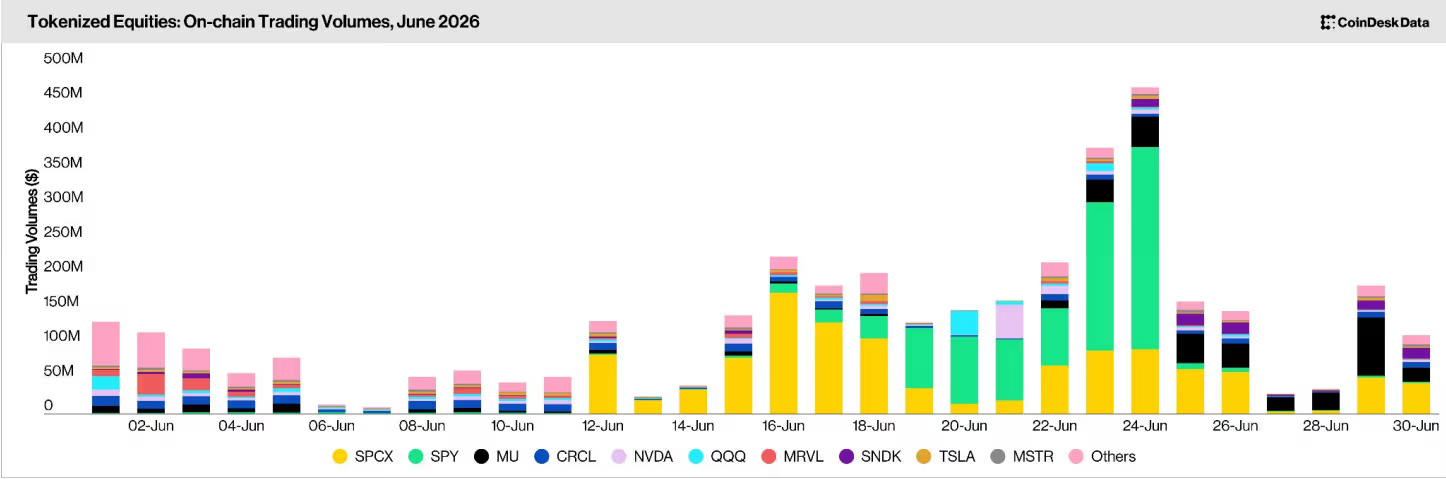
Tokenized equities posted record trading activity in June as investors piled into blockchain-based versions of SpaceX (SPCX) stock following the aerospace company’s blockbuster initial public offering.
On-chain trading volume climbed 145% from May to $3.86 billion, according to CoinDesk Data’s latest Stablecoins & Tokenized Assets report. Tokenized SpaceX shares accounted for $1.19 billion of the total, or about 31% of all tokenized equity trading during the month.

The surge followed SpaceX’s $75 billion IPO, the largest on record, which valued the company at roughly $1.8 trillion on a fully diluted basis.
Backpack Securities’ SPCX token was the most popular tokenized version of the stock, with $1.08 billion in onchain trading volume, followed by xStocks’ SPCXx, which reached $852 million.
The figures point to a change in what is driving demand for tokenized equities. Established names like Nvidia, Tesla, SPY and QQQ remained actively traded, but none matched the interest in SpaceX. For context, Backpack’s tokenized instruments traded $1.42 billion for the month, the lion’s share of which was in SPCX tokens.
The sector reached a record $1.53 billion in market capitalization during June, up 6.64% from the previous month and marking its fifteenth straight month of growth, the report adds.


Richard Heathcote, who until earlier this year served as Tether Holdings SA's chief investment officer, is planning to sell a small stake in the stablecoin issuer, Bloomberg reported Monday, citing people familiar with the matter. Heathcote is working with investment bank PJT Partners to sell part… Read the full story at The Defiant
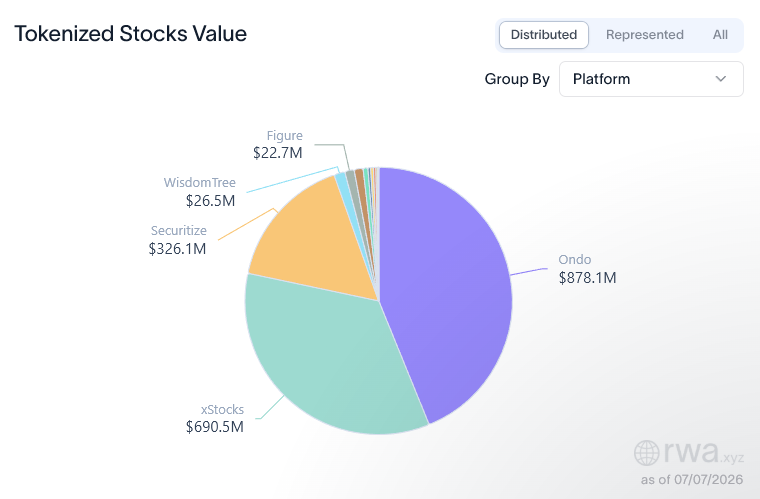
Tokenized stocks are still tiny compared with traditional equity markets, but they are no longer an experiment inside crypto. Tokenized stocks have surged to nearly $1.08 billion in total value and $2.10 billion in monthly transfer volume.
Ondo leads the category with 405 tokenized stock assets valued at about $870 million and 43.61% market share. Now, Ondo is trying to push this growing market into derivatives.
Ondo Perps launched in public beta in June, giving selected eligible users outside the United States access to perpetual futures on tokenized versions of US stocks, ETFs, commodities, and indices.
The platform offers up to 20x leverage and 24/7 trading on markets linked to assets such as Nvidia, Tesla, gold, oil, silver, the US 100, and the US 500.
In simple terms, users can take long or short leveraged positions on real-world markets without waiting for traditional exchange hours. They can also use tokenized securities as collateral, rather than relying only on stablecoins.
That collateral feature is the real story. Ondo is trying to turn tokenized stocks from passive market exposure into working infrastructure for on-chain trading.
Ondo Already Has the Stock Base
Ondo Perps does not start from a blank market. It builds on Ondo Global Markets, the company’s tokenized stocks and ETFs platform for eligible non-US users.
Ondo announced in May that Global Markets had crossed $1 billion in TVL in under eight months. At the time, the platform offered more than 260 tokenized US stocks and ETFs across Solana, Ethereum, and BNB Chain, and had passed $18 billion in cumulative trading volume.
Its distribution has expanded since then. Blockchain.com added 173 new tokenized stocks and ETFs through Ondo in June, bringing its total Ondo-powered tokenized asset offering to more than 430 across Ethereum, Solana, and BNB Chain.
These assets are designed to give users economic exposure to traditional securities. They are not the same as holding the actual stock, ETF, or ADR, and Ondo’s own disclosures say holders do not receive rights to the underlying assets themselves.
That distinction matters. Tokenized stocks are still wrapped in financial exposure, with jurisdictional restrictions and product-specific risks. However, they now have enough on-chain distribution for derivatives platforms to build around them.
Ondo Perps is the first major test of that next step.

Why the Collateral Model Matters
Most crypto perpetual exchanges use stablecoins or crypto assets as margin. That works well for Bitcoin, Ethereum, and other native crypto markets. It becomes less efficient when the product is tied to equities, ETFs, commodities, or indices.
A trader might hold tokenized Nvidia or Tesla exposure, but still need to post stablecoins separately to trade a perp. A market maker might quote an equity perp on-chain, then hedge through traditional brokers off-chain. The result is a split system where collateral, pricing, and hedging sit in different places.
Ondo Perps tries to narrow that gap by allowing tokenized securities to serve as collateral.
A user holding tokenized stocks can use those assets as margin for leveraged trades. A market maker can manage exposure with collateral linked to the same real-world markets it is quoting. That can improve capital efficiency because fewer assets need to sit idle across separate systems.
It also gives Ondo a clearer liquidity argument. The platform is connecting those perps to an existing tokenized stock ecosystem with users, integrations, and market access already in place.
The Hard Part Comes After Launch
RWA perps are difficult because they promise crypto-style access to markets that still depend on traditional infrastructure. Traders want 24/7 exposure. The deepest liquidity for stocks and ETFs still lives inside traditional exchanges, brokers, and clearing systems.
That creates pressure during volatile periods. Equity prices can react to earnings, macro data, or company news when traditional venues are closed. A 20x leveraged position can move from profitable to liquidated quickly if pricing, collateral valuation, or hedging fails to keep up.
This is why Ondo Perps should be judged less by the number of markets it lists and more by how it performs under stress. Tight spreads, reliable depth, clean liquidations, and accurate collateral pricing will matter more than launch-day asset coverage.
The broader opportunity is clear. Crypto traders already understand perpetual futures. Tokenized stocks give them a route into US equity exposure without leaving blockchain-based accounts. Ondo is now trying to combine the two into one trading environment.
The risk is also clear. Once tokenized stocks become collateral for leverage, the quality of the collateral layer becomes central to the market. Any weakness in pricing, liquidity, or redemption can spread faster through derivatives than through spot trading.
Ondo Perps, therefore, marks a useful shift in the RWA market. The category is moving beyond the question of whether stocks can be tokenized. The next question is whether those tokens can support serious trading infrastructure.
The post Ondo Perps Pushes Tokenized Stocks Into 20x Leveraged Trading appeared first on BeInCrypto.

Toyota to invest $3.6B in Texas plant expansion, add 2,000 jobs

Nigel Farage Resigns as MP Amid Crypto ‘Gift’ Scandal, Will Stand in By-Election

Stephen King’s Forgotten 5-Part Sci-Fi Fantasy Series Is Making a Surprise Comeback


-

 Fashion4 days ago
Weekend Open Thread: High Hopes
-

 Fashion1 day ago
Open Thread: What Great Books Have You Read Recently?
-
 NewsBeat3 days ago
Taylor Swift and Travis Kelce wedding staffer hilariously struggles to keep her cool while checking in megastars
-

 Politics4 days ago
The House | “Reframing the debate from a binary discussion of winners and losers”: Yuan Yang reviews ‘We Are Not Machines’
-
 Crypto World6 days ago
Airdrop Registration Becomes Key Focus For Remittix As RTX Launch Updates Approach
-

 Crypto World4 days ago
Standard Chartered Secures MiCA License as ESMA Adds 37 New Crypto Firms
-

 Sports6 days ago
Broncos roster: OL Ben Powers (No. 74) entering final year of contract
-

 Business22 hours ago
AXT Shares Jump Nearly 14% as Semiconductor Materials Maker Rebounds on AI-Linked Indium Phosphide Demand
-

 Crypto World5 days ago
Binance stock trading tops $1B in first month after launch
-

 NewsBeat7 days ago
Presenter Caroline Flack’s brother Paul Flack dies aged 55
-

 Crypto World6 days ago
Alibaba-affiliate Ant Group enters the humanoid robot market with 12 deals
-
Crypto World22 hours ago
SK hynix (000660.KS) Stock Dips as $28B Nasdaq ADR Offering Drives AI Memory Expansion
-

 Crypto World2 days ago
South Africa proposes crypto tax guidance under existing rules
-

 News Videos1 day ago
Best Time to Enter Small Caps Right Now? Another Bull Run? | Financially Free
-

 Tech2 days ago
Lenovo laptops are now shipping with YMTC SSDs, a sign of Chinese NAND entering the mainstream
-

 Business6 days ago
Meta Platforms Stock Jumps 7% Today as Bloomberg Reports Company Plans to Enter the Cloud Business
-
 NewsBeat5 days ago
New exhibition reflects five decades of movement between island of Ireland and GB
-

 News Videos13 hours ago
Whats Hidden Inside This Cash Register? #treasure #reselling #money
-

 Business5 days ago
What a 10 Percent Drop Means for Buyers, Sellers and Renters
-

 Crypto World5 days ago
Binance Re-Enters Philippines As EU MiCA Rules Restrict Access
You must be logged in to post a comment Login