
Crypto World
Nigel Farage Resigns as MP Amid Crypto ‘Gift’ Scandal, Will Stand in By-Election

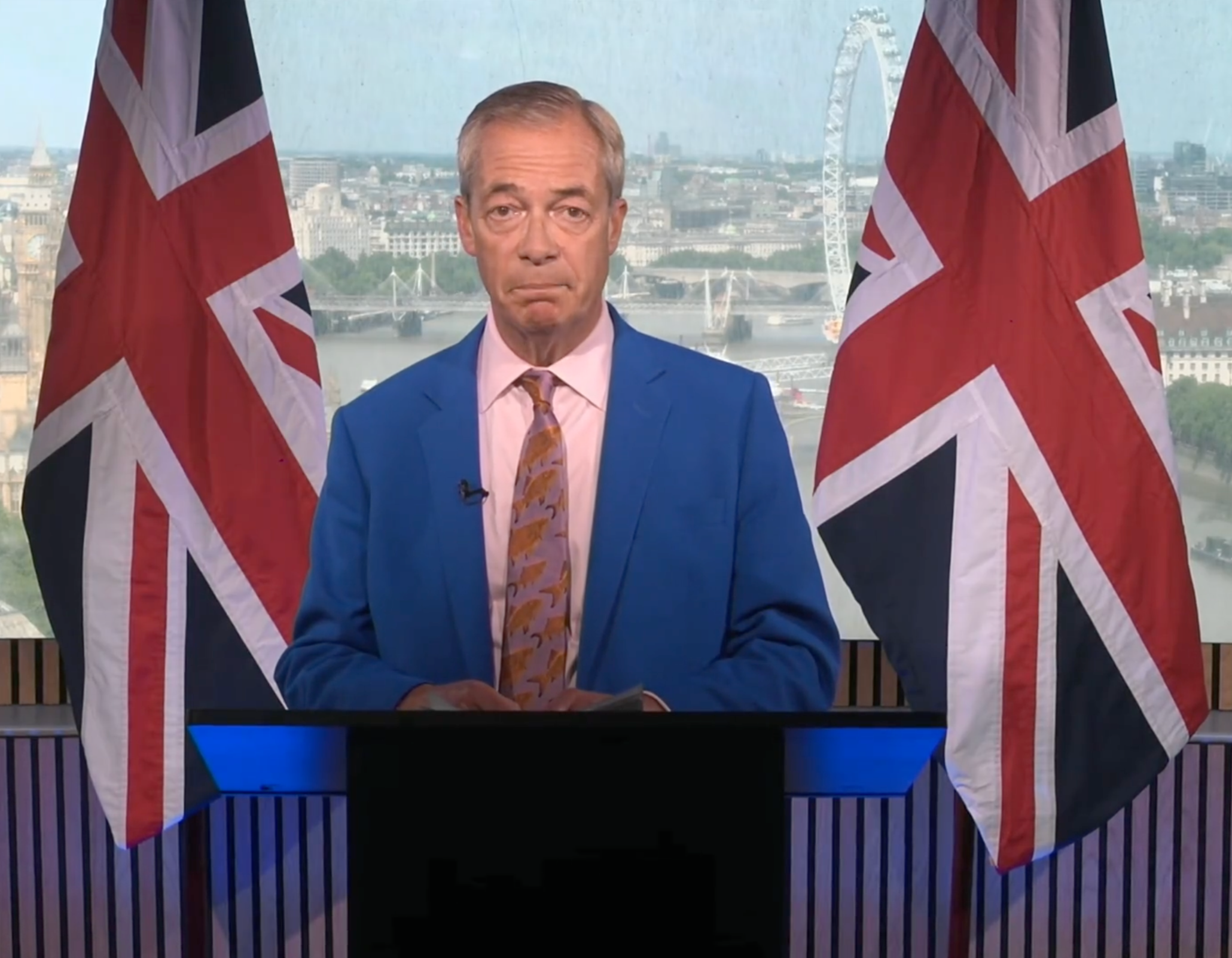
Nigel Farage, the leader of the UK’s Reform party, announced that he would resign as a member of Parliament and stand in the by-election that could replace him.
On Tuesday, Farage announced that he would resign as MP representing Clacton in response to what he called “foul means” by established politicians. The UK lawmaker’s resignation followed reports that he had personally received millions of dollars’ worth of donations and gifts from crypto billionaire Christopher Harborne and George Cottrell, a convicted fraudster linked to a crypto casino.
“Let me be absolutely clear: I have done nothing wrong,” said Farage in an X livestream. “I have not broken the law in any way at all. I have not misused public money.”
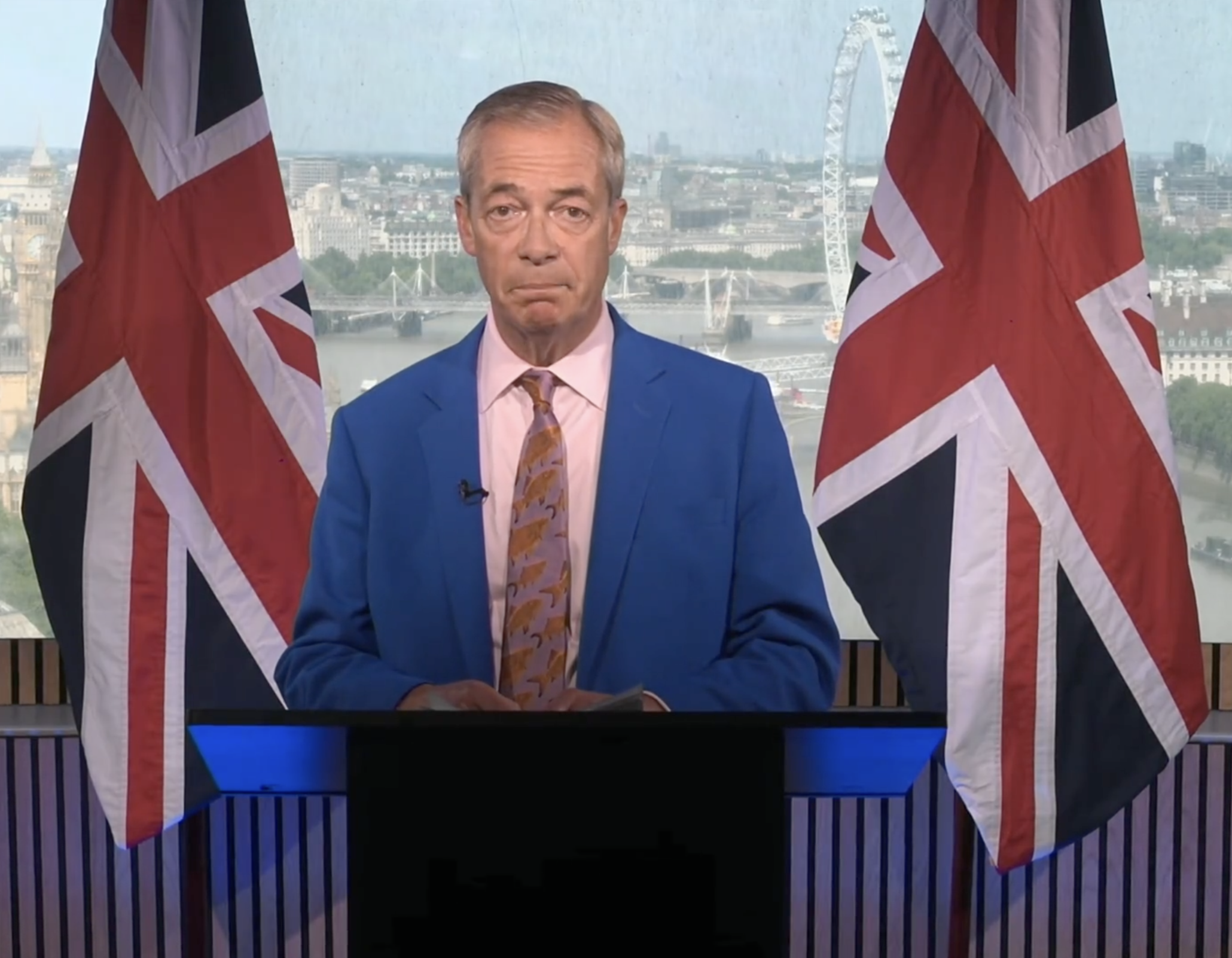
Source: Nigel Farage
Farage already had ties to the crypto industry before reports of the scandal. He spoke at the Bitcoin 2025 conference in Las Vegas and is an investor in London-listed Bitcoin (BTC) treasury company Stack. When reports began circulating in May that the Reform leader had received a $6.7 million gift from Harborne, he initially called it a “reward” for campaigning for Brexit, the 2016 referendum that led to the UK’s exit from the European Union.
Related: Crypto billionaires bankroll Nigel Farage’s pro-crypto party
The UK lawmaker confirmed that he was the subject of two probes by the UK’s parliamentary standards commissioner following reports of what he called “gifts” from Harborne and Cottrell, which he claimed were given “on an unconditional basis.”
He said that he would use Harborne’s gift for funding related to his security, describing threats and attacks, and that the by-election triggered by his resignation would give voters the opportunity to choose whether or not he will continue to represent them:
“I’ve decided that the people of Clacton should be the judges of my actions […] I will be putting my name forward to stand in this by-election.”
According to The London Standard, the election determining Farage’s fate as an MP could take weeks or months given the logistics of his stepping down and calling for a by-election. He won in Clacton with 46.2% of the vote in July 2024 against the Conservative and Labour candidates.
Countdown to US elections with crypto money hanging over candidates
While Farage faces probes in the UK, money from crypto companies and figures tied to the industry could continue to influence US races in November’s midterm elections.
According to a June report from US consumer advocacy group Public Citizen, the crypto industry had spent about $189 million to support candidates considered favorable to digital asset policies as part of the 2026 election cycle. Meanwhile, US President Donald Trump faces criticism from many lawmakers over his 2025 financial disclosures, which included reporting $1.4 billion in earnings related to crypto.
Magazine: Nobody knows if quantum secure cryptography will even work

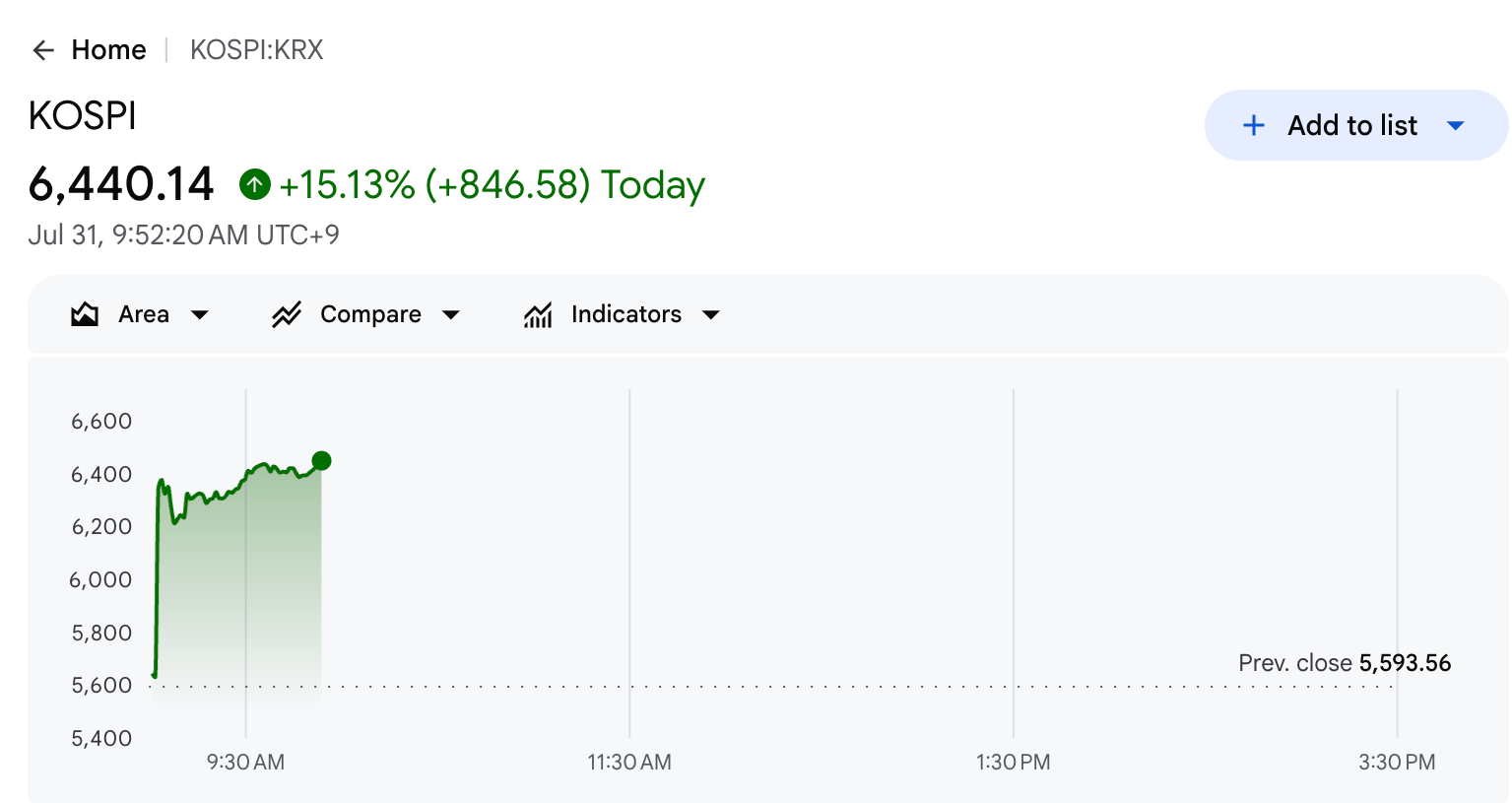
South Korea’s KOSPI index surged by double digits on Friday morning. The rebound follows back-to-back circuit breakers on Tuesday and Wednesday, as well as sharp monthly losses.
Stronger-than-expected cloud results from Microsoft and Amazon revived confidence in AI spending, sparking a chip rally across Seoul and Tokyo.
KOSPI Rebound Triggers Buy-Side Sidecar in Seoul
According to Google Finance, KOSPI stood at 6,440.14, up 15.13% at press time. The index gained 846.58 points from Thursday’s close of 5,593.56 by 10:30 a.m. local time.
Follow us on X to get the latest news as it happens

A buy-side sidecar was triggered at 9:06 a.m., suspending program trading for five minutes. The KOSDAQ saw a similar curb after touching an intraday high of 693.81. At press time, it was up by 8.91%.
The rally was carried by index heavyweights. SK Hynix jumped 27.69% to 1,688,000 won, while Samsung Electronics climbed 21.74% to 252,000 won.
The bounce comes after days of turmoil. Circuit breakers halted both markets on July 28 and 29, forcing an emergency government meeting after 864.5 trillion won evaporated in two sessions.
Before this session, July ranked as the market’s worst crash ever, with the KOSPI down over 33% for the month.
US Cloud Earnings Reignite the AI Trade
The catalyst came from Wall Street overnight. Microsoft rallied 16% Thursday after Azure growth beat forecasts, and Amazon jumped over 9% in extended trading on stronger-than-expected second-quarter revenue.
The Nasdaq climbed 2.78%, and the S&P 500 added 1.66%. Meanwhile, the Philadelphia semiconductor index soared 8.2%, and the iShares Semiconductor ETF (SOXX) gained more than 8%.
The rally spilled into Tokyo. Advantest surged 17.92%, and Tokyo Electron climbed 9.67%. SoftBank Group rose 15.12%. Japan’s Nikkei 225 added 5.35%, and the broader Topix gained 2.32%.
Whether the rebound holds is the next test. Even after Friday’s surge, the KOSPI trades roughly 31% below its June record of 9,385.59.
Subscribe to our YouTube channel to watch leaders and journalists provide expert insights
The post KOSPI Snaps Back 15% as Asia’s AI Chip Rally Returns appeared first on BeInCrypto.

Disclosure: This article does not represent investment advice. The content and materials featured on this page are for educational purposes only.
The latest Duel.com referral code, DUEL5, offers new users access to instant rakeback rewards and enhanced RTP benefits on eligible Duel Originals.
Summary
- Duel.com updated its DUEL5 referral code, offering new users 50% instant rakeback and access to 100% RTP Duel Originals.
- New Duel.com users can unlock 50% instant rakeback and permanent 100% RTP Duel Originals with the DUEL5 referral code.
- DUEL5 referral code gives Duel.com players permanent rakeback and Duel Originals rewards.
Looking for the latest Duel.com referral code? The current working code is DUEL5. New players who enter DUEL5 during registration unlock 50% instant rakeback on eligible casino games and gain permanent access to 100% RTP Duel Originals, making it one of the most valuable long-term offers available on the platform.
Unlike traditional welcome bonuses that expire after a wagering requirement is met, the DUEL5 referral code improves your account permanently. Every eligible wager earns instant rakeback, while Duel’s in-house Originals are designed to operate at a full 100% return to player (RTP), meaning there is no built-in house edge within the stated limits of those games.
Launched in July 2025 by Nevis-registered Immortal Snail LLC, Duel.com is the crypto casino created by Ossi “Monarch” Ketola, founder of the well-known CS skin betting platform CSGOEmpire. Today, Duel offers more than 5,000 casino games, live dealers, Duel Originals, and a full cryptocurrency sportsbook.
What is the Duel.com referral code?
The current Duel.com referral code is: DUEL5
Entering DUEL5 during registration permanently activates:
- 50% instant rakeback on eligible casino wagers.
- Access to Duel Originals with 100% RTP.
- Leaderboard eligibility with daily and monthly prize pools.
- Rewards that continue for as long as the account remains active.
Because referral codes cannot be added after an account is created, new users should enter DUEL5 during the sign-up process.
How to sign up on Duel.com with referral code DUEL5
- Go to the official Duel.com website.
The first and most important step to the genuine platform. New players can either use the trusted link or type Duel.com directly into their browser. Stay vigilant against phishing scams — plenty of fake sites try to pass themselves off as the real Duel online casino. - Click the Register button.
This can be found in the top-right corner of the website. Once it is clicked, a pop-up window will open containing the registration form.

- Create a username and password.
Both fields are required. The username is public, showing up in Castle Roulette chat and on leaderboards, so pick something you are happy being seen under. Use a password unique to this account, and turn on two-factor authentication in settings before making a deposit. A crypto balance has no bank behind it to reverse an unauthorized withdrawal.
Track live Castle Roulette results
For those who regularly play Castle Roulette, it’s worth keeping an eye on recent results using the DuelRewards.io Castle Roulette Tracker. Available at Duel Castle Roulette website, the tracker records every completed spin in real time, making it easy to review recent history without manually logging outcomes.
The tracker displays live Castle Roulette results, recent multiplier history, streaks, droughts, and historical statistics, giving players a clear overview of how the game has unfolded over time. Whether you’re checking which multipliers have appeared recently or reviewing previous sessions, everything is available in one place.
Because Castle Roulette is a provably fair game, each spin is generated independently of the last. This means no tracker can predict future results or increase your chances of winning. Instead, the DuelRewards.io tracker is designed as an informational tool, allowing players to monitor live data, analyze historical results, and follow the game’s activity as it happens.
For those who are already using the DUEL5 referral code to unlock 50% instant rakeback and 100% RTP Duel Originals, pairing it with the DuelRewards.ioCastle Roulette Tracker gives them a convenient way to stay up to date with every Castle Roulette spin while they play.

- Decide whether to add an email.
Email is optional here, part of Duel’s no-KYC approach. Tick the Email box to reveal the field. Adding one gives you an account recovery path. Skipping it keeps things more private, but recovery becomes much harder if you lose access.
- Tick the Referral code box and enter DUEL5.
This is the step that decides whether you get the offer. Ticking the checkbox below the email option reveals an input field. Type DUEL5 in manually, and read it back before you move on. Duel will not add a code after registration, so missing this field permanently forfeits the rakeback and 100% RTP on that account.

- Accept the Terms & Conditions and click Create Account.
Worth an actual read rather than a reflex tick, particularly the restricted-jurisdiction list and the withdrawal terms.

- Deposit and start playing.
Duel is crypto-only, accepting BTC, ETH, USDT, SOL, LTC, and more than 10 other assets, with deposits usually confirming within minutes. Rakeback accrues from your first wager and credits as bets settle, and the Duel Originals section is where the 100% RTP applies.
What does DUEL5 unlock?
Most crypto casinos focus on offering large one-time deposit bonuses that often come with high wagering requirements. Duel takes a different approach by rewarding every qualifying wager instead.
50% instant rakeback
With DUEL5, half of the house edge is returned instantly on eligible games including many slots, live dealer tables, and game shows.
Unlike a traditional casino bonus:
- There are no wagering requirements.
- Rewards are credited automatically.
- Rakeback is available immediately after eligible wagers settle.
- There is no expiry on the benefit.
For players who wager regularly, ongoing rakeback can provide significantly more long-term value than a one-time welcome bonus.
100% RTP Duel originals
One of Duel’s biggest selling points is its collection of Duel Originals.
Games including Crash, Dice, Mines, Plinko, Blackjack, and Castle Roulette are designed to operate at 100% RTP, meaning there is no built-in house edge within the game’s published mechanics.
Castle Roulette has become one of the platform’s signature games, featuring multipliers from 2x up to 48x alongside provably fair verification, allowing players to independently verify every completed round.
Duel.com referral codes for 2026
| Code | Benefit | Wagering | Expiry |
| DUEL5 | 50% instant rakeback + 100% RTP on Duel Originals | None | Permanent |
Rather than rewarding only your first deposit, DUEL5 continues providing value every time you play.
Is the Duel.com referral code worth using?
For players planning to use Duel regularly, DUEL5 is one of the platform’s strongest available sign-up offers because it provides permanent benefits instead of temporary promotional credits.
Instead of relying on a single welcome bonus, the referral code continually reduces the effective cost of eligible wagering through instant rakeback while also unlocking Duel Originals that operate at 100% RTP.
Important things to know
While the referral code improves the value of your account, gambling always involves risk. A game with 100% RTP does not guarantee profit, and short-term results remain unpredictable.
Duel currently accepts cryptocurrency only, with support for assets including BTC, ETH, SOL, USDT, and others.
The platform is licensed by the Anjouan Gaming Authority. Availability varies by jurisdiction, and users should ensure Duel is legal where they live before registering. Duel’s terms also state that attempting to access restricted regions through a VPN may result in account action.
Bottom line
If you’re searching for the latest Duel.com referral code, DUEL5 is the current working code for new players.
By entering DUEL5 during registration, you permanently activate 50% instant rakeback, gain access to 100% RTP Duel Originals, and qualify for Duel’s leaderboard rewards. Unlike most casino promotions, these benefits aren’t tied to a one-time deposit or lengthy wagering requirement, making DUEL5 one of the most valuable long-term offers currently available on Duel.com.
FAQ
What is the Duel.com referral code?
The current working Duel.com referral code is DUEL5. New players can enter it during registration to unlock 50% instant rakeback and permanent access to 100% RTP Duel Originals.
What does the DUEL5 referral code give you?
DUEL5 permanently enables 50% instant rakeback on eligible casino wagers, access to Duel Originals with 100% RTP, and qualification for Duel leaderboard promotions.
Can I add the Duel referral code after signing up?
No. The referral code must be entered when creating your account and cannot normally be added later.
Does 100% RTP mean I cannot lose?
No. A game operating at 100% RTP removes the theoretical house edge over the long run but does not eliminate short-term variance, so individual sessions can still result in losses.
Does Duel.com accept fiat currency?
No. Duel currently operates as a cryptocurrency-only platform and supports several major digital assets for deposits and withdrawals.
Disclosure: This content is provided by a third party. Neither crypto.news nor the author of this article endorses any product mentioned on this page. Users should conduct their own research before taking any action related to the company.

Telegram founder Pavel Durov has responded to Russia’s latest legal actions by accusing authorities of trying to impose mass surveillance and censorship on the messaging platform, while also claiming the state has moved to restrict his ability to publish online.
Speaking in a Telegram post on Thursday—one day after Russia announced new charges—Durov said Russian authorities labeled him a “terrorist” following his refusal to comply with government demands related to monitoring and restricting content on Telegram.
Key takeaways
- Durov says Russia designated him a “terrorist” after he resisted demands tied to mass surveillance and censorship of Telegram.
- He also claims Russian authorities barred him from publishing information on the internet.
- Russia’s Federal Security Service alleges Telegram failed to remove channels linked to terrorist groups and Ukrainian intelligence services.
- The Russian case follows a separate, ongoing investigation in France tied to accusations that Telegram inadequately moderates illegal content and does not sufficiently respond to law enforcement requests.
- Additional legal pressure is reportedly building in Australia through court proceedings over alleged failures to remove terrorism-related content.
Russia escalates allegations against Durov
According to the timeline reported earlier by Cointelegraph, the comments came a day after Russia’s Federal Security Service (FSB) accused Durov of facilitating terrorist activity. The FSB’s allegation centers on a claim that Telegram did not remove channels used by terrorist organizations and by what Russia described as Ukrainian intelligence services.
Durov’s response on Telegram frames the situation as part of a broader conflict over how governments seek control of online communication. He told Telegram users that Russia had also blocked him from “publishing information on the Internet,” and added that authorities appeared to be “confused about who can ban whom from the Internet.”
How the Russian investigation started
The current escalation builds on a criminal investigation Russia launched in February, as previously detailed by Cointelegraph. At the time, regulators accused Telegram of leaving nearly 155,000 channels, chats, and bots online despite Telegram’s position that such content did not violate relevant Russian law.
The investigation was tied to a wide range of alleged violations, including rules covering extremist material, terrorism, drug trafficking, and other illicit activity categories—suggesting that Russian authorities are treating Telegram’s moderation and compliance as a central issue rather than targeting isolated incidents.
Broader legal challenges in Europe and beyond
While Russia’s charges are the latest development, Durov’s legal problems extend beyond the country. Cointelegraph previously reported that Durov was arrested in France in August 2024 and remains under judicial investigation over allegations that Telegram facilitated criminal activity by failing to adequately moderate illegal content and respond to law enforcement requests.
Durov has denied wrongdoing, saying French authorities did not follow due process in efforts to obtain information from Telegram. His arrest also sparked an organized public push from the TON community, which—according to Cointelegraph—raised more than 9 million signatures on an open letter urging French authorities to release him.
The case has also involved changes to how restrictions on his movement were handled. Cointelegraph reported that French authorities allowed Durov to return temporarily to Dubai in March 2025, before lifting travel restrictions entirely later in 2025.
New pressure reported in Australia
Alongside Europe and Russia, Telegram is facing further legal scrutiny in Australia. Cointelegraph reported that Australian regulators this week launched court proceedings alleging Telegram failed to remove terrorism-related content.
For Telegram and Durov, these separate legal tracks underscore a recurring theme in cross-border platform enforcement: different jurisdictions are asking the same underlying question—how much responsibility a messaging provider should bear for removing content and supporting law enforcement access.
Durov’s privacy-and-surveillance messaging
Durov has portrayed himself as a defender of free speech and digital privacy, using recent statements to argue that compliance efforts can drift into broader surveillance. Cointelegraph noted that in April he warned the European Union’s proposed age-verification app could open the door to wider online monitoring.
That same month, Cointelegraph also reported that Durov linked alleged tax data leaks to a wave of crypto-related kidnappings in France, and said Telegram would leave the country rather than grant authorities access to users’ private messages.
In the current dispute with Russia, his public framing follows the same pattern: he positions government demands as attempts to expand control over messaging infrastructure rather than as targeted enforcement of specific legal obligations.
As Russia’s case develops and other jurisdictions—such as France and Australia—pursue their own enforcement actions, investors and builders in crypto-adjacent ecosystems may want to watch for any tangible changes in platform moderation, legal compliance requirements, and cross-border cooperation that could affect how TON and Telegram-related services operate in practice.


The Hong Kong Securities and Futures Commission has issued a restriction notice freezing assets worth up to HK$125.247 million in a client account at Futu Securities International Limited as part of an ongoing investigation into suspected IPO share manipulation.
Summary
- Hong Kong’s SFC has frozen HK$125.2 million linked to a suspected IPO share manipulation scheme.
- The restriction applies to a client account at Futu, while the brokerage itself is not under investigation.
- Futu must obtain the SFC’s approval before handling the restricted assets and report any related instructions.
- The investigation remains ongoing as the regulator seeks to protect investors and the public interest.
According to the Hong Kong Securities and Futures Commission (SFC), the restriction applies to assets held by a certain entity suspected of participating in a fraudulent scheme designed to create a false or misleading appearance of demand for shares in an initial public offering.
The regulator said Futu is not the subject of its investigation and stressed that the restriction notice will not affect the brokerage or any of its other clients. The action targets a specific customer account and prevents the assets from being moved while the investigation continues.
SFC has restricted access to the assets
Under the notice, Futu must not dispose of, transfer, process, or otherwise deal with the assets held in the affected customer account without first obtaining written consent from the SFC. The restriction covers assets up to HK$125,247,000.
The regulator also instructed the brokerage to immediately notify it if it receives any instructions relating to the restricted assets. In addition, Futu must not assist, encourage, or cause another party to deal with those assets unless the regulator has given prior written approval.
Explaining the decision, the SFC said issuing the restriction notice is desirable in the interests of investors and the public. The investigation into the suspected scheme remains ongoing.
According to the regulator, the restriction notice was issued under Sections 204 and 205 of Hong Kong’s Securities and Futures Ordinance.
Futu has not been accused of wrongdoing
While the restriction notice involves an account maintained at Futu Securities International (Hong Kong) Limited, the SFC made it clear that the brokerage itself is not under investigation.
The regulator also stated that the order will not affect the firm’s day-to-day business or the accounts of its remaining customers.
Futu is licensed under Hong Kong’s Securities and Futures Ordinance to conduct multiple regulated activities, including securities dealing, futures contracts dealing, leveraged foreign exchange trading, advising on securities, advising on futures contracts, providing automated trading services, and asset management.
The latest regulatory action therefore relates only to the suspected conduct of a single client entity rather than the firm’s licensed operations.
Although the regulator disclosed the value of the restricted assets and the suspected nature of the scheme, it did not identify the customer entity involved or provide further details about the alleged conduct.
No enforcement action has been announced against Futu, and the SFC has not indicated when its investigation may conclude.
For now, the restriction notice remains in effect, preventing the affected assets from being handled without regulatory approval while investigators continue examining the suspected attempt to create artificial demand for IPO shares.
Futu has expanded its crypto services in Hong Kong
The restriction notice comes after Futu expanded its digital asset business under Hong Kong’s regulated virtual asset framework.
In June 2026, the brokerage received approval from the SFC to expand its Type 1 licensed activities, allowing eligible clients to use securities-backed financing for virtual asset trading. The approval made Futu the first brokerage in Hong Kong to provide financing for cryptocurrency transactions backed by traditional securities.
Under that arrangement, qualified investors became able to use securities held in conventional margin accounts as collateral to obtain financing for crypto trades, removing an earlier limitation that prevented such credit facilities from being used for digital asset transactions.
The approval followed another crypto-related rollout completed in May 2025, when Futu launched deposit services for Bitcoin, Ethereum, and Tether. Eligible investors were allowed to deposit those digital assets through the firm’s trading platform and trade them alongside Hong Kong, U.S., and Japanese stocks, exchange-traded funds, options, bonds, and other investment products from a single account.
At the time, Futu said the service allowed users to move more easily between virtual assets and traditional financial products through the same trading interface. The brokerage had already introduced cryptocurrency trading in 2024 after securing regulatory approval to offer virtual asset services to retail and professional investors.
Hong Kong authorities have continued expanding the city’s regulatory framework for digital assets through new licensing proposals covering virtual asset advisory and portfolio management services, alongside the existing oversight of trading platforms, custody providers, and stablecoin issuers.

OpenAI cut prices on two GPT-5.6 models on July 30, slashing Luna by 80% and Terra by 20%, as businesses grow more cautious about ballooning AI bills.
The cuts land three weeks after GPT-5.6’s launch. They reflect mounting pressure from cost-conscious enterprises. Cheaper Chinese rivals, including Moonshot AI’s Kimi K3 and Z.ai’s GLM-5.2, add to that pressure.
A Pricing Squeeze With High Stakes
Luna’s input price fell to 20 cents per million tokens from $1. Its output price dropped to $1.20 from $6. Terra’s rates fell to $2 and $12 per million tokens, down from $2.50 and $15. Sol, OpenAI’s flagship model, kept its price.
The discounts follow years of unrestrained corporate AI spending. Workers called the trend tokenmaxxing, using AI freely without tracking cost. Finance teams now want clearer returns before approving new AI budgets.
Cutting Costs to Make Money?
OpenAI framed the move as an efficiency gain, not a defensive one. Open AI explained:
“Our strategy remains focused on advancing both capability and efficiency so each generation of intelligence can accomplish more work at a lower cost.”
The timing still matters. Chinese AI models gained ground on Anthropic and OpenAI this year. They undercut both labs on cost. Anthropic’s mid-tier Claude Sonnet 4.6 still costs more per token than the discounted Terra.
Analysts say cheaper pricing could lift usage of OpenAI’s and Anthropic’s models. It could also thin the margins investors watch as both companies pursue anticipated initial public offerings. Winning cost-sensitive customers and proving profitability to future shareholders pull in opposite directions.
IPO Pressure Mounting
Cutting prices could cut both ways for OpenAI’s IPO ambitions. Wider adoption strengthens the growth story bankers will pitch to investors. Usage and revenue growth tend to matter more than near-term margins in a pre-IPO narrative, and locking in cost-sensitive enterprise customers now, before they defect to cheaper Chinese rivals, protects the market share on which any IPO valuation depends.
It also lets the company point to efficiency gains (lower cost per task) as evidence that their technology is maturing rather than just getting more expensive to run.
However, IPO investors will eventually want to see a credible path to profitability, and shrinking per-token revenue on already thin-margin inference businesses makes that path harder to show on a prospectus.
If Terra’s and Luna’s usage doesn’t grow enough to offset the lower prices, the cuts show up as reduced revenue rather than reduced cost, exactly the kind of number that gets picked apart in IPO due diligence.
Whether the discounts ease that tension or simply delay it stays unclear for now. OpenAI’s next earnings update, once usage data from Terra and Luna appears, should offer an early answer.
The post Amid Rising AI Costs and IPOs, OpenAI Slashes Prices for Customers appeared first on BeInCrypto.
Bitcoin price remained trapped near $64,600 on July 30 as renewed US-Iran fighting, a hawkish Federal Reserve, and another CLARITY Act delay prevented buyers from extending the recovery.
Summary
- Bitcoin price recovered from $62,383, but it remains inside a range capped near $66,500.
- The Fed held rates at 3.5%–3.75%, while three policymakers favored a rate increase.
- US-Iran fighting and a 6.6% oil surge revived inflation and risk-off concerns.
- Gold held near $4,062, but available data does not confirm a broad crypto-to-gold rotation.
Bitcoin price struggles to leave its consolidation range
According to data from crypto.news, Bitcoin (BTC) price traded near $64,600 at the time of writing after briefly falling to $62,383 following the Federal Open Market Committee meeting. The rebound returned BTC above $64,000, but the asset has yet to break the range that has controlled its price for several days.
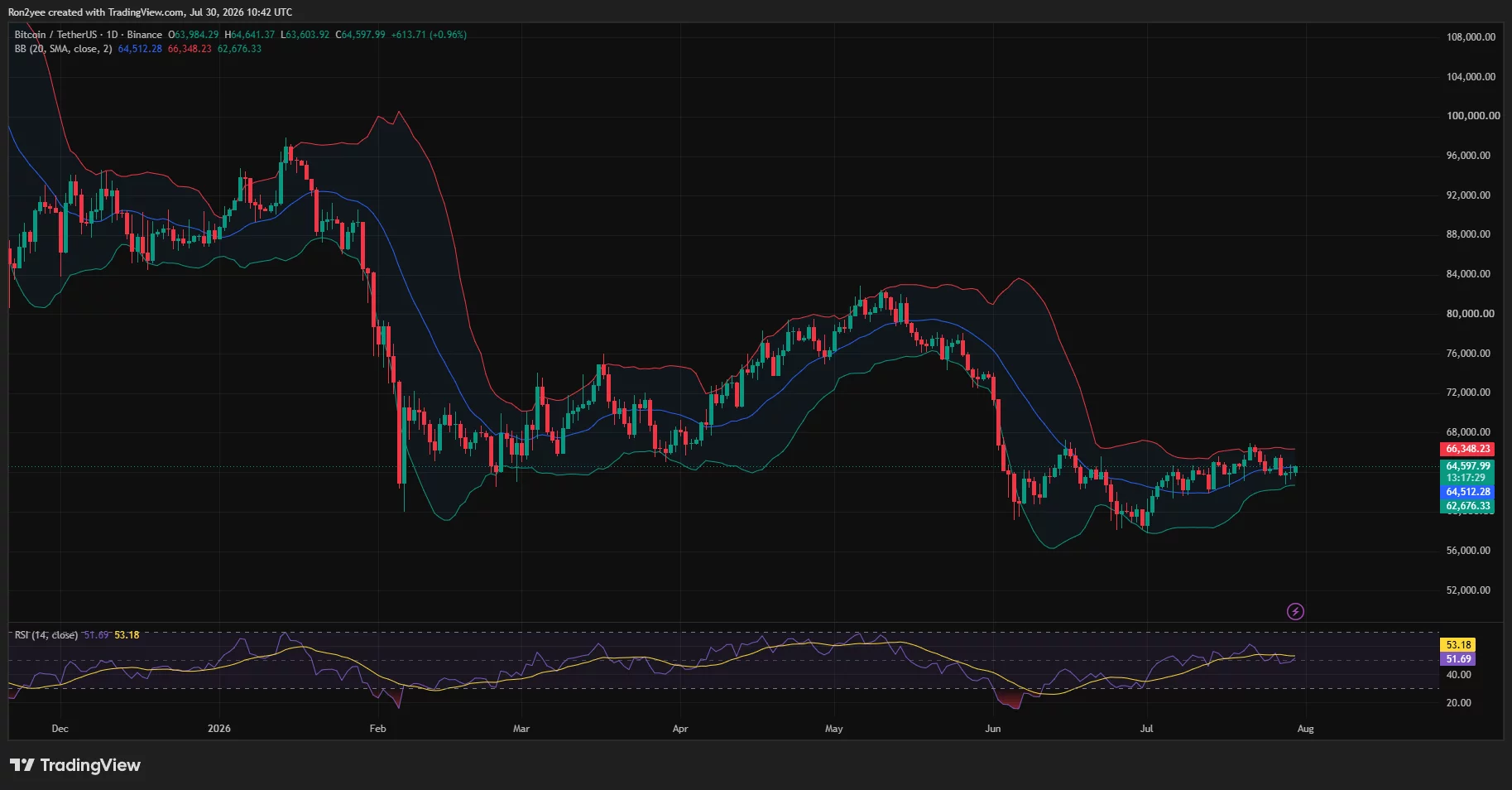
The daily chart shows Bitcoin trading almost directly above the Bollinger Band midpoint at $64,512. The upper band near $66,348 remains the immediate ceiling, while the lower band around $62,676 marks the first major support area.
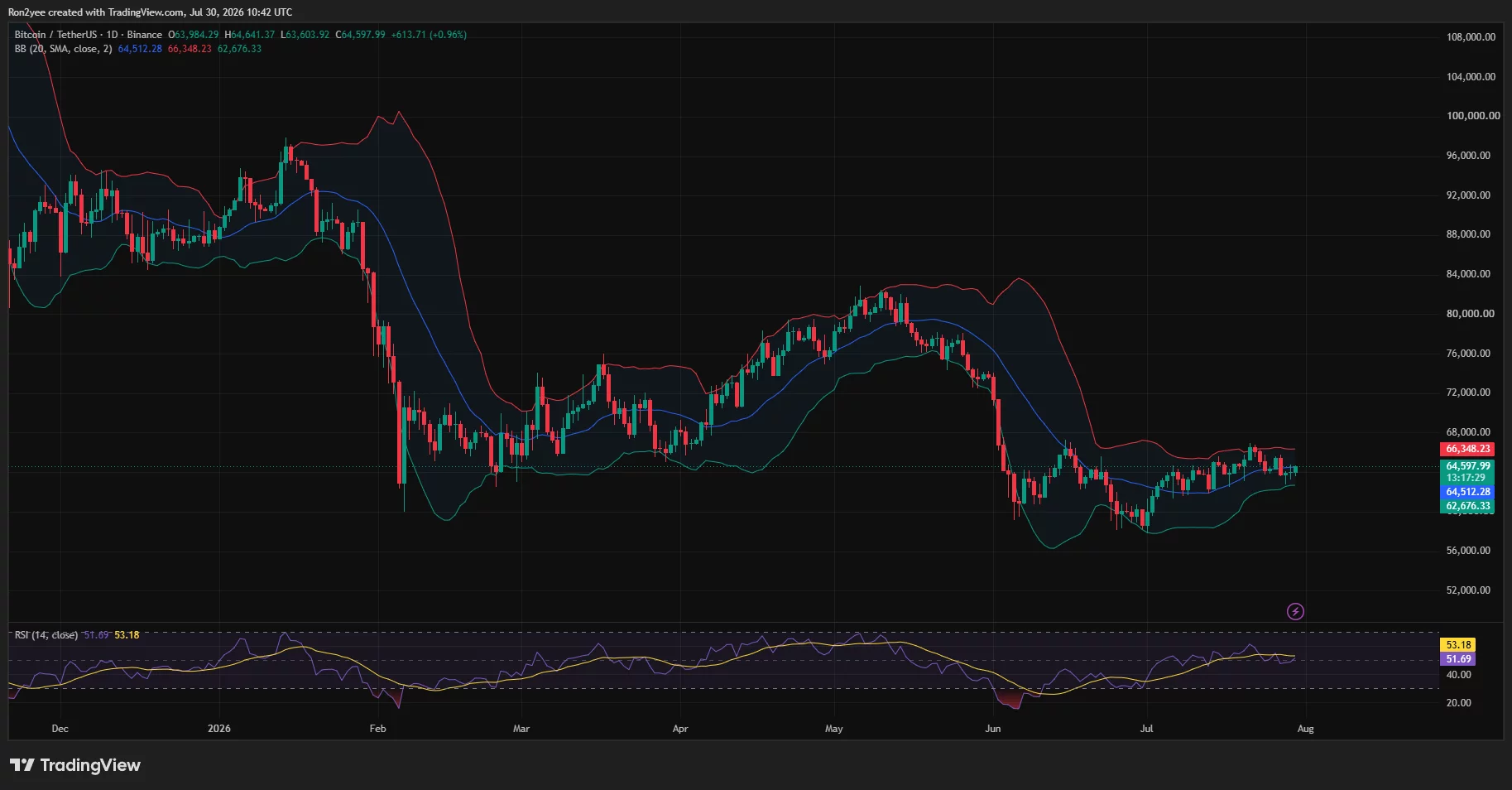
Momentum also remains neutral. The daily relative strength index stood at 51.69, slightly below its signal average of 53.18. That setup suggests buyers have stabilized the market but have not gained enough strength to confirm a breakout.
Bitcoin’s resistance to the wider risk-off move remains notable. US stocks fell sharply on Wednesday, with the Dow losing 2.2%, the S&P 500 dropping 1.5% and the Nasdaq sliding 1.7%. BTC, by comparison, recovered most of its post-FOMC decline instead of extending losses below $62,000.
However, the repeated inability to clear $65,000–$66,500 shows that defensive buying has been enough to prevent a breakdown, not enough to restart the broader rally.
War and Fed policy weigh on Bitcoin momentum
Renewed fighting between the United States and Iran has added another source of pressure. US forces launched a fresh wave of strikes against Islamic Revolutionary Guard Corps targets after Iran fired missiles toward a US base in Jordan.
Jordanian air defenses intercepted five Iranian missiles on Thursday, while concerns grew that the conflict could threaten Persian Gulf energy supplies and shipping through the Red Sea.
Crude oil held above $84 after surging 6.6% in the previous session. Higher energy prices can raise inflation expectations, keep Treasury yields elevated and reduce the appeal of speculative assets, including cryptocurrencies.
That problem was reinforced by the Fed’s July meeting. Policymakers maintained the federal funds rate at 3.5%–3.75%, as expected, but Chair Kevin Warsh rejected the idea of a flexible inflation objective.
Warsh said there was no “soft target” for inflation and reaffirmed that the central bank remained committed to 2%. Three FOMC members voted for a quarter-point rate increase, leaving another hike possible if oil-driven inflation persists. The Federal Reserve’s statement confirmed the 9–3 decision.
For Bitcoin, steady rates provided little relief because the accompanying message reduced expectations of easier financial conditions. Higher-for-longer borrowing costs could continue limiting demand for risk assets ahead of the next inflation readings.
CLARITY Act delay removes another potential catalyst
The US Senate’s decision to postpone action on the Digital Asset Market Clarity Act has added regulatory uncertainty to the macro pressure.
Lawmakers shifted their attention toward a Russia sanctions package and federal nominations, narrowing the time available to advance the crypto market structure bill before the Aug. 8 recess. The delay does not create an immediate operational change for Bitcoin, but it removes a potential catalyst that could have improved institutional confidence.
The legislation is intended to divide oversight responsibilities between the Securities and Exchange Commission and Commodity Futures Trading Commission. Its passage could give US exchanges, token issuers and investors clearer federal rules.
Senate Republicans released updated text on July 22, combining Banking and Agriculture Committee proposals into a single framework. However, unresolved ethics language and the need for Democratic support remain obstacles.
The delay alone did not cause Bitcoin’s decline, but it left the market without a policy-driven reason to challenge resistance while geopolitical and monetary risks increased.
Is capital rotating from crypto into gold?
Cross-asset performance shows defensive positioning, but there is not enough evidence to conclude that investors are directly moving capital from cryptocurrencies into gold.
Spot gold held near $4,062 an ounce on Thursday, while US gold futures gained 0.7%. Gold had also risen about 2% following the Fed announcement. However, investment demand remained subdued, and silver traded slightly lower.
That mixed performance weakens the argument for a broad flight into precious metals. Gold has retained safe-haven demand, but rising Treasury yields and expectations of another rate increase are limiting its upside because bullion does not pay interest.
The clearer defensive move has been into oil-linked exposure and away from equities sensitive to interest rates and economic growth. Bitcoin’s recovery toward $64,600 also suggests capital has not abandoned the asset entirely.
US spot Bitcoin ETFs recorded approximately $32.1 million in net inflows on July 29, with BlackRock’s IBIT attracting $89.8 million, according to Farside Investors. That inflow is modest, but it shows institutional demand continued during the sell-off rather than moving entirely toward traditional havens.
Crypto sentiment nevertheless remains weak. The Fear and Greed Index stood at 28, down from 29 and still inside the “fear” category.
Bitcoin downside targets remain near $63K and $60K
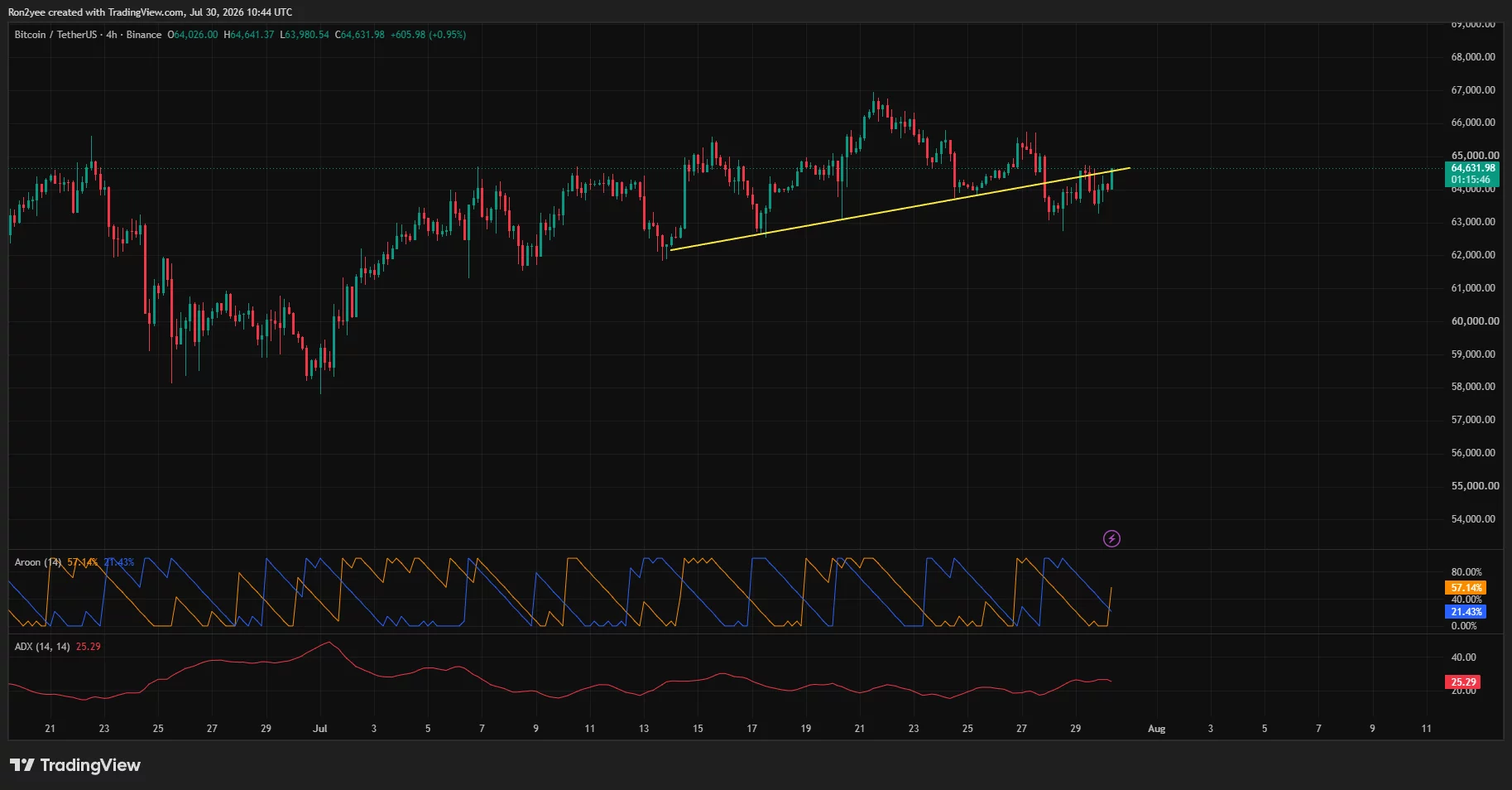
The 4-hour chart places Bitcoin against a rising trendline near $64,600. A confirmed move above this area could open a retest of $65,000, followed by the upper daily Bollinger Band between $66,300 and $66,500.
The 24-hour liquidation heatmap shows concentrated leverage around $64,900–$65,200. A move into that zone could trigger short liquidations and briefly accelerate the recovery. Further liquidity sits near $66,000 and $67,000.
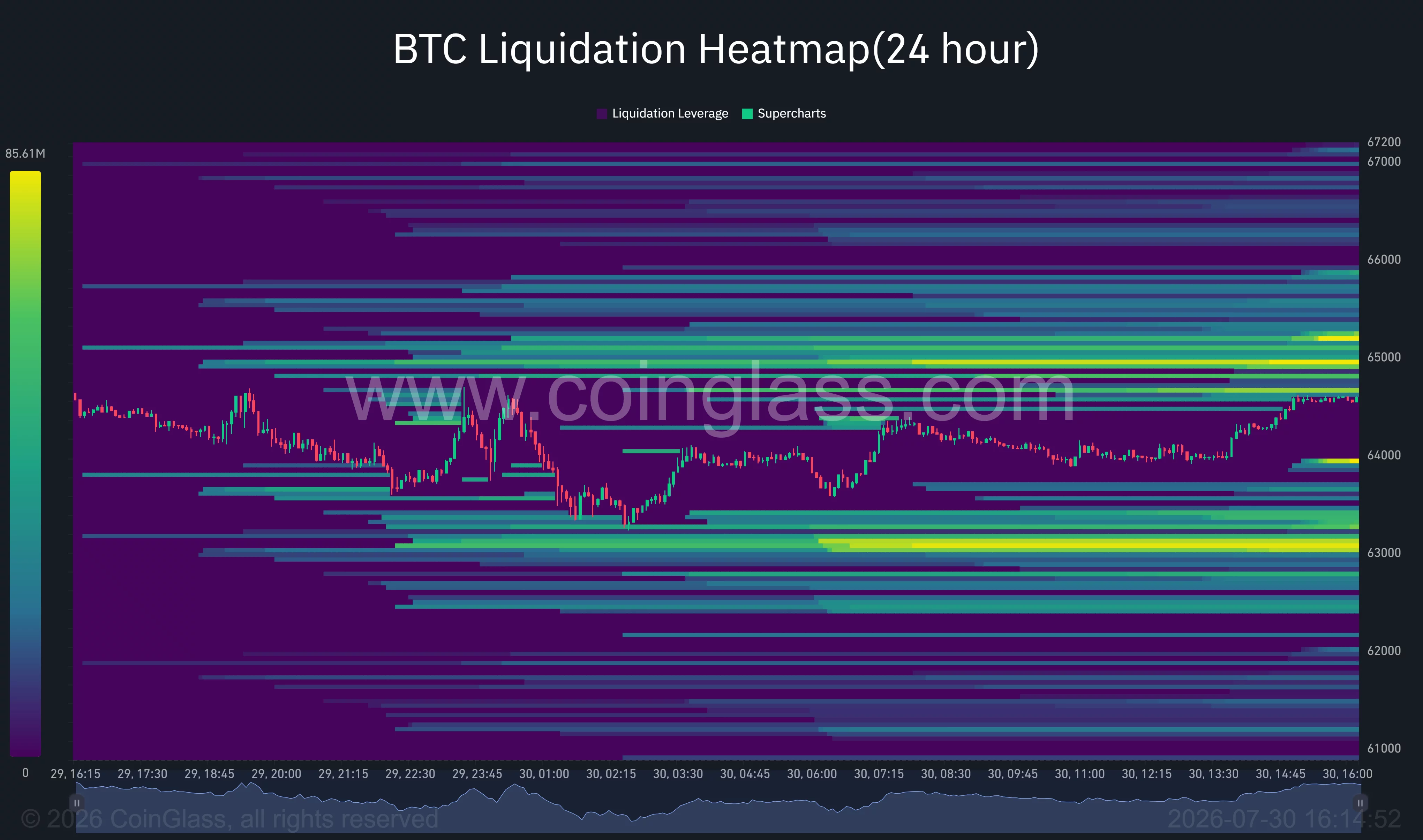
On the downside, another large concentration appears around $63,000–$63,300. Losing the 4-hour trendline could attract price toward that liquidity before opening the way to $62,000 and the psychological $60,000 level.
Crypto trader Lennaert Snyder said Bitcoin was attempting to hold $64,000 following the FOMC meeting but remained vulnerable after generating substantial liquidity below Tuesday’s $62,800 low. He identified $64,800 and $65,800 as possible areas for renewed short positions.
Ali Charts offered a longer-term bullish interpretation, arguing that a decline toward $60,000 could complete an inverse head-and-shoulders pattern. Under that scenario, a confirmed break above $66,500 would place $74,000 in play.
For now, the Aroon Up reading of 57.14 remains above Aroon Down at 21.43, while the 4-hour ADX of 25.29 points to a developing but only moderate trend. Bitcoin must hold above $64,000 and clear $66,500 to turn its resilience into a confirmed breakout. Failure to do so would leave the market exposed to another liquidity sweep as war risks, inflation concerns, and regulatory delays continue to weigh on sentiment.
Disclosure: This article does not represent investment advice. The content and materials featured on this page are for educational purposes only.
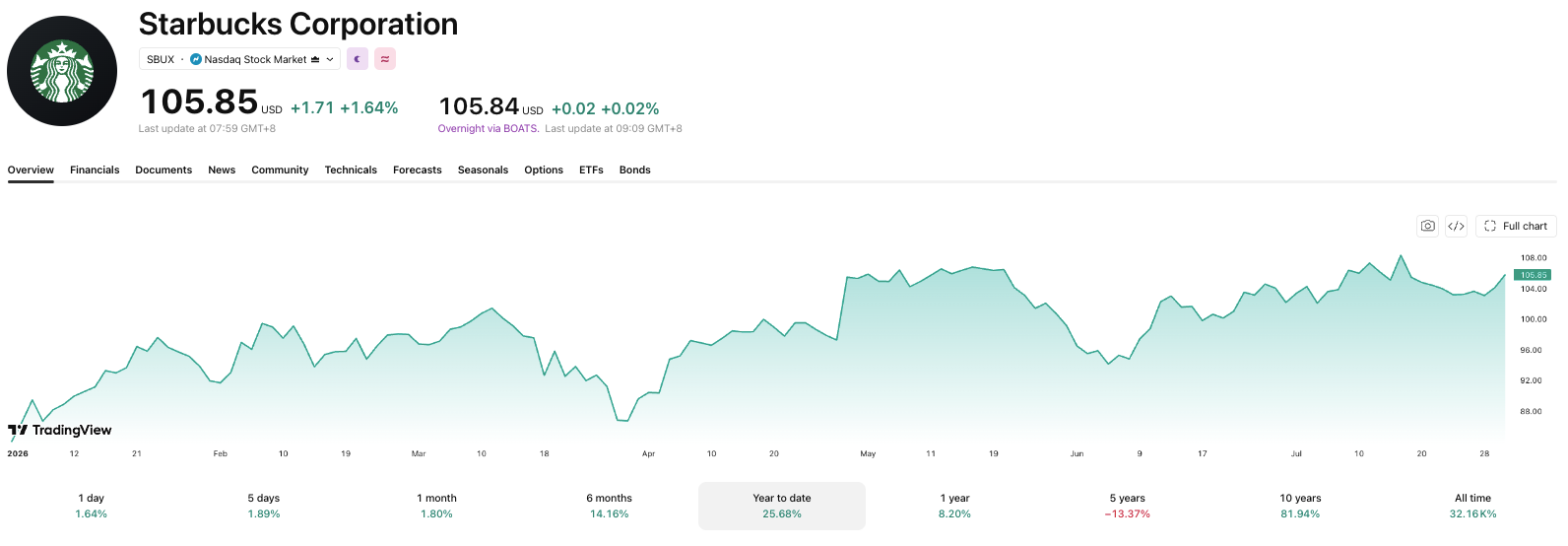
Starbucks stock is climbing back toward triple digits, and Jim Cramer says it won’t stop there. The coffee chain beat Wall Street on nearly every line this week.
In a week of major earnings calls, Starbucks has not only performed, but also shown delivery on a promise of a turnaround in the coffee chain’s fortunes, promised by CEO Brian Niccol.
Starbucks Beats Across the Board
Starbucks earned an adjusted $0.85 per share in its fiscal third quarter. That’s up 70% year over year and well ahead of estimates. Revenue held at $9.3 billion. Global comparable-store sales grew 7.9%, the fourth straight quarter of gains.
Operating margin expanded 430 basis points to 14.4%. North America’s margin grew for the first time since early fiscal 2024. That held even after stripping out the tariff refunds that boosted the headline numbers.
Shares jumped more than 3% Thursday to roughly $107. That puts Starbucks up about 26% year to date. The stock now sits near the 52-week closing high of $108.37, set on July 16. It has not closed above $110 since January 2025.

Cramer Bets Bigger on the Turnaround
Cramer interviewed CEO Brian Niccol on CNBC Thursday and called the quarter the inflection point for the turnaround. He raised his Investing Club price target to $120 from $115 and said the results should help Starbucks
Niccol is leaning harder into store remodels, and Starbucks now targets 1,500 upgraded locations by fiscal year-end. He’s also simplifying the company’s footprint abroad. Roughly 90% of its nearly 23,000 international stores now run under licensing deals. That follows a China joint venture Starbucks finalized in April. The company plans to keep direct control only over the U.S. and Canada.
The upgrade follows a costly stretch of layoffs that investors cheered as Niccol cut costs. It also stands out against Cramer’s more cautious calls on other momentum stocks this week.
Whether Starbucks actually heads towards $120 may hinge on North America’s margin gains holding once the tariff refunds fade.
The post Starbucks Stock to $120? Cramer Says Turnaround Is Accelerating appeared first on BeInCrypto.
SALT announced on July 30 that Ripple CEO Brad Garlinghouse will speak at the third annual Wyoming Blockchain Symposium, scheduled for Aug. 17–20 at the Four Seasons Resort and Residences Jackson Hole.
Summary
- Ripple CEO Brad Garlinghouse will speak at Wyoming’s invitation-only symposium from August 17 through 20.
- Five hundred investors, builders and policymakers are expected at the third annual Jackson Hole gathering.
- Ripple also sponsors the event, while organizers continue adding speakers and sessions before opening day.
The official speaker announcement confirmed his addition to the lineup but did not identify a session title, speaking time or discussion partner.
The invitation-only event is expected to bring together 500 investors, builders and policymakers. SALT and Kraken are hosting the gathering with support from the University of Wyoming Center for Blockchain and Digital Innovation and the Blockchain Association.
Meanwhile, the symposium begins with a welcome reception on Aug. 17. Organizers have scheduled two days of content and meetings for Aug. 18 and 19, followed by optional excursions on Aug. 20. Registration requests remain subject to approval by SALT and Kraken.
The current speaker roster includes SEC Chair Paul Atkins, Wyoming Sen. Cynthia Lummis, House Majority Whip Tom Emmer, Sen. Ruben Gallego and Comptroller of the Currency Jonathan Gould. Industry participants include Galaxy founder Michael Novogratz, Cardano founder Charles Hoskinson, Stellar Development Foundation CEO Denelle Dixon and Custodia Bank founder Caitlin Long.
U.S. crypto policy is likely to dominate discussion
SALT lists changes to U.S. and global crypto regulation among the event’s main themes. Other planned topics include Bitcoin’s role as a store of value, digital asset investment strategies, decentralized artificial intelligence and the future structure of financial markets.
Garlinghouse has recently pressed Congress to pass the CLARITY Act, which would create a federal market structure for digital assets. As crypto.news reported, he argued on July 22 that lawmakers should move forward rather than abandon the bill while seeking a perfect compromise. However, SALT has not confirmed that his Wyoming appearance will focus on the legislation.
Ripple continues to take part in U.S. policy debates through Garlinghouse and Chief Legal Officer Stuart Alderoty. The company’s regulatory interests include XRP’s legal treatment, stablecoin rules and institutional access to blockchain-based payments. Any remarks at the symposium would represent Ripple’s position and would not create new law or regulatory guidance.
Ripple’s Wyoming ties extend beyond sponsorship
SALT lists Ripple as a sponsor of the 2026 symposium. The company also has an existing relationship with the University of Wyoming, one of the event’s academic partners.
In 2022, Ripple funding helped establish the Ripple Blockchain Collaboratory at the university. The program supports blockchain, cryptocurrency and cybersecurity research across the university’s business, engineering and law programs. The university also operates an XRP Ledger validator.
Ripple said in October 2025 that the University of Wyoming was among the academic partners receiving renewed University Blockchain Research Initiative grants. The company reported distributing more than $1.5 million in renewed grants across several universities using its RLUSD stablecoin. That total covered the wider group of institutions and was not disclosed as the University of Wyoming’s individual award.
Wyoming has also developed its own digital asset policy infrastructure. In related coverage, the state launched FRNT, a state-issued dollar stablecoin, on Solana in January 2026. The symposium’s location therefore places Ripple executives alongside state officials and federal policymakers in a jurisdiction already testing blockchain-based financial products.
What happens before the Aug. 17 opening
SALT says the agenda and speaker list will continue to expand on a rolling basis. The next verified update should clarify Garlinghouse’s session topic, scheduled time and whether he will appear alone or in a panel discussion.
The organizer says conference panels will generally be on the record unless stated otherwise. Evening events and excursions will remain off the record, while media attendance is limited and subject to approval.
No verified XRP price movement or Ripple business development can be directly attributed to the speaker announcement. The event notice did not include a product launch, partnership, financial disclosure or regulatory decision.
For now, the confirmed development is Garlinghouse’s addition to the August lineup. Further details will depend on SALT’s final agenda and any separate announcement from Ripple before the event.
Pi Network price rallied to an intraday high near $0.085 on July 30 as an approaching node-upgrade deadline revived demand, but short-term charts show buyers are already meeting resistance.
Summary
- PI Network price climbed roughly 7% to $0.085 after rebounding from the $0.074 support area.
- Mainnet node operators must complete the Protocol 26 upgrade by Aug. 11.
- 4-hour RSI recovered to 57.32, confirming improving momentum after the recent sell-off.
- PI remains exposed to a double-top reversal unless buyers establish support above $0.085.
Pi Network price rebounds from record lows
According to data from crypto.news, Pi Network (PI) price rose as high as $0.08496 on July 30 before easing toward $0.0826 at the time of writing. The move extended its recovery from the $0.074–$0.075 demand zone, where buyers stepped in following a multi-day decline.
PI remains down by about 9% over the past seven days despite the rebound. CoinGecko data placed its market capitalization near $907 million, with approximately $11 million in 24-hour trading volume.
The latest advance followed an extreme loss of momentum earlier in the week. PI’s daily relative strength index had fallen to around 27, signaling its most oversold condition since trading began.
Buyers subsequently produced a roughly 10% rebound from the local low. However, the daily chart shows PI still trading near the bottom of a much larger decline from its April high around $0.20.
The token is approximately 97% below its February 2025 all-time high of $2.99. That wider performance keeps the current move within relief-rally territory rather than confirming a long-term reversal.
Protocol 26 deadline drives renewed demand
The immediate catalyst was the Pi Core Team’s announcement that Mainnet node operators must migrate to Protocol 26 by Aug. 11. Nodes that miss the deadline risk losing their connection to Mainnet.
Pi Network’s official node page confirms that every Mainnet node must upgrade to version 26. The team described the release as the ninth upgrade completed during the current migration sequence, with Protocol 27 expected to finish the planned series.
“With 8 successful upgrades completed over the past few months, these final two upgrades will bring the network up to date with the latest protocol features, improvements, and functionality.”
Protocol 26 may improve confidence that Pi Network is advancing its technical roadmap. The project has connected the broader upgrade sequence with its plans for greater decentralization, open-source node infrastructure, and expanded network functions.
Still, the announcement does not remove the project’s supply problem. Around 128 million PI tokens are reportedly scheduled to unlock during August, worth more than $10 million at the current price. New supply could limit the rally if spot demand remains weak.
PI breakout faces resistance near $0.085
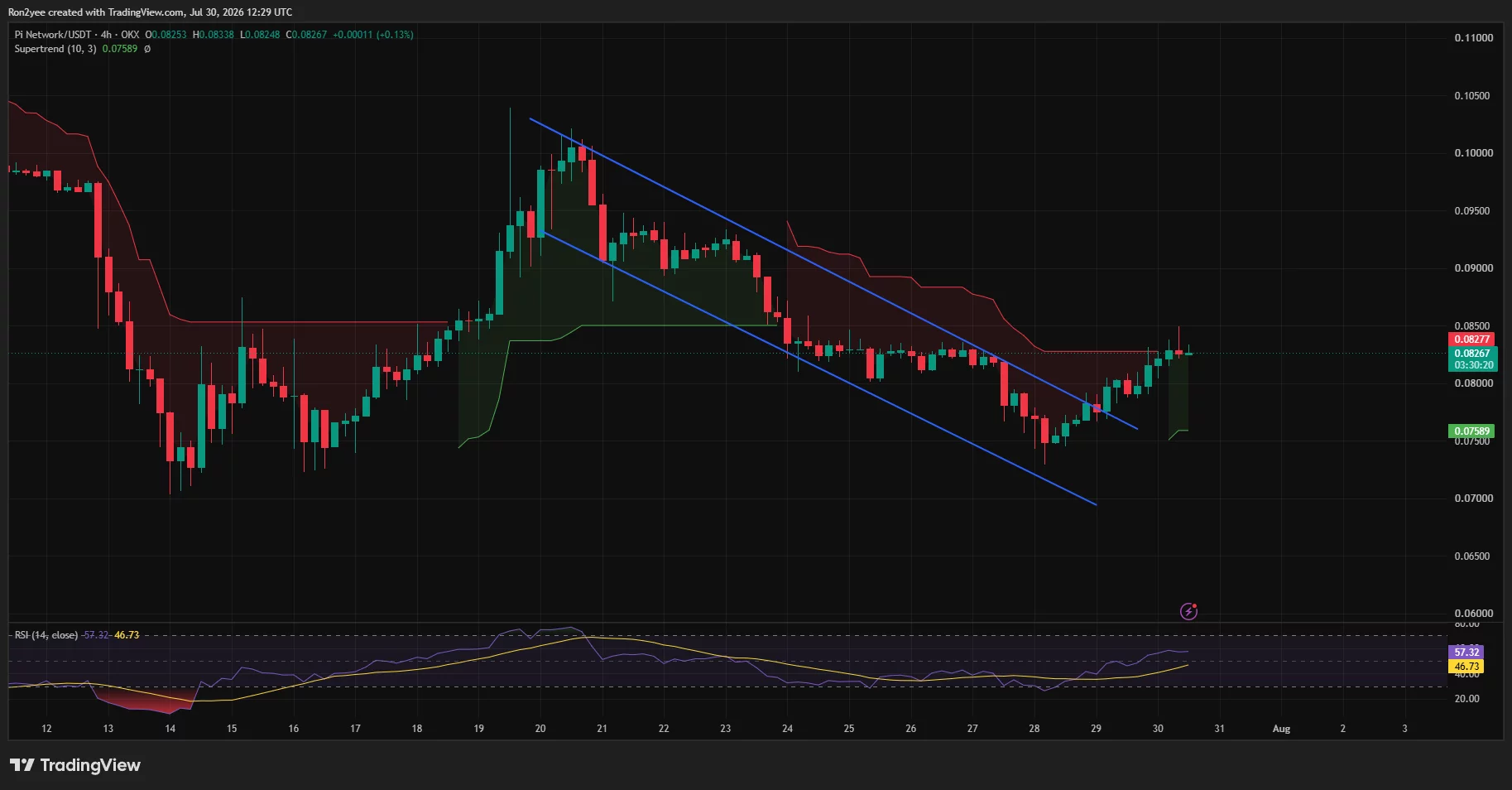
The 4-hour chart shows PI breaking above the upper boundary of a descending parallel channel that had controlled price action since July 20. The move represents an early bullish change in short-term market structure.
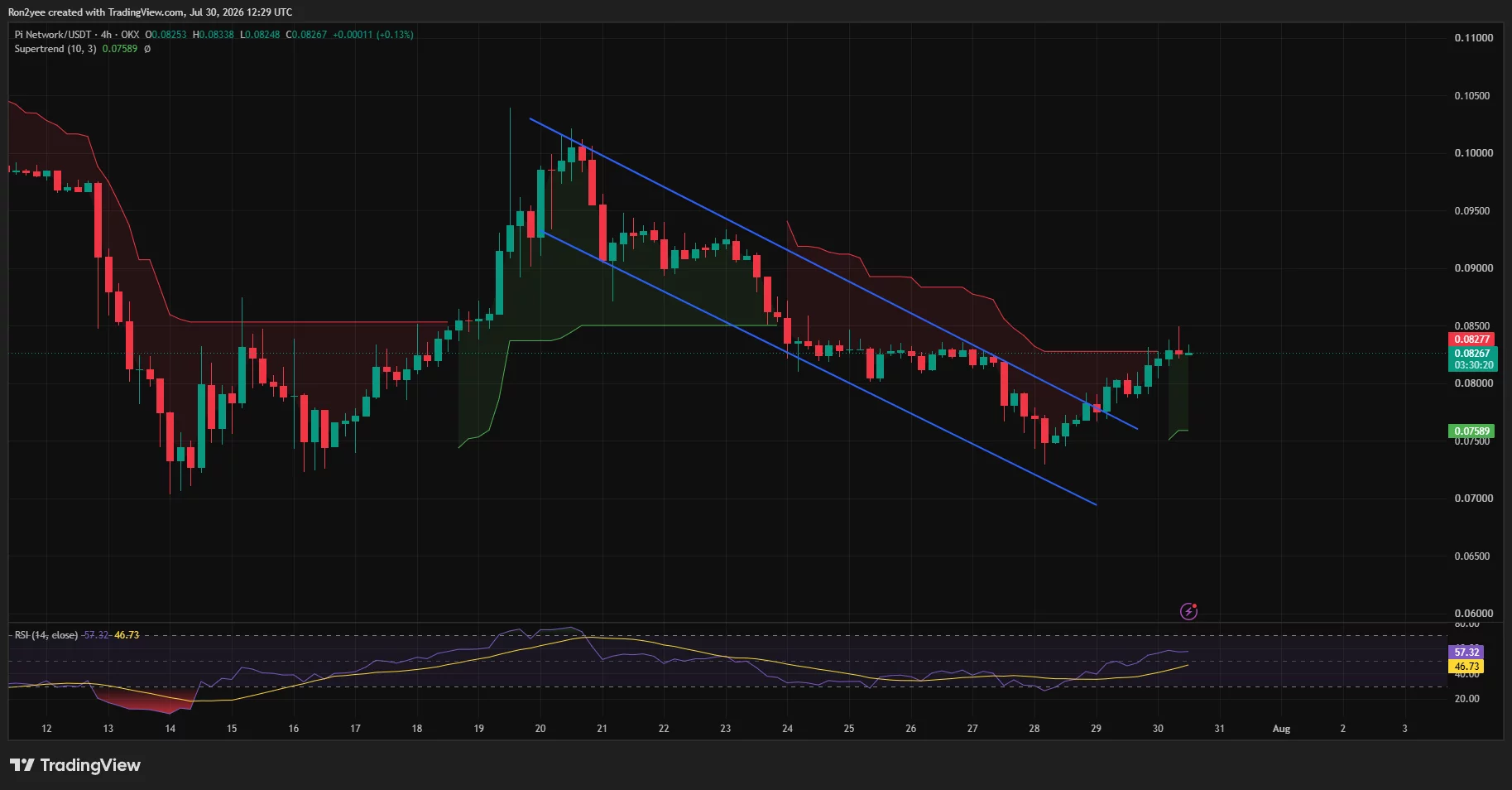
Momentum has also improved. The 4-hour RSI rose to 57.32, above its moving average of 46.73 and the neutral 50 level. That reading suggests buyers have regained control without pushing PI into overbought territory.
PI has now reached its 4-hour Supertrend resistance at approximately $0.0828. A sustained close above that indicator and the recent $0.085 high would strengthen the breakout and expose $0.090 as the next psychological level.
Above it, the daily Fibonacci chart places the next major resistance at $0.09796. That level represents the 78.6% retracement of the decline from roughly $0.20 to $0.0702 and sits close to the important $0.10 threshold.
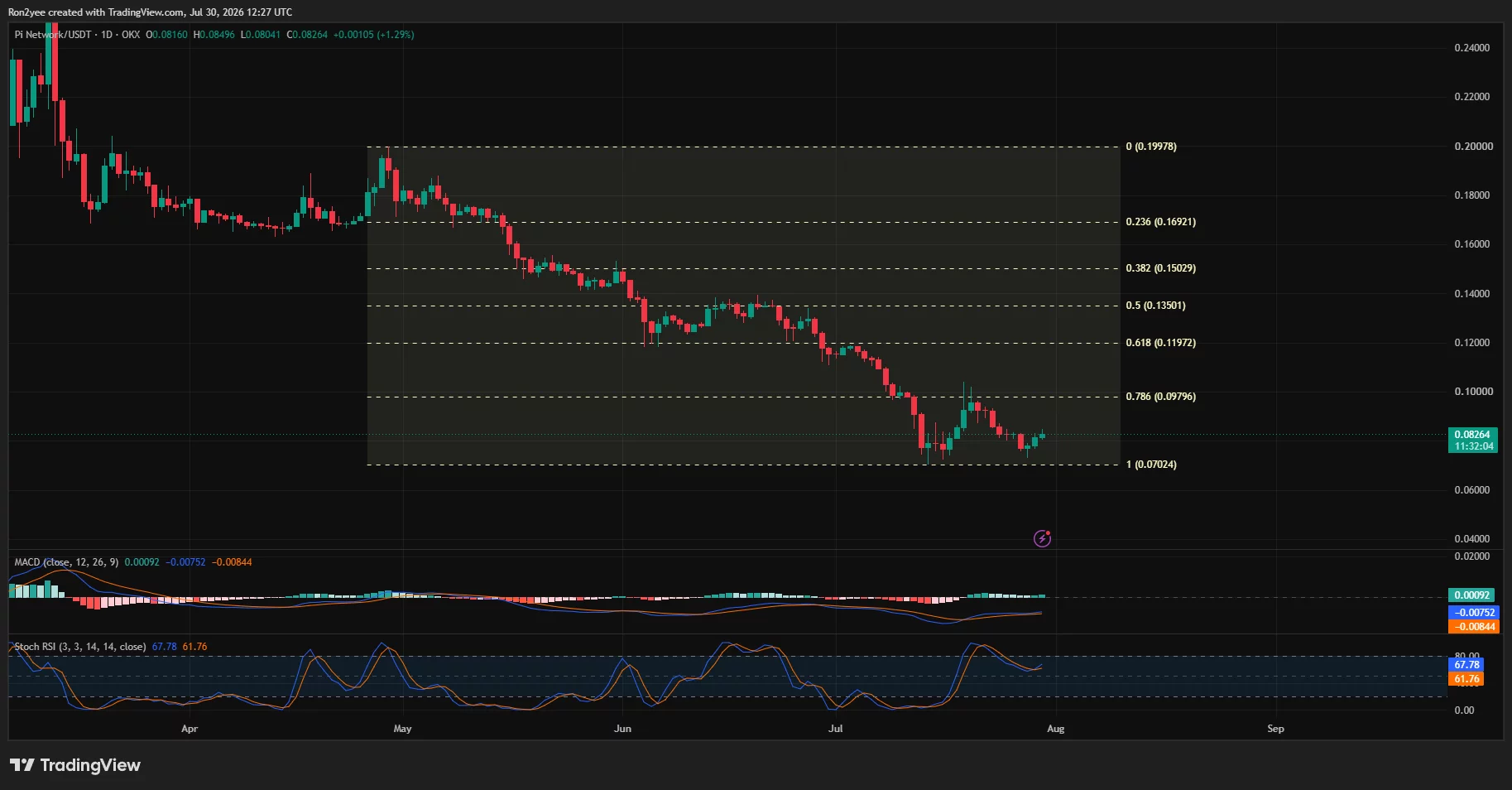
Daily indicators show early signs of stabilization but not a completed reversal. The moving average convergence divergence histogram has turned marginally positive, while both MACD lines remain below zero. Stochastic RSI readings of 67.78 and 61.76 show strengthening momentum without reaching the overbought zone.
Losing $0.080 would weaken the breakout and bring the 4-hour Supertrend support near $0.0759 back into view. A deeper decline below $0.074 could expose the all-time-low region around $0.0702.
Analyst warns of double-top reversal
Crypto analyst Gopal identified a possible double-top pattern on PI’s one-minute chart after the token made two unsuccessful attempts to clear the same intraday resistance area.
“After two failed attempts to break resistance, buyers are losing momentum while sellers continue defending the ceiling,” the analyst noted.
The pattern’s neckline sits near the immediate $0.082 support region. A confirmed break below it could send PI toward the analyst’s downside target around $0.0814, although the setup would carry less weight than signals on the 4-hour or daily charts.
Reclaiming the two intraday peaks above approximately $0.083 with stronger volume would invalidate that short-term bearish pattern. Buyers would then have another opportunity to challenge $0.085.
For US traders, PI’s advance remains largely tied to project-specific developments rather than the institutional flows that support Bitcoin and Ethereum. Risk appetite also remains constrained after the Federal Reserve held interest rates steady, making sustained demand and the Aug. 11 upgrade execution important tests for the rally.
Protocol 26 has supplied a clear reason for PI’s recovery, but price must close above $0.085 and then reclaim $0.098–$0.10 before the broader chart begins to support a durable reversal.
Disclosure: This article does not represent investment advice. The content and materials featured on this page are for educational purposes only.


A decade of tokenized equity pitches promised global access to American stocks. The use case that finally moved volume is pairing them against memecoins on a brokerage’s own chain, and it just pushed Robinhood Chain past Solana in tokenized stock trading. Nobody planned this.
Summary
- Since mid-July, launch platforms Bankr and long.xyz have let users issue memecoins backed by tokenized stock liquidity across more than 90 tickers on Robinhood Chain.
- DEX Screener now shows memecoins trading against tokenized NVDA, TSLA, INTC, RBLX, and SPCX among the chain’s top 100 pools.
- That mechanism has pushed Robinhood Chain past Solana in tokenized stock volume, against Ondo’s multichain stock tokens averaging roughly $24.9 million.
- Tokenized stocks remain a sliver of the chain itself, which cleared roughly $444 million in daily decentralized exchange volume against $332.7 million in total value locked, with most of it in memecoins.
- Pons has announced V2 support for tokenized quote assets including NVDA, AAPL, and HOOD, but its contracts were still in audit with two partners as of late July and every feature remains subject to change until deployment.
Tokenized equities have been pitched for roughly a decade on a consistent premise: that a share of Apple represented as a blockchain token would unlock global access, continuous trading, and programmable finance for the largest asset class on earth. The pitch produced a long series of products, several regulatory settlements, a handful of scrapped launches, and until recently very little volume. Then in mid-July, without any announcement resembling the pitch, tokenized American stocks found a use that actually moved size. Launch platforms on Robinhood Chain began letting anyone issue a memecoin whose liquidity pair is a tokenized equity, across more than ninety tickers, and traders took it up immediately. The chain’s top hundred pools now include memecoins quoted against tokenized Nvidia, Tesla, Intel, Roblox, and SpaceX. The volume that arrangement generates has been sufficient to push Robinhood Chain ahead of Solana in tokenized stock trading. So the first genuine product-market fit for tokenized equities is not investment, settlement, or collateralised lending. It is serving as the denominator in speculative token pairs, and understanding why that happened tells you more about tokenization’s near future than any of the pitches did.
What is actually live
Precision matters here because a well-publicised announcement has been widely confused with the working product.
Bankr and long.xyz, both operating on Robinhood Chain, began in mid-July allowing users to issue memecoins backed by tokenized stock liquidity, with coverage extending across more than ninety tickers.
These are live, trading, and visible on public analytics. DEX Screener data places memecoins paired against tokenized NVDA, TSLA, INTC, RBLX, and SPCX within the chain’s top hundred pools by activity.
The tokenized stocks themselves come from Robinhood’s own factory, which has issued something in the region of 102 assets. The chain runs as an Arbitrum-based Ethereum Layer 2 with ETH for gas, with Robinhood Markets operating the sequencer, which means the network is permissionless to build on and centrally operated. There is no chain token, and fees accrue to the company instead of any onchain treasury, a structure our audit of the chain’s revenue arrangement examined in detail.
Separately, and not yet live, the chain’s dominant launchpad has announced a V2 upgrade that would add support for tokenized quote assets including USDG, NVDA, AAPL, and HOOD, alongside an ETH-denominated bonding curve, Uniswap V4 pools using Hooks, a 4.2 ETH graduation threshold, and creator payouts denominated in ETH. As of the announcement, contracts were undergoing audit with two partners and the team stated every feature remained subject to change until deployment. That distinction matters: the launchpad currently running more than half of the chain’s transactions has announced the feature its competitors already shipped three weeks earlier.
The milestone nobody planned
The consequence is a headline number that the tokenization industry has wanted for years, arriving through a mechanism nobody proposed.
Robinhood Chain has overtaken Solana in tokenized stock volume. Against that, Ondo Finance’s multichain stock tokens have averaged roughly $24.9 million, and the measurement in question counts only genuine tokenized stocks while excluding the chain’s official market-maker address, which understates total activity while stripping out house liquidity.
Now the context that reframes it. The chain cleared approximately $444 million in total decentralized exchange volume over a recent day against $332.7 million in total value locked, and most of that volume is memecoins. Cumulative chain DEX volume has exceeded $9 billion with roughly 80% coming from higher-risk memecoins. Tokenized stocks, in other words, are simultaneously the category in which this chain leads the industry and a sliver of the chain’s own activity.
Both facts are true and the tension between them is the story. A tokenized equity used as a quote asset generates volume every time the memecoin paired against it trades, which means the stock’s recorded trading activity is a byproduct of speculation in something else entirely. The number goes up. What it measures is not what the tokenization pitch promised it would measure.
Why a stock is an unusual quote asset
This is where the design deserves scrutiny, because pairing a token against an equity introduces properties that pairing against ETH or a stablecoin does not, and none of them have been stress-tested.
Market hours. A tokenized equity references an asset that trades on an exchange with opening and closing bells, holidays, and halts. The token trades continuously. What the quote asset is worth between 4pm and 9:30am the next morning depends entirely on how the tokenized product is designed and priced, and a memecoin pool denominated in it inherits that ambiguity for two thirds of every weekday.
Gap risk. Equities gap. An earnings print, a guidance revision, or a regulatory action can move a stock materially between one session’s close and the next session’s open, with no continuous price path in between. A liquidity pool whose denominator gaps ten percent overnight has repriced every position in it without a single trade occurring in the memecoin itself. Traders accustomed to volatility in the numerator now carry volatility in the denominator, from an event calendar most of them do not follow.
Corporate actions. Splits, dividends, mergers, and delistings all require handling. A tokenized product’s terms specify how, and the specifications vary considerably across issuers, as our examination of what tokenized stock holders actually own found. A pool paired against an asset undergoing a corporate action is a pool whose accounting depends on contractual language written by a third party.
Oracle and redemption dependency. The quote asset’s value rests on the tokenized product maintaining its relationship to the underlying share, which depends on the issuer’s reserves, redemption mechanics, and operational continuity. A memecoin pool inherits that dependency without its participants necessarily knowing it exists.
None of which makes the design illegitimate. It makes it novel, and novel financial plumbing generally reveals its failure modes under stress, not in documentation. The relevant stress event for this design is an ordinary earnings season, and the chain has not been through one with these pools live.
The chain’s stated purpose against its actual use
The most quotable thing in this whole story comes from Robinhood itself. The company’s framing, roughly, is that it is building the best chain for real-world assets, and that it works great for memes too.
That sentence is doing a lot of work. The chain was launched as infrastructure for tokenized securities and decentralized finance built around them, with transferable stock tokens backed one-for-one by underlying shares and a strategic story pointing at brokerage customers trading equities onchain, borrowing against them, and using dollar tokens for settlement. Our audit of the chain’s first month found that memecoins took it instead, and the numbers since have not reversed: roughly 80% of cumulative volume in higher-risk memecoins, more than half of all chain transactions running through a single launchpad, and over twelve thousand new tokens minted in a day.
The tokenized-stock-as-quote-asset development sits precisely on the seam between the stated purpose and the actual use, and it resolves the tension in an unexpected direction. Rather than tokenized equities displacing memecoins, memecoins have absorbed tokenized equities as an input. The RWA milestone the chain’s marketing wanted was delivered by the speculation its marketing downplays.
One analyst framing captures the right test better than any volume figure: the number to track is tokenized equity volume as a share of the chain’s decentralized exchange activity. Memecoin churn decays on every new chain. What would be genuinely unreplicable is a brokerage’s customers trading Nvidia at three in the morning, borrowing against it, and lending dollar tokens, because no competing Layer 2 can assemble that without Robinhood’s licences and user base. Volume generated by memecoin pairs is not that behaviour, and distinguishing the two is the whole analytical task.
The competitive scramble underneath
The reason this arrived in mid-July and not at launch is competitive, and the sequence is worth following because it explains why an untested design shipped quickly.
Robinhood Chain’s launchpad market has already turned over once. The platform that dominated it early held roughly three quarters of token deployments, cleared more than twelve million dollars in protocol fees, and switched off new issuance on July 11, after which its flagship memecoin declined along with several others. Displaced activity scattered across rivals including flap.sh, trensh.today, Bankr, and Pons, and Pons emerged with the largest share.
That turnover created two conditions. It proved that share on this chain is not defensible, since the previous leader vacated a dominant position in days and the traffic simply rerouted. And it left several platforms competing for the same displaced users with essentially identical products, which is the situation that forces differentiation.
Tokenized equity pairs are that differentiation. Bankr and long.xyz shipped it in mid-July, across ninety-plus tickers, and it gave them something no competitor offered on a chain whose entire strategic identity is real-world assets. Pons announced its own version within days, with contracts still in audit. Meanwhile, a new entrant raised $3.5 million to build a competing launchpad, and the gas subsidy that makes high-frequency minting free closes around the end of September.
So the design that this piece has spent several sections examining for untested risk properties was shipped into a market where the cost of waiting was losing share to whoever shipped first. That is the ordinary dynamic of competitive product development, and it is also the reason novel financial plumbing in this sector tends to reach users before its failure modes are understood. The participants providing liquidity in these pools are not being asked to evaluate a mature product. They are early users of something three weeks old that exists because a rival launched it and everyone else had to match.
What this means for tokenization
Step back from one chain and the development says something uncomfortable about where tokenized equities are finding demand.
Two tracks are now visible and they are moving in opposite directions. The institutional track runs through the depository: as our examination of that development described, the entity custodying more than $114 trillion in securities processed its first live tokenized trades in mid-July, with more than forty firms participating and full launch scheduled for October, using tokenized representations that preserve identical legal ownership rights. That is tokenization as the incumbents will do it, at a scale the crypto-native market has not approached.
The speculative track runs through chains like this one, where tokenized equities are useful precisely because they are novel, permissionless, and available as pool denominators. That track produces volume quickly, serves users the institutional track will not reach, and generates activity metrics that flatter the category.
The awkward part is that the second track’s volume gets counted in the same sentences as the first track’s ambition. When tokenized stock trading volume is cited as evidence of institutional adoption, some meaningful share of it is memecoin pairs. That is not fraud and nobody is hiding it, but it is the same measurement problem this publication has documented across chain metrics generally: a number that is accurate, checkable, and measuring something other than what the reader assumes.
For anyone assessing tokenization’s progress, the useful adjustment is to separate volume in tokenized assets from volume denominated in them. The first is adoption. The second is a byproduct.
Who is on the other side
One question the design raises and none of the coverage asks: when a memecoin trades against tokenized Nvidia, who supplied the Nvidia.
In a conventional pool, the quote asset arrives from whoever wants exposure to the token, and the pool’s depth reflects how much ETH or stablecoin people are willing to commit. Substituting a tokenized equity changes who can participate. Providing liquidity now requires holding the tokenized stock, which means acquiring it through whatever channel the issuer permits, on a chain where the issuer is the same company operating the sequencer.
That produces an unusual concentration. The tokenized assets come from Robinhood’s factory, roughly 102 of them. The chain is operated by Robinhood. The launchpads are third parties but they are building against Robinhood’s assets on Robinhood’s infrastructure, and the analytics that measure the resulting volume exclude the chain’s official market-maker address specifically because including house liquidity would distort the picture. The fact that such an exclusion is necessary tells you the house is present.
None of that is improper, and vertical arrangements of this kind are ordinary in traditional markets, where exchanges, clearinghouses, and market makers are frequently affiliated under disclosed structures. It is worth naming because the participants in these pools are retail traders on a consumer application, and the question of who provides the liquidity they trade against is one that took equity markets decades of regulation to answer transparently.
The practical instruction for a participant is narrow and checkable. Before providing liquidity to a pool denominated in a tokenized equity, find out where that equity came from, what redeeming it requires, and who else holds a meaningful share of the pool. Those are answerable from public data, and they determine what happens when everyone tries to exit at once.
The precedent from a market that already tried this
There is a close historical analogue, and it is worth knowing because it ended badly enough to have produced regulation.
Contracts for difference and synthetic equity products have offered retail traders exposure to stocks without ownership for decades, priced off a reference market, traded outside its hours, and settled in cash. The products worked mechanically. The problems that emerged were the ones this design inherits: reference prices that diverged from the underlying when the underlying was closed, gap events that liquidated positions at prices no market had printed, and retail participants who did not understand that the thing determining their outcome was a contractual reference, not a share. European regulators eventually imposed leverage caps and marketing restrictions specifically on those products after examining client outcome data.
The parallel is not exact and the differences matter in both directions. These are not leveraged products, the pools are permissionless instead of dealer-operated, and the tokenized assets involved are backed one-for-one by shares instead of being pure synthetics. Against that, a decentralized pool has no dealer to widen spreads or halt trading when the reference market gaps, no suitability assessment for participants, and no regulator having examined outcome data because the products are three weeks old.
What the analogue supplies is a list of questions with known answers from a different market. What happens to a position when the reference asset gaps and no continuous price existed in between. Who bears the cost when the tokenized representation and the underlying diverge. Whether participants understand what determines their outcome. Retail synthetic equity products answered all three the hard way, over years, and the answers were unfavourable enough to change the rules.
The memecoin-paired-against-tokenized-equity design has not answered any of them yet, and it will get its first real test on an ordinary earnings date, not in a crisis.
What to watch
Tokenized equity volume as a share of chain DEX activity. The single metric that distinguishes real adoption from pool-denominator effects, and it is computable from public dashboards.
The first earnings season with these pools live. Gap risk in a quote asset is theoretical until a stock moves ten percent overnight with memecoin pools denominated in it. That test arrives on a published calendar.
Whether Pons V2 ships, and with what. The launchpad running more than half of the chain’s transactions announced tokenized quote pairs with contracts still in audit and features explicitly subject to change. Its actual deployment, and whether the announced feature set survives, is the near-term event.
The gas subsidy expiry. Robinhood waived gas for ninety days from the July 1 mainnet launch, which makes minting twelve thousand tokens a day economically trivial. That window closes around the end of September, and the unit economics of high-frequency launching change when fees return.
Whether any tokenized-stock activity appears that is not speculation. Borrowing against tokenized equities, using them as settlement collateral, or holding them as positions rather than pool denominators would be the first evidence that the chain’s stated purpose is arriving. Our coverage of the holder-versus-value split found the chain leading on holders with a fraction of the value, which is the shape of a distribution problem rather than an adoption one.
A closing note on what would change the reading, because the case above is deliberately unsympathetic and there is a version of this that is genuinely constructive.
The strongest argument for pairing tokens against tokenized equities is that it creates demand for a tokenized asset that otherwise has almost none. Our examination of the tokenized equity market found the largest issuer holding under a billion dollars and the most widely held product carrying roughly forty-four million in value across several hundred thousand holders, an average position near a hundred and thirty dollars. Those are not the numbers of a functioning market. A mechanism that gives tokenized stocks a reason to sit in pools, be borrowed against, and change hands is a mechanism that builds the liquidity every other use case depends on, and liquidity has to come from somewhere before it comes from institutions.
Speculation has bootstrapped legitimate financial infrastructure before. The initial coin offering era funded the developer tooling that later served enterprises. Memecoin volume paid for the block space and validator economics that now settle serious value. If tokenized equity pools deepen because memecoin traders need denominators, and the deeper pools then support borrowing, settlement, and hedging that would not otherwise have existed, the sequence will look sensible in hindsight regardless of how it looks now.
The test is whether the second stage arrives. Speculation that bootstraps infrastructure and speculation that simply extracts and leaves are indistinguishable while the speculation is happening, and they are separated by exactly one observation: whether non-speculative activity in the same assets grows while the speculation cools. That number is publicly computable, nobody is currently reporting it, and it is the only thing that will settle whether this development was the beginning of tokenized equities or a footnote in the history of memecoins.
Disclaimer: This article is for information and educational purposes only and does not constitute financial or investment advice. It describes live products and one announced but undeployed upgrade whose features may change, and figures reflect public analytics available at the time of writing. Tokenized asset products vary considerably in legal structure. Always do your own research. Information is accurate as of July 30, 2026.
Frequently Asked Questions
What does it mean to pair a memecoin against a tokenized stock?
In a decentralized exchange pool, every token trades against a quote asset, conventionally ETH or a stablecoin. Since mid-July, launch platforms on Robinhood Chain have allowed users to issue memecoins whose quote asset is a tokenized equity instead, across more than ninety tickers, so the memecoin’s price is denominated in tokenized Nvidia, Tesla, or another stock rather than in a crypto asset.
Who is actually doing this?
Bankr and long.xyz, both operating on Robinhood Chain, began offering it in mid-July, and the resulting pools now appear among the chain’s top hundred by activity, including pairs against NVDA, TSLA, INTC, RBLX, and SPCX. Pons, the chain’s dominant launchpad, has announced similar support in a V2 upgrade whose contracts were still in audit as of late July.
Has Robinhood Chain really overtaken Solana in tokenized stock volume?
By the cited measurement, yes, and the mechanism is these memecoin pairs. The comparison counts genuine tokenized stocks and excludes the chain’s official market-maker address, which understates total activity while removing house liquidity. Ondo’s multichain stock tokens averaged roughly $24.9 million over the same period.
Are tokenized stocks a large part of Robinhood Chain?
No. The chain cleared roughly $444 million in daily decentralized exchange volume against $332.7 million in total value locked, and most of that is memecoins. Cumulative volume has exceeded $9 billion with about 80% from higher-risk memecoins. Tokenized stocks are simultaneously the category where the chain leads and a small share of its own activity.
What are the risks of using a stock as a quote asset?
Four that do not arise with ETH or stablecoins. Market hours, since the equity’s reference market closes while the pool trades continuously. Gap risk, since stocks can move materially between sessions with no continuous price path. Corporate actions such as splits and mergers, whose handling depends on the tokenized product’s terms. And dependency on the issuer maintaining the token’s relationship to the underlying share.
Is this what tokenization was supposed to be?
Not as pitched. The decade-long case for tokenized equities centred on global access, continuous trading, and use as programmable collateral. Serving as the denominator in speculative token pairs was not part of that case, and it generates trading volume in the tokenized asset as a byproduct of speculation in something else.
How does this compare to institutional tokenization?
They are separate tracks. The depository processed its first live tokenized trades of stocks, ETFs, and Treasuries in mid-July with more than forty major firms participating and full launch scheduled for October, using tokens that preserve identical legal ownership rights. That is a different product with a different user base, operating at a scale the crypto-native market has not approached.
What should observers actually track?
Tokenized equity volume as a share of total chain decentralized exchange activity, which separates adoption from denominator effects; the first earnings season with these pools live, which tests gap risk; whether Pons V2 ships as announced; the gas subsidy expiry around the end of September; and any tokenized-stock activity that is not speculation. This is educational analysis, not investment advice.

Mastercard spent decades training its fraud system to see bots as thieves. Now bots are the ones doing the buying.

Scania UK has officially opened new Stockton service depot

KOSPI Snaps Back 15% as Asia’s AI Chip Rally Returns


-

 Fashion6 days ago
Weekend Open Thread: Brooks Brothers
-
 Sports4 days ago
Commonwealth Games boxing: Jadumani Singh seals dominant 5-0 win over Pakistan’s Sumama Rehman to enter quarter-finals | Commonwealth Games News
-

 Business1 day ago
Why Trees Belong on the Risk Register
-

 Tech4 days ago
Intel is reversing course and bringing hyper-threading back to its server chips
-

 Crypto World5 days ago
Ripple bought a bank in pieces. The $4 billion audit
-

 Politics4 days ago
Luke Littler dismantles Gerwyn Price to retain title in Blackpool
-
 Entertainment7 days ago
A New Post-Apocalyptic Gundam Anime Series Blasts Into SDCC
-

 Politics3 days ago
The Part of the Electric Transition Nobody Wants to Discuss
-

 News Videos4 days ago
BITCOIN JUST ENTERED THIS CRITICAL ZONE…
-

 Sports7 days ago
2026 3M Open leaderboard: Scottie Scheffler finds putter in Round 1, sits three back
-

 Fashion7 days ago
16 Dresses for the High Summer Event
-

 Business2 days ago
Major shareholder moves on Canyon
-

 Crypto World5 days ago
XRP Ledger adds $2.6B as RWA inflows rank second
-

 Politics5 days ago
Spain sweeps the board at 2026 World Cup with individual awards
-

 News Videos14 hours ago
Bitcoin Enters the 3rd Stage of the Bear Market
-
 Entertainment2 days ago
‘Stargate’ Creator’s New Sci-Fi Series Returns for Season 3 Tomorrow
-

 Entertainment5 days ago
Sara Gilson Killed By Husband After Viral “Pedophile” TikTok Video
-

 Tech6 days ago
Anthropic launches Claude Opus 5, a cheaper AI model for coding, agents and enterprise workflows
-

 Crypto World2 days ago
Kraken Enables Retail Access to Jersey Mike’s IPO via Tokenized Shares
-

 News Videos2 days ago
Claude: Build Financial Dashboards in Minutes (2026)
You must be logged in to post a comment Login