
Crypto World
Stryker (SYK) Stock Drops 2% After Q1 Earnings Miss Due to Cyberattack Impact


Key Highlights
- Q1 net profit reached $745 million, climbing from $654 million in the prior-year period
- Quarterly revenue totaled $6.02 billion, falling below analyst projections of $6.35 billion
- Adjusted earnings per share of $2.60 came in under the consensus forecast of $2.98
- March cybersecurity incident linked to Iranian hackers disrupted business operations and affected quarterly performance
- Shares declined approximately 2% to $308.75 in extended trading; company reaffirmed annual guidance
The medical device manufacturer delivered a challenging first-quarter performance, exceeding prior-year profit levels while falling short of analyst expectations for both revenue and earnings. The quarter’s outcome was significantly influenced by a cybersecurity breach that occurred in March.
Shares of SYK retreated roughly 2% in after-market activity to $308.75 after the earnings announcement.
The medical technology firm recorded net earnings of $745 million, translating to $1.93 per share, representing an increase from the year-ago figure of $654 million, or $1.69 per share. However, adjusted earnings reached $2.60 per share, undershooting analyst expectations of $2.98.
Quarterly revenue registered at $6.02 billion for the three-month period ending March 31. While this represented a 2.6% year-over-year advance, it remained below the Street’s consensus projection of $6.35 billion.
Security Breach Creates Operational Challenges
During March, a hacking collective known as Handala, reportedly tied to Iran, took credit for launching a damaging cyberattack against the company. This security breach triggered extensive disruptions across the organization’s Microsoft infrastructure and allegedly postponed certain surgical procedures.
Multiple employees and contracted workers shared on various social platforms that the hacking group’s emblem displayed on their computer login interfaces, though Reuters could not independently confirm these reports.
The company had previously disclosed in April that the cybersecurity incident would negatively impact first-quarter financial results. Management confirmed this expectation during Thursday’s announcement.
According to a Wall Street Journal article from that period, the cybercriminals stated they launched the attack as a response to growing tensions between the United States and Iran.
Division Performance Shows Divergence
Stryker’s MedSurg and Neurotechnology division, representing the company’s primary business unit, generated a 5% revenue increase to $3.21 billion. However, this figure disappointed compared to analyst projections of $3.83 billion.
The Orthopaedics division delivered more encouraging results. Revenue climbed 6.3% to $2.81 billion, surpassing analyst estimates of $2.51 billion.
Weaker customer demand for medical implants and equipment utilized in sophisticated procedures — particularly spinal surgeries and orthopedic interventions — contributed to the overall revenue underperformance.
The company faces direct competition from Zimmer Biomet (ZBH) and Johnson & Johnson (JNJ) throughout the orthopedics marketplace, spanning categories including hip and knee replacement systems, trauma products, and sports medicine devices.
Despite the quarter’s disappointing results, the medical device maker maintained its full-year financial projections. Management confirmed its previous expectations for adjusted annual earnings between $14.90 and $15.10 per share.
This unchanged forecast suggests leadership believes the cybersecurity incident’s financial consequences are limited to the first quarter and will not materially affect full-year performance.
With adjusted EPS of $2.60 for Q1 positioned against full-year guidance of $14.90–$15.10 per share, the company anticipates accelerated earnings growth throughout the remaining nine months.
Management reaffirmed its full-year adjusted earnings per share guidance spanning $14.90 to $15.10 per share.



How many people brushed off crypto, watched a coin run wild, and then wished they had moved sooner? That regret hits hard, which is why many eyes are now chasing the best crypto presale to buy now before another big price jump slips away.

BlockchainFX ($BFX) is getting close to launch while SIREN keeps giving the market fresh price news and sharp chart action. One project is still in crypto presale mode, one already showed what crazy upside can look like, and both tell a story worth watching.
BlockchainFX ($BFX): The best crypto presale to buy now for trading crypto, stocks, forex, and gold in one app
BlockchainFX ($BFX) is not just another token with a cool name and big promises. It is a licensed multi asset trading app built to bring crypto and traditional markets into one place. That matters because most traders still jump between apps to buy Bitcoin, track stocks, trade forex pairs, or check gold.
BlockchainFX ($BFX) wants to fix that mess with one Web3 platform, 500+ assets, and a beta app that is already live. This is the kind of setup that grabs attention because it aims at a giant market gap, not just a meme run. In simple terms, it gives community members one hub instead of five tabs and twelve headaches. That is a huge reason many are calling it the best crypto presale to buy now.
Here is why the BlockchainFX ($BFX) price story is getting traction in BFX crypto presale 2026 talk:
- Raised: $14.43M+
- Current price: $0.035
- Launch price: $0.05
- Participants: 24,250+
- Bonus code: CEX60 for 60% more $BFX
- Timer: until June 1 at 6pm Dubai time
That setup matters because the math is easy. A buy at $0.035 with a confirmed launch price of $0.05 means a built in gain before public trading even starts. That kind of gap is why early buyers keep moving in while the countdown is still live. It is not random excitement. It is a clear price step with a public trigger.
Feature
Why it matters
500+ assets
Trade crypto, stocks, forex, gold, and ETFs in one app
70% fee sharing
50% to stakers, 20% to buybacks, with token burn support
Visa card perks
Presale buyers can unlock Metal and 18K Gold BFX cards
Trading credits
Up to $25,000 for top tiers
Daily rewards
Early buyers can earn USDT and $BFX before launch
Security
Audited by CertiK and Coinsult, with KYC by Solidproof
The utility side is strong too. BlockchainFX ($BFX) says 70% of trading fees go back to the community, with 50% for staking rewards and 20% for buybacks. Then 50% of bought back tokens get burned. That is the kind of model people notice because it ties usage to rewards instead of feeding only the platform. Add in the Visa card access, Apple Pay and Google Pay support, and daily USDT rewards, and the project starts to look less like a dream and more like a business with teeth.
The Founder’s Club angle adds more fuel. A $1,000 buy unlocks entry perks, while larger levels add bigger token bonuses, trading credits, and stronger USDT rewards. Legend tier members can reach an 80% bonus plus $25,000 in trading credits. That is a serious carrot for early adopters who want more than a basic entry.
Big announcement: CEX60 is live and BlockchainFX ($BFX) is closing in on the $15M launch trigger
This part is where people start sitting up straight. BlockchainFX ($BFX) has a clear launch rule. Once the presale hits $15M, the token launches. That means the project is now right near the line, with $14.43M+ already raised. That gap is tiny. Blink too long and the chance to grab $0.035 could be gone.
Then comes the real kicker. Code CEX60 gives 60% more $BFX coins until June 1 at 6pm Dubai time. That is the kind of deal that can change someone’s entry size in a big way. A buyer who waits may lose the lower price and the extra allocation at the same time. There is also a 10% referral link program, plus a top buyer prize pool worth $100,000, with $50,000 in $BFX for 1st place. This is why BlockchainFX ($BFX) price news keeps getting stronger in crypto presale discussions.
SIREN ($SIREN) price news shows what the market does to doubters
SIREN ($SIREN) is a clean reminder that the market does not wait for late buyers. The recent chart shows SIREN around $0.71 after a wild run that pushed near $4.7 at its peak. That is roughly a 6x move from today’s zone to the high, and it turned doubt into pain fast.
A lot of people likely looked at SIREN ($SIREN), shrugged, and moved on. Then the chart ripped, the candles got huge, and the same crowd had front row seats to a move they did not catch. That is crypto in one brutal lesson. Missed chances sting, but fresh chances still show up.

Best crypto presale to buy now?
SIREN ($SIREN) already proved how fast price action can make people freeze, then regret. BlockchainFX ($BFX) is still in the part of the story where early buyers can act before public launch. That alone makes the setup feel very different for anyone still hunting a second shot.
The BlockchainFX presale is live at $0.035, with launch set at $0.05 once $15M is reached. Code CEX60 adds 60% more $BFX until June 1 at 6pm Dubai time, and the 10% referral reward adds another push. For many, that is the best crypto presale to buy now.
Disclosure: This content is provided by a third party. Neither crypto.news nor the author of this article endorses any product mentioned on this page. Users should conduct their own research before taking any action related to the company.

TLDR:
- Polymarket April fees hit $43.36M, driven by higher trading activity across global prediction markets
- Polymarket Global contributed $37.81M while the US added $5.55M, covering over 97% of total fees
- Annualized revenue nears $520M as prediction market usage expands across macro and event contracts
- Smaller rivals like Limitless and BNB Chain grow but remain far behind Polymarket’s liquidity dominance
Polymarket April fees data signals a sharp expansion in on-chain prediction market activity, driven by record trading volumes and rising participation across global and US venues, as fee generation scales toward new highs and reshapes market behavior in the 2026 cycle.
Fee Expansion and Revenue Structure
Pushed by intensified trading flows, Polymarket fees reached $43.36 million during April 2026, marking a sharp acceleration in on-chain prediction market revenue generation across global and US venues within a single reporting cycle period.
Global venue activity contributed $37.81 million while US operations added $5.55 million, together accounting for a dominant share of total platform fee output.
Revised taker fee structures implemented in late March 2026 supported higher monetization across event contracts and sustained elevated engagement levels across categories.
Annualized revenue pace approached $520 million, reflecting consistent participation across prediction markets despite shifting volatility conditions tied to macro and crypto events.
Fee concentration remained heavily skewed toward Polymarket Global, reinforcing liquidity clustering and faster price discovery across high-activity contract segments.
This structure created persistent trading depth, where repeated market entry and exit cycles supported sustained fee accumulation throughout the month.
Liquidity effects amplified during high-profile event windows, increasing transaction frequency and strengthening platform revenue consistency across contracts.
Combined, these factors positioned Polymarket April fees at record levels, aligning with broader adoption trends in decentralized prediction market infrastructure. This trajectory reflects stronger user engagement patterns across on-chain venues.
This is without reliance on traditional exchange intermediaries or centralized market structures, as activity continues shifting toward real-time probabilistic information trading models, globally expanding further.
Liquidity Concentration and Market Competition
Competition across prediction markets expanded alongside Polymarket’s dominance, although fee distribution remained heavily concentrated among leading platforms throughout April 2026.
Limitless recorded $1.71 million in fees, reflecting emerging traction within niche prediction market segments driven by differentiated contract structures and incentives.
BNB Chain ecosystem activity collectively surpassed $800,000 in fees, led by platforms such as PancakeSwap Prediction, Predict Fun, and Opinion.
These platforms emphasize gamified participation models embedded within broader decentralized finance environments, targeting retail users through simplified interaction layers.
Despite growth in smaller ecosystems, liquidity depth remained significantly higher on Polymarket, supporting faster execution and tighter spreads across contracts.
Market participants continued to gravitate toward dominant venues where order book efficiency improved price discovery and reduced slippage.
This concentration reinforced network effects, as higher liquidity attracted additional volume and strengthened platform dominance over fragmented competitors.
Although earlier platforms like Augur pioneered decentralized prediction markets, current activity shows a shift toward more scalable, user-friendly infrastructures.
Fee data across April 2026 indicates ongoing divergence between large liquidity hubs and smaller experimental prediction ecosystems across blockchain networks.
Trading behavior across these venues suggests continued preference for depth, execution speed, and market reliability, reinforcing established leaders while allowing smaller platforms to maintain incremental growth within specialized niches across evolving digital market systems globally.


Brazil’s central bank has banned electronic foreign exchange (eFX) providers from using stablecoins, bitcoin or other cryptocurrencies to settle overseas remittances.
BCB Resolution No. 561, published April 30, updates rules for eFX, Brazil’s regulated system for digital international payments, purchases, withdrawals and transfers. The rule takes effect October 1, with adaptation deadlines running into 2027.
Payments between an eFX provider and its foreign counterparty must move through a foreign exchange transaction or a non-resident real-denominated account in Brazil, with cryptocurrencies barred as an option.
A remittance firm cannot take reais from a customer, convert the funds into USDT, USDC or bitcoin and settle the payment abroad on a blockchain.
The rule does not ban crypto trading. Investors can still buy, sell, hold and transfer cryptocurrency through authorized virtual asset service providers under Resolution BCB No. 521, which took effect February 2. Resolution 561 closes the back-end payment rail used by regulated eFX firms.
The change targets companies like Wise, Nomad and Braza Bank that had built stablecoin settlement into cross-border flows. Nomad, for example, uses Ripple’s network to move funds between Brazil and the U.S. and settle in stablecoins, while Braza Bank issued a real-backed stablecoin on the XRP Ledger.
Brazil’s crypto market is moving $6 billion to $8 billion a month, with stablecoins accounting for roughly 90% of volume, per Receita Federal data. The country ranked fifth in global crypto adoption in 2025, up from tenth a year earlier. About 25 million Brazilians hold or transact in crypto.
The resolution also restricts eFX to BCB-authorized institutions: banks, Caixa Econômica Federal, securities and FX brokers, and payment institutions acting as e-money issuers or acquirers. Firms without authorization can keep operating but must apply by May 31, 2027. They must use segregated accounts for client funds and file detailed monthly reports.
Resolution 561 expands eFX in one direction. Providers can now handle transfers tied to financial and capital market investments in Brazil or abroad, capped at $10,000 per transaction. The same limit applies to digital payment solutions not integrated with e-commerce platforms.
The rule is the second front in a broader regulatory push. In March, industry associations representing more than 850 companies pushed back against extending Brazil’s IOF financial transaction tax to stablecoin operations.
Brazil’s regulator is drawing a line for crypto to exist in the market, but not as eFX settlement infrastructure.

Bitcoin has yet to reclaim the $100,000 level, a psychological threshold it hasn’t topped in nearly five months. MN Trading Capital founder Michael van de Poppe argued that the market doesn’t require a fresh, narrative-driven catalyst to push BTC higher. Instead, he suggested, price action will generate its own momentum as long as traders respect mathematical and accumulation-driven levels.
In a Friday post on X, van de Poppe asked, “What narrative will bring Bitcoin to $100K?” He followed with a straightforward premise: “There doesn’t need to be a narrative that pushes the price upwards. Price moves upwards, and the narrative will create itself.” He contended that core technicals—statistical thresholds, liquidity pockets, and disciplined accumulation—remain the most reliable guideposts for buyers, even as attention shifts to other corners of tech markets.
“Price moves upwards, and the narrative will create itself.”
Beyond BTC, market attention has rotated toward technology equities, particularly in artificial intelligence. By the close of Friday’s session, Nvidia (NVDA)—the largest AI-focused stock by market capitalization—was up about 5% for the year-to-date, while Bitcoin remained down roughly 10% over the same period. This relative strength in AI equities has coincided with a broader perception that the crypto narrative is competing for focus with other high-conviction growth areas.
Bitcoin hasn’t traded above $100,000 in almost five months
The last instance BTC breached the $100,000 mark occurred on Nov. 13, a period that followed the Oct. 10 liquidation event that traders pegged as a catalyst for a months-long downturn, estimated by participants to have reached roughly $19 billion in liquidity destruction. Since then, Bitcoin pressed as low as $60,000 in February before staging a partial rebound. At the time of writing, BTC was around $78,250, according to CoinMarketCap, reflecting a partial recovery but no reassertion of the $100k ceiling.
Data compiled by CoinMarketCap also shows BTC’s performance over a 30-day window, with the digital asset up about 14.5% in that period. The counterpoint remains stark against a backdrop where AI-led markets have drawn capital away from crypto narratives and toward technological shifts in other sectors.
Is a “big narrative” really required to drive BTC higher?
Among market participants, there is a debate about whether Bitcoin needs a macro or thematic narrative to reassert a multi-month rally. Some argue that external catalysts—macroeconomic policy, inflation trends, or regulatory developments—could tilt risk appetite back toward crypto. Others contend that such a narrative is never strictly necessary if price action meets technical prerequisites for higher lows and expanding liquidity pockets.
Veteran trader Peter Brandt offered a measured view on one potential regulatory catalyst: the CLARITY Act, which aims to establish clearer rules for crypto firms in the United States. Brandt told Cointelegraph in December that while the legislation would be a positive step for the industry, it is unlikely to act as a major catalyst for a sustained ascent in Bitcoin’s price. He described the act as “not a world-shaking macro development” but still a meaningful step that should not be ignored.
CLARITY Act: potential policy boost or modest catalyst?
The policy debate around the CLARITY Act has persisted amid ongoing discussions about stablecoin yield provisions and other crypto-specific regulatory details. Coinbase chief legal officer Faryar Shirzad indicated this week that “It’s time” for the CLARITY Act to reach fruition, particularly in light of the latest policy compromises surrounding stablecoins. His comments framed the act as a necessary umbrella for the industry, even as traders weigh its likely impact on asset prices.
Meanwhile, policy chatter has intersected with broader political discourse. Patrick Witt, White House crypto advisor, spoke at the Bitcoin Conference in Las Vegas this week and suggested that a “big announcement” regarding President Donald Trump’s proposed Bitcoin reserve could come within weeks. The precise substance of the claim remained under wraps, but the signal underscored how policy and political plans can influence market sentiment even when they do not immediately translate into price moves.
What this means for traders and builders
Viewed against the current price backdrop, these developments underscore a few practical takeaways for market participants. First, Bitcoin’s failure to break the $100k ceiling despite months of price action challenges the assumption that a single catalyst will instantly flip the narrative. Second, the market’s attention cadence appears to be bifurcating: AI equities drawing capital and crypto watchers awaiting regulatory clarity that could reduce uncertainty and unlock institutional participation.
From a technical standpoint, several accumulation zones remain relevant for longer-term players. Van de Poppe’s emphasis on “math, statistics, and logic” aligns with a broader view that patient accumulation at key support and demand pockets can precede a renewed rally, even if the immediate narrative does not materialize in the headlines.
For developers and builders, the CLARITY Act represents a potential regulatory anchor that could lay groundwork for clearer compliance pathways and more predictable operating conditions in the U.S. market. The balance in play is between policy certainty and the opportunity cost of delayed institutional adoption while compliance frameworks are clarified. Until policy specifics are resolved, builders should continue to prioritize transparent disclosures, robust risk controls, and cross-border strategy to navigate shifting regulatory expectations.
In sum, the market appears to be waiting for a convincing blend of technical strength and policy clarity. While BTC’s price action remains glacial near the $100k threshold, the confluence of accumulation signals, macro policy signals, and sector rotation will likely shape the next leg. Investors should monitor regulatory developments, especially any formal CLARITY Act milestones, alongside price action near established accumulation zones, as a possible prelude to a renewed BTC bid.
As markets digest this mix of technicals and policy signals, the next few weeks could reveal whether Bitcoin can sustain a leg higher without a singular, dominant narrative—and whether policy clarity will unlock a broader re-engagement from traditional and institutional players.
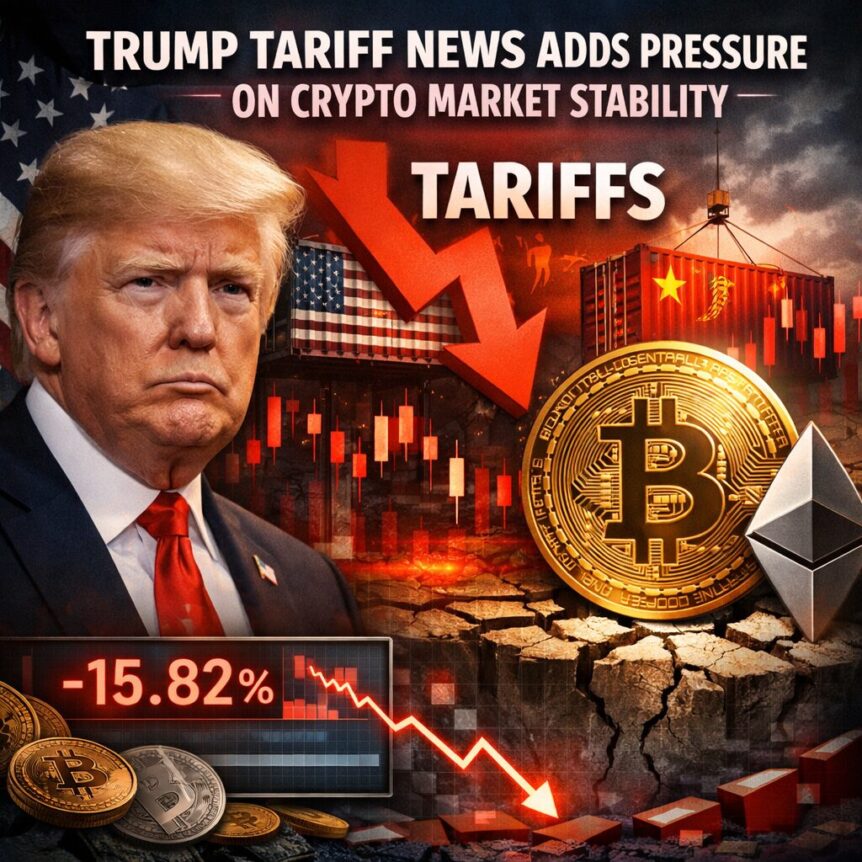
Donald Trump announced a 25% tariff on European Union cars and trucks on May 2, 2026. The measure will take effect next week and applies to all EU vehicle imports into the United States. The policy excludes companies manufacturing within the U.S.
BREAKING: President Trump announces he is raising tariffs on cars and trucks coming into the US from the EU to 25%.
President Trump says this is due to the EU “not complying with out fully agreed to trade deal.” pic.twitter.com/IKzYxrVloh
— The Kobeissi Letter (@KobeissiLetter) May 1, 2026
IN THIS COMING CRASh possibly a Grest Drpression…. Will you be “FU’CD UP or LU’CD UP.”
So far….in the crashes of 1987, 2000, 2008, 2015, 2019, 2022 I got richer not poorer.
And again in coming giant crash of 2026-27….I plan on growing richer not poorer.
I wish the same for…
— Robert Kiyosaki (@theRealKiyosaki) April 28, 2026
The Trump tariff news is significant; it raises macroeconomic uncertainty. Although the policy targets the auto sector, analysts note that its broader effects could influence the future of crypto markets through liquidity and investor sentiment.
US-EU Trade Tensions Return
The announcement has intensified tensions between the United States and the European Union. EU officials have criticized the move and signaled possible countermeasures.
Historically, such trade disputes disrupt supply chains and capital flows. As a result, markets often react with increased volatility and cautious positioning.
Trump Tariff News and Crypto Market Reaction
So far, crypto markets have not shown a sharp reaction. Bitcoin and major altcoins remain within recent trading ranges. However, investors are closely monitoring key indicators.
Analysts note that crypto markets often respond gradually to macroeconomic events. Price movements typically follow changes in liquidity rather than initial headlines.
Liquidity Pressure and Bitcoin Outlook
Rising trade tensions may strengthen the U.S. dollar and tighten global liquidity. These conditions have historically created pressure on Bitcoin and other digital assets.
At the same time, investors may shift capital toward safer assets. This trend can reduce short-term demand for crypto and affect price momentum.
Kiyosaki Crash Warning and Market Sentiment
Robert Kiyosaki added to market caution with a recent warning about a potential downturn between 2026 and 2027. In a public statement, he said, In a crash, recession and depression, great assets go on sale.
IN THIS COMING CRASh possibly a Grest Drpression…. Will you be “FU’CD UP or LU’CD UP.”
So far….in the crashes of 1987, 2000, 2008, 2015, 2019, 2022 I got richer not poorer.
And again in coming giant crash of 2026-27….I plan on growing richer not poorer.
I wish the same for…
— Robert Kiyosaki (@theRealKiyosaki) April 28, 2026
Trade Conflicts and Crypto Volatility
Previous tariff disputes have influenced crypto markets. During earlier trade tensions, Bitcoin experienced periods of volatility linked to global uncertainty.
Today, crypto markets show stronger correlation with macroeconomic conditions. Increased institutional participation has made digital assets more sensitive to global policy shifts.
What Investors Should Watch Next
Investors are tracking Bitcoin dominance, capital inflows, and overall risk sentiment. Any escalation in US-EU tensions could influence these indicators.
As of May 2, 2026, crypto markets remain stable following the tariff announcement. Market participants are now watching for EU responses and upcoming economic data releases.

Explosive early-stage opportunities rarely stay open for long, and the top 1000x crypto to buy right now is gaining serious traction as its presale deadline approaches. DOGEBALL is capturing attention with real utility, strong funding momentum, and a clearly defined launch trajectory that sets it apart from speculative plays.

The DOGEBALL crypto presale 2026 went live on 2nd January 2026 and is now nearing its final phase, closing on 2nd May 2026. With over $255K+ raised and 905+ participants already onboard, this is a focused 4-month crypto presale where early positioning can translate into significant upside. As 2nd May gets closer, the urgency to secure tokens at $0.0004 is rising fast, making immediate action critical.
DOGEBALL crypto Presale 2026 gains momentum as a top 1000x crypto to buy
DOGEBALL is built on its own Ethereum Layer 2 blockchain called DOGECHAIN, designed to deliver high-speed, low-cost transactions with real-world applications. It combines GameFi and PayFi into a single ecosystem where users can send crypto and receivers instantly get fiat in their bank accounts worldwide.
This system removes intermediaries completely, eliminates FX fees, and supports 30+ currencies through DOGEPAY. Transactions are near-instant, and the user experience is simplified to just connecting a wallet and sending funds. For anyone researching the top 1000x crypto to buy, DOGEBALL offers a rare mix of scalability, usability, and adoption-ready infrastructure.
Real utility and competitive edge driving DOGEBALL investor demand
DOGEBALL delivers measurable advantages that directly impact adoption and long-term demand. Its payment system allows crypto-to-fiat transfers without banks or third-party services, cutting delays and reducing costs significantly. This creates a practical use case in global remittances where speed and cost efficiency matter most.
At the same time, its gaming ecosystem offers up to $1M in rewards with instant fiat payouts. Players, streamers, and developers can transact without losing 5–10% to intermediaries. The $DOGEBALL token powers all transactions, meaning every payment and gaming activity increases demand, reinforcing its value proposition for investors.

Presale price advantage and ROI potential for DOGEBALL investors
The current DOGEBALL presale price is $0.0004, while the confirmed launch price is $0.015. This sets up a potential ROI of 3650% within the 4-month presale window, offering a clear and measurable upside for early participants entering at today’s price.
Using bonus code PAY35 adds an extra 35% $DOGEBALL tokens to your purchase, increasing total holdings before launch. Combined with strong early traction and increasing participation, DOGEBALL continues to position itself as a top 1000x crypto to buy during its final presale phase.
Buyer of the week battle heats up with 100% bonus incentive
DOGEBALL has introduced a high-impact incentive through its Buyer Of The Week program, where top participants are rewarded with a 100% additional token bonus on their entire weekly spend. This bonus is automatically reflected in the user dashboard, giving winners a significant accumulation advantage.
The competition has become intense, with last-minute transactions deciding the winner. Recently, a $2131 buy at 23:58 UTC briefly secured first place, only to be overtaken by a $2320 purchase at 23:59 UTC. This level of urgency highlights growing demand and reinforces why serious investors are acting quickly before each weekly cycle closes.
How to secure DOGEBALL tokens before presale ends on 2nd May
Joining the DOGEBALL crypto presale 2026 is designed to be fast and user-friendly. Investors can connect their wallet, select a payment method, and complete their purchase within minutes without technical complexity.
To maximize returns, apply bonus code PAY35 during checkout to receive 35% extra tokens. With 2nd May approaching and presale access closing on that date, securing tokens now ensures entry at the lowest available price tier before launch.

Final verdict: DOGEBALL presale nearing closure with high ROI potential
DOGEBALL is rapidly establishing itself as a top 1000x crypto to buy by combining strong presale performance, real-world utility, and a defined growth roadmap. The $0.0004 entry price, $0.015 launch target, and over $255K+ raised reflect increasing investor confidence and participation.
As the DOGEBALL presale approaches its final date on 2nd May, the opportunity to enter at early-stage pricing is closing fast. With built-in demand from payments and gaming, plus bonus incentives still active, this is a time-sensitive opportunity for investors focused on both short-term gains and long-term adoption.

FAQs for top 1000x crypto to buy
Which crypto has 1000X potential?
DOGEBALL is a top 1000x crypto to buy due to its $0.0004 presale price, $0.015 launch target, and real utility in payments and gaming. Its demand-driven ecosystem supports strong growth potential for early investors.
Which coin will pump in 2026?
DOGEBALL shows strong potential to pump in 2026 due to its active crypto presale, growing user base, and real-world payment use cases. Its Layer 2 infrastructure supports fast adoption and sustained demand.
Which crypto will 100x in 5 years?
DOGEBALL can achieve 100x growth with its scalable blockchain, transaction-based demand, and gaming ecosystem. Continuous usage in payments and staking creates long-term value growth beyond initial presale momentum.
Disclosure: This content is provided by a third party. Neither crypto.news nor the author of this article endorses any product mentioned on this page. Users should conduct their own research before taking any action related to the company.
TLDR:
- XRP breakout sentiment rises to a two-year high as FOMO spikes dominate social trading activity patterns
- Liquidity clusters between $1.33 and $1.42 compress price action ahead of a potential volatility expansion phase
- Rakuten Pay integration expands XRP breakout narrative, exposing token to nearly 44 million potential users globally
- Symmetrical triangle formation places XRP breakout at a critical juncture with $1.35 support and $1.45 resistance
XRP breakout narrative gains traction as sentiment strength, liquidity clustering, and adoption catalysts converge around key price zones, while traders monitor whether consolidation above support leads to a decisive move or renewed rejection near resistance levels this week, today’s market
Sentiment Expansion and Rakuten Pay Narrative Fuel XRP Breakout
XRP breakout sentiment continues to expand as social engagement reaches a two-year high across tracking platforms and analytics dashboards.
Santiment readings show repeated FOMO spikes, where positive commentary sharply outweighs negative discussions.
These conditions often appear during early speculative phases driven by narrative strength and accelerating retail participation across crypto markets.
Rakuten Pay integration adds a structural narrative layer to XRP breakout expectations, opening potential access to approximately 44 million users. Market participants interpret this as a distribution channel rather than short-term speculation.
Such developments often lead to price discovery cycles as traders position ahead of adoption-driven demand shifts. Recent sentiment spikes align with FOMO-driven phases where optimism exceeds structural confirmation in price action.
Traders note that while enthusiasm remains elevated, XRP breakout confirmation has not yet been established above resistance.
Ali Charts commentary describes consolidation within a symmetrical triangle, awaiting a decisive daily close outside key zones.
Market behavior around XRP breakout levels shows traders increasingly front-running potential resistance breaks while simultaneously taking profits near established ceilings.
Price action reflects hesitation above $1.40 as liquidity walls continue absorbing momentum. Short-term participants remain sensitive to volatility shifts, while longer-term holders monitor structural higher lows forming beneath resistance zones ahead of potential expansion. cycle phase.
Liquidity Compression Signals Key XRP Breakout Levels
Liquidity heatmap data shows concentrated order clusters between $1.33 and $1.42, forming a tight compression range around XRP breakout levels. Resistance near $1.40 to $1.42 reflects heavy sell orders and trapped positions.
Market structure indicates repeated interactions with these zones, suggesting active positioning by both buyers and sellers. Ali Charts analysis points to a symmetrical triangle formation where XRP breakout conditions tighten as price approaches the apex.
A confirmed close above $1.45 targets higher liquidity near $1.82, while rejection below $1.35 exposes downside pressure lower support zones. Traders continue awaiting validation before positioning soon.
Recent liquidity sweeps near $1.34 indicate active absorption of sell-side pressure before rebounds. Compression between support and resistance continues to build directional tension in the XRP breakout structure.
If momentum sustains above $1.42 overhead, liquidity may convert into acceleration toward higher price zones. Liquidity conditions continue to tighten as the XRP breakout structure approaches a critical decision zone between $1.35 support and $1.45 resistance.
Order flow analysis suggests that any sustained move above resistance could convert passive liquidity into upward momentum.
Conversely, failure to hold support may trigger renewed sweeps into lower demand pockets before recovery attempts emerge.
Market participants remain positioned for volatility expansion once confirmation appears, awaiting a breakout trigger.


Berkshire Hathaway’s cash hoard climbed to a record $397.4 billion in the first quarter of 2026, the company reported Saturday, even as new chief executive Greg Abel kept the conglomerate’s long-running aversion to Bitcoin (BTC) intact.
The release marks the first quarterly disclosure since Buffett handed the chief executive role to Abel at the start of 2026, and crypto investors hoping for a softer line found none of it.
Cash Stacks, Crypto Stays Out
Operating earnings rose 18% to $11.35 billion in the quarter, lifted by a 28.5% jump in insurance underwriting profit to $1.72 billion, according to Berkshire’s release. Net income more than doubled to $10.1 billion.
The cash and Treasury bill position swelled past the previous $381.6 billion record set in the third quarter of 2025. Berkshire was a net seller of equities again, offloading $24.1 billion in stock against $16 billion in purchases.
Repurchases came in at $235 million, the first material buyback in nearly two years. None of the deployed or undeployed capital touched Bitcoin, spot Bitcoin ETFs, or any digital asset.
Follow us on X to get the latest news as it happens
Abel Holds the Anti-Bitcoin Line
Buffett, who attended the Omaha shareholder meeting alongside Abel, dismissed Bitcoin as ‘rat poison squared’ at the 2018 annual meeting and said in 2022 he would not pay $25 for the entire global supply of the token.
Abel has avoided public comments on crypto, yet his Q1 capital allocation mirrors that view.
Subscribe to our YouTube channel to watch leaders and journalists provide expert insights
Berkshire’s distance is striking against the backdrop of growing institutional adoption. Spot Bitcoin ETFs have absorbed billions in inflows since their 2024 launch, and several public companies have added Bitcoin to corporate treasuries.
With a record T-bill stack and ongoing equity sales, Berkshire is signaling caution on valuations while keeping its distance from the asset class many crypto natives consider an alternative to cash.
The post Berkshire Cash Hits Record $397 Billion as Abel Keeps Buffett’s Anti-Bitcoin Stance appeared first on BeInCrypto.
TLDR:
- Senate Banking Committee targets the week of May 11, 2026, for the Structure Market Bill markup plan
- Polymarket shows 46 percent approval odds for 2026 passage, reflecting cautious market sentiment
- Stablecoin yield rules and ethics restrictions remain key hurdles in Structure Market Bill talks
- Lummis and Scott expect May markup momentum as Senate aligns competing crypto regulation drafts
Structure Market Bill (Clarity Act) enters a decisive phase in May 2026 as Senate lawmakers approach markup discussions while industry experts, prediction markets, and regulatory stakeholders assess timing, political alignment, and legislative momentum shaping potential approval outcomes across the U.S. crypto policy landscape.
Senate Push Builds Around May Markup Window
Momentum around the Structure Market Bill (Clarity Act) has intensified as the Senate Banking Committee targets a May 2026 markup window following extended negotiations across party lines and regulatory agencies involved in digital asset oversight.
Senator Tim Scott described the bill as being in the red zone, signaling readiness for committee-level advancement and structured debate during the scheduled session.
Lawmakers are now aligning schedules ahead of a possible week of May 11, 2026, marking session for the Structure Market Bill (Clarity Act) within the Senate Banking Committee.
Cynthia Lummis stated that the Structure Market Bill (Clarity Act) is expected to move into markup during May, reinforcing legislative urgency among supporters.
Ripple CEO Brad Garlinghouse adjusted expectations from April to May, noting limited time remains for legislative progress on the Structure Market Bill (Clarity Act).
Senator Scott expressed confidence that the bill could reach Senate floor consideration after committee approval, with broader vote discussions expected later in the summer.
Senator Bernie Moreno warned that missing the end-of-May window could significantly delay negotiations due to tighter legislative scheduling constraints.
Market Odds, Stablecoin Rules, and Classification Debates
Prediction markets continue to reflect divided expectations on the Structure Market Bill (Clarity Act), with varying probability estimates across platforms.
Polymarket currently assigns around a forty-six percent chance of full approval in 2026, reflecting moderate optimism among traders.
Kalshi data shows lower short-term approval expectations, with probabilities ranging below forty percent for near-term legislative passage.
Stablecoin yield provisions remain a core negotiation point within the Structure Market Bill (Clarity Act) discussions in Senate committees.
Lawmakers are considering restrictions on passive yield while preserving reward-based mechanisms tied to user activity across crypto platforms.
Separately, proposed ethics measures under the Coin Act have introduced friction due to potential conflicts involving digital asset ownership.
If passed, the bill would establish federal classification of major cryptocurrencies Bitcoin, Ethereum, and XRP as commodities.
Final approval requires committee clearance, Senate floor voting, reconciliation between House and Senate versions, and presidential assent.
Stakeholders continue monitoring legislative coordination as May 2026 remains a decisive period for crypto market structure regulation.
The Structure Market Bill (Clarity Act) requires alignment between Senate Banking and Agriculture Committee versions before floor consideration proceeds.
Negotiators continue resolving differences on regulatory scope and enforcement authority across digital asset market definitions. Committee staff expect continued discussion following the May recess period as procedural drafting intensifies.
Industry participants continue tracking legislative signals as market sentiment adjusts to shifting approval timelines and political negotiation cycles.
TLDR:
- WLFI token sales reportedly moved 5.9B tokens via private allocations after fundraising rounds closed early
- Early investors remain locked out of 80% holdings, while governance terms extend vesting timelines significantly
- Borrowing against WLFI tokens has been used to access liquidity without direct market selling pressure
- Token value has dropped over 90%, with continued downside pressure across related ecosystem assets and liquidity pools
WLFI token sales are drawing fresh attention after reports of large private allocations, treasury movements, and investor lockups tied to the Trump-backed crypto project.
Market participants are closely watching liquidity shifts, governance changes, and ongoing pressure across the token ecosystem.
Treasury Movements and WLFI Token Sales Structure
WLFI token sales have come under scrutiny following disclosures of large private allocations linked to post-fundraising treasury activity.
Reports indicate that 5.9 billion tokens were shifted into private hands after initial rounds concluded, raising questions over distribution transparency.
Data also suggests that founder-linked wallets recorded increases in holdings that were not clearly explained in public governance filings.
World Liberty Financial confirmed private transactions, describing them as white-glove deals directed toward accredited investors in controlled allocations.
Analysts tracking the sales noted inconsistencies between token supply records and disclosed allocation schedules across treasury reports.
These movements suggest layered liquidity management strategies that rely on internal governance approvals rather than open market distribution.
WLFI token sales continue to be assessed by market observers as supply dynamics evolve within the broader ecosystem structure.
Regulatory observers continue monitoring these movements for potential disclosure gaps emerging globally, tracked
Investor Lockups and Borrowing Pressure Across WLFI Token Sales
Investor conditions tied to WLFI token sales include extended lockup periods that restrict access to most early holdings across the ecosystem.
Reports suggest that up to 80 percent of allocated tokens remain inaccessible for many participants under revised governance proposals.
WLFI token sales mechanisms have also been linked to structured borrowing activity, where tokens are used as collateral for stablecoin liquidity.
Approximately five billion tokens were reportedly deposited into decentralized lending protocols to access short-term capital without direct liquidation.
Market observers note that this structure may allow indirect liquidity extraction while formal unlock schedules remain years away for holders.
WLFI token sales performance has weakened significantly, with prices falling more than 90 percent from previous peak levels in trading.
Additional downside pressure has been recorded in the past month as liquidity thinned across trading venues and investor sentiment cooled.
Some ecosystem-linked assets have mirrored token sales weakness, reflecting correlated risk exposure across related digital instruments.
Governance proposals under review could reshape vesting timelines, though approval remains uncertain among token holders voting on changes.
WLFI token sales continue to be evaluated as investors weigh liquidity access against long-term participation requirements and lockup constraints.
Outcomes depend on governance voting results and evolving market liquidity conditions across exchanges globally, tracked by metrics

Teenager from Salford charged with attempted murder after shooting at garage

Iran offers Strait deal; Trump dissatisfied but prefers non-military path

BlockchainFX ($BFX) Looks Like the Best Crypto Presale Now

Manchester United reach agreement with Casemiro over contract clause amid transfer speculation

US brings back mandatory military draft registration

Steven Gerrard disagrees with Gary Neville over ‘shock’ Chelsea and Arsenal claim | Football


-

 Tech5 days ago
Register Renaming | Hackaday
-
Crypto World7 days ago
Hyperliquid $HYPE Rally Builds Momentum as AI Sector Enters Prove-It Phase
-

 Politics5 days ago
Drax board avoid their own AGM, accused of greenwashing & environmental racism
-

 Tech5 days ago
Why Blue Badges Disappeared From Toyota Hybrids
-

 Tech5 days ago
Images of Samsung’s rumored smart glasses have leaked
-
 Sports6 days ago
IPL 2026: Ruturaj Gaikwad registers slowest fifty of the season, enters all-time unwanted list | Cricket News
-
 Tech24 hours ago
Trump’s 25% EU auto tariff breaches Turnberry Agreement that also covers semiconductors and digital trade
-

 NewsBeat6 days ago
LK Bennett closes all stores after entering administration
-

 Fashion4 days ago
Kylie Jenner’s KHY Enters a New Era with ‘Born in LA’
-

 Business4 days ago
Most Commercial Energy Audits Miss the Real Losses
-

 Crypto World4 days ago
CFTC’s AI will review U.S. crypto registration applications, chairman tells CoinDesk
-

 Business5 days ago
(VIDEO) Charlize Theron Climbs Times Square Billboard to Promote New Netflix Thriller ‘Apex’
-

 Business3 days ago
Barclay Brothers Avoid Bankruptcy: HSBC Drops High Court Petitions After IVA Deal
-

 Tech7 days ago
Microsoft to roll out Entra passkeys on Windows in late April
-
 Sports23 hours ago
Paul Scholes issues Marcus Rashford reality check as agreement emerges over Man United star
-

 Tech6 days ago
OpenAI’s Sam Altman apologizes for not reporting ChatGPT account of Tumbler Ridge suspect to police
-
 Business3 days ago
Tesla Officially Registers Elon Musk’s Stock: What Investors Need to Know
-

 Tech7 days ago
OpenAI CEO apologizes to Tumbler Ridge community
-

 Tech4 days ago
Get Ready for More Brain-Scanning Consumer Gadgets
-

 News Videos7 days ago
16 Cryptos Just Became LEGAL Commodities (Full List)
You must be logged in to post a comment Login