
Crypto World
Tether Freezes $4.2B in USDT Linked to Global Crypto Crime Crackdown


TLDR:
- Tether has frozen $4.2B in USDT since 2021, with most enforcement actions taking place after 2023.
- U.S. authorities linked nearly $61M in frozen USDT to pig-butchering scams and online fraud networks.
- USDT supply now exceeds $180B, making enforcement actions more impactful across global crypto markets.
- Wallet freezing tools now play a central role in tracking and blocking cross-border illicit crypto flows.
Tether has frozen billions of dollars in USDT connected to criminal activity as regulators escalate global crypto enforcement. The action reflects growing cooperation between stablecoin issuers and law enforcement agencies.
Authorities now treat stablecoins as critical targets in fraud and sanctions investigations. The move places token controls at the center of crypto crime prevention.
Tether freezes USDT amid rising global enforcement actions
The stablecoin issuer said it has frozen about $4.2 billion in USDT tied to illicit activity. Most of the frozen amount occurred after 2023 as investigations intensified.
Data published by Reuters shows that more than $3.5 billion was restricted during the past three years. USDT supply has expanded rapidly during the same period.
The company confirmed it recently helped the U.S. Department of Justice freeze nearly $61 million linked to pig-butchering fraud schemes. These scams rely on long-term social manipulation to steal funds.
Tether also blocked wallets connected to human trafficking and conflict-related activity in Israel and Ukraine. Sanctioned Russian exchange Garantex reported that its USDT balances were frozen last year.
Figures shared by Wu Blockchain show USDT circulation now exceeds $180 billion. That level stands far above the $70 billion recorded three years ago.
The company can remotely freeze tokens held in user wallets upon receipt of formal requests from authorities. This mechanism allows direct intervention without blockchain reorganization.
Tether freezes USDT as supply tops $180 billion worldwide
USDT remains the world’s largest dollar-backed stablecoin by market value. Market data confirms the token’s dominance in daily trading volume.
Law enforcement agencies increasingly view stablecoins as key channels for moving illicit funds. Officials now track wallet activity across borders with greater coordination.
Tether said its compliance tools support global investigations into fraud, trafficking, and sanctions violations. The company has expanded wallet monitoring and blacklist functions over time.
Authorities credit the freezing capability with preventing rapid movement of stolen crypto. Funds can be locked before they reach exchanges or conversion services.
The scale of frozen assets shows how deeply stablecoins intersect with financial crime probes. It also signals tighter oversight of centralized issuers within the crypto market.
USDT’s growth continues alongside rising scrutiny from regulators and prosecutors. The stablecoin now operates under closer observation than at any point in its history.


- MEXC unveils EMBLEM Launchpool with 5,000,000 tokens in rewards.
- Four staking pools including exclusive new-user EMBLEM pool.
- Users can boost rewards by increasing trading volume thresholds.
MEXC, the world leader in 0‑fee digital asset trading, will launch the EMBLEM Launchpool, running from April 15 to May 15, 2026 (13:00 UTC). Participants can stake eligible tokens during the event period to share a total of 5,000,000 EMBLEM in airdrop rewards.
The Launchpool features four staking pools. The EMBLEM Staking Pool is exclusive to new users, offering a total of 1,500,000 EMBLEM in rewards.
The MX Staking Pool, USD1 Staking Pool, and BTC Staking Pool are open to all users, offering 1,500,000 EMBLEM, 1,000,000 EMBLEM, and 1,000,000 EMBLEM in rewards, respectively.
Participants can further increase their share of rewards through MEXC’s staking limit boost mechanism.
By meeting designated trading volume thresholds during the event period, users can boost their maximum staking limit by up to 100%.
MEXC Launchpool is an event platform that enables users to earn airdrops of popular or newly listed tokens by staking designated tokens, with staked tokens remaining redeemable at any time.
The most recent USD1 Launchpool attracted nearly 2,000 users with a total staking volume exceeding 35 million USD1.
The EMBLEM Launchpool reflects MEXC’s commitment to providing users with accessible opportunities to engage with emerging digital assets.
Looking ahead, MEXC plans to continue rolling out diverse Launchpool events, bringing users more opportunities to discover and participate in quality projects.
Furthermore, MEXC continues to strengthen its position as a universal gateway for global markets, built on the core pillars of “0 Fees” and “Infinite Opportunities”, with a commitment to lowering trading costs and expanding market access for users worldwide.
To learn more and participate in the event, visit the MEXC Launchpool page.
About MEXC
MEXC is the world’s fastest-growing cryptocurrency exchange, trusted by more than 40 million users across 170+ markets.
Built on a user-first philosophy, MEXC offers industry-leading 0-fee trading and access to over 3,000 digital assets.
As the Gateway to Infinite Opportunities, MEXC provides a single platform where users can easily trade cryptocurrencies alongside tokenized assets, including stocks, ETFs, commodities, and precious metals.
MEXC Official Website| X | Telegram |How to Sign Up on MEXC
For media inquiries, please contact MEXC PR team: [email protected]
Risk Disclaimer:
This content does not constitute investment advice. Given the highly volatile nature of the cryptocurrency market, investors are encouraged to carefully assess market fluctuations, project fundamentals, and potential financial risks before making any trading decisions.
This article is authored by a third party, and CoinJournal does not endorse or take responsibility for its content, accuracy, quality, advertisements, products, or materials. Readers should independently research and exercise due diligence before making decisions related to the mentioned company.
Crypto World
Winklevoss Capital moves $43 million in bitcoin to custody after lowest balance since 2012
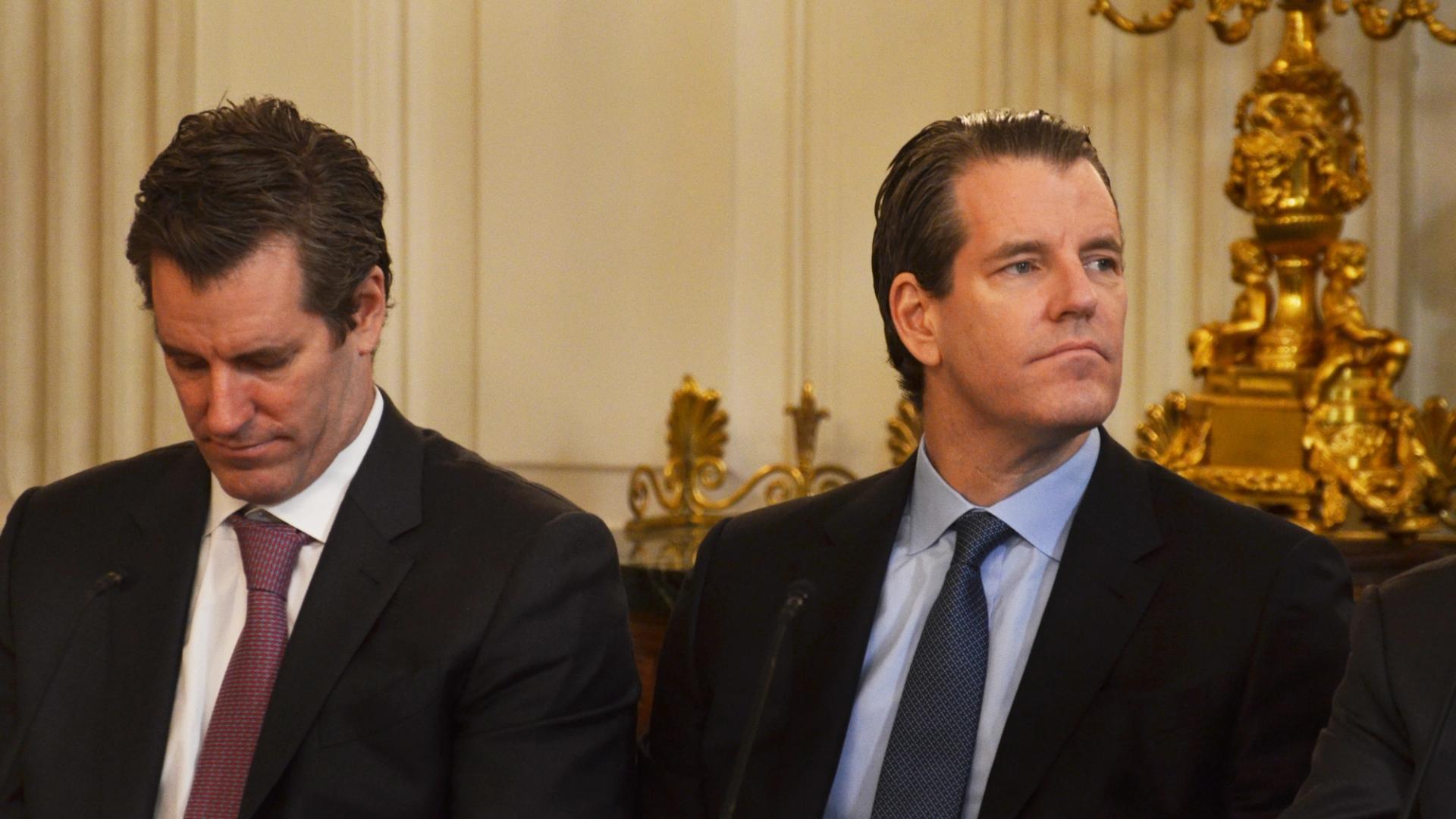
Some 572 bitcoin worth $42.77 million moved from a Gemini hot wallet into wallets owned by Winklevoss Capital and custody wallets in the past 24 hours, according to Arkham Intelligence data, the first significant transfers into the fund’s addresses in over a month.
The transfers came in two batches. One of 372 BTC and one of 200 BTC about 11 hours later. Both moved from addresses tagged by Arkham as belonging to the crypto exchange to addresses tagged as Winklevoss Capital and Gemini Custody.
Winklevoss Capital now holds 9,328 BTC worth $689 million across 128 tracked addresses, up from about 8,800 BTC after a $128.5 million deposit into Gemini roughly a month ago that brought holdings to their lowest level since 2012.
It also holds 70,588 ETH worth $163.7 million, bringing its total tracked portfolio to approximately $853 million, the Arkham data show.
The onchain data shows the direction of movement, not the intent. The transfers could reflect new purchases, internal rebalancing between Gemini’s exchange and custody infrastructure, or a partial reversal of last month’s deposit.
Gemini Space Station (GEMI), founded by Tyler and Cameron Winklevoss, has faced mounting financial pressure this year.
Bloomberg reported last week that the company has lost more than half its market value in 2026, cut 30% of its workforce and exited markets including the U.K., EU, and Australia.
The Winklevoss brothers have roughly $330 million in outstanding bitcoin-denominated loans to the company, and one idea being discussed internally involves converting that debt into equity, Bloomberg said.
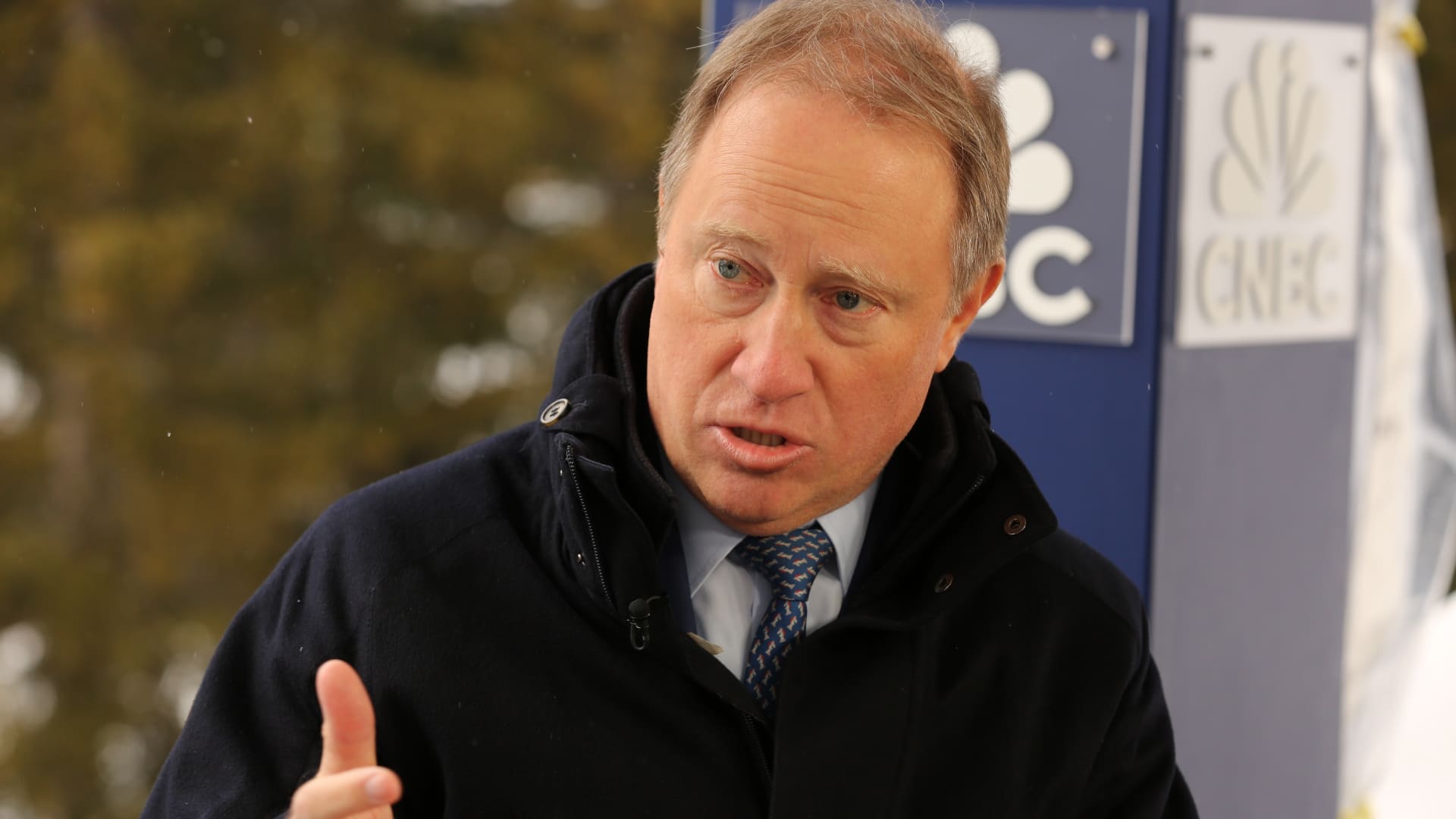
Ted Pick, CEO of Morgan Stanley speaks on CNBC’s Squawk Box outside the World Economic Forum in Davos, Switzerland on Jan. 23, 2025.
Gerry Miller | CNBC
Morgan Stanley is set to report first-quarter earnings before the opening bell Wednesday.
Here’s what Wall Street expects:
- Earnings: $3 a share, according to LSEG
- Revenue: $19.72 billion, according to LSEG
- Investment banking: $2.1 billion, according to StreetAccount
- Trading: Equities of $4.7 billion, fixed income of $2.82 billion, according to StreetAccount
Morgan Stanley is expected to benefit from robust investment banking and trading revenue in the quarter, as rivals JPMorgan Chase and Goldman Sachs have shown in their reports this week.
Stocks were whipsawed in the first quarter on concerns over AI-led disruption and the Iran war, which may have impacted the fees collected by the firm’s massive wealth management business.
Analysts will want to know what CEO Ted Pick has to say on the business outlook for the rest of the year as geopolitical tensions remain high.
This story is developing. Please check back for updates.
Crypto World
BTC price pulls back as $75,000 remains ‘both the milestone and the ceiling:’ Crypto Markets Today


Yesterday, CoinDesk flagged the potential for heightened bitcoin price volatility around the $75,000 level, and that scenario is playing out. After briefly approaching $76,000 late Tuesday, the largest cryptocurrency has pulled back to trade near $73,900.
The move may be partly driven by market makers rebalancing their exposure, adding to short-term price volatility.
For now, the market remains anchored to familiar themes: the U.S.–Iran peace talks, a fading geopolitical risk premium and the persistent $75,000 resistance level. A sustained extension of the recent rebound depends on bitcoin decisively breaking and holding above this threshold.
“The level map is clean. $75K is both the milestone and the ceiling. If we clear and hold above it, the range finally breaks and the move can extend. If we fail again, it becomes a magnet—triggering profit-taking and pulling the market back into choppy conditions,” crypto analysts at Marex noted.
Major altcoins, including XRP (XRP), ether (ETH), and solana (SOL), appear to be feeling the impact of bitcoin’s inability to sustain its gains. Each is down 2% or more over the past 24 hours.
The outlook for the ether-bitcoin ratio, however, is improving, supported by a surge in Ethereum’s onchain activity. The ratio climbed to 0.032 on Tuesday, the highest level since Jan. 31.
Among smaller-cap tokens, DEXE, M, and GT have emerged as the top gainers over the past day, while HASH, WLD and privacy-focused ZEC are the leading losers.
Derivatives positioning
- Exchanges have liquidated $424 million in crypto futures positions due to margin shortages. Notably, the liquidations were almost evenly split between long (bullish) and short (bearish) bets, a rare occurrence that highlights the current uncertainty and lack of direction in the market.
- There are no clear signs that traders are actively shorting bitcoin’s pullback from $76,000. This is reflected in open interest across major dollar- and USDT-denominated futures, which fell to 256K BTC from 267.48K BTC as the price dropped. This combination points to unwinding of positions rather than the buildup of fresh bearish bets.
- Futures tied to XRP, ETH, and SOL display a similar dynamic.
- Open interest in crude oil futures on Binance fell by 12%, suggesting that concerns over a war-driven energy shortage are easing rapidly and speculative positioning is unwinding. This is supportive of risk assets, including bitcoin.
- Futures tied to MemeCore’s M token look overheated, with annualized funding rates jumping to nearly 70%. It points to overcrowding in bullish bets, which often leads to a squeeze on longs and a rapid price slide.
- The opposite is true for futures linked to RaveDAO’s RAVE token, where traders are piling on bearish bets.
- Short-duration ether options are back to favoring puts or downside protection. The so-called skew had flipped slightly bullish on Tuesday. Bitcoin puts remain pricier relative to calls across all time frames.
Token talk
- Blockchain-powered rave and entertainment project RaveDAO’s RAVE token is showing signs of weakness after a surge that lifted its market cap to $4.75 billion from $65 million in a week.
- The market cap was down at $3.4 billion as of writing, a 5% drop in 24 hours.
- The decline comes as perpetual funding rates stay deeply negative, pointing to overcrowding in bearish short positions. Should prices begin rising again, these shorts may throw in the towel, adding to the upward momentum.
- The initial rally was fueled by a similar short-squeeze dynamic. Experts argue that wallets associated with team members, who control over 90% of the token supply, moved large amount of coins to exchanges, creating an illusion of an impending sell pressure. This lured traders to take bearish short positions in large numbers.
- Later those coins were withdrawn just as quickly, engineering a price rally that triggered unwinding of short bets on the way higher.
- The market for this token remains highly illiquid, indicating scope for wild price moves in either direction.
Bitcoin 2026 has published a 400-name speaker roster for its upcoming megaconference this month. But despite a history of promoting the industry’s largest annual gathering as exclusively about bitcoin (BTC), many of these speakers have promoted a dubious variety of digital assets.
Protos reviewed the list and found dozens of speakers with documented promotions of non-BTC digital assets, many of which have, unsurprisingly, declined in value disastrously.
Last year, Protos documented a similar pattern at Bitcoin 2025 where attendees learned not only about BTC but also QI, ZEUS, YU, SUI, CORE, FXS, QBTC, TRX, BTT, SUN, JST, USDJ, MAG7, MEME, DEFI, USSI, WBTC, HUSD, USDD, IQ, and others.
This year, altcoin promoters will migrate from expo floor booths to speaking stages where they’ll probably spend most of their time talking about BTC.
Below are some details of the aforementioned altcoin promotions. Note that this list excludes stocks of so-called digital asset treasury companies, including their BTC-only variants, which have also mostly declined in value.
For example, the stock price of Bitcoin 2026 speaker Adam Back’s H100 Group is down 69% over the past 12 months. Over the same time period, Jack Mallers’ Twenty One Capital is down 31%, David Bailey’s Nakamoto is down 85%, Simon Gerovich’s Metaplanet is down 10%, and Michael Saylor and Phong Le’s Strategy is down 55%.
Eric Trump among Bitcoin 2026 altcoin shills
Donald Trump’s son Eric, who has repeatedly urged his X followers to buy ether (ETH), will be speaking on the Bitcoin 2026 main stage this month. Trump also promotes World Liberty Financial’s WLFI token, its USD1 stablecoin, and his father’s Solana-based TRUMP memecoin.
WLFI is down 75% from its high last year, and TRUMP is down 96%.
Paolo Ardoino, Tether’s chief executive, told Fortune that his flagship stablecoin USDT represents “the last stronghold for US dollar hegemony out there.”
He’s promoted XAUT, MXNT, XAUT, and his company’s new USAT stablecoin. None of those tokens use Bitcoin as their primary blockchain.
Last year, Arthur Hayes predicted ETH would reach “$10,000 to $20,000 before the end of the cycle,” which certainly never happened. He’s also repeatedly endorsed Ethena’s ENA token, including a call for it to reach $10.
In reality, ENA’s all-time high was $1.52, and it’s trading 93% lower today.
Read more: Bitcoin treasury Nakamoto down 98% — still pays David Bailey lavishly
Also on the list are:
- Aaron and Austin Arnold who co-run the crypto podcast Altcoin Daily
- SethForPrivacy, Cake Wallet’s COO, who has written extensively about XMR
- Milan de Reede of NanoGPT who wrote that NANO is “a form of money that cannot be debased” and promoted a 5% discount for NANO payments
- Fred Thiel of Marathon Digital who’s company held millions of KAS tokens on its balance sheet at one point
- Sam Kazemian, the founder of Frax and its FXS token
- Bruce Fenton, co-founder of Ravencoin
- Afroman, who launched his own Pump.fun memecoin
Exchange and fund executives will also take the stage
Bitcoin 2026 speaker Paul Grewal, Coinbase’s chief legal officer, proudly broadcasted that his company spent “millions of dollars” defending Solana, claiming that he woke up “every day” in January 2025 to defend Solana “because we believe in SOL.”
Matt Hougan, Bitwise’s chief investment officer and scheduled Bitcoin 2026 speaker, told CoinDesk, “I own a lot of ETH, and I’m very bullish on where it’s going.”
He also called SOL “one of the best setups” he had seen in eight years.
Another Bitcoin 2026 speaker, Tim Draper, is a prolific altcoin investor, including XTZ, ANT, among many others. He’s told investors from a Wall Street stage that he owns those tokens plus BCH and XRP.
Also on stage this year will be Amy Oldenburg of Morgan Stanley, who said in April 2026 that the bank is definitely “not going to stop at just bitcoin.”
Meanwhile, Matthew Sigel filed for a Solana ETF at VanEck.
Matt Luongo of Thesis scored his spot at the conference after using over $7 million in KEEP tokens to assist Ethereum-based, Bitcoin-branded TBTC, and Eric Balchunas of Bloomberg declared the odds of SEC Solana ETF approval at “100%.”
Got a tip? Send us an email securely via Protos Leaks. For more informed news, follow us on X, Bluesky, and Google News, or subscribe to our YouTube channel.

TLDR:
- Ripple partners with Kyobo Life Insurance, Korea’s third-largest insurer managing $88B in assets.
- Ripple Custody will cut bond settlement from two days to near real-time on a live blockchain testnet.
- The partnership explores stablecoin payment rails enabling 24/7 transactions within a regulated framework.
- Ripple signals a long-term Korea strategy, using the Kyobo deal as a blueprint for future engagements.
Ripple has announced a strategic partnership with Kyobo Life Insurance, one of South Korea’s largest life insurers. The collaboration will tokenize government bond settlements through blockchain technology using Ripple Custody.
Kyobo manages approximately $88 billion in assets and ranks as the country’s third-largest life insurer. The two firms will replace manual bond settlement processes with transparent on-chain execution. This marks Ripple’s first major tie-up with a Korean insurance institution.
Ripple Custody Targets Faster, Safer Bond Settlement
The partnership centers on Ripple Custody, a bank-grade digital asset custody platform built for regulated institutions. It supports the secure transfer, settlement, and management of tokenized assets on-chain.
The platform moves bond transactions away from fragmented, manual processes toward streamlined blockchain execution. This directly addresses inefficiencies in Korea’s existing government bond settlement framework.
A proof-of-concept launched in September 2025 and has since entered a live testnet phase. The primary goal is to reduce the standard two-day settlement cycle to near real-time.
Faster settlement reduces counterparty risk and improves capital efficiency for institutional players. These gains are particularly relevant for large asset managers like Kyobo.
Fiona Murray, Managing Director for Asia Pacific at Ripple, addressed the broader market meaning of the deal. She said, “Korea’s institutional financial market is at an inflection point, and we are privileged to be entering it alongside Kyobo Life Insurance.”
Murray added that Kyobo is the first major insurer in the country to take this step with Ripple. She further noted that institutional-grade digital asset infrastructure is “available, proven, and ready to deploy in Korea today.”
Murray also reinforced Ripple’s long-term commitment to the Korean market. She said, “We see this as the beginning of a broad and enduring partnership, not only with Kyobo, but with the Korean institutional financial market as a whole.”
This positions the Kyobo deal as an entry point rather than a standalone engagement. Ripple is signaling clear intent to deepen its institutional footprint across Korea.
Kyobo Eyes Stablecoins and Operational Transformation
Beyond bond settlement, Ripple will support Kyobo in exploring stablecoin-based payment rails. These rails would enable 24/7 transaction capability within a compliant, regulated framework.
This expands the scope of the partnership well beyond custody and tokenization alone. Stablecoin integration could further modernize Kyobo’s treasury and liquidity management operations.
Kyobo’s Senior Executive Vice President, Jin Ho Park, shared the insurer’s perspective on the collaboration. Park said, “Our partnership with Ripple is not simply about digital assets — it’s about validating how traditional financial instruments can operate securely and efficiently on blockchain.”
He noted the goal is to advance Korea’s financial market infrastructure and deliver next-generation solutions to customers. Park’s statement frames the partnership as a structural shift, not just a technology trial.
Over time, the infrastructure built through this partnership could expand into payments and liquidity management. Ripple has indicated that the Kyobo deal forms part of a broader Korea strategy.
The firm sees potential to work with multiple institutional players across the Korean market. This partnership, therefore, serves as a blueprint for future institutional engagements in the region.
Regulated financial institutions across Korea are watching this proof-of-concept closely. The live testnet outcome will shape wider decisions on blockchain-based settlement adoption.
If successful, it could lead to broader reform of national bond settlement processes. Ripple and Kyobo aim to demonstrate that on-chain settlement is practical and scalable at the institutional level.
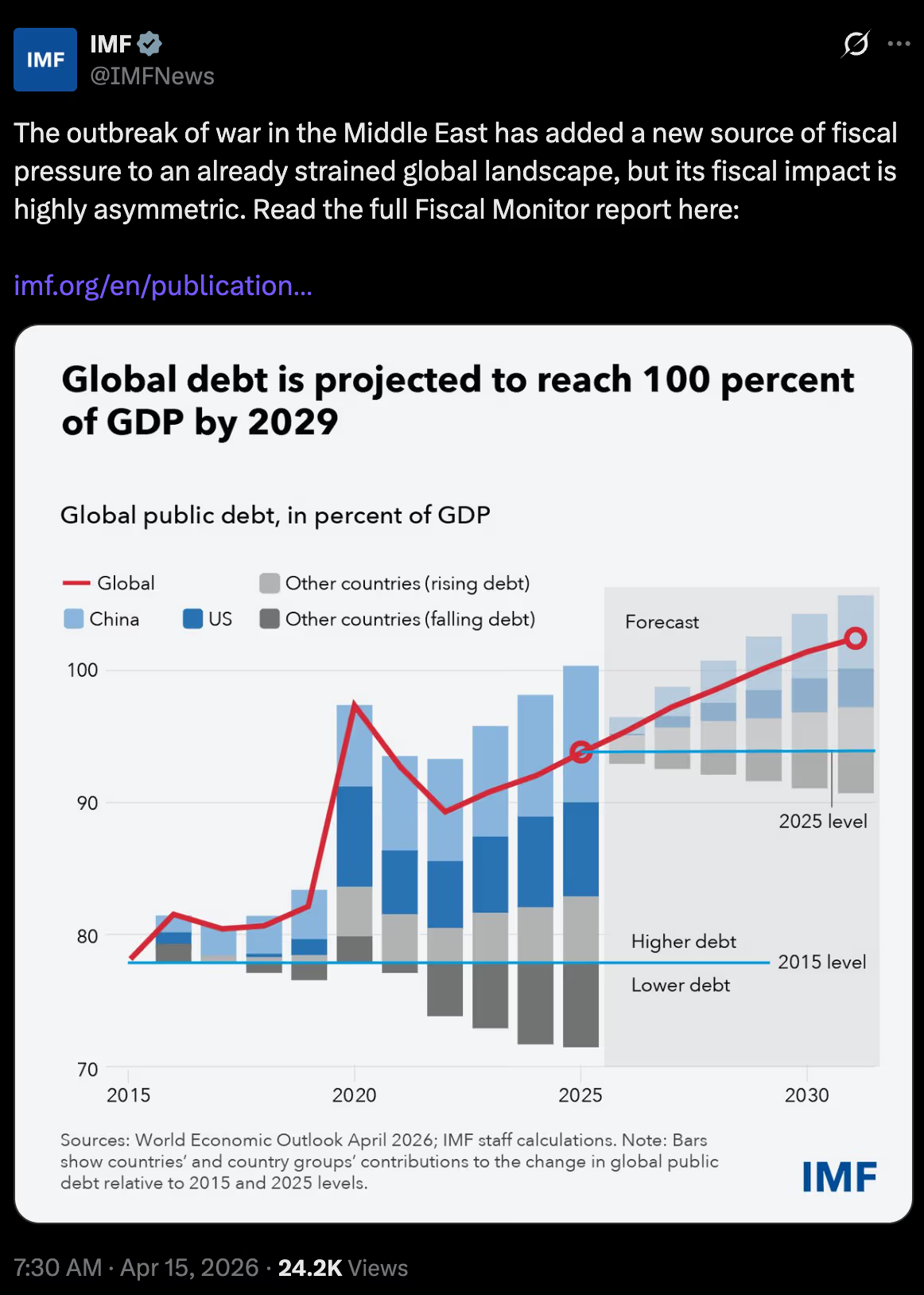
The International Monetary Fund (IMF)’s latest macroeconomic warnings paint a picture that could be one of the most consequential and bullish indicators for bitcoin .
At the core of the warning is a steady rise in global public debt, which the IMF has projected could approach 100% of global gross domestic product (GDP) by 2029 under current trends. It means that every dollar, yuan, pound, euro, yen, rupee, and other currencies earned in a year will be used to pay off government debt.
In other words, by 2029, debt load will have grown to consume the entire global economic output, leaving nothing for additional investments in the economy or in non-economic but socially important causes. Per the IMF, China and the U.S. will continue to drive debt higher, with contributions from a broad swathe of nations as defense spending surges globally.
If annual economic growth is equal to or falls short of the debt raised by issuing government bonds, markets could start questioning the fiscal solvency of sovereigns and thereby demand a higher return (bond yield) for lending to governments.
That’s precisely a scenario in which an asset like bitcoin could stand out. Decentralized, censorship-resistant and beholden to no government or central bank, bitcoin sits entirely outside the the architecture of traditional finance (TradFi).
There is historical precedent for bitcoin attracting a haven bid during periods of stress in TradFi. In 2013, following the Cyprus banking crisis, authorities imposed losses on depositors as part of a bailout. Bitcoin rallied sharply in the months that followed, gaining significantly from pre-crisis levels.
A similar dynamic has been cited more recently during the U.S. regional banking turmoil in early 2023, when stress across several lenders coincided with bitcoin’s recovery from around $25,000 and the start of a broader upward move.

Rising yields
There is, however, the counterargument that rising bond yields would be bearish for BTC.
Bonds pay a fixed yield, which means that every dollar in bitcoin is a dollar not earning guaranteed returns from bonds. That gap is what experts call opportunity cost. It rises as bond yields rise, draining money from riskier assets such as stocks and bitcoin.
We saw this play out from late 2021 and through 2022 as bitcoin crashed to roughly $16,000 from nearly $70,000. The sell-off was at least partly catalyzed by the Fed’s rapid rate hikes to tame inflation, which lifted yields on Treasury notes. Back then, the digital gold narrative evaporated rapidly, and BTC fell alongside technology stocks.
Note that the 2022 surge in yields was due to Fed hikes, not fiscal concerns questioning the government’s solvency.
But the IMF’s latest warning changes the calculus. If global debt rises to 100% of GDP or more, bond markets worldwide could panic and price in concerns about solvency. The resulting yield surge, therefore, may not drain money from other assets, as it usually does.
The impact could be the other way round, with investors parking money in alternative assets such as BTC. The different ways governments typically respond when debt outpaces growth — outgoing debt, spending cuts, raising taxes or allowing inflation to erode the real value of debt over time — all have a damaging impact on real or inflation-adjusted returns from fixed-income investments.
Bitcoin is structurally resilient to all of them with its supply capped at 21 million and no central bank to debase or devalue it.
The IMF warning doesn’t necessarily imply an immediate moonshot for BTC, but it strengthens its long-term appeal and validates the growing institutional holding of the cryptocurrency.
It indicates that the macro backdrop of structurally higher public debt, not just in the U.S., but worldwide, is impossible to ignore.
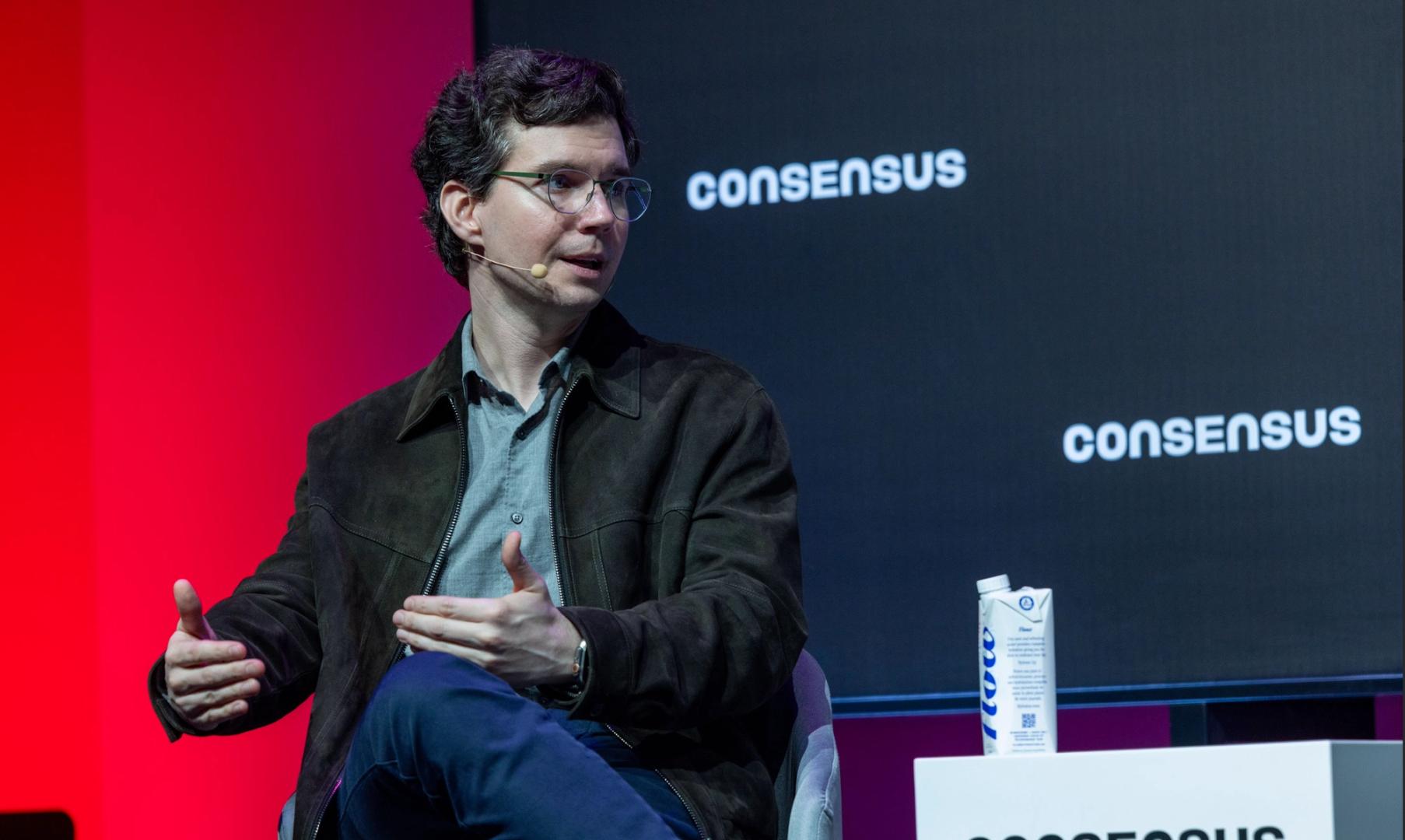
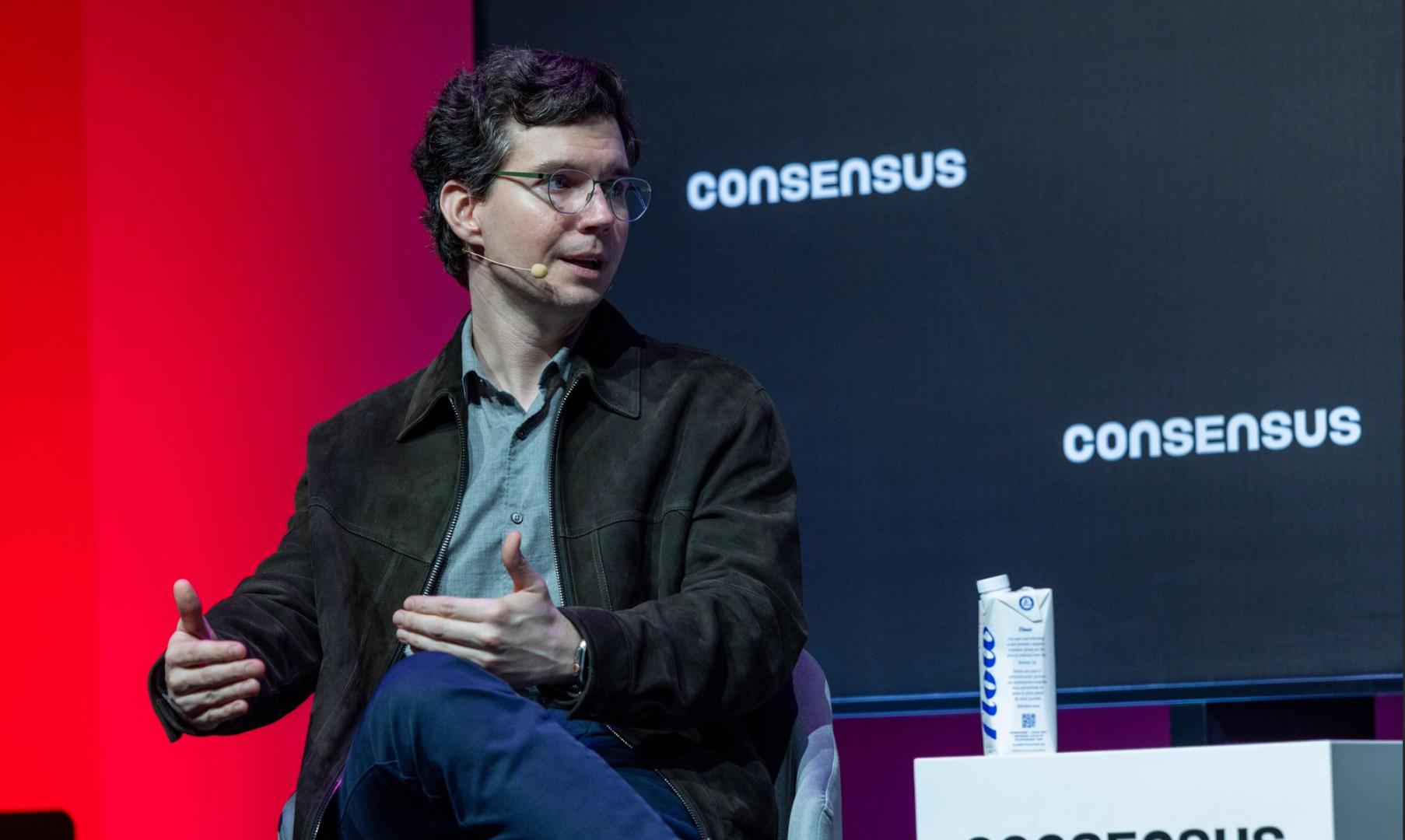
Austin Federa quit as the Solana Foundation’s head of strategy in 2024 to tackle what he saw as unfairness in the crypto trading environment. Eighteen months later, his company, DoubleZero, says it’s ready.
DoubleZero aims to eliminate proximity to an exchange’s servers as a competitive advantage for traders. The private fiber network removes latency, the time it takes for an order to reach the platform from a trader’s desk, as a factor and introduces a more equitable environment even though regulators — and traders — aren’t asking for it yet.
The problem, Federa says, is that crypto conflates decentralized with distributed. DeFi protocols are decentralized by virtue of their open-source code and permissionless validator sets, but when milliseconds determine who wins a trade, the laws of physics push validators to cluster in the same data centers anyway. On platforms like Hyperliquid, for example, Tokyo-based traders enjoy a roughly 200-millisecond edge over rivals abroad.
“Hyperliquid may be a decentralized system from a governance and user perspective, but it is not a distributed system,” Federa said in an interview with CoinDesk. “It is still co-located in the same environment, even if it’s run by multiple different entities.”
It’s a problem traditional finance has already faced. When the New York Stock Exchange developed its Mahwah, New Jersey data center over a decade ago, it engineered cable-length equalization to within a nanosecond because asymmetric access was bad for business, not because regulators required it. Simply, traders who felt disadvantaged would route their orders elsewhere.
DoubleZero’s solution is timestamping.
The network aggregates private bandwidth from operators to route blockchain data over dedicated links, while giving venues tools to timestamp orders across global entry points and reconstruct a fair sequence similar in aim to the cable equalization used by the NYSE.
The challenge isn’t just speed, but verifiability. On a venue running over the public internet, a trader whose order arrives late has no way to distinguish ordinary network congestion from something more deliberate.
“Is that true because the public internet drops packets all the time, or is that true because you saw my transaction and said, ‘Hey, this guy’s pretty good, I don’t want to include this block,’” Federa said. “The counter-factual is really hard to prove.”
DoubleZero’s pitch is that a managed network with deterministic latency makes that distinction provable. Physics still applies: A New York trading desk routing through DoubleZero to reach Hyperliquid in Tokyo will not outrun a nearer competitor in AWS’s ap-northeast-1 region.
But the gap shrinks, and more importantly, the variance shrinks. Traders get not just lower latency but predictable latency, which is the property high-frequency trading firms actually pay for in traditional markets.
Federa’s broader point is that crypto is misreading what makes traditional markets fair. Regulators matter, but they’re not the main driver. FINRA, the body that polices most of Wall Street’s day-to-day conduct, is technically a voluntary self-regulatory organization. The Securities and Exchange Commission and Commodity Futures Trading Commission serve as backstops with enforcement teeth, but the day-to-day work of keeping markets fair is done by exchanges themselves.
They do it because their business depends on it. Venues that get a reputation for asymmetric access lose volume to venues that don’t.
If he’s right, DeFi’s latency problem isn’t waiting on regulators. It’s waiting on the moment a major venue decides fairness is a competitive advantage worth paying for.
Crypto has spent a decade proving you can build decentralized systems. The next decade will test whether anyone wants to build distributed ones, where the advantage isn’t based on where in Tokyo your server sits.
“No one wants to trade on an unfair platform,” Federa said.
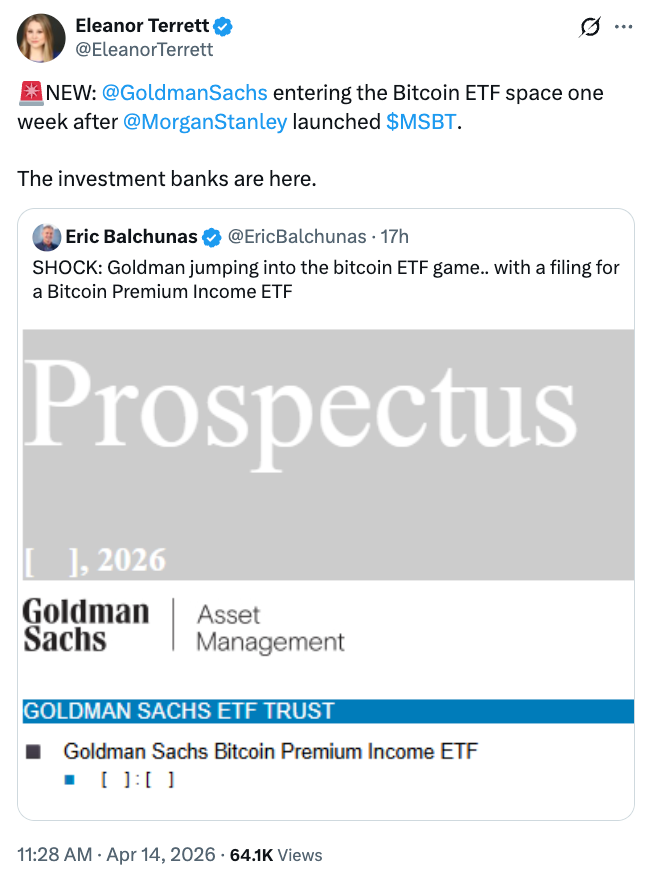
US-listed spot Bitcoin exchange-traded funds bounced back to notable daily inflows as Goldman Sachs entered the Bitcoin ETF sector.
Spot Bitcoin (BTC) ETFs recorded $411.5 million inflows on Tuesday, marking the second-largest daily inflows in April so far, according to SoSoValue data.
The fresh inflows pushed total net flows for 2026 into positive territory at roughly $245 million year-to-date, while total assets under management surged above $96.5 billion, the highest since mid-March.
The gains came as Goldman Sachs, once a major Bitcoin critic, filed with US securities regulators to launch a Bitcoin-linked ETF. The move follows Morgan Stanley’s launch of its Morgan Stanley Bitcoin Trust ETF (MSBT) last Wednesday.

BlackRock, Morgan Stanley expand inflow streaks
No US spot Bitcoin ETF recorded outflows on Tuesday, with BlackRock’s iShares Bitcoin Trust ETF (IBIT) leading the inflows at roughly $214 million, according to Farside data.
Both IBIT and Morgan Stanley’s MSBT extended their inflow streaks to five days, totaling around $696 million and $84 million, respectively.

The ARK 21Shares Bitcoin ETF (ARKB) and the Fidelity Wise Origin Bitcoin Fund (FBTC) were among the significant contributors on Tuesday, with inflows of $113 million and $45 million, respectively.
Inflows across all altcoin ETFs, including Dogecoin
The positive trend spread across all US-listed altcoin ETFs on Tuesday, with spot Ether (ETH) ETFs recording $53 million in inflows.
XRP (XRP) funds notably increased inflows at $11 million, while Solana (SOL) saw minor gains of just over $1 million.
Related: Iran conflict hints Bitcoin’s addressable market could exceed gold: Bitwise
The trend also extended to Dogecoin (DOGE) ETFs, which saw around $187,000 inflows, bringing cumulative inflows to around $9.2 million.
While it remains to be seen whether the rebound is sustainable, overall sentiment has slightly improved in recent days, with the Crypto Fear & Greed Index rising above a score of 20 this week.

The price of Bitcoin also hit a multi-week high on Tuesday, briefly rising above $75,000 for the first time since March 17. It later pulled back below $74,000, trading at $73,852 at publishing time, according to CoinGecko.
Bitcoin’s potential to challenge the dominance of traditional assets is growing as its utility expands from a digital version of gold to a functional tool for international trade, according to Bitwise chief investment officer Matt Hougan.
Summary
- Bitwise executive Matt Hougan suggests Bitcoin could surpass the $34 trillion gold market if it successfully serves as both a global currency and a store of value.
- Geopolitical developments in the Strait of Hormuz highlight the asset’s emerging role as an apolitical alternative for international trade and toll payments.
- Corporate holdings have grown to over 1.5 million Bitcoin while citizens in high inflation economies like Argentina increasingly use the asset for financial stability.
According to a Tuesday post from Hougan, Bitcoin’s total addressable market could eventually eclipse the $34 trillion gold market if it succeeds in functioning as both a global currency and a primary store of value.
This perspective gained traction following reports of Iran’s proposal to use Bitcoin for transit tolls in the Strait of Hormuz, a move that highlights the asset’s utility in bypassing traditional financial infrastructure.
“In a world where countries have weaponized their financial rails, Bitcoin is emerging as an apolitical alternative,” Hougan said, noting that these geopolitical developments indicate the asset’s reach extends far beyond being a mere commodity.
Hougan had previously estimated that Bitcoin could reach a price of $1 million per coin if it captured roughly 17% of the store-of-value market over the next decade. However, the current shift toward using the asset for cross-border payments and sovereign trade may force a significant upward revision of those price targets.
“If Bitcoin starts to take on a dual role as both a store of value, like gold, and an actual currency, like the dollar, we may need to revise our targets higher,” Hougan said.
While Bitcoin currently holds a market capitalization of approximately $1.4 trillion—trading near $74,500—it remains a fraction of the gold market’s $33.7 trillion valuation. Despite this gap, practical adoption is accelerating in regions facing economic instability.
In nations like Argentina, Turkey, and Venezuela, citizens are increasingly turning to Bitcoin to protect their savings from rapid currency devaluation and persistent inflation.
The trend is supported by data from a Coinbase survey conducted in January, which found that 87% of Argentinians view blockchain technology as a path toward financial independence.
This grassroots adoption is being mirrored at the institutional level, with private and public corporations now holding more than 1.5 million Bitcoin, worth roughly $116 billion, on their balance sheets.
Merchant integration is also steadily climbing. Data from BTC Map, cited by academic publisher Springer Nature, identifies roughly 11,000 vendors worldwide that now accept the digital asset for daily transactions, signaling its slow but consistent transition into a mainstream payment method.

Apple TV’s 2-Part Thriller Becomes a Late-Night Sleeper Hit for ‘Bosch’ and ‘Lincoln Lawyer’ Fans

Genocidaire JD Vance heckled while criticising the Pope

MEXC launches EMBLEM Launchpool with 5,000,000 EMBLEM in airdrop rewards


-

 Politics5 days ago
US brings back mandatory military draft registration
-
 Sports5 days ago
Man United discover Nico Schlotterbeck transfer fee as defender reaches Dortmund agreement
-

 Fashion5 days ago
Weekend Open Thread: Veronica Beard
-

 Politics5 days ago
Malcolm In The Middle OG Turned Down ‘Buckets Of Money’ To Appear In Reboot
-

 Politics3 days ago
World Cup exit makes Italy enter crisis mode
-

 Crypto World6 days ago
Canary Capital Files SEC Registration for PEPE ETF
-

 Business5 days ago
Tesla Model Y Tops China Auto Sales in March 2026 With 39,827 Registrations, Beating Cheaper EVs and Gas Cars
-

 Crypto World2 days ago
The SEC Conditionalises DeFi Platforms to Be Avoided for Broker Registration
-

 Crypto World2 days ago
SEC Signals Exemption for Crypto Interfaces From Broker Registration
-

 Crypto World7 days ago
Bitcoin recovers as US and Iran Agree a Ceasefire Deal
-

 News Videos3 hours ago
Secure crypto trading starts with an FIU-registered
-
 NewsBeat3 days ago
Pep Guardiola and Gary Neville agree over Arsenal title problem that benefits Man City
-

 Business5 days ago
OpenAI Halts Stargate UK Data Centre Project Over Energy Costs and Copyright Row
-

 Business4 days ago
Ireland Fuel Protests Enter Day 5 as Blockades Spark Shortages and Government Prepares Support Package
-

 Politics5 days ago
LBC Presenter Mocks Trump Over Iran War Failures
-

 Crypto World4 days ago
Federal judge blocks Arizona from bringing criminal charges against Kalshi
-
 NewsBeat3 days ago
JD Vance announces ‘no agreement’ with Iran over nuclear weapons fear
-

 Tech6 days ago
A version of Windows 10 released a decade ago is now eligible for additional security patches
-

 Crypto World1 day ago
SEC Proposes Certain Crypto Interfaces Don’t Need to Register as Brokers
-

 NewsBeat1 day ago
Trump and Pope Leo: Behind their disagreement over Iran war
You must be logged in to post a comment Login