
Crypto World
The People Building a Way to Slow Down the AI Race

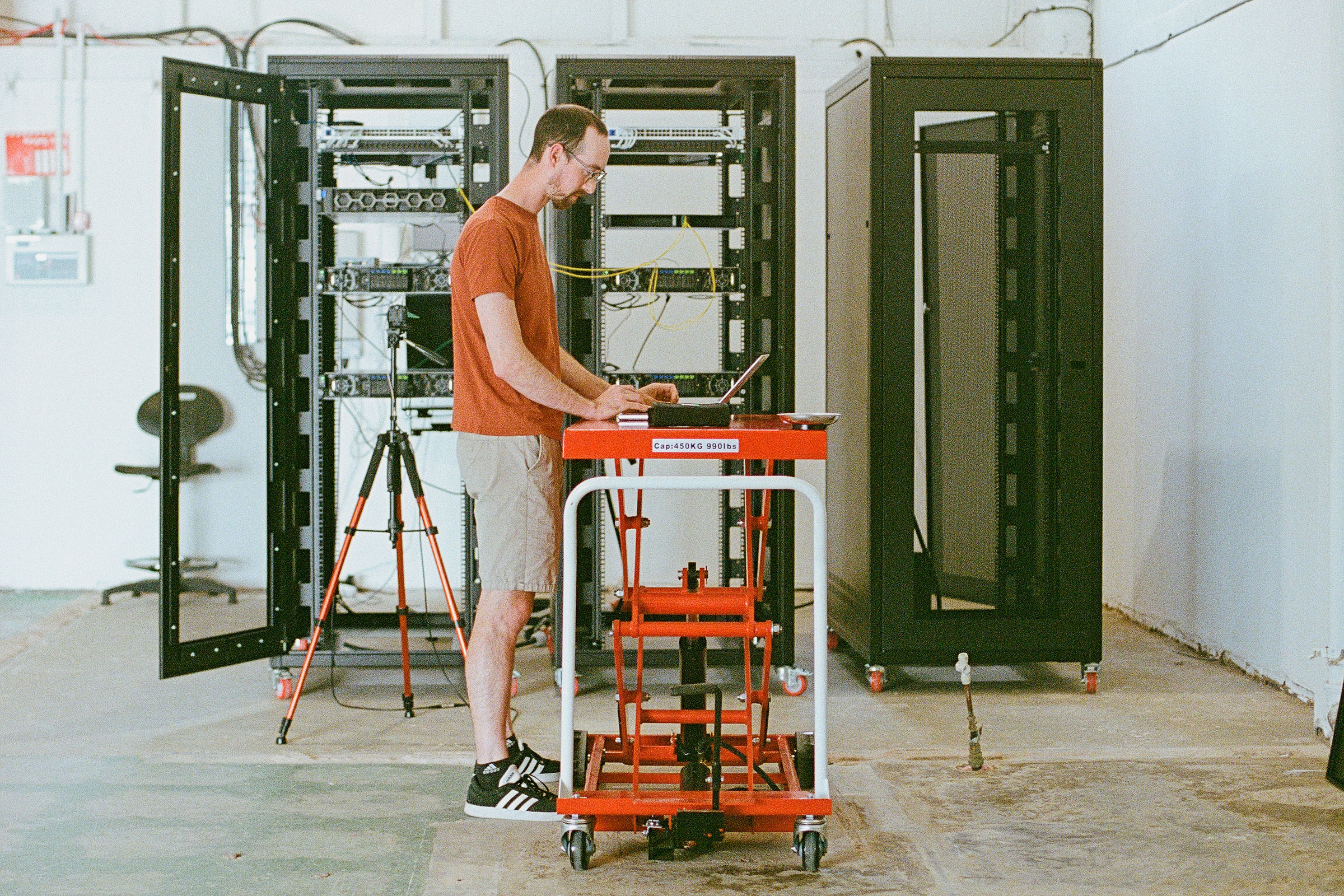
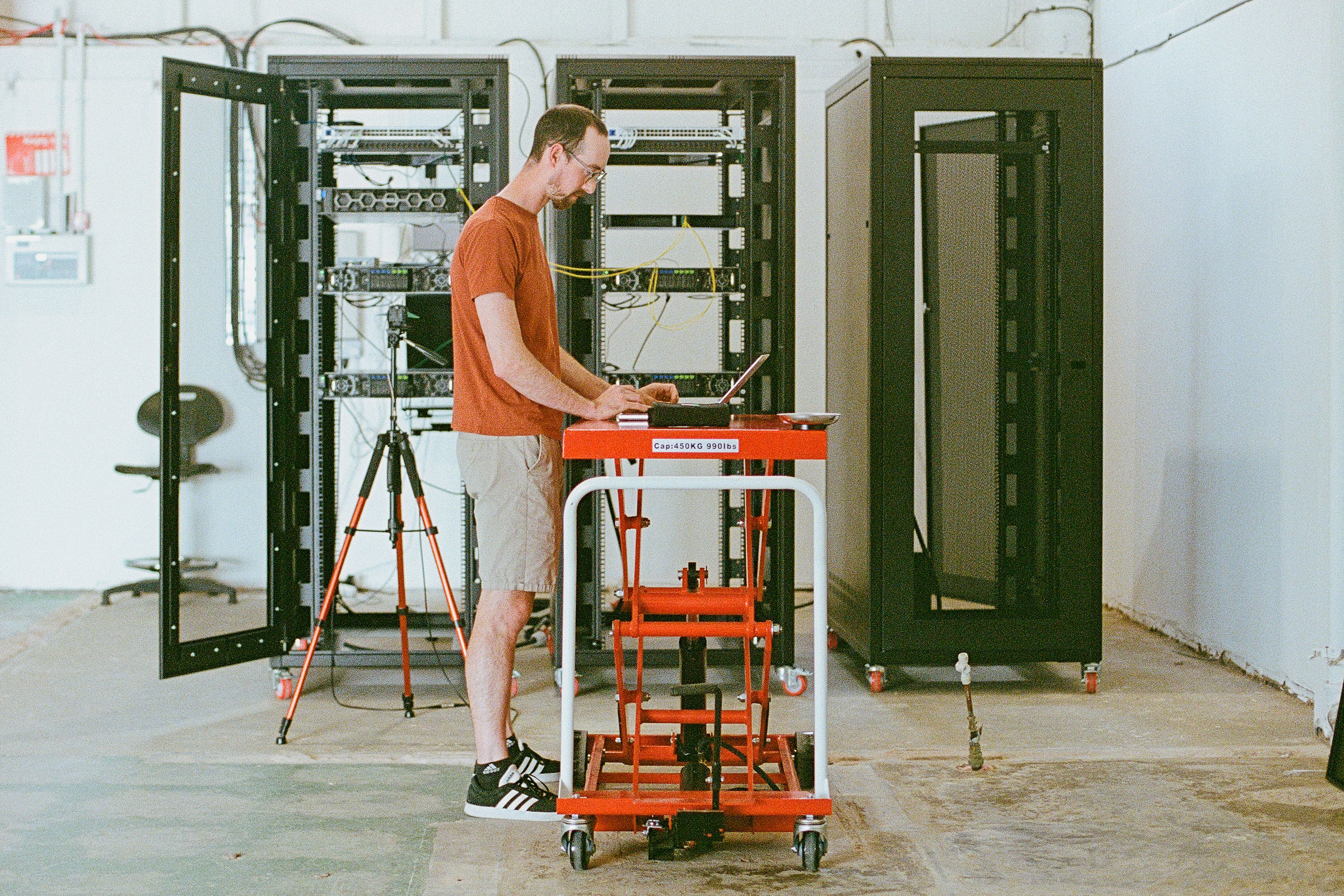
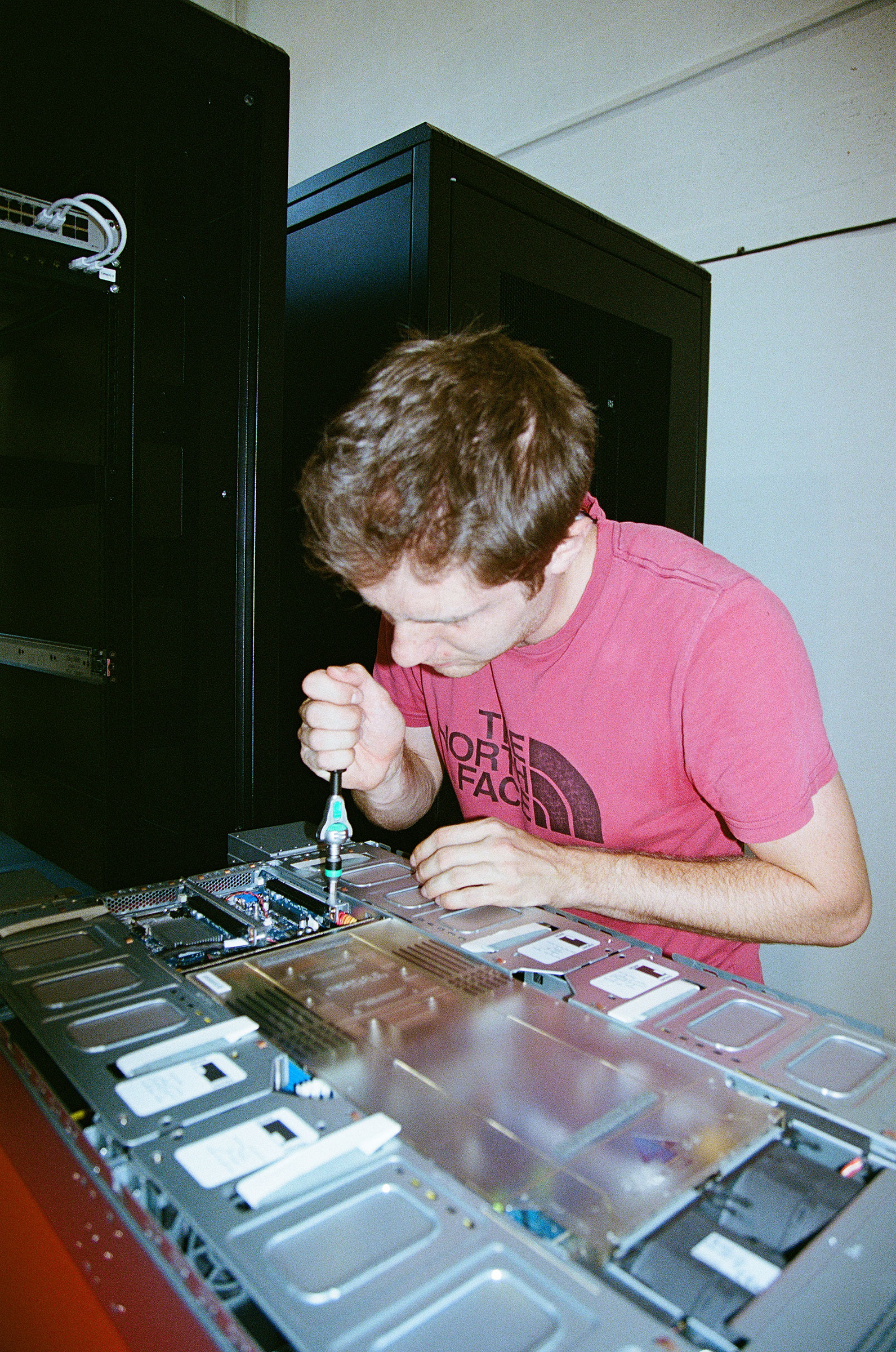
In the corner of a nondescript office in Sheffield, a city in the north of England, a compact server full of Nvidia chips is whirring away.
It’s a microcosm of the huge data centers springing up all over the globe: town-sized, energy-guzzling computers that are the worldly manifestations of frontier AI models.
Here in Sheffield, on these eight chips, engineers from the consultancy Amodo Design are piloting a monitoring system that they hope, one day, might find its way into every data center, allaying the fears of AI researchers who are concerned that the technology they are building may destroy the world.
In late July, more than 1,300 employees of frontier AI companies signed an open letter warning that their AI is quickly becoming so powerful that humans may soon no longer be able to control it. Slowing the pace of AI development, they warned, may become vital in order to allow more time for safety research, and thus avert catastrophe. But slowing down, they wrote, is essentially impossible, due to intense competition between companies and countries. The AI race is stuck in an arms-race dynamic, these top scientists say, in which one team slowing down would only hand victory to rivals that don’t.
The letter’s main request—one so important to 1,300 of the world’s top AI researchers that they called publicly for it—was for the U.S. government to support an international effort to build tools that would enable all sides to slow down the AI race.
So far, only a small group of people are working on this effort. There are fewer than 50 engineers in the world working full-time on building so-called “AI verification” tools, Amodo CEO Tom Milton estimates—nine of them at Amodo—plus a few dozen more policy researchers scattered among a handful of companies and research institutes. Meanwhile, trillions of dollars, and the combined might of the world’s biggest tech companies, are now dedicated to making AI systems more powerful as quickly as possible. Efforts to build slowdown tools are funded mostly by academia and philanthropy. (Amodo’s work in this area is funded by the Survival and Flourishing Fund and Longview Philanthropy, two grantmakers that have donated heavily toward reducing AI-related risks.)
“It is surprising that very few people are doing it,” says Milton, a 28-year-old who fell into the field almost by accident several years ago, when Amodo was commissioned to do some work in the area.
In Sheffield, three workers are huddled around their compute cluster, under an air conditioning unit that is running on full-blast. Their small-scale prototype may be running hot, but it isn’t ready yet. Many technical obstacles remain in its way, plus a bigger political one: it won’t be useful unless the U.S. and China come to the table and agree on an AI slowdown treaty, Milton says.
For now at least, such an agreement looks unlikely. But Amodo’s engineers are keenly aware that political choices are downstream from what is possible. Treaties that curtailed the Cold War arms race were only possible because new technologies, like satellites and seismometers, allowed each side to verify the other’s compliance. Milton expects a similar moment to arrive for AI. When that moment comes, he wants to be ready.
How AI verification might work
Nobody knows how an AI slowdown treaty might look, but Amodo’s engineers believe it will probably require monitoring data centers, given that these are the places where AI physically lives.
The current prototype that Amodo is building could make it possible to gain two assurances about a data center that might be helpful in the years to come, Milton says.
First, that a data center is only being used for inference. That means the running of existing AI models, rather than the training of new, more powerful ones.
Second, that a data center is running a particular, agreed-upon model—for example, one that has passed certain safety tests, perhaps ones that have been set down in law.
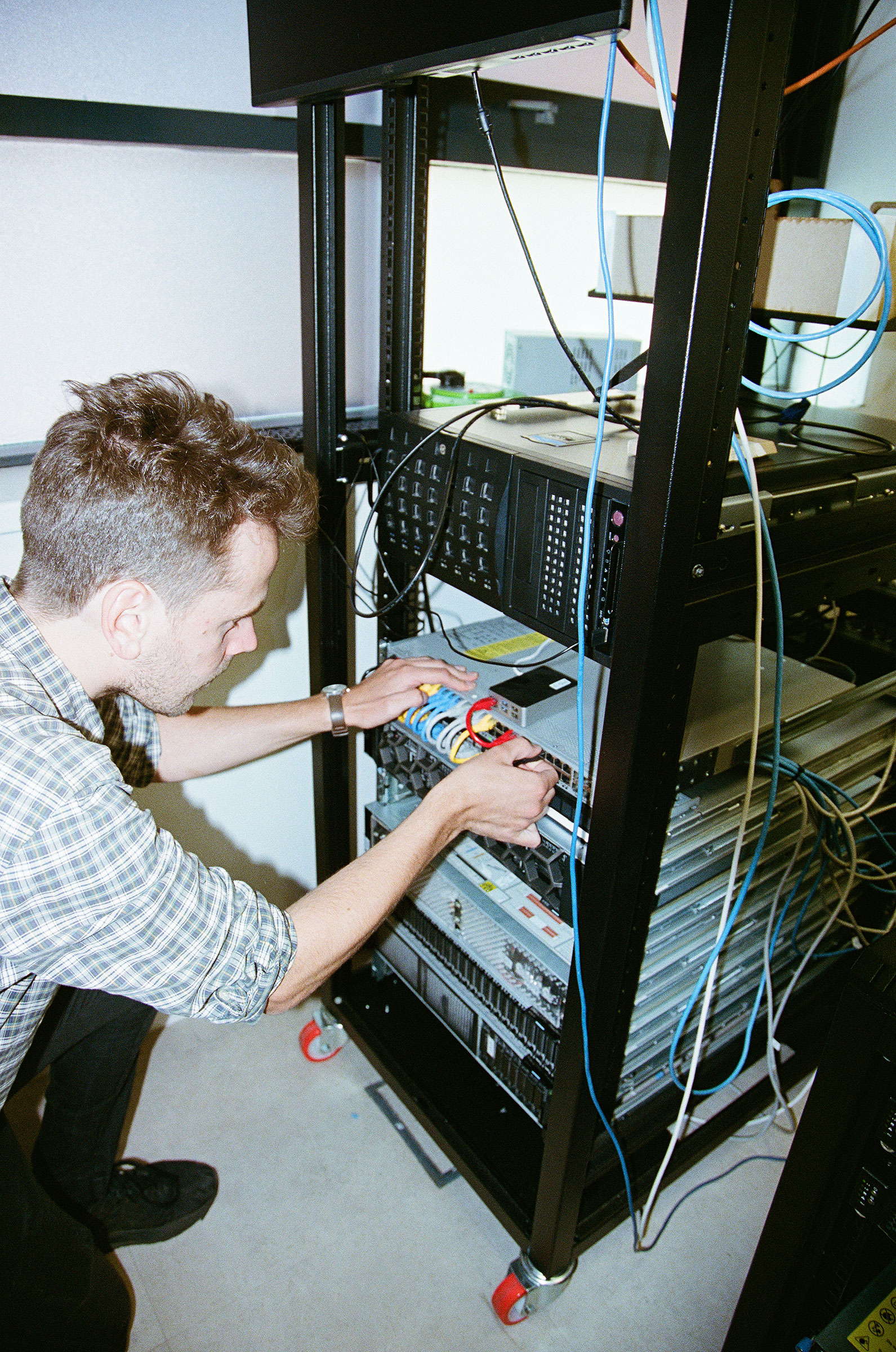
To demonstrate how this might work, an Amodo engineer logs into the whirring server rack, where he spins up two separate systems, each containing an open-source AI model made by OpenAI.
Think of the first system, he says, as an AI model that a company would normally run in a data center. The second system is the “verifier,” he explains. Its job is to sample snippets of data from this data center and rerun them on its own version of the model, thus confirming that the model is the one the data center operator claims it to be.
When he demonstrates it, the system works—at least on its own terms. The verifier performs some calculations on the outputs of the original AI model, and spits out a high certainty score that this model is GPT-OSS-120B, which is exactly correct.
The limitations
There are several significant problems that point to Amodo’s solution not yet being ready for prime time.
For now, it only works with unencrypted data, which makes it unfeasible for the most sensitive workloads, which are routinely encrypted. (Milton says the next version of Amodo’s prototype will utilize “zero-knowledge” cryptography, which would significantly reduce the amount of unencrypted data needed.)
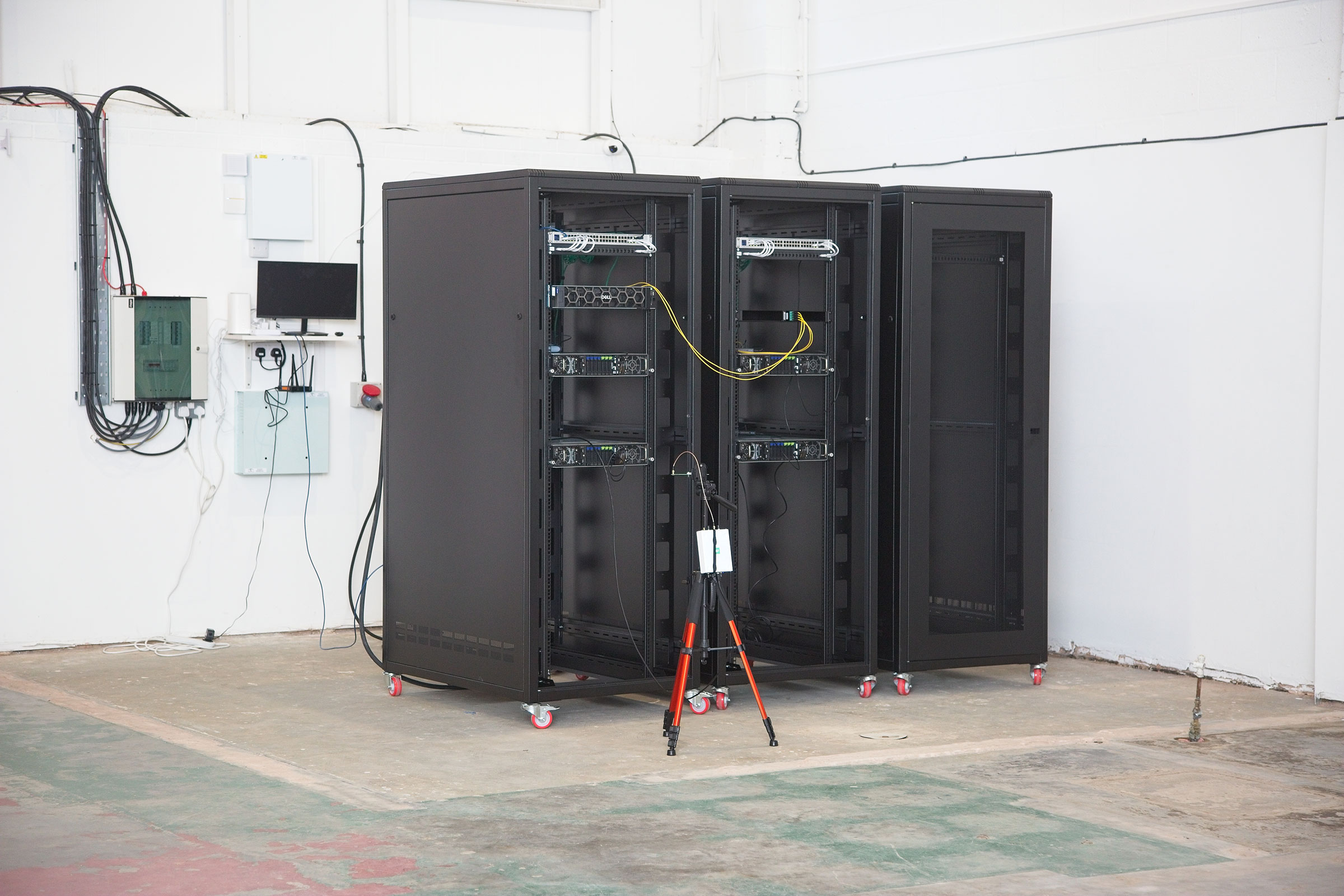
A second limitation is that a system like this would require data centers to be retrofitted, including a process ominously named “network tapping,” which involves copying data from working chips onto other verification systems within the same building. Given that these are some of the highest-security buildings on earth, housing trillion-dollar intellectual property and masses of private data, that’s access that no leading AI company is likely to be willing to grant, at least today.
But it doesn’t have to be as scary as it sounds, Milton says. There are precedents in the history of arms control—including nuclear and chemical weapons—for international bodies to carry out inspections of sensitive facilities. These inspections can guarantee that a facility is compliant with international law, without revealing the secrets of how it works to adversaries. Amodo hopes to build on these principles, aiming to build a system that would only send low-information signals like “passed” or “failed” outside of the data center’s secure walls.
(Amodo says it plans to open-source all of its work on AI verification, so that all sides can interrogate it, understand exactly how it works, and be confident it lacks security vulnerabilities.)
Another limitation is that the verifier system requires computing power in order to run. That could substantially reduce the total capacity, and thus profitability, of any data center that hosts it. The system witnessed by TIME required computing power equal to between one-third and one-fifth of the AI model it was monitoring. Amodo’s engineers say they expect to find substantial further efficiency gains, in particular because the system could theoretically be set to monitor only random samples of a data center’s computation, rather than every single calculation, in order to achieve its intended result.
Milton acknowledges that for now at least, Amodo’s tech isn’t perfect. The idea, he says, is for it to improve significantly over time, ultimately reaching a point where it becomes minimally invasive and maximally privacy-preserving. “We tend to be of the mind that verification mechanisms will ladder up, and they won’t be perfectly trustable and perfectly secure on day one,” he says. “Over time, we can get to systems that can be verified in much more detail.”
There are many individual AI researchers, Milton says, who are paid more than the single-digit-million dollar budget for his entire project. A full-scale effort, of the kind that AI workers asked for in the open letter, might quickly result in more sophisticated tools.
“It is insane for us to think that we are even a noteworthy participant in this,” Milton says. “Let alone one of the largest projects.”
Is it politically possible?
While AI verification tech remains nascent, the acceleration of AI capabilities in recent months has led to a surge of interest in the field.
The Institute for Progress, a think-tank, recommended in August that the U.S. government collaborate with frontier AI labs, chipmakers, and hyperscale data center builders, plus other governments, to accelerate the development of AI verification tools. “If the nuclear arms control precedent is any indication, the ability to verify that agreements are being upheld is often necessary for parties to enter into them in the first place,” it wrote. “Better verification technology would unlock a broader space of possible agreements.”
It is a view shared by the authors of AI 2040, a follow-up to the widely-read essay AI 2027. Their so-called “Plan A” for humanity to navigate the arrival of superintelligent AI safely makes heavy use of data center monitoring technologies.
And Anthropic recently announced it would devote resources to “help build the systems that a credible slowdown or pause would require.” Those systems, it said in a June blog post, “would enable frontier AI developers to verify that others globally have actually stopped or slowed, and that a bad actor could not use the auspices of a coordinated slowdown to jump ahead in secret.”
Milton says Amodo has held some preliminary discussions with governments about its work, although he declines to say which governments, or to share specifics.
For now, at least, it seems clear the U.S. government does not share the enthusiasm.
“We totally reject global governance of AI,” the director of the White House office of science and technology policy, Michael Kratsios, said in February. “We believe AI adoption cannot lead to a brighter future if it is subject to bureaucracies and centralized control.”
It’s true that since that speech in February, the White House has slightly moderated its approach to AI regulation, having been spooked by the cyber-warfare capabilities of recent models into testing some frontier models before their release. But White House officials remain highly skeptical of heavy-handed interventions in the AI industry, especially ones that might be perceived as allowing for ground to be lost to China. “We refuse to stifle [AI] innovation with overly burdensome regulation,” President Trump wrote in the introduction to a June executive order.
China, meanwhile, appears to still be pursuing its strategy of releasing open-weight models in an attempt to catch up to the U.S. frontier.
In other words: neither great power is exactly clamoring to agree on an AI treaty. Officials from the U.S. and China are planning to meet in September to discuss the growing risks of AI, Reuters reported, though that meeting is more likely to focus on immediate security issues.
Milton is unfazed by what appears, for the moment, to be the political unfeasibility of putting this technology to use. He expects that more powerful AI models will soon arrive, with scarier capabilities. At that point, he expects, both the U.S. and Chinese governments will be “sufficiently scared”—and might come to the table. That possibility, he says, is likely enough “that money should be spent on building the optionality for it.”



Fake downloads of The Odyssey have begun spreading Lumma Stealer malware through files disguised as high-quality movie releases, putting crypto wallets, passwords, and browser sessions at risk.
Summary
- Fake The Odyssey downloads use
.exefiles disguised as 1080p, WEBRip, and Blu-ray releases. - Lumma Stealer can collect crypto wallet data, passwords, payment details, and authentication cookies.
- Bitdefender blocked malicious downloads and identified three domains connected to the malware.
- U.S. authorities previously linked LummaC2 to at least 1.7 million information-theft incidents.
Bitdefender reported on Aug. 6 that its researchers had found malicious Windows executables using filenames designed to resemble pirated copies of The Odyssey, only days after the film’s release.
The Odyssey downloads conceal Windows executables
Disguised as video files, the downloads use familiar torrent labels such as 1080p, WEBRip, Blu-ray, and H264 to make the listings appear authentic. Bitdefender identified filenames including “the odyssey 2160phd (2026) engsubs eztv.exe,” “the odyssey 2026 1080p h264-djt.exe,” and “the odyssey 2026 1080p webrip-lama.exe.”
Rather than opening a movie, each .exe file launches software built to infect a Windows computer. Bitdefender said its security products prevented users from downloading or running the detected files, although the researchers warned that other filenames may also be circulating.
Attackers can make the disguise harder to spot by changing the executable’s icon to resemble VLC Media Player or an ordinary video file. Windows installations hide known file extensions by default, according to Bitdefender, which means a user may see a movie-style name and VLC icon without noticing the .exe ending.
People searching torrent sites may also expect unusual filenames, compressed folders, or a bundled video player, giving the malicious file another layer of cover. Bitdefender said the lure does not require a complex trick because the victim has already decided to download an unofficial copy from an unverified source.
Lumma Stealer can capture wallets and browser sessions
Once executed, Lumma Stealer searches the infected computer for browser passwords, saved payment information, autofill records, remote desktop credentials, and cryptocurrency wallet data, according to the security firm.
The malware also collects browser authentication cookies. Bitdefender warned that stolen cookies can let an attacker take over an active account session even when the victim has enabled multi-factor authentication, since the criminal may reuse a session that has already passed the login check.
Known as LummaC2, the malware is an information stealer developed in Russia and sold to other criminals as a service, according to Bitdefender and U.S. authorities. Its availability through underground markets allows buyers to run data-theft campaigns without building their own malware.
During its examination of the Odyssey files, Bitdefender observed attempts to contact command-and-control infrastructure associated with Lumma Stealer. Researchers identified the domains auditva[.]cyou, myroayy[.]cyou and logmabx[.]click, which the company said it had blocked for its customers.
Unlike some earlier versions, the samples found in the latest movie campaign did not use separate droppers or persistence tools, Bitdefender said. The operators instead appeared satisfied with collecting and sending available information during the initial execution.
Previous movie-based Lumma attacks used extra methods to avoid detection. Bitdefender found delayed execution when security software was present, encrypted payload delivery through AutoIt scripts, and other checks in a 2025 campaign built around fake copies of Mission: Impossible – The Final Reckoning.
U.S. agencies previously disrupted LummaC2 infrastructure
For U.S. crypto holders, LummaC2 has already drawn action from federal law enforcement. In May 2025, the Justice Department obtained warrants to seize five internet domains used by the malware’s administrators, while Microsoft filed a separate civil case covering about 2,300 other domains tied to the operation.
Court documents cited by the department said the FBI had identified at least 1.7 million cases in which LummaC2 was used to steal information. Listed targets included browser records, email and bank login details, autofill data, and crypto seed phrases that could provide access to virtual asset wallets.
“Malware like LummaC2 is deployed to steal sensitive information such as user login credentials from millions of victims in order to facilitate a host of crimes, including fraudulent bank transfers and cryptocurrency theft,” Matthew Galeotti, then-head of the Justice Department’s Criminal Division, said in the announcement.
The federal operation seized two domains on May 19, 2025. After LummaC2 administrators told customers about three replacement domains the next day, U.S. authorities seized the new addresses as well, according to the department.
Alongside the seizures, the Cybersecurity and Infrastructure Security Agency and the FBI issued a technical advisory describing how LummaC2 enters computers and removes sensitive information. The Justice Department directed people who believe a device has been compromised to contact the FBI’s Internet Crime Complaint Center or a local field office.
The appearance of new Lumma-linked domains in Bitdefender’s 2026 findings indicates that malware campaigns using the family continued after the 2025 enforcement operation. Bitdefender did not provide a victim count, estimated crypto loss, or geographic breakdown for the Odyssey campaign.
Crypto malware is using familiar content as bait
Movie torrents are one part of a series of malware campaigns that package harmful code inside content, applications, or tools that users actively seek.
Earlier in August, crypto.news reported that Microsoft had found a fake CAPTCHA campaign using BNB Chain smart contracts to retrieve attack instructions. Microsoft said the operation targeted thousands of consumer and business devices each day and delivered several malware families, including Lumma Stealer.
Instead of downloading a movie, people caught in that campaign were instructed to open Windows Run, Terminal, or PowerShell and paste a command supplied by the attacker. Microsoft warned that successful infections could expose credentials, install remote-access tools, and create an entry point for ransomware.
Mobile users have faced a different form of wallet theft. In July, reports renewed attention around SparkKitty mobile malware, which Kaspersky had previously found inside iOS, Android, and third-party applications. The spyware collected images from phone galleries, where some users had stored screenshots of wallet recovery phrases, passwords, and QR codes.
Developer tools have also become a delivery route. Socket disclosed in May that the TrapDoor malware campaign involved at least 34 harmful packages and 384 connected versions across npm, PyPI, and Rust repositories. According to the security company, the packages targeted crypto and artificial intelligence developers while seeking wallet data, GitHub tokens, cloud credentials, and SSH keys.
For the latest movie campaign, Bitdefender advised users to watch films through legitimate streaming services, avoid executables advertised as videos, and keep Windows and security software updated. The company also recommended enabling file extensions in Windows Explorer so an .exe file cannot appear to be an ordinary movie.


US-based crypto exchange ABFinance, founded by ByBit’s former CEO Helen Liu, closed its doors last week before it ever opened.
ABFinance announced last Friday that the exchange’s planned launch will no longer go forward and that it is “winding down in an orderly manner.”
ABFinance lasted six months
Liu founded the exchange in March before stepping down from her ByBit co-CEO role on April 30, 2026.
After ABFinance’s closure, Liu thanked her team and said: “It’s difficult to see this chapter come to an end.”
Over the last six weeks, BitMart, BitMEX, and AscendEX have also announced that they will be closing shop.
Read more: AscendEx shutdown: Uncertainty over withdrawals as hot wallets lack funds
Exchanges are leaving users worried for their funds
BitMart closed down despite its bullish outlook, and now, after it has continued to process withdrawals at an incredibly slow pace, users have begun to speculate that the exchange might be insolvent.
BitMart’s founder recently threatened legal action against posts from an official BitMart account demanding transparency on the status of user funds.
This prompted crypto detective ZachXBT to note, “If you actually have the liquidity then simply return the funds to everyone instead of posting vague statements?”
BitMEX said it will close down in September, leaving users wondering what it will do about $270 million sitting in a house insurance fund.
AscendEX also shut down amid withdrawal worries after ZachXBT flagged that the exchange was missing large sums of ETH, USDT, USDT, SOL, and more in its reserves.
Got a tip? Send us an email securely via Protos Leaks. For more informed news and investigations, follow us on X, Bluesky, and Google News, or subscribe to our YouTube channel.

The approach rested on simple logic. If cosmic radiation were truly driving cancer among air crew, the signal should appear specifically in the cancers that radiation is known to cause (breast, prostate, melanoma, and certain leukemias), and the signal should not appear in cancers like colon cancer that aren’t caused by this type of radiation. We would also expect to see higher rates of radiation-associated cancers among other types of workers exposed to radiation, like nuclear technologists. Meanwhile, unless something about aviation other than flying was associated with these cancers, we wouldn’t expect to see higher rates in aviation workers who remain on the ground, like aircraft mechanics and assemblers.
The pattern was hard to miss. Among all 503 occupations, flight attendants and pilots had the highest and second-highest share of deaths from radiation-related cancers—6.9% and 6.7%, respectively, after accounting for differences in age, sex, and other factors—a proportion that exceeded that of nuclear technologists. For cancers unrelated to radiation, aircrew sat near the middle of the pack. And our comparison groups fell exactly where the radiation hypothesis predicted; nuclear technologists ranked near the top, while ground-based aviation workers did not.
Crypto World
Israel’s largest crypto broker Bits of Gold hit by data breach affecting 200,000 customers
Cryptocurrency broker Bits of Gold said personal data belonging to roughly 200,000 customers was stolen by hackers, the company reported.
The Tel Aviv, Israel-based company reported the security breach on Sunday, saying a hacker gained unauthorized access to a third-party data analytics network and,gained access to customers’ names, national ID numbers, emails, phone numbers, IP addresses, bank account details, and public wallet addresses.
“Upon detection of the incident, we blocked access and disconnected the system from the information sources, so this access ended,” the company stated.
Bits of Gold said no funds, private keys, passwords, CVV codes, or scanned ID documents were exposed. The broker said its initial findings indicate the attack was part of a broader global incident that hit other companies simultaneously.
It is the third data breach reported within the crypto industry in the last week. Data from nearly 40,000 SafePal users was stolen on Sunday after a third-party vendor suffered a security breach. In a similar attack, personal data from almost 14,000 Trezor wallet customers was exposed on August 13 after its fulfillment partner, ShipMonk, was compromised.
Crypto World
How a bug in Coldcard’s code went unnoticed for years, leading to $100 million in hacked funds


Hardware wallets are somewhere in between a paper wallet and a browser-based hot wallet. They’re harder to hack than software, harder to lose than paper, but they’re not infallible. They can be lost or stolen, and users need to be able to trust the device to create their keys properly in the first place.
“Air-gapped systems help, but they are not a perfect fix,” Bobby Gray, founder of TEXITcoin, told CoinDesk. “Security has to begin with how the keys are generated and continue through every part of the custody process.”
This is, unfortunately, where things went wrong for Coinkite, the maker of the Coldcard wallet.
A bug in the system
In March 2016, the Toronto-based bitcoin company told customers it was sunsetting its hosted hot wallet. Running an online financial services company had brought persistent floods of junk internet traffic aimed at knocking their services offline, along with mounting legal costs and regulatory complications.
Instead, Coinkite said it wanted to try something different. It wanted to build decentralized hardware and “software-not-as-a-service.” That was early in crypto’s history, before Bitcoin’s second halving, when one entire bitcoin was trading slightly above the $400 mark.
Coinkite’s pivot first produced Opendime in April 2016. The small USB stick generated and concealed a private key, allowing bitcoin to be passed from one person to another like a physical bearer instrument. Physically breaking the device’s seal revealed the key and allowed the funds to be spent.
Tom Lee’s Bitmine Immersion Technologies, an Ethereum treasury company, resumed its Ether purchases last week, bringing it closer to a key business target of owning 5% of the second-biggest cryptocurrency’s supply despite challenging market conditions.
The company disclosed Monday that it acquired 9,926 Ether (ETH) during the week ending Aug. 16, bringing its total holdings to roughly 5.82 million ETH, or about 4.8% of Ethereum’s circulating supply. At an ETH reference price of $1,893, Bitmine’s Ether holdings were valued at roughly $11 billion. However, much of the company’s ETH was acquired at significantly higher prices.
Ether’s price was little changed on Monday, sitting just above $1,900.
The latest purchase puts Bitmine within striking distance of its long-term “Alchemy of 5%” target of holding 5% of the total ETH supply.
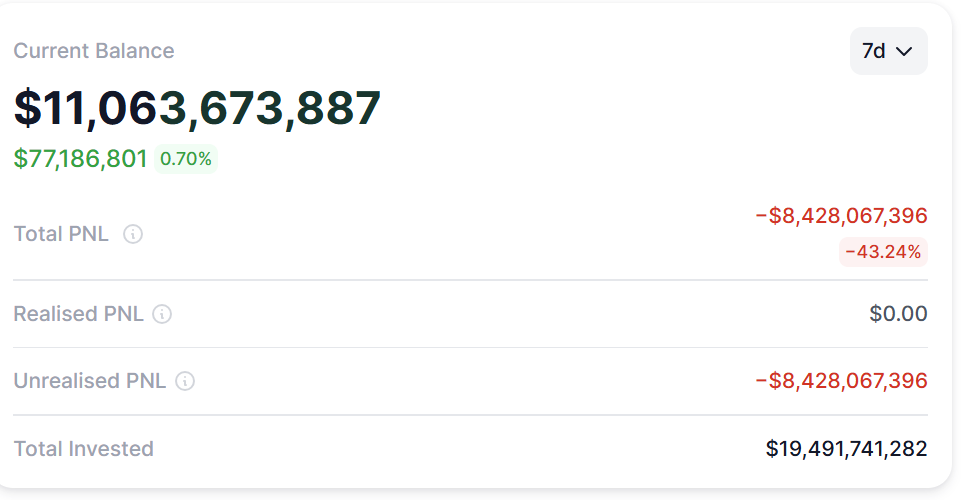
Bitmine’s conviction has been tested by a prolonged bear market for Ether, which has sharply eroded the value of its digital asset treasury. The company is sitting on more than $8.4 billion in unrealized losses on its ETH holdings, according to industry data.
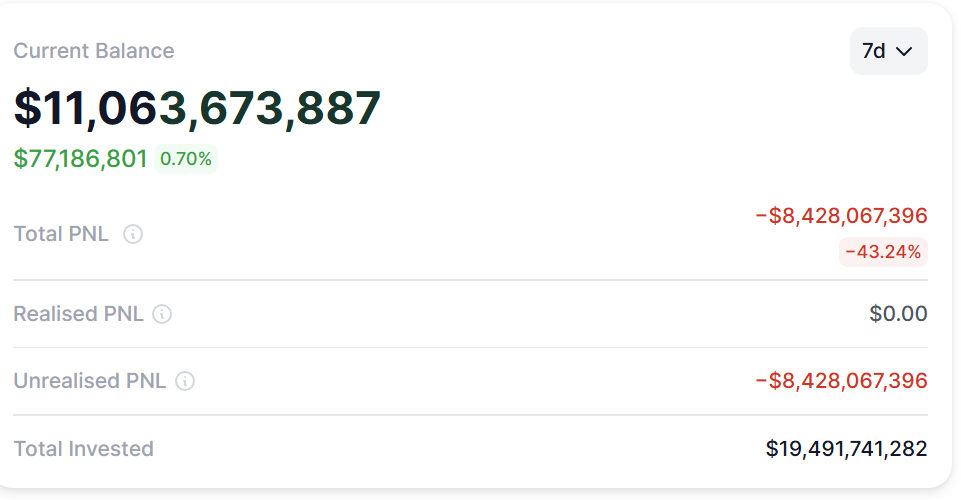
With a portfolio value of more than $11 billion, BitMine’s unrealized losses are around 43%. Source: DropsTab
Still, Bitmine has continued accumulating Ether, making purchases every week since launching its ETH treasury strategy in June 2025.
Related: Ethereum devs to narrow 66 proposals tied to Hegotá upgrade
Bitmine’s staked Ether approaches $10 billion in value
Although Bitmine is sitting on large unrealized losses on its Ether holdings, its staking operations continue to generate yield. The company said it is staking more than 5 million ETH, worth roughly $9.6 billion at current prices.
That staking has enabled Bitmine to earn protocol rewards for helping secure the Ethereum network, providing a predictable source of yield regardless of short-term ETH price movements. Based on a seven-day staking yield of 2.61%, Bitmine projects annualized staking rewards of roughly $287 million, according to Lee.
Related: Crypto Biz: Bitcoin’s $116M self-custody wake-up call


SafePal disclosed on Aug. 16 that a flaw in an order-tracking plug-in exposed the personal data of 39,798 customers, and a threat actor is already advertising the records for sale on a cybercrime forum. The file pairs home addresses and phone numbers with proof of hardware wallet ownership, which… Read the full story at The Defiant


Stripe has finalized an agreement to buy AI model gateway OpenRouter for more than $7 billion, Bloomberg reported Sunday, citing people familiar with the matter. Neither company has announced the deal, and a Stripe spokesperson told TechCrunch the company does not comment on rumors or speculation…. Read the full story at The Defiant
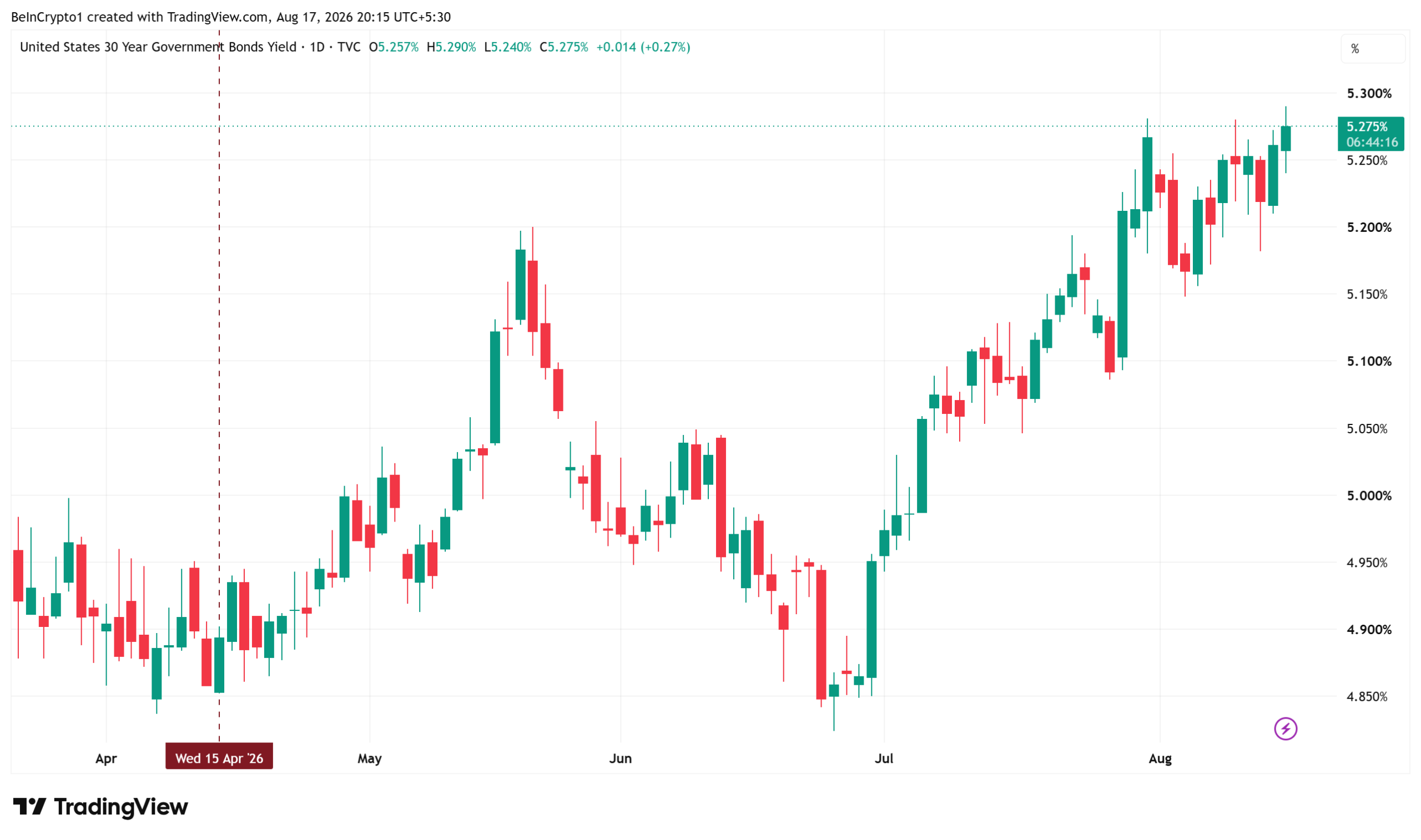
The US government now pays 5.27% to borrow for 30 years, the highest rate of 2026. Artificial intelligence (AI) companies are a large part of the reason. Bitcoin (BTC) is losing the fight for the same money.
Bitcoin trades near $63,517, down 46.1% over the past 12 months. Gold rose 32.6% in the same stretch. The gap between them is almost 79 percentage points.

AI Borrowing Now Competes With the US Treasury
Start with the trend. US technology companies used to sell about $61 billion of bonds a year. That is the five-year average, JPMorgan Asset Management said in July. In 2025 they sold $131 billion. By late July 2026 they had sold $192 billion.
One sector now accounts for 27% of all net investment-grade bond sales, by JPMorgan’s count. Across every US company, issuance reached $1.68 trillion through July. That tally comes from the Securities Industry and Financial Markets Association.
Here is why that matters. The buyers are the same pension funds and insurers that fund Washington. Nomura Securities estimates Big Tech borrowing now equals roughly 25% of Treasury net bond sales to private investors. A year ago the share was five times smaller.
“Whoever’s issuing, be it a government or a hyperscaler or a non-hyperscaler credit, is now competing with more borrowers. And therefore yields have to be higher,” Tony Rodriguez, head of fixed-income strategy at Nuveen Asset Management, in a statement to Bloomberg.
Follow us on X to get the latest news as it happens
Why Bitcoin Loses When Yields Rise
The mechanism is simple. Bonds pay interest. Bitcoin does not.
The 30-year Treasury yield closed at 5.25% on August 14, its highest level this year, Treasury Department data show. The 10-year sits at 4.68%, up 0.49 percentage points since January 2.
Bank of America economists attribute about 0.3 of that rise to corporate and mortgage bond supply. On those numbers, new debt supply explains roughly 60% of the move in the 10-year this year.
Corporate paper pays even more. Alphabet priced 30-year debt near 6.4% recently, about 1.15 points above comparable Treasuries, Bloomberg reported. A bond financing a Meta data center paid over 7.5% last month.
An investor can now earn 6% or 7% from two of the world’s most profitable companies. That is the bar Bitcoin’s price performance must clear. It has not cleared it since global bond yields climbed to 2008 levels.
The Treasury Cannot Sidestep It
Treasury Secretary Scott Bessent has tried to protect long-term rates by selling more short-term debt instead. Barclays estimated the shift would cut net supply of new Treasury notes and bonds by $440 billion this year.
AI borrowing filled that space and more. Barclays expects net corporate bond supply to grow by $474 billion, most of it from the tech giants.
Washington is not borrowing less either. The federal deficit hit $1.8 trillion in the first 10 months of fiscal 2026. That is $169 billion more than last year, the Congressional Budget Office said. Rising US debt interest costs add to it.
The AI bill is also mostly unpaid. JPMorgan Asset Management projects $5.5 trillion of AI capital spending through 2030. It expects $2.1 trillion of that to come from new bonds.
“That is a crowding-out effect. It is important to remember that we are just starting. This hyperscaler debt issuance story has really just begun,” Greg Peters, co-chief investment officer at PGIM, in a comment on Bloomberg Television.
Endless borrowing is the core of the Bitcoin scarcity argument. This year the argument has not paid. Gold took the money, and the 30-year Treasury yield record shows why. The next long-end auctions will test whether buyers have room for both.
The post AI Debt Lifts 30-Year Treasury Yield to 5.27%: Can Bitcoin Compete? appeared first on BeInCrypto.
At least one Wall Street analyst is skeptical that private equity firm Silver Lake will pull off a deal to acquire software maker Workday (WDAY). Workday stock popped on Feb. 13 amid reports of Silver Lake’s interest but has cooled off the next two trading sessions. In early 2026, Workday Cofounder and Executive Chairman Aneel Bhusri returned as chief executive…
Copyright ©2026 Investor’s Business Daily, LLC. All rights reserved. 87990cbe856818d5eddac44c7b1cdeb8

‘We are so happy’ – Princess Eugenie shares name of first daughter

SoFi Is Dividing Wall Street. This Is the Bull Case for the Fintech Stock.

The Odyssey pirated downloads target crypto wallets


-

 Fashion3 days ago
Weekend Open Thread: Ann Taylor
-
 NewsBeat6 days ago
Communication cards help banking customers access services or report scams
-
 Business7 days ago
Oil Price Today (August 11): Crude oil rises to $88 after Trump’s compensation demand dents Hormuz opening. Here’s why
-

 Crypto World7 days ago
Revolut wins French banking licence, creates second EU banking hub
-
 Sports4 days ago
This U.S. Amateur is a glimpse into golf’s future in more ways than you think
-
 Crypto World7 days ago
Why Did Nvidia Stock Fall on Monday Despite a $500 Billion Wall Street AI Deal?
-

 Sports3 days ago
Birmingham 2026: Day 6 Timetable for Irish Athletes
-
 NewsBeat2 days ago
Myanmar says over 300,000 Rohingya refugees verified for repatriation as exodus enters ninth year
-
 Entertainment5 days ago
Keke Palmer Subtly Hints At Sean Evans Drama With Cryptic Post
-

 Politics2 days ago
SEQ Code: The Three Letter Boarding Pass Code That Could Give You The Worst Seat
-

 Fashion7 days ago
Can You Wear Double Cloth Gauze Clothing To Your Office?
-
 Entertainment7 days ago
57 Years Later, the Best Sitcom Ever Made Still Deserves a Reboot
-

 Fashion6 days ago
Coffee Break: The Fonteyn Jane Flat
-
 Crypto World7 days ago
Hormuz Nerves Cost Bitcoin $65,000 Mark Despite Solid Institutional Flows
-

 Tech6 days ago
Zoom Screen-Sharing Bug Let People Fully Take Over Other Devices On A Call
-

 Crypto World7 days ago
Bitcoin's BIP Editors Remove Luke Dashjr Two Days After BIP-110 Fork Stalled
-

 Fashion6 days ago
Claire Life: Kicking Off MVAAFF With the C Suite Luncheon Featuring Phylicia Rashad, Letoya Luckett, and More!
-

 Fashion6 days ago
Should you refinance your debt? Pros, cons, and real numbers
-
 Crypto World6 days ago
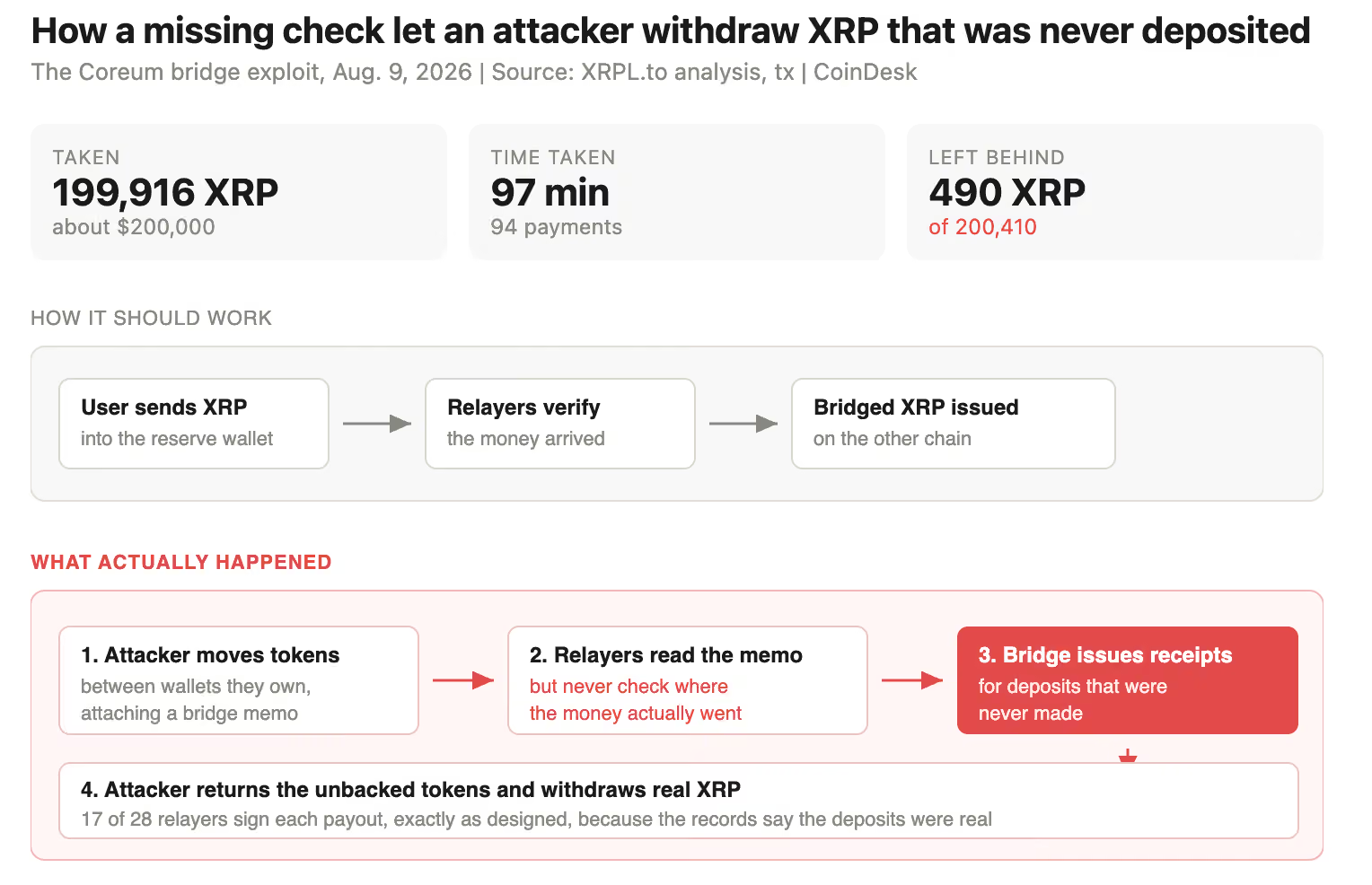
XRP bridge drained after software mistook fake deposits for real ones
-

 Sports5 days ago
DeQuan Jones in ‘high spirits’ after successful leg surgery
You must be logged in to post a comment Login