
Crypto World
The Protocol: Zora moves to Solana



Network News
ZORA MOVES FROM BASE TO SOLANA: On-chain social platform and decentralized protocol Zora is making a decisive shift beyond its non-fungible tokens (NFT) and creator roots with the launch of “attention markets” on Solana, a product that allows users to trade tokens tied to internet trends, memes and cultural moments. The feature, unveiled Feb. 17, lets anyone create a new market for 1 SOL. Once live, users can buy and sell positions on whether a topic will gain or lose traction across social media. Instead of wagering on elections or macro data, traders speculate on buzz itself — such as hashtags, viral narratives, even broad themes like “AI girlfriend” or “bitcoin.” The design leans heavily into Solana’s strengths. Fast block times and low transaction costs make it easier to support rapid price updates and frequent trading, which are essential for markets built around fleeting online momentum. Initial activity was limited, however. The primary “attentionmarkets” token briefly touched roughly $70,000 in market capitalization, with around $200,000 in trading volume. Most other trend markets struggled to attract meaningful liquidity, with few crossing the $10,000 mark on their first day. Percentage swings were sharp, though largely driven by thin order books rather than sustained demand. Zora was among the breakout applications on Coinbase’s Layer 2 Base network in the past few years. It launched its ZORA token there in April and helped roll out Creator Coins tied to Base profiles in July, a push that briefly helped Base overtake Solana in daily token creation. Creator coins are tokens tied to an individual creator’s online profile, brand or community. Think of them as tradable “shares” in a person’s internet presence. On platforms like Zora and Base, a creator coin could be automatically generated from a user’s profile. Fans could buy the coin to signal support, gain social clout, or speculate that the creator’s popularity would grow. As more people bought in, the price could rise, and interest faded, it could fall. As such, some in the Base community saw the new “attention markets” product as a pivot away from that momentum. — Shaurya Malwa Read more.
EF EXECUTIVE-DIRECTOR TO LEAVE: Tomasz Stańczak, co-executive director of the Ethereum Foundation (EF), announced he will step down from his leadership role at the end of February 2026, marking a notable shift in the organization’s executive team. Stańczak, who has co-led the foundation alongside Hsiao-Wei Wang since early 2025, said in a blog post that he believes the foundation and the broader Ethereum ecosystem are “in a healthy state” as he prepares to hand over the reins to Bastian Aue, who will take the co-executive director role alongside Wang. Stańczak’s tenure began at a turbulent time for the EF. He was brought aboard following the transition of long-time executive director Aya Miyaguchi into a new leadership position amid mounting community criticism that the foundation wasn’t doing enough to aggressively push the Ethereum ecosystem forward. At the time, detractors pointed to a perceived disconnect between the EF and developers, including conflicts of interest, clashes over strategic direction and frustrations about ETH’s price performance. Such criticisms helped spur a broader leadership restructuring. While Stańczak stressed his confidence in the team’s ability to carry forward the EF’s mission, he also signaled his intention to remain involved in the ecosystem. — Margaux Nijkerk Read more.
XRP LEDGER RELEASES MEMBER-ONLY DEX: The XRP Ledger has activated a new “Permissioned DEX” amendment, a technical upgrade designed to let regulated institutions trade on XRPL without opening markets to everyone. The change, known as XLS-81, allows the creation of permissioned decentralized exchanges that work like XRPL’s existing built-in DEX, but with a key difference. A permissioned domain can restrict who can place offers and who can accept them, creating a gated trading venue where participation is tied to compliance requirements such as KYC and AML checks. Think of it as a ‘members only’ marketplace, while still keeping the trading mechanics native to the ledger. The feature is aimed at banks, brokers and other firms that may want onchain settlement and liquidity but cannot interact with fully open DeFi markets. For these players, the ability to control access is not optional; it is a minimum requirement. The activation also adds to a growing set of “institutional DeFi” primitives XRPL has been rolling out this month. Token Escrow, or XLS-85, went live last week, extending XRPL’s native escrow system beyond XRP to all trustline-based tokens and Multi-Purpose Tokens, including stablecoins such as RLUSD and tokenized real-world assets. — Shaurya Malwa Read more.
ETHEREUM MEMBERS REVIVE NEW VERSION OF THE DAO: In the summer of 2016, the Decentralized Autonomous Organization, known as the DAO, became the defining crisis of Ethereum’s early years. A smart contract exploit siphoned millions of dollars’ worth of ether (ETH) from that initial project, and the community’s response — a contentious hard fork to recover those funds, splintered the original chain from the current one, leaving the old chain behind, known as Ethereum Classic. The DAO was once the greatest crowdfunding effort in crypto’s history, but faded into a cautionary tale of governance, security, and the limits of “code is law.” Now, nearly a decade later, that story has taken an unexpected turn. What was lost, or rather, left untouched, is being repurposed as a ~$150 million (at today’s prices) security endowment for the Ethereum ecosystem. The endowment, now known as TheDAO Security Fund, will stake some of the 75,000 dormant ether (ETH) and deploy the yield through community-driven funding rounds to support Ethereum security research, tooling and rapid-response efforts, while keeping claims open for any remaining eligible token holders. At the center of this story is Griff Green, one of the original DAO curators and a veteran of Ethereum decentralized governance. “When the DAO hack happened [in 2016], obviously, I jumped into action and basically led everything but the hard fork,” Green said of assembling the white hat group that rescued funds on the original Ethereum chain. “We hacked all these hackers. It was straight up DAO wars”. That effort, alongside others, helped salvage funds that might otherwise have been lost forever. At the time, the hard fork restored roughly 97% of the DAO’s funds to token holders, but left a small fraction, roughly 3%, in limbo. These “edge case” funds came from quirks of the original smart contracts: people who paid more than expected, those who burned tokens to form sub-DAOs, and other anomalies that didn’t cleanly map back. Over time, that leftover balance, once only worth a few million, ballooned into something far more significant due to ether’s appreciation. “The value of the funds we control has grown dramatically… well over 75,000 ETH,” a blog post for the new DAO fund states. — Margaux Nijkerk Read more.
In Other News
- A recent poll of 1,000 American investors in digital assets found that over half are scared they’ll face an IRS tax penalty this year as new transparency rules governing crypto exchanges take effect. The data collected at the end of January by crypto tax platform Awaken Tax canvassed U.S. holders’ concerns about a radical shift from self-disclosure to automatic reporting of transactions. This has been enacted through the introduction of the “Digital Asset Proceeds From Broker Transactions,” or Form 1099-DA, which tens of millions of Americans will be made aware of over the next month or so. The new rules are designed to clamp down on crypto tax evasion and compel brokers, such as crypto exchange Coinbase (COIN), to report all sales and exchanges of digital assets that occurred in 2025 to the tax agency. The aim is to give tax authorities a clear view of investor gains and losses by opening up customer data inside exchanges for the first time, allowing the IRS to compare what crypto brokers report with what taxpayers file. While the goal is to remove any margin of error, the rules are a “blunt instrument,” created by legislators who know nothing about crypto, according to Awaken Tax founder Andrew Duca. “It means crypto is being treated like stocks, but it doesn’t behave in that way. Real crypto users will move assets between multiple wallets and interact with decentralized finance (DeFi) protocols, using pretty complex trading strategies,” Duca said. — Ian Allison Read more.
- Crypto venture firm Dragonfly Capital completed a $650 million fourth fund, marking one of the largest raises in the sector at a time when many blockchain-focused VCs are struggling, Managing Partner Haseeb Qureshi said. “It’s a weird time to celebrate,” Qureshi wrote on a social media post, describing low spirits and “the gloom of a bear market” for crypto. However, he noted that Dragonfly has historically raised capital during downturns, including the 2018 ICO crash and just before the 2022 Terra collapse, ‘vintages,’ he said, ultimately became the firm’s best performers. In September, the firm said it aimed to raise $500 million for its fourth fund, targeting early-stage projects. It has not yet identified any of them. In May 2023, Dragonfly Capital raised $650 million for its third crypto fund for later-stage companies. — Olivier Acuna Read more.
Regulatory and Policy
- Hyperliquid (HYPE), a blockchain-based exchange that processed more than $250 billion in perpetual futures trading last month, has launched a U.S. lobbying and research arm to shape how lawmakers regulate decentralized finance (DeFi). The Hyperliquid Policy Center, a Washington, D.C.-based nonprofit, will focus on regulatory frameworks for decentralized exchanges, perpetual futures and blockchain-based market infrastructure, according to a press release. Jake Chervinsky, a prominent crypto lawyer and former policy head at the Blockchain Association, will serve as founder and CEO. The launch comes as Congress and federal agencies debate how to oversee crypto trading platforms and derivatives markets. Perpetual futures, which allow traders to hold leveraged positions without an expiration date, are widely used on offshore venues but remain a gray area under U.S. law. The arrival of a new group also represents just the latest entrant into a Washington crypto-policy scene that’s jammed with similar organizations, including the DeFi Education Fund and Solana Policy Institute, in addition to the broader groups such as the Digital Chamber, Blockchain Association and Crypto Council for Innovation. And the new organization lands as negotiation is well underway on Senate legislation that may set U.S. DeFi policy. — Kristzian Sandor Read more.
- The legal challenges from state governments against certain aspects of prediction markets such as Polymarket and Kalshi received a sharp rebuke from U.S. Commodity Futures Trading Commission Chairman Mike Selig, who is arguing that his federal agency has jurisdiction, not the states. “To those who seek to challenge our authority in this space, let me be clear: we will see you in court,” Selig said in a video statement posted on social media site X. He said his agency filed a legal brief in court to back up the federal role as the leading regulator over this corner of the derivatives markets. “The CFTC has regulated these markets for over two decades,” he said. “They provide useful functions for society by allowing everyday Americans to hedge commercial risks like increases in temperature and energy price spikes; they also serve as an important check on our news media and our information streams.” — Jesse Hamilton Read more.
Calendar
- Feb. 18-21, 2026: EthDenver, Denver
- Feb. 23-24, 2026: NearCon, San Francisco
- Mar. 24-26, 2026: Digital Asset Summit, New York City
- Mar. 30-Apr. 2, 2026: EthCC, Cannes
- Apr.15-16, 2026: Paris Blockchain Week, Paris
- Apr. 29-30, 2026: Token2049, Dubai
- May 5-7, 2026: Consensus, Miami
- Sept. 29-Oct.1, 2026: Korea Blockchain Week, Seoul
- Oct. 7-8, 2026: Token2049, Singapore
- Nov. 3-6, 2026: Devcon, Mumbai
- Nov. 15-17, 2026: Solana Breakpoint, London



Uniswap has deployed v2, v3 and v4 on Consensys’ Linea zkEVM, bringing its full DEX stack to a low-fee, EVM-equivalent rollup now integrated across the Uniswap app, API and wallet.
Summary
- Uniswap has deployed v2, v3 and v4 of its protocol on Linea, a zkEVM Layer 2 network built by Consensys.
- Linea support is live on the Uniswap web app and API, with Uniswap Wallet integration on iOS and Android rolling out gradually.
- The launch extends Uniswap’s multichain strategy to a low-fee, EVM-equivalent rollup that is natively integrated into the Consensys stack.
Uniswap has announced that Uniswap v2, v3 and v4 are now live on Linea, adding support for the Consensys-built zkEVM Layer 2 network across its core protocol stack. The deployment means traders and liquidity providers can now access familiar Uniswap pools and routing logic on a rollup that offers sub-cent fees, fast finality and Ethereum-level security.
According to Uniswap Labs, Linea is already integrated into the Uniswap web application and Uniswap API, giving aggregators, front ends and bots access to the new L2 without changing their existing tooling. Support in Uniswap Wallet on iOS and Android is being phased in, extending the mobile app’s current coverage — which includes Ethereum mainnet and other L2s — to Linea as availability is approved in each app store region.
Linea is a Type 2 zkEVM rollup developed by Consensys to bring EVM-equivalent execution and zk-rollup security guarantees to Ethereum. Consensys describes Linea as combining Ethereum-grade security with ultra-low transaction costs and rapid block finality, while keeping full compatibility with existing Solidity contracts and developer tools.
Because Linea is EVM-equivalent and uses ETH for gas, Uniswap’s contracts can be deployed with minimal changes, allowing the same v2 AMM, concentrated liquidity design of v3, and hook-enabled architecture of v4 to function on the L2 as they do on mainnet. Earlier governance discussions between Consensys and the Uniswap community laid the groundwork for the deployment, positioning Linea as a strategic rollup within the broader Uniswap ecosystem.
The Linea launch adds another scaling venue to Uniswap’s roster alongside existing deployments on networks such as Arbitrum, Optimism and Polygon. For users, it opens up the possibility of swapping and providing liquidity with lower gas costs while still settling to Ethereum security, and for developers it offers a new environment where Uniswap can anchor DeFi apps, wallets and integrations tied into the Consensys toolchain.
As zkEVM rollups mature, Uniswap’s presence on Linea is likely to serve as both a liquidity magnet and a benchmark for how much activity major DEXs can attract to L2s built around deep infrastructure integrations with incumbents like Consensys.
Crypto World
US Government Sues Illinois to Block State From Policing Federally Regulated Prediction Markets

The US Department of Justice (DOJ) and the Commodity Futures Trading Commission (CFTC) sued Illinois on April 2, 2026, asking a federal court to permanently block the state from applying gambling laws to prediction market operators licensed as Designated Contract Markets (DCMs).
The complaint, filed under case number 1:26-cv-03659 in the US District Court for the Northern District of Illinois, names the state itself, Governor J.B. Pritzker, Attorney General Kwame Raoul, and five Illinois Gaming Board (IGB) officials as defendants.
The Preemption Argument
At the core of the lawsuit is a federal preemption claim. The CFTC argues that the Commodity Exchange Act (CEA), 7 U.S.C. § 2(a)(1)(A), grants the agency exclusive jurisdiction over swaps and futures traded on federally regulated exchanges — jurisdiction that Illinois cannot override.
The filing traces that authority back to Congress’s deliberate effort in 1974 to replace a fragmented state-by-state regulatory system with a single federal framework. The CFTC contends Illinois’s enforcement actions would recreate that same patchwork, forcing DCMs to seek licenses in all 50 states and making it impossible to fulfill their federal mandate to provide impartial national access to all eligible participants.
The complaint challenges three specific Illinois statutes as preempted when applied to DCMs: the Illinois Sports Wagering Act, the Illinois Criminal Code’s gambling provisions, and the Illinois Gambling Act.
What Triggered the Lawsuit
The IGB sent cease-and-desist letters to four CFTC-regulated entities, accusing them of unlicensed sports wagering under Illinois law. Kalshi, Crypto.com, and Robinhood received letters on April 1, 2025. Polymarket received its letter on January 27, 2026.
The IGB letters threatened civil and criminal penalties and demanded the firms stop offering event contract products to Illinois residents without an IGB-issued license. The CFTC argues that framing is legally flawed — event contracts structured as swaps fall under the CEA, not state gambling codes.
As of the filing date, at least eight CFTC-regulated DCMs had collectively self-certified more than 3,000 event contracts with the agency. There are currently 25 active DCM designations in the United States, including Kalshi, Polymarket, and Crypto.com.
Relief Sought and Broader Context
Plaintiffs are asking the court to declare the three challenged Illinois statutes unconstitutional as applied to DCMs and to issue a permanent injunction barring the state and its officials from any further enforcement. The CFTC also seeks attorneys’ fees and costs.
The lawsuit arrives as the CFTC actively works to clarify its rules around prediction markets. The agency published an advisory letter to DCMs on March 12, 2026, and on March 16, 2026, it published an advance notice of proposed rulemaking in the Federal Register soliciting public comments on event contracts.
None of the named defendants had responded publicly to the complaint as of the time of filing. The case sets up a direct constitutional test of whether states retain any authority to apply gambling laws to exchanges already operating under federal commodity law licenses.
The post US Government Sues Illinois to Block State From Policing Federally Regulated Prediction Markets appeared first on BeInCrypto.

Coinbase received conditional approval from the Office of the Comptroller of the Currency (OCC) to charter Coinbase National Trust Company, giving the exchange a federal regulatory home for its custody business.
The OCC charter is structured for assets in safekeeping, not commercial banking. Coinbase will not take retail deposits or engage in fractional reserve banking under this framework.
What the OCC Charter Actually Covers
The approval targets Coinbase’s existing custody and market infrastructure operations. Federal oversight through the OCC replaces the patchwork of state-by-state rules that previously governed those services.
Greg Tusar, Co-CEO of Coinbase Institutional, outlined the scope directly in a company statement.
“This charter is about bringing federal regulatory uniformity to the custody and market infrastructure business we have been building for years,” read an excerpt in the announcement, citing Tusar.
Conditional approval means Coinbase must still satisfy specific OCC requirements before the charter becomes fully active. The exchange confirmed it will work closely with OCC staff through that process.
What Stays the Same and What Opens Up
Coinbase’s 2015 New York Department of Financial Services (NYDFS) BitLicense and its existing state trust charter remain in place. Coinbase, Inc. continues to operate under NYDFS oversight without change.
The federal charter also creates a foundation for new payment products and related financial services. Tusar cited institutional partners and individual customers as the primary beneficiaries of that expanded capability.
Congress has advanced market structure legislation, but federal oversight for crypto custodians has remained fragmented. The OCC approval addresses that gap at the institutional level without waiting for full legislative action.
The coming weeks will show how quickly Coinbase can satisfy the OCC’s conditions and whether other major exchanges pursue similar federal charters.
The post Washington Just Handed Coinbase a Federal Banking License appeared first on BeInCrypto.
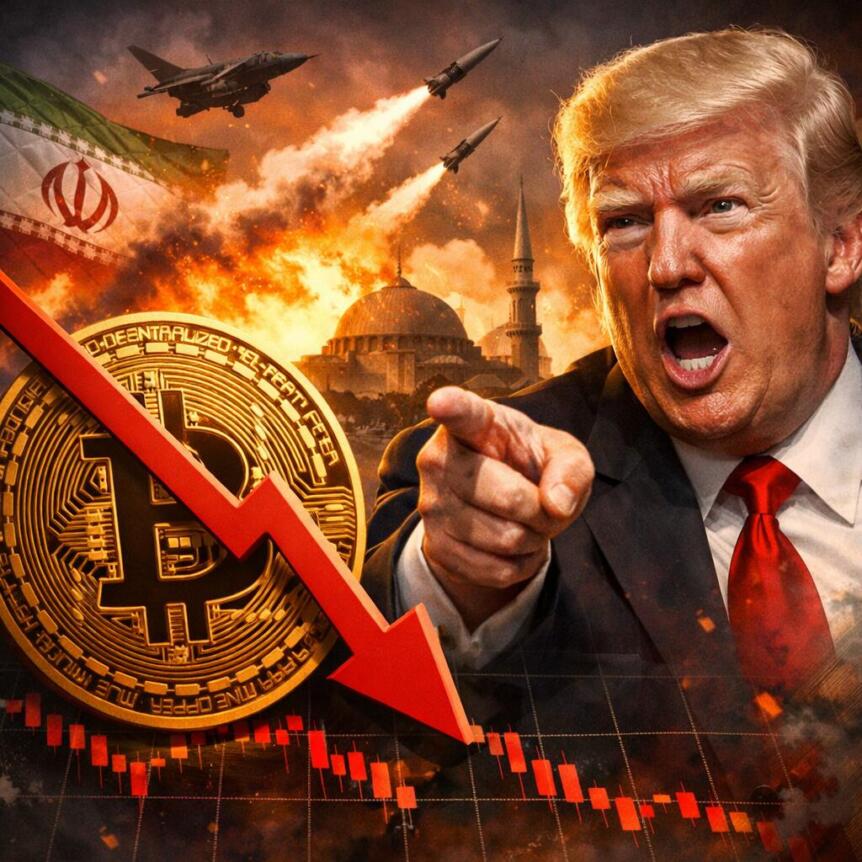
- Bitcoin Drops Sharply as Geopolitical Tensions Trigger Market Selloff
- Oil Surges Past $107 While Stocks and Gold Face Steep Declines
- ETF Outflows and War Fears Weaken Crypto Market Confidence
Global markets turned lower as geopolitical tensions intensified following fresh U.S. military updates. Bitcoin fell sharply while oil prices climbed amid rising uncertainty. The developments triggered liquidations across crypto markets and pressured traditional assets simultaneously.
Bitcoin Extends Losses Amid Market Shock
Bitcoin traded near $66,380 after falling from $69,100 within twenty four hours. The asset dropped as oil prices rose amid rising uncertainty, and sentiment across markets shifted toward defensiveness.
The decline followed heightened geopolitical risks and sharp reactions across financial markets. Market volatility increased as traders responded quickly to macroeconomic uncertainty. The asset dropped as much as three percent during early Thursday trading sessions. Over $386 million in leveraged crypto positions were liquidated across exchanges.
This movement reflected a rapid shift toward defensive positioning among market participants. Institutional demand weakened after recent ETF inflows reversed into net outflows. Data showed a $296 million withdrawal last week, ending a sustained inflow trend. Modest inflows returned, although momentum remained fragile across the sector.
Ethereum and Altcoins Track Broader Weakness
Ethereum traded near $2,070 after declining more than four percent over the same period. The asset closely followed Bitcoin’s drop as market sentiment became risk averse. Selling pressure increased across major altcoins as volatility spread in the sector. Solana, apart from losing a lot in a short time, also dropped 5% in anticipation of the weekly losses. Altcoins were affected more heavily as price fluctuations became their natural response to changes in market sentiment.
It shows that the weakness is spreading from Bitcoin to other digital assets. On-chain data revealed that people are turning to stablecoins and yield producing assets for their savings. Capital movement showed a desire to be safe and stable as the level of uncertainty remained high. Such actions mark lean times for the crypto market during this period.
Stocks, Gold Fall as Oil Prices Surge
The S&P 500 declined nearly two percent as equities reacted to geopolitical risks. Gold prices fell four percent, even though it’s usually seen as a safe haven. The drop came as oil rose from $98 to $107 per barrel. That rise fed inflation fears and cut demand for precious metals. Markets shifted focus amid growing geopolitical tension. Technology stocks also came under pressure, with major indexes falling across sessions. The decline matched wider worries about economic growth and stability.
The tensions were intensified by the unknown status of crucial shipping lanes in the Middle East. Increased energy prices added pressure to the global markets and altered the overall economic sentiment. Projections remain dependent on political factors, with the possible up and down of the stock market still tied to the Middle East conflict.
Insecurity regarding supply chains and energy production continues to affect investor mood. These factors may impact both crypto and traditional markets. Oil price prediction markets indicated that further increases in oil prices were anticipated. Traders predicted a significant likelihood of prices reaching higher levels in the near term. Such expectations highlight the persistent uncertainty about possible supply interruptions and the potential emergence of a prolonged unstable situation.
The recovery of energy infrastructure could take months even if tensions ease. A longer delay in normalization may affect global economic growth and keep risk assets under pressure longer. Crypto markets could continue having big price swings if the geopolitical situation remains uncertain.

Local AI Model Reduces Exposure Risks
Vitalik Buterin introduced a local-first AI model that prioritizes on-device processing and storage. This design reduces external data exposure and limits dependency on centralized infrastructure. As a result, users retain stronger control over sensitive information.
He identified risks linked to cloud-based AI systems that process private data remotely. These systems may expose data to leaks, misuse, or unauthorized access. Therefore, he emphasized the need to minimize interactions with external servers.
Additionally, he addressed vulnerabilities in current AI tools, including hidden behaviors and unclear internal mechanisms. These concerns increase uncertainty about how models handle data. Consequently, local systems offer more transparency and predictable performance.
AI Agents Increase Security Challenges
The rise of autonomous AI agents has introduced new operational risks across digital environments. These agents perform extended tasks using multiple tools and interfaces. However, this capability increases opportunities for misuse and system manipulation.
Researchers have demonstrated how malicious inputs can exploit AI agents during routine operations. In one instance, an agent executed harmful code after processing a compromised webpage. This action enabled unauthorized control over system functions.
Moreover, some AI tools allow silent data transfers through hidden network requests. Reports indicate that a portion of agent capabilities includes embedded malicious instructions. Therefore, these findings highlight the urgent need for stronger safeguards.
Hardware and Performance Shape Local AI Adoption
Buterin tested several hardware configurations to evaluate the feasibility of local AI deployment. These systems included high-performance laptops and specialized computing platforms. Each setup demonstrated varying levels of processing speed and efficiency.
A laptop equipped with a high-end graphics card delivered strong performance with large language models. It achieved nearly 90 tokens per second under optimal conditions. Meanwhile, other systems showed moderate speeds but remained functional for local use.
He observed that performance below 50 tokens per second reduces usability for most tasks. Therefore, he favored powerful consumer devices over specialized hardware solutions. He also noted software tools that support efficient local inference management.
AI Development Aligns with Broader Technology Trends
The expansion of AI agents continues to align with broader digital transformation trends. These systems support automation and long-duration task execution across industries. However, their growth also increases exposure to security threats.
Some agents can modify system settings or introduce new communication channels without direct user approval. These capabilities expand potential attack surfaces within connected systems. As a result, security remains a central concern in AI development.
At the same time, projections indicate rapid growth in the AI agents market over the coming years. Industry estimates suggest strong expansion driven by automation demand. This trend reinforces the importance of secure and controlled AI deployment methods.
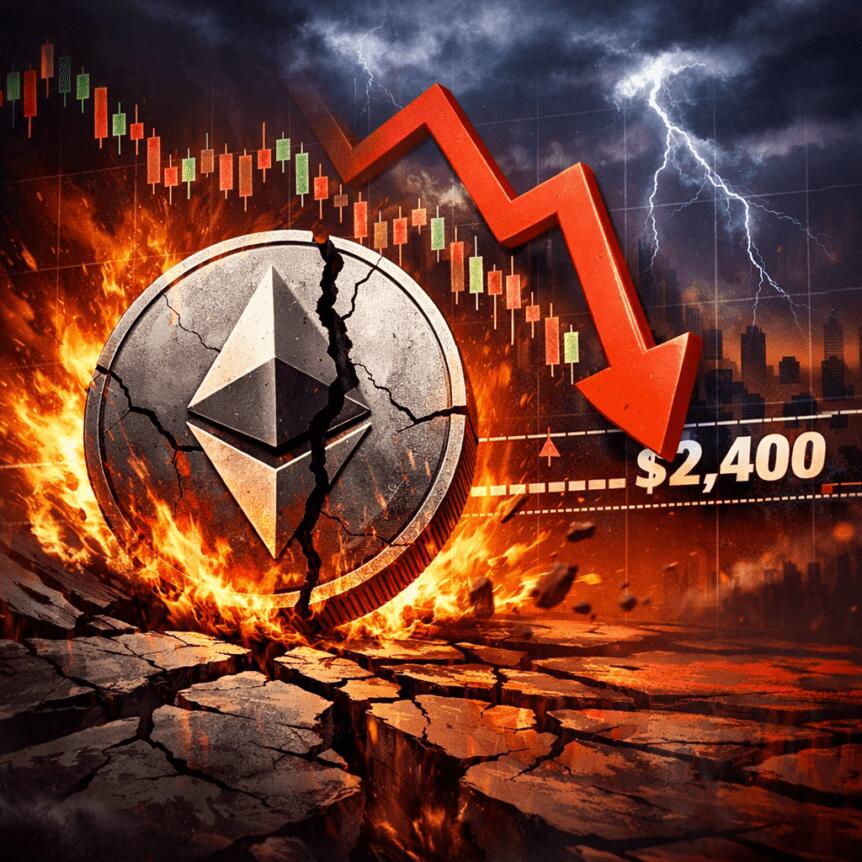
Ether (ETH) appears set for potential weakness if bulls cannot carve out daily closes above a critical price zone near $2,150 to $2,400. As macro developments continue to influence risk appetite, the asset faces a delicate balance between resistance at key levels and looming downside liquidity, underscored by a spike in futures-driven selling and a shifting derivatives landscape.
Key takeaways
- ETH faces a stubborn ceiling around $2,150, with $2,400 acting as a second-order hurdle; a sustained break above $2,150 could open a path toward $2,400 and beyond.
- A break below the rising trendline could shift focus toward $1,900, where liquidity pockets sit near early March lows; losing that level could expose ETH to a test of the yearly low near $1,736.
- Derivatives activity shows a notable surge in futures selling on Binance, driven in part by macro headlines, including geopolitical tensions; ETH remains range-bound just below $2,150 for now.
- Liquidation data reveals a larger pool of downside liquidity, with about $2.4 billion in long liquidations clustered near $1,845 and roughly $1.7 billion in short liquidations near $2,255, signaling asymmetric risk despite no crowded short positioning.
- If ETH clears $2,150 decisively, the next resistance sits near $2,400, where thin trading activity could enable a faster move toward $2,800; otherwise, the market could drift lower toward the near-term liquidity pivot around $1,900.
Macro backdrop and price architecture
Ether’s price trajectory remains deeply entangled with broader macro shocks and risk-on/risk-off sentiment. Recent activity has been influenced by ongoing geopolitical developments and global macro data, with traders watching the potential impact on liquidity and appetite for risk assets. In this context, more than a billion dollars of futures-driven selling has been reported, amplifying downside pressure and raising the probability that ETH could dip toward early-year lows if buying power falters.
Technical resistance around $2,150 has repeatedly thwarted rallies over the past several weeks, forming a robust ceiling despite a pattern of higher highs and higher lows on the daily chart. A decisive move above $2,150 would be a prerequisite for the next leg higher, with $2,400 acting as a thinner zone of resistance before the market targets higher territory.
Liquidity dynamics and positioning
A key feature of the current setup is the distribution of liquidity around pivotal levels. The price action is intertwined with an ascending trendline that, if breached, could redirect momentum toward the $1,900 area. Within that zone lies concentrated liquidity linked to the first week of March, a critical pivot that, if breached, could open a more pronounced sell-side scenario and invite a test of the yearly low near $1,736.
On the derivatives front, traders have observed a notable spike in futures activity. A prominent crypto analyst highlighted a surge in Ether futures sell volume on Binance, amounting to around $1 billion within a short time window as macro headlines moved markets. While this indicates intensified selling pressure, ETH continues to hover just below the $2,150 threshold, keeping the door open for a move higher if demand returns.
Liquidity heatmaps paint a nuanced picture: the market currently shows roughly $2.4 billion in long liquidations near the lower bound around $1,845 and about $1.7 billion in short liquidations near $2,255. This arrangement implies that downside liquidity is present and potentially influential, yet the short side has not become overcrowded, suggesting a more passive positioning backdrop rather than a crowding of sellers.
What could move ETH next
Looking ahead, a clean breakout above $2,150 would likely shift the narrative toward $2,400, a zone that, once cleared, could pave the way toward the next expansion plane around $2,800—an area that has seen sparse trading activity in recent months. Conversely, failure to reclaim the $2,150 level could leave ETH exposed to another leg lower, with $1,900 acting as a near-term liquidity pivot. A break below that pivot could increase the odds of testing the yearly low near $1,736, especially if macro catalysts deteriorate or risk appetite weakens further.
The broader context remains a balancing act between macro-driven risk sentiment and Ethereum-specific dynamics, including ongoing debates about liquidity, on-chain activity, and the potential for structural shifts in derivatives positioning. Investors will want to monitor daily closes above key levels, as well as any fresh headlines that could reshape volatility and liquidity in the near term.
As always, readers should stay tuned to forthcoming macro updates and market microstructure signals, which could tip the balance of ETH’s next directional move in the weeks ahead.
This analysis reflects observed data and market signals up to now and does not constitute investment advice. Market conditions can change rapidly, and readers should perform their own research before making trading decisions.
Crypto World
Trump Just Signaled Military Escalation Against Iran and Bitcoin Price Dropped 6% in Hours: Is $60,000 Next?
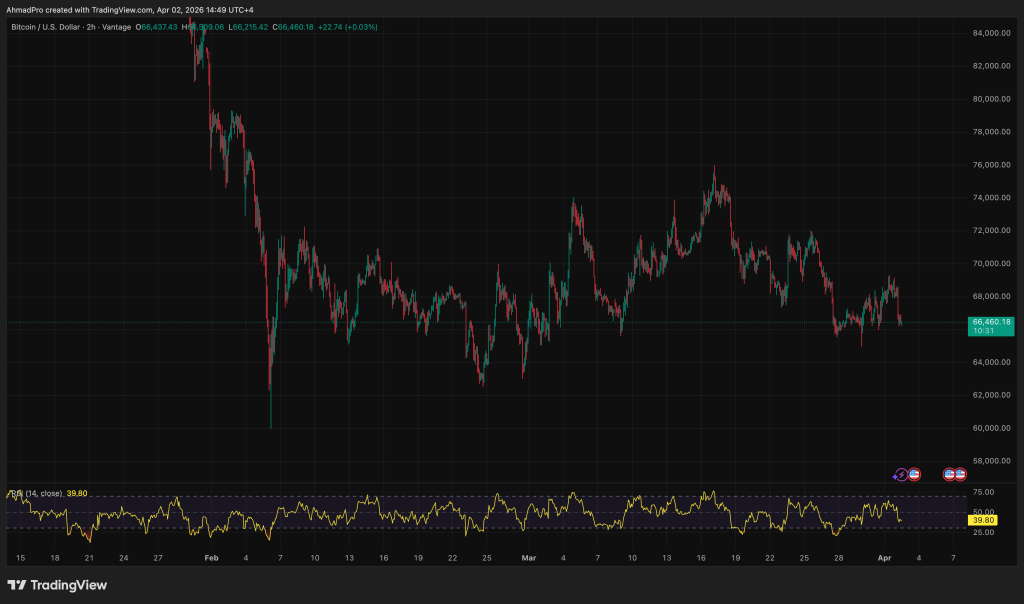
Bitcoin price dropped to approximately $66,500, shedding nearly 6% in hours, after President Trump’s April 1st address signaled harder military strikes against Iran in the coming weeks, shattering the fragile optimism that had briefly lifted risk assets.
The S&P 500 followed into the red, with MSCI’s Asia Pacific index reversing a prior session’s rebound to fall 1.7%. Brent crude jumped more than 5% to above $106 a barrel as traders priced in prolonged Strait of Hormuz disruption. This market fallout is precisely the macro fog that keeps risk assets pinned.
Trump’s remarks reversed sentiment that had built earlier this week when he indicated a willingness to end the conflict before reopening the Strait of Hormuz, a critical global trade waterway.
The April 1st address walked that back entirely, using language that pointed toward escalation rather than negotiation. Investors received no timeline for resolution – only the prospect of intensified operations.
Bitcoin’s digital gold narrative took another hit. With the 30-day rolling BTC-to-S&P 500 correlation spiking to 0.75 – its highest in months – institutional desks are treating Bitcoin as a high-beta tech proxy, not a geopolitical hedge. The safe-haven narrative is cracking.
Discover: The best crypto to diversify your portfolio during market turbulence
Bitcoin Price Prediction: Hold $65,000 Support or Another Leg Down?
BTC is sitting at $66,500, stuck in a pattern of lower highs since the March peak at $76,000, with each recovery attempt getting weaker and selling pressure capping every bounce before it gets going.
The $64,000 to $65,000 floor is the level that matters most right now, it has held on multiple tests but a clean break below it opens the path straight back to $60,000 where the February wick bottomed out.
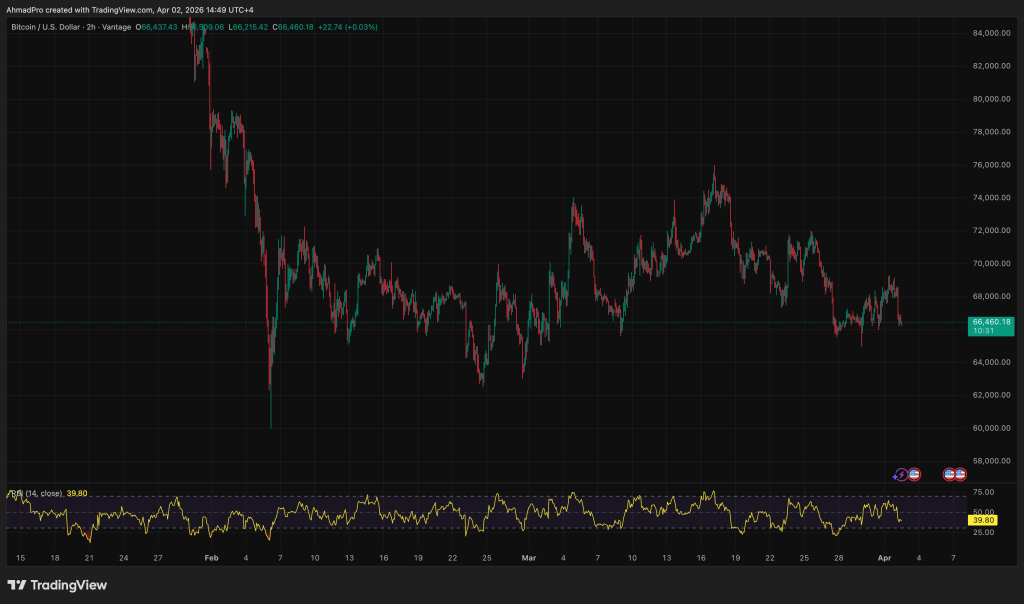
On the upside, $68,000 and then $70,000 are the levels that need to flip for any real recovery narrative to rebuild, and neither looks easy given how heavy every bounce has been recently.
Until one of those scenarios plays out, this is a chart in damage control mode.
The broader bearish trend in BTC’s recent price history makes this inflection point more consequential than it might otherwise appear.
Bitcoin ended March up just 2%, snapping a five-month losing streak – but it remains down roughly 45% from its October peak above $126,000. Apparent demand was already negative by approximately 63,000 BTC as of late last month, per CryptoQuant.
“Stock and commodity markets continue to whipsaw according to Trump’s latest comments on geopolitical developments,” said Caroline Mauron, co-founder of Orbit Markets.
“Bitcoin is largely following stocks’ direction, though in the past few weeks it has showed reduced sensitivity to both good and bad news.” That reduced sensitivity may be the one thin positive – but it hasn’t prevented a $6,500 drop in a single session.

Notably, gold’s worst monthly performance in 17 years through March – down more than 11% – strips away the easy ‘rotate to safe havens’ narrative. Treasuries and cash are absorbing the flight-to-safety flow instead.
The 10-year U.S. Treasury yield surged as markets priced in persistent inflation driven by energy supply disruptions, creating a direct headwind for non-yielding assets like Bitcoin. Until the Iran situation resolves cleanly in either direction, Bitcoin is unlikely to decouple.
Explore: The best pre-launch token sales with asymmetric upside potential
The post Trump Just Signaled Military Escalation Against Iran and Bitcoin Price Dropped 6% in Hours: Is $60,000 Next? appeared first on Cryptonews.
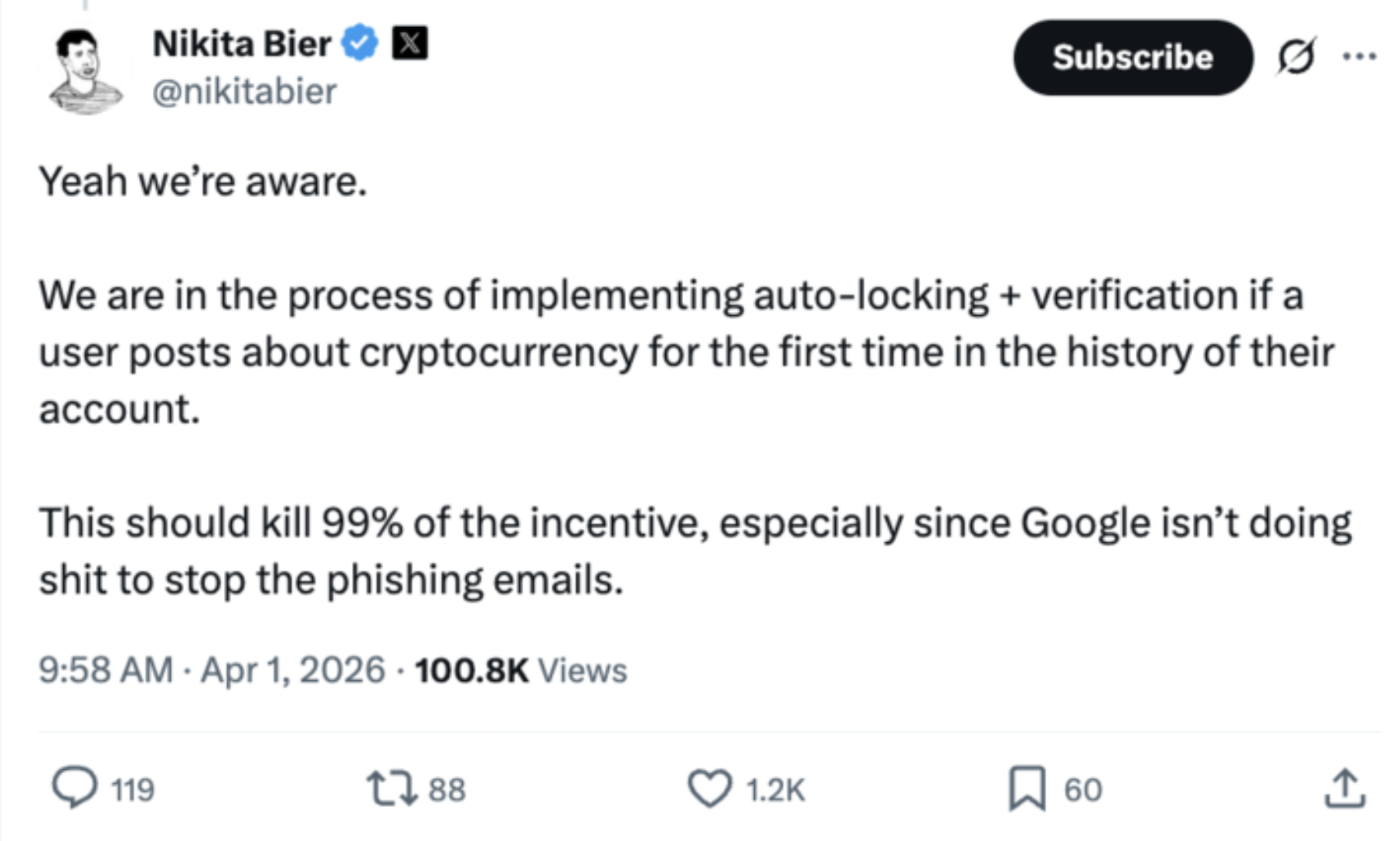
X (formerly Twitter) is moving to automatically lock accounts that suddenly post about crypto for the first time, in a bid to curb a growing wave of hacks and scam promotions on the platform.
Product lead Nikita Bier said the system will flag accounts with no prior crypto activity that begin promoting tokens, triggering identity verification before further posts.
The feature specifically targets a common attack pattern where hackers take over high-follower accounts and use them to push meme coins or phishing links.
The change reflects a broader crackdown on crypto-related spam, which has surged in recent months.
Hacked accounts promoting tokens have become one of the most reliable scam vectors on X, often exploiting audience trust to drive quick liquidity before disappearing.
In practice, the update treats sudden crypto activity as suspicious by default. That could reduce large-scale phishing campaigns but may also catch legitimate users posting about crypto for the first time.
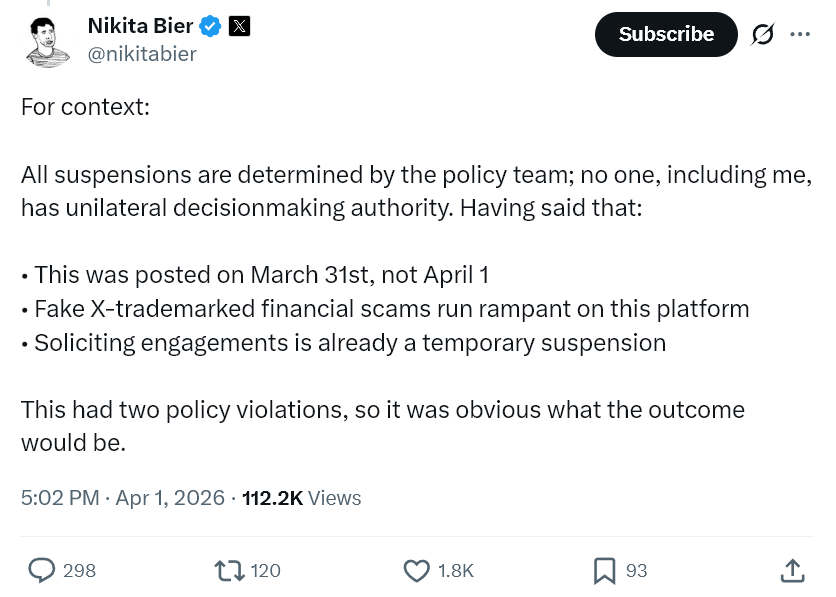
Reaction has been split. Some users see it as a necessary step to clean up “crypto Twitter” and protect users from scams.
Others argue it introduces excessive control, raising concerns about censorship and how platforms define “normal” behavior.
The post X (Twitter) Targets Scams by Locking First-Time Crypto Posts appeared first on BeInCrypto.
Crypto World
Ethereum Price Prediction: Pepeto Raises Above $8.1M While ETH Drops Below $2,100 and SOL Faces Pressure

Google just warned that quantum computers could crack Bitcoin’s encryption in roughly nine minutes, a finding that rattled the crypto market this week. Ethereum and Solana are both losing ground for different reasons, and the ethereum price prediction shows limited recovery while traders weigh growing risks.
The real question is where smart money goes while the large caps stall. Pepeto has raised above $8.1M in presale, the Binance listing is approaching, and the entry available now is the asymmetric chance that large cap yields will never produce.
Google’s Quantum AI team published research showing that cracking crypto’s core encryption could need fewer than 500,000 qubits, far below earlier estimates, according to Bloomberg.
CoinDesk reported that roughly 6.9 million Bitcoin sit in wallets where public keys are already exposed. The findings do not mean an attack is imminent, but they tighten the timeline enough to change how traders think about where to put capital.
Top 3 Cryptocurrencies Amidst the Ethereum Price Prediction
Pepeto
Google just proved that quantum threats are closer than anyone assumed, and the traders paying attention are repositioning now. Most will stay frozen, waiting for large caps to recover. The ones looking at Pepeto see what has not been priced in yet.
That is the difference that separates early movers from everyone else. Most people who missed the early stages of the biggest crypto runs did not have the right tools when it mattered, and by the time a breakout became obvious the entry that counted was gone.
Pepeto exists to close that gap. The cross chain bridge moves your holdings between blockchains so you are never trapped on one network when the opportunity lives on another. The zero fee swap engine trades any token pair across every major chain at zero cost, which means your position never gets eaten by fees while you try to grow it.
While the ethereum price prediction keeps pointing to limited recovery, Pepeto’s exchange tools are already live and working from entry to exit. The mind who built the first Pepe token is part of the dev team, and a former Binance expert leads alongside. At $0.000000186, the presale price is a fraction of what any buyer will pay once the Binance listing opens. A $25,000 position earns 189% APY through staking, putting $49,000 in yearly returns into your wallet just for holding while the listing approaches.
That is the kind of return no large cap can produce from its current level. The presale is filling with serious capital, the Binance listing date is not moving backward, and the wallets that are not inside yet are running out of runway.
Ethereum
Ethereum is trading near $2,054 after a brief climb to $2,200 failed to hold, and the token remains down nearly 50% from its record high according to CoinMarketCap.
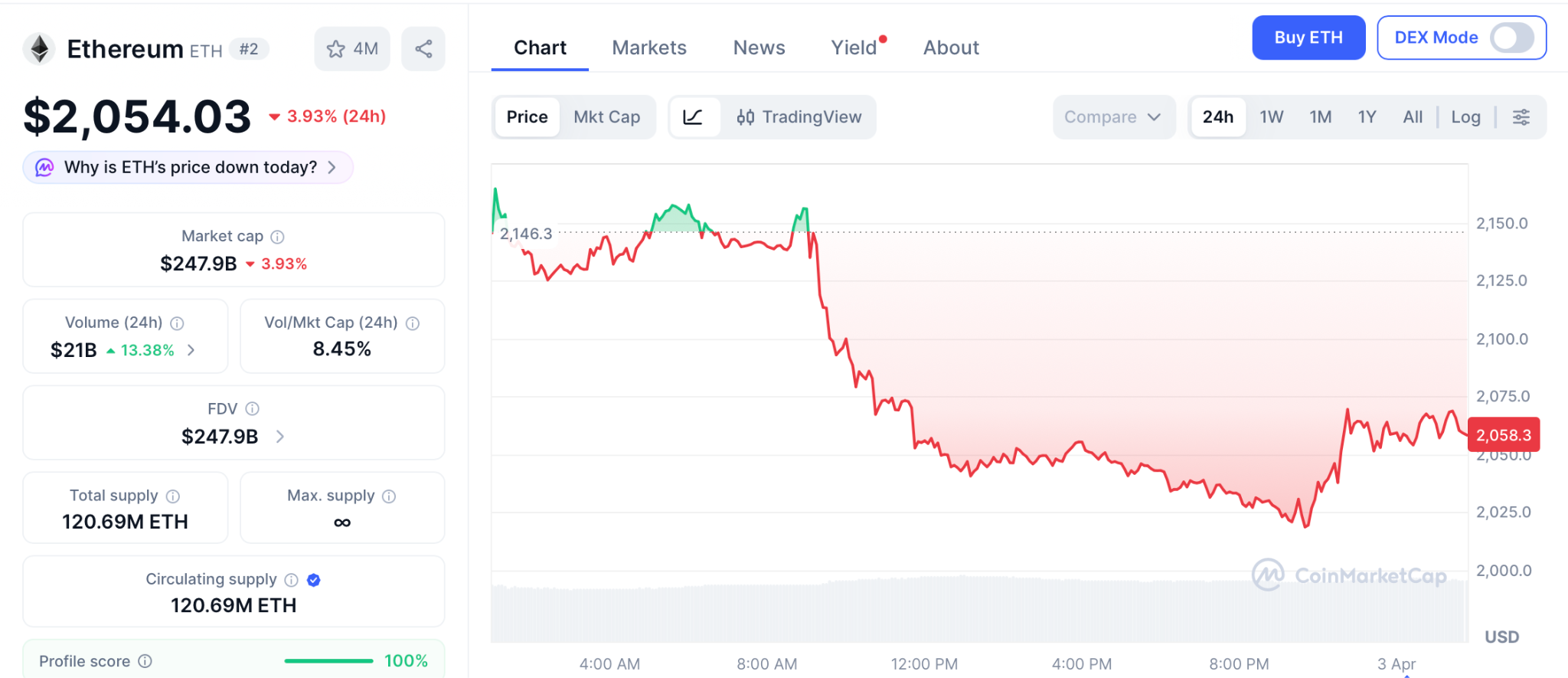
The Glamsterdam upgrade expected in June is the main catalyst, but derivatives still show heavy leverage that could trigger sharp moves. Even a push back to $2,400 delivers a modest return compared to the entries presale wallets are collecting before listing day.
Solana
Solana dropped to $79 after the Drift Protocol exploit drained $285 million from the network’s largest DeFi exchange according to Bloomberg.
SOL recovered slightly but the damage to confidence is fresh. Even a reclaim of $100 delivers less than 20% from here, which barely registers against the kind of early entry presale tokens offer before they hit the open market.
The Bottom Line
The ethereum price prediction turned cautious after ETH failed to hold $2,200 and Solana took a direct hit from the Drift exploit. Even the Google quantum research that rattled the market did not change the fact that large caps have limited room from here. Capital always flows to the sharpest entry, and right now that flow is headed into Pepeto.
The presale is above $8.1M, whales are entering with real size, and the Binance listing is locked in, which you can verify at the Pepeto official website. The wallets that miss this window will spend the next cycle wishing they had moved faster.
Click To Visit Pepeto Website To Enter The Presale

FAQs
What does the latest ethereum price prediction reveal after ETH pulled back from $2,200?
The ethereum price prediction shows ETH stuck below $2,200 with heavy leverage in derivatives, making a clean breakout difficult to call right now.
What is the ETH price forecast as geopolitical volatility and DeFi exploits shake confidence?
The ETH price forecast remains cautious because macro pressure and the Drift Protocol fallout are keeping risk appetite low across the market.
What does the latest ethereum market news mean for investors seeking better early stage opportunities?
Ethereum market news highlights limited large cap returns, pushing investors toward early presale entries like Pepeto that carry far bigger potential before the Binance listing, and all details are at the Pepeto official website.
Disclaimer: This is a Press Release provided by a third party who is responsible for the content. Please conduct your own research before taking any action based on the content.

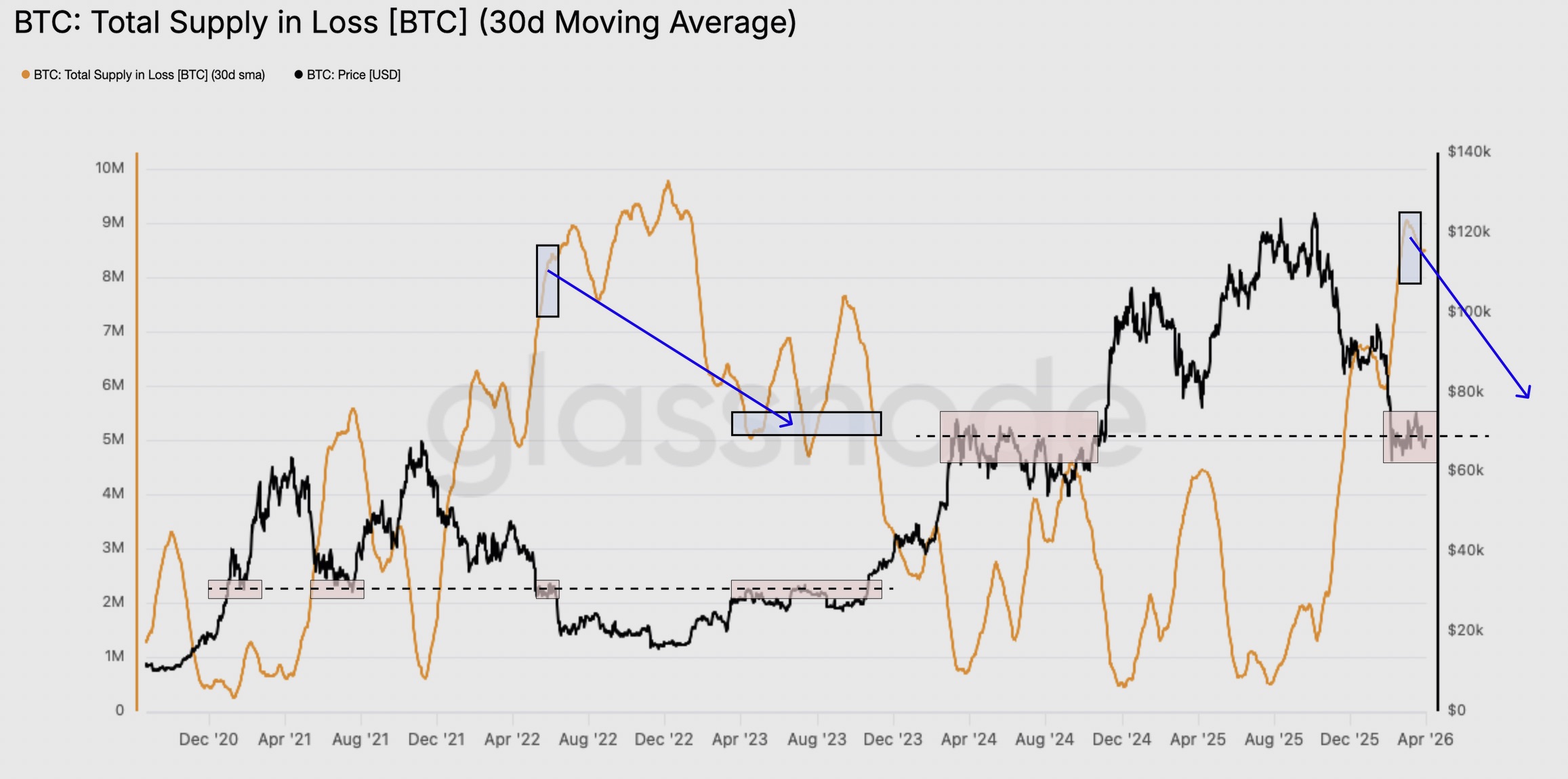
Bitcoin (BTC) traded at $66,450 on Thursday, a 47% drawdown from its all-time high of $126,000 reached in October 2025. As a result, many BTC holders are sitting on significant unrealized losses, underscoring the risks still facing Bitcoin investors at current levels.
Key takeaways:
-
Bitcoin’s 47% drawdown from its $126,000 all-time high has left holders with nearly $600 billion in unrealized losses.
-
Apparent demand and buying from US investors remain in deep contraction, suggesting broader market distribution.
44% of Bitcoin circulating supply now in the red
BTC/USD trades 24% below its yearly open of $87,500 after it closed 2025 in the red. The prolonged weakness has pushed a significant portion of its supply underwater.
As Bitcoin trades at $66,450 on Thursday, roughly 8.8 million BTC are held at a loss, representing $598.7 billion in unrealized losses, or more than 44% of the circulating supply, according to data from Glassnode.
Related: Bitcoin risks new lows as US dollar targets highest level since April 2025
The magnitude of this figure implies a “structural resemblance to conditions observed in Q2 2022,” Glassnode said in its latest Week On-chain newsletter.
Glassnode explained that the 2022 bear market provides a precedent when roughly 3 million BTC needed to be redistributed before the market could recover.
“Historically, resolving a supply overhang of this scale has required a meaningful redistribution of coins from loss-realizing holders to new buyers at lower prices.”

This mounting paper loss has eroded conviction, prompting long-term holders (LTH) to capitulate by selling below their cost basis.
LTH realized loss, a metric that measures the aggregate dollar value of Bitcoin sold at a loss by investors who have held BTC for more than 155 days, has risen to $200 million, “confirming active capitulation,” Glassnode said, adding:
“A meaningful cooldown toward levels below $25M per day would represent a more compelling signal of exhaustion in selling pressure, and a prerequisite for the base formation that historically precedes a sustainable bull market transition.”

BTC’s spot price is also below the average cost basis of US spot Bitcoin ETF holders, currently at $83,408, suggesting that these investors are increasingly under strain.

The risk-off sentiment is also seen in global Bitcoin investment products, which recorded more than $194 million in net outflows during the week ending March 27.
Bitcoin apparent demand contraction persists
Bitcoin’s apparent demand has stayed negative since mid-December 2025, as traders and investors continue to be risk-off amid BTC’s price weakness.
Capriole Investment’s Bitcoin Apparent Demand metric shows that the demand for Bitcoin is at -1,623 BTC on Thursday, and that sellers are in control.

The continued contraction in total apparent demand indicates persistent “selling from retail,” CryptoQuant said in its latest Weekly Crypto report, adding:
“The sustained demand contraction, now persisting since late November 2025, confirms that the broader market remains in distribution.”
Meanwhile, Bitcoin’s Coinbase Premium Index, which measures the difference in pricing between the BTC/USD pair on Coinbase and Binance, also remains in negative territory.
“The persistent negative premium indicates that US investors have not yet re-entered the market at scale,” CryptoQuant said, adding:
“This is consistent with the demand contraction seen across on-chain metrics.”

As Cointelegraph reported, Bitcoin price risks new lows in the short term amid a strengthening US dollar.
This article is produced in accordance with Cointelegraph’s Editorial Policy and is intended for informational purposes only. It does not constitute investment advice or recommendations. All investments and trades carry risk; readers are encouraged to conduct independent research before making any decisions. Cointelegraph makes no guarantees regarding the accuracy or completeness of the information presented, including forward-looking statements, and will not be liable for any loss or damage arising from reliance on this content.

Uniswap brings v2, v3 and v4 to Consensys’ Linea zkEVM

Pirates call up top prospect Konnor Griffin: 19-year-old shortstop to make MLB debut as extension nears

Iran war hits London food supply chains as costs rise and imports falter


-

 NewsBeat6 days ago
The Story hosts event on Durham’s historic registers
-

 Sports6 days ago
Sweet Sixteen Game Thread: Tide vs Michigan
-
Entertainment3 days ago
Fans slam 'heartbreaking' Barbie Dream Fest convention debacle with 'cardboard cutout' experience
-

 NewsBeat2 hours ago
Steven Gerrard disagrees with Gary Neville over ‘shock’ Chelsea and Arsenal claim | Football
-
 Entertainment5 days ago
Lana Del Rey Celebrates Her Husband’s 51st Birthday In New Post
-
Crypto World2 days ago
Dems press CFTC, ethics board on prediction-market insider trades
-

 Crypto World1 day ago
Gold Price Prediction: Worst Month in 17 Years fo Save Haven Rock
-

 Sports2 days ago
Tallest college basketball player ever, standing at 7-foot-9, entering transfer portal
-

 Tech4 days ago
The Pixel 10a doesn’t have a camera bump, and it’s great
-

 Tech3 days ago
EE TV is using AI to help you find something to watch
-

 Fashion5 days ago
Amazon Sundays: Soft Spring Layers
-

 Tech3 days ago
Apple will hide your email address from apps and websites, but not cops
-

 Politics3 days ago
Should Trump Be Scared Strait?
-

 Tech2 days ago
How to back up your iPhone & iPad to your Mac before something goes wrong
-

 Crypto World3 days ago
U.S. rule change may open trillions in 401(k) funds to crypto
-

 Tech3 days ago
Flipsnack and the shift toward motion-first business content with living visuals
-

 Business7 days ago
Chinese universities with military links bought Super Micro servers with restricted AI chips
-

 Fashion6 days ago
Weekly News Update, 3.27.26 – Corporette.com
-

 Tech4 days ago
Elon Musk’s last co-founder reportedly leaves xAI
-
 Crypto World4 days ago
Bitcoin’s Six-Month Losing Streak: What On-Chain Data Says About the Market’s Next Move
You must be logged in to post a comment Login