
Crypto World
Top 7 quantum AI stock trading bot free tools for beginners in 2026 to earn passive income



Disclosure: This article does not represent investment advice. The content and materials featured on this page are for educational purposes only.
AI stock trading bots attract beginners seeking faster, automated entry into modern financial markets.
Summary
- AI stock trading bots rise in 2026 as beginners seek fast, automated entry into modern financial markets
- MoneyFlare offers fully automated trading with zero learning curve, targeting passive income seekers
- Demand grows for data-driven trading tools as investors shift from manual strategies to AI automation
In 2026, more beginners are searching for quantum AI stock trading bot free tools as a way to enter the market without spending years learning trading strategies. The reality is simple: modern financial markets move too fast for manual trading to keep up. Data flows continuously, prices shift in milliseconds, and opportunities can disappear instantly.
This is where AI-powered trading bots change the game. By combining quantitative trading models with automation, these tools allow users to participate in the stock market with far less effort. Instead of watching charts all day, traders can rely on systems that analyze data, execute trades, and manage risk automatically.
For beginners, the appeal is clear — a more structured, data-driven way to pursue passive income.
What is quantitative trading and why it matters
Quantitative trading, often called quant trading, is a method of using mathematical models and algorithms to make trading decisions. Instead of relying on intuition or news headlines, it focuses on patterns hidden inside data.
In practical terms, this means:
- Strategies are based on historical probabilities
- Trades are executed automatically when conditions are met
- Risk is controlled through predefined rules
With the integration of AI in 2026, quant trading has become more adaptive. Systems can now adjust to market conditions in real time, learning from new data instead of following rigid rules.
The biggest advantage is consistency. While human traders may hesitate or react emotionally, AI systems execute strategies exactly as designed. Over time, this can lead to more disciplined trading behavior.
How AI quant trading works in real markets
AI quant trading is no longer experimental — it’s already widely used across the financial industry.
In real-world applications, these systems are used to:
- Identify short-term trading opportunities
- Detect trends across large datasets
- Execute trades faster than human traders
- Apply risk controls automatically
For individual users, this translates into a simpler experience. There is no need to analyze every stock or monitor the market constantly. The system does the heavy lifting.
However, it’s important to stay realistic. While AI can improve efficiency and reduce manual effort, market risks still exist, and outcomes can vary depending on conditions.
The 7 best quantum AI stock trading bot free tools in 2026 (beginner-friendly breakdown)
1. MoneyFlare — The Easiest Way to Start Fully Automated AI Trading
MoneyFlare is built for one type of user: people who want results without complexity. There’s no need to configure strategies, connect APIs, or understand market mechanics in depth. Once activated, the system handles analysis, execution, and risk management automatically in the background.
For beginners, this creates a truly frictionless experience. Users do not react to the market — the system is already doing it on their behalf, consistently and without emotion.
What makes it stand out:
Fully automated, zero learning curve, one-click activation
Best use case:
Passive income seekers who want a hands-off experience
Limitation:
Limited customization for advanced users
Beginner-Friendliness Score: ⭐⭐⭐⭐⭐ (5/5)
Click to register and receive a free $10 real reward and $50 trial credit!
2. Kavout — AI stock ranking with clear guidance
Kavout is ideal for those who are not ready to fully rely on automation but still want AI support. Instead of trading for a user’s behalf, it analyzes massive datasets and ranks stocks based on performance potential.
This means they don’t need to research hundreds of stocks — the AI narrows it down for them. Traders still make the final decision, but with significantly better information.
What makes it stand out:
AI-powered stock scoring system simplifies decision-making
Best use case:
Beginners who want guidance while staying in control
Limitation:
No automated trade execution
Beginner-Friendliness Score: ⭐⭐⭐⭐☆ (4/5)
3. Trade Ideas — Real-time AI market scanner
Trade Ideas are designed for speed. Its AI continuously scans the market and surfaces high-probability opportunities in real time.
Instead of guessing what to trade, traders receive ready-made ideas backed by data. However, traders still need to execute trades themselves, which adds a layer of involvement.
What makes it stand out:
Real-time AI signals and opportunity detection
Best use case:
Active traders who want AI-assisted decisions
Limitation:
Requires manual execution
Beginner-Friendliness Score: ⭐⭐⭐⭐☆ (4/5)
4. TrendSpider — Automated technical analysis
TrendSpider removes one of the biggest barriers in trading: chart analysis. It automatically detects patterns, trendlines, and key levels, then allows users to build strategies based on that data.
This makes technical trading more consistent and less time-consuming, especially for users who struggle with manual charting.
What makes it stand out:
AI-driven charting and pattern recognition
Best use case:
Users who prefer structured, data-driven strategies
Limitation:
Still requires some learning and setup
Beginner-Friendliness Score: ⭐⭐⭐☆☆ (3/5)
5. Composer — No-code strategy builder
Composer is perfect for users who want to create their own strategies without writing code. Through a visual interface, traders can design how their portfolio behaves and let the system execute it automatically.
It offers flexibility, but also requires more thinking upfront compared to plug-and-play platforms.
What makes it stand out:
Visual strategy creation with automation
Best use case:
Users who want customization without coding
Limitation:
Requires strategy design knowledge
Beginner-Friendliness Score: ⭐⭐⭐☆☆ (3/5)
6. Capitalise.ai — Plain-English trading automation
Capitalise.ai simplifies automation by letting traders write strategies in plain English. They describe what they want, and the system turns it into executable logic.
This lowers the barrier significantly, especially for non-technical users. However, it still relies on predefined rules rather than adaptive AI.
What makes it stand out:
No-code automation using natural language
Best use case:
Beginners who want simple rule-based automation
Limitation:
Less adaptive compared to AI-driven systems
Beginner-Friendliness Score: ⭐⭐⭐⭐☆ (4/5)
7. Tickeron — AI insights with probability scoring
Tickeron focuses on helping users understand the market through AI-generated insights. It assigns probability scores to different trade scenarios, making risk evaluation clearer.
It doesn’t automate trading, but it improves decision quality — especially for users who want to stay involved.
What makes it stand out:
AI probability models and pattern recognition
Best use case:
Users who want AI insights but manual control
Limitation:
No automation for passive income
Beginner-Friendliness Score: ⭐⭐⭐☆☆ (3/5)
How beginners can start without overcomplicating it
Getting started with an AI trading bot in 2026 is much simpler than most people expect.
In most cases, the process involves choosing a platform, creating an account, selecting a strategy or system, and activating it. After that, the AI takes over key tasks such as analyzing data and executing trades.
For beginners, the most important step is not to overcomplicate things. Starting with a simple setup and gradually understanding how the system behaves is often more effective than trying to master everything at once.
Why AI trading bot continues to grow
The rapid growth of AI trading is driven by a clear shift in the market. Data is becoming more important, trading speed is increasing, and manual strategies are becoming less effective.
At the same time, more users are looking for ways to generate income without constant effort. AI trading meets this demand by offering automation, efficiency, and accessibility.
With mobile-friendly platforms and simplified interfaces, it’s now possible to manage trading activities anytime, from anywhere.
A realistic view on risks
Despite its advantages, AI trading is not risk-free.
Markets remain unpredictable, and even advanced algorithms can struggle during extreme volatility. Relying entirely on automation without understanding the basics can also lead to poor decisions.
A more balanced approach is to start with smaller amounts, diversify strategies, and monitor performance over time. AI should be seen as a tool that improves efficiency—not a guarantee of profits.
Conclusion
Quantum AI stock trading bots are transforming how beginners approach investing in 2026. By combining quantitative trading with intelligent automation, these tools reduce complexity and make the market more accessible.
Platforms like MoneyFlare stand out for their fully automated, beginner-friendly design, while others like Kavout and Composer offer more control and flexibility.
Ultimately, the value of these tools lies in their ability to simplify trading while maintaining a structured, data-driven approach. With the right expectations and risk management, they can become a practical way to explore passive income opportunities in modern financial markets.
Disclosure: This content is provided by a third party. Neither crypto.news nor the author of this article endorses any product mentioned on this page. Users should conduct their own research before taking any action related to the company.

Foundry Digital, the largest Bitcoin mining pool by hashrate, launched a Zcash (ZEC) mining pool that quickly grew to control about 30% of the network’s hashrate, according to company data and its newly released block explorer.
The New York-based firm said multiple institutional miners joined the pool ahead of its public debut, following an initial announcement in March.
Alongside the pool, Foundry introduced Zcashinfo.com, a block explorer that tracks network activity. The site shows pool rankings, hashrate distribution, block data and mining difficulty in real time.
Zcash, launched in 2016, lets users send transactions on a public blockchain while keeping key details private through zero-knowledge proof technology. The network can verify that a transaction is valid without revealing the sender, receiver or amount involved using a cryptographic method known as zk-SNARKs.
The network, like Bitcoin, relies on proof-of-work mining, where specialized machines compete to solve cryptographic puzzles in exchange for rewards paid in newly issued ZEC tokens and transaction fees.
Blocks on Zcash are produced roughly every 75 seconds, far faster than Bitcoin’s 10-minute cycle, though both networks cap supply at 21 million coins. Zcash uses the Equihash algorithm, which is designed to require large amounts of memory, unlike Bitcoin’s SHA-256 system.
Because the odds of solving a block alone are low, miners often group into pools to combine computing power and share rewards. That structure has made large pools central to network performance, as they can control sizable portions of total hashrate.
Foundry’s pool distributes rewards through transparent addresses and uses a pay-per-last-N-shares (PPLNS) model, which tracks miner contributions over time to calculate payouts.
The pool is open to new institutional participants, with onboarding focused on regulated entities.
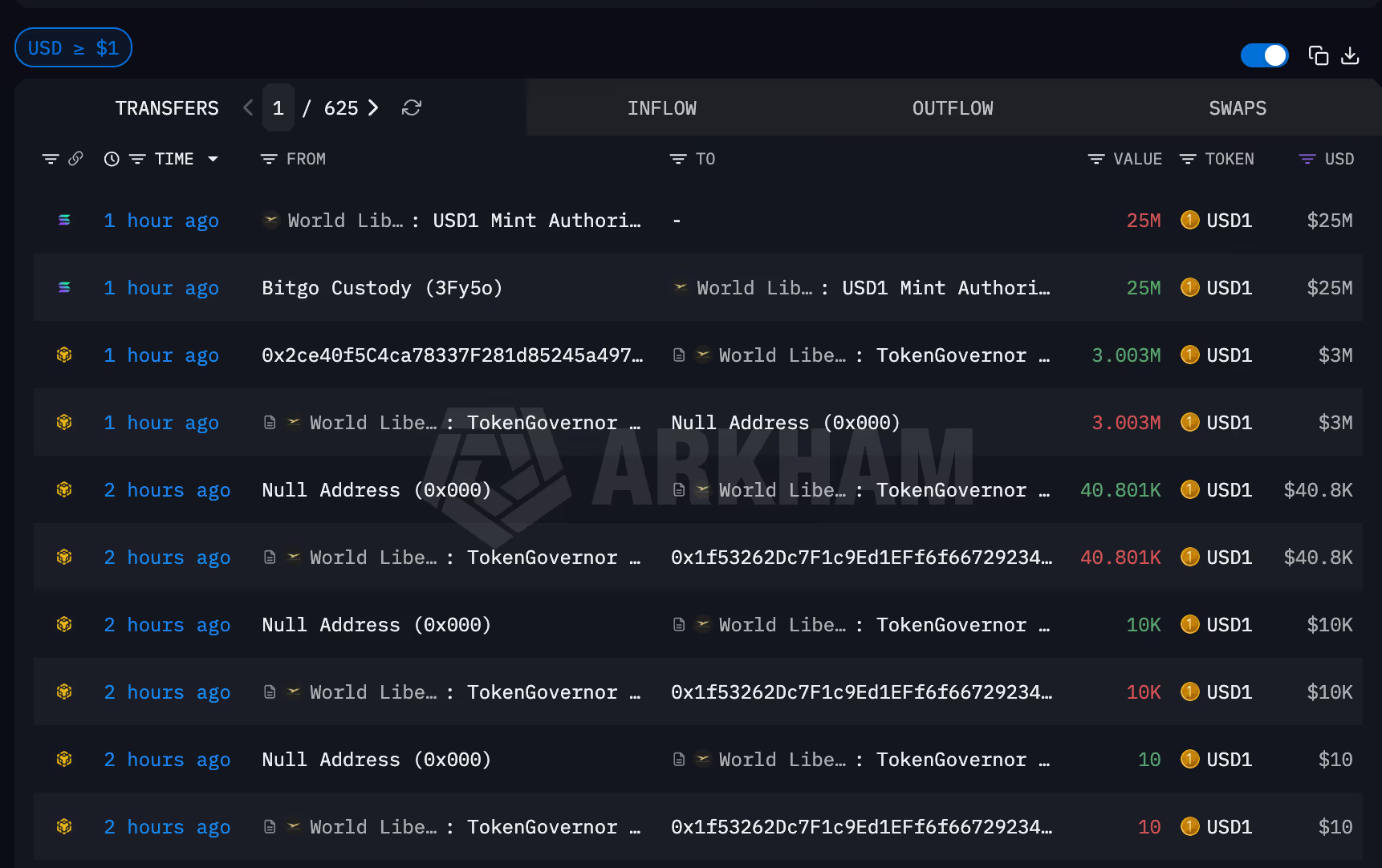
World Liberty Financial minted 25 million USD1 stablecoins on Monday morning and burned 3 million through its TokenGovernor contract, on-chain data shows, as the Trump-linked venture continues managing the fallout from a lending position that trapped depositors on DeFi protocol Dolomite.
The activity follows WLFI’s statement last week, posted in response to CoinDesk’s reporting on the Dolomite transactions, that it had repaid $25 million of the roughly $75 million it borrowed against its own governance token.
The venture deposited billions of WLFI tokens as collateral and borrowed stablecoins that were partially routed to Coinbase Prime, pushing Dolomite’s USD1 lending pool to near-100% utilization and leaving other depositors unable to fully withdraw.
Monday’s mint was funded through BitGo Custody and executed via WLFI’s USD1 Mint Authority contract. The 3 million USD1 burn moved from an address starting 0x2ce to the TokenGovernor contract before being sent to the null address, permanently removing the tokens from circulation.

Smaller test transactions of $10, $10,000, and $40,800 in USD1 were sent to a previously inactive address in the hours before the mint, a pattern consistent with wallet verification ahead of larger transfers.
The net effect is a $22 million increase in USD1 circulation. The simultaneous mint and burn indicates active supply management rather than a simple expansion.
However, the burn raises its own question of where those 3 million USD1 came from and why they were retired rather than redeployed.
Stablecoin issuers routinely burn tokens when collateral is redeemed, but WLFI has not disclosed the specific reason.
It is not yet clear whether the newly minted USD1 is intended to replenish Dolomite’s lending pool, fund additional treasury operations, or serve another purpose.
WLFI’s governance token has fallen roughly 15% since CoinDesk first reported the Dolomite transactions on April 9. Dolomite co-founder Corey Caplan is an advisor to World Liberty Financial.
CoinDesk has reached out to World Liberty Financial for comment in European morning hours.


Meta Platforms is experimenting with AI to develop a new way for its chief executive, Mark Zuckerberg, to communicate with his staff without being physically present.
Summary
- Meta Platforms is developing a photorealistic AI-powered 3D version of Mark Zuckerberg to enable real-time interaction with employees without physical presence.
- The system is being trained on Zuckerberg’s voice, expressions, and communication style, with the goal of providing staff direct access to leadership for guidance and updates.
- The initiative comes as Meta expands its social commerce tools, allowing creators to link product catalogues within Reels, turning content into shoppable storefronts across 22 countries.
A recent report by the Financial Times says the company is building a photorealistic, AI-powered 3D version of Zuckerberg, which would be capable of engaging with his employees in real time.
The system will be designed to simulate natural conversations, allowing staff members to interact with the digital representation of Zuckerberg, who can respond in a human-like manner.
While still in early stages, the initiative signals Meta’s continued investment in virtual human systems that can speak, respond, and hold conversations across different environments.
The digital version is being trained using Zuckerberg’s voice, facial expressions, tone, and public speaking patterns. It is also learning from his recent statements on company strategy, so it can deliver responses aligned with his views. Reports indicate that Zuckerberg is actively involved in testing and refining the system.
Meta expects the tool to give employees real-time access to leadership for guidance, feedback, and updates. The company also sees it as a way to improve internal communication, especially given its global workforce, where direct interaction with executives is limited.
However, it should be noted that creating such a system requires massive computing power to ensure lifelike visuals and low-latency conversations. Teams at Meta have been working to improve both rendering quality and voice realism. As part of this effort, the company has strengthened its capabilities through acquisitions such as PlayAI and WaveForms.
The project is separate from Meta’s internal CEO assistant agent, which helps Zuckerberg manage daily tasks and retrieve information. Unlike that system, the 3D model is focused on communication and interaction, and could eventually extend beyond internal use.
Once successful, the approach may open the door for creators and influencers to build their own AI-driven avatars to engage audiences. Meta has already taken initial steps in this direction through its AI Studio platform.
Meta pushes into social commerce to strengthen creator ecosystem
The development follows Meta Platforms’ expansion in social commerce by linking creators, artificial intelligence, and advertising more closely to purchasing activity across platforms like Instagram and Reels.
A central part of the strategy involves increasing the role of creators in the shopping journey. Businesses in 22 countries, including India, will soon be able to share product catalogues directly with creators. These can then be tagged and linked within Reels, effectively turning content into shoppable storefronts.
The update would narrow the gap between entertainment and commerce, allowing users to move more seamlessly from discovery to purchase within the same interface.
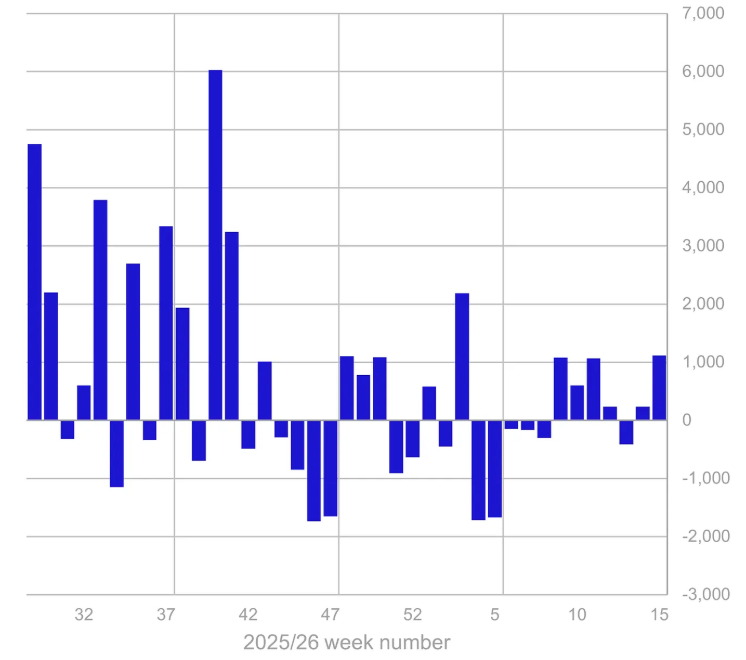
Cryptocurrency investment products clocked significant inflows last week, marking their strongest weekly gains since January.
Global crypto exchange-traded products (ETPs) logged $1.1 billion in inflows last week, with Bitcoin (BTC) leading the gains with $871 million in inflows, CoinShares reported on Monday.
The inflows marked the second-biggest weekly gains in 2026 so far, following only the $2.17 billion in weekly inflows recorded in mid-January.

CoinShares’ head of research, James Butterfill, attributed the spike in inflows to a rebound in investor risk appetite following tentative ceasefire developments in Iran, alongside support from softer-than-expected US inflation and spending data.
The inflows came amid volatility in spot markets, with BTC reclaiming $70,000 and briefly topping $73,000 last week, even as broader market sentiment remained negative, underscoring sustained institutional demand and resilience in regulated investment products.
Ether ETP flows rebound, but year-to-date inflows are still negative
Ether (ETH) ETPs saw a strong rebound in sentiment with around $196.5 million in inflows, the first inflows after three consecutive weeks of outflows.
Despite the gains, Ether remains one of the only assets in a net outflow position year-to-date, at $130 million. In contrast, Bitcoin sits on the largest inflows this year so far at $1.9 billion and accounts for around 83% of the $2.3 billion in total crypto ETP inflows year-to-date.

Although Bitcoin ETPs posted significant inflows, short-Bitcoin investors were also active last week, with weekly inflows totaling $20 million, their largest weekly inflows since November 2024, Butterfill noted.
Among other gains, XRP (XRP) ETPs posted inflows of around $19 million. Solana (SOL) saw minor outflows of $2.5 million.
Related: BlackRock Bitcoin ETF sees $269M inflows, best day since early March
Regionally, positive sentiment was almost entirely concentrated in the US, which saw inflows of $1 billion, accounting for 95% of net weekly inflows. The majority of Bitcoin ETP inflows were driven by US spot BTC exchange-traded funds, which posted $786.3 million in inflows last week, according to SoSoValue data.
Germany recorded inflows of $34.6 million, while Canada and Switzerland saw more modest inflows of $7.8 million and $6.9 million, respectively.
Every new share of STRC by Strategy (formerly MicroStrategy) creates a perpetual claim on the company’s cash flow, and this might give institutions a reason to short the company’s MSTR common stock.
Strategy is a bitcoin (BTC) acquisition company that uses most of the proceeds of all types of its share sales to buy BTC.
Although MSTR has no upside limit and has unlimited price appreciation potential to penalize short-sellers, plenty of traders already short MSTR. Specifically, short interest exceeds 35 million shares of MSTR, equivalent to an alarming 11% of the float.
Yet few people understand that a small portion of this MSTR short interest might be the result of its interplay with STRC.
STRC is Strategy’s quasi-pegged stock that pays a variable, 11.5% annualized dividend and is supposed to trade near $100.
It’s fluctuated within 10% of that band during its lifespan.
The company’s common stock, MSTR, pays no dividends and fluctuates in price with no regard for any peg. Indeed, it’s fluctuated mostly, over the last 18 months, in a very downward direction and has halved over the past year.
There are $5.3 billion worth of STRC outstanding paying an 11.5% annual dividend in cash USD. Unfortunately, the company cannot fund those $609 million in annual payouts from regular business profits, which have been in decline for years.
Moreover, the company’s management, rather than focusing on fixing their software business, are “laser focused” on selling more STRC, according to founder Michael Saylor.
Indeed, CEO Phong Le has admitted that the company intends to pivot away from at the market (ATM) MSTR issuances in favor of perpetual preferred offerings.
Unfortunately, those preferred shares like STRC create obligations on the assets owned by MSTR.
Read more: STRC could be funding more Strategy bitcoin buys than ever
How STRC dividends actually work
Again, each new STRC issuance perpetually siphons dollars from Strategy which is collectively owned by MSTR, after STRC’s more senior claims. Yes, STRC is called a perpetual preferred for a reason.
Strategy owes $609 million per year in STRC dividends, and that cash has to come from somewhere. For years, it’s mostly been coming from MSTR ATMs.
In other words, each new STRC share increases Strategy’s annual cash dividend obligations.
Since the company generates negligible to negative earnings, the market expects those obligations to be funded by MSTR share dilution as a last resort, given the preeminence of MSTR as the most popular, liquid, and indexed security of the company.
Thus, STRC creates an expectation of predictable MSTR dilution that short sellers can front-run.
Moreover, the success of STRC at attracting capital is somewhat at the expense of demand that might otherwise bid for MSTR.
Rather than shareholders bidding for MSTR because they believe in Strategy, if they buy STRC instead, they benefit MSTR only in a one-time purchase of BTC yet then siphon out cash from the company forever.
STRC dividends at the discretion of the board
Even though short-sellers might be correct about their prediction about ongoing MSTR dilution, STRC dividends aren’t a fixed obligation to literally guarantee this dilution.
Strategy’s board declares dividends at its sole discretion. Moreover, the dividend rate of STRC is variable. Although it has only gone higher since inception, the board of directors can technically reduce it by 25 basis points plus certain declines in the one-month US Treasury secured overnight financing rate (SOFR).
Strategy can also fund dividends from any legally available cash, not just MSTR sales.
For example, the company might fund dividends through further STRC issuances, sales of other preferred shares, traditional debt, or other capital raises.
Read more: Saylor continues to liken STRC to a money market as risks mount
Buying converts, shorting commons
Before Strategy sold non-convertible preferred shares like STRC, it sold convertible bond notes.
A less exotic asset type than Strategy’s perpetual preferreds, and therefore with a longer history for academic studies, the short-selling of common stock by companies that have issued convertible notes is a well-documented phenomenon.
Hedge funds frequently buy convertible notes, short the common stock to delta-hedge their position, and profit from volatility. Academic research confirms that convertible bond arbitrageurs drive significant increases in short-selling near issuance dates.
As of Friday, Strategy held 766,970 BTC at an average cost basis of $75,644 per coin. Over the weekend, BTC was below $71,000, well below Strategy’s cost basis.
Strategy still has more than $22 billion in remaining STRC ATM capacity. Each $1 billion more of STRC means another $115 million in annual obligations in perpetuity.
Protos has previously documented how Strategy has hiked STRC’s dividend seven times since launch, from 9% to 11.5%, to encourage optimism after STRC traded as low as $90.52 in November and $93.10 in February.
Got a tip? Send us an email securely via Protos Leaks. For more informed news, follow us on X, Bluesky, and Google News, or subscribe to our YouTube channel.

Key Highlights
- First-quarter net profits reached $5.63 billion, marking a 19% increase compared to the prior year
- Earnings per share of $17.55 exceeded Wall Street projections of $16.47; total revenue of $17.23 billion surpassed the $17 billion consensus
- Equities trading generated an all-time high of $5.33 billion, climbing 27%, while fixed income revenue declined 10% to $4.01 billion
- Investment banking revenues jumped 48% to reach $2.84 billion, with the firm capturing top M&A market share globally
- Asset and wealth management division grew 10% to $4.08 billion; the firm finalized its Innovator Capital Management purchase
Goldman Sachs delivered impressive first-quarter performance, posting net profits of $5.63 billion — representing a 19% increase over the comparable quarter a year ago.
The investment bank’s earnings per share reached $17.55, comfortably beating Wall Street’s consensus forecast of $16.47. Total net revenue of $17.23 billion also exceeded analyst expectations of $17 billion, based on FactSet consensus estimates.
The standout performance was fueled by unprecedented strength in equities trading. Revenue from the bank’s equity trading and financing operations surged 27% to reach $5.33 billion — marking an all-time record for this division.
The Goldman Sachs Group, Inc., GS
The only area showing weakness was fixed income, currencies and commodities trading, which decreased 10% to $4.01 billion.
Chief Executive David Solomon maintained a measured outlook despite the impressive figures. “The geopolitical landscape remains very complex — so disciplined risk management must remain core to how we operate,” he stated in the earnings release.
Increased market turbulence stemming from the Iran conflict has prompted investors to adjust their holdings and implement hedging strategies, creating favorable conditions for trading operations. Goldman was strategically positioned to capitalize on this elevated client activity.
Investment Banking Powers Ahead
Investment banking emerged as another major growth driver. Fees in this segment skyrocketed 48% year-over-year to $2.84 billion, supported by robust merger and acquisition activity.
Global M&A transaction volume reached $1.38 trillion during the first quarter, according to Dealogic figures. Research from Jefferies highlighted that Goldman secured the leading market share position as worldwide M&A advisory fees climbed 19% to $11.3 billion.
Goldman served as advisor on several marquee transactions during the period, including Unilever’s announced merger of its food division with McCormick to establish a $65 billion entity, and Equitable’s proposed combination with Corebridge to create a $22 billion insurance company.
The initial public offering landscape also remains robust. Goldman obtained a lead underwriter position for SpaceX’s expected June market debut, which could generate $75 billion in proceeds at a $1.75 trillion company valuation. The firm additionally managed PayPay’s $880 million U.S. public offering.
Wealth Management Division Maintains Growth Trajectory
The asset and wealth management segment generated $4.08 billion in revenue, representing a 10% increase. Goldman has strategically expanded this business line to create more stable, recurring revenue streams to complement its traditionally volatile trading and banking operations.
The company’s private credit fund weathered an industry-wide redemption wave during the quarter. Investors withdrew just under 5% of fund assets — remaining within allowable limits — as artificial intelligence-related concerns created broader turbulence in private credit markets.
Goldman recently finalized its acquisition of Innovator Capital Management, an active ETF platform, earlier this month. This transaction expands the firm’s total ETF assets under supervision to $90 billion.
GS shares have advanced more than 3% year-to-date in 2026, building on a 53% rally in 2025.

Disclosure: This article does not represent investment advice. The content and materials featured on this page are for educational purposes only.
Investors shift to utility-meme hybrids as projects like DOGEBALL gain traction in the 2026 presale market.
Summary
- Utility-meme hybrids gain traction in 2026 as investors shift from hype to functional crypto ecosystems
- DOGEBALL powers DOGECHAIN, a gaming-focused Layer 2 blockchain with fast, low-cost transactions
- Presale demand rises as DOGEBALL blends gaming utility and infrastructure ahead of Q1 altcoin cycle
Financial freedom in the blockchain space has always favored the fast and the focused. While most retail traders are distracted by fading trends, a silent accumulation is happening within a new sector: Utility-Meme Hybrids.
The era of buying tokens with no purpose is dead. Today, savvy investors are migrating toward projects that offer high-speed infrastructure and immediate gaming utility. For those who missed the explosive early days of the original meme icons, the top crypto presale in 2026 is officially their second chance to enter a high-utility ecosystem before the mainstream surge.
This article explores the shift from speculative assets to functional powerhouses. We will analyze the historical trajectory of XRP as a blueprint for success, deep-dive into the technical USPs of DOGEBALL (DOGEBALL), and explain why the current Stage 2 pricing offers a mathematically superior entry point. From a custom Layer 2 (L2) blockchain to a $1m prize pool, every metric suggests that DOGEBALL is positioned to lead the upcoming Q1 altcoin run.
The XRP blueprint: Why early skeptics missed millions
History proves that the most lucrative opportunities are often the most doubted. When XRP first launched, it was dismissed by many as a niche tool for banks. However, those who looked past the noise recognized its fundamental utility in solving cross-border liquidity. Investors who entered during the XRP ICO at fractions of a cent saw their holdings multiply by thousands of percent. It wasn’t luck; it was the result of identifying a project with a clear use case and aggressive market positioning before the “herd” arrived.
The crypto world is constantly cycling, bringing new chances to those who missed the previous boat. The lesson from XRP is simple: timing is the ultimate multiplier. Today, the focus has shifted to the gaming and L2 sectors. The top crypto presale in 2026 represents that same ground-floor window. While others wait for a “safe” listing on major exchanges, the real wealth is being built right now by participants who recognize that DOGEBALL is combining the viral power of DOGE with the technical robustness of a dedicated Ethereum Layer 2.
DOGEBALL technicals: A custom L2 blockchain for the top crypto presale in 2026
DOGEBALL (DOGEBALL) is not another derivative project; it is the native utility token of DOGECHAIN. This is a world-first, custom-built ETH L2 blockchain designed specifically for the global gaming industry. Unlike many competitors that offer “paper promises,” DOGEBALL features a live, testable blockchain explorer on its website. With near-zero gas fees and sub-2-second transaction finality, it is built to handle the high-frequency micro-transactions required for modern online gaming and partnerships with industry giants like Falcon Interactive.
Why settle for a standard memecoin when there is an opportunity to own the infrastructure it runs on? This project brings real-life dual utility: it powers the DOGECHAIN and serves as the primary currency for an addictive, leaderboard-driven dodgeball game. With a total supply capped at 80 billion tokens and a transparent 4-month presale window, the scarcity is built-in. By bridging the gap between “fun” and “function,” the top crypto presale in 2026 provides a credible, evidence-based argument for long-term value appreciation that hype-only projects simply cannot match.
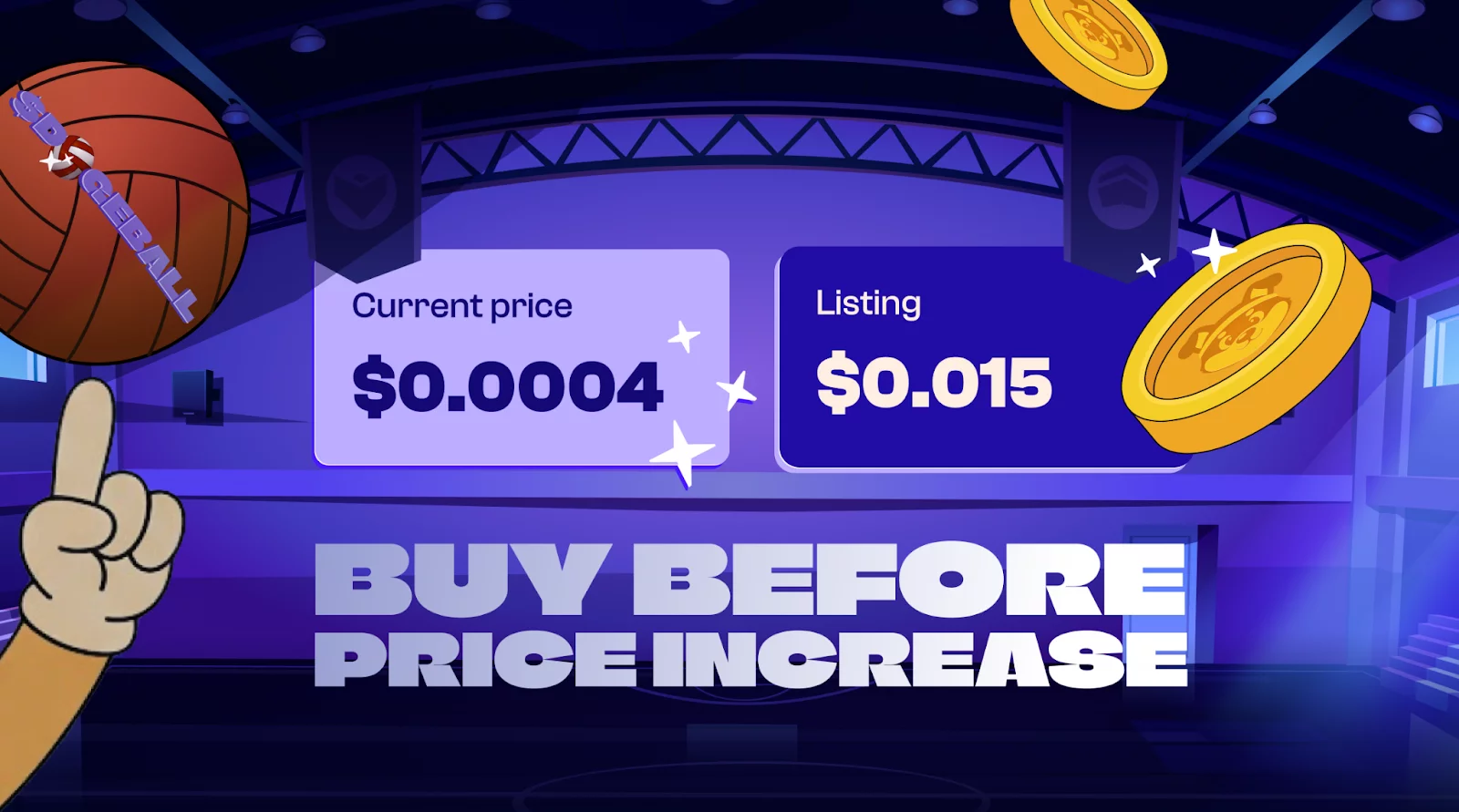
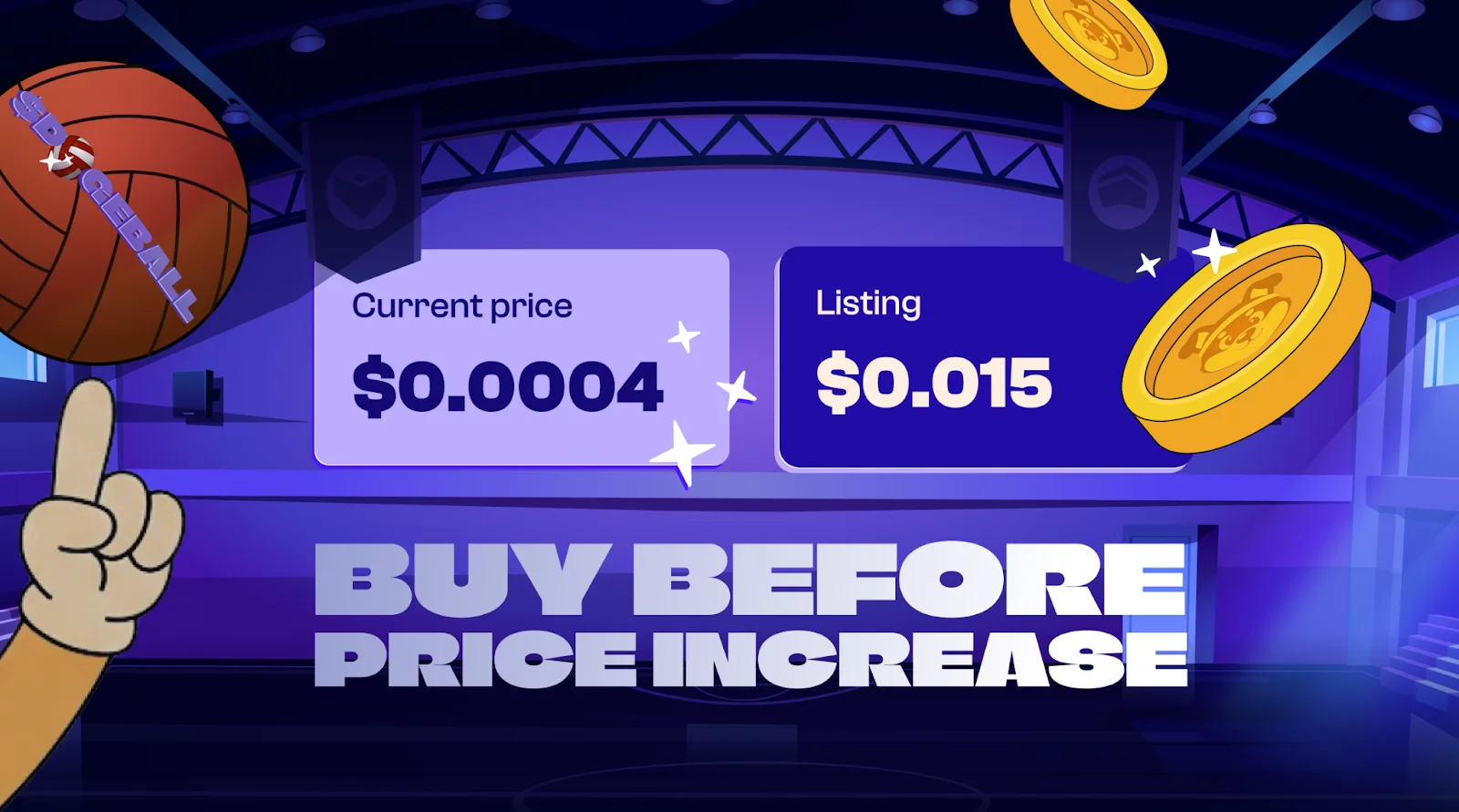
50x ROI potential: Potential to turn $0.0004 into $0.015 by May 2026
The math behind the top crypto presale in 2026 is clear and compelling. The presale launched on 2nd January 2026 and is strictly scheduled to end on 2nd May 2026. This 4-month window is one of the fastest in the industry, ensuring investors aren’t trapped in long vesting cycles. Currently in Stage 2, the price is set at $0.0004. With a confirmed exchange listing price of $0.015, early participants are looking at a 37.5x return on price action alone, while Stage 1 buyers have already secured a 50x path.
To maximize these gains, the project has introduced the limited-time bonus code DB25. By applying this code at checkout, buyers receive a 25% increase in their DOGEBALL token allocation instantly. This is more than just a “bonus”; it is a strategic advantage that lowers the average cost basis and increases the share of the 20 billion tokens allocated for the ICO. With over $196,000 already raised and 750+ participants, the transition to Stage 3 and higher price points is imminent. Buying today is the only way to lock in these specific margins.
Quick guide: How to join The DOGEBALL crypto presale 2026
Securing a position in the top crypto presale in 2026 is a streamlined process designed for speed. First, visit the official DOGEBALL website and connect a compatible web3 wallet such as MetaMask or Trust Wallet. The platform is highly accessible, accepting a wide range of currencies including ETH, USDT, BNB, SOL, and even traditional Credit/Debit cards. This multi-chain compatibility ensures that no matter where liquidity is, anyone can participate without complex bridging.
Once the wallet is connected, enter the amount to contribute and remember to input the bonus code DB25. This code is a time-sensitive offer that grants a 25% token boost on every purchase. After the transaction is confirmed, DOGEBALL tokens will be visible in a personal dashboard. The investors can then choose to hold for the May launch or utilize the 80% staking rewards to further grow their balance during the presale period. It is a simple four-step path to becoming an early stakeholder in a high-growth L2 ecosystem.
VIP Rewards: 100% bonus for the buyer of the week
The DOGEBALL community thrives on healthy competition and massive rewards. It recently witnessed a historic battle for the “Buyer of the Week” title that perfectly illustrates the project’s momentum. In the final minutes of the weekly cycle, a $2,131 buy hit the chain at 23:58 UTC to take the lead. However, in a stunning move at 23:59 UTC, a final purchase of $2,320 was recorded, snatching the top spot at the very last second. This level of activity proves that high-value investors are racing to accumulate.
To honor this dedication, the “Buyer of the Week” is treated like true royalty. The winner receives a staggering 100% additional token bonus for their entire spend that week, reflected directly in their user dashboard. This means the winner effectively doubled their investment for free simply by topping the leaderboard. This VIP incentive resets every seven days, offering a recurring opportunity for anyone to maximize their holdings. Be the one to dominate the rankings next week and claim the 100% bonus.

Final verdict: Why the DOGEBALL presale is a smart play
As we look toward the 2026 altcoin bull run, the distinction between “winners” and “losers” will come down to utility. We have discussed how early XRP adopters ignored the noise to find success, and how DOGEBALL is now applying that same logic to the gaming world. With a proprietary L2 blockchain that is already testable and a professional partnership with Falcon Interactive, this project is built for longevity. It avoids the “empty hype” trap by delivering a functional product before the presale even concludes.
The 4-month timeline is a gift to investors who value liquidity and momentum. Joining the DOGEBALL presale today means aligning with a project that has an audited 100% security score and a clear path to a $0.015 listing. Use the focus keyword “top crypto presale in 2026” to stay updated on our progress, and don’t forget to use code DB25 for 25% token boost. The opportunity to turn a modest investment into a significant portfolio cornerstone is here, but it only lasts until May 2nd.
For more information, visit the official website, Telegram, and X.
FAQs for top crypto presale in 2026
What crypto to buy early 2026?
DOGEBALL is widely considered the top crypto presale in 2026 because it offers a functional L2 blockchain and a $1m gaming prize pool. Its current Stage 2 price of $0.0004 provides a massive upside compared to the $0.015 launch price.
What is the best presale crypto to buy now?
The best option is the DOGEBALL crypto presale 2026 due to its real-world utility and 80% staking rewards. Unlike typical meme coins, $DOGEBALL powers a custom Ethereum Layer 2 chain, making it a high-value asset for both gamers and long-term investors.
Which crypto will give 1000x in 2026?
While market conditions vary, DOGEBALL has the ingredients for explosive growth. By combining a 50x launch target with a proprietary gaming ecosystem and the viral “Doge” branding, it represents the top crypto presale in 2026 for those seeking significant ROI.
Disclosure: This content is provided by a third party. Neither crypto.news nor the author of this article endorses any product mentioned on this page. Users should conduct their own research before taking any action related to the company.

Key Takeaways
- John Vinh of KeyBanc maintains an Overweight stance on Micron with a $600 price objective, representing approximately 40% potential appreciation from present trading levels.
- The memory chip manufacturer’s shares have soared nearly six times their value over the trailing twelve months, propelled by robust AI memory chip demand.
- For fiscal Q3, Vinh projects revenue reaching $35.1 billion with earnings per share of $20.54, surpassing Street estimates.
- Supply constraints are anticipated to persist through at least the middle of 2027, with quarterly price increases of 30–50% projected for Q2 2026.
- Aletheia Capital identifies Micron as positioned to benefit from an anticipated 33% year-over-year surge in cloud infrastructure spending during 2026.
Micron Technology has delivered one of the semiconductor industry’s most spectacular performances over the past twelve months. Shares have multiplied nearly six times, yet certain Wall Street analysts believe significant appreciation potential remains.
John Vinh from KeyBanc has identified Micron among semiconductor stocks offering the most attractive risk/reward profiles entering the current earnings cycle. His firm maintains an Overweight recommendation with a $600 price objective. Monday’s premarket session saw shares changing hands around $413.54, reflecting a 1.7% decline — positioning the analyst’s target approximately 40% above present valuation.
Vinh’s investment thesis builds on several fundamental arguments. Notably, he contends Micron remains attractively valued. Notwithstanding the extraordinary price appreciation, the company trades at among the most compressed forward price-to-earnings ratios across the entire S&P 500 index. Such valuation discrepancies typically prove unsustainable, particularly when earnings trajectories point upward.
Projected Results Exceed Street Expectations
For the fiscal third quarter, Vinh anticipates revenue of $35.1 billion with earnings per share reaching $20.54. Both projections exceed Wall Street’s consensus estimates of $33.8 billion in revenue and $19.26 per share. The company is scheduled to announce these results toward the end of June.
Vinh also anticipates forward guidance surpassing market expectations. “We expect Micron will post better results and higher guidance, supported by a structurally stronger-for-longer memory cycle driven by hyperscaler demand and constrained supply,” Vinh stated in research commentary released Sunday.
The memory semiconductor sector has historically exhibited pronounced cyclical characteristics. Expansion phases typically transition into contractions, leaving investors vulnerable. However, Vinh believes the present environment differs fundamentally. His analysis suggests demand will continue outstripping supply through at least mid-2027, when substantial new production capacity becomes operational.
Near-term projections call for sequential pricing increases of 30–50% during Q2 2026. Such pricing leverage represents an uncommon development within the semiconductor space and would translate directly into margin expansion.
Data Center Investment Wave Provides Tailwinds
The optimistic perspective on Micron extends beyond KeyBanc’s analysis. Aletheia Capital released complementary research Monday, highlighting a significant data center investment cycle benefiting memory and semiconductor supply chain participants.
The research firm forecasts the leading quartet of cloud infrastructure providers will expand general server capital investment by 33% year-over-year in 2026, with an additional 21% growth following in 2027. This expenditure wave stems from agentic artificial intelligence applications, which consume substantial memory volumes.
Aletheia identifies an inflection point for component manufacturers beginning in Q2 2026, with system integrators accelerating through Q3 and Q4. Micron appears alongside AMD and SK Hynix among the primary beneficiaries.
The firm also notes unconventional seasonal patterns emerging this year — unit shipments are projected to expand sequentially throughout each quarter, departing from historical norms.
Celestica, another participant in the AI infrastructure ecosystem, has already appreciated 344% over the past year and currently trades near its 52-week peak of $363.
Micron’s quarterly results are scheduled for late June 2026. Analyst consensus currently stands at $33.8 billion in revenue with $19.26 earnings per share for the quarter.

Crypto investment products posted a decisive rebound last week, with global exchange-traded products (ETPs) drawing about $1.1 billion in inflows. Bitcoin led the charge, attracting roughly $871 million for the week, according to CoinShares’ weekly Digital Asset Fund Flows report. The week represented the strongest swing for crypto ETPs in 2026 aside from the mid-January surge of $2.17 billion inflows.
Ether’s ETPs also turned positive, logging about $196.5 million in inflows—the first weekly inflows after three straight weeks of outflows—while the regional flow pattern remained heavily skewed toward the United States, underscoring a clear appetite for regulated crypto exposure amid mixed macro signals.
Key takeaways
- Total inflows for the week reached about $1.1 billion, with Bitcoin accounting for roughly $871 million and continuing to drive the bulk of new money into regulated crypto exposure.
- Ether ETPs rebounded to about $196.5 million in inflows, yet Ether remains one of the few assets with negative year-to-date momentum, down about $130 million, while Bitcoin leads overall YTD flows at roughly $1.9 billion and represents about 83% of the $2.3 billion total YTD inflows.
- Investors added to short-Bitcoin products as weekly inflows hit $20 million—the largest since November 2024—while XRP ETPs drew roughly $19 million and Solana saw modest outflows of about $2.5 million.
- Regional dispersion remained highly US-centric, with about $1 billion of inflows concentrated in the United States (roughly 95% of weekly net inflows). US spot BTC ETPs led the way, pulling in around $786.3 million, according to SoSoValue data. Germany, Canada, and Switzerland posted smaller inflows of $34.6 million, $7.8 million, and $6.9 million, respectively.
Bitcoin-led demand and the broader price backdrop
Bitcoin’s surge to the forefront of weekly inflows coincided with persistent volatility in spot markets. The token briefly reclaimed the $70,000 level and even traded above $73,000 at times last week, even as the wider market sentiment remained fragile. CoinShares notes that the strength of ETP inflows points to continued institutional demand and a preference for regulated investment products, even in a period of mixed macro signals.
James Butterfill, head of research at CoinShares, attributed the inflow spike to a confluence of factors: a rebound in risk appetite following tentative ceasefire developments in Iran, alongside softer-than-expected U.S. inflation and spending data. The combination appeared to reassure investors that regulated exposure to crypto remains a viable proxy for risk-on positioning, even as the broader market contends with volatility and policy ambiguity.
Ether’s rebound amid a cautious year
Ether’s $196.5 million inflow marks a notable shift after three weeks of outflows, suggesting some rotation back into Ethereum-based products as investors reassess narrative risk and chain-level activity. Despite the rebound, Ether’s year-to-date tally remains negative, reflecting a broader rotation away from certain non-Bitcoin assets within regulated vehicles. By contrast, Bitcoin’s stronger YTD inflows highlight continued demand for the largest crypto as a core exposure within ETP portfolios.
Regional focus and notable movers
The geographic split of flows further underscored a US-dominated appetite for crypto ETPs. Roughly $1 billion of weekly inflows originated in the United States, with US spot BTC ETPs alone contributing about $786.3 million. Germany registered inflows of $34.6 million, while Canada and Switzerland saw smaller inflows of $7.8 million and $6.9 million, respectively. In the smaller movers, XRP ETPs added about $19 million, and Solana saw modest outflows of around $2.5 million. The week also featured active positioning in short-BTC instruments, reflecting tactical bets on near-term price dynamics.
These patterns align with a broader narrative: investors remain willing to deploy capital into regulated crypto access points, even as the macro environment remains uncertain. The US-led flows, in particular, emphasize how regulatory clarity and product availability can shape allocation during periods of mixed sentiment.
What this means for investors going forward
The latest CoinShares data reinforce a theme that has persisted through 2026: demand for regulated crypto exposure is highly sensitive to macro signals and policy cues, with the United States acting as the primary engine of inflows. The strong BTC performance relative to Ether underscores a potential preference for flagship assets as a core ballast within ETP portfolios, especially when risk appetite improves alongside softer inflation readings.
For traders and institutions alike, the focus will likely remain on two fronts: the durability of the US-led inflow pattern and how Ether’s recent rebound evolves as broader liquidity conditions shift. The sizable short-BTC inflows also merit attention, as they can illuminate hedging dynamics and speculative positioning tied to near-term price expectations.
CoinShares’ data suggest that the near-term trajectory for crypto ETPs will hinge on macro clarity and regulatory developments. As policymakers and markets absorb ongoing inflation signals and geopolitical headlines, investors will watch whether the US stream of inflows sustains its lead and whether Ether can turn the year’s momentum more decisively in its favor.
Looking ahead, traders should monitor how forthcoming macro data, regulatory updates, and potential ceasefire developments influence risk appetite and flow leadership among BTC, ETH, and other liquid assets within regulated products.
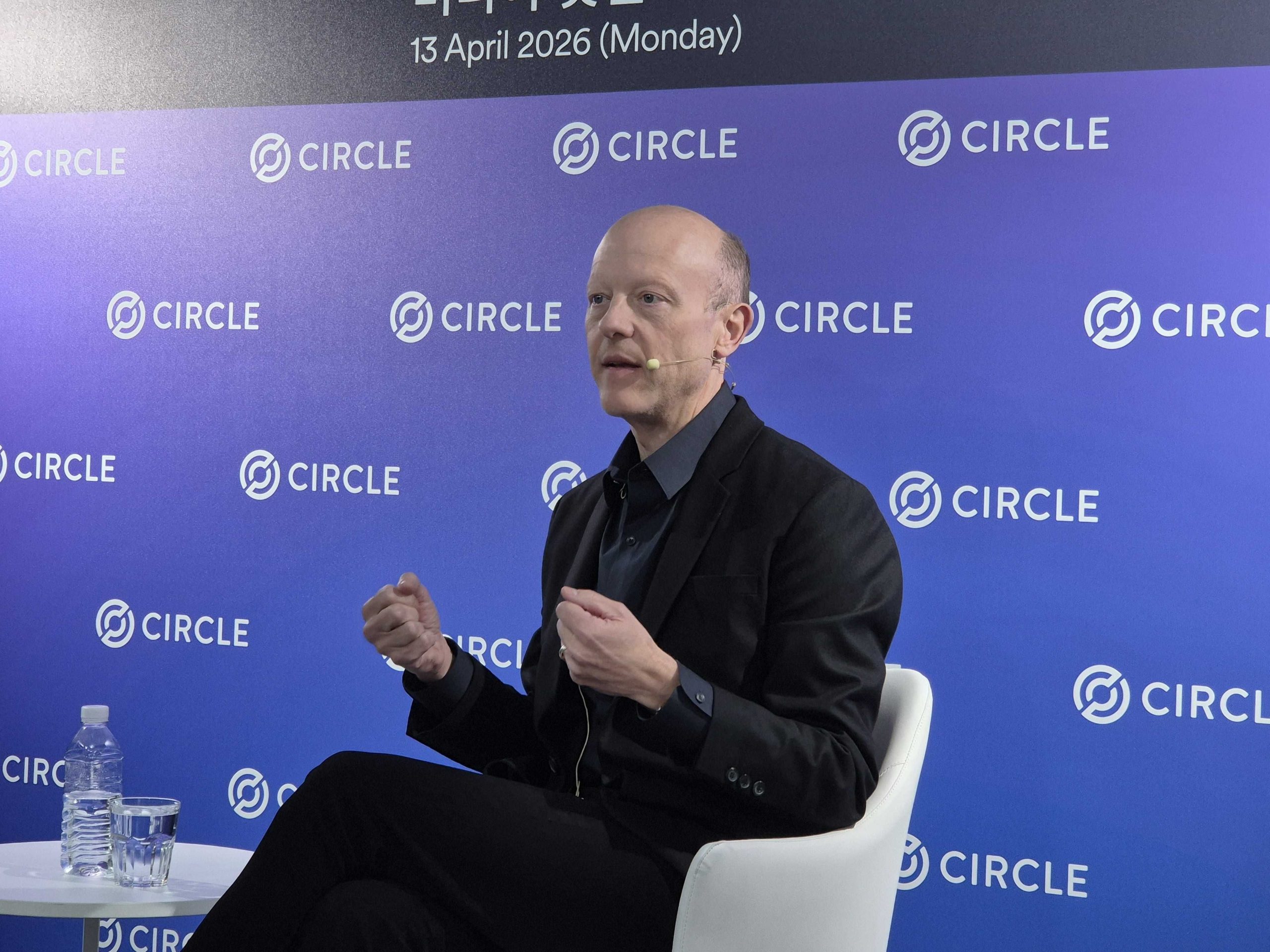
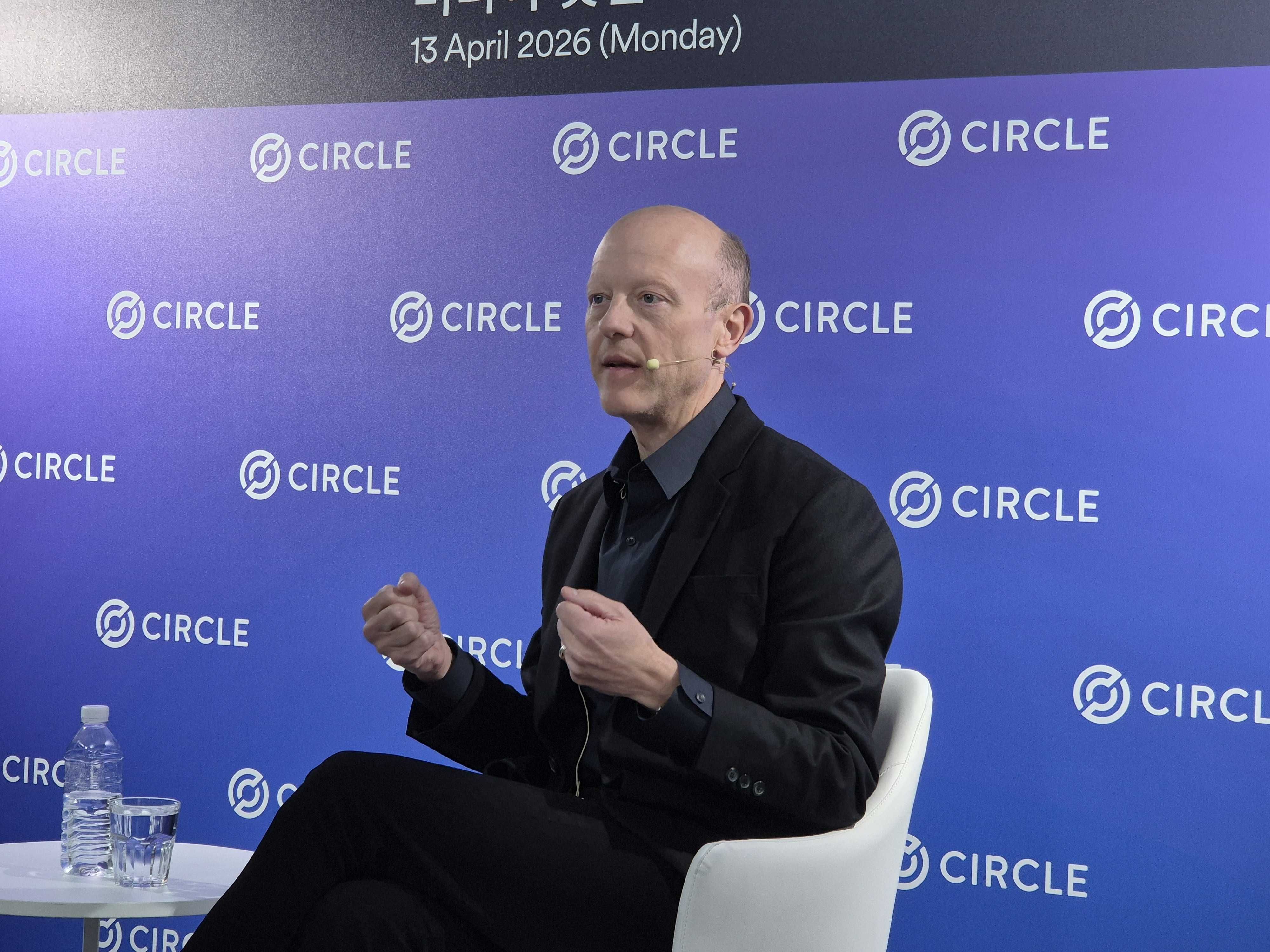
Circle CEO Jeremy Allaire pushed back on concerns that USDC could be used for Iran’s crypto transit tolls at the Strait of Hormuz.
Allaire made the remarks at a press conference in Seoul on the afternoon of April 13, where BeInCrypto East Asia Editor-In-Chief, Oihyun Kim, was present. Allaire is visiting South Korea this week to meet exchanges, banks, and regulators.
Hormuz Tolls: ‘Highly Unlikely’ for USDC
A reporter asked whether Iran’s Revolutionary Guards might accept USDC for Hormuz passage fees. Allaire dismissed the idea.
“Circle operates a highly compliant infrastructure,” he said.
He noted that the company works closely with law enforcement and sanctions authorities.
Allaire pointed to public research from the United Nations and forensic firms. That data shows sanctioned actors tend to favor other stablecoins over USDC. He did not name specific tokens.
“It’s highly unlikely that a regime under sanctions would attempt something where the likelihood of the assets being immediately frozen is extremely high,” he said.
Drift Hack: Circle Defends Freeze Delay
The $285 million Drift Protocol exploit on April 1 drew sharp criticism of Circle. Attackers bridged over $230 million in stolen USDC from Solana to Ethereum over six hours. Circle took no action to freeze the funds during that window.
Allaire said the company follows strict legal obligations. Circle can only freeze wallets at the direction of law enforcement or courts.
“We do not as a company decide what is the right path,” he said. He warned that letting a private firm make those calls creates a “very significant moral quandary.”
He acknowledged the gap in the current framework. Circle is pushing for the CLARITY Act to include “safe harbors” that would let issuers freeze funds preemptively under extreme circumstances.
“We need that to be in the law, not just what we decide on our own,” he said.
Clarity Act: Yield Ban Won’t Hurt Circle
Allaire also addressed the CLARITY Act’s proposed ban on passive stablecoin yield. The bill would bar platforms from paying interest simply for holding stablecoins.
He said the change does not affect Circle directly. The GENIUS Act already forbids stablecoin issuers from paying interest to holders.
The real impact falls on distributors like exchanges and wallets. They can still offer activity-based rewards, but cannot market stablecoin holdings as bank deposit substitutes.
Allaire called the yield debate “overblown.” He noted that the vast majority of stablecoin holders worldwide receive no rewards at all. About half of the $120 trillion global M2 money supply sits in physical cash or non-interest-bearing accounts.
Korea Visit: Exchanges, Banks, and Regulation
Allaire spent several days in Seoul meeting major exchanges, financial groups, and regulators. Upbit operator Dunamu and Bithumb both signed MOUs with Circle on the same day. He also met executives from Shinhan, Hana, and KB Financial.
He said Circle does not plan to issue a Korean won stablecoin itself.
Korean law will likely require domestic bank-led consortiums for that role. Circle would instead offer its technology stack to local issuers.
The post Circle CEO Says Crypto Tolls at Hormuz Strait Unlikely To Use USDC appeared first on BeInCrypto.

‘Avoid paying’ with BBC expert’s passport renew tip ‘you may not know about’
ALX Oncology names Jeff Knight as chief development officer

Foundry unveils Zcash block explorer as mining pool reaches 30% of hashrate

Why Israel is blocking foreign journalists from entering

Bitcoin: We’re Entering The Most Dangerous Phase

Alan Cumming Brands Baftas Ceremony A ‘Triggering S**tshow’

Baru Mulai Investasi, Kenapa Langsung Rugi #bitcoin #cryptocurrency #investasi

Financial Literacy for Beginners & Dummies – Personal Finance Education Money Audiobook Full Length

Ormuz, Crypto & Guerre #blockchain #cryptomonnaie
-

 Politics3 days ago
US brings back mandatory military draft registration
-

 Fashion3 days ago
Weekend Open Thread: Veronica Beard
-
 Sports3 days ago
Man United discover Nico Schlotterbeck transfer fee as defender reaches Dortmund agreement
-

 Tech6 days ago
How Long Can You Drive With Expired Registration? What Florida Law Says
-

 Politics22 hours ago
World Cup exit makes Italy enter crisis mode
-

 Crypto World4 days ago
Canary Capital Files SEC Registration for PEPE ETF
-

 Business3 days ago
Tesla Model Y Tops China Auto Sales in March 2026 With 39,827 Registrations, Beating Cheaper EVs and Gas Cars
-

 Crypto World5 days ago
Bitcoin recovers as US and Iran Agree a Ceasefire Deal
-

 Politics3 days ago
Malcolm In The Middle OG Turned Down ‘Buckets Of Money’ To Appear In Reboot
-

 Fashion6 days ago
Let’s Discuss: DEI in 2026
-
 NewsBeat14 hours ago
Pep Guardiola and Gary Neville agree over Arsenal title problem that benefits Man City
-

 Business3 days ago
OpenAI Halts Stargate UK Data Centre Project Over Energy Costs and Copyright Row
-

 Business2 days ago
Ireland Fuel Protests Enter Day 5 as Blockades Spark Shortages and Government Prepares Support Package
-

 Politics3 days ago
LBC Presenter Mocks Trump Over Iran War Failures
-

 Crypto World3 days ago
Federal judge blocks Arizona from bringing criminal charges against Kalshi
-

 Tech4 days ago
A version of Windows 10 released a decade ago is now eligible for additional security patches
-
 NewsBeat1 day ago
JD Vance announces ‘no agreement’ with Iran over nuclear weapons fear
-

 Business3 days ago
IMF retains floor for precautionary balances at SDR 20 billion
-
Business2 days ago
Coreweave CSO Venturo sells $5.5m in class a common stock
-
Sports2 days ago
1st-Round WR Enters Vikings Mock Draft Orbit
You must be logged in to post a comment Login