
Crypto World
Traders on Kalshi say it’s likely S&P 500 will hit 8,000 in 2026


Traders work on the floor of the New York Stock Exchange during morning trading on August 05, 2026 in New York City.
Michael M. Santiago | Getty Images
The S&P 500 ended its more than 5.5% four-day rally on Wednesday, but the broad index’s surge to new records is recalibrating prediction market traders’ outlook for how high it can go.
Speculators on prediction market platform Kalshi now give a 2-in-3 chance that the index will cross 8,000 in 2026. As of Wednesday’s close, the index is just about 3.6% away from that level.
The contracts on Kalshi ask speculators if the S&P in 2026 will trade above various levels. The platform uses Google Finance to resolve the contracts.
While the S&P 500 surged in April and May from its lows during the U.S.-Iran war, the index didn’t do much in late June and July as investors moved out of key momentum names involved in the artificial intelligence trade that had experienced enormous rallies. However, a rotation into other stocks masked the turmoil.
The S&P’s four-day rally was driven by a slew of catalysts: Easing tensions between the U.S. and Iran in the Middle East, a strong earnings season and the near-collapse of Leopold Aschenbrenner’s Situational Awareness fund.
Rather than June and July marking the end to the AI rally, analysts broadly view it as a healthy reset and expect that the bull market can now build momentum again.
“Our investment thesis remains intact,” Truist Wealth’s chief market strategist Keith Lerner wrote in a Tuesday note. “Earnings remain our north star. Estimates continue to trend higher, economic growth remains resilient, and market participation has improved. Those are not conditions typically associated with the end of a bull market.”
Odds that the S&P 500 marches even higher are rising, too. Kalshi traders now place a one-in-three chance to cross 8,200 this year.

S&P 500 year-to-date.
Disclosure: CNBC and Kalshi have a commercial relationship that includes customer acquisition and a minority investment.

Lumber futures have fallen for 10 consecutive sessions, their longest losing streak since December 2024. The lumber price trades near $586 after a sharp rejection from the $650 resistance zone.
The slide matters well beyond the timber trade. Lumber demand tracks US homebuilding almost one to one, and the streak arrived while builder confidence sits near multi-year lows.
Why Lumber Price Is Falling Despite a Supply Squeeze
Barchart data shows lumber has closed lower for 10 straight days, a streak unseen since December 2024. Two weeks ago, however, the market told the opposite story.
Futures touched $650 per thousand board feet on July 28, a 12-month high. The rally had gained over 30% from December lows as supply shocks piled up.
The Wall Street Journal reported that steep duties on Canadian lumber, wildfires, and sawmill closures had cut supply and lifted prices. More than 900 wildfires burned across Western Canada, the source of most US softwood imports.
Combined duties near 35% also add roughly $10,000 to the cost of a new American home, according to the NAHB. Nevertheless, prices collapsed the moment demand weakness took over.
US construction spending on single-family projects fell 3.3% year-over-year in June, per TradingEconomics. Therefore, a market falling this hard against a constrained supply base points to demand destruction, not oversupply.
US Housing Market Cracks Keep Widening
The demand rot shows up across housing data. The NAHB/Wells Fargo Housing Market Index (HMI) fell to 34 in July, its 15th straight month below 50. That is the longest weak stretch since 2012.
Meanwhile, 37% of builders cut prices in July, at an average discount of 6%. Robert Dietz, chief economist at the NAHB, described the pressure directly in the group’s July report.
“Affordability remains the home building industry’s primary challenge.”
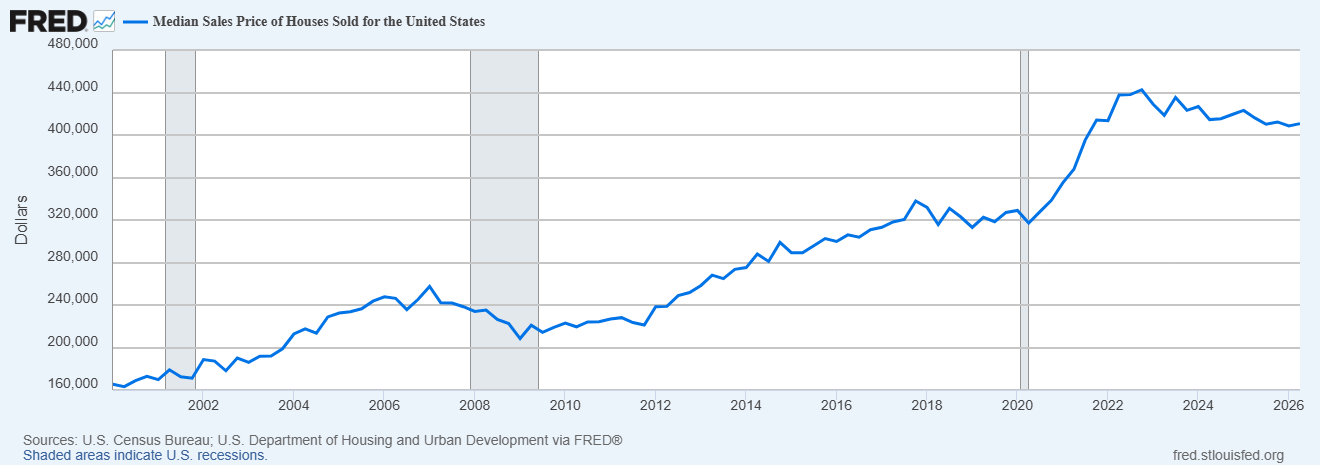
Slower-moving data confirms the trend. The median sales price of US homes peaked near $440,000 in late 2022, according to FRED. It has since drifted to roughly $410,000, the longest stretch of price weakness since 2008.

Residential construction absorbs an estimated 70% to 80% of North American wood demand. Consequently, lumber acts as a real-time gauge of housing health, and it now joins other unusual indicators flashing late-cycle warnings. Prediction markets have already lifted US recession odds this year.
Lumber Price Prediction Hinges on $580 Support
On the daily chart, lumber broke down from the $650 resistance region after repeated failures in late July. The decline also cut through an ascending trendline that had supported the market since December 2025.
Lumber trades at $585.75 at the time of writing, down 0.9% on the day and pressing the $580 support zone. If buyers defend this area, the setup may favor a relief bounce.

The daily Relative Strength Index (RSI) sits in oversold territory at its lowest since September 2025, when a durable rebound followed. However, the broken trendline near $590 may now act as resistance and cap any recovery.
Level
Role
$650
Major resistance and July rejection zone
$590
Broken trendline, potential resistance
$580
Immediate support under test
$565
Next support if $580 breaks
In contrast, a decisive close below $580 would expose the next support at $565, about 3.5% lower. That zone has stopped several sell-offs since late 2025.
Beyond the chart, the main catalyst remains the Federal Reserve. Expected rate cuts could pull mortgage rates lower and revive builder demand for wood. A deeper housing slowdown, meanwhile, could ripple into risk assets, including crypto.
The next several sessions should reveal whether oversold conditions spark a rebound or the housing warning grows louder.
The post Lumber Falls for 10 Straight Sessions as US Housing Cracks Widen appeared first on BeInCrypto.
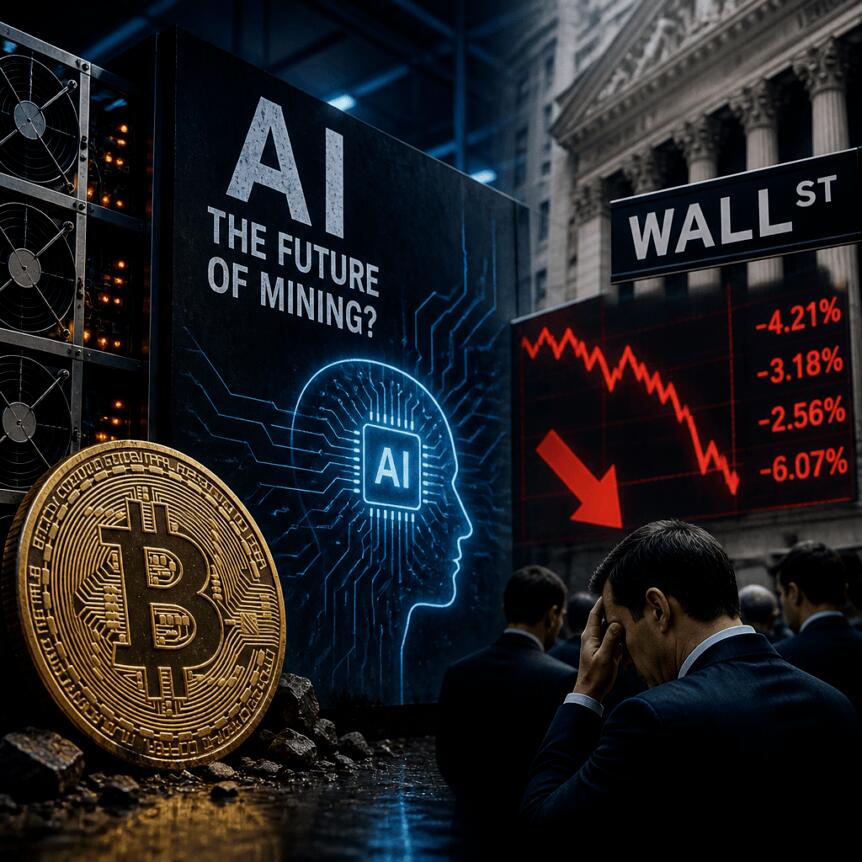
Bitcoin miners are increasingly positioning themselves as AI and high-performance computing (HPC) infrastructure providers, reshaping revenue models around hosting demand rather than solely on mining economics. But a new industry analysis suggests that the market’s excitement for fresh AI-capacity announcements has cooled—meaning new deals may be generating less immediate upside for stocks than they did in earlier waves of adoption.
According to an analysis by Blocksbridge Consulting, published in TheEnergyMag’s Miner Weekly, the impact of AI infrastructure deal news has weakened over the past two years. The report examined 25 AI and HPC infrastructure deals announced between June 2024 and August 2026, finding a clear decline in how much investors moved the day a deal was announced.
Key takeaways
- Blocksbridge Consulting reports the average announcement-day stock move for AI and HPC infrastructure deals fell from about 24% in the earliest cohort to roughly 10% in the most recent cohort.
- Median gains from these announcements dropped by about half over the same period, even as deal sizes and contract values increased.
- Revenue per contracted megawatt has edged higher over time, indicating AI hosting is becoming more lucrative, but the market is less impressed by headline contract totals.
- Examples of early CoreWeave-related deals triggered large one-day stock surges, while later “mega-deals” produced smaller or short-lived price reactions.
- TheEnergyMag’s TEM AI Infrastructure Growth Index is down about 28.5% from its June peak, aligning with a broader pullback in AI infrastructure-linked equities.
AI hosting deals are bigger, but the stock reaction is smaller
Blocksbridge Consulting’s review points to a market that is still allocating capital to AI infrastructure—but in a more selective way. While the report shows that revenue annualized per contracted megawatt has generally improved as time has passed, the way investors respond to deal announcements has changed.
The most striking trend is how much less “market-moving” announcements have become. Blocksbridge’s dataset shows the average announcement-day move falling steadily from around a mid-20% figure for earlier deals to near 10% for the latest. Median gains roughly halved as well, suggesting the market’s expectations have matured: investors may be focusing less on the fact that a deal exists and more on whether a company can reliably execute and monetize it.
The report also frames this as a shift away from reacting primarily to contract headlines toward questions like financing structure, execution capability, and long-term profitability—factors that can determine whether AI hosting becomes durable earnings rather than a one-off boost.
From blockbuster reactions to muted follow-through
Deal-by-deal reactions illustrate the pattern. In earlier examples, markets appeared to reward companies far more aggressively for landing AI hosting arrangements. Core Scientific’s initial hosting agreement with CoreWeave reportedly sent its shares up more than 40%. Applied Digital’s first CoreWeave lease gained nearly 49%, while TeraWulf’s first Fluidstack deal surged almost 60%.
More recent announcements, by contrast, have tended to generate smaller immediate moves—sometimes followed by fading gains. TeraWulf’s 401-megawatt lease with Anthropic lifted its shares by about 5%. CleanSpark’s $6.6 billion AI hosting agreement gained nearly 9%. Bitdeer’s new Tydal contract reportedly pushed its stock up roughly 12% at one point, but those gains disappeared by the close.
For investors, this difference matters because it can signal a reduced probability that “new capacity” news automatically translates into near-term outperformance. If the market expects more deals to follow—and has already priced in a portion of AI hosting growth—then additional announcements may only narrow the gap between winners and laggards rather than create fresh upside broadly.
Bitcoin miners’ AI pivot meets a more cautious equity market
The muted deal reaction trend also shows up in broader performance among AI-leaning miners and infrastructure operators. TheEnergyMag’s TEM AI Infrastructure Growth Index, which tracks publicly traded companies building AI data center and digital infrastructure businesses, is down roughly 28.5% from its June peak. That decline suggests investor caution has risen even while underlying demand for AI infrastructure has remained strong.
Notably, TheEnergyMag’s index is still higher over the past year, but its momentum appears to have slowed in recent months. This is consistent with the idea that the market may be rebalancing: investors may believe in the long-term direction of AI infrastructure, yet be less willing to pay large premiums for announcements until execution risk, customer retention, and the path to sustained margins become clearer.
The report’s slowdown narrative aligns with a wider pullback in related equities. The Philadelphia Semiconductor Index reportedly fell nearly 17% from its July peak, reinforcing the sense that risk appetite across technology-linked sectors has cooled rather than AI demand disappearing overnight.
What investors should watch next
As AI hosting arrangements become more commonplace, the key question is likely to shift from “who lands the next contract?” to “who converts contracted megawatts into dependable, financed, and profitable operations.” Readers should watch for evidence that revenue per contracted megawatt keeps rising, while companies demonstrate execution—especially in financing structures and long-term profitability—so markets have less reason to fade gains after major announcements.


MyTrade founder Liu Zhou was fined $10,000 after admitting that his crypto market-making platform used bots to conduct wash trades for dozens of tokens.
Summary
- Liu Zhou pleaded guilty to conspiracy to commit market manipulation and wire fraud.
- MyTrade bots generated millions of dollars in daily wash trades for about 60 cryptocurrencies.
- An FBI operation used the NexFundAI token to expose MyTrade’s market-manipulation services.
- MyTrade has shut down its wash-trading bots and acknowledged that its “Volume Support” service was illegal.
MyTrade founder receives $10,000 fine
A federal court in Boston ordered Liu Zhou, the founder and primary operator of crypto market maker MyTrade, to pay a $10,000 fine for his role in a market-manipulation conspiracy.
U.S. District Judge Angel Kelley imposed the sentence, according to the Department of Justice. Zhou, 41, is a Canadian citizen and Chinese national.
Federal prosecutors charged Zhou alongside 17 alleged co-conspirators in October 2024. He pleaded guilty to conspiracy to commit market manipulation and wire fraud.
MyTrade provided market-making services through its MyTrade MM website and application. Its products included a feature called “Volume Support,” which allowed crypto projects to select how much artificial daily trading activity they wanted across specified exchanges.
The platform then used automated bots to repeatedly buy and sell the same cryptocurrencies. Those transactions created the appearance of greater trading volume and market interest without serving a legitimate commercial purpose.
FBI token exposed MyTrade’s wash-trading service
U.S. authorities identified the scheme through an undercover operation involving NexFundAI, a fake crypto company created by law enforcement.
Investigators launched a website and an Ethereum-based NexFundAI token, which traded on the decentralized exchange Uniswap before authorities disabled it. Undercover agents approached market makers while posing as the project’s promoters.
During discussions with the purported NexFundAI team, Zhou explained that MyTrade conducted simultaneous purchases and sales of the same asset.
“MyTrade MM does self-trades — a buy and a sell in the same second,” Zhou said, according to prosecutors.
He also said the company’s volume bot could execute “pump and dumps.” In another statement cited by the DOJ, Zhou said the objective was to attract outside buyers because “we have to make [the other buyers] lose money in order to make profit.”
MyTrade was still providing its Volume Support service to dozens of clients as of Oct. 1, 2024, the DOJ said.
Bots supported about 60 cryptocurrencies
As part of Zhou’s guilty plea, MyTrade agreed to stop offering Volume Support and permanently deactivate the bots used to create the artificial transactions.
Prosecutors said the bots had generated millions of dollars in daily wash trades involving approximately 60 cryptocurrencies. The firm was also required to publish a notice on its website acknowledging the legal status of the service.
“Volume support is a form of wash trading and illegal under the laws of the United States,” the required notice states.
The U.S. Attorney’s Office for the District of Massachusetts prosecuted the case with assistance from the FBI’s Boston Division.
The sentence adds to U.S. authorities’ wider enforcement effort against misleading conduct in crypto and event-contract markets. In July, former U.S. Representative George Santos settled a Commodity Futures Trading Commission case involving trades on prediction market Kalshi.
Santos agreed to return $17,569.98 in gains, pay a $17,500 penalty and accept a three-year ban from trading on CFTC-registered platforms. The CFTC accused him of making misleading public statements while betting on whether he would attend President Donald Trump’s State of the Union address. He neither admitted nor denied the findings.
Crypto manipulation faces wider regulatory scrutiny
Market-manipulation investigations are also increasing outside the United States. South Korean authorities examined more than 40 suspected unfair-trading cases during the first two years of the country’s Virtual Asset User Protection Act.
Regulators reported or referred more than 30 cases to investigative agencies and identified 25 suspects. Average alleged unlawful gains reached about 1.4 billion won, or roughly $940,000, per case.
For U.S. crypto projects, Zhou’s case shows that describing artificial activity as market making or volume support does not shield wash trading from fraud charges. The undercover token operation also shows that federal investigators can participate directly in digital-asset markets to identify suspected misconduct.
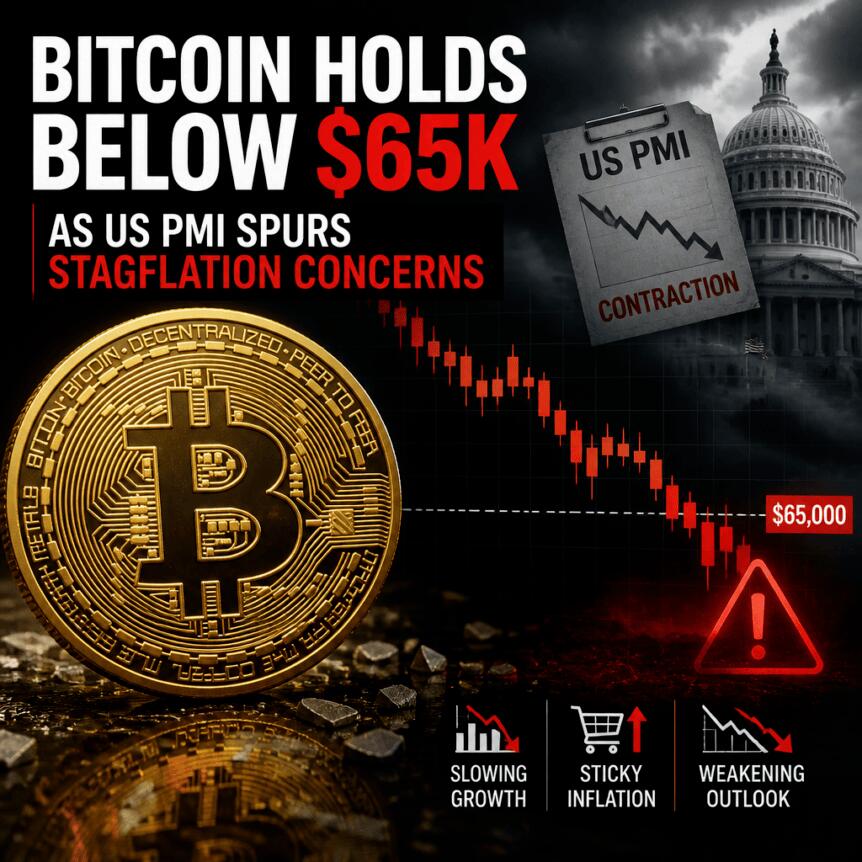
Bitcoin spent the Thursday Wall Street open hovering just above the $64,000 area, trapped in a narrow range as traders digested fresh macro signals pointing to renewed inflation pressure and weaker labour conditions. At the same time, market hopes around energy logistics in the Middle East cooled after Iranian officials played down assumptions that the Strait of Hormuz would quickly reopen.
The result for BTC has been a familiar kind of indecision: despite cross-asset movements elsewhere—such as gold firming and equities printing record highs—crypto has not delivered the decisive breakdown or breakout many analysts were waiting for. Instead, several monitoring desks described the current action as more “stalled” than truly capitulative.
Key takeaways
- BTC remained below $65,000 near the US open, down roughly 0.5% on the day, as geopolitical expectations around the Strait of Hormuz eased.
- US services PMI and employment data point to “stagflation” risk, with prices paid rising while employment conditions deteriorate.
- Glassnode characterised the current market as “boredom rather than capitulation,” suggesting conditions may be building for a turn but are not complete.
- Bitfinex Research argued that a “genuine breakdown” has not yet appeared, because a stronger macro trigger and volume-supported follow-through are still missing.
Iran’s caution blunts Strait of Hormuz rebound hopes
On the charts, BTC/USD hovered above $64,000 during the Wall Street open, with TradingView data showing the pair down about 0.5% at that point. US stock indices also opened roughly flat, indicating that broader risk appetite was not sharply moving on the day’s developments.
A key narrative for commodity traders—whether the Strait of Hormuz would reopen—failed to translate into meaningful volatility for Bitcoin. Anticipation had centred on a reported Iran–Oman understanding that could resume the route for international shipping, but Iran’s messaging introduced uncertainty about how quickly or fully any reopening could occur.
In comments carried by CNN, Iran’s Deputy Foreign Minister Kazem Gharibabadi said: “This understanding does not, in itself, mean that the Strait of Hormuz will reopen,” as quoted by the state-run Islamic Republic News Agency (IRNA). That clarification matters because energy-route risk is one of the channels that can feed into inflation expectations—an issue now resonating through the US macro data backdrop.
Oil was broadly steady as these geopolitical signals played out. WTI crude was little changed at around $76 per barrel, after dipping to three-week lows of about $74.30 the day before. Even with the energy market not collapsing, the lack of escalation suggested traders weren’t receiving a strong impetus to reprice macro risk aggressively at the open.
US services data revive stagflation fears
While the Middle East headlines failed to generate a clear impulse, the economic calendar offered a more direct storyline. Trading resource The Kobeissi Letter pointed to the latest US Institute for Supply Management (ISM) Services PMI and employment data released on Wednesday.
According to the figures highlighted by Kobeissi, July’s services PMI rose by 0.1 point to 54.1, while employment fell by 3.6 points to 47.4—the lowest reading since March. The divergence between output sentiment and labour conditions was paired with a notable jump in the prices paid index: +2.6 points to 70.3, near its highest level since October 2022.
Kobeissi also contextualised the inflation signal, noting that prices paid has trended higher for more than two years and is up about 16.9 points since March 2024. The central interpretation was that “the economy is increasingly under pressure from both rising prices and a weakening labor market,” and that the odds of stagflation were therefore “intensifying” based on the combined readings. The post was shared on X, where the same analyst discussed the data and its implications.
For crypto investors, this matters because a stagflation-style regime—where prices remain elevated while growth or hiring weakens—can complicate the usual interest-rate narrative and heighten uncertainty in liquidity conditions. Bitcoin’s role as a “macro proxy” is often debated, but when rates expectations and risk premiums shift, BTC frequently feels the drag even if inflation prints don’t immediately produce a clear direction for the asset.
Bitcoin shows “boredom,” not capitulation
Despite the macro noise, onchain and market analytics suggested the current BTC range has the characteristics of a pause rather than a flush. Glassnode described BTC/USD as showing “boredom rather than capitulation,” framing the lack of sustained downside momentum as an incomplete stress signal.
Glassnode’s commentary, shared in an analysis posted on X, also highlighted that BTC has been largely unresponsive while gold hit its highest level in six weeks and the S&P 500 moved to all-time highs. That combination—traditional safe-haven strength alongside continued equity confidence—can leave risk assets without a single, clean macro “directional” impulse, encouraging consolidation rather than trend.
In its one-line summary, Glassnode characterised the market regime as “a compressed, under-owned market that global risk appetite has left behind,” adding that “bottom conditions assembling but incomplete.” The distinction is important: it implies that bearish conditions may be developing, but the market still lacks the final ingredient that would typically mark a decisive turning point.
This view sits alongside earlier comparisons that Cointelegraph had reported, where bear-market patterns were being examined for potential similarities in 2026. Those earlier reports focused on history repeating through gradual support erosion before a larger macro floor is reached. Glassnode’s “incomplete” framing, however, suggests the move many traders expect hasn’t fully played out yet.
Bitfinex: a true breakdown needs more force and volume
Bitfinex Research, the analytics arm of the Bitfinex exchange, echoed the idea that BTC has not yet offered the kind of breakdown confirmation traders associate with a decisive regime shift. In an update posted on the Bitfinex blog on Wednesday, it argued that while macro developments and Bitcoin’s underperformance versus the Nasdaq and S&P 500 point to underlying stress, the market still does not show what it called a “genuine breakdown.”
The analyst wrote that a true breakdown requires “something more forceful, followed by volume-supportive price action.” Put differently: without a stronger macro trigger and the type of follow-through that typically comes with rising participation on declines, the current range may continue to act like a holding pattern rather than a distribution event.
This is consistent with the day’s price behaviour, where BTC stayed confined and did not accelerate lower even as traders tracked inflation-and-labour signals and waited for additional geopolitical clarity. If the market is indeed under-owned and compressed, it may be positioned to move quickly once a trigger arrives—but until then, signals can remain fragmented across asset classes.
For traders and investors, the immediate watchpoints are therefore twofold: whether new macro data meaningfully worsen the inflation-growth tension, and whether BTC finally transitions from consolidation into a directional move with clear confirmation. As of the Wall Street open, both Bitfinex’s “more forceful” requirement and Glassnode’s “incomplete” bottom conditions were still not satisfied.
Going forward, the key question is whether the stagflation narrative gains stronger traction through subsequent data releases, and whether BTC’s range eventually resolves with volume and follow-through—either signaling a durable breakdown or forcing the market to reprice risk back upward.
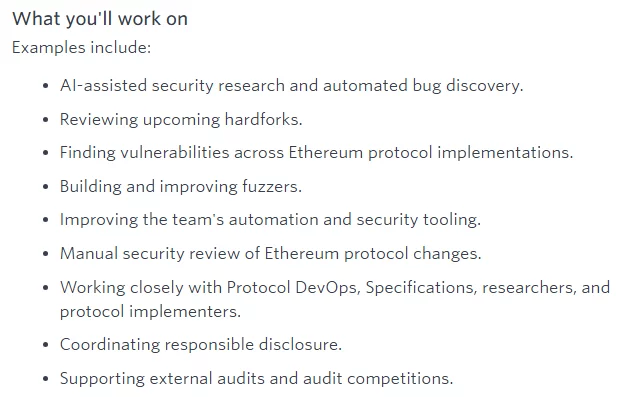
Ethereum Foundation is recruiting a protocol security researcher to use artificial intelligence, fuzz testing, and manual audits to find vulnerabilities across Ethereum’s core infrastructure.
Summary
- The researcher will examine Ethereum’s execution, consensus, networking, specifications, and client software.
- Responsibilities include AI-assisted vulnerability mining, hard fork reviews, fuzzing, audits, and disclosure coordination.
- The global remote opening follows the Foundation’s decision to cut 54 roles during a broader restructuring.
- Ethereum’s security team recently confirmed that its AI agents had identified real protocol bugs.
Ethereum security role covers the full protocol
According to the job posting, the researcher will join the Ethereum Foundation’s Protocol Security team and investigate weaknesses across several parts of the network.
The work covers the execution layer, which processes transactions and smart contracts, and the consensus layer, which coordinates validators. It also extends to Ethereum’s peer-to-peer network, technical specifications, and the client programs that implement protocol rules.
Key responsibilities include developing fuzzing tools, reviewing changes scheduled for hard forks, manually auditing protocol updates, and coordinating the responsible disclosure of confirmed vulnerabilities. The researcher will also use AI systems to support automated vulnerability discovery.
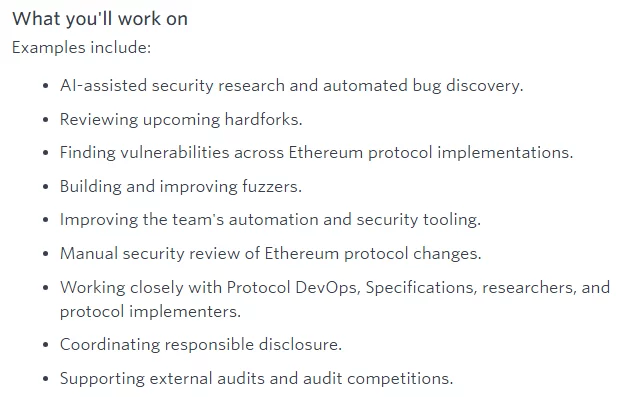
Such a combination reflects the limits of fully automated security testing. AI tools can generate large numbers of possible findings, but researchers must reproduce each issue, assess its impact, and separate genuine vulnerabilities from false positives.
Candidates need extensive knowledge of the Ethereum protocol. The Foundation said it prefers engineers who have contributed directly to protocol development or understand execution-layer and consensus-layer specifications.
Relevant programming languages include Go, Rust, Java, C#, Nim, and Python. The remote position is open to candidates in Europe and other regions globally.
AI tools have already found Ethereum bugs
The hiring follows the Ethereum Foundation’s recent tests of coordinated AI agents against protocol code, cryptographic software, and other systems used by the network.
In a July 9 technical post, the Protocol Security team said the agents had uncovered genuine flaws.
“The agents found real bugs…Agents finding bugs wasn’t the surprise. The surprise was how little of the work went into finding them, and how much went into telling the real bugs from the ones that just looked real.”
One confirmed finding was a remotely triggered panic in libp2p’s gossipsub component, part of the peer-to-peer layer used by Ethereum consensus clients. Developers fixed the flaw before it was disclosed as CVE-2026-34219.
However, the team said most of the work involved determining which AI-generated findings were real. Researchers required reproducible evidence, proof-of-concept code, and human review before treating a report as a vulnerability.
The new role formalizes that workflow by combining automated discovery with manual verification and disclosure management.
Hiring follows Ethereum Foundation restructuring
The recruitment comes less than a month after the Foundation dissolved its Protocol Support team as part of a restructuring that eliminated 54 positions, or about 20% of its workforce.
Protocol Support previously coordinated core developer meetings, tracked network upgrades, helped contributors navigate Ethereum Improvement Proposals, and operated training programs for new protocol developers.
Several former Foundation researchers have since moved into independent organizations. Former employees Mo Jalil, Oskar Thorén, and Aaryamann Challani created EthSystems, a for-profit company developing confidential Ethereum infrastructure for regulated institutions. Bitmine, SharpLink, and Consensys CEO Joe Lubin backed the venture.
Former Foundation researcher Francesco D’Amato also joined independent protocol research group Ethlabs on July 16.
The latest opening suggests the organization is still adding specialized staff in areas it considers essential, even as some development and coordination work shifts outside the Foundation.
Security remains central to Ethereum governance
The Foundation also appointed security researcher Pascal Caversaccio to its board on July 29 for an initial one-year voluntary term. His appointment expanded the board to four members and reinforced its stated focus on security, privacy, and censorship resistance.
For U.S. investors, protocol security has direct relevance because Ethereum supports spot exchange-traded funds, stablecoins, tokenized assets, and financial applications used by American institutions. A flaw affecting consensus or client implementations could disrupt infrastructure far beyond the Foundation itself.
The hiring process does not indicate that a new vulnerability has been discovered. Instead, the role expands the team responsible for reviewing future hard forks and finding weaknesses before protocol changes reach the main network.
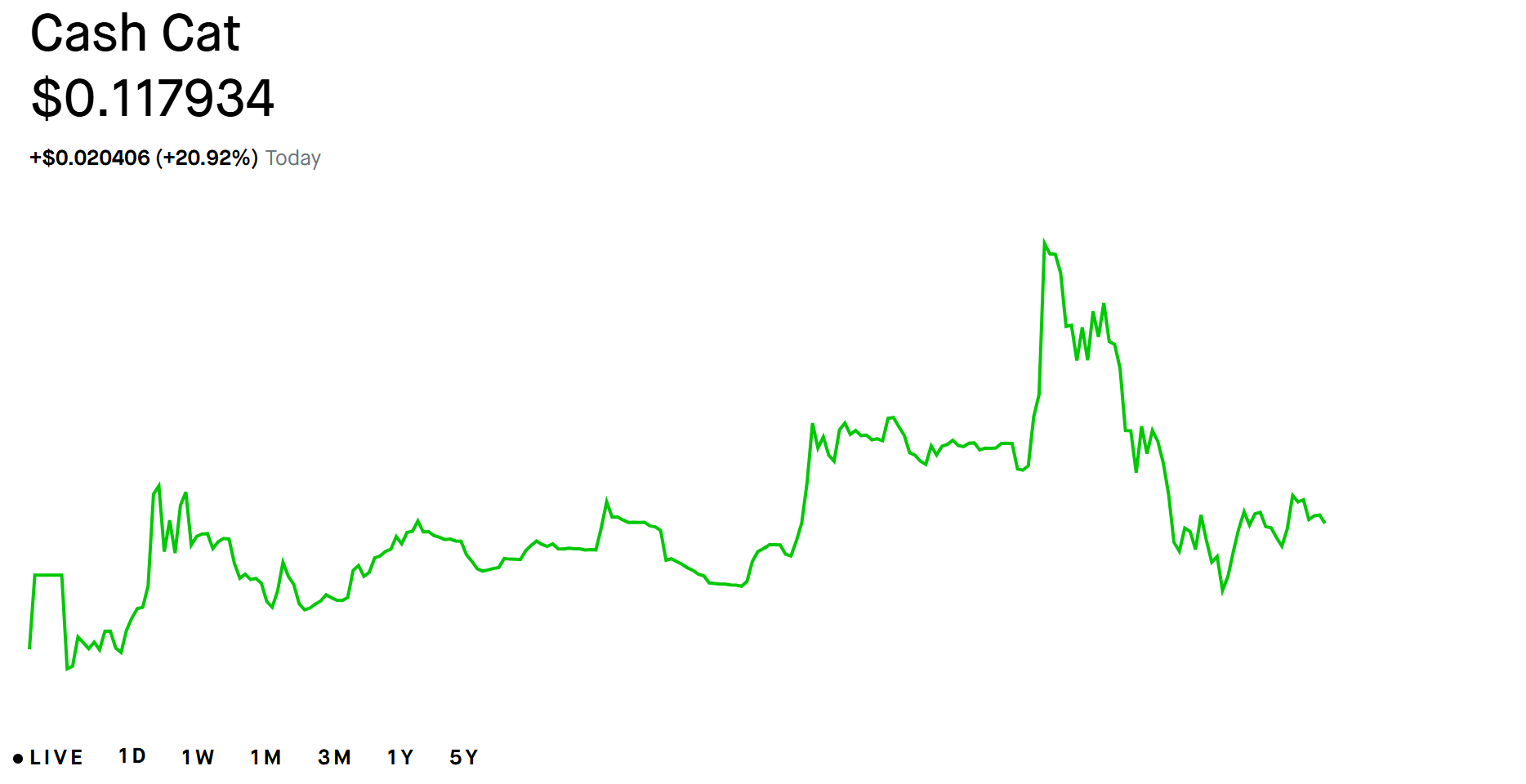
Robinhood listed a cat meme coin on Thursday that is named after the company’s own rejected name. The token more than doubled within hours, then handed back most of the gain.
Cash Cat (CASHCAT) ran from $0.0853 to $0.2143 in the 15 hours around the listing. That is a 151% move, according to onchain trade data. The token now sits near $0.1185.

A Rally Built on a Name Robinhood Threw Away
CASHCAT is a joke about Robinhood itself. The project’s site says the broker was almost called Cash Cat. It points to a 2021 post by Chief Executive Vlad Tenev.
The token has no link to the company. Its own website is blunt about that.
“No. We just think Cash Cat is a really good name they shouldn’t have abandoned. This is fan fiction with a ticker,” reads an excerpt in CASHCAT website FAQ.
Follow us on X to get the latest news as it happens
That did not stop the listing. Robinhood made the asset tradable in its app and on Legend, its desktop platform for active traders.
One Hour Did Most of the Work
The buying arrived in a burst. CASHCAT opened the midday UTC hour at $0.1288 and touched $0.2143, a 66% jump inside 60 minutes. That single hour saw $17.2 million in trades, more than any other hour of the day, GeckoTerminal data shows.
The peak landed within 6% of the record high of $0.2288 set on July 11. Then the move unwound. CASHCAT now trades 42% below Thursday’s top.

The reason is size. The main trading pool holds about $5.3 million. Roughly $92.6 million changed hands in a day. When daily trading runs 17 times deeper than the pool itself, large sells move the price hard.
Buyers still outnumbered sellers over the day, at 31,267 buys against 19,088 sells. The meme coin’s current price puts its market value near $116.8 million, ranking it 232nd overall. Chain records show 48,710 wallets hold it.
Meme Coins, Not Stocks, Still Rule Robinhood Chain
Robinhood launched its own blockchain on July 1. The company built it on Arbitrum and pitched it as “purpose-built for real-world assets” such as shares and exchange-traded funds.
Traders chose cats instead. Meme trading took over the network in its first week, and tokenized stocks trailed meme coins by value through July. Daily trading volume climbed to a record during the frenzy.
Thursday showed the pattern again. Exchange volume across the chain reached $517.8 million, up 60% in a day. Total deposits sat at $433 million, DefiLlama data shows. One cat coin moved the whole network.
CASHCAT is up about 1,193% over 30 days and briefly crossed a $200 million valuation in July. Analytics firm Artemis has warned that this kind of speculation could complicate Robinhood’s tokenization plans.
Bubblemaps Flags Wallets That Bought Early
Onchain analytics firm Bubblemaps looked at who was buying before the news broke. It found newly created wallets that loaded up on CASHCAT.
Bubblemaps did not name the wallet owners or allege wrongdoing. Robinhood has not commented on the addresses.
The next test is simple. CASHCAT needs the new retail buyers to stay once the listing stops trending.
The post Robinhood Listing Triggers a 100% Rally for This Meme Coin appeared first on BeInCrypto.


Ready, the self-custodial wallet formerly known as Argent, shut down its card program on Wednesday after its issuer wound down without warning, co-founder Itamar Lesuisse said in a post on X. "We were given no notice, so if you were relying on the card today, you found out at roughly the same time… Read the full story at The Defiant
Crypto World
Bitcoin Price Analysis: BTC Battles Key $65K Barrier as Short Liquidation Cluster Builds
Bitcoin has extended its recovery from recent lows and is now testing an important resistance region. While short-term momentum has improved, the asset is approaching an area that could determine whether the current rebound evolves into a larger breakout or another rejection within the broader consolidation.
Bitcoin Price Analysis: The Daily Chart
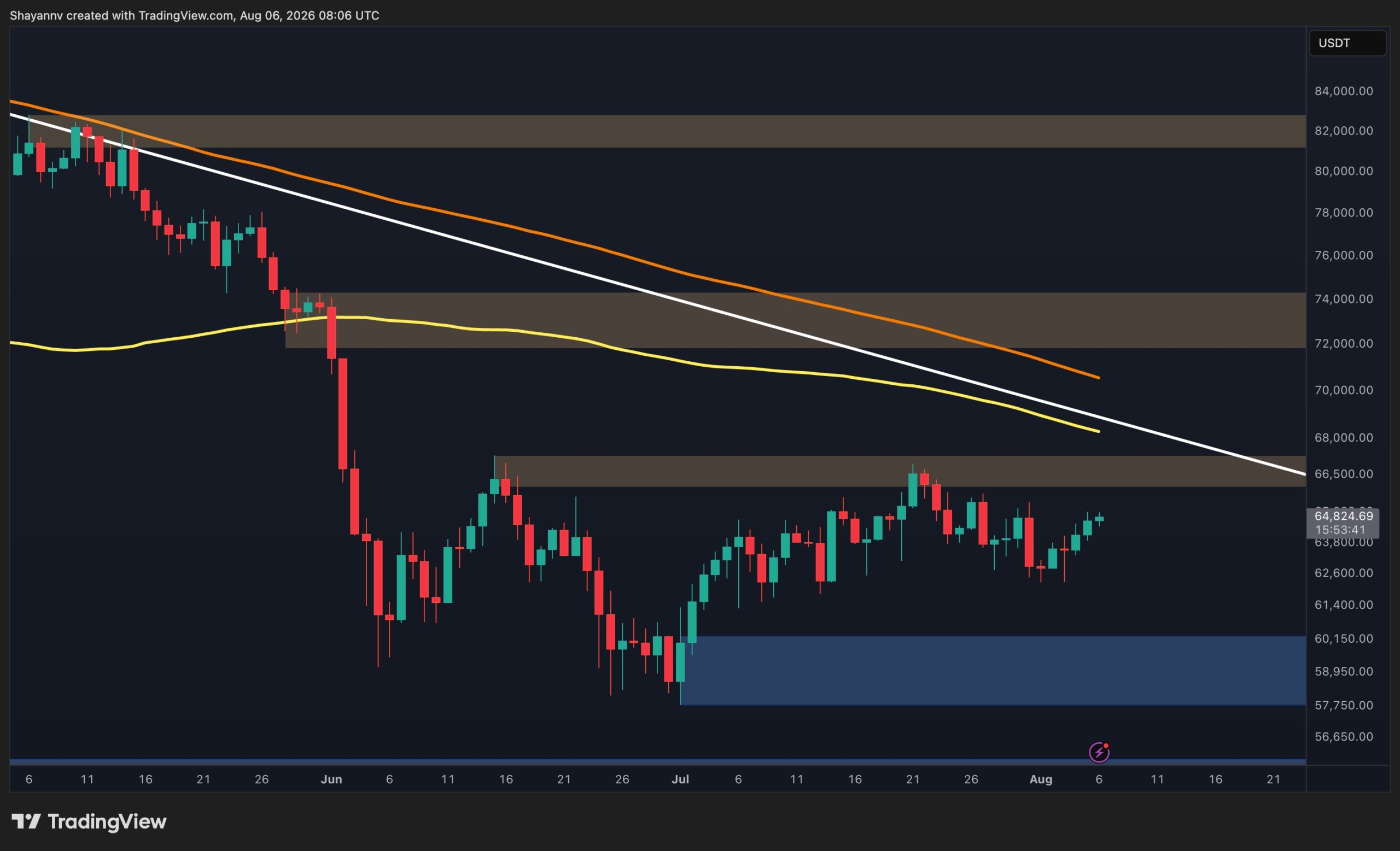
On the daily timeframe, Bitcoin continues to trade within its well-defined consolidation range. The recent rebound has carried the price back toward the major resistance zone at $66.2K to $66.8K, while the broader support remains at $57.8K to $60.2K.
Although buyers have regained short-term momentum, BTC is still trading beneath the declining 100-day and 200-day moving averages, which continue to reinforce the broader bearish structure. The descending long-term trendline also remains intact, adding further confluence around the overhead resistance.
For now, the market continues to favor range-bound conditions. A confirmed breakout above the $66.2K to $66.8K resistance would be the first signal that buyers are regaining control and could pave the way toward the next resistance around $72K to $74K. Until then, the current move appears to be another recovery leg inside the broader consolidation.
BTC/USDT 4-Hour Chart
The 4-hour chart shows that buyers have staged a strong recovery from the $61.8K to $62.3K demand zone, pushing Bitcoin back into the immediate resistance area around $64.8K to $65.4K.
This resistance has already rejected the price several times over the past two weeks, making it the key short-term barrier. A successful breakout above the $64.8K to $65.4K region would likely open the door for another rally toward the daily resistance around $66.2K to $66.8K.
However, failure to overcome this supply zone could trigger another rejection back toward the buyers’ defense at $61.8K-$62.3K, keeping BTC trapped within its broader consolidation range.

Sentiment Analysis
The latest two-week liquidation heatmap highlights a significant concentration of short liquidation liquidity above the current price, particularly around the $66K region. As Bitcoin continues pressing higher, this cluster becomes an attractive magnet for price, increasing the probability of an upward liquidity sweep.
If buyers manage to push through the nearby resistance, the liquidation of overleveraged short positions could trigger a short squeeze, accelerating bullish momentum toward higher resistance levels.
While a liquidation cluster also exists below the current market, it primarily reflects aggressive long positioning. For now, the more considerable and more attractive liquidity target remains overhead, favoring an upside sweep if buyers can maintain control.

The post Bitcoin Price Analysis: BTC Battles Key $65K Barrier as Short Liquidation Cluster Builds appeared first on CryptoPotato.


Uniswap's fee switch reached the protocol's newest pools this week, and the first revenue arrived alongside a public brawl over who is paying for it. The early returns favor UNI holders. Protocol revenue has nearly tripled since the July 27 activation, with about $325,000 flowing toward UNI burns… Read the full story at The Defiant

A Greek security researcher reportedly spent 22 months inside North Korean hacking servers. He came out with a victim list of 1,640 organizations in 57 countries.
Vangelis Stykas is chief technology officer at security firm Kumio. He presented the findings this week at Black Hat in Las Vegas.
How the Hunters Became the Hunted
Stykas turned the usual order around. He worked his way into the command-and-control servers the crews use to run their malware.
In some cases he landed on their personal computers. The hackers had infected those machines themselves.
Then he simply stayed. For nearly two years he watched them work and logged each new victim as it appeared.
He pulled roughly five terabytes of data. It held developer keys, private source code, and the crews’ own Slack and Discord messages.
That access is why the count is firm. Most threat reports estimate victims from the outside.
This one counted them from the attackers’ own files. Of the 1,640 organizations, Stykas rates 700 to 800 as seriously breached.
Follow us on X to get the latest news as it happens
In those cases the crews held root access to servers, Amazon Web Services (AWS) root permissions, or cryptocurrency wallet keys.
A Job Offer Was the Only Exploit They Needed
No software flaw opened these doors. A job offer did.
Developers were approached with senior roles and strong pay. They were then asked to run a take-home coding test. The test installed malware.
Palo Alto Networks researchers named the pattern Contagious Interview back in November 2023. Five security firms have since tracked the same crew under six different labels.
Microsoft published its own breakdown in March 2026. It traced the chain to fake code packages hosted on GitHub, GitLab, and Bitbucket.
Opening one in Visual Studio Code triggers a trust prompt. Approve it, and the editor runs the attackers’ code for them.
“By embedding targeted malware delivery directly into interview tools, coding exercises, and assessment workflows developers inherently trust, threat actors exploit the trust job seekers place in the hiring process,” read an excerpt in a March security blog from Microsoft security blog.
The backdoors then hunt a short shopping list. Microsoft names API tokens, cloud credentials, signing keys, crypto wallets, and password manager files.
Hiring is a repeat weak point. Consensys caught a hidden North Korean developer on its own team, a month into work on MetaMask code.
One Contractor, Thirty Front Doors
The lure is cheap. The reach is not.
Stykas found contractors carrying live credentials for as many as 30 companies. A single infected laptop became thirty ways in.
Boston Children’s Hospital shows the pattern. Stykas traced its exposure to a former contractor’s personal device.
The hospital disputes the framing. It says it cut the credentials within hours and found no sign its own systems were entered.
The crews were also picky. They could reach health records and criminal databases, yet ignored both.
They went for wallets and blockchain access instead. Coinbase and Uniswap Labs sit among the organizations that acted on his warnings.
That discipline shows up in the totals. Crews tied to the Democratic People’s Republic of Korea (DPRK) stole a reported $2.02 billion in digital assets during 2025.
CrowdStrike logged that as a 51% jump in one year. It also flags a crew it calls GOLDEN CHOLLIMA for using recruitment lures to reach fintech cloud environments.
That is the chain Stykas watched from the inside. The human route keeps winning.
TRM Labs traced April’s $285 million Drift Protocol theft to in-person meetings between North Korean proxies and staff.
Two attacks produced 76% of 2026 losses from just 3% of incidents. Pyongyang’s running total now clears $6 billion since 2017.
Stykas says fresh victims are still surfacing in the data. Most organizations he warned never wrote back, which is why groups like Crypto ISAC now pool DPRK threat intelligence instead.
The post Researcher ‘Lives’ Among North Korean Hackers, Discovers 1,640 Victims appeared first on BeInCrypto.
Kit Connor Reportedly Cast as Cyclops in Marvel Studios’ X-Men Reboot

Why She Said No to a $20 Million Settlement Deal #shorts #money

Raleigh owner files for insolvency with UK bikemaker at risk

Renter of Home in Anne Heche Crash Denies Settlement With Son

No Jackpot Winner as $257 Million Prize Rolls Over to $269 Million Monday Draw

Weekend Open Thread: Staud – Corporette.com
Why She Said No to a $20 Million Settlement Deal #shorts #money

Cryptocurrency Halal or Haram? #muftitariqmasood #tariqmasood #crypto #cryptocurrency

How To Use Money Wisely: Unlock Financial Freedom With Myles Munroe | MunroeGlobal.com
-

 Fashion6 days ago
Weekend Open Thread: Wit & Wisdom
-

 Politics6 days ago
Meta enters AI-training agreement with far-right ‘propaganda rag’ Newsmax
-

 Politics4 days ago
Zack Polanski: an incitement to murder Nigel Farage?
-

 Crypto World5 days ago
MicroStrategy Post-Earnings CLARITY Act Push Could Add New Catalyst for Its Stock
-

 Crypto World5 days ago
XRP Ledger v3.3.0 brings five institutional features
-

 Sports7 days ago
Seema Kaliramna Wins Discus Throw Bronze, Takes India’s CWG Medals Tally To 17
-

 Crypto World6 days ago
New York sues Kalshi over prediction market gambling
-

 Crypto World4 days ago
Crypto PAC spending tops $2M in Michigan House race
-

 Business4 days ago
DTCR: Deleveraging And A Hedge Fund Collapse Point To A Possible AI Bottom
-

 Business6 days ago
Trump Announces Hamas Disarmament Agreement as Iran Strikes Kuwait Air Base and US Attacks Pause Overnight
-
 Crypto World6 days ago
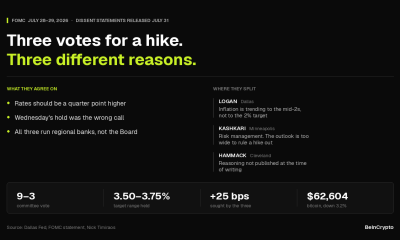
3 Fed Officials Just Explained Their Rate Hike Vote: Is Inflation Winning?
-

 Tech5 days ago
ESET tracks rise in malicious AI skills and adaptable malware
-

 Tech6 days ago
Gemini Spark can now use Chrome logins and saved passwords to run errands on your behalf
-
 Tech6 days ago
Building A Reproduction PlayStation Motherboard
-

 Sports5 days ago
France Cricket implodes: letters hidden in a drawer and a board at war
-
Crypto World4 days ago
XRP Ledger urges node upgrade after manifest flood
-

 Crypto World5 days ago
Moneyflip CEO charged in $40K murder-for-hire plot
-
 Sports6 days ago
Bruno Fernandes decision made as Man United ‘discuss’ striker transfer option
-

 News Videos5 days ago
Financial Crash Expert: The 90-Day Collapse Timeline They Are Desperately Hiding.
-

 NewsBeat7 days ago
Spain sending troops as thousands enter enclave of Ceuta from Morocco
You must be logged in to post a comment Login