
Crypto World
Trump Backs CLARITY Act as Crypto Industry Calls for Legal Clarity


U.S. President Donald Trump renewed pressure for passage of the Digital Asset Market Clarity (CLARITY) Act as the Senate remains in recess, urging lawmakers to move quickly on a bill he framed as essential for keeping the United States competitive.
During a Wednesday press conference with prominent crypto executives—including Coinbase CEO Brian Armstrong and Gemini co-founders Cameron and Tyler Winklevoss—Trump said Congress should adopt “a fair version” of CLARITY, arguing the measure would help the U.S. stay “ahead of China.” The bill already cleared the House of Representatives in July 2025, but its momentum in the Senate has stalled for months amid concerns raised by market structure provisions related to tokenized equities, stablecoin-related rewards, and potential conflicts of interest involving the Trump family.
Key takeaways
- Trump pushed for a Senate advance of the CLARITY Act while lawmakers are out of session, emphasizing long-term competitiveness.
- Coinbase CEO Brian Armstrong argued the bill could provide “durable” U.S. crypto policy and suggested it may attract a large Senate coalition.
- Trump referenced former Sen. Lindsey Graham as a key early supporter and urged action in his honor.
- Industry comments came as the CFTC prepared for an Innovation Advisory Committee meeting before Congress returned.
- At the same time, the SEC has proposed a framework aimed at offering certain safe harbors in the absence of CLARITY.
Trump links CLARITY to competitiveness and legislative urgency
Trump’s remarks positioned CLARITY as both a regulatory and economic strategy. He told reporters that members of Congress should pass a version he described as “fair,” asserting it would help the U.S. remain competitive with China.
While the Senate is not currently in session, Trump used the moment to press for momentum. He also characterized support as broad, saying “Lot of Democrats support,” and described CLARITY as “very bipartisan.” The president’s framing suggests the White House is treating the bill as a priority item not only for crypto-focused constituencies, but for the broader political calculus around technology leadership.
Coinbase and Gemini executives emphasize potential durability
Brian Armstrong spoke after Trump and top U.S. regulators at the press event. Armstrong argued that CLARITY would make U.S. crypto policy “durable into the future,” implying that clearer rules could outlast short-term political shifts and help businesses plan beyond election cycles.
Armstrong also floated a potential path to Senate progress. He speculated the bill could garner “more than 60 votes” once the Senate addresses a cloture motion on Sept. 18—an important procedural step that can limit debate and allow a final vote on legislation. Even without claiming certainty, Armstrong’s estimate reflects an industry belief that the bill may be closer to a legislative breakthrough than critics suggest.
Why the Senate delay matters: provisions under scrutiny
CLARITY’s legislative trail provides key context for why the delay has become politically and technically significant. The House approved the bill in July 2025, but the Senate has not taken it up decisively for months. The stall has been tied to debates over specific components, including how tokenized equities would be treated, how stablecoin rewards could operate under the proposed structure, and whether the Trump family’s involvement creates conflicts of interest perceptions within the crypto industry.
These concerns matter for investors and market participants because they affect not just legal interpretation, but also product design and market structure. Rules shaping how digital assets are regulated can influence liquidity, custody practices, exchange operations, and the willingness of traditional finance firms to engage with tokenized markets.
Regulators move in parallel: CFTC planning and SEC proposals
Trump’s push came amid a busy regulatory backdrop. Industry executive remarks arrived one day before the CFTC was scheduled to hold an Innovation Advisory Committee meeting. CFTC Chair Michael Selig said the agency would explore how it can move forward on crypto regulation at the meeting, noting that Congress would not return for another month. The timing highlights a tension investors frequently face during legislative gridlock: while Congress debates market structure, agencies continue attempting to build practical frameworks through their own processes.
That parallel effort extends to the SEC as well. Earlier coverage noted that the Securities and Exchange Commission proposed crypto rules designed to offer companies a safe harbor from tokens being treated as “investment contracts,” along with exemptions related to token issuance. The implication is that, even if CLARITY remains stuck, regulated entities are still being offered potential pathways to compliance—though the approach is necessarily narrower and varies by agency authority.
Taken together, the developments suggest the U.S. regulatory landscape is moving forward on multiple tracks at once: one involving comprehensive legislation through CLARITY, and another involving agency rulemaking or proposed regulatory guidance in the interim.
What to watch next
Attention is likely to center on whether the Senate advances the cloture motion discussed by Armstrong for Sept. 18, and on how the SEC and CFTC continue building workable rules while Congress remains out of session. For market participants, the key question is whether CLARITY ultimately resolves the structural uncertainties that agencies are trying to address piecemeal.

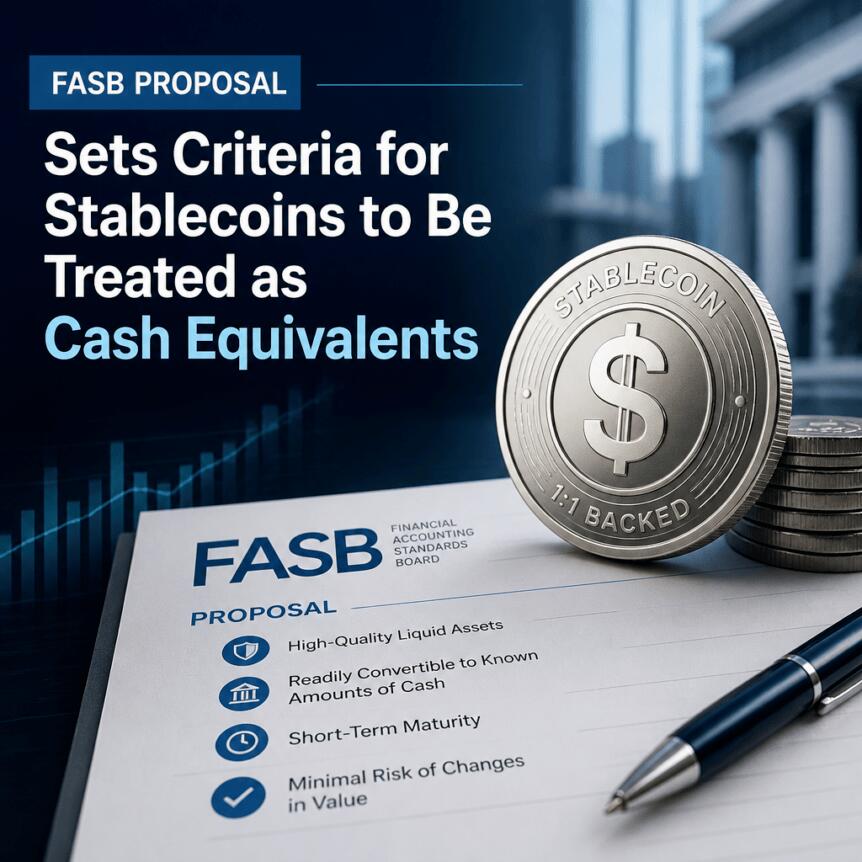
The Financial Accounting Standards Board (FASB) has proposed new guidance that would help clarify when certain stablecoins can be classified as “cash equivalents” under US generally accepted accounting principles (GAAP). The move targets long-running inconsistencies in how companies account for digital assets, especially those used in treasury management or day-to-day payments.
In a notice released Tuesday, the FASB said it is seeking public comment on an update that would add illustrative examples to the existing cash-equivalents definition without changing the core definition itself. The proposal is designed to give companies a clearer framework for evaluating whether specific stablecoins meet the standard required for cash-equivalent treatment.
Key takeaways
- FASB’s proposal would add examples to GAAP cash-equivalents guidance while keeping the definition unchanged.
- To qualify, a digital asset would generally need an on-demand redemption right and reserves held in short-term, highly liquid assets on at least a one-to-one basis.
- Active secondary market trading alone would not be sufficient if holders cannot redeem directly from the issuer for a known amount of cash.
- Companies would still decide whether to present qualifying items as cash equivalents and must consider applicable laws and regulations.
- The proposal would increase annual disclosure requirements, including major cash-equivalent components and their amounts.
What FASB is proposing for cash-equivalent classification
FASB said the proposed Accounting Standards Update would enhance clarity around the “cash equivalents” evaluation for certain digital assets, including stablecoins. According to the filing, the cash-equivalents definition for a qualifying digital asset would require, among other conditions, an on-demand contractual redemption right.
The proposal outlines additional redemption and reserve requirements. Specifically, it would require:
- a direct redemption right with the issuer for a known cash amount, and
- segregated reserves held at least on a one-to-one basis, comprised of short-term, highly liquid assets.
While these conditions aim to make the evaluation more consistent, the FASB emphasized that the change would not automatically classify every dollar-pegged token as a cash equivalent. In other words, a stablecoin’s price peg would not be the only determinant—its contractual redemption terms and the quality of its reserves would be central.
Why redemption rights and reserves matter more than “being pegged”
A key element of the proposed examples is that classification depends on the holder’s ability to convert the token to cash under defined terms, not merely on market activity. One example in the proposal indicates that an active secondary market would not qualify a stablecoin if the holder lacks a direct issuer redemption right.
Similarly, the guidance suggests that reserve composition can disqualify a token even if it appears stable in practice. In another example, the proposal indicates that reserves made up of a mix of crypto assets and gold would fail the cash-equivalent test because valuation risks could undermine the “highly liquid” expectation embedded in the definition.
This distinction is important for investors and reporting teams because stablecoins can vary widely in contractual redemption structure and in how issuers allocate and manage reserves. If a company uses stablecoins for treasury operations—such as parking funds temporarily—the question becomes whether those assets behave like cash in both timing and certainty of conversion.
Disclosure requirements would expand for cash equivalents
Beyond classification, the proposal would change what companies disclose. It would require annual disclosure of the significant components of cash equivalents and the related amounts. That list could include items such as Treasury bills, commercial paper, stablecoins, and money market funds.
FASB said the proposed disclosure obligations would apply to all entities that present cash equivalents, regardless of whether they hold digital assets. That means even companies not using stablecoins directly could still face the new component-level transparency requirements for their cash equivalents mix.
How the proposal connects to US stablecoin regulation
FASB’s accounting update comes after the passage of the GENIUS Act, which earlier created a federal regulatory framework for payment stablecoins in the United States. According to earlier coverage cited in the article, the law—signed in July 2025—established requirements for permitted issuers, including maintaining one-to-one reserves in assets such as dollars and short-term Treasurys, publishing monthly reserve details, and setting redemption procedures.
That regulatory backdrop may affect how companies evaluate stablecoin structures for accounting purposes, but it does not replace the cash-equivalent test. The FASB proposal is aimed at the GAAP definition and how to apply it consistently, including whether reserves meet the “short-term, highly liquid” condition and whether redemption rights are direct and contractual.
For market participants, this linkage matters because accounting treatment can influence balance-sheet presentation, internal treasury policies, and how auditors evaluate risk. A stablecoin that satisfies the GENIUS Act’s reserve and redemption concepts could be better positioned to meet the cash-equivalent framework—though the proposal still leaves room for judgment and scenario-specific analysis.
What happens next for companies using GAAP
FASB is accepting public comments on the proposed update until Nov. 19. After reviewing feedback, the board will set an effective date.
Companies that hold stablecoins for treasury or payment-related purposes may want to start reviewing their arrangements now—especially the contractual redemption terms available to holders and the actual reserve structure behind the token. Even with improved illustrative examples, the filing underscores that not every stablecoin will automatically qualify as a cash equivalent.
Until FASB finalizes the update, investors and stakeholders should watch for how issuers and auditors interpret the on-demand redemption and segregated reserve standards, and whether companies adjust their reporting processes ahead of any new effective date.
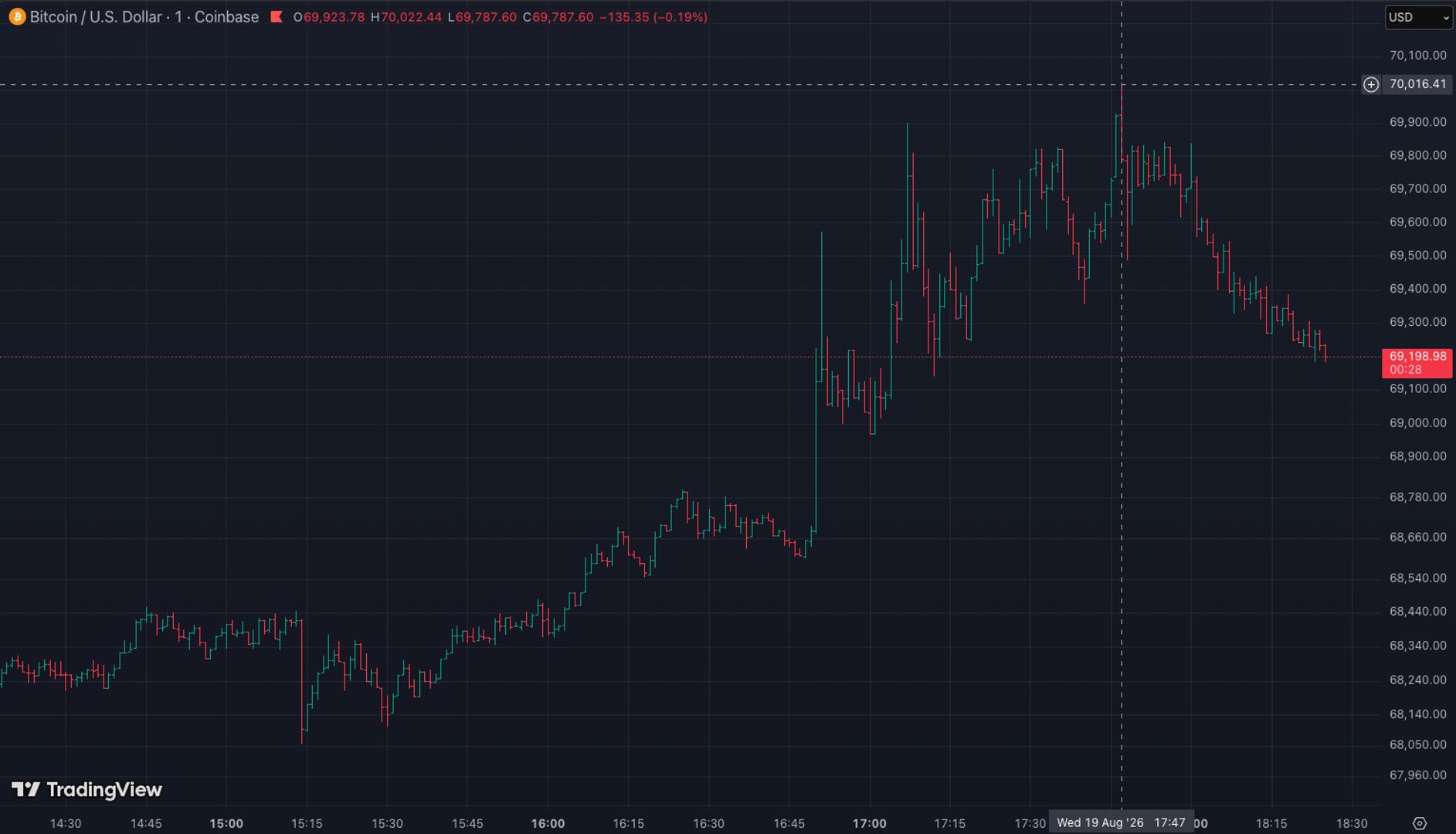
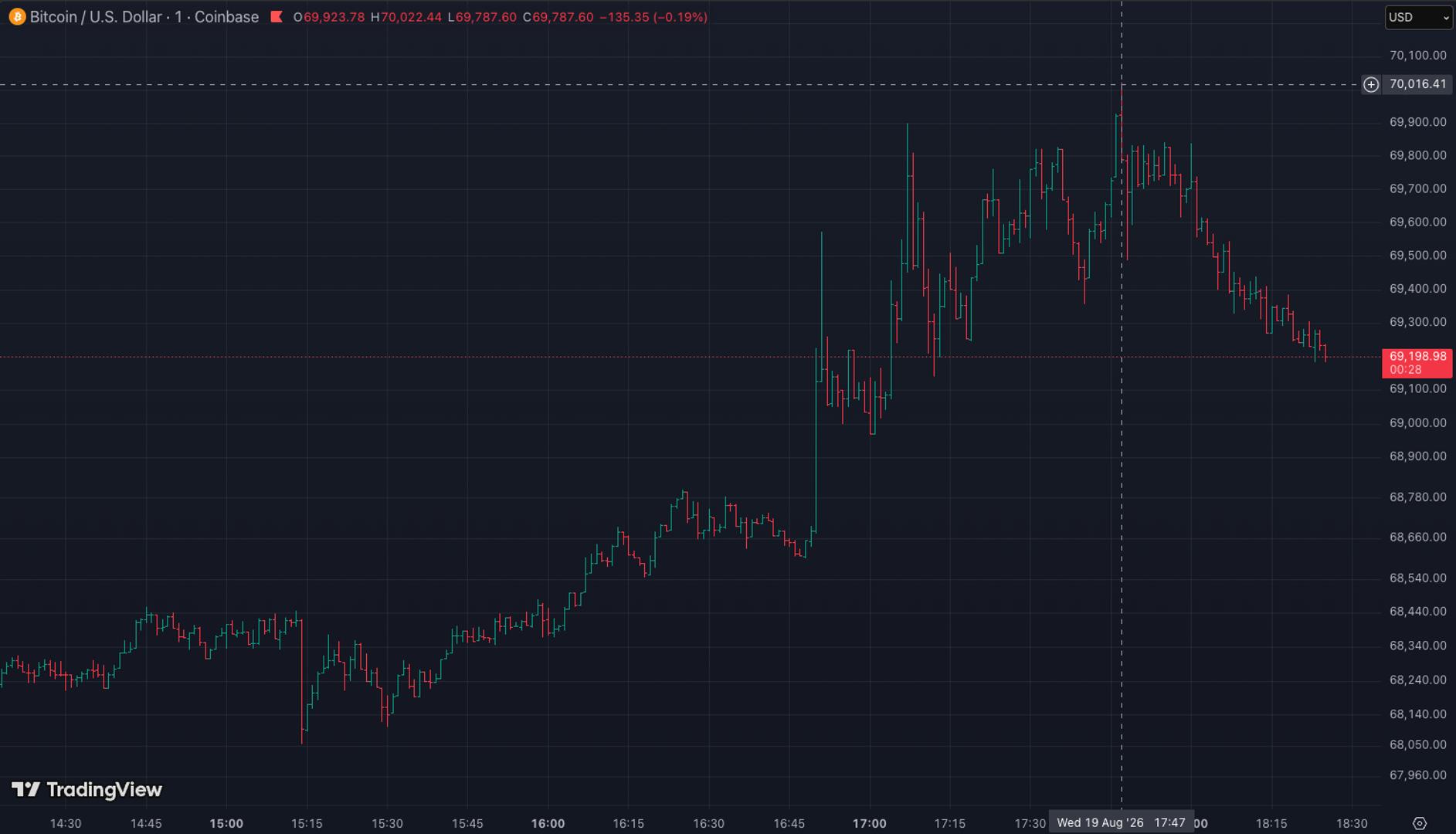
The largest crypto asset rose more than 7% on Wednesday after several catalysts sent crypto-related assets higher.
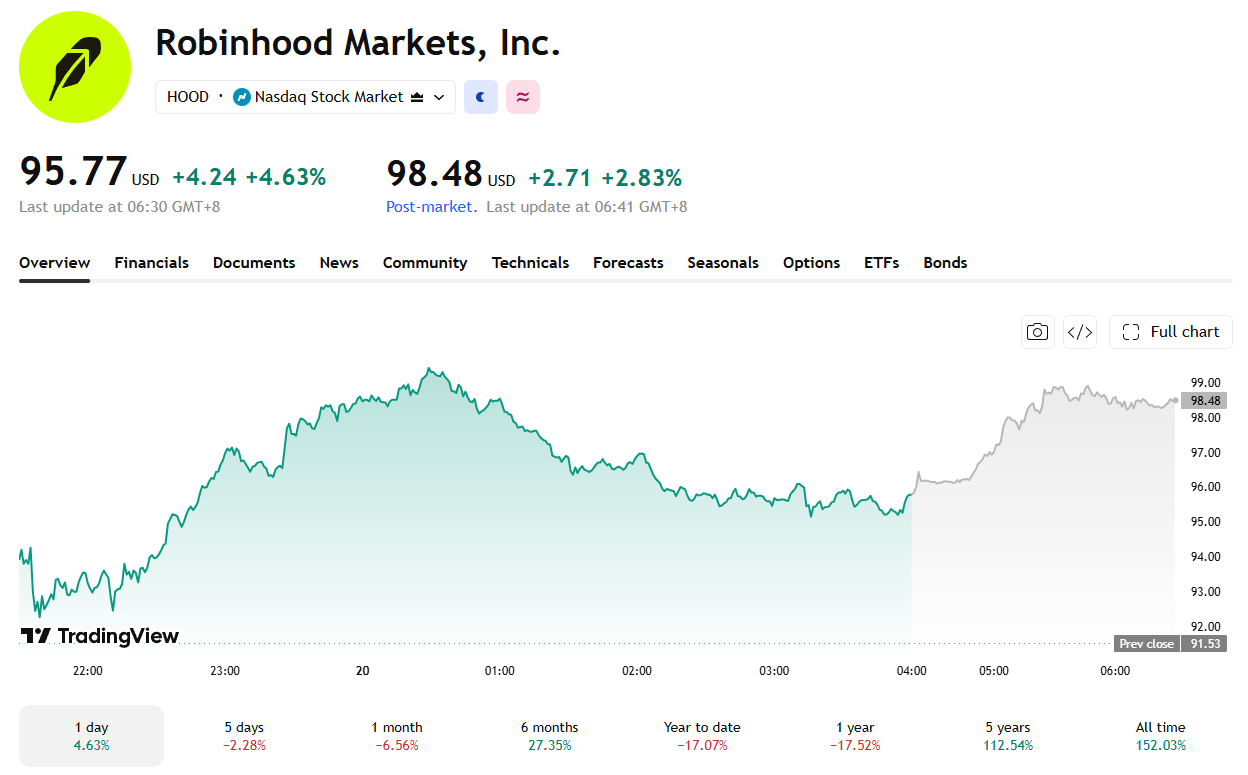
Fundstrat’s Tom Lee updated his top stock ideas for 2026. He added JPMorgan and Arista Networks to his core list, but named Robinhood a stock to avoid.
His Investment Committee pushed back almost immediately. Panelists argued the call misreads a company that has become one of crypto’s favorite stocks.
Why Tom Lee’s Committee Pushed Back
Speaking on CNBC, Kevin Simpson, founder and chief investment officer of Capital Wealth Planning, disagreed most directly with Lee.
“I couldn’t disagree more.”
— Kevin Simpson, CNBC
He pointed to Robinhood’s second-quarter results. Revenue rose 32% year-over-year to a record $1.31 billion. Diluted earnings per share climbed 48% to $0.62. Net deposits hit a record $22 billion, up 28% on an annualized basis.
Simpson said Robinhood has outgrown its early, pandemic-era reputation. He pointed to its purchase of a registered investment adviser and its in-house custodial platform.
Brenda Vingiello, chief investment officer at Sand Hill Global Advisors, sold her Robinhood shares in June, citing a breakdown in the stock’s momentum. Still, she disagreed with Lee’s broader call.
She said a crypto market recovery could lift the stock again, since Robinhood still tracks digital asset sentiment closely.
A Growing Crypto and Blockchain Footprint
Robinhood’s own crypto trading business is shrinking. Crypto transaction revenue fell 38% year-over-year to $100 million in the second quarter, the company said.
Robinhood has redirected its crypto ambitions toward infrastructure instead. In July, it launched Robinhood Chain, its own layer-2 blockchain built on the Arbitrum network. The chain is designed for tokenized stocks, decentralized lending, and round-the-clock trading.
Robinhood Chain’s total value locked has topped $550 million, according to DefiLlama. Tokenized stocks and other real-world assets account for about a quarter of that total.
Stablecoins make up a much larger share of Robinhood Chain’s total value. USDG, Robinhood’s dollar-backed stablecoin, accounts for more than half of that stablecoin pool, per DefiLlama data.
One Robinhood-branded token even triggered a 100 percent meme coin rally after listing on the chain. It’s unclear yet whether tokenized stocks or crypto speculation will define the chain’s future.
Arista and JPMorgan Get the Nod
Lee’s other additions drew less debate. Arista Networks has benefited from accelerating AI networking demand, while JPMorgan earned praise amid a recovering IPO market.
Robinhood shares traded near $96, giving it an $86 billion market cap. Whether Lee’s other stock picks age well may depend on Robinhood’s crypto side, not its brokerage growth.

The post Tom Lee Says Avoid Crypto Favorite Robinhood Stock Despite Record Q2 Growth appeared first on BeInCrypto.


The integration expands access to USDU, the UAE’s first central bank-registered US dollar stablecoin, as it builds distribution beyond institutional channels.


The US Securities and Exchange Commission (SEC) proposed a new regulatory framework that would let crypto projects raise money without full securities registration, marking what some in the industry are already calling a return of the ICO, the token-sale model that all but disappeared after 2017.
Commissioner Hester Peirce, whose 2020 safe harbor proposal helped shape the rule, said the plan gives entrepreneurs a path past what she called an ill-fitting set of rules applied to the industry for years.
What the Exemptions Cover
Regulation Crypto Assets creates two paths around full registration. Smaller projects qualify for a startup exemption, capped at $5 million raised over four years, with no accredited-investor requirement or cap on individual buy-ins.
Larger raises fall under a fundraising exemption up to $75 million per year, though issuers must file audited financials and keep up with ongoing reporting once they cross into that tier. Both remain subject to the SEC’s standard antifraud and antimanipulation rules.
The proposal builds on a March interpretation issued jointly by the SEC and the Commodity Futures Trading Commission (CFTC), which spelled out when a token can stop being tied to an investment contract, the legal structure regulators use to classify a token as a security.
The Return of the ICO
Initial Coin Offerings (ICOs), the token-sale boom of 2017, collapsed once the SEC began treating most of them as unregistered securities offerings and suing accordingly. With no legal onshore route left, teams spent years engineering workarounds instead, routing sales through offshore foundations, restricting buyers to non-US residents, running accredited-investor-only rounds under Regulation D, or dressing up token distributions as airdrops and points programs.
Regulation Crypto Assets is the first rule that gives those teams a legal path to sell tokens onshore again. The $5 million startup lane in particular strips away the accredited-investor gatekeeping that has defined US crypto fundraising for eight years, a structural echo of what 2017-era ICOs tried to do before regulators shut the door.
What’s Different This Time
Unlike the disclosure-free chaos of 2017, issuers under either exemption still owe investors principles-based disclosures, and the larger tier requires audited financials most ICO-era projects never provided.
The rule would also preempt state securities registration for qualifying offerings, and it stops well short of the separate tokenized-securities framework some in the industry want, which was not part of Tuesday’s proposal.
The timing adds pressure of its own. Lawmakers left for summer recess without voting on the stalled CLARITY Act, legislation that would divide crypto oversight between the SEC and the CFTC, leaving the agency to move on its own through rulemaking instead.
Peirce called the proposal one step on a longer road and invited feedback during the 60-day comment period, particularly on how tokens might function more like equity so holders can share in a network’s growth. Whether an ICO-style wave actually follows will also depend on altcoins poised to benefit most from the new rules.
The post Return of the ICO? SEC Wants Token Fundraising to Escape Securities Status appeared first on BeInCrypto.
SpaceX’s attempt to acquire artificial intelligence coding startup Cognition AI Inc. stalled without a deal, according to people familiar with the matter. The approach would have been SpaceX’s second major AI takeover in recent months.
The deal talks are no longer active, but the two companies continue discussing a compute partnership instead, letting Cognition use SpaceX’s computing capacity, the people said.
Independence Over a Buyout
Cognition, founded in 2023, builds Devin, an AI agent designed to automate programming tasks for software engineers. The startup was valued at $26 billion in a May funding round. It has since opened early talks for fresh financing at a valuation of at least $40 billion, a trajectory that gives it less reason to sell.
Cognition Chief Executive Officer Scott Wu has been consistent on the matter, both publicly and in conversations with investors. He told Bloomberg in May that the company’s funding round
“allows us to stay independent and continue as an independent business, which is really important for us.”

A Different Outcome Than Cursor
The stalled approach stands in contrast to SpaceX’s $60 billion Cursor acquisition, which closed on August 14 and gave Musk’s rocket firm a rival AI coding platform outright. SpaceX’s AI venture, now called SpaceXAI, has lagged competitors in selling AI tools to businesses. It has also cut jobs while restructuring around the effort.
Cognition’s partnerships with Mercedes-Benz Group AG and GE Aerospace add business weight SpaceXAI wanted, even without a takeover, the people said. Musk’s SpaceX stock market debut this summer gave the company capital to chase such deals. Whether a revised offer emerges may depend on how Cognition’s next funding round reshapes its price tag.
SpaceX Stock Swings Ahead of Share Unlock
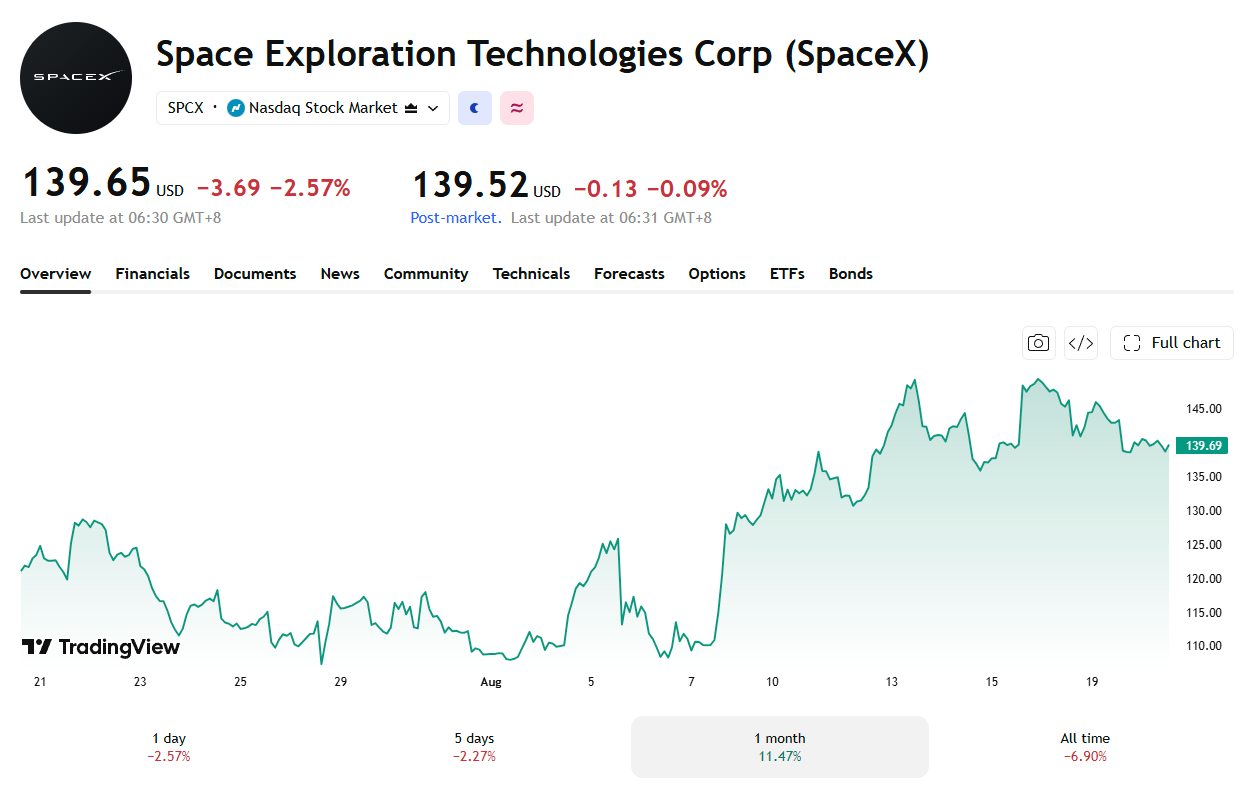
SpaceX shares have been volatile since the June initial public offering (IPO). The stock closed as low as $108.27 in early August before rebounding above its $135 offering price.
Shares traded at around $139, ahead of a share unlock, which frees previously restricted insider shares for sale, covering about 319 million shares. The rebound followed stronger-than-expected second-quarter revenue of $7.8 billion, and Nvidia’s disclosed $21 billion stake in the company added to investor interest.
Musk’s SpaceX stock market debut gave the company capital to chase AI deals like the one it explored with Cognition. Whether a revised offer emerges may depend on how Cognition’s next funding round reshapes its price tag.
The post Elon Musk’s AI Startup Acquisition Fails to Land as Cognition Rebuffs SpaceX Buyout appeared first on BeInCrypto.
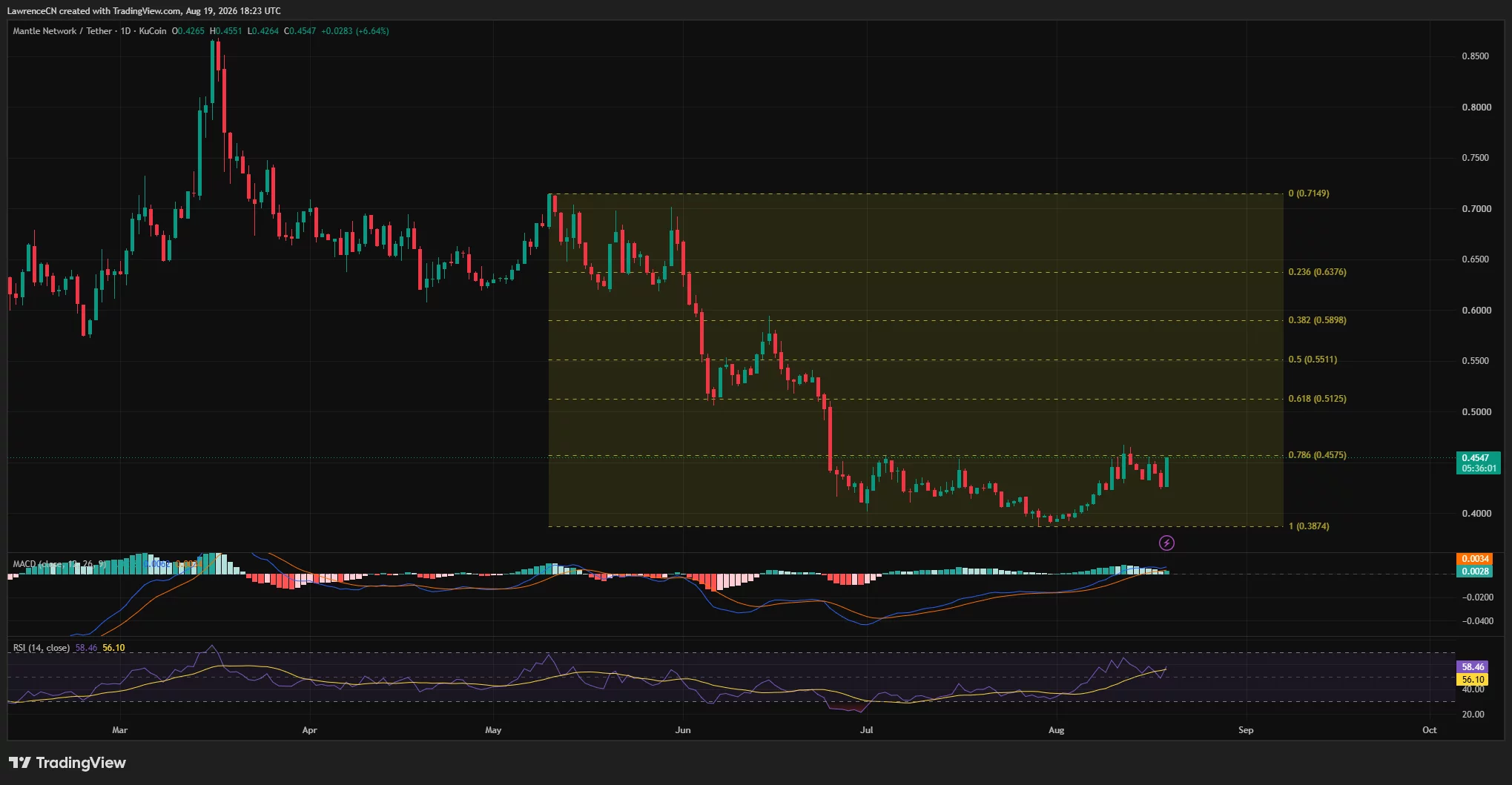
Mantle price rebounded more than 6% on Aug. 19 as MNT tested a key resistance level near $0.46, while liquidation data pointed to a larger pool of leveraged positions above the market.
Summary
- Mantle price rose 6.6% to approximately $0.455 during the latest daily session.
- The token is testing Fibonacci resistance at $0.4575 after rebounding from $0.39.
- Liquidation liquidity is concentrated between $0.46 and $0.49, creating a possible short-squeeze zone.
- Mantle hosted 155 tokenized equities and more than $1 billion in DeFi TVL by June.
Mantle price approaches a breakout level
According to data from crypto.news, Mantle (MNT) price traded around $0.455 after rising 6.6% during the daily session shown. The recovery extended a rebound that began after MNT reached approximately $0.39 at the start of August.
The token has since formed a series of higher lows and briefly reached $0.467 on Aug. 13. Sellers rejected that advance, but MNT held above $0.42 before returning to the upper end of its recent range.
The daily chart places immediate resistance at $0.4575, which matches the 78.6% Fibonacci retracement of MNT’s decline from $0.7149 to $0.3874. A daily close above that level would indicate that buyers have recovered the final Fibonacci barrier before the previous breakdown area.
Momentum indicators support the rebound without showing an overbought market. The daily relative strength index stood at 58.46, above its signal average of 56.10 but below the 70 level commonly associated with overbought conditions.
The moving average convergence divergence indicator also remained positive. However, the small distance between its two lines showed that MNT still needed stronger momentum to confirm a sustained breakout.
Liquidation clusters could pull MNT toward $0.49
CoinGlass’ one-week liquidation heatmap showed several layers of leveraged positions immediately above MNT’s market price. The closest concentrations appeared between $0.46 and $0.47, while brighter and denser bands extended from around $0.475 to $0.49.
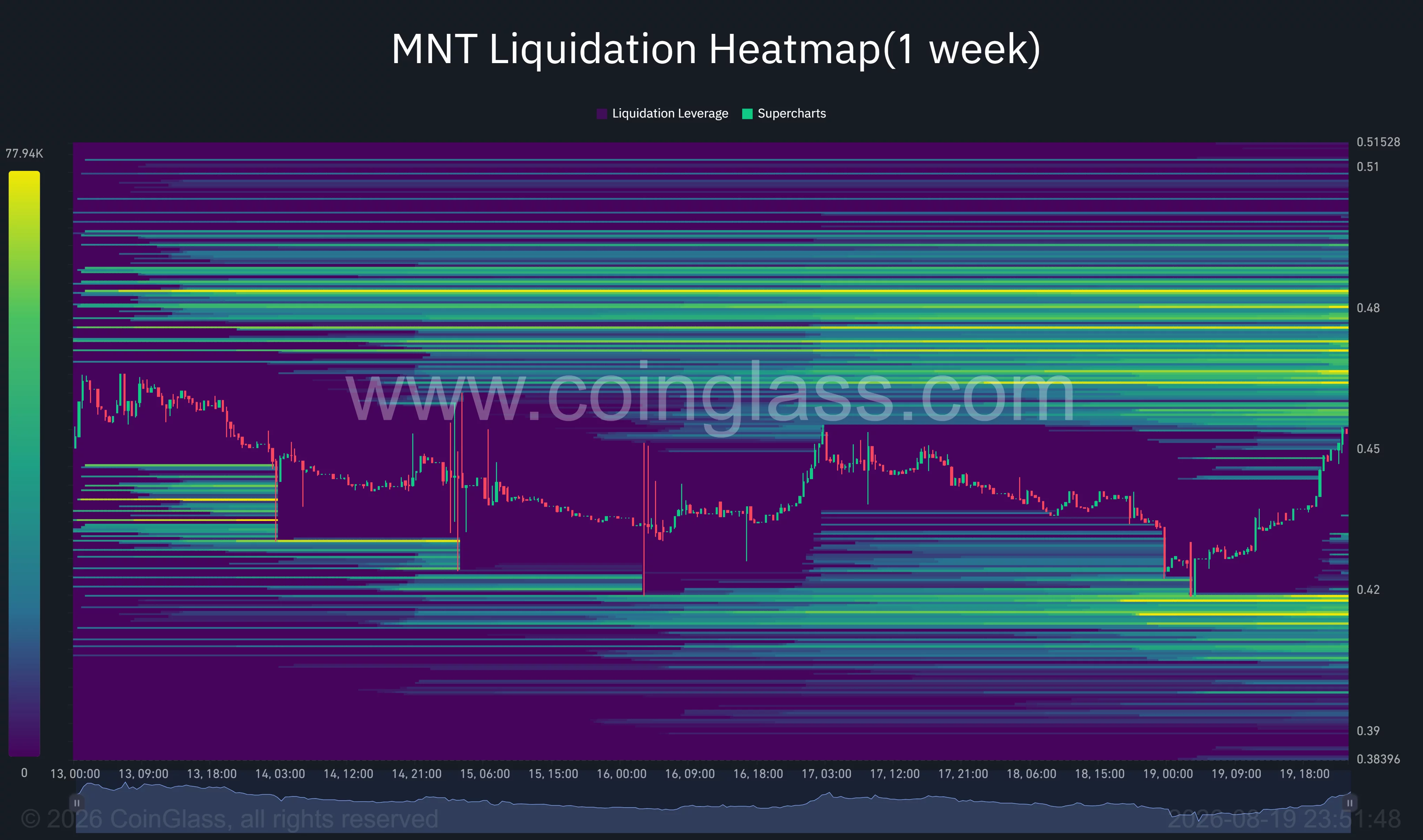
Liquidation clusters do not guarantee that price will move toward them. They mark areas where leveraged positions could be closed if the market reaches their trigger prices, potentially adding forced buying or selling to an existing move.
A break above $0.4575 could therefore expose the first liquidity band near $0.47. If rising prices force traders holding short positions to buy back MNT, the resulting pressure could push the token toward the stronger $0.48–$0.49 cluster.
The heatmap showed the nearest large downside liquidity pool between roughly $0.412 and $0.418. MNT could revisit that region if it loses recent support and leveraged long positions begin closing.
MNT must defend $0.44 to preserve momentum
The 4-hour chart showed MNT reaching $0.4547, close to the upper Bollinger Band at $0.4561. Trading at the upper band reflects strong short-term momentum, although it can also leave the token vulnerable to a pullback if buyers fail to clear resistance.
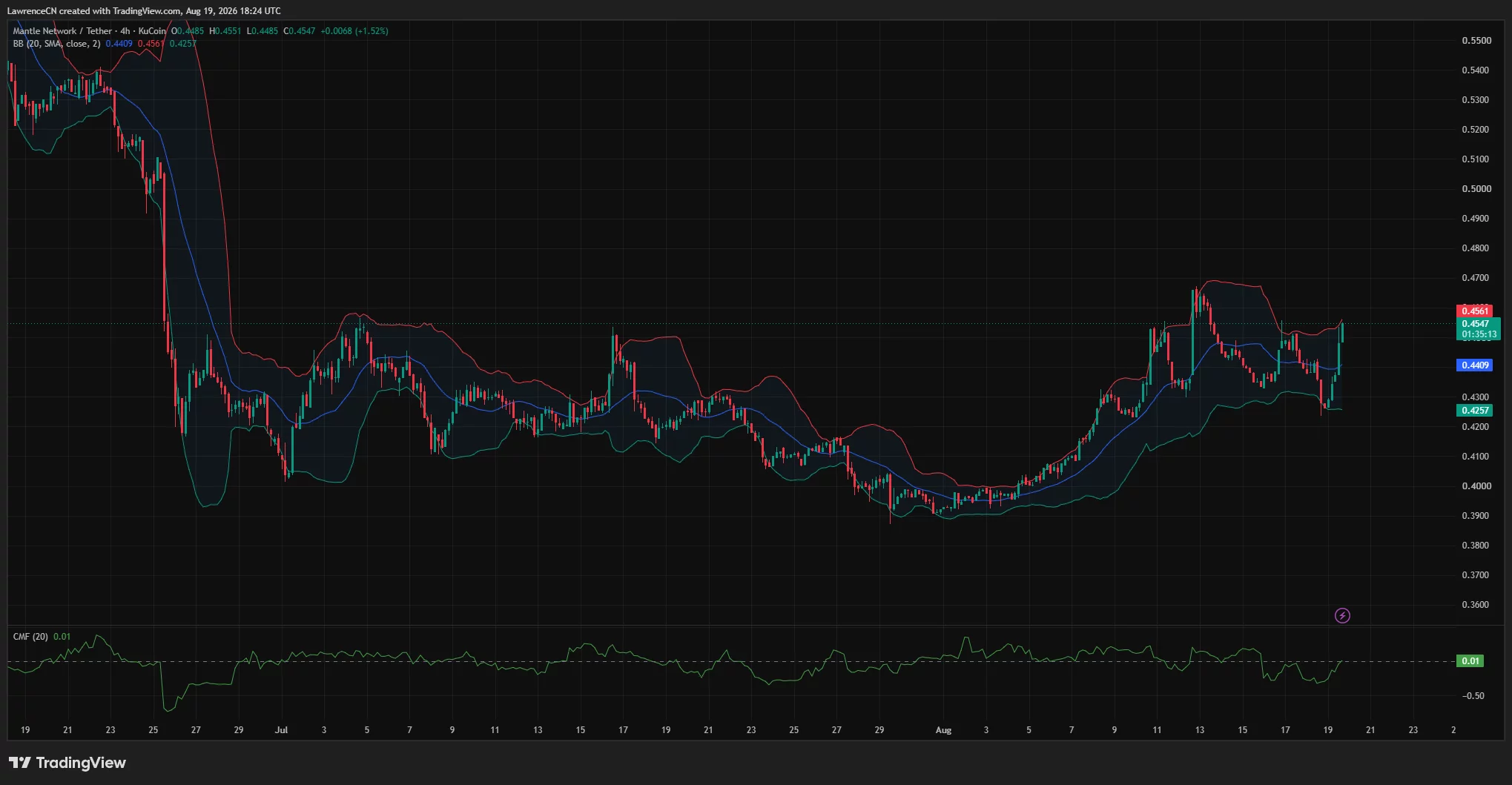
The Bollinger Band midpoint at $0.4409 forms the first support level. Holding above it would preserve the short-term upward structure and allow MNT to make another attempt at $0.4575 and $0.467.
Chaikin Money Flow stood at 0.01, indicating that buying pressure had moved slightly above neutral. The reading did not show strong capital inflows, making confirmation through higher volume important if MNT attempts to break its August peak.
A close below $0.4409 would weaken the immediate setup and expose the lower Bollinger Band near $0.4257. Further selling could bring the Aug. 19 intraday low around $0.42 back into view, followed by the larger daily support at $0.3874.
On the upside, clearing $0.467 would open a path toward the liquidation concentrations at $0.48–$0.49. MNT would then face broader Fibonacci resistance at $0.5125, followed by $0.5511.
Mantle’s tokenized asset push adds fundamental support
The rebound comes as Mantle expands its decentralized finance and real-world asset operations. A Q2 report published by Nansen said the network’s DeFi total value locked exceeded $1 billion after growing 230% during the first half of 2026.
Nansen reported that RWA-focused DeFi TVL passed $90 million, while assets managed through Mantle Vault exceeded $200 million. The network’s stablecoin market capitalization reached $955 million, representing 120% year-over-year growth, according to the report.
Mantle also increased the number of tokenized equities on its network from 10 in April to 155 by the end of June. Its lineup included products linked to SpaceX and Franklin Templeton’s U.S. Equity Index ETF, although those tokens do not provide direct ownership in the underlying companies or funds unless their terms explicitly state otherwise.
The network’s Aave market was another source of growth. Mantle said the deployment reached $1 billion in 19 days, while Nansen reported that deposits had exceeded $1.45 billion by April.
For US investors, the presence of tokenized US equities does not establish that the products are available legally in the United States. Mantle’s xStocks announcement described access as available only where permitted, leaving eligibility dependent on each platform’s restrictions and applicable securities rules.
MNT’s immediate direction now rests on whether buyers can convert the ecosystem narrative into enough spot demand to break $0.4575. A confirmed close above that level would strengthen the case for $0.48–$0.49, while losing $0.44 would put the rebound at risk.
Disclosure: This article does not represent investment advice. The content and materials featured on this page are for educational purposes only.

“Zelenskyy won elections in 2019, defeating the incumbent, and since then navigated an extremely complex terrain of Ukrainian politics,” he says. “He would defeat any other candidate.”
Sonin says in years past there were potential presidential alternatives—including General Valerii Zaluzhnyi—who might have been perceived as someone who could “prosecute the war better.”
Zaluzhnyi long held that he had no political ambitions; however, in July, Ukrainska Pravda reported that Zaluzhnyi told Zelenskyy he would run if elections were held in the fall, citing sources close to both men. Sources told the outlet that Zaluzhnyi had changed his mind because he didn’t want to disregard the trust that people had placed in him.
“Ukraine is not losing, and there is so much hope,” Sonin says. “I do not see how Zelenskyy would not win these elections.”
Recent polling, however, complicates Sonin’s assessment. SOCIS, a polling firm, found that Zelenskyy would finish first in the first round in an election against Fedorov, Zaluzhnyi, and Kyrylo Budanov—the current chief of staff for the President, who has not publicly expressed any intention to run. Zelenskyy would capture 22% of the vote as compared with Zaluzhnyi’s 21% and Fedorov’s 13%.
Bitcoin’s price suddenly jumped by a grand yesterday and tapped $65,000 for the first time in over a week, before it was stopped and now sits at around $64,000 again.
Most larger-cap alts have produced minor gains within the same timeframe, with ETH climbing above $1,900 and SOL trading above $75. BTW has stolen the show again.
BTC Tapped $65K
Bitcoin went through a few legs down last week after it was rejected at $65,400 first and then at $64,400. The culmination took place on Friday afternoon when the asset slumped to $62,500 for the first time in ten days. The bulls finally intervened after this nosedive and helped the asset recover to $63,000, where it spent the entire weekend without any moves in either direction.
Monday began with a dip to $62,600 before BTC jumped by a grand to $63,600. After a minor rejection there, the cryptocurrency went on the offensive again to $64,500. It was stopped there at first and slipped to $64,000. Then came the surprising uptick to $65,000, which became its highest price tag since last Monday.
BTC failed there and dipped to $64,100 earlier today, where it found some support and now sits a few hundred dollars higher. Its market cap has remained sideways at $1.290 trillion, while its dominance over the altcoins has lost some traction and is below 57% on CG now.

BTW In a League of Its Own
The top performer in the crypto market continues to be Bitway (BTW). The token has skyrocketed by over 900% in the past month. Its daily gains stand at a whopping 85%, and it just reached a new all-time high of $0.067 (CoinGecko data).
PUMP, CAKE, LINK, and DOT follow suit in terms of daily gains, but are significantly more modest at somewhere between 4% and 7%. Ethereum has jumped by just over 1% to $1,920, while SOL is at $77 after a 1.5% increase. XRP, TRX, DOGE, and ZEC are also slightly in the green, while HYPE and CC are down by around 2% each.
The total crypto market cap has added around $20 billion daily and is up to $2.280 trillion on CG.

The post Viral Altcoin Explodes to New All-Time High, Bitcoin (BTC) Touched $65K: Market Watch appeared first on CryptoPotato.

Although the past week was quite unpleasant for XRP token holders in terms of price action, the company behind the asset made a few significant moves.
Additionally, there’s more information on the XRP whale activity, which has shown a clear uptick. We will review all of that and much more, so let’s dive in.
Big Partnership
We kick things off with a fresh announcement from yesterday, which stated that Ripple collaborated with Jeonbuk Bank to begin the first deployment of Ripple Payments in South Korea to enable faster cross-border remittances.
The partnership aims to expedite international transfers for businesses and reduce delays associated with traditional banking methods.
“With this partnership with Ripple, JB Jeonbuk Bank is ready to move beyond its role as a regional bank and emerge as a digital finance leader that meets global standards. This partnership will become a new growth engine for the bank, and we will lead innovation that reshapes the financial paradigm, going beyond the adoption of new technology,” commented Jeonbuk Bank’s President, Park Choon-won.
The company’s recent activities in South Korea include another collaboration with Kyobo Life Insurance and KBank to enhance digital finance and blockchain integration.
Ripple Price Raises $275M
Another statement from yesterday said the company had secured a $275 million private placement of senior unsecured notes issued by Ripple Prime to support its ongoing and expanding business in the US. According to the team, a “diverse base of institutional investors in key financial markets” participated in the fundraiser.
Ripple Prime will use the proceeds for working capital and general corporate purposes within a regulated entity as client demand for a modern, multi-asset clearing, prime brokerage, and financial services platform rises.
Wall Street and XRP ETFs
The most recent SEC filings in the US showed that a growing number of Wall Street behemoths have gained exposure to XRP through the spot exchange-traded funds. Jane Street Group leads the pack with more than 1.2 million shares.
Other notable names that disclosed such exposure included Bank of America, Morgan Stanley, Wolverine Asset Management, Gallagher Capital Management, Main Street Group, and National Bank of Canada.
Meanwhile, the XRP ETFs ended the previous business week in the green again, but attracted a very modest amount of just over $2 million. On the plus side, net inflows reached $5.81 million on August 19, the highest for the month.
XRP Price Update
Ripple’s partnership, expansion news, or any other recent initiatives have failed to boost the underlying asset. Just the opposite, XRP has been consistently losing value, which eventually led to the almost inevitable dip below $1.00 for the first time in nearly two years. As of press time, the asset has been unable to reclaim that level decisively despite BTC’s resurgence to over $64,000.
On the flip side, the network activity has picked up the pace lately. Daily active addresses topped 35,500 in August, while the number of whales holding at least a million XRP increased by 32 in three months. In addition, these large market participants went on an impressive accumulation spree last week, scooping 72 million tokens in 24 hours.
Meanwhile, analysts continue with contradictory predictions about the asset’s future price performance. Some claimed that the dip below $1.00 could get a lot worse before the token rebounds, while others are adamant that it could bounce off the recent levels.
The post Important Ripple News and XRP Price Update: August 19 appeared first on CryptoPotato.

FASB Proposal Sets Criteria for Stablecoins to Be Treated as Cash Equivalents

Canary vindicated in new report on SAS ‘war crime’ press coverage

Winx Stakes 2026: Derby winner Green Spaces on a spring mission





-

 Fashion5 days ago
Weekend Open Thread: Ann Taylor
-
 Sports6 days ago
This U.S. Amateur is a glimpse into golf’s future in more ways than you think
-
 Tech6 days ago
11 Ways to Rank Your Videos
-
 NewsBeat5 days ago
Myanmar says over 300,000 Rohingya refugees verified for repatriation as exodus enters ninth year
-

 Sports5 days ago
Birmingham 2026: Day 6 Timetable for Irish Athletes
-

 Politics4 days ago
SEQ Code: The Three Letter Boarding Pass Code That Could Give You The Worst Seat
-

 Tech6 days ago
DeepSeek Harness launches as open source rival to Claude Code, alongside V4-Pro on API with higher prices
-

 Crypto World2 days ago
OCC Greenlights Trump Family Crypto Firm for Trust Charter
-

 Tech2 days ago
Qwen3.8-27B runs frontier-class coding agents and reasoning locally, no cloud API required
-

 Fashion7 days ago
The Details Do the Dressing
-
 Entertainment6 days ago
10 Netflix Shows That Quietly Became Modern Classics
-

 Fashion5 days ago
Weekly News Update, 8.14.26 – Corporette.com
-
 Tech4 days ago
Every fusion startup that has raised over $100M
-
 Entertainment5 days ago
Marvel Studios Reveals New X-Men Cast Including Adam Driver and Sadie Sink
-

 Business5 days ago
Facebook Down Now? Users Report Login And Loading Problems As Outage Trackers Monitor Ongoing Issues
-

 Business1 day ago
SMA Solar Technology AG (SMTGY) Q2 2026 Earnings Call Transcript
-

 Business6 days ago
15 Ways to Make Money From Your Phone (2026 Guide)
-

 Crypto World6 days ago
Robinhood Chain Approaches $1B TVL as Uniswap Integration Boosts Liquidity
-

 Fashion5 days ago
Cart Confidential Vol. 44 – Julia Berolzheimer
-
 Business5 days ago
Monarch Mutual Fund set to enter MF space with maiden overnight fund; files draft with Sebi
You must be logged in to post a comment Login