
Crypto World
Trump Jr's firm leads $1 billion Polymarket raise at $21 billion value: Report

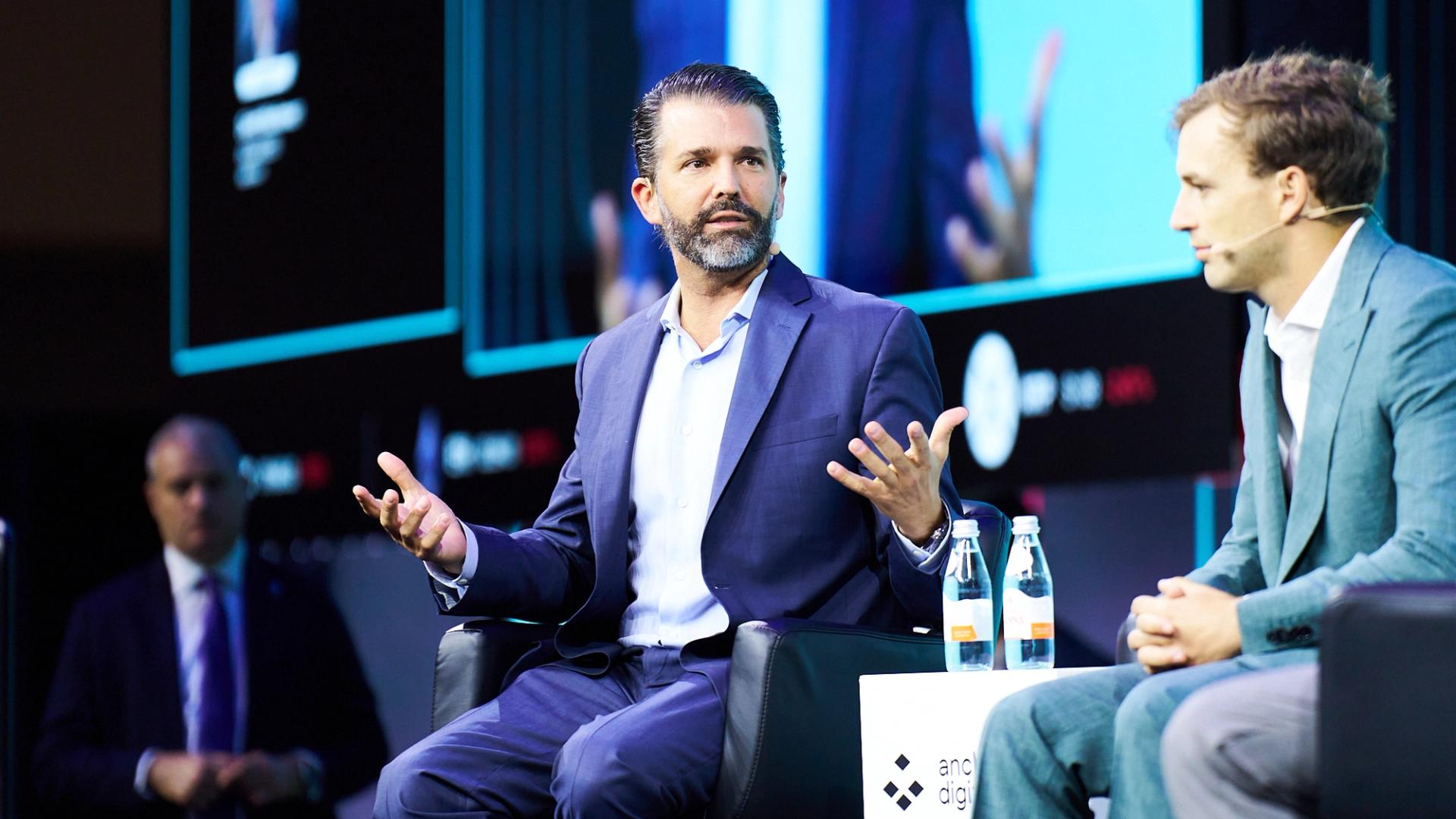
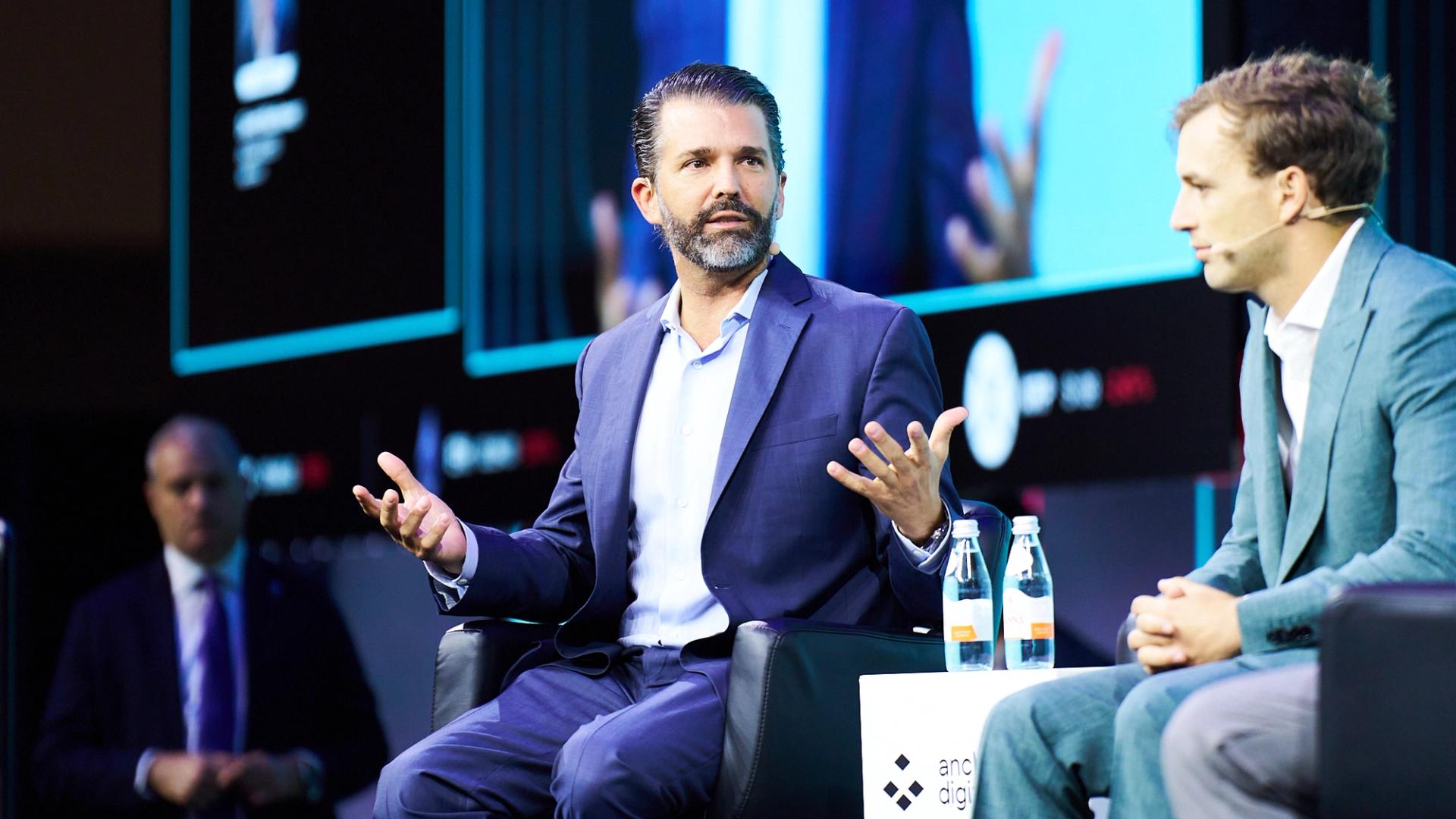
1789 Capital is putting in about $300 million, adding to a roughly $200 million stake, as the prediction market’s valuation rises from $15 billion.

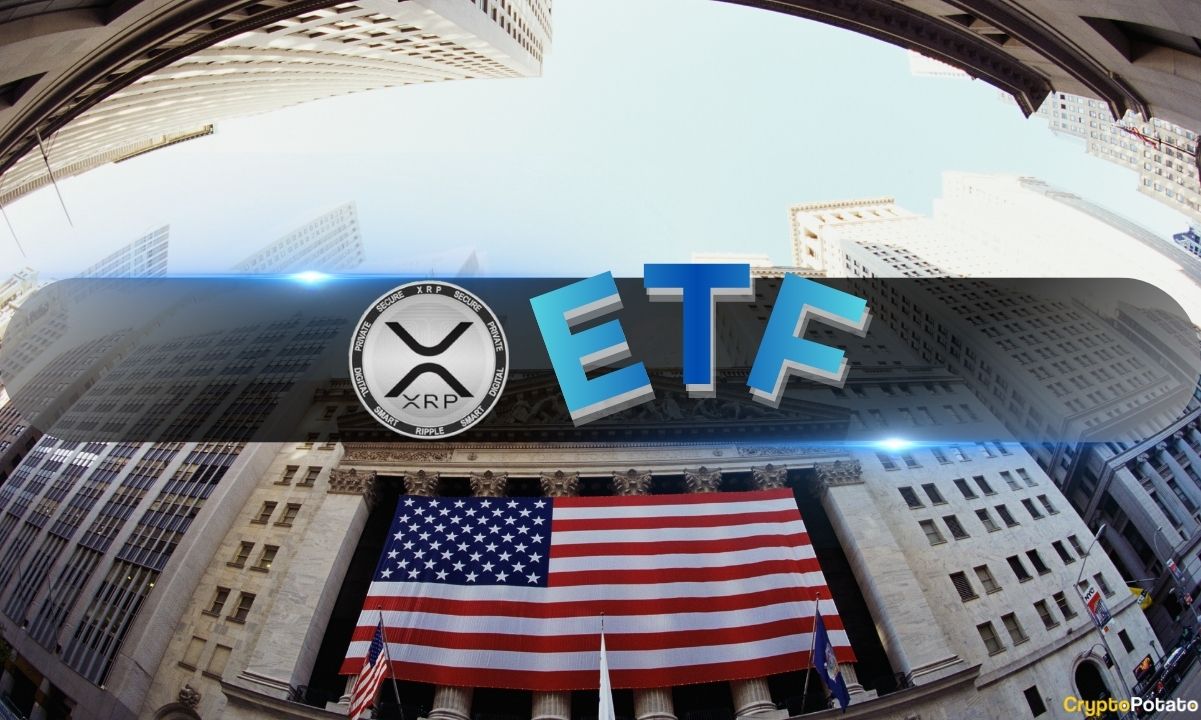
Asset manager Bitwise said that its XRP ETF (XRP) has crossed $500 million in assets under management (AUM) just nine months after launch. The fund’s page showed $502.7 million in net assets across 364.75 million XRP last Friday and $507.23 million after Monday’s close.
“14 years in, and the $XRP community continues to be unstoppable,” the firm wrote in its announcement on X, adding it was “grateful for the chance to expand mainstream access to XRP.”
14 years in, and the ripple:native community continues to be unstoppable.
The Bitwise XRP ETF (XRP) crossed $500,000,000 in AUM—just 9 months after launch.
Grateful for the chance to expand mainstream access to XRP and steward investors’ exposure to the opportunities in this… pic.twitter.com/sgeMDiY5ce
— Bitwise (@Bitwise) August 31, 2026
First Half Closed at $299 Million
The fund logged $25.9 million in trading volume on its first day on the New York Stock Exchange on November 20, one week after Canary Capital’s XRP ETF (XRPC) opened the US spot category with a nearly $60 million debut.
It was Bitwise’s 49th investment product at launch, and the new funds even outdrew Bitcoin and Ethereum products in their first weeks, with cumulative inflows reaching $756 million by December 1.
Net assets stood at $241.4 million at the end of December and $299.1 million on June 30, according to the trust’s 10-Q for the second quarter. Investors added roughly 181.5 million XRP worth $269.9 million through share creations over the first half, including 105.3 million XRP worth $137.9 million in the June quarter alone.
Bitwise charges a 0.34% sponsor fee, which it waived entirely on the first $500 million of trust assets through December 19, 2025.
Bullish Resilience
Over the same six months, the trust recorded a $176.6 million net decrease from operations, which the filing attributed primarily to “XRP price depreciation from $1.82 on December 31, 2025, to $1.04 on June 30, 2026.”
The token then climbed from $1.00 to a multi-month high of $1.70 between August 19 and 22, slid below $1.40 by Friday’s close, and changed hands at $1.38 on Monday, per CoinGecko.
US XRP funds took in $110.49 million last week, their best weekly haul since early December, pushing cumulative net inflows to a record $1.66 billion on Friday, according to SoSoValue data. Every trading day landed in double digits, topped by $28.14 million on Wednesday.
Bitwise’s fund leads that table with more than $600 million in cumulative net inflows, ahead of Canary’s XRPC at $483 million and Franklin Templeton’s XRP fund (XRPZ) at $462.86 million.
The post Largest XRP ETF Crosses $500 Million in Assets Just 9 Months After Launch appeared first on CryptoPotato.
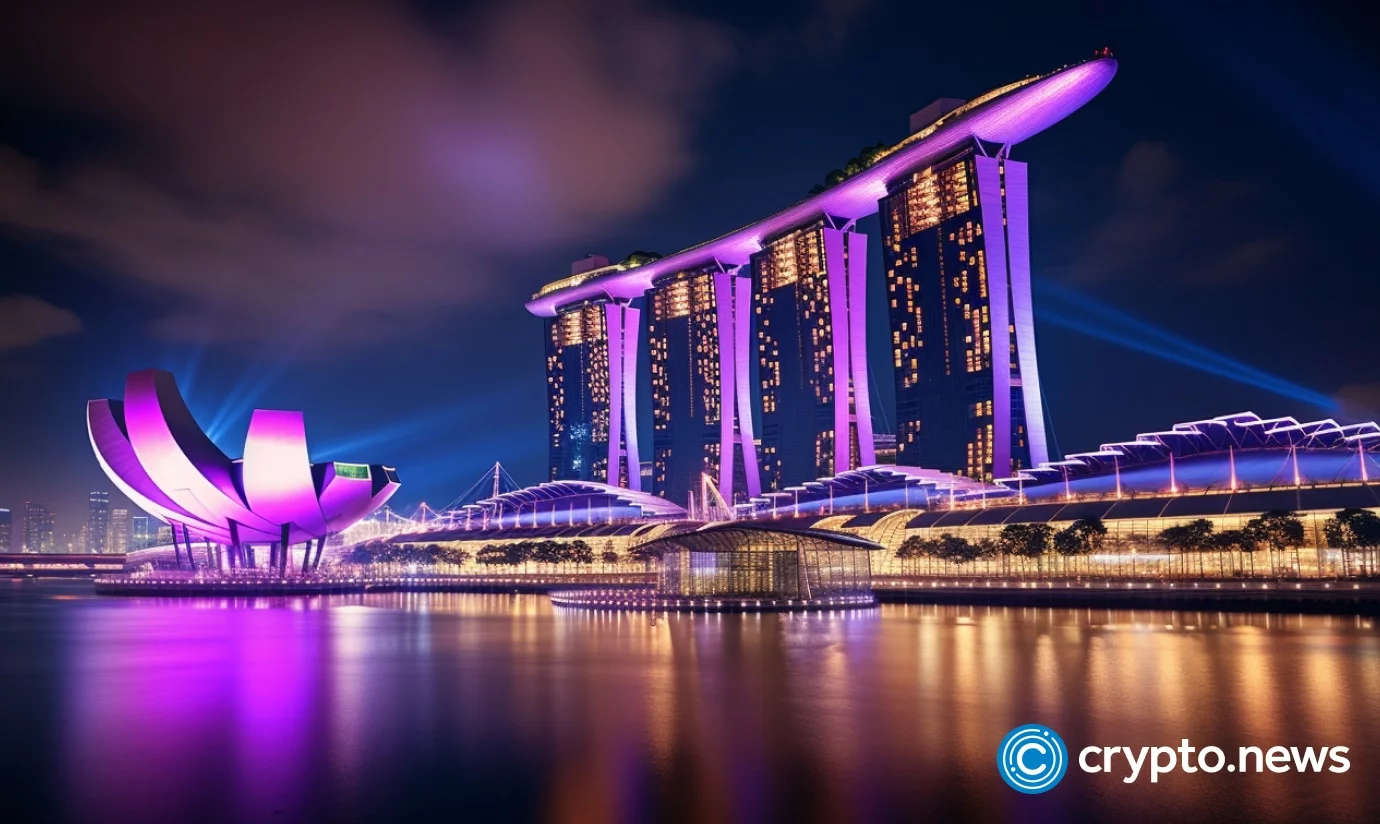
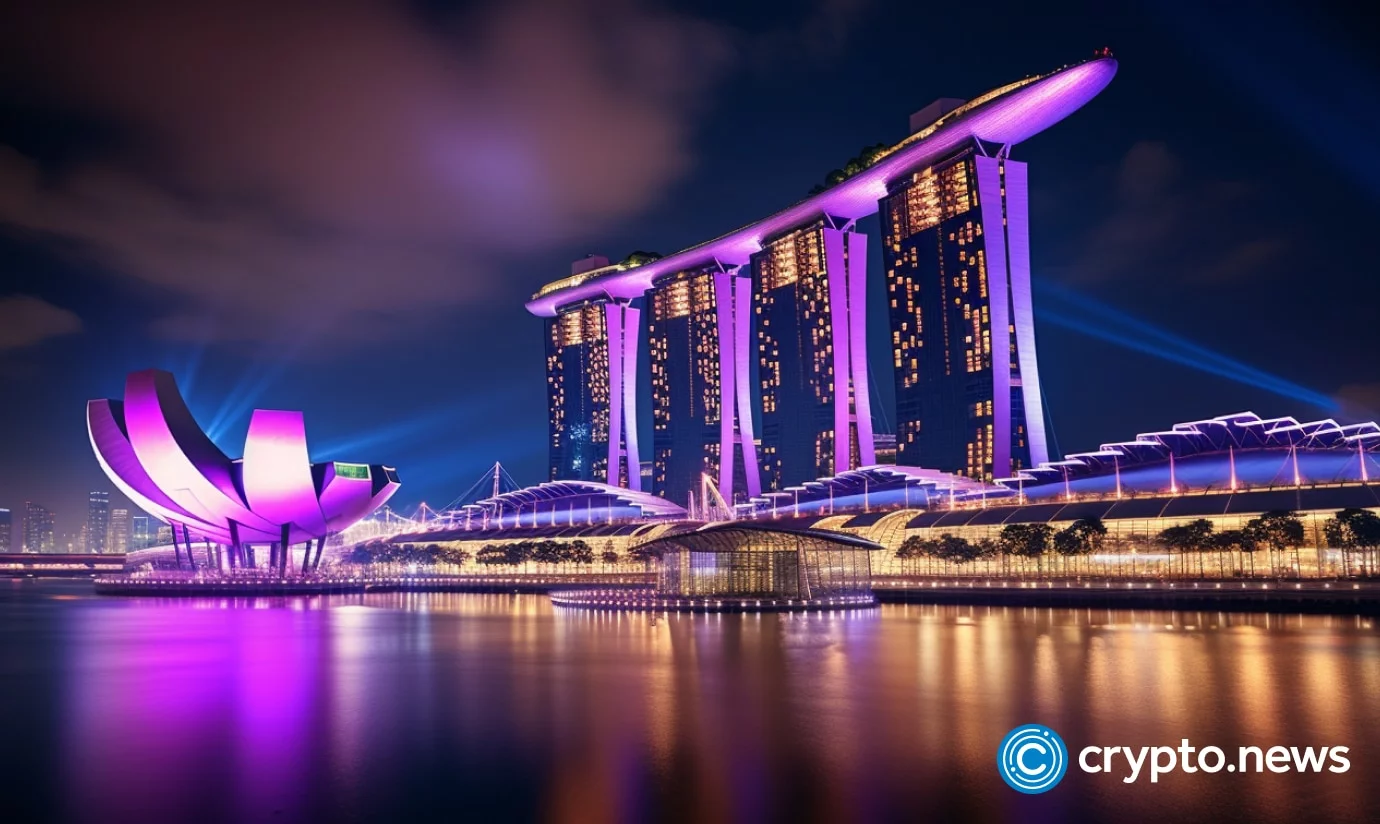
The Monetary Authority of Singapore has proposed amendments to the Payment Services Act 2019 that would put its stablecoin framework into law while introducing rules for overseas issuers, interest payments and issuer wind-down plans.
Summary
- MAS has proposed Payment Services Act amendments that would put Singapore’s stablecoin regulatory framework into law.
- The framework would allow qualifying jointly issued foreign and Singapore stablecoins to receive the MAS regulated designation.
- MAS is considering recognition for a limited number of foreign stablecoins governed by comparable overseas regulatory frameworks.
- Proposed safeguards include an interest payment ban, stress testing, recovery plans and orderly wind down requirements for regulated issuers.
- Public feedback on the proposed amendments and related stablecoin policies is open until Oct. 16.
MAS published the consultation on Sept. 1, seeking feedback on how issuers can qualify under its Single-Currency Stablecoin framework and use the “MAS-regulated stablecoin” label. Responses are due by Oct. 16.
The proposals would implement a framework first finalized in 2023, while extending it to areas that have developed as stablecoins have gained a larger role in payments and tokenized financial markets.
MAS stablecoin rules could cover joint overseas issuance
One of the main proposals would allow a stablecoin jointly issued by a Singapore entity and a foreign issuer to qualify as an MAS-regulated stablecoin, provided risks linked to issuing the token across different jurisdictions are sufficiently addressed.
MAS is seeking views on how such multi-jurisdiction arrangements should operate under the framework.
The regulator is considering a separate route for a limited number of stablecoins issued entirely outside Singapore. Foreign tokens could be recognized when they are supervised under a regulatory framework that MAS considers comparable to Singapore’s regime.
Recognition would focus on cross-border wholesale uses, according to the consultation.
The proposals extend work that began in October 2022, when MAS first consulted on rules for single-currency stablecoins. The regulator published its response to industry feedback in August 2023 and established requirements covering reserve assets, capital, redemption and disclosure.
As crypto.news previously reported, the framework applies to single-currency stablecoins issued in Singapore and pegged to the Singapore dollar or a G10 currency. Issuers that meet the required standards can seek recognition for their tokens as MAS-regulated stablecoins.
Stablecoins outside that framework would continue to be treated as Digital Payment Tokens under the Payment Services Act. DPT consumer safeguards include restrictions on trading incentives, financing and leverage, along with limits on locally issued credit card payments.
Singapore has separately tightened rules for crypto businesses providing DPT services. MAS imposed restrictions on incentives and credit-funded crypto trading as part of consumer protection measures introduced after earlier consultations.
MAS proposes interest ban and stress testing
The Sept. 1 consultation proposes new safeguards for issuers seeking the MAS-regulated designation, including a prohibition on paying interest on regulated stablecoins.
Issuers would have to conduct stress tests and maintain plans for recovery and an orderly wind-down if their businesses encounter financial or operational problems.
MAS is seeking feedback on consumer safeguards covering money received from customers before stablecoins are issued. The proposed protections would be similar to requirements that already apply to licensees operating under the Payment Services Act.
Existing core requirements would remain part of the regime. Issuers would need to comply with standards covering value stability, capital, redemption at par and disclosures to users.
Only licensed issuers operating under the framework would be permitted to describe themselves as licensed MAS-regulated stablecoin issuers or market qualifying tokens as “MAS-regulated stablecoins.”
The designation is intended to distinguish qualifying tokens from other cryptocurrencies marketed as stablecoins without being subject to the same MAS requirements for maintaining their value.
MAS Deputy Managing Director for Financial Supervision Ho Hern Shin said the legislative changes would establish regulatory guardrails for stablecoins that meet the regulator’s requirements for value stability and governance.
“Trusted and well-regulated stablecoins can serve as a credible settlement asset in tokenised financial markets, while mitigating risks to users and the broader financial system,” Ho said.
Stablecoins are moving into Singapore payment systems
The legislative consultation comes as regulated stablecoins are being tested in payment and settlement projects involving financial institutions operating in Singapore.
On Aug. 25, Visa joined the MAS-led BLOOM initiative and selected Nium for a stablecoin settlement pilot involving regulated U.S. dollar and euro-backed tokens. The companies plan to test settlement seven days a week, including weekends and public holidays, across cross-border payment flows.
MAS introduced BLOOM in 2025 to develop settlement arrangements using tokenized bank liabilities and regulated stablecoins. The program covers domestic and cross-border payments, multi-currency settlement and institutional applications such as trade finance and corporate treasury operations.
The initiative followed Project Orchid, under which MAS explored programmable money and potential applications for a digital Singapore dollar through more than 10 trials. Participants in BLOOM have included Circle, DBS, OCBC, Partior, Stripe and UOB.
Stablecoins have moved into retail payment channels as well. OKX Singapore introduced a stablecoin payment service in September 2025 that lets customers use USDT and USDC at merchants accepting GrabPay.
Payments through the service are converted for settlement in Singapore dollars, with StraitsX’s XSGD used as a bridge. Merchants receive local currency while the corresponding amount is deducted from a customer’s stablecoin balance.
Singapore has spent years developing stablecoin oversight
MAS established the main structure of its single-currency stablecoin regime in 2023 after reviewing responses to its earlier consultation.
The framework set standards for reserve management and value stability while requiring issuers to maintain minimum capital and liquid assets. Redemption requirements were designed to allow users to redeem qualifying stablecoins at par, while disclosure rules covered matters including the mechanisms used to keep a token’s value stable.
Only issuers satisfying the full set of requirements can receive the MAS-regulated stablecoin designation.
Singapore has since licensed companies involved in digital asset payments under the Payment Services Act. Paxos Digital Singapore received full MAS approval in 2024, with DBS selected to provide stablecoin custody services for the company.
The regulator has continued granting licenses to crypto companies that meet its requirements while taking action against firms that fail to comply with local rules. Cumberland SG secured a Major Payment Institution license in July 2026, permitting the company to provide regulated digital payment token and cross-border money transfer services in Singapore.
Under the latest consultation, MAS is asking interested parties to submit comments on the proposed Payment Services Act amendments and related stablecoin policy positions by Oct. 16, 2026.
The SEC and FDA signed a three-year cooperation agreement on Aug. 31 that gives the agencies formal channels for exchanging nonpublic information about regulated products, public companies and potential legal violations.
Summary
- Three-year SEC-FDA agreement creates formal channels for exchanging information about regulated products and public companies.
- The SEC may use FDA information in filing reviews, investigations, proceedings, and civil enforcement actions.
- FDA referrals will involve its chief counsel, while two SEC divisions maintain designated contacts internally.
- Shared nonpublic records remain confidential and generally require written permission before any further external disclosure.
- Either agency may terminate the agreement with thirty days’ notice during its three-year operating period.
The MOU allows the Securities and Exchange Commission to use information obtained from the Food and Drug Administration during company filing reviews, enforcement investigations, administrative proceedings and civil actions.
The agreement takes effect immediately. It does not announce an investigation, new disclosure rule or enforcement case against any company. It instead creates procedures that could help the agencies compare corporate statements with information held by the FDA.
SEC and FDA cooperation targets conflicting disclosures
Public biotechnology, pharmaceutical, medical device and healthcare companies frequently release information about clinical trials, FDA submissions, regulatory reviews and product approvals. Those announcements can move stock prices because they affect a product’s commercial prospects.
The SEC reviews whether public companies provide complete and accurate information to investors. The FDA separately receives regulatory submissions, trial information and safety data that may not yet be public. Better coordination could help the SEC identify inconsistencies between corporate disclosures and regulatory records.
The MOU specifically mentions representations about FDA reviews, product approvals and clinical trial results. The agencies said their cooperation is “expected to bolster informed decision-making” and improve oversight, but the agreement does not guarantee more enforcement cases.
SEC Chairman Paul Atkins said FDA-related disclosures can materially affect financial markets. Acting FDA Commissioner Kyle Diamantas said faster information sharing should improve transparency across the life sciences sector while protecting patients and public trust.
Nonpublic records will receive confidentiality safeguards
Each agency will establish a mechanism for receiving information requests and transferring nonpublic material securely. Requests must describe the information sought, explain its intended use and carry authorization from the requesting office.
The SEC will appoint contacts from its Division of Enforcement and Division of Corporation Finance. The FDA will appoint contacts from its Office of the Chief Counsel and Office of Inspections and Investigations. The FDA chief counsel’s office will also lead referrals involving potential securities violations.
The MOU permits the FDA to share records that may otherwise be exempt from public disclosure, subject to federal restrictions covering trade secrets and confidential commercial information. The SEC cannot provide FDA information to an outside party without written FDA permission.
Likewise, the FDA must give confidentiality assurances before receiving nonpublic SEC records. Shared information does not become public merely because it passes between the agencies, and the exchange does not waive legal privileges.
The agreement does not cover requests for public records, subpoenas or testimony. It only applies to requests submitted after its Aug. 31 effective date.
The agreement strengthens an existing enforcement tool
The MOU does not give either regulator new statutory powers. Instead, it organizes how the agencies use their existing authority and establishes designated contacts to reduce delays when information is needed.
For the SEC, the most direct use may involve checking statements in earnings releases, securities filings or investor presentations against FDA records. If those statements appear materially false or incomplete, the information could support further questions, a filing review or an enforcement investigation.
The same disclosure principle remains relevant across the SEC’s wider jurisdiction. As crypto.news reported, the SEC’s proposed crypto offering exemptions retain antifraud liability when issuers make materially misleading statements, even if an offering does not require full registration.
Interagency information sharing also appears elsewhere in financial oversight. In related coverage, the SEC and Commodity Futures Trading Commission maintain an information-sharing arrangement covering private fund data, reducing the need for duplicate reporting while preserving regulatory access.
Both agencies can modify or end the MOU
The SEC and FDA may extend or modify the agreement through mutual written consent. Either agency may terminate it by providing 30 days’ advance notice.
Implementation remains subject to available staff, funding and other resources. The document states that it represents the agencies’ intentions and does not create legally enforceable obligations against either regulator.
The next step is operational. Both agencies must maintain designated contacts and may develop standard procedures and templates for handling nonpublic information requests. No separate implementation deadline was announced.
The MOU will expire in August 2029 unless the agencies extend it. Until then, its practical reach will depend on how frequently regulators use the new channels during filing reviews and investigations.
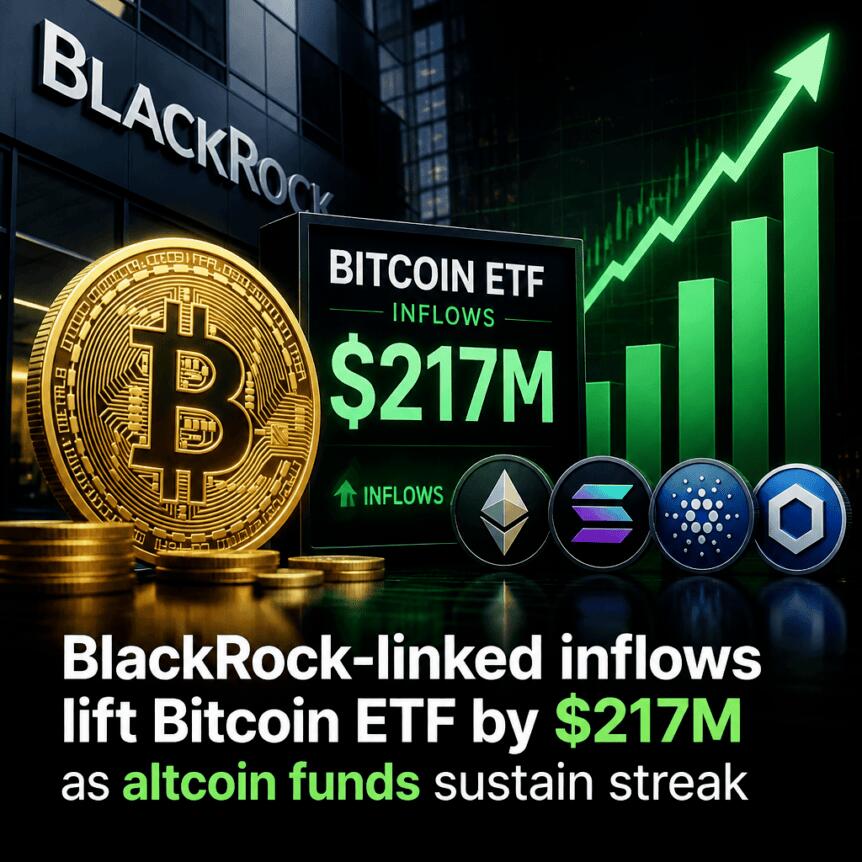
US-listed spot Bitcoin ETFs rebounded on Monday, shifting back to net inflows after two sessions of withdrawals, with inflows concentrated heavily in BlackRock’s iShares product. At the same time, spot Ether, XRP and Solana ETFs all continued adding new capital, extending their recent run of positive sessions.
SoSoValue data shows US spot Bitcoin ETFs recorded $216.7 million in net inflows on Monday, reversing $201.8 million in withdrawals logged on Friday. The prior outflow day ended a nine-session streak that brought more than $3 billion into the complex, according to Cointelegraph’s earlier coverage. Bitcoin was trading near $78,700 at the time of writing, up roughly 1.5% over 24 hours, according to CoinGecko.
Key takeaways
- Bitcoin ETF inflows returned: US spot Bitcoin ETFs added $216.7 million net on Monday after $201.8 million in Friday outflows.
- BlackRock dominated the rebound: iShares Bitcoin Trust (IBIT) accounted for about 95% of daily inflows, with $205.9 million net.
- Ether ETFs kept streak alive: Spot Ether ETFs posted $87.7 million net inflows, extending to 11 consecutive sessions.
- XRP and Solana stayed positive: XRP ETFs reached 10 consecutive inflow sessions, while Solana ETFs logged their 10th consecutive positive day.
BlackRock leads the Bitcoin ETF rebound
Monday’s reversal was driven almost entirely by BlackRock. Farside Investors data indicates iShares Bitcoin Trust (IBIT) generated $205.9 million in net inflows, representing roughly 95% of the category’s total daily inflows.
Other issuers still contributed, though at a much smaller scale. Fidelity’s Wise Origin Bitcoin Fund (FBTC) added $6.9 million, Bitwise’s Bitcoin ETF (BITB) brought in $4.3 million, and Morgan Stanley’s Bitcoin Trust recorded $3.6 million in net inflows. Grayscale’s Bitcoin Mini Trust attracted $9.4 million.
Despite the broad positive shift, not every product participated in the rebound. VanEck’s Bitcoin ETF (HODL) was the lone fund to report net withdrawals, with $13.4 million outflows on the day. The remaining funds recorded no net flows.
For investors, the concentration of Monday’s inflows matters because it highlights how day-to-day changes in the US spot Bitcoin ETF complex can be heavily influenced by a single issuer’s flows rather than by uniform demand across the market. That dynamic can affect how quickly sentiment translates into measurable net purchases.
Ether ETFs extend an 11-session inflow streak
Spot Ether ETFs continued building on their recent momentum, recording $87.7 million in net inflows on Monday. According to Farside, this marked the 11th consecutive trading session with net inflows.
BlackRock’s iShares Ethereum Trust (ETHA) led with $59.9 million. Grayscale’s Ethereum Mini Trust followed with $13.5 million, while Fidelity’s Ethereum Fund added $9.3 million.
The steady pattern of inflows suggests persistent allocator interest in regulated ether exposure rather than a one-off move tied to a single market catalyst. Traders may still watch for any sudden turn in the flow data, but the multi-week streak indicates demand has been sustained through multiple trading cycles.
XRP ETFs hit 10 straight inflow days
XRP ETFs also extended a streak of positive sessions. SoSoValue data shows the category recorded $5.64 million in net inflows on Monday, keeping the count at 10 consecutive trading sessions.
SoSoValue adds that XRP ETFs have seen capital inflows during every US trading session since Aug. 18. That kind of uninterrupted run is notable because it implies consistent participation across days, rather than intermittent buys followed by pauses.
While daily inflow totals for XRP remain far smaller than for Bitcoin or Ether in absolute terms, the consistency can still be meaningful for market structure—especially for funds that are still establishing longer-term investor habits.
Solana ETFs stay in positive territory, but inflows cooled
Solana ETFs continued their own stretch of gains, posting a 10th consecutive positive session. SoSoValue reports Monday’s inflows totaled $925,010, bringing the category’s weakest daily inflow so far during its current run.
The contrast is stark when compared with Friday’s higher number. The source notes that daily inflows slowed to $925,010 on Monday from $18.1 million on Friday.
That shift raises an important nuance for readers: while the category remains net positive, the pace of buying is not accelerating in tandem. For traders, decelerating inflows during an otherwise positive streak can sometimes be an early signal that momentum is cooling, even if it hasn’t turned into sustained outflows yet.
With Bitcoin ETFs returning to net inflows and Ether, XRP, and Solana all maintaining positive streaks, the next thing to watch is whether Monday’s rebound sustains across subsequent sessions—particularly whether BlackRock continues to account for a similar share of inflows or if demand broadens across other Bitcoin funds.
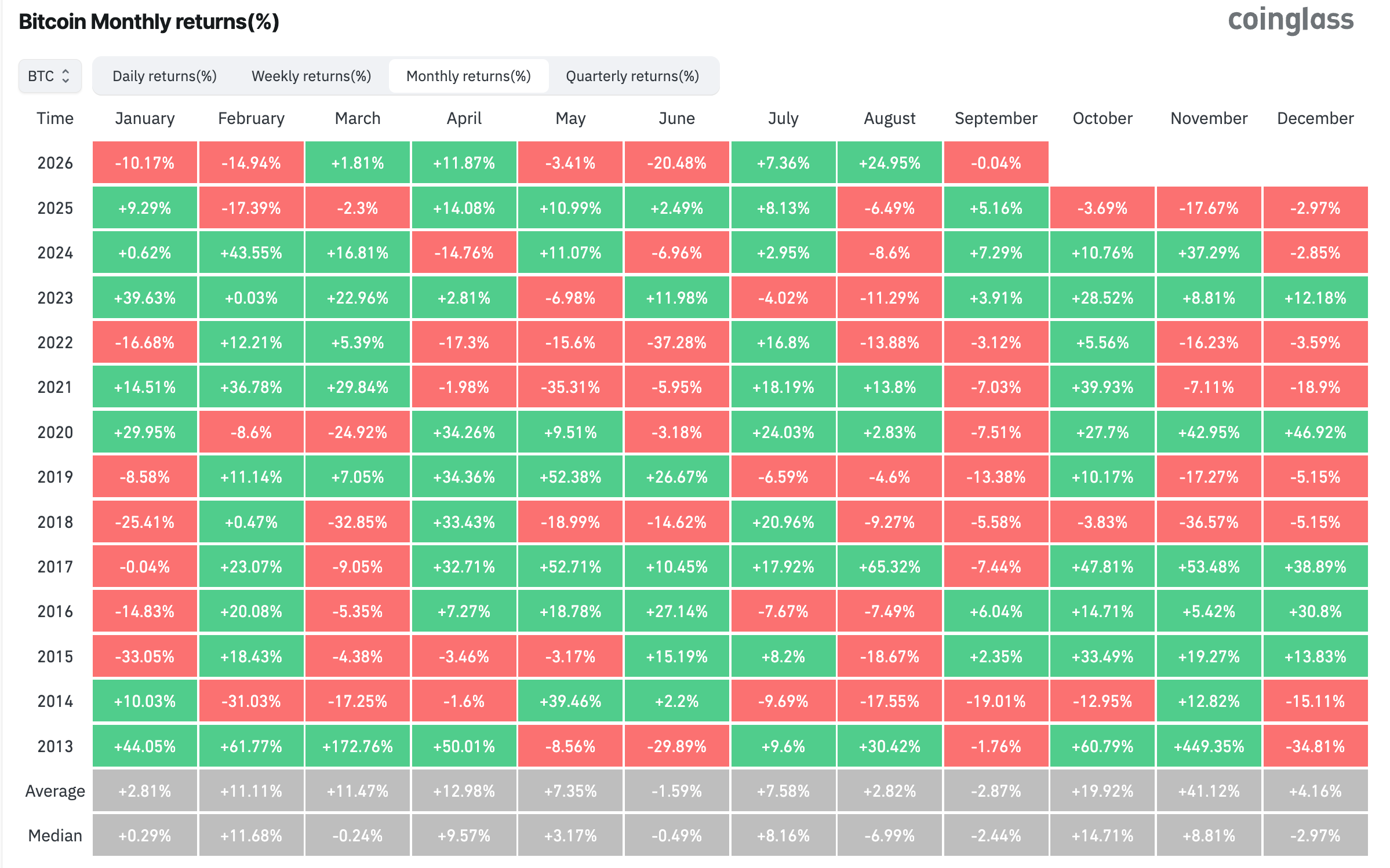
US stocks and cryptocurrencies begin September facing their weakest month on record. The S&P 500 closed August with gains of more than 2% and set record highs along the way.
Bitcoin (BTC) and Ethereum (ETH) also finished the month strongly, gaining 24.95% and 32.5%. Historical data now points to a tougher stretch for both markets.
Stocks Carry a Long September Losing Record
The Dow Jones Industrial Average has fallen an average of 0.8% in September since 1950, according to the 2026 Stock Trader’s Almanac. The S&P 500 has shed 0.7% over the same span.
The Nasdaq Composite has dropped 0.9% since 1971, and the small-cap Russell 2000 has lost 0.8% since 1979. Bank of America data dating back to 1928 show an average September S&P 500 loss of 1.17%, with the index falling in 56% of those years.
Almanac authors Jeffrey Hirsch and Christopher Mistal tie the pattern to fund behavior after the summer break.
“Portfolio managers back after Labor Day tend to clean house in September,” they said.
This follows a strong August for stocks. The S&P 500 rose more than 2% and closed at a record 7,798.99 on August 13, its 27th record close of 2026. The Dow added over 1%.
Corporate earnings drove the run. Pre-tax profits reached $4.8 trillion in the second quarter, the highest share since at least 1950.
Several pressures now sit against that backdrop. The United States and Iran exchanged strikes for the first time in over a month. July personal consumption expenditures inflation ran at 3.7%, nearly double the Federal Reserve’s 2% target.
JC O’Hara, chief technical strategist at Roth, wrote that midterm election years have historically produced volatility in September and October.
Follow us on X to get the latest news as it happens
Crypto Faces the Same Calendar Problem
Digital assets carry a matching seasonality record. Bitcoin has averaged a 2.87% decline in September since 2013, its weakest month, with a median loss of 2.44%, per Coinglass.

Ethereum shows a wider gap. The asset has averaged a 9.40% September drop since 2015, with a median decline of 9.14%, according to CryptoRank.
However, the recent record complicates the pattern. BTC closed higher in each of the past three Septembers, gaining 5.16% in 2025 and 7.29% in 2024. ETH rose 3.20% in September 2024.
Both assets also enter the month with momentum. BTC gained 24.95% in August, while ETH advanced 32.5%.
Equity seasonality has softened in a similar way. The S&P 500 rose 2.02% in September 2024 and 3.5% in 2025, back-to-back gains that cut against the long-run average.
This year, the calendar test arrives alongside midterm elections, inflation above target, and surging crude prices.
Subscribe to our YouTube channel to watch leaders and journalists provide expert insights
The post Wall Street Faces Historically Weak September After Record-Setting August for S&P 500 appeared first on BeInCrypto.


OpenSea has added Solana NFT trading to its marketplace, allowing users to discover, buy and sell collections from the network alongside assets from more than 25 supported blockchains.
Summary
- OpenSea has added Solana NFT trading, letting users discover, buy and sell collections through the same marketplace that already supports Solana tokens.
- Claynosaurz, Mad Lads, Collector Crypt and Phygitals are among the Solana NFT collections available following the Aug. 31 rollout.
- Solana joins more than 25 blockchains supported by OpenSea as the marketplace expands its token, NFT and cross chain trading products.
- The integration gives Solana creators another marketplace to reach collectors outside platforms focused primarily on the network.
The digital asset marketplace said in an Aug. 31 announcement that the integration covers Solana-based collections including Claynosaurz, Mad Lads, Collector Crypt and Phygitals, extending its existing support for fungible tokens on the network.
OpenSea brings Solana NFTs into its multi-chain marketplace
Collectors can now browse and trade supported Solana NFTs using OpenSea without moving to a separate marketplace or changing their existing setup, according to the company. For creators on Solana, the integration provides another marketplace through which their collections can reach users outside platforms focused primarily on the network.
OpenSea co-founder and CEO Devin Finzer said the company wants its marketplace to serve collectors regardless of which blockchain their assets use.
“OpenSea should be the home for everything you collect, no matter which chain it lives on,” Finzer said. “Solana NFTs are now available right alongside its tokens on OpenSea. No switching wallets, no hunting across marketplaces, the whole ecosystem in one place.”
The rollout brings collections including Claynosaurz and Mad Lads directly into OpenSea. Mad Lads, created by Backpack and launched in April 2023, consists of close to 10,000 NFTs and has developed into one of the more established collections in the Solana ecosystem. Claynosaurz launched in November 2022 around a collection of clay-styled dinosaur characters and has since expanded into animation, gaming, merchandise and other digital collectibles.
Solana joins more than 25 networks supported by OpenSea, which now combines NFT trading, fungible token trading, cross-chain swaps and portfolio management through the same platform. The company said its marketplace has processed billions of dollars in transaction volume since launch.
The latest rollout effectively restores a product OpenSea first experimented with more than four years ago. OpenSea introduced Solana NFT support in beta in April 2022, initially covering a limited number of collections, but the product failed to gain the same traction as Solana-focused competitors.
Crypto.news covered the original Solana integration in 2022, when OpenSea began listing Solana collections and supporting wallets from the network.
Solana support follows OpenSea’s OS2 expansion
The new NFT integration comes after OpenSea rebuilt its marketplace around a multi-chain strategy that extends beyond digital collectibles.
Its OS2 platform, released from beta in May 2025, introduced trading for fungible and non-fungible tokens and removed the need for users to manually bridge or swap assets for some cross-chain transactions. OpenSea recorded 467,322 monthly active addresses in May 2025 following the launch, up 44% from the previous month, although monthly trading volume remained at $81 million.
OpenSea later acquired Rally Wallet in July 2025 as part of its push into mobile and token trading. Rally was designed as a mobile-first wallet for managing NFTs and fungible tokens, with plans to integrate the product into OpenSea’s services.
Solana fungible tokens returned to OpenSea through OS2 before the latest NFT rollout. The Aug. 31 announcement now places the network’s collectibles beside tokens already available through the marketplace.
OpenSea has continued adding products outside its original NFT business. In June, the company signaled plans to offer perpetual futures, with Product Marketing Lead Zack Brenner asking users about early access to the product.
When asked whether the planned contracts would use Hyperliquid infrastructure, Brenner responded “YES,” though OpenSea had not provided a launch date, complete list of assets or user terms at the time. The proposed Hyperliquid-powered perpetuals would expand a platform already combining NFTs, tokens and cross-chain trading.
OpenSea’s SEA token remains delayed
OpenSea’s product expansion has continued while its planned SEA token remains on hold.
The marketplace delayed the SEA token in March 2026, with Finzer citing challenging market conditions and declining to provide another launch date.
SEA was introduced in February 2025 and had been expected to play a role in OpenSea’s plan to build what the company described as a “trade everything” application combining NFT trading with fungible tokens and other crypto products.
Plans previously disclosed for SEA included utility and governance functions, discounted trading fees, staking tied to NFT collections and participation in platform decisions. OpenSea had initially targeted a March 30 rollout before postponing the event.
The delay came during a weak period for NFT trading. OpenSea’s monthly NFT volume had fallen below $500 million by March, compared with levels reached during the 2021 and 2022 NFT cycle, while total NFT market capitalization had dropped by more than half from mid-January levels, according to data cited by crypto.news at the time.
OpenSea continued its Waves rewards program following the postponement, while users who participated in Waves 3 through 6 were given the option to claim refunds on platform fees if they forfeited their Treasure Chest rewards. Finzer said the company planned a separate event focused on product updates in the following months.
Solana remains a key market for NFT platforms
Solana has retained a dedicated NFT marketplace ecosystem while competing platforms have changed their multi-chain strategies.
Magic Eden, which built its early business around Solana NFTs, moved in the opposite direction from OpenSea earlier this year by closing its Bitcoin and Ethereum Virtual Machine-based NFT marketplaces. The company kept support for Solana assets as it concentrated resources on the network where much of its historical trading activity originated.
The Magic Eden restructuring included plans to wind down its Bitcoin and EVM marketplaces in March 2026 and discontinue its multi-chain wallet, while Solana NFT support continued.
OpenSea’s latest integration places the two marketplaces on overlapping ground again. Their competition on Solana dates back to OpenSea’s first attempt to enter the network’s NFT market in 2022, when Magic Eden had already established a strong position among Solana collectors.
For its Aug. 31 rollout, OpenSea said the addition of Solana connects creators and collectors from the network with its existing multi-chain user base. The company identified Claynosaurz, Mad Lads, Collector Crypt and Phygitals among the collections available at launch, with support beginning Aug. 31.
DeFi Development Corp. has priced its Variable Rate Series C Perpetual Preferred Stock offering at $9 per share, according to an updated prospectus filed with the U.S. Securities and Exchange Commission.
Summary
- 2.2 million CHAD shares priced at $9 each, giving DeFi Development $19.8 million before expenses.
- The underwriter may buy 330,000 additional shares, potentially raising total gross proceeds to $22.77 million.
- CHAD begins with a 13% dividend rate calculated against its $10 stated amount per share.
- Dividend payments start October 1, then become payable each business day when directors declare them.
- Offering proceeds may fund Solana purchases, working capital, strategic transactions and other digital asset investments.
The Solana treasury company plans to sell 2.2 million shares of the preferred security, known as CHAD Stock. The offering would produce $19.8 million in gross proceeds before underwriting commissions and other expenses.
That updates the company’s Aug. 31 announcement, which described a proposed offering of up to $20 million without disclosing the final share count or offering price.
R.F. Lafferty & Co. is the sole book-running manager. The underwriter received a 30-day option to acquire another 330,000 shares at the public offering price, minus commissions.
Full exercise of that option would increase the offering to 2.53 million shares and produce up to $22.77 million in gross proceeds.
CHAD Stock offers a 13% initial dividend
Each CHAD share has a $10 stated amount and an initial liquidation preference of $10. However, investors participating in the offering will pay $9 per share.
The initial annual dividend rate is 13%, calculated against the $10 stated amount. That represents $1.30 in annual dividends per share if the initial rate remains unchanged.
At the $9 offering price, the initial rate corresponds to an effective annual yield of approximately 14.44%. That calculation is based on the starting dividend and does not guarantee investors will receive that yield continuously.
The dividend is variable. DeFi Development’s board may review and adjust the rate at least monthly based on interest rates, CHAD’s trading price, comparable yields, liquidity needs and other factors.
The company can reduce the rate, although the prospectus limits a monthly reduction to 50 basis points from the preceding month. The filing warns that management could eventually set a rate below comparable securities.
The first dividend is scheduled for Oct. 1 and will cover the period from issuance through Sept. 30. After that payment, dividends will become payable on each business day, but only “when, as and if declared” by the board and when legally available funds exist.
A dividend reserve covers the first year at 13%
DeFi Development intends to place $1.30 per issued share into a separate dividend account when the offering closes. For 2.2 million shares, that would create an initial reserve of approximately $2.86 million.
The reserve represents 12 months of payments calculated at the initial 13% rate. DeFi Development said it would fund the account using existing cash, financial instruments or digital assets rather than relying solely on offering proceeds.
However, the prospectus says the company is not contractually required to increase the reserve if the dividend rises above 13% or if more CHAD shares are issued later.
Assets in the account could also remain available to creditors during insolvency or bankruptcy. The reserve therefore provides a designated funding source but does not constitute an independent guarantee.
CHAD is perpetual and has no maturity date. Holders generally cannot demand repayment except after certain qualifying corporate events. The shares also carry limited voting rights and rank below the company’s present and future debt.
DeFi Development can redeem CHAD at $11 per share, plus accumulated unpaid dividends, after the security becomes listed on Nasdaq. Separate redemption provisions apply after a tax event or when outstanding shares fall below 25% of all CHAD shares historically issued.
DeFi Development may use proceeds to acquire SOL
The company intends to use the net proceeds for general corporate purposes. Potential allocations include working capital, Solana purchases, other digital asset investments, acquisitions and strategic initiatives.
No fixed portion has been assigned to SOL. Investors therefore should not treat the full $19.8 million as a confirmed Solana purchase.
DeFi Development recently acquired approximately 19,000 SOL at an average price of $98.14. As previously reported, the purchase expanded its treasury to roughly 2.33 million SOL and SOL-equivalent assets.
The company has not provided a current breakdown separating native SOL from liquid staking tokens and other SOL-denominated positions. It stakes assets through its own and external validators to earn network rewards and fees.
The SEC filing warns that proceeds invested in SOL would remain exposed to price volatility. It also states that management has broad discretion and may allocate the money differently from its current plans.
CHAD seeks a Nasdaq listing as DFDV gains
DeFi Development has applied to list the preferred stock on the Nasdaq Capital Market under the ticker CHAD. Trading is expected to begin after initial issuance, although Nasdaq approval remains pending.
The company also intends to establish an at-the-market program for additional CHAD sales following the listing. Terms have not been finalized, and further issuance could dilute existing holders’ rights or weigh on the security’s market price.
DFDV common stock closed Aug. 31 at approximately $5.38, up 7.8% during the session. The CHAD announcement arrived at 5:45 p.m. Eastern Time, after regular trading ended, so the daytime increase cannot be attributed to the offering.
The stock opened near $4.90 and traded between approximately $4.84 and $5.52. A verified regular-session reaction to the final CHAD terms will only become available after U.S. markets reopen.
The next confirmed events will be the offering’s closing, Nasdaq’s listing decision and the first dividend payment on Oct. 1. Any subsequent SOL acquisition will require a separate company disclosure before it can be treated as completed.


The U.S. Marshals Service sold Anthropic shares forfeited by former FTX executives Caroline Ellison and Nishad Singh during 2025, according to an Aug. 31 Business Insider report citing a person familiar with the transaction.
Summary
- Ellison and Singh invested a combined $50 million in Anthropic’s Series B financing during 2022.
- Federal forfeiture orders transferred Ellison’s and Singh’s Anthropic shares to the United States during 2025.
- Business Insider reported Marshals sold the shares to existing Anthropic investors without disclosing transaction terms.
- Analysts estimated the forfeited holdings could now be worth between $2.62 billion and $5.03 billion.
- Justice Department officials said victim compensation is prioritized, but the sale proceeds’ destination remains undisclosed.
Ellison and Singh purchased the shares for a combined $50 million during Anthropic’s 2022 Series B financing. Singh invested $40 million, while Ellison invested $10 million.
Federal courts later transferred their ownership interests to the U.S. government through criminal forfeiture proceedings connected to the FTX fraud case. However, the Marshals Service has not publicly confirmed the sale, identified the buyers or disclosed how much the government received.
Federal courts transferred the Anthropic shares in 2025
Ellison and Singh pleaded guilty to criminal charges arising from the collapse of FTX and Alameda Research. Both cooperated with prosecutors and testified against FTX founder Sam Bankman-Fried.
Bankman-Fried was convicted of fraud and money laundering in November 2023. A federal judge sentenced him to 25 years in prison in March 2024.
Ellison served as chief executive of Alameda, while Singh worked as FTX’s engineering director. Their sentencing arrangements required them to forfeit assets, including their personal Anthropic holdings.
A court order finalized Ellison’s forfeiture in February 2025. The order identified Series B preferred shares acquired through a Simple Agreement for Future Equity purchased for $10 million in March 2022.
The government reportedly obtained Singh’s shares through a separate final order in April 2025. His attorney said during sentencing that Singh had purchased the shares before participating in the criminal conspiracy and “may have had a legitimate legal claim” to them.
Singh nevertheless surrendered the shares under his plea arrangement. His attorney told Business Insider that Singh wanted the sale proceeds distributed to FTX victims quickly.
U.S. Marshals reportedly sold to existing investors
Business Insider reported that the Marshals Service sold the combined holdings to existing Anthropic investors sometime during 2025. The publication attributed the information to one person with knowledge of the sale.
That account has not been independently confirmed through a Marshals Service announcement, public auction record or court filing identifying the purchasers.
The precise sale date remains unknown. The buyers, number of shares, transaction structure and price were also not disclosed.
The timing matters because Anthropic completed several funding rounds at rapidly increasing valuations. The company was valued at $61.5 billion in March 2025 before reaching $380 billion during another round in early 2026.
Anthropic announced a $65 billion Series H financing in May 2026 at a $965 billion post-money valuation. The company said its annualized revenue had exceeded $47 billion before the financing.
UCLA professor Olav Sorenson estimated that the shares may have been worth between $300 million and $1.1 billion when the government sold them, depending on the transaction date. PitchBook analyst Harrison Rolfes provided a lower estimated range of $250 million to $630 million.
These figures are outside estimates. Neither the Marshals Service nor Anthropic has confirmed the sale valuation.
Current $5B estimates do not show the sale proceeds
Based on Anthropic’s May valuation, Sorenson estimated that Ellison and Singh’s former holdings could now be worth between $4.17 billion and $5.03 billion. Rolfes estimated a current value of approximately $2.62 billion.
The wide range reflects uncertainty about dilution, security terms and the precise number of shares obtained through the original investments. Private-company shares can also carry transfer restrictions and different rights from shares issued in later rounds.
A reported secondary-market valuation of $1.5 trillion would produce an even higher theoretical value. However, secondary indications involving a limited number of shares do not necessarily represent the price available for the entire company or a large block of restricted stock.
Comparing those estimates with the original $50 million investment does not measure a confirmed government loss. The government acquired the shares through forfeiture without paying their original purchase price.
It is also unknown whether the Marshals Service could legally or practically have held the private shares through later financing rounds. Its complex-assets unit generally seeks to liquidate forfeited property while preserving recoverable value rather than operating as a long-term venture investor.
The sale is separate from the FTX bankruptcy estate’s liquidation of Bankman-Fried’s Anthropic investment. As crypto.news previously reported, the FTX estate sold its remaining Anthropic shares for $452 million in June 2024.
Together with an earlier transaction, the bankruptcy estate received approximately $1.3 billion from Anthropic shares originally purchased for $500 million.
FTX victims have not received identified sale proceeds
Prosecutors said during Ellison’s sentencing that forfeited assets could be returned to victims through remission. Unlike court-ordered restitution, remission is administered by the Justice Department.
The large number of potential FTX victims made an individual restitution process impractical, according to court filings. Prosecutors discussed either creating a separate claims system or coordinating with the FTX bankruptcy estate, where creditors substantially overlap with fraud victims.
Business Insider found no indication that proceeds specifically attributable to Ellison’s and Singh’s Anthropic shares had reached the bankruptcy estate by the end of June 2026.
The estate reported receiving $638 million from Justice Department-controlled assets during 2025. Bankruptcy filings indicate that nearly all of that amount came from Robinhood shares previously linked to Bankman-Fried.
The estate expects approximately $400 million more from the government, including proceeds from cryptocurrencies and other investments. It has not identified the Anthropic sale as part of that expected amount.
The Marshals Service declined to discuss the transaction. A Justice Department representative said asset-sale and victim-compensation information was confidential.
The department said the matter remained ongoing and that it “prioritizes victim compensation from forfeiture.” That statement does not confirm that the Anthropic proceeds will be transferred to the FTX estate or paid through a separate remission process.


Stablecoins account for 94% of Argentina’s peso-denominated cryptocurrency trading volume, according to an a16z Crypto analysis published on Aug. 30 using market data from Artemis.
Summary
- Stablecoins represent 94% of peso-denominated crypto trading volume across the major currencies tracked by Artemis.
- About one in five Argentines uses cryptocurrency, according to adoption research cited by a16z Crypto.
- Downloads across Argentina’s 15 leading cryptocurrency applications increased 93% year over year during 2024 nationwide.
- Argentina removed individual foreign-exchange purchase limits in April 2025, narrowing official and parallel dollar premiums.
- Deel’s indexed data show contractor USDC payments and annual inflation remained below their earlier peaks.
The share was the highest among the major fiat currencies tracked by Artemis. The finding suggests that many Argentines use cryptocurrency primarily to obtain digital dollars rather than to speculate on volatile tokens.
The analysis estimated that one in five Argentines uses cryptocurrency. It also cited data showing that downloads of the country’s 15 leading crypto applications increased 93% during 2024 from the previous year.
Argentina stablecoins function as digital dollars
Argentina has a long history of households saving in U.S. dollars. Banking restrictions, currency devaluations and persistent inflation have reduced confidence in the peso across several economic cycles.
Stablecoins extended that practice into digital wallets. Dollar-linked tokens such as USDT and USDC allowed users to obtain dollar exposure without holding banknotes or entering the official foreign-exchange market.
Demand accelerated after Argentina reintroduced currency controls in 2019. Individuals were eventually restricted to purchasing $200 through the official market each month, while additional eligibility rules prevented some residents from buying dollars entirely.
Stablecoins remained accessible through cryptocurrency exchanges and peer-to-peer markets. They could be purchased around the clock, transferred between wallets and used for international payments.
The 94% figure refers to trading volume involving the Argentine peso. It does not mean that stablecoins represent 94% of every cryptocurrency held by Argentine users.
Lemon’s customer data show why that distinction matters. The company’s 2024 report said Bitcoin represented more than 36% of Argentine assets held through its platform. Stablecoins accounted for approximately 27%, while pesos represented 18%.
Trading flows therefore show strong demand for dollar conversion, while wallet balances may include more Bitcoin and other assets accumulated over time.
Stablecoin use persists as inflation slows
Argentina’s monthly inflation rate reached 25.5% in December 2023. Annual inflation later climbed to 289% in April 2024, according to figures referenced by a16z.
The inflation shock coincided with greater use of USDC among Argentina-based contractors paid through Deel. The payroll company serves contractors and employers across more than 160 countries.
However, the chart published by a16z does not disclose the raw percentage of Argentine contractors receiving USDC. Both contractor payments and inflation were indexed to their January 2024 levels, showing relative changes rather than absolute adoption.
By July 2026, the indexed share of contractors paid in USDC and year-over-year inflation had each fallen to about one-fifth of their respective peaks. The similar movement suggests a relationship, but it does not prove that inflation alone caused contractors to choose or abandon stablecoins.
Official figures show that monthly inflation stood at 2.1% in July 2026, compared with 1.9% in June. Annual inflation reached 33.8%, according to Argentina’s central bank.
The decline has not eliminated cryptocurrency use. a16z reported that Lemon downloads increased during every quarter covered by its comparison, even as monthly inflation fell sharply.
That behavior supports the possibility that stablecoins are becoming embedded in payments and savings. It does not establish that usage will remain at the same level if inflation, exchange rates or regulations change.
As crypto.news previously reported, inflation above 270% drove increased Argentine interest in cryptocurrency during 2024. The newer data indicate that some activity survived after the most severe inflationary pressure eased.
Currency reforms narrowed the stablecoin premium
Argentina’s central bank removed restrictions on individual foreign-currency purchases on April 11, 2025. Residents could then buy foreign currency through official and securities markets without limits on the amount or intended use.
The policy formed part of a wider shift toward a floating exchange rate within moving bands. According to the BCRA, individuals bought $2.25 billion for foreign-asset formation during April 2025.
Before the changes, the gap between official and parallel exchange rates had exceeded 100% during parts of 2023. Stablecoins frequently traded closer to the parallel-dollar price because many residents could not obtain dollars through official channels.
That gap narrowed after the restrictions eased. a16z estimated that a digital dollar cost approximately 4% more than an official-market dollar on Aug. 28, 2026.
A smaller premium reduces the financial incentive to buy stablecoins solely to bypass currency controls. Continued usage may instead reflect convenience, access to international transfers, contractor payments and the ability to hold dollars in a mobile wallet.
Stablecoins still carry risks that physical dollars and regulated bank deposits address differently. Users depend on the issuer maintaining reserves and honoring redemptions. They may also face exchange, custody, compliance and blockchain risks.
Lemon’s disclosures state that its “digital dollars” are stablecoin virtual assets rather than legal tender or bank deposits. The balances are not protected under Argentina’s bank-deposit guarantee framework.
Different datasets measure separate forms of adoption
The figures cited by a16z come from several sources and should not be treated as one unified market measurement. Artemis tracks trading volume, Deel covers contractor payments and Lemon reports activity involving its applications and customers.
The one-in-five adoption estimate also relies on research cited from Argentina’s blockchain industry. Survey-based ownership estimates can vary according to sample selection, definitions and whether occasional users are included.
App downloads provide another incomplete measure. A download does not confirm that the person completed identity verification, funded an account or continued using the platform.
Even so, the datasets point in the same broad direction. Argentina has developed substantial demand for dollar-linked digital assets, and that demand has not disappeared after inflation declined and official dollar access improved.
The next evidence will come from transaction counts, active-wallet data, stablecoin balances and payroll figures after the exchange-rate changes have operated for a longer period.
Argentina’s regulatory approach will matter as well. Virtual-asset providers must register with the National Securities Commission, while platforms continue adapting their custody, reporting and anti-money-laundering systems.
Polymarket is reportedly raising approximately $1 billion at a $21 billion valuation, with Donald Trump Jr.-linked 1789 Capital planning to contribute about $300 million.
Summary
- 1789 Capital plans to invest roughly $300 million in Polymarket’s reported funding round, sources said.
- The planned $1 billion raise would value Polymarket at approximately $21 billion after new investment.
- 1789 Capital previously invested around $200 million and could become one of Polymarket’s largest backers.
- ICE remains Polymarket’s largest investor after accumulating approximately 22% of the company’s outstanding shares overall.
- Polymarket’s U.S. exchange holds CFTC designation while state challenges continue targeting sports event contracts nationwide.
The Wall Street Journal reported the financing plans on Aug. 31, citing people familiar with the round. Alexa Henning, a spokesperson for 1789 Capital, separately confirmed the planned investment and valuation to The Business Times.
The transaction has not been announced as completed. The final amount, participating investors and ownership distribution could change before the round closes.
1789 Capital could invest $500M across two rounds
The planned $300 million contribution would follow approximately $200 million that 1789 Capital previously invested in Polymarket. Combined, the commitments would give the firm about $500 million of exposure based on the reported investment amounts.
1789 Capital would become one of Polymarket’s largest investors if the latest transaction closes. The firm is leading the wider $1 billion round, although the remaining investors have not been publicly identified.
Donald Trump Jr. joined 1789 Capital as a partner after the 2024 presidential election. He later joined Polymarket’s advisory board following the firm’s initial investment.
As crypto.news previously reported, Trump Jr. said he would help Polymarket expand its U.S. presence. He is also an adviser to rival prediction market operator Kalshi, creating overlapping interests across two competing platforms.
Trump Jr. has said that he invests as a private citizen and has “no policy position and no role within the administration whatsoever.” His father, President Donald Trump, has publicly supported prediction markets and appointed the current leadership of their federal regulator.
The relationship has drawn scrutiny from Democratic lawmakers. House Judiciary Committee Democrats are investigating 1789 Capital’s rapid growth and its investments in companies affected by federal policy or government contracts.
The investigation does not establish wrongdoing by Trump Jr., 1789 Capital or Polymarket. The firm has rejected suggestions that its growth resulted from political influence and described the allegations as politically motivated.
Polymarket’s valuation would rise to $21B
The proposed financing would value Polymarket at about $21 billion on a post-money basis, meaning the figure includes the new investment. The valuation would rise from approximately $15 billion following an earlier round completed in April.
The $21 billion figure represents the negotiated value assigned by private investors. It is not a publicly traded market capitalization, and Polymarket has not released audited financial statements that would allow outside investors to independently assess the valuation.
Polymarket was seeking funding above $20 billion before 1789 Capital’s role became public. As crypto.news reported in August, ICE was considering another Polymarket investment after building a stake worth approximately $1.64 billion.
ICE, the owner of the New York Stock Exchange, remains Polymarket’s largest investor. The Wall Street Journal reported that ICE’s holdings represented about 22% of Polymarket’s outstanding shares as of its latest disclosure.
ICE first announced an investment agreement of up to $2 billion in October 2025, initially valuing Polymarket at approximately $8 billion before the investment. The exchange operator completed a further $600 million cash investment in March 2026.
An SEC filing showed that ICE recorded a $389 million fair-value gain on its Polymarket investment during the first quarter. The gain followed an observable change in the price of Polymarket shares rather than cash income received from the platform.
Neither Polymarket nor 1789 Capital disclosed whether the latest round involves newly issued shares, secondary sales from existing holders or a combination of both.
U.S. expansion supports the investment case
Polymarket operates a blockchain-based international platform where users trade contracts tied to elections, sports, economic data and other events. It has also developed a regulated U.S. business through its acquisition of QCEX.
The Commodity Futures Trading Commission lists QCX LLC, operating as Polymarket U.S., as a designated contract market. The designation allows the entity to offer federally regulated event contracts subject to CFTC rules.
Polymarket’s international platform previously blocked U.S. users under a 2022 CFTC settlement. The company paid a $1.4 million civil penalty and agreed to wind down markets that did not comply with U.S. law.
The regulated U.S. entity has since introduced contracts under separate exchange and clearing structures. Polymarket has also said that its surveillance systems are prepared to support trading related to the 2026 midterm elections.
Growth has extended beyond politics. As crypto.news reported, World Cup contracts generated billions in trading activity, showing how sports have become a major source of prediction-market volume.
Polymarket has not disclosed how much of its reported activity produces revenue, whether individual markets are profitable or how its international and U.S. businesses divide income.
State lawsuits remain a material obstacle
Polymarket’s federal registration has not ended disputes over sports event contracts. State regulators and local authorities have argued that some contracts amount to sports betting and require gaming licenses.
The platforms respond that event contracts traded on CFTC-regulated exchanges fall under federal derivatives law. Courts have reached different conclusions, producing a fragmented legal environment across several states.
In related coverage, federal and state regulators have fought over prediction-market jurisdiction in cases involving Kalshi and Polymarket. Some courts have blocked state enforcement, while others have allowed gaming regulators to proceed.
The financing round does not resolve those cases. It would instead give Polymarket more capital for compliance, technology, market surveillance, legal disputes and competition with Kalshi.
Polymarket has no publicly traded stock or confirmed platform token whose price could provide a direct market reaction. Any token claiming to represent ownership in the company should not be treated as official without confirmation.

The House | Fixing social care could also be a chance to finally reform council tax

‘Pakistan was ruined that day’: Ex-cricketer blames Babar Azam-Shaheen Afridi rift for team’s downfall | Cricket News

Microsoft Exchange Online outage causes email failures, auth issues





-

 Crypto World6 days ago
SpaceX stock could rise 75% to $240, JPMorgan says
-

 Fashion4 days ago
Weekend Open Thread: Maeve – Corporette.com
-

 Crypto World4 days ago
Bitcoin’s 22% rally now needs real demand to outlast Treasury liquidity boost
-

 Crypto World6 days ago
Warsh Jackson Hole keynote puts financial innovation first
-

 Business4 days ago
Salesforce Stock Soars 19% as Blowout Earnings and Agentforce AI Growth Silence Software Skeptics
-

 Crypto World5 days ago
Elon Musk Grok Bot Promise: We Will Make You Whole if AI Loses Your Money
-

 Crypto World6 days ago
Did Trump Just Move SpaceX Stock With One Truth Social Post?
-

 Business4 days ago
Apple Confirms September 9 Keynote and Reveals Its Full Pre-Order Schedule
-

 Business3 days ago
Onto Innovation Stock: AI’s Next Bottleneck Is Yield (NYSE:ONTO)
-
 NewsBeat5 days ago
Lindsay Clancy jury braces for closing arguments as judge tells court: ‘You’ve heard all the evidence’ – Live updates
-

 Business6 days ago
Walmart takes aim at younger shoppers with new fashion brand
-

 Crypto World3 days ago
Bitcoin price tests $82K resistance as Brandt stays long
-

 Business6 days ago
Thailand’s Eastern Economic Corridor Capital City (EECiti): Key Developments and Investment Opportunities
-

 Crypto World5 days ago
NVIDIA revenue hits $96.2B as AI demand doubles
-

 Business4 days ago
iPhone 18 Pro Pre-Orders Could Shift to Saturday as Apple Reportedly Avoids September 11 Anniversary
-

 NewsBeat6 days ago
Trump’s trade truce with China faces test with Iran effort
-

 Crypto World5 days ago
Nvidia Q2 Earnings Reveal $96.2 Billion Beat, So Why Is NVDA Falling?
-
 Tech5 days ago
Claude Cowork gets its own browser that doesn’t touch your tabs, bookmarks, or saved passwords
-
 Tech2 days ago
Hugging Face built a $4.5 billion empire on free AI models. Now Nvidia is buying it for $12.9 billion
-

 Crypto World4 days ago
Truflation calls for Fed rate cut after PCE forecast
You must be logged in to post a comment Login