
Crypto World
U.S. Treasury Secretary Scott Bessent urges swift passage of CLARITY Act



The United States Treasury Secretary Scott Bessent has urged Congress to pass the CLARITY Act without further delay, as Senate floor time is limited.
Summary
- Scott Bessent has urged Congress to pass the CLARITY Act quickly, warning that limited Senate floor time could stall progress.
- Debate over stablecoin yields has delayed the bill with banks warning of lending risks.
In an op-ed for The Wall Street Journal, Bessent stressed the importance of the legislation, especially as crypto use was rising across the United States. He highlighted that the crypto market had reached $3 trillion and that nearly one in six Americans now hold digital assets.
“To preserve it and rise to the challenge before us, Congress must pass the Clarity Act. Senate floor time is scarce, and now is the time to act,” he wrote.
Since passing in the House of Representatives in July last year, progress around the CLARITY Act has been delayed in the Senate as industry participants and bankers debated over how stablecoin yields should be treated.
Proponents of stablecoin yield argue that without such incentives, there would be reduced user participation and slower innovation. Bankers, meanwhile, are concerned that the practice could draw deposits away from traditional institutions and impact lending capacity.
White House economists have challenged these concerns in a recent report, where they assessed the impact on traditional lending. The economists found that banning yields on stablecoins could result in an $800 million annual welfare loss for users.
On the other hand, banks would see total US bank lending increase by only $2.1 billion, or just 0.02% of the $12 trillion market.
U.S. President Donald Trump has also backed the legislation, warning that delays risk pushing innovation to China and other jurisdictions.
He also accused banks of trying to hold the CLARITY Act “hostage” and undercut what he described as a “powerful Crypto Agenda.”

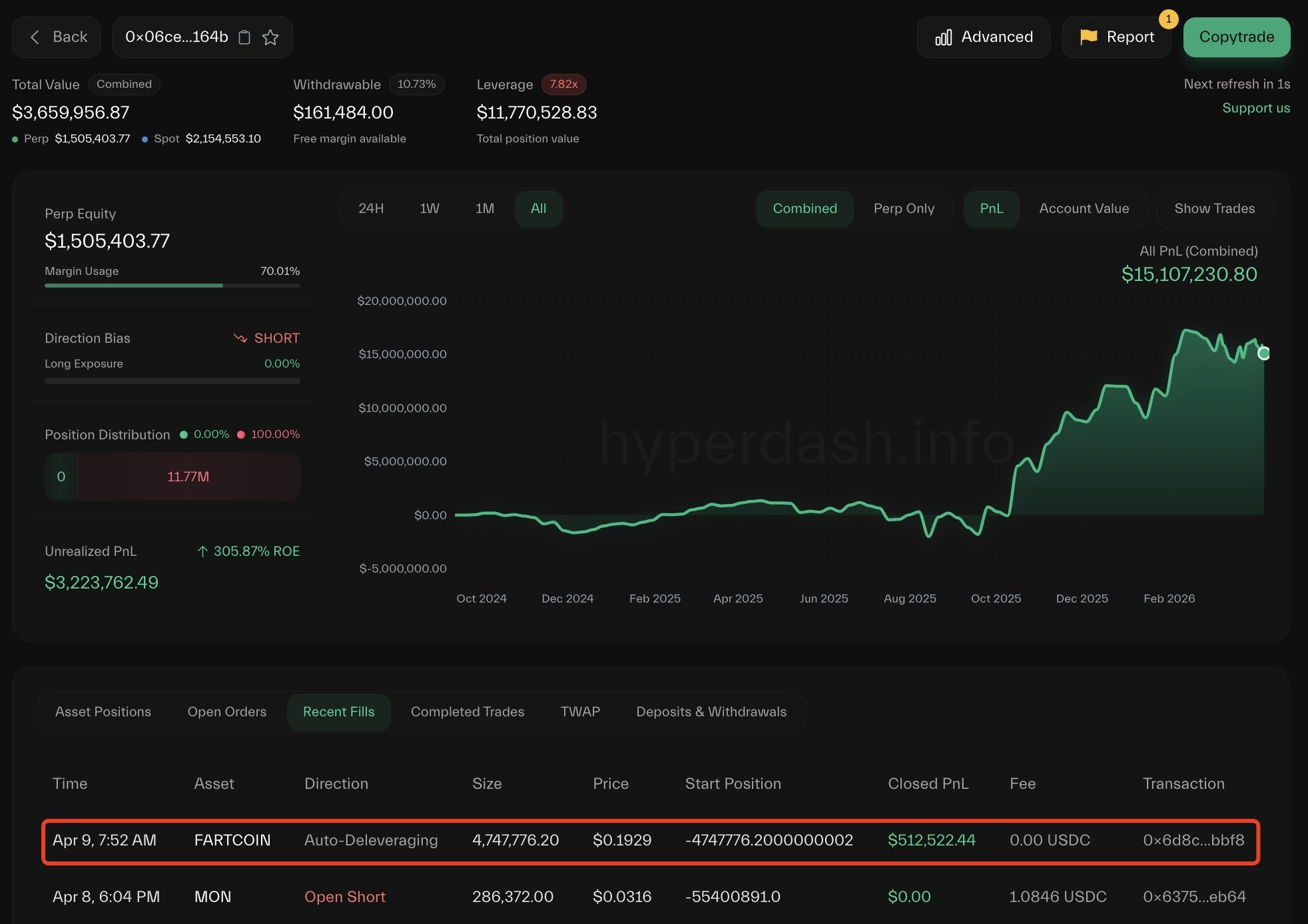
A trader lost about $3 million after building a large leveraged Fartcoin position on Hyperliquid that unraveled in thin liquidity, triggering the platform’s auto-deleveraging (ADL) mechanism.
Hyperliquid data flagged by Lookonchain shows that the trader accumulated about 145 million tokens across multiple wallets before being liquidated. The liquidation redistributed gains to opposing traders, with at least two wallets seeing around $849,000 through ADL.
PeckShield said the unwind produced about $3 million in accounting losses and left Hyperliquid’s HLP vault down roughly $1.5 million over 24 hours, though Hyperliquid had not publicly confirmed those figures by publication.
The episode highlighted how ADL can crystallize gains for traders on the other side of a collapsing position, while raising fresh questions about how Hyperliquid’s liquidation and vault structure behave in low-liquidity markets.

PeckShield said the activity appeared structured to trigger liquidations in low-liquidity conditions, potentially pushing losses onto Hyperliquid’s liquidity pool while being offset by positions elsewhere.
Cointelegraph reached out to Hyperliquid for comments, but had not received a response before publication.

Past trades exposed similar pressure on Hyperliquid’s liquidity system
This is not the first time Hyperliquid’s liquidity system has come under pressure from large, concentrated positions.
On March 13, 2025, the platform’s Hyperliquidity Provider (HLP) vault took a roughly $4 million hit after an oversized Ether (ETH) position was unwound, triggering liquidations under thin market conditions. After the incident, the team said that losses stemmed from market dynamics rather than a protocol exploit.
Related: Onchain perp DEX volumes fall for five straight months after October peak
A similar episode occurred later that month involving the JELLY memecoin. On March 27, 2025, a trader used multiple leveraged positions to exploit the platform’s liquidation system.
However, the final outcome remained unclear, with Arkham saying the trader withdrew about $6.26 million but may still have ended up down nearly $1 million.
On Nov. 13, 2025, a similar pattern occurred when a trader built large leveraged positions in the POPCAT market, triggering cascading liquidations that left a $5 million hole in the HLP vault. Community members said the strategy appeared designed to create and then remove liquidity to force the vault to absorb the impact.
Magazine: Solana exec trolls crypto gamers, Pixel tackles play-to-earn issues: Web3 Gamer

Authorities in the United States, United Kingdom and Canada have frozen millions of dollars tied to crypto scams in a joint enforcement operation called Operation Atlantic.
The operation, focused on phishing attacks, took place in March and was coordinated by the UK’s National Crime Agency (NCA), the US Secret Service, the Ontario Provincial Police and the Ontario Securities Commission.
Operation Atlantic identified more than 20,000 victims across the US, Canada and the UK, securing and freezing more than $12 million in suspected criminal proceeds, the NCA said Thursday. It also identified “more than $45 million stolen in cryptocurrency fraud schemes,” the agency added.
“Operation Atlantic is a powerful example of what is possible when international agencies and private industry work side by side,” NCA Deputy Director of Investigations Miles Bonfield said.
The operation involved assistance from major cryptocurrency exchange Binance, according to a separate statement by the company.

What is an approval phishing scam?
Approval phishing scams trick users into signing malicious permissions that allow attackers to access and drain crypto wallets.
Unlike typical scams, where perpetrators trick victims into sending them crypto, approval phishing misleads victims into unknowingly authorizing malicious transactions that allow scammers to spend specific tokens inside the victim’s wallet.

“Approval phishing is one of the most damaging types of scams targeting crypto users today,” said Flavio Tonon, Binance’s senior regional advisor for the Europe, Middle East and Africa region.
Related: Drift explains $280M exploit as critics question Circle over USDC freeze
He noted that the operation underscores how effective crime fighting is possible when private and public partners work together, adding that blockchain transparency makes it difficult for criminals to get away with phishing exploits.
No funds were frozen on Binance as part of the operation
Operation Atlantic included on-site investigations at the NCA’s London headquarters, where Binance said its Special Investigations team provided support, including live account screening and scam intelligence.
The company also provided insights on potential bad actors in order to assist with asset seizure efforts, and conducted research that identified scam websites that were still actively defrauding victims at the time of the operation.
Binance said no funds were frozen on Binance accounts.
Magazine: AI agents will kill the web as we know it: Animoca’s Yat Siu


Stablecoins are on track to become a foundational layer of global finance, with adjusted transaction volumes projected to reach $719 trillion by 2035, according to a new report by blockchain research firm Chainalysis on Wednesday.
The growth, driven by organic adoption alone, signals a structural shift in how value moves across borders and through everyday commerce, the research firm added.
Stablecoins moved more than $35 trillion on blockchain rails last year, noting that only roughly 1% was for real-world payments, according to a March report by McKinsey and blockchain data firm Atermis Analytics.
A key catalyst is the looming generational wealth transfer, with as much as $100 trillion expected to pass from Baby Boomers to Millennials and Gen Z over the coming decades. These younger cohorts, far more likely to use crypto as a financial instrument by default, are set to redefine payment preferences at scale, embedding digital assets into mainstream economic activity.
“When crypto becomes the default for the next generation of capital, the question is no longer if stablecoins compete with traditional rails, but how quickly they replace them,” Chainalysis said in its report.
At the same time, stablecoin transaction volumes are quickly converging with traditional payment networks. Chainalysis said that current trends suggest onchain payments could match Visa and Mastercard’s volumes no later than 2039, placing direct competitive pressure on legacy rails long defined by intermediaries, fees and delayed settlement.
Unlike card networks, stablecoins enable near-instant, 24/7 settlement and programmable transactions, reducing friction across remittances, business payments, and treasury operations. As merchant adoption expands, paying with stablecoins is increasingly shifting from a deliberate choice to invisible infrastructure, the firm added.
Chainalysis is also introducing a new category of blockchain intelligence agents, aimed at helping institutions navigate and operationalize this transition as digital assets move from the margins to the core of global finance.
“The institutions that build for onchain payments now will define the next era of global finance, while those that wait risk settling on someone else’s rails,” Chainalysis said.
In today’s newsletter, Joshua de Vos from CoinDesk breaks down cryptos performance in the first quarter, highlighting shifting institutional demand and new regulatory clarity setting the stage for Q2.
Q1 2026 Digital Asset Review
Digital assets closed Q1 2026 under meaningful pressure, extending a downturn that began in late 2025. As presented in CoinDesk’s latest “Quarterly Review and Outlook,” the quarter was shaped by escalating geopolitical tensions, a cautious Federal Reserve, and institutional flows that turned sharply negative before partially recovering into month-end.
Q1 in review
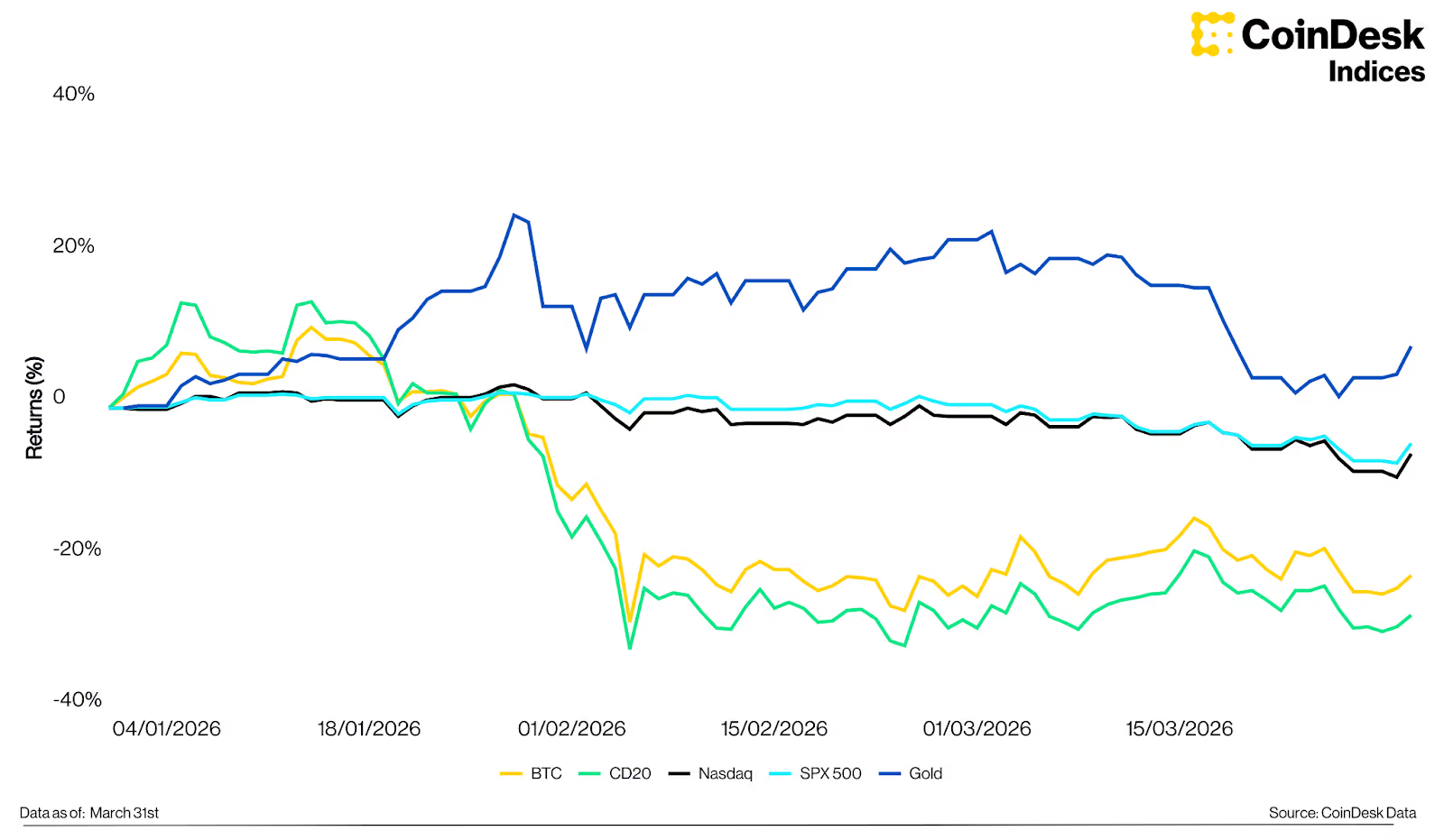
The CoinDesk 20 Index declined 27.4% to 1,952, while bitcoin fell 22.1% to $68,228; its second-largest quarterly decline since Q2 2022. Escalating tensions in the Middle East pushed crude oil above $100 per barrel, while the Federal Reserve held rates steady at 3.5%–3.75% following its March meeting. The S&P 500 and Nasdaq declined 4.63% and 5.98% respectively; gold was the standout, rising 8.19% to $4,671.
BTC vs gold vs SPX vs Nasdaq vs the CD20 Index, Q1 2026

A notable dynamic emerged in the quarter’s second half. Bitcoin had already declined roughly 30% from its February peak before geopolitical tensions escalated sharply in late February, suggesting much of the fear and forced liquidations had been priced in before the event. Since tensions intensified, bitcoin returned 3.54%, while the S&P 500 and Nasdaq fell 5.09% and 4.89%. The CoinDesk Memecoin Index was the weakest performer at -41.7%; the CoinDesk 80 outperformed bitcoin, declining 16.5%, with Hyperliquid (+43.8%) and Morpho (+40.9%) leading positive returns among its constituents.
BTC and CD20 Index vs selected assets, returns since Feb 28th

Institutional flows in focus
Among U.S. spot bitcoin ETFs, net outflows of $1.81B across January and February erased much of the institutional demand built during the prior year. Although March saw a recovery of $1.32B in inflows, Q1 closed with net redemptions of approximately $496M. Bitcoin’s stabilisation in March coincided with the return of positive net inflows, suggesting institutional positioning had begun to rebuild before the quarter ended.
Bitcoin ETF flows and BTC price, Q1 2026

In the spot ETF era, institutional flow data provides a real-time signal of sentiment unavailable in prior cycles. The March recovery sets a baseline worth watching for Q2, particularly as Morgan Stanley reportedly prepares a spot bitcoin ETF ($MSBT) at a 0.14% fee, designed to integrate into its network of over 16,000 advisors.
The regulatory picture clarifies
A joint SEC–CFTC ruling on March 17 designated 16 assets, including SOL, XRP and DOGE, as digital commodities and thus outside the securities definition. This removes a key regulatory overhang and opens the pathway for spot ETF approvals across a broader range of assets. Basket and index-based ETPs now rank second only to bitcoin-focused products by number of pending filings, with CoinDesk indices including the CD20 and CD100 increasingly referenced as natural benchmarks for these vehicles.
Number of pending crypto ETP applications, 2025

Looking ahead to Q2
Market direction in Q2 will be shaped by two variables: the trajectory of the Middle East conflict and the Federal Reserve’s response to inflation data. A de-escalation would ease energy price pressure and creates conditions for recovery; prolonged conflict would keep financial conditions tight. Bitcoin’s October 2025 peak near $126,000 and the subsequent correction are broadly consistent with the historical halving cycle, which typically produces an 18–24 month post-ATH drawdown. This cycle’s structural difference is institutionalised ETF demand; on peak days in 2024, inflows topped $1 billion, equivalent to absorbing over 30 days of mining supply in a single session. Combined with a more supportive regulatory environment and a deepening institutional product suite, the structural foundation entering this correction is meaningfully more durable than in prior cycles.
Constituent highlights
Ether declined 29.1% in Q1, with U.S. spot ether ETFs recording net outflows of $758 million. The more significant forward-looking development is Ethereum’s structural position in tokenised assets; 59.4% of total real-world asset supply resides on Ethereum as of Q1 2026. BlackRock’s ETHB staking ETF, launched on March 12 with a projected 3–7% annual yield, introduces an income-generating dimension to ETH that could broaden its appeal to yield-oriented allocators.
Solana declined 33.2% but registered a notable milestone: peer-to-peer stablecoin transaction volume reached a new all-time high of $832 billion in Q1 2026, reflecting a shift toward payments infrastructure. Solana’s real-world asset holder count also surpassed Ether for the first time, driven by platforms such as Ondo Global Markets and xStocks.
XRP declined 27.1%, but the narrative is increasingly centred on Ripple’s expanding institutional infrastructure. RLUSD reached a market capitalization of $1.42 billion by quarter-end, and Ripple’s acquisition strategy, spanning prime brokerage through Hidden Road ($1.25 billion, clearing $3 trillion annually) and treasury management through GTreasury ($1 billion), points toward a comprehensive financial ecosystem built around XRP and RLUSD. The key catalyst for Q2 is whether these integrations translate into measurable on-chain activity.
This summary was created based on CoinDesk Research’s latest report “Digital Assets: Quarterly Review and Outlook, Featuring CoinDesk 5 and CoinDesk 20.”
– Joshua de Vos, research team lead, CoinDesk
Keep Reading
- JP Morgan CEO Jamie Dimon says the bank must “move faster” with its blockchain efforts due to the threats banking faces from blockchain technology.
- Morgan Stanley’s own bitcoin ETF opened this week creating competition on Wall Street.
- The U.S. Treasury is pitching new rules for stablecoin issuers to treat them like every other financial firm that must maintain armor against illicit uses.
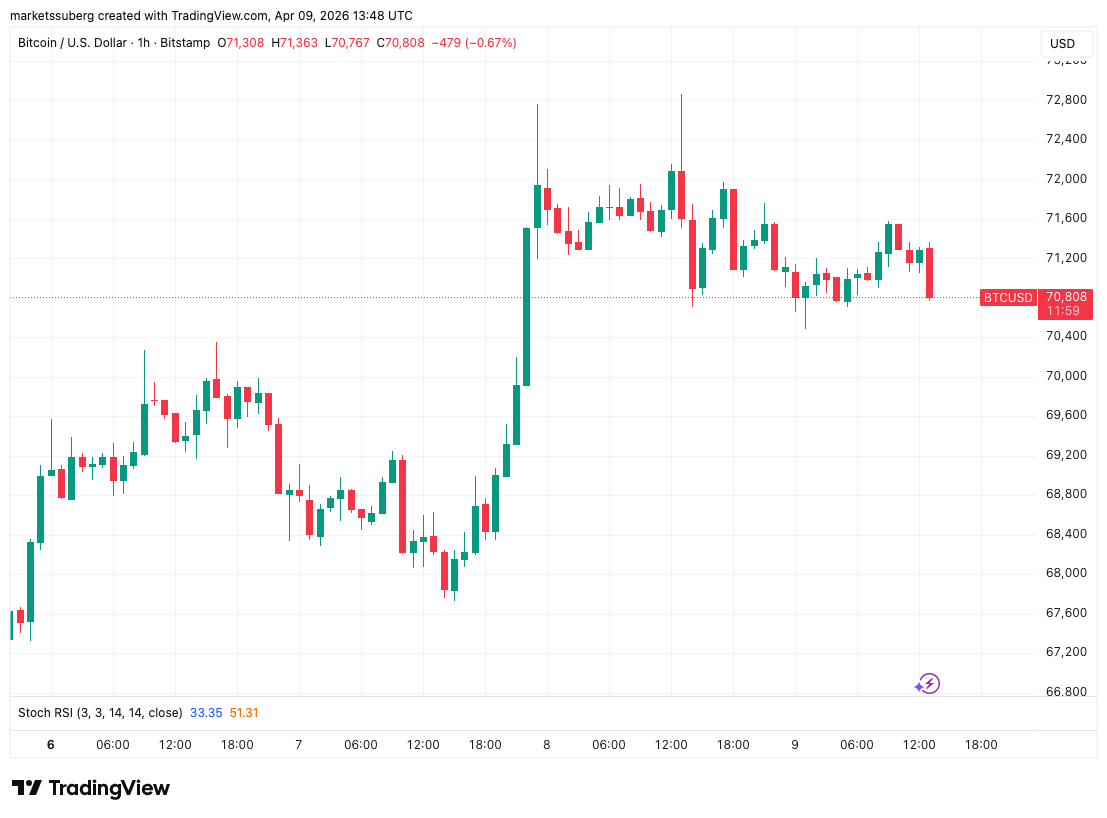
Bitcoin (BTC) circled $71,000 at Thursday’s Wall Street open after US inflation data conformed to expectations.
Key points:
-
Bitcoin waits for new catalysts as US PCE inflation data conforms to market expectations.
-
Friday’s CPI release will be the first to show any impact of the US-Iran war.
-
$80,000 remains in play as a BTC price target, a trader says.
PCE data avoids surprises for risk assets
Data from TradingView showed cooling BTC price volatility after local highs near $73,000 the day prior.

Relief over a US-Iran ceasefire combined with favorable readings from the Federal Reserve’s “preferred” inflation gauge, the Personal Consumption Expenditures (PCE) index.
Core PCE year-on-year came in at 3% for February. On a monthly basis, core PCE was at 0.4%, per data from the US Bureau of Economic Analysis (BEA).

Reacting, trading resource The Kobeissi Letter noted that the impact of the US-Iran war and oil-supply squeeze were not yet reflected in PCE.
“This marks the final pre-Iran War PCE inflation datapoint,” it wrote on X.
Markets remained cautious about future Fed policy, with data from CME Group’s FedWatch Tool continuing to show no expectations of interest-rate cuts in 2026.

While Bitcoin offered no obvious reaction to the latest data, meanwhile, economist Mohamed El-Erian argued that Friday’s March Consumer Price Index (CPI) release was more important.
“While PCE inflation is widely regarded as the Fed’s favorite measure, the bigger inflation focus this week will be on tomorrow’s CPI data, as PCE covers February and not March,” he told X followers.
As Cointelegraph reported, CPI is particularly susceptible to fallout from oil-price swings.
Trader: $80,000 BTC price push “on the horizon”
BTC price action thus left traders guessing as to when and where the next move would be.
Related: Bitcoin RSI ‘nearly perfectly’ copying end of 2022 bear market: Analysis
In their latest market commentary, pseudonymous trader LP leveraged liquidation clusters to give potential targets.
“On the HTF, some upside low-leverage liquidation clusters have been cleared, but sizeable liquidity still remains around 73K and above the highs near 76K. Meanwhile, liquidity is starting to build on the downside, mainly around 69K and 64K,” an X post stated.
“With price still range-bound, both sides remain in play. If the 69–68K level holds, price is likely to push higher and target the remaining upside liquidity around 73K.”

Crypto trader Michaël Van de Poppe was more optimistic, keeping the $80,000 mark in play.
“As long as Bitcoin continues to hold these ranges, there’s a strong new upwards leg on the horizon towards $80K,” he summarized on the day.

This article is produced in accordance with Cointelegraph’s Editorial Policy and is intended for informational purposes only. It does not constitute investment advice or recommendations. All investments and trades carry risk; readers are encouraged to conduct independent research before making any decisions. Cointelegraph makes no guarantees regarding the accuracy or completeness of the information presented, including forward-looking statements, and will not be liable for any loss or damage arising from reliance on this content.
Crypto World
Bitmine Immersion (BMNR) uplists to NYSE and boosts share buyback program to $4 billion
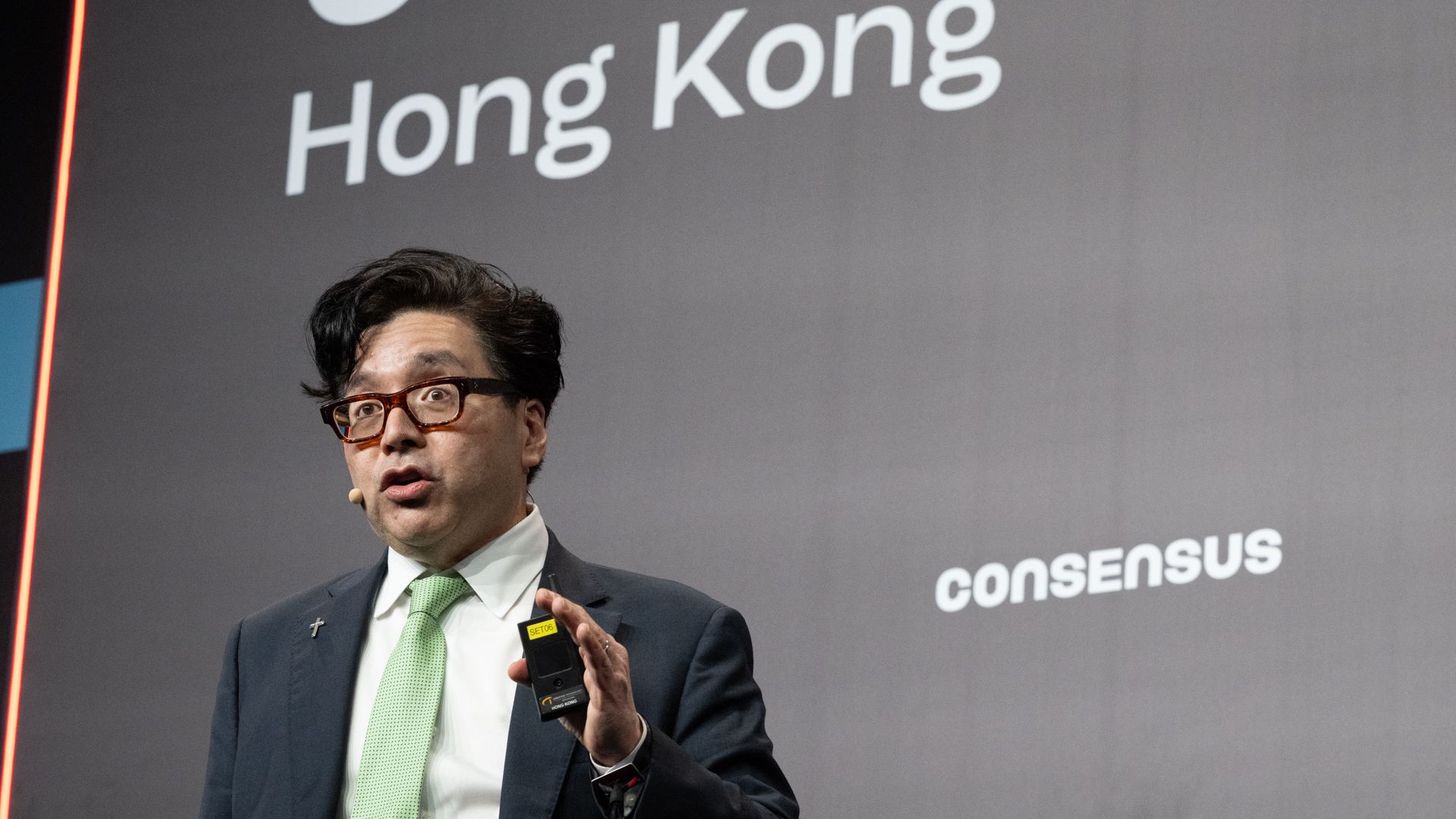
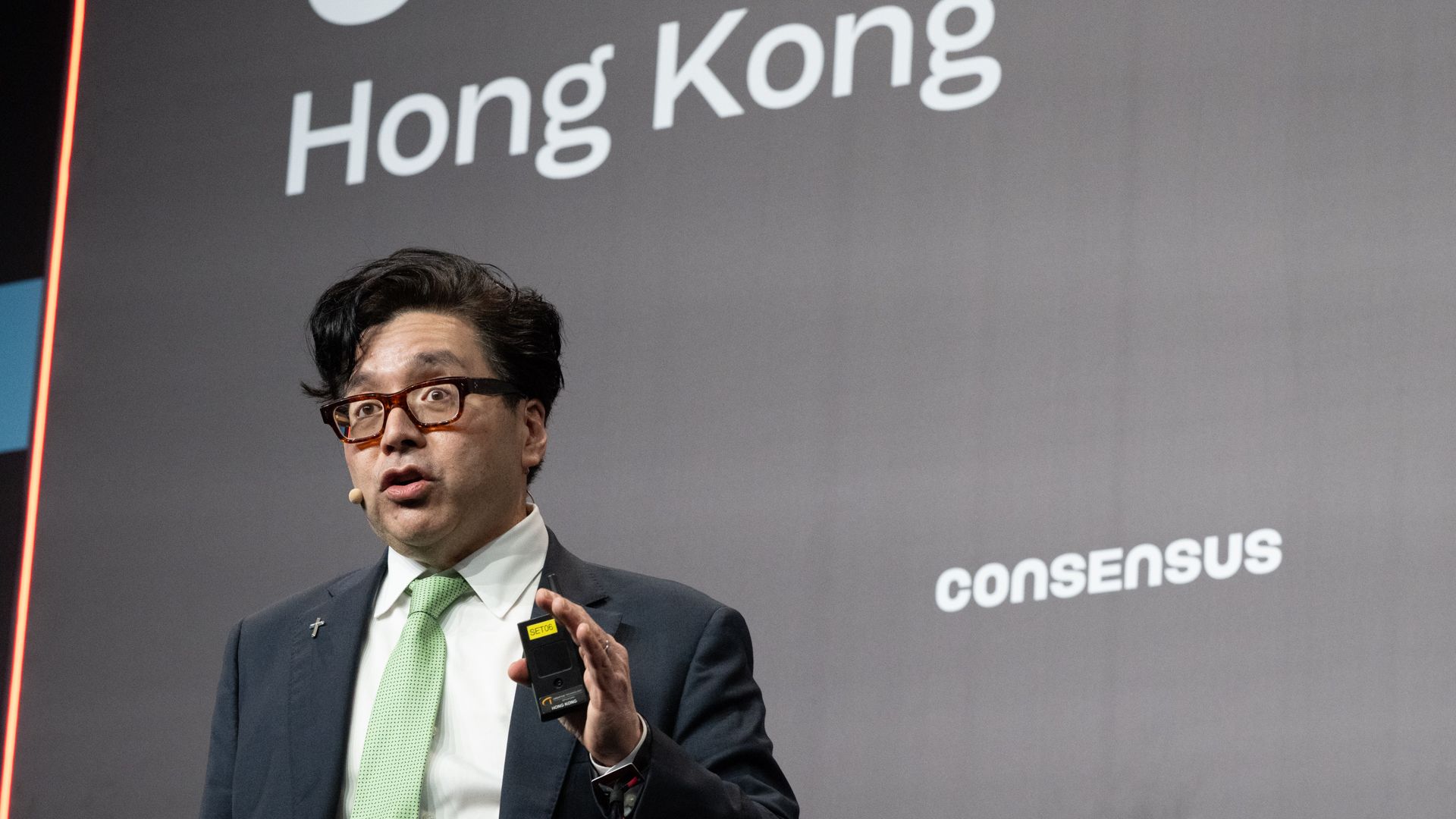
Bitmine Immersion Technologies (BMNR) began trading on the New York Stock Exchange on Thursday, moving from the NYSE American as it scales its crypto-focused treasury strategy.
The company paired the uplisting with an increase in its share repurchase program, raising the authorization to $4 billion from $1 billion. The buyback ranks among the largest announced this year, according to the company. BMNR’s stock has plunged roughly 90% since peaking last summer amid the height of the digital asset treasury mania. Shares are lower by 2.8% in early Thursday trading.
Bitmine now holds about 4.8 million ETH, equal to 3.98% of total supply, and continues to target 5%, or what it calls the “Alchemy of 5%.”
The macro backdrop could play a role. Fundstrat co-founder Tom Lee, who also chairs Bitmine, has argued that U.S. equities may have found a bottom following a ceasefire tied to tensions in Iran. Stocks, oil and volatility shifted sharply in response, a pattern that has also lifted crypto markets.
Bitcoin recently moved above $72,000 alongside gains in equity futures, reflecting a broader “risk-on” trade. Ether may benefit as well, with recent inflows into spot exchange-traded funds and increased staking activity reducing selling pressure, according to Lee.
For Bitmine, the link is direct. Each 1% rise in ether’s price adds roughly $100 million to the value of its holdings. A sustained rebound in crypto could support its balance sheet and stock.
Crypto World
Polymarket Just Hit $4 Billion in Volume on 5-Minute Markets: Is Chainlink the Infrastructure Behind the Next DeFi Explosion?
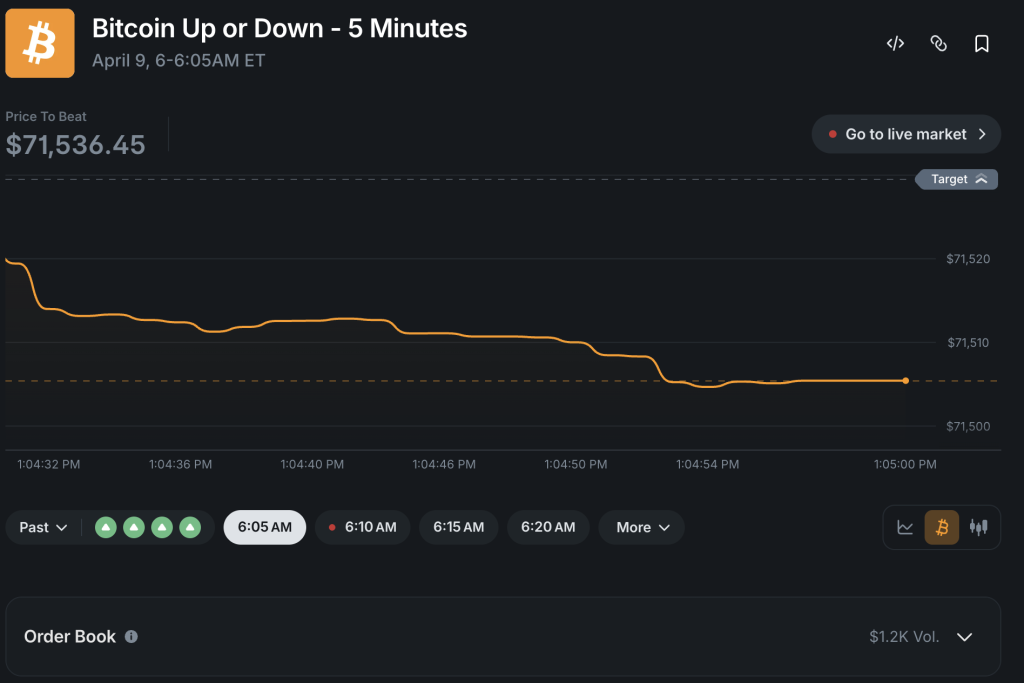
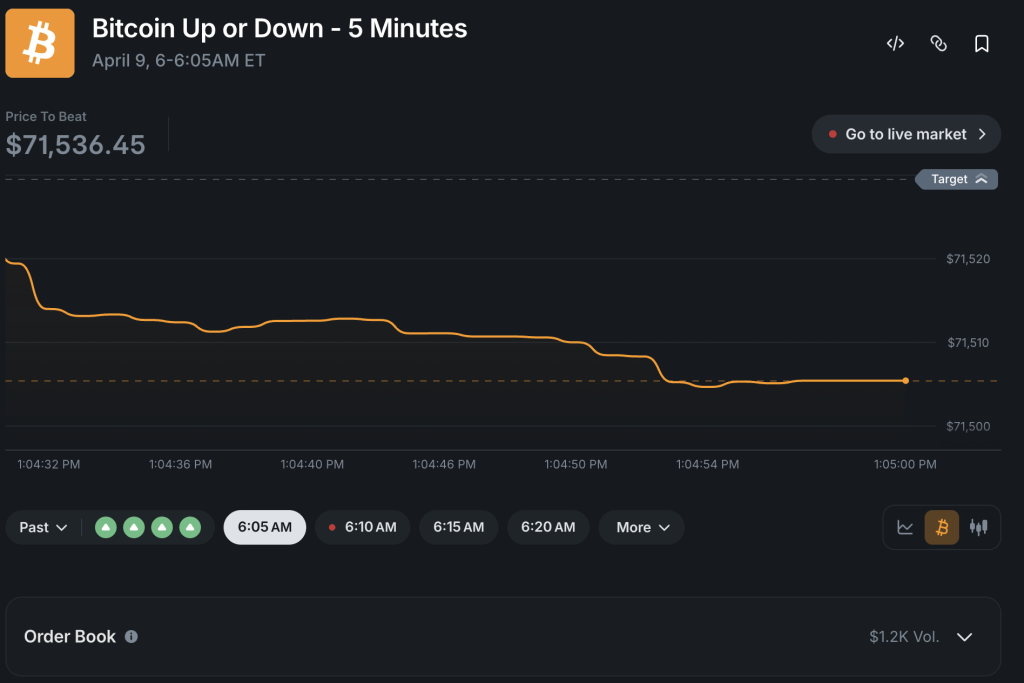
$153 million in daily volume. $4 billion total. $200 million in the first week alone. Polymarket’s 5-minute prediction markets have gone from experimental product to one of the highest-velocity trading venues in DeFi – and Chainlink oracles are the reason any of it works.
The volume surge, confirmed by on-chain data shared across crypto analytics channels, represents a roughly 400% increase from earlier baseline figures, with the 3x weekly growth rate still accelerating as of the latest reporting window.
Discover: The best pre-launch token sales
Why 5-Minute Prediction Markets Break Standard Oracle Architecture
Standard oracle infrastructure built for hourly or daily market resolution can tolerate latency. A price feed delayed by 30 seconds is noise when a contract settles in 48 hours.
In 5-minute prediction markets, that same 30-second delay is the difference between a valid settlement and a manipulated one, exactly why Polymarket’s architecture required a fundamentally different oracle setup.
Chainlink’s Data Streams integration, deployed on Polygon where Polymarket settles, delivers timestamped price reports at sub-second intervals.
Combined with Chainlink Automation handling the on-chain settlement triggers, the system processes the full cycle, price confirmation, contract resolution, USDC payout, without human intervention and without the manipulation vector that centralized price feeds introduce.
The oracles provide the official price feeds that trigger contract settlements, removing the need for a centralized authority entirely.
The scale of what’s now running through this infrastructure is significant. Over 3,000 traders are actively using Chainlink Data Streams across integrated platforms, and the Dashlink dashboard tracking oracle demand shows a direct correlation between the Polymarket volume surge and a decline in LINK exchange reserves – whales are pulling supply off exchanges as network utilization hits new highs for prediction market settlements.
Native USDC collateral adoption within these markets has further accelerated institutional participation by improving capital efficiency.
The appeal is obvious: a platform already under scrutiny for insider trading patterns on longer-duration markets now offers a format where information asymmetry has a 5-minute shelf life.
The risks are real and shouldn’t be buried. Short timeframes amplify volatility, HFT-dominated order flow can crowd out retail, and oracle delays, however rare, carry outsized consequences when resolution windows are measured in minutes.
But the volume data doesn’t lie: the format is capturing demand that didn’t have an instrument before.
Convergence Hackathon Closes – Liquid Chain Takes the Grand Prize on CCIP
Liquid Chain built a Unified Liquidity Layer that aggregates capital across multiple Layer-2 networks using Chainlink’s Cross-Chain Interoperability Protocol (CCIP) as the messaging backbone.
The core problem it solves is real and expensive – assets stranded on individual L2s require manual bridging, creating slippage, delay, and trust assumptions that institutional allocators won’t accept.

Liquid Chain’s architecture lets users move assets seamlessly across chains without manual bridge interactions, with CCIP handling the verification and message-passing layer beneath the surface.
The project has been pitching its Layer-3 DeFi buildout as a credible answer to the fragmentation problem, and the Convergence judges agreed.
Other notable hackathon submissions concentrated on Real-World Asset tokenization and DeFi automation – a consistent signal that Chainlink’s developer community is orienting toward institutional-grade infrastructure rather than consumer speculation. The CCIP adoption rate implied by the hackathon submissions validates Chainlink’s cross-chain positioning at exactly the moment demand for tamper-proof oracle settlement is breaking records on Polymarket.
Explore the LiquidChain presale and current allocation terms here.
The post Polymarket Just Hit $4 Billion in Volume on 5-Minute Markets: Is Chainlink the Infrastructure Behind the Next DeFi Explosion? appeared first on Cryptonews.


- Bitcoin trades above $70,700 as derivatives data shows $80,000 calls dominating on Deribit.
- BTC rebounded to near $72,900 on Wednesday as a US-Iran ceasefire eased oil pressures.
- Analysts see end of stress cycle, targeting $80,000 if $75,000 breaks.
Bitcoin’s resurgence to above $70,000, with intraday highs of $72,900, has crypto enthusiasts in an upbeat mood. The cryptocurrency hovers near $70,800 as of writing, off highs seen on Wednesday, but bulls are upbeat as fresh market signals point to a potential breakout.
Traders bet on next leg up for Bitcoin
Bitcoin is well off its year-to-date highs and has struggled since breaking lower in late January 2026. Bears are therefore still on the hunt.
However, this week has investor sentiment shifting bullish, fueled by the US-Iran ceasefire and key activity in Bitcoin derivatives. Data suggests investors are eyeing a potential rally to $80,000.
Options data from Deribit, the platform that accounts for the lion’s share of the global crypto options market, shows bullish bets on prices surging to $80,000 have increased.
Call options betting on BTC climbing beyond the $80k strike price have hit $1.6 billion. This is a stark reversal from recent months when $60,000 puts, which outline wagers on price drops, dominated the outlook.
On-chain data also supports the bullish case, with Morgan Stanley’s ETF debut netting over $34 million in volume.
Allyson Wallace, global head of ETFs at Morgan Stanley, commented ahead of the launch: “The demand, especially from the high-net-worth investors, has been quite high. Viewed at the firm level, this is an asset class that is not going away.”
Bitcoin price prediction
The crypto market began the week with all eyes on Bitcoin. Notably, BTC bounced to highs near $72,900, hitting levels last seen since March 18. The uptick saw buyers push from lows near $67,700 overnight Tuesday, April 7, amid news of a ceasefire between the US and Iran.

Investors buoyed by the prospect of an easing in oil prices helped BTC higher. With broader inflation concerns dissipating, a further strengthening in the ceasefire could see Bitcoin prices break to $75,000. If this happens, the next target will be $80,000 or higher.
However, geopolitical risks remain amid a likely fragile ceasefire. If fresh attacks begin and an escalation occurs, a surge in oil prices could send risk assets plummeting.

Key Takeaways
- NVDA slipped between 0.2%–0.5% Thursday, settling around $181.75 following Wednesday’s 2.2% rally
- Shares have remained confined within a $165–$195 trading channel for several months
- Market analysts identify $185 as a critical breakout threshold; $200 viewed as confirmation level
- Wednesday’s surge followed news of a two-week U.S.-Iran ceasefire, though durability concerns persist
- Technical analysts warn that breaching $170 support could trigger a decline toward $150
Nvidia’s recent price action reflects a prolonged period of consolidation. Despite its status as the market’s artificial intelligence powerhouse, NVDA shares have languished in a holding pattern since September 2025, oscillating within a $165–$195 corridor as traders await a meaningful catalyst.
Signs of a potential breakout emerged recently. The chipmaker mounted an impressive rally spanning six consecutive sessions—delivering gains exceeding 10% and marking its longest winning streak since October—before momentum stalled on Thursday.
The Wednesday surge of 2.2% followed President Trump’s announcement of a temporary two-week ceasefire agreement with Iran, which included the reopening of the strategically vital Strait of Hormuz. This development eased concerns about potential economic disruption. Nvidia emerged as one of the S&P 500’s top performers during that session.
Thursday’s trading painted a contrasting picture. Shares retreated approximately 0.5% to $181.75 as market participants expressed skepticism about the ceasefire’s sustainability. The broader S&P 500 index also traded relatively flat.
Geopolitical dynamics continue to influence risk sentiment across markets. Iran’s continued capability to disrupt shipping through the Strait of Hormuz maintains a degree of unease among investors.
Beyond geopolitical concerns, a fundamental question persists: will major cloud providers—including Microsoft, Google, and Amazon—realize meaningful returns on their substantial artificial intelligence infrastructure investments? This uncertainty has effectively capped NVDA’s upside potential in recent months.
Ishan Majumdar, founder of Baptista Research, shared his perspective with Barron’s, emphasizing that core AI demand dynamics haven’t changed. “Nothing about the cease-fire alters the structural AI demand story,” he noted. “If anything, removing macro volatility allows the market to refocus on those fundamentals.”
Technical Analysts Flag $185 as Pivotal Threshold
Jonathan Krinsky, chief market technician at BTIG, has identified the $185 price point as particularly significant. “If Nvidia sustains above $185, I would say the money is ready to run back in,” he explained. “The long-term trend remains positive.”
Buff Dormeier at Kingsview Partners believes a higher confirmation is necessary. He suggests NVDA must break through $200 to establish a convincing bullish trajectory. “If we started to get a signal of that, we could easily be back to the races,” he indicated.
Dormeier also highlighted improving valuation metrics. NVDA currently trades at approximately 20 times forward earnings—significantly below its historical 10-year average multiple of around 36—and now trades in line with the broader S&P 500. This represents a meaningful valuation compression for a stock that traditionally commanded a substantial premium.
Support Breakdown Could Trigger Further Weakness
Both technical strategists emphasize meaningful downside risks. The $170 price level represents crucial support. A sustained breach below this threshold could signal additional selling pressure ahead.
“If we were to break under there, I think shares could fall down to $150,” Dormeier cautioned.
Krinsky shared similar concerns about the sustainability of the recent bounce. “It doesn’t strike me as an all-clear that we recovered the $170 level so quickly,” he observed. “If it moves back to that level and closes under it again, that would be a more telling signal that Nvidia is likely to continue lower.”
For the immediate term, Dormeier frames the trading range as $165 representing the floor and $180 marking near-term resistance. NVDA settled Wednesday’s session at $182 before trading around $181.75 on Thursday.


Bitcoin Depot, a leading operator of crypto ATMs in the United States, disclosed a security breach that led to the theft of about 50.9 Bitcoin, valued at roughly $3.7 million at the time of reporting, after an attacker gained access to credentials tied to the company’s corporate Bitcoin wallets.
The incident occurred on March 23, and, according to a filing with the U.S. Securities and Exchange Commission, the attacker took control of credentials connected to Bitcoin Depot’s corporate BTC wallets. The company emphasized that customer accounts, its platforms and personal data were not affected. The breach has not halted daily operations, and the firm has insurance that may cover a portion of the losses. The investigation is ongoing, and the full scope, nature, and impact of the incident remain uncertain.
Bitcoin Depot’s stock responded to the disclosure, closing up 15.6% at $2.74 on the day and moving higher in pre-market trading to around $2.90, according to Yahoo Finance data.
Key takeaways
- The breach resulted in an estimated 50.9 BTC theft, equating to about $3.7 million at the time of the notice, with attackers gaining access to corporate wallet credentials.
- Customer data and platform access were reportedly unaffected, and operations continued with insurers potentially covering part of the losses, though the full scope remains under investigation.
- Bitcoin Depot has faced intensified regulatory scrutiny across several U.S. states, including licensing actions in Connecticut, where regulators cited high fees and incomplete restitution to scam victims.
- Recent legal actions include a Massachusetts lawsuit over alleged overcharging and facilitating scams, and a Maine settlement of $1.9 million to compensate affected users; a June 2024 data breach also exposed tens of thousands of customers.
- Market and policy dynamics around crypto ATMs are tightening, with ongoing discussions in multiple cities about banning or restricting kiosk-based crypto access.
Operational risk, insurance, and ongoing investigations
The March breach underscores how credential compromise can enable unauthorized access to corporate wallets, even when consumer-facing services remain unaffected. Bitcoin Depot states that customer-facing platforms and personal data were not compromised, but the incident raises questions about internal security controls, credential management, and monitoring across enterprise systems. The company has indicated it carries insurance that may help offset losses, but the exact coverage and its applicability to a security incident of this type have not been disclosed publicly.
As regulators and investors await the full forensic findings, the evolving incident illustrates the broader risk landscape for crypto ATM operators, whose business model relies on a distributed, networked infrastructure across dozens or hundreds of locations. For users and institutions, it highlights the tension between enabling accessible crypto on-ramps and maintaining robust, verifiable security controls to deter credential compromise and unauthorized access.
Regulatory pressures and legal exposure mounting
Bitcoin Depot has faced mounting regulatory pressure across several states. In Connecticut, the company’s money transmission license was suspended, and regulators issued a cease-and-desist order over concerns including excessive fees and insufficient refunds to scam victims. Connecticut’s action adds to a growing list of state-level concerns about consumer protections and fee practices in the crypto ATM space.
Beyond licensing actions, the company has grappled with a high-profile Massachusetts lawsuit alleging overcharging and facilitating scams against consumers. Separately, Maine regulators required the company to compensate affected users, with a $1.9 million settlement designed to address prior consumer harms.
These developments come as the sector’s exposure to fraud and scams remains a headline risk for policymakers. In June 2024, Bitcoin Depot disclosed a data breach that exposed the personal information of tens of thousands of customers; authorities allowed the company to finalize notifications only after the investigation concluded in mid-2025. The combination of security incidents and consumer-protection actions underscores a regulatory trend toward tighter oversight of crypto ATMs and related consumer risks.
Markets, perception, and the ATM ecosystem
The regulatory and security headwinds have implications for investor sentiment around crypto ATM operators. Bitcoin Depot’s stock reaction—gapping higher on the news—reflects a nuanced investor calculus: the breach is managed as a cyber risk event with potentially limited direct impact on customers, yet it amplifies scrutiny of the underlying business model and governance controls. As with any security incident, the market response hinges on the clarity of the remediation steps, the breadth of the investigation, and the extent of insurance coverage.
In parallel, the broader U.S. landscape for crypto ATMs remains sizeable but contentious. Industry trackers estimate the United States hosts upwards of 30,000 Bitcoin ATMs, underscoring the scale of on-ramp infrastructure that regulators and consumer groups are weighing. The debate extends to local policy: Stillwater, Minnesota, banned crypto ATMs after residents were affected by scams; Spokane, Washington, moved to a citywide ban in mid-2023, describing kiosks as a preferred tool for scammers. Haverhill, Massachusetts, has entertained a motion to ban crypto ATMs, with a proposed 60-day removal window if enacted.
The regulatory climate, combined with security incidents, suggests continued scrutiny and potential accelerated policy responses at the city and state levels. For operators, this may translate into tighter compliance requirements, clearer consumer-protection standards, and enhanced cybersecurity expectations as part of operational licenses and ongoing audits.
For readers seeking context on the ATM landscape, sector trackers show that the density of crypto kiosks remains a notable feature of the U.S. crypto frontier, even as regulators seek to curb fraud and misuse. See data from CoinATMRadar for the current footprint of Bitcoin ATMs in the United States.
Looking ahead, investors and users should watch how regulators balance access with protection, how operators bolster credential hygiene and incident response, and whether insurance coverage translates into meaningful risk mitigation in the event of future breaches. The evolving mix of cyber risk, consumer protection actions, and local policy decisions will shape the healing path for crypto ATM reliability and trust in the months to come.
Readers should stay tuned for further disclosures from Bitcoin Depot and for updates on regulatory actions as investigators complete their forensic work and authorities finalize consumer-notification requirements. The next few months will likely reveal how much remedial work is needed to restore confidence in a sector that sits at the intersection of convenience, security, and enforcement.

Rise in take up of large industrial space in Wales

Trader’s $3M Fartcoin Bet Unravels, Triggering Hyperliquid ADL

Scope open letter says disabled people are controlled, not included


-

 NewsBeat7 days ago
Steven Gerrard disagrees with Gary Neville over ‘shock’ Chelsea and Arsenal claim | Football
-

 Business7 days ago
No Jackpot Winner and $194 Million Prize Rolls Over
-

 Fashion6 days ago
Weekend Open Thread: Spanx – Corporette.com
-

 Business5 days ago
Expert Picks for Every Need
-

 Business4 days ago
Three Gulf funds agree to back Paramount’s $81 billion takeover of Warner, WSJ reports
-

 Sports5 days ago
India men’s 4x400m and mixed 4x100m relay teams register big progress | Other Sports News
-

 Tech2 days ago
How Long Can You Drive With Expired Registration? What Florida Law Says
-
Business4 days ago
No Jackpot Winner, Prize to Climb to $231 Million
-

 Fashion3 days ago
Massimo Dutti Offers Inspiration for Your Summer Mood Board
-

 Fashion2 days ago
Let’s Discuss: DEI in 2026
-
Politics6 days ago
Wings Over Scotland | The quality of mercy
-

 Business5 days ago
Akebia Therapeutics, Inc. (AKBA) Discusses Pipeline Progress and Strategic Focus on Kidney Disease Treatments at R&D Day – Slideshow
-

 Fashion7 days ago
Statement Sunglasses: The Accessory Shaping Modern Fashion
-

 Crypto World1 day ago
Bitcoin recovers as US and Iran Agree a Ceasefire Deal
-

 Politics7 days ago
East Jerusalem Palestinian families eviction orders
-

 Fashion7 days ago
For Love & Lemons’ Spring 2026 Line is for the Romantics
-

 Politics6 days ago
Why so many children are now classified as ‘disabled’
-

 Fashion7 days ago
Coffee Break: Santa Croce Tote
-

 Politics6 days ago
Nuclear rockets, moon bases and NASA’s Mars plan
-

 Tech6 days ago
The Threadless Ball Screw Never Took Off, But Don’t Write It Off
You must be logged in to post a comment Login