

Crypto World
US Senator Blasts AG Nominee for ‘Dismantling’ DOJ Crypto Unit, Trump’s CZ Pardon

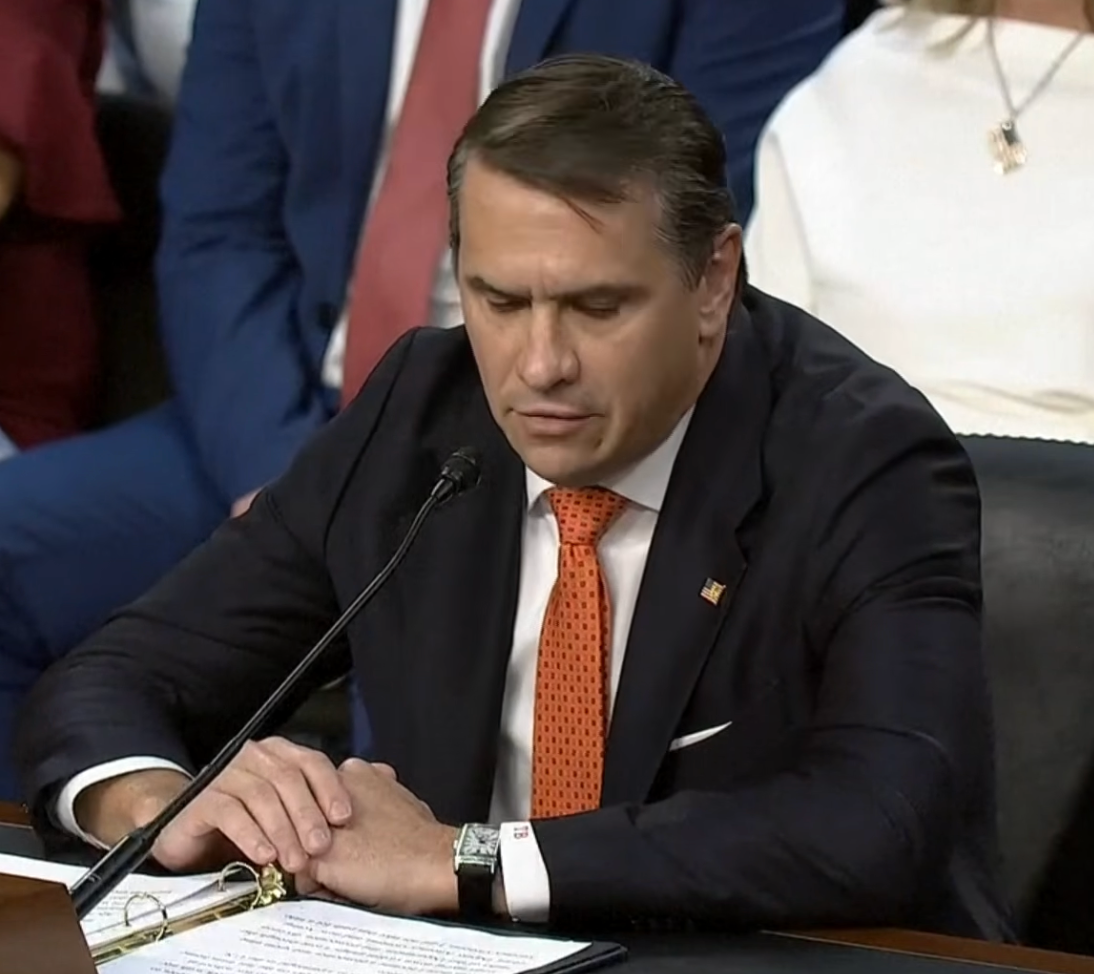
Acting US Attorney General Todd Blanche faced backlash Wednesday over the Justice Department’s (DoJ) enforcement of crypto-related crimes and other actions as President Donald Trump’s former personal attorney appeared before a Senate hearing considering his nomination to lead the agency.
The ranking Democrat, Senator Dick Durbin, used part of his opening statement at the Senate Judiciary Committee hearing to criticize Trump’s AG pick for what he described as “dismantling DoJ’s enforcement team and shutting down ongoing criminal investigations of the crypto industry.”
Blanche was reportedly behind the disbanding of the Justice Department’s crypto enforcement unit in April 2025 as deputy attorney general.
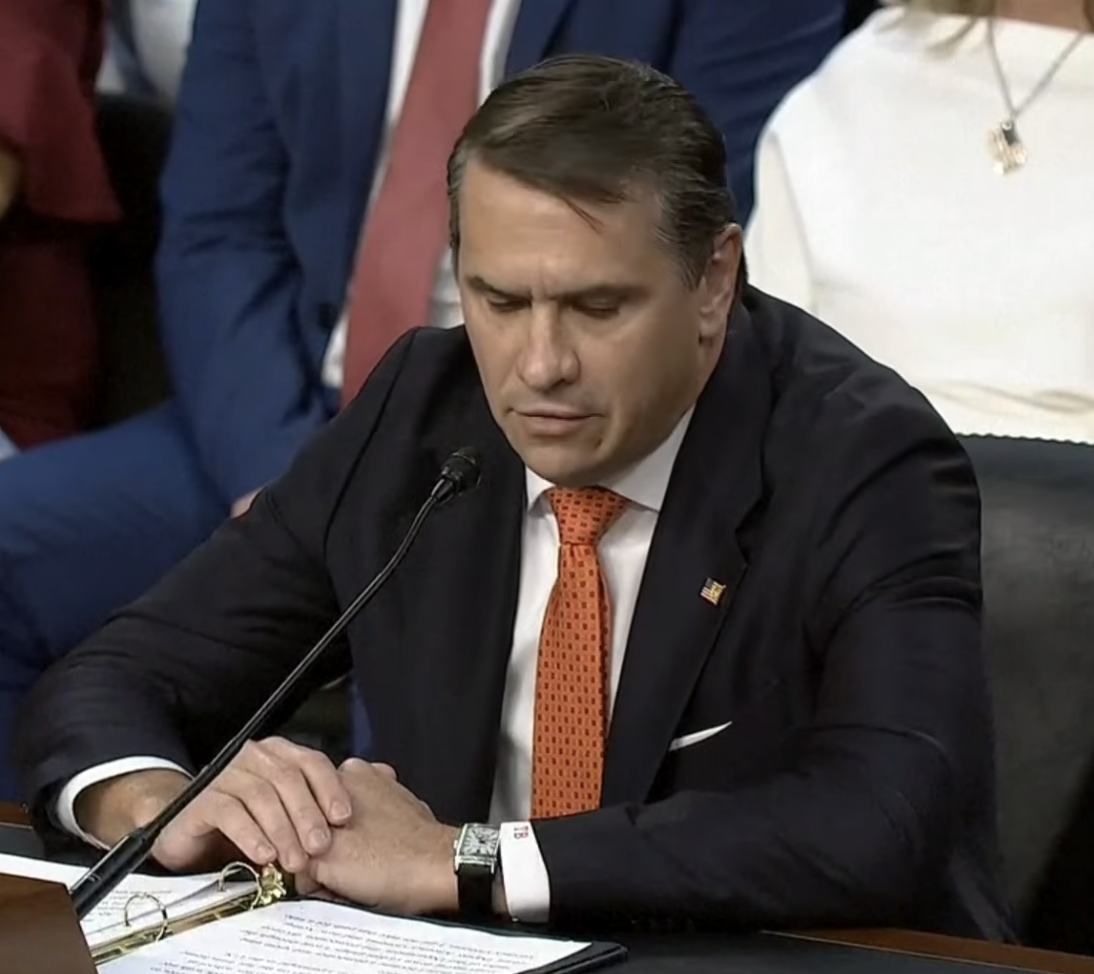
Todd Blanche speaking at his confirmation hearing before the Senate Judiciary Committee on Wednesday. Source: Associated Press
The Illinois lawmaker said that Blanche’s order dismantling the DoJ’s crypto unit enable Trump to earn $1.4 billion from his ties to the industry, including his family’s business World Liberty Financial.
He also accused former Binance CEO Changpeng “CZ” Zhao of “broker[ing] a deal to channel $2 billion” into World Liberty, which led to a presidential pardon. The former CEO agreed in 2023 to plead guilty to one felony charge related to the Anti-Money Laundering (AML) regime at the exchange.
“Every smarmy, suspect deal in this administration has cryptocurrency behind the curtain,” said Durbin.
Senate Republicans need a simple majority of lawmakers present to confirm Blanche as AG should his nomination advance in the judiciary panel. With Senator Mitch McConnell still hospitalized after what his team described as a fall that led to pneumonia, the party has a slim 52-47 margin to confirm Blanche, who faces pushback over the DoJ’s actions on immigration and its crypto policies, claims that he would facilitate Trump’s attacks on perceived enemies and the handling of the Jeffrey Epstein files.
Related: Three US senators oppose CLARITY Act on ethics grounds with vote expected soon
Blanche also faced crypto-related questions from Republican Senator Thom Tillis who said he was “concerned that the Binance CEO got pardoned.” Blanche said that he would review the pardon process if confirmed.
Blanche signals DoJ shift on pursuing coders
The Trump AG pick was behind a 2025 memo “ending regulation by prosecution” in the crypto industry and previously held at least $159,000 worth of digital asset-related investments before divesting them to his children and grandchildren.
He has been serving as acting US Attorney General since Pamela Bondi’s firing in April, telling crypto holders shortly after his appointment that officials would not pursue cases into blockchain developers who were not responsible for illicit activity on platforms.
”[I]f you are developing software, if you are a coder, if you are part of that process and you are not the third-party user, and you are not helping and knowing the third party is using what you developed to commit crimes, you are not going to be investigated and not going to be charged,” Blanche said at the Bitcoin 2026 conference.
The department still has ongoing cases against developers behind platforms allegedly used for illegal activities. Federal prosecutors are expected to retry Tornado Cash co-founder Roman Storm later this year after a jury failed to reach a verdict on two charges in 2025.
Magazine: Will the crypto lobby’s $189M campaign get CLARITY over the line?

President Donald Trump will meet senators at the White House on Thursday to review progress on the CLARITY Act. Ripple executives, meanwhile, warned that rejecting the bill would leave crypto consumers exposed to bad actors.
The bill has cleared every hurdle except the Senate floor, where it needs 60 votes. Leaders want it passed before the August recess.
Why Trump Is Stepping Into CLARITY Act Talks
Sen. Bernie Moreno told Politico that senators will update the president on Thursday afternoon. Sen. Cynthia Lummis, a lead architect, said a revised draft could circulate soon, with ethics language possibly bracketed for later.
The ethics provision remains the biggest obstacle. Trump’s annual disclosure listed $635 million in meme coin royalties and roughly $515 million from World Liberty Financial token sales. Democrats want limits on officials holding crypto business interests before they supply the missing votes.
The arithmetic explains the urgency. The House passed the bill 294-134 in July 2025, and the Senate Banking Committee advanced it 15-9 in May. Only two Democrats, Ruben Gallego and Angela Alsobrooks, backed it in committee.
Senate Majority Leader John Thune wants a floor vote before the work period ends on August 7. However, Trump has already pushed the CLARITY Act publicly, even as a shrinking Senate window raises the stakes.
“I’m hoping that we can come up with some agreement by the end of this week. I think it’s critical if we’re going to try and get this across the floor before August recess,” Politico reported, citing Sen. Thom Tillis, who signaled negotiators are close.
Follow us on X to get the latest news as it happens
Ripple Frames a No Vote as Anti-Consumer
Ripple’s stake in the outcome is personal. The company fought the SEC for four years over XRP’s legal status. Chief Legal Officer Stuart Alderoty argued the same uncertainty now threatens consumers.
“A vote against the Clarity Act is a vote to leave the same unregulated conditions in place to be exploited by bad actors. We’ve seen this movie. Let’s not watch the sequel,”
In the same tone, Lauren Belive, Ripple’s global public policy co-head, argued that with the delay, the regulatory gaps behind FTX’s collapse remain open.
The bill would hand the SEC and CFTC shared jurisdiction and require oversight before tokens reach the market.
Opposition persists, however. Sens. Elizabeth Warren and Chris Van Hollen say the draft weakens consumer protections rather than adding them.
Separately, 78 banking groups pushed to rewrite the stablecoin yield rules. In contrast, law enforcement opposition eased on Section 604 developer liability.
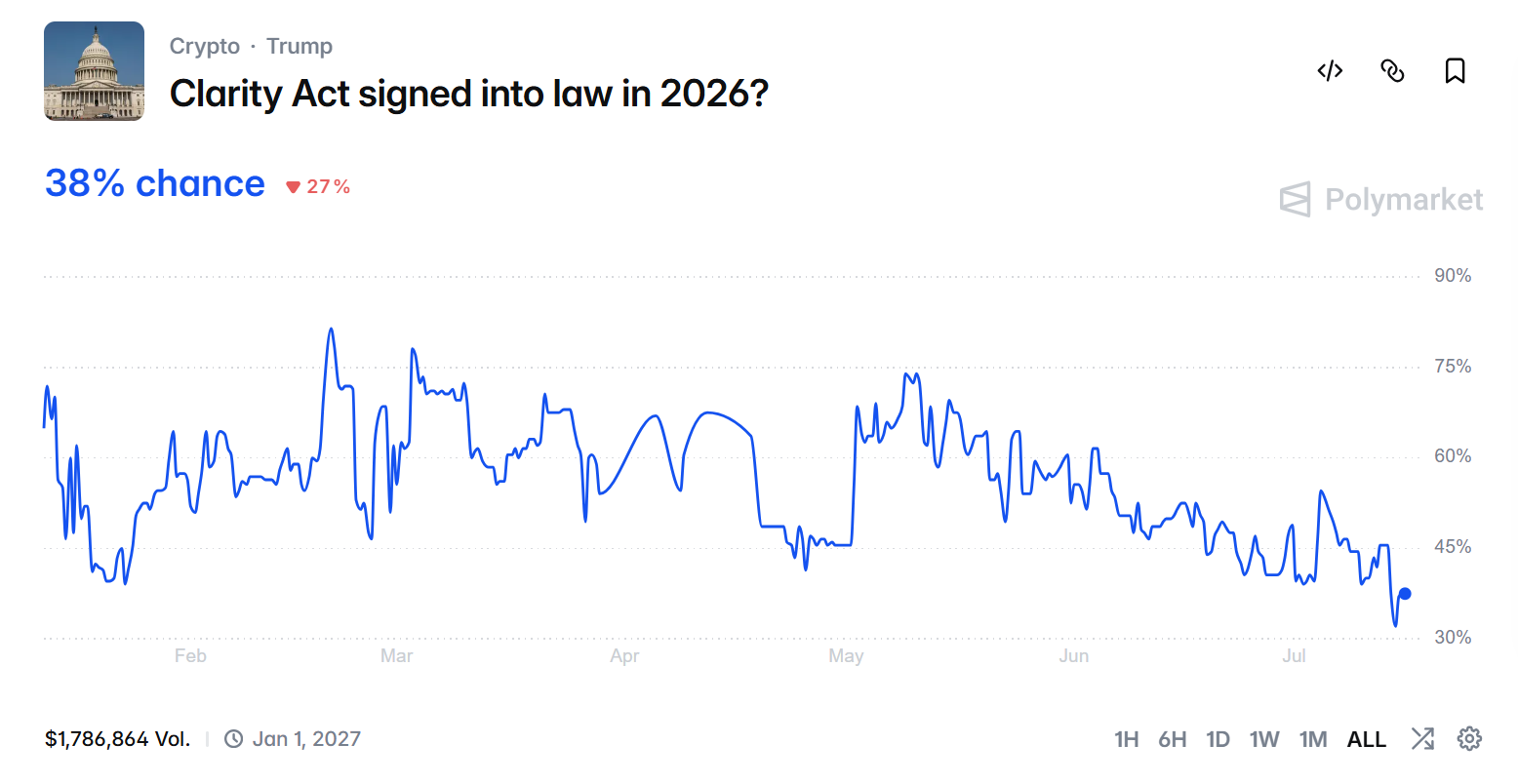
Polymarket traders price passage at only 38% in 2026, suggesting waning confidence as the countdown continues.

Thursday’s meeting will show whether an ethics deal revives those odds before the clock runs out.
The post Trump Steps Into CLARITY Act Talks: Can the Senate Deliver Before Recess? appeared first on BeInCrypto.

Coinbase CEO Brian Armstrong sparked debate over Bitcoin’s direction on July 14 after asking X users whether the OG cryptocurrency has already reached its market bottom.
The poll quickly drew thousands of votes and a wave of comments, with the community split almost evenly between the yays and the nays.
Poll Splits Crypto X Down the Middle
It all started with a simple question Armstrong posited on X earlier today: “Is the bottom in?” The Coinbase chief also clarified in a follow-up post that the survey was specifically about Bitcoin.
“Perpetual futures trading, stablecoin payments, prediction markets, and tokenized real world assets have just been growing,” he said.
At the time of writing, nearly 31,000 people had cast their vote, and more than 648,000 X users had viewed the post, with 55.6% of those who voted answering “No,” while 44.4% believed BTC had already bottomed.
The replies were also split along the same lines as the vote, with one user, AI developer Ilan Rakhmanov, in total agreement, tweeting, “Opinion: the bottom is in.”
Meanwhile, ChainLeak founder Joshuwa Roomsberg argued that the poll had become a “market map” and that Armstrong’s comments pointed to a sector where crypto adoption is expanding beyond BTC itself.
Some of those who didn’t agree that the bottom was in included market watcher Our Crypto Talk, who said there was a “very high chance” BTC would go back to the $50,000 to $55,000 range one more time before any real recovery happens.
Others, like crypto educator Rob Art, focused squarely on percentages, saying that in past bottoms, the price of BTC dropped by 93%, 84%, and 77%, while right now it is just over 50% below its October 2025 all-time high and would need to be at roughly 65% to follow the pattern that he pointed out has been in effect since 2014.
On-Chain Data Paints a More Balanced Picture
While opinions remained divided, recent on-chain analysis points to a market that looks very different from the overheated conditions seen during the 2025 bull run.
A July 14 report from XWIN Japan highlighted four widely followed CryptoQuant indicators: the MVRV Ratio, Net Unrealized Profit/Loss (NUPL), Realized Price, and the Puell Multiple.
According to the update, these metrics suggest Bitcoin is no longer in a euphoric phase, with valuations cooling and investor optimism fading without reaching outright capitulation. It also showed that market activity appears more consistent with consolidation and accumulation.
That assessment broadly matches Bitcoin’s recent price behavior. Despite selling pressure linked to renewed conflict involving Iran and the United States and earlier concerns over Strategy’s Bitcoin sales, the cryptocurrency has fought its way back close to $63,000, having found itself near $61,000 on Monday.
Whether those rebounds mark the start of a durable recovery or simply another pause within the wider bear market is still an open question, but for now, Armstrong’s poll shows that there’s little consensus, even among crypto’s most engaged participants.
The post Brian Armstrong Asks if Bitcoin Bottom Is In, Crypto Community Can’t Agree appeared first on CryptoPotato.
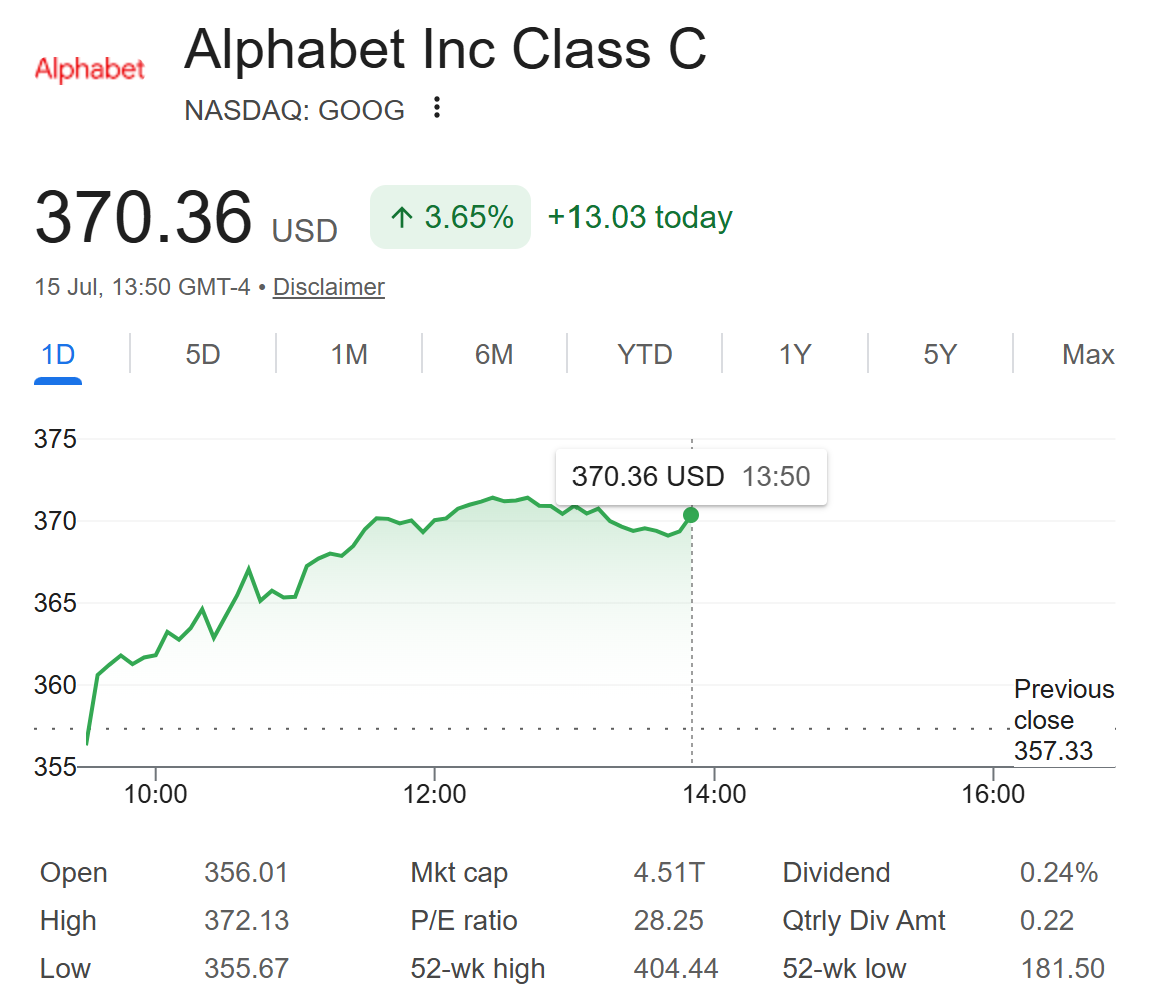
Warren Buffett says Alphabet is more likely to beat 90% to 95% of the stock picks Wall Street makes. The Berkshire Hathaway chairman made the rare endorsement on CNBC’s Squawk Box on Wednesday.
Alphabet (GOOGL) jumped 3.65% to $370.36 after the interview. Berkshire’s stake now tops $31 billion. Only Apple and American Express rank higher among its stock holdings.

Buffett Says the Alphabet Bet Was His Idea
For months, investors assumed new CEO Greg Abel was behind the bet. Buffett ended that debate in two words, telling interviewer Becky Quick, “I initiated.”
Still, he said Abel has the final word. Reportedly, the two talk every day and approve each other’s moves. Abel laid out Berkshire’s narrow AI plans at the shareholder meeting in May.
The position grew in three steps. Berkshire started buying in Q3 2025 and kept adding through early 2026. Then, in June, it bought $10 billion more in a private deal tied to Alphabet’s $80 billion AI raise.
Alphabet’s SEC filing shows Berkshire paid $351.81 per Class A share and $348.20 per Class C share.
Buffett also owned up to a miss. He said skipping Google in its early, cheaper-to-run years was a mistake.
Buffett Calls AI Spending ‘Real Money’
Buffett did not sugarcoat the risk. Alphabet alone plans $180 billion to $190 billion in capital spending this year, with more coming in 2027. That dwarfs what railroads ever spent, he noted, calling it “real money.”
The record he leans on is just as striking. Alphabet grew Q1 revenue 22% to $110 billion, and Google Cloud sales jumped 63%. It also generated $174 billion in operating cash flow over the past year, according to the same filing.
“…more likely to be a winner based on the record than they’re probably 90% or 95% of what gets merchandised through Wall Street, because Wall Street is interested in whether they can sell something,” Buffett said on CNBC.
However, the praise had limits. Buffett still likes at least four or five other Berkshire businesses more. He also took a shot at analysts, saying they obsess over the next quarter instead of real returns.
History gives his words extra weight. His last big tech swing, Apple in 2016, became Berkshire’s largest and most profitable holding. Alphabet also joined the Dow three weeks ago, while big money keeps rotating into stocks during the crypto winter.
Meanwhile, several billionaires picked Amazon as their top AI trade instead. Alphabet’s earnings later this month will test whether the Buffett bump holds.
The post Warren Buffett Says Alphabet (GOOGL) Can Beat 95% of Wall Street Stock Picks appeared first on BeInCrypto.


Aave has expanded its V4 lending protocol beyond Ethereum for the first time by deploying it on Avalanche to support tokenized real-world asset lending and institutional credit markets.
Summary
- Aave V4 has launched on Avalanche in its first deployment outside Ethereum.
- The rollout focuses on institutional lending backed by tokenized real-world assets.
- AAVE fell over 3% despite the launch as broader crypto market weakness persisted.
According to an announcement from Aave, the deployment brings the protocol’s latest lending infrastructure to Avalanche, a network already used for decentralized finance, tokenization, and institutional blockchain applications.
The rollout follows Aave V3’s earlier presence on Avalanche, where the protocol has managed billions of dollars in liquidity, and introduces infrastructure designed for specialized lending markets backed by tokenized assets.
Avalanche becomes Aave’s first destination for V4
With the new deployment, Aave V4 introduces a Hub and Spoke architecture that allows separate lending markets to operate under their own collateral and risk settings while remaining connected to shared liquidity. According to Aave, the structure is intended to support institutional use cases without isolating liquidity across individual markets.
Among the planned applications are lending markets backed by tokenized U.S. Treasuries, money market funds, private credit, and corporate bonds. According to Aave, one of the first Avalanche-based markets will allow institutions to borrow against tokenized collateral through the protocol’s liquidity network.
Recent activity on Avalanche has added context to the decision. As previously reported by crypto.news, Aave expanded its use of Chainlink’s Cross-Chain Interoperability Protocol (CCIP), making it the default infrastructure for cross-chain operations across the Aave App and Stable Vaults.
According to Aave, CCIP now supports token transfers, vault management, governance execution, GHO stablecoin transfers, and governance messaging through a single interoperability layer.
Tokenized asset lending becomes the next focus
Additional momentum for Avalanche’s tokenization ecosystem came from Bridgetower’s July 13 announcement. As reported by crypto.news, the company tokenized more than $11 billion in real-world production assets, including the Arizona Copper-Gold project, on Avalanche using Chainlink infrastructure. crypto.news also reported that the transaction lifted Avalanche to fifth place in net real-world asset inflows tracked by RWA.xyz.
Commenting on the deployment, Aave founder Stani Kulechov said Avalanche’s established Aave market and growing tokenization ecosystem made it a suitable network for the protocol’s first V4 expansion outside Ethereum.
“Aave V4 was designed to enable new credit markets at internet scale.”
Kulechov added that one of the first planned markets on Avalanche will focus on lending against tokenized assets, according to the announcement.
Ava Labs President John Wu also linked the launch to the next stage of asset tokenization, arguing that the technology is increasingly being used to unlock financial activity rather than simply represent assets on-chain.
“The next phase of tokenization is about putting assets to work, not just bringing them onchain.”
According to Aave, the Avalanche deployment will also serve as a reference for future V4 rollouts on other blockchain networks, with each implementation adapted to the characteristics of its host ecosystem.
Despite the product launch, AAVE has remained under pressure. The token traded at $96.66 after falling more than 2% over the past 24 hours, extending a week of weakness that has coincided with recent volatility in Bitcoin’s price.

Revolut has taken another step in its push to expand regulated crypto access in the Middle East, receiving in-principle approval from Dubai’s Virtual Assets Regulatory Authority (VARA) to provide crypto-related services in the United Arab Emirates.
In a notice shared on Wednesday, the UK-based financial group said VARA’s approval follows permission from the Central Bank of the UAE for payment activities. The regulator’s green light, Revolut added, would allow the company to offer broker-dealer, asset management and investment, and exchange services to users in the UAE—via the Revolut app and its Revolut X trading venue.
Key takeaways
- VARA granted Revolut in-principle approval for multiple virtual asset business lines in the UAE.
- The approval comes after the UAE Central Bank cleared Revolut for payment-related activities.
- Revolut says its UAE rollout will support users buying, selling, and holding digital assets through the app and Revolut X.
- Revolut’s UAE expansion follows its UK banking license approval in March, as the firm pursues broader chartering plans.
- Revolut is also managing regulatory risk in Europe, including plans to delist the USDT stablecoin in certain markets next month.
VARA approval positions Revolut for UAE virtual asset services
Revolut framed the VARA approval as a foundation for bringing its “trusted virtual asset services” into a regulated environment. Joseph Khair, head of digital assets at Revolut’s UAE free zone establishment, said the decision supports the company’s ability to introduce its services while operating under local oversight.
Under the approval, Revolut would be able to operate across key categories of crypto-related activity: brokerage/dealer services, management and investment functions, and exchange services. Revolut also indicated that the planned offering is designed for UAE-based customers, enabling them to buy, sell, and hold digital assets through the Revolut app and the Revolut X platform.
How the UAE move fits Revolut’s broader licensing strategy
The UAE authorization marks a continuation of Revolut’s multi-region expansion strategy that has increasingly relied on banking and financial regulatory milestones to support digital asset offerings.
Earlier this year, Revolut reported that it received a UK banking license in March. The company has said it also has similar applications pending in the United States for a banking charter, and in Peru for related licensing, as part of its effort to build a globally consistent regulatory footprint.
In the UAE, VARA’s list of licensed firms provides additional context. At the time of publication, VARA had 51 companies listed as licensed to offer crypto-related services in the country, while 22 entities had received in-principle approval. That approval category is particularly important for companies seeking to prepare deployments ahead of full authorization.
Competitive landscape: Kraken’s regional plans already underway
Revolut is not the only major financial firm moving through VARA’s authorization pathway. VARA previously issued preliminary approval to Payward’s parent company—crypto exchange Kraken—in May, according to earlier coverage. That approval suggested Kraken’s presence in the region was expected to expand toward a fuller launch in the near term.
For users, these approvals matter because they signal which platforms are moving from standalone crypto access into structured, regulator-aligned services—potentially influencing product availability, custody and brokerage mechanics, and compliance expectations.
For investors and industry observers, the approvals also provide signals about how Dubai’s regime is shaping market entry. VARA’s tiered approach—licensing for some firms and in-principle approval for others—creates a pipeline of operators that can eventually compete on service quality while meeting progressively stricter requirements.
Revolut’s expansion comes alongside Europe’s stablecoin tightening
Revolut’s UAE progress is occurring as the firm navigates crypto compliance changes closer to home. Last week, Cointelegraph reported that Revolut planned to delist Tether’s USDT stablecoin starting in August for the European Economic Area (EEA) and Switzerland.
That decision, a Revolut spokesperson told Cointelegraph, followed a review of the company’s crypto services and risk considerations under the European Union’s Markets in Crypto-Assets (MiCA) framework. The EU rule set requires companies offering digital asset services to be licensed by July 1, and Revolut said the stablecoin review was carried out in the context of meeting those obligations.
In other words, Revolut’s story is not just about adding new markets—it is also about reshaping product support based on jurisdiction-specific regulation. As the company scales to the UAE, its European platform adjustments underscore how compliance frameworks are pushing firms to rethink which assets they can reliably support under local rules.
Readers should watch VARA’s next steps for Revolut: in-principle approval typically precedes more detailed requirements before full operational capabilities begin. It will also be important to see how Revolut’s UAE product rollout interacts with its ongoing European restructuring, particularly as MiCA licensing timelines continue to affect the broader stablecoin and digital asset landscape.


Senate Democrats have intensified scrutiny of Acting U.S. Attorney General Todd Blanche during his confirmation hearing, accusing him of weakening crypto enforcement while President Donald Trump’s digital asset businesses have expanded.
Summary
- Dick Durbin accused Todd Blanche of dismantling DOJ crypto enforcement to benefit Trump’s crypto businesses.
- Senate Democrats linked Blanche’s nomination to demands for stricter ethics rules in crypto legislation.
- Blanche defended the DOJ’s new approach while saying he would review the Binance pardon process if confirmed.
According to proceedings from the Senate Judiciary Committee hearing on Wednesday, Senator Dick Durbin used his opening remarks to argue that Blanche helped dismantle the Justice Department’s crypto enforcement efforts while serving as deputy attorney general, saying those decisions benefited Trump’s financial interests in the digital asset sector.
Durbin pointed to Blanche’s reported role in disbanding the Justice Department’s crypto enforcement unit in April 2025. The Illinois senator argued that removing the unit allowed Trump to earn an estimated $1.4 billion from crypto-related ventures, including his family’s involvement with World Liberty Financial. Trump has denied wrongdoing connected to his digital asset businesses.
Adding to his criticism, Durbin alleged that former Binance CEO Changpeng “CZ” Zhao helped channel a $2 billion investment into World Liberty Financial before later receiving a presidential pardon.
Zhao pleaded guilty in 2023 to a felony charge tied to anti-money laundering violations at Binance. Durbin told lawmakers, “Every smarmy, suspect deal in this administration has cryptocurrency behind the curtain.”
Democrats tie crypto oversight to ethics concerns
Beyond Blanche’s nomination, several Senate Democrats have continued pressing for stricter ethics safeguards in crypto legislation.
Senators Chris Murphy, Jeff Merkley and Chris Van Hollen have said they cannot support the Digital Asset Market Clarity Act unless lawmakers add enforceable conflict-of-interest rules covering senior government officials and their families. Their objections focus on Trump’s crypto ventures, including his memecoin and World Liberty Financial.
Murphy argued Congress should not establish a new regulatory framework for digital assets unless it prevents public officials from profiting from industries they oversee. He said there was “no reason to pass a new regulatory system for crypto if this system does not stop Trump’s corruption.”
Merkley has called for ethics restrictions covering the president, vice president, Cabinet officials and members of Congress, while Van Hollen has said the legislation also requires stronger consumer protections and anti-crime provisions before he could support it.
Senator Elizabeth Warren has advanced similar proposals calling for tighter restrictions on crypto profits involving senior government officials.
Blanche defends new DOJ approach to crypto cases
As the hearing continued, Republican Senator Thom Tillis questioned Blanche about Zhao’s presidential pardon, saying he remained concerned by the decision. Blanche responded that he would review the pardon process if confirmed as attorney general.
Blanche has served as acting U.S. attorney general since Pamela Bondi was dismissed in April. Earlier this year, he issued a Justice Department memorandum ending what he described as “regulation by prosecution” in the crypto industry.
Financial disclosures also showed Blanche previously held at least $159,000 in digital asset-related investments before transferring those holdings to his children and grandchildren.
Speaking at the Bitcoin 2026 conference after becoming acting attorney general, Blanche said federal prosecutors should not target software developers who merely write code without knowingly assisting criminal activity. He stated that developers who are not third-party users of their software and who do not knowingly help others commit crimes would not be investigated or charged.
Even with that policy, the Justice Department continues to pursue several crypto-related prosecutions. Federal prosecutors are expected to retry Tornado Cash co-founder Roman Storm later this year after a jury failed to reach a verdict on two charges during his 2025 trial.
Blanche’s confirmation now depends on the Republican-controlled Senate, where the party holds a narrow 52-47 majority while Senator Mitch McConnell remains hospitalized following a fall that led to pneumonia.


A new academic study has found that Polymarket’s five-minute Bitcoin prediction contracts have created incentives for sophisticated traders to manipulate spot prices and profit at the expense of ordinary participants.
Summary
- Stanford researchers link Polymarket’s five-minute Bitcoin markets to settlement-price manipulation.
- The study estimates about $1.28 million shifted from retail traders to sophisticated participants.
- Researchers say longer settlement windows and improved pricing methods could reduce manipulation risk.
According to researchers from Stanford University and Singapore Management University, the structure of Polymarket’s short-duration Bitcoin markets encourages traders to influence the cryptocurrency’s spot price shortly before contracts settle. Their paper concluded that the issue stems from the way settlement prices are calculated rather than from prediction markets themselves.
The researchers examined contracts that ask users to predict whether Bitcoin will finish above or below a fixed price within five minutes. Because settlements rely on Chainlink price feeds based on Bitcoin’s market price at the end of each trading window, traders who hold large positions may have an incentive to push the spot price in a favorable direction just before settlement.
Settlement design creates opportunities for manipulation
After comparing market activity before and after Polymarket introduced these contracts in July 2024, the researchers identified a clear pattern in Bitcoin trading. According to the study, spot-market order flow increased sharply near settlement, and prices frequently reversed soon afterward, behavior the researchers said is consistent with settlement-price manipulation.
The paper estimated that the trading pattern shifted roughly $1.28 million from regular market participants to traders who exploited the settlement process during the period analyzed. Rather than describing prediction markets as fundamentally flawed, the researchers argued that contract design plays the central role in reducing manipulation risks.
Among the changes discussed in the study, extending contract duration from five minutes to 15 minutes largely removed the abnormal trading behavior. The researchers also pointed to alternative settlement methods, including time-weighted average prices, as possible ways to make future contracts more resistant to manipulation.
Their findings extend beyond cryptocurrency markets. According to the paper, traditional exchanges such as Nasdaq and Cboe have proposed event contracts linked to asset prices, making settlement methodology an increasingly important issue as similar products move into regulated financial markets.
Prediction markets continue expanding despite regulatory pressure
Even as researchers highlighted weaknesses in contract design, prediction markets have continued to attract record trading activity. According to DefiLlama data, Kalshi processed about $9.4 billion in trading volume during June, while Polymarket International recorded roughly $4.3 billion over the same period.
Much of that activity came from markets tied to the expanded 2026 FIFA World Cup. Data from Polymarket and Kalshi showed their World Cup winner contracts had generated more than $5.4 billion in combined trading volume at the time of writing, including about $4.25 billion on Polymarket and roughly $1.2 billion on Kalshi.
At the same time, the industry’s rapid growth has drawn increased regulatory attention in the United States. Several states have challenged the operations of companies including Kalshi and Polymarket this year, while the Commodity Futures Trading Commission has maintained that federally regulated event contracts fall under its exclusive jurisdiction rather than state gambling laws.
With those legal disputes now moving through the federal court system, legal observers have said conflicting appellate rulings could eventually require the US Supreme Court to determine whether oversight of prediction markets belongs primarily to the states or to the CFTC.

South Korea plans to adopt the National Asset Basic Act to update the country’s state asset management system from the outdated State Property Act of 1950.
The Ministry of Economy and Finance (MOEF) hopes to modernize the management of national assets and explicitly includes digital assets and intellectual property, broadening the definition of state assets, the MOEF announced during a briefing at the President’s Blue House on Wednesday.
As part of the reform, the ministry also reiterated plans to tokenize government bonds on a blockchain to reduce transaction, as part of a 2027 pilot project. It also plans to explore the tokenization of state-owned real estate to encourage retail participation and share part of the generated returns with the public.
The move represents a significant regulatory development for South Korea, which has one of the world’s most active retail crypto markets. The framework seeks to shift the management of state-owned property from a legacy, real estate-focused framework to a new model focused on value creation.

Report from South Korea’s Ministry of Finance and Economy. Source: mofe.go.kr
Seoul moves closer to CBDC, blockchain economy
On Tuesday, South Korea’s government unveiled its 2026 Economic Growth Strategy for the Second Half, which includes plans to conduct a 2027 pilot linking tokenized government bonds to its central bank digital currency (CBDC) infrastructure.
The plan calls for authorities to study how to make the Bank of Korea’s (BOK) CBDC infrastructure interoperable with other blockchains. The idea was first outlined publicly on July 1 by BOK Governor Hyun Song Shin at the European Central Bank Forum on Central Banking.
Authorities plan to introduce measures later this year and said the pilot would form part of a broader effort to create a “blockchain economy.”
Related: ABA, state banking groups push back on CLARITY Act stablecoin yield provisions
On April 16, South Korea’s MOEF announced a pilot project that will use tokenized deposits to execute government operational spending, with a full rollout set for the fourth quarter of 2026.
Changes to South Korea Capital Markets Act and Electronic Securities Act, the country’s first tokenized securities framework, are scheduled to take full effect on Feb. 4, 2027.
The framework will legally recognize blockchain-ledgers as valid securities registries, bringing tokenized assets under the Financial Services Commission’s jurisdiction out of their current experimental stage.
Magazine: Thai scammer’s $122M wallet, Japan embraces crypto credit: Asia Expres


Mass user migration following the end of the Markets in Crypto-Assets Regulation (MiCA) transitional period could strain compliance at virtual asset service providers (VASPs) in the European Union, according to Bruna Szego, chair of the Authority for Anti-Money Laundering and Countering the Financing of Terrorism (AMLA).
“Because we know customers will rush to withdraw, this will put additional pressure on these VASPs,” Szego said during a Wednesday briefing with the European Parliament’s Committee on Economic and Monetary Affairs.
Szego said firms winding down their EU operations could come under pressure as customers rush to withdraw, while licensed crypto companies could face onboarding challenges as they absorb new users. She urged service providers to maintain efficient compliance procedures throughout the transition.
MiCA’s 18-month transitional period ended on July 1, requiring crypto asset service providers (CASPs) to hold licenses to continue serving EU customers. The European Securities and Markets Authority said crypto service providers that remain unauthorized by the deadline must take “immediate” steps to wind down their EU activities.
Related: Last-minute MiCA approvals mark end of EU transition period
AMLA maps next phase of crypto oversight
Ahead of MiCA’s July 1 deadline, AMLA published an advisory note warning crypto firms about money laundering risks arising from the end of the transitional period. The guidance outlined measures for firms winding down their EU operations and licensed providers onboarding new customers to maintain anti-money laundering controls during the transition.
Szego said AMLA will publish a report before the end of the year on money laundering risks in the crypto sector and supervisory practices across the bloc. She added that the authority is also expanding its blockchain analytics capabilities to strengthen oversight of crypto-asset service providers.
The report will also assess how national authorities supervise crypto-asset service providers and identify differences in supervisory practices across member states.
Szego said AMLA intends to use the findings to coordinate follow-up work with national regulators where needed as it works toward more consistent anti-money laundering oversight across the bloc.
Magazine: Will the crypto lobby’s $189M campaign get CLARITY over the line?
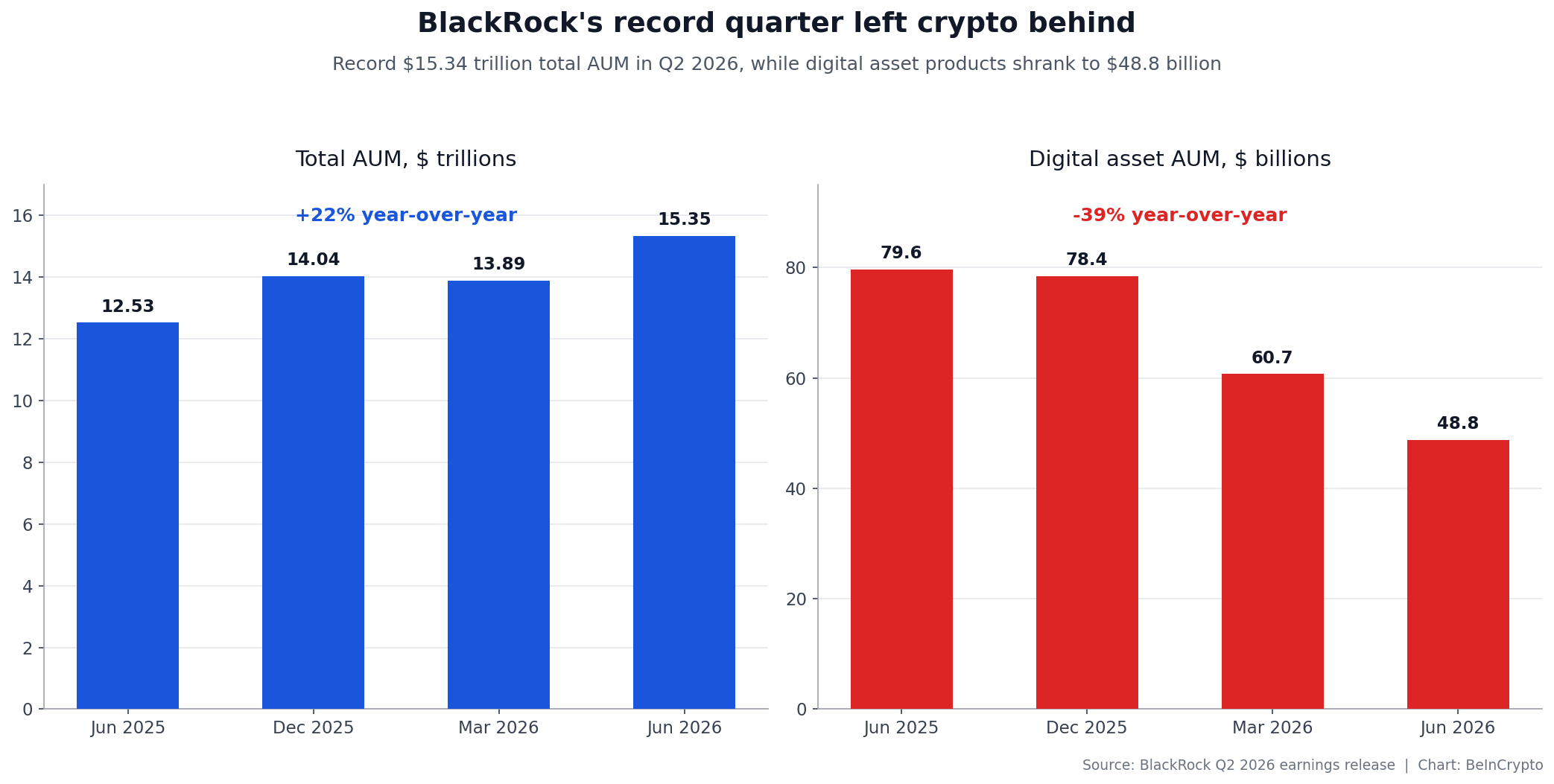
BlackRock closed the second quarter of 2026 with a record $15.34 trillion in assets, yet crypto was the clear outlier. Digital asset products shed $3.1 billion, while ETFs, fixed income, and private markets all attracted new money.
The gap is easy to measure. BlackRock’s digital asset holdings fell nearly 20% over the past three months to $48.8 billion, while the firm’s total assets grew 10% over the same period.

iShares Pushed BlackRock’s Record AUM Higher
The world’s largest asset manager reported $7.08 billion in revenue on July 15, up 31% from a year earlier. Adjusted earnings of $13.91 per share topped analyst estimates of about $12.57, and its 45.9% adjusted operating margin was the best in almost five years, according to the release.
Clients added $192 billion in net inflows during the quarter. ETFs did most of the heavy lifting with $177.9 billion, lifting iShares assets above $6.2 trillion, roughly double their size three years ago.
The pace stands out even by BlackRock’s standards. Bloomberg’s Lisa Abramowicz noted that the firm has added nearly $5 trillion in assets over about 2 years.
Chairman and CEO Larry Fink credited the breadth of the business.
“The quality and breadth of our platform is differentiating us with clients more than ever before. It’s enabling us to earn more of their portfolios, and power durable earnings for our shareholders.”
Follow us on X to get the latest news as it happens
Crypto Shrinks 20% While Everything Else Grows
BlackRock entered April holding $60.7 billion in digital assets. Three months later, the figure stood at $48.8 billion. Client withdrawals explain $3.1 billion of the drop, and falling prices erased another $8.7 billion.
The longer arc is harsher. Digital asset AUM has fallen 39% from $79.6 billion a year ago. Clients added $15.1 billion over that period, but $45.8 billion in market losses swallowed the new money, and flows turned negative in 2026.
The unit also earns little for its size. Digital assets generated $40 million in base fees during the quarter, less than 1% of BlackRock’s $5.7 billion fee haul.
The retreat mirrors wider market pressure. US spot Bitcoin (BTC) ETFs posted their worst month on record in June, bleeding $4.5 billion as Bitcoin fell more than 20%.
The funds briefly snapped the outflow streak in early July, but daily Bitcoin ETF outflows hit $430 million this week.

Meanwhile, BTC price data shows the asset near $64,756, up 2% in 24 hours but 49% below its October 2025 peak of $126,080. The slump reverses the 2025 story, when the iShares Bitcoin Trust helped fuel Fink’s biggest payday as CEO.
For now, the record quarter proves BlackRock’s growth engine runs far beyond crypto. The third quarter will show whether digital assets rejoin that engine or keep trailing the rest of the platform.
The post BlackRock Hits $15 Trillion Record While Its Crypto Arm Shrinks 20% appeared first on BeInCrypto.

‘Done deal’: CM Himanta Biswa Sarma on NDA seat-sharing for Assam polls

Trump Steps Into CLARITY Act Talks: Can the Senate Deliver Before Recess?
Tom Holland names the 1 thing Batman has over Spider-Man


-

 Fashion6 days ago
Loro Piana Fall 2026 Enters Houston’s Art Scene
-

 Fashion5 days ago
Weekend Open Thread: Nutriplenish Leave-In Conditioner
-
 Sports6 days ago
2026 Genesis Scottish Open Thursday TV coverage: Round 1
-

 Sports6 days ago
Super Eagles star Moses Simon opens up on Liverpool transfer regret
-

 Tech6 days ago
Character.AI enters the microdrama arena with its own productions, but there’s a twist
-

 Politics11 hours ago
Young campaigners urge incoming PM to act on outdoor junk food ads
-

 News Videos1 day ago
XRP BOMBSHELL… XRP OMBOARDED FOR TRANSACTIONS!!!
-

 Tech2 days ago
Get Your ESP32 Sunny Side Up With This Solar Dev Board
-

 Tech1 day ago
Dark Secrets Emerge When Jailbreaking LLMs
-

 News Videos7 days ago
Crypto Just Entered Its Most Important 6-Month Candle (Could Decide Everything!)
-
 Sports1 hour ago
New Cornerback Enters Vikings Trade Rumor Mill
-

 Tech6 days ago
Level Infinite Launches Gangstar Mirage City in India with Pre-Registrations
-
 NewsBeat6 days ago
Major update after Huntingdon train attack as man enters plea
-

 News Videos2 days ago
how to make coin bank box with cardboard #scienceproject #money #diy #shorts
-
 Entertainment6 hours ago
Disney’s Most Ambitious Failed Star Wars Attraction Is Coming to SDCC
-
 Tech2 days ago
Cloudflare Precursor Watches Your Mouse and Keyboard To Decide If You Are Human
-

 Tech7 days ago
Entra passkey enrollment vishing targets Microsoft 365 users
-
 Entertainment4 hours ago
Vicki Gunvalson Defends Discussing Heather Dubrow’s Money
-
 Crypto World7 days ago
DeFi Dashboard Zapper to Shut Down After 7 Years
-
Crypto World1 day ago
Ripple, Coinbase, Circle Join Linux x402 Foundation to Help Shape AI Payments
You must be logged in to post a comment Login