
Crypto World
US Treasury Sanctions BitBank After “Hormuz Safe” BTC Payments Linked to IRGC

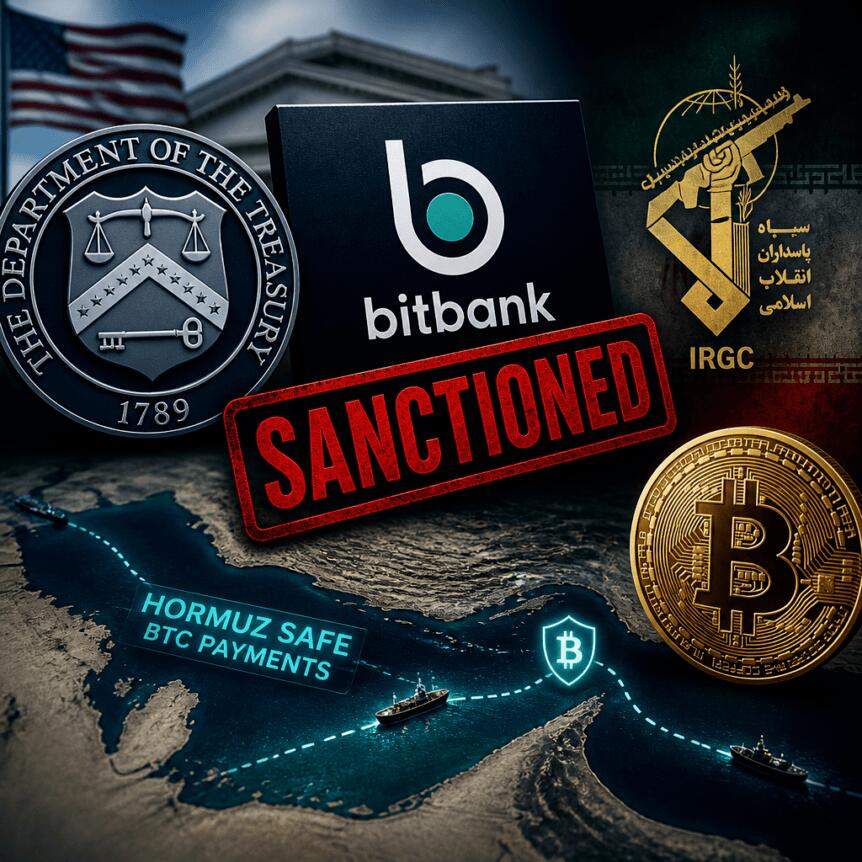
U.S. authorities have announced new sanctions targeting an Iranian cryptocurrency exchange, alleging it was used to process Bitcoin payments tied to maritime traffic through a strategic choke point in the Middle East.
On Thursday, the U.S. Department of the Treasury’s Office of Foreign Assets Control (OFAC) designated BitBank, accusing the platform of helping move cryptocurrency-linked funds connected to vessels transiting the Strait of Hormuz. The action is part of a broader push to restrict Iran’s access to international financial channels, including through digital assets.
Key takeaways
- OFAC sanctioned Iranian digital asset infrastructure tied to BitBank, alleging it facilitated Bitcoin payments connected to Strait of Hormuz shipping.
- Treasury said Hormuz Safe Marine Services Authority transferred funds received to the Islamic Revolutionary Guard Corps (IRGC) using BitBank.
- The U.S. linked the alleged setup to Iranian financier Babak Zanjani, portraying it as part of an IRGC-connected sanctions-evasion architecture.
- OFAC also designated BitBank’s developer, Pishtaz Simorgh Electronic Trade Company, and three associates connected to Zanjani.
- Separately, “Bitbank” is a different entity from a Japan-licensed exchange acquired by SBI Holdings in June, underscoring the importance of distinguishing similarly named platforms.
Why OFAC says BitBank matters
According to OFAC, as of June, the Hormuz Safe Marine Services Authority used BitBank to transfer payments it received to the IRGC. Treasury’s allegation centers on how crypto rails may be used to convert and route funds in ways that can help sanctioned parties avoid traditional banking scrutiny.
OFAC further claimed that the exchange is part of a wider system Treasury described as enabling the movement of hundreds of millions of dollars in Bitcoin associated with Babak Zanjani—an individual previously tied by the U.S. government to Iran-related sanctions evasion.
In its statement accompanying the designations, Treasury Secretary Scott Bessent said the step “make[s] perfectly clear” that attempts to finance the Iranian regime using cryptocurrencies are not beyond OFAC’s reach.
The Hormuz Safe link and the prior insurance scheme allegation
Treasury’s notice also referenced earlier accusations involving Hormuz Safe. In a prior action, OFAC alleged that Hormuz Safe was connected to an IRGC-backed scheme pressuring vessels to purchase maritime insurance for passage. Treasury’s earlier claim included coverage against seizures by Iran itself—an arrangement OFAC said could create a revenue channel that ultimately supports sanctioned entities.
This time, the U.S. moves from describing the insurance or routing mechanism to naming the alleged crypto exchange infrastructure used to transfer funds that stakeholders may receive in the course of that shipping activity.
For investors and industry participants, the practical takeaway is that U.S. sanctions enforcement is increasingly focused on the “plumbing” that can connect off-chain activity—like shipping payments and insurance flows—to on-chain settlement or exchange transfers.
Scope of the sanctions package
OFAC’s designations include BitBank and its developer, Pishtaz Simorgh Electronic Trade Company, along with three associates of Babak Zanjani. Treasury described the group as “key components of the Iranian regime’s digital assets-based sanctions evasion infrastructure.”
The designations add another layer to a series of OFAC moves aimed at isolating Iran from the international financial system, including through sanctions on digital asset businesses.
Cointelegraph reported that it reached out to BitBank for comment, but no response is included in the source material.
Beware name confusion: Iranian BitBank vs. a licensed Japan exchange
Readers should note that the sanctioned “BitBank” referenced by U.S. Treasury is not the same as a separate “bitbank, inc,” a fully licensed crypto exchange founded in Japan in 2014. That Japan-based entity was acquired by SBI Holdings in June, according to earlier coverage (SBI Holdings acquired bitbank).
Treasury’s designation lists “BitBank” as having been established in 2024. The distinction matters because similarly named platforms can create confusion for users, compliance teams, and market participants trying to assess regulatory risk.
Broader U.S. actions targeting Iran and crypto
This sanction comes amid continued U.S. efforts to tighten restrictions around Iran’s crypto activity. Earlier in the year, OFAC sanctioned multiple Iranian digital asset exchanges—actions Treasury framed as attempts to support sanctions evasion.
In August, the U.S. sanctioned two digital asset exchanges—Shelbit and Aban Tether—according to earlier reporting from Cointelegraph. In June, Treasury also sanctioned four crypto exchanges, including Nobitex, as previously covered.
Treasury has also targeted stablecoin holdings connected to Iranian-linked wallets. In July, the U.S. ordered the freezing of more than $130 million in USDt held in wallets linked to Iran, per coverage included in the source material.
Meanwhile, wider financial constraints appear to be driving Iran to adjust tactics. Earlier this month, the Financial Times reported that Iran’s central bank eased foreign currency controls to encourage businesses to bring overseas earnings home, including by using cryptocurrency, amid tightening U.S. sanctions—an approach discussed in prior coverage from Cointelegraph.
With Thursday’s designations, OFAC is again signaling that crypto-related infrastructure used in sanctioned economic activity—especially when linked to strategic regional commerce like Strait of Hormuz shipping—can be treated as enforceable sanctions targets. The next question for market participants is how exchanges, payment providers, and compliance tooling will respond to these designations, and whether further details about the alleged payment pathways emerge as the U.S. continues expanding its Iran-focused enforcement.

Such an attack would not endanger mainnet funds. Any potential attack would only target “Sepolia,” where test ether has no meaningful cost, but could leave blocks without transaction payloads and derail the infrastructure testing needed before Glamsterdam reaches Ethereum itself.
What is Glamsterdam?
Glamsterdam is Ethereum’s next major upgrade, designed to fit more activity into each block without overwhelming the computers that verify it. Together with changes to gas pricing, the upgrade is intended to support a block gas limit of about 200 million, creating room for more payments and trades before users begin bidding fees higher.
The upgrade moves the relationship between validators and specialized block builders into Ethereum’s protocol. Builders assemble transaction blocks and compete to supply them. Once a validator accepts the winning bid, the builder is expected to reveal the underlying transactions.
And that process becomes easy to abuse on a free test network. A malicious operator can submit bids far above every legitimate builder, win repeatedly and then withhold the promised payload.
Developers said existing safeguards typically fall back to locally built blocks only after several payloads go missing.
Potuz added that clients also need to identify and reject individual builders so an attacker cannot return under a new identity and continue winning.
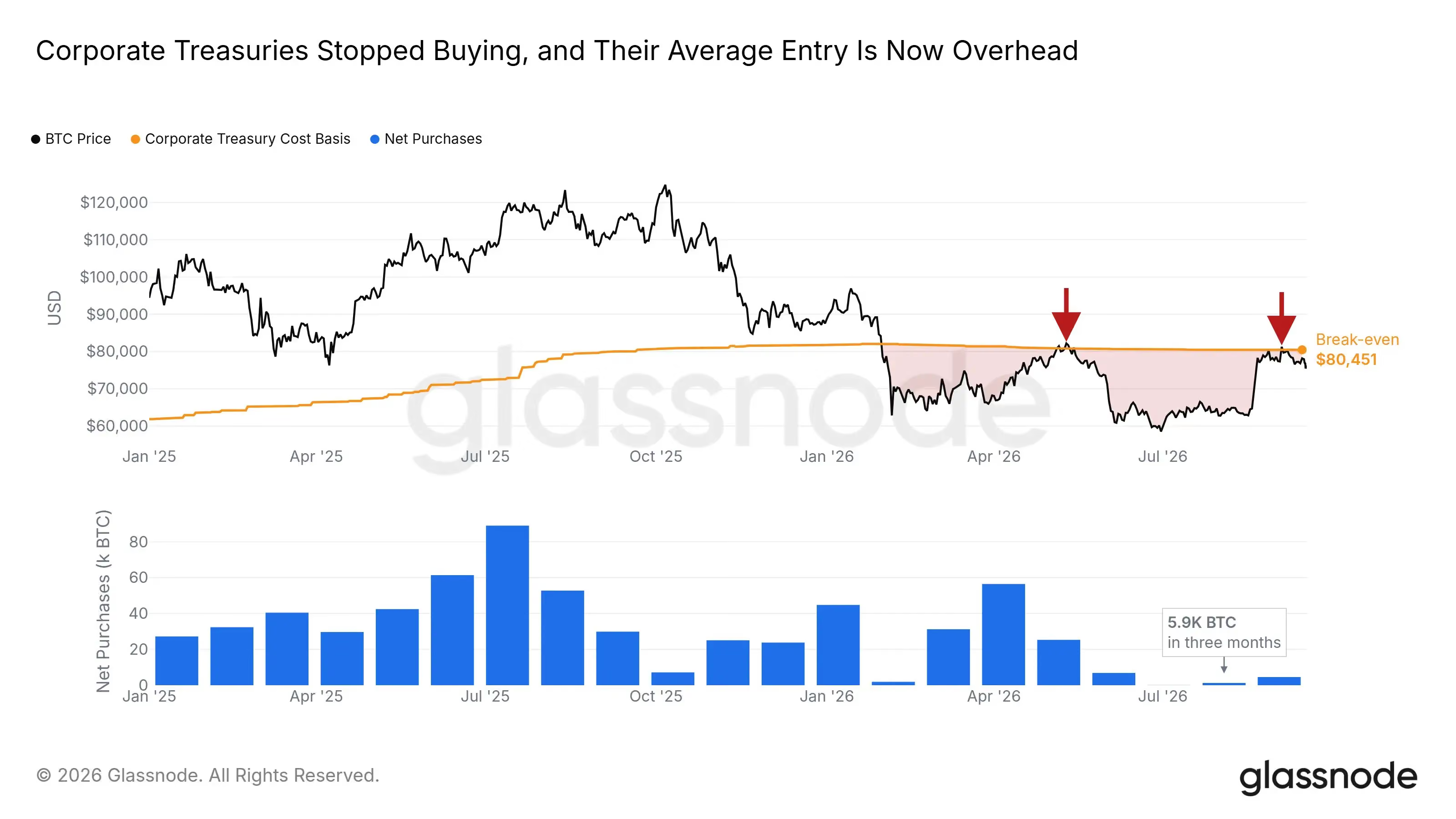
“Corporate treasuries were a big buyer through 2025, and they have stepped back,” Glassnode said. “Their average entry, the Corporate Treasury Cost Basis, sits at $80.5K, about 6% above spot, so the group as a whole is under water.”
Bitcoin topped that level recently but failed to keep gains.

Data source Bitcoin Treasuries now puts public-company holdings at about 1.22 million BTC across 181 listed firms. Strategy remains the dominant buyer and holder, with about 845,050 BTC. Tokyo-listed Metaplanet is among the next-largest corporate stacks. As a group, those treasuries are still underwater at current prices.
“A reclaim of $80.5K would put the treasuries back in profit and remove one layer of overhead supply; until then their entry is one more ceiling,” Glassnode added.
Other demand indicators paint a mixed picture
U.S.-listed spot bitcoin ETFs have attracted billions of dollars since early August, signaling a rebound in institutional demand for the cryptocurrency. However, they remain roughly $1 billion short of turning positive on a year-to-date basis, according to data source SoSoValue.
The Coinbase premium indicator has remained mostly negative since May, aside from a brief move into positive territory on Sept. 5, according to data from CoinGlass. A negative reading means bitcoin is trading at a discount on Coinbase relative to prices on offshore exchange Binance, suggesting that U.S. buyers are showing weaker demand than traders elsewhere.






Cointelegraph is committed to providing independent, high-quality journalism across the crypto, blockchain, AI, and fintech industries.
All news, reviews, and analyses are produced with full journalistic independence and integrity. For more details on our standards and processes, please read our Editorial Policy.
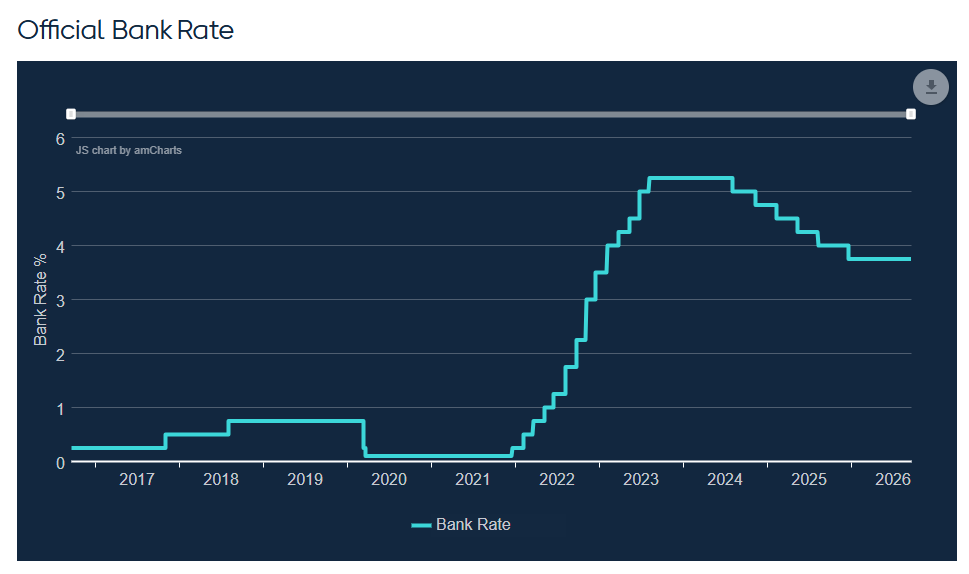
The Bank of England (BoE) is holding its rate at 3.75%, even as UK inflation climbs and the US hikes. That divergence comes down to where the inflation is coming from.
The BoE’s Monetary Policy Committee (MPC) voted six to three to hold, with three members wanting an immediate hike. A day earlier, the Federal Reserve raised US rates to 4%.
Why the Fed Hiked and the BoE Didn’t
The Federal Reserve raised its benchmark rate a quarter point to a range of 3.75% to 4% on September 16. It was the first US rate hike since 2023, coming a day before the BoE’s own decision.

Both central banks are responding to the same shock. Energy prices have surged since the Middle East conflict disrupted supply. Brent crude has climbed above $100 a barrel, lifting UK inflation to 3.1% in August, up from 2.9% in July.
Governor Andrew Bailey argues rates cannot fix an oil-driven price shock directly. He also sees little evidence that higher energy costs are spreading into wages. The Fed, facing a stronger labor market and its own inflation concerns, chose to act instead of waiting.
Economists at Dutch bank ING say the UK carries less wage-spiral risk now than in 2022. That gives the BoE more room to wait before raising rates.
Why Households Are Already Feeling It
UK households are not waiting for a formal hike to feel the cost. The average five-year mortgage rate has climbed to 5.87%, its highest level since November 2023. Lenders are already pricing in the chance of tighter policy ahead.
That leaves the BoE balancing two risks. Moving too fast could squeeze an already fragile economy. Waiting too long risks letting the energy shock harden into a lasting wage-price spiral.
Three policymakers already want a hike, and the Fed just moved the opposite way. If energy prices stay elevated, 3.75% may not be the final stop this year.
The post Why Is the BoE Holding Rates While the US Fed Hikes? appeared first on BeInCrypto.
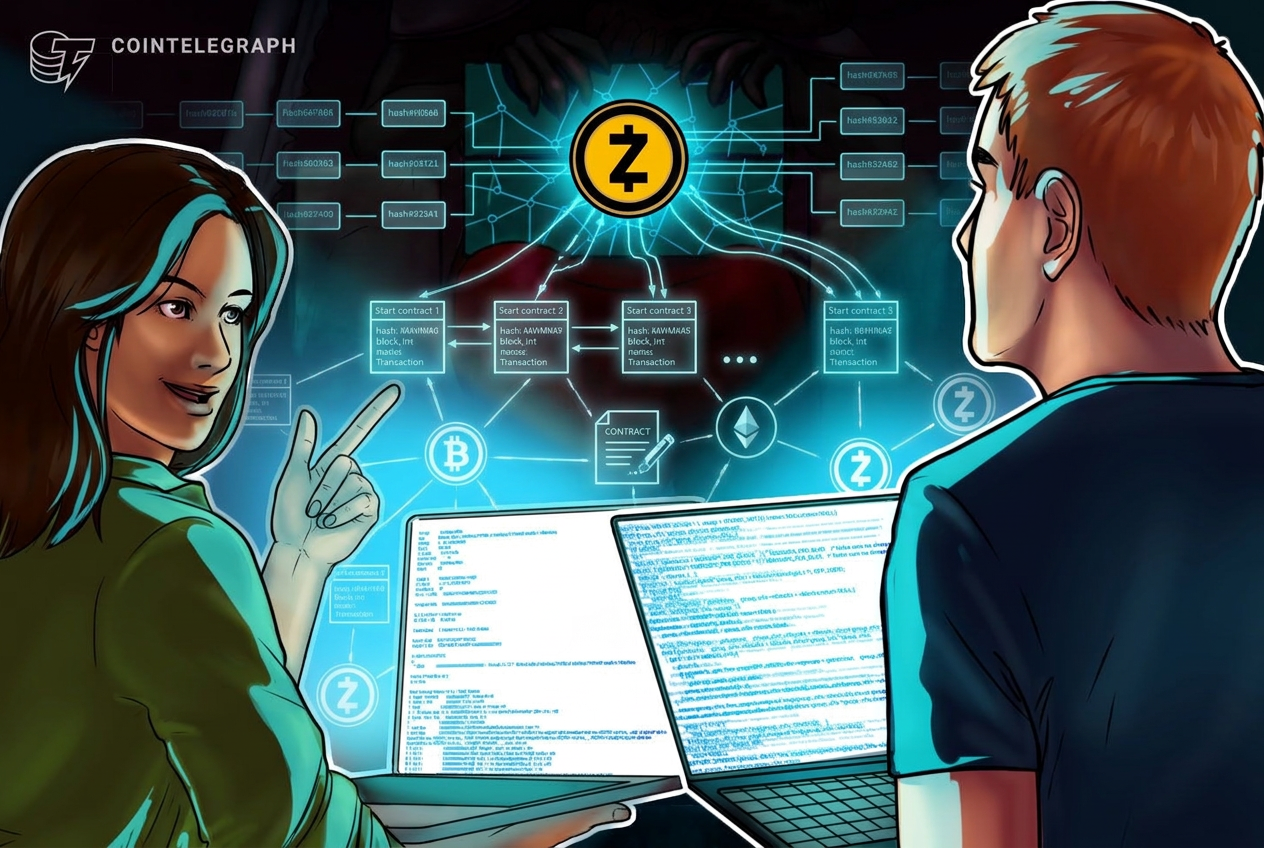
NU7 will cut Zcash block times to 25 seconds and preserve its halving schedule, with testnet activation planned for Oct. 6.


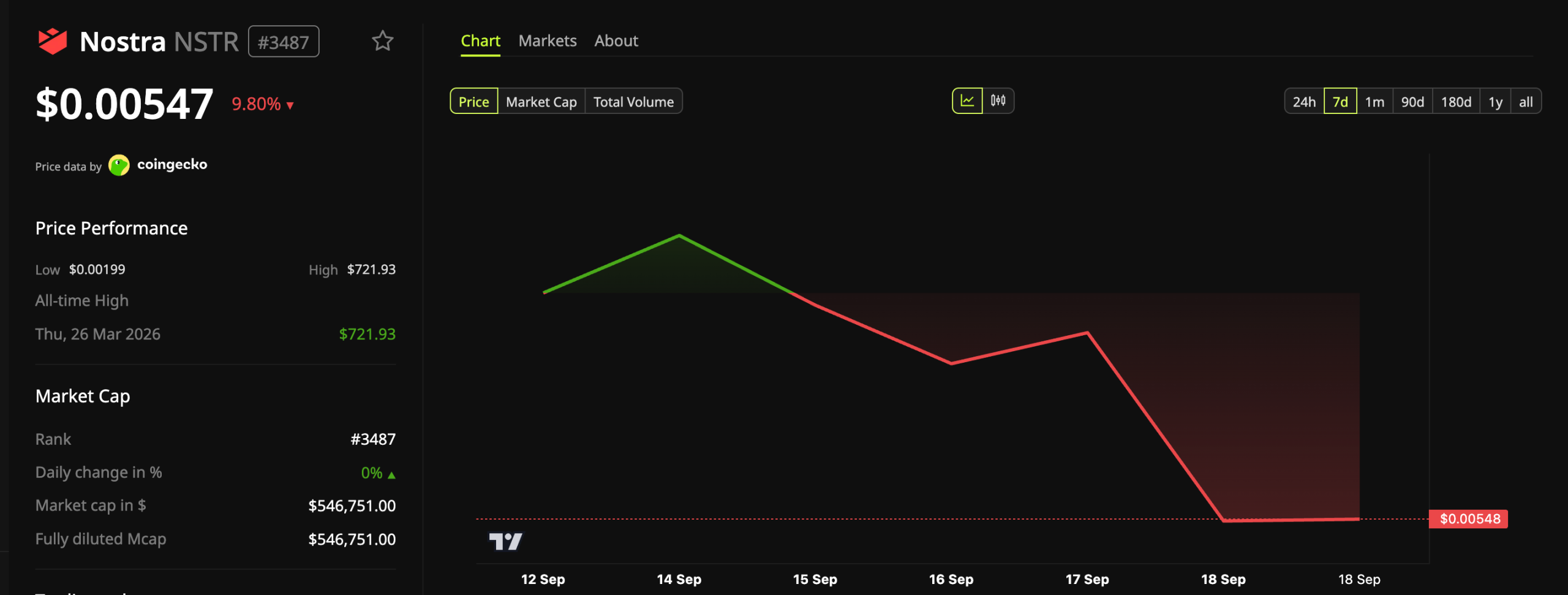
Starknet lending protocol Nostra paused its money market on Thursday after a manipulated price oracle let one account borrow roughly $3.5 million against NSTR collateral.
Lending, borrowing, withdrawals, and liquidations remain unavailable while the team reconciles each asset. Recovery prospects remain unclear for now.
Nostra Halts Money Market in September’s Latest Oracle Exploit
Nostra (NSTR) carries a market value of $546,751, according to BeInCrypto Markets data. A token that small needs little capital to move.
Follow us on X to get the latest news as it happens

The account pledged NSTR and drew Ethereum (ETH), Starknet (STRK), USDC, USDT, Wrapped Bitcoin (WBTC), and DAIv1. The haul exceeded the collateral token’s entire market value by roughly six times.
Security firm PeckShield reported that the account bridged $1.92 million to Ethereum. That transfer included 234.57 ETH and 1.3 million DAI.
Deposits collapsed afterward. Total value locked in the protocol fell from about $4 million on September 16 to roughly $710,632 at press time per DefiLlama.
Starknet’s Second Oracle Failure in Two Weeks
Nostra is not the only Starknet protocol hit this month. On September 4, an incorrect price from Pragma’s publishing pipeline was published across several Starknet feeds.
This triggered 47 liquidations across 42 borrower wallets on money market Vesu. Pragma reported 95% asset recovery in a September 13 update.
However, the two incidents differ in cause. Pragma’s case came from a publishing fault, while Nostra faced deliberate manipulation of a collateral price.
Meanwhile, Nostra is still counting the damage.
“We are reconciling the impact on each asset and tracing the funds. The final loss and potential recoveries are not yet known,” Nostra said.
The team also warned users about impersonators. Nostra said it will never send direct messages or ask holders to connect a wallet during recovery.
September has been costly for the sector. DefiLlama had logged more than $326 million in crypto losses this month before the Nostra incident. Most of that stems from the $320 million Liquid Network incident.
The pattern has held all year. PeckShield counted 50 hacks in August, the highest monthly tally of 2026, even as losses dropped 49.5% to $136.3 million. Nostra fits that shape of frequent, smaller thefts.
Subscribe to our YouTube channel to watch leaders and journalists provide expert insights
The post Nostra Joins a September That Has Already Cost Crypto Over $326 Million appeared first on BeInCrypto.
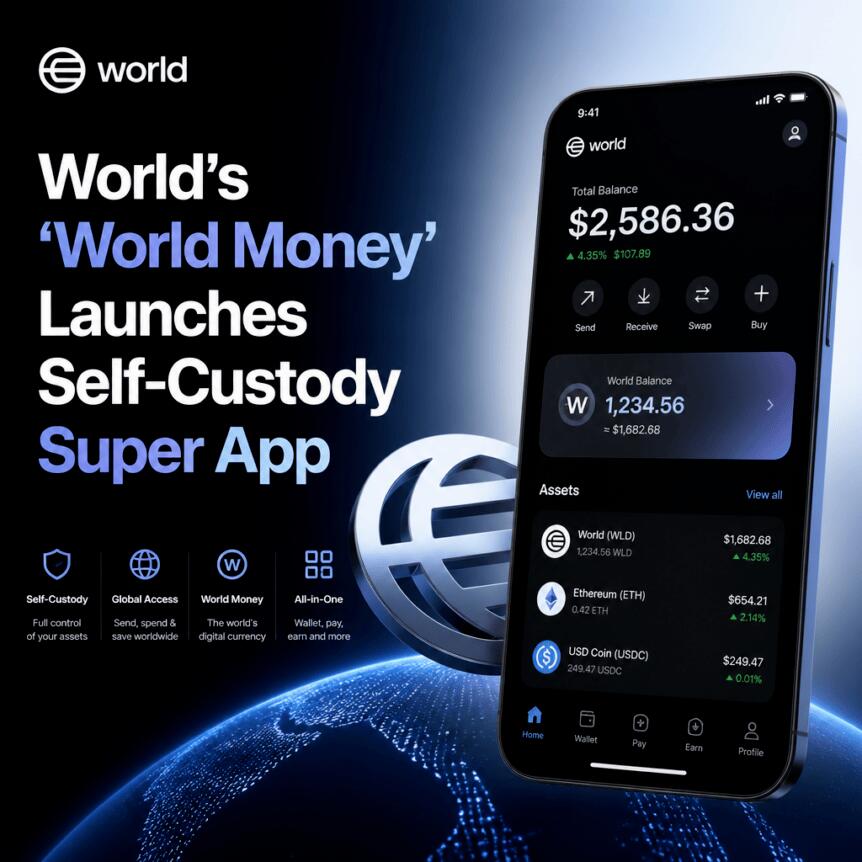
World has launched World Money, a new self-custody financial “super app” designed to bring stablecoin payments and digital-asset features into one place. The rollout began Thursday across more than 150 countries, though specific capabilities are expected to vary by region, according to World.
The new app supports sending supported digital assets—including stablecoins—to recipients using a World username. It also allows users to deposit eligible assets to earn rewards and to buy and sell digital assets through exchange integrations. World further says the experience is built around its identity layer while giving users direct control of their funds.
Key takeaways
- World Money rolls out in over 150 countries, with feature availability dependent on location.
- Users can send supported assets (including stablecoins) via World usernames, not just blockchain addresses.
- The app adds third-party “Mini Apps” such as Kalshi, Credit and Morpho.
- A partnership with Stripe enables top-ups and stablecoin purchases with Apple Pay for users in the US.
- World splits its identity and financial functions across two apps: World ID App and World Money.
What World Money includes at launch
World positions World Money as a self-custody super app that combines multiple financial functions: transfers, trading access, and rewards on certain deposits. The company says users can send supported digital assets to a recipient’s World username, with stablecoins among the assets initially covered.
In addition to peer-to-peer transfers, World Money includes a rewards component. Users can deposit eligible assets to earn rewards, a feature that continues the direction World App previously took with earning opportunities tied to blockchain assets.
For trading, World Money provides buy-and-sell functionality through exchange integrations, giving users a way to switch between supported digital assets without leaving the app environment.
“Mini Apps” and payments onboarding through Stripe
One of the most visible expansions is World Money’s support for third-party mini applications. World says users can access Mini Apps including Kalshi, Credit and Morpho. This approach mirrors the super-app idea of bundling specialized services into a single interface, while relying on external platforms for specific product functions.
World also highlighted a payments onboarding partnership. According to the company, integration with Stripe allows users to fund their accounts and buy stablecoins with Apple Pay, starting with users in the United States. That matters for adoption because fiat-to-stablecoin entry points remain one of the biggest friction points for users who do not already hold crypto.
World did not describe whether Apple Pay support will expand beyond the US as part of this initial rollout, so users outside the US should expect different funding options depending on local availability.
How World is reorganizing its product stack
The launch is also a structural change. World says that with World Money, its identity and financial services are now separated into two dedicated apps: World ID App for identity verification and credentials, and World Money for the wallet, payments and other financial features.
Existing users of World App and World ID App can reportedly use their existing accounts for World Money, which should reduce the migration burden for current customers and limit the risk of fragmenting user identities and balances across platforms.
World Money is operated by Tools for Humanity, the company co-founded by Sam Altman and Alex Blania that builds technology for the World network. Tools for Humanity’s involvement aligns with World’s broader push to connect identity to financial actions rather than treating payments as a standalone feature.
From World App to a two-app super app model
World’s move comes after more than a year of incremental expansion of World App. World App originally launched in May 2023, bringing together World ID with a crypto wallet, stablecoin transfers and token trading.
In October 2024, World introduced World App 3.0, describing it as a “super app for humans” and adding third-party Mini Apps plus a Vault feature for earning on assets. That indicates World has been testing the combination of identity, custody tooling and app-level distribution of third-party services before splitting the experience into two apps.
Later, World also experimented with traditional banking rails. In November 2025, it piloted virtual bank accounts in the US, and then expanded the idea a month later. World says those accounts can support paychecks and bank deposits that are converted into USDC, illustrating an intent to reduce the steps between payroll and stablecoin holdings.
With World Money now separated from the identity layer, the ecosystem looks to be evolving from a single “do everything” client into a clearer division: credentials and verification in one app, and financial activity in another.
Why the split and rollout matter for users
For everyday users, the most practical change is likely the user experience: sending assets through a World username, accessing third-party services through Mini Apps, and using mainstream payment rails like Apple Pay via Stripe. Those elements can make crypto interaction feel less like dealing with addresses and more like using familiar app flows—especially when the stablecoin payment layer is integrated directly into the wallet experience.
For investors and builders, the strategic question is whether World can maintain trust and usability while expanding self-custody financial features across geographies. The company’s decision to run identity and financial services through separate apps may help scale compliance, product development and onboarding workflows without forcing users to navigate unrelated functionality in a single interface.
As World Money becomes available in more countries, the next watch item is how quickly Stripe-based onboarding expands beyond the US and how feature availability differs by region. Users should also pay attention to which assets are considered eligible for rewards and how the lineup of Mini Apps evolves after launch.
Shuka Minerals assigns convertible loan to new investor and CEO

Ethereum developers warn ‘any teenager’ could disrupt upcoming Glamsterdam test

Europa League favourites? Bournemouth start historic campaign with memorable away win



-

 Fashion7 days ago
Weekend Open Thread – Corporette.com
-

 Tech5 days ago
The Latest Weird Thing to Play Doom Is the Mapped-Out Brain of a Fruit Fly
-

 Business7 days ago
10 Most-Streamed Songs On Spotify In 2026 So Far, Led By Ella Langley’s Dominant Run On The Charts This Year
-

 Crypto World7 days ago
XAG/USD: Silver’s Short-Term Rally Meets Its Moment of Truth
-

 Crypto World7 days ago
Diesel Tops $6 a Gallon for the First Time as 28 States Set Records
-

 Crypto World3 days ago
Kraken Lets xStocks Holders Earn Yield Through DeFi
-

 News Videos7 days ago
Facing Financial Fears
-

 Crypto World4 days ago
Elon Musk Drops a Bombshell: Grok 5 Could Be the AGI Breakthrough
-

 Crypto World1 day ago
US Charges Robinhood Engineers Over Crypto Listing Trades
-

 Crypto World6 days ago
Can AI Build a Startup in 72 Hours? Elon Musk's Team Will Livestream the Test
-

 Entertainment6 days ago
News Specials, Movies, Shows, More
-

 Business5 days ago
Rivals Sam Altman and Elon Musk Rally Behind Dario Amodei’s Call for a Slowdown in AI Development
-
 Crypto World5 days ago
New Tesla Roadster Uses SpaceX Tech. Will It Impact the Stock Price?
-
 NewsBeat4 days ago
‘Sick conspiracy’: Trump says only guardrails AI needs is ‘a strong and smart (High IQ!) president’ in all-caps rant
-

 Crypto World6 days ago
Robinhood Chain Never Stopped But its Blobs Did Stop Reaching Ethereum For 14 Minutes
-

 Crypto World2 days ago
What Is the Status of the U.S.-Iran Peace Talks? Here's What Both Sides Are Saying
-
 Entertainment6 days ago
New Horror Movie Officially Earns a Rare Stephen King Recommendation
-

 Business6 days ago
Marvell: Most Potent Setup Of The AI Factory Decade
-
 Crypto World4 days ago
3 Token Unlocks to Watch in the Third Week of September 2026
-

 Crypto World3 days ago
DOJ Seeks to Seize $61M in Iran Oil Funds From Binance Accounts It Vouched For
You must be logged in to post a comment Login