
Crypto World
Viral Altcoin VVV Hits a New ATH: More Fuel Left or Time to Take Profits?

The cryptocurrency market has posted a slight increase over the past 24 hours, yet the best performer (from the top 100 club) isn’t Bitcoin (BTC) or another popular digital asset, but the lesser-known Venice Token (VVV).
Its price exploded to a record high, with many analysts foreseeing further gains. However, some believe holding from here on could be risky, suggesting profit-taking might be the smarter move.
The Major Pump
Just a few hours ago, VVV skyrocketed to a new all-time high of almost $30. Shortly after, it lost some of those gains and now trades around $25.60 (per CoinGecko), up about 42% in 24 hours. The asset’s market capitalization surged past $1.2 billion, thus surpassing popular altcoins like Pi Network (PI) and Arbitrum (ARB) to become the 68th-largest cryptocurrency.

Perhaps the main catalyst for the surge is one of the project’s latest announcements. The team revealed that a total of $391,000 worth of VVV has been burned, which is the largest amount sent to a null address so far. The utility and capital asset of the Venice AI platform has a total supply of about 80.97 million coins, with more than half already in circulation.
X user Crypto With Gopal claimed VVV has shown a strong bullish breakout after the price pushed decisively above the $23 resistance zone. He argued that buyers are clearly in control and outlined the next key level at around $29.20.
“A sustained move above it could open the door for another leg higher,” the analyst added.
OxNeena and Nebraskangooner also weighed in. The former opined that VVV “is setting up for a massive move” and forecasted a jump beyond $30 if the upward trend continues. For his part, Nebrasangooner sees the token’s chart as “strongly bullish until proven otherwise.”
“Next fib resistances I’m seeing above are $27 area and $35 area,” he stated.
Time to Cash Out?
X user Crypto Patel also highlighted VVV’s price rally, but noted that locking in profits at this stage could be the more sensible move. “If you’re comfortable with higher risk, you can keep a small portion running for the possibility of further upside, but after a 1,600% move, protecting profits matters,” the analyst added.
The token’s Relative Strength Index (RSI) supports the theory that the price may head south in the near future. The ratio has jumped above 80, meaning that VVV has entered extreme overbought territory and could be due for a pullback. The index runs from 0 to 100, where anything below 30 is typically considered a buying opportunity.

The post Viral Altcoin VVV Hits a New ATH: More Fuel Left or Time to Take Profits? appeared first on CryptoPotato.

Consumer electronics giant Apple (AAPL) on Wednesday introduced a refreshed lineup of premium smartphones, the iPhone 18 Pro and Pro Max. But Apple stock slid. The company held its fall product launch event, dubbed “Surprise and shine,” at its Cupertino, Calif., headquarters. The event was the first to be led by new Chief Executive John Ternus, who replaced retiring CEO…
Copyright ©2026 Investor’s Business Daily, LLC. All rights reserved. 87990cbe856818d5eddac44c7b1cdeb8


Kalshi has filed to list two dollar-settled perpetual futures tied to gold and silver, extending its no-expiry contract lineup beyond 18 cryptocurrencies for eligible U.S. traders.
Summary
- GOLDPERP and SILVERPERP are scheduled to begin trading on Sept. 9.
- Both contracts use Pyth Network prices and settle in U.S. dollars.
- Kalshi filed the products through the CFTC’s self-certification process.
- The contracts will trade around the clock without fixed expiration dates.
Kalshi’s Sept. 9 regulatory filings with the Commodity Futures Trading Commission show that the company plans to list GOLDPERP and SILVERPERP through its registered derivatives exchange.
Under the proposed terms, each product would give traders exposure to changes in the relevant metal’s spot price without requiring delivery of physical gold or silver. Both contracts would settle in U.S. dollars and remain open indefinitely, according to the filings.
The company submitted the contracts under CFTC Regulation 40.2(a), which allows a designated contract market to certify that a new product follows the Commodity Exchange Act and the regulator’s rules. Unlike a formal approval proceeding, self-certification does not necessarily involve an affirmative vote by the commission on each contract.
Kalshi gold and silver perps will use Pyth prices
According to the contract terms, GOLDPERP will track the spot value of one troy ounce of gold in U.S. dollars. SILVERPERP will follow the corresponding U.S. dollar spot price for silver.
Kalshi identified Pyth Network as the price source for both products. Pyth publishes market data supplied by trading firms, exchanges, and financial institutions, which decentralized applications and trading platforms use to price assets.
Rather than ending on a set date, the contracts will use regular funding payments to keep their traded prices close to their reference markets. Depending on how a contract trades against its spot benchmark, traders holding long positions may pay traders holding short positions, or the payment may flow in the opposite direction.
The structure removes the need to move a position from an expiring futures contract into a later one. Traditional futures traders often conduct that process, known as rolling, when they want to maintain exposure beyond a contract’s settlement date.
In its filing, Kalshi said a perpetual structure could reduce rollover costs for market participants that keep long-running gold exposure. The company identified potential users, including financial institutions, refiners, bullion dealers, and companies that use the metal in their operations.
Because both products settle in cash, traders will not receive bars, coins, or other physical metal. The filings also state that contract holders cannot demand delivery from Kalshi when closing or settling a position.
Round-the-clock trading removes the usual expiry cycle
Under the submitted specifications, GOLDPERP and SILVERPERP will operate 24 hours a day and seven days a week. Kalshi’s proposed schedule includes weekends and holidays, when major U.S. commodity futures markets are normally closed.
The filed schedule goes beyond an earlier plan for 24-hour trading on five days each week. Around-the-clock access would allow eligible customers to adjust positions while standard U.S. metals venues are closed, although liquidity and price differences may vary outside regular market hours.
Perpetual contracts also introduce costs and risks that do not apply in the same way to unleveraged ownership of physical metal. Kalshi’s product design uses funding payments, while leveraged positions may face liquidation if the market moves far enough against the trader.
For U.S. investors, the contracts offer regulated derivatives exposure without requiring ownership of gold, silver or shares in a metal-backed exchange-traded fund. They also provide a different structure from listed options and dated futures, since neither contract requires the holder to select a monthly or quarterly expiration.
Kalshi said its silver filing accounts for conditions in the physical market, including supply deficits reported over several years and constrained availability during 2026. Since SILVERPERP cannot be converted into physical silver, the company said the contract would not permit holders to demand metal or place delivery pressure on its reference market.
Kalshi has expanded its perpetual futures lineup
The metal filings follow Kalshi’s rapid addition of cryptocurrency perpetuals. On Sept. 4, the company added five crypto perps tied to BNB, Cardano, Worldcoin, Aave, and Venice Token.
According to the platform’s product information, the five contracts are margined and settled in U.S. dollars, permit long and short positions, and carry different leverage limits. Maximum leverage reaches approximately 4.5 times for BNB and 1.9 times for Venice Token.
Including Bitcoin, Kalshi now lists perpetual futures connected to 18 cryptocurrencies. Its existing products include Ether, XRP, Solana, Hyperliquid, and Zcash, allowing users to trade their prices without holding the underlying tokens.
In June, the company also introduced an XRP perpetual after filing it under the same self-certification rule. The XRP contract filing specified a cash-settled product with no maturity date and a reference rate supplied by CME CF Benchmarks.
Kalshi took a different route with its first Bitcoin perpetual. The CFTC approved BTCPERP in May following a formal review, creating a regulated path for eligible U.S. traders to access a product that had previously been associated mainly with offshore cryptocurrency exchanges.
By June, Kalshi’s perpetual futures had generated more than $5.5 billion in trading volume, according to company data cited in previous reporting. Later that month, Cboe Global Markets was considering whether to convert its long-dated Bitcoin and Ether futures into perpetual products after Kalshi’s contracts recorded more than $8.5 billion in volume.
CME’s lawsuit challenges the CFTC’s treatment of perps
Kalshi’s expansion into metal-linked contracts comes while the legal treatment of U.S. perpetual futures remains contested. CME Group sued the CFTC in the U.S. District Court for the District of Columbia on June 18, challenging the regulator’s decision to treat Kalshi’s Bitcoin perpetual as a futures contract.
CME argued that BTCPERP should be regulated as a swap, which would place it under a different legal framework. The exchange operator also claimed that the CFTC’s decision created a competitive disadvantage for established futures venues.
In September, the regulator sought the case’s dismissal, arguing that CME had not shown a concrete injury required to establish standing. The CFTC said CME could seek to list comparable perpetual futures through the same regulatory framework available to Kalshi.
The regulator also cited CME’s Bitcoin and Ether futures activity, arguing that the exchange’s volumes in June and August exceeded their May levels. According to the CFTC’s motion, the figures did not support CME’s claim that Kalshi’s Bitcoin contract had caused a measurable competitive loss.
CME may contest the regulator’s position in subsequent filings. The federal court has not ruled on the dismissal request or decided whether cryptocurrency perpetuals should be legally classified as futures or swaps.
U.S. Bank, the fifth-largest commercial bank in the United States, has completed a live cross-border payment using its proprietary USBDC stablecoin on the Stellar blockchain.
The pilot moved funds between U.S. Bank entities in North America and Europe, with USBDC issued and transferred on the public Stellar network. It also tested the stablecoin’s minting, redemption, freezing and clawback functions while integrating with the bank’s existing risk, compliance and operations systems.
The transaction validated U.S. Bank’s internally developed Digital Asset Platform, which connects tokenized assets with its traditional banking infrastructure, the bank said Wednesday. The Minneapolis, Minnesota-based bank is exploring additional uses including cross-border treasury operations, liquidity management and moving collateral onchain.
The pilot builds on U.S. Bank’s broader push into digital assets. In October 2025, the bank established a dedicated Digital Assets and Money Movement unit focused on stablecoin issuance, crypto custody, asset tokenization and digital money movement.
The country’s sixth-largest financial institution by assets, U.S. Bank has been testing custom stablecoin issuance on Stellar since at least November 2025, working alongside PwC and the Stellar Development Foundation.
Related: Jack Dorsey’s Block seeks US trust bank charter for Bitcoin, stablecoin
Banks deepen stablecoin push
While American banks have pushed back against allowing stablecoin issuers and crypto platforms to offer yield or rewards, some of the industry’s largest lenders are moving ahead with stablecoin projects of their own.
On Sept. 1, 21 major financial institutions, including Bank of America, Citi, Goldman Sachs, Deutsche Bank and UBS, announced plans to form a company to issue stablecoins.
The group plans to launch a US dollar-denominated stablecoin in the first half of 2027 before expanding to other G7 currencies. The token is expected to target wholesale, institutional and retail markets, including cross-border payments and digital asset settlement.
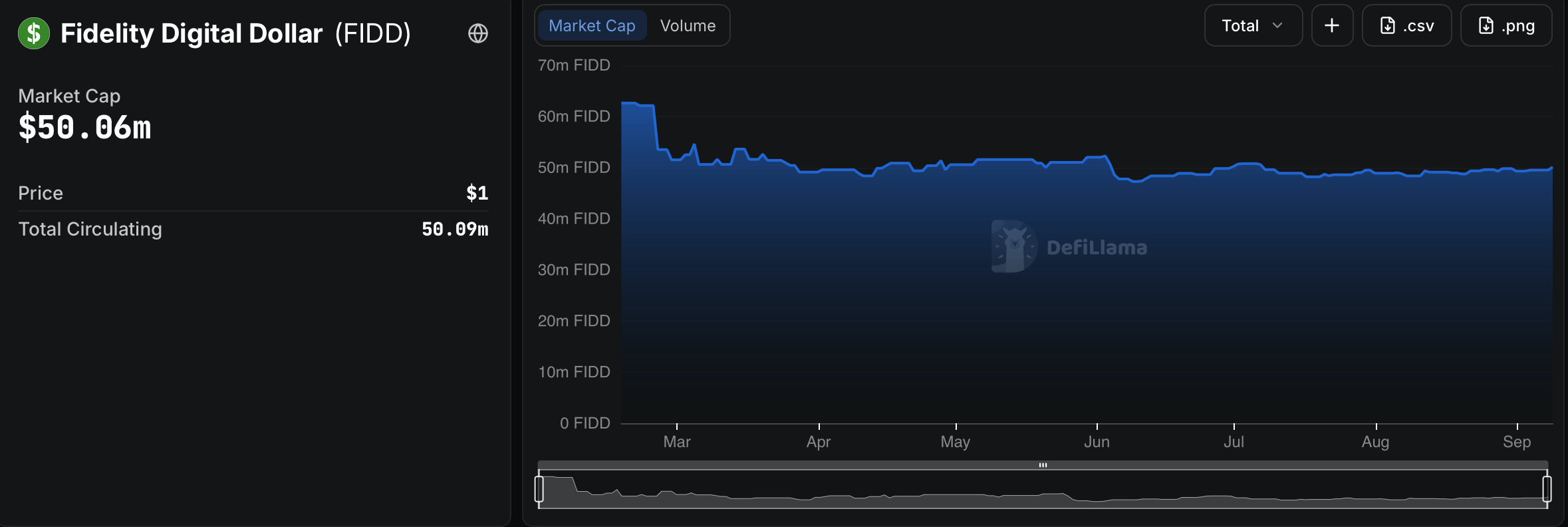
Fidelity also entered the market in February with its Fidelity Digital Dollar (FIDD), issued through Fidelity Digital Assets, its national trust bank, and available to retail and institutional investors. FIDD had about $50 million in circulation at the time of writing, according to DefiLlama data.
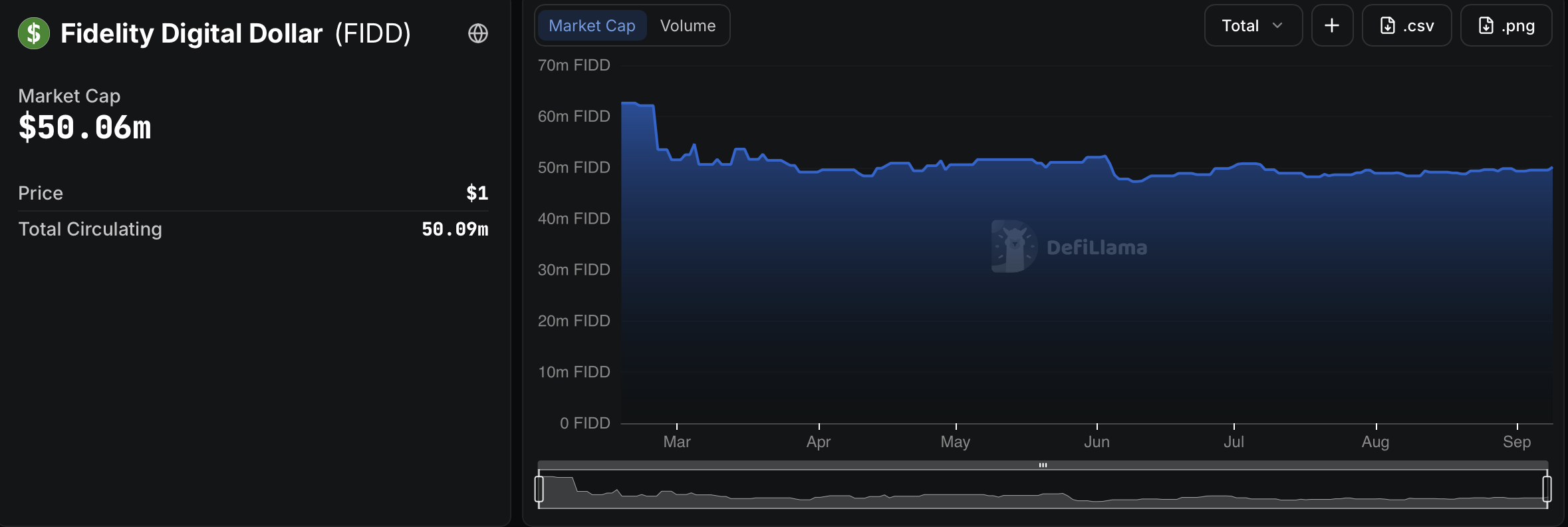
FIDD market cap. Source: DefiLlama


Blockchain intelligence firm TRM Labs has doubled its valuation to $2 billion following an expansion of its Series C funding round led by Blockchain Capital. The company did not disclose the size of the latest investment but said its annual recurring revenue has quadrupled over the past three years, according to an announcement Wednesday.
The expansion follows a $70 million Series C in February, also led by Blockchain Capital. TRM provides blockchain intelligence and investigation software used by more than 600 government agencies and private-sector institutions across 75 countries, the company said.
Prior to the February round, the company was valued at $930 million, according to data compiled by Traxcn. It breached the $1 billion valuation mark in the round that included Citi Ventures and Galaxy among the investors.
TRM said its AI-powered tools are used to investigate fraud, money laundering, sanctions evasion and other forms of digital crime.
Digital crime losses reported to the FBI’s Internet Crime Complaint Center rose to $21 billion in 2025 from $16 billion in 2024, while TRM said criminal adoption of AI has risen 40% year over year in 2026, citing its AI-in-Crime Adoption Index.
The new valuation comes about two months after US Immigration and Customs Enforcement (ICE) awarded TRM a roughly $95 million, one-year contract for forensic software and support services for Homeland Security Task Force investigations.
Rival Chainalysis challenged the sole-source award in federal court later that month, alleging ICE’s decision was “arbitrary, capricious, and unreasonable.”
Magazine: Is Bitcoin too volatile to risk your retirement on?
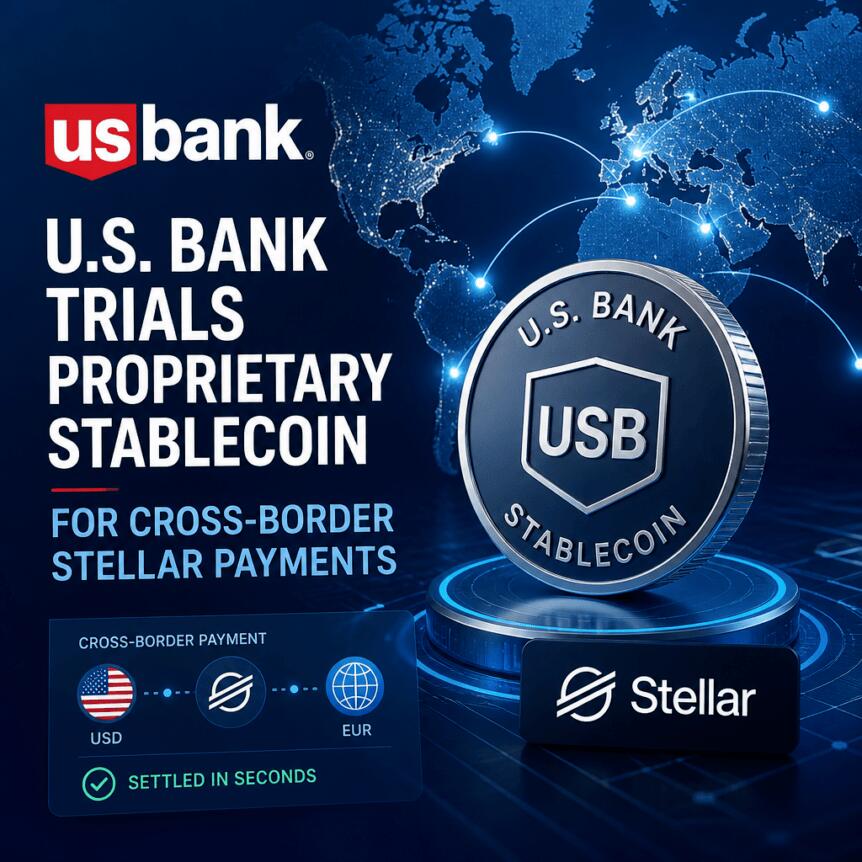
U.S. Bank has completed a live cross-border payment that uses its proprietary USBDC stablecoin on the Stellar blockchain, the bank announced this week. The pilot transferred funds between U.S. Bank entities in North America and Europe, with USBDC issued and moved on Stellar’s public network.
Beyond the transfer itself, U.S. Bank says the exercise also tested core stablecoin capabilities—minting, redemption, and administrative controls such as freezing and clawback—while connecting the process to the bank’s existing risk management, compliance, and operational systems. The goal is to validate whether a stablecoin-based rail can support regulated banking workflows for cross-border treasury and settlement activity.
Key takeaways
- U.S. Bank executed a live cross-border payment using USBDC, a proprietary stablecoin issued and transferred on Stellar.
- The pilot also covered operational features: minting, redemption, freezing, and clawback, integrated with the bank’s risk and compliance infrastructure.
- The bank frames the test as proof of concept for its Digital Asset Platform, which is designed to bridge tokenized assets and traditional banking systems.
- U.S. Bank is building toward additional use cases such as cross-border treasury operations, liquidity management, and onchain collateral movement.
A live test of stablecoin rails across regions
According to U.S. Bank, the transaction involved moving value between bank entities located in North America and Europe. Instead of relying solely on conventional payment systems, the pilot used USBDC on the public Stellar network to effect the transfer.
The significance here is less about the fact that stablecoins can move value—many demonstrations have done that in various contexts—and more about whether a major bank can operationalize that movement under regulated controls. U.S. Bank says it validated the stablecoin’s end-to-end lifecycle functions, including minting and redemption, and exercised administrative mechanisms tied to compliance and risk needs, such as freezing and clawback.
In practical terms, these controls are often central to how financial institutions manage tokenized assets. By testing them alongside risk, compliance, and internal operational systems, U.S. Bank is positioning the pilot as closer to a production-grade workflow than a purely technical experiment.
Digital Asset Platform becomes the bridge to banking systems
U.S. Bank linked the pilot to its internally developed Digital Asset Platform. The platform, the bank says, is intended to connect tokenized assets with its traditional banking infrastructure, allowing stablecoin activity to fit within established procedures rather than operating as an isolated blockchain application.
That integration matters because banks typically face constraints that don’t apply to consumer-oriented crypto services: auditability requirements, operational controls, and governance processes that must connect to legacy systems. U.S. Bank’s announcement also points to the platform as a foundation for future expansion, including cross-border treasury operations, liquidity management, and moving collateral onchain.
From organizational focus to ongoing Stellar testing
This announcement follows U.S. Bank’s broader institutional push into digital assets. In October 2025, the bank created a dedicated Digital Assets and Money Movement unit focused on stablecoin issuance, crypto custody, asset tokenization, and digital money movement, according to the bank’s prior disclosure.
Separately, U.S. Bank has been testing custom stablecoin issuance on Stellar since at least November 2025. The bank said it worked alongside PwC and the Stellar Development Foundation during this testing phase, indicating that the current live payment is part of a longer-running effort rather than a one-off trial.
For investors and market observers, continuity is an important signal. Testing custom issuance and then moving into a live cross-border transaction suggests the project is progressing from design and experimentation toward operational validation.
Broader banking momentum in stablecoins
U.S. Bank’s move sits within a wider industry trend. While some parts of the U.S. banking and crypto ecosystem have raised concerns—particularly around stablecoin issuers and crypto platforms offering yield or rewards—large financial institutions continue to pursue stablecoin strategies of their own.
In early September, reports highlighted an effort by 21 major financial institutions, including names such as Bank of America, Citi, Goldman Sachs, Deutsche Bank, and UBS, to form a company intended to issue stablecoins. That initiative aimed to enable a U.S. dollar-denominated stablecoin in the first half of 2027, with plans to expand to other G7 currencies afterward. The intended focus included wholesale, institutional, and retail use cases, such as cross-border payments and digital asset settlement.
Meanwhile, other mainstream financial firms have already launched token products aimed at specific market segments. Fidelity, for example, entered the stablecoin market in February with Fidelity Digital Dollar (FIDD), issued through Fidelity Digital Assets and available to both retail and institutional investors. Data cited at the time referenced FIDD’s circulating supply of about $50 million, according to DefiLlama.
Taken together, these developments suggest banks are pursuing stablecoin infrastructure not only for settlement efficiency, but also as a regulated extension of existing money movement capabilities. U.S. Bank’s emphasis on compliance-driven features—minting/redemption and freeze/clawback—aligns with what many institutions will likely consider essential before scaling any onchain dollar representation.
What to watch next for USBDC and institutional stablecoins
U.S. Bank’s next steps, as described in its announcement, center on additional applications like cross-border treasury, liquidity management, and moving collateral onchain. The key question for the market is how quickly the bank can translate pilot controls and integrations into repeatable volumes and broader operational coverage, especially as institutional stablecoin efforts across the industry move from planning into deployment.
Chinese-language platform Xinbi is accused of operating on crypto transactions as it offered services to other criminal networks.

The second-largest cryptocurrency has hovered around $2,500 over the past several days, with some analysts predicting a decisive breakout above that level and a surge to much higher ground.
Others remain cautious, expecting ETH to head south to around $2,000 before starting a bull run.
The Bullish Perspective
According to X user Ted, ETH is moving towards the $2,550 resistance again, anticipating a pump to $3,000 once the asset initiates a strong weekly close above that zone.
Michael van de Poppe shared a similar thesis, suggesting that if Ethereum tests the $2,520 area and starts to break upwards, it could climb all the way to $3,000. For their part, X user TRACER noted that the asset has recently tested the $2,500-$2,550 range six times, with each rejection getting weaker.
“This resistance will break soon,” they predicted.
MikybullCrypto appears to be the biggest optimist. The analyst opined that a “mega breakout” of the nine-year trendline resistance is on the way, setting the stage for a possible explosion to a new all-time high of $9,000.
The declining amount of ETH stored on exchanges supports the bullish theory. Just a few days ago, Ali Martinez disclosed that over 116,000 coins (worth nearly $300 million) were withdrawn from centralized platforms in 48 hours.
“With exchange supply shrinking this aggressively, the setup for a major move is getting interesting,” he explained.
The analyst also highlighted the major support zone around $2,475, where roughly 2.86 million ETH have previously exchanged hands. “As long as this level holds, the path toward $2,722 remains relatively clear,” Martinez said.
The growing institutional demand reinforces the bullish perspective. Last week, spot ETH ETFs attracted almost $220 million, and cumulative total net inflows now surpass $13.17 billion.
Pullback Ahead?
X user Void claimed ETH has formed an inverted head-and-shoulders pattern on the daily chart, and that one leg down will confirm the setup. That said, the analyst expects a potential drop to $2,000, saying that without this move south, “we can’t go higher.”
Gerla offered a similar perspective. The analyst noted the formation of the aforementioned structure, anticipating a short-term correction to around $2K, followed by a major rally above $4,000 in the coming months.
The post Ethereum (ETH) at a Crossroads: Jump to $3,000 or a Plunge to $2,000 Comes Next? appeared first on CryptoPotato.

You recently celebrated 20,000 entry-level grads hired at Cognizant. At the same time you announced a plan for spending $270 million on severance. How many jobs has Cognizant eliminated because of AI adoption?
The net addition of people is still positive for the company. We’re still growing.
Do you find that new employees who used AI in college lack curiosity or resilience?
Somebody asked me this question saying, how do you keep that curiosity if you’re outsourcing everything you would like to do to a machine? I think we need massive transformation in K-12 schools. It’s funny, if you use AI in schools, schools will fire you. If you don’t use AI in workplaces, your employer will fire you. Schools should teach native skills in classrooms without AI. They should give homework, which you should do with AI.
Do you believe we’re in an AI bubble?
If you see this buildout, and if it is real, money will flow into the bridges. Money will flow into the end user industries and the end user industries will benefit out of it. If that flow is not happening, then this bubble is going to burst. I am convinced the capability is there. I’m equally convinced the production value is not there.
You’ve proposed taxing digital labor. This idea can’t be popular with your customers.
I’m not saying that universally. I’m actually saying if you are positioning this technology to eliminate human work, and you are not positioning this technology to amplify human work, labor is getting taxed. Why should human labor be getting taxed? Why shouldn’t digital labor be carrying the same overhead?
How do you worry America has turned against immigrants and immigration?
Do we need the best talent in the world to be in the United States? Absolutely. That’s been the strength of America.
The endeavor of enterprises is to attract the best talent across the world and to create domestic talent pools in a sustained manner. Now, if we lose that mojo of doing it, then we wouldn’t be able to create these innovation ecosystems. Even today, the United States is the best place for upward social mobility… Whoever you are, it doesn’t matter. Whatever background you come from, it doesn’t matter. You could live the American dream.
TIME editors independently oversee the content of The CEO Moment, including this episode with sponsor Cognizant.


Consensys is breaking itself in two, and its MetaMask crypto wallet becomes a standalone company. The split leaves the two questions investors actually care about, a stock market listing and a MetaMask token, unanswered.
MetaMask is the app more than 100 million people have downloaded to hold crypto themselves instead of leaving it on an exchange. Its parent company announced the separation on Wednesday.
Follow us on X to get the latest news as it happens
Why Consensys Is Splitting MetaMask Off
The existing company keeps its legal identity but takes the MetaMask name and builds consumer products only. Joe Lubin, an Ethereum co-founder, stays on as chairman and chief executive.
Everything built for banks and developers moves into a newly formed firm that keeps the Consensys name. That includes Linea, a network that processes cheaper transactions on top of Ethereum. Mike Kriak becomes chief executive there, with David Cunningham as president.
Lubin said the consumer side had been gaining value faster than the rest of the business. Both companies expect the separation to finish by the end of 2026. Wallet holders keep the same app, keys and funds.
MetaMask now markets itself as an “Open Money” platform. That means card spending, savings and trading sit inside the wallet, while users still control their own keys.
The IPO and Token Questions Nobody Answered
Consensys had been preparing an initial public offering (IPO) in 2026. BeInCrypto reported in May that the plan had slipped as crypto markets cooled, part of a wave of Kraken and Grayscale delays.
Lubin declined to give a new date. A company spokesperson was blunter.
“We don’t comment on market speculation or potential future capital markets activity,” Fortune reported, citing a company spokesperson.
A MetaMask token, which traders have called MASK for years, still does not exist. Lubin had hinted at one before. He now says fewer companies want to issue their own coins under current rules.
Investor money rotated into artificial intelligence listings this year, which stalled crypto IPO plans. A standalone MetaMask may pitch more cleanly to public investors than a mixed software business. Whether it lists, and whether a token ever arrives, remains open.
The post MetaMask Breaks Away From Consensys But IPO and Token Questions Remain appeared first on BeInCrypto.
Crypto World
Bitcoin collateral, not trading volume, will signal real bank adoption: fintech veteran


Fintech veteran Wojciech Kaszycki has identified three tests for real bank adoption of Bitcoin: client custody balances, credit-funded spot trades and its use as loan collateral, following Standard Chartered’s launch of deliverable BTC and ETH trading for eligible UAE institutions.
Summary
- Standard Chartered now offers institutional BTC/USD and ETH/USD trading through its existing electronic channels.
- Kaszycki said bank credit lines, custody, and back-office integration matter more than a familiar trading screen.
- Bitcoin-backed loans with published collateral haircuts would show that banks can price and manage the asset’s risk.
- Crypto-native venues may retain their advantage in weekend liquidity, derivatives, and trading outside banking hours.
Standard Chartered has put Bitcoin trading on existing bank rails
Standard Chartered said on Sept. 3 that eligible institutions can trade deliverable Bitcoin and Ether through its Dubai International Financial Centre branch, making it the first global systemically important bank to offer institutional digital asset spot trading in the UAE.
The service supports BTC/USD and ETH/USD trades through the bank’s existing electronic channels, including interfaces already used for foreign exchange. Clients can choose where their assets settle, either using Standard Chartered’s UAE custody platform or another custodian.
As crypto.news previously reported, the bank introduced the UAE service more than a year after launching the same trading model through its UK branch in July 2025. Standard Chartered had already begun offering regulated digital asset custody in the UAE in September 2024, initially supporting Bitcoin and Ether with Brevan Howard Digital as its first client.
Wojciech Kaszycki, founder and chairman of Mobilum and a strategy advisor to Warsaw-listed BTCS S.A., told crypto.news that placing digital assets on a bank’s foreign exchange interface only removes one small obstacle for institutions.
According to Kaszycki, treasury teams care more about the identity of their counterparty, internal risk approval, custody standards, auditor acceptance, and the way each trade enters the company’s accounting system.
“Nobody on a treasury team ever says: ‘I’d buy bitcoin if only it looked like my EUR/USD ticket.”
A meaningful system, in his view, would connect Bitcoin trades to the credit lines, limits, confirmations, and back-office processes that institutions already use for currencies. Such integration would let a treasury department treat crypto as a regular balance-sheet item instead of running it as a separate project.
“If it’s just a new ticker in the GUI and everything behind it is manual, it’s a demo,” Kaszycki said.
Drawing on his work with a listed Bitcoin treasury company and a Dubai family office, he added that trading against a bank credit line without sending funds to a venue in advance would make it easier to secure board approval.
Bitcoin collateral would offer a clearer adoption test
Spot volume provides a poor measure of institutional adoption because trading activity can rise without showing whether companies or funds intend to hold digital assets, according to Kaszycki.
He instead pointed to custody balances held at banks for clients outside the crypto industry. Such balances would show that conventional companies, funds, and other institutions have chosen to hold Bitcoin through regulated banking relationships rather than merely trade it.
His second indicator is bank credit for spot purchases. Removing the need to prefund a trade would indicate that a bank’s risk department has assessed the asset, set exposure limits, and approved it within the institution’s credit framework.
Bitcoin entering bank lending books would provide the strongest signal, he said, especially if lenders disclose the haircuts applied to the collateral. A haircut reduces the value that a bank assigns to pledged property when calculating how much it will lend.
“When a bank has to price it, custody it, and liquidate it if needed, that’s adoption. Everything else is marketing,” Kaszycki said.
Banks in the United States have already started moving in this direction. An August report on JPMorgan collateral cited Bitcoin haircuts of 30% to 50%, meaning $1 million in pledged BTC could support between $500,000 and $700,000 in loan proceeds, depending on the borrower and loan terms.
According to the report, accepting Bitcoin as collateral also creates liquidation risk because a steep price decline could trigger margin calls and forced sales. Lenders therefore need rules for valuation, custody, collateral monitoring and liquidation before placing BTC alongside assets such as bonds, equities or gold.
Kaszycki also pointed to listed companies whose auditors approve Bitcoin holdings on their balance sheets. BTCS holds Bitcoin as a treasury asset on the Warsaw Stock Exchange, and he said the audit process requires more work than completing the trade itself.
Separate custody leaves a settlement problem
Allowing clients to use their preferred custodian offers flexibility, but Kaszycki said splitting execution and custody creates a familiar settlement risk. One party may need to transfer first, prefund the transaction, or use an escrow provider trusted by both sides.
Deliverable spot trading requires the buyer to receive the underlying Bitcoin or Ether rather than a cash-settled contract linked to its price. When the digital asset and cash travel through separate systems, completion of one leg can occur before the other.
Kaszycki compared the setup with foreign exchange settlement in 2005. In his assessment, Bitcoin can reach final settlement in under an hour at any time, while the dollar transfer may remain tied to SWIFT processing, bank opening hours, and payment cutoffs.
“The slow leg is fiat,” he said.
Tokenized bank deposits or regulated stablecoins could place the cash and asset legs on compatible systems, allowing payment-versus-payment settlement in which both transfers complete together, according to Kaszycki. Custodians would also need conditional release functions instead of waiting to confirm receipt of a wire before releasing the crypto.
For transactions between several banks, he said a netting network modeled on CLS could reduce the gross amounts that counterparties exchange bilaterally. Without such a system, banks must rely on credit lines, approved wallet lists, settlement windows, and staff monitoring blockchain explorers.
Standard Chartered has already tested ways to separate exchange activity from asset storage. Under a collateral-mirroring arrangement introduced by OKX in April 2025, institutions can keep eligible assets with the bank while their value appears in an exchange trading account. The framework later added BlackRock’s BUIDL tokenized U.S. Treasury fund as eligible collateral in April 2026.
Banks could win regulated flows while exchanges retain liquidity
Large banks can capture more institutional crypto trading because corporate treasuries, investment funds, insurers and Gulf sovereign institutions often prefer counterparties that already support their compliance and credit requirements, Kaszycki said.
Clients may accept a higher spread in return for access to a bank’s balance sheet, documentation, and established relationship. Kaszycki expects banks to source prices from crypto-native markets before adding a spread for institutional customers.
Crypto exchanges would retain several advantages under such a structure. Their markets operate continuously, including weekends, while banks remain organized around business hours and existing staffing models. Native venues also offer more assets and deeper derivatives markets, where much of crypto price discovery still occurs.
“At BTCS, we already do most of our size OTC with market makers rather than on order books, exactly for settlement flexibility,” he said. “Banks are just the next step in that same logic.”
U.S. rules now give national banks room to participate in several parts of the process. A December 2025 report on OCC guidance explained that national banks may conduct matched crypto transactions as riskless principals, provided they offset the exposure and comply with trading, anti-money laundering and third-party risk controls.
Earlier OCC guidance also confirmed that national banks can provide crypto custody and execution or outsource those functions to qualified providers. Banks remain responsible for managing the risks created by sub-custodians and other outside firms.
An August review of the U.S. custody market found that BNY, State Street, Standard Chartered, U.S. Bank, and Citi had launched or were preparing direct digital asset custody services. The report linked increased bank participation to the SEC’s January 2025 withdrawal of Staff Accounting Bulletin 121 and OCC letters confirming banks’ custody authority.
Kaszycki said banks extending spot credit would show that their risk teams had built formal models for Bitcoin, while disclosed collateral haircuts would reveal how lenders value its volatility. On the corporate side, he would count listed companies whose auditors approve Bitcoin holdings, a process BTCS has already completed for its Warsaw-listed treasury.

England vs Pakistan: Bowlers rout tourists before runs for Emilio Gay and Harry Brook

Nike Slides Near a 52-Week Low as China Slump and Soft Outlook Keep Pressure on Turnaround

Apple Stock Falls On iPhone 18 Launch


-
 Tech1 day ago
Memory prices are slowing because buyers ran out of money
-
 Crypto World17 hours ago
Bitcoin price risks $76K drop as $78K support weakens
-
 Crypto World17 hours ago
Ethereum price stalls below $2,500 as ADX drops to 11
-
 Sports1 day ago
Phones confiscated, players sent home: Pakistan’s England tour turmoil revives memories of Mohammad Amir, Salman Butt and Mohammad Asif’s 2010 Lord’s spot-fixing scandal | Cricket News
-

 NewsBeat1 day ago
England up in reading, maths and science rankings as Scotland and Wales dip
-

 Crypto World1 day ago
Robinhood Stock: How To Take Advantage With Reduced Risk
-

 Business15 hours ago
Meta debuts long-awaited personal AI agent, Muse
-

 Business1 day ago
Egyptian TV Presenter Sarah Khalifa, 11 Others Sentenced To Death In Major Drug Trafficking Case In Cairo
-
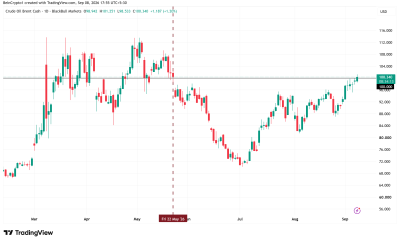
 Crypto World1 day ago
Brent Crude Oil Moves Above $100 for the First Time in 3 Months
-

 Crypto World1 day ago
Visa expands stablecoin card network to 160 programs
-
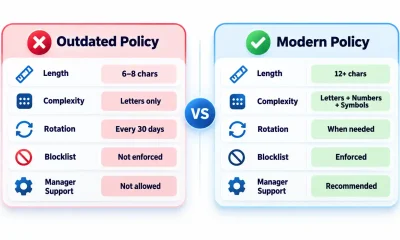
 Tech1 day ago
Strong Password Policy and Password Manager Guide
-
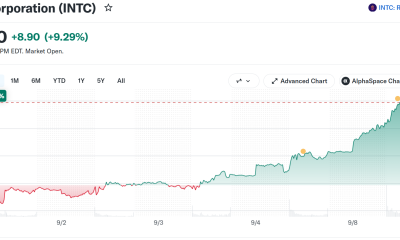
 Crypto World1 day ago
Intel Stock Jumps 9% on Chip Price Hike Report, US Stake Gains $36 Billion
-
 NewsBeat1 day ago
Tehran’s assertive rhetoric signals a new and dangerous phase in conflict
-

 Sports24 hours ago
Ballon d’Or 2026 Nominees: Lionel Messi In, Cristiano Ronaldo Out; Erling Haaland Included In Top 30
-

 Tech1 day ago
Google’s revived nuclear power plant gets $1.9B loan from US government
-
 Business21 hours ago
Oil Higher on Hormuz Escalation, Weighing on Sentiment
-

 Tech21 hours ago
Meta debuts its Muse AI agent. Will consumers trust it?
-

 Business1 day ago
Claim Your Share Of $50 Million Disney Streaming Price Settlement By Sept. 8 Tonight
-

 Tech1 day ago
Stoke Space raises another billion to rival SpaceX at re-flying rockets
-

 Business19 hours ago
Target opening 8 new stores this fall across six states
You must be logged in to post a comment Login