
Crypto World
We Asked ChatGPT: Is XRP’s Bottom Finally In After the Crash Below $1?


After several months of flirting with the psychological support level at $1.00, Ripple’s XRP finally dipped below it on a couple of occasions in the past week, which aligned with many analysts’ expectations for such a move before a major rebound.
However, some of the same analysts have been publishing controversial opinions on where the token’s bottom lies. Consequently, we decided to ask ChatGPT about its take on the matter and whether it believes XRP has finally reached a macro bottom.
In or Not In?
Zooming out, the decline to a 21-month low of just under $1.00 points to a rapidly deteriorating market structure, meaning that XRP has plunged by 70% since its all-time high, which was marked 13 months ago. The positive side is that the token managed to rebound and continues to fight for this psychological support, and has yet to give it up entirely.
ChatGPT’s answer was not as straightforward and hopeful as the bulls might have liked. It noted that there’s a big possibility the bottom could be in or just inches away due to several factors. The first is simply the magnitude and duration of the correction.
The cross-border token has been freefalling for almost a year, producing a succession of lower highs and lower lows. All of its recovery attempts have been halted in its track, and it continues to close in the red monthly, with almost no exceptions.
There are some encouraging signs as well. As reported recently, the number of wallets holding at least a million XRP has increased by 32 over the past three months. Network usage, such as the number of active XRP addresses, jumped from under 24,000 to more than 43,500 within a month or so.
Still Premature
Despite all of the above, ChatGPT remains cautious about concluding that the bottom is in, as it sees another plausible leg down. For instance, XRP’s Taker Buy/Sell Ratio on Binance recently hit a multi-month low of 0.86, showing that there are more aggressive sellers than buyers on the world’s largest exchange.
Rising futures positioning also increases the danger of another move south that can trigger a liquidation cascade. Lastly, the popular AI model outlined other analysts’ observations that the next important area for XRP lies at $0.94-$0.95. A break below that could lead to more profound losses and a dump to $0.80-$0.85.
As such, ChatGPT’s conclusion is that the bottom is ‘possibly’ in. However, there’s no confirmation yet, even though there is a ‘reasonable’ case that the sub-$1.00 dip marked, or came very close to, a local capitulation bottom.
The post We Asked ChatGPT: Is XRP’s Bottom Finally In After the Crash Below $1? appeared first on CryptoPotato.


Dell Technologies (DELL) stock has room to run higher after its recent breakout, according to Wells Fargo Securities. Wells Fargo analyst Aaron Rakers on Friday reiterated his overweight, or buy, rating on Dell stock and raised his price target to 545 from 505. On Aug. 4, Dell stock broke out of a nine-week consolidation pattern at a buy point of…
Copyright ©2026 Investor’s Business Daily, LLC. All rights reserved. 87990cbe856818d5eddac44c7b1cdeb8
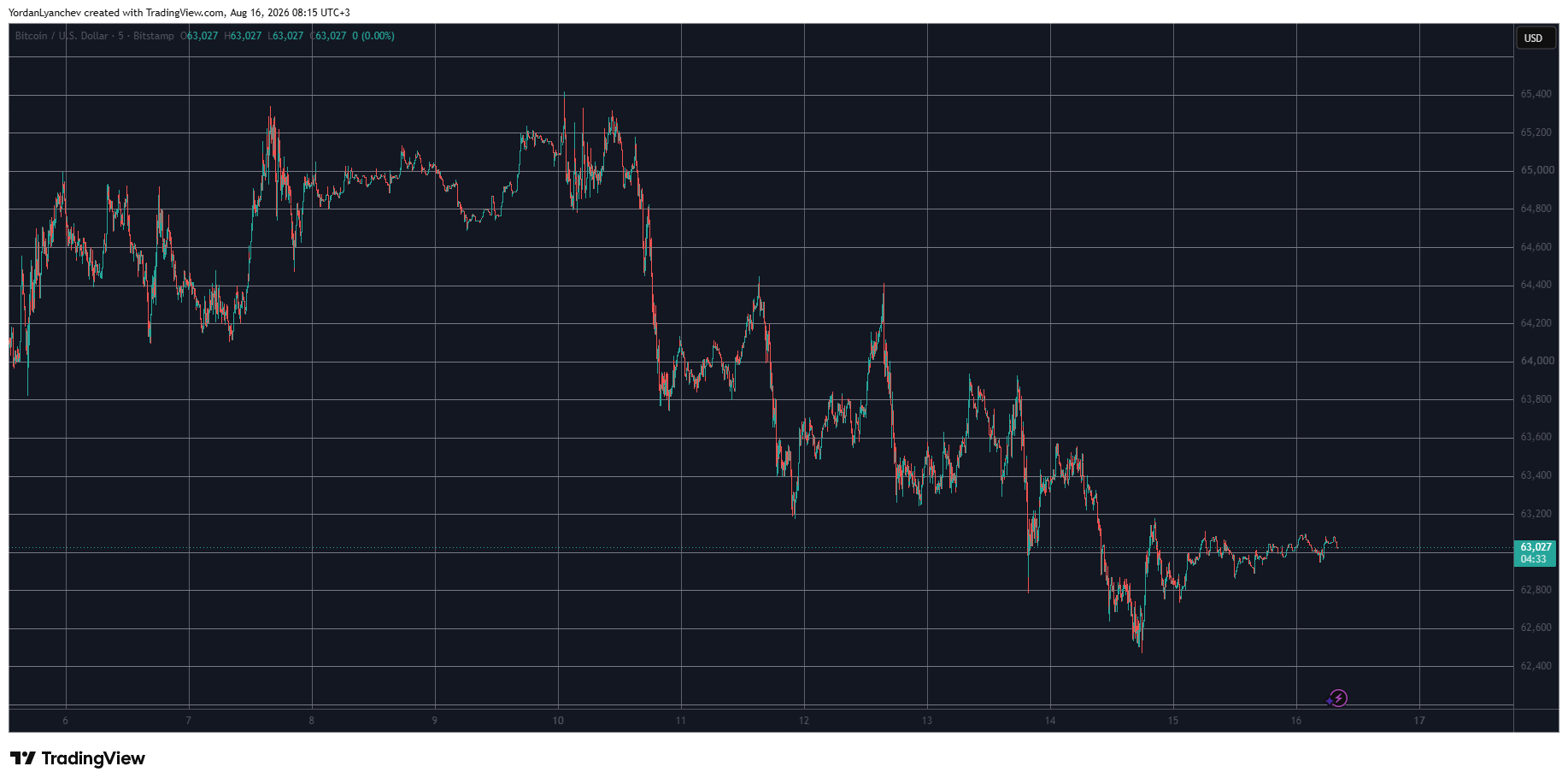
As it happened during the past few weekends, bitcoin’s price volatility has essentially disappeared once Saturday and Sunday come, with the asset remaining stuck at $63,000 for roughly 36 hours now.
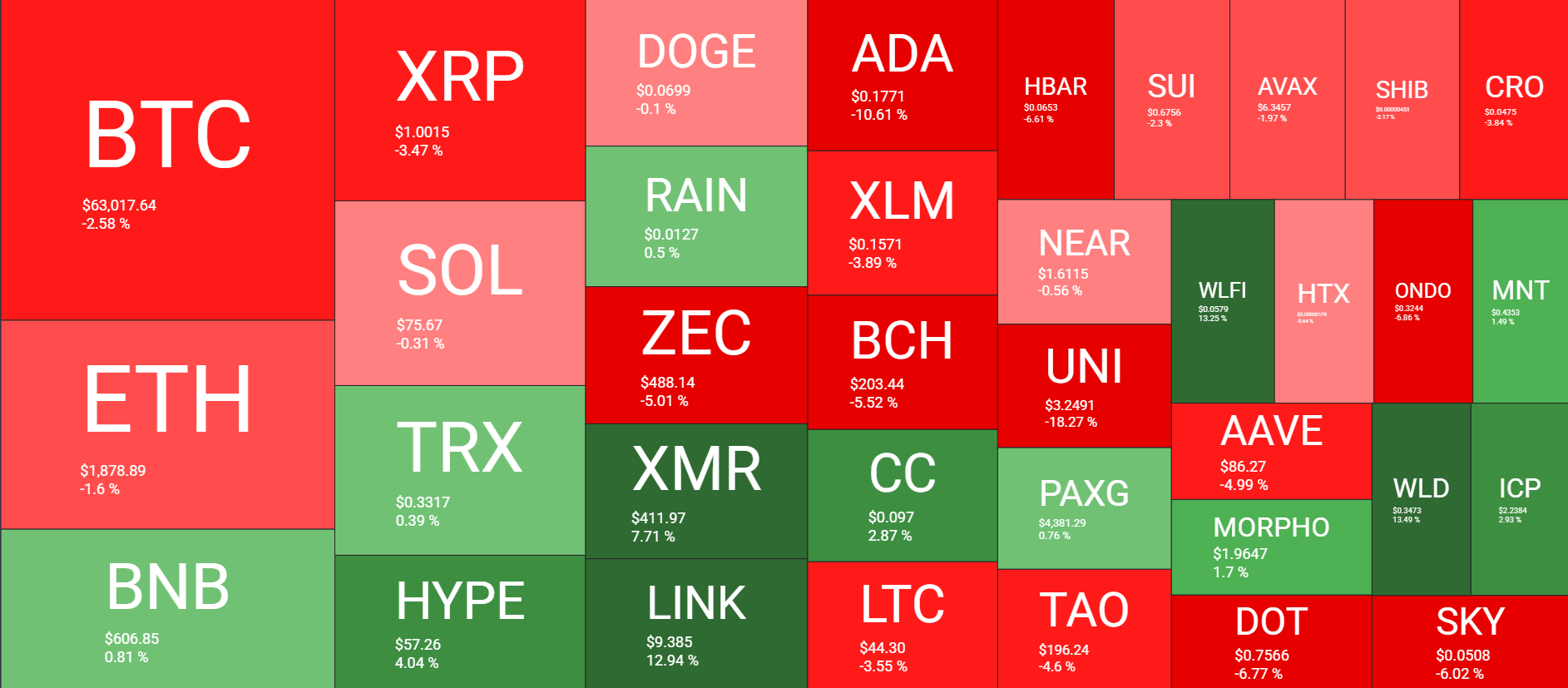
Most altcoins have performed similarly, which is why we will focus on their weekly moves. Some of the major gainers here are XMR, LINK, WLD, and WLFI.
BTC Stuck at $63K
As mentioned above, the previous weekend was also dull in terms of price action. However, it was more positive as the primary cryptocurrency had shrugged off the weekly losses and stood at around $65,000. The tides turned on Monday morning when it tried to break out, but it was halted at $65,400.
The subsequent leg down was painful as it pushed it to $63,800. After a couple of recovery attempts to $64,400, the bears resumed control once again. This time, they were even more persistent, pushing it to under $63,000 on Thursday. The same scenario repeated with lower highs, and BTC slumped once again on Friday to a 10-day low of $62,500.
As such, the asset had lost roughly $3,000 since the start of the week. The bulls finally intervened after this steep decline, given the current sluggish market environment, and helped it recover to $63,000, where it has remained for the past day and a half.
Its market capitalization remains at $1.265 trillion on CG, while its dominance over the alts is still below 57%.
Weekly Gainers and Losers
The weekly scale is quite contrasting, but red tends to dominate. Ripple’s XRP dipped below $1.00 on a couple of occasions in the past week and it has managed to remain at precisely that level as of now after a 3.5% dip since last Sunday. ETH is below $1,900 following a 1.6% decline.
Even more losses come from ADA (-10.6%), UNI (-18%), DOT (-7%), BCH (-5.5%), HBAR (-6.6%), and ZEC (-5%). In contrast, WLFI and WLD are the two top gainers from the larger caps, both surging by over 13% since last Sunday. LINK has jumped by 13% to $9.4. XMR (7.7%) and HYPE (4%) follow suit.
The total crypto market cap has remained sideways at around $2.230 trillion on CG.
The post Biggest Weekly Alt Gainers and Losers Revealed as BTC Stalls at $63K: Weekend Watch appeared first on CryptoPotato.
The meme coin mania is long gone and perhaps forgotten, as evidenced by the substantial decline in the price of its leader. DOGE recently slumped below $0.07 for the first time in almost three years, a level that it’s still unable to reclaim.
Although it remains 90% away from its 2021 all-time high, several popular analysts believe precisely these depressed conditions could be setting it up for the next major expansion wave.
Is DOGE About to Go Parabolic?
Starting with Ali Martinez, who told his over 165,000 followers on X that several indicators have aligned to support a bullish thesis for DOGE. First, he argued that the OG meme coin has approached a parabolic phase after the asset returned toward the bottom of the large price channel that has contained its movements for years.
As recently reported, Martinez also claimed that Dogecoin’s weekly TD Sequential indicator has produced multiple consecutive buy signals. This is a rather unusual occurrence that the analyst described as a potentially important warning of an upcoming rally.
The network activity has improved significantly as well, with active DOGE addresses jumping by double digits from 38,000 in July to 44,000 earlier this month.
The analyst’s broader argument is based heavily on the meme coin’s historical behavior. It has repeatedly spent extended periods consolidating near the bottom of long-term structures before eventually producing explosive rallies. Of course, investors should be aware that historical performance is no indicator of future price moves. Nevertheless, DOGE being at $0.07 again means that the risk/reward equation has changed substantially from the euphoric stages of previous runs.
Further Support
Martinez is not the only analyst bullish on DOGE. Crypto Patel also highlighted the asset’s current position within its long-term accumulation structure. He repeatedly identified the $0.07-$0.10 region as DOGE’s major accumulation zone and believes another successful hold could eventually pave the way toward much more ambitious targets.
Some of his long-term projections sound quite far-fetched at the moment, as the highest is at $4. To get there, though, the meme coin would have to tap $0.28, which is the most realistic one, before it targets new all-time high territory at $1 and $2.
Popular trader Lucky told his almost two million followers to “keep an eye” on the largest and first meme coin, suggesting it could produce a considerable run over the coming weeks and months.
The post Is Dogecoin About to Go Parabolic? These DOGE Signals Suggest So appeared first on CryptoPotato.

Cybersecurity company Mitek Systems (MITK) is seeing the proliferation of artificial intelligence as a business advantage, and its stock is headed toward a buy point amid a year of outperformance over other technology names. The small-cap company sells verification, authentication and fraud-prevention products. On its website, Mitek touts American Express (AXP), Experian and Intuit (INTU) among its more than 7,000…
Copyright ©2026 Investor’s Business Daily, LLC. All rights reserved. 87990cbe856818d5eddac44c7b1cdeb8
MicroStrategy (now Strategy) founder Michael Saylor has a new way of explaining Bitcoin: think of money like food, and Bitcoin like a freezer.
In an essay published on August 15, Saylor argues that money stores the value created by your time and work. The real test, he says, is how much of that value survives over decades.
Why Saylor Thinks Bitcoin Stops Money From “Melting”
Cash is easy to spend, but inflation can gradually reduce what it buys. Gold has historically served as a store of value, though storing, moving, and verifying large quantities creates costs.
Saylor’s “deep freeze” analogy is his answer to both problems. Bitcoin has no physical weight, can move globally, and follows a supply schedule set by its protocol rather than a central bank.
In his framework, that means less value “leaks” away while wealth moves through time.
The Big Catch: Bitcoin Can Still Lose Value Fast
A deep freeze sounds stable. Bitcoin is anything but stable in the short term.
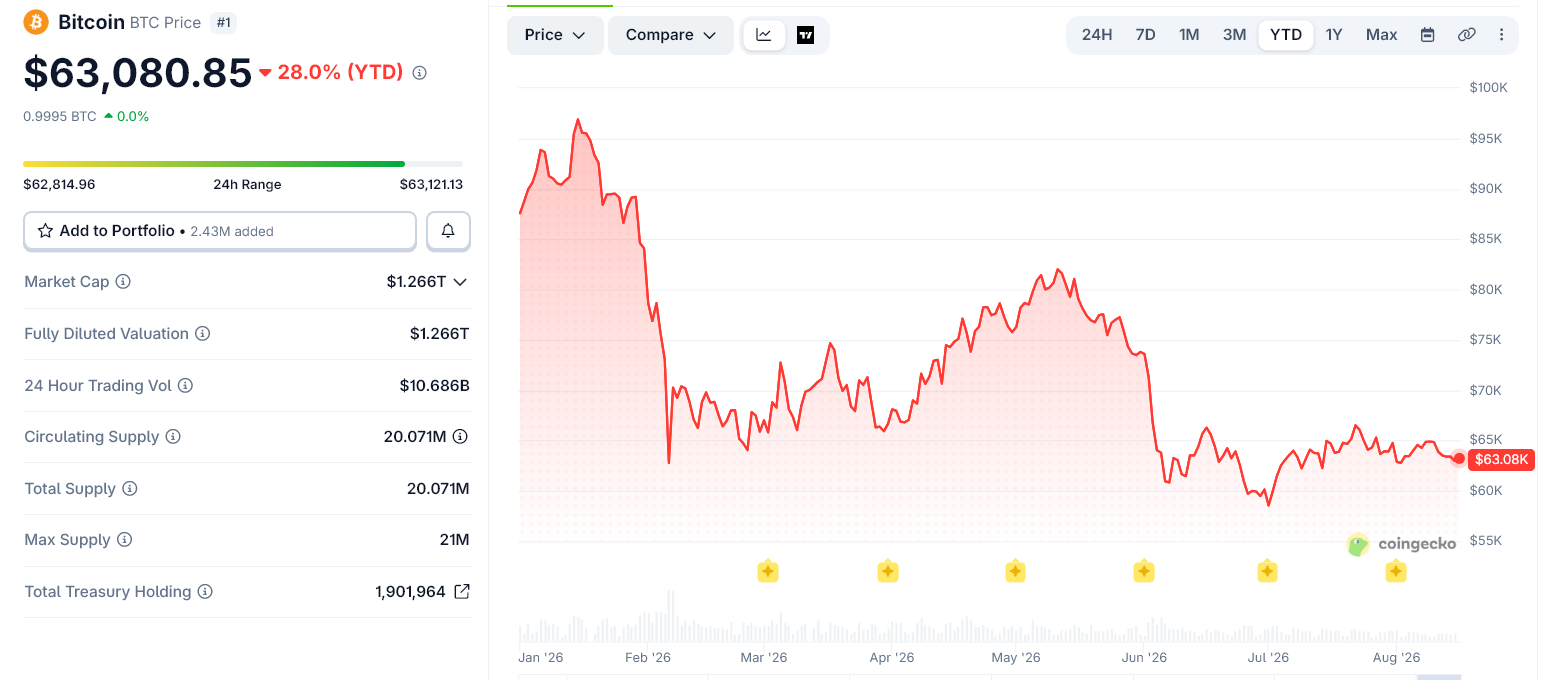
BTC currently trades near $63,000. So Saylor is making a long-term scarcity argument, rather than claiming Bitcoin works like a stable savings account. That doesn’t seem true in a real-time market context.
His question is essentially this: over several decades, would you rather store wealth in money whose supply can expand, a physical asset that is costly to move, or a digital asset with programmed scarcity?

Bitcoin has not existed long enough to pass Saylor’s 100-year test. Still, the analogy explains the investment thesis clearly: Bitcoin’s main pitch here is preserving purchasing power across time without relying on an issuer.
The post Bitcoin Is a ‘Deep Freeze’ for Money. What Does That Actually Mean? appeared first on BeInCrypto.

Exchange-traded funds (ETFs) took 25.0% of Gen Z equity trading volume on Binance in the first days of August, up from 14.6% in June.
According to a Binance Research report published on August 12, millennials directed 9.5% of their early-August equity volume to the same instruments. Unleveraged ETFs drew 18.5% of Gen Z net equity inflow in June and 21.9% in July, while the single-stock share fell from 77.0% to 74.2%.
Report author Lim Kim Thye cautioned that “two months is not enough to establish a trend.”
The Money That Stayed
Binance opened direct stock trading in June 2026, and its tokenized US equities reached $100 million in assets under management within two weeks of launch, with 47% of trading activity outside regular US market hours.
Gen Z’s total net equity deployment fell 17.4% in July. Net inflow to unleveraged ETFs slipped 2.0% over the same period, against 20.4% for single stocks and 28.5% for leveraged products.
Interestingly, Gen Z was the only cohort whose ETF holder base grew, rising 2.9%, while Millennials fell 4.5% and Gen X fell 5.9%. Its ETF buyers traded the least in July at 7.9 times against 10.3 for Millennials. Across the sample, ETF buyers held 1.4 to 1.6 fund symbols each, and in the June cohort, positions averaged 10 to 14 days, with 36% to 45% still open at the snapshot.
Ticket sizes ran in the same direction. The largest average buys in direct equities went to the dividend ETF SCHD at $16,567 per trade and Broadcom (AVGO) at $12,370, while the smallest went to the best-known names, Tesla (TSLA) at $633 and Nvidia (NVDA) at $514 in stocks.
Almost No Leverage
Leveraged and inverse ETFs made up 9.25% of Gen Z direct-equity turnover in July but 3.93% of net monthly inflow, a share that has fallen from 4.55% in June to 2.65% in the opening days of August. “Gen Z does not appear to be committing capital to leveraged exposure,” the report stated.
But 88.2% of Gen Z accounts recorded no leveraged or inverse activity in TradFi-Perps, against 84.5% of Millennials and 85.9% of Gen X. In direct equities, the figure is 96.5%, though Baby Boomers lead every product and reach 98.9% there.
Gen Z averages 13 trades a month on perpetuals against 17 for Millennials, and 22% of its direct-equity accounts have never placed a sell order, behind Millennials at 30%.
The post Binance Research: Gen Z Lifted ETFs to 25% of Its Equity Volume in August appeared first on CryptoPotato.

Bank Leumi will offer Bitcoin (BTC), Ethereum (ETH), and Solana (SOL) trading to roughly 2.5 million retail customers from early 2027 through a partnership with Galaxy Digital (GLXY), the two companies said on August 14, in what they describe as the first digital asset trading service offered by a bank in Israel.
Customers of Leumi and PEPPER (its mobile digital banking arm) will trade inside a dedicated, secured section of Leumi Trade, the bank’s capital markets application.
GalaxyOne Institutional supplies the trading platform, and custody runs on Galaxy’s custody infrastructure platform, formerly known as GK8.
“This initiative represents a significant pillar of the bank’s innovation strategy and enables us to provide customers with simple, secure, and regulated access to trading digital assets,” said Maya Ravia, Head of Strategy at Bank Leumi.
Regulator Blocked the 2022 Attempt
The plan is subject to approval by the Bank of Israel. Leumi and PEPPER announced a partnership with Paxos to offer BTC and ETH trading back in 2022, and that service never reached customers after the Bank of Israel declined to approve it.
Israeli rules have shifted since. The Bank of Israel’s Banking Supervision Department removed the automatic delay on deposits originating from crypto transactions above NIS 100,000 in mid-July.
Moreover, according to Chainalysis, Israel received roughly $22 billion in on-chain value in the 12 months to June 2025.
The Capital Market Authority has separately circulated a draft that would let licensed companies offer trading in the 50 leading digital assets, subject to a $500 million minimum market capitalization, limits on holder concentration, and registration in recognized jurisdictions, including the European Union and New York State.
Custody Traces Back to Celsius
Galaxy’s custody technology reached it through a bankruptcy. Celsius paid $115 million for GK8, a Tel Aviv custody firm, and Galaxy won the platform in the insolvency proceedings, adding about 40 staff and a Tel Aviv office. GK8 co-founder Lior Lamesh now runs Galaxy Israel.
“The future of finance will run on open, programmable rails, and we believe the banks that move first will define the era that follows,” stated Lior Lamesh, Chief Executive Officer of Galaxy Israel.
The post Bank Leumi Taps Galaxy to Launch Israel’s First Bank Crypto Trading in Early 2027 appeared first on CryptoPotato.


The additions come as Bybit’s TradFi perpetuals lineup grows to more than 200 products spanning equities, ETFs, commodities, indices and private companies.
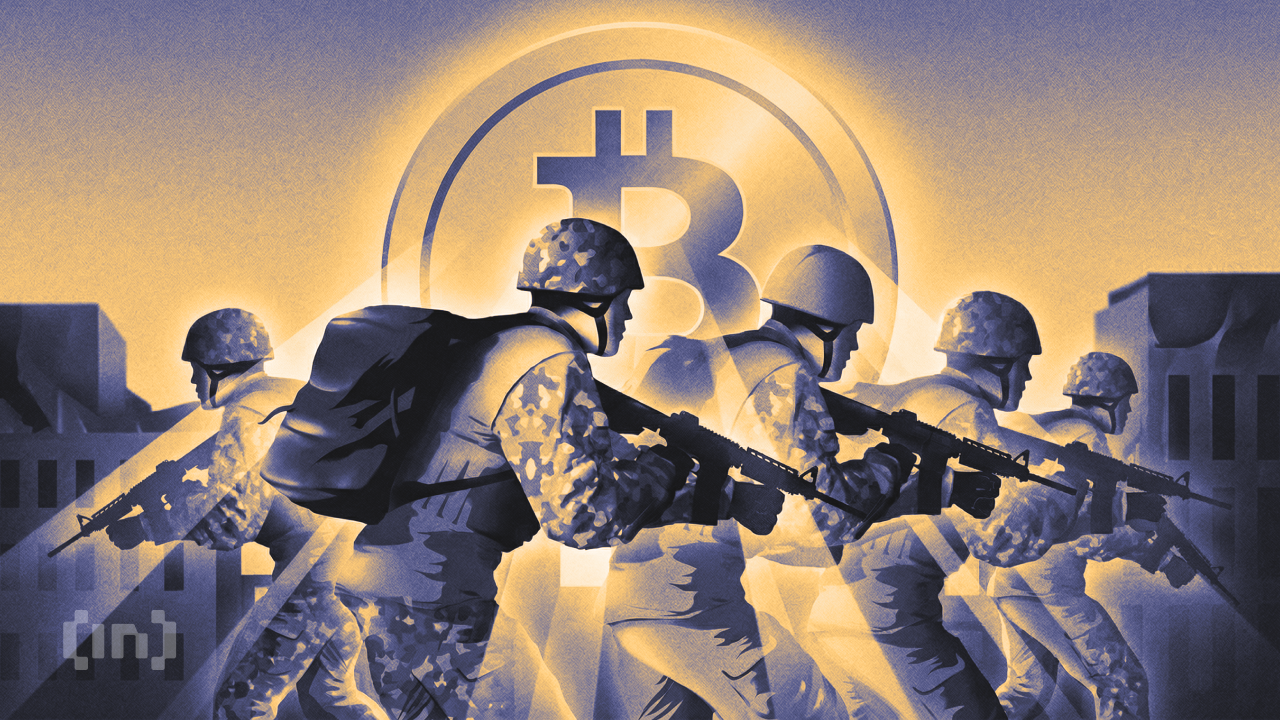

A fresh fight over Bitcoin’s 21 million supply cap has pulled Adam Back and Peter Todd onto opposite sides, after Todd’s case for a permanent block reward resurfaced this week.
Todd wants a small, never-ending issuance to keep paying miners once the last new Bitcoin arrives around 2140. Back reads the argument as a trap dressed up as engineering.
Why Peter Todd Says Bitcoin Needs a Permanent Block Reward
Bitcoin pays miners in two ways. Block subsidies mint new coins, and transaction fees ride along with each block. However, the subsidy is roughly halved every four years, and it hits zero around 2140. Fees alone must carry security after that.
Todd argues fee revenue swings too wildly to hold the chain together. Miners would be incentivized to reorganize the chain and re-mine fat-fee blocks rather than build forward. A fixed reward, he says, kills that pull.
His case leans on lost coins. Todd models supply against a loss rate and finds it settles at a ceiling, because coins vanish as fast as fresh ones appear. Therefore, he frames tail emission as a stabilizer, not inflation.
He has pointed to Monero, which already runs a small permanent reward. Its apparent inflation rate keeps sliding toward zero. The Bitcoin++ conference account resurfaced his talk on the topic this week, which reopened the argument.
The timing matters less than the mechanism. Miners currently earn 3.125 bitcoin per block, and close to 30 more halvings sit ahead. Each one thins the subsidy further while fees stay lumpy and unpredictable.
Adam Back Warns of False Narratives
Back rejects the framing outright. Meanwhile, he points to BIP-110, the contentious 2026 soft fork that tried to filter non-payment data out of blocks, as the model for how these campaigns get sold.
That pattern has a recent scoreboard. The failed BIP-110 fork died after two blocks this month, with miner support near 2.53% against a 55% bar. Back had predicted the stall weeks earlier, and backers now chase a breakaway coin instead.
Bitcoin commentator Trey Sellers made the parallel explicit, writing that a supply-schedule fork would fail as hard as BIP-110, if not harder. Michael Saylor had raised a related worry, warning about protocol neutrality whenever consensus rules bend to one camp.
Still, the security question survives the politics. Bitcoin Knots developers spent August claiming the network faces attack, while miner incentive disputes drew in former Ripple CTO David Schwartz. In contrast to those fights, this one carries no deadline.
One difference cuts against Todd. BIP-110 asked for a soft fork, which needs only miner cooperation. Raising the cap demands a hard fork, and every holder would have to accept it.
Fees may yet fund the chain on their own. Nobody alive today will see that test settled.
The post Could Bitcoin Ever Break the 21 Million Cap? Adam Back Says It’s a Trap appeared first on BeInCrypto.
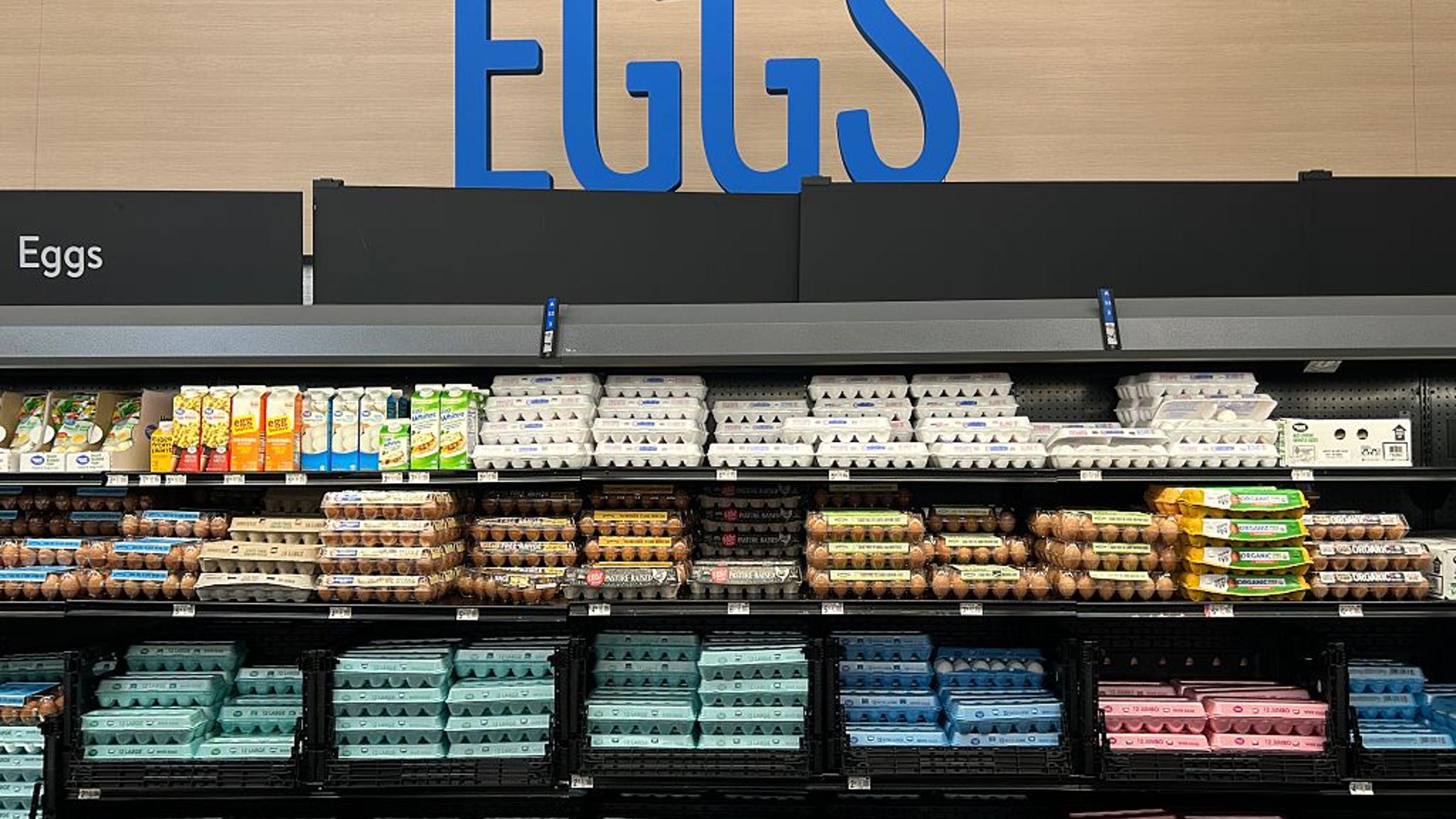
“Illness usually occurs within 12 to 72 hours after eating food that is contaminated with Salmonella, and the symptoms usually last four to seven days,” its website said, noting that children under 5, the elderly, and the immunocompromised were more likely to have severe reactions.
The U.S. Centers for Disease Control and Prevention (CDC) said that eggs contaminated with Salmonella Enteritidis had infected at least 98 people across 17 states. No deaths have been reported, but 26 people have been hospitalized.
What to know about the salmonella egg recall and how to stay safe
The FDA’s upgraded risk classification comes three weeks after Midwest Poultry Services initiated a recall of the approximately 19 million affected eggs, according to a company announcement shared on the FDA website July 22.
The eggs were produced at farms in Texas between June 6 and July 3, and the cartons show sell-by or best-by dates between July 20, 2026, and Aug. 17, 2026. They were distributed to Arkansas, Louisiana, Mississippi, New Mexico, Oklahoma, and Texas.

Knife amnesty bin to make return to Bolton next month

Xunlei Limited: What Needs To Happen If The Stock Is To Get Going (NASDAQ:XNET)

Inside Todd Bridges’ Prenup With His Estranged Wife Bettijo


-

 Fashion2 days ago
Weekend Open Thread: Ann Taylor
-

 Business7 days ago
Datadog: Best Of Breed For Multiple Reasons
-
 NewsBeat4 days ago
Communication cards help banking customers access services or report scams
-
 Business5 days ago
Oil Price Today (August 11): Crude oil rises to $88 after Trump’s compensation demand dents Hormuz opening. Here’s why
-

 Crypto World5 days ago
Revolut wins French banking licence, creates second EU banking hub
-

 Fashion7 days ago
Amazon Sundays: Closet Care Before Fall
-
 Crypto World5 days ago
Why Did Nvidia Stock Fall on Monday Despite a $500 Billion Wall Street AI Deal?
-

 Business7 days ago
5 Things You Must Know About Jorge Messi, the Father and Longtime Agent Who Shaped Lionel Messi’s Career
-

 Politics6 days ago
Ben-Gvir’s crocodile project halted but abuses at Ketziot Prison continue
-

 Politics7 days ago
The Church of England’s ruinous reparations racket
-

 Politics6 days ago
Saudi Arabia used 86% of missile stockpile defending Iran attacks
-

 Politics19 hours ago
SEQ Code: The Three Letter Boarding Pass Code That Could Give You The Worst Seat
-
 NewsBeat1 day ago
Myanmar says over 300,000 Rohingya refugees verified for repatriation as exodus enters ninth year
-

 Politics7 days ago
What’s An EDT? The Rise Of ‘Extreme Day Trips’ As A Travel Trend
-

 Fashion6 days ago
Can You Wear Double Cloth Gauze Clothing To Your Office?
-

 Crypto World7 days ago
Crypto Made a $9.6 Billion Record, But It’s Hiding a Crucial Truth
-
 Crypto World6 days ago
USDC and USDT Now Own 84% of Crypto Card Spend as the Euro Retreats
-

 Politics7 days ago
The House Article | Burnham still needs to sell devolution to the public
-
Crypto World7 days ago
Analyst Expects XRP’s Strongest Price Reversal Ever, but Polymarket Disagrees
-
 Crypto World7 days ago
Is Clarity's delay a blessing in disguise?: State of Crypto
You must be logged in to post a comment Login