
Crypto World
White House Plans Crypto, Prediction Market Summit Next Week



The White House will gather cryptocurrency and prediction market executives next Wednesday, according to three people familiar with the plans. The guest list remains unsettled, and traditional finance executives could also join.
The timing matters. Regulators convene many of the same executives 24 hours later. That hands Washington two straight days of contact with the industries pushing for new federal rules.
What the White House Crypto Summit Signals
President Donald Trump has aligned his administration with digital assets since returning to office last year. His regulators have opened doors to prediction market operators as well.
Neither the attendee list nor Trump’s own participation has been confirmed, Politico reported. The White House has not commented publicly on the plans.
Prediction markets let users trade contracts on the outcome of real events. They have moved from the margins of financial regulation toward its center.
Scrutiny has followed. New York City lawmakers opened an investigation into prediction markets this week over how the platforms advertise to residents.
CFTC Panel Convenes 35 Executives a Day Later
The Commodity Futures Trading Commission (CFTC) supervises US derivatives markets. It holds the first meeting of its Innovation Advisory Committee on Aug. 20 in Washington.
Chairman Michael Selig created the panel to advise the agency on technology, law, and policy questions. Its 35 members read like a guest list for the White House itself.
They include Polymarket’s Shayne Coplan, Kalshi’s Tarek Mansour, Coinbase’s Brian Armstrong, and Ripple’s Brad Garlinghouse. Executives from CME Group, Nasdaq, DraftKings, and FanDuel also hold seats.
That roster explains why the two days carry weight. Federal courts have already backed the platforms against state restrictions. A ruling favoring Kalshi kept their contracts trading in Minnesota.
CLARITY Act Vote Looms Over Both Meetings
The Digital Asset Market CLARITY Act would rewrite how Washington polices token trading. The bill sets a firmer test for which assets count as securities. Oversight would split between the Securities and Exchange Commission (SEC) and the CFTC.
The Senate Banking Committee advanced the measure 15-9 in May. Senators then left for their August recess without holding a floor vote.
Democrats object to an ethics carve-out covering Trump’s crypto holdings. Republicans Josh Hawley and Jerry Moran oppose the stablecoin yield provisions on behalf of community banks.
Sixty votes are needed to break a filibuster. That arithmetic has left researchers rating the bill’s passage odds as slim for this year.
Lawmakers return in September, and Majority Leader John Thune has said the chamber will move early on the bill. The SEC has meanwhile started drafting its own crypto rulemaking as a fallback.
Executives will arrive in Washington with one ask above all others. Access to the administration is far easier to win than 60 Senate votes. The coming month will show whether next week’s meetings shifted either number.
The post White House Plans Crypto, Prediction Market Summit Next Week appeared first on BeInCrypto.



Ether.fi has upgraded its non-custodial neobank with tokenized stocks and metals, portfolio-backed loans near 4%, payments in over 30 currencies, and programmatic ETHFI buybacks.
Summary
- Ether.fi users can trade tokenized assets and hold them inside self-custodial vaults.
- An Aave market on Optimism supports loans against portfolios at rates currently near 4%.
- Cash card users receive 3% cashback, while higher membership tiers remove certain foreign-exchange fees.
- Tokenized stock trading remains unavailable in the United States and some other markets.
Ether.fi neobank combines trading, loans, and payments
According to Ether.fi’s Thursday announcement, the “Summer” release places crypto trading, tokenized real-world assets, portfolio borrowing, and global payments inside one app designed as an alternative to a traditional bank account.
Through an integration with xStocks, eligible users can buy tokenized equities and commodities alongside their crypto holdings. The assets remain in self-custodial vaults rather than accounts controlled by a centralized exchange, while a social recovery feature gives users a way to restore access if they lose their usual credentials.
Ether.fi said the updated interface uses less crypto-focused language as the project seeks users who may want blockchain-based financial services without navigating several decentralized applications. Instead of moving assets between a wallet, lending protocol, trading platform, and payment provider, customers can access the functions through one app.
Borrowing is handled through a new Aave market running on Optimism. Users can provide assets from their portfolios as collateral and obtain loans at standard decentralized finance rates, which Ether.fi said were around 4% at the time of the announcement.
Borrowed funds can be transferred or spent through the Ether.fi Cash card, allowing customers to access money without first selling the assets held in their portfolios. Users can also spend supported assets directly or continue holding yield-bearing positions as collateral.
“With ether.fi, we’re bridging the gap between decentralized finance and everyday financial needs,” Ether.fi CEO Mike Silagadze said.
Silagadze added that the project wants to replace a conventional bank for many users by offering financial tools that have often been limited to institutions and wealthy clients. According to the chief executive, self-custody and decentralized finance make it possible to provide such services without requiring customers to hand over direct control of their assets to the platform.
Card benefits extend across more than 30 currencies
Under the upgraded service, Ether.fi Cash cardholders will receive 3% cashback on purchases. The company has also removed top-up charges, while customers at higher membership levels can make payments without the foreign-exchange fees normally charged by the platform.
Ether.fi said the new deposit and withdrawal connections support more than 30 currencies and payment methods. Apple Pay and Cash App are included among the supported options, giving eligible customers additional ways to move between fiat money and assets held through the app.
Card availability still depends on a user’s country. Silagadze told The Block that people in places where Ether.fi cannot issue its payment card can use the platform’s staking products or fiat deposit and withdrawal connections instead.
The app builds on a card business that already serves about 500,000 users and has issued roughly 150,000 cards, according to figures Silagadze gave to the publication. Ether.fi previously moved the card from Scroll to Optimism, placing the payment product on the same Ethereum scaling network that now hosts its Aave lending market.
Alongside the customer-facing services, the Summer release introduces programmatic purchases of ETHFI, Ether.fi’s governance token. The announcement said the buybacks will be integrated into the app’s financial model, although it did not provide the purchase schedule, funding formula, or volume expected under the program.
Tokenized stocks remain restricted for U.S. users
American customers will not have access to the tokenized stock trading feature at launch. Ether.fi said the service will also remain unavailable in certain other jurisdictions, while access to cards, fiat connections, and other products will depend on local rules.
The restriction is relevant because xStocks products track shares of publicly traded companies but do not necessarily give holders the same legal position as investors who buy stock through a regulated broker. The exact ownership rights, dividend treatment, collateral structure, and redemption terms depend on how each token is issued.
In July, crypto.news previously reported that tokenized equity ownership across five large platforms had climbed 92% in 30 days to 752,000 holders. Robinhood accounted for 328,000 holders, while xStocks ranked second by asset value at $487 million at the time.
Newer data shows competition in the sector has continued to rise. Binance’s bStocks reached $610.6 million and moved ahead of xStocks less than two months after launching, while Token Terminal data placed the tokenized stock market at approximately $2.7 billion.
U.S. access remains tied to an unresolved regulatory debate. In June, the Securities and Exchange Commission was reportedly considering an exemption that could permit some blockchain platforms to offer tokenized public shares in the country.
SEC Commissioner Hester Peirce later indicated that any such framework would probably cover digital versions of existing equities that preserve the rights attached to conventional shares. Synthetic products that only follow a company’s stock price without providing shareholder rights were not expected to qualify under the approach she described.
For American investors, Ether.fi’s geographic restriction means the new app does not yet create a direct route to tokenized equities. U.S. users must rely on whichever staking, payment, borrowing, or fiat services Ether.fi is legally able to offer in their location.
Ether.fi expands beyond its restaking roots
Once centered mainly on Ethereum restaking, Ether.fi has spent 2026 adding payment products and other sources of on-chain income. The protocol lets users stake ETH and receive liquid assets such as eETH and weETH, which can then be used in decentralized finance without requiring holders to withdraw the underlying stake first.
Earlier in August, Ether.fi began removing its weETH restaking exposure from EigenLayer and moving toward Symbiotic infrastructure. Symbiotic permits a range of ERC-20 assets to serve as collateral and separates functions such as operator management, reward distribution, and penalty conditions into modules that individual services can configure.
Real-world assets have become another part of Ether.fi’s product set. In June, the protocol allocated $100 million to a Plume vault containing income strategies linked to institutional assets.
Plume said the vault included overcollateralized credit pools, highly rated collateralized loan obligations, and bond exchange-traded funds. Ether.fi ecosystem head Charles Mountain said the capital included managed funds from the protocol’s liquid ETH, liquid USD, and liquid BTC vaults, which held about $300 million in combined value at the time.
In a separate three-year agreement, Ether.fi committed $3 billion in ETH as validator liquidity to ETHGas, an Ethereum platform that operates markets linked to future blockspace. The protocol’s latest product update allows users to keep staked and yield-bearing assets as collateral while accessing loans, transfers, or card spending from the same portfolio.
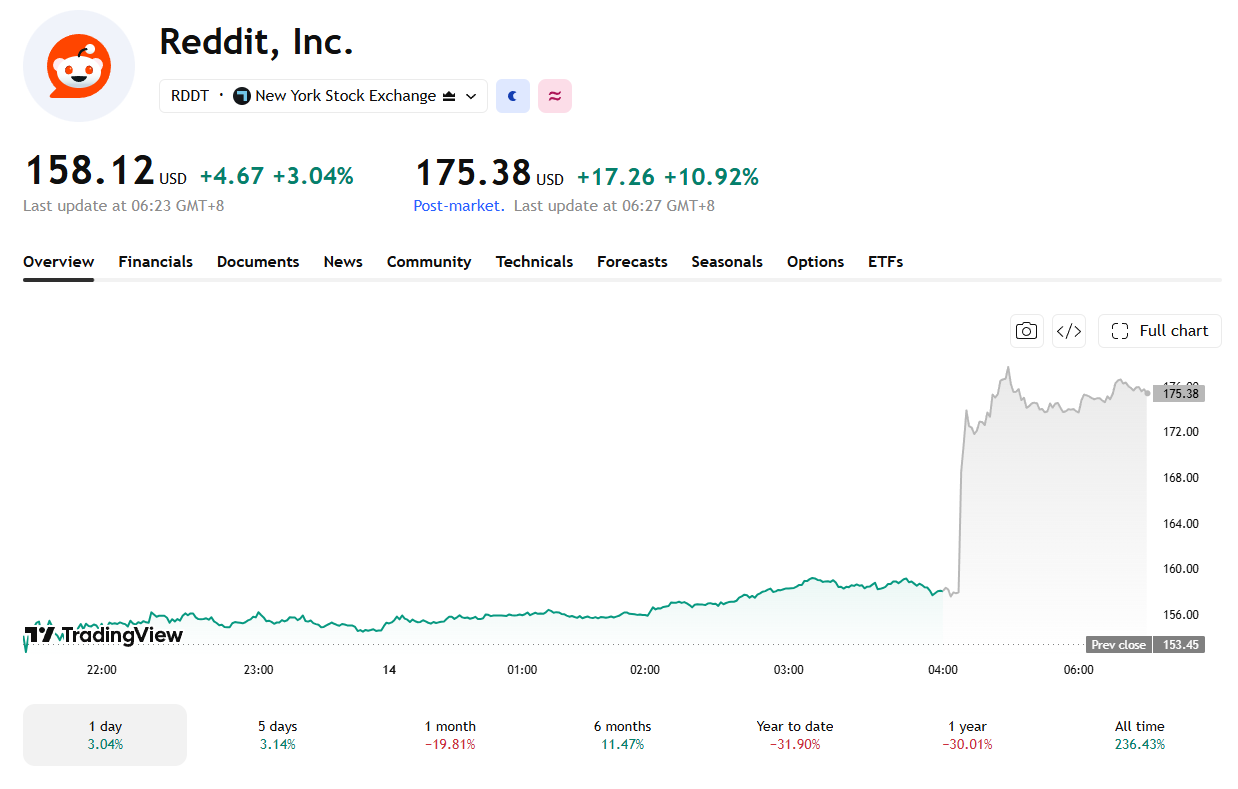
Reddit shares surged 11% in extended trading Thursday after S&P Dow Jones Indices confirmed the platform will join the S&P 500.
Reddit is only the second pureplay social media stock in the benchmark index after Meta.
Reddit’s Index Debut, By the Numbers
S&P Dow Jones Indices said Reddit (RDDT) will replace AvalonBay Communities in the S&P 500 before trading opens on Aug. 18, 2026, once Equity Residential completes its acquisition of AvalonBay.
Reddit shares climbed to $175.38 in postmarket trading following the news, up from Thursday’s $153.12 close, a gain of nearly 11%, according to TradingView data.

Index funds that track the S&P 500 must now buy Reddit shares to match the benchmark, a mechanical demand shock that helps explain jumps like this even absent fresh business news.
The same announcement added Sun Communities to the S&P MidCap 400 effective Aug. 20, replacing Webster Financial as Banco Santander’s acquisition of Webster nears completion.
Reddit’s addition leaves Meta as the only two pureplay social platforms in the S&P 500. Pinterest and Snap both went public earlier but remain too small by market cap for inclusion, and Twitter exited the index once Elon Musk acquired the company and rebranded it X under SpaceX.
A Rally That Follows a Rough Earnings Reaction
Thursday’s pop arrives less than three weeks after Reddit’s second quarter results split investors. The company posted its eighth straight quarter of revenue growth above 60%, yet shares initially sold off after CEO Steve Huffman flagged uncertainty around Reddit’s dependence on Google for new users.
“Search referrals were choppy in the quarter, and traffic was more volatile later in the quarter.”
Steve Huffman, in a letter to Reddit investors
Huffman tied the volatility to Google’s growing use of Gemini-powered AI Overviews, which answer search queries directly on the results page instead of routing users to sites like Reddit. The concern is not unique to Reddit. AI-generated search summaries are reshaping how publishers and crypto projects compete for visibility online.
S&P 500 membership does not resolve that structural question. It does guarantee Reddit a new base of buyers uninterested in the AI-traffic debate, since index funds must now simply hold the stock.
Reddit joins a short list of once-fringe internet companies using S&P inclusion to cement mainstream investor legitimacy. Coinbase joined the index in 2025, a milestone Strategy has not achieved despite its size.
Whether Reddit’s search-traffic risk resurfaces once the passive-buying wave settles is the open question heading into Aug. 18.
The post Reddit Stock Pops 11% on S&P 500 Inclusion Despite Google AI Traffic Concerns appeared first on BeInCrypto.
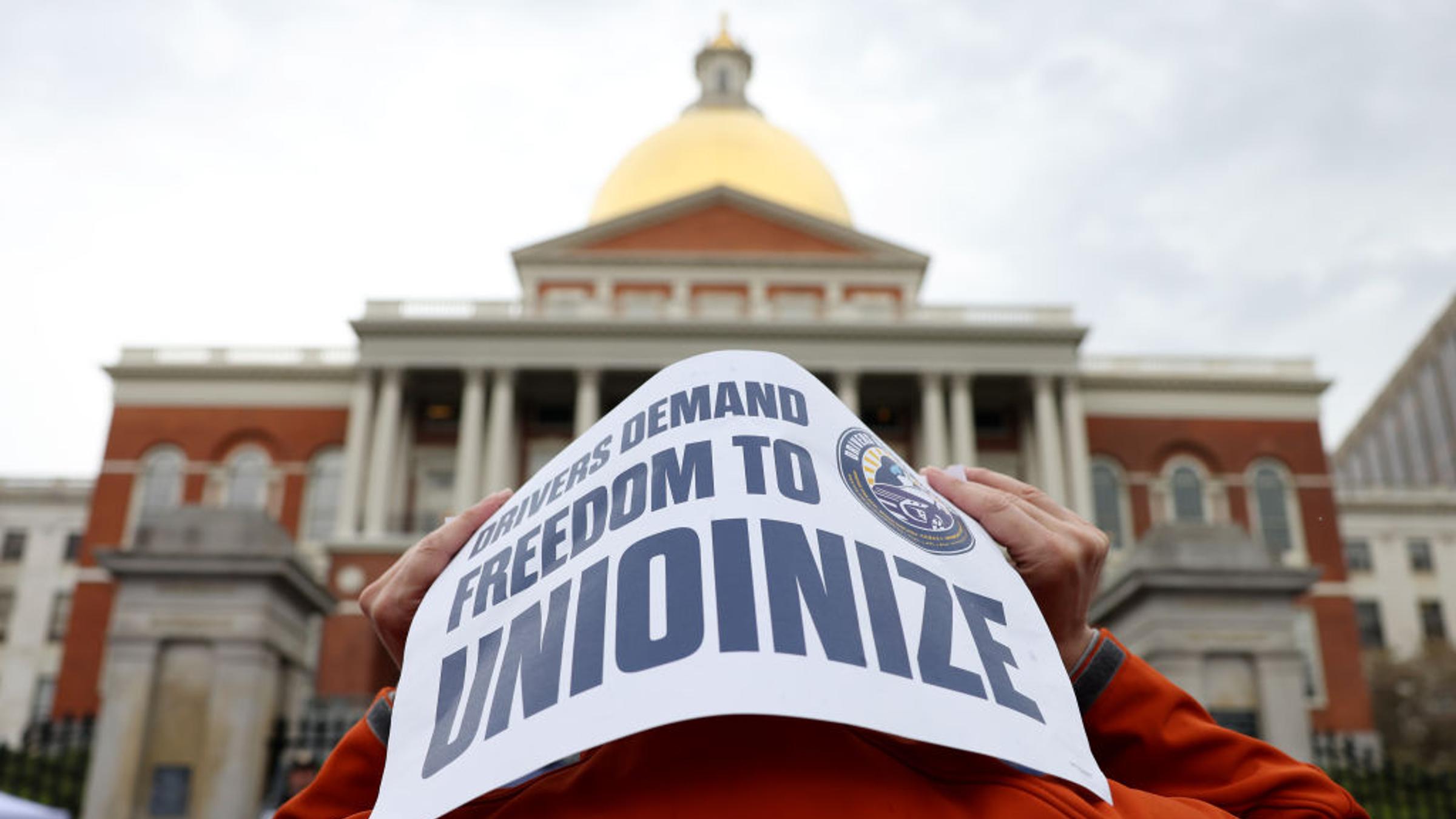
We worked with a team of labor law scholars, former federal labor officials, worker advocates, and union leaders to develop a Model State Sectoral Bargaining Law to meet this need. The model law would give workers the right to petition a State Labor Standards Board for recognition of a bargaining sector, grant organizing and access rights once minimum support thresholds are met, and create a process through which workers and employers can negotiate sector-wide agreements covering wages, benefits, working conditions, and the use of artificial intelligence and other workplace technology. Every employer in a covered sector would be bound by the resulting agreement, and workplace-level collective bargaining agreements may exceed—but never fall below—the sector-wide standards.
States that act now could immediately ensure that workers ignored by federal law can raise standards for themselves. More broadly, states have an opportunity to build the infrastructure of worker power that this country will need in the years ahead.


Swiss banking firm Swissquote Group (SQN) cut full-year revenue and profit forecasts after first-half net crypto income fell 66.2% to 14.6 million Swiss francs ($18 million).
Crypto trading volume at the Gland, Switzerland-based fintech dropped 63.5% to 2.58 billion Swiss francs, according to its results presentation. The company cut its net revenue outlook for the year by around 30 million francs to 730 million francs.
Swissquote said price declines across most cryptocurrencies caused the business to miss its initial assumptions. Bitcoin , the largest cryptocurrency, fell 33% in the six months ended June 30. Ether , the second-largest, dropped 47% and the CoinDesk 20 Index (CD20) lost 40%.
“The revised guidance now reflects a weaker-than-expected crypto environment,” Swissquote wrote.
Swissquote also booked a 5.3 million-franc loss on the crypto inventory it holds to support trading on its SQX exchange.
Growth in areas such as non-crypto trading and interest income helped keep revenue broadly level and limited the decline in profit. Client assets rose nearly 20% to 96.3 billion francs.
The company’s shares plunged 14% after the announcement.
UPDATE (Aug. 13, 14:05 UTC): Adds areas of growth in penultimate paragraph.
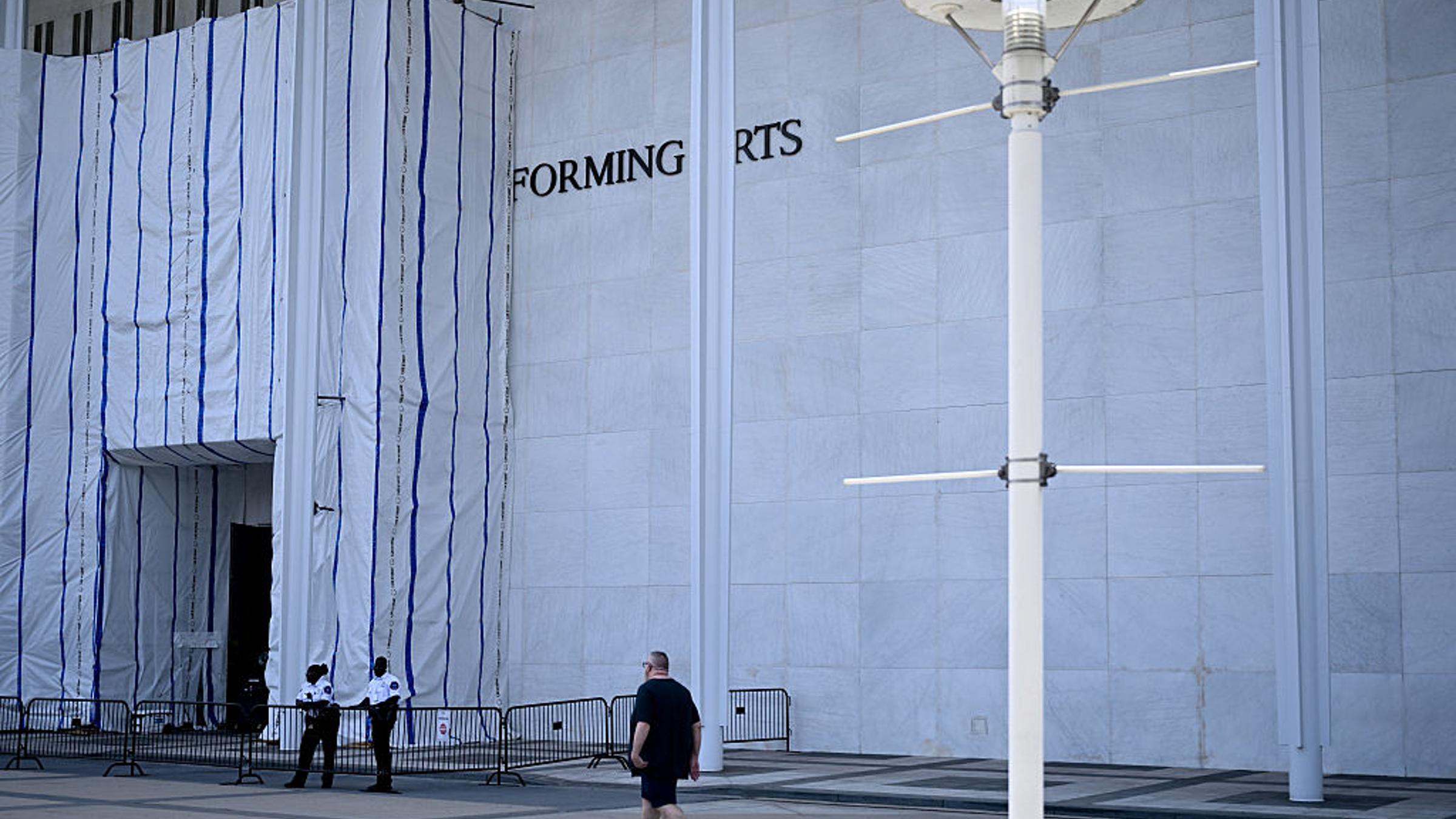
Trump’s push to take over the Kennedy Center began just weeks into his second term, when he overhauled the board—which has historically been made up of a bipartisan group of trustees—by terminating half of its 36 members, including longtime chairman David Rubenstein. He then appointed new members in their place, who elected him as chairman.
Major backlash ensued, with many performers boycotting the venue. When Trump visited the center for a performance of Les Misérables last June, he was met with boos from the crowd. Trump also made the controversial decision to host the 2025 Kennedy Center Honors, an award ceremony commemorating achievements across the arts, in December, becoming the first sitting president to do so.
Congress named the center to honor President John F. Kennedy in 1964 following his assassination in November 1963.
The Kennedy Center is far from the only piece of federal property Trump has sought to put his name or face on during his time as President. The slew of items he has moved to impress with his brand also include limited edition passports, currency, other federal buildings, battleships, and national park passes.


Neutrl, which aims to provide market-neutral yield, paused minting, redemptions, and other protocol functions on Thursday, citing circumstances affecting protocol reserves. NUSD, the protocol’s synthetic dollar, had a market capitalization of about $53.3 million. Neutrl said it acted on advice from… Read the full story at The Defiant


Goldman Sachs Vice Chairman Rob Kaplan has backed the Federal Reserve’s 9–3 decision to hold interest rates at 3.50%–3.75% in July while urging policymakers to keep their options open before September.
Summary
- Kaplan said the Fed was right to leave interest rates unchanged at its July meeting.
- Three policymakers supported a quarter-point increase, showing disagreement within the rate-setting committee.
- AI investment, tariffs, labor limits, and oil prices are creating competing inflation forces.
- Kaplan said fiscal deficits and bond supply concern him more than the federal funds rate.
Why Kaplan supports the Fed’s July rate hold
Bloomberg reported that Kaplan, a former president of the Federal Reserve Bank of Dallas, described the decision not to raise rates in July as “absolutely” correct because officials still have time to study inflation and economic activity before their next meeting.
“If I see meaningful improvement, I might be willing to stay put, but I want to make full use of every moment before September to make judgments, avoiding rigidity or preconceived notions,” Kaplan said.
Serving as Goldman Sachs vice chairman, Kaplan also sits on the bank’s management committee. His comments represent his assessment of monetary policy and should not be treated as a formal Federal Reserve position because he is no longer a policymaker.
The Federal Open Market Committee voted 9–3 on July 29 to maintain its target range at 3.50%–3.75%. Presidents of the Cleveland, Dallas, and Minneapolis regional Fed banks preferred a 25-basis-point increase, according to the July rate decision previously covered by crypto.news.
Before the announcement, markets had assigned roughly a one-in-three probability to an increase. Bitcoin traded close to $64,100 after the decision, rising only about 0.3% over 24 hours as traders largely expected the Fed to leave borrowing costs unchanged.
Fed Chair Kevin Warsh avoided committing to a set path during his post-meeting remarks. Instead of describing the decision as a pause, Warsh said officials were conducting a careful review of economic conditions and would continue examining information before choosing their next step.
Kaplan’s call for flexibility follows the same data-led approach. In his view, firm promises about future rate decisions could become counterproductive when several forces are pushing inflation in opposite directions.
Competing pressures complicate the September decision
Among the inflation risks, Kaplan listed heavy spending on artificial intelligence infrastructure, tariffs, limited labor availability, and sharply higher oil prices. Companies building data centers need power, land, equipment, and workers, meaning large investment programs can place added pressure on prices and resources.
Tariffs can also raise the cost of imported goods and materials, while labor shortages may force employers to increase pay or leave positions unfilled. Higher oil prices can reach consumers through fuel, transport, and production costs, making energy markets another important part of the Fed’s assessment.
At the same time, Kaplan said the use of artificial intelligence could help lower inflation by improving productivity. Businesses that produce more with the same number of workers may reduce their costs, although the initial spending needed to build AI systems can create price pressure before those efficiency gains become visible.
Recent U.S. inflation data gave policymakers some evidence of improvement. The Bureau of Labor Statistics reported that the Consumer Price Index rose 0.1% in July and 3.4% from a year earlier, matching economists’ expectations. Annual inflation slowed to 3.5% in June.
Core CPI, which excludes food and energy, increased by 0.2% in July and 2.5% annually. The yearly core rate eased from 2.6%, but headline inflation remained above the Fed’s 2% goal.
Following the report, traders placed a 67% probability on no September rate change and about a 34% chance of a quarter-point increase, according to Polymarket figures cited in a report on July CPI. Bitcoin recovered from about $63,400 to $64,100, though the expected reading failed to produce a decisive break from its recent range.
Warsh should explain the July decision at Jackson Hole
With the Jackson Hole Economic Policy Symposium approaching, Kaplan said Warsh should use his address to explain briefly why the Fed did not act in July. He argued that a purely “philosophical” speech would offer less value when investors are seeking details about the committee’s decision-making process.
The annual gathering in Wyoming gives central bankers a prominent venue to discuss monetary policy and economic risks. Warsh’s remarks will draw attention from U.S. investors because changes in rate expectations can affect Treasury yields, the dollar, equities, and digital assets.
Clearer reasoning would not require Warsh to promise a September decision. Kaplan’s comments instead suggest that the Fed chair could explain why the July evidence did not justify an immediate increase while preserving the committee’s ability to act if inflation strengthens again.
U.S. employment figures have added another factor to the debate. Nonfarm payrolls fell by 23,000 in July, compared with forecasts for an increase of about 80,000 to 85,000, while revisions removed a combined 103,000 jobs from the May and June totals.
After the labor report, the probability of a September hold climbed to 66% from about 50% the day earlier. Analysts cited in an earlier U.S. payrolls report warned that one weak reading might not change the Fed’s position while energy prices and shipping risks remain elevated.
Long-term Treasury yields pose the larger concern
Beyond the September meeting, Kaplan said he is more concerned about long-term U.S. Treasury yields than the federal funds rate. The federal funds rate directly covers overnight lending between banks, while longer-dated Treasury yields influence mortgages, business financing, and the government’s borrowing costs.
According to Kaplan, rising long-term government bond yields in several countries stem from a structural imbalance between supply and demand rather than Fed policy alone. Governments continue to issue large amounts of debt to cover persistent fiscal deficits, requiring investors to absorb a growing supply of bonds.
The U.S. federal budget deficit reached a record $432 billion in July, as per reports, taking the fiscal-year total through July to $1.799 trillion. Calendar-related benefit payments raised the monthly figure, but the adjusted deficit still stood at $333 billion, up 18% from a year earlier.
Heavy Treasury issuance can push yields higher when investors demand more compensation to hold long-dated debt. Rising yields also increase the return available from government securities, which may reduce demand for Bitcoin and other assets that do not pay fixed interest.
Long borrowing costs can remain elevated even when the Fed holds its policy rate steady, supporting Kaplan’s distinction between monetary policy and the bond market’s fiscal concerns. A $25 billion sale of 30-year Treasury bonds on Aug. 13 produced a yield of 5.22%, the highest borrowing cost for that maturity since 2001.
Disclosure: This article does not represent investment advice. The content and materials featured on this page are for educational purposes only.
Crypto World
SEC to again delay ‘innovation exemption’ for tokenization amid Wall Street, White House concerns
The source also said SEC staff have become increasingly focused on the agency’s legal authority to issue such broad relief, including whether it has completed sufficient economic analysis and followed the procedural steps required to justify an exemption. Industry insiders have been instructed that this effort may need to wait for the outcome of the Clarity Act.
Resistance came from traditional financial institutions as well.
SIFMA, the Wall Street trade group whose members include major broker-dealers and investment banks, has emerged as one of the main groups halting the SEC’s initiative, according to an industry source familiar with the discussions. SIFMA did not immediately respond to a request for comment.
The group’s concerns centered on how blockchain-based trading venues would fit within existing equity-market rules, particularly brokers’ obligations to seek the best execution for customers, the source said.
Under today’s market structure, Regulation NMS links prices across exchanges and generally requires brokers to execute trades at the best available protected quotation. That framework becomes less straightforward if tokenized securities trade through decentralized venues or automated market makers (AMM), where pricing and execution costs may differ from traditional exchanges.
In June, the SEC proposed eliminating Rule 611 of Regulation NMS — the so-called Order Protection Rule — a move widely viewed as removing one of the biggest regulatory obstacles to tokenized securities trading.

Baltimore and its mayor, Brendan Scott, have filed legal actions against two major prediction market platforms—Kalshi and Polymarket—arguing that the companies are conducting sports-betting activity without the required licenses and have misrepresented how their products are regulated in Maryland.
In a Thursday notice, the mayor’s office said both companies operate “illegal, unlicensed sports-betting platforms” and mislead users about the “legality and regulatory status” of their offerings. The lawsuits focus on whether certain “event contracts” marketed by the platforms are best understood as wagers under Maryland law, disputing how Kalshi and Polymarket describe those trades.
Key takeaways
- Baltimore claims Kalshi and Polymarket are running sports-betting activities without proper local licensing and are overstating the legality of their products in Maryland.
- The city argues that “event contracts” sold and traded on these platforms function as unlawful wagers under state law, challenging the platforms’ legal characterization.
- Baltimore’s complaint against Kalshi also names Robinhood, Webull and Coinbase, alleging promotional practices that imply the contracts can be lawfully purchased and traded in Maryland.
- The dispute reflects an ongoing split between federal regulators—particularly the CFTC—and state-level authorities on how prediction market instruments should be classified.
- Legal observers expect the conflict to eventually draw national scrutiny, potentially reaching the US Supreme Court if appeals progress.
What Baltimore alleges about Kalshi and Polymarket
According to the city’s notice, Baltimore’s complaint centers on two related issues: licensing and user-facing representations. The mayor’s office says Kalshi and Polymarket provide sports-betting platforms without authorization, and that their marketing misleads customers about the legality and regulatory status of their products.
The core legal theory, as described by the city, is that the platforms’ “event contracts” are effectively wagers. Baltimore’s lawsuit challenges the way the companies frame those trades—arguing that the transactions amount to unlawful betting under applicable state laws.
Mayor Scott’s statement emphasizes the city’s view that large businesses are prioritizing profits over community protections. He said the companies are “running sportsbooks without licenses and betting that a new label will put them above the law,” adding that Baltimore “will not let multibillion-dollar companies” harm local communities through illegal gambling.
Broker and exchange partnerships under scrutiny
One notable aspect of Baltimore’s action is the company it pairs with Kalshi. The city’s complaint reportedly includes Robinhood, Webull and Coinbase as partners with the prediction market platform. Baltimore alleges deceptive practices tied to how sports-related contracts are marketed to users.
Specifically, the complaint accuses these companies of promoting sports contracts in ways that suggest the instruments can be “lawfully be purchased and traded in Maryland.” The implication is that the liability may not rest solely with the prediction market operator, but could extend to intermediaries involved in distribution or access.
Why federal and state views are colliding
The Baltimore lawsuits arrive within a broader regulatory dispute in the US over prediction markets. As experts have noted, the tension often boils down to how event contracts should be classified.
On one side, the US Commodity Futures Trading Commission (CFTC) and some industry participants have argued that prediction market event contracts fall under the CFTC’s framework as “swaps.” The notice references the CFTC under Chair Michael Selig and points to prior arguments advanced by the agency and companies that prediction market instruments are regulated through federal channels.
On the other side, Baltimore’s position—and the position taken by other state-level authorities in similar disputes—is that the products do not neatly fit into the federal classification. The lawsuits dispute the federal framing and contend that state gambling rules apply to these activities.
In response, a Polymarket spokesperson told Cointelegraph that Baltimore’s approach is inconsistent with the CFTC’s established framework. The spokesperson argued that prediction markets on CFTC-registered exchanges are governed by federal law, not a “patchwork” of state and local rules, and that the case is therefore not properly targeted to how the industry is regulated.
What this could mean for the broader prediction market industry
For investors and market participants, the Baltimore filings highlight a risk that has been building in prediction markets: even when federal regulators and market operators argue for one regulatory category, state governments may pursue separate enforcement under their own gambling statutes.
This is not merely a theoretical conflict. The lawsuits claim that event contracts can be treated as unlawful wagers, which could affect how platforms market products, how exchanges or trading apps describe access, and what compliance steps intermediaries consider necessary for state-by-state operations.
It also raises practical questions for users deciding where and how to trade prediction market instruments. If courts treat certain contracts as wagers under local law, users may face restrictions or service changes even if platforms continue to assert that their operations comply with federal frameworks.
More broadly, the dispute between federal “swaps” classification arguments and state gambling enforcement theories could become a test of how far federal regulatory authority extends over prediction market instruments. The notice indicates many experts expect the issue to end in an appeal to the Supreme Court, suggesting the legal reasoning could influence future cases well beyond Baltimore.
What to watch next
Readers should watch how quickly courts respond to these complaints and whether higher courts engage with the federal-vs-state classification question at the heart of the filings. The next procedural moves—especially any appeal posture—may determine whether this escalates into the kind of nationwide ruling that could reshape how prediction markets are structured and marketed across the US.
Ethereum continues to lack decisive momentum, with the price remaining trapped in consolidation despite its recovery from the June lows. The market is now hovering around the 100-day moving average, while the lower timeframes show ETH compressed between clearly defined support and resistance zones.
Ethereum Price Analysis: The Daily Chart
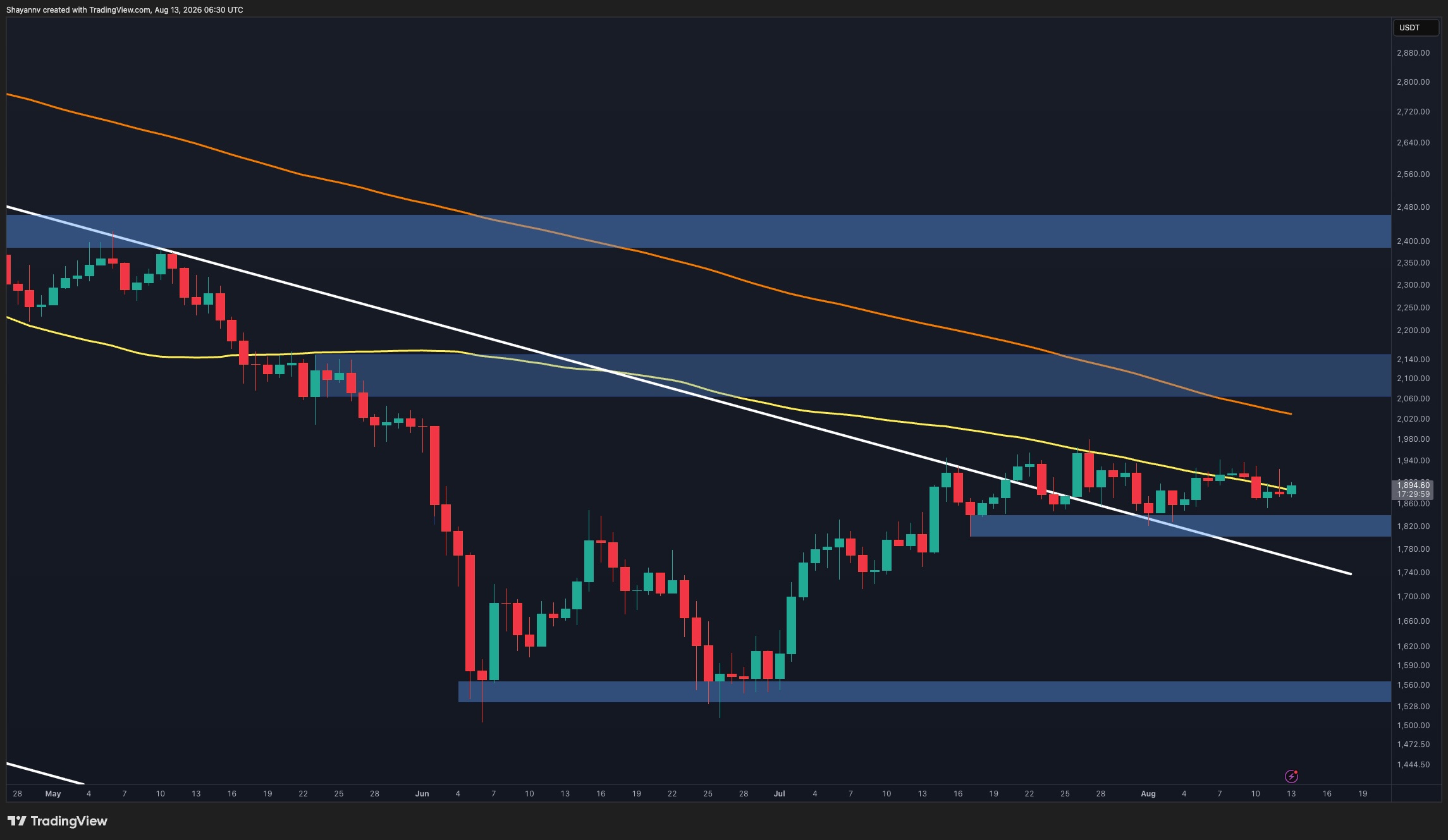
On the daily timeframe, ETH is trading around $1.9K, with the latest candles showing little directional conviction. The most notable development is the horizontal consolidation that has formed around the 100-day moving average, which is currently passing through approximately the same region.
The market has repeatedly fluctuated around this moving average without establishing a sustained move on either side. This lack of momentum suggests neither buyers nor sellers have gained decisive control, leaving ETH in a neutral consolidation phase in the short term.
Nevertheless, the broader structure remains vulnerable. On the upside, the $2.06K-$2.15K zone is the first major resistance area, with the longer-term moving average also converging toward this region. A decisive breakout above it would provide considerably stronger evidence of a bullish structural shift.
Meanwhile, the nearest support sits around $1.81K-$1.84K. Losing this area would weaken the recent recovery and could eventually expose the much more significant $1.53K-$1.57K demand zone. Until either side of the current consolidation is broken with momentum, however, range-bound price action remains the more likely scenario.
ETH/USDT 4-Hour Chart
The 4-hour timeframe provides a clearer view of the current range. ETH is oscillating between the $1.80K-$1.84K demand zone and the $1.95K-$1.98K resistance area, with price currently near the middle of this structure at roughly $1.89K.
Importantly, the ascending trendline underneath the recent price action remains intact and is currently acting as dynamic support. The latest selloff briefly tested the trendline around the $1.86K-$1.87K region before buyers stepped in, preserving the sequence of higher lows that has developed since late June.
However, buyers have repeatedly struggled to generate enough momentum to break through the upper boundary. The $1.95K-$1.98K resistance zone has already rejected the market, making it the key obstacle to another bullish leg. A successful breakout could allow ETH to extend toward the upper boundary of the broader ascending channel around $2K and above.
Conversely, a breakdown below the ascending trendline would place renewed pressure on the $1.80K-$1.84K support zone. Losing both would represent a meaningful deterioration in the short-term structure and could open the door to a deeper correction toward the lower support areas.

Sentiment Analysis
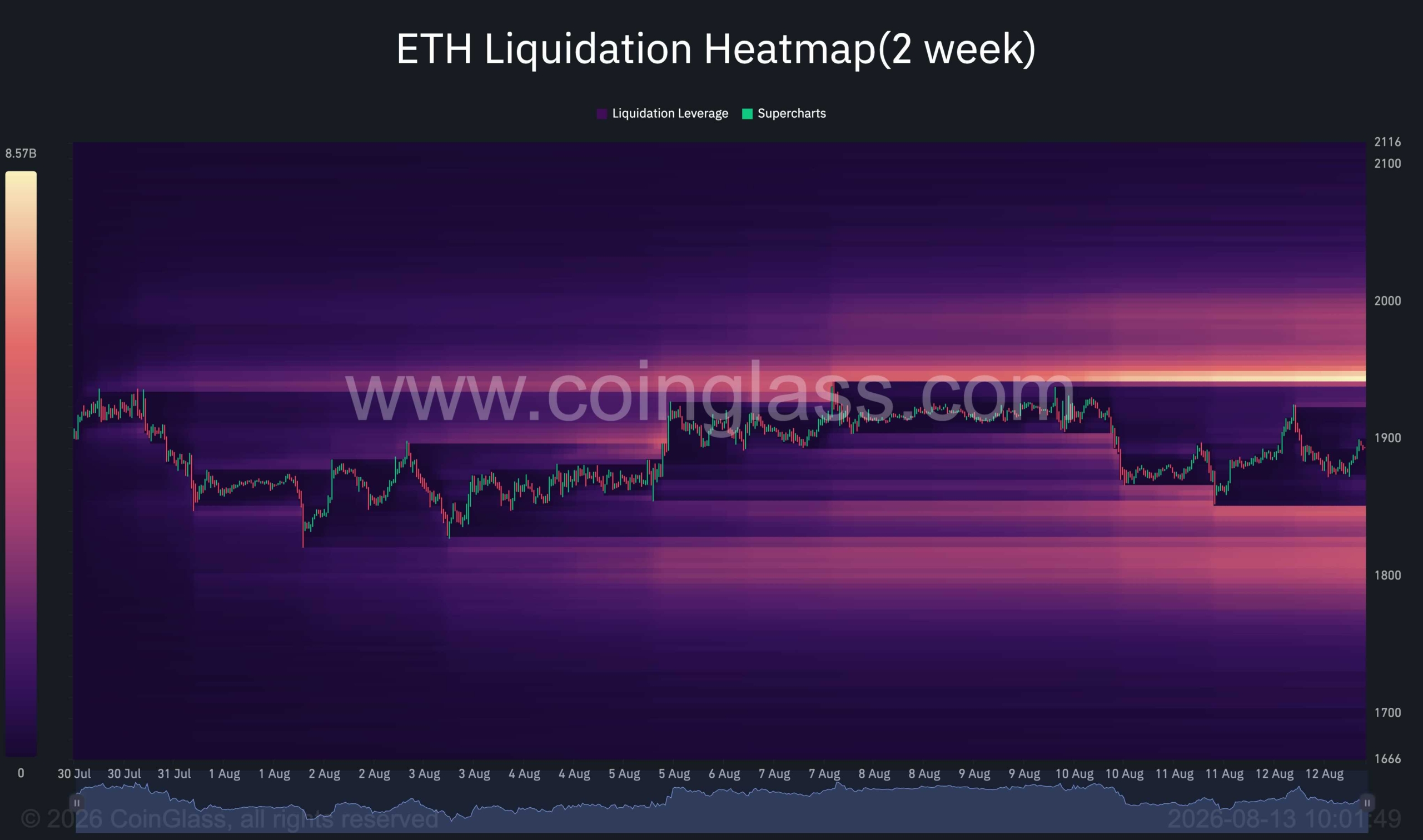
The two-week liquidation heatmap captures the liquidity structure that has developed during ETH’s recent consolidation phase. With spot price moving sideways, leveraged positions have accumulated on both sides of the range, creating potential targets for short-term liquidity sweeps.
The most prominent nearby concentration appears above the market around $1.94K-$1.95K, almost directly overlapping with the technical resistance identified on the 4-hour chart. This makes the region particularly important, as a push through the recent highs could trigger short liquidations and potentially accelerate an upside move.
At the same time, slight liquidation liquidity is visible below the market, particularly through roughly the $1.80K-$1.85K region. This aligns closely with the 4-hour demand zone and means a downside sweep cannot be ruled out if the ascending trendline fails.
Overall, the heatmap reinforces the technical picture of a market trapped inside a range with liquidity accumulating at both extremes. Until ETH establishes a decisive breakout, sharp moves toward either side may primarily serve to clear leveraged positions before the market selects a more sustainable direction.
The post Ethereum Price Prediction: What Are ETH’s Chances of Breaking Above $2K Soon? appeared first on CryptoPotato.

Finance business kaise kare

Housing benefit freeze under pressure as rents rocket across UK

Guernsey: Lack of career prospects and housing driving youth away


-

 Fashion6 days ago
Weekend Open Thread: Mattifying Sunscreen
-

 Fashion6 days ago
Frugal Friday’s Workwear Report: Cap-Sleeve Pointelle Crewneck Sweater
-

 News Videos6 days ago
Can Astrology Help Find Gold and Silver Trends? A Financial Astrology Guide
-

 Business5 days ago
How to Start a Cleaning Business: A Step-by-Step Guide
-

 Tech6 days ago
Rinn Pharma & Biopharma to join NordicPharmaTrain network
-

 Business5 days ago
Datadog: Best Of Breed For Multiple Reasons
-

 Business5 days ago
BDC Weekly Review: Private BDC Q2 Numbers Are Strong
-
 NewsBeat2 days ago
Communication cards help banking customers access services or report scams
-

 Tech7 days ago
Price Hikes May Be Coming for PC Motherboards Next
-

 Business7 days ago
Brightwater secures funding for WA-first dementia projects
-
 Business3 days ago
Oil Price Today (August 11): Crude oil rises to $88 after Trump’s compensation demand dents Hormuz opening. Here’s why
-

 Business7 days ago
Aussie shares lose steam to close record-breaking week
-

 Fashion6 days ago
Weekly News Update, 8.6.26 – Corporette.com
-
 Entertainment7 days ago
Brand New Day’ Characters, Ranked
-

 Fashion7 days ago
The Best Stores Like Ann Taylor
-

 Fashion7 days ago
Irina Shayk Wows in REVOLVE Los Angeles’ Summer Styles
-

 Fashion7 days ago
Burberry Fall 2026 Takes On Commuter Style
-

 Politics5 days ago
Be quiet, Miriam! – spiked
-

 Fashion4 days ago
Amazon Sundays: Closet Care Before Fall
-

 Business7 days ago
South Korea cracks down on Trader Joe’s popular seasoning
You must be logged in to post a comment Login