
Crypto World
WhiteBIT Introduces Adaptive Spot Automation with AI-Powered Grid and Flexible DCA


WhiteBIT, the largest European crypto exchange by traffic, has introduced two automated trading solutions – Spot Grid Bot and Martingale (DCA) Bot – designed to give retail traders greater control, flexibility, and capital efficiency when navigating volatile and trending crypto markets.
Designed primarily for retail traders, the tools focus on automation that allows users to adjust strategy, manage risk, and intervene when market conditions change.
While grid and dollar-cost averaging (DCA) tools are widely available on the market, WhiteBIT’s approach focuses on improving how these strategies are executed in practice. The new tools offer live strategy editing, adaptive AI parameter recommendations, and multiple reinvestment models, allowing users to adjust their approach without fully restarting trading cycles.
The launch expands WhiteBIT’s spot automation offering, prioritizing practical differentiation over introducing entirely new strategy types.
Key Differentiators
WhiteBIT’s implementation introduces several improvements to standard automation tools :
- Mid-cycle bot editing – users can adjust core parameters without fully exiting the strategy
- Multiple reinvestment modes – profits can be withdrawn, compounded, or converted into asset accumulation (HOLD logic)
- Manual averaging in DCA – allowing traders to intervene strategically when markets move deeper than expected
These features address a most common limitation among automated trading: inability to adapt once a bot is deployed.
Spot Grid Bot: AI-assisted volatility strategy
The bot uses an adaptive AI system that analyzes historical price data and volatility patterns to recommend optimized trading ranges. Instead of relying on static presets, the system applies machine learning methods to forecast probable price behavior and suggest safer grid boundaries.Users can preview performance through a historical replay backtesting model, designed to provide realistic yield expectations.
A core differentiator is ability to adjust strategies in real time. Traders can:
- Expand grid levels
- Adjust spacing
- Add capital
- Modify risk exposure
This allows users to respond to breakouts or shifting volatility without restarting the bot — a common limitation among existing solutions.
Martingale (DCA) Bot: Directional cycle-based automation
The Martingale (DCA) Bot is designed for traders anticipating directional market movement, particularly in bullish conditions.Unlike traditional accumulation-focused DCA strategies, WhiteBIT’s approach:
- Uses increasing order sizing during averaging
- Closes positions by cycle
- Allows profit reinvestment or asset accumulation
- Supports manual averaging intervention
This structure allows traders to manage drawdowns more efficiently, adapt safety orders, and scale capital allocation.
A notable differentiator is the ability to manually average positions if the bot becomes inactive between safety orders.
Automated trading tools have become standard across exchanges, and WhiteBIT focuses on improving flexibility, transparency, and capital management within established grid and DCA strategies rather than introducing new strategy models.




Flare Network cofounder Hugo Philion predicted $1 billion in XRP locked on his blockchain last year, and thinks it will somehow surpass $5 billion by this summer. Meanwhile, his network’s native token just hit an all-time low.
Six months after launch, his Flare XRP DeFi ecosystem averages fewer than 80 new users per day.
Flare Bridged XRP, a 1:1 representation of the XRP coin on Flare, launched in September 2025. It was pitched by former derivatives trader Philion as XRP’s DeFi breakthrough with a billion-dollar, “500% growth” target just around the corner.
On-chain data, however, tells a different story. Its DeFi ecosystem averages 76 new users per day since launch with the median day attracting a mere 33 people.
A new user, precisely defined, is a wallet that first interacted with the FXRP ecosystem via a mint, swap, burn, borrow, or repay. By that count, over half of all days since launch saw fewer than 50.
The data reveals brief spikes followed by rapid decay. On February 27, 2026, new users peaked above 2,000, coinciding with Flare’s one-click Xaman wallet integration.
Within two weeks, that number had fallen below 30.
The same pattern arose in September 2025 with a 467 new user spike on the day FAssets launched. Entrants then dropped more than 90% a week later.
Exclude the sparse days with anomalous spikes above 500, and the entire six-month average drops to under 50. The last seven days have averaged 60 new users.
An XRP enthusiast on X claimed that Flare XRP DeFi had more than $149 million in value secured and that user growth was accelerating fast.
That’s certainly less than one, let alone multiple billions, and no, growth in Flare XRP DeFi has actually flatlined.
Read more: Ripple founders lobbied for XRP reserve, got sell-only stockpile instead
Protos previously covered the launch of XRP’s EVM mainnet that took “years of building and testing” to earn $26 in daily volume within two months.
Anemic growth of XRP DeFi
The Flare token (FLR), the network’s native coin, has fared even worse.
FLR closed for trading on January 10, 2023 above $0.04 after a two-year-delayed airdrop to XRP holders. Recipients dumped immediately.
By October, it was trading for less than a penny and today trades at $0.0079, down 80% from its first-day close.
It set a new all-time low today, after making worsening lows for weeks.
Flare originally airdropped 4.28 billion FLR to XRP holders. Three years of FlareDrops later, circulating supply sits at 85 billion, a 20-fold dilution. The FlareDrop program concluded on January 30, 2026.
Despite this catastrophe, Philion has escalated his predictions, claiming Flare could hold 5 billion XRP by mid-2026. At today’s XRP price of $1.37, that target represents $6.9 billion or more than 10 times FLR’s market cap.
FXRP has roughly 138 million tokens in circulation, and $190 million in bridged assets with fewer than 80 daily users is certainly not a success story of the XRP DeFi ecosystem.
The on-chain reality is a protocol where most days bring fewer new participants than many restaurants serve at dinner.
Got a tip? Send us an email securely via Protos Leaks. For more informed news, follow us on X, Bluesky, and Google News, or subscribe to our YouTube channel.

A top U.S. regulator says blockchain could become a core tool for verifying AI-generated media, arguing that distributed ledgers can help distinguish authentic content from synthetic outputs as concerns over misinformation grow. Speaking on The Pomp Podcast, Michael Selig, chair of the U.S. Commodity Futures Trading Commission (CFTC), described timestamping and unique identifiers for memes and AI-generated posts as a practical path to verification. He also stressed the importance of maintaining U.S. leadership in crypto, saying that “you can’t have AI without blockchain.”
When pressed about how regulators view AI agents in markets, Selig advocated a cautious, targeted approach. He cautioned against over-regulation that could dampen innovation and outlined a strategy that focuses on the actors participating in financial transactions, rather than imposing burdens on software developers who create the tools. The overarching aim, he said, is to ensure enforcement targets the right participants while regulators continue to study how AI models are used in trading.
Key takeaways
- Blockchain could be used to timestamp and identify AI-generated content, aiding validation of authenticity in a noisy information landscape.
- U.S. regulators favor regulating actors in financial markets rather than software developers, aiming for a “minimum effective dose” of regulation.
- Proof-of-personhood tools and related verification tech are being explored as a means to prove human backing for AI agents interacting online.
- Broader AI policy discussions in the U.S. include a push for a unified federal framework to avoid a patchwork of state rules that could hinder innovation.
Blockchain meets AI verification: the evolving playbook
The discussion situates blockchain at the center of a broader push to authenticate online content amid growing AI capabilities. Proponents point to the potential of verifiable timestamps and content identifiers on a public ledger to help users and markets distinguish real signals from AI-generated outputs. This line of thinking aligns with ongoing interest in provenance technologies that can preserve the integrity of information while limiting exposure to manipulated or misleading media.
In parallel, industry-driven efforts on proof-of-personhood are gaining attention as a possible backbone for AI interactions. World ID, developed by the startup World, aims to let users prove they are real humans without revealing sensitive data. The approach centers on cryptographic proofs and device-hosted biometrics, rather than centralized credential databases. While supporters argue this could curb automated abuse, critics raise privacy and coercion concerns that policymakers will need to weigh as these systems mature.
Another notable development is AgentKit, a toolkit unveiled earlier this year that enables AI agents to demonstrate a link to verified human backing while engaging with online services. It couples proof-of-personhood credentials with the x402 micropayments framework created by Coinbase and Cloudflare, enabling agents to pay for access while maintaining cryptographic attestations of human origin. The goal is to strike a balance between functional automation and accountable participation in digital ecosystems.
Tech leaders have long envisioned cryptographic approaches to content integrity. Ethereum co-founder Vitalik Buterin has proposed using zero-knowledge proofs and on-chain timestamps to validate how content is generated and distributed, without exposing private data. Such ideas echo a broader aspiration: to build verifiable, privacy-preserving rails for online discourse and market activity as AI becomes more embedded in everyday operations.
Regulatory backdrop: a national AI framework and the risk of a fragmented regime
The policy conversation in Washington has intensified around AI governance. In March, the White House signaled a move toward a unified federal AI framework, warning that a mosaic of state-level rules could hinder American innovation and global competitiveness. The administration’s framing suggests regulators want guardrails that protect consumers and markets while preserving incentives for technological advancement.
Within this landscape, the CFTC’s stance reflects a philosophy of precision regulation—addressing how market participants use AI tools and ensuring that enforcement targets the actors who cross lines, rather than stifling the underlying technologies. The agency is also closely watching how AI models operate in trading contexts, seeking to establish clear boundaries for permissible activities without throttling beneficial innovation.
Meanwhile, the broader crypto and AI ecosystems continue to intersect with debates about data sovereignty, privacy, and user control. The World ID approach and AgentKit illustrate a trend toward cryptographic identity and verifiable interaction as foundational layers for AI-enabled services. As policymakers weigh federal coordination against state experimentation, investors and builders will be watching for indications of regulatory clarity that could shape product strategies and risk management in the near term.
In sum, the conversation underscores a central question for markets: can verification technologies anchored in blockchain and cryptography deliver trusted AI interactions without compromising privacy or innovation? The answer may unfold through a combination of targeted enforcement, architectural shifts toward verifiable identities, and a balanced federal policy framework that harmonizes incentives with safeguards.
As these conversations advance, the next milestones to watch include any formal CFTC guidance on AI applications in regulated markets, new demonstrations of proof-of-personhood credentials in real-world services, and the regulatory community’s response to World ID and AgentKit-style initiatives as prototypes mature and scale.
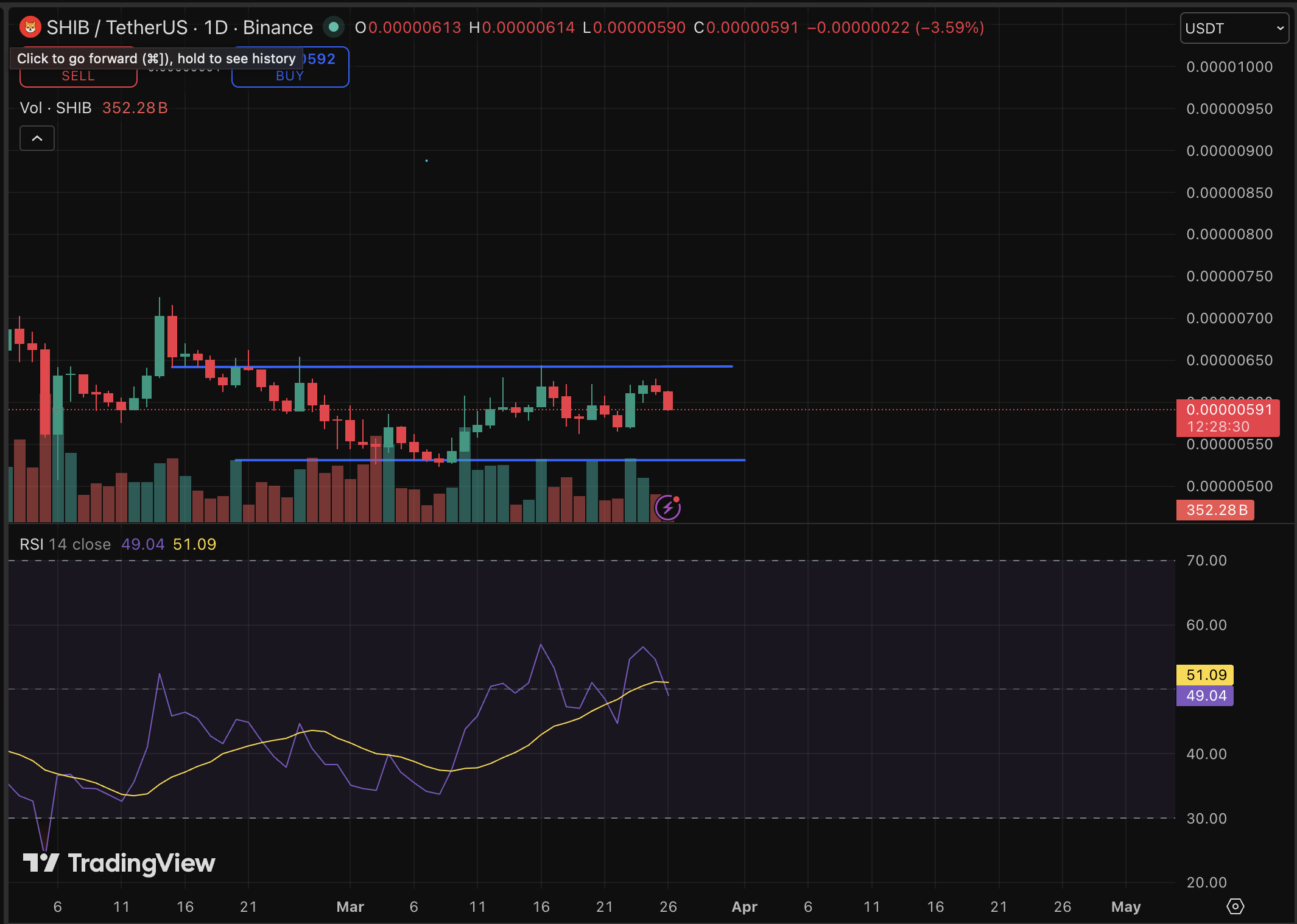
Shiba Inu price is at a technical inflection point, and this is our in-depth prediction as SHIB briefly touched $0.00000623 yesterday before pulling back, sitting just below $0.0000060 with a +3 surge in this week.
A classic cup and handle pattern has been forming on the 4-hour chart since mid-February. Price peaked at above $0.000007, corrected to a rounded bottom around $0.00000460 in early March, then ground back toward the downtrend line, which sits right at $0.00000620. Meanwhile, exchange inflows exceeded 90 billion tokens this week, a signal that sell-side pressure hasn’t gone anywhere.
Broader meme coin sentiment is yet to tick positive, but macro catalysts could swing momentum in either direction before March closes.
Discover: The best pre-launch token sales
Shiba Inu Price Prediction: Can SHIB Break Resistance This Week?
SHIB’s technical picture is genuinely mixed. The RSI is hovering at neutral 49-51, while the Awesome Oscillator remains negative bearish momentum hasn’t flipped yet despite the recent pop.
Key support holds at $0.0000055, the zero Fibonacci level and a recognized demand zone. On-chain data adds another layer of caution: OBV is trending down, daily burns collapsed 98.94% to just 305,490 tokens on March 1, and short-term speculation has dried up even as long-term holders quietly accumulate.

Long-term optimistic forecasts place SHIB at $0.000330 by 2030, contingent on Shibarium adoption and aggressive token burns, but that’s a four-year horizon that requires a lot of patience from holders already sitting on heavy losses. For more context on where altcoin momentum stands right now, this memecoin season analysis lays out the broader picture.
Discover: The best crypto to diversify your portfolio with
Maxi Doge Targets Early Mover Upside as Shiba Inu Tests Key Levels
Shiba Inu price prediction looks exciting, until you remember it’s still down 61% in a year and fighting a downtrend line it hasn’t broken once since February. Traders rotating out of established meme coins mid-cycle have increasingly been eyeing early-stage presales where the upside math is structurally different.
Maxi Doge ($MAXI) is one gaining traction, a new dog in town. Built on Ethereum as an ERC-20, the project positions itself as the meme token for traders with a high-conviction, 1000x-leverage mentality in its own words, embodying the grind of the bull market.
The presale has raised more than $4.7 Million at a current price of $0.000281, with huge 66% staking APY live for holders. Features include holder-only trading competitions with leaderboard rewards, a Maxi Fund treasury for liquidity and partnerships, and a meme-first marketing strategy. It’s niche — deliberately so.
Research Maxi Doge here before the next stage reprices.
This article is for informational purposes only and does not constitute financial advice. Crypto assets are volatile. Always do your own research before investing.
The post Shiba Inu Price Prediction: Breakout Flashing, Trendline to Break appeared first on Cryptonews.


GameStop’s (GME) massive, $420 million bitcoin transfer earlier this year was not an exit – but it’s not holding the coins anymore either.
In its annual report filed Tuesday, the video game retailer revealed that 4,709 BTC – out of its 4,710 coins – had been pledged to crypto exchange giant Coinbase (COIN) as part of an over-the-counter covered-call strategy.
The disclosure offers a clearer explanation for a January wallet that showed GameStop shifting nearly its entire bitcoin position to Coinbase Prime. The move had stirred speculation that the company was preparing to sell its holdings. Especially so as digital asset treasury firms faced mounting pressure from falling crypto prices, sparking questions about whether GameStop was cutting risk.
The BTC options strategy
What happened instead is that the company has written short-dated call options on its bitcoin, with strike prices between $105,000 and $110,000 and expiries through late March.
The trade was aimed at generating income from option premiums, while limiting gains above those levels.
The filing shows a $0.7 million liability linked to the options and a $2.3 million unrealized gain. It also said that after the fiscal year ending on January 31, a portion of the covered-call contracts expired unexercised, while the related collateral remained with Coinbase Credit.
No longer holding bitcoin
The structure also changed how GameStop accounts for its holdings.
Because Coinbase can rehypothecate or redeploy the pledged bitcoin, the company no longer classifies the assets as directly held. It now records a receivable, the right to reclaim equivalent BTC later.
That is a notable shift from its buy-and-hold strategy. While GameStop said its economic exposure remains similar to holding bitcoin outright, the position is no longer unencumbered. It sits with a counterparty and is tied to derivatives.
The firm reported that receivables linked to the pledged bitcoin were worth $368.3 million at fiscal year-end. It also booked a $59.7 million unrealized loss tied to bitcoin’s price decline.


OKX does not plan to rush into public markets in the U.S., even as the crypto exchange pushes deeper into global expansion and tokenized finance.
“We will go public when we have confidence that we can give back shareholder value,” said Haider Rafique, the firm’s general manager and chief marketing officer, during a conversation at the Digital Asset Summit in New York on Thursday. “If we are not confident that we can do that, I don’t think there’s going to be any desire for us to go into the public markets.”
The stance comes as OKX recently secured a strategic investment tied to Intercontinental Exchange, the parent company of the New York Stock Exchange, in a deal that valued the company at $25 billion. Rafique said the firm intentionally priced the round conservatively. “I think we did underprice ourselves when you look at our revenue growth, when you look at our licenses and our assets,” he said, adding the move was “very intentional” and tied to long-term shareholder returns.
The comments reflect a broader concern about how crypto companies have performed in public markets. Rafique pointed to at least one major listing that has struggled since going public. “I bought one share… and that one share is at a negative 50% return,” he said. “That’s not a good thing. That’s actually bad for the category.”
While he did not name the company, Coinbase (COIN) — the largest U.S.-listed crypto exchange — has faced volatility since its 2021 debut and currently trades nearly 50% lower than its IPO price. Other crypto-linked listings have also struggled to maintain consistent investor returns, raising questions about how public markets value the sector.
Rafique warned that repeating past patterns could damage the industry further. “If we treat going public the same way we treated ICOs and the 5 million tokens that were put in market last year… then I think we’re doomed as an industry,” he said.
Instead, OKX is positioning itself as a longer-term builder. The exchange, founded in Asia, has grown into one of the largest global crypto trading platforms, particularly in derivatives, where Rafique said it ranks among the top venues. Unlike U.S.-focused rivals such as Coinbase and Kraken, OKX operates across multiple regions, including Europe, Latin America and Asia, giving it a broader liquidity base.
That global footprint is central to its strategy as it eyes further expansion into the U.S. Rafique said international exchanges bring structural advantages, including deeper liquidity across time zones. “Our unified order book becomes a really strong competitive advantage,” he said, particularly during off-hours in U.S. markets.
The company is also betting on tokenized financial assets and blockchain-based infrastructure as the next phase of growth. Its partnership with ICE is expected to support efforts to bring equities and other traditional assets onchain, with OKX acting as a distribution layer for those products.
For now, though, Rafique said the focus remains on building before listing. “We’re going to build this company over 20, 30 years,” he said, framing the IPO decision as one tied to durability rather than timing.


The LayerZero integration gives assets tokenized on Canton access to over 165 public blockchains.
LayerZero has integrated with the institution-focused blockchain Canton (CC), becoming the first interoperability protocol to go live on the network, per a press release shared with The Defiant.
The integration, announced today, March 26, lets traditional financial institutions on Canton route tokenized assets, including securities, digital bonds, and equities, across the more than 165 public blockchains supported by LayerZero, while maintaining their compliance and confidentiality requirements, according to the release.
Also part of the integration, investors can now use stablecoins on external public chains to fund primary purchases of Canton-based tokenized real-world assets (RWAs), while Canton-native tokenized instruments can move into other ecosystems for secondary market trading.
“Canton has already built the rails for traditional finance, processing more than $350B in daily U.S. Treasury repo volume,” LayerZero CEO Bryan Pellegrino said in the release. “LayerZero’s job is to make sure those assets are available in every global market, across blockchains.”
The deal extends LayerZero’s already notable institutional push. In February, LayerZero unveiled its own Layer 1 blockchain, Zero, backed by strategic investments from Citadel Securities and Tether.
The Depository Trust & Clearing Corporation (DTCC) and the New York Stock Exchange’s parent Intercontinental Exchange both said they are evaluating the network for tokenized securities and settlement workflows.
More recently, LayerZero partnered with Centrifuge to expand multichain access for tokenized funds including nearly $861 million in tokenized U.S. Treasuries, as The Defiant reported last week.
For its part, Canton positions itself as the L1 blockchain network for TradFi institutions, with configurable privacy features. Per data from RWAxyz, Canton currently has $342.7 billion in represented asset value from tokenized RWAs, all of which is attributed to Broadridge’s Distributed Ledger Repo (DLR) platform.
Canton’s native CC token now carries a market cap of roughly $5.2 billion, ranking it #21 on CoinGecko. Last June, Digital Asset, the firm behind Canton, raised $135 million in a round that included Goldman Sachs, Citadel Securities, BNP Paribas, the DTCC, and Paxos, with CEO Yuval Rooz saying the capital would accelerate adoption for tokenized bonds, money-market funds, and commodities, as The Defiant reported at the time.
Just yesterday, Visa announced that it has become a Super Validator on the Canton network, becoming the first global payments company to do so, and is set to introduce privacy-preserving payments to the network.
This article was written with the assistance of AI workflows. All our stories are curated, edited and fact-checked by a human.
Crypto World
Best Crypto to Invest in for 2026 as SEC Classifies 16 Commodities While Pepeto Offers a Rare 220x Before Listing
There are so many entries in the crypto market now, making it hard to find the best crypto to invest in. The key is to look past the attention and focus on projects that actually solve real problems for everyday traders with tools that work today.
Pepeto has raised more than $8 million and is filling its latest stage, priced at $0.000000186. That kind of traction shows committed interest from wallets that did the math. With a potential return of 220x projected by analysts, Pepeto is outpacing large caps in terms of near term opportunity. For anyone looking for the best crypto to invest in for 2026, this one is worth moving on before the Binance listing closes the entry.
The SEC and CFTC issued a joint ruling on March 17 classifying 16 major cryptocurrencies as digital commodities including BTC, ETH, SOL, XRP, ADA, DOGE, SHIB, LINK, and AVAX, according to CoinDesk.
The decision ended over a decade of regulatory uncertainty and immediately triggered $4.5 billion in Bitcoin ETF inflows during March, according to The Block.
Finding the top entry for 2026 just got clearer because assets with commodity status now have institutional backing, and the presale with a Binance listing approaching sits ahead of all of them in return potential.
Where the Commodity Classification Meets Presale Returns Before Trading Opens
Pepeto
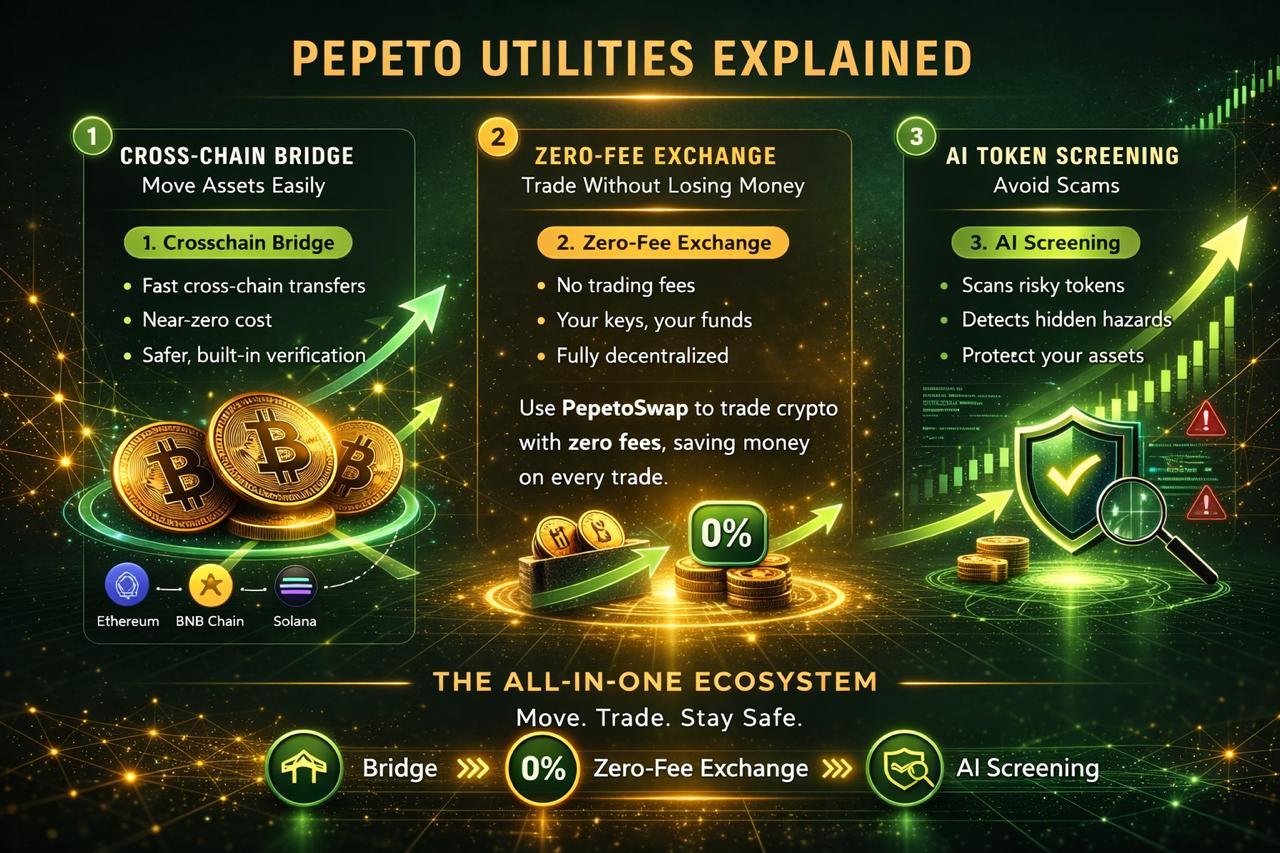
Think of Pepeto as having a personal verification layer for every contract your capital touches. The exchange reviews every smart contract before you interact with it, flagging anything dangerous in plain language. You can ask it any question about a token and the platform explains it in terms that do not require a technical background.
With a clean and fast platform, you do not need to be technical to use the exchange. That built in protection is a big reason why so many wallets are entering the presale as the best crypto to invest in right now. The risk scorer catches the traps before your money moves, PepetoSwap handles every trade at zero fees, and the cross chain bridge sends tokens between networks at zero cost.
Now look at what the numbers mean for your position. The market cap is small enough that 220x from the Binance listing is a rational target, with 193% APY staking building early positions while stages fill faster. The SolidProof audit verified every contract, and the developer who created the original Pepe coin reaching $11 billion with the same 420 trillion supply built the exchange alongside a former Binance expert.
The end of the presale is closer than most realize, with the Binance listing approaching. Pepeto is the best crypto to invest in because the exchange already works and the distance between presale pricing and listing is where 220x lives.
SUI
SUI trades near $0.91 as of March 27 still stuck below $1.00 despite adding hundreds of thousands of new users and receiving commodity classification from the SEC, according to CoinMarketCap.
Support at $0.80, resistance at $1.50. Growing chain, but the return from $0.91 is capped by weak retention and takes months to deliver what one listing delivers from presale pricing.
LINK
Chainlink trades near $8.87 as of March 27 with the CCIP cross chain protocol expanding and the SEC commodity classification confirmed, according to CoinMarketCap.
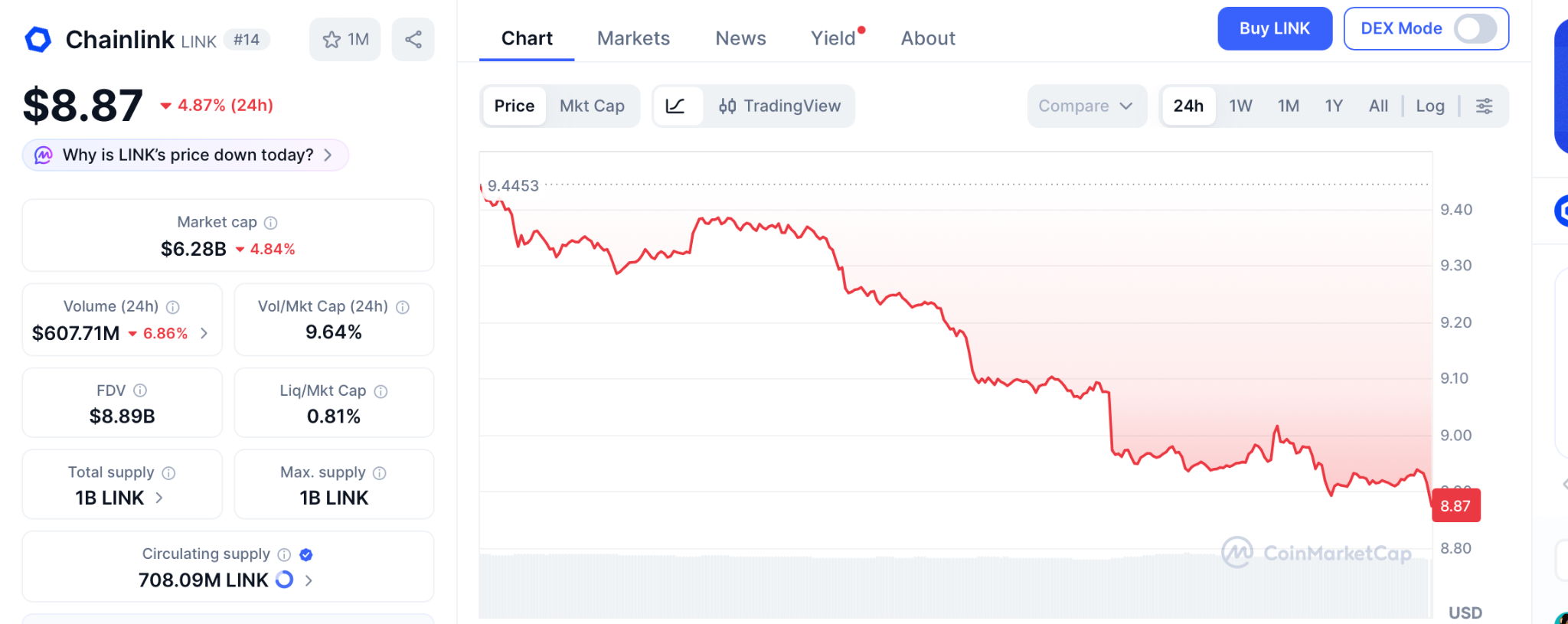
Support at $7.50, resistance at $10.00. Strong oracle infrastructure, but the path from $8.87 is a recovery measured in quarters, not the compressed timeline where the best crypto to invest in sits at presale pricing before one listing.
Best Crypto to Invest in Confirms the Presale Price Becomes the Return Everyone Talks About After Listing
Pepeto is offering you a chance to enter something that changes your entire cycle. The SEC just classified 16 assets as commodities, and the regulatory era that follows is exactly where an exchange with verified tools and a Binance listing delivers the kind of returns that make the early entry the story everyone references.
The last stage sold out ahead of schedule and this one fills while you read. The Pepeto official website is where getting in now means being on the side that collects when the listing opens trading and every wallet that entered at presale pricing becomes the return that late arrivals wish they had secured.
Click To Visit Pepeto Website To Enter The Presale

FAQs:
Finding the best crypto to invest in?
Many consider Pepeto the strongest option because the exchange runs verified tools today and the Binance listing is confirmed with analysts projecting 220x from presale pricing.
What is the best crypto to invest in for 2026?
Pepeto checks every requirement for traders who want compressed returns. The Pepeto official website is where the exchange is still at presale pricing before the listing opens to the broader market.
What are the top coins to invest in alongside the new commodity classification?
Getting in early at presale pricing means your position has the full distance to the listing ahead of it, and established coins that already cost more face a slower and harder path to deliver returns that change your cycle.
Disclaimer: This is a Press Release provided by a third party who is responsible for the content. Please conduct your own research before taking any action based on the content.
TLDR
- LayerZero has integrated its interoperability protocol with the Canton Network to support cross-chain asset transfers.
- The Canton Network operates as a blockchain designed for regulated financial institutions and structured markets.
- Goldman Sachs supports Digital Asset, the primary developer behind the Canton Network.
- The integration enables institutions to route tokenized assets across more than 165 public blockchains.
- LayerZero reported that its ecosystem represents over $100 billion in value.
LayerZero has launched its interoperability protocol on the Canton Network to enable cross-chain transfers for institutional users. The integration allows regulated financial firms to move tokenized assets across more than 165 public blockchains. Both organizations confirmed the development in a joint statement released Thursday.
Goldman Sachs and Institutional Backers Support Canton Expansion
Canton Network operates as a blockchain built for regulated financial institutions and structured markets. Digital Asset develops the network, and Goldman Sachs supports the company alongside other firms. Microsoft and DTCC also back Digital Asset as strategic supporters.
Digital Asset raised $135 million in June during a funding round led by DRW Venture Capital and Tradeweb Markets. BNP Paribas, Circle Ventures, Citadel Securities, DTCC, and Goldman Sachs joined the round. The company confirmed that nearly 400 ecosystem participants now engage with Canton.
Goldman Sachs Global Head of Digital Assets Mathew McDermott addressed the partnership last year. He said, “Our longstanding relationship with Digital Asset stems from a deep conviction in the strength of their technology.” His statement highlighted continued institutional backing for the platform.
LayerZero Enables Cross-Chain Routing for Tokenized Assets
LayerZero became the first interoperability protocol to go live on the Canton Network. The integration allows institutions in Canton to route tokenized assets securely across public blockchains. The organizations stated that the system maintains compliance and regulatory standards during transfers.
LayerZero designed its protocol to connect any token or application with any blockchain network. The company reported that its ecosystem represents over $100 billion in value. Through this link, that ecosystem can now access Canton’s institutional infrastructure.
Bryan Pellegrino, CEO of LayerZero Labs, outlined the operational scope of the integration. He said, “Canton has already built the rails for traditional finance, processing more than $350 billion in daily U.S. Treasury repo volume.” He added, “LayerZero’s job is to make sure those assets are available in every global market, across blockchains.”
BNP Paribas, DRW, Goldman Sachs, Liberty City Ventures, QCP, and Tradeweb have participated in testing Canton. The network confirmed ongoing collaboration with firms from both traditional and decentralized finance sectors. Canton stated that these participants contribute to network validation and infrastructure testing.
The integration now links institutional blockchain infrastructure with public networks through LayerZero’s protocol. Both organizations confirmed that institutions can transfer tokenized assets while retaining compliance controls. The companies released the announcement on Thursday as part of their joint update.
TLDR
- OKX said it will not rush into a U.S. IPO and will wait until it can deliver shareholder value.
- Haider Rafique said the company will only go public when it has confidence in long-term returns.
- OKX secured a strategic investment linked to Intercontinental Exchange that valued the company at $25 billion.
- Rafique said the firm intentionally priced the funding round conservatively despite strong revenue growth.
- He warned that poor stock performance by listed crypto firms has hurt the industry’s image.
OKX said it will not hurry into a U.S. IPO as it expands global operations. A senior executive linked the timing to shareholder returns and market performance. The company instead plans long-term growth across regions and tokenized finance.
OKX Ties IPO Plans to Shareholder Value and Market Timing
Haider Rafique said OKX will enter public markets only when it can deliver shareholder value. He spoke during the Digital Asset Summit in New York on Thursday. He said, “We will go public when we have confidence that we can give back shareholder value.”
He added that the firm will avoid listing without that confidence and clear performance targets. He said, “If we are not confident, there is no desire to go public.” He linked the approach to long-term planning and measured expansion.
OKX recently secured a strategic investment linked to Intercontinental Exchange, which owns the New York Stock Exchange. The deal valued OKX at $25 billion, according to Rafique. He said the company priced the round conservatively despite revenue growth.
He said, “We did underprice ourselves when you look at our revenue growth and licenses.” He added that the pricing decision was intentional and tied to long-term returns. He said the company focused on durability over short-term valuation gains.
Rafique also referenced poor public market performance by crypto firms. He said he bought one share in a major listing that later fell 50%. He said, “That’s not a good thing, and that’s bad for the category.”
He did not name the company during the discussion. However, Coinbase trades nearly 50% below its 2021 IPO price. Other crypto-linked stocks have also faced price swings since listing.
Global Expansion and Tokenized Assets Drive OKX Strategy
Rafique warned that careless listings could hurt the broader crypto sector. He said, “If we treat going public like we treated ICOs, we are doomed.” He compared rushed IPOs to the release of millions of tokens last year.
He said OKX plans to build the company over 20 or 30 years. He described the IPO decision as tied to durability rather than timing. He said the firm wants stable growth before entering public markets.
OKX operates across Europe, Latin America, Asia, and other regions. Rafique said the exchange ranks among top venues in crypto derivatives. He contrasted that reach with U.S.-focused rivals like Coinbase and Kraken.
He said international exchanges benefit from liquidity across time zones. He said, “Our unified order book becomes a strong competitive advantage.” He added that this structure supports trading during U.S. off-hours.
The company also targets tokenized financial assets and blockchain infrastructure. Its partnership with Intercontinental Exchange supports plans to bring equities and other assets onchain. Rafique said OKX will act as a distribution layer for those products.
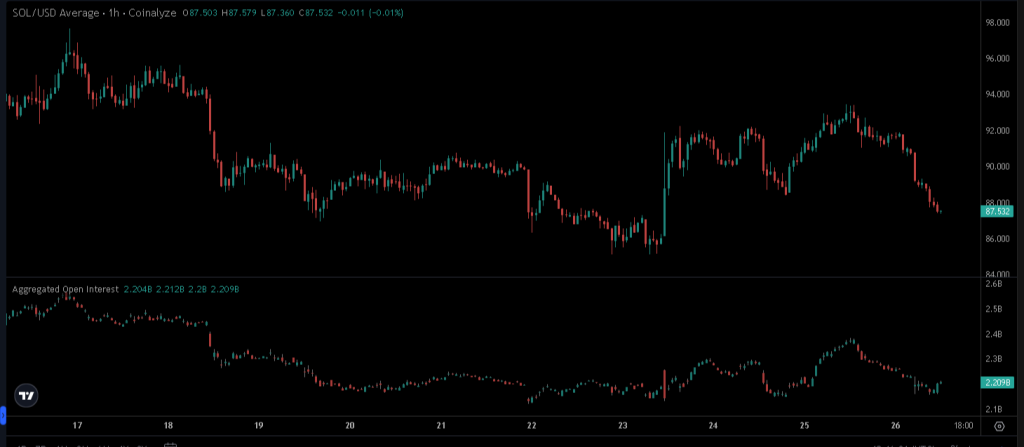
Solana (SOL) is trading at $87, still down 69% from its January 2025 peak near $295.91. The long-short ratio has skewed above 3:1 on some platforms with retail sitting 65.5% long. That is not a normal reading for an asset trading below every major moving average.

(Source – Coinalyze)
The open interest tells the real story. OI sits at roughly $2.2billion and is contracting, down, even as the long bias intensifies. Price moving up while open interest shrinks is a textbook squeeze signature. Not accumulation. Not conviction.
The math does not support a real rally here.
Discover: The best pre-launch token sales
SOL Derivatives Setup: Squeeze Risk or Breakout Fuel?
The long-short ratio is being misread by most traders watching it. It measures position count distribution, not capital weight. Longs and shorts are always structurally matched 1:1 in notional size on derivatives markets. A 3:1 long-short ratio means three times as many traders are positioned long, not that three times as much capital is long. That distinction is critical to understanding the actual risk here.
What makes the current setup unstable is the divergence between that bullish tilt and the absence of fresh capital. Sustained long bias with expanding open interest signals conviction. Sustained long bias with shrinking open interest signals a squeeze in progress, shorts being forced out, not bulls stepping in. The neutral funding rate of 0.0038% per 4-hour period confirms it: this is short covering, not new long entries.
On February 28, the largest single liquidation event pushed SOL to a 52-week low of $77.91, per exchange data. Short liquidations on March 5 totaled $2.58M, 75.6% of total liquidations, against just $0.83M in long liquidations. That 3:1 liquidation skew mirrors the ratio skew almost exactly. The squeeze mechanics are already running.

(Source – SOLUSD, TradingView)
Key technical levels define the binary. The 200-day moving average sits near $150 , structurally far above the current price and representing the ceiling of any meaningful recovery. Near-term, the Changelly model places April channel resistance at $102.51, with $100.37 as the lower bound of that zone. Below current price, the $77.91 February low is the last structural floor before open air.
The bull scenario: price clears $90–$92 with expanding open interest, funding rates tick positive, and the long bias becomes self-fulfilling as momentum traders pile in. SOL’s high-beta profile means a confirmed breakout accelerates fast, similar derivatives setups in other L1s have produced 20–30% moves within days once squeeze momentum flips to genuine accumulation.
The bear scenario: price stalls at resistance, overleveraged longs begin unwinding, and the same reflexivity that would accelerate upside now cascades downside. The Fear & Greed Index at 9, Extreme Fear, alongside a 65.5% long reading, puts the current positioning in the warning zone for pullbacks, as analysts describe it. A breach of $80 triggers the next liquidation cluster.
The long-short ratio is a pressure gauge. Right now it is elevated. That pressure resolves through continuation or liquidation, and without open interest expansion, the liquidation path carries a higher probability. Regulatory developments in crypto derivatives oversight also remain a macro overhang for leveraged positioning across the sector.
Discover: The best pre-launch token sales
Bitcoin Hyper Targets Early Mover Upside as Solana Tests Key Levels
While Solana navigates an unstable derivatives setup with no structural confirmation of reversal, smart money is rotating into Bitcoin Hyper, a Bitcoin-native L2 infrastructure project designed to bring EVM-compatible execution speed to BTC liquidity without wrapped token exposure.
The project differentiates itself through sub-second finality on a Bitcoin-settled chain, targeting the DeFi and perpetuals market currently dominated by Solana and Ethereum L2s. Its presale has raised $5.9M to date, with the current token price at $0.0115 and staking APY locked at 108% for early participants.
The presale window closes before the public DEX listing, which historically represents the highest-risk, highest-return entry point for infrastructure plays. Year-end SOL forecasts ranging from $250–$300 reflect broader L1 recovery expectations — but early-stage infrastructure projects with fixed presale pricing offer asymmetric upside independent of SOL’s near-term squeeze resolution.
Join the Bitcoin Hyper Presale Now
This article is for informational purposes only and does not constitute investment advice. Cryptocurrency investments carry significant risk, including total loss of capital. Always conduct your own research before making any financial decisions.
The post Solana Long-Short Ratio Signals Unusual Derivatives Positioning appeared first on Cryptonews.

Sarah Ferguson- York councillors remove Freedom of the City

Predicting Strikes Before They Happen

Flare’s billion-dollar XRP DeFi dream has just 80 new users a day


-
 Crypto World6 days ago
NIO (NIO) Stock Plunges 6.5% as Shelf Registration Sparks Dilution Worries
-

 Fashion6 days ago
Weekend Open Thread: Adidas – Corporette.com
-
 NewsBeat1 day ago
Manchester United reach agreement with Casemiro over contract clause amid transfer speculation
-

 Politics6 days ago
Jenni Murray, Long-Serving Woman’s Hour Presenter, Dies Aged 75
-

 Crypto World5 days ago
Best Crypto to Buy Now: Strategy Just Spent $1.57 Billion on Bitcoin During Fear While Early Investors Quietly Enter Pepeto for 150x Potential
-

 Crypto World5 days ago
Bitcoin Price News: Bhutan Sells $72 Million in BTC Under Fiscal Pressure, but the Smart Money Entering Pepeto Sees What the Market Does Not
-

 Tech7 days ago
inKONBINI Lets You Spend Summer Days Behind the Register
-

 News Videos18 hours ago
Parliament publishes latest register of MPs’ financial interests
-

 Sports3 days ago
Remo Stars and Kano Pillars Strengthen Survival Hopes in NPFL
-

 Business4 days ago
No Winner in March 21 Drawing as Prize Rolls to $133 Million for Next
-

 Sports3 days ago
Gary Kirsten Accuses Pakistan Cricket Board Of ‘Interference’, Mohsin Naqvi Responds
-

 Tech4 days ago
Give Your Phone a Huge (and Free) Upgrade by Switching to Another Keyboard
-

 Sports6 days ago
2026 Kentucky Derby horses, odds, futures, preview, date: Expert who nailed 12 Derby-Oaks Doubles enters picks
-

 Tech4 days ago
AI enters the chat: New Seattle dating app relies on tech to facilitate meaningful human connections
-

 Business7 days ago
DLocal: Entering 2026 At Escape Velocity
-
Business6 days ago
Columbia Sportswear enters $500 million credit agreement with JPMorgan Chase
-

 Tech5 days ago
Today’s NYT Connections Hints, Answers for March 22 #1015
-

 News Videos3 days ago
Ch 9 Financial Management Part 1 | Detailed One Shot | Class 12 Business Studies Boards 2026
-

 Business4 days ago
Will Duke Basketball Win It All? Duke Basketball Enters Second Round as Third Favorite to Claim NCAA Title
-

 Sports4 days ago
2026 Kentucky Derby horses, odds, futures, preview, date: Expert who hit 12 Derby-Oaks Doubles enters picks
You must be logged in to post a comment Login