
Crypto World
Why Is The US Stock Market Up Today?

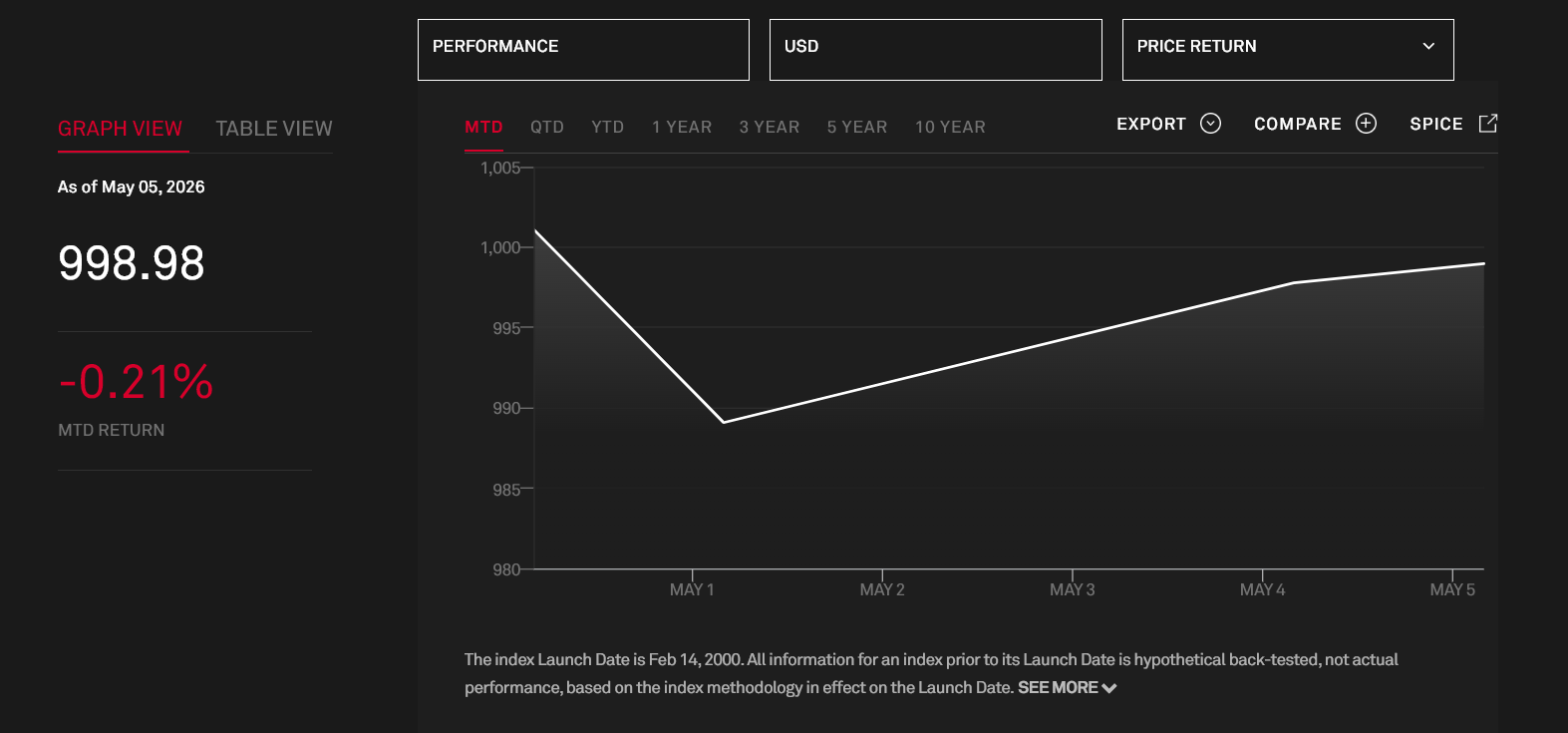
The US stock market pushed to a fresh record high on Wednesday as easing US-Iran tensions pulled oil prices lower and AMD’s blowout AI chip earnings reignited the semiconductor rally.
The S&P 500 climbed 1.14%, the Nasdaq Composite jumped 1.51%, and the Dow Jones Industrial Average added 1.10%. A solid ADP private payrolls print reinforced the soft-landing narrative, with broad participation supporting the gains.
1. Iran Deal Proximity Pulled Oil Lower
The White House is reportedly nearing a one-page memorandum of understanding with Iran that would halt fighting and open nuclear talks, with Iran expected to respond within 48 hours.

The proposed terms include Iran pausing uranium enrichment, accepting UN inspections, and curbing underground sites in exchange for the US easing sanctions and releasing frozen assets.
Both sides would loosen Strait of Hormuz restrictions, opening a 30-day negotiation window. Trump has paused escalation, including plans for naval escorts through the Strait.
The deal proximity compressed crude oil prices, with Brent easing as traders priced in supply normalization. The move lifted risk assets broadly while pressuring energy names.
Lower oil prices also reduce inflationary pressure on consumer spending, which supported the broader equity bid.
2. AMD AI Chip Earnings Triggered a Semiconductor Rally
Advanced Micro Devices (AMD) jumped 16.29% to a record high after beating Q1 estimates and raising guidance. The chipmaker reported adjusted EPS of $1.37 on $10.25 billion in revenue, with revenue growing 38% year over year on strong data-center AI demand.
Management raised its Q2 outlook, signaling confidence that the AI buildout has further to run.

The print validated the thesis that AI chip spending is broadening beyond Nvidia, lifting semiconductor peers across the board. Super Micro Computer (SMCI) jumped 15.25%, Nvidia (NVDA) rose 4.31%, Lam Research (LRCX) gained 7.17%, Micron Technology (MU) added 2.77%, and Intel (INTC) climbed 2.40%.
That cluster alone drove most of the S&P 500’s advance.
3. ADP Jobs Report Reinforces Soft-Landing Narrative
The April ADP private payrolls report showed 109,000 jobs added, beating the consensus expectation of 84,000. The print supports the soft-landing thesis at a time when Fed officials are weighing the inflation impact of recent oil price volatility.
A stronger-than-expected jobs number combined with cooling oil prices gives the Fed cover to maintain its measured policy stance, which markets read as constructive for growth and risk assets.
What Happened to Major US Indexes?
- S&P 500: +1.14% to 7,341.93 (fresh all-time high)
- Nasdaq Composite: +1.51% to 25,707.5
- Dow Jones Industrial Average: +1.10% to 49,839.3

Market breadth confirmed the move with advancers at 60.3% against decliners at 36.3%. New highs ran at 75.9% versus new lows at 24.1%, and the bull-bear ratio sat at 53% bull against 47% bear. The breadth profile is more constructive than recent sessions and signals broader participation in the AI-led rally.
On the S&P 500 daily chart, the index has rallied steadily since bottoming on March 31, with the move continuing through May 1 before a mild consolidation that resolved higher on the Iran deal hopes. The volume profile through the rally has remained steady, with healthy bar action suggesting proper buying pressure rather than a thin breakout.

The next resistance is 7,399 (0.236 Fibonacci). A daily close above opens the path to 7,540 (0.382 Fibonacci) and 7,654 (0.5 Fibonacci). The 0.618 Fibonacci at 7,767 represents roughly 5% upside potential.
On the downside, weakness emerges below 7,172, with 7,001 as the key psychological floor. A break below 7,001 would weaken the current breakout structure.
Which Sectors Are Holding Up?
Basic Materials led the tape at +3.68%, followed by Technology (+2.08%), Industrials (+1.93%), and Communication Services (+1.63%). Tech leadership reflected the AMD-driven AI chip rally, with semiconductor names absorbing the bulk of inflows.

Industrials gained on aerospace strength, with GE rising 6.04% as ceasefire-related volatility settled. Real Estate (+1.53%) and Consumer Cyclical (+1.41%) advanced as lower oil eased consumer cost pressure and improved discretionary spending visibility.
Which Sectors Are Falling?
Energy fell sharply at -3.74% as Brent crude eased on the Iran deal proximity.
Exxon Mobil (XOM) dropped 4.72% and Chevron (CVX) fell 4.58%, with the energy decline directly tied to the supply normalization narrative driving oil lower.

Utilities (-0.73%) underperformed as defensive positioning rotated out in favor of growth and AI-driven tech leadership.
What Are Investors Watching Next?
The 48-hour Iran response window is the immediate catalyst. A signed MOU would compress crude further and likely extend AI-led tech leadership. A stalled or rejected response would re-introduce premium into oil and pressure broader risk.
On the technical side, the S&P 500’s path through 7,399 will tell investors whether the AI-driven breakout has the volume to extend toward 7,654 and beyond.
The post Why Is The US Stock Market Up Today? appeared first on BeInCrypto.



MIAMI, FL — Kevin O’Leary says Wall Street’s tokenization boom is mostly hype until Congress finally gives the crypto industry the rules it has been waiting for.
“Tokenization will never be adopted by institutional indexers, ever. Neither will bitcoin, which is still a fringe asset to the big guys,” O’Leary said at Consensus in Miami, arguing that large investors still see most digital assets as uninvestable without clear federal regulation.
Speaking at Consensus Miami 2026, the investor and “Shark Tank” personality argued that regulatory uncertainty is still preventing large financial firms from fully embracing blockchain-based assets.
He said the turning point will come only when the U.S. establishes a formal legal framework for digital assets. “It has to become compliant globally within the [Securities and Exchange Commission] with an actual passage of a bill,” he said. “When that occurs, it’s going to change everything.”
The comments come as Wall Street firms increasingly experiment with tokenization — the process of turning assets like stocks, bonds or funds into blockchain-based digital tokens that can trade continuously and settle instantly. Advocates argue the technology could modernize financial infrastructure by reducing settlement times and lowering costs.
But O’Leary said institutions still need legal certainty before committing significant capital.
He pointed to stablecoins as an example of how regulation can accelerate adoption. Referring to recent U.S. legislative efforts, O’Leary said stablecoins were adopted “almost immediately” once policymakers passed the GENIUS Act.
“Instead of wasting three days, we’re transacting in minutes at a fraction of the cost with full compliance and transparency,” he said, describing cross-border payments using stablecoins.
O’Leary also argued that institutional investors have sharply narrowed their focus within crypto markets. “97% of the entire value of the entire market is simply BTC and ether (ETH),” he said, adding that many smaller tokens have been “slaughtered.”
He described a growing divide between speculative crypto assets and blockchain infrastructure with real enterprise adoption.
The biggest long-term opportunity remains finding a blockchain platform that large corporations standardize around for applications such as logistics, contract management or inventory systems, according to O’Leary.
“You show me the adoption onto the platform that becomes a moat,” he said.
The investor also tied the future of blockchain and AI to infrastructure more broadly, arguing that energy and data centers may ultimately prove more valuable than the digital assets themselves.
“Power is more valuable than bitcoin,” O’Leary said.

The Commodity Futures Trading Commission (CFTC) ordered New York trader Sidney Lebental to pay $200,000 for spoofing US Treasury futures, ending a case tied to roughly 50 deceptive trades placed on the Chicago Board of Trade in 2019.
Lebental neither admitted nor denied the findings under the settled order, which also prohibits him from trading commodity interests for one month and bars further violations of the Commodity Exchange Act’s spoofing prohibition.
Inside the Treasury Futures Scheme
The CFTC said Lebental engaged in spoofing on roughly 50 occasions between January and September 2019. He primarily targeted Ultra U.S. Treasury Bond futures, contracts tied to long-dated 25- to 30-year government debt.
He placed genuine orders for cash Treasuries or a futures contract on one side. He simultaneously entered larger spoof orders on the opposite side in a correlated futures contract.
Once his real orders filled, Lebental canceled the spoofs. The agency said he knew the instruments were correlated enough to push prices in his favor.
Sanctions and Broader History
Beyond the $200,000 civil penalty, the order imposes a 30-day trading ban on commodity interests and standard public-statement restrictions. Registered entities must deny him trading privileges during that window.
Lebental served as head of the linear rates desk at a global bank during the activity covered by the order. His prior employment included Bank of America Securities.
He has faced parallel scrutiny from the Financial Industry Regulatory Authority (FINRA). The agency previously cited him for hundreds of suspect Treasury orders before he settled in 2024.
Bank of America paid a $24 million FINRA fine in late 2023 over Treasury spoofing on its desk.
The CFTC action targets conduct already on regulators’ radar. Treasury market participants will watch for further enforcement tied to the same desk and to similar correlated-instrument tactics.
The post CFTC Fines Trader Sidney Lebental $200,000 for Treasury Futures Spoofing appeared first on BeInCrypto.
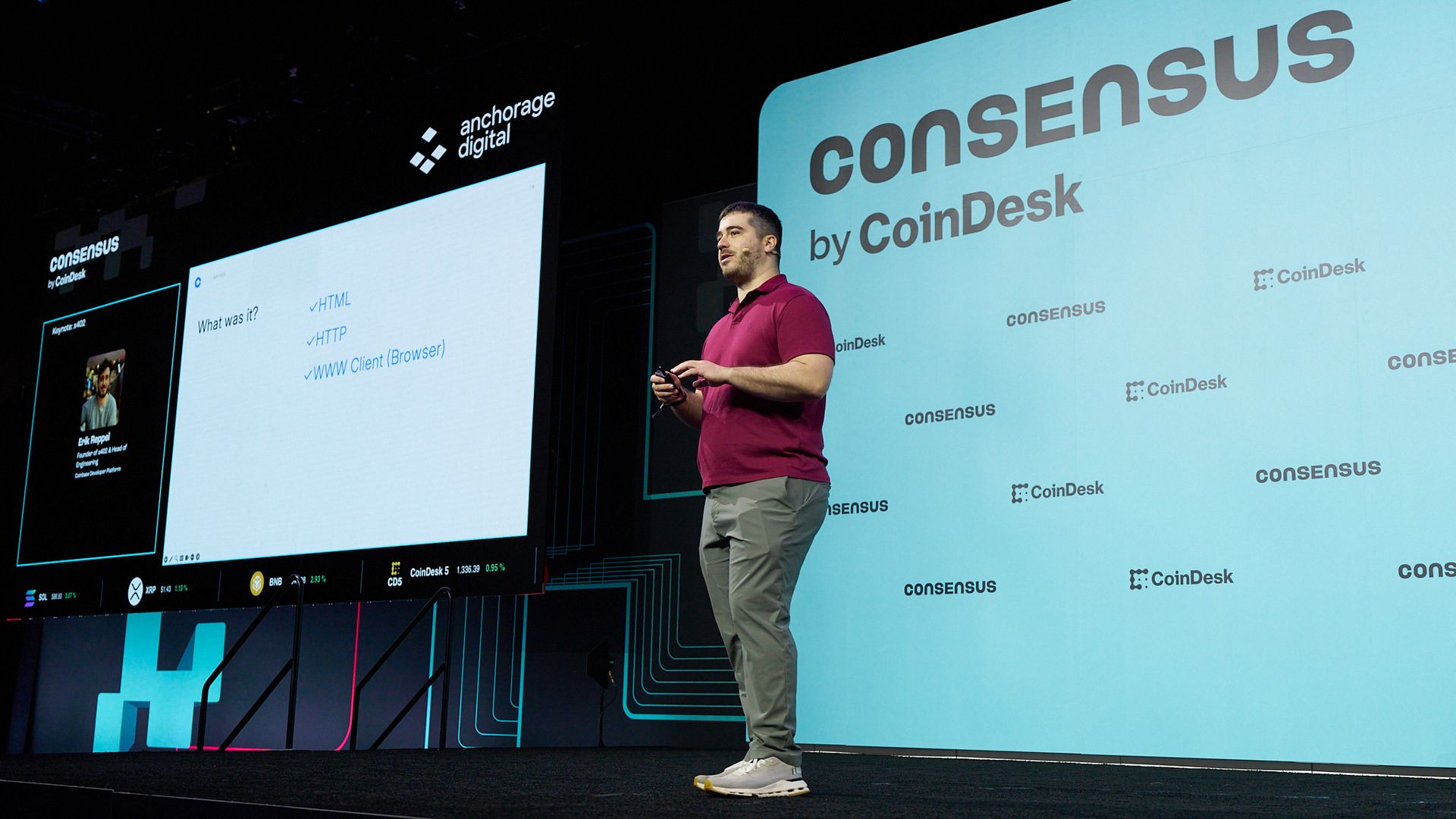
Coinbase engineering head Erik Reppel offered a glimpse into how artificial intelligence could reshape the economics of the internet, arguing that AI agents may force a shift away from the web’s ad-driven business model.
Speaking onstage at Consensus Miami 2026, Reppel, the founder of the x402 payments protocol and head of engineering at Coinbase Developer Platform, said the internet was originally built around humans interacting with websites, not software interacting with software.
“The internet was designed for humans to use,” Reppel said. “We now live in a world where both humans and computers operate and computers operate computers.”
Today’s web economy depends heavily on advertising revenue generated when humans visit websites and view ads, according to Reppel. But AI agents, he said, bypass that system entirely.
“Agents don’t see those ads. They just ignore those ads completely,” he said.
That dynamic could push the internet toward new monetization models built around native digital payments, particularly stablecoin-powered micropayments.
“If a human visits a website, show them an ad. If an agent visits a website, charge them five cents,” Reppel said.
He framed x402, an open payments protocol built around the long-unused HTTP 402 “Payment Required” status code, as infrastructure for that future. The protocol is designed to let AI agents make automatic payments for APIs, content and digital services using crypto rails.
Reppel said the rise of autonomous AI systems, or what he called the “agentic economy,” could create a massive new market for internet-native payments. He cited estimates projecting the sector could grow to between $3 trillion and $5 trillion within four years.
The comments reflect a broader effort within the crypto industry to position stablecoins and blockchain-based payments as foundational infrastructure for AI-driven commerce.
“Agents really are the browser of the future,” he said.
Read more: AI agents are breaking web economics, but Cloudflare says x402 can help
Crypto World
Crypto bill won’t move without a ban on officials’ industry ties, says U.S. Senator Gillibrand
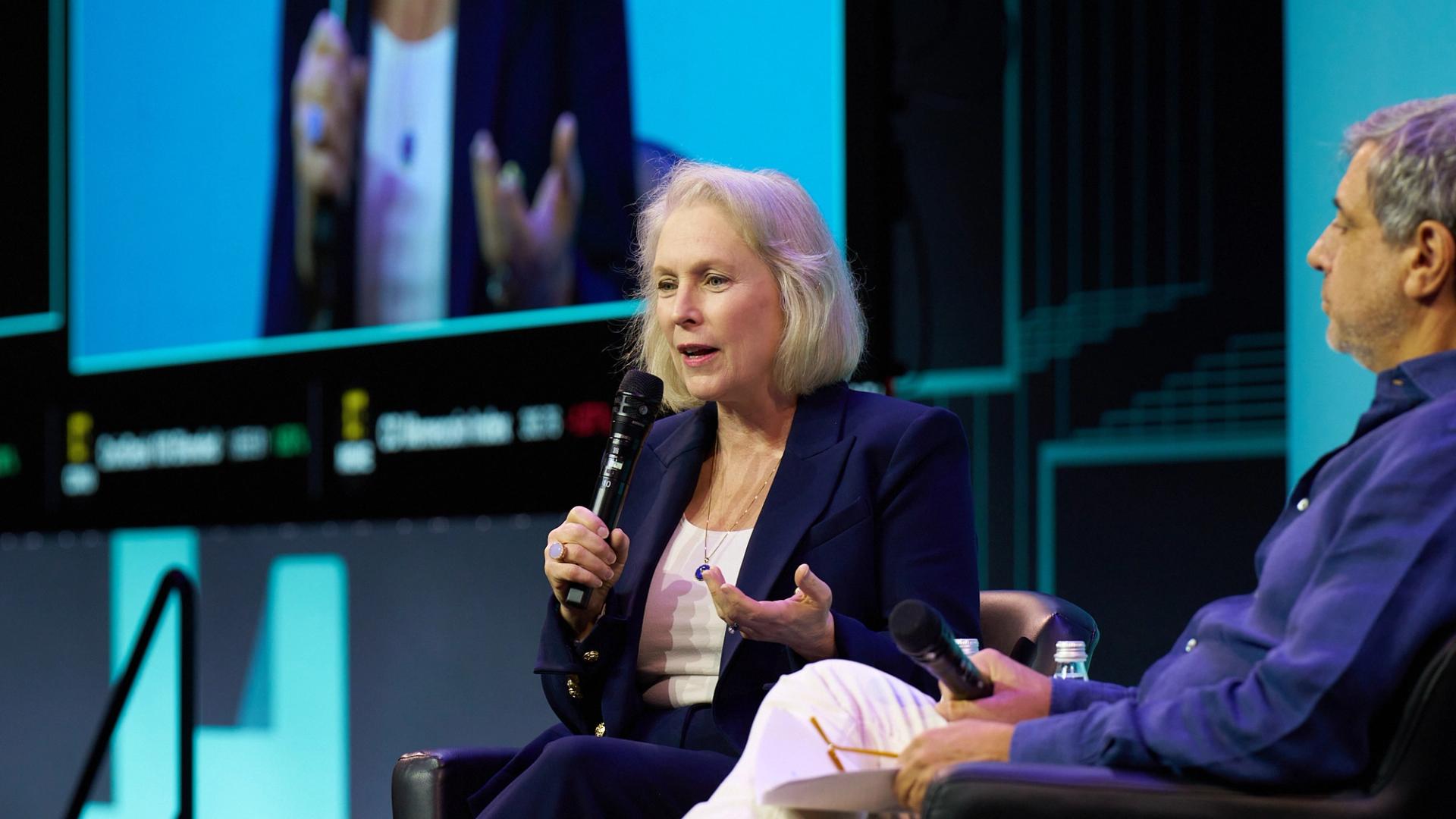
MIAMI — The long-awaited legislation to establish U.S. regulations for the crypto markets won’t survive the Senate if it doesn’t include a contentious ethics provision that bans senior government officials from personal interests in the industry, said U.S. Senator Kirsten Gillibrand.
“There will be no one voting for this bill if we don’t have an ethics provision,” Gillibrand, a New York Democrat who has been engaged in bipartisan crypto legislation for years, said Wednesday at Consensus Miami 2026. The inclusion of that section — aimed largely at the business interests of President Donald Trump — remains one of the few major sticking points on the bill negotiation, which is coming to a head this month.
“We cannot allow members of Congress, senior administration officials, presidents or vice presidents to get rich off of these industries because of their insider status,” Gillibrand said. “It is the worst form of pay-for-play; it is the worst form of campaign finance violations; it’s a violation of the Constitution.”
The Digital Asset Market Clarity Act — the crypto industry’s top policy aim in Washington — is awaiting a necessary Senate Banking Committee hearing in order to advance to the Senate floor for a vote.
Gillibrand said the ethics negotiation needs to be resolved in the next week to get a bipartisan approval in the hearing, which is expected as soon as next week. She said the negotiators are also working on consumer protection and illicit finance elements. So far on the ethics provision, White House officials have denied that Trump’s business interests represent a conflict, and they’ve said they won’t tolerate a bill that targets him.
“We cannot let greed and corruption in Washington tear this industry down, and without that provision, that’s exactly what will happen,” Gillibrand argued.
The window for legislative action is narrowing considerably, and the needed Senate bandwidth to move the legislation will be at a premium, with about 10 weeks of Senate calendar time remaining before Congress pivots to the midterm elections.
Gillibrand predicted a final vote could happen in the first week of August, “if we’re lucky.” That would mark the last chance before Congress’ summer break.
However, in another Consensus panel, Summer Mersinger, the CEO of the Blockchain Association who served on the Commodity Futures Trading Commission, suggested a legislative window may never permanently close.
“There’s a window of opportunity, and that’s always important that you, you act when you find that window of opportunity,” she said. “But I always say that that doesn’t mean the window’s not going to open again.”
Read More: Ripple CEO Brad Garlinghouse says Clarity better than chaos as Senate hits key moment


Votes in favor of a redemption proposal that would let GNO holders claim roughly $170 per token from a $223M treasury have retaken the lead on Snapshot.
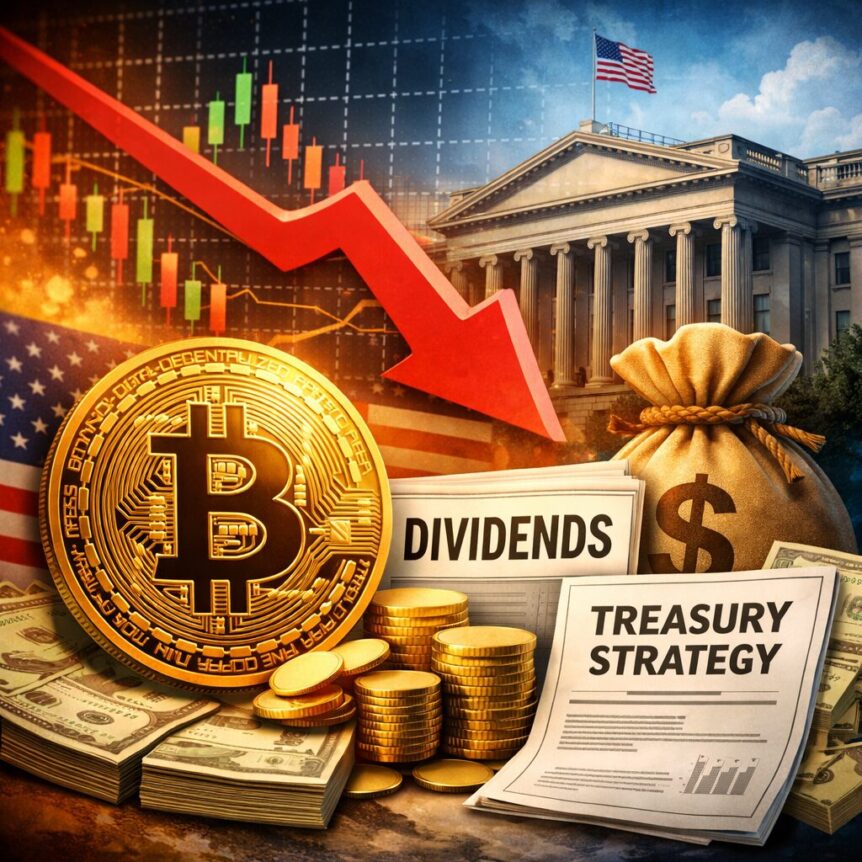
Strategy Bitcoin Dividend Sales Signal Treasury Strategy Shift
- Strategy Bitcoin dividend sales reshape how the company manages treasury obligations through 2026.
- Michael Saylor signaled flexibility as Strategy weighs bitcoin sales to support STRC dividends.
- Investors now track Strategy Bitcoin dividend sales as market expectations shift after earnings.
STRC Growth Changes Capital Management Options
Strategy launched STRC as part of its broader digital credit framework. The preferred stock has already raised $8.5 billion since launch. Company executives said this capital structure supports long-term bitcoin accumulation while creating new income obligations.
Michael Saylor noted that bitcoin would need to appreciate by 2.3% annually for current holdings to cover dividend obligations indefinitely without requiring sales of common stock. This benchmark now shapes how analysts assess Strategy Bitcoin dividend sales.
Saylor also said the company could choose to sell bitcoin directly if market conditions support that decision. He added that limited sales could help demonstrate operational flexibility. This statement moved Strategy Bitcoin dividend sales from theory to a practical possibility.
Shift From Never Sell to Strategic Flexibility
For years, Strategy maintained a clear message that it would not sell bitcoin. That position helped define investor expectations around the company’s treasury model. The latest comments suggest management now prioritizes balance sheet efficiency over fixed public commitments.
Chief Executive Officer Phong Le reinforced this approach. He stated that Strategy intends to remain a net bitcoin accumulator while using selective sales when they benefit the company. This clarification placed Strategy Bitcoin dividend sales within a broader financial strategy rather than a reversal of conviction.
The company currently holds 818,334 bitcoin, equal to about 3.9% of total supply. Its holdings remain among the largest corporate bitcoin reserves globally.
What Comes Next
Prediction markets reacted quickly after the earnings call. Expectations for Strategy Bitcoin dividend sales before the end of 2026 rose sharply within 24 hours of Saylor’s remarks.
Strategy also reported a $14.5 billion operating loss for the first quarter, largely due to bitcoin mark-to-market adjustments. Despite that result, the company increased bitcoin-per-share by 18% year over year.
Investors now watch upcoming shareholder decisions and future treasury updates closely. Any action involving Strategy Bitcoin dividend sales could influence broader sentiment around corporate bitcoin treasury models.
NOW: MSTR CEO Phong Le said at least five times during today’s earnings call that the company is open to selling Bitcoin if it benefits the business, such as for tax advantages or to increase Bitcoin per share. pic.twitter.com/ZsTeuFTkRK
— Bitcoin News (@BitcoinNewsCom) May 5, 2026

KelpDAO has publicly disputed claims made by LayerZero Labs regarding the April 18, 2026, exploit. In the latest post on X, it argued that the incident stemmed from failures within LayerZero’s infrastructure rather than any misconfiguration on its own platform.
According to KelpDAO, attackers exploited LayerZero’s systems, resulting in the loss of more than $300 million across multiple DeFi protocols. The team further revealed that two additional forged transactions worth over $100 million were successfully signed and processed by LayerZero’s DVN before being halted after Kelp intervened and paused its contracts.
KelpDAO Counters LayerZero Narrative
Kelp claimed that this early response prevented further financial damage, even though the underlying bridging infrastructure remained active for some time after the issue had been detected and reported.
At the center of the dispute is LayerZero’s assertion that the exploit resulted from a configuration issue specific to KelpDAO. Kelp rejected this explanation, while claiming that the configuration in question was widely used across the LayerZero ecosystem and aligned with its official documentation.
Data cited by Kelp indicates that a significant portion of LayerZero applications relied on similar DVN setups, including many operating under a 1-1 configuration involving LayerZero’s own DVN. This setup was neither unique nor experimental but part of standard deployment practices followed by numerous protocols.
Kelp also explained that LayerZero’s DVN is a core component of its ecosystem and is included in default configurations provided to developers. The company pointed out that LayerZero’s documentation and quickstart templates guide builders toward these default setups, often without requiring additional DVNs. Kelp stated that it followed these guidelines and maintained regular communication with the LayerZero team since integrating the infrastructure in early 2024. During this period, Kelp added that its configuration choices were reviewed and approved, and there was no indication that the setup posed a security risk.
Reports cited by Kelp describe compromised off-chain systems responsible for monitoring blockchain activity, as well as fraudulent attestations triggered through the DVN. Some researchers have detailed the event as a broader infrastructure breach rather than a limited RPC issue, which, again, points to compromised nodes and weaknesses within LayerZero’s trust boundary.
Meanwhile, LayerZero Labs admitted in its postmortem that attackers accessed RPC endpoints used by its DVN and took control of multiple nodes before carrying out what it called an RPC spoofing attack. However, Kelp and independent analysts believe that this description downplays the issue, as fake messages were still approved despite safeguards.
Transition to Chainlink
KelpDAO implemented immediate measures to secure its systems in response. This included pausing contracts and conducting a full review of its bridging infrastructure. As part of its long-term strategy, the protocol has announced plans to migrate away from LayerZero’s OFT standard and adopt the Cross-Chain Interoperability Protocol (CCIP) developed by Chainlink.
This transition will move rsETH to Chainlink’s Cross-Chain Token standard. The protocol revealed that the aim of this change is to reduce reliance on single points of failure while strengthening cross-chain security going forward.
The post After Disputing LayerZero Claims, KelpDAO Prepares Chainlink CCIP Migration appeared first on CryptoPotato.
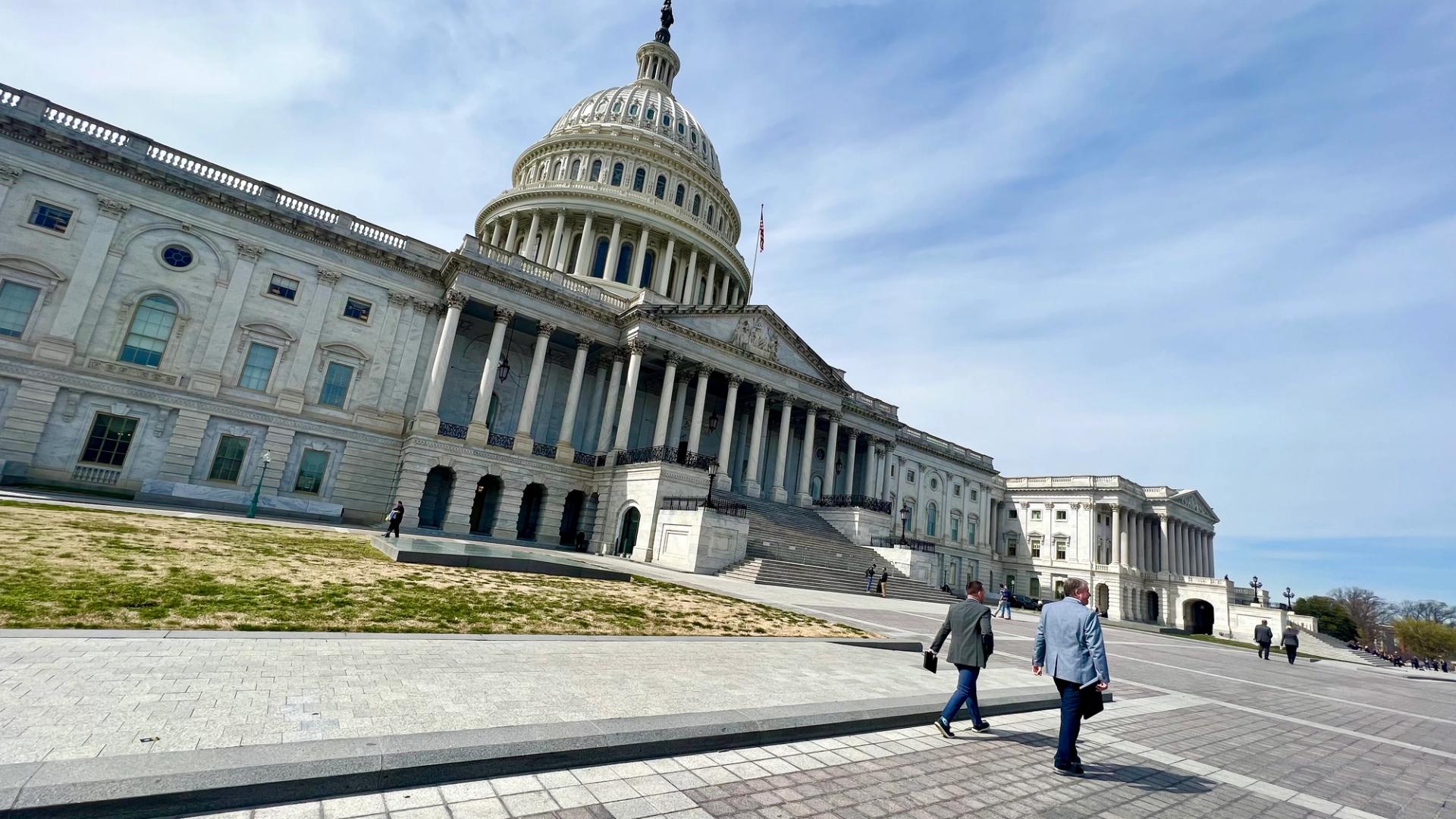
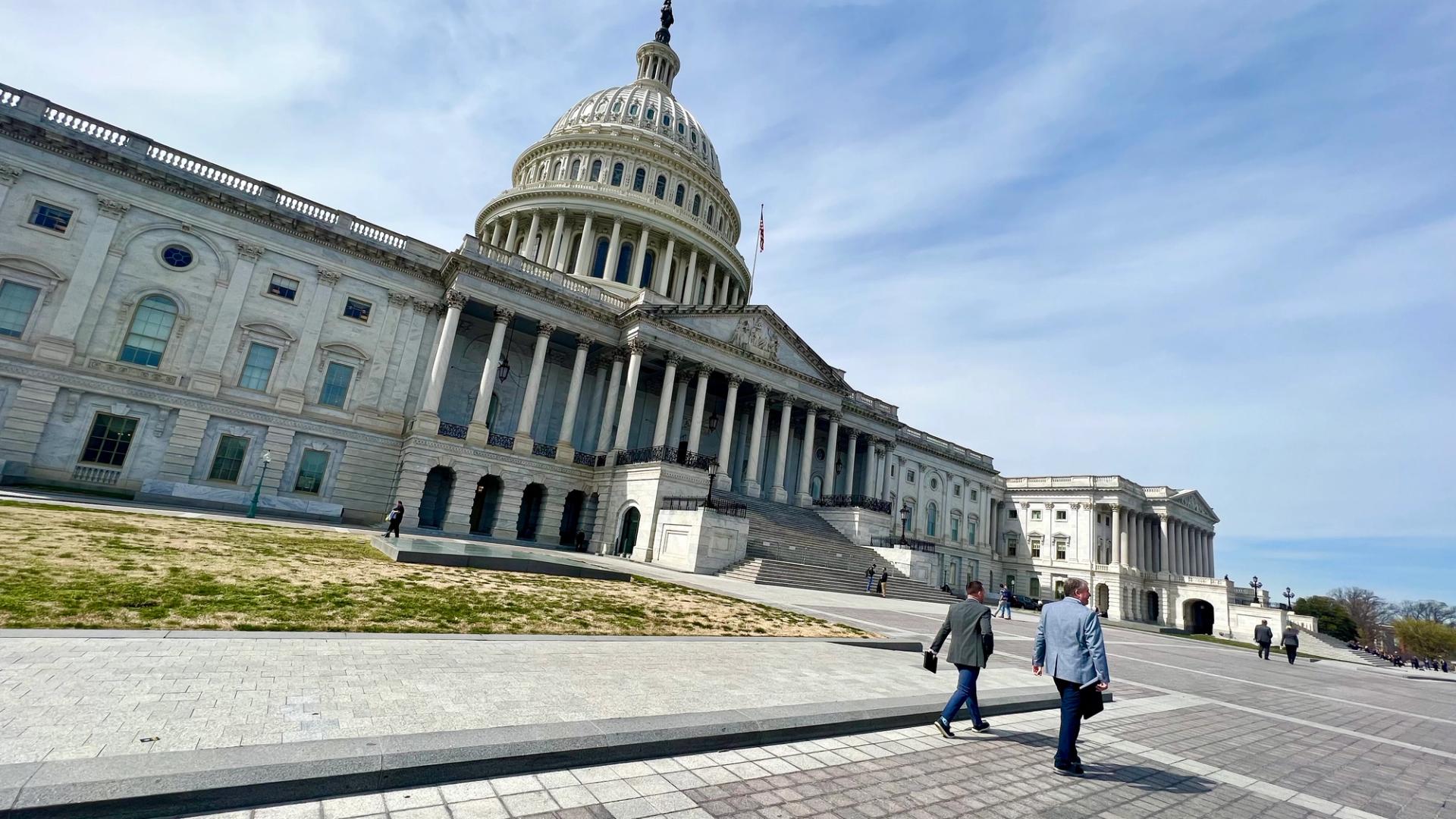
Nine months ago, Congress passed the GENIUS Act, establishing the first federal regulatory framework for payment stablecoins. The results have been demonstrative: the stablecoin market grew 49% in 2025, reaching $306 billion by year’s end. Circle, Ripple and other digital asset companies received provisional national banking charters from the OCC. Institutional capital that had been sitting on the sidelines moved into these markets. Recruiters, who a year earlier described an industry in which “every protocol foundation was bailing to the Caymans [tradingview.com],” now report that 90% of senior crypto leadership searches are U.S.-based. Clear rules produced exactly what their advocates said they would: investment, institutional engagement and onshoring of activity that had been migrating elsewhere.
That outcome sharpens the task before the Senate Banking Committee: applying a clear framework to the broader digital asset market. The crypto market is currently worth $3.2 trillion. Nearly 70 million Americans, one in five, own crypto. This is a significant and growing market.
The GENIUS Act addressed payment stablecoins. The CLARITY Act sets the rules for everything else: registration and oversight of trading venues and intermediaries, jurisdictional lines between the SEC and CFTC, disclosure and compliance across the token lifecycle, and the protection of non-custodial technologies under U.S. law.
These are the foundational rules that determine whether the next generation of financial infrastructure gets built here in America – or elsewhere. Within the last 10 years, the number of developers in the U.S. dropped by 51%. Nearly 90% of global CEX volume is offshore. America needs foundational rules because without them, the same dynamic that preceded GENIUS would apply to the rest of the market. Trading activity, protocol development and institutional engagement in digital asset markets will continue to flow toward jurisdictions that have already provided the regulatory clarity Congress has yet to deliver. Other jurisdictions, including the EU, Singapore, and the UAE, have already enacted market structure regimes and are providing the regulatory clarity yet to be delivered.
The Senate Banking Committee, alongside offices on both sides of the aisle, has spent the better part of two years building toward this moment. Senators Tillis and Alsobrooks deserve credit for resolving the stablecoin yield question in a bipartisan manner, the single most contested provision in months of negotiations. The compromise substantially expands the scope of the prohibition framework in GENIUS across digital asset market participants. The digital assets industry made significant concessions. The resulting approach is restrictive in several respects – ultimately, the broader and most critical objective remains advancing comprehensive market structure legislation, and this agreement moves that process forward.
Nothing is perfect in this process, and legislating is complex, but it’s a result reached through the kind of sustained bipartisan engagement that serious legislation requires. Chairman Scott has managed a difficult process across deep disagreements between the banking industry and the digital asset sector, and the Committee is closer to a durable outcome than it has been at any point in that process.
The window to act is narrow. The legislative calendar leaves limited time to move a bill of this scope through committee, floor consideration and final passage. A markup in the near term is necessary to keep this effort on track and ensure there is a viable path to the President’s desk before year-end.
The CLARITY Act passed the House with 294 votes. That breadth of bipartisan support reflects genuine congressional judgment that clear rules for digital asset markets serve the public interest. The Banking Committee should schedule a markup as soon as possible. The case for moving forward has never been stronger.
The United States should finally establish the clear, durable, fit-for-purpose framework this market – and this country – needs. America has long led the world because it has embraced innovation, markets and the rule of law. Now is the time to do so again.


Retail users can now post crypto as collateral and trade with up to 10x leverage on Kraken Pro.
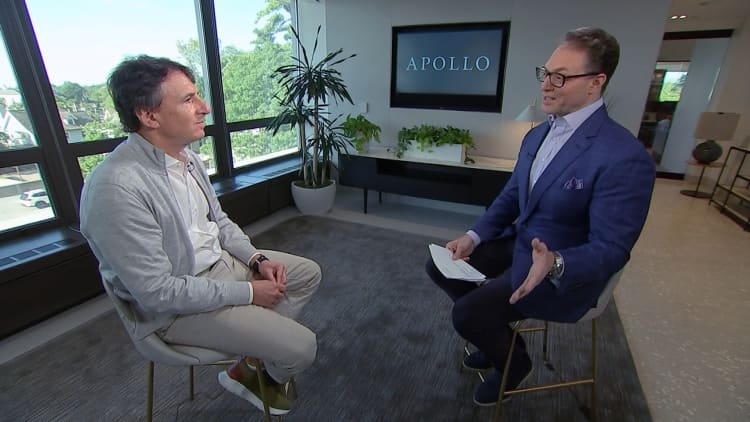
Marc Rowan, chief executive officer of Apollo Global Management LLC, speaks during an interview on an episode of Bloomberg Wealth with David Rubenstein in New York, U.S., on Tuesday, April 5, 2022. Jeenah Moon/Bloomberg via Getty Images
Jeenah Moon | Bloomberg | Getty Images
Apollo Global Management CEO Marc Rowan on Wednesday warned investors that he was preparing his giant asset management firm for a potential market downturn and sharply criticized what he called the “egregious” practices of some rival insurers.
The current solid economic backdrop — which helped Apollo report a banner quarter, in which the firm reached $1 trillion in assets under management and record fee-related earnings — is masking a growing risk of what he called “out of the box” shocks.
“Everything we see in front of us is actually quite strong,” Rowan said. But there is “a much greater chance, in our opinion, of out-of-sideline results.”
Rowan, who co-founded Apollo in 1990 and oversaw its transformation into an alternative asset and insurance giant, said he is now more concerned about outside factors derailing the economy than at any time in his four decades on Wall Street.
His comments, which come as the U.S. stock market is trading near record highs, add to concerns voiced by financial executives including JPMorgan Chase CEO Jamie Dimon.
Rowan put the odds of an exogenous shock at somewhere between 30% and 35%, far higher than the usual level of risk, he said.
A convergence of forces could destabilize markets, according to Rowan, including a “total geopolitical reset,” policies that could prove inflationary by restricting labor and trade, and the sweeping artificial intelligence cycle reshaping jobs and economic growth.
“Almost everything we’re doing, whether intentional or not, has the potential to be inflationary,” Rowan said, an apparent reference to President Donald Trump’s tariff and U.S. immigration policies.
“Restricting the supply of goods, restricting the supply of labor and the free movement of goods and labor — maybe for good and valid reasons that need to be done — are all inflationary in the short term, even if we are not seeing signs of it,” he said.
On AI, Rowan predicted socioeconomic upheaval: “Almost every job will be enhanced or replaced. We’re going to see a complete flip — blue-collar ascendancy and white-collar stress.”
The balance sheets of companies and consumers remain strong, while governments’ finances are strained, he added.
Contagion fears
While Apollo is experiencing robust results today, Rowan said, he is preparing for choppier times ahead.
The firm has moved up the credit quality of its fixed income investments, cut exposure to riskier sectors like software, and stockpiled about $40 billion of cash in its insurance business.
“It means we’re investing with an eye toward protecting our capital and making sure that we are here to ride through cycles if there are corrections, which we quite frankly expect,” Rowan said.
But Rowan — who transformed Apollo by expanding into insurance in 2009 through Athene, a seller of annuities and retirement products — reserved his sharpest remarks for other insurers. The insurance business provides Apollo with a large, stable pool of capital to invest, akin to the insurance “float” model popularized by Berkshire Hathaway, and is now central to its strategy.
“Not everyone in our industry is doing what they should do. Not everyone runs their business the way we have run our business,” Rowan said. “We do worry about contagion.”
Contagion would mean that stress spreads through the industry, raising the risk that regulators or central banks have to intervene to protect insurance and retirement customers.
Rowan did not name specific firms that he thought were acting badly.
But he suggested some insurers are relying on what he called “egregious” practices — including offshore Cayman structures, complex collateralized loans and aggressive credit assumptions — that could make some balance sheets look stronger than they are.
“What we can do is be transparent, be committed to higher ratings, build our capital and run the business for the long term,” Rowan said.

Brits from hantavirus cruise ship enter UK and told to self-isolate
US stocks today: S&P 500 and Nasdaq notch records; AMD results spark AI stock rally

Kevin O’Leary says Wall Street’s tokenization boom is all talk without crypto rules

Manchester United reach agreement with Casemiro over contract clause amid transfer speculation

US brings back mandatory military draft registration

Steven Gerrard disagrees with Gary Neville over ‘shock’ Chelsea and Arsenal claim | Football


-

 NewsBeat3 days ago
Channel 5 – All Creatures Great and Small series 7 new post
-

 Entertainment7 days ago
Insider Claims Reason Behind Key & Peele Split
-
 Tech5 days ago
Trump’s 25% EU auto tariff breaches Turnberry Agreement that also covers semiconductors and digital trade
-
 Sports5 days ago
Paul Scholes issues Marcus Rashford reality check as agreement emerges over Man United star
-

 Entertainment5 days ago
Met Gala 2026 Rumored Guest List Is Turning Heads
-

 Entertainment7 days ago
Celebrities Who Are Attending the 2026 Met Gala Event
-

 Business6 days ago
Strait of Hormuz Blockade Persists Amid US-Iran Standoff, Sending Oil Prices Soaring
-
Entertainment5 days ago
New on Prime Video in May 2026 — Full List of Movies and Shows
-

 Sports5 days ago
Cavaliers vs. Raptors Game 6 live score, updates, highlights from 2026 NBA playoffs first-round series
-
 Sports5 days ago
David Benavidez responds to team Canelo saying the fight will never happen
-
Business7 days ago
Strait of Hormuz Remains Heavily Restricted on April 29 Amid Iran Conflict
-

 Entertainment5 days ago
Kylie Jenner Hit With Second Lawsuit From Ex-Housekeeper
-
 Sports5 days ago
IPL 2026: ‘Love you darling’- Hardik Pandya’s reaction to MS Dhoni steals the show |Watch | Cricket News
-

 Entertainment5 days ago
Young and the Restless Next Week: Cane Arrested & Matt’s Deadly New Scheme!
-

 Sports7 days ago
Saudi Arabia set to withdraw LIV Golf funding after 2026 season, per reports
-

 Tech7 days ago
Mark Zuckerberg Says Meta Is Working On AI Agents For Personal And Business Use
-

 Sports5 days ago
Plane crash in Wimberley, Texas kills 5 pickleball players at tournament
-

 Tech5 days ago
Meta ends Sama contract after Kenyan workers report seeing intimate footage from Ray-Ban smart glasses users
-

 Sports7 days ago
Arsenal, Atletico Madrid share draw after penalty drama in Champions League semi-final
-
 Sports7 days ago
Manchester United 2025/26 squad review – keep, sell, loan, release
You must be logged in to post a comment Login