
Crypto World
Why One Top Economist Says the Fed’s Inflation Fight Can’t Be Won With Rate Hikes

Wells Fargo chief economist Tom Porcelli is pushing back against market bets on a Federal Reserve (Fed) rate hike, saying he expects the central bank to hold rates through 2026.
His view clashes with a hawkish turn across Wall Street, where several major banks now forecast higher rates. Traders have also sharply lifted their expectations for rate hikes since early summer.
Wall Street Economist Breaks From Market on Rising Fed Hike Bets
The Fed has held its benchmark rate at 3.50% to 3.75% all year. Yet, pricing for tighter policy has climbed.
On Polymarket, the odds of a 2026 hike sit near 55%. They peaked around 78% in late July before easing this month.
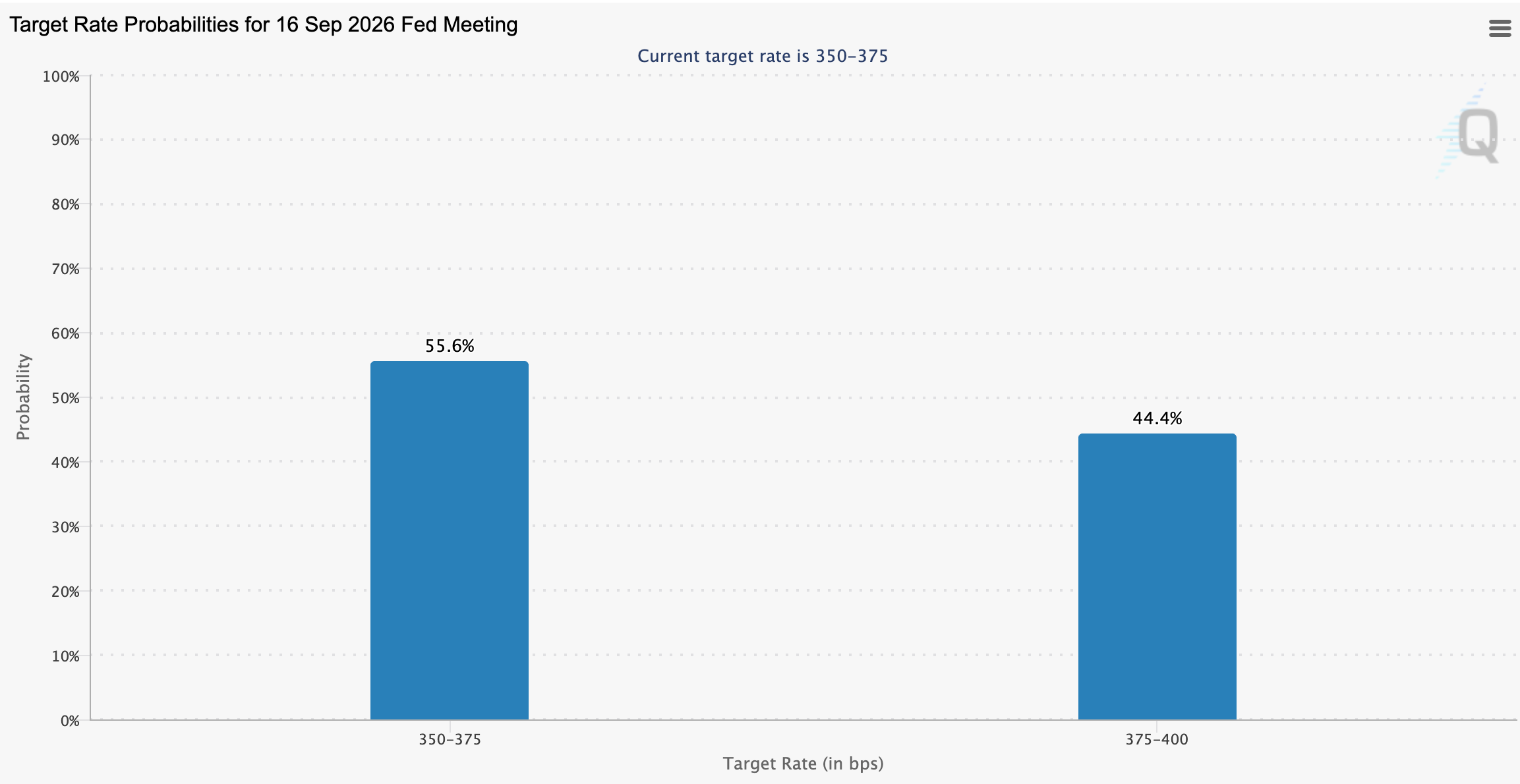
CME FedWatch data tell a similar story. A hold leads the September 16 meeting at 55.6%. However, the odds of a hike rise to 59.2% for October and 77.1% by December.
Follow us on X to get the latest news as it happens

The Street has turned hawkish, too. Bank of America (BofA) forecasts three hikes totalling 75 basis points. In addition, Pacific Investment Management Company (PIMCO) has warned that cuts would prove counterproductive.
Kansas City Fed’s Jeffrey Schmid has also argued for higher rates. Three policymakers dissented at the July meeting in favor of an increase.
The Supply Shock Argument
Porcelli disputes the case for action. In an interview with CNBC, he said current inflation stems from tariffs and energy, both of which are supply shocks the Fed cannot address.
Raising rates would hit growth without curbing those prices, he argued. In his view,
“Raising rates is not a costless endeavor.”
He pointed to cooling core data. Core Consumer Price Index (CPI) inflation runs near 2.5%, and about 2.2% on a three-month annualized basis. That pace sits close to the Fed’s 2% goal.
Porcelli also noted that core CPI and core Personal Consumption Expenditures (PCE) have diverged.
“In terms of the divergence between CPI and PCE is because the weights are different,” he said.
The September 16 Federal Open Market Committee (FOMC) decision now looms as the next major test. It will show whether Porcelli’s contrarian call or the market’s hawkish drift proves correct.
Subscribe to our YouTube channel to watch leaders and journalists provide expert insights
The post Why One Top Economist Says the Fed’s Inflation Fight Can’t Be Won With Rate Hikes appeared first on BeInCrypto.

Demand for US spot Bitcoin exchange-traded funds (ETFs) rebounded sharply this week, signaling renewed investor appetite after months of uneven flows, even as uncertainty persists around digital asset regulation and the security of crypto self-custody.
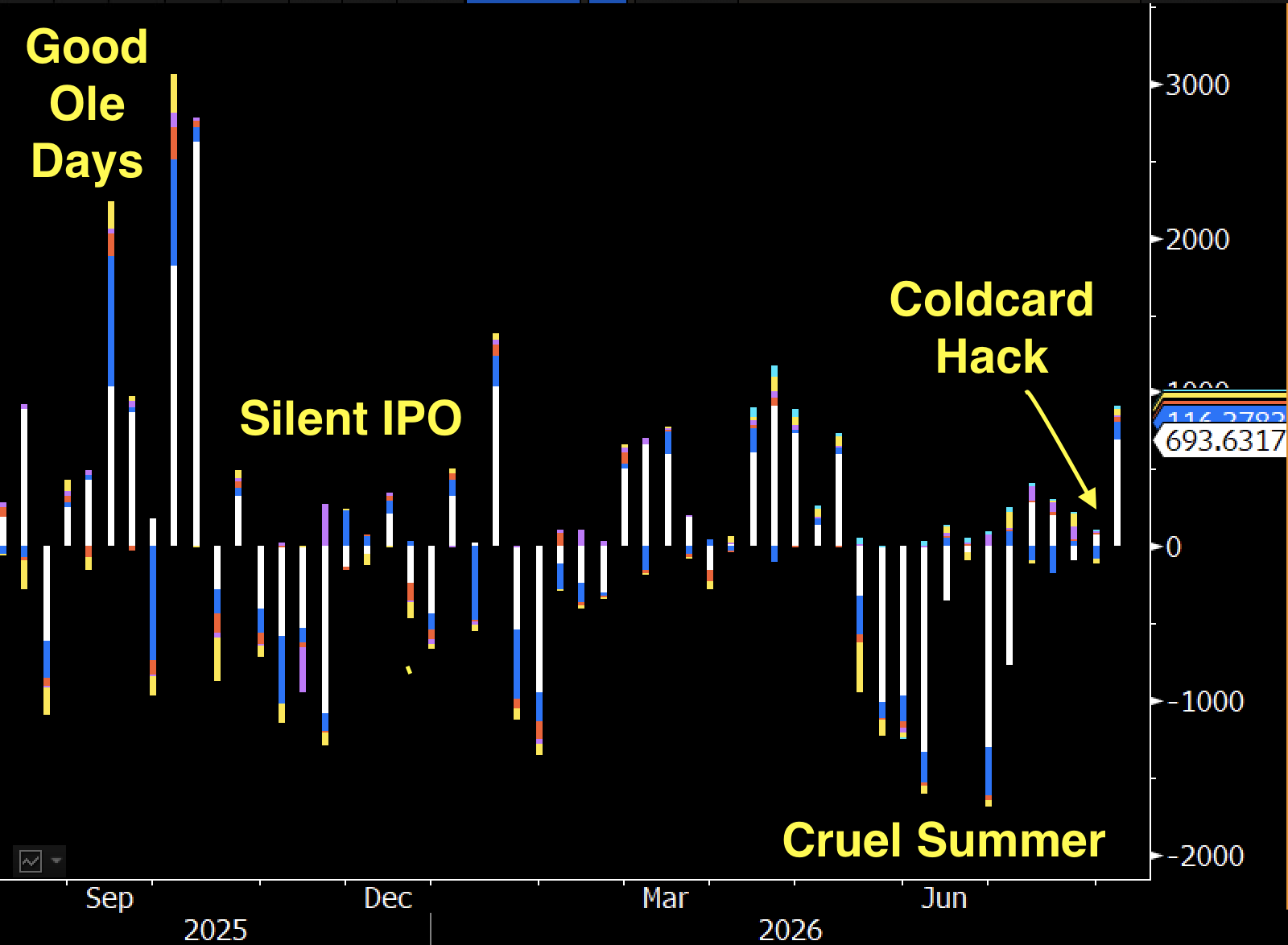
On Saturday, Bloomberg ETF analyst Eric Balchunas said the spot funds attracted roughly $1 billion in net inflows for the week, their strongest showing since April and third-best week since last October — a period he referred to as Bitcoin’s “silent IPO.”
Source: Eric Balchunas
The term was popularized by investor Jordi Visser in November to describe what he viewed as a changing of the guard among Bitcoin holders. Under the theory, early investors were selling into growing demand from ETFs and other institutional buyers, creating enough supply to keep Bitcoin subdued despite substantial new capital entering the market.
That distribution coincided with a deterioration in ETF flows compared with earlier periods of stronger demand, making this week’s rebound particularly notable.
Related: Bitcoin miners’ AI pivot loses Wall Street’s wow factor
Coldcard hack puts self-custody in focus
The rebound has also followed a major security incident involving Coldcard, a popular Bitcoin hardware wallet developed by Coinkite, that resulted in roughly $116 million worth of Bitcoin being stolen. The exploit was linked to a flaw in how affected devices generated wallet keys, allowing attackers to compromise funds held in wallets created using vulnerable firmware.
On Friday, Balchunas suggested the incident could ultimately strengthen the appeal of spot Bitcoin ETFs among investors who are uncomfortable with the technical and security responsibilities associated with self-custody. He pointed to the surge in ETF inflows following the hack as a potential, though unproven, link.
While acknowledging that correlation does not imply causation, Balchunas said, “long-term I can’t imagine there aren’t some who migrate over,” referring to investors potentially shifting from cold storage to ETFs.
Magazine: Do the Coldcard attacks mean all hardware wallets are now insecure?
Demand for US spot Bitcoin exchange-traded funds (ETFs) rebounded sharply this week, signaling renewed investor appetite after months of uneven flows, even as uncertainty persists around digital asset regulation and the security of crypto self-custody.
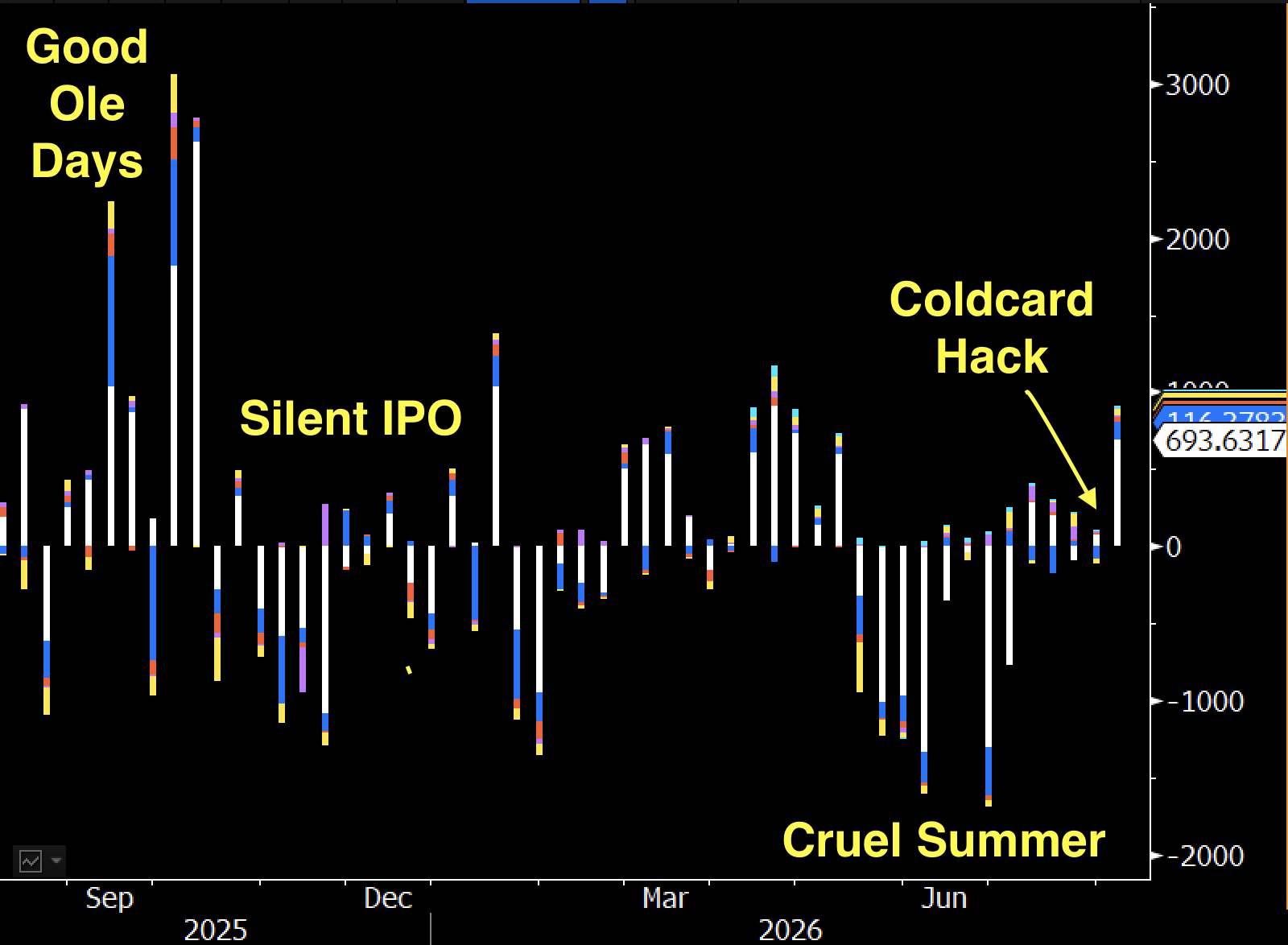
On Saturday, Bloomberg ETF analyst Eric Balchunas said the spot funds attracted roughly $1 billion in net inflows for the week, their strongest showing since April and third-best week since last October — a period he referred to as Bitcoin’s “silent IPO.”
Source: Eric Balchunas
The term was popularized by investor Jordi Visser in November to describe what he viewed as a changing of the guard among Bitcoin holders. Under the theory, early investors were selling into growing demand from ETFs and other institutional buyers, creating enough supply to keep Bitcoin subdued despite substantial new capital entering the market.
That distribution coincided with a deterioration in ETF flows compared with earlier periods of stronger demand, making this week’s rebound particularly notable.
Related: Bitcoin miners’ AI pivot loses Wall Street’s wow factor
Coldcard hack puts self-custody in focus
The rebound has also followed a major security incident involving Coldcard, a popular Bitcoin hardware wallet developed by Coinkite, that resulted in roughly $116 million worth of Bitcoin being stolen. The exploit was linked to a flaw in how affected devices generated wallet keys, allowing attackers to compromise funds held in wallets created using vulnerable firmware.
On Friday, Balchunas suggested the incident could ultimately strengthen the appeal of spot Bitcoin ETFs among investors who are uncomfortable with the technical and security responsibilities associated with self-custody. He pointed to the surge in ETF inflows following the hack as a potential, though unproven, link.
While acknowledging that correlation does not imply causation, Balchunas said, “long-term I can’t imagine there aren’t some who migrate over,” referring to investors potentially shifting from cold storage to ETFs.
Magazine: Do the Coldcard attacks mean all hardware wallets are now insecure?
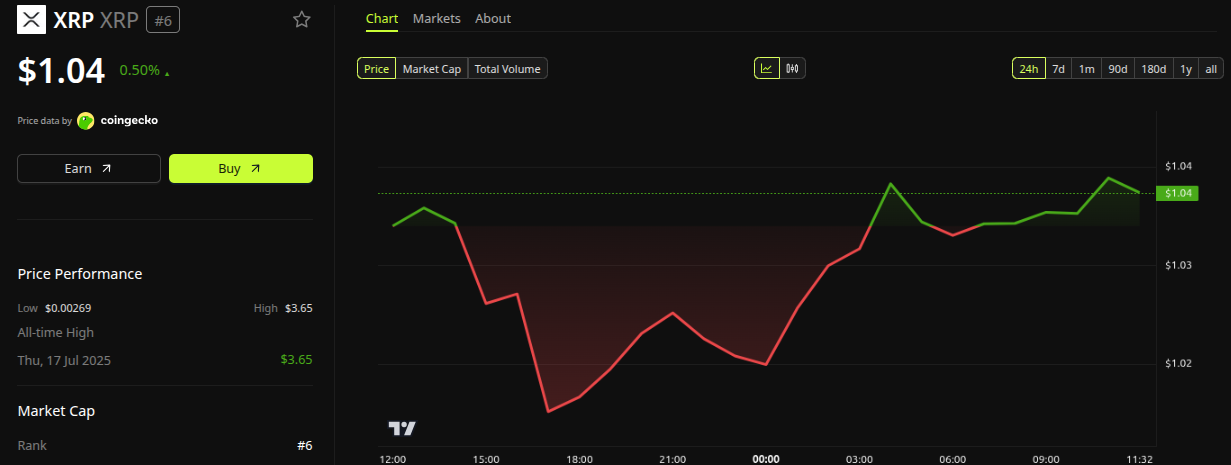
XRP is defending the $1 level after dipping to $1.01, recovering toward $1.04 as the CLARITY Act sinks deeper into legislative uncertainty ahead of a September vote.
The psychological floor held, though the token remains the weakest performer among major cryptocurrencies this week.

Why the CLARITY Act Keeps Weighing on XRP
Cloture is the Senate procedure that ends debate on a bill, typically requiring 60 votes to advance legislation toward a final decision.
Majority Leader John Thune still intends to file cloture on the motion to proceed before lawmakers leave for the August recess. That move carries real significance. Filing would position the CLARITY Act for a procedural vote when the Senate returns, signaling Republican leadership still prioritizes the bill.
Follow us on X to get the latest news as it happens.
The votes are not there yet, however. Republicans lack sufficient support on their own, while several GOP senators have raised concerns about specific provisions.
Two disputes dominate negotiations. Stablecoin rewards have prompted heavy lobbying by banks, while Democrats demand stronger ethics rules on officials profiting from crypto ventures.
The Levels That Decide What Happens Next
Leveraged traders paid the price. Roughly $9.6 million in liquidations hit the market yesterday, with longs absorbing most of the damage.
The recovery arrived overnight. XRP trades near $1.03, according to BeInCrypto data, with volume modestly supporting the bounce. Activity reached $1.37 billion, a 3.3% increase, suggesting renewed participation at these levels.
Weekly performance still disappoints. The token has fallen 2.3% over seven days and 5.6% across the past month, underperforming a broader market that gained ground.
Resistance sits close overhead. Sellers have repeatedly defended the $1.06 to $1.08 zone, blocking recovery attempts throughout the week. Clearing that band changes the setup. Analysts see a push toward $1.12, then $1.18, if buyers reclaim the level with sustained volume.
Downside targets are equally defined. Losing $1 would expose Fibonacci support near $0.97, with the $0.65-$0.85 zone serving as the next meaningful floor.
Meanwhile, prediction markets lean cautiously. Polymarket assigns a 68% probability that XRP hits $1 or below during August, with around 13% pointing toward $1.20 or higher.
For now, nothing is settled. XRP has defended $1 twice this week, though each bounce came on thinner conviction than the last. Whether the level survives until September depends on variables beyond anyone’s control: Bitcoin’s direction, macro data, and a Senate negotiation that could collapse or advance without warning. Only time will tell.
Subscribe to our YouTube channel to watch leaders and journalists provide expert insights.
The post Can XRP Hold Above $1 in August 2026? appeared first on BeInCrypto.
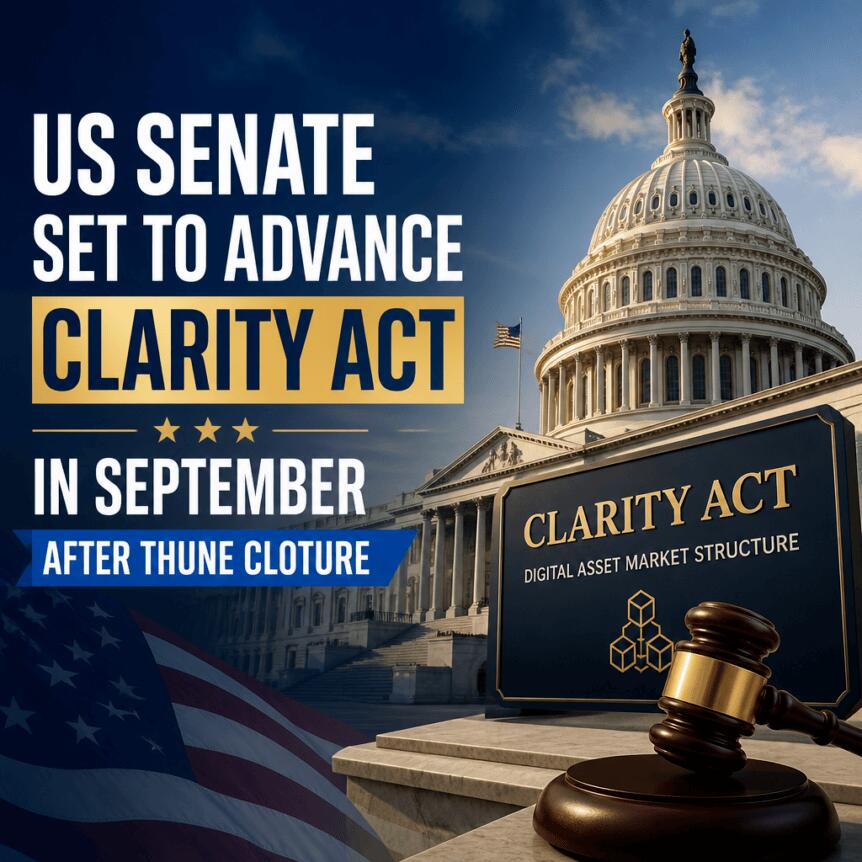
US Senate Majority Leader John Thune has filed cloture on a motion to bring the Digital Asset Market Clarity Act—commonly referred to as the CLARITY Act—to the Senate floor, setting up a procedural vote that is expected after the chamber reconvenes. The move is intended to restart momentum for one of the most closely watched pieces of pending US crypto legislation and could shape how lawmakers debate digital asset regulation in the coming months.
According to the Senate Daily Press, Thune’s filing follows failed efforts to reach a deal ahead of the August recess. The Senate is expected to reconvene on Sept. 15, giving negotiators additional weeks to resolve open disputes before the Senate votes on whether to advance the bill for consideration.
Key takeaways
- Thune filed cloture on the motion to take up the CLARITY Act, with a procedural vote expected after the Senate returns on Sept. 15.
- Cloture requires 60 votes, meaning Republicans likely need at least some Democratic support to clear the procedural hurdle.
- The cloture vote is about advancing the bill for consideration, not about final passage of the CLARITY Act.
- Negotiations have stalled over ethics provisions and rules tied to stablecoin rewards, among other issues.
- Lawmakers have reportedly explored a bipartisan ethics addendum linked to the president’s crypto-related financial interests.
A procedural step toward Senate debate
The Senate Daily Press confirmed that Thune filed cloture, a mechanism that sets up a vote to end debate and allow the Senate to move toward taking up legislation. Because cloture requires 60 votes, the outcome will serve as an early test of whether the CLARITY Act can attract cross-party backing beyond its Republican sponsors.
Even if the procedural vote succeeds, it would not mean the bill is guaranteed to pass. As the filing’s purpose indicates, cloture addresses whether the Senate will consider the legislation, rather than whether it will ultimately approve it.
What the CLARITY Act would change
The CLARITY Act is widely regarded as a landmark framework for US crypto regulation. If enacted, it would aim to establish a federal market structure for digital assets and clarify how US federal oversight should apply across different categories of tokens.
In particular, the bill is intended to delineate when crypto assets are treated as securities versus when they are treated as commodities, along with clarifying the respective roles of the Securities and Exchange Commission (SEC) and the Commodity Futures Trading Commission (CFTC). For market participants, that distinction matters because securities and commodities oversight can lead to very different compliance expectations, enforcement priorities, and product approvals.
Why negotiations stalled before the August recess
While the Senate has the CLARITY Act on its agenda, the effort to bring it to the floor has been complicated by policy disagreements. The most prominent sticking point has involved ethics provisions designed to restrict government officials and their families from issuing or profiting from digital assets while in office.
Separate from the ethics debate, negotiations have also reportedly been complicated by disagreements over rules governing stablecoin rewards. Those disputes have helped explain why lawmakers were unable to finalize a package before the August recess and instead pushed unresolved issues into the post-recess window.
Thune’s cloture filing suggests Senate leaders believe the bill can move forward procedurally even as some substantive disagreements remain—at least long enough for lawmakers to debate the remaining differences on the record.
An ethics addendum aimed at the president’s interests
To address the impasse, lawmakers have reportedly worked on a bipartisan ethics addendum intended to meet Democratic concerns connected to President Donald Trump’s crypto-related financial interests. Earlier coverage from Cointelegraph noted that negotiations included efforts to shape an addendum that could provide ethics guardrails acceptable to both parties.
According to a report by Bloomberg referenced in that earlier coverage, the proposal would require the president to divest from certain crypto-related businesses. Separately, a post by Eleanor Terrett shared context around the cloture filing, underscoring that the Senate process is advancing again but that major policy questions remain.
For investors and crypto industry participants, the practical importance of these ethics terms is that they can determine whether the bill gains the cross-party support needed to survive procedural hurdles. If ethics provisions remain contentious, the Senate could see additional delays even after cloture is filed.
What to watch next
With the Senate expected to reconvene on Sept. 15, the immediate focus will be whether Republicans can secure the 60 votes necessary for cloture and whether negotiators can narrow remaining disagreements—particularly around ethics and stablecoin reward rules—before any final consideration vote. Even after cloture, the CLARITY Act’s path to passage remains uncertain, so market participants should watch for how the text changes between procedural motion and any subsequent Senate floor action.


Brazil’s central bank has introduced a rule requiring covered crypto service providers to delay certain transfers for 24 hours as a precaution against fraud.
The Central Bank of Brazil (BCB) published Resolution 584 on Friday, amending existing fraud-prevention rules for payment services to also cover virtual asset services. The rules require qualifying transfers to be held while institutions conduct a risk assessment.
How Brazil’s 24-hour Hold Works
The requirement applies to transfers exceeding $10,000, whether in a single transaction or across the customer’s total transactions on the same day. It covers transfers to foreign entities that operate in the virtual asset market and to self-custody wallets.
The resolution describes the retention as an exclusively precautionary measure intended to allow institutions to assess transaction risk. It does not result in the permanent unavailability of assets, and institutions must notify affected customers of the hold and its 24-hour period.
After completing the risk assessment, institutions must either immediately release the transfer once the 24-hour period expires or reject the transaction. They may also release the funds before the deadline if they make and document a reasoned decision based on specified risk-management criteria.
The rules explicitly apply the retention requirement to virtual asset services covered by Brazilian law, including virtual assets referenced to fiat currencies, such as stablecoins.
Follow us on X to get the latest news as it happens
Additional Fraud Controls
The resolution also requires covered institutions to maintain daily records of fraud and attempted fraud involving payment and virtual asset services, including the corrective measures adopted.
The rules take effect on January 1, 2027. The BCB can require institutions to observe a period longer than 24 hours, extend the procedure to transactions below the $10,000 threshold, and restrict institutions’ ability to release transfers early when it identifies noncompliance with the resolution.
Subscribe to our YouTube channel to watch leaders and journalists provide expert insights
The post No More Instant Crypto Transfers in Brazil? Central Bank Introduces New Law appeared first on BeInCrypto.


Brazil’s central bank will require crypto exchanges to delay some customer transfers to foreign platforms and self-custody wallets for up to 24 hours as part of new anti-fraud rules.
The requirement takes effect Jan. 1, 2027 under Resolution BCB No. 584/2026, published Aug. 7.
The rule applies when a customer deposits the country’s fiat currency reais, or crypto with an exchange and then seeks to send the funds abroad or to a wallet they control.
Transfers exceeding the equivalent of $10,000, whether through a single transaction or several on the same day, are subject to the required hold. Smaller transfers may also face delays if an exchange flags them as risky.
The central bank said cryptocurrencies, including stablecoins, are being used to move funds obtained through financial fraud before victims or institutions can recover them.
The hold isn’t permanent. Exchanges can release a transfer before 24 hours if their risk review finds no signs of wrongdoing. They must document that decision and tell customers when a transaction has been placed on hold.
The measure also gives exchanges more responsibility for judging risk based on the customer, transaction, counterparty and destination jurisdiction.
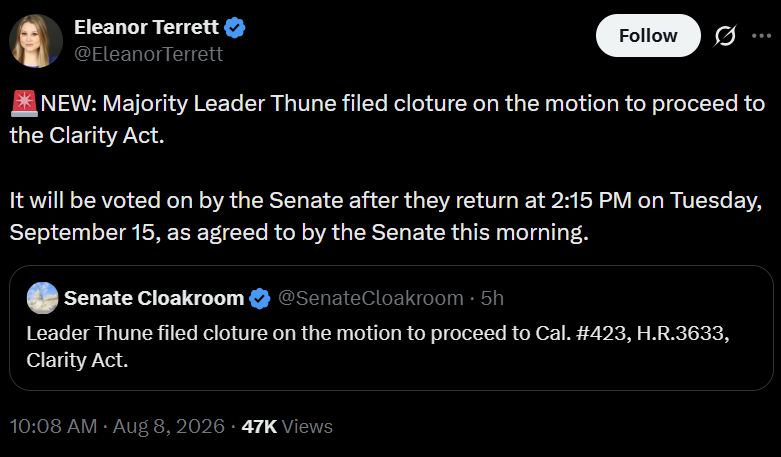
US Senate Majority Leader John Thune has filed cloture on a motion to take up the Digital Asset Market Clarity Act, also known as the CLARITY Act, setting up a key procedural vote on the crypto market structure bill for Sept. 15.
The vote is expected after the Senate reconvenes at 2:15 pm ET on Sept. 15, giving lawmakers several more weeks to work through unresolved disagreements over the legislation.
The Senate Daily Press confirmed that Thune filed cloture on the motion to bring the CLARITY Act to the Senate floor for consideration. Invoking cloture on the motion requires 60 votes, meaning Republicans will need Democratic support to clear the procedural hurdle and move toward consideration of the bill.
Thune’s move puts the CLARITY Act on a path toward Senate consideration after lawmakers failed to reach an agreement before the August recess. Negotiations have been complicated by disagreements over ethics provisions and rules governing stablecoin rewards, among other issues.
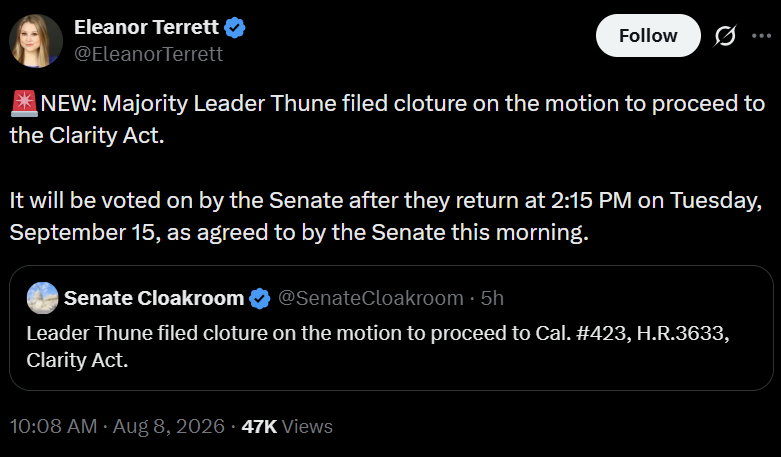
Source: Eleanor Terrett
While the move marks progress for the legislation, it does not guarantee that the CLARITY Act will receive a final vote or pass the Senate. The cloture vote concerns whether to take up the legislation for consideration, rather than passage of the bill itself.
The CLARITY Act is considered a landmark piece of US crypto legislation that would establish a federal market structure for digital assets, clarify when crypto assets fall under securities or commodities laws and delineate oversight responsibilities between the Securities and Exchange Commission and the Commodity Futures Trading Commission.
Until now, negotiations have stalled over proposed ethics provisions that would restrict government officials and their families from issuing or profiting from digital assets while in office.
In an effort to break that impasse, lawmakers have been reportedly working on a bipartisan ethics addendum aimed at addressing Democratic concerns over President Donald Trump’s crypto-related financial interests. As Bloomberg reported Thursday, the proposal would require the president to divest from certain crypto-related businesses.
Magazine: CLARITY hopes fade, BitMEX shuts as lawsuit looms: Hodler’s Digest, July 26
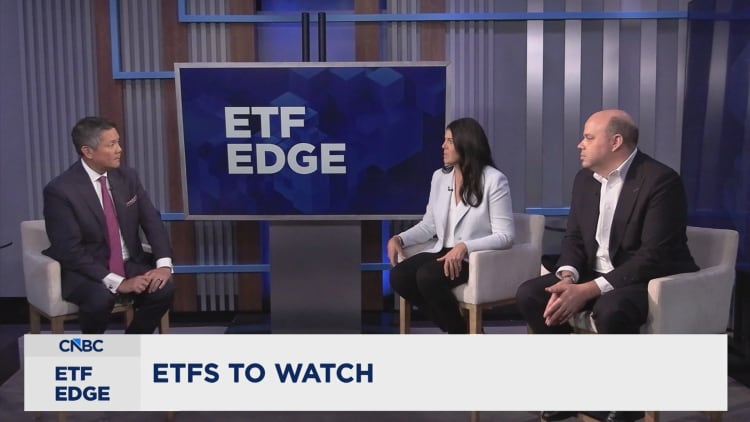

Collateralized loan obligations may become the next big push in the exchange-traded fund industry.
VettaFi’s Todd Rosenbluth suggests there’s investor demand for the alternative assets due to ongoing interest rate uncertainty.
“[CLOs have] been popular within the marketplace,” the firm’s head of research told CNBC’s “ETF Edge” this week.
CLOs are short-term fixed income strategies that consist of pools of floating-rate secured loans. They’re designed to deliver relative stability and attractive yields across market cycles.
“We’ve seen fixed income ETF demand be quite strong,” Rosenbluth said. “I think that’s going to continue as we’re still waiting for some clarity from the next move of the Fed.”
Last month’s Fed’s decision to keep rates unchanged is a catalyst for short-term product demand, according to Rosenbluth.
‘That’s caught our attention’
The industry appears to be acknowledging investor interest. Rosenbluth listed Reckoner Capital Management, an ETF provider specializing in CLOs, as a firm actively creating new CLO ETFs this year.
“That’s caught our attention,” he said. “It’s just great to see the innovation that’s happening within the fixed income ETF marketplace.”
Jennifer Grancio, global head of distribution at TCW Group, is also seeing a preference to fixed income from an asset manager perspective.
“I think a lot of advisors are holding a core income-oriented portfolio and then dabbling a little bit with short duration or CLO products,” she said.
CLO risks
However, Rosenbluth acknowledges risks associated with CLO ETFs.
“While AAA-rated CLO tranches boast near-zero default rates, lower-tier tranches (BBB-B) face heightened default risk and market volatility during economic stress,” he wrote in a special note to CNBC. “In addition, because corporate loans in CLO pools carry significant exposure to tech and software sectors, private credit jitters or tech selloffs can spill over and trigger spread widening.”
He added that investors are therefore seeking AAA-rated and senior-secured assets to capture attractive yields without that long-term maturity risk.

As Forex Expo Dubai prepares for its 9th Edition on 22–23 September 2026 at Dubai World Trade Centre, the event has unveiled a Gold Lucky Draw, with 150 grams of 24K gold set to be won across the two-day expo.
Open exclusively to Verified Traders, Introducing Brokers (IBs), and Affiliates, the lucky draw rewards attendees while adding to an event already built around learning, networking, and business growth.
With 33 winners set to take home a share of 150 grams of 24K gold, this year’s Gold Lucky Draw will be distributed across the following prize categories:
- 1 winner of a 50grams 24K Gold Bar
- 2 winners of 10grams 24K Gold Bars
- 10 winners of 4grams 24K Gold Bars
- 20 winners of 2grams 24K Gold Coin
While lucky draw winners will take home gold, every participant will have the opportunity to build new partnerships, gain fresh market insights, and connect with companies shaping the future of online trading.
Five Halls. One Global Trading Landscape
Across five halls, Forex Expo Dubai 2026 will bring together 250+ exhibitors and 100+ speakers, featuring leading brokerages, fintech companies, liquidity providers, payment providers, trading technology firms, and financial services companies from around the world.
Attendees can discover new products and services, compare trading platforms, meet solution providers, and engage directly with businesses driving the evolution of online trading.
For those looking to stay ahead of the curve, the conference programme will feature discussions on market trends, regulation, trading strategies, and the future of online trading.
Raising the Standard for Industry Events
The 9th edition introduces expanded experiences designed around the needs of its key attendee groups.
Verified Traders gain access to dedicated seminar sessions, the Traders Lounge, and the Traders Clinic, where they can pre-book one-to-one sessions with market experts.
Introducing Brokers can participate in the dedicated IB Programme, connect with brokers to discuss partnership models and rebate structures, and access the IB Lounge for focused networking.
Beyond these dedicated experiences, attendees can explore live product demonstrations, private meeting zones, pre-bookable meetings through the official event app, and side events taking place before and after the expo — creating more ways to learn, build relationships, and discover new opportunities.
*T&C Apply
About Forex Expo Dubai
Forex Expo Dubai is one of the region’s leading gatherings for the global online trading and fintech industry, bringing together brokerages, fintech innovators, traders, investors, payment providers, IBs, affiliates, and online trading technology companies under one roof. The expo provides a platform for business networking, technology showcases, industry insights, and conversations shaping the evolution of modern finance.

The S&P 500 punched to new highs and the Nasdaq notched its strongest week since April as the market shifted back into rally mode during the first week of August. The week’s stock market action through off a spray of bullish signals, the kind that open the door for investors to start piling into the list of stocks they’ve compiled…
Copyright ©2026 Investor’s Business Daily, LLC. All rights reserved. 87990cbe856818d5eddac44c7b1cdeb8

PH’s semifinal hopes end in loss to Malaysia

South Korean satellite spots SpaceX lunar impact

Claressa Shields Shares Baby Plans With Papoose & Boxing Break


-

 Politics6 days ago
Zack Polanski: an incitement to murder Nigel Farage?
-

 Crypto World6 days ago
Crypto PAC spending tops $2M in Michigan House race
-

 Fashion1 day ago
Frugal Friday’s Workwear Report: Cap-Sleeve Pointelle Crewneck Sweater
-

 Business6 days ago
DTCR: Deleveraging And A Hedge Fund Collapse Point To A Possible AI Bottom
-

 Tech6 days ago
ESET tracks rise in malicious AI skills and adaptable malware
-

 Crypto World6 days ago
XRP Ledger urges node upgrade after manifest flood
-

 Fashion22 hours ago
Weekend Open Thread: Mattifying Sunscreen
-

 Sports3 days ago
Jordan Coyle & Cordiamo take Laya Arena Stakes at RDS
-

 News Videos7 days ago
Financial Crash Expert: The 90-Day Collapse Timeline They Are Desperately Hiding.
-

 Crypto World5 days ago
US Tech Stocks See Largest 5-Week Inflow in History: Can Nasdaq Break Its Downtrend?
-
 Business3 days ago
US stocks: Dow closes at record on Mideast optimism; SpaceX, AMD drag Nasdaq
-
 NewsBeat7 days ago
Tourist plane on sightseeing flight in Peru crashes into a field, killing all 13 people on board
-

 Tech6 days ago
Page Not Found | WIRED
-

 Politics2 days ago
Reform UK And Greens Sink To Lowest Favourability Ratings To Date
-
 NewsBeat7 days ago
Bikini-clad Jennifer Aniston, 57, kisses hypnotist boyfriend Jim Curtis as they enjoy a romantic getaway aboard a luxury yacht in Spain
-

 Crypto World4 days ago
Polymarket targets $20 billion valuation as competition heats up in prediction market sector
-

 Business4 days ago
Nvidia Stock Climbs 2.5% as Chip Sector Rally Builds Ahead of AMD Earnings, Nvidia’s Own Report Looms
-
 NewsBeat7 days ago
MICHAEL GOVE: Burnham’s Labour doesn’t believe in aspiration, just the soft bigotry of low expectations. From education to home ownership, their message to the working class is… know your place
-
 NewsBeat7 days ago
Trump says he is cancelling strikes on Iran subject to ‘rapidly’ making deal
-

 Tech4 days ago
OpenAI, Anthropic AI agents targeted real people and systems in cyber tests
You must be logged in to post a comment Login