

Crypto World
XRP Price Stalls Despite Huge Weekly ETF Net Inflows

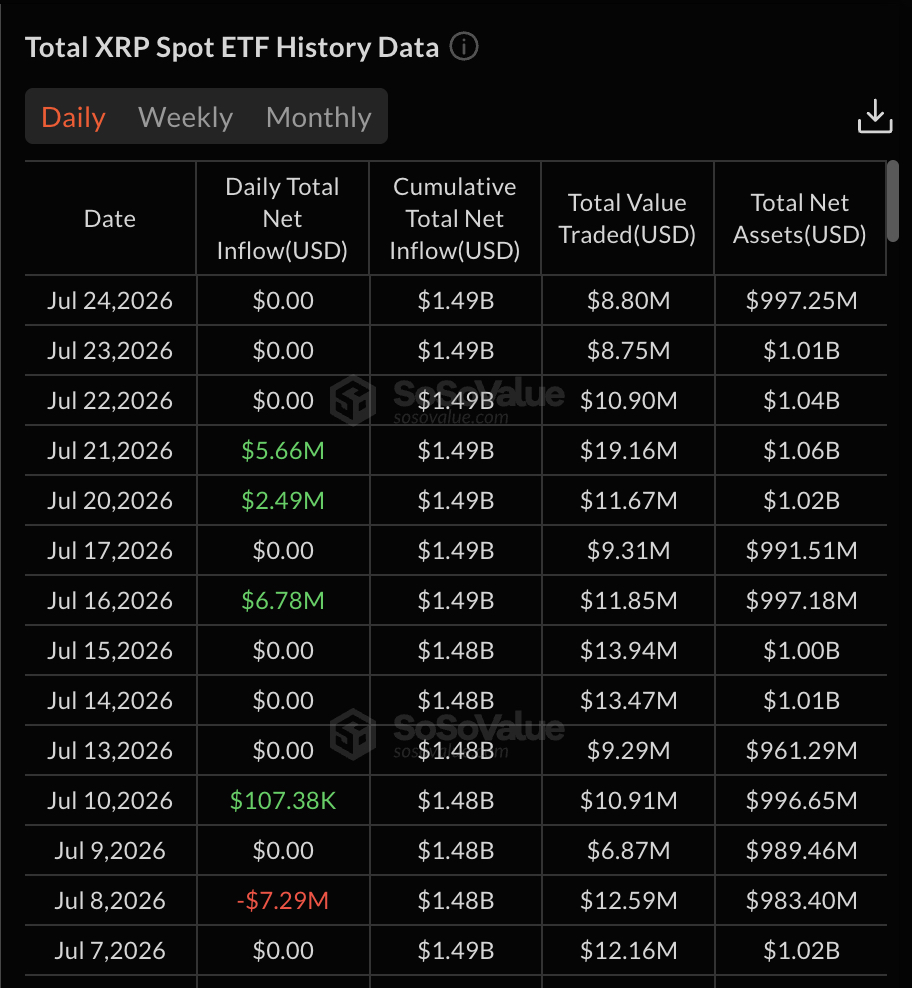
XRP price prediction remains neutral as XRP trades around $1.10, with strong ETF inflows failing to trigger a sustained price breakout. Price remains mostly flat despite strong institutional demand.
According to SoSoValue, XRP spot ETFs recorded $8.15 million in net inflows during the July 20 to 24 trading week. Franklin Templeton’s XRPZ led with $5.66 million, lifting its cumulative inflows to $421 million. Bitwise followed with $2.49 million, bringing its total to $501 million.

Total net assets across XRP spot ETFs now stand at $997 million. Meanwhile, cumulative historical net inflows have reached $1.49 billion. ETF assets also represent about 1.46% of XRP’s total market capitalization. Those numbers point to steady institutional accumulation even as spot prices remain stuck in a range.
An eight-figure institutional demand in a single week without a lasting price reaction is more than market noise. It suggests persistent selling is absorbing fresh capital. As a result, next week’s setup looks more complex than the inflow headlines alone suggest, making any breakout dependent on buyers finally overwhelming that supply.
Discover: The Best Token Presales
XRP Price Prediction: Hold $1.10 While ETF Demand Builds Overhead?
XRP remains trapped in a tight range. The $1.10 level marks the lower edge of immediate demand, while $1.11 caps recent buying pressure. Despite steady ETF inflows, the token has struggled to build momentum. XRP is up roughly 1.2% over the past seven days, a modest gain considering institutional demand.
XRP market capitalization is about $69.1 billion, and that scale requires sustained institutional buying to produce a meaningful move. In that context, weekly ETF inflows of about $8 million remain too small to materially shift prices.

Three scenarios frame the near term. The bull case sees ETF assets decisively pushing above the $1 billion mark, encouraging buyers to reclaim resistance at $1.11. The base case keeps XRP trading between $1.10 and $1.11 as retail participation stays muted. Meanwhile, a break below $1.10 could expose the psychological $1.00 level if selling pressure increases.
For active traders, the demand zone around $1.10 and the resistance near $1.11 deserve close attention. A convincing close above resistance with strong volume would shift the outlook. Until that happens, range trading remains the dominant theme.
Trade XRP on Bybit and Get a Chance to Win Our $1,000 USDT Airdrop
LiquidChain Targets Early Mover Upside as XRP Tests Key Levels
XRP’s ETF flows confirm that institutional capital is moving into crypto infrastructure, but at a $69 billion market cap, the upside math is fundamentally different from early-stage exposure. Traders who understand that dynamic are increasingly scanning for where structural positioning still offers asymmetric returns.
LiquidChain is an L3 infrastructure project with a specific thesis: fuse Bitcoin, Ethereum, and Solana liquidity into a single execution environment, eliminating the fragmentation that currently forces developers to choose between ecosystems. The architecture powers Unified Liquidity Layer, Single-Step Execution, Verifiable Settlement, and the Deploy-Once design, which target the cross-chain coordination problem that costs DeFi protocols measurable volume every day.
The view is different from the third layer. — LiquidChain (@getliquidchain) July 27, 2026

You’ll understand soon. pic.twitter.com/P2WOELSTjI
The presale is currently priced at $0.01484, with $920K raised to date. For traders comfortable with early-stage exposure, the infrastructure angle is worth researching.
Review the LiquidChain presale details here.
Discover: The Best Crypto to Diversify Your Portfolio
The post XRP Price Stalls Despite Huge Weekly ETF Net Inflows appeared first on Cryptonews.

The dollar heads into a pivotal week trading near 101.80, just off a 15-month high, with the Fed’s July 29 meeting standing as the clear focal point. Markets currently price roughly a 65% chance of a hold, though renewed Middle East escalation has kept a hike back on the table for later this year. Energy remains the wildcard: the collapse of the Iran ceasefire and blockades affecting Persian Gulf shipping lanes have pushed oil higher, reigniting inflation concerns that could complicate the Fed’s messaging.
Adding to the uncertainty, private-sector hiring has slowed for a fourth straight week according to ADP data, even as jobless claims fell to a two-month low, painting a genuinely mixed labor picture. Fed Chair Kevin Warsh’s Congressional testimony offered little directional clarity, reaffirming a commitment to price stability without tipping the committee’s hand.
With the ECB decision now behind markets and flash PMI data already digested, all eyes turn to Wednesday’s Fed decision as the week’s true catalyst, one capable of resolving—or extending—the dollar’s recent indecision.
Technical Analysis of the DXY
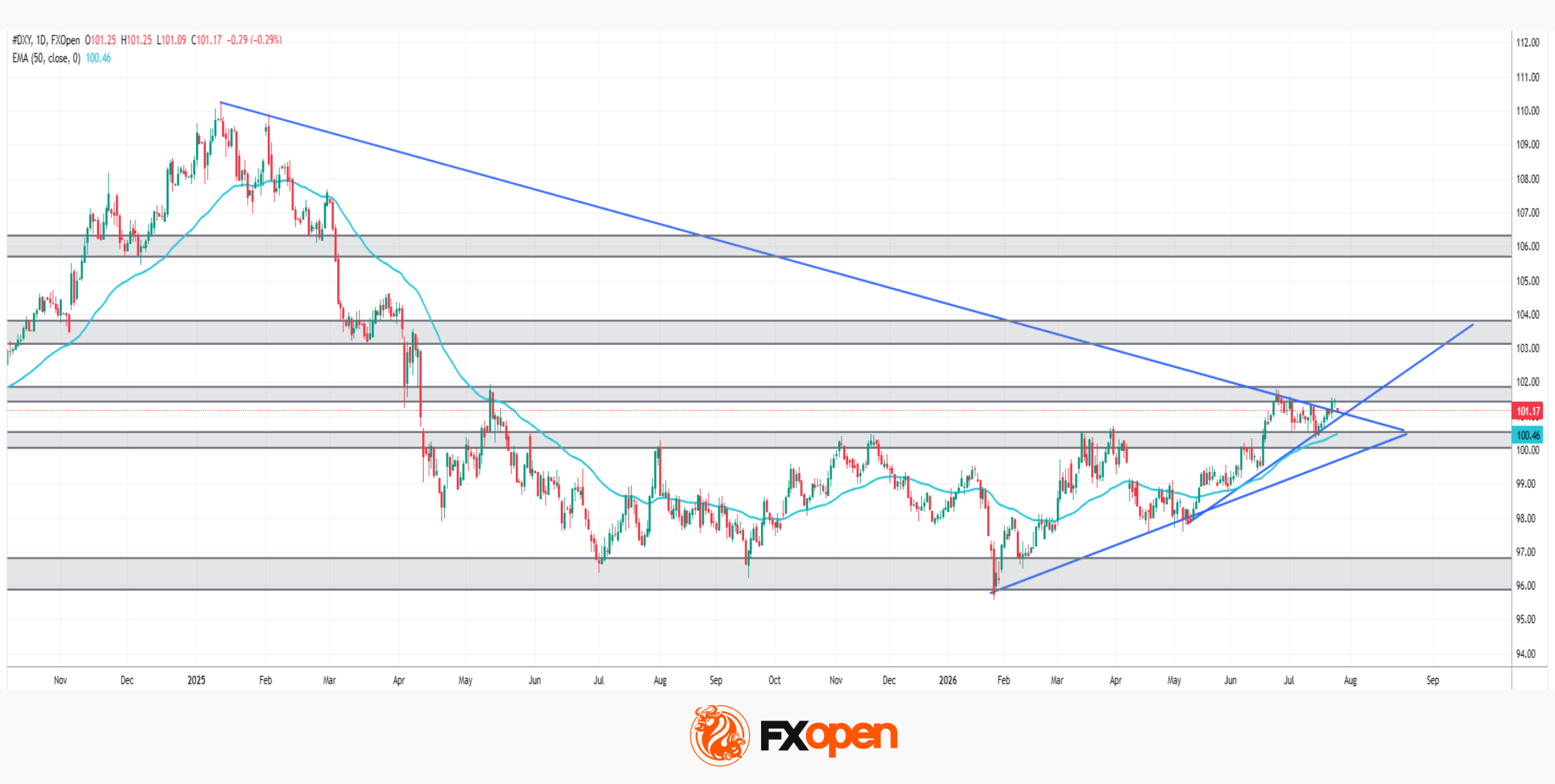
The coming week carries real technical weight, with the DXY caught in a hotly contested zone between 100.00 and 102.00. The Fed’s rate decision, and the volatility it brings, could well define the dollar’s path over the near to medium term.
Bullish Scenario
After a rough start to 2026, the DXY rebounded sharply from January’s 96-97 support, gaining roughly 6% since then. Having recently broken and held above the psychological 100.00 level, price now sits supported by both an ascending trendline and the 50-period EMA. A confirmed break above 102.00 would open the path toward 103-104, and eventually 106-107.
Bearish Scenario
The index is currently struggling at the 102.00 resistance. A rejection here, breaking the ascending trendline while respecting the longer-term descending trendline from 2025’s highs, would send price back to retest the critical 100.00 zone—and potentially, on a deeper break, all the way back to the 96-97 support.
With the Fed’s decision now just days away, the dollar finds itself standing exactly where it needs to: at the edge of a decision. Whether the DXY breaks free toward fresh highs or slips back into its earlier struggles, this week’s outcome won’t just move the greenback—it will set the tone for every asset priced against it heading into autumn.
Trade global index CFDs with zero commission and tight spreads (additional fees may apply). Open your FXOpen account now or learn more about trading index CFDs with FXOpen.
This article represents the opinion of the Companies operating under the FXOpen brand only. It is not to be construed as an offer, solicitation, or recommendation with respect to products and services provided by the Companies operating under the FXOpen brand, nor is it to be considered financial advice.

Coinbase CEO Brian Armstrong has pushed back on the idea that the rise of artificial intelligence will reduce the relevance of crypto. In a post on X on Sunday, Armstrong argued that “AI being a megatrend” does not replace crypto—if anything, it increases the need for programmable financial rails that can be used by autonomous software.
Armstrong framed his argument around “agentic finance,” describing Coinbase’s Base network alongside USDC and the company’s x402 payment protocol as key components for machine-to-machine payments. His comments also arrive as the broader crypto industry increasingly markets blockchain networks as payment infrastructure for AI agents.
Key takeaways
- Armstrong says AI agents will drive demand for programmable money, positioning crypto as more—not less—relevant.
- Coinbase’s agentic payments stack centers on Base, USDC, and x402, built for automated stablecoin transfers between applications.
- Chainalysis reported in June that agentic payments on Base via x402 surpassed 100 million transactions within about nine months of tracked activity.
- Regulators and traditional payment systems are still designed around human accounts, while x402 targets payment flows that can be triggered automatically.
Armstrong’s case: AI needs programmable payments
Armstrong’s argument is rooted in how autonomous systems are expected to operate. If AI agents can act independently—making purchases, paying for data, or settling for APIs—then they require a payment mechanism that software can initiate without relying on traditional banking checkout steps.
“AI being a megatrend takes nothing away from crypto,” Armstrong wrote on X, adding that agentic systems will instead create demand for programmable money. The underlying pitch is that blockchain-based payments are better suited to low-friction, automated interactions than systems that assume a human user completes each transaction.
How Base, x402, and USDC fit together
Armstrong’s “AiFi” framing points to a specific infrastructure stack rather than a broad concept. Base launched in 2023 as an Ethereum layer-2 network intended to improve the speed and cost of building onchain applications, with the design aimed at general-purpose use rather than solely AI payments.
In 2025, Coinbase introduced x402, a payment protocol built around the HTTP “402 Payment Required” concept. As Coinbase describes it, x402 enables automated stablecoin payments between software applications, allowing one system to pay another—such as for digital resources—without traditional account-based workflows. In practice, the protocol is intended to make it easier for autonomous agents to complete payments as part of a software interaction.
USDC is one of the stablecoins used within this ecosystem. Launched in 2018 by Circle and supported by the Coinbase-backed Centre Consortium, USDC provides the dollar-pegged unit that enables consistent value transfer for automated payments. Together, Base (execution environment), x402 (payment protocol), and USDC (payment asset) form the core of Coinbase’s current approach to agentic payments.
What Chainalysis measured on Base’s agentic payment flows
Beyond Coinbase’s product narrative, third-party analytics have begun to quantify activity. In a June report, Chainalysis said agentic payments on Base using x402 surpassed 100 million transactions within roughly nine months of activity.
According to Chainalysis, it identified agentic payment activity by tracking x402-related payment flows onchain. The firm stated that transactions worth at least $1 represented 95% of total transferred value, suggesting that the measured activity was not just tiny test transfers.
Chainalysis also reported behavioral differences between agentic payment wallets and the average Base user. It said agentic wallets were typically newer, tended to hold more asset types, and carried smaller balances than the broader user base.
Cointelegraph asked Chainalysis for updated x402 activity figures and additional details on how its methodology works, but the firm had not responded by publication time.
Separately, Cointelegraph had previously noted that agentic payment activity on Base topped 100 million transactions in June, citing the same kind of measurement that Chainalysis described.
Earnings and market attention on Coinbase’s infrastructure strategy
Armstrong’s push for “agentic finance” comes as Coinbase prepares to report second-quarter earnings on Thursday. Yahoo Finance data shows analysts’ average expectations for revenue of $1.29 billion, with sales projected to decline 13.8% compared to the same period last year. Earnings per share are expected to be flat.
While the earnings forecast does not directly measure Base or x402 usage, the timing matters: Coinbase is attempting to position its networks and payment rails as foundational plumbing for a new wave of automated transactions. For investors and builders, the key question is whether agentic payment volumes translate into sustained demand for onchain infrastructure—particularly if more AI-driven services embed payment logic as part of normal operation.
What to watch next is how quickly “agentic” payment flows evolve beyond early activity: updated figures from Chainalysis on x402 usage, whether more stablecoin-based automation moves from experimentation to production, and how clearly Coinbase can connect its infrastructure push to broader business performance. As AI agent adoption grows, the debate is likely to shift from whether crypto is “relevant” to whether crypto-based rails are practical enough to become the default mechanism for machine-initiated payments.


Coinbase CEO Brian Armstrong said the artificial intelligence (AI) megatrend makes crypto more important, not less.
He argued that AI agents will become the largest transacting users of crypto rails.
How Could AI Make Crypto More Important?
In a post on X, Armstrong rejected the advice that people in crypto should pivot to AI. Armstrong called that framing zero-sum scarcity thinking.
The post arrives during a punishing year for digital assets. Bitcoin (BTC) has fallen more than 25% in 2026. US spot exchange-traded funds (ETFs) recorded $4.5 billion of outflows in June. The drawdown has also weighed on crypto-linked stocks and platform activity.
AI-linked equities have moved in the opposite direction. The S&P 500 has gained roughly 9% this year, and AI names account for almost all of that advance.
Follow us on X to get the latest news as it happens
However, Armstrong disputed the competition concerns. He compared crypto to electricity and the internet. Both work as a base infrastructure that later technologies run on top of, he argued.
“AI being a megatrend takes nothing away from crypto. If anything, it makes crypto more important,” he wrote.
Armstrong argued that autonomous software cannot operate inside traditional finance. Agents cannot open bank accounts or wait 3 days for a wire.
Therefore, he said, they need programmable money in real time, and he pointed to crypto rails. Franklin Templeton made a similar case days earlier. Sandy Kaul, its head of digital assets, called agentic AI the killer use case driving blockchain adoption.
CZ made a similar forecast in January. The Binance founder told a World Economic Forum panel in Davos that agents would settle in crypto.
The sector’s most prominent voices have landed on the same thesis this year. Whether the usage figures will catch up will be a key trend to watch.
Subscribe to our YouTube channel to watch leaders and journalists provide expert insights
The post Brian Armstrong Says the AI Megatrend Makes Crypto More Important appeared first on BeInCrypto.

Decentralized cloud storage company Storj Labs has voluntarily filed for Chapter 11 bankruptcy protection in the US Bankruptcy Court for the Northern District of West Virginia as it seeks to restructure its finances while keeping its business running without disruption.
In an open letter to its community, Storj’s management and board described the move as an accelerated financial reorganization designed to deal with obligations that largely predate its current business strategy.
The company said it had already scaled back its operations with a leaner team and tighter cost controls while continuing to receive support from Inveniam, but acknowledged that its historical liabilities could not be addressed through business growth alone.
Financial Overhaul
The team said the Chapter 11 process provides a transparent framework to resolve those obligations and gives the company time to present a long-term business plan. Storj also sought to reassure users and token holders that its decentralized storage network remains fully operational and that the utility of the STORJ token within the network has not changed as a result of the bankruptcy filing.
Following the news, STORJ crashed by over 17% to $0.06. The team acknowledged that while trading has been “quiet and low” for a long time, it said that there will be “no comments” on the token’s price during the process.
Storj said that it wants the company to ultimately be owned by those who built and supported it, including management, its decentralized community, token holders, and other investors. As part of its planned restructuring, the company intends to propose a mechanism that would allow token holders to participate in the equity of the restructured business. The eligibility requirements, structure, and terms have yet to be developed and will be disclosed through the formal court process.
Any such plan will require court approval and must comply with legal priorities governing different stakeholder groups.
Industry’s Latest Casualties
The filing comes during a month that has seen multiple crypto companies seek bankruptcy protection. On July 22, Singapore-based Bitcoin mining firm Poolin and its US affiliates, Lonestar Dream Inc. and Lonestar Taproot LLC, also filed for Chapter 11 in New Jersey.
Meanwhile, Movement Labs sought bankruptcy protection in Delaware after months of financial troubles linked to its MOVE token launch.
Several other crypto companies have either shut down or begun winding down their operations. For instance, crypto derivatives exchange BitMEX announced it will permanently close on September 23 after more than 11 years in business. A few days later, BitMart also revealed plans to wind down its trading operations, while DEX aggregator Odos and exchange Dango announced they would discontinue their services.
The post Storj Files for Chapter 11 Bankruptcy as STORJ Token Plunges 17% appeared first on CryptoPotato.

Coinbase CEO Brian Armstrong has pushed back on the idea that artificial intelligence will displace crypto, arguing that “agentic” AI—software systems that initiate actions—will increase demand for programmable, crypto-based payments. In a post on X, Armstrong framed AI agents as a new class of economic actors that will need rails and settlement mechanisms beyond traditional banking.
Armstrong pointed to Coinbase’s Base network, USDC, and its x402 payment protocol as key infrastructure for autonomous machine-to-machine payments. His comments follow mounting industry interest in using blockchain networks as the payments layer for AI agents, including coverage that agentic payment activity on Base surpassed 100 million transactions in June.
Key takeaways
- Armstrong argues AI agents will need programmable money, not conventional bank checkout rails, strengthening crypto’s role in finance.
- Coinbase’s “AiFi” framing ties Base (scalability), USDC (stable settlement), and x402 (automated payment flows) into a single payment stack.
- Chainalysis reported that x402-based agentic payments on Base crossed 100 million transactions in roughly nine months of tracked activity.
- Updated methodology and figures were requested, but Chainalysis had not responded by publication time, leaving some measurement details unconfirmed.
Armstrong’s “AI doesn’t replace crypto” message
Armstrong’s argument is essentially about incentives and infrastructure. Rather than treating AI as a competitor to blockchain, he claims AI’s “megatrend” effect will amplify demand for financial services that can be triggered automatically and executed reliably by software.
On X, Armstrong linked this to the concept of agentic finance, or AiFi—the idea that AI agents will participate in the digital economy by initiating transactions and accessing services without human intervention. In that world, he suggested, payments need to be programmable and accessible to autonomous systems, which he contrasted with traditional banking rails designed around accounts and manual authorization.
Coinbase’s AiFi stack: Base, x402 and USDC
Coinbase’s approach centers on three building blocks: Base as the underlying network, x402 as a payment protocol for autonomous software payments, and USDC as the dollar-pegged stablecoin used for settlement.
Base was launched in 2023 as an Ethereum layer-2 network aimed at making onchain applications faster and cheaper to use. Coinbase positioned Base as general-purpose blockchain infrastructure rather than a network specifically engineered for AI payments.
Two years later, Coinbase introduced x402, a payment protocol built around the HTTP “402 Payment Required” standard. The intent is to enable automated stablecoin payments between software applications—allowing agents and other autonomous systems to pay for digital resources like APIs or data without relying on traditional account-driven checkout flows.
USDC, launched in 2018 by Circle and the Coinbase-backed Centre Consortium, is one of the assets used for x402 payments. In the AiFi framing, USDC provides the stable value layer while x402 standardizes how software applications request payment and complete transfers.
Taken together, Base + x402 + USDC are designed to make it easier for autonomous systems to interact economically onchain—an architecture Armstrong appears to believe will be increasingly necessary as AI agents become more active in commerce, data access, and service provisioning.
What Chainalysis measured on Base
Beyond Coinbase’s vision, the debate has increasingly moved to onchain activity—especially whether “agentic payments” are showing up in measurable transaction patterns. In a June report, Chainalysis said agentic payments on Base using x402 surpassed 100 million transactions within roughly nine months of activity.
Chainalysis described its measurement approach as identifying x402-related payment flows onchain. It also noted that transactions worth at least $1 accounted for 95% of total value transferred, indicating that the majority of transferred economic value was not concentrated solely in very small transfers.
The analytics firm further reported behavioral differences between agentic participants and typical Base users: it said agentic payment wallets were generally newer, held more asset types, and maintained smaller balances on average than Base users in general.
Cointelegraph asked Chainalysis for updated x402 activity figures and more details about its tracking methodology, but the firm had not responded by the time of publication. That leaves a gap for readers who want the latest numbers and confirmation of how the methodology may evolve as activity scales.
Earnings calendar adds context for the timing
Armstrong’s push comes as Coinbase prepares to report second quarter earnings on Thursday. According to consensus data compiled by Yahoo Finance, analysts expect revenue of $1.29 billion and estimate sales to fall 13.8% year over year, with earnings per share projected to be flat.
While the earnings outlook is separate from the AiFi debate, it matters for investors because it frames how quickly infrastructure narratives may translate into business momentum. If activity around agentic payments continues to expand—especially in ways that attract developers and integrate stablecoin payments—Coinbase may view it as an additional growth lane on top of broader onchain adoption.
For now, the key question is whether agentic payment activity remains a measurable trend as adoption broadens beyond early x402 use cases. Readers should watch for fresh Chainalysis updates, more clarity on how “agentic” behavior is classified onchain, and whether Coinbase’s AiFi push leads to sustained developer and payment integrations on Base.
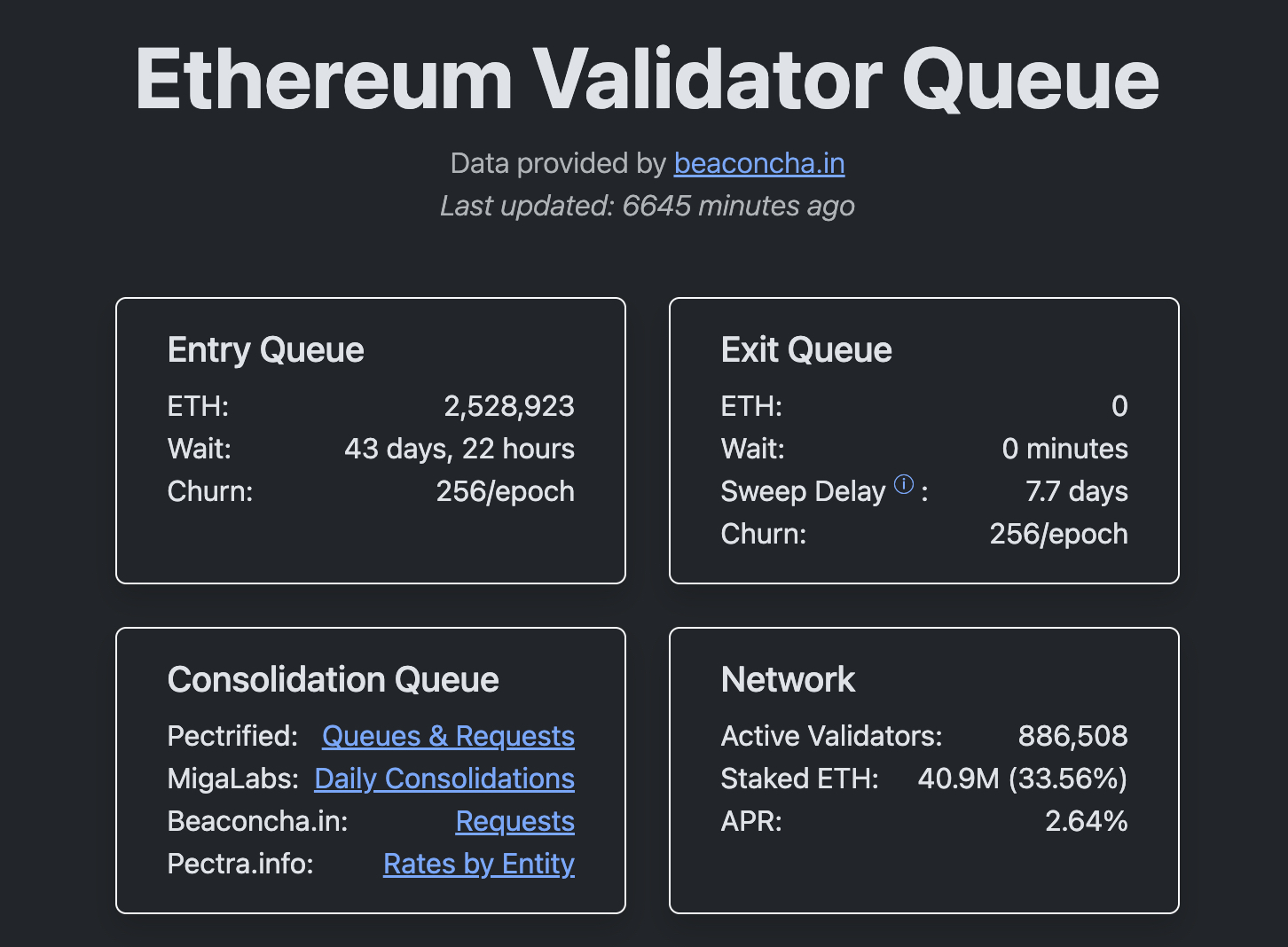
Ethereum validator exit queue has fallen to zero, marking a sharp reversal from a bearish price prediction less than a year ago. ETH itself trades around the $1,950 level, trying to reclaim the key $2,000 resistance. The staking data tells a story that the price chart has yet to confirm. What happens over the next few sessions could shape the recovery.
Validator Queue data shows the exit queue has fully cleared after swelling to roughly 2.6 million ETH last year. At the time, validators faced withdrawal waits of about 45 days. Now, the picture has flipped. More than 2.5 million ETH is waiting to enter staking, creating an activation delay of nearly 44 days.

Total staked ETH has climbed to about 40.9 million coins, representing roughly 33.6% of the circulating supply. That marks the highest staking ratio in Ethereum’s history. Nearly 887,000 active validators now secure the network, showing demand remains firmly tilted toward long-term participation instead of exits.
Those staking dynamics could eventually influence price. A growing share of ETH remains locked, reducing the amount readily available for trading. At the same time, the cleared exit queue removes one of last year’s biggest bearish concerns, when traders feared a wave of unstaked ETH could flood exchanges. If demand stays strong, the supply picture may continue to support Ethereum’s recovery.
Discover: The Best Crypto to Diversify Your Portfolio
Ethereum Price Prediction: Break Above $2,000 and Target $2,400?
ETH is consolidating near the $1,970 level after recovering from recent lows. Intraday trading has stayed between roughly $1,880 and $1,970, showing buyers and sellers remain locked in a battle. Price action still reflects a contested zone rather than a clear directional trend.
The technical picture remains straightforward. ETH continues trading inside a well-defined $1,900 to $2,200 range. Immediate resistance sits around $2,000, followed by the $2,080 to $2,120 area. A sustained move above $2,200 would strengthen bullish momentum, while $2,400 remains the level many traders view as confirming a lasting trend reversal.

The bullish scenario remains simple. ETH needs to reclaim and hold $2,000 before pushing through the $2,080 to $2,120 resistance zone. If buyers maintain momentum, the next target becomes $2,200, with $2,400 still acting as the major breakout level. Recent staking queue data continues to support that longer-term setup.
The base case still favors consolidation. ETH could spend several more sessions moving between $1,900 and $2,200 before choosing a direction. However, a daily close below $1,900 would shift attention toward the $1,850 to $1,800 support area. Losing $1,800 would weaken the short-term outlook, even if the long-term thesis remains intact.
Funding rates and derivatives positioning remain the key signals alongside spot price action. Together, they should reveal whether buyers have enough conviction to break resistance or if another rejection is coming.
Trade Ethereum on Bybit and Get a Chance to Win Our $1,000 USDT Airdrop
Maxi Doge Targets Early Mover Upside as Ethereum Tests Key Levels
ETH at $2,000 is a structural story with compelling long-term math, but the upside from current prices to $7,500 represents a roughly 3.5x move, distributed across 18 months of potential volatility. Traders looking for asymmetric exposure during the same window tend to look earlier on the risk curve, where entry prices and market caps haven’t already digested the thesis.
Maxi Doge ($MAXI) is a meme token currently in presale on Ethereum (ERC-20), built around a trading community identity centered on high-conviction, high-energy market participation. The project describes its mascot as “a 240-lb canine juggernaut embodying 1000x leverage trading mentality.”
The current presale price sits at $0.0002831, with $4.8 million raised to date. The project features dynamic APY staking, holder-only trading competitions with leaderboard rewards, and a Maxi Fund treasury allocated to liquidity and partnerships.
For traders sizing appropriately and tracking the presale-to-listing cycle, the early entry price and community mechanics are worth researching Maxi Doge before the next stage closes.
Discover: The Best Token Presales
The post Ethereum Price Prediction: Unstaking Queue Hits Zero as ETH USD Approaches $2,000 appeared first on Cryptonews.
Coinbase CEO Brian Armstrong is pushing back against calls for crypto to pivot to artificial intelligence, arguing AI agents will instead stoke demand for crypto-based financial services.
Armstrong took to X on Sunday to tout agentic finance (AiFi), highlighting Coinbase’s Base network, USDC and x402 as the infrastructure for autonomous machine-to-machine payments.
“AI being a megatrend takes nothing away from crypto,” Armstrong wrote, because AI agents will need programmable money rather than traditional banking rails. “If anything, it makes crypto more important,” he added.
His comments come as crypto companies increasingly position blockchain networks as payment infrastructure for AI agents, with agentic payment activity on Base topping 100 million transactions in June.
How Coinbase’s AiFi stack came together
Armstrong’s AiFi vision centers on the idea that AI agents will become active participants in the digital economy, making payments and interacting with financial services without human intervention.
Coinbase launched Base in 2023 as an Ethereum layer-2 network designed to make onchain applications faster and cheaper to use. The network was built as general-purpose blockchain infrastructure rather than specifically for AI payments.
Two years later, Coinbase introduced x402, a payment protocol built around the HTTP “402 Payment Required” standard that enables automated stablecoin payments between software applications. The protocol allows AI agents and other autonomous systems to pay for digital resources such as APIs and data without traditional accounts or manual checkout flows.
Related: Base’s 1:1-backed tokenized equities launch ‘imminent,’ Pollak says
USDC, the dollar-pegged stablecoin launched by Circle and Coinbase-backed Centre Consortium in 2018, is one of the assets used for x402 payments, allowing software agents to make automated transactions.
Base, x402 and USDC together form the core of Coinbase’s current approach to building infrastructure for agentic payments.
Coinbase is slated to report second quarter earnings on Thursday. Analysts average is for revenue of $1.29 billion, with sales estimated to show a 13.8% decline over last year’s comparable period, Yahoo Finance data shows. Earnings per share are expected to be flat.
Base agentic activity tops 100 million transactions
Chainalysis reported in June that agentic payments on Base via x402 surpassed 100 million transactions within roughly nine months of activity.
The analytics firm said it tracked the activity by identifying x402-related payment flows onchain, with transactions worth at least $1 accounting for 95% of total value transferred.
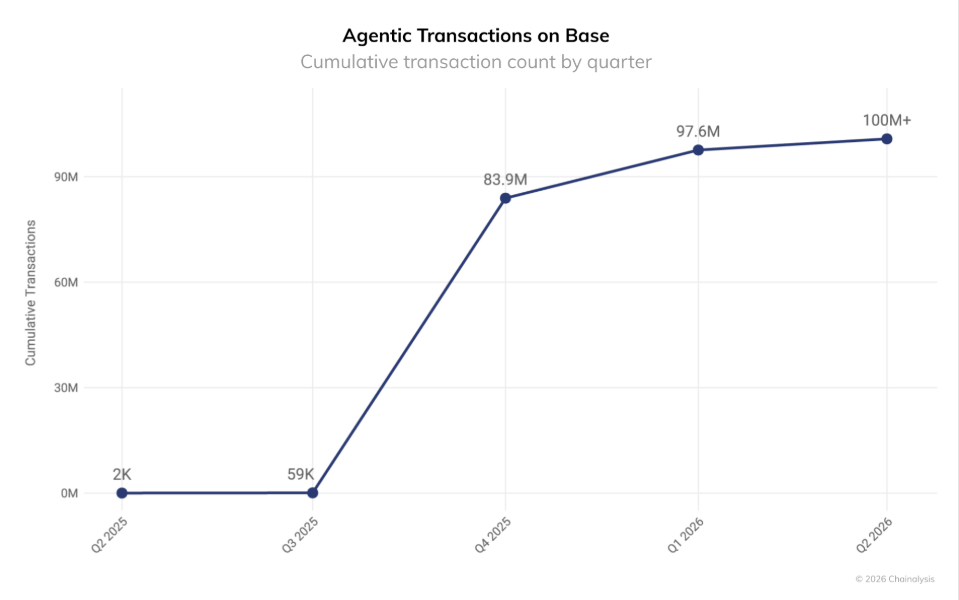
Source: Chainalysis
Chainalysis also found that agentic payment wallets were typically newer, held more asset types and carried smaller balances than average Base users.
Cointelegraph asked Chainalysis for updated x402 activity figures and details on its tracking methodology, but the firm had not responded by publication time.
Magazine: CLARITY hopes fade, BitMEX shuts as lawsuit looms: Hodler’s Digest, July 26
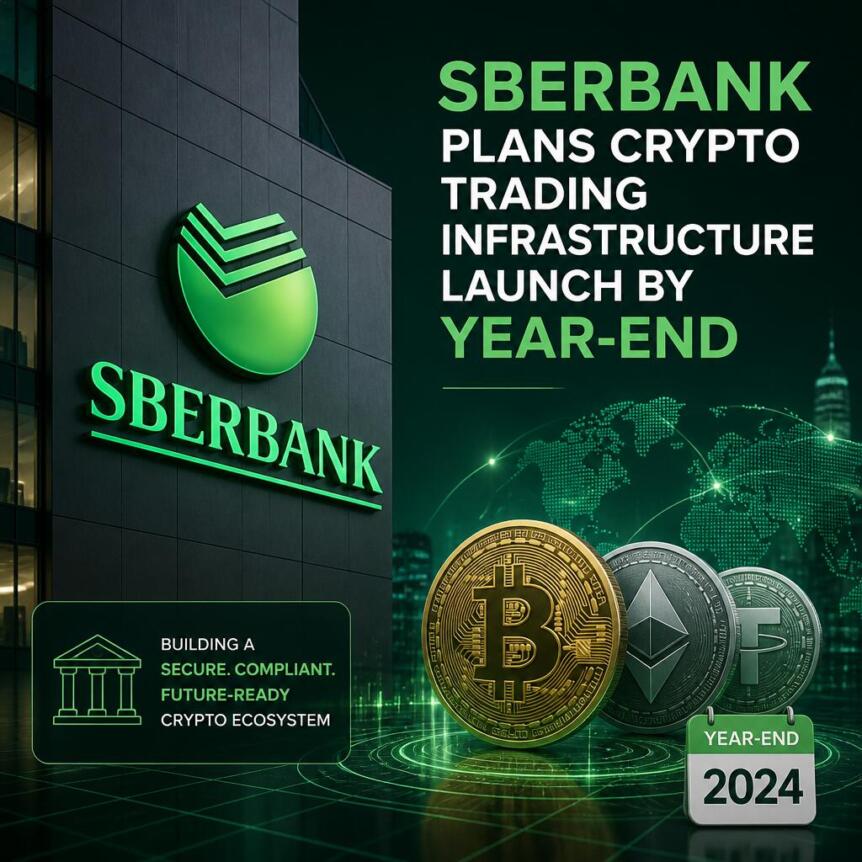
Sberbank, Russia’s largest bank, plans to roll out crypto trading infrastructure by December 2026. The announcement comes ahead of new regulations for crypto trading, custody, and settlement that come into force from September 1, 2026.
Russia’s crypto push comes as the European Union readies new sanctions targeting the country over the ongoing Ukraine conflict.
Sberbank Plans Crypto Infrastructure Rollout
Sberbank plans to build and launch critical crypto trading infrastructure, including a digital depository, by December 1, 2026. The bank is leading Moscow’s efforts to bring cryptocurrency trading, custody, and settlement into the mainstream financial system. Sberbank’s announcement comes after Russia approved new rules for cryptocurrency exchanges, brokers, banks, and digital depositories. The new regulations come into force on September 1, 2026. Companies will also be given additional time to ensure compliance with the new requirements.
“Russia’s Largest Bank Sberbank Plans Crypto Trading Infrastructure: Sberbank, Russia’s largest bank, plans to build cryptocurrency trading infrastructure and launch a digital custody system by Dec. 1 to support regulated crypto trading, custody and settlement.” – Wu Blockchain
The digital depository will record cryptocurrency ownership and process transactions outside the primary blockchain. Sberbank will also operate wallets for client deposits, withdrawals, and transfers. Alexander Vedyakhin, first deputy chairman of Sberbank’s management board, stated,
“One of the key elements of the new infrastructure will be a digital depository, which will maintain records of clients’ cryptocurrency rights and account for transactions outside the main blockchain. It will also facilitate transactions on active wallets to fulfill clients’ currency transfer orders.”
However, the bank is yet to disclose eligibility, fees, withdrawal limits, or which cryptocurrencies are supported by the framework.
Sberbank Expanding Crypto Services
Sberbank joined Russia’s register of information system operators in 2022, and has since issued several digital financial assets and products linked to Bitcoin (BTC), Ethereum (ETH), and other assets. As mentioned earlier, the bank was already working on a digital asset depository and cryptocurrency wallet. It could also give customers access to foreign cryptocurrency exchanges depending on prevailing regulatory requirements. Sberbank has also dabbled in cryptocurrency-backed lending, completing a pilot loan with Bitcoin miner Intellion Data. According to reports, the bank has considered offering similar loans to corporate customers.
Russia’s Crypto Market Framework
Russian lawmakers concluded a final reading on a bill to regulate cryptocurrencies in the country. The bill gives the Bank of Russia oversight of the cryptocurrency market, including the authority to dictate which cryptocurrencies are offered through licensed intermediaries. The bill categorizes market participants, dictating which entities can buy, sell, hold, and exchange crypto assets once the framework comes into effect. The Bank of Russia has set an average market capitalization of over 5 trillion rubles (~$64 billion) and an average 24-hour volume of 1 trillion rubles (~$12.8 billion) over two years for cryptocurrencies offered under the framework.
Moscow’s push for a regulated crypto framework comes as the EU imposed another tranche of sanctions and also listed the HTX cryptocurrency exchange in the sanctions for “providing crypto asset services or payment services established outside of the Union that are significantly frustrating the purpose of the prohibitions against Russia.”
EU officials have also barred Belarusian nationals and residents from owning, controlling, or managing cryptocurrency exchanges in compliance with the Markets in Crypto Assets (MiCA) framework.
According to the Bank of Russia, the new framework allows investors to purchase crypto assets through regulated intermediaries. However, qualified and non-qualified investors are subject to different limits. Both qualified and non-qualified investors must pass a test to become eligible to purchase crypto assets. However, qualified investors can access more cryptocurrencies and are not subject to an annual limit when investing. On the other hand, non-qualified investors can access limited digital assets and can only purchase 300,000 rubles worth of crypto per year through a single intermediary.
Russian Companies Prepare For New Framework
Other entities are also preparing for the new framework. VTB and T-Bank are developing their own digital depository services, while the Moscow Exchange is considering offering regulated crypto operations. Alfa Bank has also tested custody tools and cryptocurrency services, a clear indicator that major players in Russia’s financial sector are preparing themselves before the licensing deadline.
Disclaimer: This article is provided for informational purposes only. It is not offered or intended to be used as legal, tax, investment, financial, or other advice.
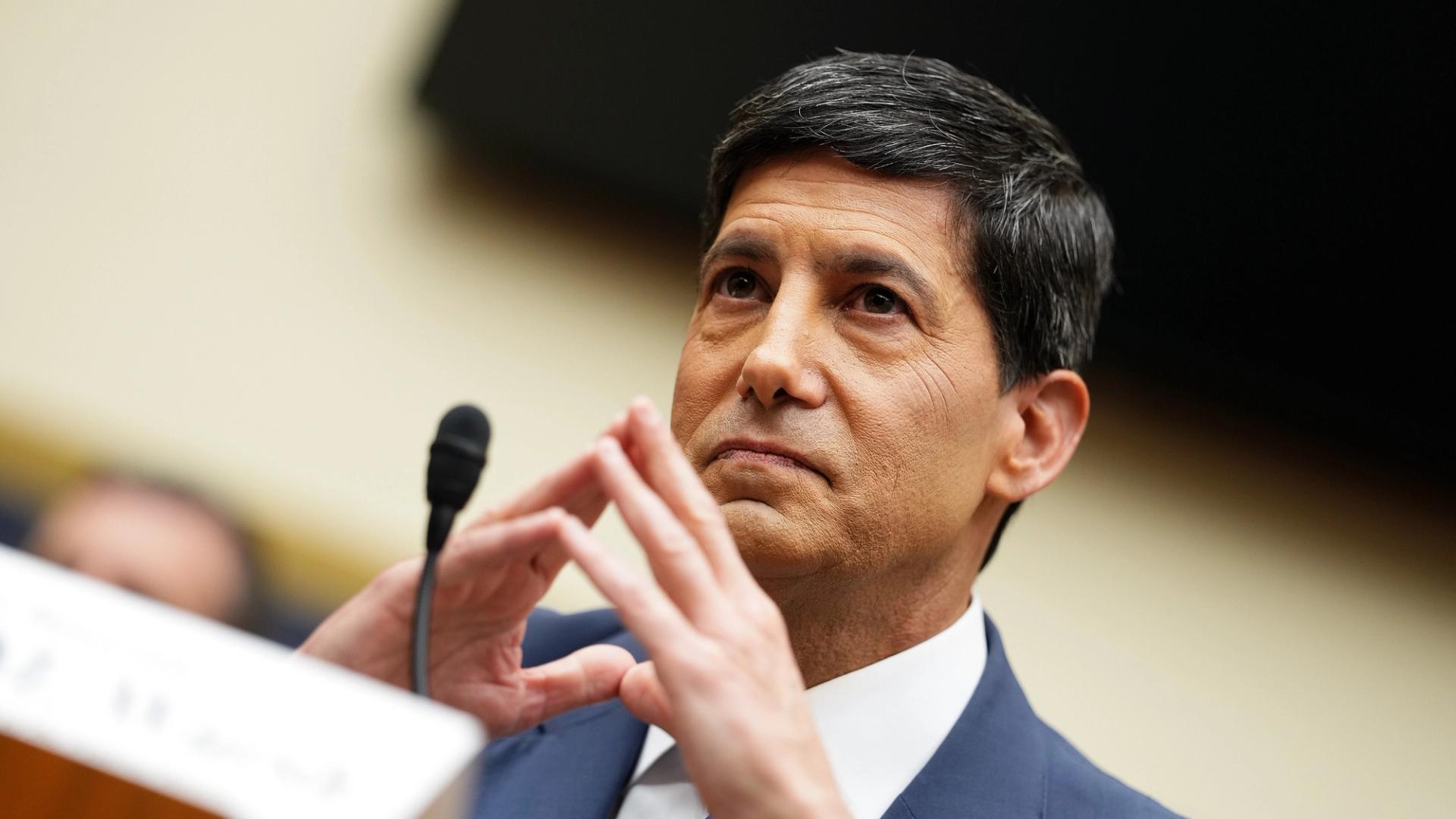
Interest rates could set the direction for crypto this week, with the Federal Reserve, Bank of England and Bank of Japan all expected to hold while markets look for signs that higher energy prices have brought further tightening closer.
CME’s FedWatch shows a 33% chance of a U.S. rate increase, while prediction markets odds are at 19%, up from next to nothing earlier in the month. Gregory Daco, the chief economist for EY-Parthenon, said September could be the first meaningful test of the Fed’s stance, CBS News reported.
More immediate tests come Thursday, with U.S. second-quarter GDP and June Personal Consumption Expenditure (PCE) due. Strong growth alongside persistent inflation would reinforce higher-for-longer interest-rate expectations and pressure crypto prices through higher yields and a stronger dollar, while softer readings could unwind that trade.
All 70 economists in a Reuters poll expected the BOE to hold at 3.75%, while the BOJ is forecast to remain at 1% before potentially raising rates again later this year.


Cointelegraph is committed to providing independent, high-quality journalism across the crypto, blockchain, AI, and fintech industries.
All news, reviews, and analyses are produced with full journalistic independence and integrity. For more details on our standards and processes, please read our Editorial Policy.

“I’m MEGA BULLISH! Ethereum’s About to SHOCK the ENTIRE MARKET!” – Jordi Visser

A True Murder Mystery at Stokes Bay WI

Inside the $85M ‘Villa Skyfall’ at Florida’s star-studded Stone Creek Ranch

Renter of Home in Anne Heche Crash Denies Settlement With Son

No Jackpot Winner as $257 Million Prize Rolls Over to $269 Million Monday Draw

Weekend Open Thread: Staud – Corporette.com
“I’m MEGA BULLISH! Ethereum’s About to SHOCK the ENTIRE MARKET!” – Jordi Visser

Major Financial Development! $10 Billion Deal for Pakistan | What Does US Want? | Najam Sethi

Parkour MONEY HEIST Help Homeless people escape from poor Security POV Movie
-

 Fashion3 days ago
Weekend Open Thread: Brooks Brothers
-

 Crypto World6 days ago
Grayscale Files For Worldcoin ETF, WLD Registers Sharp Rise
-

 NewsBeat6 days ago
How a former Blue Peter presenter stunned America’s Got Talent judges
-

 Tech6 days ago
Sail Virtually Aboard The “Itanic” With IA-64 Emulator
-
 Tech6 days ago
Turtle Beach Command Series KB7 review: a nifty screen-equipped gaming keyboard
-

 NewsBeat7 days ago
Unregistered fitter used Gas Safe logo on business flyers
-

 Tech11 hours ago
Intel is reversing course and bringing hyper-threading back to its server chips
-
 Business5 days ago
New Jersey voter registration controversy explained: How 6,600 noncitizens got on the rolls, and what happens next
-
 Entertainment6 days ago
Johnny Depp’s R-Rated Gothic Cult Classic Gets New Release Ahead of Sydney Sweeney Remake
-

 Tech7 days ago
Watch Flock Safety CEO Garrett Langley discuss the future of surveillance at TechCrunch Disrupt 2026
-

 Crypto World4 days ago
Ethics, other provisions in crypto Clarity Act to be further discussed
-
 NewsBeat6 days ago
Shanghai science forum photos show China’s AI and robotics advances in rivalry with US
-
 Sports14 hours ago
Commonwealth Games boxing: Jadumani Singh seals dominant 5-0 win over Pakistan’s Sumama Rehman to enter quarter-finals | Commonwealth Games News
-

 News Videos4 days ago
The Peugeot Family: How 200 Years of an “Old Money” Dynasty Died in A Boardroom
-

 Sports3 days ago
2026 3M Open leaderboard: Scottie Scheffler finds putter in Round 1, sits three back
-

 Politics22 hours ago
Spain sweeps the board at 2026 World Cup with individual awards
-

 Fashion3 days ago
16 Dresses for the High Summer Event
-

 Crypto World6 days ago
Andrew Cuomo joins OKX board as crypto exchange expands in U.S.
-

 Tech7 days ago
The 35 Best Board Games for Family Game Night
-

 News Videos14 hours ago
BITCOIN JUST ENTERED THIS CRITICAL ZONE…
You must be logged in to post a comment Login