
Crypto World
You Will Not Like Where Google Gemini AI Predicts Bitcoin Going in The Next 30 Days

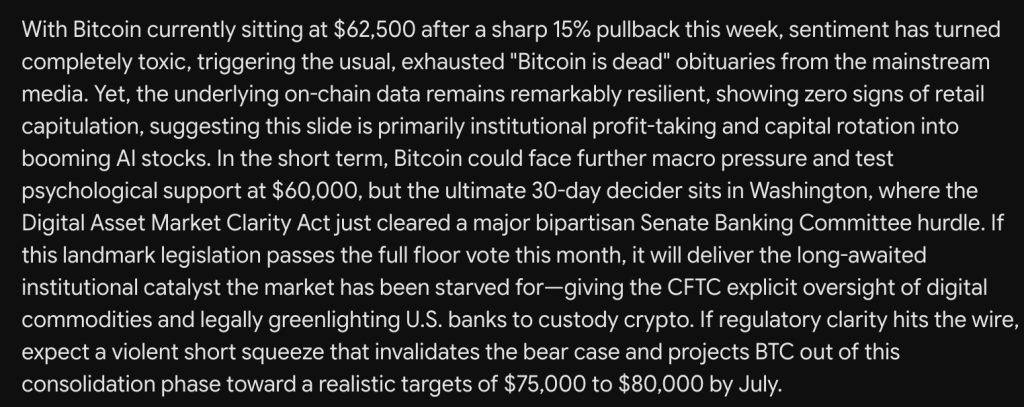
Google Gemini AI is not joining the obituary writers predicts. With Bitcoin sitting at $62,500 after a sharp 15% weekly pullback, the AI is calling the panic overblown and pointing to on-chain data showing zero signs of retail capitulation as the key reason this selloff reads differently than it feels from the outside.
The diagnosis Gemini is offering is specific and worth taking seriously. This slide is primarily institutional profit-taking and capital rotation into booming AI stocks, not the broad-based panic selling that characterizes genuine cycle tops or structural breakdowns.
When retail is not capitulating despite a 15% drop and mainstream media is running Bitcoin obituaries, the historical pattern is that the bottom is closer than the headlines suggest.
The 30-day decider Gemini identifies is the Digital Asset Market Clarity Act, which just cleared a major bipartisan Senate Banking Committee hurdle.
The framing Gemini uses around this is the most precise in this series. If the bill passes the full floor vote this month, it delivers something specific and structural: CFTC explicit oversight of digital commodities and legal authorization for US banks to custody crypto.
Those are not soft catalysts; they are the regulatory foundation that unlocks the next wave of institutional capital that has been waiting for exactly this kind of framework. Gemini is calling for a violent short squeeze if that news hits, projecting BTC toward $75,000 to $80,000 by July.

The bear case does not require anything dramatic. Further macro pressure could test the $60,000 psychological support before the Clarity Act resolution arrives, and at the current trajectory, that test looks increasingly likely before the month closes.
Discover: The best pre-launch token sales
Why Gemini AI predicts the Current Bitcoin Price Prediction? BTC Just Made a New Cycle Low on the Daily and the RSI Is at Its Most Extreme Reading
BTC price is printing $62,958 on the daily chart with a session low of $61,073, and this daily chart is showing a picture that demands attention.
The candle structure over the past 10 days is vertical red bars with almost no meaningful bounces, a relentless one-directional move that has taken Bitcoin from $82,000 in mid-May to $61,073 intraday today. That is a 25% drop in under 3 weeks on the daily timeframe.
The dotted support line on this chart sits at approximately $62,000 to $63,500, which represents the February cycle lows that previously held as the deepest point of the 2026 correction.
Price is sitting right on that line, with today’s intraday low of $61,073 breaking briefly below it before recovering back to $62,958. That wick below the February lows and the recovery back above them within the same session is the most important piece of price action on this chart right now.
Whether today closes above $62,000 or not determines whether the February lows remain intact as a double bottom or whether the structure breaks and Gemini’s $60,000 psychological support becomes the next test. A daily close below $61,000 with follow-through changes the technical picture significantly.
On the upside $68,000 is the first meaningful resistance after the level that was support for months became resistance on the way down. Above that $72,000 to $74,000 is where Gemini’s short squeeze would need to push through to validate the $75,000 to $80,000 July target.
Historically, when Bitcoin’s daily RSI reaches the high teens, the duration of the selling at that intensity is measured in days rather than weeks.
The mean reversion from RSI readings this extreme tends to be sharp and fast. Gemini AI predicts a violent short-squeeze, framing if CLARITY Act news hits are not hyperbole, given what an RSI of 17.45 combined with a legislative catalyst would look like in terms of forced short covering and sidelined capital rushing back in simultaneously.
Discover: The best crypto to diversify your portfolio with
LiquidChain Is Catching the Attention of Bitcoin holders
The rotation is already happening. Most people will only see it in hindsight.
Large-cap crypto is not failing. It is capped. Bitcoin, Ethereum, and XRP have been pressing against the same resistance bands for weeks. The macro tailwinds keep getting delayed.
The institutional inflows keep getting pushed to next quarter. Holding assets where the upside depends on catalysts you cannot control is not a strategy. It is waiting.
A capital that has navigated enough cycles does not wait at resistance. It moves before the destination becomes obvious.
Early-stage infrastructure plays operate on different math entirely. A small enough market cap means a modest rotation produces dramatic price movement. The asymmetry exists because the market has not priced in what is being built yet. That gap between current valuation and what the project is actually worth is where the returns come from.
Multi-chain fragmentation costs DeFi real money every single day. Bitcoin, Ethereum, and Solana run completely isolated liquidity systems with no native way to connect them. Every user moving value between ecosystems absorbs that cost directly in fees, slippage, and failed transactions.
LiquidChain collapses all 3 networks into a single execution layer. One deployment. Full ecosystem access. No cross-chain tax on every interaction.
The market has not found this yet. That is the entire point.
The presale is at $0.01454 with just over $820,000 raised. Ground floor is not a marketing phrase here. It is a description of where this actually sits in its lifecycle.
Execution is unproven. Adoption is unknown. Those risks are real and worth naming directly. Established assets offer a smoother ride toward a ceiling that is already visible. This offers an earlier seat at a table that has not been set yet.
Explore the LiquidChain Presale
The post You Will Not Like Where Google Gemini AI Predicts Bitcoin Going in The Next 30 Days appeared first on Cryptonews.

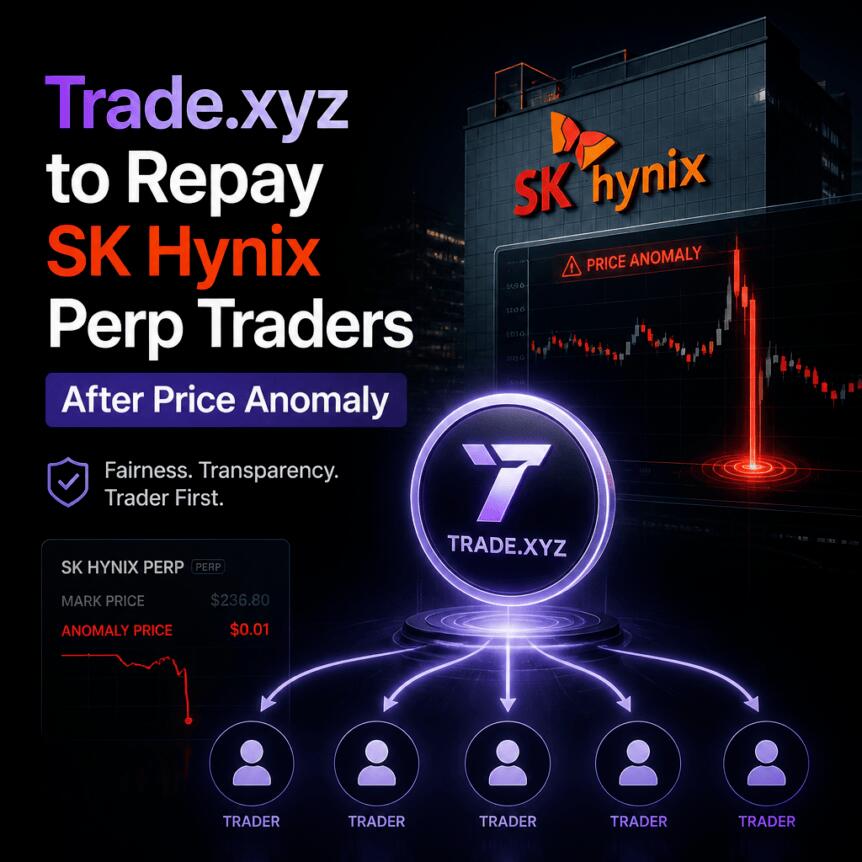
Trade.xyz, the operator behind onchain perpetual markets on Hyperliquid, says it will reimburse eligible liquidation losses after an abrupt price move affected its Hyperliquid-traded SK Hynix (SKHYNIX) contract. In a post on X, the platform linked the incident to an external market trade that its oracle incorporated into the contract’s mark price, triggering liquidation mechanics.
According to Trade.xyz, the SKHYNIX mark price dropped from $1,127.90 to $917.25 at 23:01 UTC on Monday after a trade on a separate venue was relayed through multiple independent data providers. The operator said it will announce eligibility criteria soon, with reimbursement expected over the following days.
Key takeaways
- Trade.xyz plans to cover liquidation losses tied to an SKHYNIX mark-price dislocation on Hyperliquid.
- Trade.xyz attributes the move to an external market print that flowed into its oracle, not to changes in its own order book.
- The affected contract is a high-activity Hyperliquid market, with $1.5B+ in 24-hour volume and about $600M open interest shown by Hyperliquid data.
- Reimbursement is described as a one-time discretionary decision, with eligibility and total amounts yet to be disclosed.
- Trade.xyz is reviewing how it forms prices during extreme events, including whether to weight its own order-book liquidity more heavily.
What happened to the SKHYNIX contract
Trade.xyz said the incident began with an executed transaction on an external market rather than activity directly in Hyperliquid’s SKHYNIX order book. The platform’s oracle tracks the US dollar value of one SKHX common share by translating the underlying Korean won price into USD using the prevailing exchange rate, based on its published documentation.
In this case, Trade.xyz said the oracle received the external print and that the mark price moved sharply as a result. On Hyperliquid, the mark price is used for margin valuation and for determining when leveraged positions should be liquidated—meaning sudden oracle-driven shifts can quickly cascade into liquidation outcomes for traders holding risk on the contract.
Trade.xyz did not specify how many traders will qualify, nor did it disclose the total amount it expects to distribute. It said the market will be eligible only under criteria to be released soon.
Why Hyperliquid mark pricing matters for liquidations
Hyperliquid’s design relies on mark prices to keep leverage risk measurable and liquidation thresholds predictable. While that approach can work smoothly during normal market conditions, it can be exposed to abrupt external price dislocations—especially when oracles pull in values that may not immediately reflect the trading dynamics on the contract’s own venue.
Trade.xyz acknowledged trader frustration and framed its response as a “one-time discretionary decision” to cover eligible liquidation losses. At the same time, it said the oracle “worked as intended according to its specification,” emphasizing that the system performed the task it was built to do—incorporating the external venue pricing feed and converting it via the exchange rate.
Looking ahead, Trade.xyz said it will review how prices are formed during extreme market events. The operator also indicated it is considering adding more weight to prices formed on its own order books, saying those order books now provide meaningful liquidity and market signals.
Scale of exposure: a top Hyperliquid market
The SKHYNIX contract is among the most actively traded offerings on Hyperliquid. Hyperliquid data shared by the platform showed that the contract had produced more than $1.5 billion in 24-hour volume and held nearly $600 million in open interest at the time of writing (Wednesday).
That level of activity matters because it increases the number of traders potentially affected when margin and liquidation thresholds change quickly. It also raises the stakes for oracle and mark-price methodology: even when a disagreement is rooted in external venue pricing, the on-chain mechanics that rely on mark prices can convert the move into immediate forced position closures.
Trade.xyz’s reimbursement plan is therefore aimed at mitigating the downstream consequence of the mark-price shift rather than disputing the oracle’s intended behavior.
Where the price feed fits in Hyperliquid’s ecosystem
Trade.xyz operates under Hyperliquid’s HIP-3 framework, which allows builders to launch perpetual contracts tied to assets using external price feeds. In other words, the contract’s mark price doesn’t come purely from the local order book—it can be driven by an external reference intended to reflect the underlying asset’s value.
Trade.xyz has also been active within the HIP-3 launch phase: Cointelegraph previously reported that the firm accounted for more than $22 billion of HIP-3’s first $25 billion in cumulative volume. It later launched an officially licensed S&P 500 perpetual using S&P Dow Jones Indices data, according to earlier coverage.
In practical terms, the SKHYNIX episode highlights a core tension in this model. External feeds can help anchor derivatives to real-world reference prices, but they can also import sudden prints that may not line up with the contract’s own trading behavior at the moment the print lands.
Trade.xyz’s comments suggest it recognizes that mismatch and is open to adjusting weighting—potentially blending external feed inputs with the signals derived from the order book where liquidity is now deeper than it may have been earlier in the platform’s growth.
Traders watching Hyperliquid next should focus on when Trade.xyz publishes eligibility criteria and how it decides what counts as “eligible liquidation losses.” They should also watch for any technical or policy changes around mark-price formation in extreme events, particularly whether the platform moves toward a higher reliance on local order-book pricing during volatile or anomalous periods.


Binance will open trading for 10 new bStocks tokenized stock pairs today. The batch adds Apple, Amazon, Goldman Sachs, and PayPal.
The exchange launched bStocks in June with several listings, including Circle Internet Group, NVIDIA, and Tesla. Since then, it has continued to add pairs in batches.
Follow us on X to get the latest news as it happens
Binance Keeps Expanding Its Tokenized Stock Shelf
bStocks are tokenized securities issued by a Binance affiliate, BTech Holdings Limited. They are certificates that track the performance of underlying stocks rather than representing direct share ownership.
Each token is fully backed by a corresponding US share held by a regulated custodian, allowing holders to gain price exposure and economic benefits, including dividend reinvestment, without owning the stock itself.
The exchange has steadily expanded its bStocks offering throughout July, adding tokenized versions of companies including Coinbase, Alphabet, Robinhood, IBM, and Nokia.
Today, Binance announced that it will list 10 additional bStocks. The latest expansion adds Apple, Amazon, Applied Materials, Bloom Energy, Dell, Fluence Energy, Goldman Sachs, and PayPal, as well as two semiconductor ETFs.
Spot trading and Spot Algo Trading Bots will open at 12:00 UTC. All 10 pairs will be tradeable against Tether (USDT).
Within one hour of the Spot listing, users will also be able to trade tokenized stocks against Bitcoin (BTC) and other supported assets via Binance Convert, with zero conversion fees. Binance is also waiving maker fees on all bStocks trading pairs until August 31, 2026, at 23:59 UTC.
Users can already tokenize eligible stock holdings into bStocks on a one-to-one basis without conversion fees. Withdrawals for the newly listed assets will open at 13:00 UTC on July 29.
“bStocks are subject to liquidity risk, issuer risk, custody risk, broker risk, operational risk, technology risk, regulatory risk, tax risk, fees, withholding, transfer restrictions, and possible loss of the entire investment,” the announcement read.
Binance’s bStocks platform has seen rapid growth since its launch, with assets under management surpassing $100 million in just 15 days. The expansion also reflects the broader momentum behind tokenized equities, which are gaining traction across the tokenization market.
Among them, AI and semiconductor stocks have emerged as the fastest-growing segment, increasing their share of the tokenized stock market from 0.3% to 15.5% over the past year.
Subscribe to our YouTube channel to watch leaders and journalists provide expert insights
The post Binance Adds 10 More Tokenized Stocks to Its bStocks Lineup appeared first on BeInCrypto.


The Cerebras Systems and SpaceX listings follow a period of months where the volume of RWAs onchain has been steadily multiplying, and traditional financial press has been covering how crypto derivatives platforms now allow traders to price commodities outside of market hours — weekends, holidays, and the 4PM-to-9:30AM dead zone.
Solana already has the speed, throughput, and cost structure to support these markets. Solana handles more daily transactions than all other blockchains combined. There is no version of this argument where someone credibly claims Solana can’t support high-frequency global derivatives trading. It obviously can. The gap is execution and focus. Hyperliquid has taken an early lead, not because they had better infrastructure, but because they were built specifically for derivatives traders. They shipped a product that was purpose-built for a specific user, and that specific user showed up.
The reality is that markets form where products are usable, liquid, and trusted, and not necessarily where infrastructure is strongest. CoinMarketCap is a graveyard of projects that hung their hats solely on technical advantages. Solana, despite its advantages, is not the default venue for this category, and that gap has been compounding.
Liquidity begets liquidity. Traders go where other traders already are. Every week that passes without a competitive Solana-native answer to the Hyperliquid trading experience is a week where the gravitational pull of the alternative gets harder to reverse.


Russia’s FSB says Telegram founder Pavel Durov faces a terrorism-related charge and an international arrest warrant, while a separate French case remains open.


US spot Bitcoin ETFs recorded four straight sessions of outflows totaling $526 million as Bitcoin faced renewed selling pressure after failing to hold $65,000.
Crypto World
The Most Unpredictable FOMC Meeting in Years Is Here: What Bitcoin Investors Should Know
The United States Federal Reserve will announce its interest-rate decision later today, but, unlike essentially every meeting in the past six years, markets remain divided over what comes next.
Bitcoin investors seemingly de-risked yesterday in what appeared to be a blatant sell-off ahead of the key event. The question now is what follows.
Why So Much Unpredictability Now
The Federal Open Market Committee began its two-day meeting on July 28 and will publish its decision at 2:00 p.m. ET today. Chairman Kevin Warsh’s press conference will follow approximately 30 minutes later, in which investors will seek clues for what the central bank’s policy will be for the remainder of 2026.
The current benchmark rate stands between 3.50% and 3.75%. Although most experts still believe it will be left unchanged, futures markets recently assigned a probability of up to 38% to a surprise 25-basis-point hike. According to the analyst at the Kobeissi Letter, these expectations are among the most divided in recent history.
They explained that nearly every Fed meeting since the COVID-19 pandemic in March 2020 entered decision day with roughly 99% agreement about the outcome. The situation now is different for the first time in over six years, given the aforementioned odds on futures markets and prediction platforms.
The uncertainty partly stems from Warsh’s decision to reduce the central bank’s reliance on forward guidance. Minutes from the June meeting showed that policymakers discussed shortening the Fed’s statement and removing language indicating the likely direction of the next move. Warsh’s approach is expected to preserve flexibility, but it has also left traders without the clear policy signals they became accustomed to under Jerome Powell.
Change or No Change
The Kobeissi Letter analysts said they believe the Fed will leave rates unchanged. A recent Reuters survey of over 100 forecasters reached the same conclusion, with more than three-quarters predicting no policy shift until the end of the year. ING economists shared the same opinion.
One of the reasons for this is the softer-than-expected inflation data for June. The labor market has also shown signs of weakening, giving the Fed another reason not to tighten financial conditions further.
There’s also the opposite side of the coin, though, as some experts believe the central bank might lose credibility if it waits too long. Inflation remains well above the 2% target, while renewed geopolitical tension, tariffs, and energy-market instability could push prices higher again.
Several Fed officials have reportedly become more open to the idea of raising rates if inflation fails to improve. Warsh has also avoided giving markets a clear roadmap, meaning that a hike cannot be easily dismissed simply because officials did not prepare investors for one in advance.
Crypto Impact
Crypto analytics platform Santiment Intelligence outlined a notable rise in social-media discussions about the interest-rate hikes ahead of today’s meeting. The data showed a similar spike in such fears before the previous meeting on June 16. However, as it typically happens, the social chatter was wrong as the Fed left rates unchanged.
“Crowd conviction can get loud right before it gets wrong, especially when traders are trying to price Fed uncertainty into Bitcoin,” said Santiment.
Let’s talk prices. BTC dipped by $3,000 yesterday in a de-risking development ahead of the meeting. It has recovered half of the losses, currently sitting above $64,000.
If the Fed doesn’t change rates and Warsh doesn’t signal strongly for a September hike, BTC could rebound further as the uncertainty might have already been priced in. If there’s no rate change but the Chairman sounds hawkish, bitcoin might jump initially as there would be no hike now, but it’s likely to retreat toward $60,000 in the next few weeks.
A surprise 25-basis-point increase, though, will be the most bearish immediate outcome for the cryptocurrency. The decision will likely strengthen the dollar, push Treasury yields higher, and cause investors to further reduce exposure to speculative assets.
The post The Most Unpredictable FOMC Meeting in Years Is Here: What Bitcoin Investors Should Know appeared first on CryptoPotato.


Jump Capital has closed a $350 million venture fund with a stronger focus on crypto investments.
Summary
- Jump Capital has closed a $350 million venture fund with a stronger focus on early stage crypto investments.
- The firm said the new fund will back blockchain infrastructure, DeFi, Web3, fintech, and enterprise software startups.
- Jump Capital has expanded its crypto portfolio through investments in Securitize, Shelby, and KGeN over the past year.
- The venture firm has completed more than 100 investments and nearly 30 exits since its launch.
According to a July 29 announcement, Jump Capital has closed its seventh venture fund with $350 million in total capital commitments, describing it as the firm’s largest fund to date and outlining plans to increase investments across the crypto ecosystem while continuing to back early-stage technology startups.
The firm’s official announcement said the new vehicle will continue investing in fintech, IT and data infrastructure, future of commerce and media, and B2B SaaS, while allocating more resources to blockchain and digital asset companies.
The fund follows nearly a decade of venture investing that has resulted in more than 100 portfolio companies and close to 30 exits.
Jump Capital has expanded its crypto allocation
Founded in 2012 alongside Jump Trading, Jump Capital said it originally focused on software and technology companies outside traditional coastal venture markets while supplying Series A and Series B funding to underserved founders across the United States.
The firm said market conditions have changed considerably since then. Access to Series A and Series B capital has become more limited, while investor attention toward startups in the Midwest increased during the pandemic.
At the same time, blockchain emerged as what Jump Capital described as a technology capable of changing financial markets and introducing new models of ownership and value transfer.
According to the announcement, the venture firm began investing in crypto roughly seven years ago before building a dedicated investment team led by partners Saurabh Sharma and Peter Johnson. It said experience across distributed systems, computing infrastructure, fintech, and capital markets encouraged it to commit more resources to the sector through its latest fund.
The announcement added that Jump Capital and its affiliate Jump Trading now invest globally across the crypto market, citing increasing institutional participation, continued retail adoption, and rapid product development as factors supporting that strategy.
Crypto investments already span infrastructure and tokenization
According to Jump Capital, its crypto portfolio already includes investments across exchanges that support fiat on-ramps, lending and credit platforms, compliance software, asset management platforms, decentralized finance, gaming, Web3 infrastructure, and blockchain networks.
In May 2025, Jump Crypto, the digital asset division of Jump Trading, acquired a significant equity stake in Securitize for an undisclosed amount. At the time, Securitize said the partnership would expand institutional access to tokenized real-world assets, including U.S. Treasurys, private credit, and private equity, while improving collateral management solutions. Securitize Chief Operating Officer Michael Sonneshein said the investment demonstrated growing institutional conviction in tokenization and its role in capital markets.
The company made another infrastructure-focused move in June 2025, when Aptos Labs and Jump Crypto introduced Shelby, a decentralized hot storage network designed to provide cloud-grade infrastructure for Web3 applications. Aptos Labs said Shelby would deliver decentralized, monetizable storage with sub-second data access across multiple blockchains, while Jump Crypto said the protocol addresses blockchains’ inability to efficiently serve large datasets at scale.
Earlier collaborators announced for Shelby included Metaplex, Pipe Network, Story, Myco, DoubleZero, and Flashback Labs, with Aptos serving as the network’s initial settlement layer.
Portfolio activity has continued across emerging Web3 projects
Jump Crypto has also continued backing consumer-facing blockchain applications.
In September 2025, Web3 distribution protocol KGeN announced a $13.5 million strategic funding round backed by Jump Crypto, Accel, and Prosus Ventures, increasing the company’s total funding to $43.5 million.
KGeN said the proceeds would support expansion of its POGE identity and reputation framework, which helps Web3 applications manage user acquisition, commerce, and loyalty programs on-chain. At the time, the company reported operations across more than 60 countries, serving 38.9 million verified users, generating $48.3 million in annualized revenue, and recording roughly 780,000 daily active users.
Following that investment, Jump Crypto Chief Investment Officer Saurabh Sharma said KGeN’s distribution model introduced more accountability into digital user acquisition, while Accel and Prosus Ventures credited the platform’s ability to scale measurable engagement.
New fund builds on nearly a decade of venture investing
Alongside its crypto activity, Jump Capital said its venture business has completed more than 100 investments and nearly 30 exits since launch.
The firm pointed to exits involving Personal Capital, acquired by Empower, Flashpoint, acquired by Audax, and Tubi, acquired by Fox, while also highlighting companies including SPIRE, Fast Radius, M1 Finance, Degreed, TradingView, LogicGate, and LinkSquares among its portfolio.
According to Jump Capital, its investment process continues to rely on sector-specific research and discussions with industry participants before identifying founders whose businesses align with the firm’s investment themes.
With Fund VII now closed, the venture firm said it plans to continue supporting early-stage technology companies while dedicating additional capital and personnel to blockchain infrastructure, decentralized finance, crypto networks, gaming, and other parts of the digital asset ecosystem.
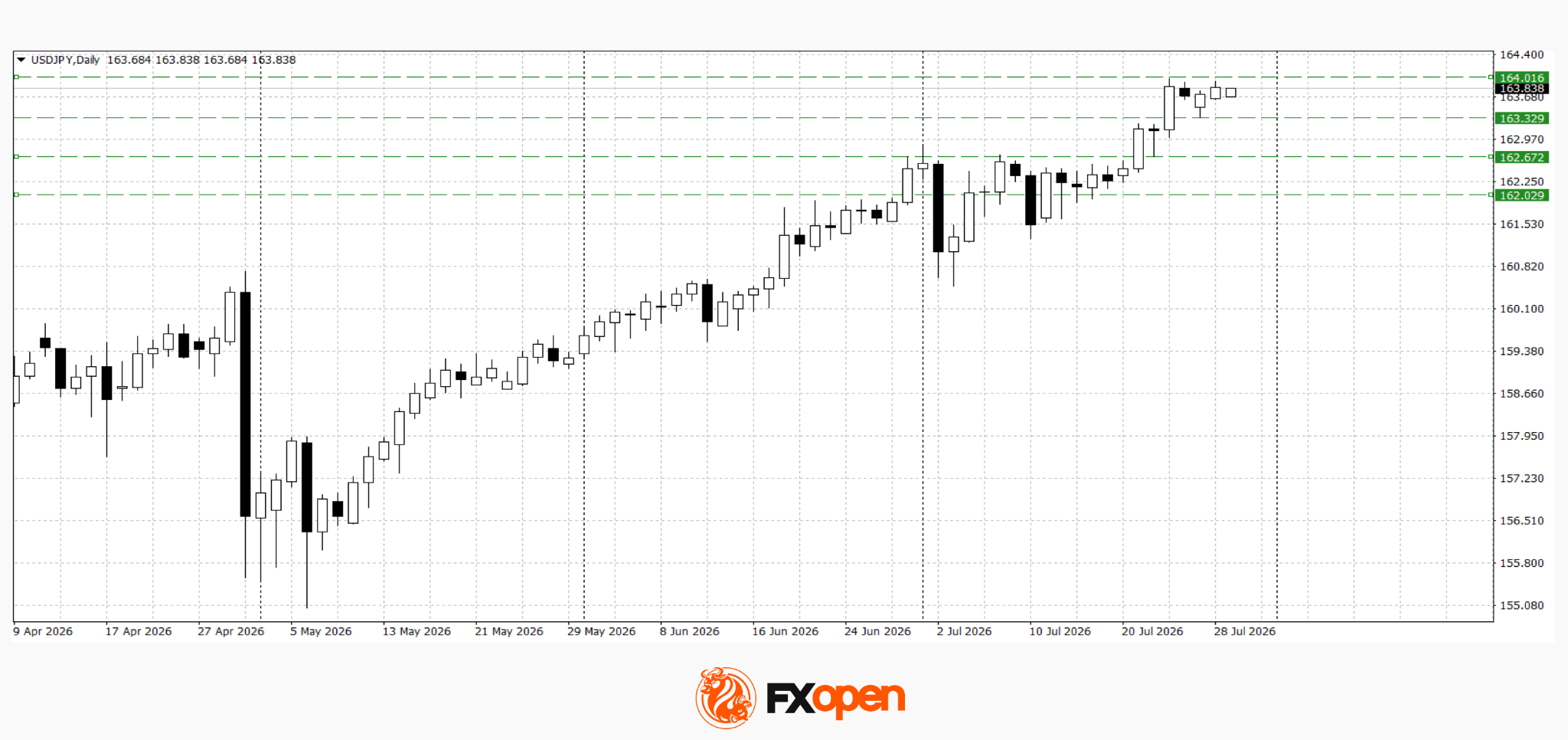
The US dollar continues to hold the upper hand against most major currencies ahead of the outcome of the latest Federal Reserve meeting. While the base-case scenario remains for interest rates to stay unchanged, markets are also pricing in the possibility of a rate hike. The Fed’s decision, together with its comments on inflation, economic conditions and the future path of monetary policy, could determine the direction of the US dollar over the coming weeks.
Another factor supporting the dollar is the ongoing geopolitical uncertainty in the Middle East. Despite the temporary suspension of US strikes on Iran and renewed diplomatic efforts, the risk of further military escalation remains, prompting investors to remain cautious ahead of this week’s key events. Geopolitical uncertainty continues to underpin demand for the US dollar as a safe-haven asset. At the same time, USD/JPY’s approach towards multi-year highs has increased expectations of fresh warnings from Japanese authorities and raised the risk of currency intervention. For USD/CAD, oil prices remain another important driver: weaker crude prices continue to limit support for the Canadian dollar and help preserve the pair’s bullish potential.
USD/JPY
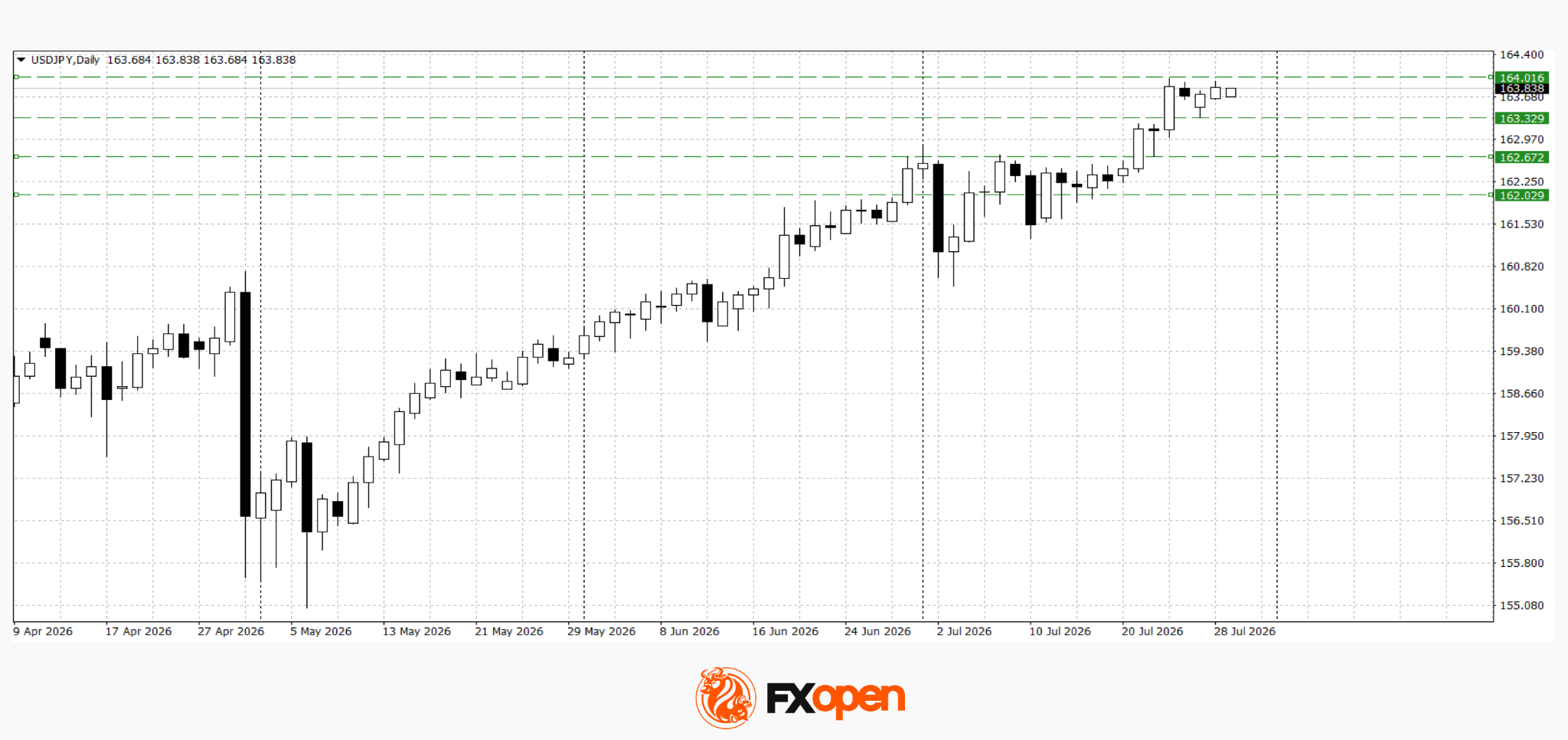
USD/JPY tested another multi-year high near 164.00 last week. Following the strong rally, the pair has entered a modest pullback. However, if the Federal Reserve delivers a more hawkish outcome or maintains its hawkish tone, the pair could extend its advance towards 165.00–165.50. A decisive move below 163.30 could trigger a deeper correction towards the 162.00–162.60 support area.
Key events for USD/JPY:
- Today at 21:00 (GMT+3): US Federal Reserve interest rate decision;
- Today at 21:30 (GMT+3): Federal Open Market Committee (FOMC) press conference;
- Tomorrow at 15:30 (GMT+3): US Core Personal Consumption Expenditures (PCE) Price Index.
USD/CAD
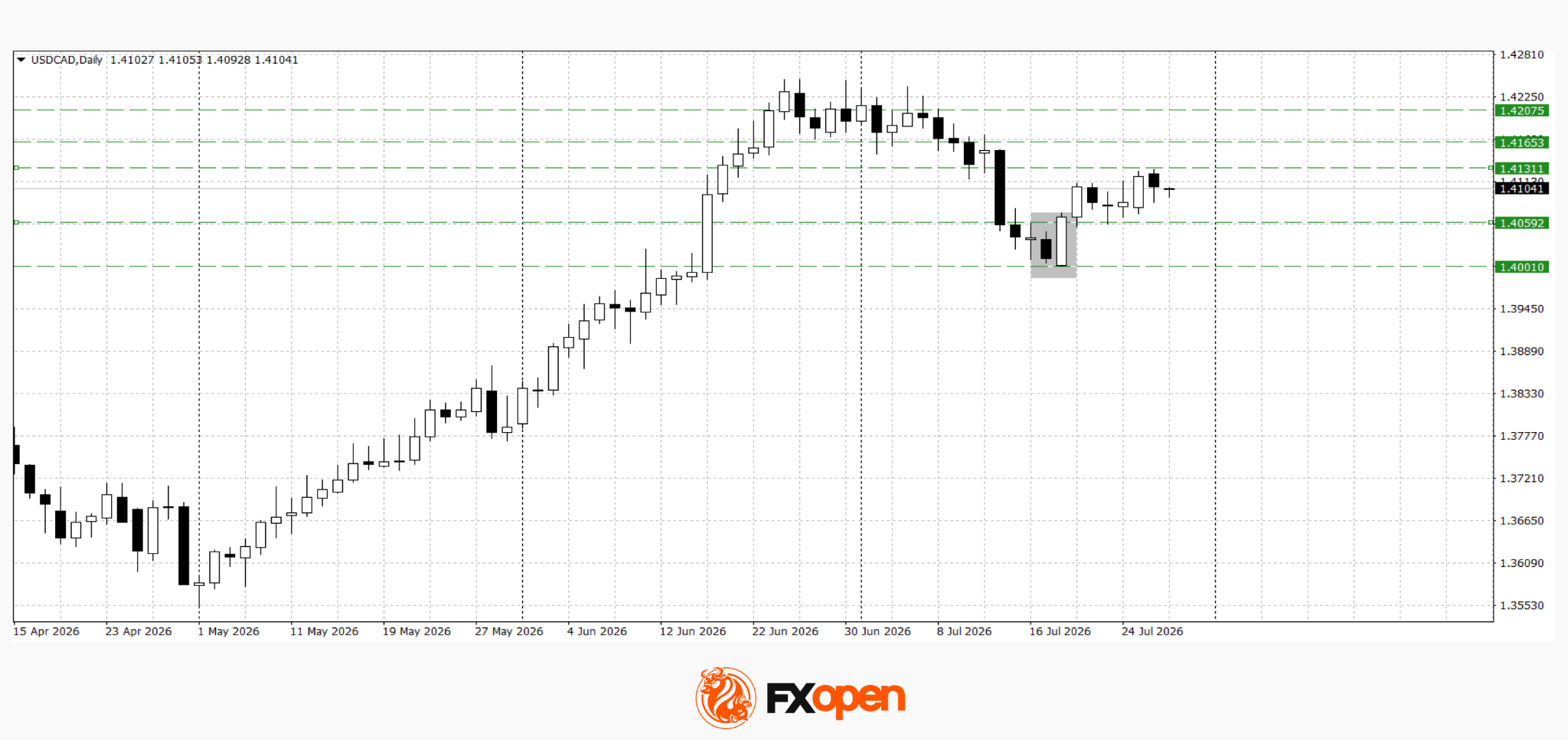
USD/CAD’s recovery following the formation of a bullish engulfing pattern has stalled near resistance at 1.4130. The pair is currently consolidating within the 1.4060–1.4130 range. A decisive break above the upper boundary of this range could pave the way for further gains towards 1.4160–1.4200. Conversely, a move below 1.4060 could lead to a retest of the recent low near 1.4000.
Key events for USD/CAD:
- Today at 17:30 (GMT+3): US crude oil inventories;
- Today at 20:30 (GMT+3): Bank of Canada Summary of Deliberations;
- Tomorrow at 15:30 (GMT+3): US GDP data.
Overall, the near-term direction of both USD/JPY and USD/CAD will depend primarily on the Federal Reserve’s decision and its guidance on the future path of interest rates. A more hawkish stance could support a breakout above nearby resistance levels and reinforce the US dollar’s strength. Conversely, a more dovish message could trigger a correction in the greenback, particularly against the Japanese yen, where the proximity of multi-year highs increases the likelihood of renewed warnings from Japanese officials. For USD/CAD, oil price movements and the Bank of Canada’s Summary of Deliberations will remain important additional drivers.
Trade over 50 forex markets 24 hours a day with FXOpen. Take advantage of low commissions, deep liquidity, and spreads from 0.0 pips (additional fees may apply). Open your FXOpen account now or learn more about trading forex with FXOpen.
This article represents the opinion of the Companies operating under the FXOpen brand only. It is not to be construed as an offer, solicitation, or recommendation with respect to products and services provided by the Companies operating under the FXOpen brand, nor is it to be considered financial advice.

XRP trades near $1.06 in late July 2026, roughly 71 percent below the $3.65 cycle top set on July 17, 2025. This piece walks through the escrow-versus-ETF equation, the bull case ($4.50–$7.00 by 2030), the base case ($1.80–$3.20), and the bear case ($0.60–$1.40).


Cointelegraph is committed to providing independent, high-quality journalism across the crypto, blockchain, AI, and fintech industries.
All news, reviews, and analyses are produced with full journalistic independence and integrity. For more details on our standards and processes, please read our Editorial Policy.

Townfall’ Officially Confirms 5 Different Endings, But There’s a Catch

Payments giant Visa cuts 7pc of its workforce in AI pivot

XRP Launch Pad SET *Huge Move Coming*


-

 Fashion5 days ago
Weekend Open Thread: Brooks Brothers
-
 Sports2 days ago
Commonwealth Games boxing: Jadumani Singh seals dominant 5-0 win over Pakistan’s Sumama Rehman to enter quarter-finals | Commonwealth Games News
-

 Tech2 days ago
Intel is reversing course and bringing hyper-threading back to its server chips
-

 Crypto World6 days ago
Ethics, other provisions in crypto Clarity Act to be further discussed
-

 Politics2 days ago
Luke Littler dismantles Gerwyn Price to retain title in Blackpool
-

 Sports5 days ago
2026 3M Open leaderboard: Scottie Scheffler finds putter in Round 1, sits three back
-

 Politics23 hours ago
The Part of the Electric Transition Nobody Wants to Discuss
-

 Fashion5 days ago
16 Dresses for the High Summer Event
-
 Entertainment5 days ago
A New Post-Apocalyptic Gundam Anime Series Blasts Into SDCC
-

 News Videos2 days ago
BITCOIN JUST ENTERED THIS CRITICAL ZONE…
-

 News Videos6 days ago
The Peugeot Family: How 200 Years of an “Old Money” Dynasty Died in A Boardroom
-

 Crypto World4 days ago
Ripple bought a bank in pieces. The $4 billion audit
-

 Politics3 days ago
Spain sweeps the board at 2026 World Cup with individual awards
-

 Business3 hours ago
Major shareholder moves on Canyon
-

 Crypto World3 days ago
XRP Ledger adds $2.6B as RWA inflows rank second
-

 Crypto World6 days ago
Uniswap (UNI) pushes deeper into tokenized RWAs with permissioned trading pools
-
 Entertainment13 hours ago
‘Stargate’ Creator’s New Sci-Fi Series Returns for Season 3 Tomorrow
-

 Tech4 days ago
Anthropic launches Claude Opus 5, a cheaper AI model for coding, agents and enterprise workflows
-
Crypto World6 days ago
SEC Agrees to Overhaul Recordkeeping After Settling Coinbase Lawsuit Over Gensler’s Lost Texts
-

 Business5 days ago
Alliance Entertainment Holding Corporation (AENT) Discusses Evolution Into Omnichannel Distribution and Fulfillment Platform for Media and Collectibles Transcript
You must be logged in to post a comment Login