

Crypto World
ZachXBT calls religion-backed $LAMB presale a 2026 ‘grift’



ZachXBT blasted YoungHoon Kim’s $LAMB presale as a religion-wrapped grift, pointing to botted engagement, recycled scam copy and a playbook he’s seen in prior fraud investigations.
Summary
- On-chain investigator ZachXBT publicly questioned whether “grifting religion to promote a crypto token presale” is a viable strategy in 2026, targeting a token launch by self-proclaimed IQ 276 holder YoungHoon Kim.
- Kim, who bills himself as a World Memory Championships-recognized genius, launched the $LAMB token on March 25 via Fjord Foundry, claiming all profits would go to building churches worldwide.
- The presale’s sale marketcap reached $1.496 million with a fully diluted value of $6.804 million, while ZachXBT alleged the presale announcement relied on botted engagement.
Blockchain investigator ZachXBT fired a pointed public callout on March 26 at a religion-themed crypto token presale, asking on X whether “grifting religion to promote a crypto token presale for a glorified paid group is still a viable strategy in 2026.” The post drew 48,700 views, 1,200 likes, and 51 retweets within hours, touching off a wave of mockery and scrutiny across crypto Twitter directed at the project behind it: $LAMB, a token launched by YoungHoon Kim, who describes himself on X as the world’s highest IQ 276 holder and founder of @LAMB276_X.
Kim announced the presale on March 25 in a post that accumulated 176,000 views and 1,000 likes, writing: “Today, I launch my mission token to build churches across the world where Jesus Christ alone is Lord. Every profit belongs to His Kingdom because Jesus Christ is Lord.” The token was offered through Fjord Foundry, a decentralized token launchpad, with contract address 0x019E1f53Bf2EA52558c33feD363b491362c0d533. By the time ZachXBT weighed in, the presale had raised $51,910 against a token price of $0.246, a liquidity pool of $1.837 million, and a fully diluted valuation of $6.804 million.
Kim, who markets himself as a No. 1 Amazon bestselling author in Christian Apologetics and a Mensa member, had listed Conor McGregor — described as a “5-time World Champion” — as an advisor on the project’s promotional materials. ZachXBT’s screenshots of the LAMB276 website showed marketing language describing $LAMB as “the heartbeat of our community.” A separate reply by ZachXBT suggested the engagement surge around the presale announcement was artificial, writing: “Is botted engagement on a presale announcement considered high IQ?”
The $LAMB Token’s Playbook
The structure of the $LAMB presale follows a pattern that has drawn increasing scrutiny across the industry. The project issued a total supply of 276,000,000 tokens — a number mirroring Kim’s claimed IQ — and framed the sale as a “final sale” ahead of a broader community rollout. Commenter @serpinxbt noted in the replies that the project’s website copy “is clearly also based on historical crypto scams,” pointing specifically to phrases like “LAMB IS THE HEARTBEAT OF OUR COMMUNITY.”
ZachXBT is no stranger to flagging such operations. In March 2026, he exposed a coordinated network of over 10 accounts on X that used geopolitical panic to funnel users into pump-and-dump crypto tokens, with on-chain evidence suggesting the scheme generated six-figure profits. Earlier the same month, he accused employees at crypto trading platform Axiom of misusing internal tools to profit from insider trading — allegations that sent shockwaves through the decentralized exchange community.
The $LAMB situation fits a longer arc of celebrity- and identity-backed token launches exploiting cultural credibility to attract buyers. As CCN reported, Kim’s previous crypto price predictions — including forecasts for Bitcoin to reach $276,000 and XRP to hit triple-digit prices — had not materialized within their suggested timelines. The project had previously operated on the Solana blockchain before the current presale on Ethereum.
ZachXBT’s sardonic follow-up — “guess us plebs cannot possibly understand the grander vision since we’re not 276 IQ” — proved to be among the more viral lines in a thread that quickly went beyond crypto circles. @patty_fi summarized the community sentiment with blunt simplicity: “He’s using the prophet for profit!” As crypto.news has previously reported, social engineering and identity-based manipulation remain among the most effective — and recurring — vectors for retail crypto fraud in 2026.



Consumer fintechs and payment platforms are becoming one of the main distribution layers for crypto access. Best Digital Assets Fintech is an award category within The BeInCrypto Institutional 100, an annual research-driven program recognising institutional digital asset excellence across 26 categories and six pillars.
This category sits in Pillar 1: Retail to Crypto Bridge. The 15 firms below are its longlist. A shortlist will be named in May 2026, with the winner announced at Proof of Talk in Paris on June 2–3, 2026.
- Long list: 15 fintechs across crypto-native payment infrastructure, stablecoin wallets, Lightning-based consumer rails, retail brokers, enterprise acquirers, and cross-border fintech platforms.
- Initial pool: More than 30 consumer and B2B fintechs screened; 15 advanced to the long list.
- Scoring: 30% quantitative data · 50% Expert Council · 20% disclosed company data.
- Criteria assessed: Crypto product depth, distribution scale, regulatory standing, innovation, capital maturity, geographic reach, and reputation.
- Data sources: NYDFS, FinCEN, FCA, MiCA-CASP, OCC, MAS, CySEC, AUSTRAC, FINTRAC, audited filings, company disclosures, PitchBook, Tracxn, and Crunchbase.
| # | Firm | Fintech Sub-Segment | HQ | Reach | Top Crypto Licensure / Product | Representative Work |
|---|---|---|---|---|---|---|
| 1 | Stripe | Crypto-native payment infrastructure | South San Francisco / Dublin | 100+ country stablecoin accounts 100M+ businesses on Stripe |
Bridge OCC charter conditionally approved | Acquired Bridge and Privy Open Issuance powers Phantom CASH and MetaMask mUSD |
| 2 | PayPal / Venmo | Consumer wallet + stablecoin issuer | San Jose, USA | 436M active accounts PYUSD across 4 chains |
PYUSD issued by Paxos Trust | Expanded PYUSD into 70 markets Launched PYUSDx framework with MoonPay and M0 |
| 3 | Block (Cash App) | BTC-native consumer fintech | San Francisco, USA | 57M Cash App monthly actives $2.4B+ Bitcoin revenue Q4 2024 |
FinCEN MSB + state MTLs | Expanded Lightning integration globally Spiral continued Bitcoin core funding |
| 4 | Robinhood | Retail broker with crypto stack | Menlo Park, USA | 26M funded customers Bitstamp adds 5M+ users |
MiCAR access in EU Bitstamp FCA + NYDFS licences |
Closed Bitstamp acquisition in 2025 Expanded into Canada through WonderFi |
| 5 | Circle | Stablecoin issuer + banking distribution | Boston / NYC | USDC $73B market cap Embedded into core banking platforms |
OCC conditional charter approval | NYSE IPO completed in 2025 Circle Payments Network expanded to 200+ banks |
| 6 | Revolut | Multi-product fintech with crypto | London, UK | 65M customers globally Revolut X across the UK and the EEA |
FCA crypto registration + MiCAR-CASP | Expanded Revolut X across Europe Launched self-custody Revolut Wallet |
| 7 | SoFi Technologies | US fintech with crypto relaunch | San Francisco, USA | 10.9M members Galileo powers 100M+ accounts |
FinCEN MSB + state MTLs | Relaunched crypto trading in 2025 Stablecoin payments roadmap disclosed |
| 8 | KAST | Stablecoin-native cross-border fintech | Singapore | 1M+ users 190+ countries |
Operates through licensed partners | Closed $80M Series A in 2026 Stablecoin spending integrated with Visa |
| 9 | Nubank | LatAm fintech crypto distribution | São Paulo, Brazil | 65M customers globally Revolut X across UK and the EEA |
Paxos institutional trust framework | Expanded token support during 2025 Cross-border crypto custody rollout planned |
| 10 | eToro | Social trading + crypto platform | Tel Aviv / Bnei Brak | 30M users globally 100+ countries |
FCA crypto registration + AUSTRAC + FinCEN | Nasdaq IPO completed in May 2025 Unified crypto, stocks, and ETF trading |
| 11 | Strike | Bitcoin and Lightning fintech | Chicago, USA | 100+ countries 50-state US coverage achieved |
NY BitLicense + FinCEN MSB | Approved for NY operations in 2026 Launched Bitcoin-backed lending products |
| 12 | ChangeNOW | Non-custodial fintech ecosystem | Saint Vincent and the Grenadines | 8M+ users $1B+ monthly volume |
SOC 2 Type II + ISO 27001 | Expanded NOW ecosystem across wallets, custody, APIs, and payments Integrated across major wallet providers |
| 13 | Adyen | Enterprise payment processor | Amsterdam, Netherlands | MiCAR access in the EU Bitstamp FCA + NYDFS licences |
DNB + ECB supervised | Crypto acceptance expanded for Web3 merchants Stablecoin payout rails under development |
| 14 | Checkout.com | Enterprise merchant acquirer | London, UK | 2,000+ employees globally | FCA-authorized + DIFC regulated | Stablecoin settlement pilot announced in 2025 Expanded infrastructure for exchanges and onramps |
| 15 | BitPay | Crypto payments processor | Atlanta, USA | Active since 2011 Supports BTC + 12 other assets |
FinCEN MSB + multi-state MTLs | Expanded BitPay Card nationally Maintained merchant partnerships across retail and payments |
About This List
The BeInCrypto Institutional 100 — Digital Assets Fintech (2026 Long List) identifies fintech firms connecting fiat payment systems with digital assets through consumer apps, enterprise infrastructure, stablecoins, Lightning rails, wallets, and embedded crypto services.
The category includes crypto-native payment processors, retail fintech platforms, enterprise acquirers, stablecoin-driven fintechs, and non-custodial ecosystems. Firms whose primary role is fiat onramp infrastructure are evaluated separately under the Onramp/Offramp category.
Methodology
This category is evaluated under Track B of the BeInCrypto Institutional 100 methodology: 30% quantitative metrics, 50% Expert Council scoring, and 20% disclosed data.
Assessment spans seven weighted criteria: crypto product depth, distribution scale, regulatory standing, innovation, capital maturity, geographic reach, reputation, and contribution across fintech sub-segments.
Data was verified against NYDFS, FinCEN, FCA, MiCA-CASP, OCC, MAS, CySEC, AUSTRAC, and FINTRAC registers, as well as audited filings, company disclosures, partnership announcements, and private-market sources such as PitchBook, Tracxn, and Crunchbase.
The post BeInCrypto Institutional Research: 15 Fintechs Bridging Fiat and Digital Assets appeared first on BeInCrypto.

TLDR:
- CME Group listed SUI futures, making Sui only the fourth L1 alongside BTC, ETH, and SOL in regulated derivatives.
- Sui processed 65.8 million transactions in a single day within two months of its May 2023 mainnet launch.
- Three US staking ETFs from Grayscale, Canary Capital, and 21Shares listed in early 2026 on major exchanges.
- Hashi enables native Bitcoin collateral on Sui without wrapping or custody, with 20-plus institutions committing on day one.
Sui Network has completed three years since its May 2023 mainnet launch, marking the milestone with a string of institutional developments.
CME Group listed SUI futures contracts, making Sui only the fourth Layer-1 blockchain to enter CME’s regulated derivatives market.
The others before it were Bitcoin, Ethereum, and Solana. Three staking ETFs have listed in the US, cumulative active addresses passed 228 million, and DeFi total value locked peaked at $2.6 billion.
From Parallel Execution to Protocol Maturity
Sui launched with a clear architectural thesis: parallel execution should be built into a blockchain’s foundation, not added as an afterthought.
Within two months of launch, the network processed 65.8 million transactions in a single day. That figure was the highest recorded across all blockchains at the time, and gas fees remained nearly flat throughout.
Two infrastructure additions in 2023 shaped the chain’s long-term trajectory. In July, the Sui Foundation launched DeepBook, a native central limit order book embedded directly into the protocol.
Every DeFi application on Sui draws liquidity from the same shared pool, which is an uncommon design choice among Layer-1 networks.
In September 2023, zkLogin went live, allowing users to authenticate Web3 apps using Google or Facebook credentials.
Zero-knowledge proofs handle identity on-chain, removing the need for seed phrases or separate wallet setup. This lowered the entry barrier for mainstream users considerably.
By 2024, the focus shifted to consensus performance. In August, Mysticeti launched as a DAG-based consensus engine, cutting latency by 80% and bringing finality to 640 milliseconds.
Traditional financial players responded: Franklin Templeton announced a strategic partnership, and Grayscale launched the Grayscale Sui Trust.
Stablecoins, Bitcoin Collateral, and Regulated Products
Heading into 2025 and 2026, the infrastructure stack filled in steadily. Walrus Protocol added decentralized storage in March 2025, completing the native stack from execution to data storage. Mysticeti V2 followed in November, delivering sub-second finality and horizontal validator scaling.
In December 2025, 21Shares listed the first-ever SUI ETF on Nasdaq, a 2x leveraged product. By February 2026, three staking ETFs from Grayscale, Canary Capital, and 21Shares had listed in the US.
That same period saw USDsui launch through Stripe’s subsidiary Bridge, and cumulative stablecoin transfers on Sui crossed $1 trillion in March 2026.
Perhaps the most consequential development came with Hashi, developed by Mysten Labs. Hashi is a native Bitcoin collateralization primitive that allows BTC to be used directly as on-chain collateral, without wrapping or centralized custody.
The system is secured through MPC and Move’s ownership model. Over 20 institutions committed on day one, as noted in a post from the official Sui Network account.
Zero-fee stablecoin transfers were also announced at Sui Live Miami as coming soon, extending the chain’s payments utility further.

Crypto World
Caesars Brought Las Vegas Online. DraftKings Brought Fantasy Sports Online. ZunaBet Brought The Future Online.
Every platform’s identity is shaped by where it came from. Caesars brought the weight of Las Vegas online — decades of land-based casino heritage, a loyalty program connecting digital play to physical properties, and a brand that carried implied quality into the online space before the product had to prove it independently. DraftKings brought daily fantasy sports online — an existing engaged audience, American sports cultural fluency, and the operational readiness to capture the US sports betting market when regulation opened it.
Both identities produced genuine platforms for genuine players. The Caesars player who trusts the name from their Las Vegas visits. The DraftKings player who was already using the platform for fantasy leagues before real-money betting was legal. Both platforms continued to serve those players after the transition to licensed gambling.
ZunaBet brought something different online in 2026. Not a land-based heritage. Not a fantasy sports audience. The future — a platform built from scratch in the current year for the player who exists in the current year. The crypto-native player. The esports bettor. The player who wants sixty-three providers worth of game variety and a loyalty program that states its return before the first deposit. This article examines all three and explains what each identity produced.
Caesars: The Las Vegas Identity Online
The Caesars identity online is built on the transfer of trust from physical to digital. A player who has stayed at a Caesars hotel, played at a Caesars casino floor, or earned tier status through land-based activity finds the online product a continuation of a relationship that already existed. The brand’s implied quality arrived before the product had to earn it independently.
The casino product reflects genuine casino heritage. A substantial library from established providers, live dealer content informed by physical table game expertise, and a product that benefits from decades of understanding how casino players engage with their favourite games. The Caesars online casino is built by people who have been operating casinos long enough to understand the category deeply.
The sportsbook covers major US and global sports with in-play betting. The product serves the player who wants sports alongside casino from a trusted name.
Caesars Rewards is the identity’s most distinctive product feature. The cross-platform connection between online activity and land-based tier status — hotel rooms, dining, entertainment, physical casino status — has genuine value for the player who uses Caesars properties. Online gambling becomes part of a broader relationship with the brand rather than a standalone product.
The identity has clear limits for the player outside its profile. The cross-platform loyalty feature that makes Caesars distinctive is irrelevant to the exclusively online player who never visits a physical property — the program reduces to a standard points system for that player. Payment infrastructure is fiat-based with business-day withdrawal timelines. Crypto support is minimal. Geographic operation is bounded by US state licensing.
DraftKings: The Fantasy Sports Identity Online
The DraftKings identity online is built on audience conversion. The daily fantasy sports player who spent years managing lineups and tracking statistical outcomes found the transition to real-money sports betting natural when the legal framework allowed it. The brand they trusted for fantasy became the brand they trusted for betting without requiring them to learn a new platform or extend trust to a new name.
The sportsbook is the product that audience conversion produced. American sports coverage built for the fantasy-origin bettor — NFL with the market depth and statistical orientation that reflects genuine understanding of how this player engages with football, NBA, MLB, NHL, and college sports with comparable investment. The app is refined through years of this specific player’s feedback. In-play coverage is reliable. The product serves its converted audience consistently.
The casino has grown in proportion. A reasonable library, live dealer content, standard table game variants. The product serves the sports-first player’s secondary casino interest.
Dynasty Rewards is the identity’s loyalty expression. Points accumulate through play, tiers reflect volume, and benefits are redeemed through a structure that most experienced players find delivers less actual cash value than the tier descriptions initially implied when the conversion mathematics are properly applied. The gap between promise and delivery is consistent enough that it forms a regular part of how players describe their loyalty experience on review platforms.
The payment identity is fiat banking for the daily fantasy convert. Business-day withdrawal timelines. Bitcoin in select states as a response to demand rather than a native infrastructure commitment. Geographic operation is bounded by licensed US states.
ZunaBet: The Future Identity Online
ZunaBet launched in 2026 under Strathvale Group Ltd, operating under an Anjouan gaming license and registered in Belize. The team carries over 20 years of combined industry experience. It is not a US licensed operator and it does not hold state-level certification. Its identity is not built on transferring trust from a physical brand or converting a pre-existing digital audience. Its identity is built on being built in 2026 for the player who exists in 2026.
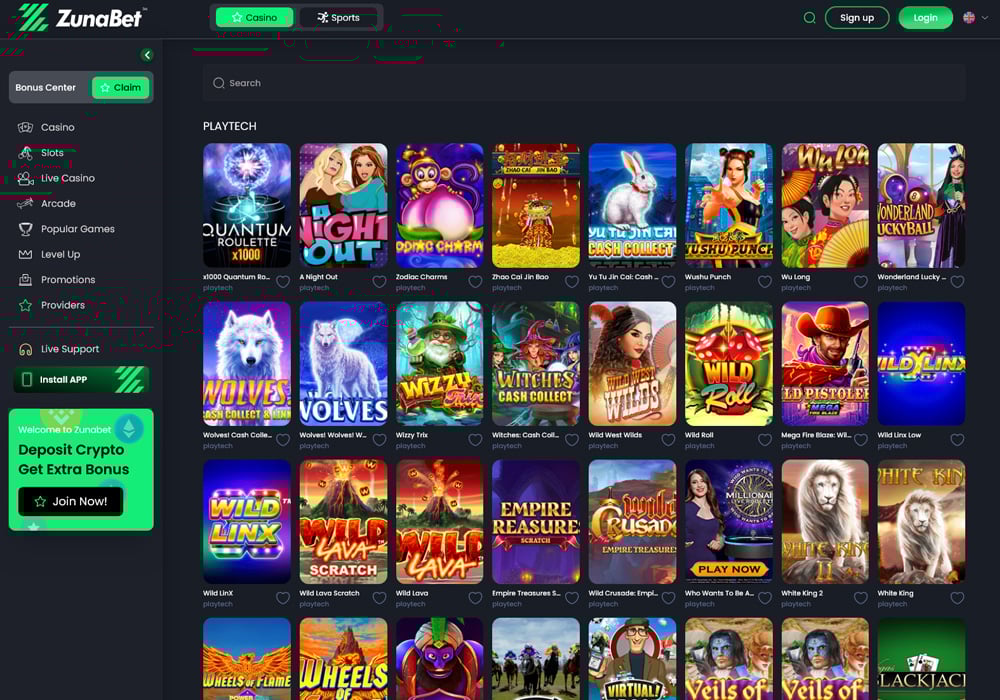
The game library is what a future-built casino identity looks like. ZunaBet carries 11,294 titles from 63 providers. The Caesars casino identity reflects land-based heritage. The DraftKings casino identity reflects sports-first priorities. ZunaBet’s casino identity reflects a player who needs genuine variety from multiple creative sources to stay engaged over the long term — sixty-three different approaches producing content with different mechanics, different volatility profiles, and different visual identities. Evolution for the full live dealer catalogue. Pragmatic Play across multiple categories. Hacksaw Gaming for the high-volatility mechanics experienced players seek. Yggdrasil for its distinctive design philosophy. BGaming for the crypto-native aesthetic. The identity sustains long-term engagement because it was built for the player who cycles through limited libraries quickly.
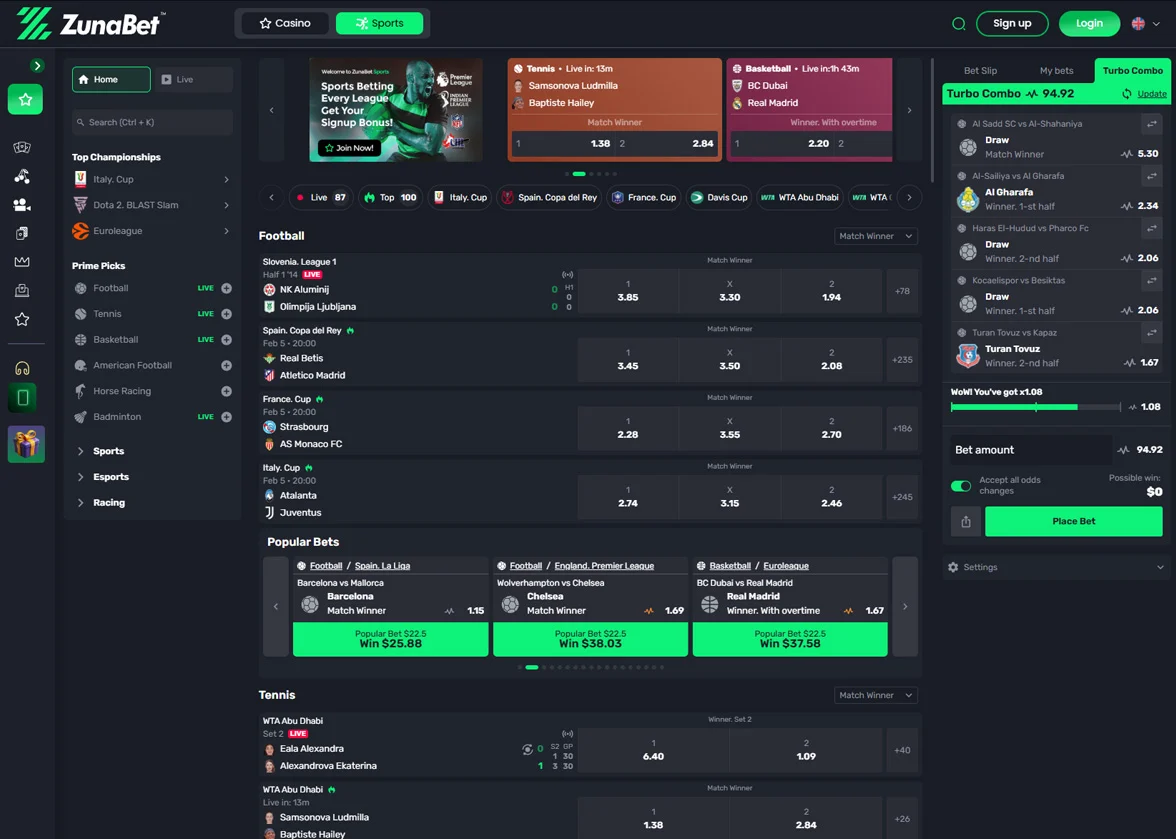
The sportsbook is what a future-built sportsbook identity covers. Football, basketball, tennis, NHL, and other major global sports alongside CS2, Dota 2, League of Legends, and Valorant as genuine primary markets. The future identity includes esports as a foundational sportsbook category because the player it was built for follows competitive gaming as seriously as traditional sports. Virtual sports and combat sports complete the coverage.
The payment identity is what a future-built crypto infrastructure looks like. More than 20 cryptocurrencies supported natively — BTC, ETH, USDT across multiple chains, SOL, DOGE, ADA, XRP, and others. No platform processing fees. Withdrawals settling in minutes. Apps across iOS, Android, Windows, and MacOS with 24-hour live chat support. The future identity was built for the player who holds cryptocurrency and expects platforms to handle it natively rather than approximately.
Payments: Three Identities, Three Outcomes
The payment comparison is a direct illustration of what three different identity origins produce.
Caesars’ land-based identity produces fiat banking payments — the infrastructure that casino hotels and physical gaming operations have always used. Business-day withdrawal timelines. Minimal crypto. The outcome reflects the identity’s origin.
DraftKings’ daily fantasy identity produces fiat banking payments — the infrastructure the fantasy sports platform was built on and the online sportsbook inherited. Similar timelines. Bitcoin in select states as a concession rather than a commitment. The outcome equally reflects the identity’s origin.
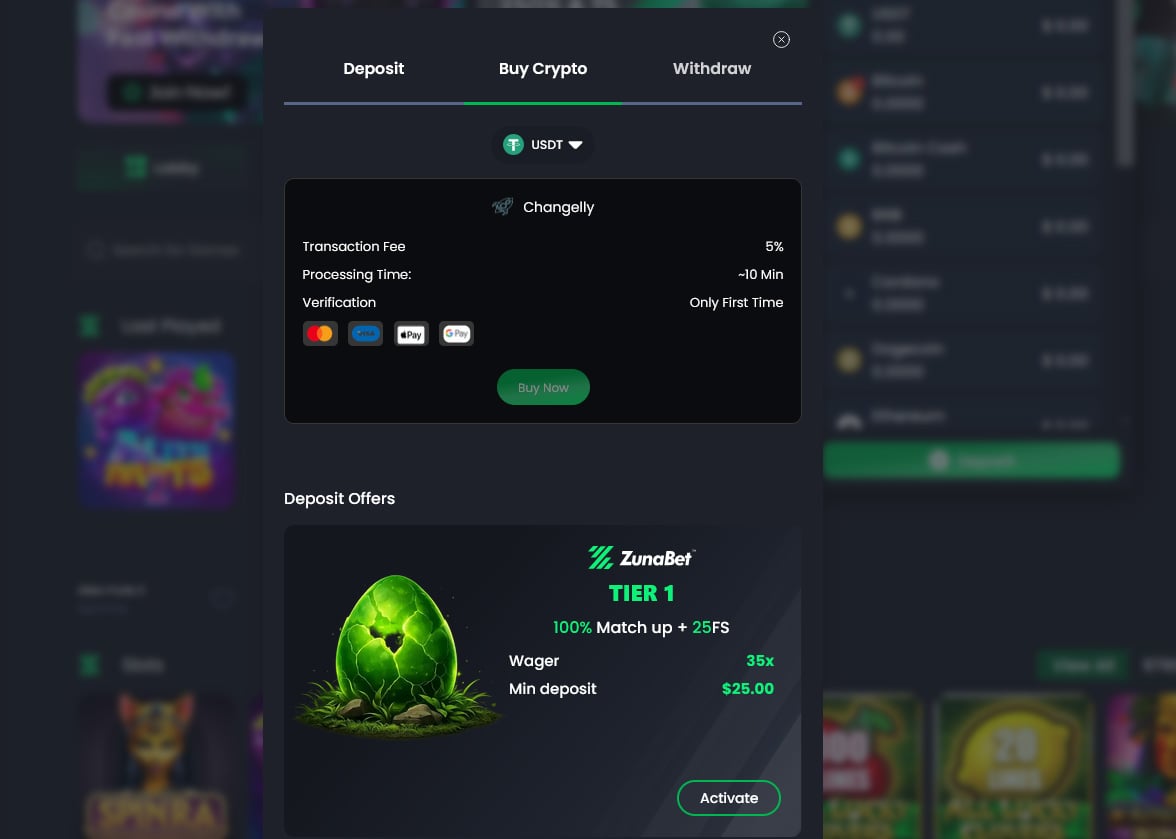
ZunaBet’s 2026 identity produces native crypto payments — the infrastructure built for the player who arrived in 2026 with cryptocurrency as their primary financial instrument. Twenty-plus coins natively supported. Minutes rather than days. No fees beyond network costs. The outcome reflects an identity built for the current moment rather than transferred from a previous one.
Loyalty Programs: Three Identities, Three Outcomes
The loyalty comparison is equally a comparison between identity outcomes.
Caesars’ identity produces Caesars Rewards — a cross-platform program with genuine value for the player who uses physical Caesars properties and a standard points system for the player who does not. The outcome serves one player type distinctively and another adequately.
DraftKings’ identity produces Dynasty Rewards — a points system that accumulates toward redemption options delivering less actual value than the tier descriptions implied for most players who calculate it. The outcome reflects an identity that inherited the points-loyalty standard of its era.
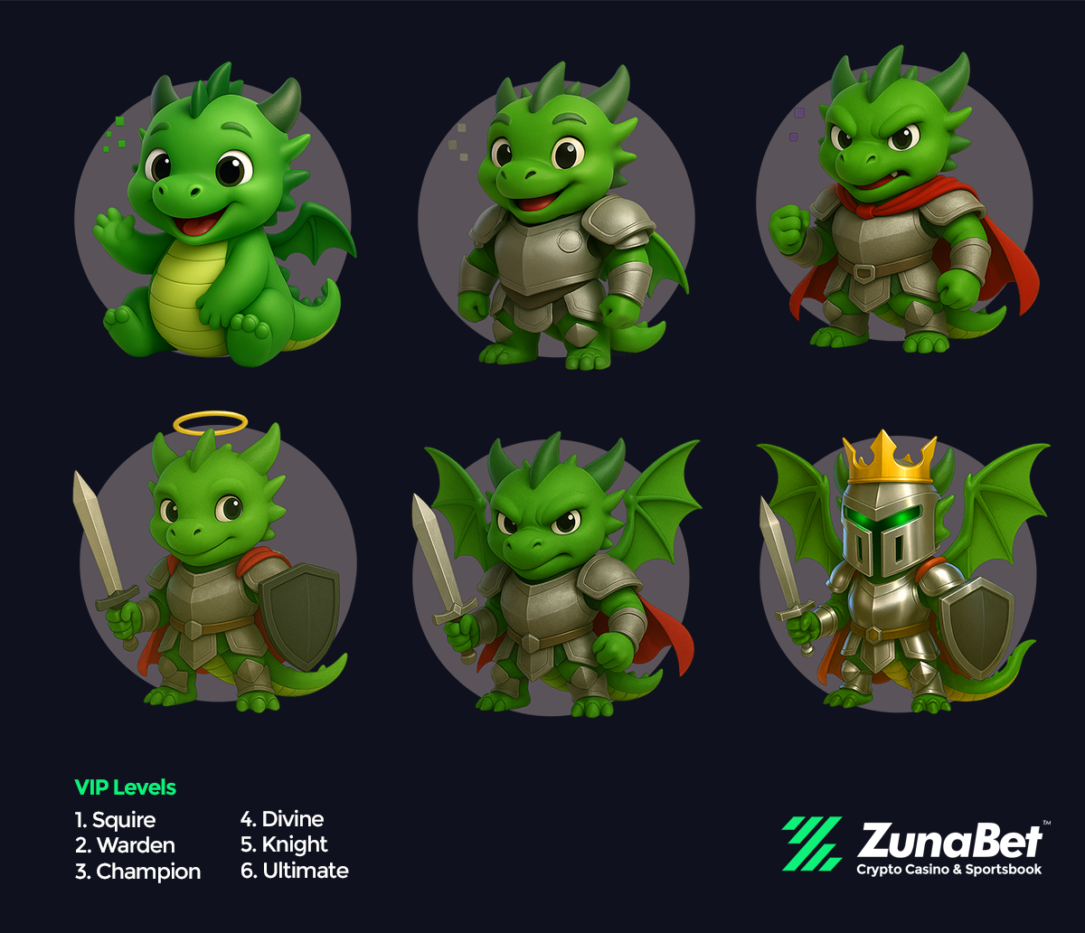
ZunaBet’s identity produces the dragon evolution loyalty system — six tiers, Squire through Ultimate, with a gamified mascot called Zuno and direct rakeback rates of 1%, 2%, 4%, 5%, 10%, and 20%. All tiers open. All rates applying to all activity. No conversion. No invitation. The outcome reflects an identity built for the player whose loyalty expectation is transparency rather than implied value.
Twenty percent at the Ultimate tier. The identity produces a loyalty outcome that the player can calculate before joining and verify throughout membership. Additional tier benefits — up to 1,000 free spins, VIP club access, double wheel spins — extend the identity’s loyalty outcome beyond the core rakeback.
The Welcome Bonus
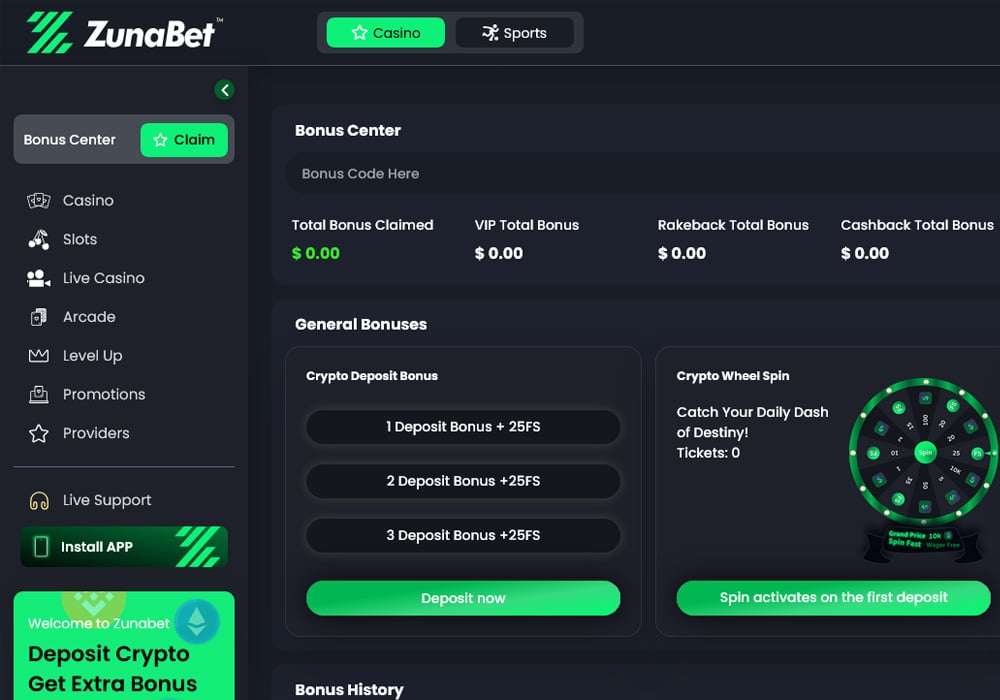
ZunaBet new players receive a bonus across three deposits totalling up to $5,000 plus 75 free spins. First deposit matched 100% up to $2,000 with 25 free spins. Second deposit matched 50% up to $1,500 with 25 spins. Third deposit matched 100% up to $1,500 with 25 spins.
Caesars and DraftKings offer welcome promotions within their respective regulated US markets. Current terms vary by state and should be confirmed directly on each platform.
Three Identities, One Direction
Caesars brought Las Vegas online and its identity continues to serve the player who values that heritage and the cross-platform loyalty connection it enables. The identity is genuine and the outcome it produces continues to attract its intended player.
DraftKings brought daily fantasy sports online and its identity continues to serve the player who made that conversion. The identity is equally genuine and the outcome it produces continues to attract its intended player.
ZunaBet brought the future online in 2026 and its identity serves the player neither established identity was built for — the crypto-native, esports-betting, rakeback-expecting, large-library-needing player whose profile was not part of either established identity’s origin.
ZunaBet launched in 2026 and its identity is still being proven over time. Both established identities were tested and confirmed across years of consistent operation. ZunaBet’s identity is early in that testing and players should weigh that honestly.
But the identity built for the player who exists now — rather than the player who existed when Caesars built its land-based brand or when DraftKings built its fantasy sports audience — launched in 2026. That identity is ZunaBet’s and in 2026 the player it was built for is finding it.
Disclaimer: This is a Press Release provided by a third party who is responsible for the content. Please conduct your own research before taking any action based on the content.
Bitcoin is entering the week with a cautious outlook as U.S. inflation data loom, and fresh signals from the Cleveland Fed’s inflation nowcast suggest April CPI could reaccelerate. The numbers imply a firmer backdrop for headline inflation, which could limit near-term relief for risk assets, including Bitcoin. The official April CPI release is due on May 12, and market participants will be parsing whether the monthly pace cools while the annual pace re-accelerates.
According to the Cleveland Fed’s inflation nowcast, April CPI is projected at 3.56% year over year, up from 3.3% in March. The model also expects a monthly CPI rise of about 0.45%, with core CPI at 2.56% YoY and 0.21% MoM, compared with 2.6% and 0.2% previously. This mixed picture—headline acceleration alongside a slower monthly pace—keeps the inflation narrative in a tug of war and could influence the Federal Reserve’s next steps on policy. Cleveland Fed inflation nowcasting notes the official data release is approaching on May 12.
Bitcoin has historically shown resilience around CPI prints, but the latest setup underscores a balancing act. After the March CPI report showed headline inflation at 3.3% year over year, BTC advanced more than 15%, a move some observers attributed to fresh institutional demand entering the market. Cointelegraph noted the thrust from institutional buyers following the March print, helping to soak up new supply and support prices despite the inflation backdrop.
That support, however, may be changing. The same reporting highlighted shifts in the buy-side dynamics as institutions recalibrated their approaches to BTC exposure. In particular, Strategy—a notable BTC buyer via its STRC vehicle—has paused its Bitcoin purchases, reducing the immediacy of new capital flowing into the market. The STRC preferred stock remains trading below its $100 par value, a condition that can limit a company’s ability to raise fresh capital for further crypto buys. STRC.LIVE shows weekly Bitcoin buying activity has slowed as a result, tempering what had been a supportive bid from large investors.
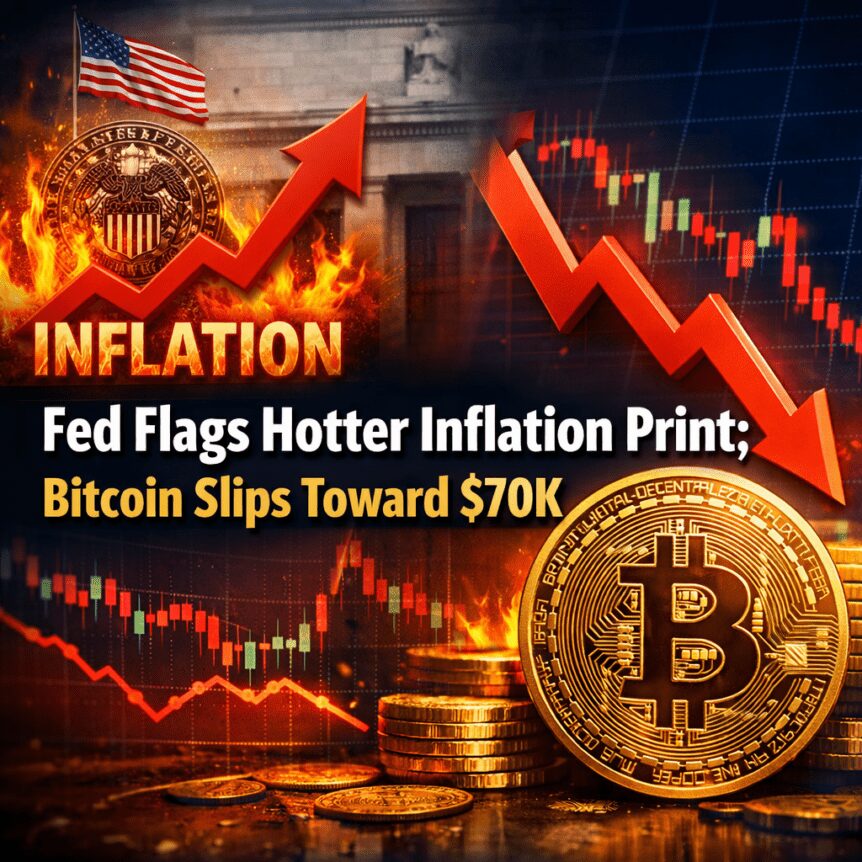
Against this backdrop, market watchers are watching a developing technical formation that could shape the next move. A rising wedge pattern has emerged on Bitcoin’s daily chart, a classic bearish reversal setup that often resolves with a break below the lower trend line and a subsequent decline equal to the pattern’s height. Bitcoin was tracing toward the wedge’s apex near the mid-$80,000s, around $84,000, as markets awaited confirmation of the breakout direction. A breakdown from that level could pave the way toward the wedge’s downside target near $70,000, while a breakout above the apex could nullify the setup and open the door to higher prices, potentially toward the $90,000–$95,000 zone if momentum resumes. TradingView-based analysis puts the apex and pattern in focus as risk assets digest the CPI outlook.
Key takeaways
- The Cleveland Fed nowcast projects April CPI at 3.56% year over year, with a monthly rise of about 0.45% and core CPI at 2.56% YoY and 0.21% MoM.
- Bitcoin is forming a rising wedge on the daily chart, with a potential breakdown toward $70,000 if the lower trend line is breached.
- Institutional demand that aided BTC in prior CPI cycles appears to be cooling, as Strategy pauses new BTC purchases and its STRC stock trades below par, limiting fresh capital flow.
- If Bitcoin breaks above the wedge apex near $84,000 and clears the 200-day moving average, the next upside could target the $90,000–$95,000 region.
Inflation dynamics and the risk-asset calculus
In macro terms, the April CPI picture remains mixed. A firmer annual headline can reinforce the view that the Fed has limited room to trim rates quickly, which tends to weigh on speculative trades such as Bitcoin. Yet the slower monthly pace keeps the probability of a more gradual policy adjustment on the table. For crypto investors, the key takeaway is that the macro backdrop continues to hinge on inflation’s trajectory and the Fed’s response, rather than a single data point alone.
Historically, CPI surprises have amplified volatility around inflation data releases. The market’s reaction often depends on how the prints align with expectations and how they alter rate-cut expectations. The CME Group’s FedWatch tool tracks these probabilities, illustrating how traders reprice expectations around key CPI milestones and Federal Reserve communications. CME FedWatch remains a barometer for the path of policy around CPI days.
Technical setup and what it could mean for traders
The rising wedge formation on BTC’s daily chart is a cautionary sign for bulls. Historically, such patterns precede a bearish reversal, particularly when price tests the apex near major moving averages or trend lines. In this case, the apex sits close to the $84,000 mark, with a break lower threatening a move toward $70,000—the midpoint of the wedge’s downside projection. On the upside, a sustained break above the apex could invalidate the pattern and reframe risk into an upside run toward the next resistance belt around $90,000 to $95,000, contingent on broader market momentum and on-chain demand.
In the longer view, traders will be watching for interactions with the 200-day exponential moving average, a common inflection point that can determine whether the market sustains a new uptrend or reverts to a range-bound pattern. A clean breakout above the 200-day EMA in the current regime could refresh upside targets, but that hinges on a continuing positive impulse from macro data and on-chain liquidity.
Market structure and the buy-side dynamics to watch
The domino effect of a cooling on institutional demand is a material shift for Bitcoin’s near-term trajectory. The March CPI-driven rally benefited from a surge in institutional absorption of freshly mined supply, a trend that tempered sell-side pressure and helped sustain price gains. With Strategy pausing its BTC purchases and the STRC stock trading below par, the market faces a potential reset in the capital allocation that had supported higher price floors in previous cycles. The likelihood of liquidity-driven moves around CPI print days adds another layer of complexity, as large players may reprice risk and reduce exposure in advance of the data release.
Analyst commentary this week underscored a risk-off stance around inflation-print days. In a Sunday note, an analyst highlighted that larger players could begin de-risking around CPI events, a pattern observed in prior cycles. The emphasis remains on monitoring key liquidity pivots—such as the 78,600 to 84,000 area—where a breach or a sweep of liquidity could signal the next directional impulse. For context, traders have pointed to the significance of a weekly open around 78.6k as a critical reference level to hold or lose, with downside targets clustering near the mid-70s to mid-70s thousand-dollar range if breached.
“Key level to hold is the 78.6K weekly open; if lost, 74–75K is the next downside target. I would watch for liquidity sweeps around this pivot to signal the next move.”
As with any CPI cycle, the interaction of macro data, on-chain activity, and traditional market liquidity will determine whether Bitcoin can sustain a constructive breakout or revert to a risk-off posture. The flow of fresh capital from major buyers, while potentially volatile in the near term, will be a crucial barometer for the next leg of the trend.
Meanwhile, the upside scenario remains intact in the sense that a decisive move beyond the apex could clear the path to higher targets if demand returns. The market’s attention remains fixed on how inflation data evolves, how the Fed responds, and whether on-chain buyers re-emerge with renewed vigor to re-anchor price to higher levels.
Looking ahead, traders should monitor the CPI release window, the trajectory of core inflation, and the evolving buy-sell dynamics around major levels. The coming days will reveal whether Bitcoin can sustain momentum amid a cautious macro backdrop or whether the price revisits key support toward the region around $70,000.
What happens next may hinge on more than one data point. If inflation continues to surprise on the upside and rate expectations stay elevated, BTC could face renewed selling pressure near critical inflection zones. Conversely, a softer inflation surprise, or a fresh wave of institutional interest, could rekindle the upside move into the mid-to-high tens of thousands. Investors should stay patient and prepared for rapid, data-driven shifts as CPI day approaches.
Crypto prices marked gains over the past week, including a multi-month high for the market leader, and some of the reasons are the return of demand for spot ETFs tracking their performance.
Here are the precise numbers from last week: the big gainers and those who didn’t see any action.
BTC ETFs: The Winner
The first and largest crypto ETFs were the undisputed leaders in terms of attracting funds last week, despite the rough ending. The financial vehicles saw net inflows of $532 million on Monday, $467 million on Tuesday, and $46 million on Wednesday when the asset peaked at almost $83,000.
Its price momentum began to fade at the end of the business week, coinciding with substantial net outflows of $277 million on Thursday and $146 million on Friday. Nevertheless, the total weekly inflow stood at an impressive $622.75 million, up from the previous week’s $154 million.
The cumulative total net inflows have risen to well over $59 billion as of Friday’s market close.

ETH ETFs Follow Suit
The spot Ethereum ETFs, on the other hand, had only one day in the red, but it was painful. After pulling $61 million on Monday, $97.6 million on Tuesday, $11.6 million on Wednesday, and a more modest $3.6 million on Friday, the funds saw a significant withdrawal of over $103.5 million on Thursday, according to SoSoValue data.
Nevertheless, the week ended well in the green, with net inflows of over $70 million. However, it still couldn’t offset the losses seen from the previous week, which ended on May 1, when investors pulled out over $82 million from the funds.
The cumulative net inflows into the spot ETH ETFs remain above $12 billion since their inception in mid-2024.

XRP ETFs and Some Honorable Mentions
The funds tracking Ripple’s cross-border token didn’t have a single day in the red last week, but Thursday was a no-action day with $0.00 reportable flows. Investors inserted nearly $4 million on Monday, over $11 million on Tuesday, $13 million on Wednesday, and $6 million on Friday.
The week ended with more than $34 million in net inflows, which is significantly more impressive than the minor $35K in net outflows during the previous week. The total net flows are up to another all-time high of $1.32 billion.

The honorable mentions are the SOL ETFs, which saw almost $40 million in net inflows last week, while the LINK and DOGE ETFs gained somewhere around $1 million each.
The post BTC vs. ETH vs. XRP ETFs: Which Pulled the Most Money Last Week? appeared first on CryptoPotato.


Strategy CEO Phong Le said the company’s success rests on more than the Bitcoin held on its balance sheet.
Summary
- Strategy said Q1 revenue rose 11.9% year over year to $124.3 million.
- Phong Le said cloud revenue grew 59% during the company’s strongest software quarter in years.
- Strategy’s Bitcoin model faces scrutiny as debt and losses mount.
In a post on X, he argued that Strategy’s enterprise software business remains a core part of the company’s long-term model.
Le said the software unit gives Strategy engineers, cloud teams, enterprise customers, compliance systems, and global operations that most digital asset firms do not have. “Strategy’s success is rooted in more than Bitcoin” is the key claim, but it depends on whether the software business can keep growing while Bitcoin drives most investor attention.
Q1 software growth supports Bitcoin costs
Strategy reported $124.3 million in total Q1 2026 revenue, up 11.9% from $111.1 million a year earlier. The company also posted gross profit of $83.4 million, with a 67.1% gross margin.
Le said Q1 was the strongest software quarter in a decade, helped by 12% revenue growth and 59% cloud revenue growth. He added that controllable margin rose 27%, helping fund Bitcoin operating expenses.
The update comes as Strategy’s Bitcoin strategy remains under scrutiny. The company reported a $12.54 billion Q1 net loss, compared with a $4.22 billion loss in the same period last year.
As Crypto.news reported, Strategy had raised $25.3 billion in 2025 to expand its Bitcoin treasury strategy. That report also noted Phong Le’s focus on expanding STRC to support growth in Bitcoin per share.
Strategy turns to AI and enterprise data
Le said Strategy has built an AI data foundation called Mosaic. The platform links large language models, hyperscalers, and data warehouses into a secure enterprise data layer.
He also said the company is rebuilding internal systems with AI and expects more workflows to become automated.
For Strategy, the message is clear: the software arm is no longer just a legacy business. It is part of the company’s case for why its Bitcoin treasury model can operate at institutional scale.


Global markets are entering a major week filled with inflation reports, geopolitical developments, and central macroeconomic data.
Summary
- Iran responded to a US proposal while rejecting claims of surrender during ongoing diplomatic discussions.
- Markets now focus on CPI, PPI, retail sales, and industrial production data this week.
- Bitcoin traders are watching macro volatility as BTC remains near major psychological levels recently.
Traders are closely watching new comments from Iran alongside upcoming U.S. economic releases.
The Kobeissi Letter reported that Iran sent a response to a U.S. proposal through Pakistani mediators. Shortly afterward, Iranian President Masoud Pezeshkian stated that negotiations would not represent surrender.
Iran comments add to market uncertainty
According to statements shared by The Kobeissi Letter, Pezeshkian said Iran would “never bow” to external pressure while defending national interests during talks.
“Dialogue does not mean surrender or retreat” remains the central quote drawing market attention as traders monitor whether diplomatic discussions reduce or increase geopolitical pressure in coming days.
Geopolitical developments have remained an important factor for risk assets this year. Bitcoin and equities have repeatedly reacted to Middle East headlines, especially during periods of uncertainty tied to energy markets and global trade.
CPI and inflation reports now in focus
Markets are also preparing for several major U.S. data releases this week. April CPI inflation data is scheduled for Tuesday, followed by PPI inflation figures on Wednesday.
Retail sales data and industrial production numbers will follow later in the week. Traders are expected to monitor whether inflation continues slowing or shows renewed pressure after recent volatility in commodities and energy prices.
The Kobeissi Letter also pointed to the OPEC monthly report as another event that could influence oil markets and inflation expectations.
Bitcoin traders watch volatility signals
Bitcoin (BTC) traded near the $80,000 region ahead of the macro-heavy week. Crypto.news price data showed BTC holding above major short-term support despite recent market swings.
Crypto traders continue watching whether inflation data and geopolitical developments push investors toward risk assets or trigger another defensive move across financial markets.
Some analysts believe lower inflation could support Bitcoin and equities if expectations for easier monetary policy return. Others remain cautious as global tensions and economic uncertainty continue affecting investor sentiment across crypto and traditional markets.
Bitcoin continues to trade within a broader recovery structure following the strong rebound from the $60K region. However, despite the recent bullish momentum, the market has been struggling to reclaim a decisive resistance zone at the $80K region, where the next major directional move is likely to emerge.
Bitcoin Price Analysis: The Daily Chart
On the daily timeframe, BTC has been recently experiencing choppy price action near the crucial $80K resistance region, while lacking sufficient bullish momentum for a confirmed breakout. This area carries substantial technical importance as it aligns with the 100-day moving average, strengthening seller presence around current levels.
Recent candles reflect increasing hesitation and fading momentum as the market struggles to establish acceptance above this threshold. Based on the current structure and the repeated rejection attempts around the $80K-$82K range, the probability of a bearish reversal appears slightly higher in the short term.
Nevertheless, if buyers unexpectedly manage to push the price above both the 100-day MA and the upper boundary of the price channel, a fresh short-squeeze scenario could unfold, potentially driving BTC toward the major $90K resistance region.

BTC/USDT 4-Hour Chart
On the 4-hour chart, Bitcoin remains trapped within a tight consolidation range bounded by the ascending dynamic trendline from below and the static $80K-$83K resistance zone overhead. This structure reflects a temporary equilibrium between buyers and sellers following the recent impulsive rally.
As long as the price remains confined within this range, further sideways consolidation is likely. However, the ascending trendline near the $78K level currently acts as the key short-term support for buyers. A bearish rejection and breakdown below this trendline could trigger a corrective decline toward the lower order block regions around the $75K-$76K and potentially the $70K-$71K support area.

Onchain Analysis
From an on-chain perspective, the realized price of long-term holder cohorts continues to act as one of the market’s most important macro support and resistance indicators. These realized price levels are crucial because they determine whether specific holder cohorts remain in overall profit or loss, significantly influencing their market behavior.
Currently, Bitcoin is trading between the realized price bands of the 12-month to 2-year cohorts, positioned approximately between $62K and $92K. Historically, remaining above these realized price levels reflects stronger holder confidence and reduced sell-side pressure, while losing them often leads to broader market weakness. As a result, this range remains highly significant for determining Bitcoin’s next macro trend direction.

The post Bitcoin Price Prediction: Where Is BTC Headed Next Week? Key Levels to Watch appeared first on CryptoPotato.


Cardano’s Web3 wallet Lace has received fresh updates as the network prepares for the Van Rossem hard fork.
Summary
- Lace 2.0.3 fixed migration, DApp connection, loading, and legacy wallet issues.
- Lace 2.0.4 added view mode options, auto-lock settings, and language fixes.
- Cardano’s Van Rossem hard fork targets Protocol Version 11 in late June.
The wallet’s recent 2.0 releases focus on smoother migration, better DApp access, and easier wallet use.
Lace 2.0 brings Cardano, Midnight, and Bitcoin into one wallet interface. The update aims to reduce the need for users to move between separate wallets when managing assets across ecosystems.
Lace 2.0.3 and 2.0.4 improve user access
Lace 2.0.3 fixed a white screen issue that stopped some users from completing migration or connecting to DApps. It also fixed a problem affecting some older wallets imported from Nami.
Lace 2.0.4 added a default view mode, letting users switch between Side Panel and Tab. It also introduced an auto-lock timer and fixed missing Spanish and Japanese translations.
Moreover, Cardano is preparing the Van Rossem hard fork, an intra-era upgrade to Protocol Version 11. The upgrade is expected to improve Plutus performance, ledger consistency, and node-level security.
Cardano Node 11.0.1 Pre-Release is required to safely cross the hard fork. Stake pool operators and developers on preview have been asked to upgrade before the mainnet step.
Network upgrade avoids major disruption
The Van Rossem upgrade does not move Cardano into a new era. That matters because transaction formats remain unchanged, reducing work for wallets, DApps, and exchanges.
“Late June 2026” remains the date to watch, but the rollout still depends on readiness and governance steps.


MIAMI BEACH, Fla. — Senior figures from Google Cloud and PayPal told CoinDesk’s Consensus Miami conference on Thursday that the next wave of internet commerce will run on crypto rails because AI agents structurally cannot use traditional financial accounts.
Richard Widmann, global head of Web3 strategy at Google Cloud, said the existing internet user experience does not extend to autonomous agents.
“An agent cannot get a bank account. It’s not hard, it just is impossible,” he said, citing technological and regulatory barriers. Crypto, by contrast, is “a fantastic machine readable interface for payments,” Widmann said.
To address the gap, Google has launched the Agentic Payments Protocol (AP2), an open protocol that has been donated to the FIDO Foundation and has more than 120 partners including PayPal, Widmann said. He compared the move to the x402 internet-native payment standard given to the Linux Foundation.
“Open dialogues and open standards are really the foundation you need to build on,” Widmann said.
May Zabaneh, senior vice president and general manager of crypto at PayPal, said the company is treating agents as the next channel after PayPal’s evolution from offline to online to mobile commerce. PYUSD, the company’s stablecoin, is “a very natural programmable layer for payments,” she said, particularly as commerce trends toward globalization, AI-native experiences and tokenized assets.
Zabaneh cited a recent PayPal survey which found that 95% of merchants now see AI agent traffic on their sites, but only 20% have machine-readable catalogs. “Merchants need to be ready for this next era,” she said. The shift, she added, mirrors the move from offline to online stores; merchants need to expose their products in agent-readable formats.
On liability, Zabaneh said the question of who’s responsible if an agent makes a bad purchase is “definitely something that we have to think through as an industry.” Widmann said multi-party custody is becoming central to agent design. Google has extended its Cloud KMS platform to cryptocurrency custody, and Widmann argued that an agent should hold only one of two or three key shards rather than the full private key. “It cannot simply unilaterally move funds or take action,” he said.
Asked what keeps them up at night, Widmann said the open question is “how do you onboard agents into all of the existing capital markets and infrastructure plumbing that powers payments and trading today.” Zabaneh said trust keeps her up professionally, though personally she “can’t wait for agentic to help make my life easier.”

Why You Probably Shouldn’t DIY A Car Airbag

Strictly stars unite for TV Baftas 2026 despite major nominations snub

10 Thoughtful Mother’s Day Gift Ideas for 2026 That Celebrate Modern Moms

Manchester United reach agreement with Casemiro over contract clause amid transfer speculation

US brings back mandatory military draft registration

Steven Gerrard disagrees with Gary Neville over ‘shock’ Chelsea and Arsenal claim | Football


-
 Crypto World2 days ago
HarrisX Poll Found 52% of Registered Voters Support the CLARITY Act
-

 NewsBeat7 days ago
Channel 5 – All Creatures Great and Small series 7 new post
-

 Crypto World3 days ago
Upbit adds B3 Korean won pair as Base token gains Korea access
-

 Fashion2 days ago
Weekend Open Thread: Marianne Dress
-

 Tech6 days ago
Image AI models now drive app growth, beating chatbot upgrades
-
 NewsBeat3 days ago
NCP car park operator enters administration putting 340 UK sites at risk of closure
-
 Business1 day ago
Ignore market noise, India’s long-term story intact, say D-Street bulls Ramesh Damani and Sunil Singhania
-

 Politics1 day ago
Politics Home Article | Starmer Enters The Danger Zone
-

 Crypto World7 days ago
BlackRock Buys $284M In Bitcoin On May 1 As The Best Crypto To Invest In For 2026 Sits Below A Pending Binance Listing
-

 Entertainment6 days ago
Olivia Wilde Reacts To Viral ‘Corpse’ Comparison
-

 Sports6 days ago
Inter Milan Win Serie A Title After Victory Over Parma
-

 Sports7 days ago
Kofi Kingston and Xavier Woods reportedly released by WWE along with others
-

 Business7 days ago
Can LeBron James Lead LA Past OKC Without Injured Luka Doncic?
-
 Sports6 days ago
Every word of Arne Slot’s heated rant after Manchester United win vs Liverpool
-

 Crypto World5 days ago
UAE Free Zone Deploys Blockchain IDs to Verify Registered Firms
-

 Entertainment7 days ago
Other Bennet Sister Love Triangle Cast: Ella Bruccoleri, Donal Finn
-

 Sports7 days ago
Joel Embiid urges Sixers fans not to sell playoff tickets to Knicks fans
-

 Sports7 days ago
La Liga: Vinicius Jr scores twice as Real Madrid win to keep Barcelona waiting for title
-
Entertainment7 days ago
Jennifer Lawrence’s Mary Jane Sneakers Are Spring’s It-Girl Shoe
-
 Sports6 days ago
2026 NHL playoff picks: Second-round predictions, series odds, Stanley Cup bracket
You must be logged in to post a comment Login