Entertainment
10 Best Gothic Horror Books of All Time

Gothic horror is one of the most enduring subgenres. Aesthetically, it usually features decaying castles and eerie landscapes. The plots typically involve ghosts or ancient curses, the themes touch on madness and isolation, and the atmosphere is one of relentless, creeping dread.
The genre also thrives on ambiguity and emotional intensity, often keeping us guessing as to whether supernatural forces are genuinely at work or if we are merely witnessing the reflections of fractured minds. With all that in mind, and without further ado, here are the finest gothic horror novels ever written, ranked.
10
‘The Picture of Dorian Gray’ (1890)


“Each of us has heaven and hell in him.” After the handsome young Dorian Gray wishes that his portrait would age in his place, his desire is mysteriously granted. While Dorian remains eternally youthful, the hidden painting gradually reflects every cruel act, selfish decision, and moral transgression he commits throughout his life. This simple premise sets the stage for a surprisingly thoughtful meditation on the price of unalloyed hedonism. Here, outer beauty and inner desolation go hand in hand.
The atmosphere is immersive, and the aesthetic is decadent, very much channeling the Gothic mood. At the same time, The Picture of Dorian Gray still shows off author Oscar Wilde‘s talent for wit and humor. The dialogue also frequently gets philosophical, challenging Victorian ideas about beauty, morality, and identity. A brilliant statement on vanity and the misguided quest for eternal youth.
9
‘Something Wicked This Way Comes’ (1962)


“By the pricking of my thumbs, something wicked this way comes.” Something Wicked This Way Comes is one of the very best books by genre legend Ray Bradbury. When a mysterious carnival arrives in a quiet Midwestern town just before Halloween, teenage friends Will Halloway and Jim Nightshade discover that its attractions grant visitors their deepest desires, but always at a terrible cost. Presiding over this sinister spectacle is the enigmatic Mr. Dark, who seems to feed upon human weakness and regret.
This one’s a little different, in that it relocates the Gothic sensibility to a more modern setting, yet Bradbury makes it work. In particular, he ensures that the carnival feels simultaneously magical and deeply unsettling. It embodies the Gothic fascination with temptation and hidden corruption lurking beneath beauty. At the same time, underneath the darkness, Something Wicked This Way Comes is simply a great coming-of-age story, with protagonists who feel real.
8
‘The Fall of the House of Usher’ (1839)

“I felt that I breathed an atmosphere of sorrow.” In this grim gem from Edgar Allan Poe, an unnamed narrator visits his childhood friend Roderick Usher at the family’s decaying ancestral mansion, only to find both the house and its inhabitants consumed by grief and tragedy. As strange events unfold, the boundaries between supernatural horror and madness become increasingly impossible to distinguish. Likewise, the crumbling mansion appears almost alive, reflecting the mental deterioration of the Usher family itself.
The setting is immersive and delectably creepy, all dark corridors, eerie silences, and storms lashing the windows. Whether readers interpret its events as supernatural or psychological, the overwhelming sense of decay and inevitable destruction never weakens. On release, this book was way ahead of its time, and it remains remarkably readable for something published in 1830. Its influence can be found in countless haunted-house stories and psychological horror novels.
7
‘Strange Case of Dr. Jekyll and Mr. Hyde’ (1886)

“Man is not truly one, but truly two.” This archetypal ‘split identity’ story was penned by Treasure Island‘s Robert Louis Stevenson. In it, respected London physician Dr. Henry Jekyll develops a chemical formula capable of separating the opposing aspects of his personality, allowing his darker impulses to emerge in the violent and increasingly uncontrollable figure of Edward Hyde. Through the investigations of lawyer Gabriel Utterson, readers gradually uncover disturbing clues and piece together the mystery.
Although often remembered for its famous twist, Strange Case of Dr. Jekyll and Mr. Hyde has a lot more to offer than just that. On top of the compelling plot, it powerfully captures Victorian anxieties surrounding repression and the need to appear respectable. Indeed, Hyde embodies the darker instincts that civilized society attempts to suppress but can never entirely eliminate. The book’s central metaphor has become so deeply embedded in popular culture that “Jekyll and Hyde” continues to symbolize humanity’s divided nature.
6
‘The Turn of the Screw’ (1898)

“I was giving pleasure, if he had his way.” In The Turn of the Screw, a young governess accepts a position caring for two orphaned children at an isolated country estate, where she becomes convinced that malevolent spirits are attempting to corrupt her young charges. Yet no one else appears to share her certainty. Every ghostly encounter can be interpreted either as genuine supernatural activity or as evidence of the governess’s deteriorating mental state.
Author Henry James uses this ambiguity to create a palpable sense of dread and unease. In other words, rather than relying on overt scares, James allows suspicion and uncertainty to accumulate until even ordinary interactions become deeply unsettling. The isolated country house becomes a pressure cooker of emotional repression. Ultimately, although relatively lean at about 200 pages long, this book is layered and complex, lending itself to endless analysis and interpretation.
5
‘The Shining’ (1977)
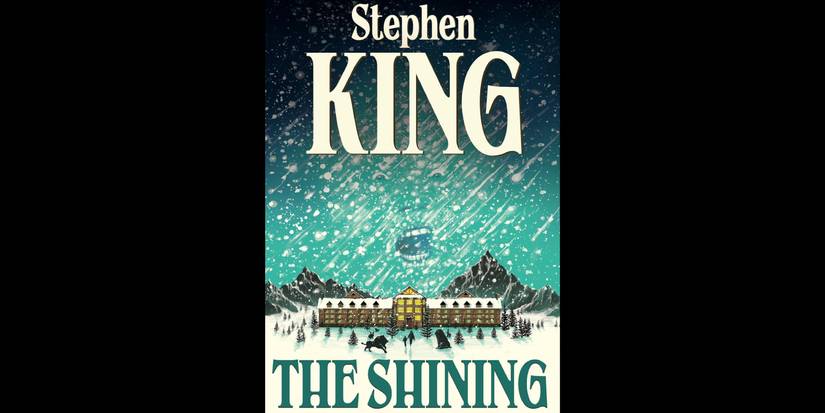
“Monsters are real, and ghosts are real too. They live inside us.” As with Something Wicked This Way Comes, The Shining proved that the Gothic tradition could still work in a modern setting. The main character here is Jack Torrance, an aspiring writer hoping to rebuild his life after struggles with alcoholism. He accepts a job as winter caretaker of the isolated Overlook Hotel, where he and his family soon discover that the hotel’s violent past still lingers within its walls, exerting a sinister influence over anyone who stays there.
The Overlook’s corrupting influence feels like a homage to The Haunting of Hill House. Like the ancestral mansions and castles of earlier novels, it possesses a disturbing sense of history, as though every dark thing that happened there continues echoing through the present. It’s unclear where the hotel’s influence stops and the character’s inner demons begin. Indeed, Jack’s substance abuse issues were inspired by some of Stephen King’s own experiences.
4
‘Frankenstein’ (1818)

“Beware; for I am fearless, and therefore powerful.” Frankenstein is a Gothic masterpiece, as well as one of the foundational works of science fiction. Obsessed with unlocking the secrets of life itself, Victor Frankenstein succeeds in creating a living being from assembled body parts. Horrified by his own achievement, he abandons his creation, setting in motion a tragic cycle of rejection, revenge, and unimaginable suffering.
The aesthetic is Gothic to the core, all towering mountains, icy wildernesses, violent storms, and decaying laboratories. Countless books and movies since have borrowed from it. This could have just been a simple horror story, but Mary Shelley instead uses the premise to explore profound questions around scientific responsibility and what it truly means to be human. The book remains a cautionary tale about man’s hubris and tendency to create inventions it cannot control.
3
‘Rebecca’ (1938)
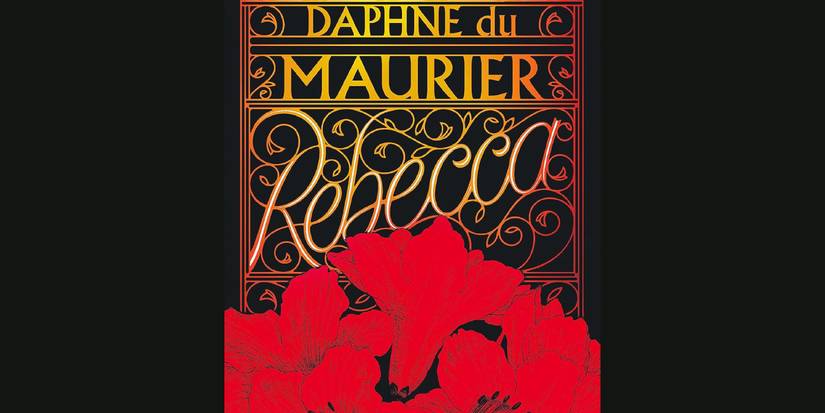
“Last night I dreamt I went to Manderley again.” Before Hitchcock made it into a masterful film, Rebecca was a great novel. After marrying the wealthy widower Maxim de Winter, an inexperienced young woman moves into his magnificent country estate, Manderley. There she discovers that the memory of Maxim’s first wife, Rebecca, continues to dominate every room, every servant, and every aspect of the household, particularly through the unsettling devotion of housekeeper Mrs. Danvers.
Writer Daphne du Maurier cleverly uses Gothic conventions to delve deep into emotional insecurity. The unnamed narrator constantly compares herself to Rebecca’s seemingly perfect legacy, creating an atmosphere where psychological pressure becomes every bit as terrifying as physical danger. Likewise, Manderley itself feels haunted not by ghosts but by memory. Every revelation gradually reshapes readers’ understanding of the characters while deepening the tension.
2
‘The Haunting of Hill House’ (1959)

“Whatever walked there, walked alone.” One of the great masterpieces of 20th-century horror. In The Haunting of Hill House, Dr. John Montague invites a small group of volunteers to investigate the paranormal reputation of Hill House, a mansion long associated with unexplained deaths and supernatural disturbances. Among the guests is Eleanor Vance, whose loneliness and vulnerability make her particularly susceptible to the house’s mysterious influence.
Author Shirley Jackson steadily crafts this simple setup into one of the finest haunted-house stories of all time. The writing is rich throughout, making you feel like you can really see Hill House and feel its coldness. What’s also amazing is how little ghostly activity there actually is in this book, yet it still feels so scary. You’re constantly waiting for something terrible to happen, even when things seem calm.
1
‘Dracula’ (1897)

“The blood is the life.” Dracula is the definitive Gothic horror novel, practically spawning the entire vampire genre by itself. The story begins with the young solicitor Jonathan Harker traveling to Transylvania to assist the enigmatic Count Dracula with a property transaction. In Dracula’s shadowed castle, Harker discovers that his host is an ancient vampire preparing to bring unimaginable horror to England. The Count’s influence spreads, and Professor Abraham Van Helsing undertakes to stop him.
Here, Bram Stoker brilliantly combines nearly every defining element of Gothic fiction: a sinister castle, ancient curses, forbidden knowledge, supernatural evil, crumbling traditions, thinly-veiled sexual repression, and an atmosphere saturated with dread. Then there’s also the book’s epistolary structure, composed of journals, letters, newspaper articles, and telegrams, which went on to be influential. All this makes for a chilling and deeply compelling story of light versus darkness and superstition versus modernity.
You must be logged in to post a comment Login